11 Backyard Outdoor Lighting Ideas
Outdoor lighting transforms backyards from spaces that become unusable after sunset into magical, functional environments that extend your living area well into evening hours. Thoughtful landscape and architectural lighting doesn’t just provide visibility and safety—it creates ambiance, highlights beautiful features, defines spaces, and fundamentally changes how you experience and use your outdoor areas. A well-lit backyard becomes a destination rather than just daytime space, allowing you to entertain guests, enjoy quiet evenings, dine outdoors, or simply appreciate your landscape’s beauty long after the sun sets. The interplay of light and shadow, the warm glow illuminating pathways and plantings, and the layers of illumination at different heights create depth and drama that daylight alone cannot achieve.
What makes outdoor lighting so impactful is its ability to completely reimagine your backyard’s character and functionality. During the day, you see everything equally—the beautiful and the mundane, focal points and background. Strategic lighting lets you selectively highlight what you want seen—architectural features, specimen trees, water features, seating areas—while allowing less attractive elements to fade into shadow. Lighting creates focal points, guides movement through the space, establishes mood and atmosphere, and provides the practical illumination needed for safe navigation and outdoor activities. The right lighting can make a small backyard feel expansive and mysterious, a large yard feel intimate and inviting, or a plain landscape appear dramatic and designed.
The layering of different lighting types—ambient lighting for overall illumination, task lighting for specific activities, accent lighting for drama and interest, and pathway lighting for safety—creates sophisticated outdoor environments with depth and versatility. Modern outdoor lighting technology has made these effects more accessible and affordable than ever, with LED fixtures offering energy efficiency and longevity, low-voltage systems providing safety and DIY-friendly installation, and smart controls allowing automation and color-changing capabilities. Let’s explore these backyard lighting ideas and create outdoor spaces that shine beautifully from dusk to dawn.
1. String Lights Overhead Creating Canopy Effect
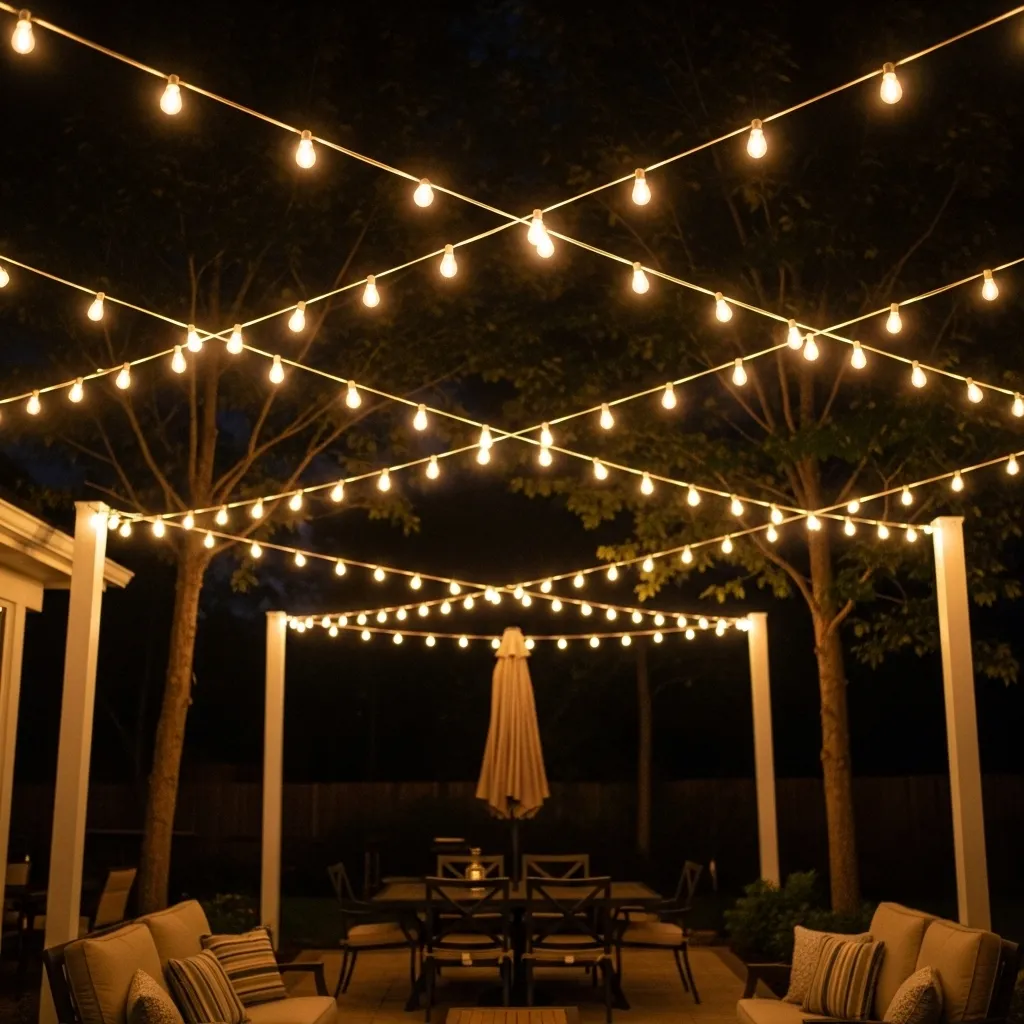
String lights create instant magic and transform ordinary patios into enchanting outdoor rooms. The overhead canopy of warm, glowing bulbs provides ambient illumination while creating a defined ceiling that makes outdoor spaces feel more room-like and intimate. String lights are among the most affordable and impactful lighting options, offering maximum atmospheric effect with minimal installation complexity.
The key is hanging lights thoughtfully at varied heights rather than just stringing them straight across. Crisscross patterns create visual interest and ensure even light distribution. Drape lights in gentle swags between mounting points—poles, pergola beams, tree branches, or dedicated posts—creating graceful curves rather than tight, straight lines. Use commercial-grade outdoor string lights rated for weather exposure with LED bulbs for energy efficiency and longevity. Warm white (2700-3000K) creates the most inviting, flattering glow. Consider dimmable options or connect to timers so lights automatically illuminate at dusk. String lights work beautifully over dining areas, lounge spaces, or entire patios, creating festive yet intimate atmosphere that encourages lingering outdoors long after sunset.
2. Pathway Lighting for Safety and Guidance
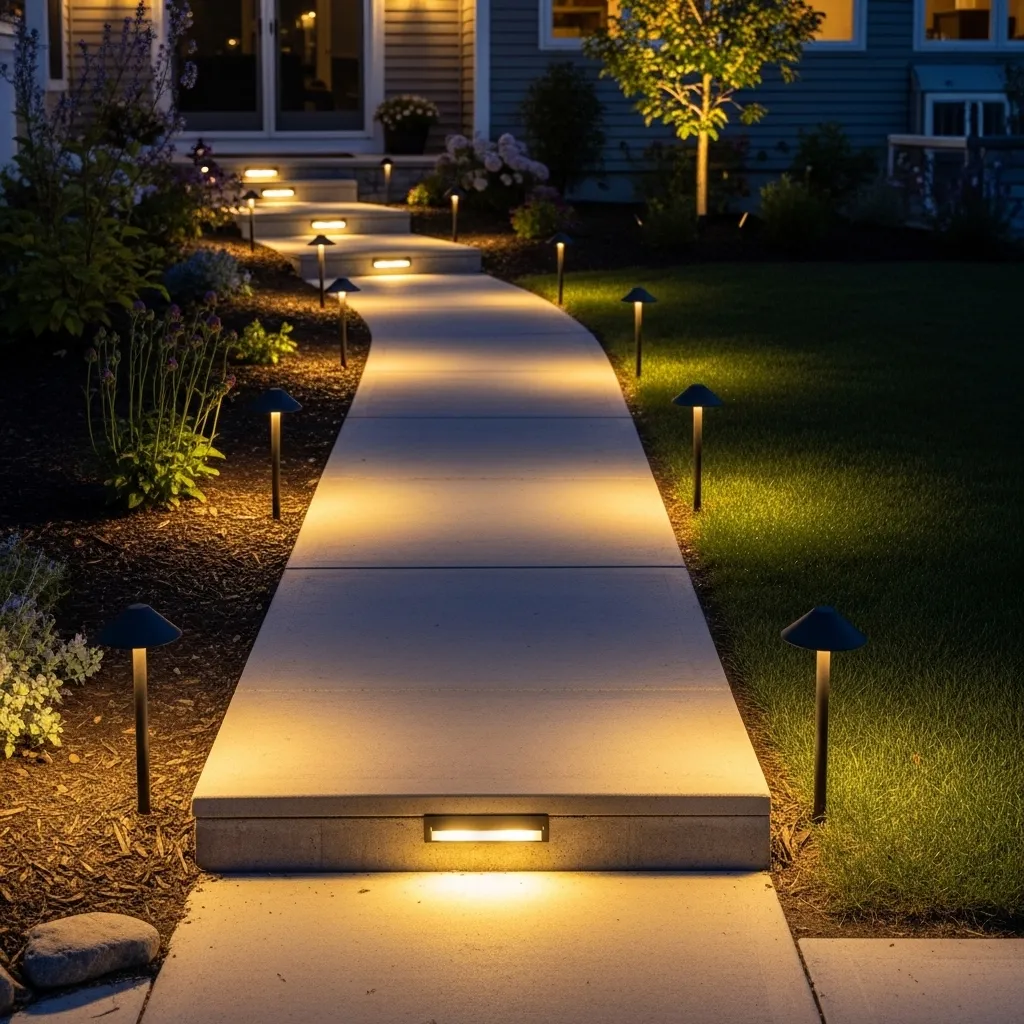
Pathway lighting serves the essential dual purpose of safety and aesthetics—it prevents trips and falls while creating beautiful illumination that guides movement through your landscape. Well-placed path lights transform garden walks into inviting journeys and ensure guests can navigate safely during evening gatherings.
The key is appropriate spacing and fixture selection that provides adequate light without being harsh or overwhelming. Position lights every 6-8 feet along paths—closer spacing for curved paths or areas with obstacles, wider spacing for straight, clear routes. Choose fixtures that direct light downward onto the path surface rather than upward into eyes—bollard lights with downward shields, mushroom-style fixtures, or low stake lights work well. Match fixture style to your home’s aesthetic—modern, traditional, or transitional designs are all available. Use consistent finish throughout—bronze, black, copper, or stainless steel. Ensure adequate brightness for safety—typically 3-5 watt LED fixtures provide sufficient illumination—but avoid overly bright lights that create harsh spots. Illuminate steps particularly well as they’re common accident points. The pathway lighting creates safe navigation while adding beautiful layers of low-level illumination to your landscape.
3. Uplighting Trees and Architectural Features
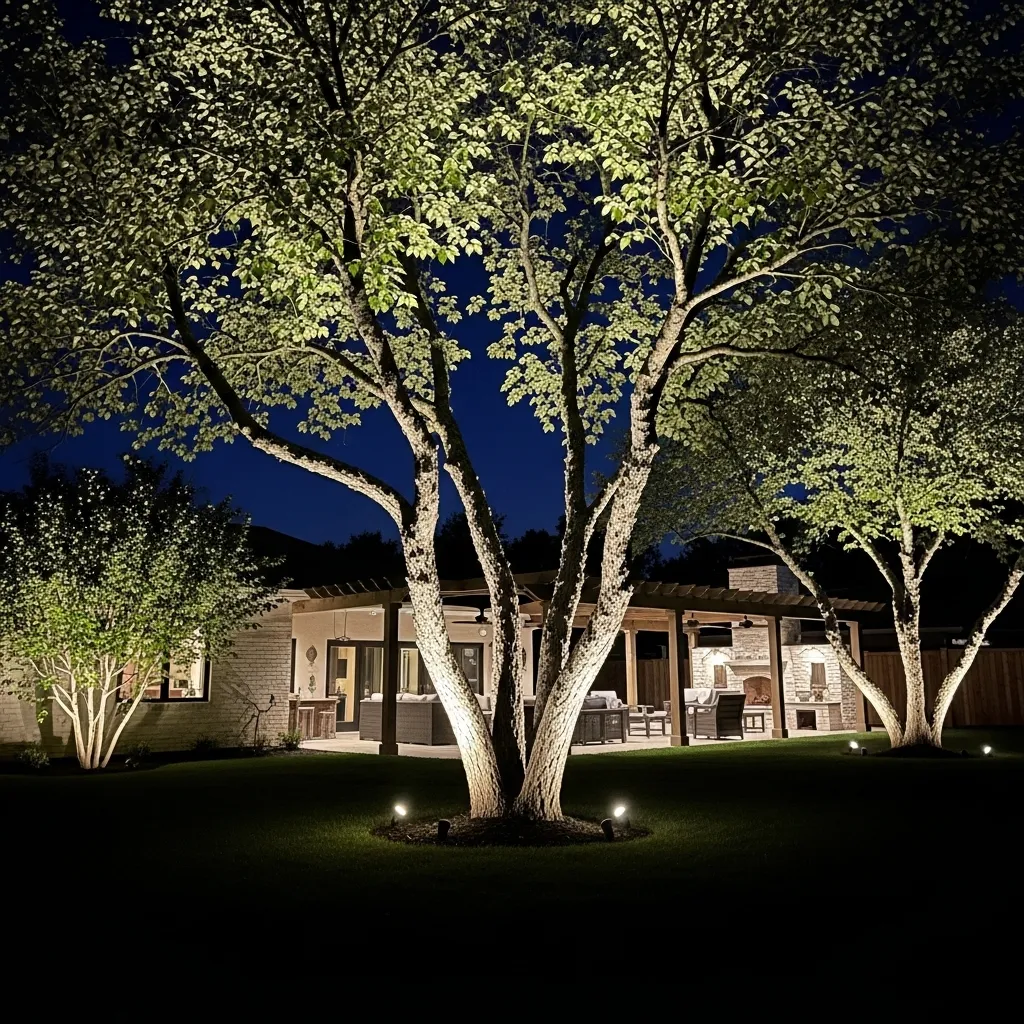
Uplighting creates drama and dimension by illuminating features from unexpected angles—casting light upward rather than downward creates striking effects that transform ordinary elements into nighttime sculptures. Trees, architectural features, and textural surfaces become beautiful focal points when lit from below.
The key is strategic placement and appropriate intensity. Position uplights at the base of specimen trees—those with interesting bark, attractive branching, or beautiful canopy structure. Aim lights upward through the canopy, experimenting with placement to create the most attractive shadows and highlights. For architectural features—stone walls, pergolas, outdoor fireplaces, interesting fencing—position lights to graze surfaces, emphasizing texture and dimension. Use higher wattage for tall trees or large features—typically 7-15 watt LED fixtures depending on height and desired effect. Choose adjustable fixtures that allow you to aim and focus beams precisely. Ensure fixtures have appropriate shielding to prevent light spill and glare. The uplighting creates dramatic focal points that draw the eye and create depth, transforming your backyard into an illuminated landscape with layers of visual interest.
4. Pendant Lights Over Outdoor Dining Areas
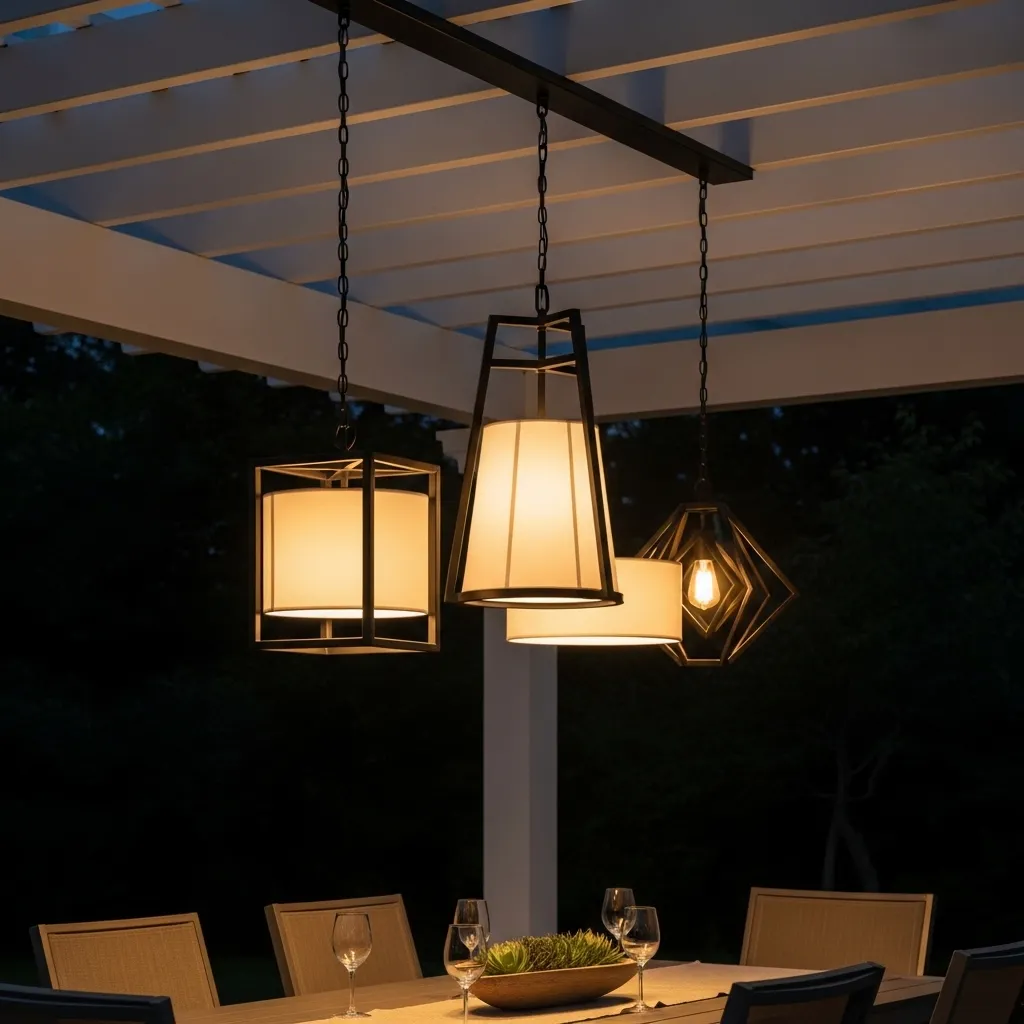
Pendant lights bring interior lighting concepts outdoors, creating focused task lighting over dining tables while adding architectural interest and defining outdoor rooms. The overhead fixtures provide the necessary illumination for dining, food service, and conversation while creating a sense of enclosure and room-like intimacy that makes outdoor dining more comfortable.
The key is selecting truly outdoor-rated fixtures and hanging them at appropriate height. Choose pendants specifically designed for outdoor use with weather-resistant finishes and sealed electrical components. Hang pendants 30-36 inches above the table surface—high enough to prevent head bumps but low enough to provide focused light and intimate scale. For rectangular tables, use multiple smaller pendants rather than one large fixture for better light distribution. Connect to dimmer switches allowing brightness adjustment for casual dinners versus entertaining. Choose styles that complement your outdoor aesthetic—metal lanterns for traditional, clean geometric shapes for modern, or rustic cage lights for farmhouse style. The pendant lighting creates a defined dining zone and provides the focused illumination that makes outdoor dining practical and pleasant well after sunset.
5. Recessed Deck and Step Lighting
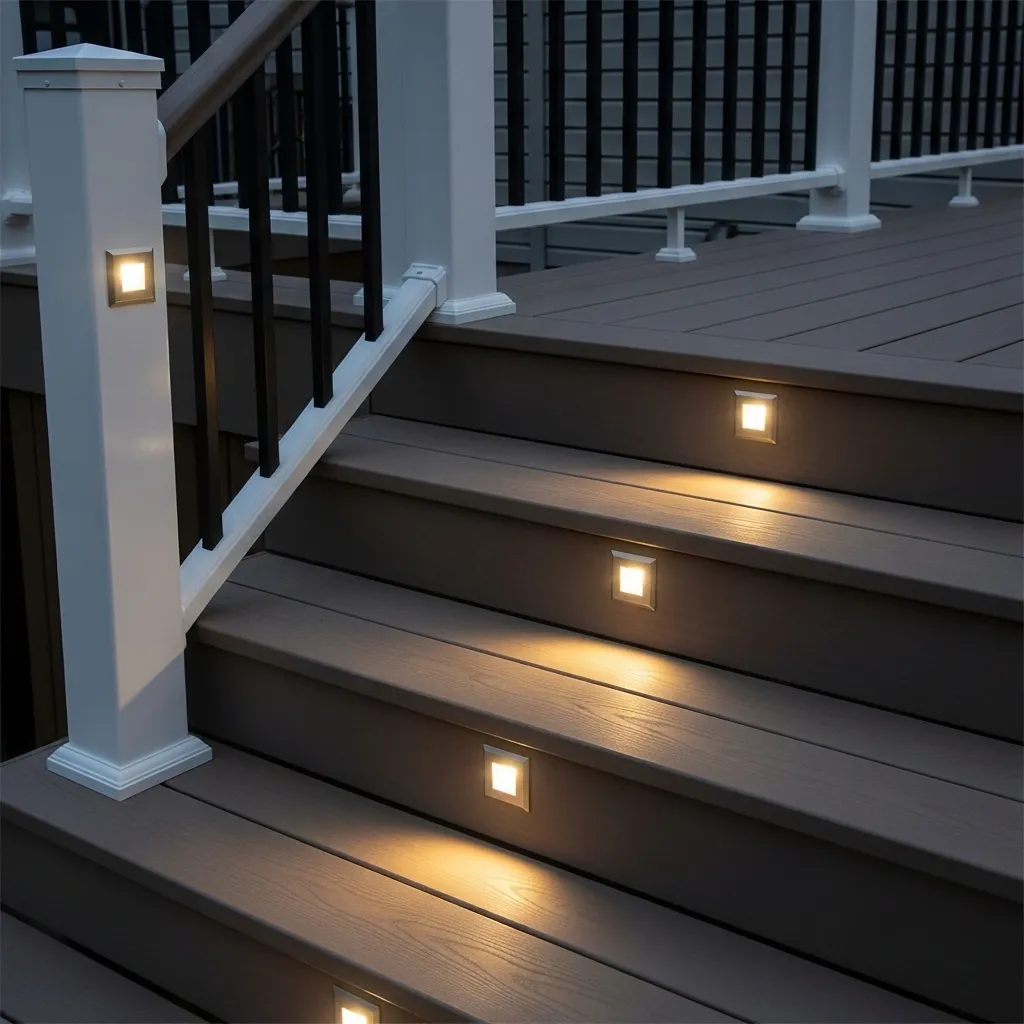
Recessed deck lighting provides essential safety illumination while maintaining clean aesthetics and creating sophisticated ambiance. The integrated fixtures feel like intentional architectural elements rather than afterthought additions, and they provide illumination exactly where needed for safe deck use.
The key is planning recessed lighting during deck construction or retrofit installation, and placing fixtures strategically for function and beauty. Recessed step lights in each riser illuminate treads, preventing dangerous missteps—this is crucial safety lighting that prevents injuries. Recessed railing lights or post cap lights provide ambient perimeter lighting defining deck edges and creating gentle overall illumination. Consider recessed lights in deck boards themselves near seating areas for subtle ambient glow. Use low-wattage LED fixtures—typically 1-3 watts per fixture—providing adequate visibility without harshness. Choose fixtures with appropriate weather rating and finishes that coordinate with deck hardware. Connect to timers or photo sensors for automatic operation. The recessed lighting creates safety and ambiance while maintaining the clean lines and uncluttered appearance that makes decks attractive during daylight hours.
6. Landscape Spotlights on Garden Features
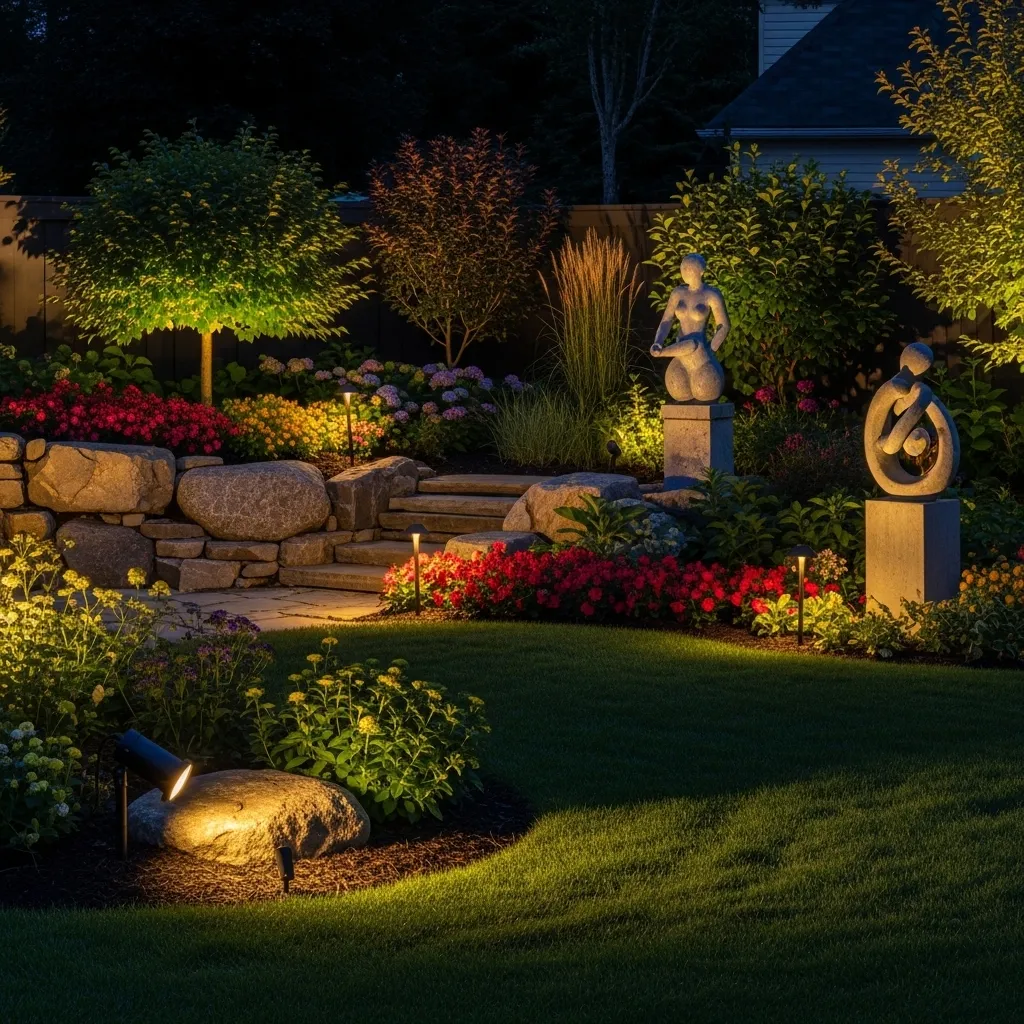
Landscape spotlights provide precise, directional lighting that allows you to curate exactly what gets illuminated, creating a designed nighttime landscape that can differ dramatically from the daylight view. The focused beams highlight your most beautiful features while allowing less attractive elements to fade into darkness.
The key is strategic selection of what to illuminate and proper aiming for maximum effect. Identify focal points worth highlighting—specimen plants with interesting form or color, garden art or sculptures, water features, attractive boulders or hardscape elements, flowering beds at peak bloom. Use adjustable spot lights allowing you to aim and focus beams precisely. Experiment with placement and angle—light from the side creates dimension and reveals texture, light from front creates flat illumination. Use narrow beam angles (typically 15-30 degrees) for small features like sculptures, wider beams (35-60 degrees) for larger plantings or areas. Vary wattage based on feature size and distance—typically 3-7 watt LED fixtures work for most applications. The selective spotlighting creates a curated, theatrical landscape with depth and drama that guides the eye to your most beautiful elements.
7. Moonlighting Effect from Tree Canopies
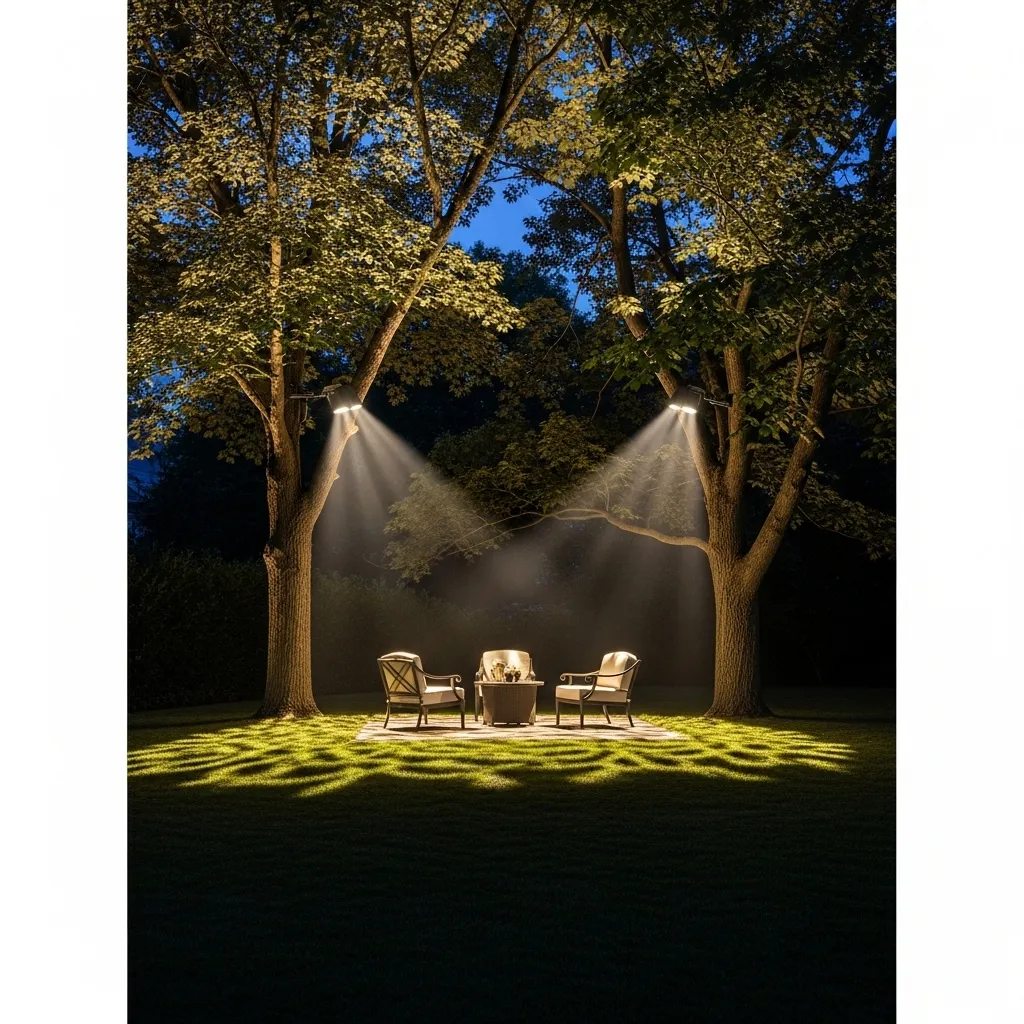
Moonlighting creates the most natural-looking outdoor lighting by mimicking how moonlight filters through tree canopies—soft, dappled, and ethereal. This technique creates romantic, subtle illumination that feels organic rather than obviously artificial, making it perfect for creating atmosphere in seating areas beneath trees.
The key is positioning fixtures high in substantial trees and aiming carefully. Install fixtures 15-30 feet up in tree canopies—high enough that the source isn’t visible from normal viewing angles. Use wide beam floods aimed downward through branches and foliage creating filtered, dappled light patterns on the ground. Trees with interesting branch structure and moderate leaf density work best—too dense and little light penetrates, too sparse and the effect is less magical. Use higher wattage fixtures (7-12 watts LED) since light must travel significant distance and penetrate foliage. The installation typically requires professional help due to height and need to protect tree health. Position seating areas beneath moonlit trees to benefit from the gentle, romantic illumination. The effect creates the most natural-feeling outdoor lighting, making your backyard feel enchanted and magical.
8. Fire Features with Integrated Lighting
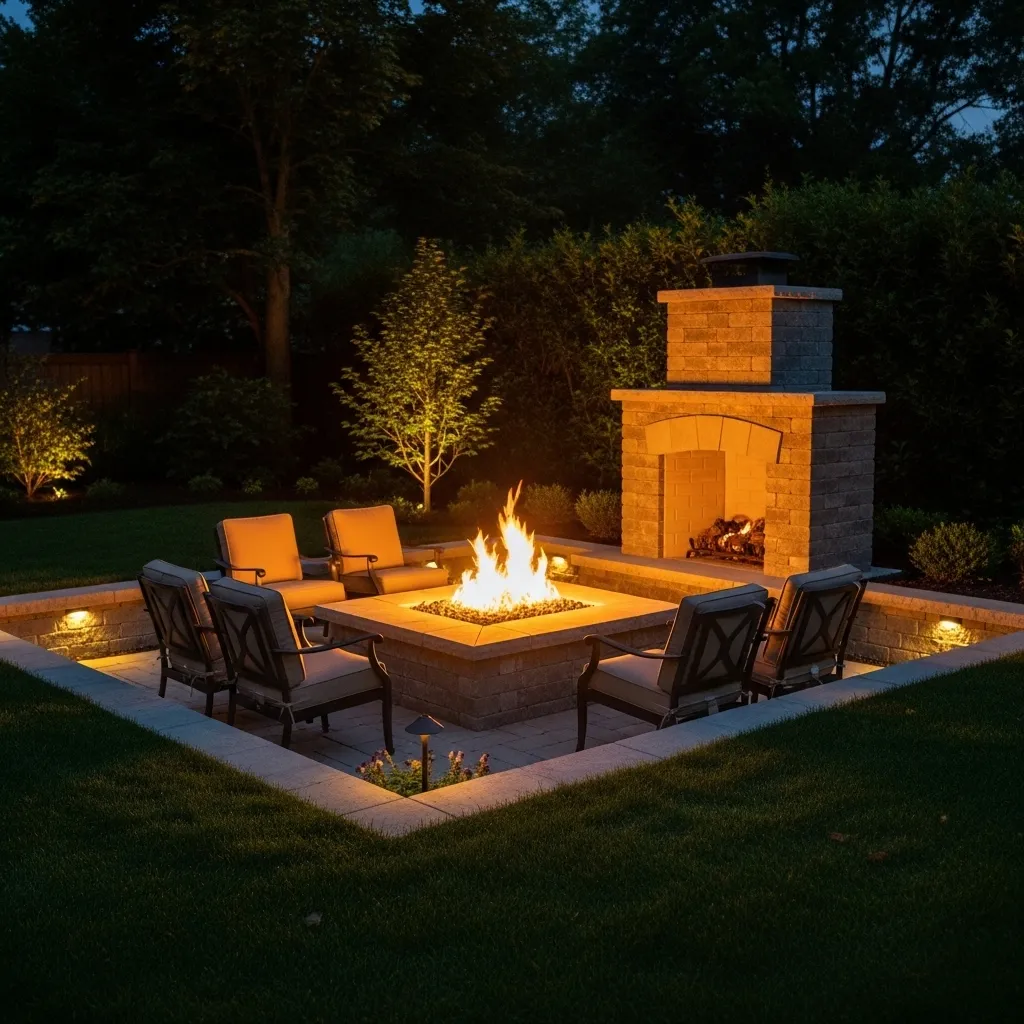
Fire features provide the most atmospheric natural lighting—the warm, dancing flames create ambiance that artificial lighting cannot replicate. The flickering glow provides both literal warmth and visual warmth, creating primal gathering spots that humans are naturally drawn to. Combining fire features with subtle supplemental lighting creates complete outdoor lighting that’s both functional and magical.
The key is letting fire be the primary light source while adding only necessary supplemental illumination. Install gas fire pits, fire tables, wood-burning fire pits, or outdoor fireplaces as anchors for outdoor living spaces. The flames provide substantial ambient light in the immediate area—enough for conversation and casual activities. Add subtle perimeter lighting around seating areas for safe navigation when moving away from the fire—low path lights, recessed step lights, or small bollards that guide without overwhelming the fire’s glow. Keep supplemental lighting minimal and low-wattage—the fire should remain the dominant light source. Consider uplighting nearby features like trees or walls to create backdrop drama. The combination creates layered lighting where fire provides warmth, primary illumination, and atmosphere while subtle electric lighting ensures safety and extends the illuminated area.
9. Color-Changing Smart Landscape Lighting
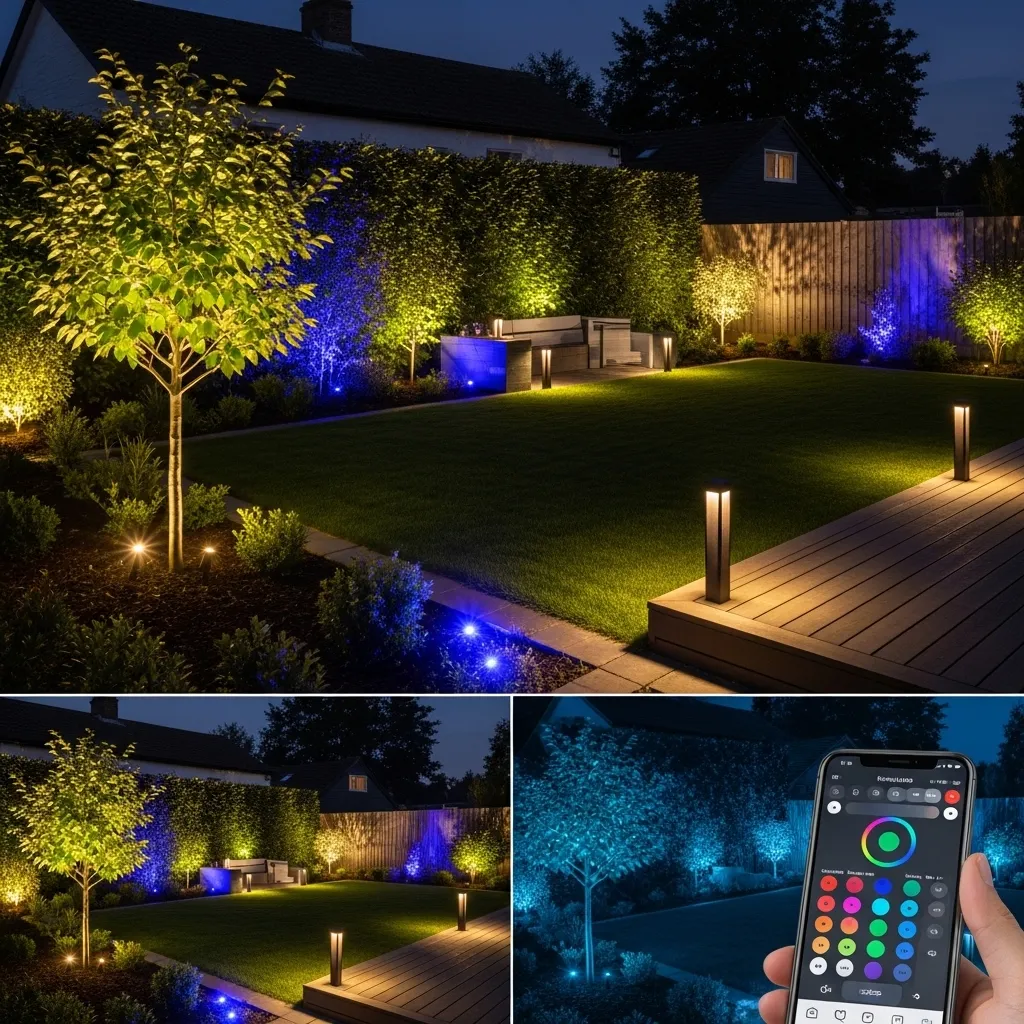
Smart color-changing LED landscape lighting provides ultimate versatility—a single installed system that can create infinite different effects, moods, and color schemes through app control. This technology allows your backyard lighting to adapt for different occasions, seasons, and preferences without any physical changes.
The key is investing in quality smart fixtures from reputable manufacturers and designing thoughtful zones. Choose smart LED landscape lights that offer both white light (in various color temperatures) and full RGB color options. Install fixtures throughout your landscape—uplights, spotlights, path lights, deck lights—creating comprehensive coverage. Group fixtures into zones allowing different areas to be controlled independently—perhaps tree uplights as one zone, pathway lights as another, deck lighting as a third. Program scenes for different uses—warm white for everyday dining, vibrant colors for parties, soft amber for relaxation, seasonal themes for holidays. Many systems integrate with voice control and home automation for convenient operation. While the initial investment is higher than standard fixtures, the versatility means your lighting can evolve without reinstallation. The technology creates dynamic, customizable backyard lighting limited only by your imagination.
10. Landscape Well Lights and In-Ground Fixtures
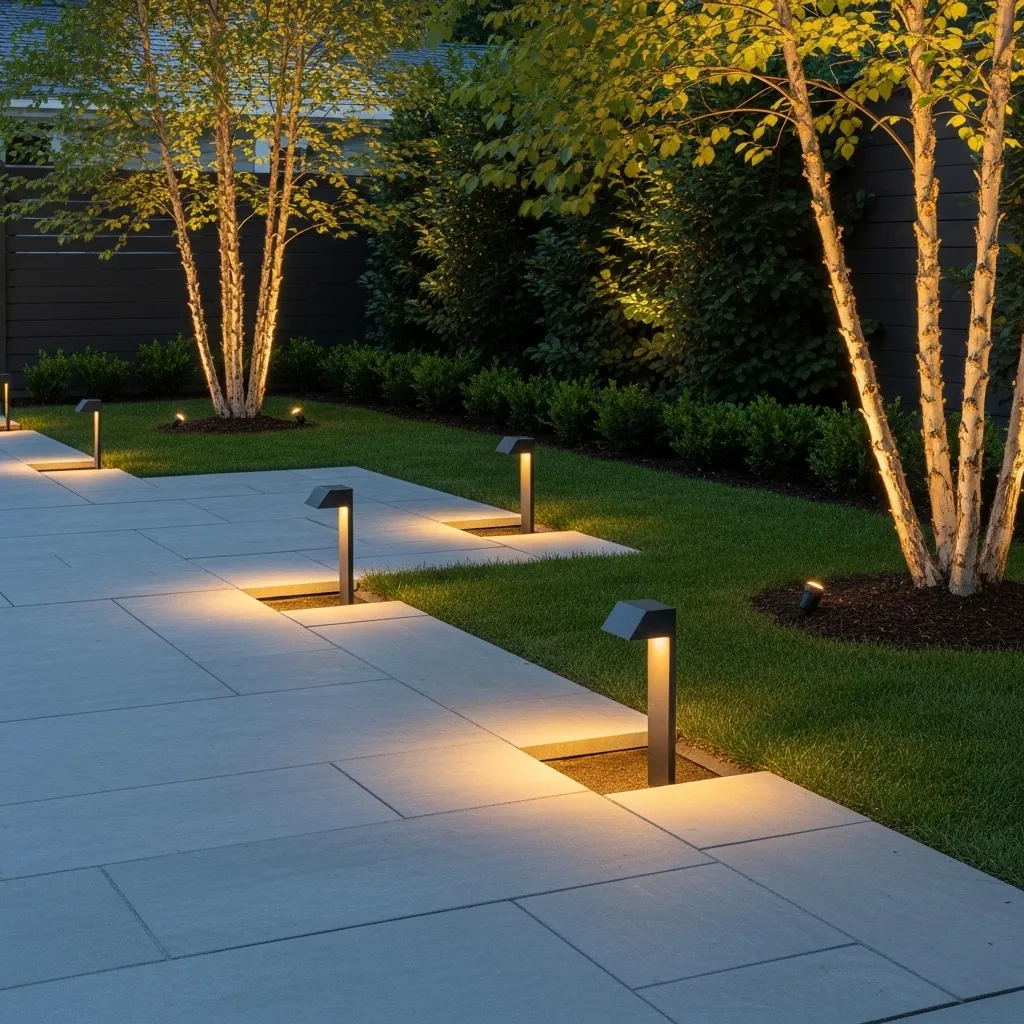
In-ground well lights provide powerful uplighting capability while remaining virtually invisible during the day, creating the cleanest possible aesthetic. The flush-mounted fixtures integrate into your landscape rather than sitting on top of it, maintaining uncluttered appearance while delivering dramatic lighting effects.
The key is selecting quality, durable fixtures and installing them properly. Choose well lights with heavy-duty housings rated for ground installation and capable of supporting expected loads—pedestrian traffic or vehicular weight depending on location. Ensure proper drainage around fixtures to prevent water accumulation. Position wells strategically to uplight specimen trees, architectural elements, large shrubs, or hardscape features. Aim beams carefully—many well lights offer adjustable aims allowing precise targeting. Use appropriate wattage for the feature height and desired effect—typically 5-12 watts LED depending on application. Install with accessible connections for maintenance—buried fixtures can be challenging to service. The in-ground installation creates dramatic uplighting effects while maintaining completely clean, uncluttered landscape during daylight hours. The fixtures disappear visually, allowing your landscape and architecture to shine literally and figuratively.
11. Solar Landscape Lighting for Eco-Friendly Illumination
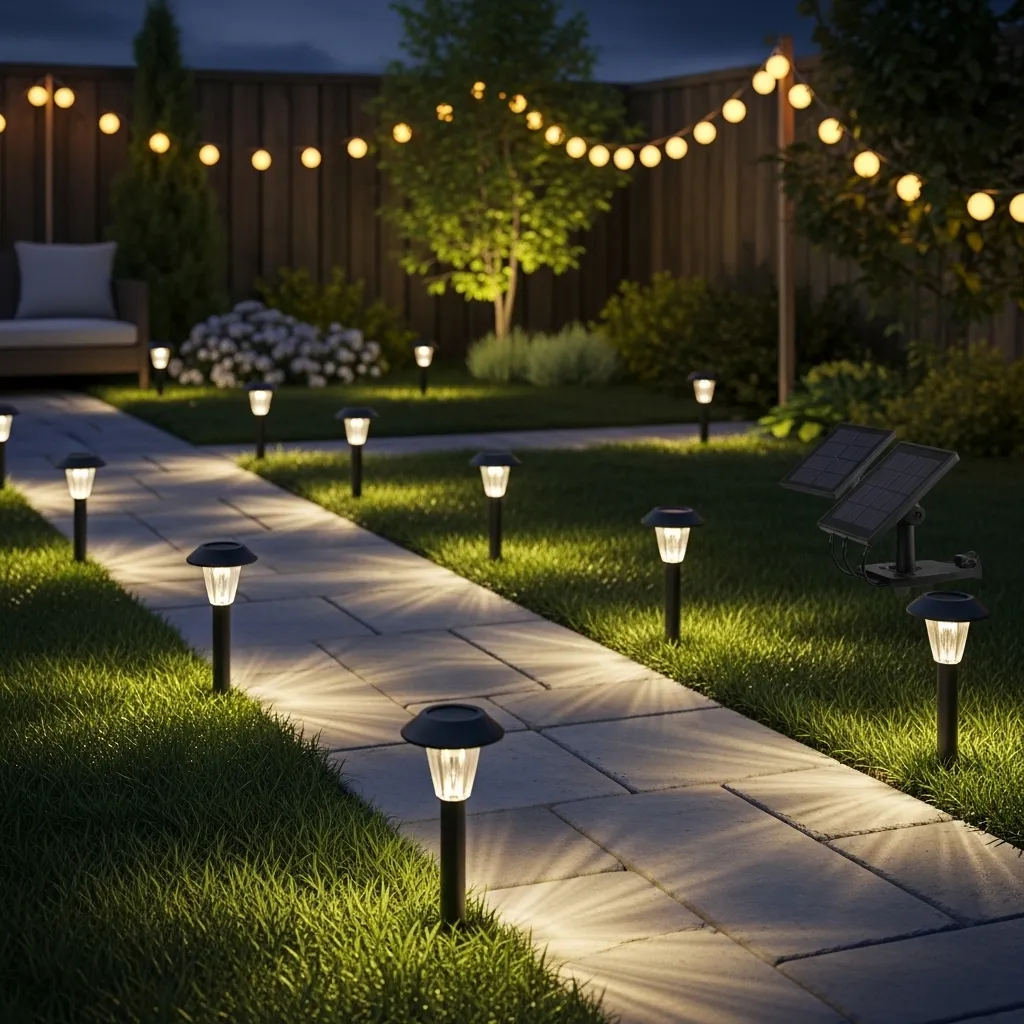
Solar landscape lighting provides eco-friendly, wireless illumination that requires no electrical installation and costs nothing to operate. Modern solar technology has improved dramatically, offering reliable lighting that rivals wired systems in certain applications while eliminating installation complexity and ongoing energy costs.
The key is selecting quality solar fixtures and positioning them for optimal solar panel exposure. Choose solar lights with efficient LED bulbs and high-quality solar panels from reputable manufacturers—cheap solar lights often disappoint with dim output and short run times. Position fixtures where solar panels receive direct sun for several hours daily—avoid shaded locations. Solar path lights work well lining walkways, solar spotlights can accent features, solar string lights create ambiance, and solar post caps illuminate deck or fence posts. Understand limitations—solar lights are generally dimmer than wired equivalents and won’t operate well in consistently cloudy climates or heavily shaded areas. The fixtures require no wiring, install in minutes, and provide guilt-free illumination knowing you’re using renewable energy. For supplemental lighting, accent features, or situations where wiring is impractical, solar lighting offers attractive, sustainable solution. Combine solar lights with selective wired lighting where you need greater power or reliability for a balanced, efficient approach.