11 Grey Bedroom Ideas
Grey bedrooms have this incredible versatility that makes them work for virtually any design style—from sleek modern minimalism to cozy traditional warmth, from industrial edge to soft romantic elegance. What makes grey such a perfect bedroom color is how it creates a calm, sophisticated backdrop that never feels boring if you layer in the right textures, tones, and accent colors. Whether you’re drawn to cool silvery greys that feel crisp and contemporary, warm charcoal tones that add drama and coziness, or soft dove greys that whisper rather than shout, there’s a shade and style that can transform your bedroom into exactly the retreat you’re craving. The key is understanding that grey isn’t just one color—it’s an entire spectrum with warm and cool undertones, and knowing how to layer different shades with complementary materials and colors makes all the difference.
I used to think grey bedrooms would feel cold or depressing until I stayed in a beautifully designed hotel room with charcoal grey walls, plush textiles, and warm wood accents that felt incredibly cozy and sophisticated. That experience completely changed my understanding of what grey could do in a bedroom—it wasn’t sterile or sad, it was enveloping and calming in a way that white or beige never quite achieved. I came home and immediately started experimenting with grey in my own bedroom, testing different shades and learning how lighting and texture completely transform how grey reads in a space.
What surprised me most about working with grey is how it acts as this perfect neutral that lets other elements shine while still having personality of its own. Grey walls make white bedding look crisper, wood furniture richer, metallics more striking, and pops of color more intentional. The best grey bedrooms understand this supporting role and use it to create depth and sophistication through layering—mixing different grey tones, combining textures like linen, velvet, and wool, and adding warmth through wood, brass, or carefully chosen accent colors. Grey gives you this incredibly sophisticated foundation that can go in any direction depending on what you pair it with, which is why it works for so many different styles and personalities.
1. Charcoal Grey Accent Wall with White Bedding
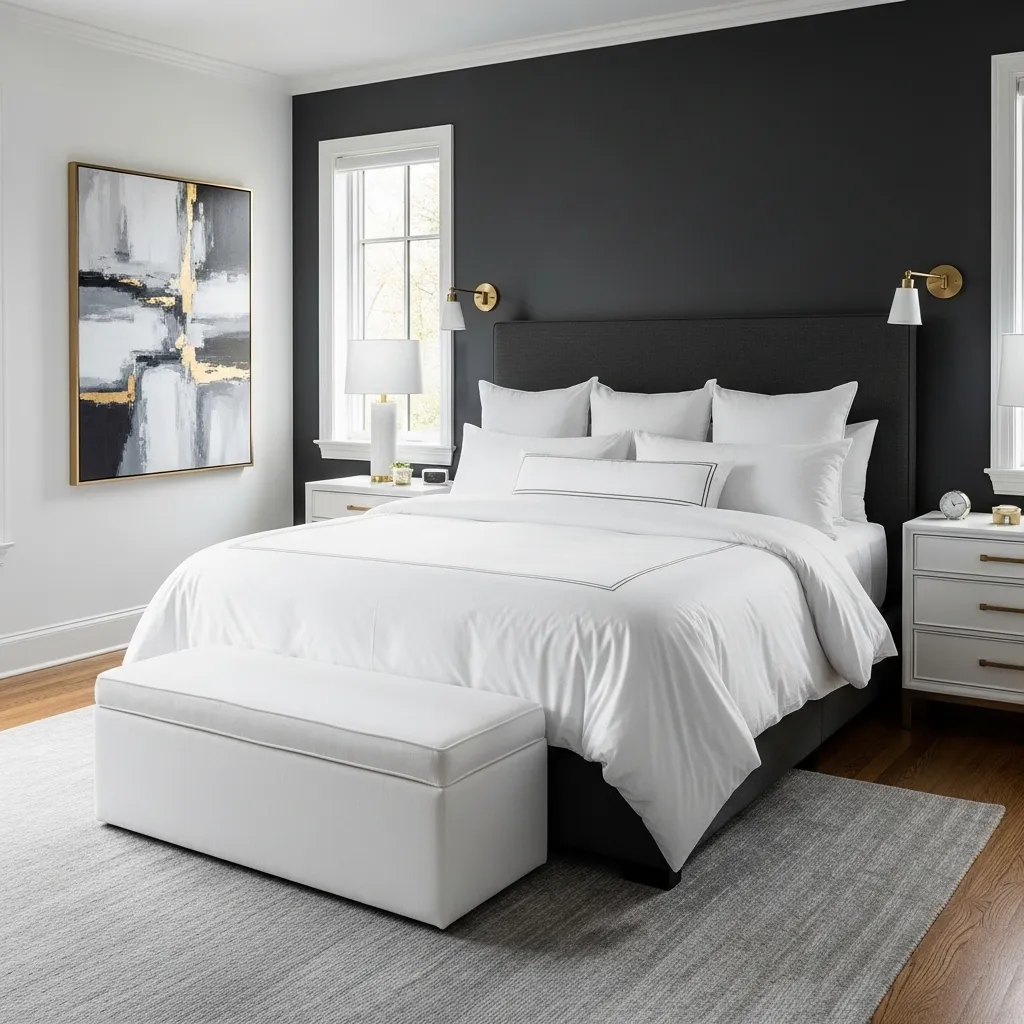
Painting one wall charcoal grey while keeping the others white was my solution for wanting drama without making my bedroom feel like a cave. The dark wall creates this incredible focal point that grounds the room and makes the white bedding absolutely pop—the contrast is striking but not harsh because grey is inherently softer than black would be. I chose a charcoal with slight warm undertones to prevent it from feeling too cold or industrial, and in evening lamplight, it reads almost like a soft black with depth and richness.
The all-white bedding was essential for making this work—any pattern or color would compete with the dramatic wall. The crisp white creates this hotel-luxury feeling and keeps the room feeling fresh despite the dark wall. I was nervous about the charcoal making the room feel smaller, but because the other three walls are white and there’s plenty of natural light, it actually creates depth and dimension rather than closing the space in. The grey accent wall has become my favorite backdrop for the bed—it photographs beautifully and creates this sophisticated, gallery-like quality that a plain white wall never achieved.
2. Layered Grey Textures with Warm Wood Accents
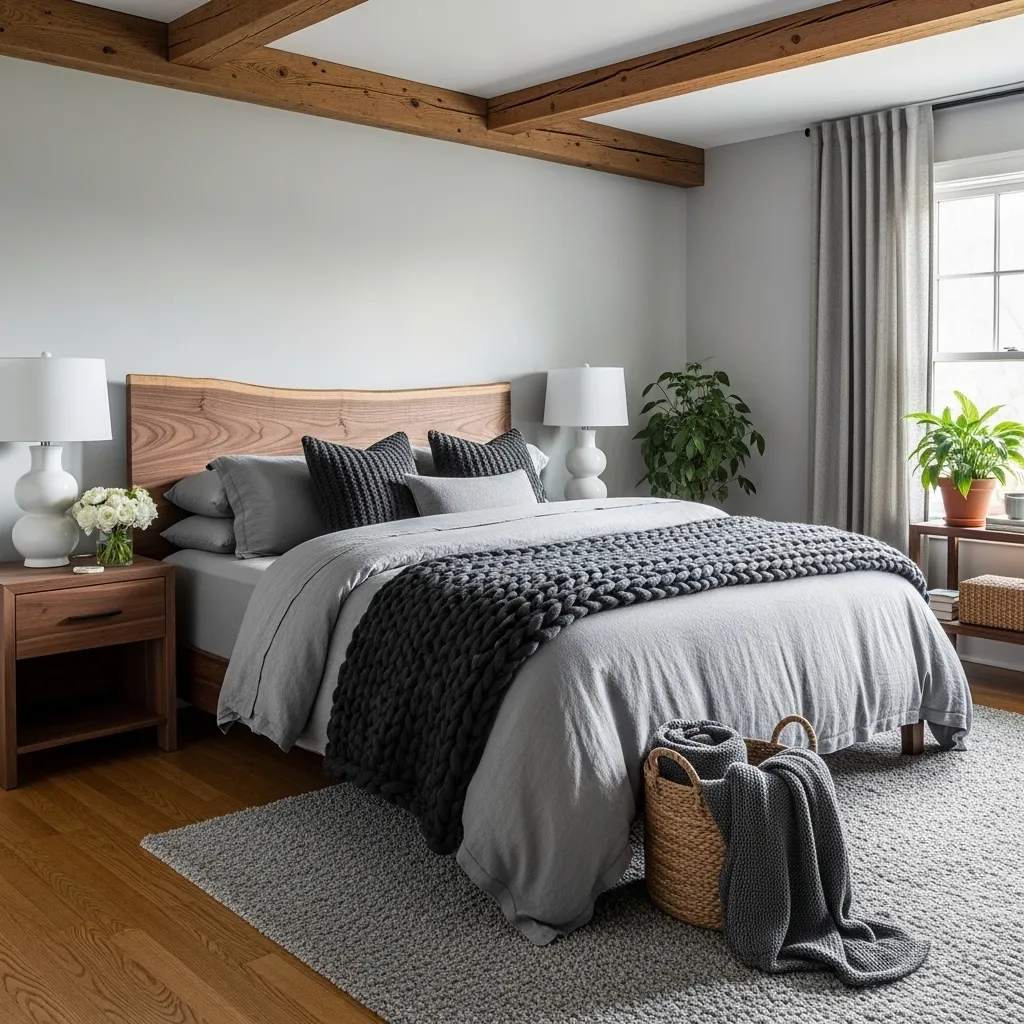
My bedroom’s layered grey approach started when I realized that using just one shade of grey felt flat and boring, but combining multiple tones created depth and visual interest. I mix cool and warm greys intentionally—the walls are a cool light grey, the bedding is warmer dove grey linen, and accent pieces range from almost-white silver to deep charcoal. The variety keeps the monochromatic scheme from feeling one-dimensional, and the different textures—smooth linen, plush velvet, chunky knit, soft rug pile—add another layer of interest.
The warm wood elements were crucial for preventing the grey from feeling cold or sterile. The live-edge walnut headboard brings in organic warmth and natural variation that balances all the grey beautifully. I chose honey oak floors rather than grey-washed wood because I wanted that warm contrast, and the natural wood tones make the space feel grounded and cozy rather than floaty and cool. The combination of greys and warm woods creates this perfect balance—sophisticated and calm from the grey, warm and inviting from the wood. I’ve found this palette incredibly versatile because I can change the mood just by swapping throw pillows or adding different colored accents without repainting or changing major elements.
3. Pale Grey Walls with Brass and Gold Accents
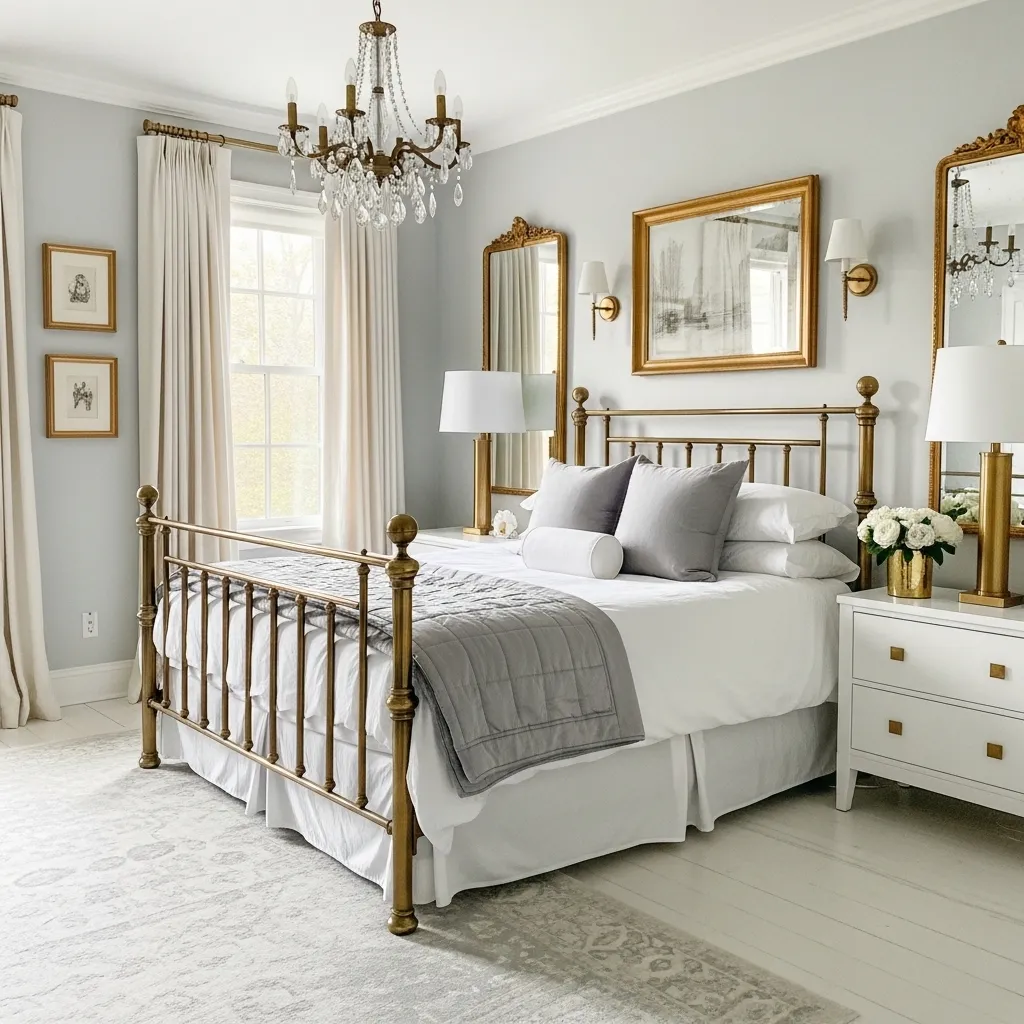
Choosing pale grey instead of white for my bedroom walls was about creating subtle sophistication—the barely-there grey adds just enough depth that white trim and bedding pop against it, but it’s not obviously grey in most lighting. The beauty of this soft grey is how it changes throughout the day—cool and crisp in morning light, warm and cozy in evening lamplight. It provides a more interesting backdrop than pure white while remaining neutral enough to work with any accent color or style.
The brass accents were my way of adding warmth and preventing the pale grey from feeling too cool or stark. I committed to brass throughout—from the substantial bed frame to the smallest drawer pulls—which creates cohesion and intentionality rather than looking random. The warm metallic tones complement the grey beautifully and add this layer of elegance and luxury that chrome or nickel wouldn’t provide. Natural brass develops a patina over time, which I love because it adds character and warmth. The combination of soft grey and warm brass creates a sophisticated, timeless aesthetic that feels elegant without being cold, neutral without being boring.
4. Dark Grey Walls with Black and White Photography
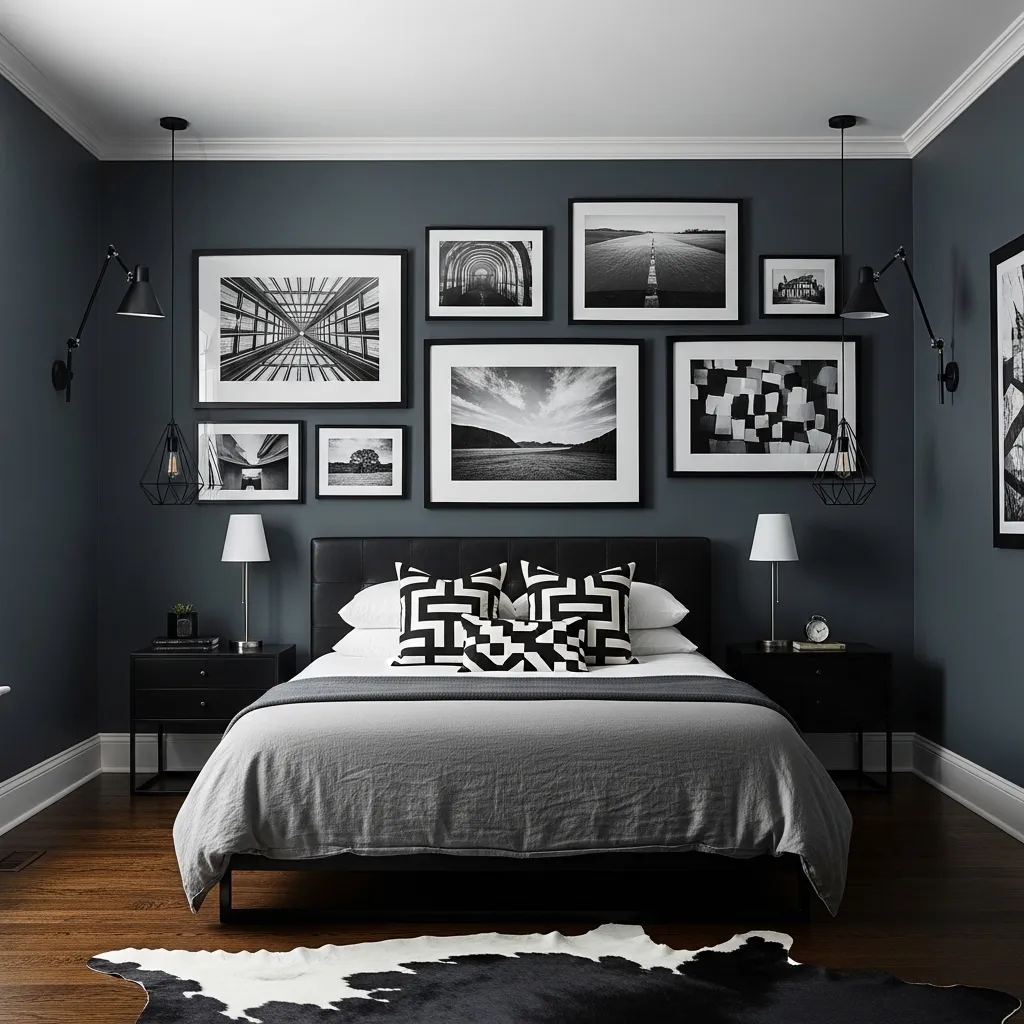
Painting my bedroom walls this deep slate grey was the boldest color choice I’d made, and I was genuinely nervous it would make the space feel oppressive or cave-like. Instead, it created this incredibly cozy, enveloping atmosphere that makes the bedroom feel like a true retreat from the world. The key was painting the ceiling white to maintain a sense of height and openness, and ensuring I had plenty of lighting options—both natural light from large windows and multiple artificial light sources for evenings.
The black and white photography gallery was inspired by boutique hotels I’d stayed in, and it works perfectly against the dark grey walls—the high contrast makes the images really stand out in a way they never would against white walls. I chose large-scale prints because small images would get lost against the dark backdrop. The monochromatic color scheme of black, white, and grey creates this sophisticated, curated look that feels intentionally minimal rather than sparse. The dark walls actually make the white bedding and light elements feel brighter and more crisp. This bedroom proves that dark grey can work beautifully in bedrooms if you balance it properly with light elements and good lighting.
5. Grey Upholstered Wall Paneling
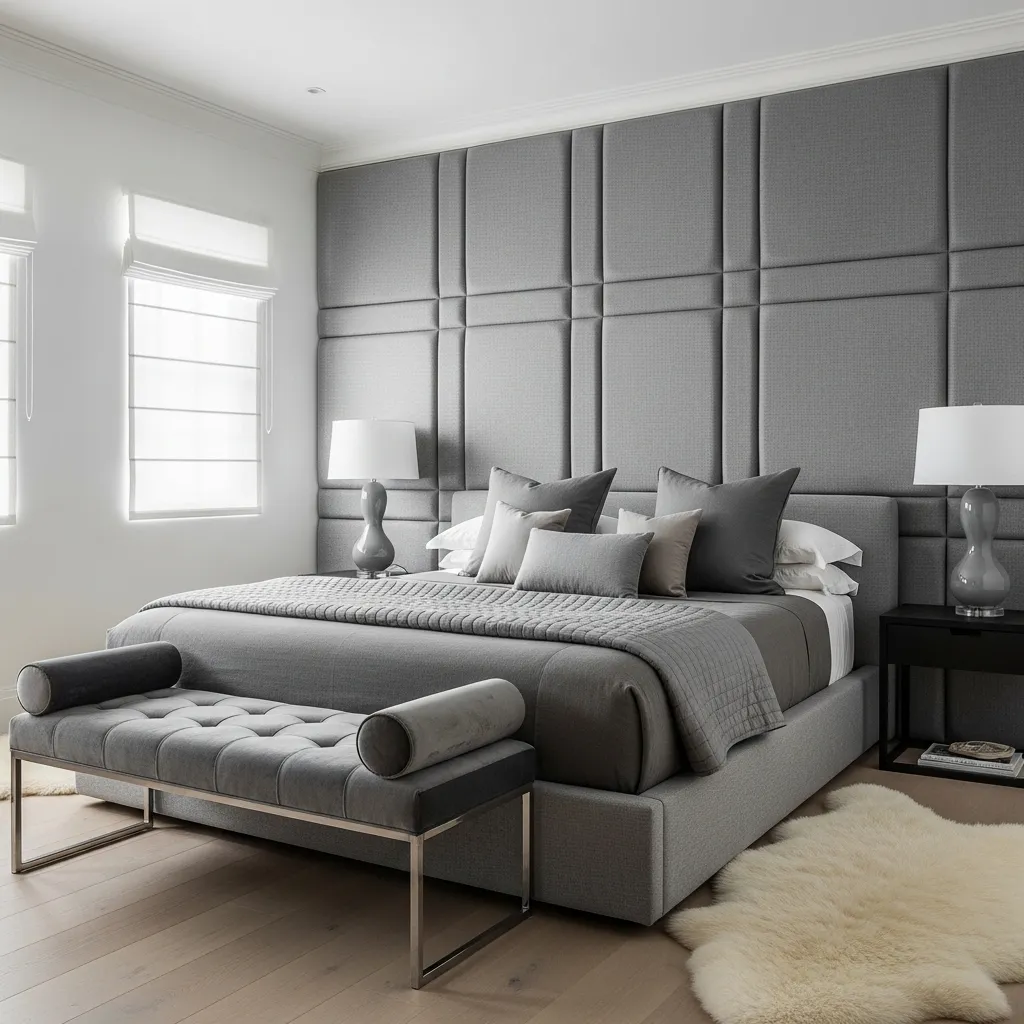
Installing upholstered wall paneling in my bedroom was admittedly a splurge, but it transformed the space into something that feels like a five-star hotel and added incredible textural interest that painted walls could never achieve. The vertical channels create subtle shadows and dimension that change throughout the day as light shifts, and the fabric adds warmth and sound absorption that makes the room quieter and more peaceful. Running my hand along the soft linen as I walk by has become this unconscious ritual that I love.
The grey linen was chosen for its subtle texture and neutral tone that works as a backdrop while still having presence and sophistication. The upholstered wall eliminates the need for a traditional headboard and creates this seamless, built-in look that feels very custom and intentional. The installation required professional help to ensure proper mounting and clean seams, but the result is worth it—the wall has become the defining feature of the bedroom. The fabric also provides some insulation, making the room quieter and slightly warmer than it was with just drywall. This treatment proves that grey doesn’t have to mean flat paint—bringing it in through texture and fabric creates depth and luxury.
6. Two-Tone Grey with Wainscoting
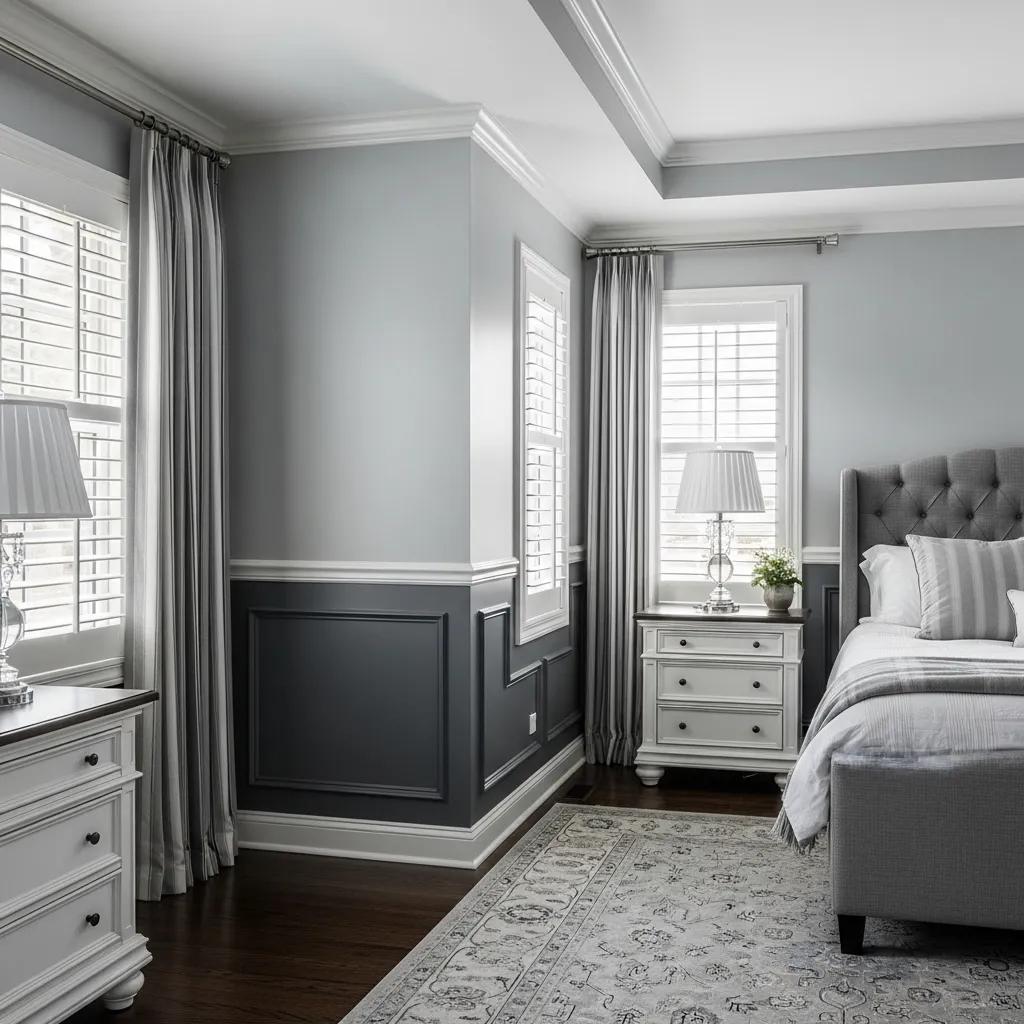
Adding wainscoting and creating a two-tone grey wall treatment gave my bedroom instant architectural character that the plain drywall walls completely lacked. The darker charcoal lower portion grounds the room and hides inevitable scuffs and marks better than light paint would, while the lighter upper walls keep the ceiling feeling high and the room from being too dark. The white wainscoting provides crisp definition between the two grey tones and adds traditional detail that elevates the whole space.
I had the wainscoting professionally installed because getting the measurements and angles perfect was beyond my DIY skills, but it was worth the investment for the custom, finished look it created. The two-tone approach with wainscoting feels classic and timeless rather than trendy, and it works beautifully in my traditional-style home. The grey color scheme keeps it feeling fresh and current rather than stuffy or old-fashioned. I’ve found that the darker lower walls make the room feel cozier and more grounded than floor-to-ceiling light paint would, while the lighter upper portion maintains brightness and airiness. This treatment proves that grey can work beautifully in traditional spaces, not just modern ones.
7. Industrial Grey with Exposed Brick and Metal
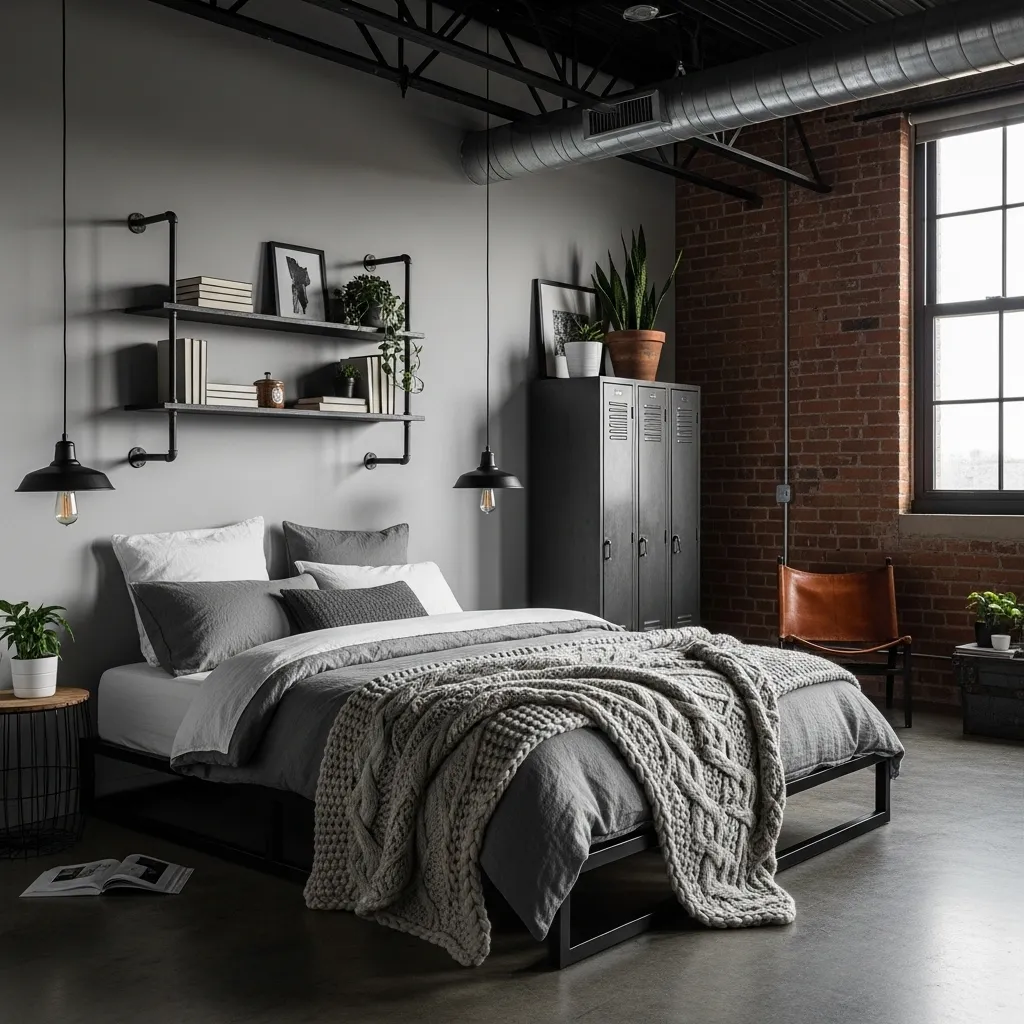
My industrial bedroom’s grey walls were specifically chosen to complement the existing exposed brick rather than compete with it. The medium grey provides a modern, neutral backdrop that lets the warm red tones of the brick stand out while tying together all the black metal elements throughout the space. I chose a grey with neutral undertones rather than warm or cool to work equally well with both the warm brick and cool metal.
The combination of grey walls, exposed brick, and black metal creates this urban loft aesthetic that I love—it feels masculine and minimal but not cold because of the warm brick tones and worn leather accents. The grey bedding in varied textures adds comfort and softness to balance the hard industrial materials. I kept the color palette restricted to greys, blacks, whites, and the natural brick tones, which creates cohesion and prevents the eclectic mix of industrial elements from feeling chaotic. The polished concrete floors continue the industrial vibe while adding another layer of grey that ties into the walls. This bedroom proves that grey is perfect for industrial style—it’s urban and contemporary while being neutral enough to let architectural features shine.
8. Soft Grey with Blush Pink Accents
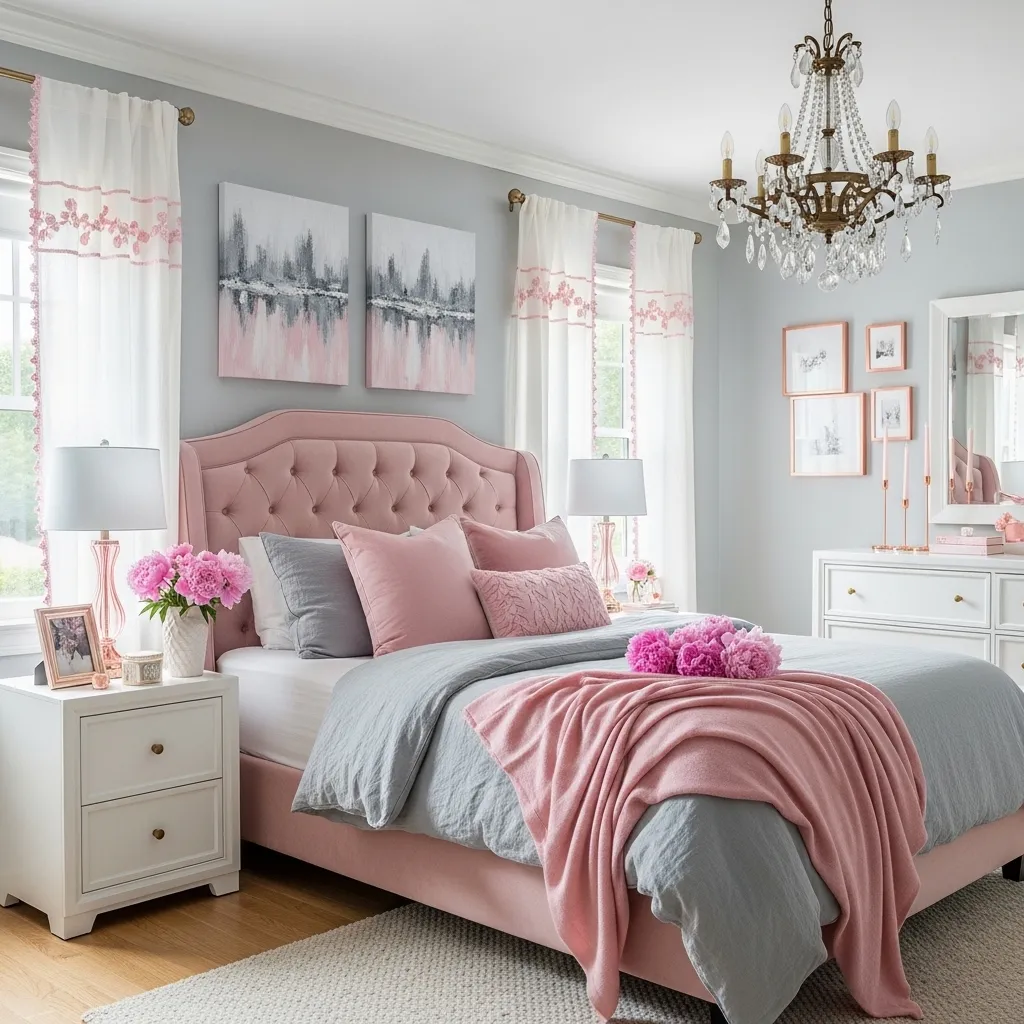
Pairing soft grey walls with blush pink accents created the perfect balance between sophisticated and feminine in my bedroom—the grey keeps it from being too sweet or girlish, while the pink adds warmth and romance that grey alone wouldn’t provide. I tested at least a dozen grey shades before finding this dove grey that has just enough warmth to complement blush without clashing. The combination feels current and elegant rather than dated or juvenile.
The key to making grey and blush work together is getting the proportions right—the grey is the dominant neutral backdrop, while pink appears in carefully chosen accent pieces rather than overwhelming the space. I use pink in soft, luxe materials like velvet and cashmere rather than bright or shiny finishes, which keeps the look sophisticated. The grey provides calm and sophistication, while the pink adds personality and warmth. I can easily change the accent color if I tire of pink—swapping to navy or emerald pillows would completely change the mood while keeping the grey foundation. This color combination has gotten so many compliments from guests who appreciate that it’s feminine without being overwhelming, sophisticated without being cold.
9. Striped Grey Wallpaper Feature Wall
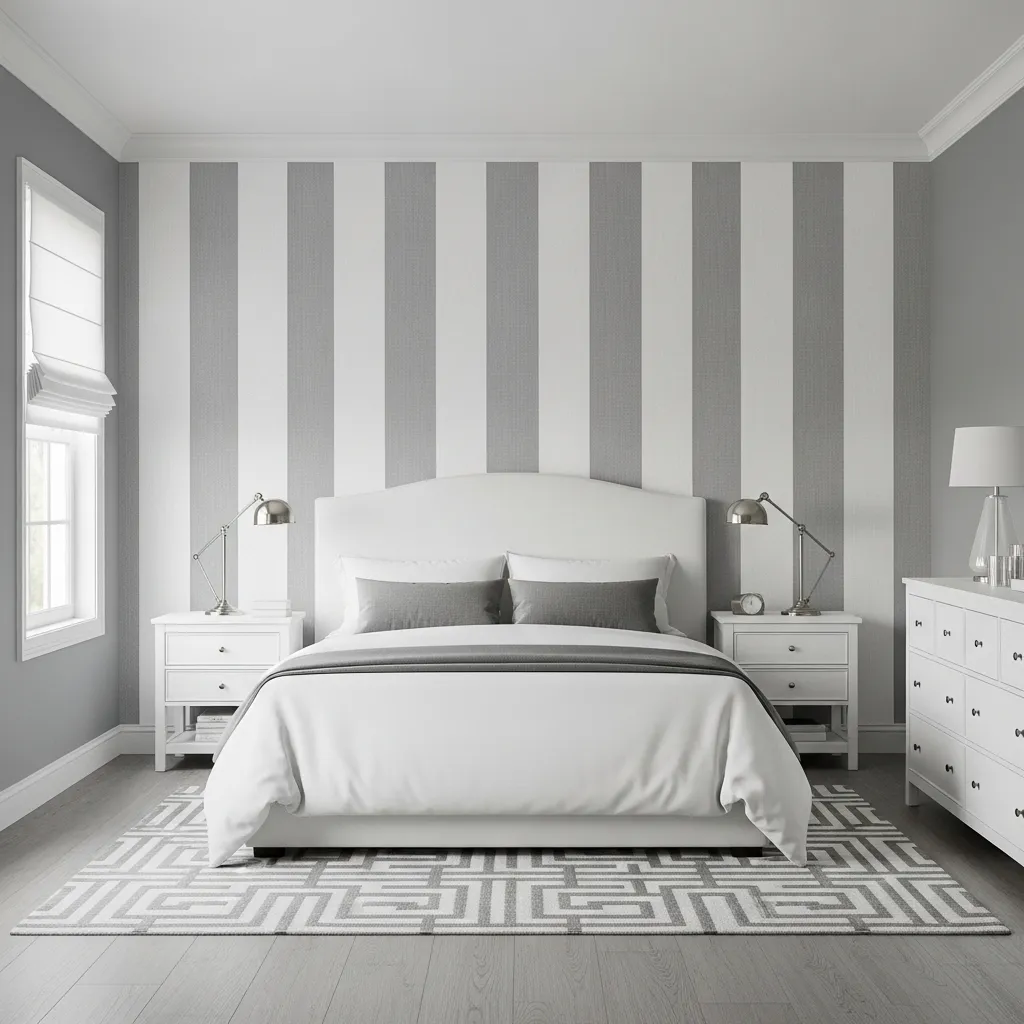
Adding striped wallpaper to my bedroom was my solution for wanting pattern and visual interest without introducing color. The vertical stripes create the illusion of higher ceilings and add architectural interest to an otherwise plain wall. I chose wide stripes rather than narrow ones because they feel more modern and sophisticated, and the subtle linen texture in the wallpaper adds depth that flat paint could never achieve.
The alternating grey and white creates pattern without being busy or overwhelming, and it ties into the grey paint on the other walls beautifully—I matched the paint to one of the stripe colors for cohesion. The wallpaper installation was straightforward, and I hired a professional to ensure the stripes were perfectly vertical and aligned. The monochromatic palette is calming and sophisticated, and the stripes add just enough visual interest to keep the room from feeling bland. I kept everything else simple and solid to let the wallpaper be the statement, and the result is this pulled-together, designer look that makes the bedroom feel intentional and polished. The stripes also provide a subtle backdrop for the bed without competing for attention the way a bold pattern or color would.
10. Cozy Grey with Faux Fur and Chunky Knits
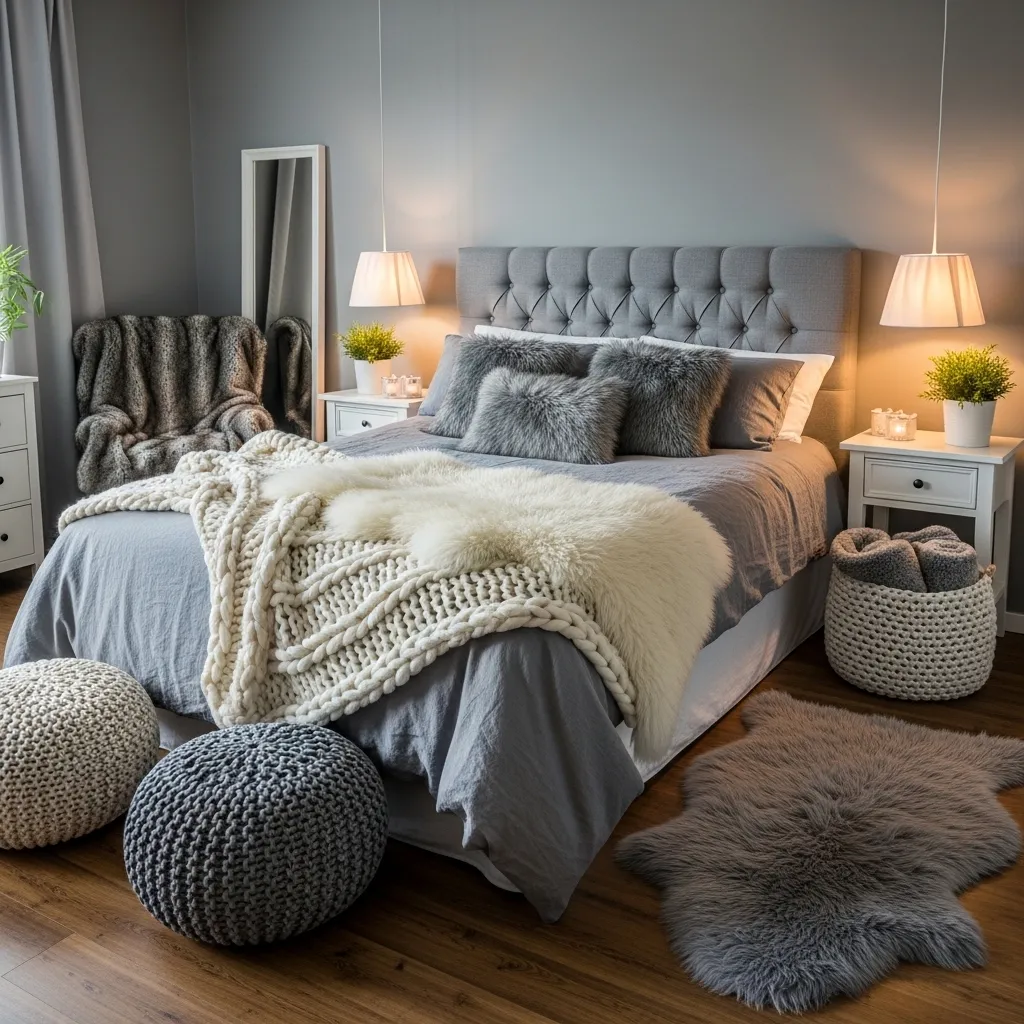
Creating this cozy-textured bedroom was all about layering soft, tactile materials that make you want to curl up and never leave. The grey walls provide a calm, neutral backdrop that makes all the white and cream textured elements pop while maintaining that wrapped-in-a-blanket feeling. I chose medium grey rather than light because it feels more enveloping and cozy, especially important during winter months when I want the bedroom to feel like a warm retreat.
The texture layering is intentional and excessive in the best way—chunky knits, plush faux fur, deep pile rugs, tufted upholstery—everything is soft and inviting. The monochromatic grey, white, and cream palette keeps all these different textures from feeling chaotic or overwhelming. I’m constantly reaching out to touch different textures throughout the room, and that tactile experience adds so much to the comfort level. The faux fur and chunky knits also add actual warmth, making the room physically cozier in addition to looking cozy. This bedroom is my response to the minimalist trend—I wanted maximum comfort and softness, and grey was the perfect neutral to let me layer endlessly without it feeling cluttered or busy.
11. Scandinavian Grey with Natural Light and Minimal Decor
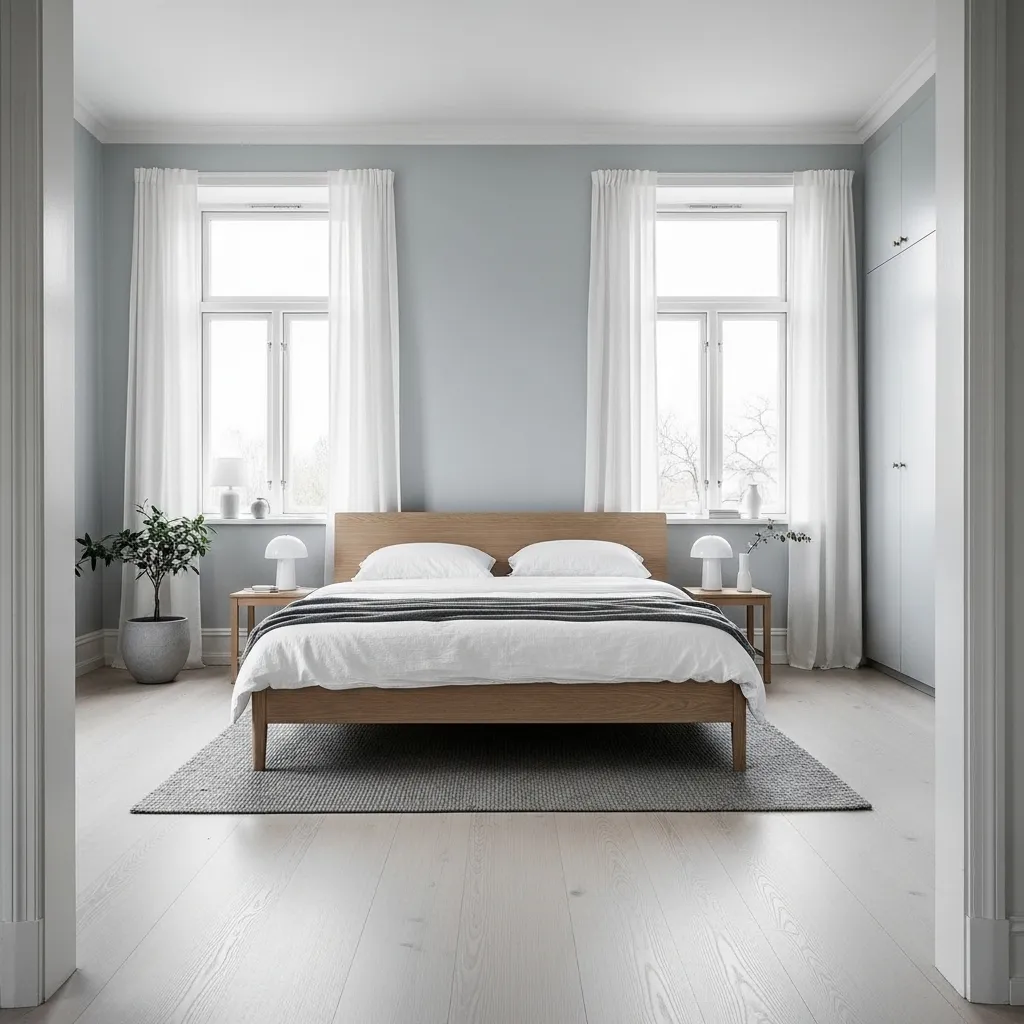
My Scandinavian-inspired bedroom came from a deep desire for calm and simplicity after years of collecting too much stuff and living with visual clutter. The pale cool grey walls create serenity without the starkness of pure white, and the minimal approach means every element is intentional and purposeful. I ruthlessly edited what I kept in the bedroom, storing or donating anything that didn’t serve a clear purpose or bring genuine joy.
The abundance of natural light is essential to this aesthetic—I replaced heavy curtains with simple linen panels that frame the windows without blocking light. The grey walls reflect and soften the natural light beautifully, creating this gentle, diffused glow throughout the day. The minimal decor doesn’t mean the room lacks warmth—the natural wood floors and furniture add organic warmth, and the textures of linen, wool, and wood provide subtle interest without clutter. The restricted color palette of greys, whites, and natural wood creates cohesion and calm. This bedroom has genuinely improved my sleep and mental clarity—there’s something about the minimal, calm environment that makes it easier to relax and let go of the day’s stress. The grey provides sophistication and depth while maintaining the light, airy feeling essential to Scandinavian design.