11 Small Home Office Interior Design Ideas
Working from home has become such a huge part of our lives, and figuring out how to carve out a productive workspace in a small apartment or house can feel like solving a really tricky puzzle. Whether you’re tucking a desk into a corner of your bedroom, converting a closet into a mini office, or trying to make a shared living space pull double duty, small home office design is all about maximizing every single inch while still creating an environment that actually makes you want to work. From clever storage solutions that hide clutter to color schemes that boost focus without feeling sterile, these ideas prove you don’t need a dedicated room to have a workspace that’s both functional and inspiring.
I spent years working at my kitchen table before finally admitting I needed an actual designated office space, even if it had to be tiny. The difference it made in my productivity and mental clarity was honestly shocking—there’s something about having a specific spot that signals to your brain “okay, this is work time” versus just plopping down wherever with your laptop. I started researching how other people were making small offices work, and I was blown away by the creativity I found. People were transforming unused nooks under stairs, installing floating desks in hallways, and using room dividers to create office zones in studio apartments.
What I’ve learned through trial and error is that small home offices need to work harder than big ones. Every piece of furniture needs to earn its place by being either beautiful, functional, or ideally both. You can’t just throw a desk in a corner and call it done—you need to think about lighting so you don’t strain your eyes during video calls, storage that keeps supplies accessible but not visible, and personal touches that make the space feel like yours rather than a corporate cubicle. The best small offices I’ve seen feel intentional and curated, like someone really thought about how they work and designed the space around those specific needs rather than just copying what they saw in a magazine.
1. Built-In Desk Nook with Floor-to-Ceiling Shelving
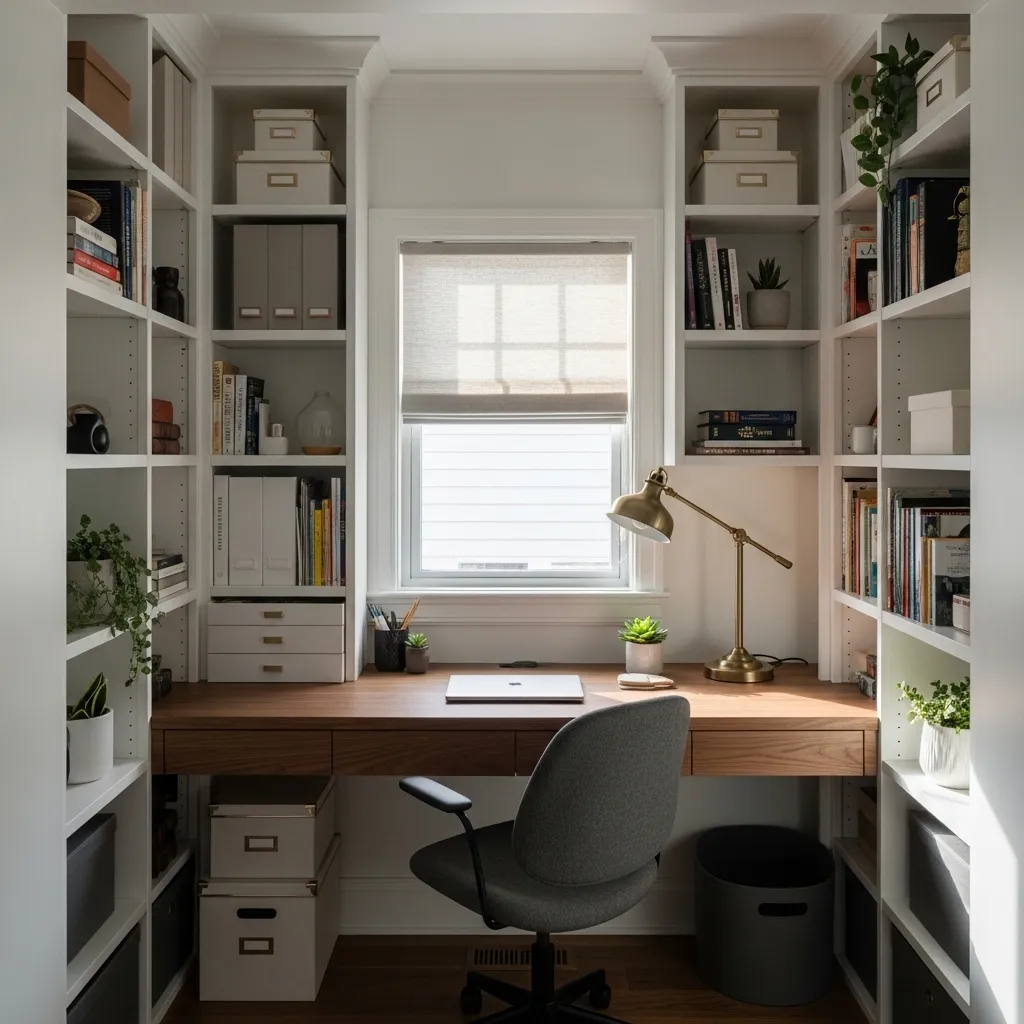
Built-in desks are absolute game-changers for small spaces because they use every millimeter of available wall space without eating into your room the way freestanding furniture does. I had a carpenter build mine into an awkward alcove that was basically useless before, and now it’s the hardest-working spot in my entire apartment. The floor-to-ceiling shelving means I can store everything from office supplies to reference books to decorative objects without needing a single additional piece of furniture cluttering up the space.
What I love most about this setup is how custom it feels—the desk height is perfect for my chair, the shelves are spaced exactly for my book sizes, and there’s even a hidden power strip built into the desktop so cords don’t dangle everywhere. The enclosed nook feeling also helps me focus because it creates this natural boundary between work space and living space, even though they’re technically in the same room. When I’m done working, I can literally just close my laptop and walk away, and the office disappears into what looks like a stylish bookshelf wall.
2. Murphy Desk that Folds into the Wall
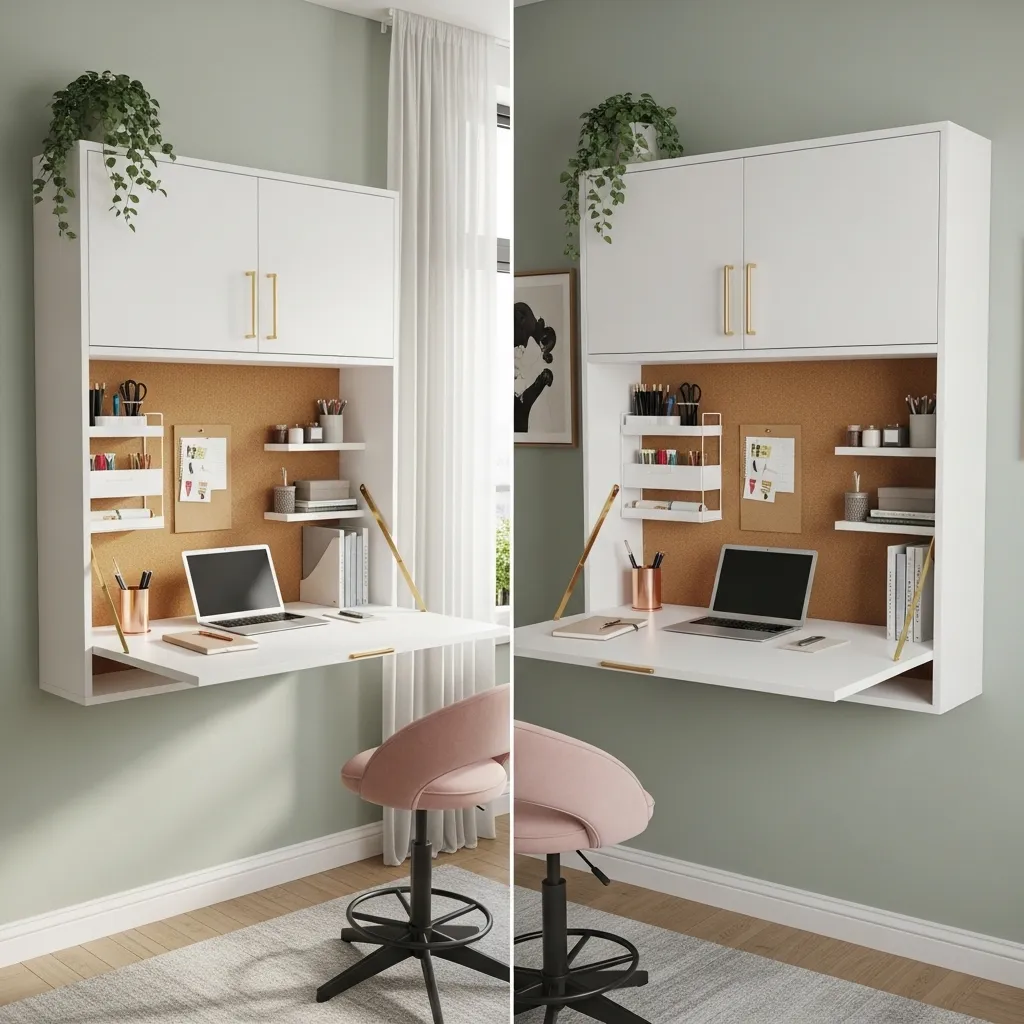
I discovered Murphy desks when I was living in a truly tiny studio and needed my home office to literally disappear when I wasn’t working. The transformation is honestly magical—one minute you have a full functional workspace, the next minute it’s just a sleek panel on the wall and you’ve reclaimed your entire floor space. Mine has surprised every guest who’s visited because they have no idea there’s a desk hiding in plain sight until I show them.
The built-in organization on the interior is key because you need everything to stay in place when you close it up. I keep pens, notepads, and my charging cables in the little compartments, and there’s even a fold-down section that holds my keyboard when not in use. It took me about a week to get into the rhythm of folding it away at the end of each workday, but now it’s actually become this nice ritual that signals my brain that work is over. Plus, not seeing my desk during off-hours has genuinely improved my work-life balance because I’m not constantly reminded of emails I should answer or projects I should finish.
3. Closet Conversion Office with Pocket Doors
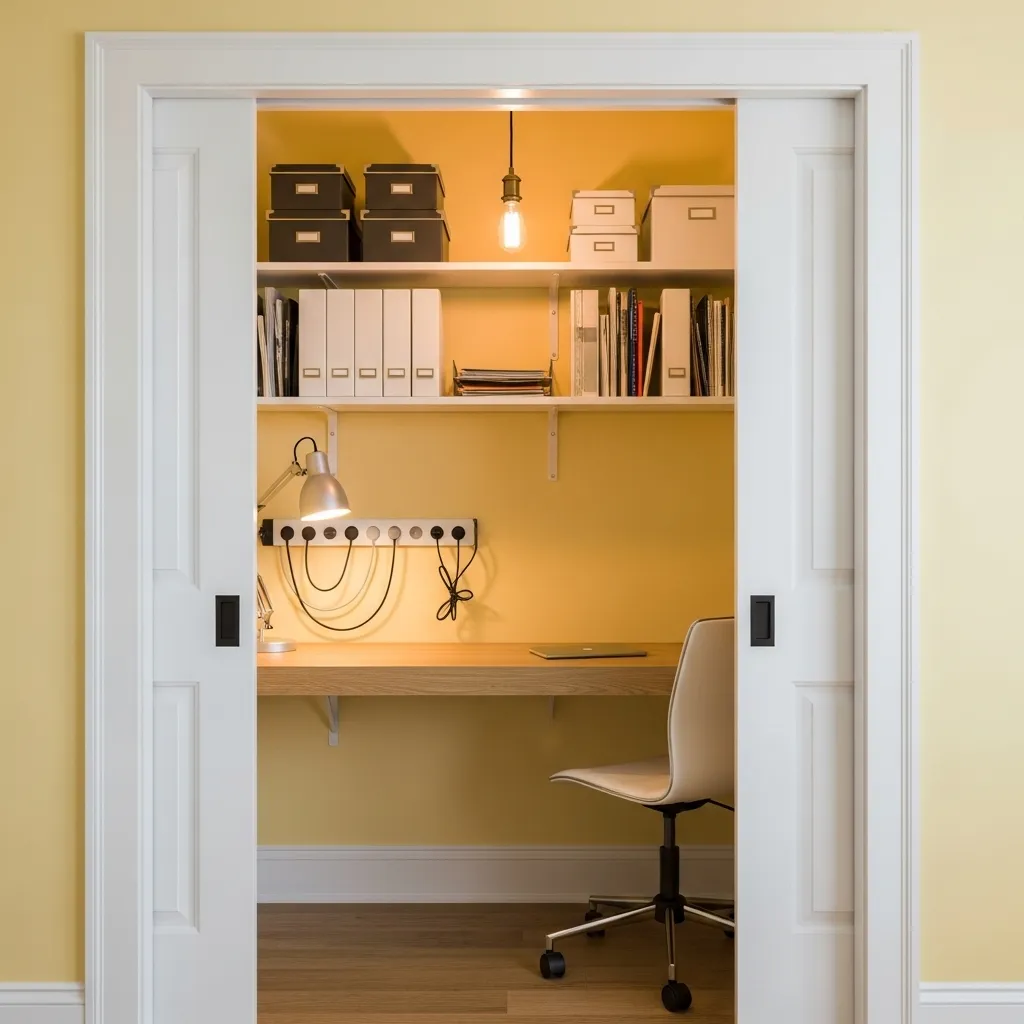
Converting a closet into an office sounded extreme when my friend first suggested it, but after doing it I tell everyone it’s the smartest space-saving move I’ve ever made. I wasn’t using that coat closet for much anyway since I had other storage, and suddenly I had a completely contained workspace that could be closed off with those beautiful pocket doors whenever I needed the room for other things. The best part is that it’s legitimately quiet and private—when those doors slide shut, I’m in my own little productivity cave.
The key to making a closet office work is installing really good lighting because you’re basically creating a space with no windows. I put in that pendant light plus a desk lamp, and it’s actually better lit than my old desk-in-the-corner setup was. The narrow depth of a closet forces you to be ruthlessly minimal about what you keep in there, which has honestly made me a more organized person overall. I keep only active project files and daily essentials in the closet office, and everything else lives in proper storage elsewhere, which means my actual workspace stays clean and focused.
4. Window Seat Desk with Storage Drawers
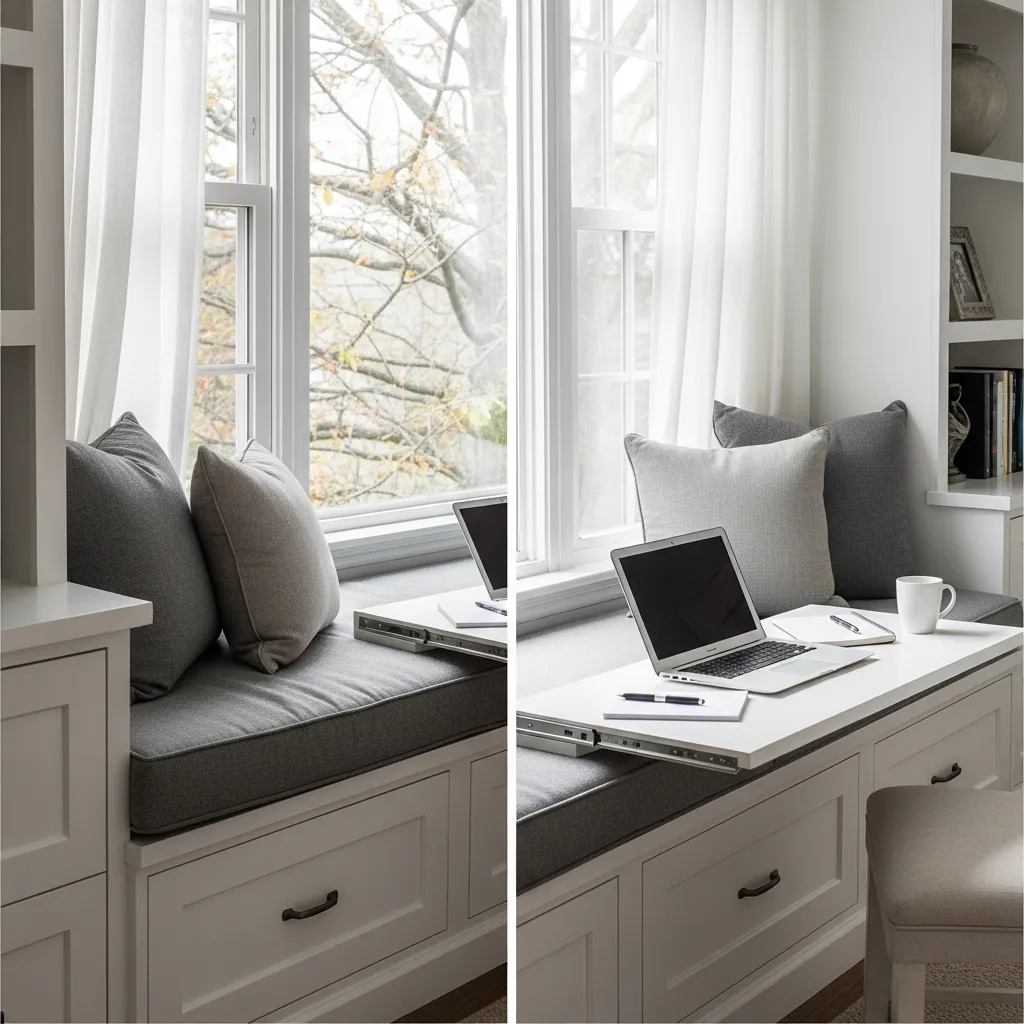
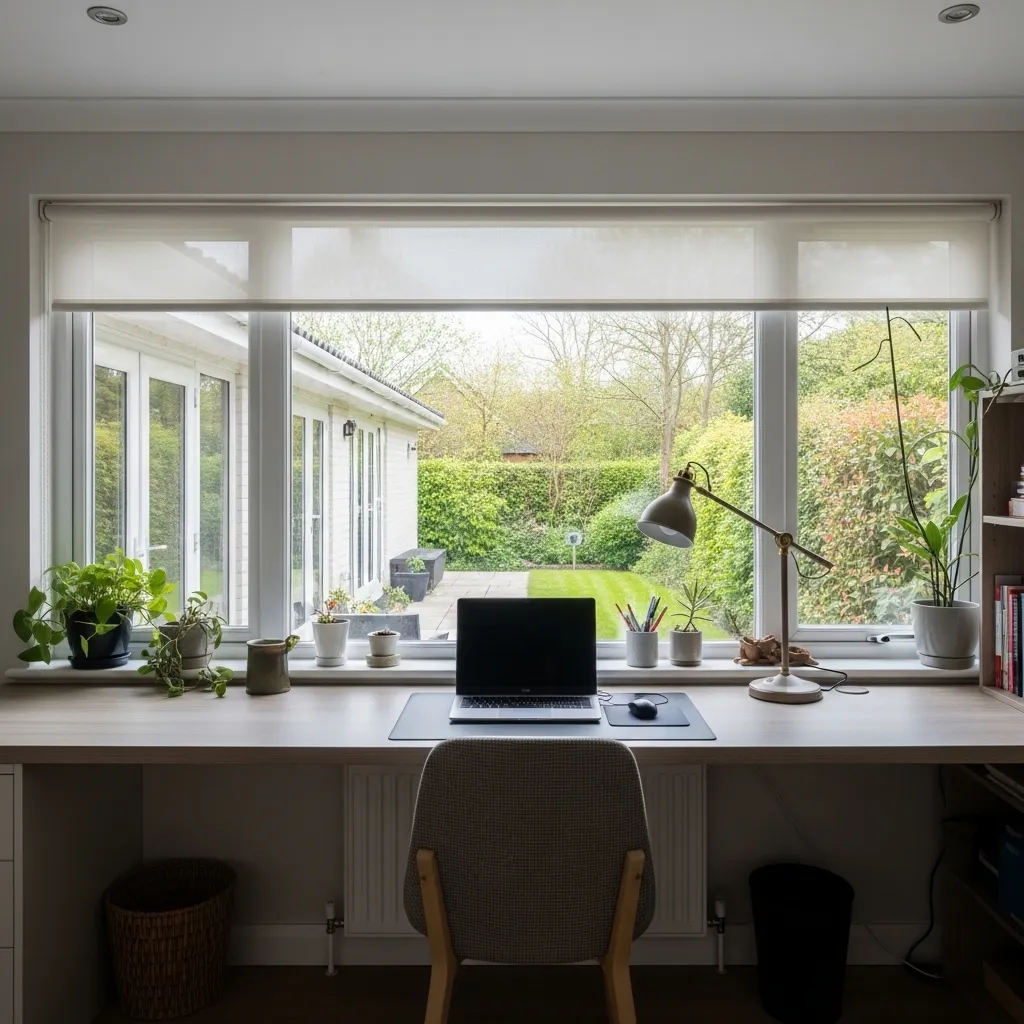
My window seat desk came about because I had this beautiful bay window that was completely wasted space—I’d occasionally sit there to read, but mostly it just collected throw pillows. Adding the pull-out desk surface transformed it into my favorite place to work because I get incredible natural light and an actual view of trees instead of staring at a wall. The storage underneath is surprisingly spacious and holds everything from extra office supplies to files I don’t need daily access to.
What makes this setup work so well is that it doesn’t look like an office at all when the desk is pushed back in. It just looks like a cozy window seat, which is perfect for maintaining the aesthetic of my living room while still having a functional workspace. I keep the removable cushions on a nearby shelf during work hours and pop them back when I’m done, which takes literally five seconds. Working with natural light has reduced my eye strain dramatically, and there’s something psychologically refreshing about being able to look up from my screen and see leaves moving in the breeze instead of another wall.
5. Industrial Pipe Desk with Reclaimed Wood
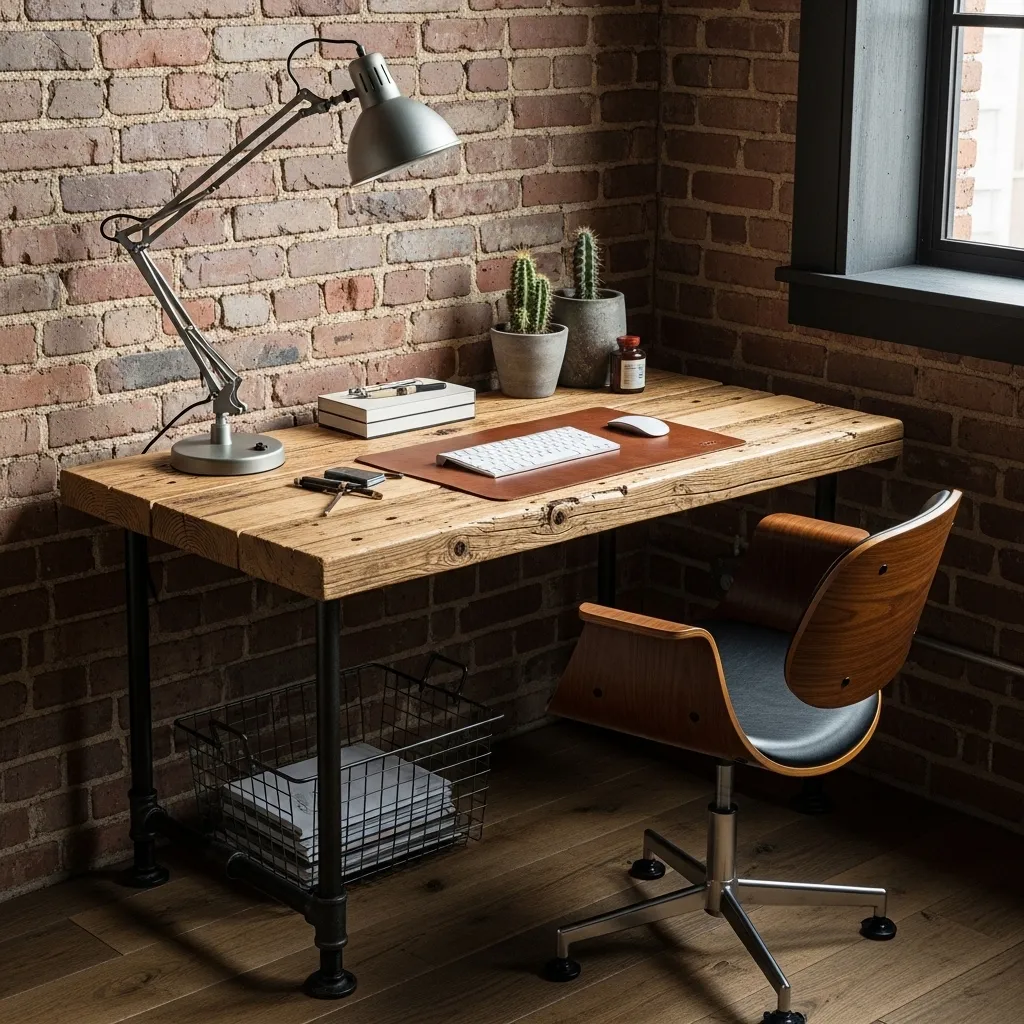
I built this desk myself over a weekend using plumbing pipes and a reclaimed wood plank I found at an architectural salvage shop, and it cost a fraction of what buying something similar would have. The industrial look fits perfectly with my loft’s aesthetic, and there’s something really satisfying about working at a desk you literally constructed yourself. The pipe structure is incredibly sturdy—probably more solid than most store-bought desks—and I love that I could customize the exact height and width to fit my corner perfectly.
The reclaimed wood adds so much character with all its natural imperfections and history. I sanded it smooth but kept the weathered look and finished it with a matte sealer to protect against coffee spills. The open design underneath keeps the space feeling less bulky than a traditional desk would, which is crucial in a small office area. I’ve gotten so many compliments on this desk, and several friends have asked me to help them build their own versions, which has become this unexpected bonding activity.
6. Scandinavian Minimalist Corner with Floating Desk
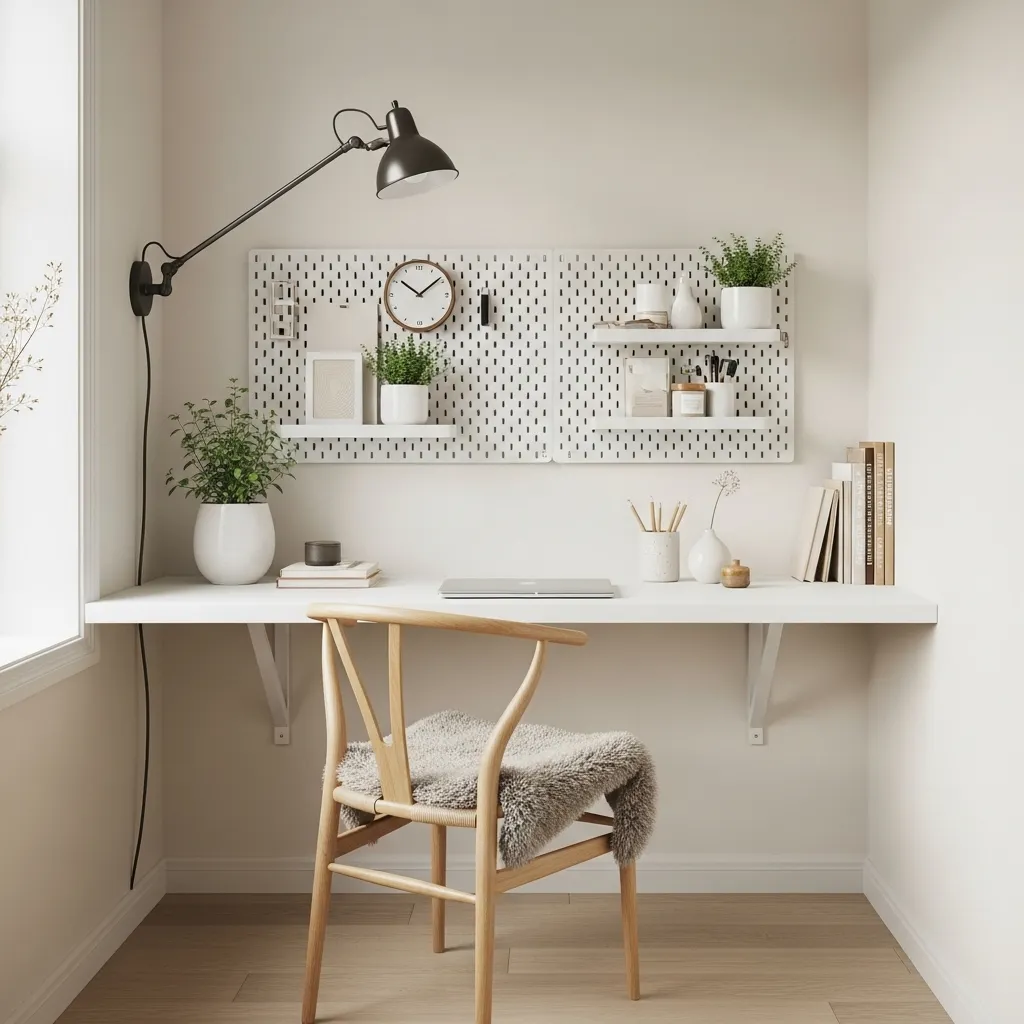
The floating desk was a revelation for making my tiny office feel spacious because there’s literally nothing underneath it—no bulky legs or pedestals eating up visual space. I mounted it at exactly the right height for my ergonomic chair, which has made such a difference in my posture during long work days. The Scandinavian approach of keeping only essential items visible has forced me to be really intentional about what deserves a spot on my desk, and I’ve found that less stuff genuinely equals better focus.
The pegboard is my favorite organizational tool because I can rearrange it whenever my needs change without putting new holes in the wall. I keep my most-used supplies within arm’s reach, and the white-on-white color scheme keeps it from looking cluttered even when things are hanging there. This whole setup cost surprisingly little but looks expensive because of the clean, thoughtful design. The natural light combined with the pale colors makes the corner feel bigger than it actually is, and at the end of the day, I can clear the desk completely in about thirty seconds since there’s no drawer clutter to deal with.
7. Dual-Purpose Dining Table Home Office
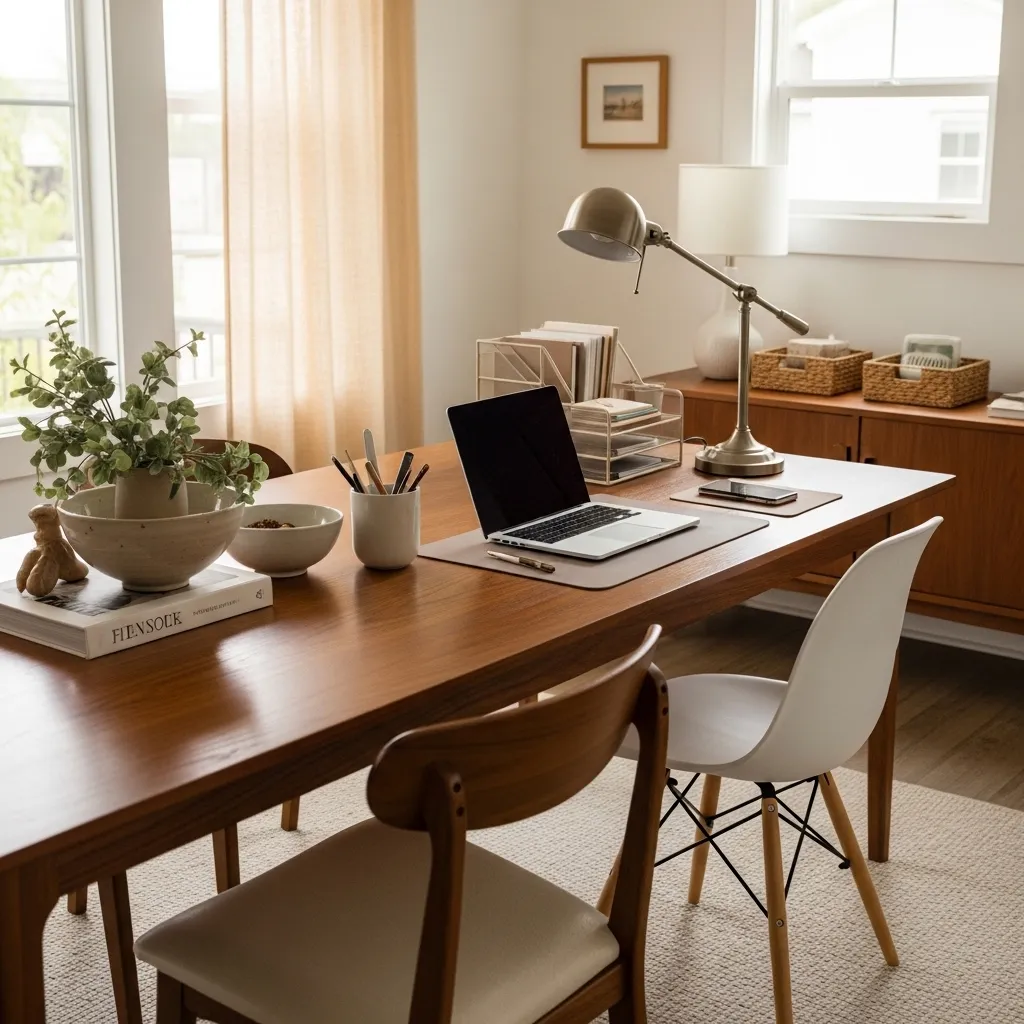
Not everyone has the luxury of a dedicated office room, and my dining table has become my workspace out of necessity—but with some intentional setup, it actually works beautifully. The key is creating a system where you can transition between dining mode and work mode quickly without it feeling like a huge production. I keep a decorative tray that holds all my work essentials, so when dinner time comes, I just lift the entire tray and stick it on the sideboard, and the table is ready for eating in under a minute.
Investing in a really nice dining table was worth it because I stare at it for eight hours a day, and having something beautiful makes work feel less like drudgery. The mid-century design is timeless and works equally well for dinner parties and Zoom calls. I’ve learned to embrace the dual nature of the space rather than fighting it—during breaks, I’ll sometimes eat lunch at the other end of the table while still keeping an eye on my work, which feels less isolating than eating in another room. The biggest challenge is discipline about clearing everything away at the end of the workday, but I’ve made it a non-negotiable ritual that helps me mentally separate work time from personal time.
8. Behind-the-Sofa Desk Console
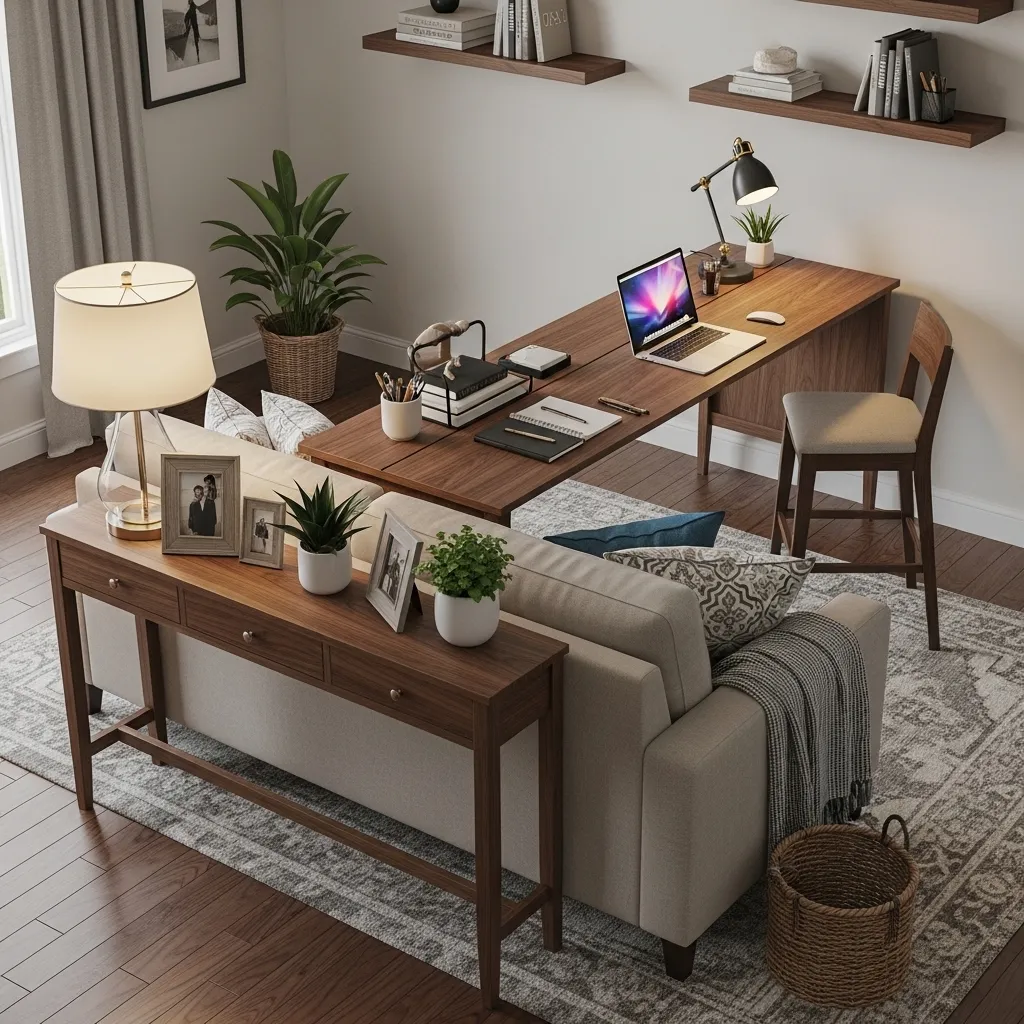
Positioning a desk behind the sofa was one of those ideas that seemed weird until I tried it and realized it’s actually genius for small spaces. The sofa provides a natural divider between the living area and work area, and from the living room side, you don’t even see the office setup—it just looks like a normal console table with pretty decorative stuff on it. The narrow depth is perfect for tight spaces, and I can literally swivel my chair to the right when I need to grab something from the living room.
The biggest surprise was how much I enjoy facing the wall while working instead of looking out at the room—it’s way less distracting than my old setup where I could see the TV and couch tempting me. I added those floating shelves right at eye level for books and supplies, which keeps everything accessible without needing a bulky bookcase. When friends come over, they genuinely don’t realize my living room contains a full office setup unless I point it out, which is exactly the seamless integration I was going for. The backless stool was a specific choice because a regular desk chair would look weird peeking over the sofa, but the stool completely disappears when tucked under the console.
9. Bright White Office with Pop of Color Accessories
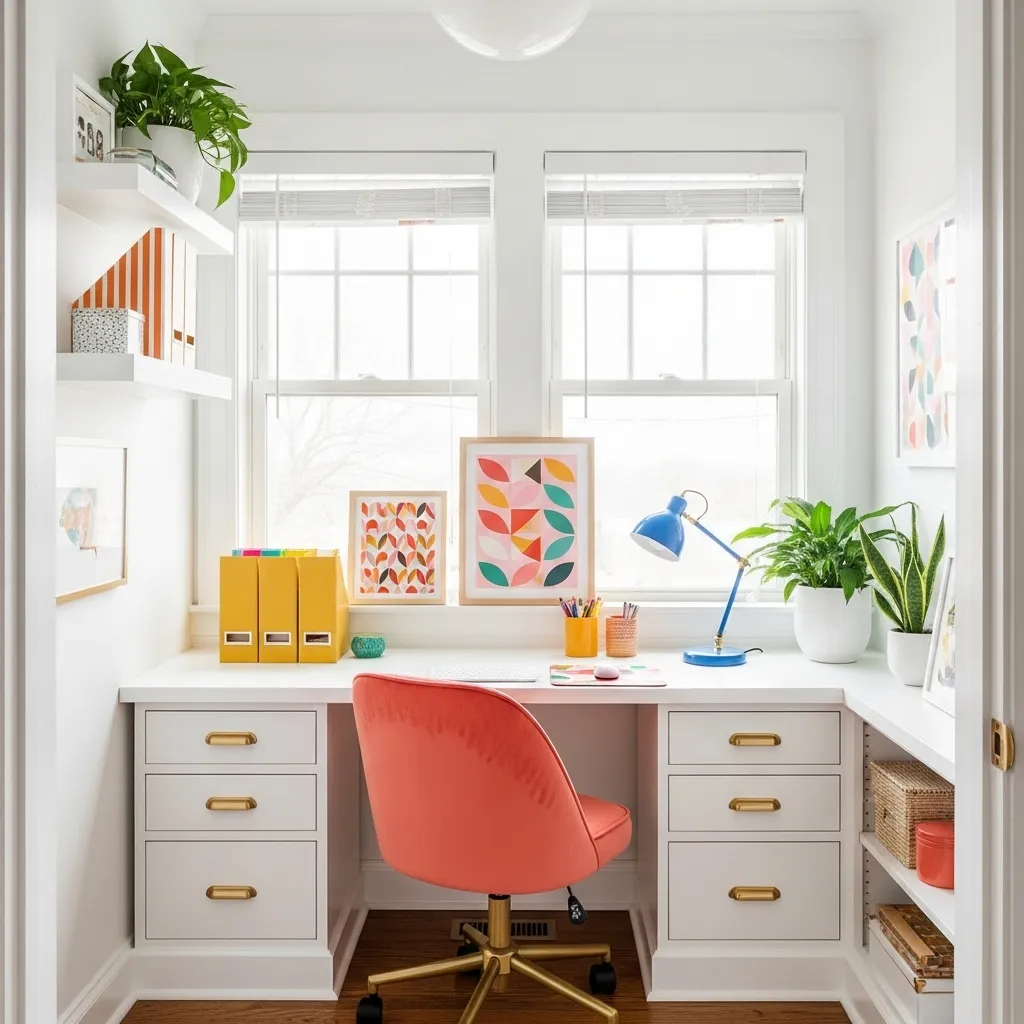
Painting my entire office white was a bold move that some people thought would feel too clinical, but paired with really punchy colored accessories, it’s become this energizing space that I genuinely love being in. The white base makes the room feel significantly larger than it is—light just bounces around in a way that darker walls never achieved. What I didn’t expect was how easy it would be to completely change the vibe just by swapping out accessories; when I get bored with coral and mustard, I can switch to navy and emerald without repainting anything.
The colorful elements also serve as mood boosters on grey workdays when I’m struggling to feel motivated. There’s actual psychology behind how color affects productivity, and I’ve found that the bright pops of warm colors make me feel more energetic and creative than my old beige office ever did. I keep the white furniture and architecture constant but treat accessories like a wardrobe that can change with seasons or my current mood. The key is not going overboard—I stick to three or four accent colors max so it feels intentional rather than chaotic.
10. Library Ladder Office with Vertical Book Storage
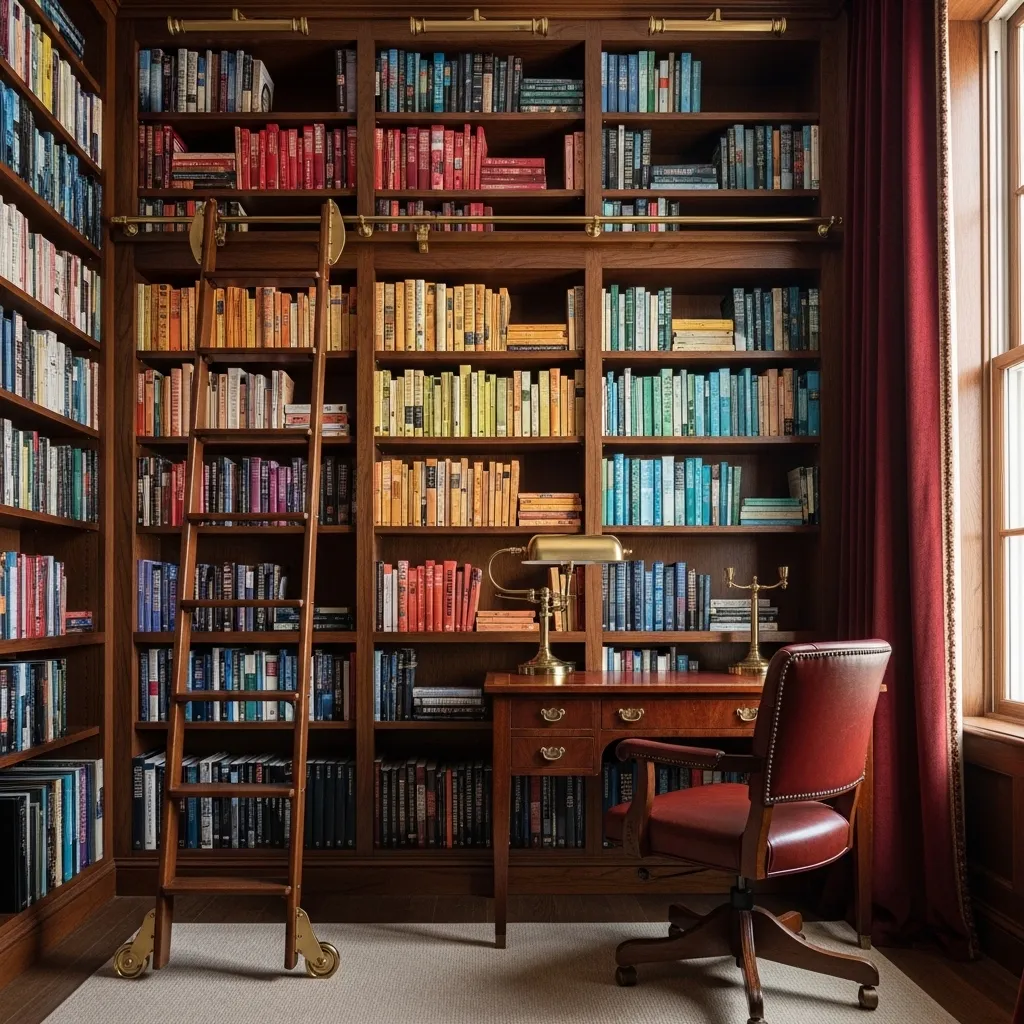
I’ve always been a book person, so when I was designing my small office, making the books themselves the feature seemed obvious—and that rolling ladder was a splurge that I’ve never regretted. It’s not even just functional (though I definitely use it to reach the top shelves); it’s also this beautiful architectural element that makes the space feel like a proper library despite being maybe eight feet wide. Organizing the books by color created this stunning visual gradient that’s become an actual talking point when people visit.
The vertical storage was crucial because floor space is limited, but I had wall height to work with. Going all the way to the ceiling meant I could fit my entire book collection plus office supplies on those shelves without needing any additional storage furniture. The antique desk was a flea market find that I refinished myself, and pairing it with the modern functionality of having everything I need within arm’s reach (or a quick ladder climb) creates this perfect blend of old and new. On video calls, people always comment on the bookshelf background, and I’ve started noticing which books spark conversations based on their spines being visible.
11. Tech-Integrated Standing Desk Setup
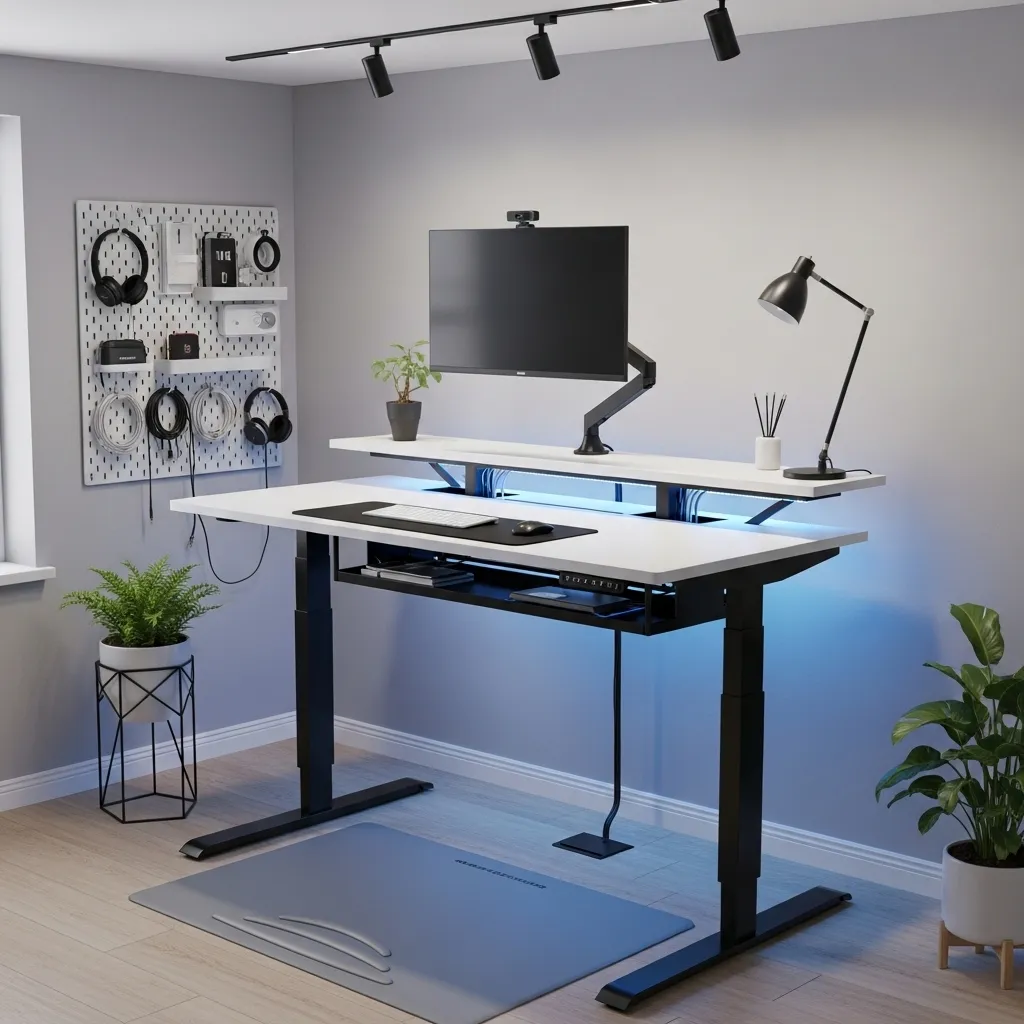
Investing in an electric standing desk changed my entire relationship with my home office because sitting all day was genuinely making my back hurt and my energy plummet. The ability to switch between sitting and standing throughout the day with just a button press means I actually do it—unlike my old manual standing desk converter that was such a pain to adjust that it stayed in sitting mode permanently. The desk I chose has programmable height presets, so I can go from my perfect sitting height to my perfect standing height in about three seconds.
The cable management was surprisingly important because standing desks move up and down, and you need cords that can handle that without unplugging or getting tangled. I spent a weekend routing everything through the built-in channels and using cable clips, and now it looks clean from every angle. The anti-fatigue mat makes standing comfortable enough that I can do it for a couple hours at a time, and I’ve noticed my afternoon energy crashes have basically disappeared. The monitor arm was another game-changer because I can adjust the screen height when I switch positions, maintaining good ergonomics whether I’m sitting or standing. The whole setup feels very future-forward and has made working from home feel more legitimate and less like I’m just camping out wherever with my laptop.