11 Study Room Ideas
Study rooms have become essential home spaces in our increasingly remote-work and lifelong-learning world—dedicated areas for focused work, studying, reading, creative pursuits, or simply thinking without the distractions that pervade shared living spaces. Unlike kitchen tables or bedroom corners that serve multiple purposes, a proper study room signals to both your brain and your household that this is space for concentration and productivity. The physical separation from leisure and domestic areas creates crucial psychological boundaries that help you shift into work or study mode, while the ability to customize the environment specifically for focus—from lighting to acoustics to organization—creates conditions where deep work and learning can actually happen.
What makes study rooms so valuable is their flexibility and personalization. Unlike corporate offices with standard-issue furniture and fluorescent lighting, your home study room can be tailored precisely to how you work best. Maybe you need complete silence and minimal visual distraction, or perhaps you thrive with music and inspirational quotes surrounding you. You might require extensive book storage and research materials within arm’s reach, or prefer a minimalist setup with just a laptop and a plant. Some people need natural light flooding the space, while others work best in controlled artificial lighting. The study room becomes an extension of your mind and work style, creating an environment that supports rather than hinders your particular needs.
The design challenges of study rooms center on balancing aesthetics with function, creating spaces that are both beautiful enough to inspire you and practical enough to support hours of focused work. This means thoughtful furniture selection—ergonomic seating that prevents fatigue, desks at proper heights with adequate surface area, appropriate storage that keeps essentials accessible without creating clutter. It requires excellent lighting—task lighting for detailed work, ambient lighting to prevent eye strain, and possibly natural light for mood and circadian rhythm support. And it demands organization systems that maintain order without being rigid or complicated. Let’s explore these study room ideas and create a space that genuinely supports your learning, work, and creative endeavors.
1. Floor-to-Ceiling Built-In Bookshelves
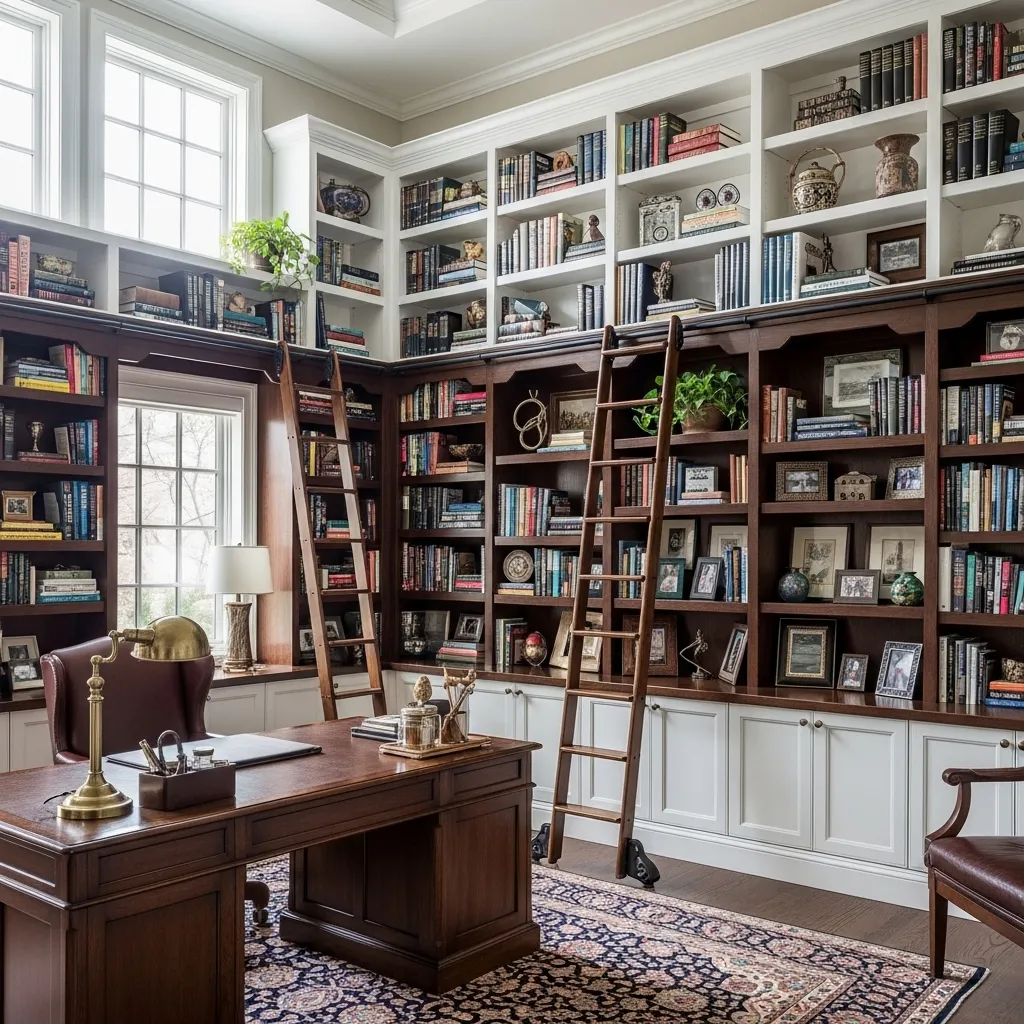
Floor-to-ceiling built-in bookshelves create the ultimate study room by surrounding you with knowledge, reference materials, and the objects that inspire you. The comprehensive shelving maximizes vertical storage, displays your entire collection beautifully, and creates genuine library atmosphere that elevates study and work from mundane tasks to something more significant and inspiring. The permanent, custom-built nature adds real architectural value to your home.
The key is designing shelving that fits your actual collection and needs. Include adjustable shelves to accommodate varying book heights. Consider closed cabinets at the bottom for hiding less attractive necessities or storing supplies. The rolling ladder isn’t just decorative—it makes upper shelves genuinely accessible and functional. Organize books in whatever system works for you—by subject, author, color, or size. Mix in personal objects, photographs, plants, and decorative items to prevent the shelves from looking too uniform or library-sterile. Proper lighting—either built-in shelf lighting or well-placed floor and desk lamps—ensures you can read titles and work comfortably. The result is a study room that feels substantial, permanent, and genuinely conducive to deep thinking and learning.
2. Minimalist Scandinavian Study
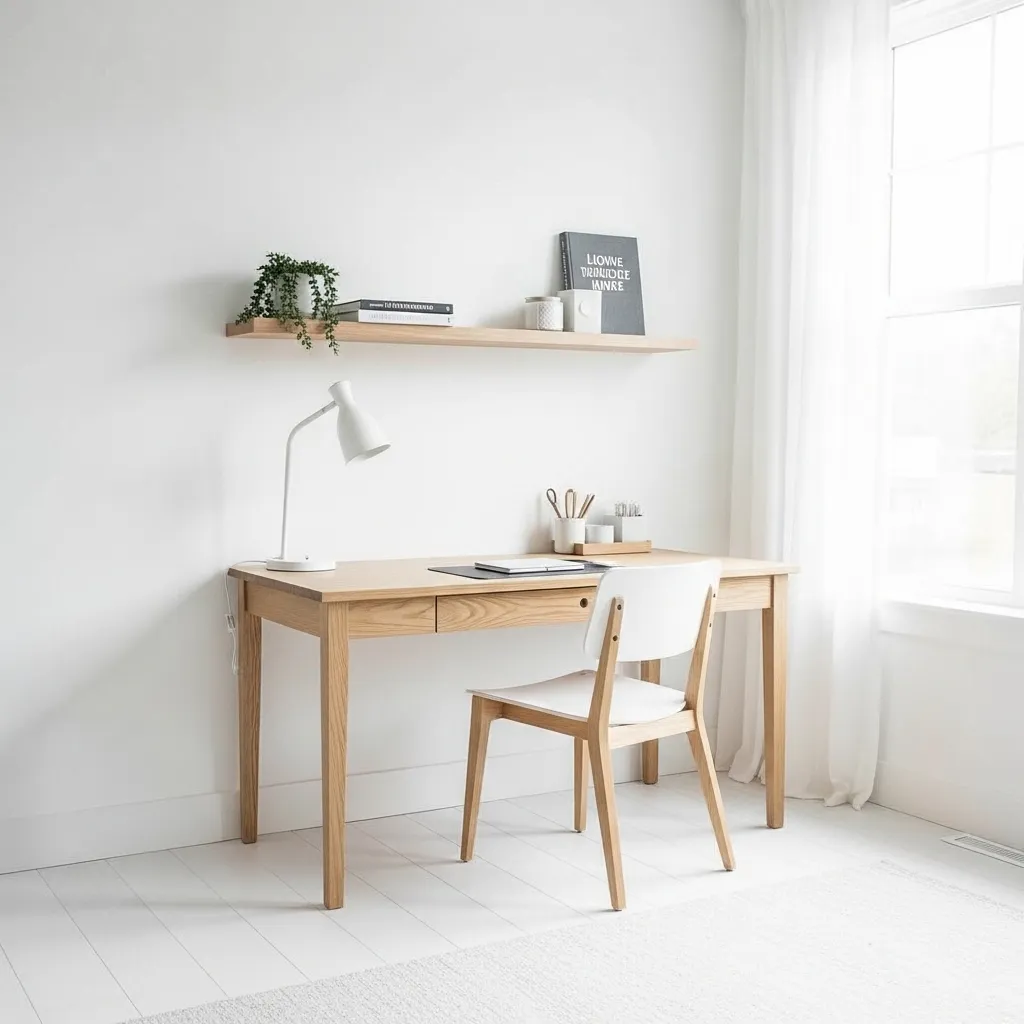
The minimalist Scandinavian approach creates study rooms stripped to essentials, eliminating visual clutter and distraction to create maximum focus and mental clarity. The light woods, white surfaces, and abundance of natural light create bright, airy spaces that feel open and calm rather than closed-in or overwhelming. This approach recognizes that sometimes less truly is more—fewer objects means fewer things pulling your attention away from work.
The key is ruthless editing. Keep only what you actively use and genuinely need. Store reference materials elsewhere and rotate them in only when needed. Use hidden storage—desk drawers, closed cabinets in another room—for supplies and materials. The visible surfaces should be nearly empty except when actively working. Natural materials—wood, linen, ceramic—add warmth without visual busyness. One or two carefully chosen items—a special plant, one piece of inspiring art—provide personality without clutter. The minimalist study works beautifully for people who find visual stimulation distracting and need maximum simplicity to concentrate. The calm environment supports deep focus and clear thinking.
3. Home Office with Standing Desk Option
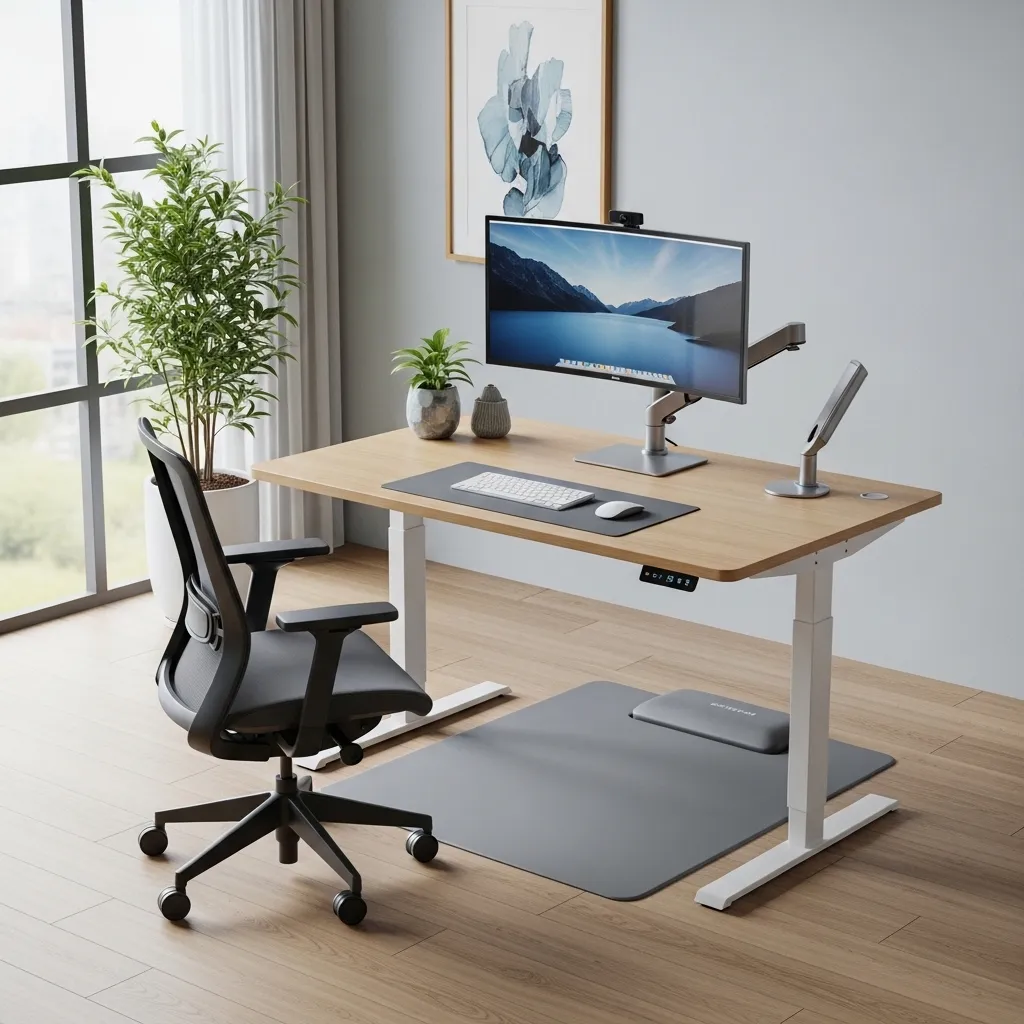
Standing desks address the health concerns of prolonged sitting by allowing position changes throughout the workday. Electric adjustable desks make transitioning between sitting and standing effortless—preset buttons can save your preferred heights for instant adjustment. The ability to change positions reduces fatigue, improves circulation, and many people find it helps maintain focus and energy during long work sessions.
The key is setting up both positions correctly. Sitting position should have the desk surface at elbow height with feet flat on the floor or footrest. Standing position should also have the work surface at elbow height to prevent neck and shoulder strain. A quality anti-fatigue mat makes standing comfortable for extended periods. Start by alternating positions—perhaps 20-30 minutes standing, then sitting for a while—rather than standing all day which can cause its own issues. Include an ergonomic chair for sitting work that properly supports your back. Pair the functional desk with a pleasant environment—natural light, plants, organized storage—to create a study room that supports both physical health and productivity.
4. Cozy Reading Corner Study
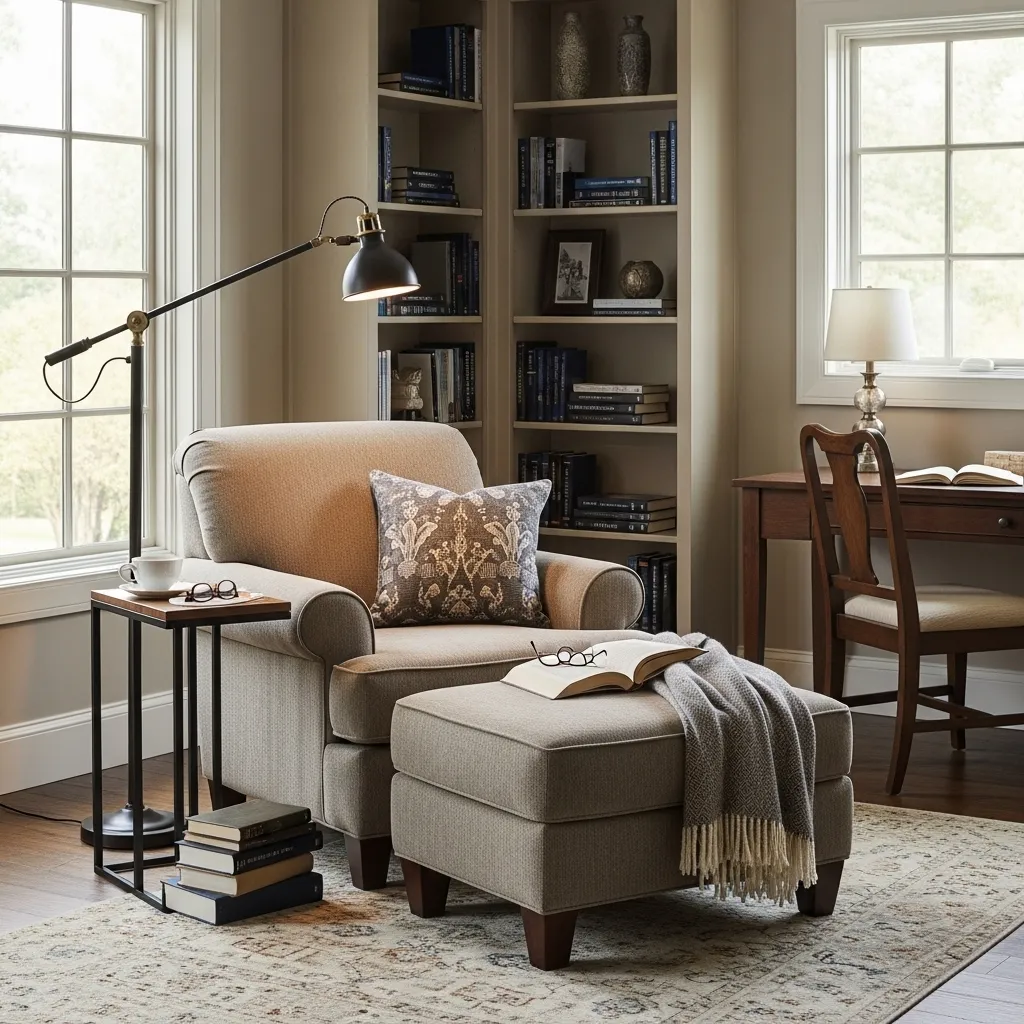
Not all study rooms need to be desk-centric—for people whose work involves extensive reading, research, or contemplation, a comfortable reading chair might be more important than a large desk. This approach recognizes that much intellectual work happens while reading in comfort rather than typing at a desk. The cozy study creates an environment conducive to long reading sessions, deep thinking, and absorbing complex material.
The chair selection is crucial—it needs to be truly comfortable for extended sitting with proper back support, arm height for holding books, and ideally an ottoman for proper leg position. The reading light must be excellent—positioned over the shoulder to illuminate pages without glare, bright enough for extended reading without eye strain. Surrounding bookcases keep materials accessible without leaving the chair. Include a small writing desk or lap desk for note-taking when inspiration strikes. This study room works beautifully for academics, writers, researchers, or anyone whose work involves deep reading and thinking. The comfortable, cozy environment supports the kind of sustained concentration that difficult reading requires.
5. Creative Studio with Large Work Table
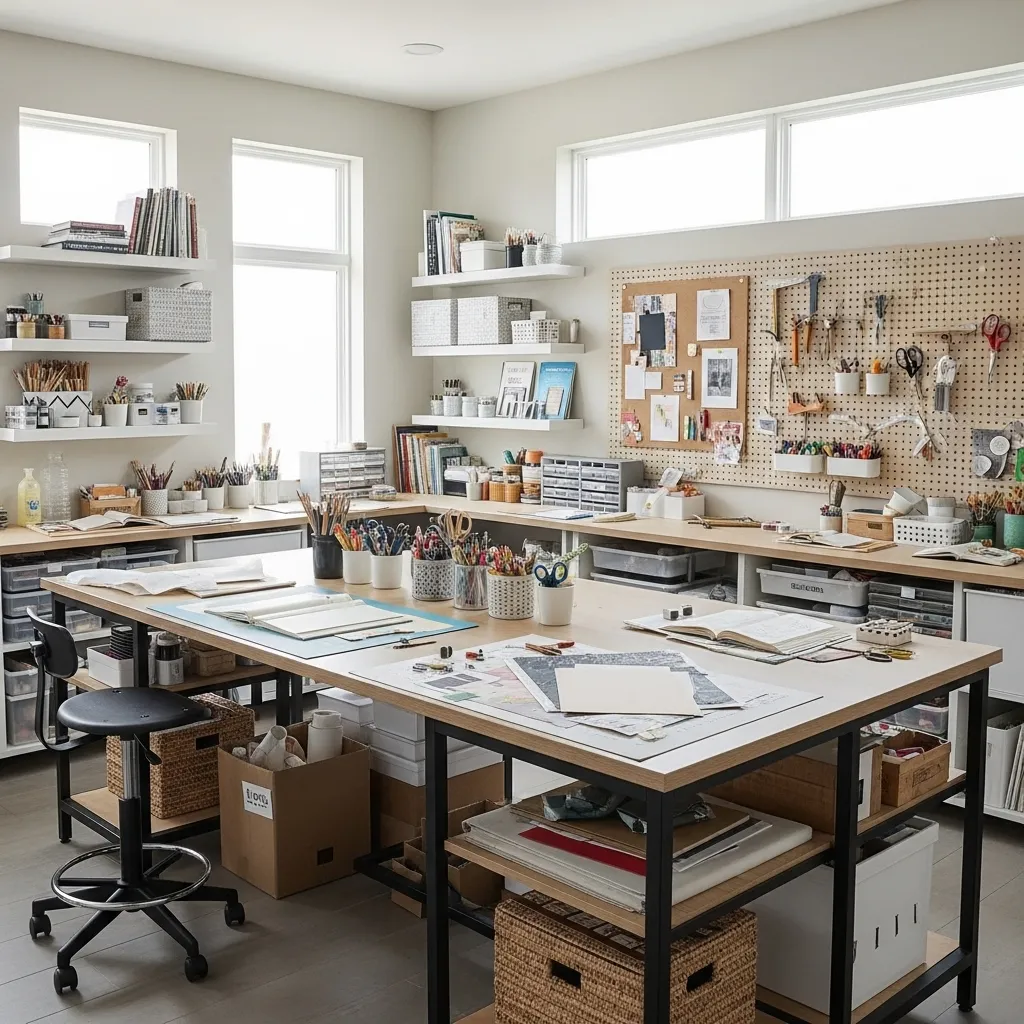
Creative work—whether art, crafts, design, architecture, or hands-on projects—requires very different spaces than traditional desk work. The large central work table provides generous surface area for spreading out materials, working on large-scale projects, or having multiple works in progress simultaneously. The visibility and accessibility of supplies supports creative flow rather than interrupting it with searches for tools.
The key is balancing accessibility with organization. Open shelving, pegboards, and clear containers let you see what you have and grab what you need quickly. Group supplies by type or project. Include both large-scale storage for papers, canvases, or fabrics, and small-scale organization for detail supplies. Good lighting is essential—ideally natural light supplemented by adjustable task lights that can illuminate specific work areas. The room should inspire creativity through the materials themselves, inspiration boards with images and ideas, or works in progress visible as motivation. This study room supports making and doing rather than just thinking and writing, creating space where creativity can be messy, experimental, and productive.
6. Traditional Wood-Paneled Study
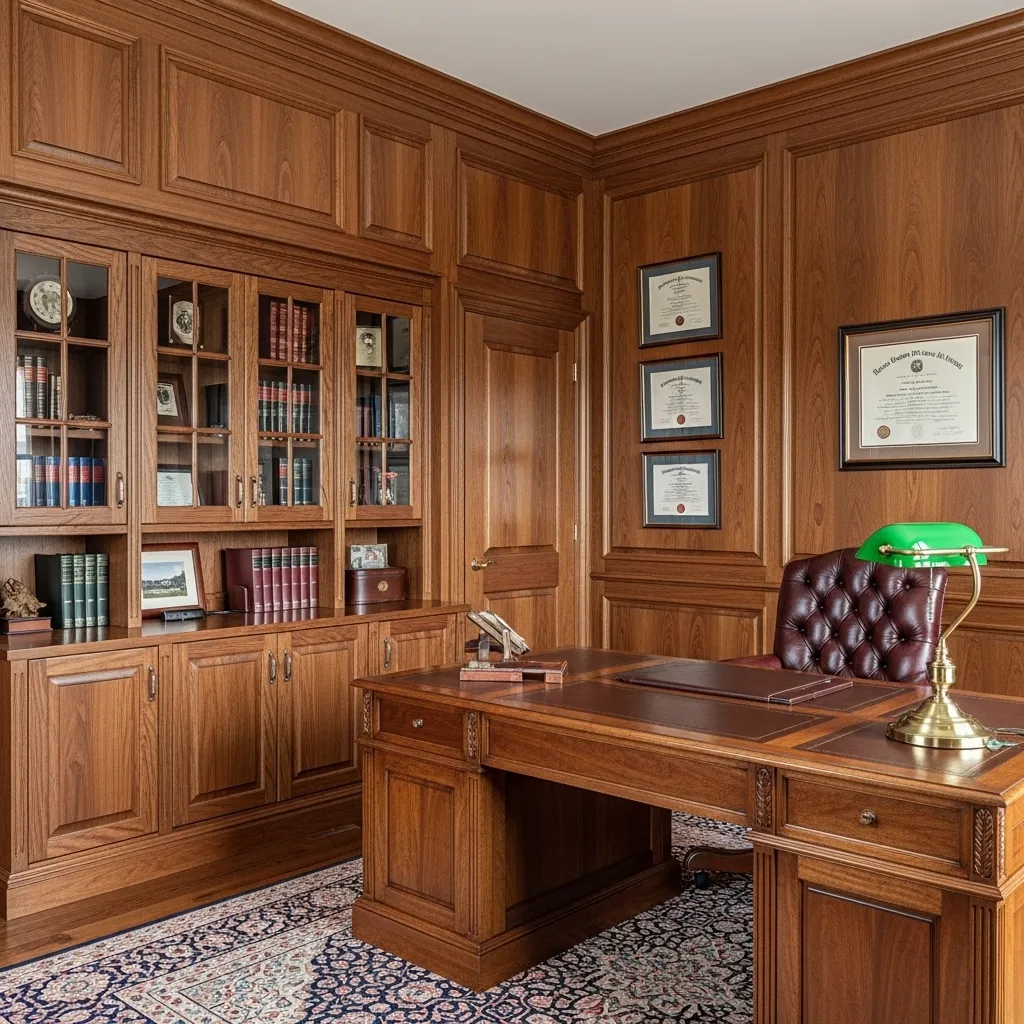
Traditional wood-paneled studies create an atmosphere of seriousness, scholarship, and timeless elegance. The rich wood surroundings—whether actual paneling or extensive wood furniture and built-ins—create warmth and gravitas that signals this is space for important thinking and work. The classic aesthetic references libraries, universities, and gentlemen’s studies, bringing historical weight to contemporary work.
The key is using quality wood in rich tones that create warmth rather than darkness. Traditional details—crown molding, raised panels, carved elements—add authentic character. The substantial desk should be truly functional—adequate surface area, proper height, storage drawers—not just decorative. The leather chair provides classic comfort with proper ergonomic support. Include task lighting that’s functional despite traditional styling—the green glass shade banker’s lamp is classic for good reason. This study room works beautifully for traditional homes and for anyone who finds that classic, serious aesthetic conducive to focused work. The wood-rich environment feels permanent and substantial, creating space where important work deserves to happen.
7. Dual Workstation for Shared Study
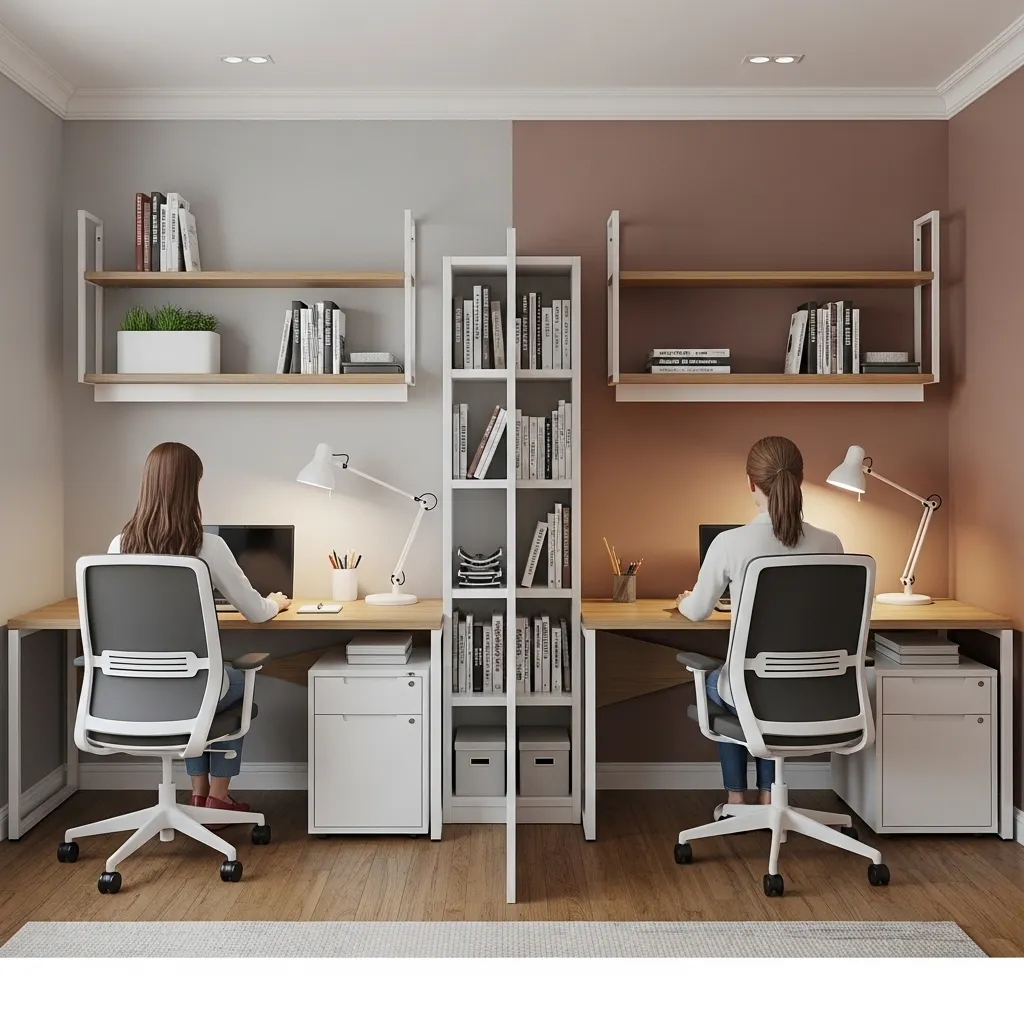
Shared study rooms require thoughtful design to provide each person with adequate workspace, storage, and focus while making efficient use of limited space. The dual workstation approach gives each person their own designated area with the tools and organization they need, preventing the conflicts and inefficiencies that arise from sharing a single workspace or trying to work in inappropriate locations.
The key is creating genuine separation and equality. Both desks should be similar quality and size—no one gets the “good desk” while the other makes do. Each person needs their own storage, lighting, and organizational systems rather than trying to share. Consider positioning desks to face away from each other or have some visual barrier to minimize distraction when both people are working. Define zones through furniture placement, area rugs, or even paint colors. Include shared resources—central bookcase, printer station, reference materials—positioned for equal access. The result is a study room that truly functions for two people simultaneously, supporting different schedules, work styles, and needs without conflict or compromise.
8. Garden View Study with Window Desk
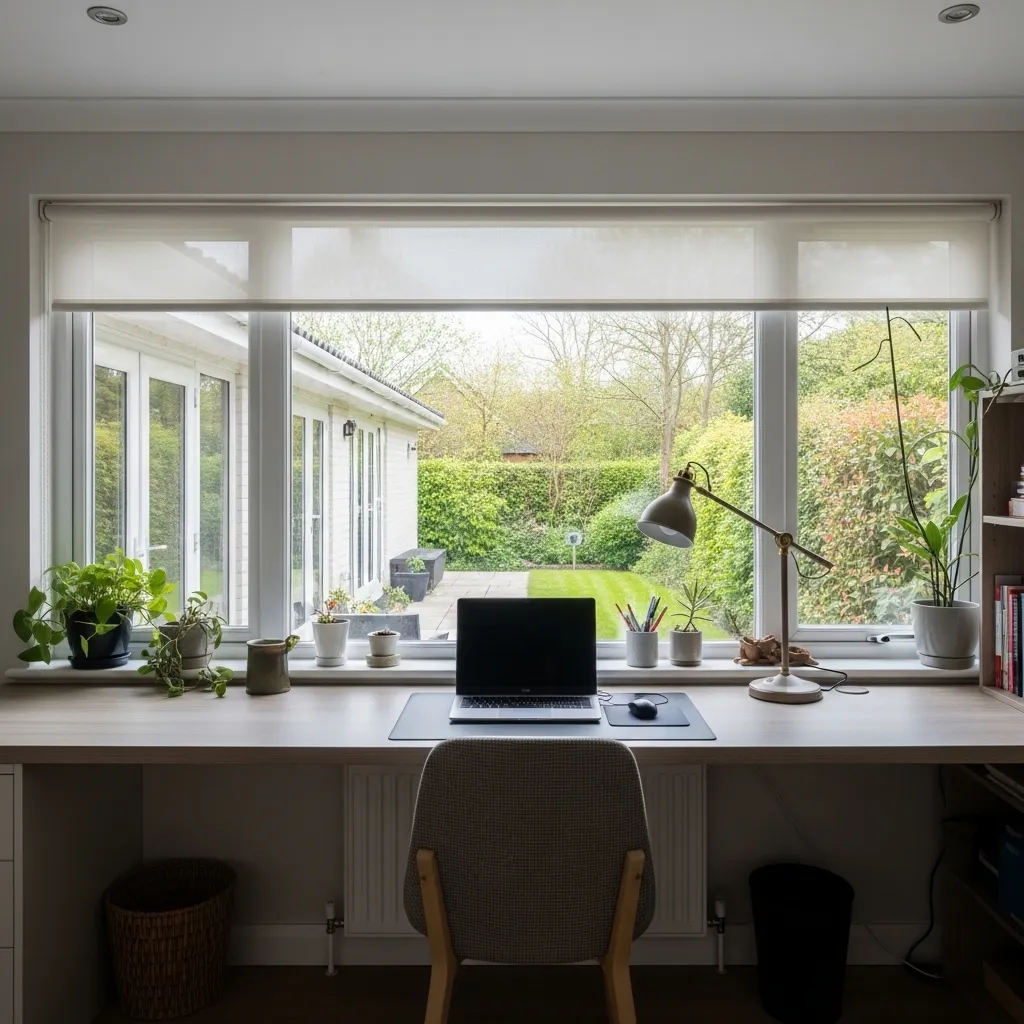
Positioning your desk to face windows and views creates study spaces with maximum natural light and visual connection to the outdoors. The changing natural scenes—weather, light, seasons, birds, plants—provide gentle mental stimulation and necessary breaks for eyes and mind during extended work sessions. Natural light improves mood, supports circadian rhythms, and reduces eye strain compared to artificial lighting alone.
The key is balancing view benefits with practical considerations. Position the desk so you’re facing the window rather than having it behind you creating screen glare. Include window treatments that control intense direct sun when needed—sheer curtains, adjustable blinds, or exterior shades. The view should be genuinely pleasant—a beautiful garden, trees, sky—rather than a parking lot or neighbor’s wall. If your view is limited, create one by placing bird feeders, planters, or other elements that attract interest. Supplement natural light with task lighting for overcast days or evening work. The connection to nature and abundant natural light creates study space that feels open, calm, and genuinely pleasant to spend time in.
9. Tech-Integrated Smart Study
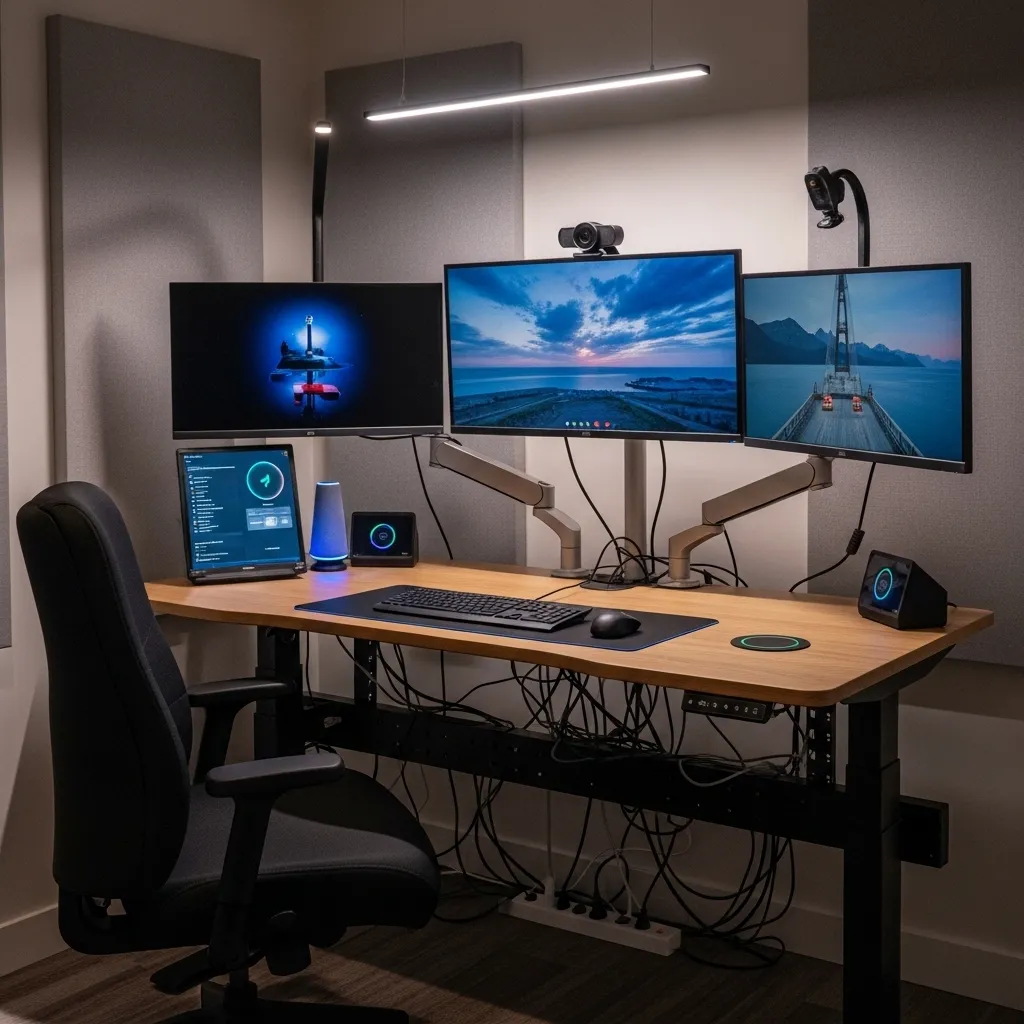
Smart study rooms integrate technology thoughtfully to support productivity, comfort, and efficiency while maintaining clean aesthetics. The technology serves the work rather than becoming a distraction—automation and integration handle routine adjustments and needs, freeing mental bandwidth for actual work. Voice controls, programmable settings, and wireless connectivity minimize the friction that technology often creates.
The key is selecting technology that genuinely serves your needs rather than collecting gadgets for their own sake. Motorized standing desks with programmable presets remove the decision-making from position changes. Smart lighting that automatically adjusts color temperature throughout the day supports circadian rhythms without manual adjustment. Multiple monitors increase productivity for many knowledge workers by reducing window-switching and allowing simultaneous reference and work. Cable management systems—cable trays, wireless charging, consolidated power—keep technology’s visual mess hidden. Quality audio and video equipment makes remote meetings actually pleasant. The result is a study room where technology enhances rather than complicates work, supporting focus and productivity through thoughtful integration.
10. Compact Corner Study for Small Spaces
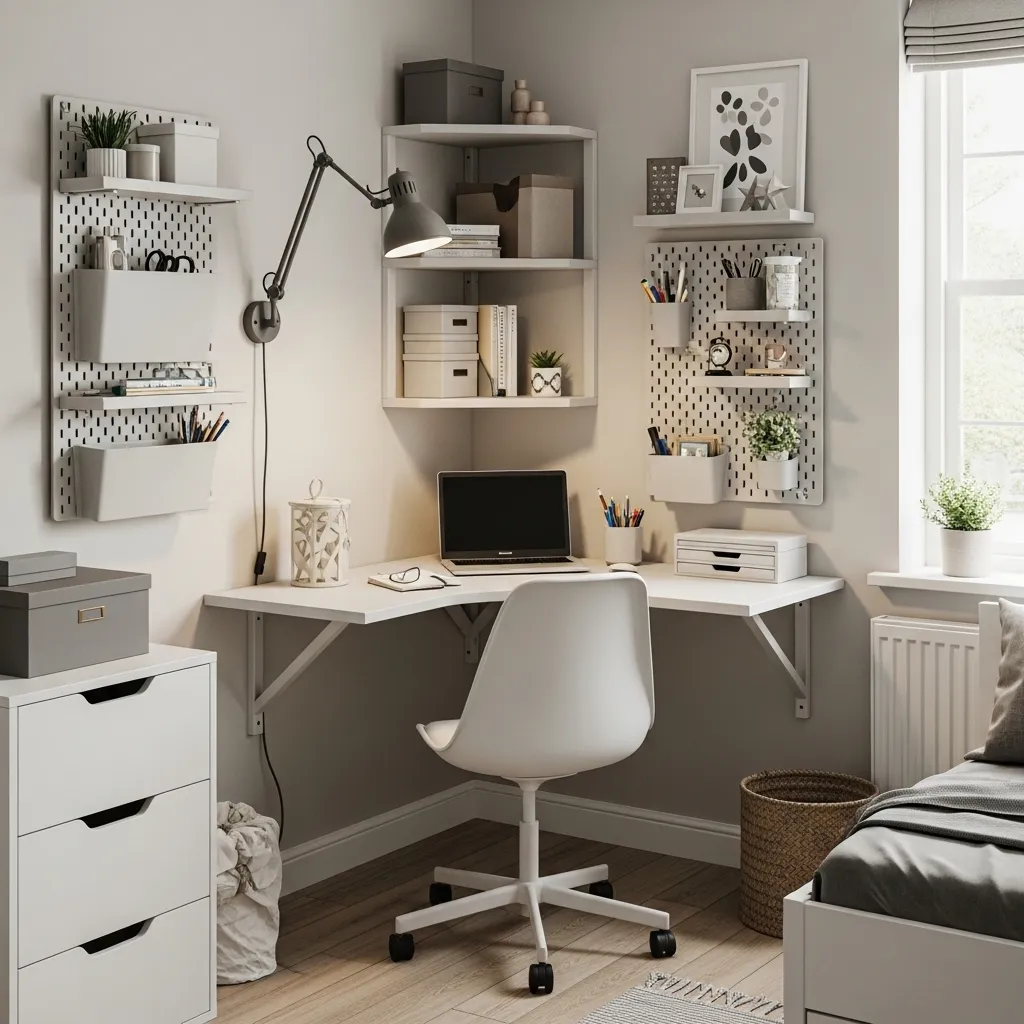
Small homes and apartments often lack dedicated study rooms, but thoughtful corner conversions create functional workspace in minimal square footage. The corner placement makes efficient use of otherwise awkward space while keeping the study area defined and somewhat separated from the room’s primary function. Multi-functional furniture and vertical storage maximize utility within tight constraints.
The key is ruthless efficiency and organization. Every item must earn its place through genuine usefulness. The desk should be appropriately scaled—large enough for actual work but not overwhelming the corner. Wall-mounted storage keeps supplies accessible without using valuable desk or floor space. Fold-down or pull-out elements can provide additional work surface when needed but tuck away when not in use. Keep the color palette unified and organized to prevent the small space from feeling cluttered or chaotic. Good task lighting is essential since corners often lack natural light. The result is genuine workspace carved from limited square footage, proving that you don’t need a dedicated room to create effective study space—just thoughtful planning and efficient design.
11. Inspiring Gallery Wall Study
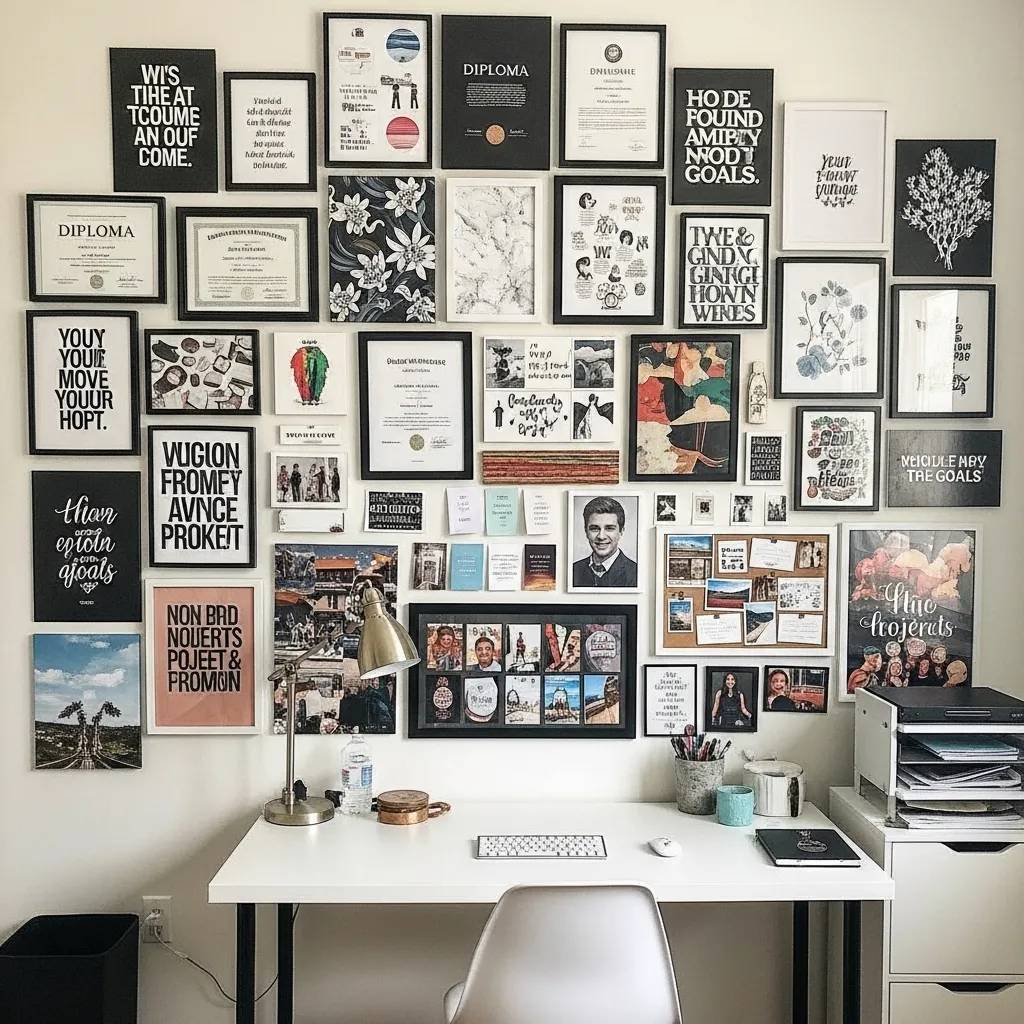
Gallery walls of personally meaningful inspiration transform study rooms from purely functional spaces into environments that actively motivate and inspire. Surrounding yourself with visual reminders of goals, achievements, inspirations, and aspirations creates psychological reinforcement that supports sustained effort and focus. The curated collection reflects your specific values, dreams, and motivations rather than generic platitudes.
The key is genuine personalization. Include what actually inspires you—maybe that’s quotes from thinkers you admire, photographs of places you want to visit, images representing goals you’re working toward, diplomas and certificates representing achievements, or artwork that moves you. Arrange thoughtfully in frames of coordinated styles and colors to create visual cohesion despite varied content. Update regularly as goals evolve and new inspirations emerge—the gallery should be dynamic rather than static. Position the desk to allow viewing the inspiring content while working, creating regular visual reinforcement. The result is a study room that doesn’t just house your work—it actively supports your motivation, reminds you why the work matters, and keeps you connected to your larger purposes and goals.