12 Coffee Bar Ideas for the Kitchen
Coffee bars have become one of the most desired features in modern kitchens, transforming the daily coffee ritual from a purely functional task into a genuine moment of pleasure and self-care. A dedicated coffee station brings the café experience home while creating organization and efficiency for your morning routine—everything you need for that perfect cup is gathered in one intentional space rather than scattered across cabinets and counters. Beyond pure functionality, a well-designed coffee bar adds personality and warmth to your kitchen, becoming a focal point that showcases your style through curated displays of beautiful mugs, artisan coffee beans, vintage espresso equipment, or minimalist pour-over setups. It’s both practical and aspirational, making your daily coffee moment feel special rather than rushed.
What makes coffee bars so appealing is their incredible versatility and personalization—your coffee station should reflect exactly how you make and enjoy coffee, from the simplest drip coffee setup to elaborate espresso and milk-frothing arrangements. Whether you’re a single-cup pour-over enthusiast, an espresso purist, a cold brew devotee, or someone who wants all the options, your coffee bar can be designed to support your specific preferences and rituals. The space can be grand with dedicated cabinetry and appliance garages, or compact utilizing just a corner of your counter, a small cart, or even wall-mounted shelving. What matters is creating a designated spot that makes your coffee routine smoother, more enjoyable, and more aesthetically pleasing.
The best coffee bars balance beautiful display with genuine functionality—they look magazine-worthy but actually work for daily use without becoming cluttered or impractical. This means thoughtful storage for coffee supplies that keeps essentials accessible while hiding visual clutter, proper electrical access for coffee makers and grinders, adequate counter space for prep and serving, and organization systems that make the morning routine efficient even before caffeine kicks in. Let’s explore these coffee bar ideas and create a space that makes every morning coffee moment something to look forward to.
1. Dedicated Coffee Cabinet with Appliance Garage
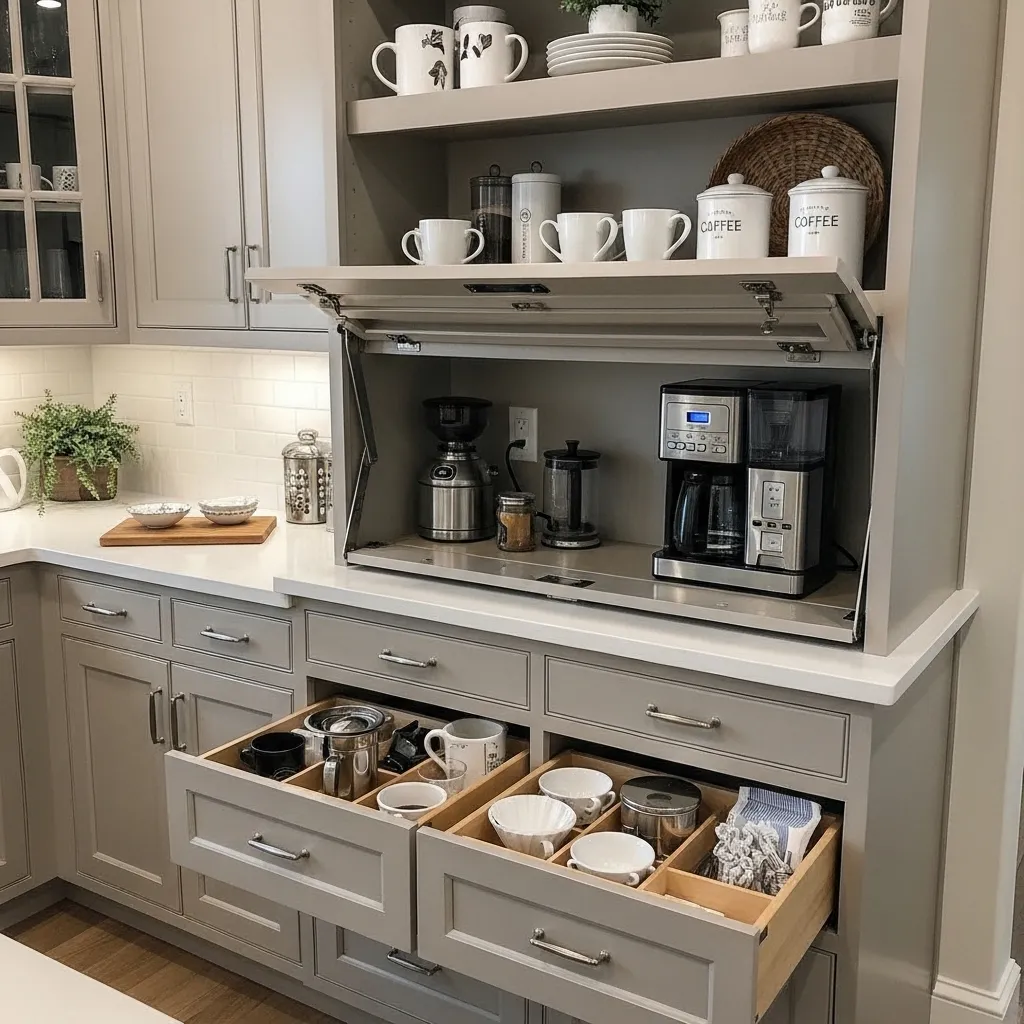
Appliance garages are brilliant solutions for people who want coffee equipment easily accessible but don’t like the visual clutter of machines sitting permanently on counters. The tambour door or lift-up cabinet conceals everything behind a matching cabinet front when not in use, creating clean countertops and cohesive kitchen aesthetics. When you’re ready for coffee, the door slides or lifts up, providing full access to equipment without having to remove or relocate anything.
The key is designing adequate interior space for your specific equipment—measure your coffee maker, grinder, kettle, and other tools to ensure proper fit with enough clearance for operation. Include electrical outlets inside the cabinet so equipment stays plugged in and ready. The counter surface in front of the appliance garage provides workspace for cups, grounds, and preparation. Lower drawers organize coffee beans, filters, syrups, and accessories in an accessible system. Upper open shelving displays mugs and coffee-related décor, keeping daily-use items visible while less attractive supplies stay hidden. The result is a coffee bar that’s fully functional and beautifully organized while maintaining clean, uncluttered counters when not actively making coffee.
2. Floating Shelf Coffee Station
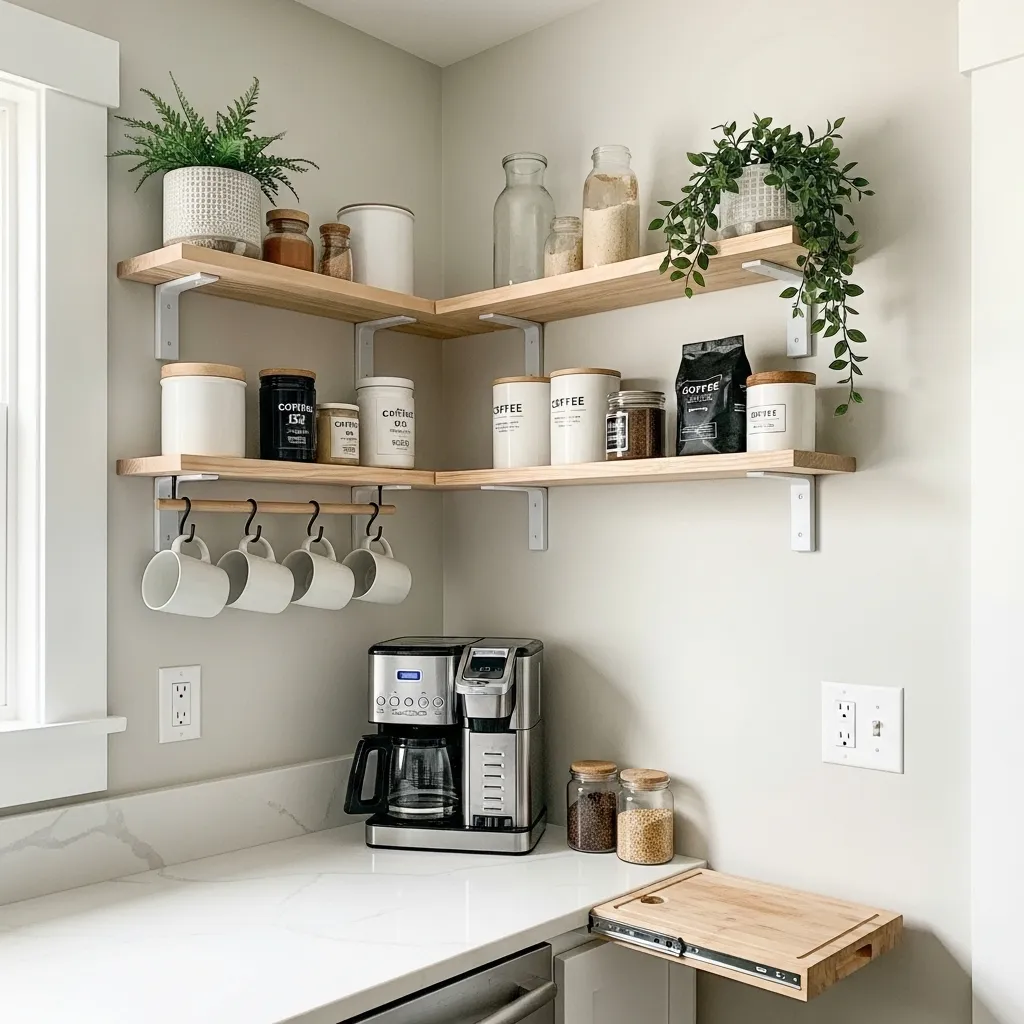
Floating shelf coffee bars are perfect for small kitchens or renters who can’t install permanent cabinetry. The vertical design uses wall space efficiently, keeping floor and counter space clear while providing all the functionality of more elaborate setups. The open nature keeps everything visible and accessible—no digging through cabinets for your favorite mug or searching for the coffee scoop.
The key is thoughtful organization and attractive styling since everything is on display. Use matching or coordinating canisters for coffee beans, sugar, and other supplies. Choose mugs that look good together—matching sets or a curated collection in coordinated colors. Include small plants, artwork, or decorative objects that enhance rather than clutter. Mount the lowest shelf at a height that allows your coffee maker to sit comfortably with access to electrical outlet. Hooks underneath upper shelves provide space-efficient mug storage. Keep it edited—only display what you actually use regularly or genuinely find beautiful. The result is an affordable, attractive coffee station that works in the smallest kitchens or apartments while looking intentionally designed rather than makeshift.
3. Coffee Cart on Wheels
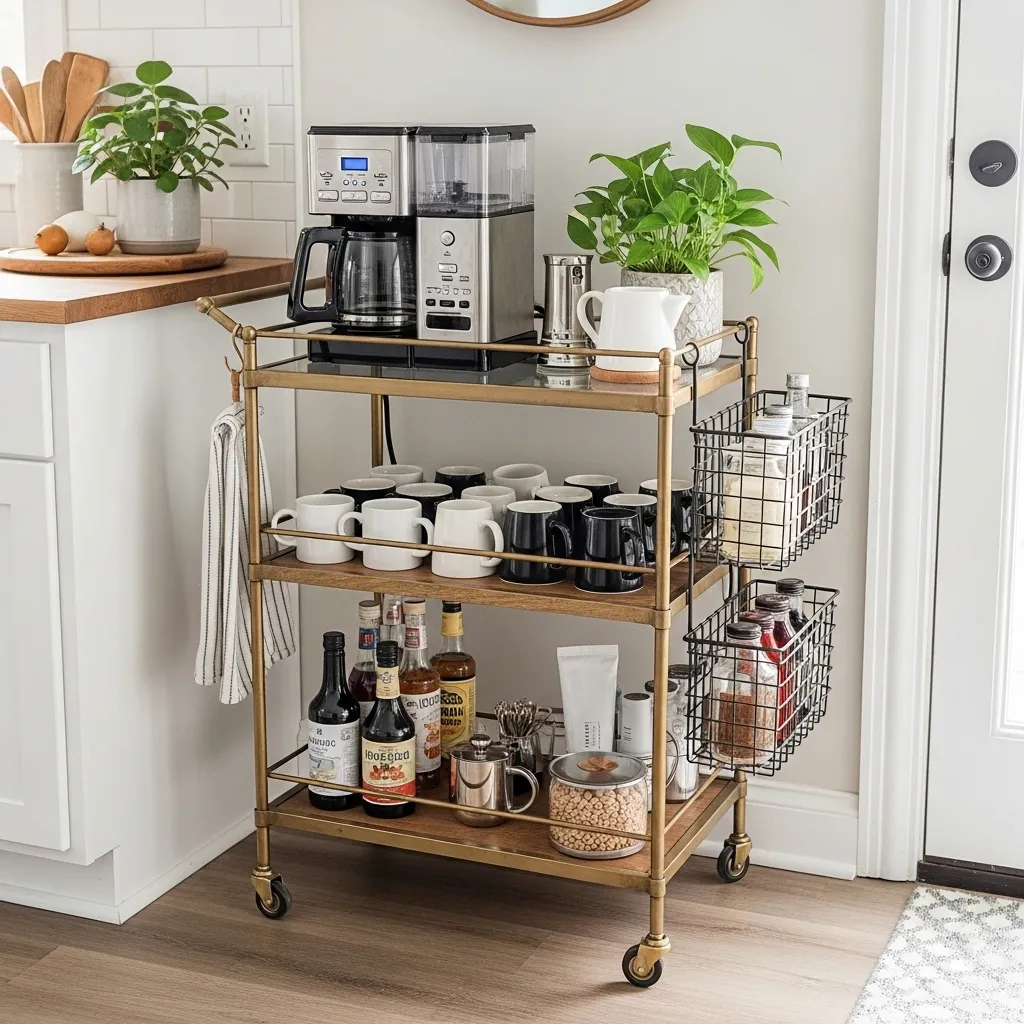
Coffee carts offer incredible flexibility—they can be positioned wherever needed, rolled to different locations for entertaining, tucked away when you need counter space, or even moved between rooms if you want coffee service in a home office or bedroom. The mobility means you’re not committed to one permanent location, and the cart itself becomes a decorative furniture piece that adds character to your kitchen.
The key is choosing a cart that’s both attractive and appropriately sized for your coffee equipment. Measure your coffee maker, grinder, and other essentials to ensure they fit comfortably. Look for carts with enough surface area for actual coffee preparation, not just storage. Multiple tiers provide organization for supplies and equipment. Include a small container or basket for coffee pods, filters, stirrers, and other supplies. Style the cart attractively since it’s always visible—coordinate colors, add a small plant, display beautiful canisters. Choose a finish and style that complements your kitchen—brass and glass for glam, industrial metal for modern, painted wood for farmhouse. The wheels should lock for stability during use. The result is a coffee station with all the organization and functionality of built-in solutions but with complete flexibility and portability.
4. Corner Coffee Nook with Tile Backsplash
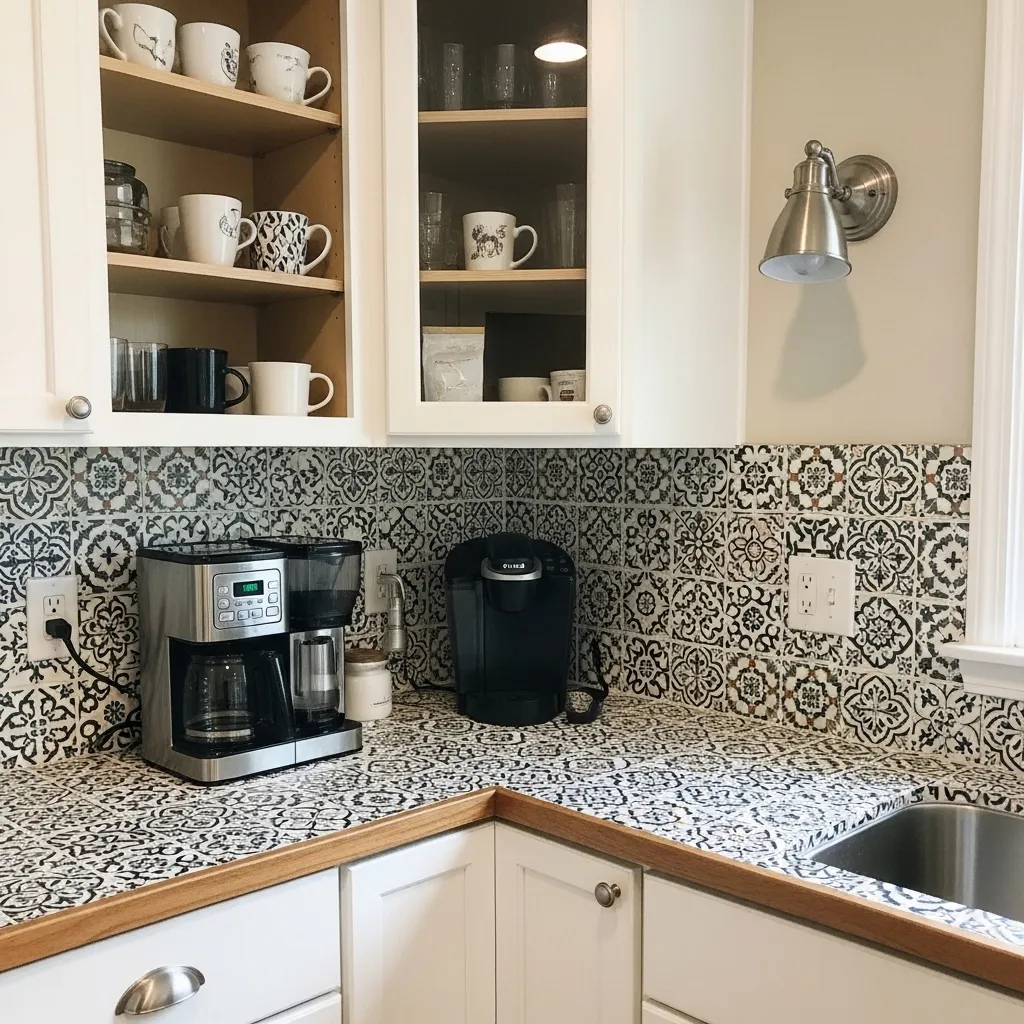
Using distinctive tile to create a coffee nook transforms a simple corner into a genuine design moment that celebrates the coffee ritual. The special tile treatment—different from your main kitchen backsplash—defines the coffee area as its own little café within your kitchen. The visual interest of the tile creates a focal point that makes coffee preparation feel more special and intentional.
The key is choosing tile that complements but distinguishes itself from your main kitchen. If your kitchen has simple subway tile, perhaps use colorful cement tiles or decorative patterns for the coffee nook. If your kitchen is minimal and modern, consider a small section of dramatic tile as the coffee backdrop. The tile area should extend from counter to upper cabinets and span the width of your coffee equipment—typically 2-4 feet wide is adequate. Include open shelving or glass-front cabinets above to display mugs and supplies. Consider adding a small pendant light or picture light above the coffee area to highlight it as a special zone. The tile backsplash is relatively affordable for a small area but creates significant impact, making your daily coffee spot feel genuinely café-like and special.
5. Built-In Coffee Bar with Wine Fridge Below
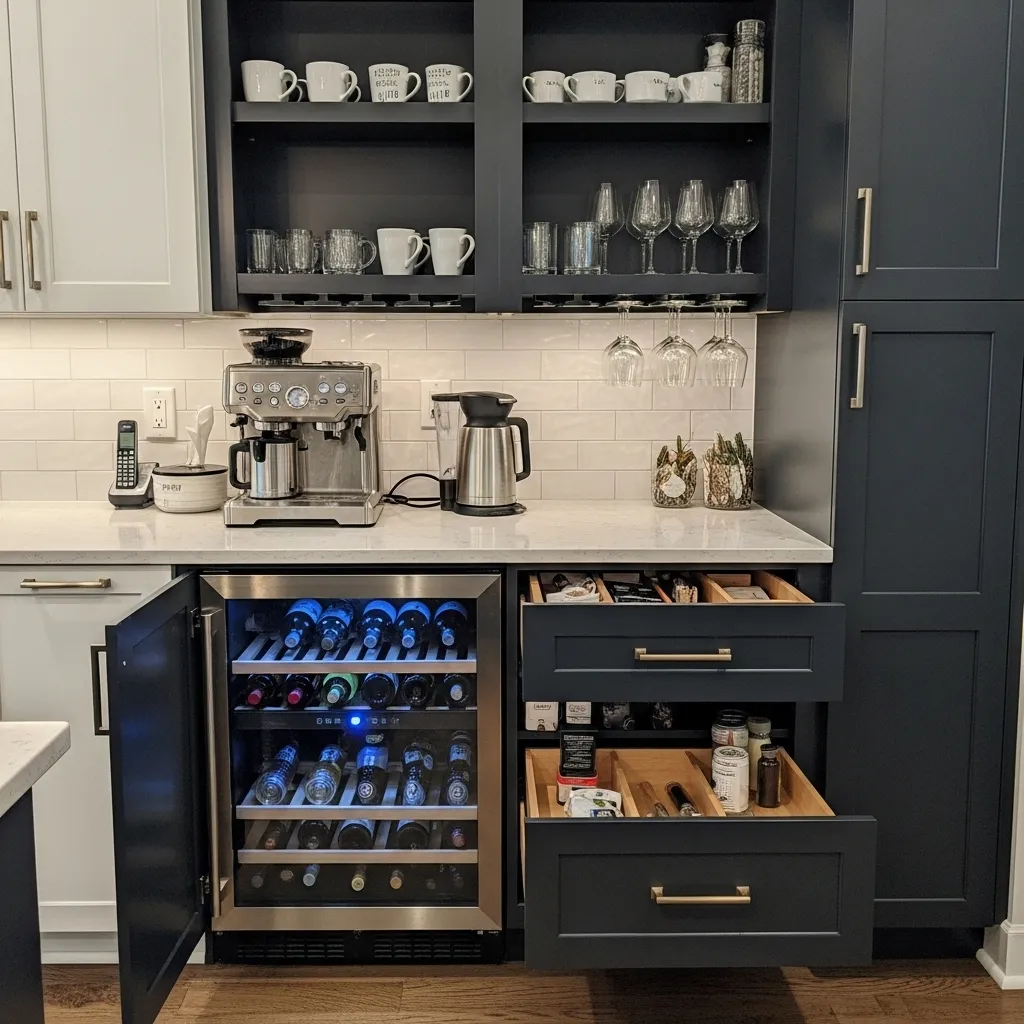
Combining coffee and wine/beverage storage creates an all-day beverage station that transitions seamlessly from morning coffee to evening wine. The built-in design feels custom and intentional, and the beverage fridge below provides practical cold storage for wine, beer, mixers, or cold brew coffee while using space that might otherwise be standard cabinetry. This dual-purpose approach maximizes the utility of your beverage bar throughout the day.
The key is designing adequate space for both functions. The counter surface needs room for coffee equipment and preparation plus space for wine service—opening bottles, pouring, arranging glasses. The beverage fridge should be appropriately sized—small wine coolers work for modest collections, while larger beverage fridges accommodate more variety. Drawers can hold coffee supplies on one side and wine accessories—openers, stoppers, aerators—on the other. Upper shelving displays both coffee mugs and wine glasses in organized, attractive arrangements. Consider adding a small sink if space allows, serving both coffee cleanup and wine service. The result is a comprehensive beverage station that supports your entire day’s drinking rituals in one beautifully organized, dedicated space.
6. Rustic Farmhouse Coffee Bar
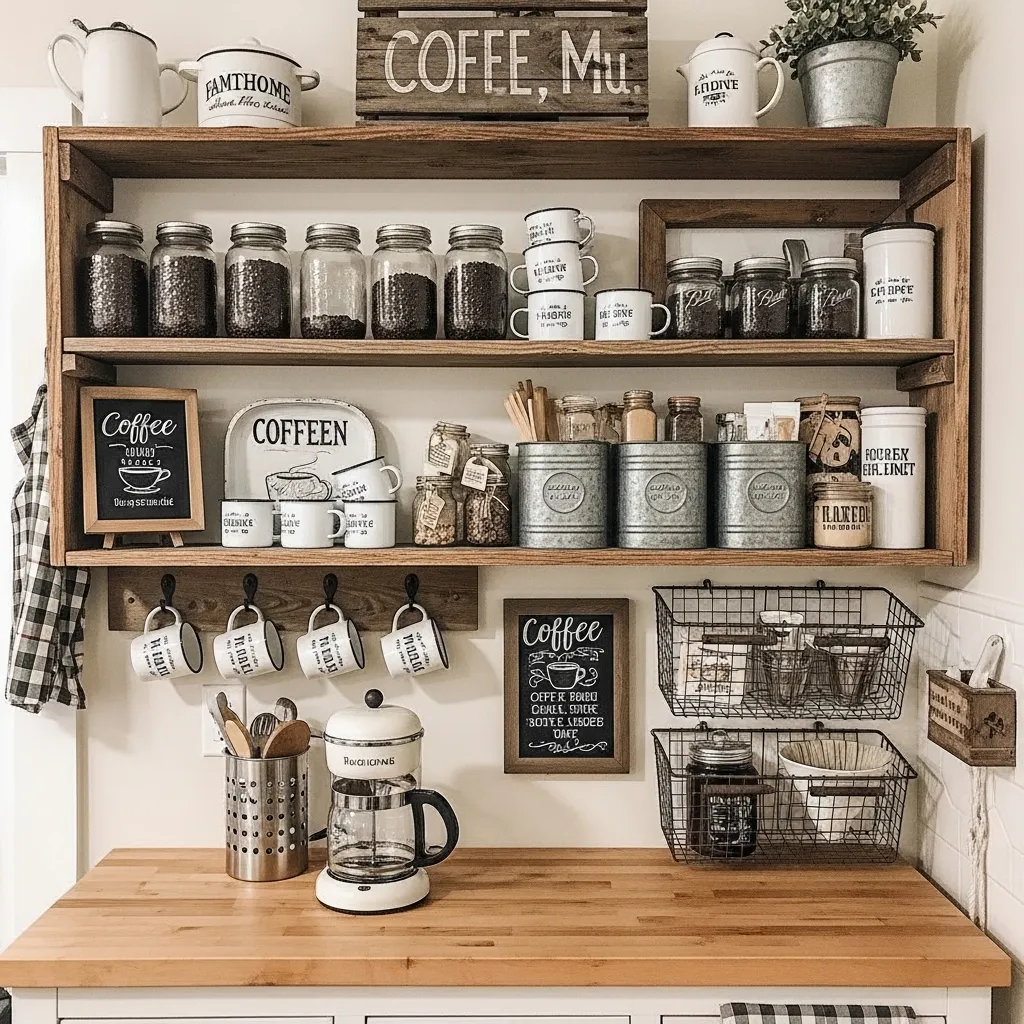
Farmhouse coffee bars embrace rustic materials, vintage finds, and cozy charm that makes coffee preparation feel warm and homey rather than slick and modern. The reclaimed wood, vintage accessories, and handmade elements create character and authenticity that reflects the farm-to-table, artisan coffee culture. This aesthetic works beautifully in farmhouse, cottage, or country kitchens where that lived-in warmth is desired.
The key is mixing genuinely vintage or vintage-inspired pieces with functional modern equipment. Use reclaimed barn wood or weathered lumber for shelving. Display coffee in mason jars or vintage glass canisters. Collect vintage enamelware or ironstone mugs for display and use. Include rustic elements like galvanized metal containers, wire baskets, or antique scales. A small chalkboard sign can list coffee varieties, create a menu board, or display coffee-related quotes. Wood cutting boards lean against the wall for display. The coffee maker can be vintage-style or hidden behind more photogenic pour-over or French press setups. Add warmth with a small plant in a vintage pitcher or farmhouse-style décor. The result is a coffee station with genuine character and charm that feels welcoming and personal.
7. Minimalist Coffee Corner
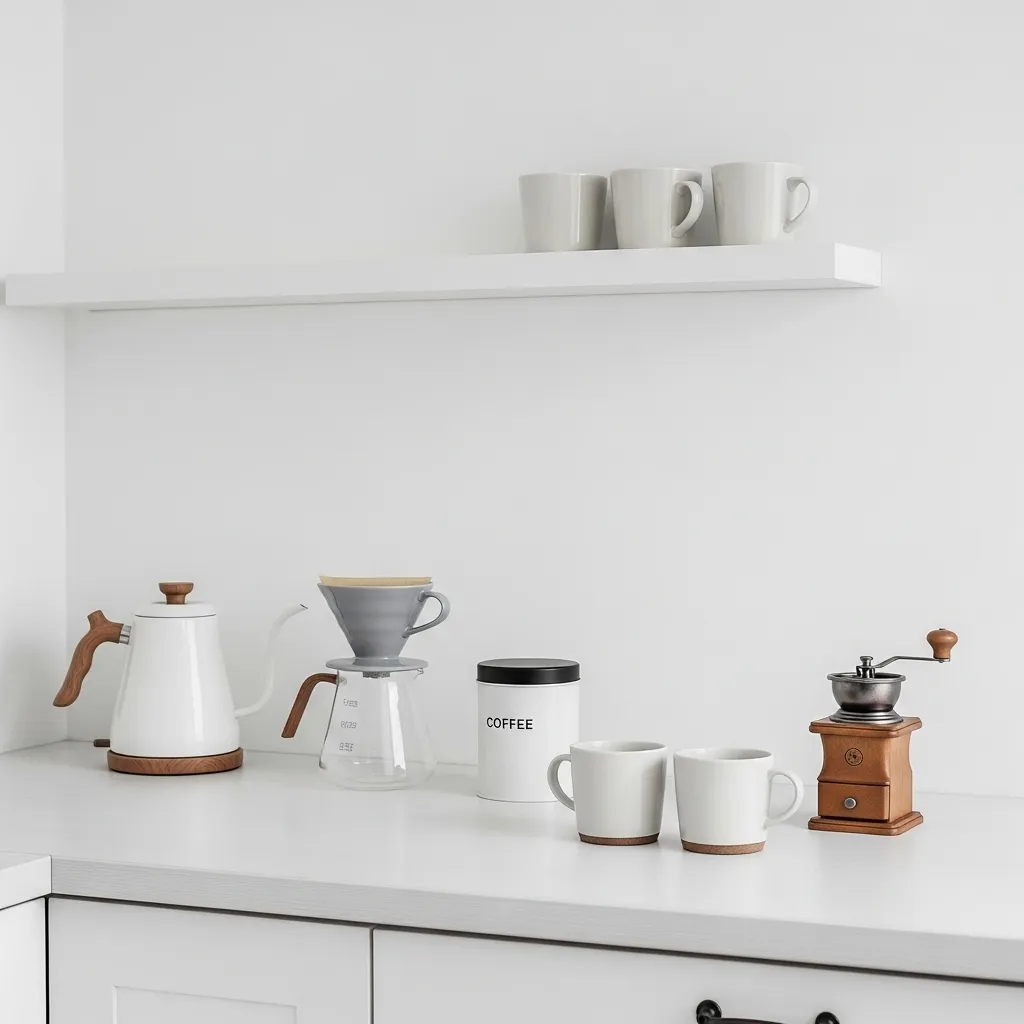
Minimalist coffee bars strip away everything non-essential, creating serene spaces that make the coffee ritual meditative and intentional rather than cluttered and chaotic. The edited approach means every visible item is genuinely used and carefully chosen for both function and aesthetics. The simplicity creates calm that’s particularly welcome in the morning before the day’s chaos begins.
The key is ruthless editing and hidden storage. Keep only daily-use items visible—your coffee maker or pour-over setup, one canister with current beans, your favorite mugs. Everything else gets stored in drawers or cabinets—backup supplies, less-used equipment, variety of mugs. Choose equipment with simple, beautiful design that looks good on display—pour-over setups like Chemex or Hario, sleek electric kettles, minimalist hand grinders. Coordinate finishes—perhaps all stainless steel, or all matte black, or all white ceramic. Keep surfaces clear except when actively making coffee. The single floating shelf holds perhaps 3-5 mugs in matching or perfectly coordinated styles. This approach creates a coffee experience that’s calm, focused, and almost zen-like—perfect for people who find visual clutter stressful.
8. Coffee Bar with Chalkboard Wall
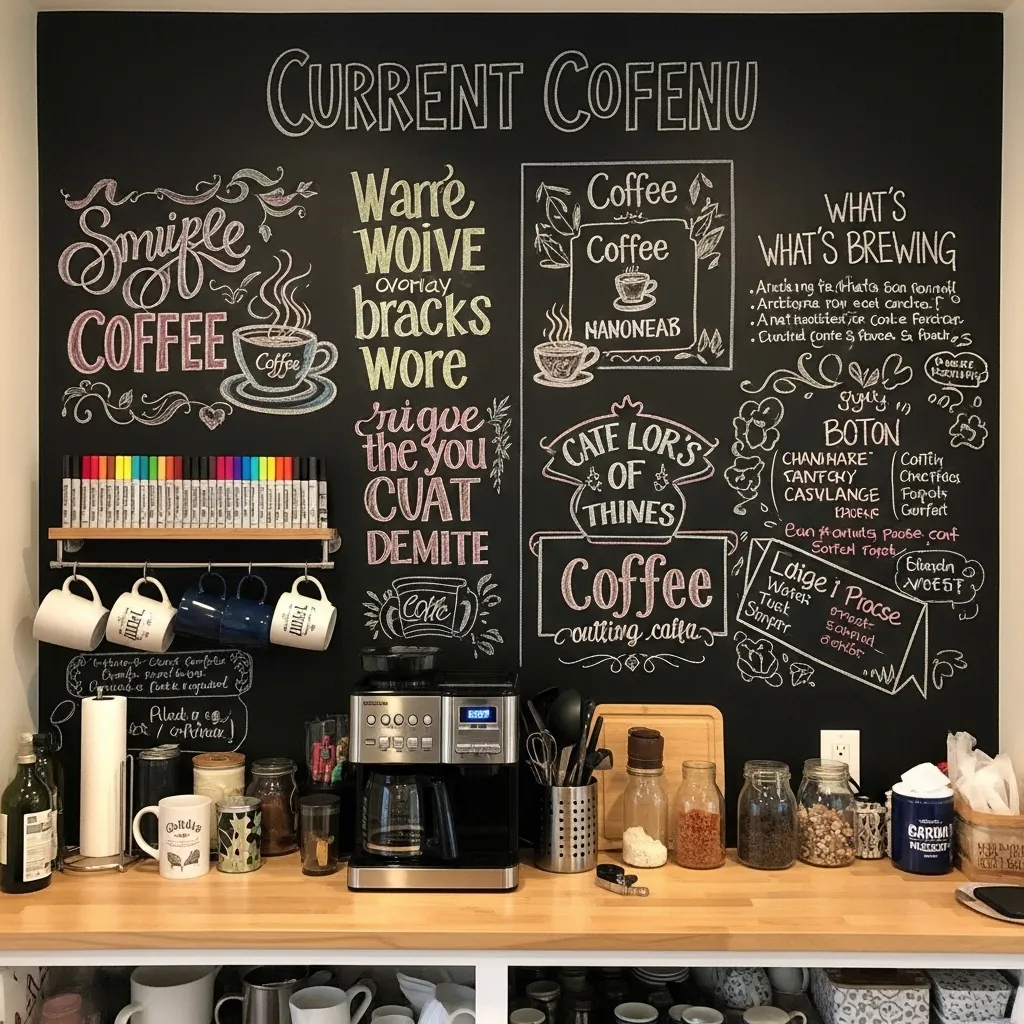
Chalkboard walls turn coffee bars into interactive, ever-changing spaces where you can note what’s brewing, create coffee menus, display inspirational quotes, or simply doodle artistically while waiting for coffee to brew. The changeable nature means your coffee bar never becomes static or boring—it evolves with seasons, moods, or current coffee offerings. It adds playful personality that rigid permanent décor cannot provide.
The key is treating the chalkboard as both functional and decorative. Use it to note the current coffee beans and tasting notes, create a “menu board” of coffee drinks you can make, display favorite coffee quotes or artwork, or track coffee goals and consumption. Chalkboard paint can cover an entire wall section behind your coffee station or just a small defined area. Use quality chalk markers for professional-looking writing and designs—they’re easier to control than regular chalk and create cleaner lines. Include a small ledge for holding markers and eraser. The chalkboard provides both practical function—reminding you what coffee you have or what you need to buy—and creative outlet for artistic expression. It makes your coffee bar personal and dynamic.
9. Under-Cabinet Coffee Bar
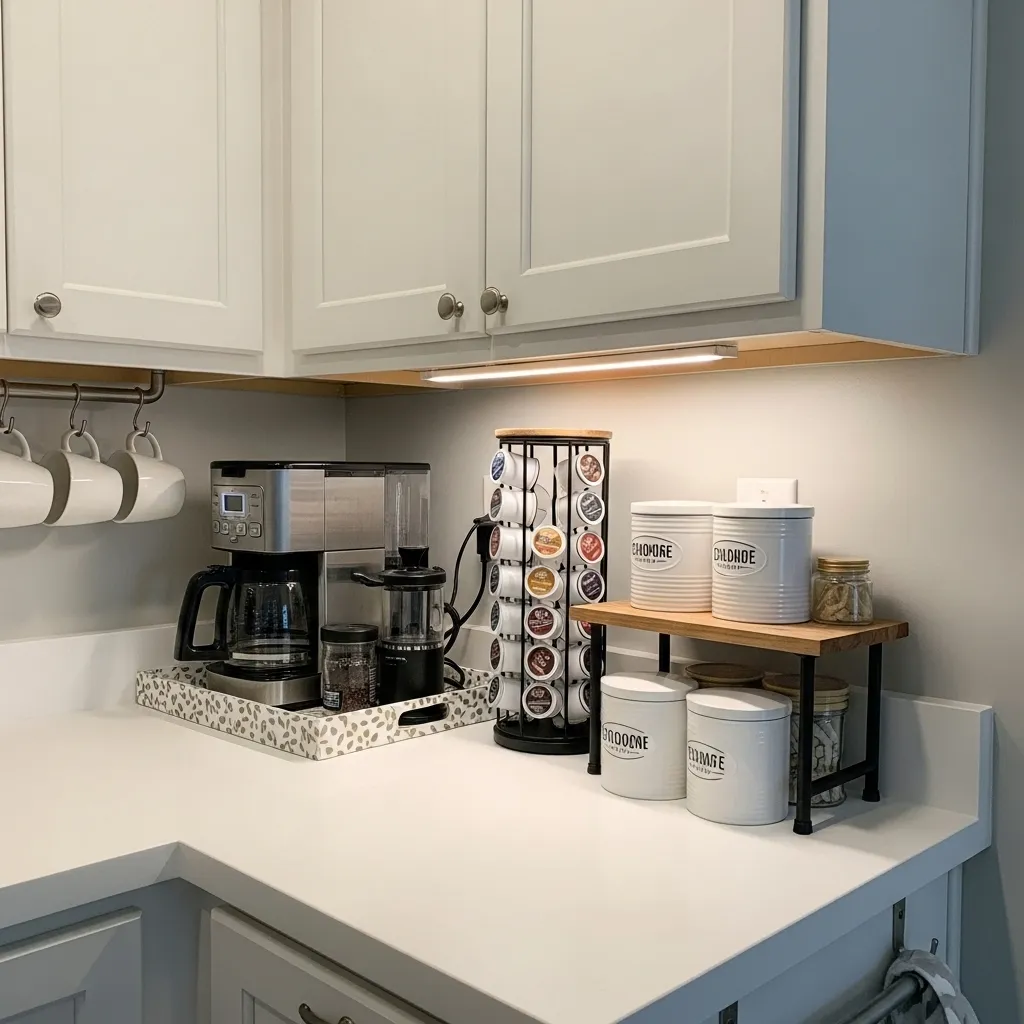
Under-cabinet coffee bars work with your existing kitchen layout rather than requiring dedicated cabinetry or construction, making them perfect for renters or people who don’t want extensive renovation. The key is using vertical space efficiently and creating clear definition so the coffee area doesn’t blend into general counter clutter.
Use a decorative tray, cutting board, or runner to define the coffee zone on your counter—this creates visual boundaries and makes the area feel intentional rather than random. Install under-cabinet lighting if you don’t have it—LED strip lights are affordable and make the workspace functional even early morning. Use tiered stands, small shelving units, or risers to create vertical storage within the limited footprint, stacking mugs, organizing pods, or displaying canisters on multiple levels. Mount hooks to the underside of cabinets for hanging mugs, freeing counter space. Choose equipment that’s appropriately scaled for the available counter—perhaps a compact coffee maker or pour-over setup rather than a large espresso machine. Keep it organized and edited—only what fits comfortably without overcrowding. The result is a functional, attractive coffee bar that works within your existing kitchen without major changes.
10. Coffee Bar with Espresso Station
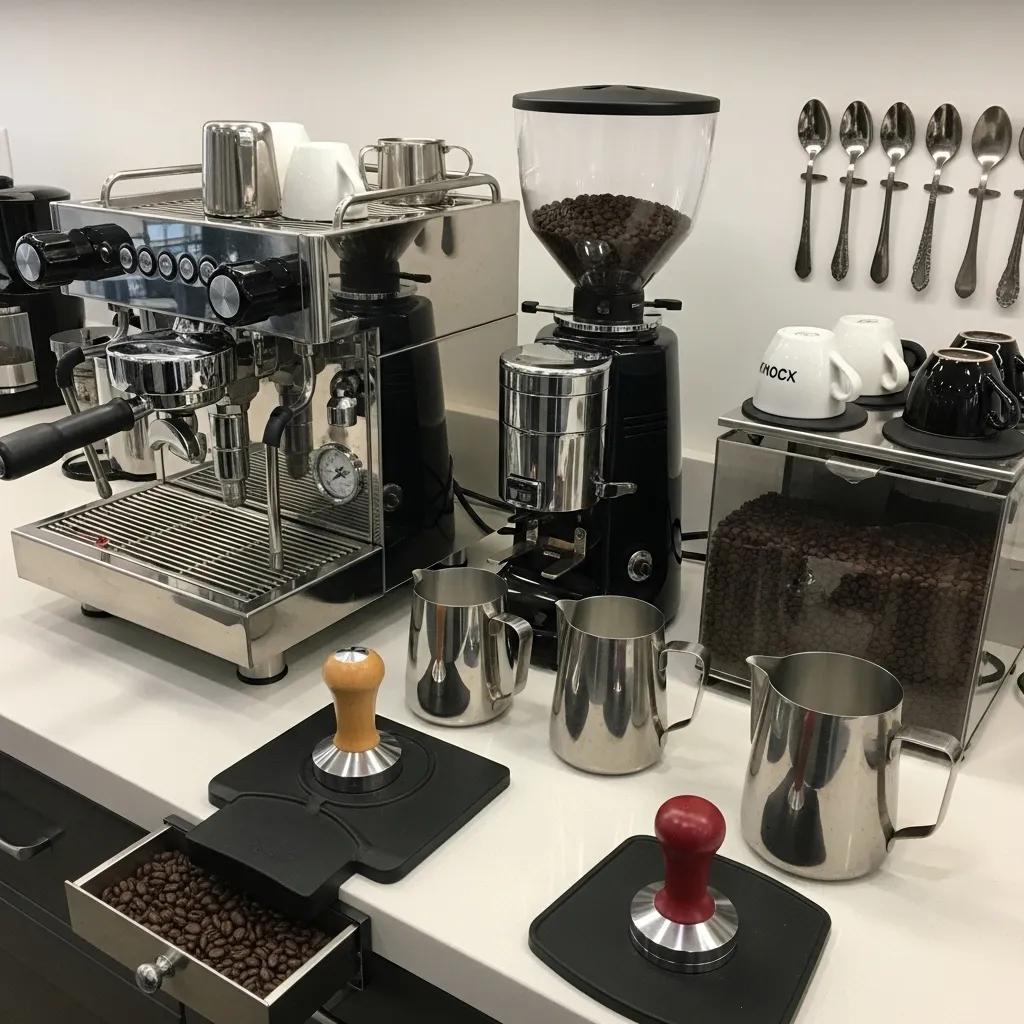
Espresso stations require more space, equipment, and investment than standard coffee bars but reward serious coffee enthusiasts with café-quality drinks and the genuine espresso experience at home. The equipment is substantial—espresso machines, especially semi-automatic models with proper boilers and group heads, have significant footprints and require adequate counter depth, electrical capacity, and often dedicated circuits.
The key is creating adequate workspace for the entire espresso workflow. You need space for the machine, grinder, tamping and dosing, milk steaming, and finished drinks—typically 3-4 feet of counter minimum. Include storage for espresso-specific supplies—beans chosen for espresso, cleaning supplies, spare parts. Display small espresso cups and saucers—standard coffee mugs won’t show off espresso properly. A knock box for disposing of used grounds is essential for semi-automatic machines. Consider a water filtration system—espresso quality depends heavily on water quality. The investment is significant but creates a genuine café experience and ritual that passionate coffee lovers find deeply rewarding. The professional equipment becomes a showpiece that signals serious coffee dedication.
11. Breakfast Nook Coffee Bar Combo
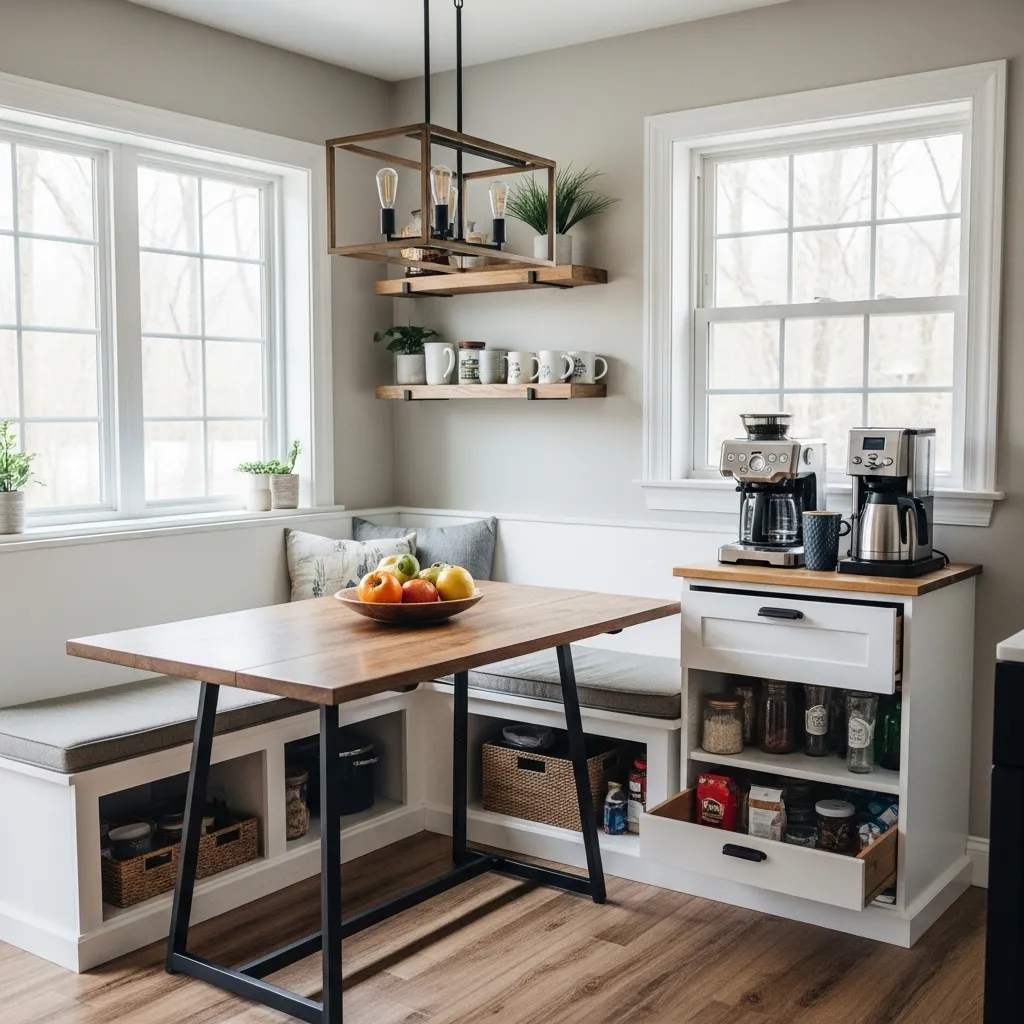
Integrating your coffee bar with a breakfast nook creates an efficient morning hub where coffee preparation and breakfast happen in one cohesive zone. The proximity means you can start coffee, sit at the breakfast table, and easily access everything without multiple trips around the kitchen. The integration makes morning routines smoother and creates a dedicated space for the most important meal rituals.
The key is thoughtful placement that makes both functions work without interference. The coffee equipment should be positioned where prep won’t disrupt people already seated at the table—perhaps on a perpendicular wall or in built-in cabinetry behind the seating. Use the storage beneath built-in banquette seating for coffee supplies, breakfast items, or table linens, making everything needed for morning meals accessible from one location. Include adequate electrical outlets for coffee equipment positioned conveniently near the prep area. The result is a morning station that streamlines your routine—wake up, walk to breakfast nook, make coffee, sit and enjoy while breakfast cooks, all without traveling around the entire kitchen. It creates efficiency and a pleasant morning gathering spot.
12. Coffee Bar with Pour-Over Station
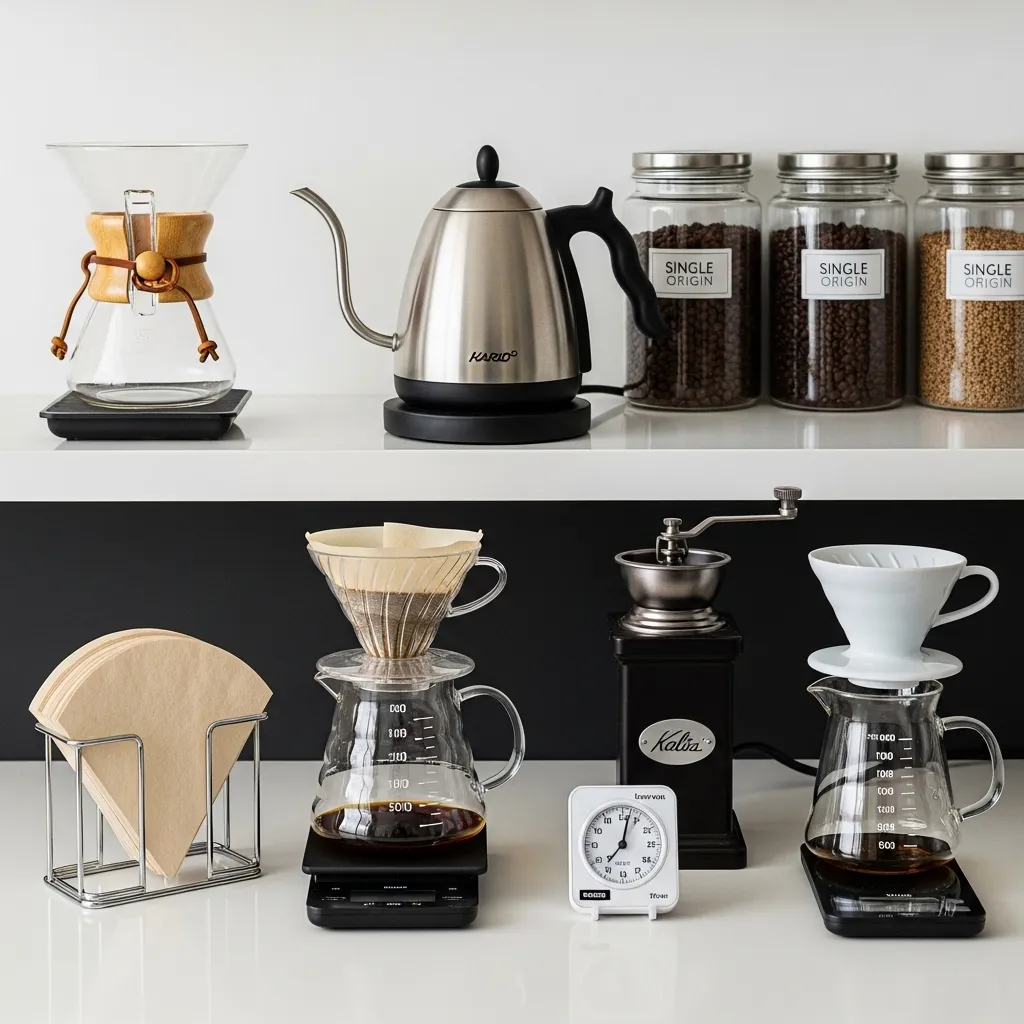
Pour-over coffee stations appeal to people who view coffee as craft and ritual rather than just caffeine delivery. The manual brewing process—weighing beans, grinding fresh, heating water to precise temperature, carefully pouring in circular motions, timing extraction—becomes a meditative morning practice. The equipment itself is often beautifully designed, making the coffee station attractive and display-worthy.
The key is having all elements of the pour-over ritual organized and accessible. The scale is essential for consistent results—weighing both beans and water ensures repeatability. The gooseneck kettle’s precise spout allows controlled pouring that’s crucial for even extraction. Quality burr grinder provides consistent grounds. A simple timer tracks brewing time. Multiple pour-over brewers let you experiment with different brewing methods or make multiple cups. Display various single-origin beans in attractive canisters, perhaps noting origin and tasting notes on small labels. Include a small notebook for tracking recipes and results. The pour-over station celebrates slow coffee—it’s not about speed or convenience but about craft, quality, and the meditative ritual that starts your day with intention and presence.