14 Basement Design Ideas
Basements might be the most underutilized and underestimated spaces in our homes, but they’re also absolutely brimming with potential for transformation. Whether you’re dealing with a dark, unfinished space that’s been relegated to storage and laundry duty, or you have a partially finished basement that just needs some love and vision, these below-grade spaces can become some of the most functional, creative, and enjoyable rooms in your entire house. The beauty of basement design is that you have this blank canvas where you can really let your imagination run wild—maybe it becomes a cozy family hangout spot, a dedicated home theater, a productive home office, a guest suite for visitors, or even a combination of several functions that your main floors just can’t accommodate.
I know basements come with their own unique challenges that upper floors don’t have to deal with. The lower ceilings, limited natural light, potential moisture issues, and sometimes awkward layouts with support posts and mechanical systems can feel overwhelming at first. But here’s the thing—once you understand how to work with these constraints rather than against them, you can turn every single challenge into an opportunity. Low ceilings can feel cozy and intimate rather than cramped when you embrace them. Limited windows become a chance to create moody, atmospheric spaces perfect for movie watching or gaming. Those support columns can be transformed into design features or natural room dividers that help define different zones within your basement.
What’s exciting about basement design in recent years is how much the conversation has shifted from “how do we make this basement tolerable” to “how do we make this basement incredible.” We’re seeing basements that rival or even surpass the design quality of main floor spaces, with thoughtful lighting strategies, beautiful finishes, smart storage solutions, and creative layouts that maximize every square foot. The key is approaching your basement with intention—really thinking about what your household needs most and designing specifically for those functions. So let’s explore these ideas and figure out how to transform your basement from forgotten storage dungeon into your favorite space in the house.
1. Home Theater with Tiered Seating
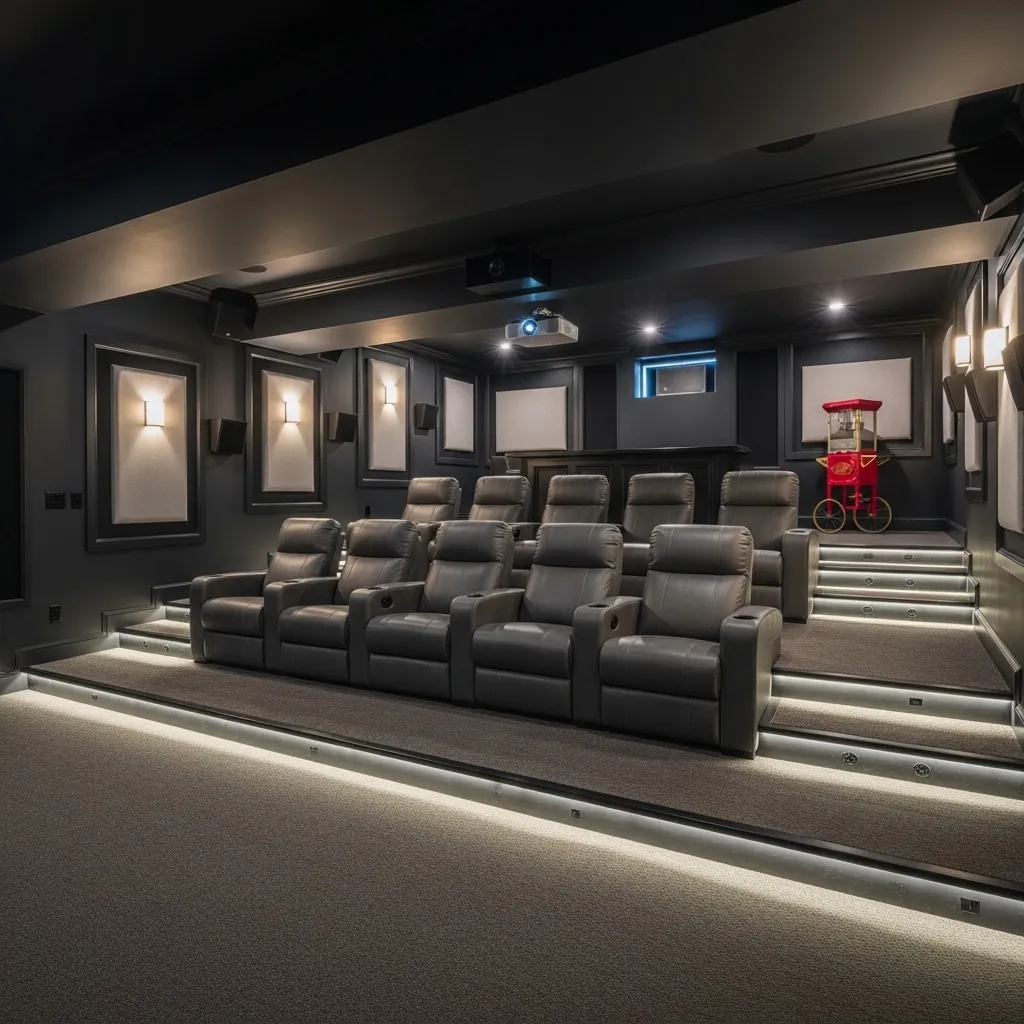
If your basement has limited natural light anyway, why fight it? Embrace the darkness and create the ultimate home theater that rivals actual movie theaters. Tiered seating is the game-changer here—building elevated platforms for your second and third rows creates that stadium seating experience where everyone has an unobstructed view of the screen. It’s such a special feature that turns movie night into a genuine event rather than everyone crowding onto a couch.
The dark walls and ceiling aren’t just for aesthetics—they actually serve a functional purpose by eliminating light reflection and glare that would interfere with your viewing experience. This is one of those instances where a low basement ceiling is actually an advantage because it creates that intimate, cocoon-like feeling that makes the theater experience so immersive. Add in real theater seats with cup holders, proper surround sound, and maybe some movie posters in frames, and you’ve created something genuinely special that your family and friends will always want to use.
2. Industrial-Style Exposed Ceiling
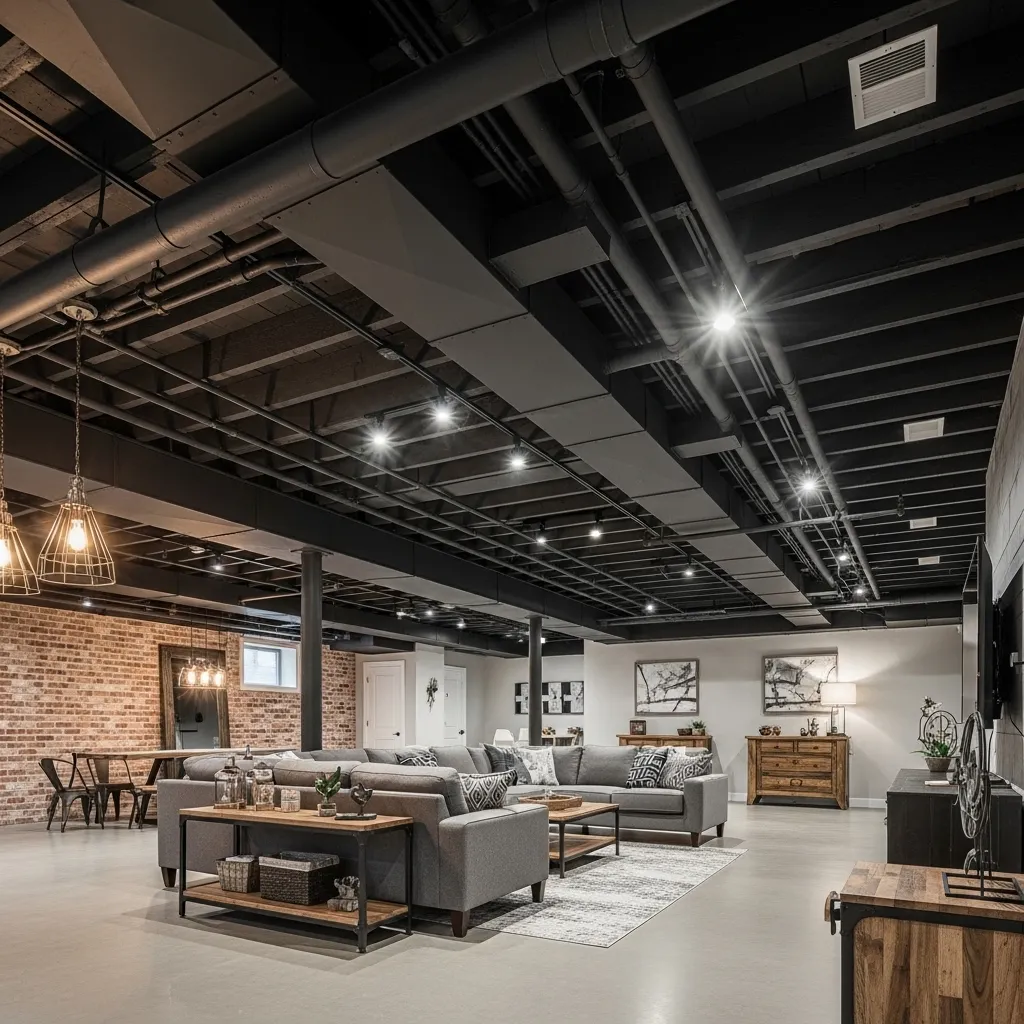
Exposed ceilings in basements have become incredibly popular because they solve two problems at once—you gain precious ceiling height by not installing a dropped ceiling, and you create an intentional industrial design aesthetic rather than trying to hide your mechanicals. Painting everything a uniform matte black makes all those pipes, ducts, and joists blend together into one cohesive element that reads as a design choice rather than unfinished construction.
This approach works particularly well if your basement has decent ceiling height to begin with—you want at least seven feet of clearance after accounting for the ductwork. The industrial vibe pairs beautifully with concrete floors, exposed brick, metal furniture, and vintage lighting. It’s edgy and cool without being cold, especially when you balance those hard surfaces with soft textiles and warm lighting. The key is making sure everything is organized and painted cleanly—this only works when it looks intentional, not like you just gave up halfway through finishing your basement.
3. Guest Suite with Egress Window
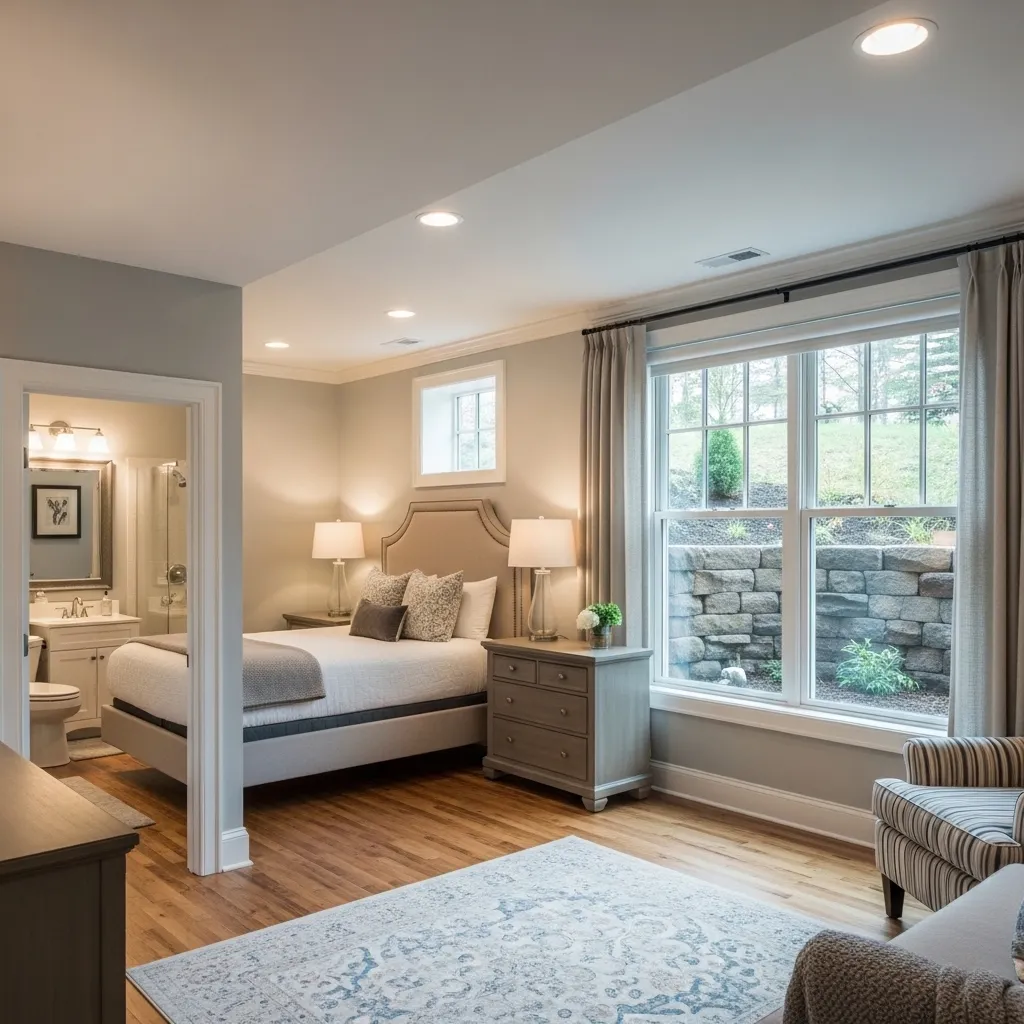
Creating a proper guest suite in your basement with an egress window is such a smart use of below-grade space, giving you a completely self-contained area for visitors that doesn’t disrupt your main living areas. The egress window is crucial—it’s not just about bringing in natural light, though that’s wonderful—it’s also a safety requirement for basement bedrooms, providing an emergency exit in case of fire. Modern egress windows can be quite large and really transform how a basement bedroom feels.
The key to making a basement bedroom feel welcoming rather than dungeon-like is maximizing that natural light, adding plenty of artificial lighting layers, keeping the color palette warm and inviting, and treating it with the same design care you’d give an upstairs bedroom. Include all the comforts—good mattress, quality bedding, bedside tables with lamps, a luggage rack, maybe a small seating area. When you add an ensuite bathroom, you’ve created a complete private retreat where guests can feel genuinely comfortable and not like they’ve been banished to the basement.
4. Kids’ Playroom with Built-In Storage
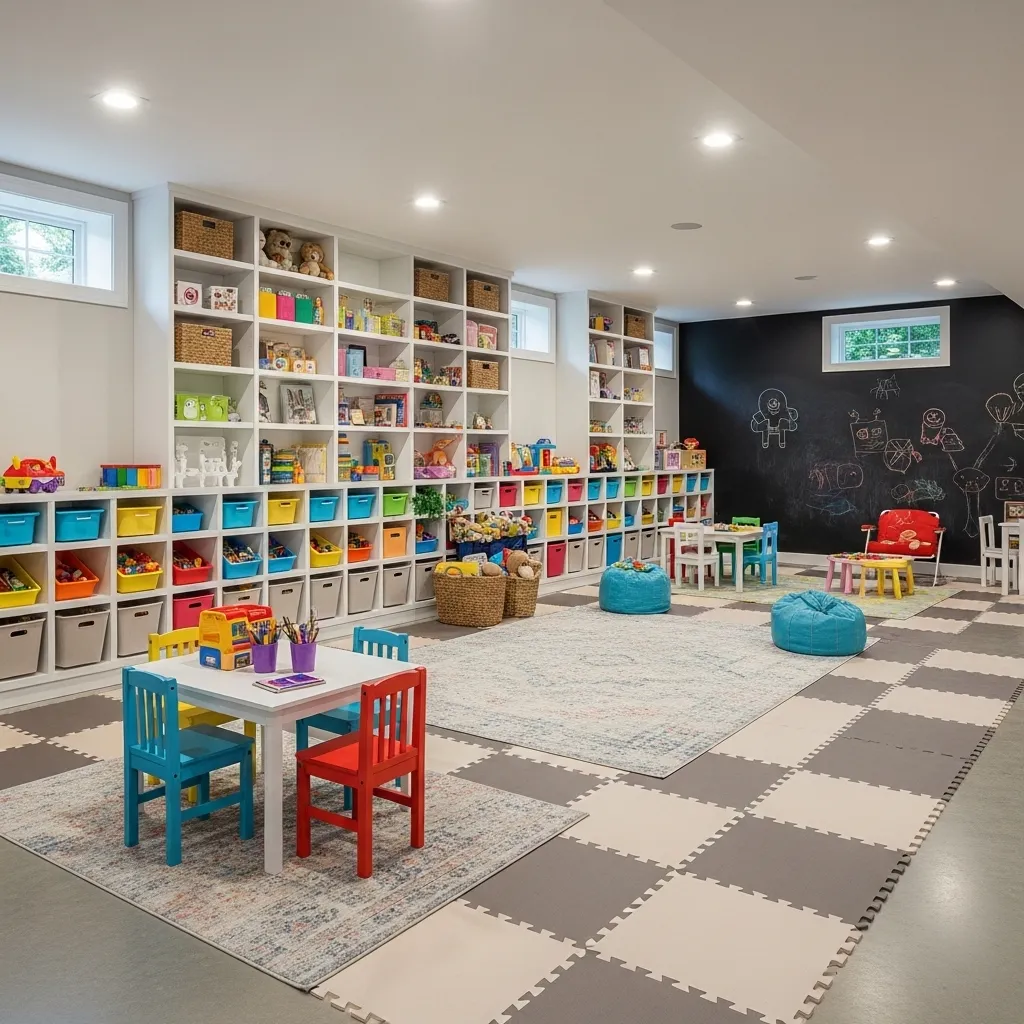
Dedicating your basement to a kids’ playroom is brilliant because it contains the toy chaos in one designated space and frees up your main living areas. The built-in storage is absolutely essential—when you have cubbies, shelves, and bins built right into the walls, cleanup becomes so much easier and you’re using vertical space efficiently instead of having random toy boxes scattered everywhere. Kids can actually find their toys and put them away when everything has a designated home.
The basement works perfectly for active play because you’re not worried about noise traveling to bedrooms above or kids running around disturbing anyone. Soft flooring like foam tiles or padded carpet makes it safer for tumbling and playing, and you can really let kids be kids without stressing about dings in the walls or messes. Include different activity zones—building area, reading nook, craft table, active play space—so the room grows with your kids and serves multiple functions. Good lighting is crucial since basements tend to be dim, so invest in bright overhead lighting and maybe some fun accent lighting to keep the space cheerful.
5. Home Gym with Rubber Flooring
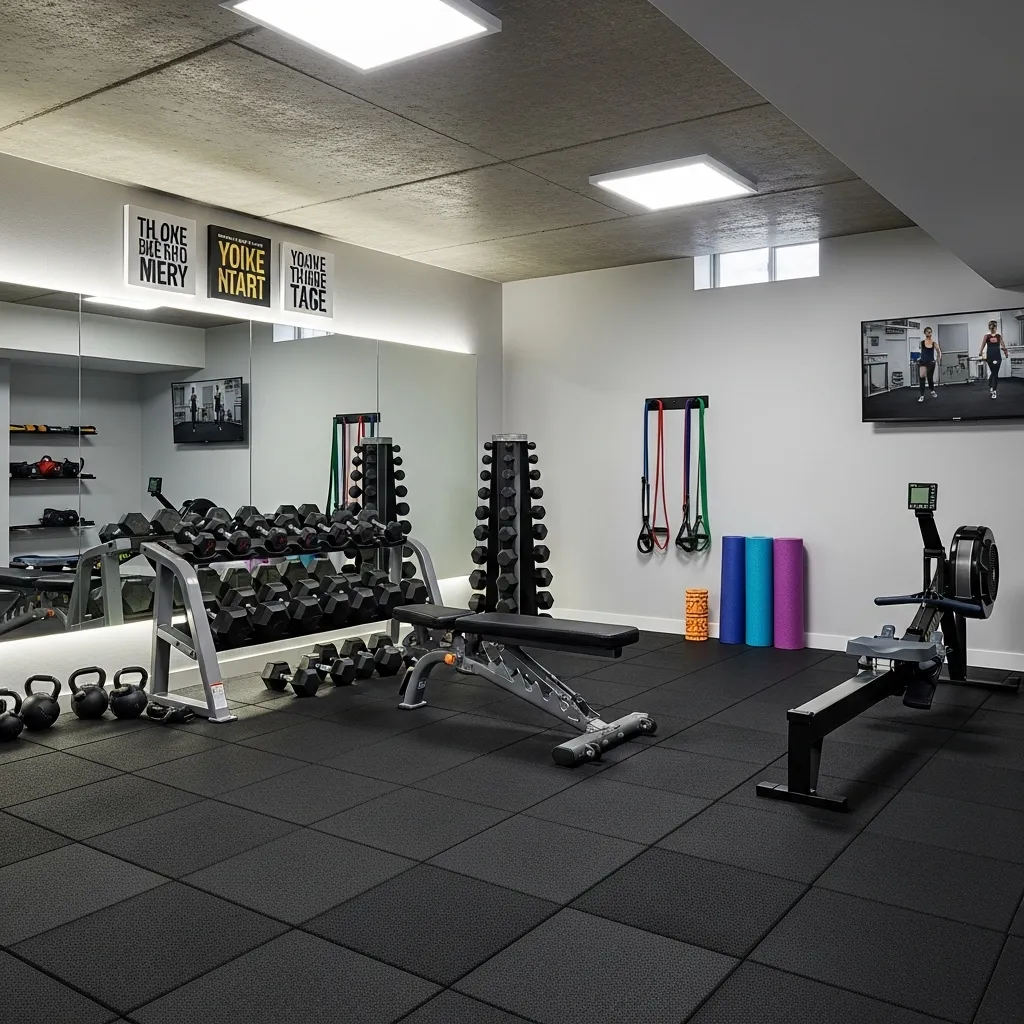
Basements are ideal for home gyms because the concrete floor can handle heavy equipment weight, you don’t have to worry about disturbing people below you when you’re dropping weights or jumping, and you can really spread out without sacrificing prime living space upstairs. Rubber flooring is non-negotiable for a proper home gym—it protects your foundation, cushions your joints, is easy to clean, and handles dropped weights without damage. The interlocking tiles make installation super DIY-friendly.
The mirror wall is essential for checking form during exercises and it also makes the space feel larger, which helps in a basement where you might have lower ceilings. Good lighting matters enormously—you need to see what you’re doing clearly and feel energized, not like you’re working out in a cave. Keep the equipment organized with wall-mounted storage for smaller items, and consider designating zones for different workout types—cardio area, weights area, stretching/yoga area. The basement location means you can work out any time without feeling self-conscious or worrying about bothering neighbors.
6. Wine Cellar with Custom Racking
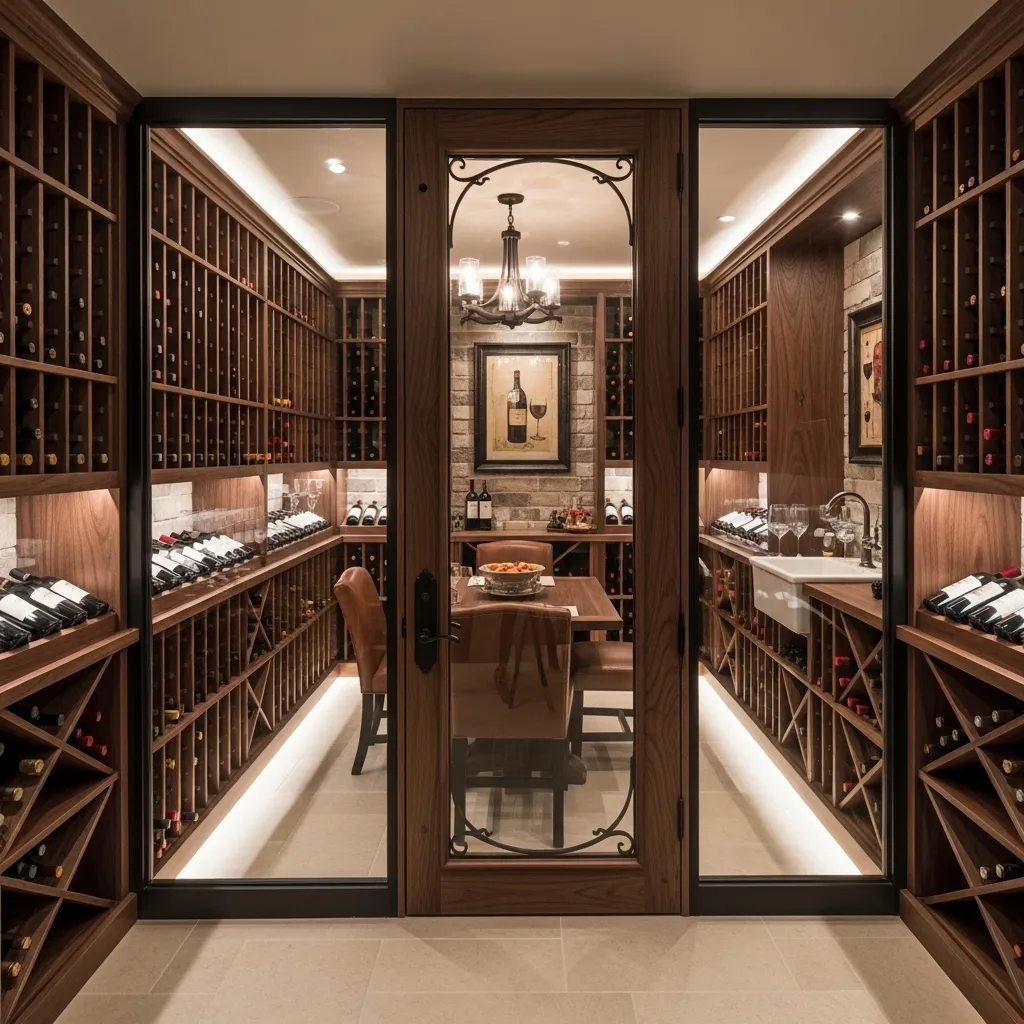
If you’re a wine enthusiast, the naturally cool and stable temperature of a basement makes it absolutely perfect for a proper wine cellar. The consistent temperature is ideal for long-term wine storage, and you can easily add climate control systems to dial in the exact conditions you need. Custom wood racking turns your collection into a beautiful display rather than just storage, and there’s something incredibly satisfying about having your wines organized and accessible in one dedicated space.
The intimate, cave-like quality of a basement actually enhances the wine cellar experience—you want it to feel cozy and special, not open and airy. Include a small table for tastings so the space becomes about enjoying wine, not just storing it. Glass doors or windows let you show off your collection while maintaining the climate-controlled environment. This doesn’t have to take up your entire basement—even a small room or converted closet can become a beautiful wine cellar. It’s a luxury feature that genuinely adds value to your home and creates a special space for something you’re passionate about.
7. Bar and Entertainment Lounge
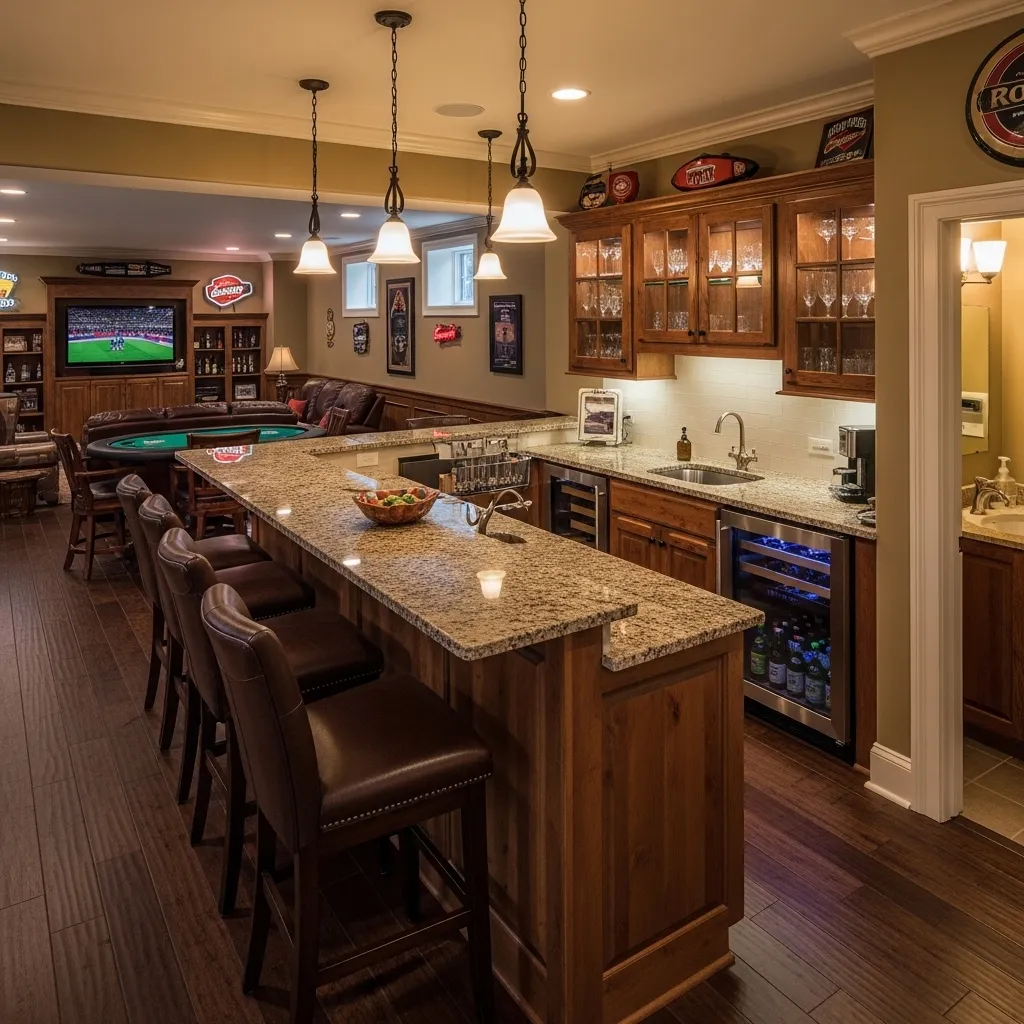
A basement bar creates this amazing adult hangout space that’s completely separate from your main living areas—you can entertain friends, watch the game, play cards, and enjoy drinks without feeling like you’re taking over the whole house. Building a proper bar with storage for glasses and bottles, a small sink, and maybe even a kegerator or wine fridge makes it functional and not just decorative. Bar-height seating creates that authentic pub feel.
The basement setting works perfectly because you can really lean into creating atmosphere with darker colors, mood lighting, and décor that might feel too heavy upstairs. Think rich woods, leather seating, warm ambient lighting, maybe some neon signs or vintage posters that reflect your interests. Include entertainment options beyond just the bar—pool table, dart board, poker table, big screen TV for sports. Adding a small bathroom nearby means guests don’t have to trek upstairs constantly. This becomes the ultimate entertaining space that your friends will always want to hang out in.
8. Craft Room with Ample Work Surface
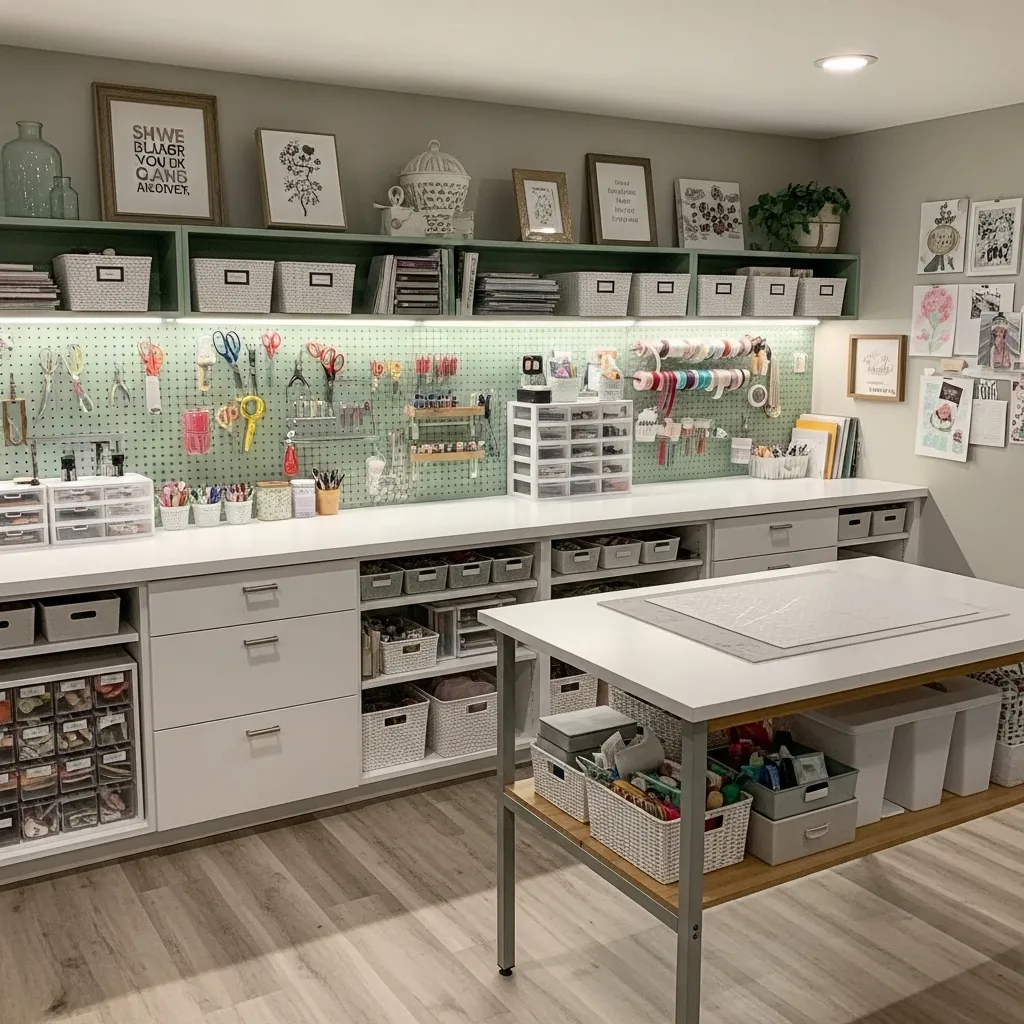
Basements make fantastic craft rooms because you can spread out your projects and supplies without having to pack everything away constantly—the space is dedicated to creativity and mess-making in the best possible way. That long continuous work surface is key for having multiple projects going at once or working on larger items. Built-in storage keeps your supplies organized and accessible, and pegboard walls let you see everything you have at a glance rather than digging through drawers.
Good lighting is absolutely crucial in a craft room since you’re doing detailed work—combine bright overhead lighting with task lighting at your work surfaces so you can see colors accurately and work on intricate details comfortably. Include a comfortable chair if you’re doing seated work, and maybe a standing-height area for cutting and other tasks. The basement location means you can leave projects out, make a mess, and really inhabit the creative process without worrying about it interfering with daily life upstairs. It’s creative freedom in a dedicated space.
9. Home Office with Built-In Desk
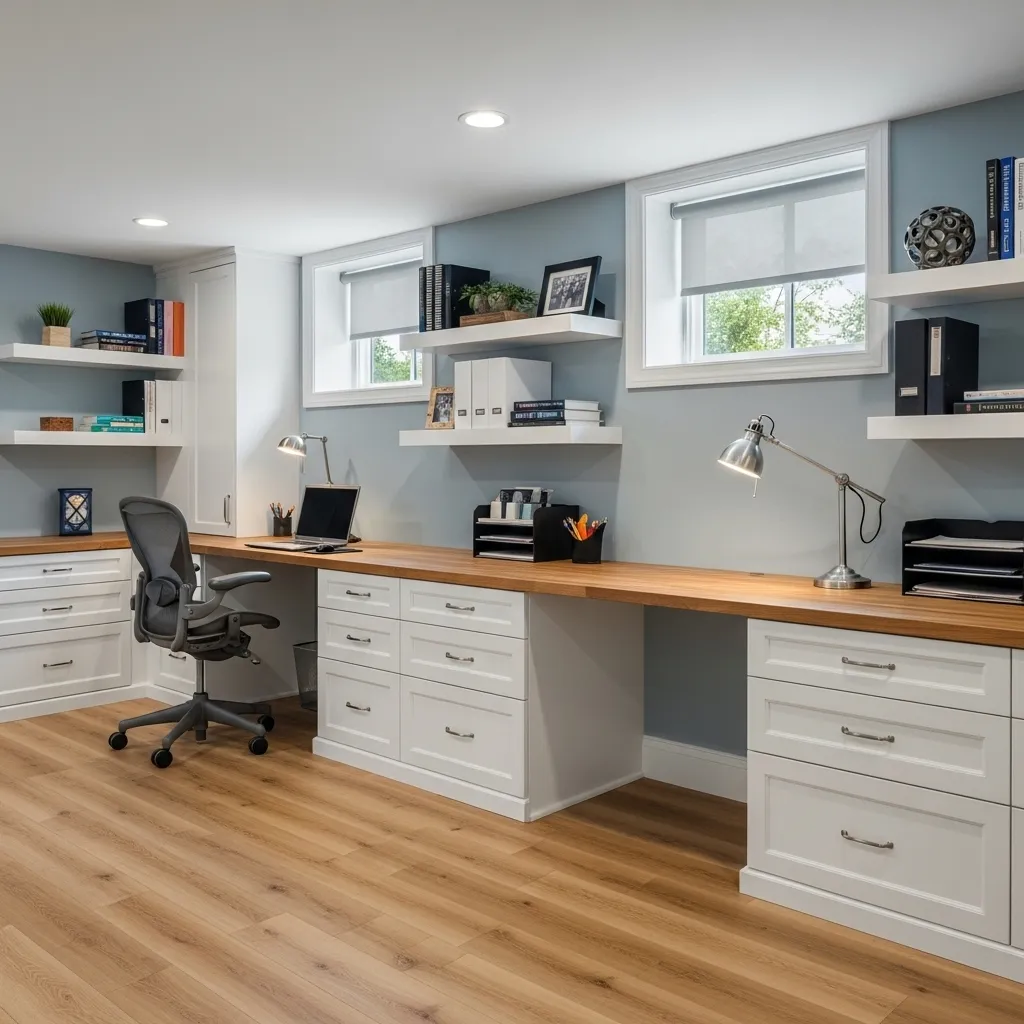
With remote work being so common now, a dedicated basement home office gives you true separation between work and home life—you can close the door at the end of the day and actually leave work behind rather than working from your dining table. The basement location provides quiet and privacy away from the main household activity, which is invaluable for concentration and video calls. Built-in desks maximize your workspace while keeping everything organized and purposeful.
The key is making the space feel professional and comfortable enough that you actually want to spend your workday there. That means good lighting—both natural if possible and excellent artificial lighting, comfortable seating, proper desk height, and enough storage to keep your work materials organized. Paint colors should be conducive to focus rather than too stimulating. Include personal touches like artwork or plants so it doesn’t feel sterile, but keep it professional enough that you can take video calls without embarrassment. A basement office can actually be more pleasant than many traditional office buildings when designed thoughtfully.
10. Multi-Functional Flex Space with Zones
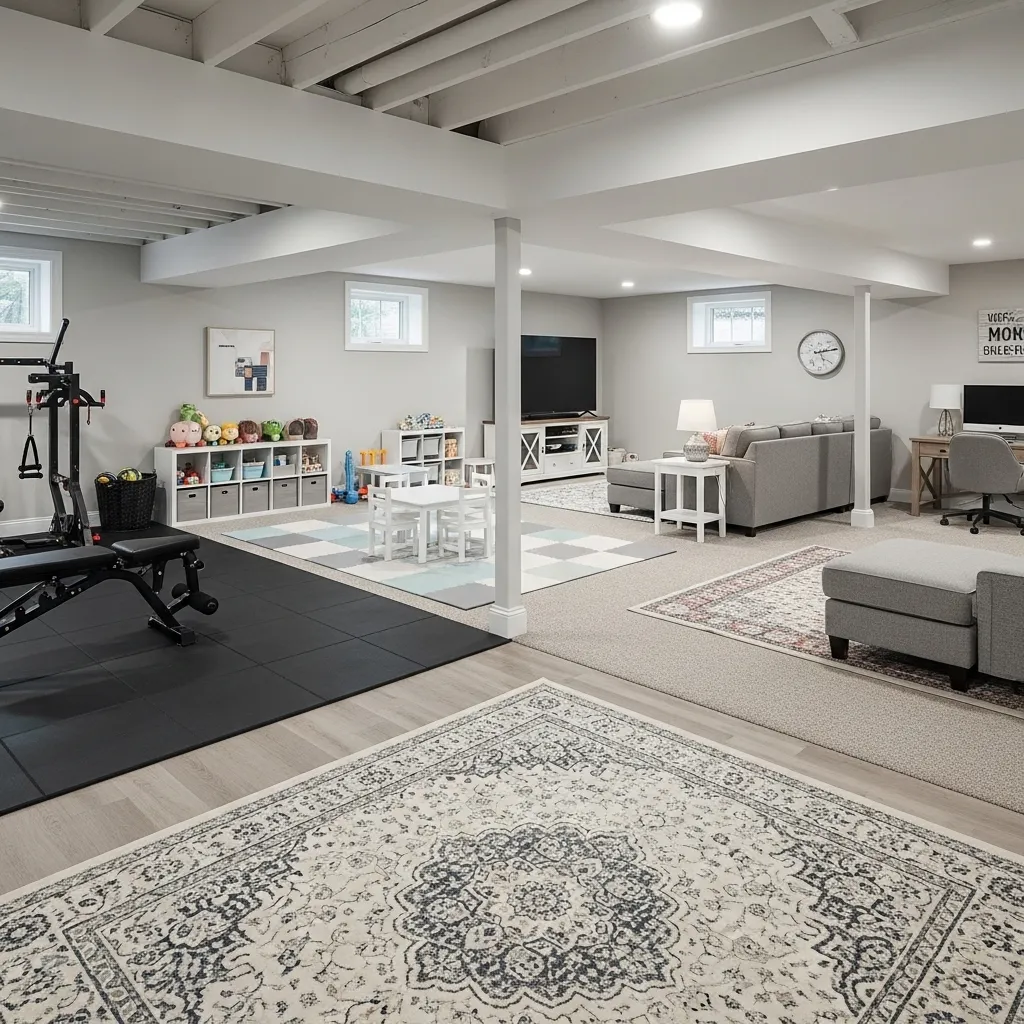
If you need your basement to serve multiple purposes for different family members, creating distinct zones within one open space gives you flexibility without the cost and space loss of building separate rooms. Strategic furniture placement, different flooring materials in each zone, area rugs, and varied lighting all help define the different areas and make it clear where one function ends and another begins. It’s open enough to feel spacious but defined enough to be functional.
This approach works particularly well for families where different people need different things from the basement—maybe the kids need play space, someone needs a workout area, everyone wants a TV watching spot, and someone needs a small workspace. By keeping it open, you maintain sightlines and flexibility. The zones can evolve as needs change without major construction. Use furniture, bookcases, or even curtains as flexible dividers if you want more separation. The key is making sure each zone has what it needs functionally while maintaining visual cohesion throughout the space so it doesn’t feel chaotic.
11. Music Room with Sound Treatment
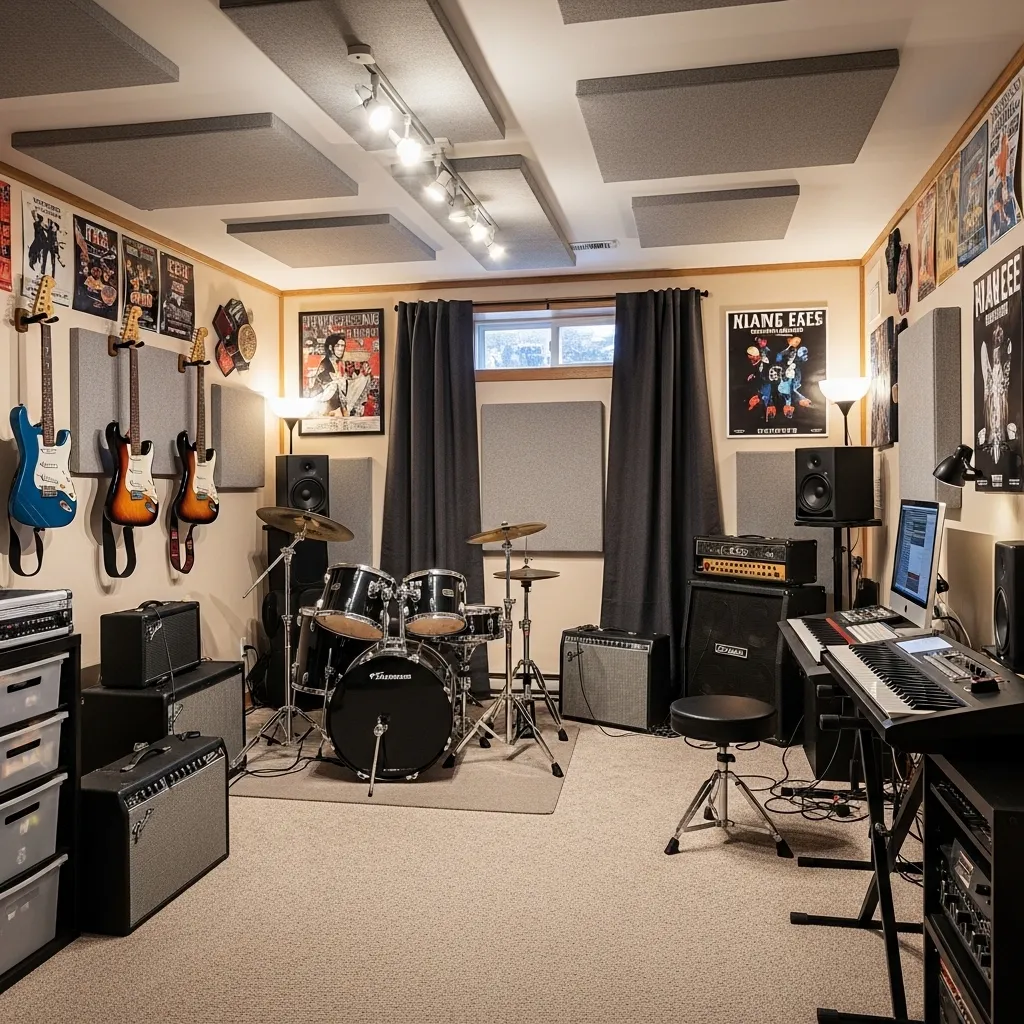
Basements are absolutely ideal for music rooms because you can practice, record, and play at volumes that would be completely impractical anywhere else in the house. The below-grade location naturally provides some sound isolation, and when you add proper acoustic treatment to absorb sound and reduce echo, you can create a genuinely functional music space. Those fabric-wrapped acoustic panels serve double duty by improving sound quality while also adding visual interest to what might otherwise be plain walls.
The beauty of a basement music room is freedom—you can set up all your equipment and leave it out permanently rather than constantly packing everything away. You can practice late at night without disturbing anyone. You can record without background noise from the rest of the house. Include proper storage for cables, accessories, and sheet music to keep everything organized. Good lighting matters since you need to see what you’re doing, and comfortable seating is important for longer practice sessions. This dedicated space can genuinely improve your musical practice and enjoyment.
12. Laundry Room with Folding Station
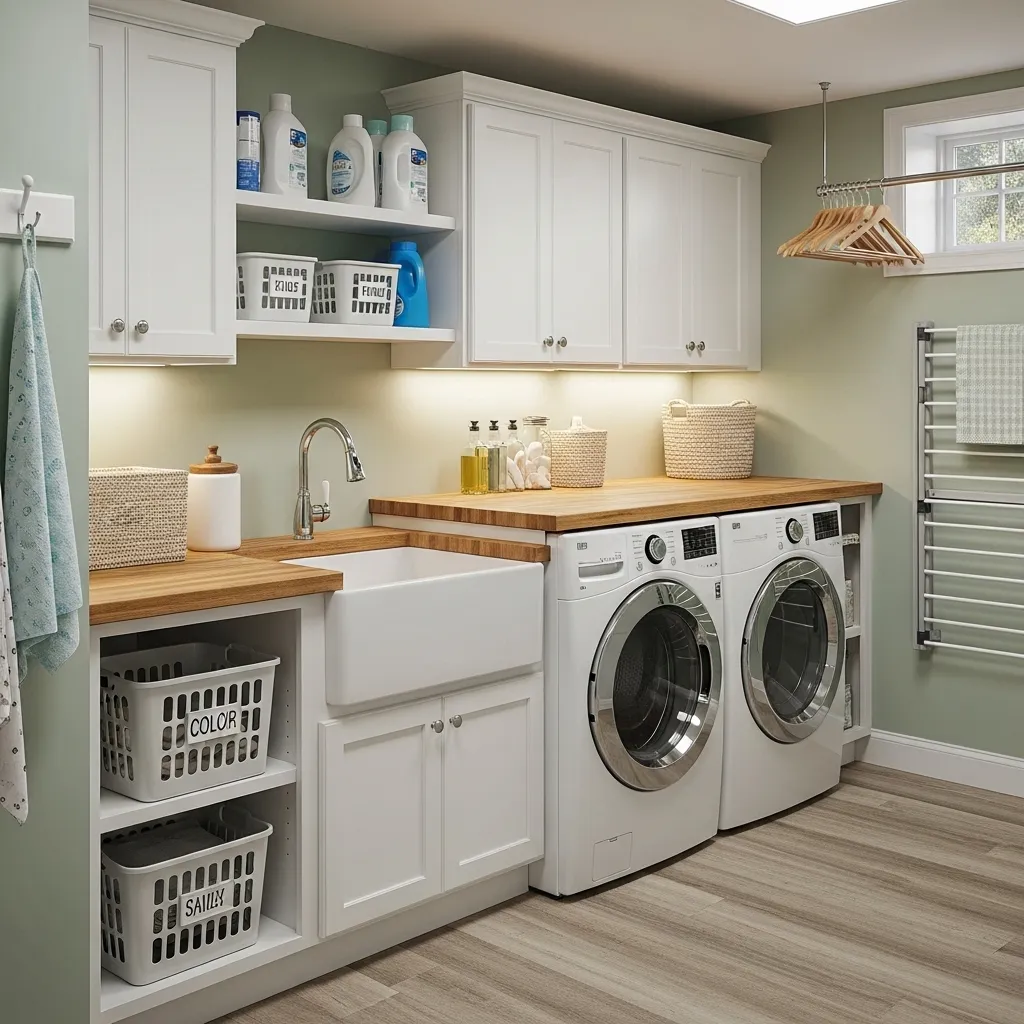
If your washer and dryer are in the basement anyway, why not make the laundry area actually pleasant instead of the dingy corner everyone avoids? Creating a proper laundry room with good lighting, nice finishes, ample storage, and enough counter space for folding makes a tedious chore significantly more bearable. When your laundry space is organized and functional, you’re more likely to stay on top of it rather than letting clean clothes pile up in baskets.
The folding counter is absolutely essential—having a dedicated surface at the right height makes folding so much easier than hunching over a basket or using your bed. Cabinets keep detergents and supplies hidden and organized. A utility sink is incredibly useful for pre-treating stains, hand-washing delicates, or even cleaning muddy shoes. Include a hanging rod for clothes that need to air dry and a spot for an ironing board if you iron. Good lighting and attractive finishes make the space feel intentional rather than neglected. You spend enough time doing laundry that the space deserves to be functional and pleasant.
13. Cozy Reading Nook with Built-In Seating
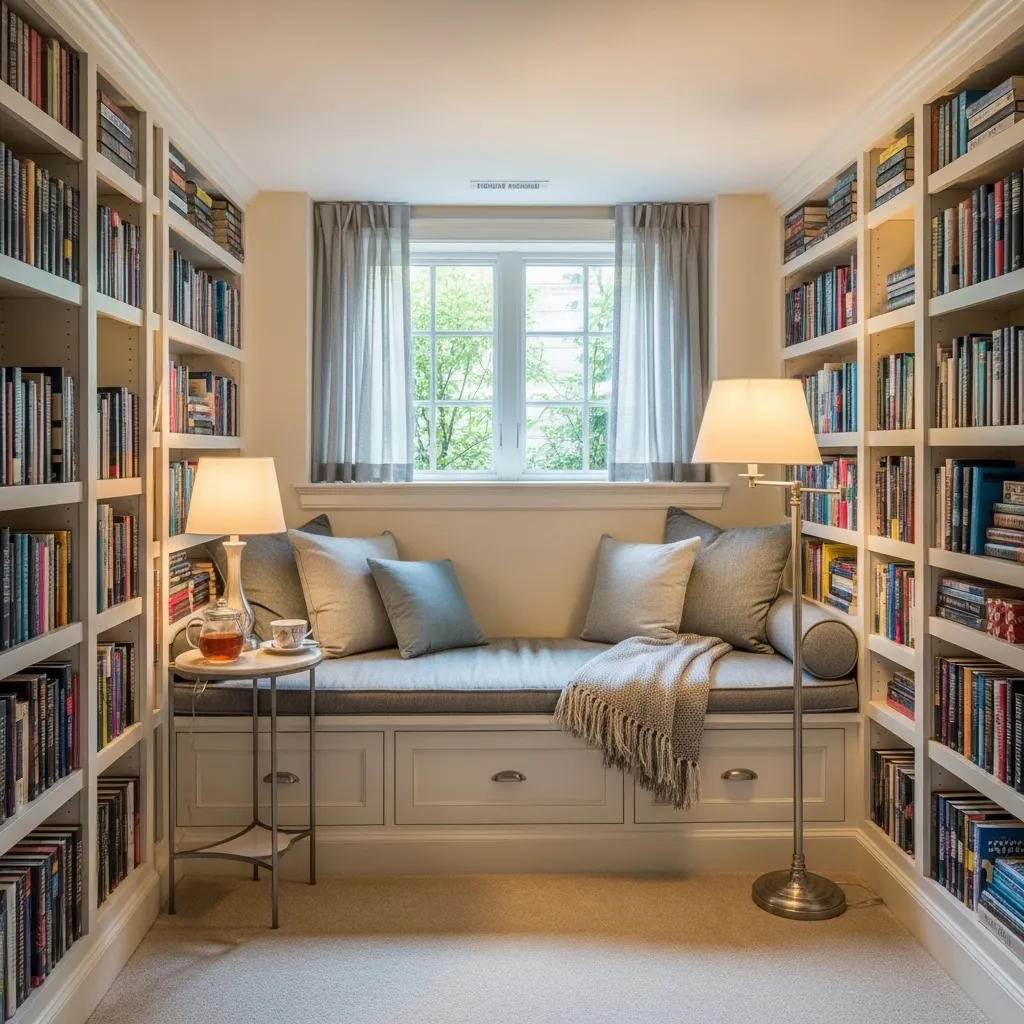
Even a small corner of your basement can be transformed into a magical reading nook that becomes your favorite retreat in the house. Built-in seating with storage underneath maximizes the space and creates that cozy, tucked-away feeling that’s perfect for getting lost in a book. If you have a window, even a small ground-level one, positioning your reading nook there lets you take advantage of natural light while the below-grade location keeps you feeling secluded and peaceful.
Surrounding the nook with bookshelves creates that personal library feeling and keeps your books accessible and beautifully displayed. Good lighting is crucial—you need both natural light during the day and excellent task lighting for evening reading, so include both overhead lighting and a dedicated reading lamp. Comfortable cushions and throw pillows make the space inviting enough that you’ll actually use it rather than just thinking it’s pretty. This kind of dedicated, peaceful space is increasingly rare in busy households, and a basement nook can provide that quiet sanctuary you crave.
14. Wet Bar with Mini Kitchen
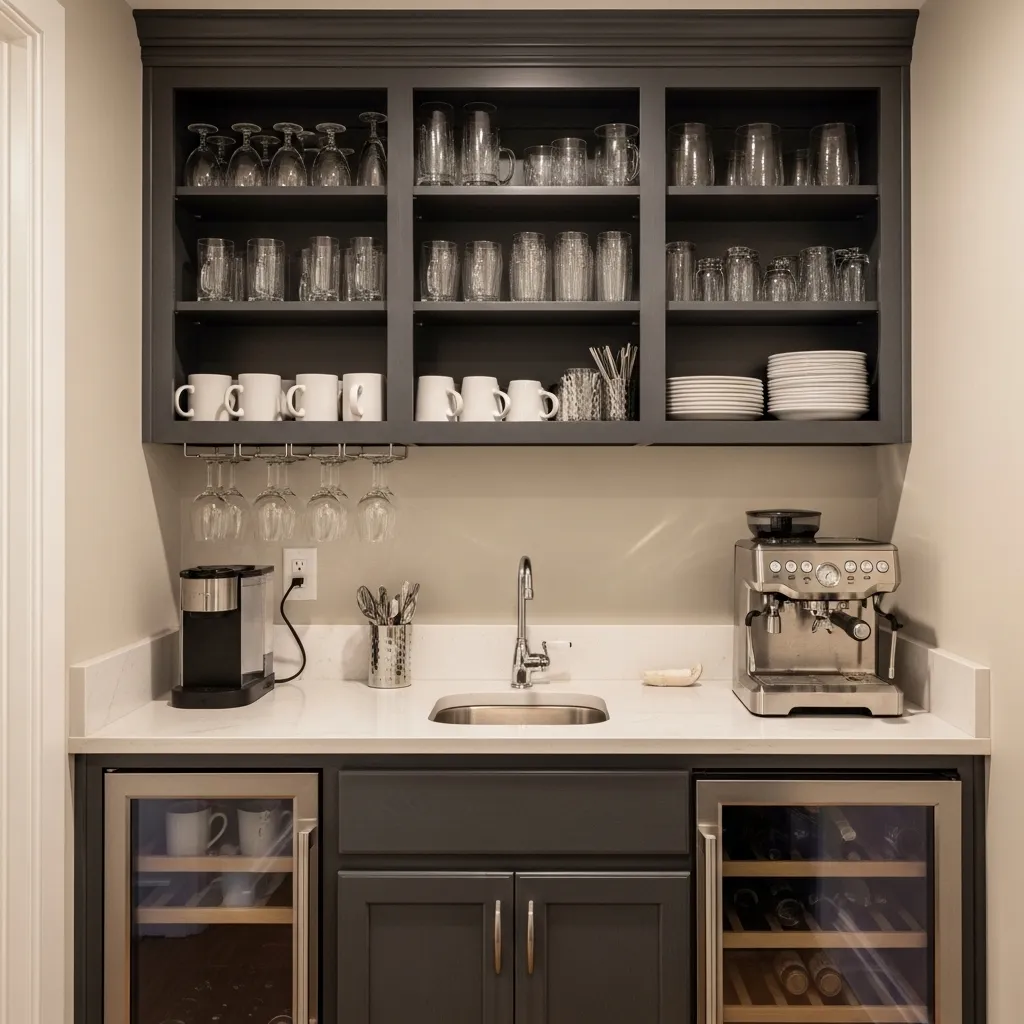
A wet bar that functions as a mini kitchen takes your basement entertainment space to the next level by providing everything you need for hosting without constantly running upstairs. Having a sink means you can wash glasses, prep garnishes, and clean up without leaving your basement. A small dishwasher, beverage fridge, and maybe a microwave or small oven make the space genuinely self-sufficient for entertaining, watching movies, or just hanging out.
This setup is particularly valuable if you have a basement suite for guests or older kids—they can make coffee in the morning or grab snacks without feeling like they’re invading your main kitchen. Include adequate storage for glasses, mugs, plates, and utensils so the wet bar is actually functional. A coffee station with a good espresso machine or coffee maker makes it usable beyond just evening entertaining. If you spend significant time in your basement for any reason—working out, watching movies, working from home—having these amenities down there instead of trekking upstairs constantly is genuinely life-improving.