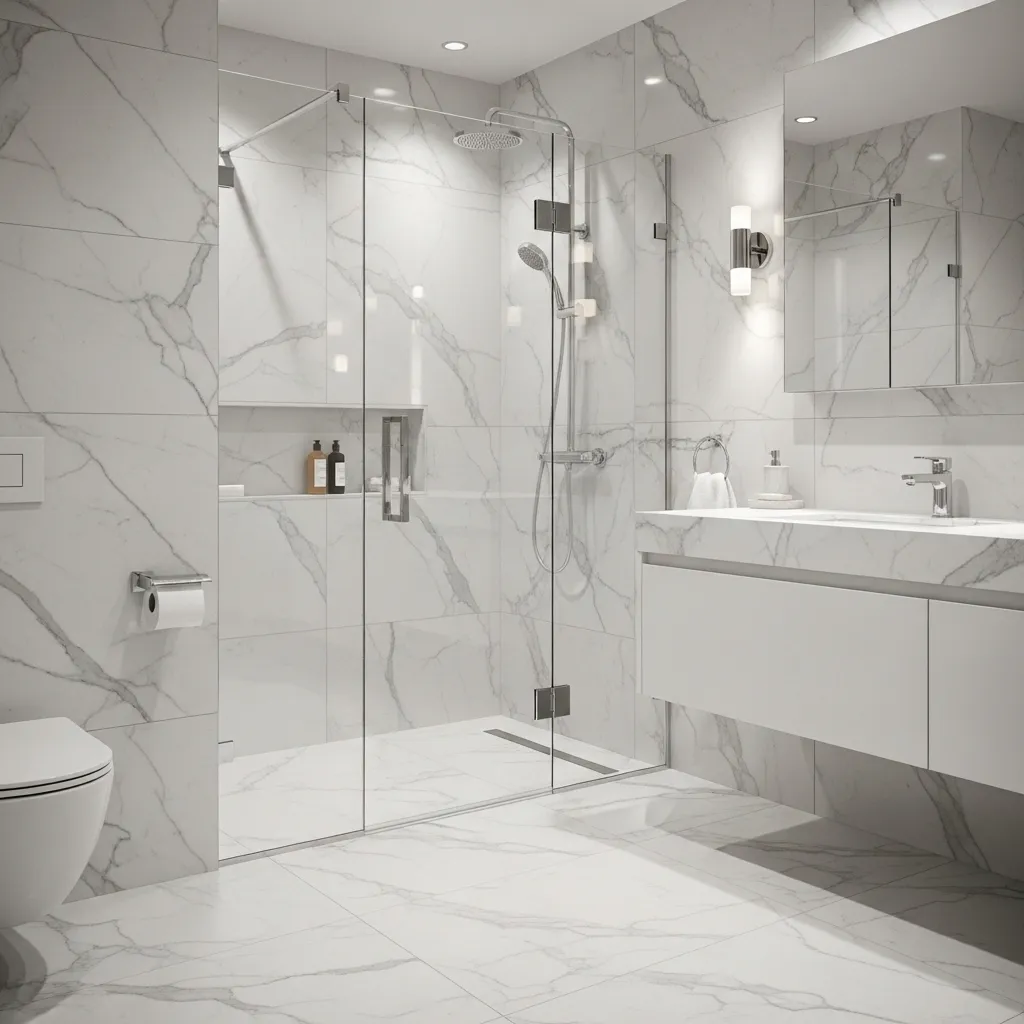
15 Bathroom Flooring Ideas for 2026 That Treat the Floor as the Room’s Most Important Design Decision
If you’ve been approaching your bathroom floor as the last decision — the surface you choose after the tiles, the fixtures, the vanity, and the paint color have all been settled, the thing you fit into whatever budget and aesthetic space remains after the more exciting decisions have been made — this guide is going to suggest that you’ve been working in the wrong order, because the bathroom floor is consistently the surface that most determines the overall character and atmosphere of the finished room, the one that creates the foundation upon which every other material decision either works beautifully or struggles against itself. The floor is the surface you see in full from the doorway when you enter, the surface that provides the consistent visual ground beneath every other element, the surface whose color and texture and material character set the temperature of the whole room in a way that wall tile, vanity, and fixtures — which are seen individually and partially — can’t quite do. Getting the floor right is the prerequisite for getting the bathroom right, and this roundup covers every significant direction in bathroom flooring for 2026, from the ancient warmth of genuine terracotta tile through the architectural precision of large-format concrete look porcelain, the intricate beauty of encaustic cement tile, the specific drama of black slate, the warmth of tumbled travertine, the contemporary elegance of micro-cement, the revival of small format mosaic, the warmth and practicality of luxury vinyl in wood effect, the bold graphic impact of patterned tile, the quiet sophistication of limestone, the specific beauty of zellige-inspired handmade tile, the warm contemporary quality of warm grey porcelain, the drama of book-matched marble, the functional beauty of resin terrazzo, and the genuine luxury of heated natural stone.
The 2026 bathroom flooring moment is defined by a clear movement away from the cool, clinical, uniformly white-or-grey floors that dominated bathroom design for the previous decade and toward warmer, more materially rich, more individually characterized surfaces — toward floors that have texture and depth and the specific quality of real or real-appearing natural materials rather than the flat, manufactured uniformity of large-format porcelain in cool grey tones. This doesn’t mean the large-format tile is disappearing — it’s evolving, with warm tones, textured surfaces, and more complex color stories replacing the cool grey monotone that characterized the previous decade’s version of the format. And it doesn’t mean small format tile is disappearing either — small format mosaic and encaustic tile are having a genuine revival driven by the desire for floors with visual complexity, handmade character, and the specific beauty that pattern and texture create in a small room. What the 2026 moment means is that the bathroom floor is being taken seriously as a design decision in its own right — chosen for its specific beauty and specific character rather than for its neutrality or its safety.
What I’ve come to understand about bathroom floors specifically — as distinct from floors in other rooms — is that the bathroom’s small scale creates a fundamentally different visual relationship between floor and viewer than any other room produces. In a bathroom, you’re always close to the floor — standing over it, sitting near it, entering a small room where its full extent is visible in a single glance from the doorway. This proximity and this complete visibility mean that the floor’s material quality, its texture, its color, and its pattern are experienced at an intimacy that living room and kitchen floors don’t achieve. The bathroom floor is the surface you know most closely and most completely in your home, and it deserves the material quality and design attention that that intimacy demands.
1. Warm Terracotta Tile — The Ancient Standard Reborn
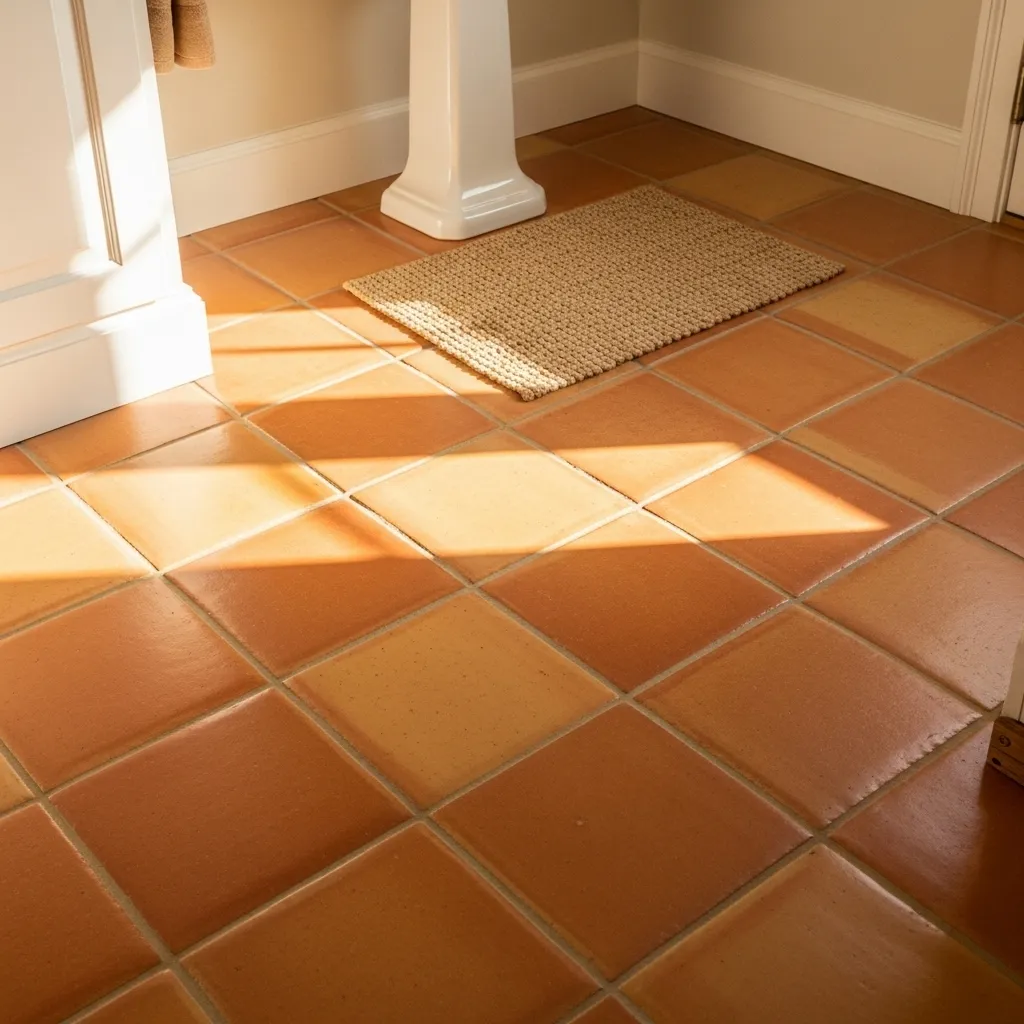
Warm terracotta tile is the bathroom flooring direction that most completely embodies the 2026 moment’s movement toward warmth and natural material character — it’s a material with thousands of years of continuous domestic use across Mediterranean, Mexican, and North African building traditions, and its revival in contemporary bathroom design is not a trend cycle but a genuine recognition that no manufactured material has ever quite matched the specific quality of warmth and organic beauty that naturally fired clay tile produces. Terracotta’s warm amber and red tones are the most immediately warming floor material available, transforming the thermal quality of any bathroom from cool and clinical to warm and ancient in a single material choice.
The specific quality that distinguishes genuine terracotta tile from terracotta-look porcelain is the variation — natural terracotta tiles are never perfectly uniform in tone, texture, or even dimension, and that variation is precisely what creates the floor’s visual warmth and depth. Each tile is slightly different from its neighbor because each was fired in slightly different conditions, and the accumulated difference of many slightly different tiles creates a floor that appears alive and rich in a way that perfectly uniform manufactured tile, however beautifully terracotta-toned, simply doesn’t achieve. Authentic terracotta requires sealing before use in wet environments and periodic re-sealing maintenance, but this maintenance is the same ongoing care that any natural material requires and rewards with a floor that improves with age rather than simply maintaining its initial quality.
2. Large-Format Warm Grey Porcelain With Texture
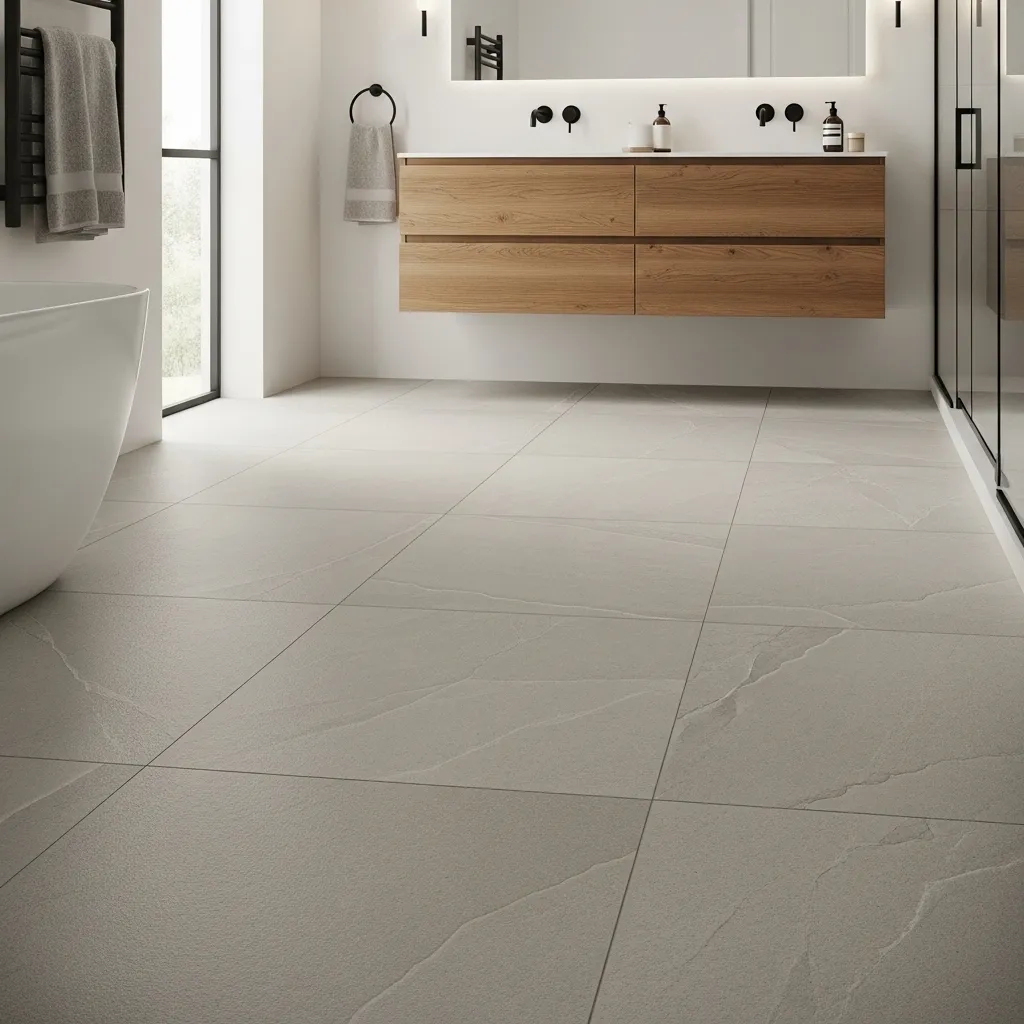
Large-format warm grey porcelain with a textured surface is the evolution of the previous decade’s large-format grey tile that makes the format genuinely appropriate for the 2026 design moment — the warmth in the grey tone and the texture on the tile surface transform a format that was becoming associated with cold, bland bathroom design into something materially rich and genuinely warm. The difference between a cool mid-grey large-format tile and a warm grey large-format tile in the same bathroom is the difference between a bathroom that feels recently renovated and one that feels genuinely designed — both are large format grey porcelain, but one creates warmth and the other doesn’t.
The surface texture on large-format porcelain is the 2026 specification detail that most distinguishes current bathroom floor design from the previous period’s preference for highly polished or completely smooth large-format surfaces — the textured surface references natural stone, reduces the slipping risk that polished large-format tile creates in wet environments, and creates a floor that interacts with light in a more complex and more beautiful way than a smooth surface. The slight relief of the texture creates micro-shadows that give the floor apparent depth and warmth even in flat, even light.
3. Encaustic Cement Tile — Pattern and Color at Floor Level
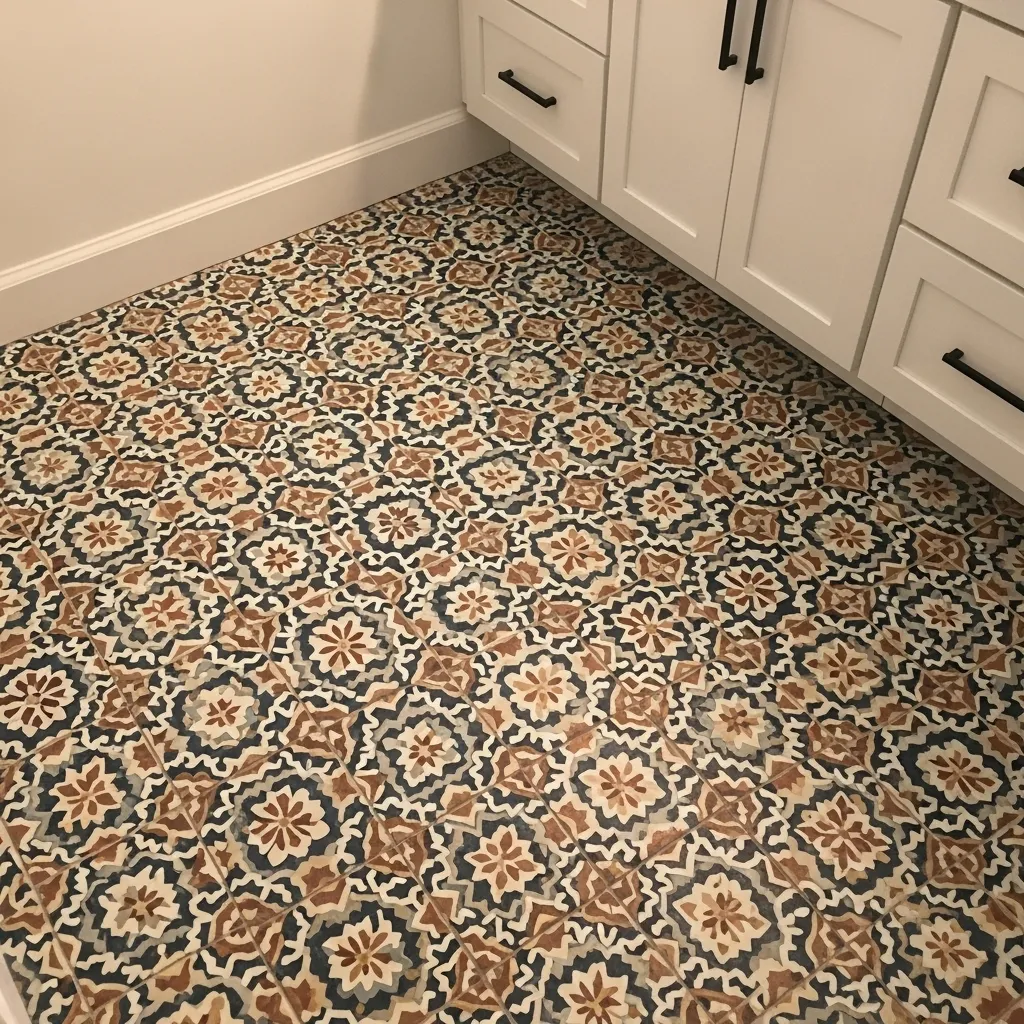
Encaustic cement tile — hydraulically pressed tiles with color and pattern inherent in the tile body rather than applied as glaze — creates the bathroom floor with the most complex visual beauty and the most specific historical character available, because the encaustic tile tradition spans centuries of production in Mediterranean, Middle Eastern, and Latin American craft traditions, and contemporary encaustic tiles made in those same traditions carry all the accumulated refinement of that long production history. The pattern complexity of a well-designed encaustic tile floor — where the individual tile is one element of a repeating pattern that only reveals its full complexity when multiple tiles are seen together — creates a floor that rewards sustained attention and that never quite resolves into the completeness of a simpler surface.
The specific quality of encaustic cement tile that distinguishes it from patterned porcelain tile is the matte depth of the cement surface — unlike glazed porcelain, which sits the pattern on a reflective surface layer, encaustic cement tile has its pattern within the tile body, creating a surface that appears to have depth rather than decoration. Light enters the matte surface and doesn’t fully return — the floor absorbs light and warms it rather than reflecting it back — and this quality of absorbed light is what creates the specific richness and warmth of a cement tile floor that glazed alternatives don’t replicate.
4. Honed Black Slate — Drama and Depth
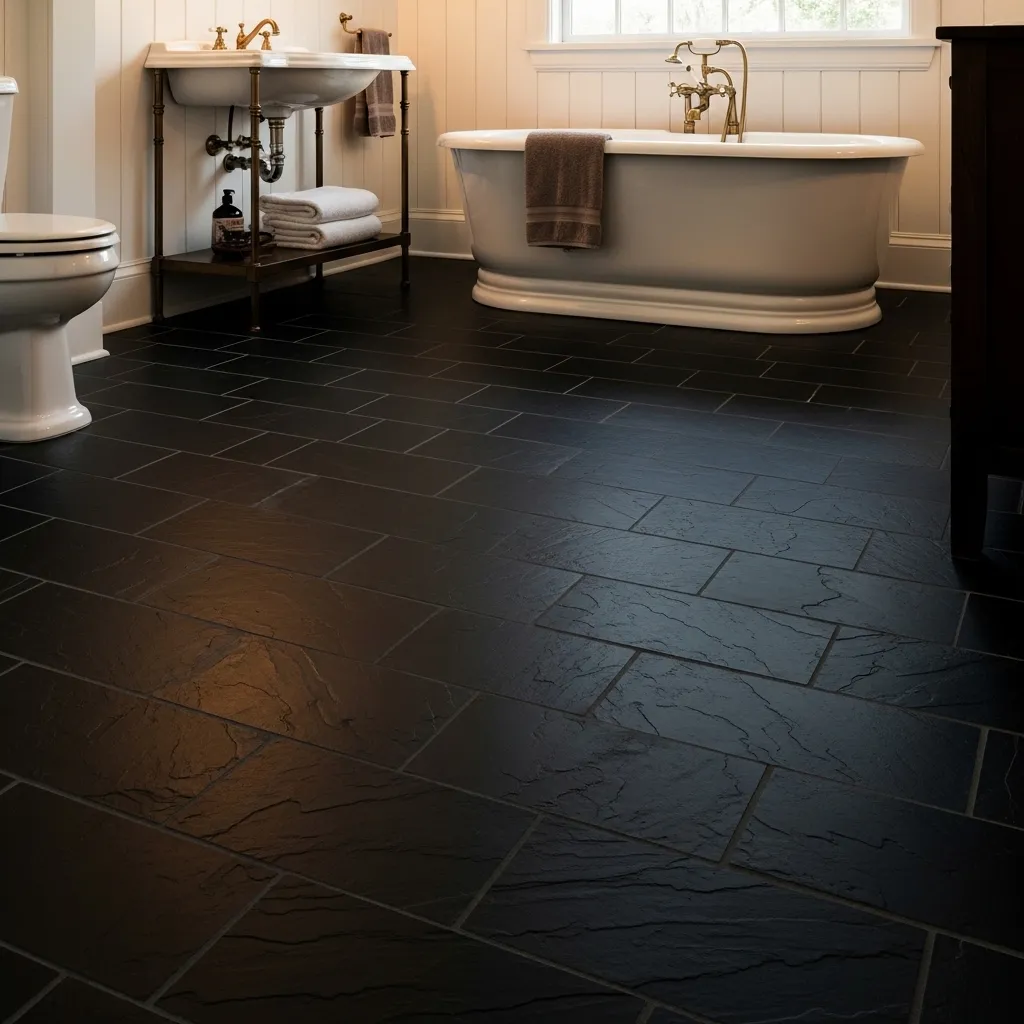
Honed black slate creates the most dramatically grounding bathroom floor available — its deep, warm black anchors the room’s color scheme with a weight and authority that no other floor material quite achieves, while the honed matte finish and the natural variation of the slate surface prevent the darkness from becoming oppressive or monotonous. The slate’s natural cleavage marks and slight tonal variation within the black give the floor visual texture and depth that manufactured black tile, however precisely made, doesn’t provide — black slate is never quite perfectly uniformly black, and that imperfection is what makes it beautiful.
The specific contrast that black slate creates with white bathroom fixtures — the white porcelain of a freestanding tub, the white ceramic of a pedestal sink, the bright white of painted walls — is one of the most powerful and most classically beautiful material relationships in bathroom design. The dark floor makes the white fixtures appear to float above it with a luminous quality that a pale floor can’t create, and the warm brass or aged gold fixtures that work best with black slate add the metallic warmth that prevents the high contrast of black-and-white from feeling cold or severe.
5. Tumbled Travertine — Ancient Warmth and Organic Beauty
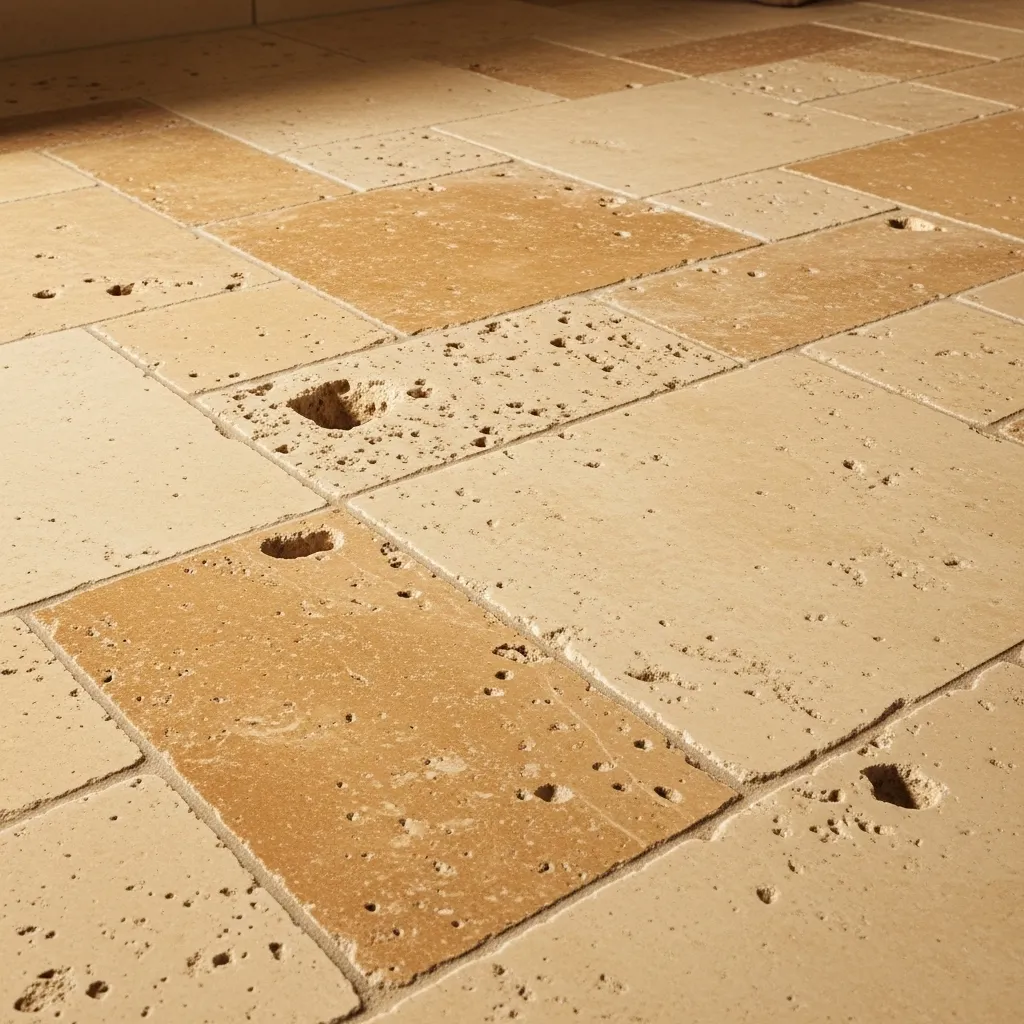
Tumbled travertine is the bathroom floor material that creates the most convincingly ancient and most warmly organic floor surface — the tumbling process that softens the tile edges and distresses the surface replicates the effect of centuries of foot traffic and natural wear on stone floors, creating a floor that appears genuinely old rather than newly installed. This quality of apparent age is the specific beauty that makes tumbled travertine so compelling — it creates a bathroom that feels like it has been inhabited and loved for a very long time, and that sense of accumulated domestic history is a quality that no new material can manufacture and that only genuinely aged or authentically aged-process materials can create.
The characteristic holes and voids of travertine — the natural features created by gas bubbles in the limestone during its geological formation — are the specific material quality that most divides opinion about the stone. Traditional installation fills these voids with grout, creating a relatively smooth surface with the holes visible as slightly recessed filled marks; contemporary and historically authentic installation leaves some voids unfilled, creating a surface with actual depth variation that’s more tactilely interesting but requires more careful cleaning maintenance. The unfilled void approach creates the most authentically ancient quality and the most beautiful visual depth.
6. Micro-Cement — The Seamless Contemporary Floor
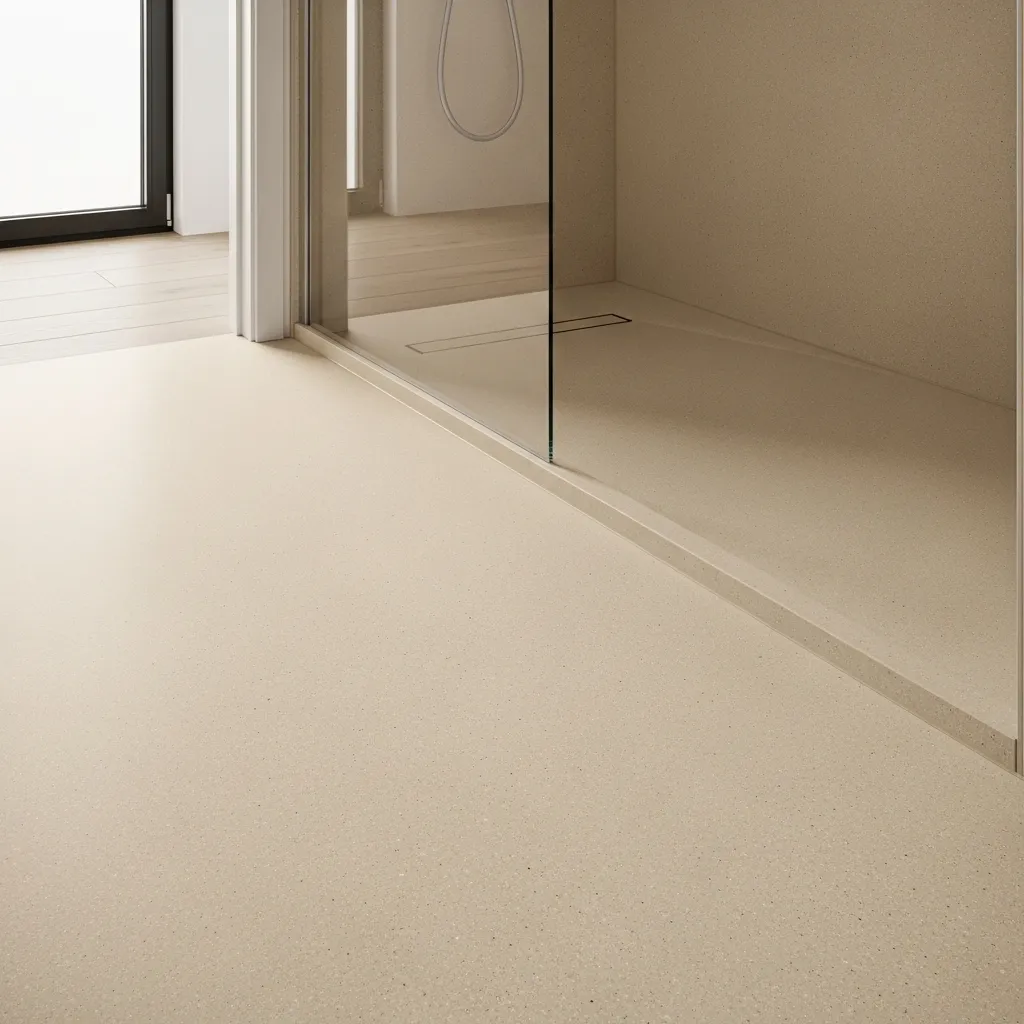
Micro-cement — a thin-coat cementitious material applied in multiple layers to create a seamless, joint-free surface — creates the most contemporary and most spatially unified bathroom floor available, because the absence of grout joints eliminates the visual grid that tiled surfaces always create and produces a continuous surface that appears larger and more resolved than any tiled alternative of equivalent dimensions. In a small bathroom specifically, the removal of grout lines by using a seamless micro-cement surface creates a measurable increase in perceived floor area — the eye reads the continuous surface as a single plane rather than a series of tiles, and a single continuous plane reads as more spacious than the same area divided by grout lines.
The warm tone of micro-cement is the specification that most determines whether it creates the warmth appropriate for a bathroom or the coldness that standard concrete is associated with — warm sand, buff, and cream tones create floors that feel natural and warm, while cool grey tones create floors that feel industrial and cold. The 2026 moment specifically favors the warm micro-cement tones that connect the material to natural stone and earth rather than to industrial concrete, creating seamless floors that feel simultaneously contemporary and warmly natural.
7. Small Format White Marble Mosaic — The Revival
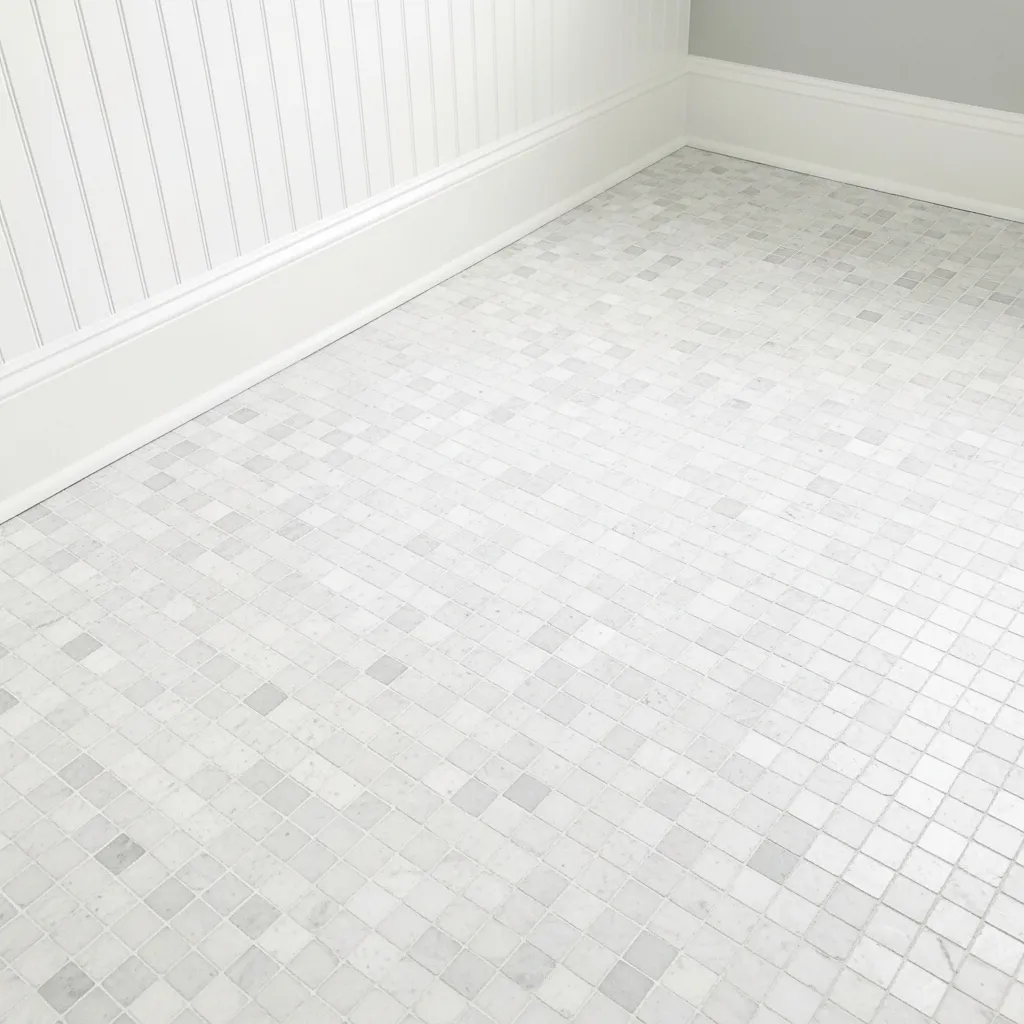
Small-format white marble mosaic is the bathroom floor material experiencing the most significant revival in 2026 — after years of dominance by large-format tile in the name of visual simplicity and easier maintenance, the specific beauty of small-format mosaic is being rediscovered as a floor treatment with qualities that large-format tile simply can’t replicate. The visual complexity of a small-format mosaic floor — visible only at the floor’s scale, where hundreds of individual pieces create a surface of subtle variation and pattern — creates a bathroom floor that rewards the close attention that a bathroom floor receives far more than any large-format alternative.
The specific appeal of tumbled white Carrara marble mosaic in 2026’s design moment is its connection to the historical tradition of bathroom and bathing floor surfaces — from ancient Roman bath floors through the white marble bathrooms of Gilded Age hotels to the classic white mosaic floors of early twentieth-century American bathrooms, white marble mosaic has been the defining floor surface of serious bathing architecture for millennia. Using it in a contemporary bathroom creates a connection to that tradition that feels genuinely substantive rather than historically referential.
8. Warm Limestone — Quiet Sophistication
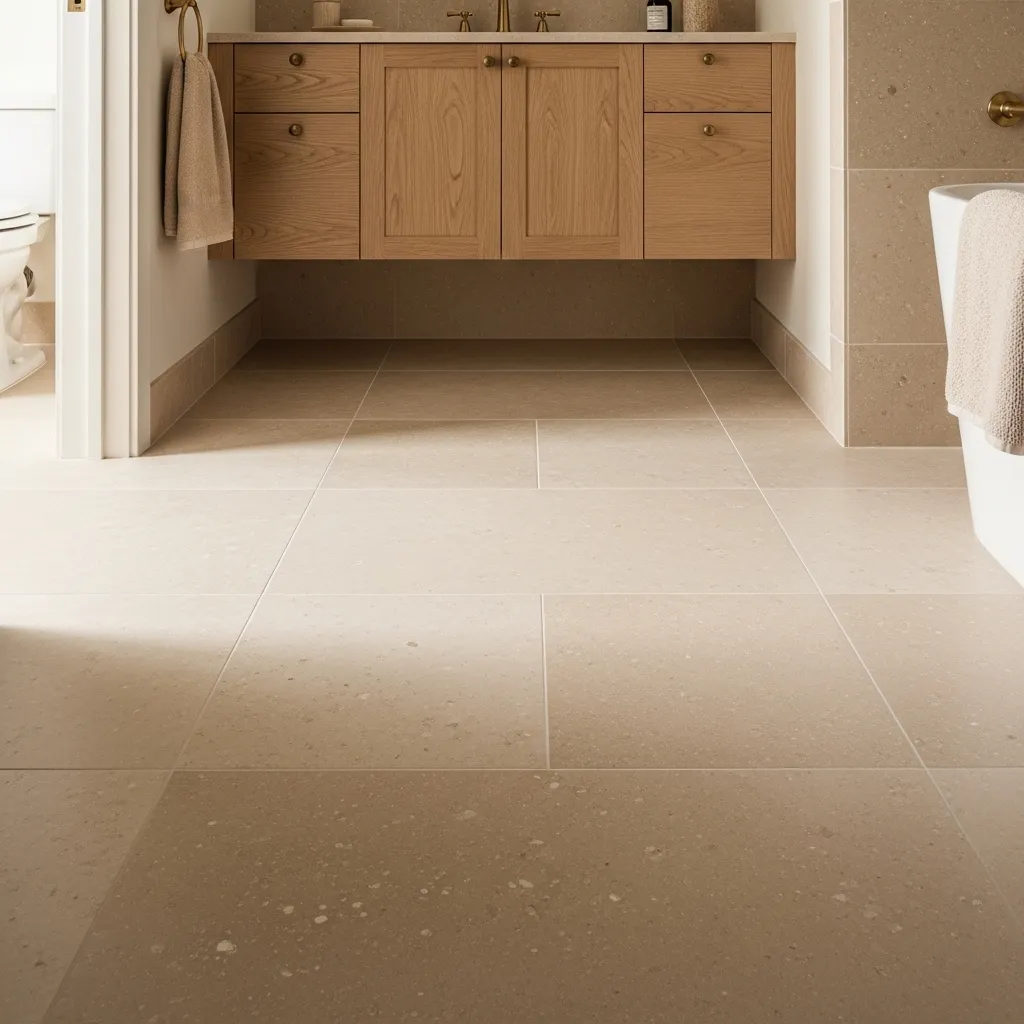
Honed warm limestone is the bathroom floor material that creates the most quietly sophisticated and most genuinely timeless floor surface available — its warmth, its natural variation, its fossil inclusions, and its specific quality of light-absorption create a floor that reads as both ancient and completely contemporary, connecting the bathroom to geological time while fitting perfectly within the warmest and most considered contemporary interior design aesthetic. Limestone doesn’t impose itself — it doesn’t demand attention or create drama — but it creates a floor of such specific material quality and such consistent warmth that every other element in the bathroom appears more beautiful in its presence.
The fossil and shell inclusions of genuine limestone are the specific material detail that most clearly distinguishes it from limestone-look porcelain — the actual geological record of ancient marine life visible in the stone surface creates a connection to deep time and natural history that manufactured materials referencing limestone can simulate visually but can’t replicate materially. These inclusions are never perfectly uniform in distribution — some areas of the floor have more fossil content than others, creating patches of slightly greater visual complexity within the overall calm of the limestone surface, and this natural variation is exactly the quality that creates the floor’s warmth and depth.
9. Bold Graphic Patterned Tile — The Statement Floor
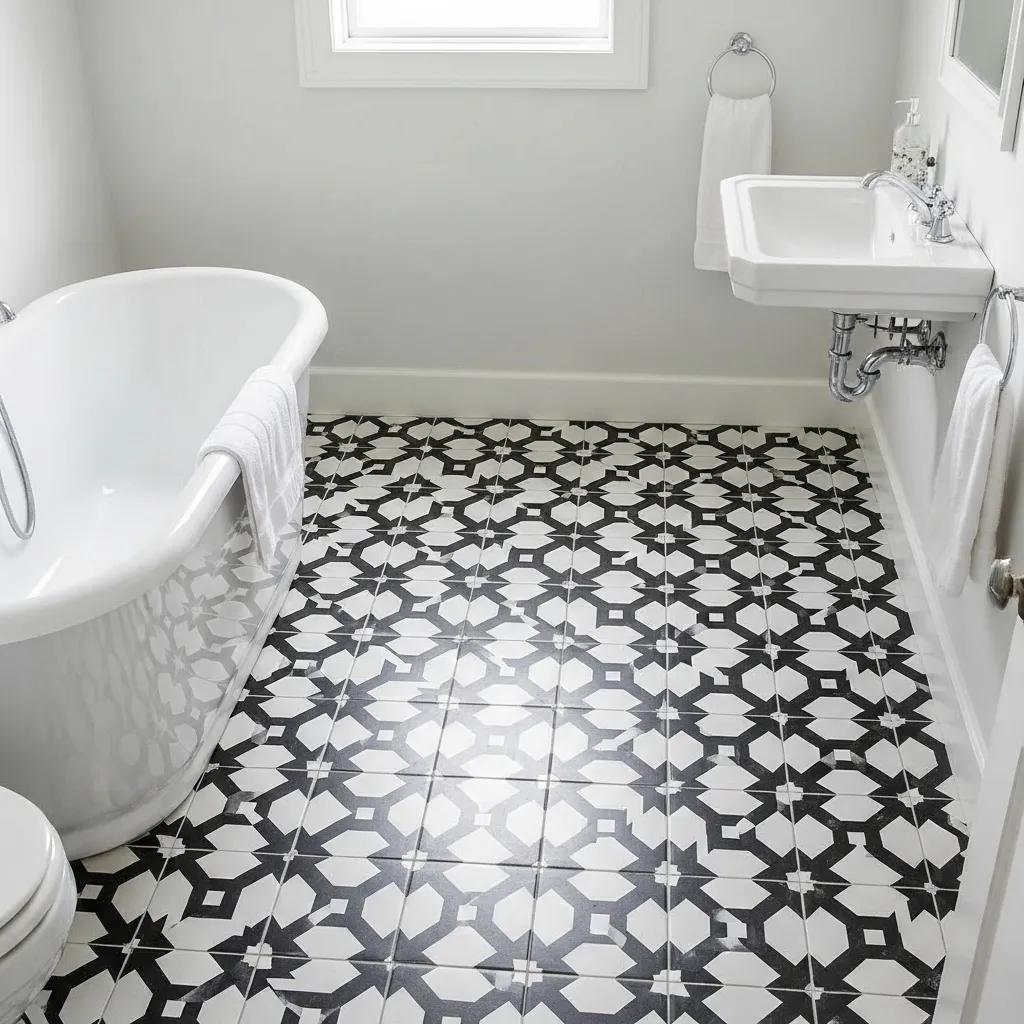
A bold graphic patterned tile floor in a small bathroom is the design decision that most completely inverts the conventional wisdom about small rooms — instead of minimizing pattern to avoid visual complexity in a small space, the bold patterned floor embraces visual complexity and uses the small room’s scale to create an intimate, immersive pattern experience that a large room would dilute. A bathroom with a bold geometric floor pattern and plain white walls above it feels like standing inside a beautifully designed object — the pattern surrounds you at a scale that relates to your body rather than being viewed from a distance, and that intimacy creates an experience of pattern that’s completely different from the same tile seen in a showroom or a large room.
The principle that makes a bold patterned floor work in a small bathroom is the complete visual simplicity of everything above it — the walls should be as plain as possible, the fixtures should be as simple as possible, the vanity should be as restrained as possible, because the floor is generating all the visual energy the room needs and adding competing visual complexity above it creates confusion rather than richness. The bold patterned floor is the entire decorative program of the bathroom; everything else is in service of it.
10. Warm Wood-Effect Luxury Vinyl — Beauty and Practicality United
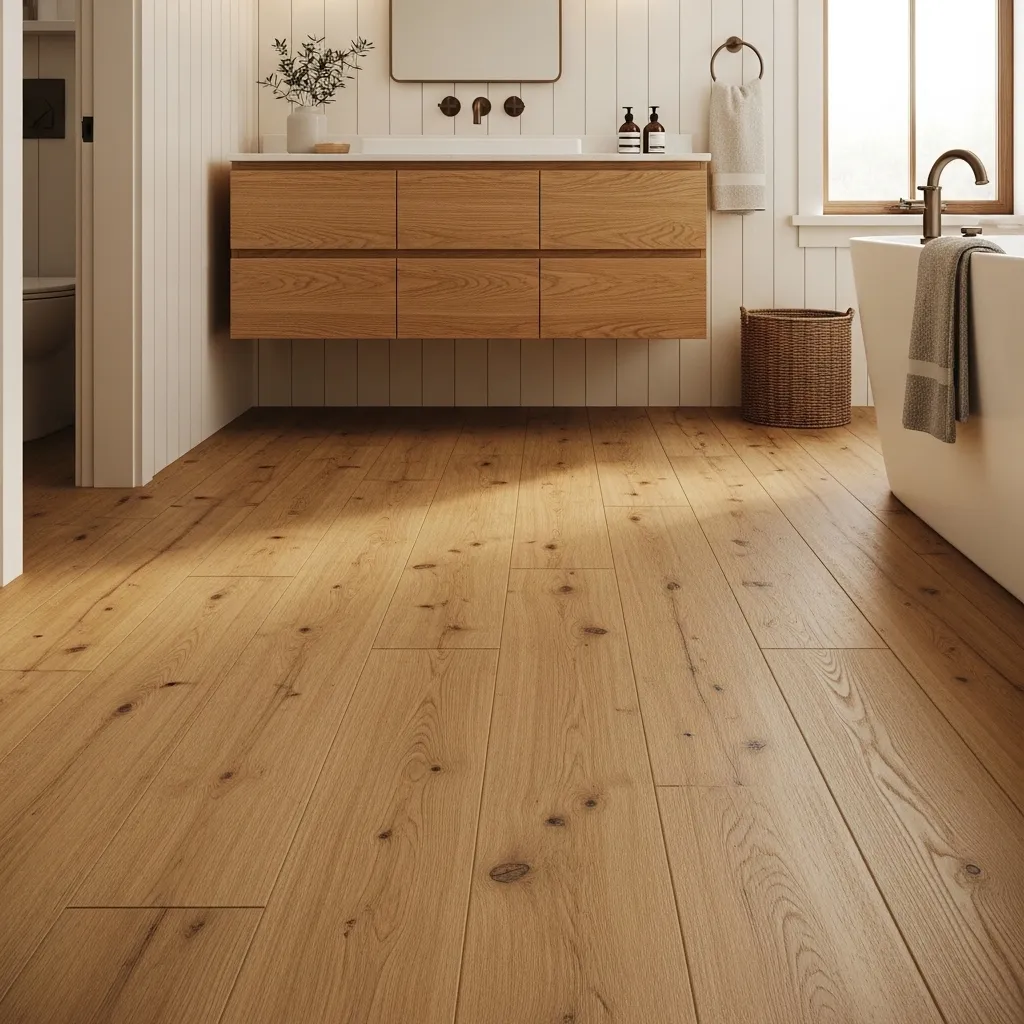
Warm wood-effect luxury vinyl flooring in a bathroom is the 2026 answer to the longstanding desire for wood floors in bathrooms — a desire that genuine timber cannot satisfy because of the moisture, temperature variation, and humidity that bathroom environments create. Contemporary luxury vinyl in high-quality wood-effect finishes has reached a level of visual and tactile realism that makes the best versions genuinely difficult to distinguish from real timber at normal viewing distances, and the performance characteristics of luxury vinyl — completely waterproof, dimensionally stable in temperature and humidity fluctuations, soft underfoot, warm to the touch — are specifically suited to the bathroom environment in a way that real timber isn’t.
The specific quality specification that most determines whether luxury vinyl reads as genuinely beautiful rather than obviously artificial is the embossed surface texture — the best luxury vinyl has an embossed grain texture that registers to the touch and that creates micro-shadows in directional light that make the floor read as having the depth of real wood rather than the flatness of a printed pattern. This register between the visual grain pattern and the physical surface texture is what creates the realism of high-quality luxury vinyl and what distinguishes it from the clearly artificial appearance of lower-specification products where the visual pattern and the physical surface don’t correspond.
11. Zellige-Inspired Handmade Tile — Warmth and Shimmer
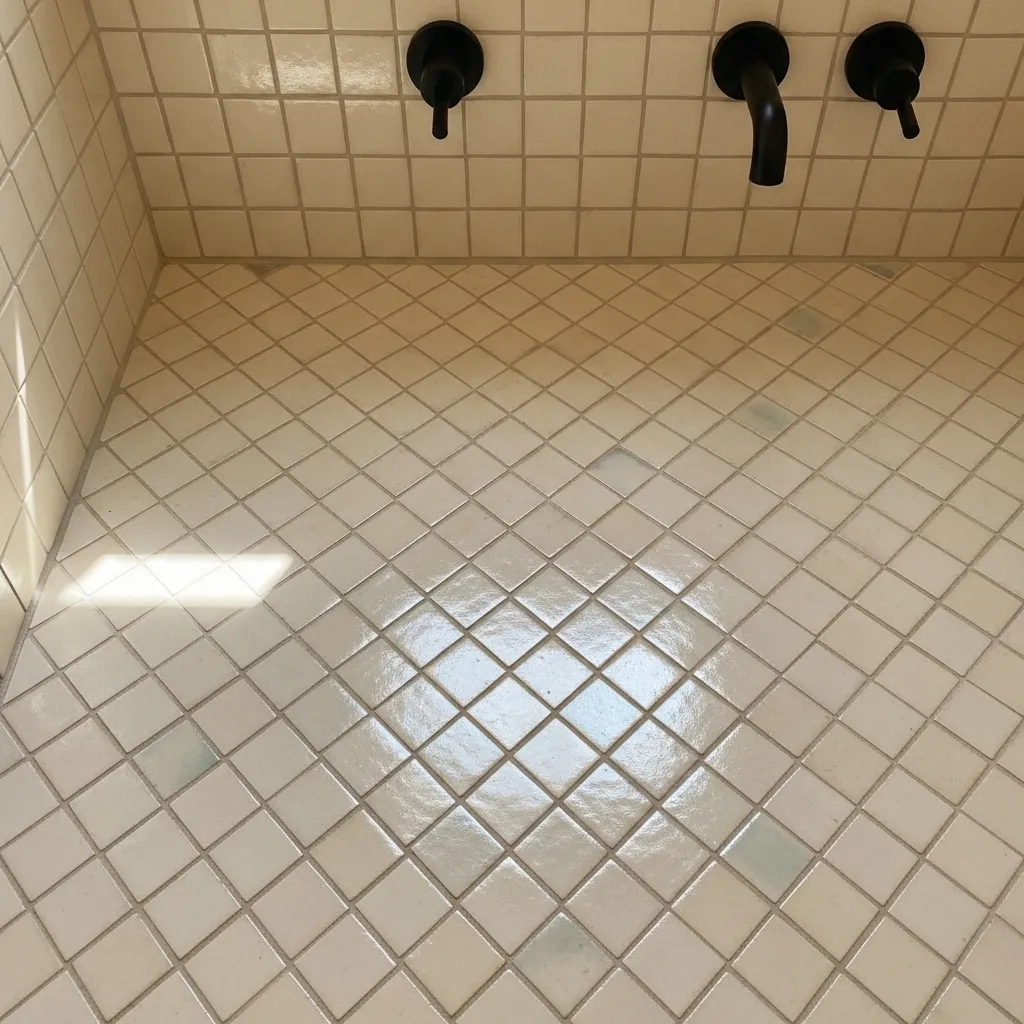
Zellige-inspired handmade tile — whether genuine Moroccan zellige or contemporary handmade tile in the zellige tradition — creates the bathroom floor with the most extraordinary light-catching quality available, because the slightly irregular surface angle of each hand-cut tile creates a floor that appears to move and shimmer as the viewer moves and as the light changes, catching light from hundreds of slightly different directions simultaneously and creating a floor surface that appears almost alive. This quality of light animation is what makes zellige-inspired tile specifically extraordinary in bathroom environments, where the combination of water and light already creates exceptional optical complexity.
The warm off-white tone of zellige-inspired tile is the color that creates the most beautiful and most versatile bathroom floor in this material — it has the warmth of natural clay and the light-catching quality of a glossy glaze, it works with warm wood elements and cool marble alike, and it creates a floor that reads as simultaneously ancient (referencing the centuries of Moroccan zellige production) and completely contemporary (fitting naturally within the warm, natural material bathroom aesthetic of 2026). The slight variation between tiles that comes from the handmade reactive glaze creates a floor that appears to have been individually made for the specific room rather than manufactured to a specification.
12. Resin Terrazzo — The Warm Contemporary Classic
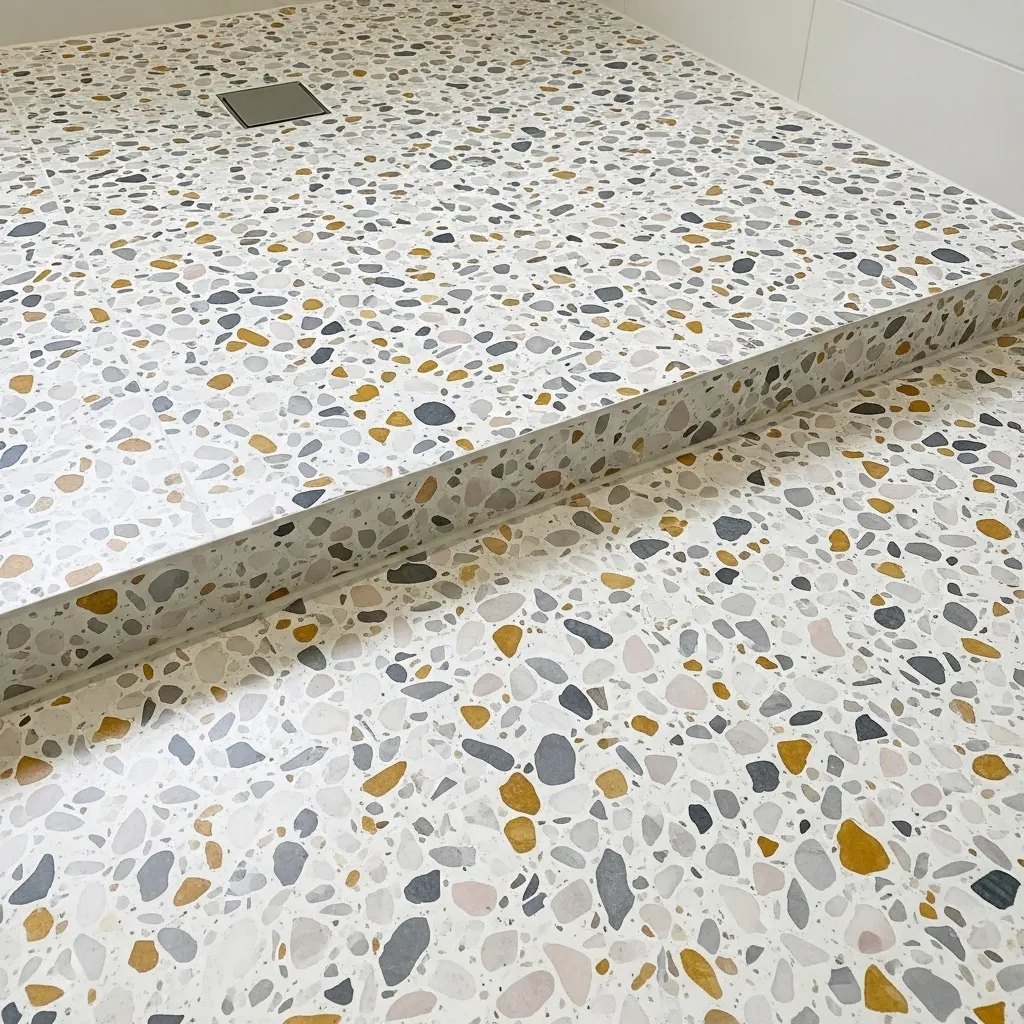
Resin terrazzo poured in place — as opposed to pre-cast terrazzo tiles — creates the most completely seamless and most materially rich bathroom floor available, combining the joint-free quality of micro-cement with the visual complexity and aggregate richness of a composed stone material. The composition of a custom resin terrazzo floor — the selection of aggregate types, sizes, and colors, and the selection of the base resin tone — creates a floor that’s specifically designed for the bathroom it’s installed in rather than selected from a standard product range, and that quality of specific design creates a floor with a character and identity that standard tile or stone alternatives can’t match.
The warm aggregate palette is the 2026 specification that most distinguishes contemporary resin terrazzo from the institutional grey-and-white terrazzo of previous decades — by selecting aggregates in warm grey, gold, blush, cream, and natural stone tones rather than the cool grey and white of standard terrazzo, contemporary bathroom terrazzo creates a floor with the warmth and organic quality of natural stone while maintaining the compositional control and seamless surface that sets it apart from natural stone installation. The aggregate selection can reference the specific color story of the broader bathroom — a gold aggregate that echoes brass fixtures, a blush aggregate that connects to the wall color, a grey aggregate that bridges the vanity and floor tones — creating a floor that’s materially integrated with the room rather than independently chosen.
13. Book-Matched Marble — Maximum Luxury
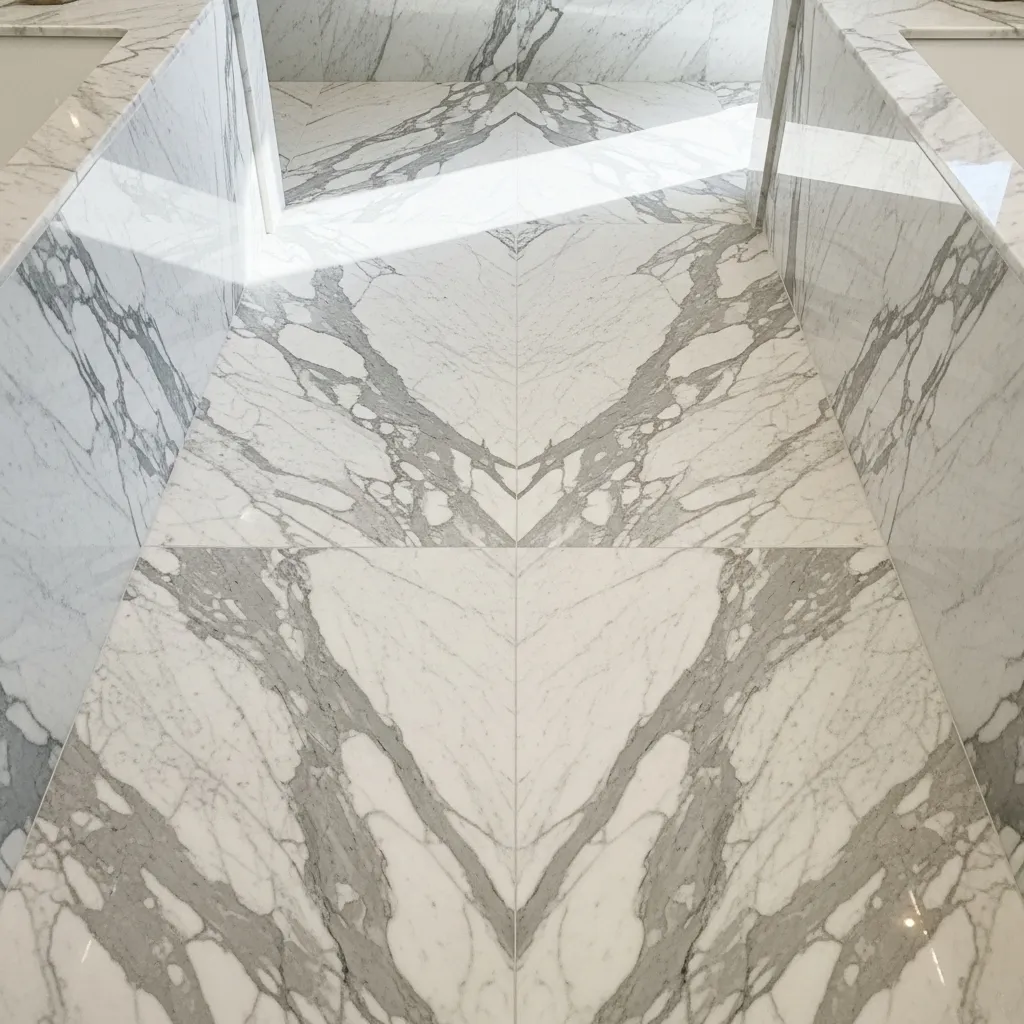
Book-matched marble floor slabs — where adjacent cuts from the same block are opened like a book to create a mirror-symmetrical veining composition across the joint — create the most overtly luxurious and most specifically architectural bathroom floor available, because book-matching is the technique that most clearly communicates the selection of specific marble for its specific visual quality rather than the specification of marble as a material category. A book-matched marble floor says that someone looked at this specific slab and understood that its specific veining, in this specific symmetrical arrangement, would create a floor of specific beauty — and that level of material attention and design specificity is the definition of genuine luxury.
The veining composition created by book-matching varies dramatically between marble varieties and between specific slabs within those varieties — a dramatically veined Calacatta Gold with bold grey and gold movement creates a book-matched composition of maximum drama, while a subtly veined Bianco Carrara creates a more restrained composition where the symmetry is present but quiet. The selection of the specific marble slab for book-matching requires seeing the actual stone rather than selecting from a sample — the book-matched composition is specific to the individual slab, and the beauty of the result depends entirely on the quality of the veining in the specific stone selected.
14. Warm Charcoal Porcelain With Stone Texture
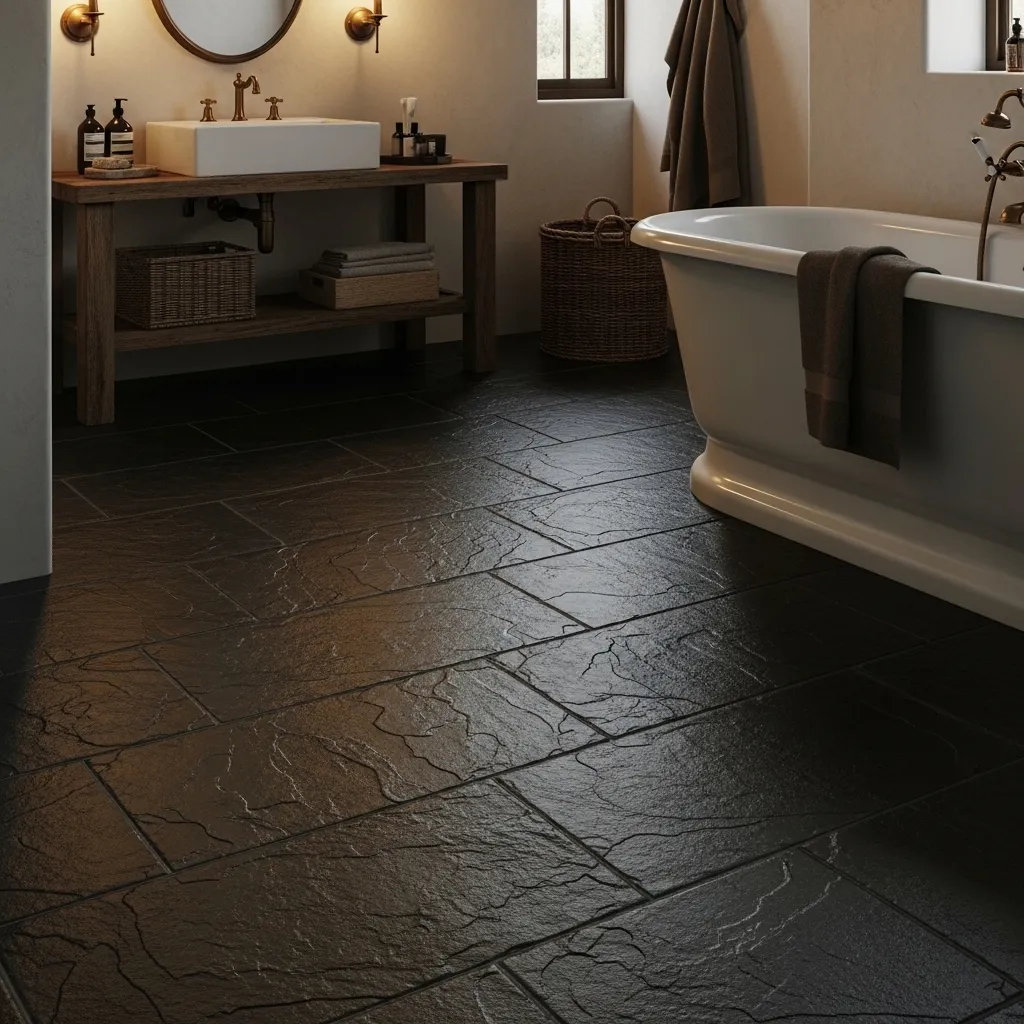
Warm charcoal porcelain with a strong stone texture creates a bathroom floor that achieves the drama of dark stone with the practical advantages of porcelain — the color depth and visual weight of near-black natural stone in a format that’s harder, more stain-resistant, and more consistent than natural slate or schist. The warmth of the charcoal tone — the specific grey-brown of warm charcoal rather than the grey-blue of cool charcoal — is the specification that prevents this dark floor from reading as cold or industrial and that connects it instead to the warm, atmospheric quality of good dark stone.
The stone texture on the charcoal porcelain is the surface quality that most determines whether the tile reads as genuinely beautiful or merely dark — a strong, clearly defined stone texture creates a floor with visual depth and material character, while a smooth or weakly textured dark porcelain creates a flat, slightly plastic-looking surface that loses its attractiveness quickly. The depth of the texture also determines the tile’s anti-slip performance in wet bathroom conditions — a strong surface relief provides significantly better grip than a smooth or lightly textured surface, making the textured specification both aesthetically and practically superior.
15. Heated Natural Stone — The Ultimate Daily Luxury
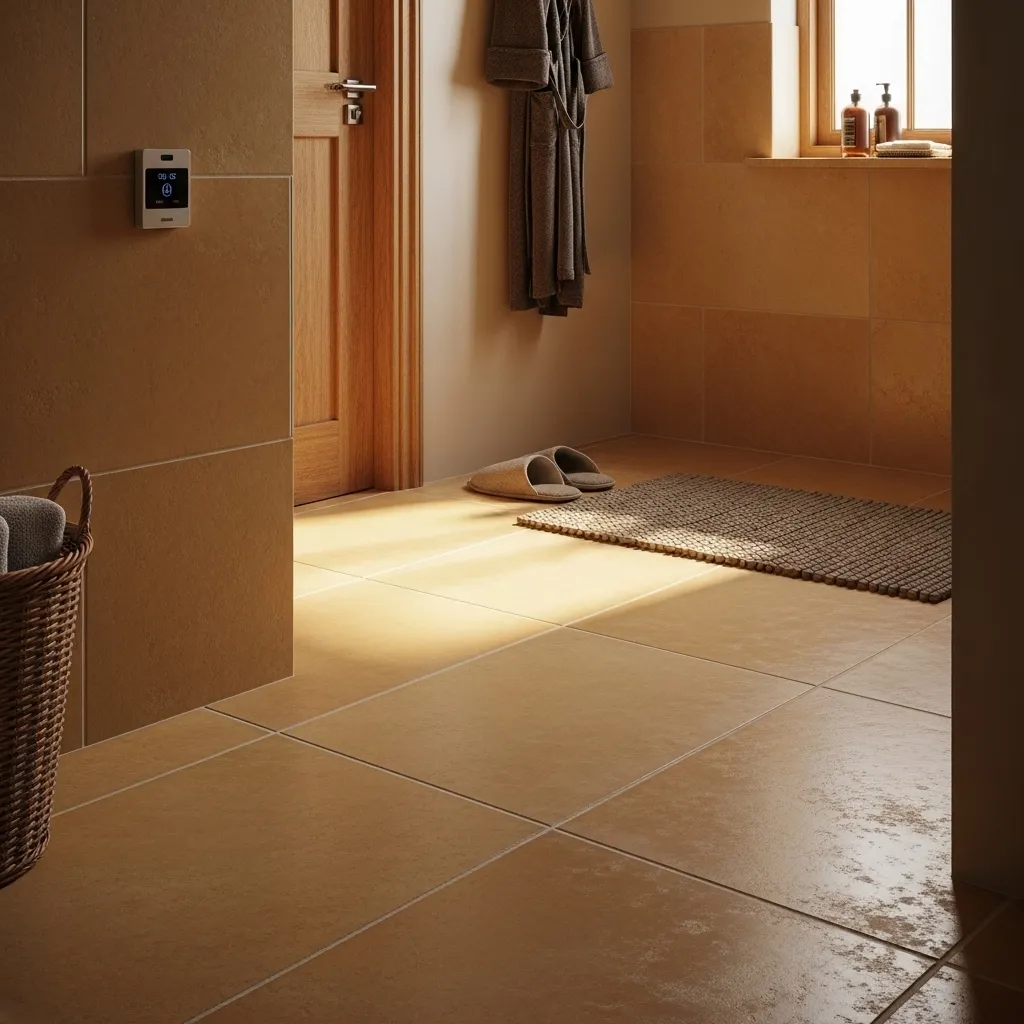
Heated natural stone flooring — electric underfloor heating beneath genuine natural stone tile — is the bathroom upgrade that creates the highest quality of daily comfort for the lowest ongoing operating cost, transforming the bathroom from a room entered reluctantly on cold mornings into a genuinely comfortable and genuinely welcoming space regardless of the ambient temperature outside. The combination of natural stone’s beauty and thermal mass with the warmth of underfloor heating creates a bathroom floor of extraordinary daily quality — natural stone that has been heated overnight retains its warmth for hours, creating a continuously warm surface that’s apparent from the moment you step onto it.
The specific benefit of underfloor heating beneath natural stone rather than beneath tile or vinyl is the thermal mass of the stone — natural stone holds heat much more efficiently than thinner, lower-mass materials, which means a stone floor heated to temperature maintains that temperature for considerably longer after the heating system cycles off than a tile or vinyl floor would. This thermal mass characteristic makes heated natural stone more energy-efficient in practice than heated lighter materials, because the stone acts as a thermal battery that stores and releases heat gradually rather than requiring continuous heating to maintain surface temperature. The investment in underfloor heating beneath a natural stone bathroom floor is repaid in daily comfort and in the specific quality of warmth that a cold morning in a genuinely warm bathroom creates — one of the most consistently pleasurable experiences that residential design can provide.