15 Best Stacked Laundry Room Ideas for Both Small and Big Spaces That Make the Most Practical Room in Your Home Genuinely Beautiful
If your laundry room is currently a place you enter with a basket and leave as quickly as possible — a utility space that functions but offers nothing beyond function, a room that has never been designed so much as equipped — this guide covers every significant approach to stacked washer and dryer laundry room design that creates both maximum practical efficiency and genuine aesthetic quality, in spaces ranging from a closet barely large enough for the machines themselves to a dedicated laundry room with room for storage, folding, and everything else the laundry function requires. The fifteen ideas here span the complete range: from the most minimal closet laundry that makes a virtue of its constraints through the most fully appointed dedicated laundry room that becomes one of the most organized and most beautiful utility spaces in the house, covering built-in cabinetry approaches, open shelving, countertop folding zones, sink integration, tile and paint treatments that make the laundry room genuinely beautiful, lighting approaches, the farmhouse laundry aesthetic, the sleek contemporary approach, the maximally organized laundry room with a place for everything, the small apartment laundry closet done with genuine design intention, the shared laundry and mudroom configuration, the laundry room with indoor drying facilities, the pantry-adjacent laundry configuration, the laundry room with pet washing station, and the completely hidden laundry that disappears behind closed doors.
The stacked washer and dryer configuration is the foundation of every efficient small laundry space and the smart organizational choice in many larger ones — by stacking the dryer on top of the washer rather than placing them side by side, you immediately halve the floor footprint of the appliances and create the vertical surface above and beside them that built-in cabinetry and shelving can occupy. This freed floor space and this available vertical dimension are the resources that make the difference between a laundry closet that contains only the machines and one that also contains organized storage for detergent and supplies, a countertop for folding, and the additional elements that make laundry genuinely efficient rather than merely mechanically possible.
What I’ve come to understand about laundry room design specifically is that the quality of organization and the quality of aesthetic finish in a laundry room have direct effects on the quality and frequency of laundry that gets done — a laundry room that’s a pleasure to be in, where everything has a specific place and where the space itself is beautiful and calm, creates a different relationship to laundry than a laundry space that’s merely tolerated. The person who dreads laundry often dreads the specific environment of their laundry space as much as the task itself, and a laundry room that’s been genuinely designed — with good lighting, proper storage, a folding surface, and the specific aesthetic pleasure of a space that someone cared about — changes that relationship meaningfully.
1. The Built-In Cabinet Stacked Laundry — Full Cabinetry Surround
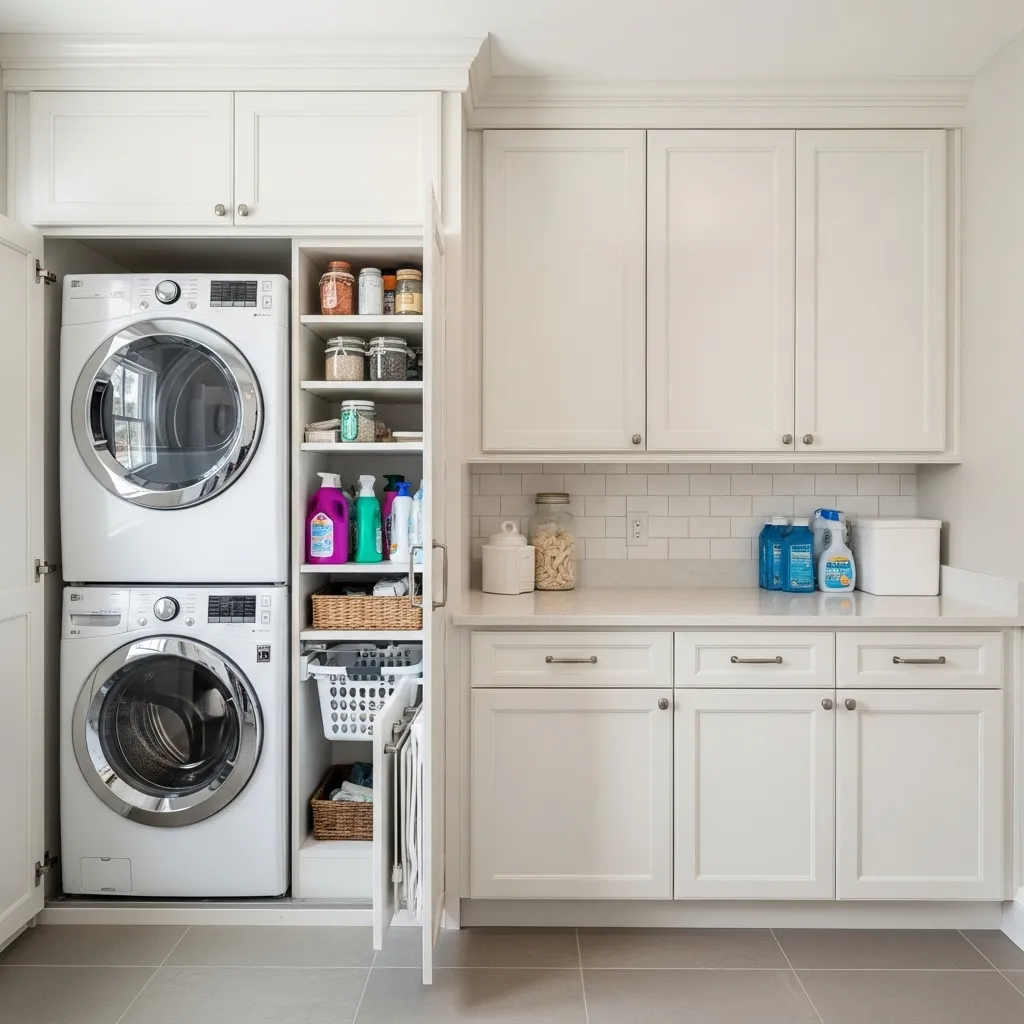
Built-in cabinetry surrounding the stacked laundry creates the most complete and most architecturally resolved laundry room configuration — the continuous cabinetry wall that integrates the machines within a framework of storage and working surface makes the laundry space read as a designed room rather than a utility space where appliances were placed. The machines disappear into the overall cabinetry composition rather than standing as dominant appliance objects in a room of inadequate storage, and the resulting laundry wall has the quality of a built-in piece of domestic architecture rather than an assembled collection of functional elements.
The countertop running the full width of the cabinetry wall at a comfortable standing height — approximately thirty-six inches — creates the laundry room’s most functionally essential and most consistently undervalued element. A proper folding counter that runs the width of the room provides enough surface to fold a complete load of laundry without stacking folded pieces on top of each other or carrying items to another room, and this seemingly simple provision of adequate counter space reduces the friction of the laundry task more than almost any other single design decision.
2. The Minimalist Laundry Closet — Small Space, Complete Function
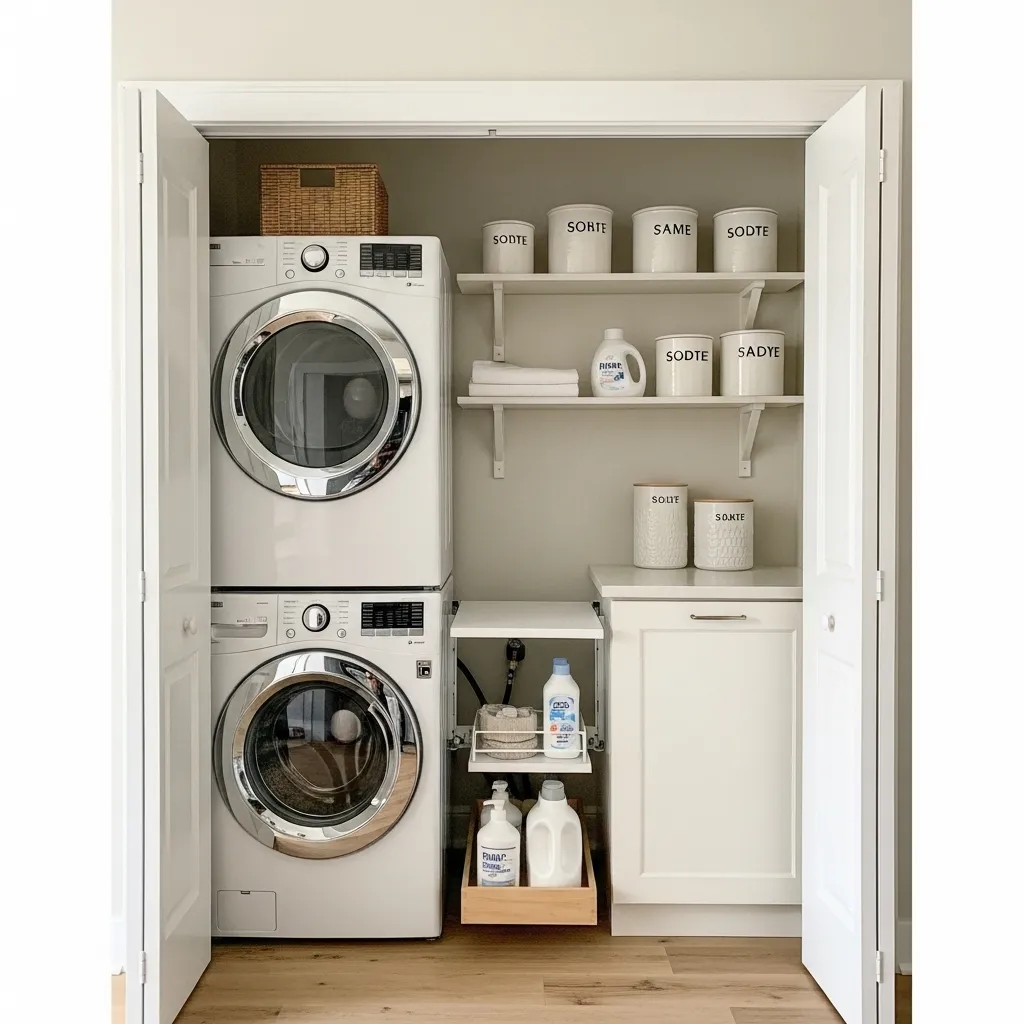
A minimalist laundry closet — where the entire laundry function is contained in a space of thirty-six to forty-eight inches wide — requires the most disciplined design thinking of any laundry configuration because every inch is visible and every object either contributes to or detracts from the limited space’s quality. The specific organizational tools that make a minimal laundry closet function as well as a larger laundry room are: consistent, beautiful containers for all laundry supplies (so the supplies read as organized rather than accumulated), a pull-out shelf that provides folding surface when needed without occupying the closet’s limited depth when not in use, and genuinely adequate lighting that prevents the confined space from feeling oppressive.
The decanting of laundry supplies into consistent containers — transferring detergent from its commercial packaging into a white ceramic or glass vessel with a clear label — is the single organizational action that most transforms the appearance of a laundry closet from a utility space to a genuinely beautiful one. Commercial detergent packaging is designed to stand out on store shelves, not to create a calm organizational environment in a home, and replacing it with consistent vessels in a shared material and color palette creates the visual order that makes a small laundry space feel genuinely designed.
3. The Farmhouse Laundry Room — Warmth and Practical Beauty
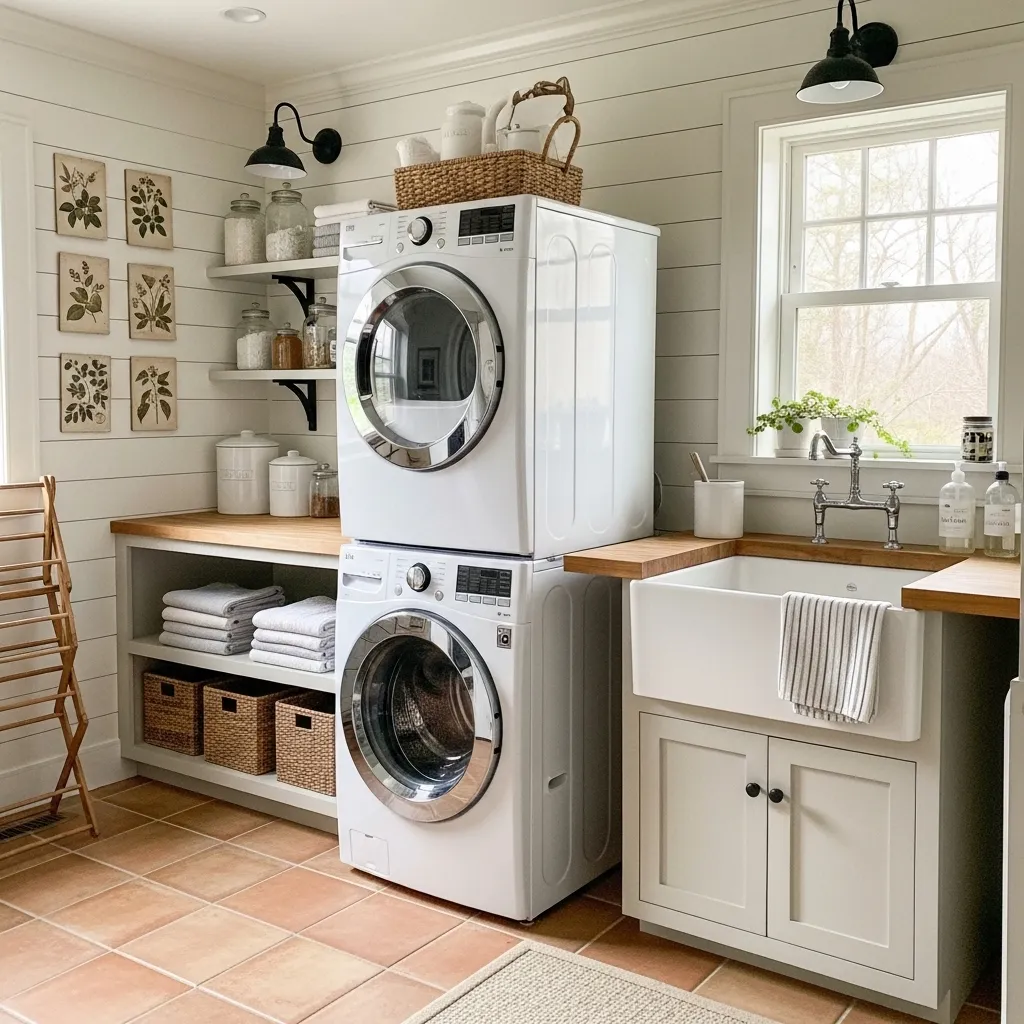
A farmhouse laundry room with stacked machines, a deep utility sink, open shelving, and shiplap walls creates the most specifically beautiful and most warmly characterized laundry room aesthetic — one where the practical reality of the laundry function is embraced and expressed through materials and details that reference the long farmhouse tradition of the practical-and-beautiful domestic working room. The farmhouse laundry is not trying to hide its function; it’s celebrating it through beautiful materials and thoughtful organization.
The deep farmhouse utility sink is the single element that most completely transforms a laundry room’s functional quality — its greater depth compared to standard utility sinks allows hand-washing larger items without splashing, soaking items that need pre-treatment, and washing items that can’t go in the machine, and its apron front gives it the specific character and visual presence of a piece of functional furniture rather than an installed fixture. The farmhouse utility sink in a laundry room serves the same function as the farmhouse apron-front sink in the kitchen — it makes the practical working surface the room’s most beautiful and most characterful design element rather than its most utilitarian one.
4. The Concealed Laundry Behind Closed Doors — Complete Visual Disappearance
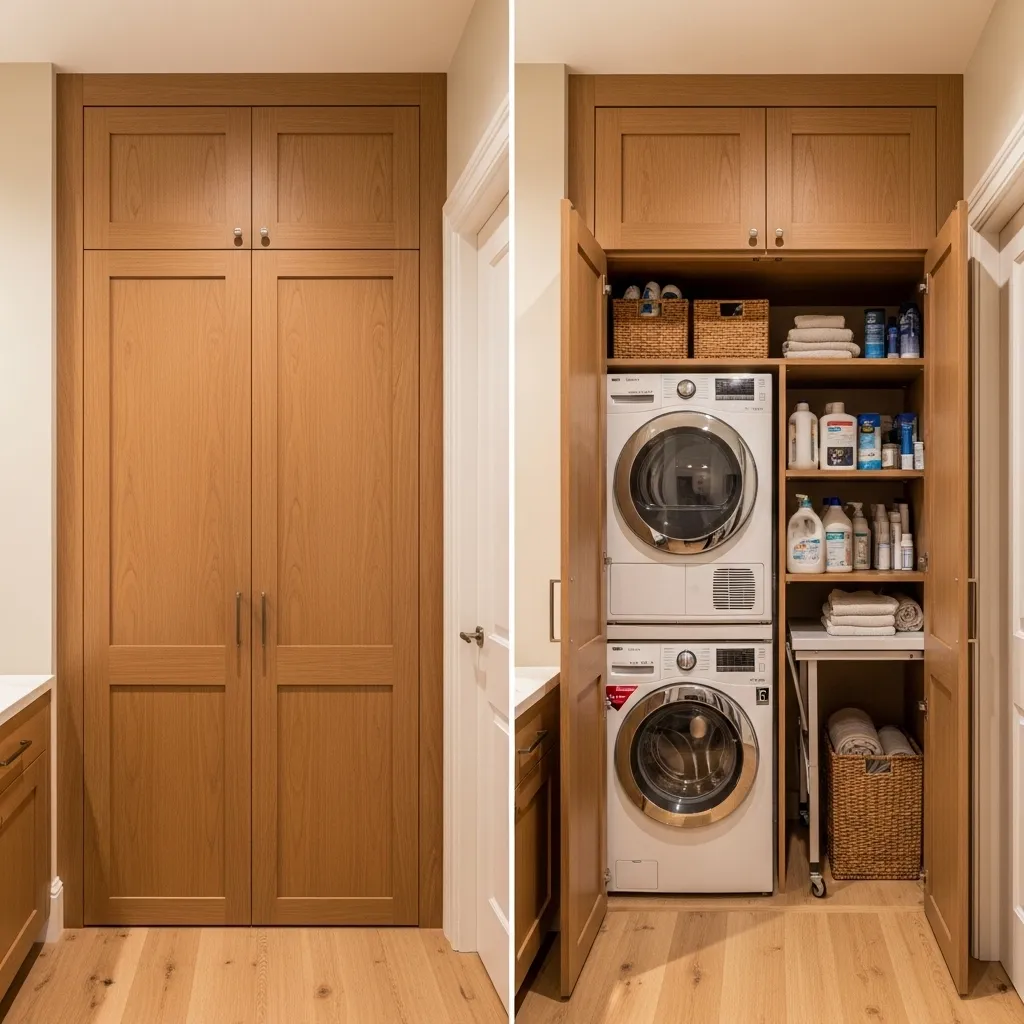
A completely concealed laundry — where the machines, storage, and all laundry supplies disappear entirely behind closed doors that match the surrounding architecture — creates the highest standard of domestic organization by ensuring that the laundry function leaves no visual evidence of its existence when not actively in use. The concealed laundry is the laundry configuration most valued in open-plan living arrangements where the laundry is visible from living areas, and in any home where the reduction of visual complexity is a primary design value.
The quality of the concealing doors is the design detail that most determines whether the laundry disappears successfully or merely gets covered — doors that match the surrounding architecture precisely (the same panel profile, the same paint color, the same hardware style as adjacent cabinetry) create the effect of a continuous wall surface with no apparent laundry; doors that are clearly different from the surrounding architecture in any detail (different panel profile, different paint finish, different hardware style) create the impression of a closet that happens to be covered rather than a wall surface that happens to contain a laundry.
5. The Organized Laundry With Every Function Addressed
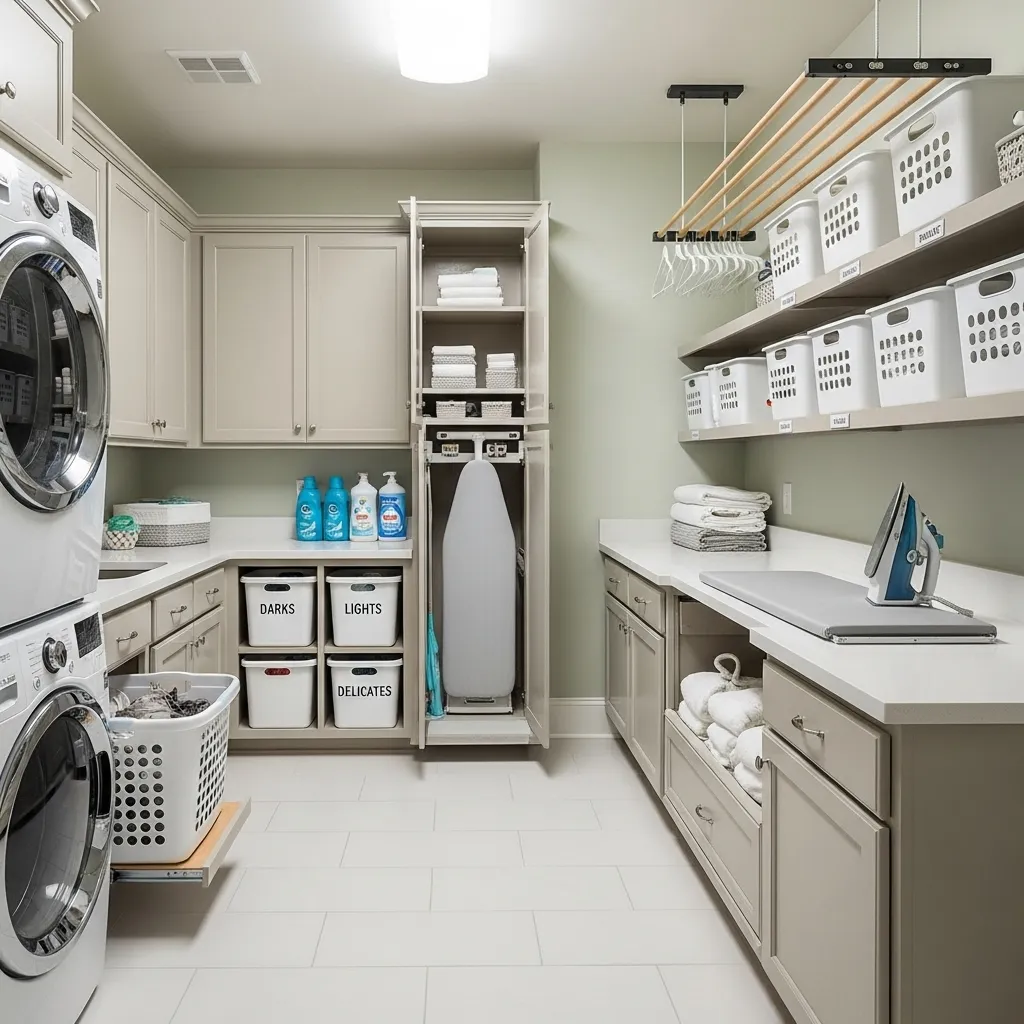
A fully organized laundry room where every step of the laundry process — sorting, washing, drying, ironing, folding, and storing — has its specifically designated and specifically equipped zone creates the laundry room that most completely reduces the friction and the mental load of the laundry task. When the sorting zone is immediately beside the machines, the ironing board is built into the folding counter, and the storage for clean items is organized by person and category, the laundry process flows from one step to the next without requiring improvised solutions at each transition.
The retractable ironing board built into the counter face is the specific organizational element that most distinguishes a genuinely designed laundry room from one that’s merely organized — an integrated ironing board that folds flush with the counter face creates the ironing function without occupying permanent counter space or requiring the ironing board to be stored elsewhere when not in use. This integration of the ironing function into the laundry room rather than the bedroom or the living room is the organizational decision that most consistently reduces the friction of ironing as a task, because the iron and the ironing board are in the same room as the dryer that produces the items requiring ironing.
6. The Tile Statement Laundry Room — Beauty Through Surface
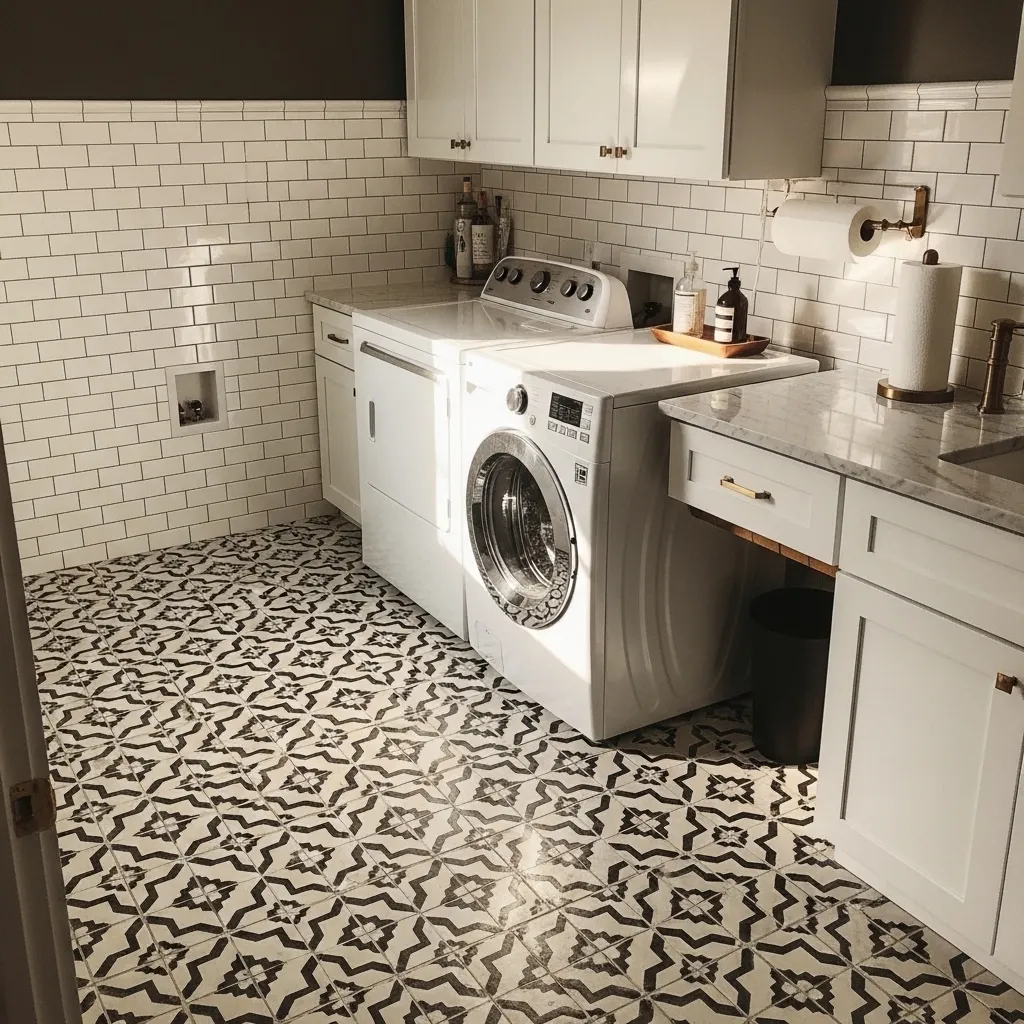
A laundry room treated to genuinely beautiful tile work — patterned encaustic floor tile, subway wall tile with dark grout, or any tile treatment that communicates genuine aesthetic ambition — creates a laundry space that guests comment on and that the person doing laundry experiences as a genuinely pleasant place to be. The investment in beautiful tile in a laundry room is often resisted on the grounds that it’s excessive for a utility space, but this resistance confuses the purpose of good design — the laundry room is used multiple times a week for the full duration of residence in a home, and the quality of the aesthetic experience in that space accumulates over years of weekly use in a way that makes beautiful tile one of the most consistently appreciated investments in the home.
The patterned encaustic floor tile specifically creates the laundry room moment that most immediately communicates design intention — because the floor is the surface seen most completely upon entering the small laundry space, a beautiful patterned floor creates an immediate impression of genuine aesthetic ambition that simple white tile or painted concrete floor doesn’t provide. The encaustic tile’s matte quality, its natural color depth, and its specific historical character as a handmade material create a floor with genuine beauty rather than merely adequate utility.
7. The Laundry Room With Dedicated Drying Space
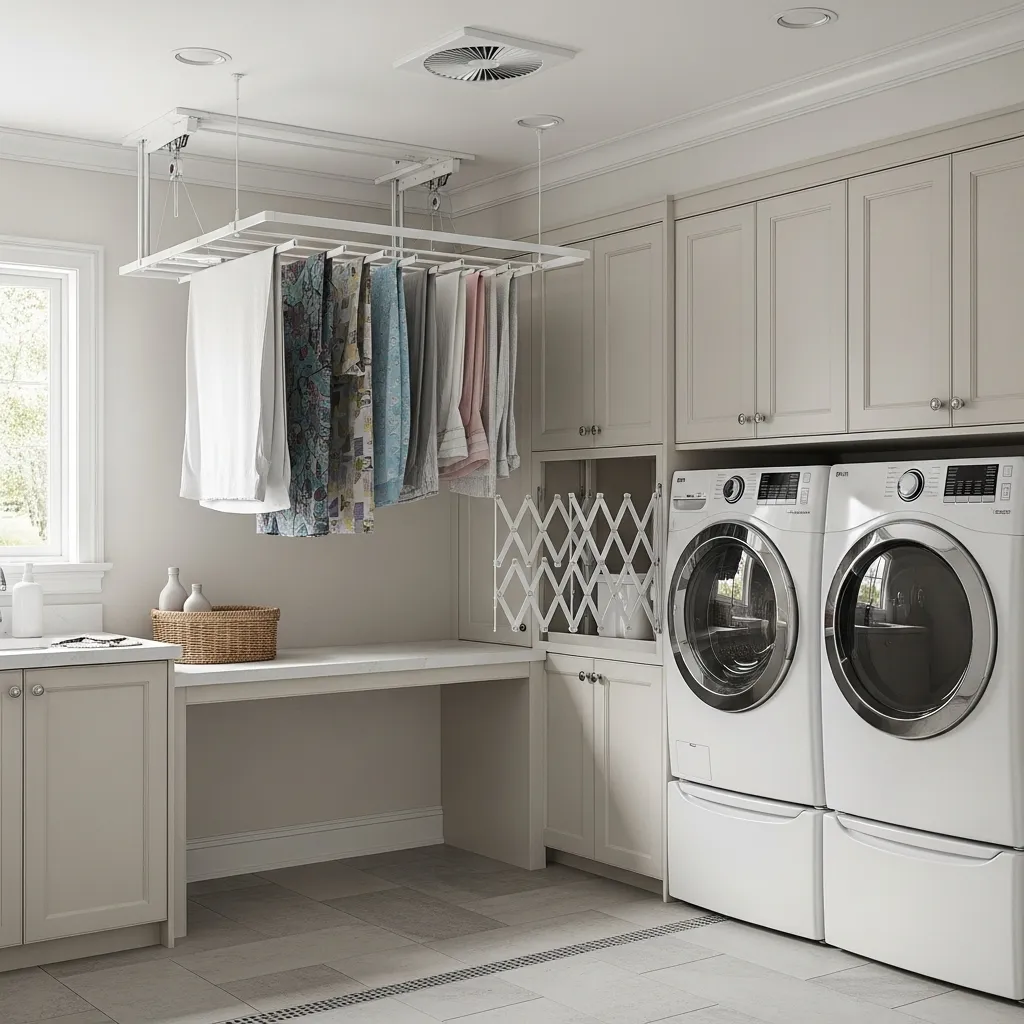
A laundry room with dedicated air-drying infrastructure — ceiling-mounted retractable racks, wall-mounted fold-down drying systems, or both — creates the most complete laundry function by providing the capacity to air-dry the items that the dryer can’t process, eliminating the need to string drying racks through other rooms of the house or leave clothing hanging from door frames and furniture as a laundry overflow solution. In households that air-dry regularly for environmental, economic, or garment-care reasons, the dedicated drying space is as essential as the machines themselves.
The ceiling-mounted retractable drying rack is the specific infrastructure piece that creates the most elegant air-drying solution — it mounts to the ceiling joists and lowers on a pulley system to a comfortable hanging height when in use, then retracts entirely to ceiling level when not in use, creating maximum drying capacity with zero permanent floor or wall footprint. The quality of the pulley system determines the ease of operation — a smooth, well-engineered pulley allows single-handed lowering and raising, while a stiff or binding system creates the friction that makes air-drying a less convenient choice than it should be.
8. The Small Apartment Laundry Closet With Design Intention
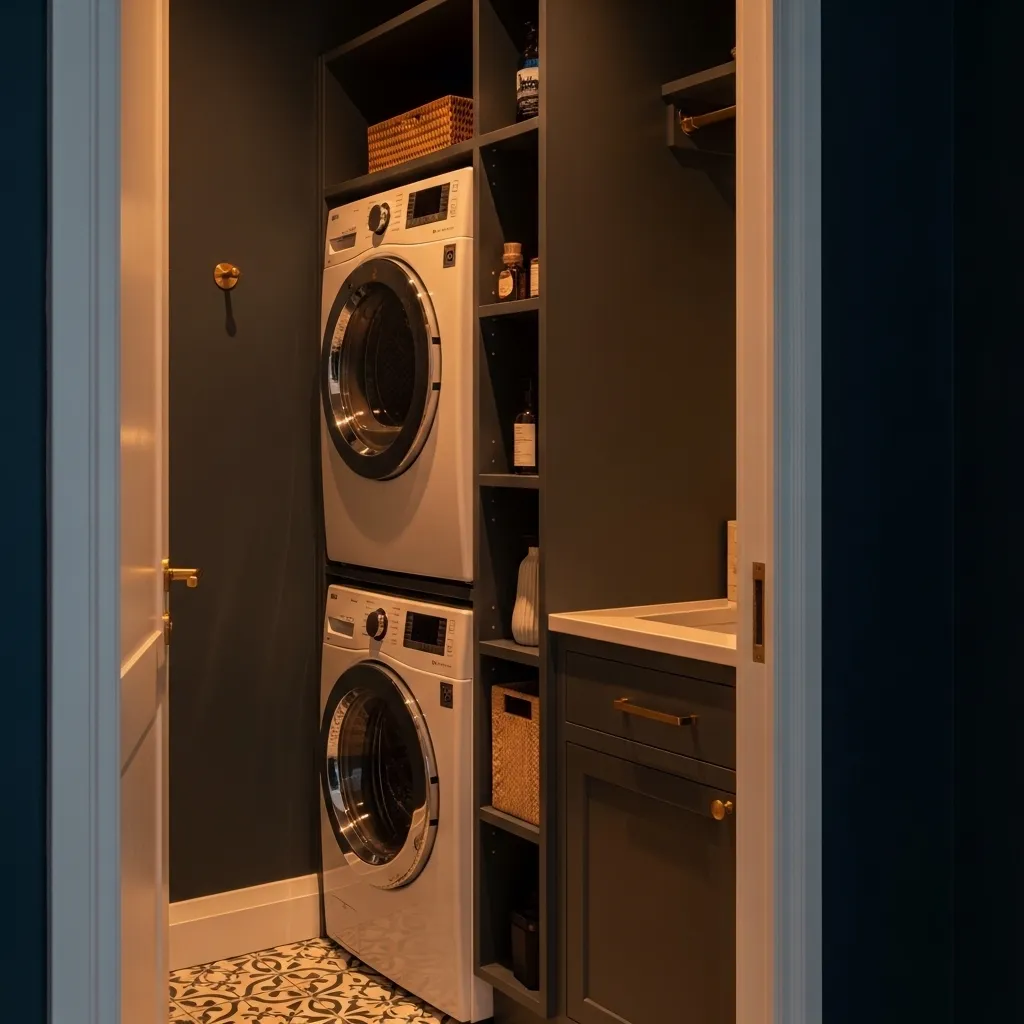
An apartment laundry closet designed with genuine aesthetic intention — bold wall color, beautiful tile at the threshold, warm metal accessories, carefully chosen storage — creates the most compelling evidence that good design scales down to any size of space. The design principle that small spaces deserve more aesthetic attention rather than less — because in a small space every surface and every detail is more visible and more constantly seen than in a large space — is the principle that distinguishes a beautifully designed small laundry closet from one that’s merely organized.
The bold wall color inside the laundry closet is the design decision that most immediately communicates genuine aesthetic intention in a small space — painting the interior of a laundry closet in a deep, beautiful color rather than the default white creates a small space with genuine atmospheric quality, a space that feels specifically designed rather than simply equipped. The dark color also creates the specific quality of enclosure that makes the small closet feel intentional and cave-like rather than cramped and confined — the same psychological principle that makes dark bathrooms feel atmospheric rather than oppressive applies to any small enclosed space.
9. The Laundry and Mudroom Combined — Double Function, Single Space
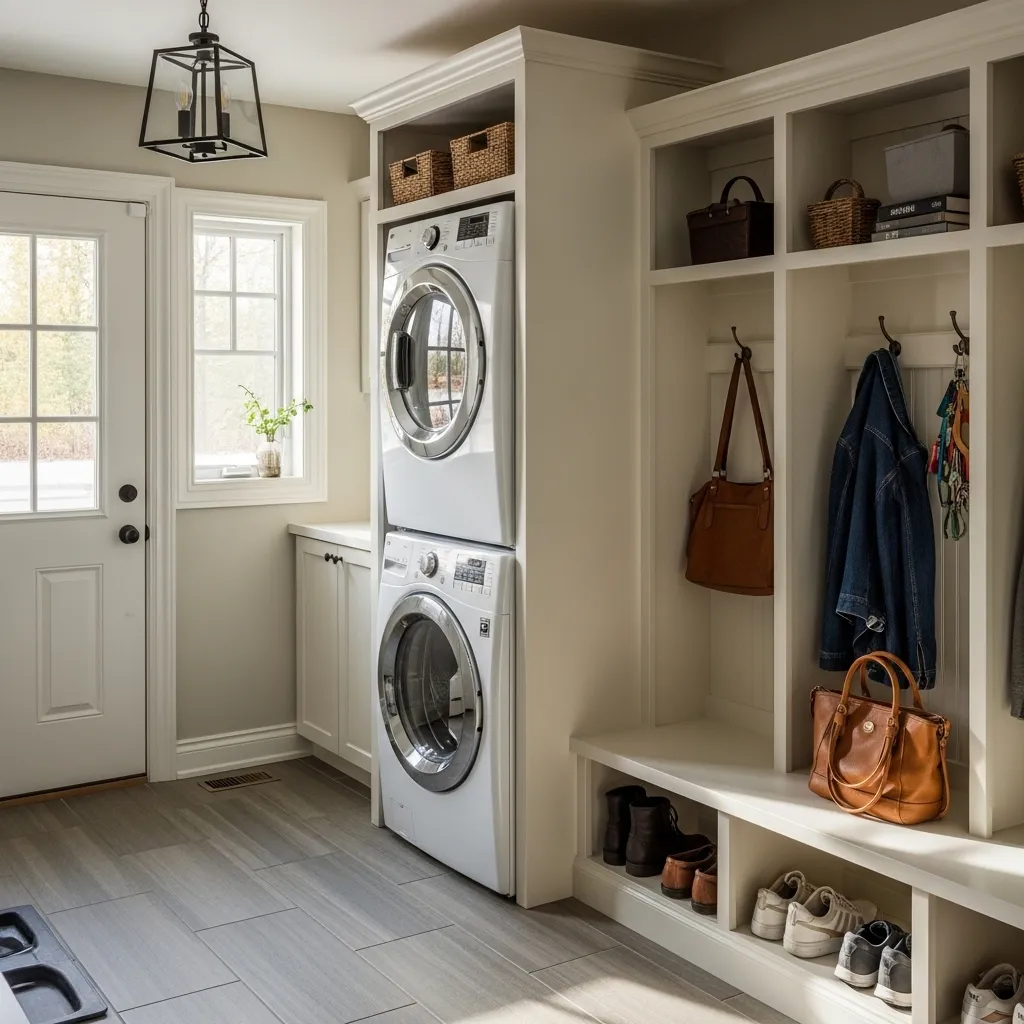
A combined laundry and mudroom is the most functionally efficient use of the service entry space available — by locating the laundry function at the home’s back entry rather than in a dedicated interior room, you create the opportunity to remove dirty work clothes, sports gear, and muddy outerwear immediately upon entry and send them directly into the machines without carrying them through the house. This proximity of the soiling point (the outdoor entry) to the cleaning facility (the laundry) is the organizational logic that makes the combined laundry-mudroom the most practical single room in the house for active families with children, athletes, or outdoor workers.
The organizational design of the mudroom function within the combined room is the element that most determines its daily effectiveness — the individual cubby for each family member, with a bench for sitting to remove shoes, hooks at appropriate heights for children and adults, and a shelf for bags and hats, creates the entry organization that prevents the mudroom from becoming a deposit zone for unsorted outdoor gear. When each person has a specific designated space for their outdoor items, the mudroom functions as designed; when the cubbies are too few, too small, or too generic to accommodate individual family members’ specific gear, the room fills with accumulated clutter despite its design intentions.
10. The Laundry Room With Natural Light — The Window Laundry
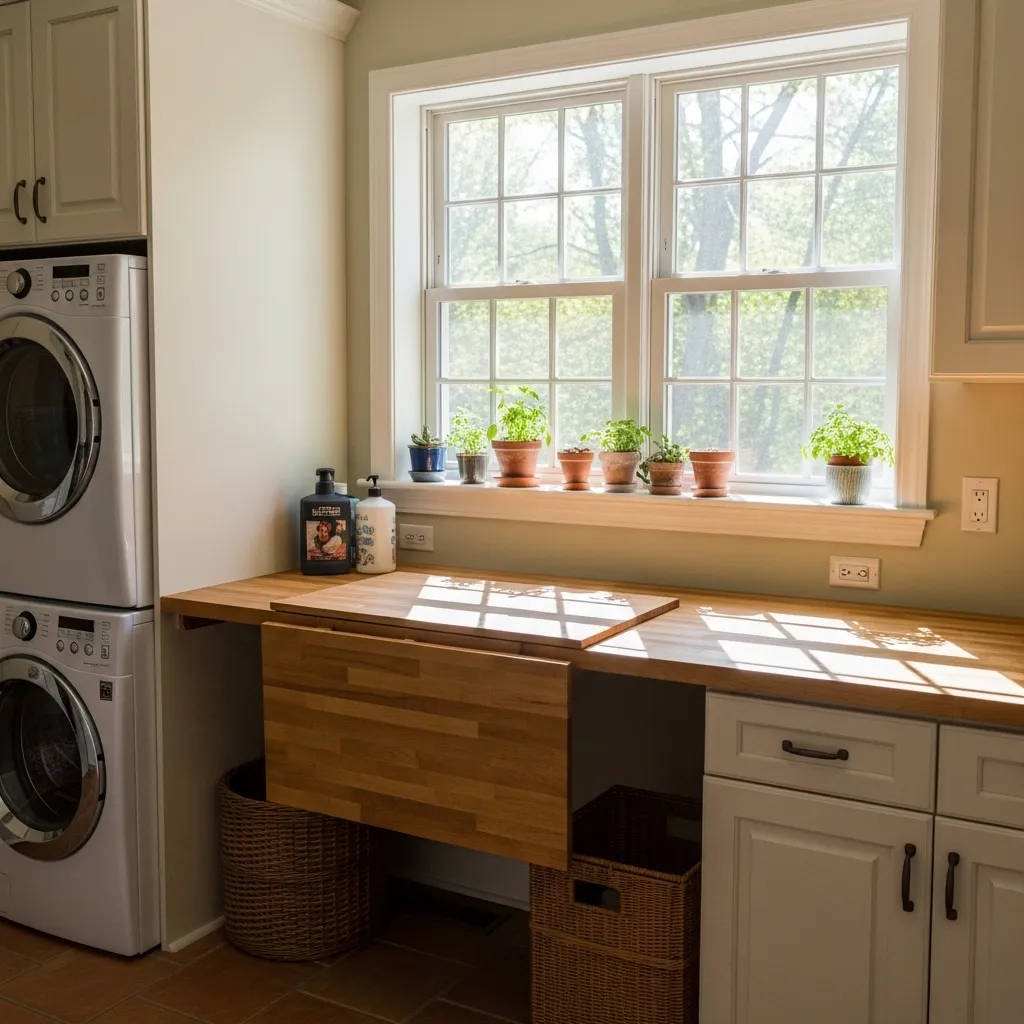
A laundry room with genuine natural light — a window of adequate size positioned to illuminate the folding counter and working area — creates the most significant quality-of-experience improvement available in laundry room design, because the combination of natural light and natural ventilation transforms the laundry room from a windowless utility space into a room that participates in the natural rhythm of the day and the season. The laundry done in a naturally lit room in morning sunlight is a different experience from the laundry done in the same room under artificial light, and that difference is consistently felt even when not consciously articulated.
The windowsill plants in a laundry room with natural light are the element that most completely transforms the space from utility room to genuinely pleasant room — the combination of natural light and a small collection of growing things creates a quality of biophilic connection in what is otherwise the home’s most purely functional space. Herbs growing on a sunny laundry room windowsill are both beautiful and useful, and their presence in the laundry room is the specific detail that guests notice and remember as evidence that someone genuinely cared about making even the utility spaces of the home beautiful.
11. The Dark and Moody Laundry Room — Unexpected Atmosphere
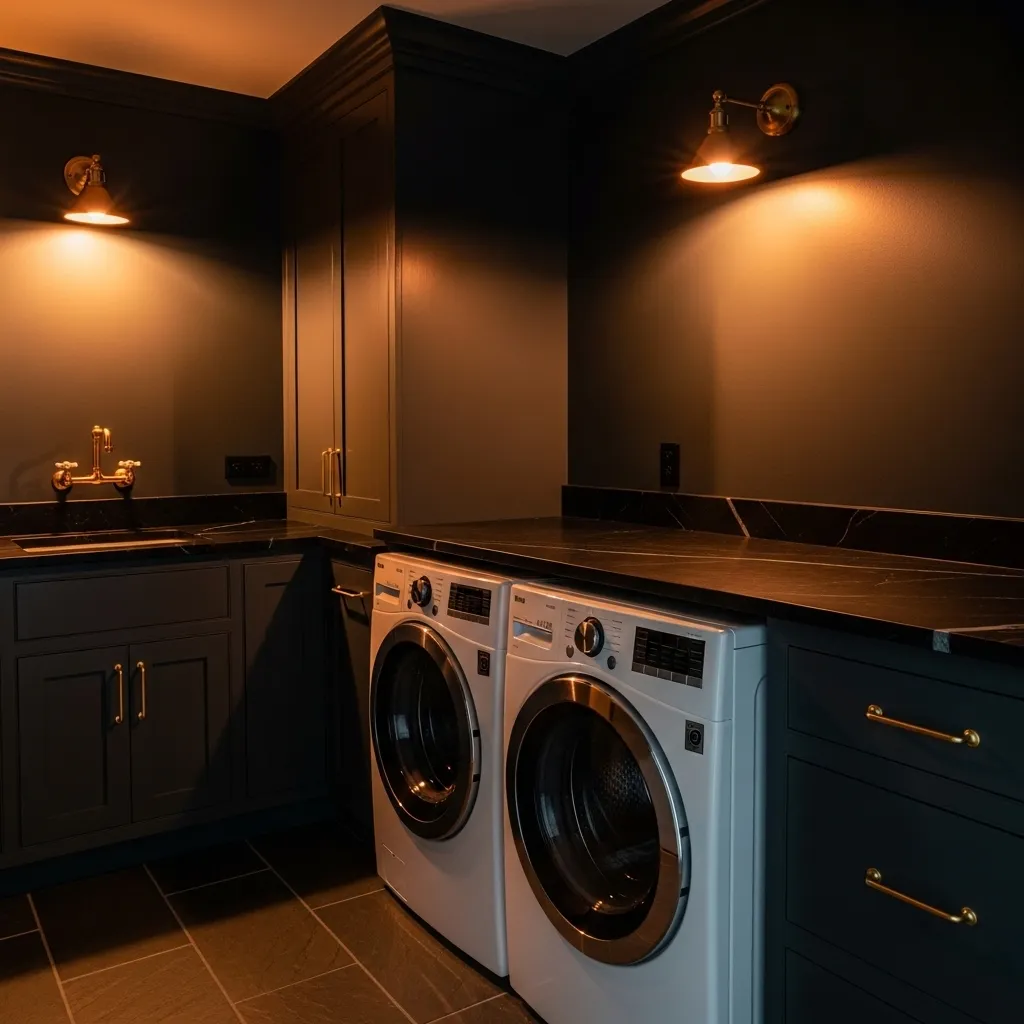
A dark and moody laundry room — where deep charcoal or forest green walls create an atmosphere completely at odds with the conventional bright white utility room — is the laundry room approach that most completely challenges the assumption that utility spaces need to be light, bright, and practically neutral. The white machines against dark walls create one of the most visually striking material relationships available in a small room — the contrast makes the white appliances appear luminously clean in a way that white appliances against white walls never achieve, and the dark room creates a quality of focused intimacy around the laundry task that the conventional bright white room doesn’t.
The warm lighting — wall sconces in aged brass with warm amber bulbs rather than overhead fluorescent or LED — is the lighting choice that most determines whether a dark laundry room feels atmospheric and intentional or merely dim and underlit. Warm amber light in a dark room creates the specific quality of lamplight intimacy that makes small, enclosed spaces feel enveloping rather than confined, and this quality is available in a laundry room of any size as long as the lighting is warm and positioned at human height rather than above.
12. The Laundry Room With Pet Washing Station
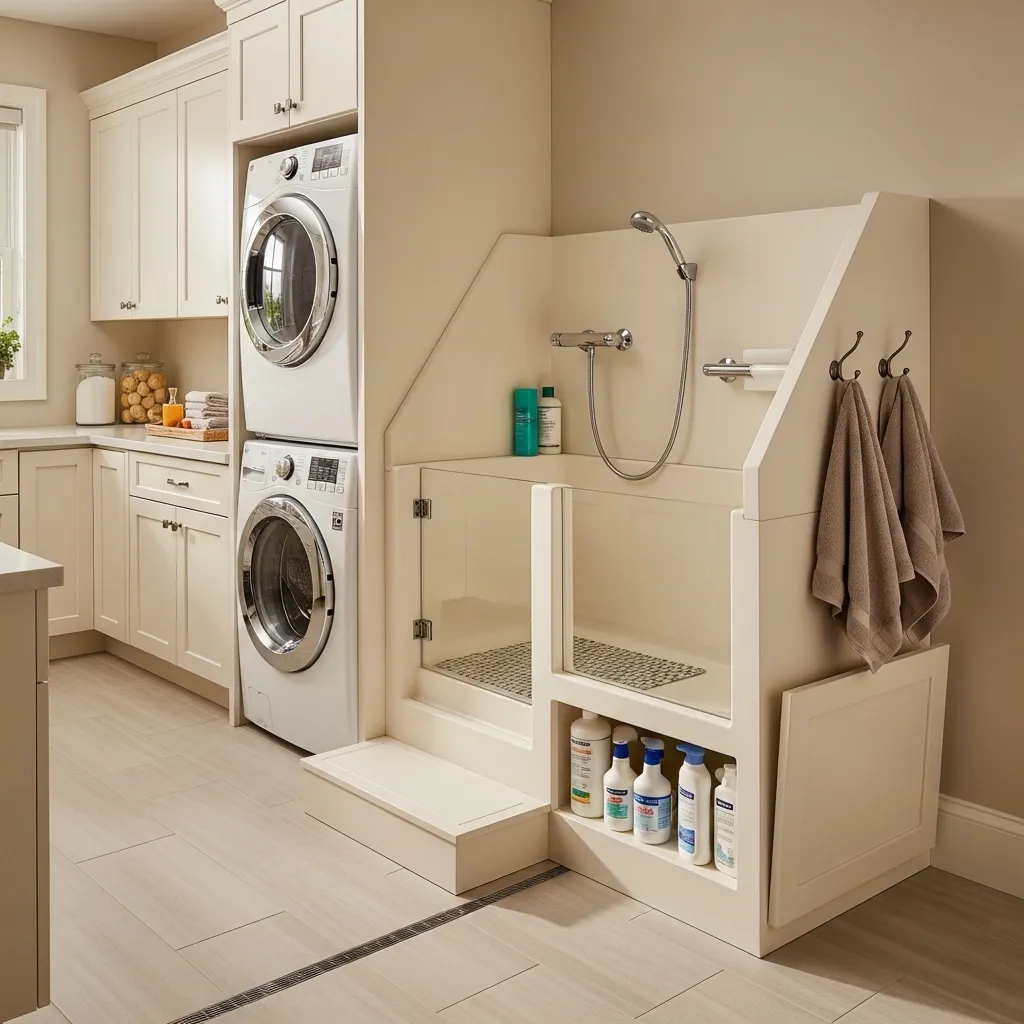
A laundry room with an integrated pet washing station — a specifically designed low-profile tub with handheld shower, non-slip mat, and dedicated pet grooming storage — creates the most complete service room for households with dogs and other pets that require regular washing. The proximity of the pet washing station to the laundry machines creates a complete pet-care and textile-care zone in a single room: the pet is washed in the low tub, the pet towels go directly into the adjacent washer, and the entire pet-washing function happens in a room specifically designed for the water and mess it involves.
The height of the pet washing tub is the specific ergonomic consideration that most determines the station’s daily usability — a tub at standard utility sink height is too high for easy pet entry and too uncomfortable for the person doing the washing to maintain over the duration of a full dog bath; a tub at approximately twenty-four inches from the floor creates a height that most medium to large dogs can step into with the assistance of the fold-out step, and that the human can wash a dog in with a comfortable forward lean rather than a full crouch. This height consideration is specific to the size of the household’s pets and should be determined before the station is designed.
13. The Laundry Room With Sink and Dedicated Hand-Washing Zone
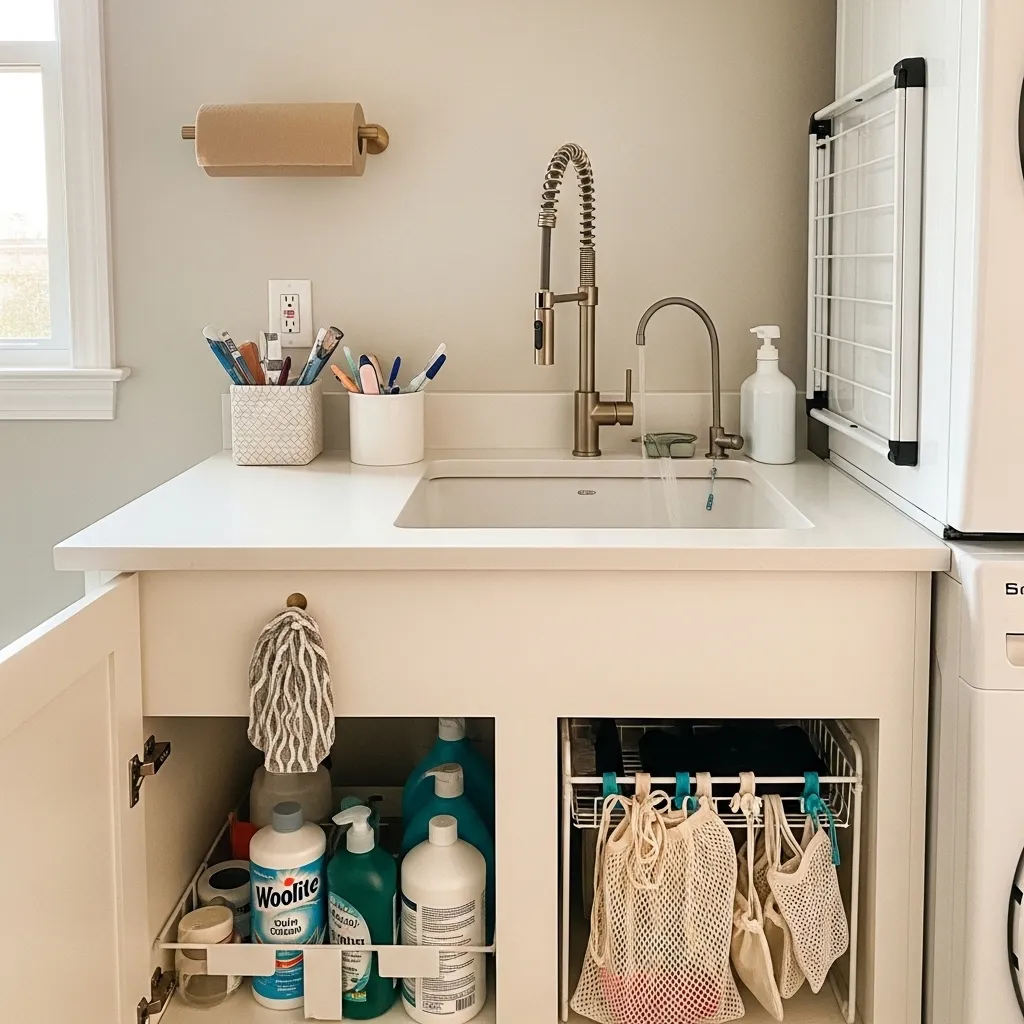
A laundry room with a dedicated hand-washing sink and specifically organized hand-washing supplies creates the complete laundry function for households with significant quantities of delicate, hand-wash, or spot-treatment items. The sink’s proximity to the stacked machines creates a complete textile care room where machine-washable items go into the machines and hand-wash items are processed at the sink in the same space — eliminating the need to carry delicate items to a bathroom sink or kitchen sink and improvise hand-washing in a space not equipped for it.
The pull-out spray function of the sink tap is the specific functional feature that most improves the hand-washing sink’s utility — the ability to direct a controlled stream of water at specific areas of a garment for spot rinsing, soaking removal, and the final rinse of hand-washed items requires more control than a standard faucet stream provides. The pull-out spray with a pause function creates the most versatile and most efficient hand-washing and spot-treatment capability available in a laundry sink, and its functional value in a dedicated laundry room is significantly higher than in a kitchen where the spray function is primarily used for rinsing dishes.
14. The Wallpapered Laundry Room — Pattern in a Utility Space
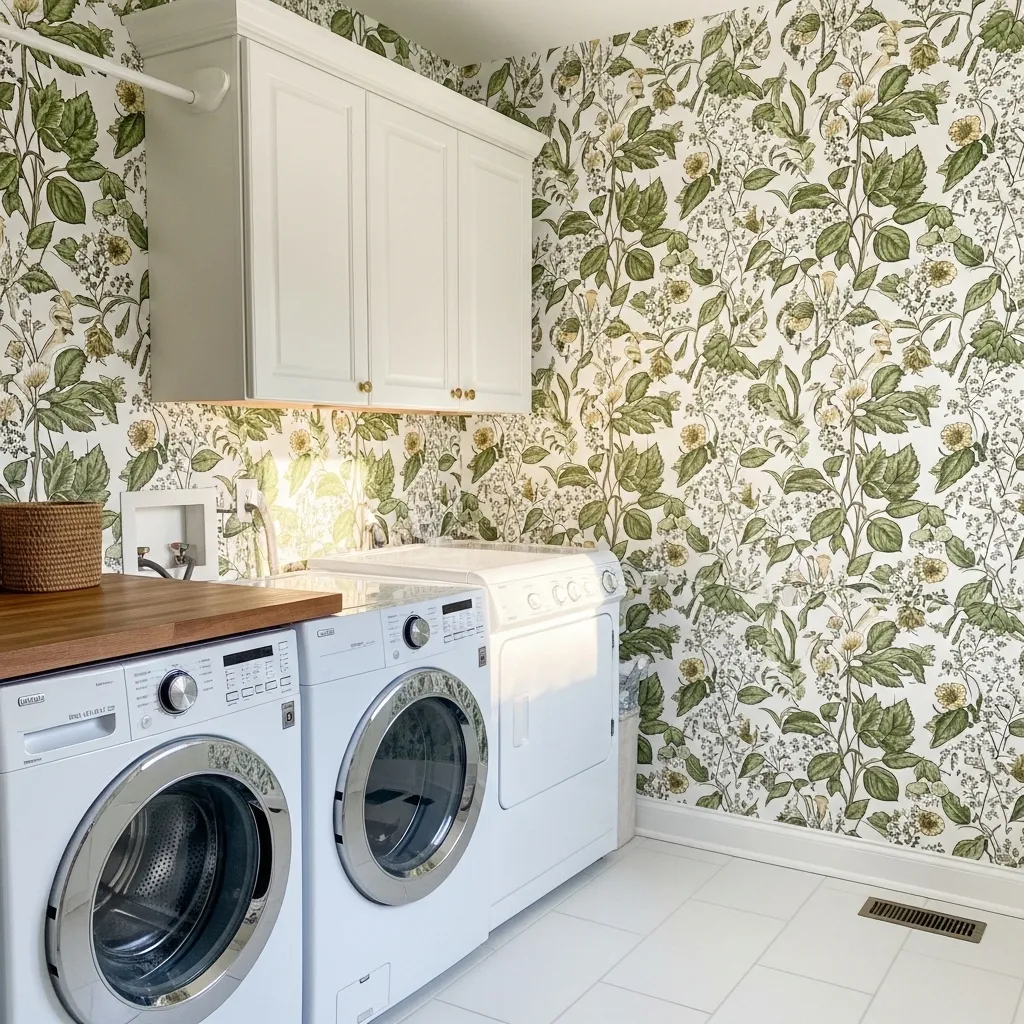
A wallpapered laundry room — where genuine, beautiful wallpaper of the quality you’d use in a living room or dining room has been applied to the utility space — creates the most joyfully surprising and most specifically personal laundry room aesthetic available. The surprise of encountering beautiful wallpaper in a utility space creates the specific pleasure of discovering that someone cared enough about the laundry room to give it the same aesthetic attention as the more public rooms of the home, and that quality of discovered care is one of the most charming and most specifically personal design gestures available in any home.
The wallpaper’s specific value in a laundry room is its scale relative to the room’s typically small dimensions — a large-scale botanical or geometric pattern in a small laundry room creates the immersive pattern experience that the same pattern in a large room would dilute, because the small room’s walls are close and constant in the field of vision and the pattern therefore creates a complete visual environment rather than a decorative element at a distance. The small laundry room with beautiful wallpaper is a genuinely immersive pattern experience, and that immersion is the specific aesthetic pleasure that large-scale pattern in small spaces creates.
15. The Luxury Laundry Room — When Function Meets Genuine Indulgence
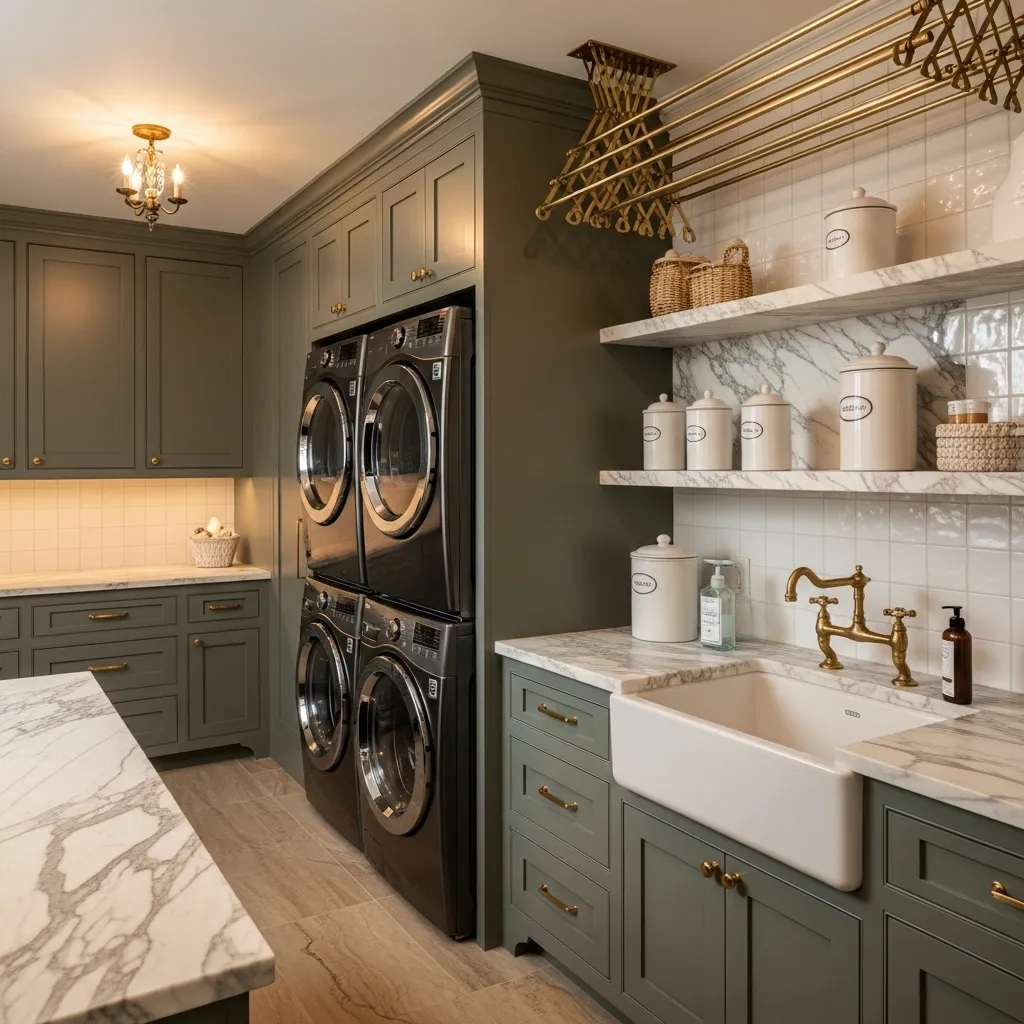
A luxury laundry room — where the material quality and design ambition applied to the laundry space are equal to those applied to the kitchen or the primary bathroom — creates the domestic environment that most completely embodies the design principle that the quality of the spaces we spend time in every day matters regardless of those spaces’ functional classification. A laundry room in Calacatta marble with custom cabinetry in sage green and unlacquered brass is not excessive — it is the laundry room used multiple times a week for the full duration of residence, and the quality of the daily experience in that space accumulates over years in a way that makes the investment in genuine material quality and genuine design intention one of the most consistently appreciated decisions in the home.
The premium appliance finish — matte black or brushed steel rather than standard white — is the specific detail that most communicates the luxury laundry room’s level of design intention, because it indicates that the appliances were chosen for their aesthetic quality as well as their functional performance rather than simply for their price point or their specification. Premium-finished machines in a custom-cabinetry laundry room create the impression of appliances that were selected to work within a designed space rather than a designed space that was built around standard machines, and that distinction — however subtle — is the specific quality that elevates the luxury laundry from a well-equipped utility room to a genuinely designed domestic space of the highest quality.