15 Black and White Bathroom Design Ideas
Black and white bathrooms are the epitome of timeless elegance—this classic color combination has been used in bathrooms for over a century and somehow never feels dated or out of style. There’s something inherently sophisticated about the contrast between these two extremes, the way they work together to create graphic impact, visual clarity, and a sense of intentional design that’s hard to achieve with more complex color palettes. Whether you lean toward traditional vintage-inspired designs with subway tile and pedestal sinks, ultra-modern minimalist spaces with sleek fixtures and clean lines, or something eclectic that mixes periods and styles, black and white provides a versatile foundation that works beautifully across aesthetics.
What I love about black and white bathrooms is their incredible range—the same two colors can create completely different moods depending on the proportions you use, the materials you choose, and how you apply them. A bathroom that’s predominantly white with black accents feels crisp, clean, and spacious. One that’s mostly black with white elements feels dramatic, cozy, and luxurious. Equal parts black and white creates bold graphic impact through patterns like checkerboard floors or geometric tile. And the beauty is that you can adjust these proportions to work with your specific space—small bathrooms might benefit from more white to feel larger, while spacious bathrooms can handle more dramatic black elements.
The practical side of black and white bathrooms is equally appealing. Both colors are neutrals that work with any accent color you might want to introduce through towels, accessories, or plants, so you can easily refresh the look without major changes. Black fixtures and surfaces are incredibly forgiving of water spots and soap residue compared to lighter colors. White surfaces feel clean and hygienic. And because this palette is so classic, your bathroom won’t look dated in five or ten years the way trendy colors might. Let’s explore these design ideas and figure out how to create a black and white bathroom that feels perfectly suited to your space and style.
1. Classic Black and White Checkerboard Floor
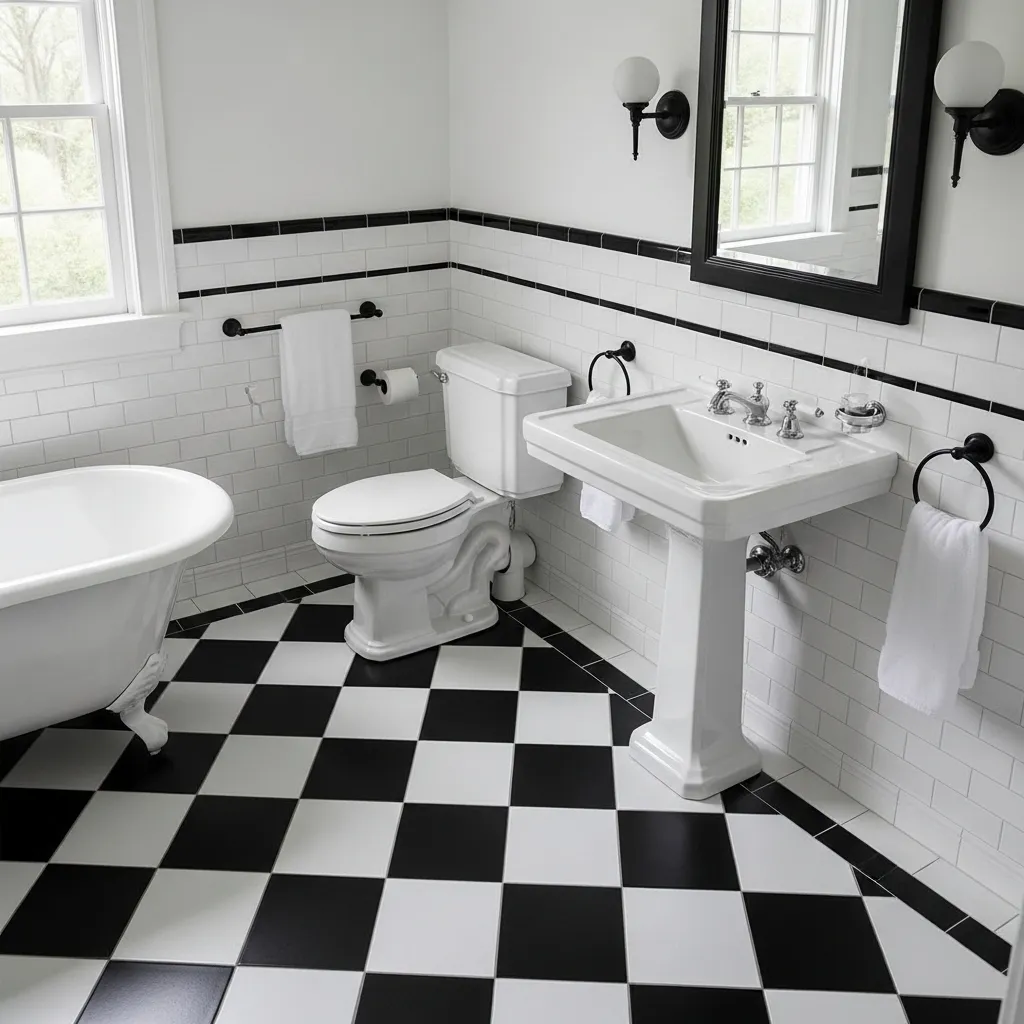
The checkerboard floor is perhaps the most iconic black and white bathroom element—it’s been used for over a hundred years and still feels fresh and intentional today. The bold graphic pattern creates instant visual interest and personality, transforming even a basic bathroom into something special. The high contrast draws the eye and makes the space feel more dynamic and designed than a solid-colored floor ever could.
What makes this pattern so enduring is its versatility—it works in tiny powder rooms and spacious master baths, in vintage-inspired spaces and contemporary ones, in traditional homes and modern apartments. The key is balancing the busy floor with simpler elements above—white walls, classic fixtures, minimal pattern elsewhere. The checkerboard provides all the visual interest you need, so everything else can be relatively calm and simple. Use matte or honed tiles rather than super glossy ones for a more sophisticated look that also shows fewer water spots. This is one of those design choices that will never go out of style.
2. White Subway Tile with Black Grout
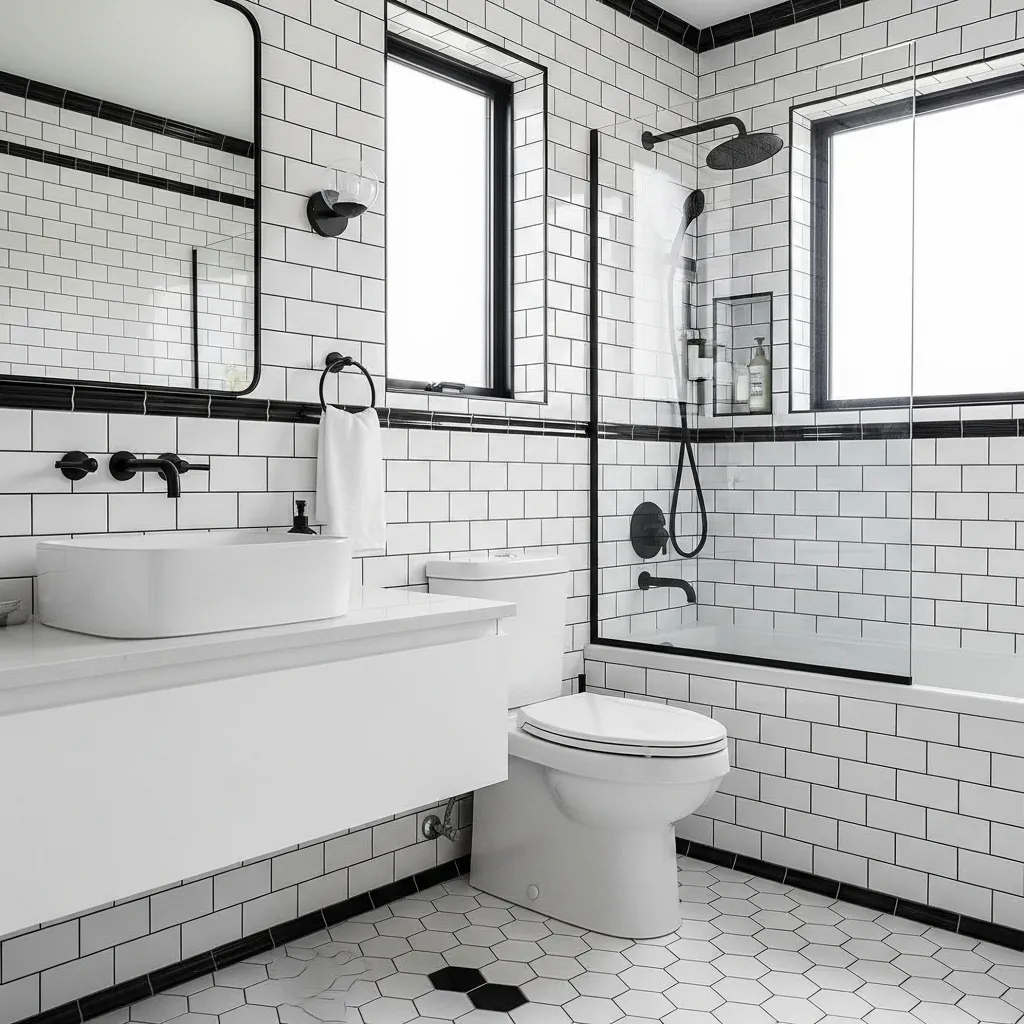
White subway tile is bathroom classic, but using black grout instead of white completely transforms the look from safe and traditional to graphic and contemporary. The black grout lines create this beautiful grid pattern that adds structure and visual interest while still maintaining the clean simplicity of white tile. It’s a subtle twist on a classic that makes a significant impact.
Beyond aesthetics, black grout is incredibly practical—it doesn’t show dirt, mildew, or staining the way white grout does, which means less maintenance and cleaning to keep it looking fresh. This is particularly valuable in showers where grout is constantly exposed to moisture. The grid effect works beautifully in modern, contemporary, and even industrial-style bathrooms where that graphic quality fits the aesthetic. Pair it with matte black fixtures and hardware to create a cohesive black accent thread throughout the bathroom. The combination of white tile and black grout gives you the brightness and reflection of white surfaces with the edge and sophistication of black details.
3. All-Black Bathroom with White Fixtures
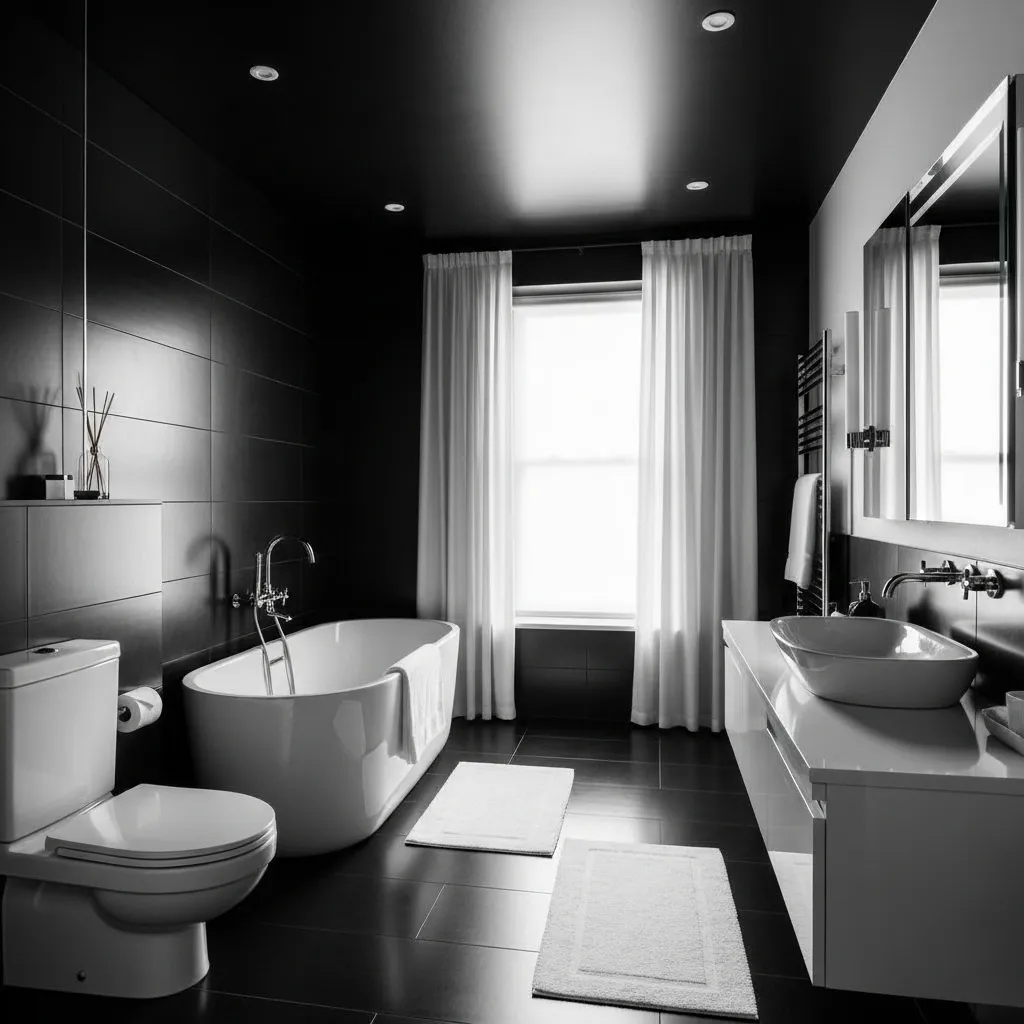
An all-black bathroom is incredibly bold and creates this intimate, cocoon-like atmosphere that feels luxurious and spa-like. When you envelope the space in black—walls, floor, even the ceiling—you create drama and sophistication that’s impossible to achieve with lighter colors. The white fixtures become sculptural elements that stand out beautifully against the dark background, almost glowing in contrast.
This approach requires confidence and adequate lighting—both natural light from windows and well-placed artificial lighting to keep the space functional and prevent it from feeling like a cave. The white fixtures are crucial to making this work; they provide visual relief and keep the black from being overwhelming. This works particularly well in larger bathrooms where you have space to embrace the drama, or in powder rooms where the bold choice creates impact without needing to be lived with daily. Add plants, white accessories, and plenty of light, and you have a bathroom that’s unforgettable and deeply sophisticated.
4. Geometric Black and White Tile Pattern
Geometric tile patterns in black and white create such incredible visual interest and can transform your bathroom into something genuinely special and unique. Whether it’s modern hexagons, traditional Moroccan patterns, contemporary geometric designs, or vintage-inspired encaustic tiles, the pattern becomes the focal point and conversation piece. The black and white palette keeps even busy patterns from feeling overwhelming or chaotic.
The key to making patterned tile work is restraint everywhere else—use it on the floor or one accent wall, but keep other surfaces simple. White walls, simple fixtures, and minimal additional pattern let the geometric tile be the star. This approach works beautifully in powder rooms where you can really go bold without worrying about it being too much for daily use, but it also works in larger bathrooms when you use the pattern strategically rather than covering every surface. The black and white restriction keeps costs more manageable too—you’re not juggling multiple tile colors, just creating impact through pattern and contrast.
5. Black Vanity with White Countertop
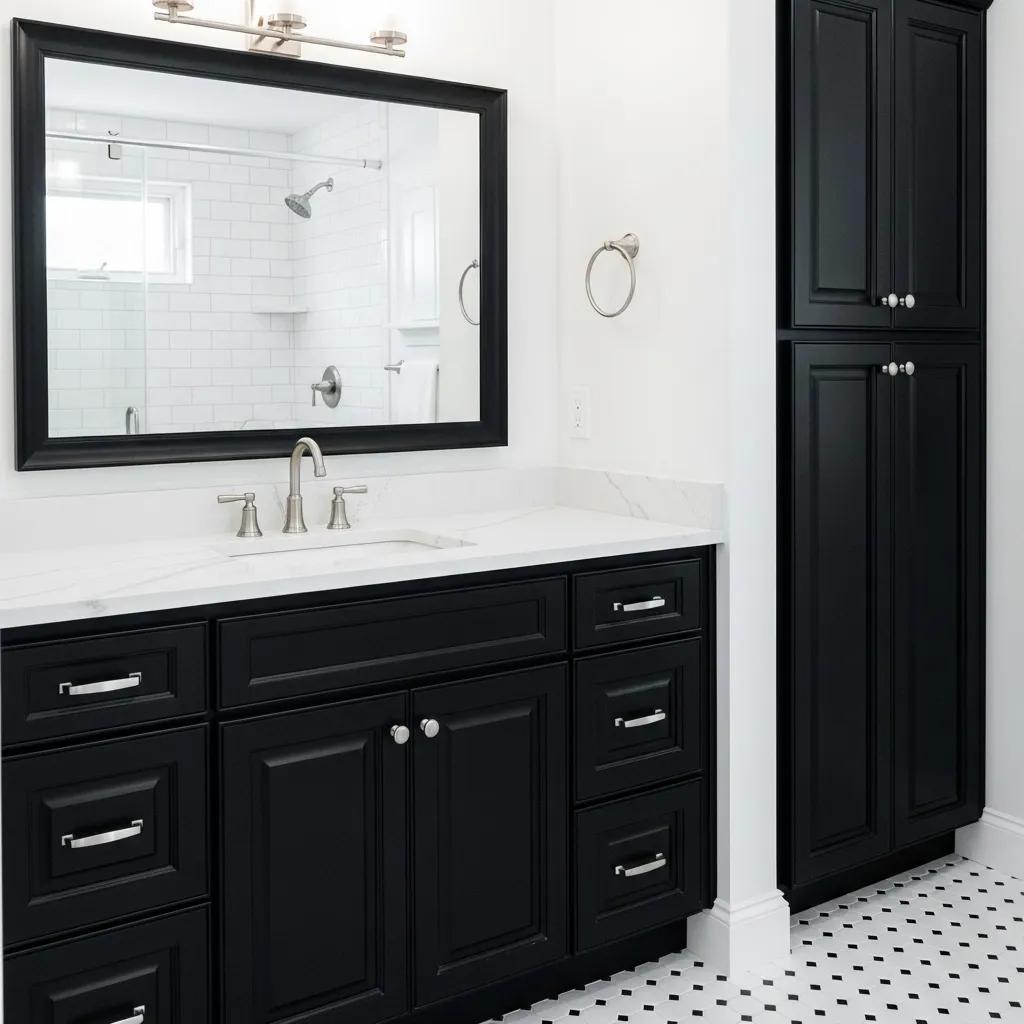
A black vanity creates such a strong, grounded presence in a bathroom and provides that dramatic element without overwhelming the entire space. When topped with a white countertop, you get beautiful contrast right at the focal point of the room—the black provides sophistication and hides the inevitable cabinet scuffs, while the white counter feels clean and bright for your daily grooming routine. It’s the perfect balance of drama and practicality.
This approach works across bathroom sizes and styles. In a small bathroom, the black vanity anchors the space while white walls and fixtures keep it from feeling cramped. In a larger bathroom, a substantial black double vanity makes a powerful design statement. The black cabinetry is incredibly forgiving compared to white—it doesn’t show every mark and splash, which is valuable around sinks. Pair it with coordinating black hardware, a black-framed mirror, and maybe black light fixtures to create a cohesive black accent thread. The white counter provides that essential brightness and workspace, creating a sophisticated color block that’s visually striking.
6. White Marble with Black Veining
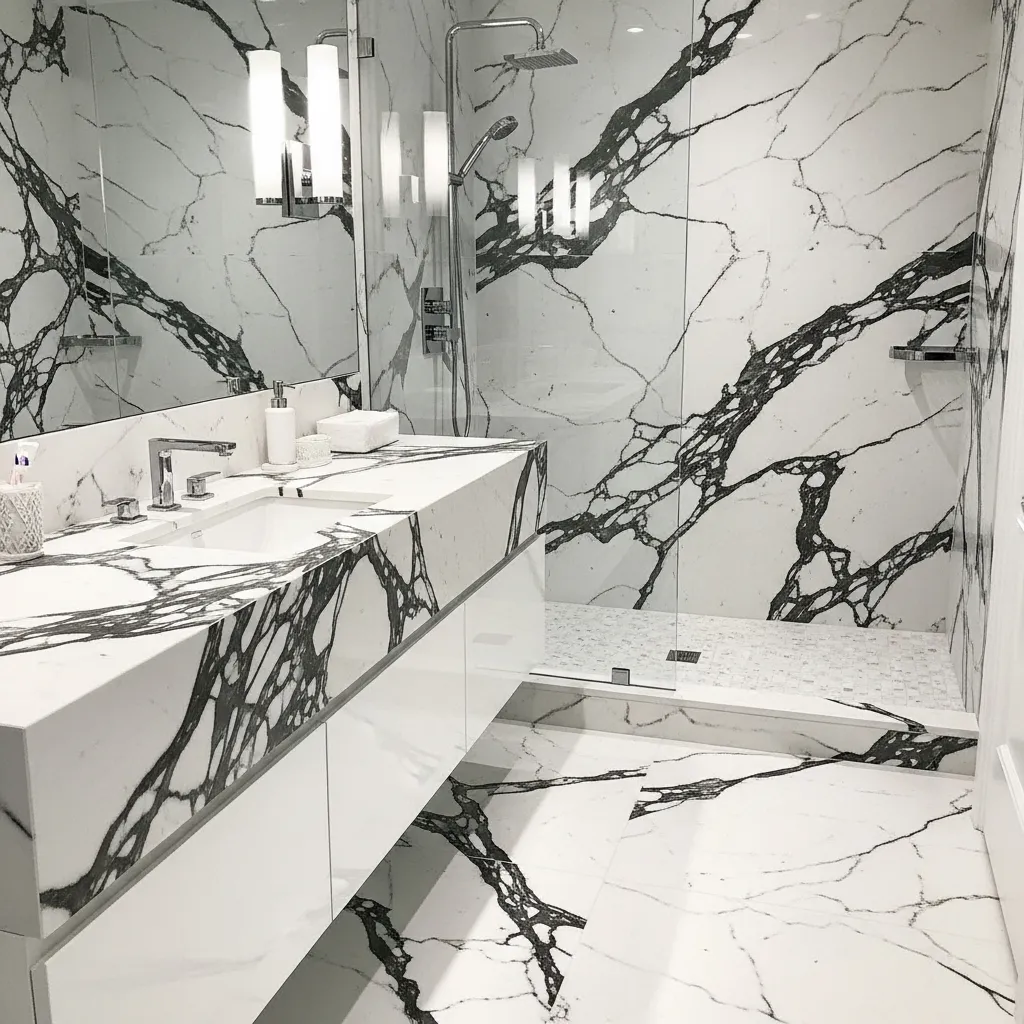
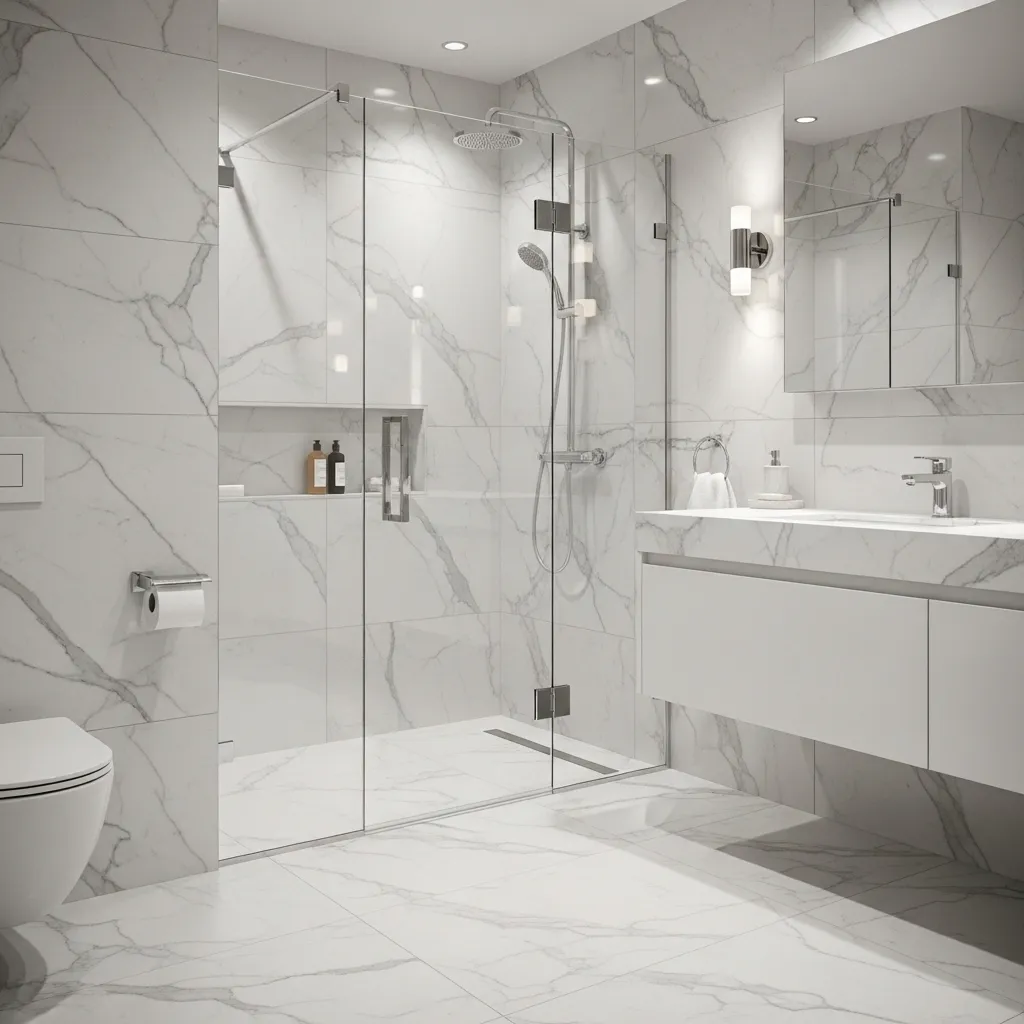
White marble with black veining—like Calacatta or Carrara—provides a luxurious, organic way to incorporate the black and white palette. Instead of the hard contrast of painted surfaces or solid-colored tile, you get natural variation where black flows through white in unpredictable, beautiful ways. The veining creates movement and visual interest while still maintaining a cohesive color story. It’s sophisticated and timeless in a way that feels both classic and current.
Using marble across multiple surfaces—counters, shower walls, even flooring—creates a cohesive, spa-like environment where the pattern flows throughout the space. Large-format tiles show off the veining better and minimize grout lines for a more seamless look. The organic nature of the veining means every installation is unique—you’re getting a one-of-a-kind bathroom. Yes, marble requires sealing and careful maintenance, but many people feel the beauty justifies the care, or you can opt for marble-look porcelain or quartz that provides the aesthetic with less maintenance. The black veining provides that crucial dark element without needing black fixtures or accessories.
7. Industrial Black Fixtures and Pipes
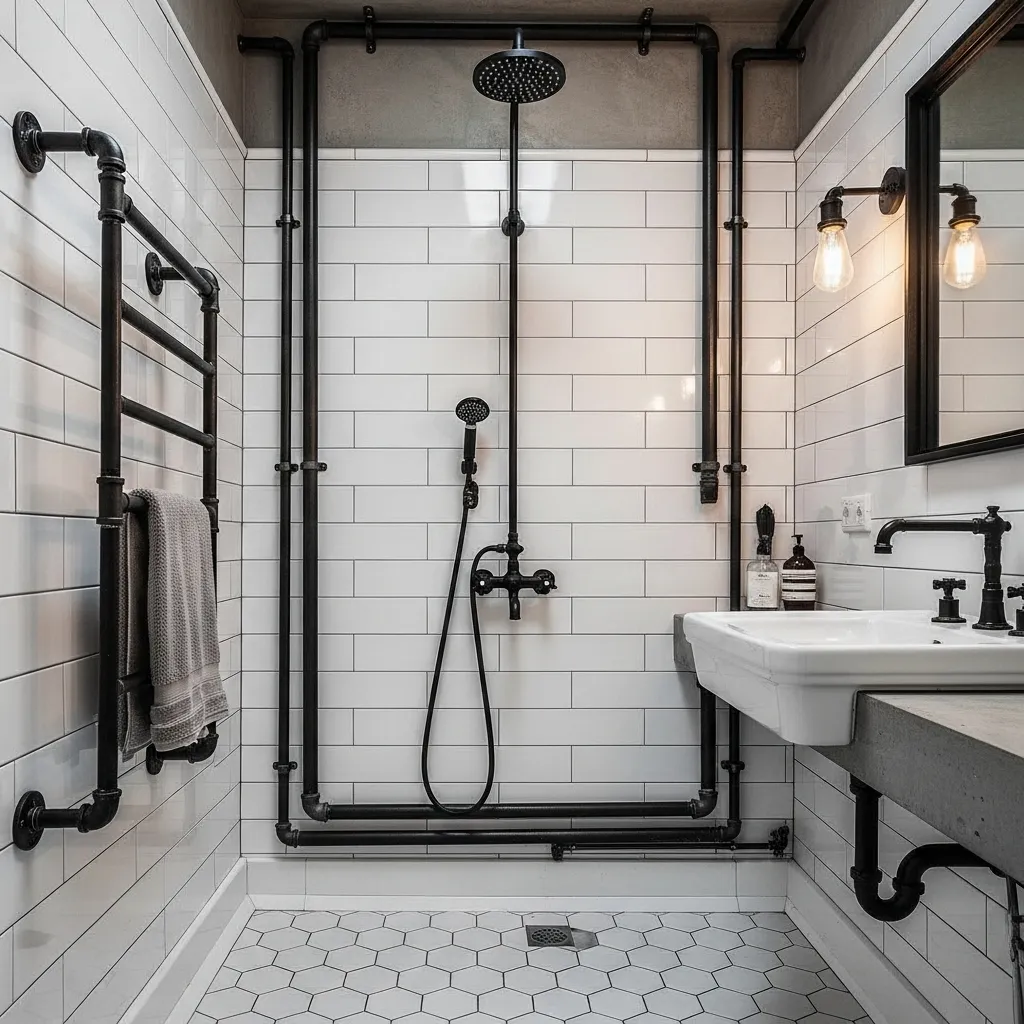
Exposing and celebrating plumbing pipes in matte black creates this incredible industrial aesthetic where functional elements become decorative features. Instead of hiding pipes behind walls, you’re treating them as part of the design—black iron or steel pipes running along walls, exposed shower plumbing, pipe-based towel racks. It’s honest, raw, and has that urban loft quality that works beautifully with black and white palettes.
This approach pairs perfectly with white subway tile or concrete-look materials—the industrial vibe comes from the combination of utilitarian materials and honest construction. Matte black fixtures feel more authentic than shiny chrome in this context, and the black metal provides warmth and character that chrome can’t match. This works particularly well in loft apartments, urban spaces, or anywhere you want that edgy, industrial-chic aesthetic. The exposed pipes need to be intentionally planned and properly installed—this only works when it looks designed rather than like rough plumbing left exposed by accident. The white tile provides clean contrast and prevents the industrial elements from feeling too dark or heavy.
8. Black Hexagon Tile Floor
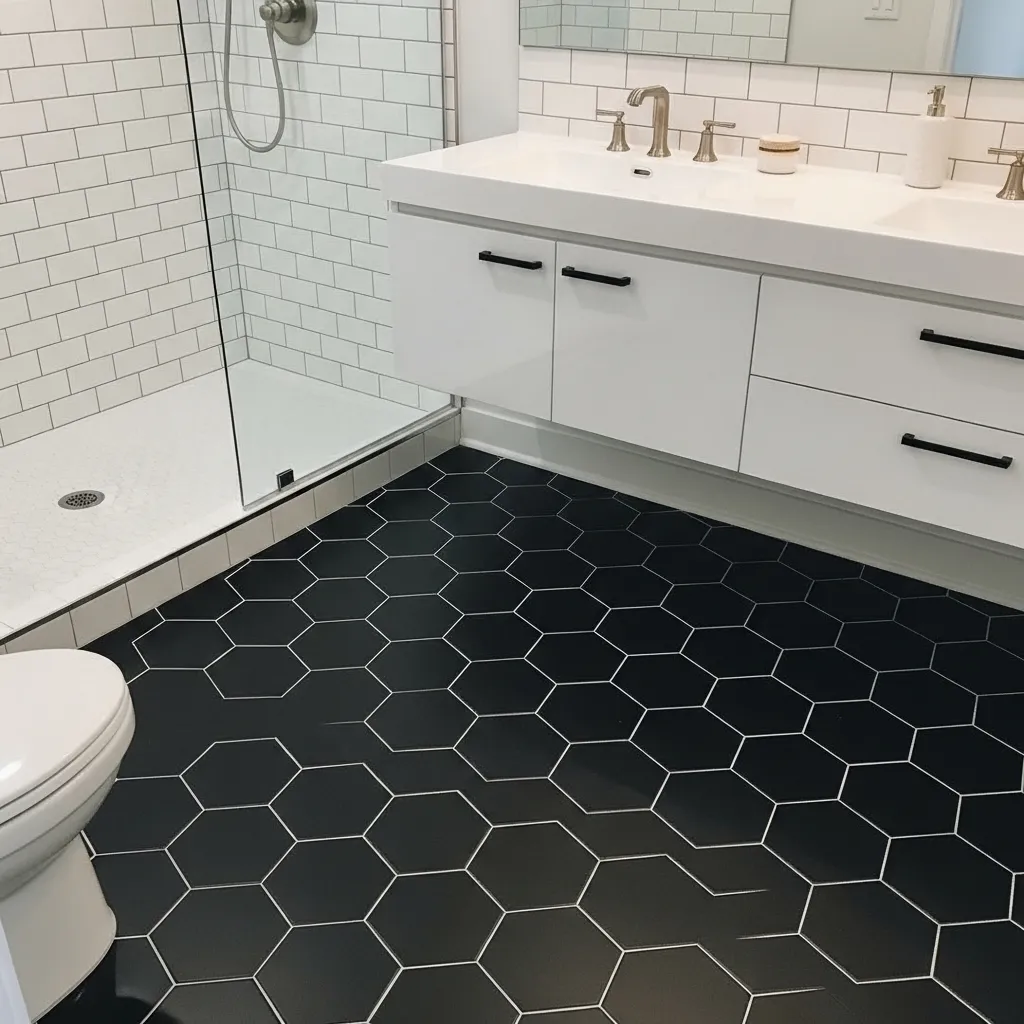
Black hexagon tile flooring creates such a beautiful geometric pattern that’s sophisticated and modern while still having some organic quality—hexagons feel more interesting than squares but less busy than complex patterns. The matte black finish is practical and forgiving, hiding water spots, dirt, and wear far better than white or light-colored flooring. It grounds the bathroom and provides a strong foundation for lighter elements above.
The hexagon shape creates natural movement and visual interest without needing pattern or multiple colors. When paired with predominantly white walls and fixtures, the black floor becomes a dramatic anchor that prevents an all-white bathroom from feeling too sterile or bland. This works across bathroom sizes—in small bathrooms, the black floor creates depth, and in larger bathrooms, it provides visual weight and sophistication. Choose either white grout for strong contrast and graphic impact, or dark gray or black grout for a more subtle, integrated look. The result is a floor that’s both beautiful and incredibly practical for bathroom use.
9. Monochromatic with Texture Variation
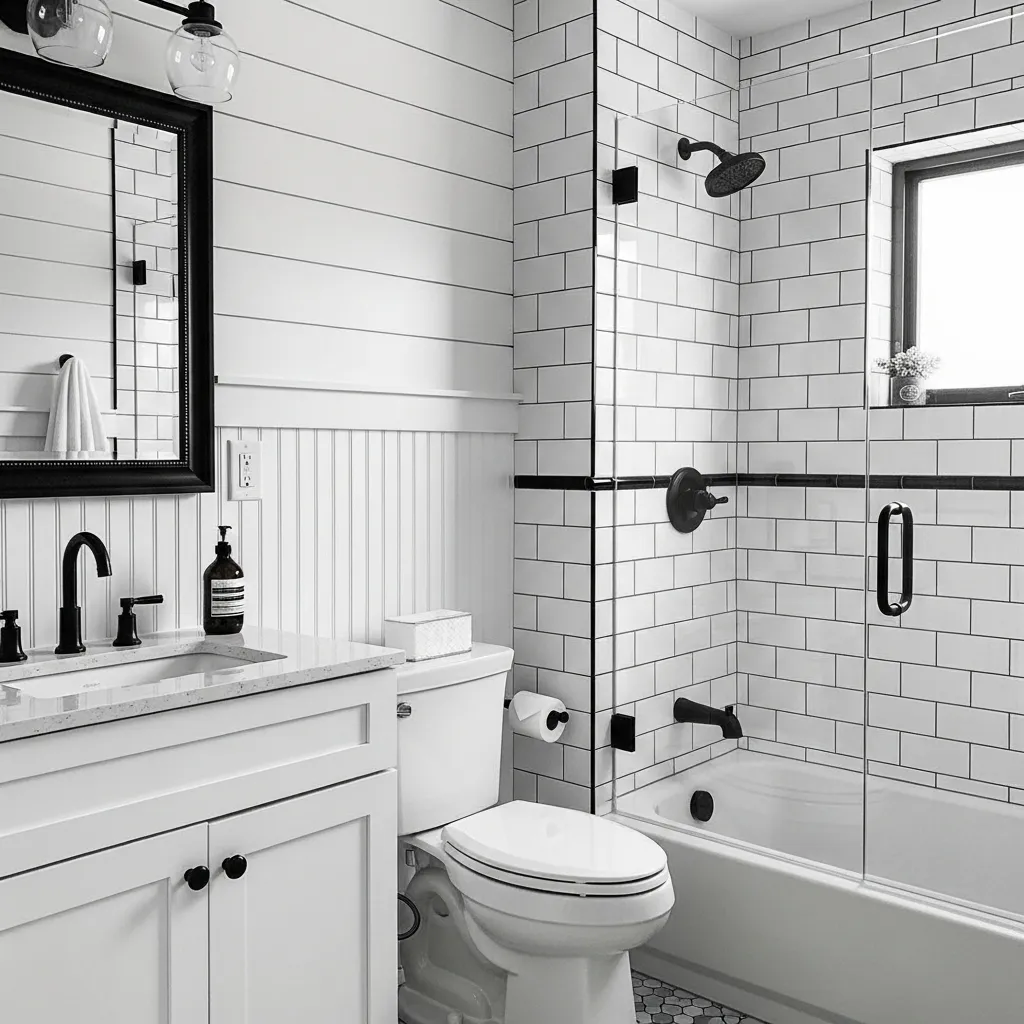
Creating visual interest through texture rather than pattern or color allows you to maintain a serene, cohesive black and white palette while avoiding any sense of monotony. Different materials, finishes, and textures—smooth subway tile, rough concrete, soft textiles, glossy fixtures, matte paint, wood grain—all create depth and dimension within the restricted color palette. You’re engaging the eye through tactile variation rather than visual busyness.
This approach feels particularly sophisticated and intentional because it requires thoughtfulness about materials and finishes rather than just choosing different colors or bold patterns. Mix smooth and rough, matte and glossy, hard and soft. Maybe your subway tile is glossy while your walls are matte, or you combine smooth hexagon tile with rough concrete-look tile. The textural variation creates subtle interest that reveals itself over time rather than shouting for attention immediately. This works beautifully in modern, minimalist, and Scandinavian-inspired bathrooms where that calm sophistication is the goal.
10. Black Ceiling with White Walls
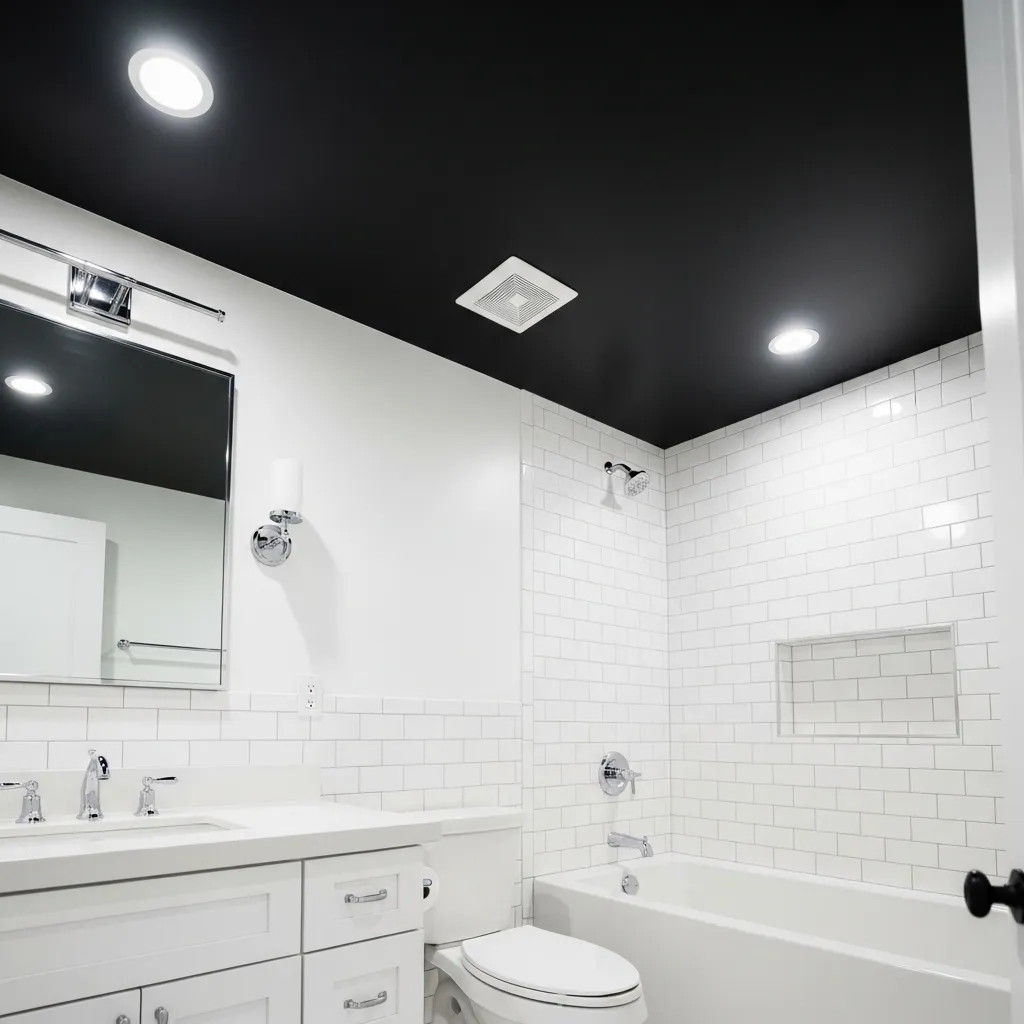
Painting the ceiling black is such an unexpected and sophisticated design move that creates drama and intimacy without affecting your functional bathroom surfaces. The black overhead makes the ceiling visually recede and creates this cocoon-like feeling, while all your walls, fixtures, and working surfaces remain white and bright. It’s a way to incorporate bold black without sacrificing the practicality and cleanliness of white where you need it.
This approach works particularly well in bathrooms with higher ceilings where you want to create a more intimate scale, or in modern spaces where that architectural boldness fits the aesthetic. The lighting becomes crucial and more prominent against the black ceiling—recessed lights create beautiful pools of illumination, and pendant or chandelier fixtures really stand out. Windows provide essential natural light to balance the dark ceiling. The result is a bathroom that feels special and designed without being overly dark or impractical. It’s sophisticated risk-taking that pays off beautifully.
11. Vintage Black and White Penny Tile
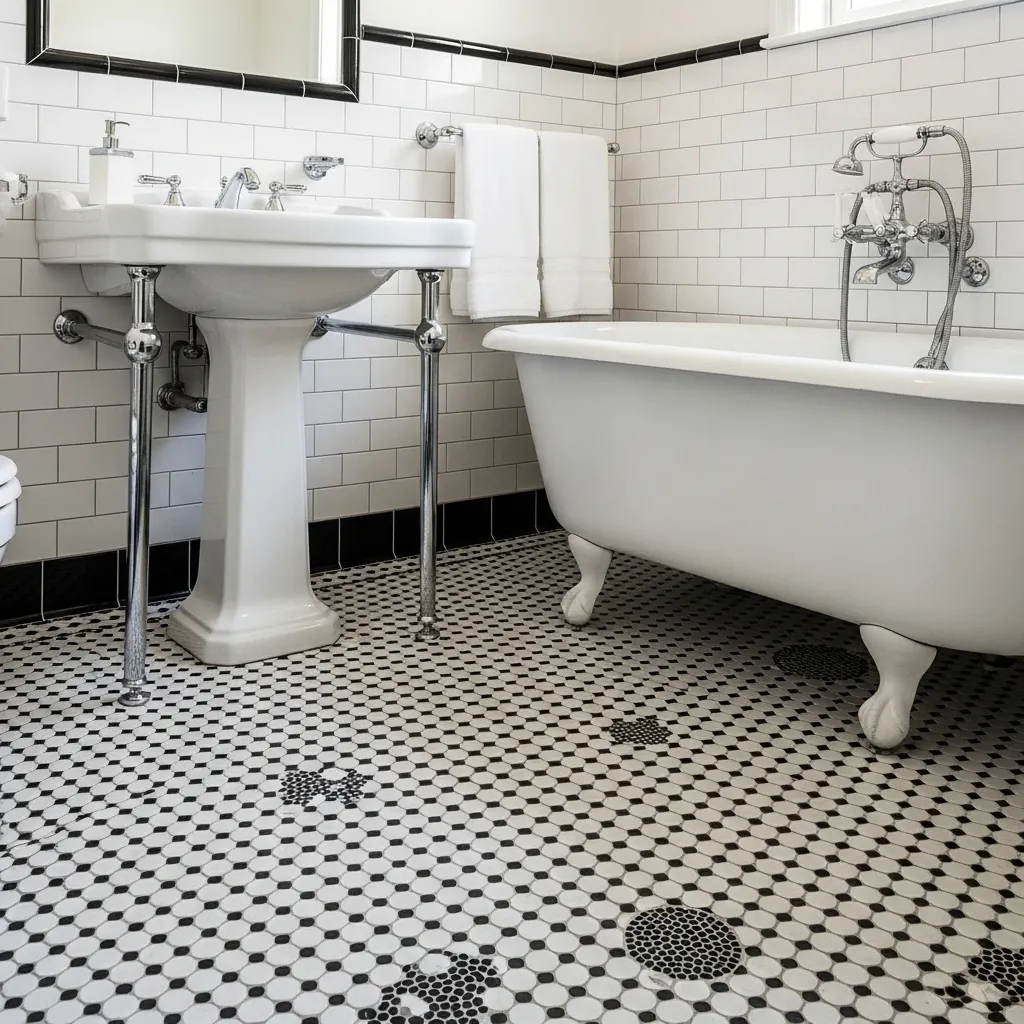
Penny tile—those small round tiles typically about one inch in diameter—creates such wonderful vintage charm and detailed pattern. Originally used in early 1900s bathrooms because the small tiles could conform to floor slopes for drainage, penny tile has become a design choice that references that period while being completely functional and beautiful. The mix of black and white pennies creates intricate pattern and texture that larger tiles can’t achieve.
You can use penny tile in all-white, all-black, or mixed patterns—random scattered black tiles throughout white, a border pattern, or geometric designs. The grout color affects the look significantly—white grout creates definition between tiles, while gray grout creates a more integrated appearance. Penny tile works particularly well on shower floors where the small tiles create good traction and proper drainage slopes. Pair it with other vintage elements like pedestal sinks, clawfoot tubs, and subway tile for an authentic period bathroom, or contrast it with modern fixtures for an eclectic mix. The detailed pattern adds significant visual interest and character.
12. Black Framed Shower Enclosure
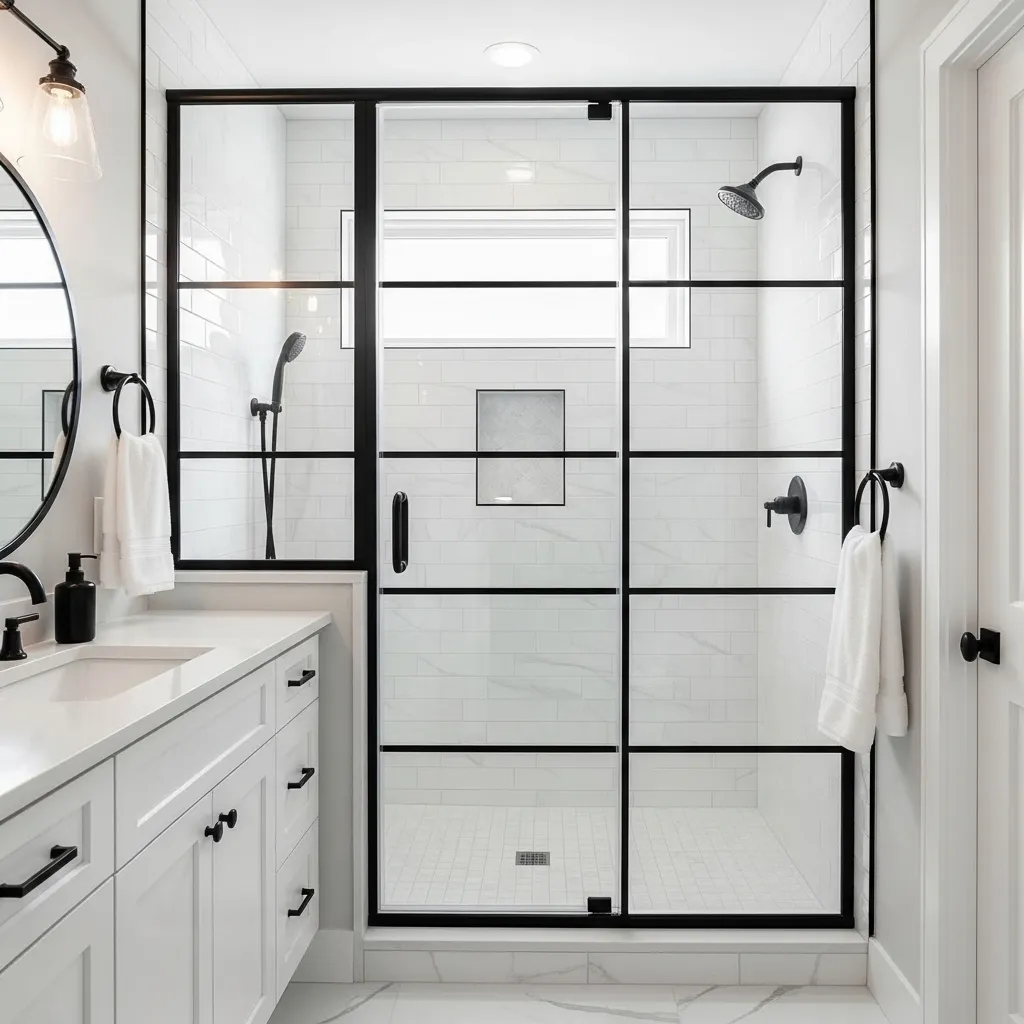
Black-framed shower enclosures have become incredibly popular and for good reason—they create these beautiful graphic lines that add architectural interest and modern sophistication. The black frames reference industrial steel windows and factory aesthetics, bringing that element of authenticity and edge. Unlike frameless glass or chrome frames that try to disappear, black frames make a deliberate design statement.
The frames define and celebrate the shower as a distinct zone while the clear glass maintains openness and light flow. Inside the shower, keep finishes white or light to create contrast and brightness—white tile, white fixtures, light stone. The black frame coordinates beautifully with other black elements like faucets, hardware, and accessories, creating a cohesive black accent thread throughout the bathroom. This works across styles from modern to industrial to contemporary farmhouse, depending on what you pair it with. The black frame adds structure and definition that elevates even a simple bathroom into something special and designed.
13. High Contrast Striped Walls
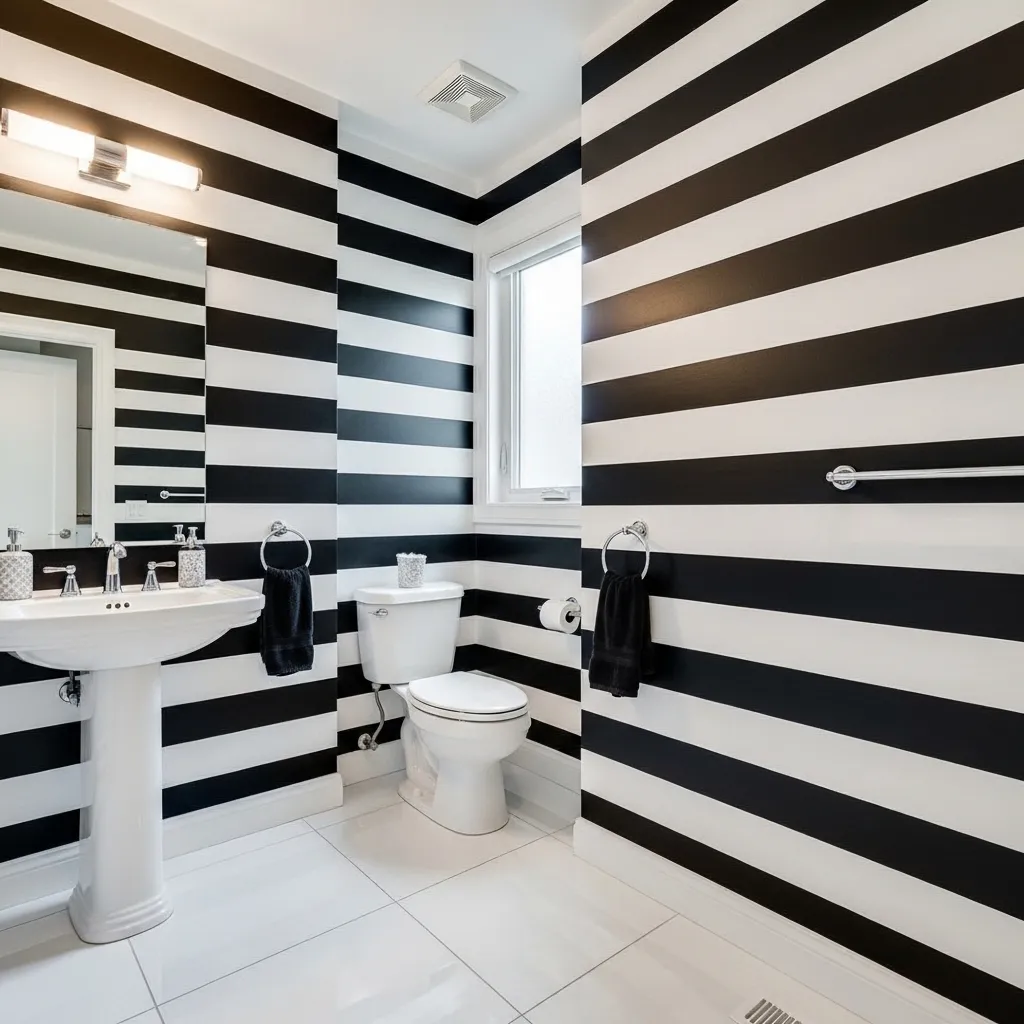
Horizontal black and white stripes create immediate visual impact and make such a bold statement. The strong graphic pattern is energizing and modern, and the horizontal orientation makes bathrooms feel wider. This is not a subtle choice—it’s deliberately bold and eye-catching, perfect for people who want their bathroom to have serious personality and aren’t afraid of commitment to a strong look.
The key to making stripes work is keeping everything else relatively simple—if your walls are this bold, your fixtures, flooring, and accessories should be clean and minimal. All-white fixtures, simple tile, and uncluttered surfaces let the stripes be the star. The stripe width matters—too narrow feels busy and dizzying, too wide can feel more like color blocking than stripes. Around 8-12 inches per stripe tends to work well. This works particularly well in powder rooms where you can be really bold without living with it daily, but it can also work in full bathrooms if you love the drama. Consider using stripes on just one or two walls rather than all four to prevent overwhelm.
14. Black Wainscoting with White Upper Walls
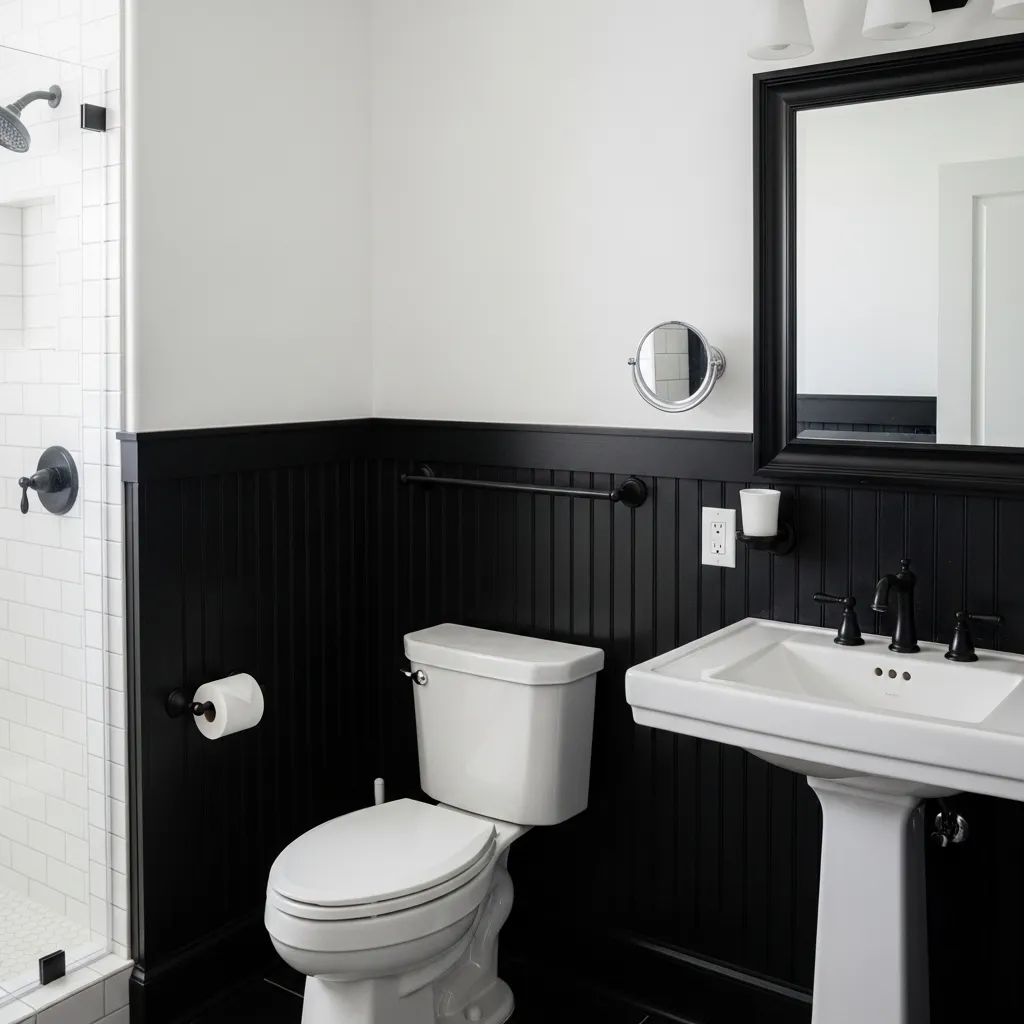
Black wainscoting creates such a sophisticated foundation and grounds the bathroom beautifully while the white upper walls keep the space feeling bright and open. This traditional architectural detail—whether beadboard, board-and-batten, or paneling—adds texture and character while the black color gives it modern edge and drama. The division at chair rail height creates natural visual interest and balances the proportions of dark and light.
This approach is particularly practical because the lower portion of bathroom walls—where splashing, moisture, and wear occur—is in the more forgiving black, while the upper portion remains bright white. The wainscoting adds traditional character that works in both period homes and new construction where you want to add architectural interest. Pair it with white fixtures and you have a balanced palette that’s neither too dark nor too stark. The black base grounds white elements and prevents an all-white bathroom from feeling too cold or sterile. This is classic, timeless, and works beautifully across bathroom sizes.
15. Minimalist Black and White with Plants
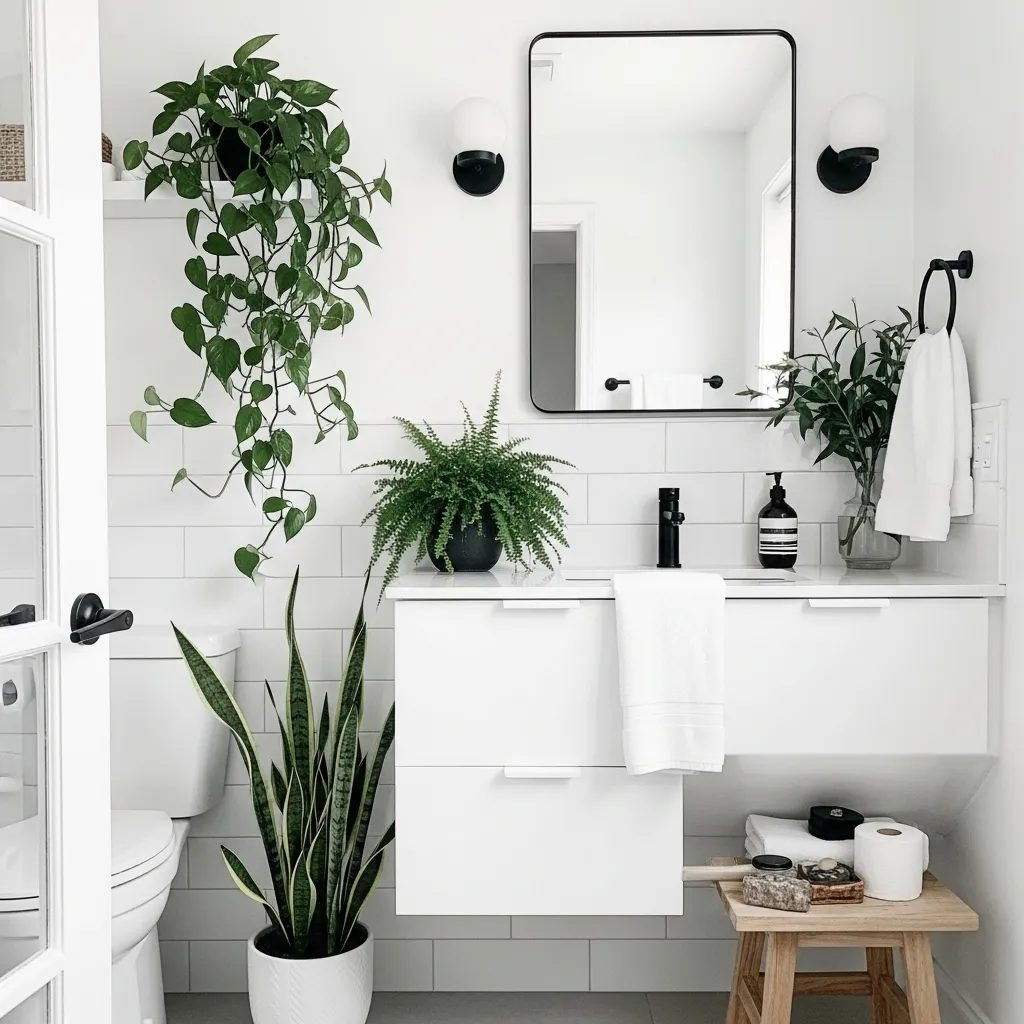
A minimalist black and white bathroom gets such beautiful warmth and life from the addition of plants. The greenery provides the only color in the space, which makes it feel more intentional and impactful—instead of various accent colors competing for attention, you have the clean simplicity of black and white as your foundation with green as the singular organic element. Plants thrive in bathroom humidity and bring life, texture, and that connection to nature that makes spaces feel more welcoming.
Choose plants that actually enjoy bathroom conditions—pothos, ferns, snake plants, ZZ plants, and philodendrons all do well with humidity and varying light levels. The plants’ organic shapes and textures provide beautiful contrast to the hard, geometric surfaces typical in bathrooms. Natural wood elements—a small stool, wooden tray, bamboo accessories—can add warmth without disrupting the minimalist aesthetic. The result is a bathroom that’s clean and calm but not cold or sterile, with just enough organic warmth to make it genuinely inviting. It’s the perfect balance of minimalist restraint and livable comfort.