15 Hallway Lighting Ideas That Transform Your Most Overlooked Corridor Into Something Genuinely Beautiful
If your hallway lighting situation is currently a single overhead fixture doing its best in the center of the ceiling while everything around it stays in murky shadow, you are absolutely not alone and the fix is considerably more interesting and more accessible than you might think — because hallway lighting in 2026 has evolved into one of the most considered aspects of residential interior design, with approaches ranging from dramatic pendant series that create visual rhythm down the full corridor length, to wall sconce pairs that cast warm pools of light at intervals, picture light illumination of gallery walls, recessed lighting with warm CCT temperatures, LED cove lighting that makes low ceilings feel taller, lantern-style fixtures that reference traditional architecture, industrial Edison bulb pendants, architectural uplighting that washes walls in warm gradient, mirror-integrated lighting, staircase step lighting, and several more ideas that treat the hallway as the design opportunity it genuinely is rather than the utility space it’s typically approached as. The right hallway lighting doesn’t just illuminate — it creates atmosphere, guides movement, makes art look its best, and sets the emotional tone for every room that opens off it.
I had a hallway for years that was lit by a single overhead fixture with a bulb that was never quite the right color temperature — too blue when I wanted warm, too dim when I needed to see, casting everyone who stood in it in an unflattering overhead light that made the corridor feel more like a hospital than a home. The transformation that happened when I replaced it with two wall sconces at either end and added a small picture light over the gallery wall was immediate and genuinely surprising — the same hallway in the same house with the same walls and floors suddenly felt warm and considered and like a space someone had actually thought about. Light does more work on atmosphere than almost any other single design element, and nowhere is that more true than in a hallway where every other surface is already fixed.
What makes hallway lighting different from lighting other rooms is the experience of movement — people pass through hallways rather than sitting in them, which means the lighting needs to work at walking pace and to create a visual journey rather than a static environment. The best hallway lighting systems create rhythm and progression, with pools of light at regular intervals that make the corridor feel like a series of connected moments rather than a uniform lit tube. Understanding that hallways are experienced kinetically rather than statically is the insight that unlocks the most interesting and most effective lighting approaches for these spaces.
1. A Series of Pendant Lights Down the Corridor Length
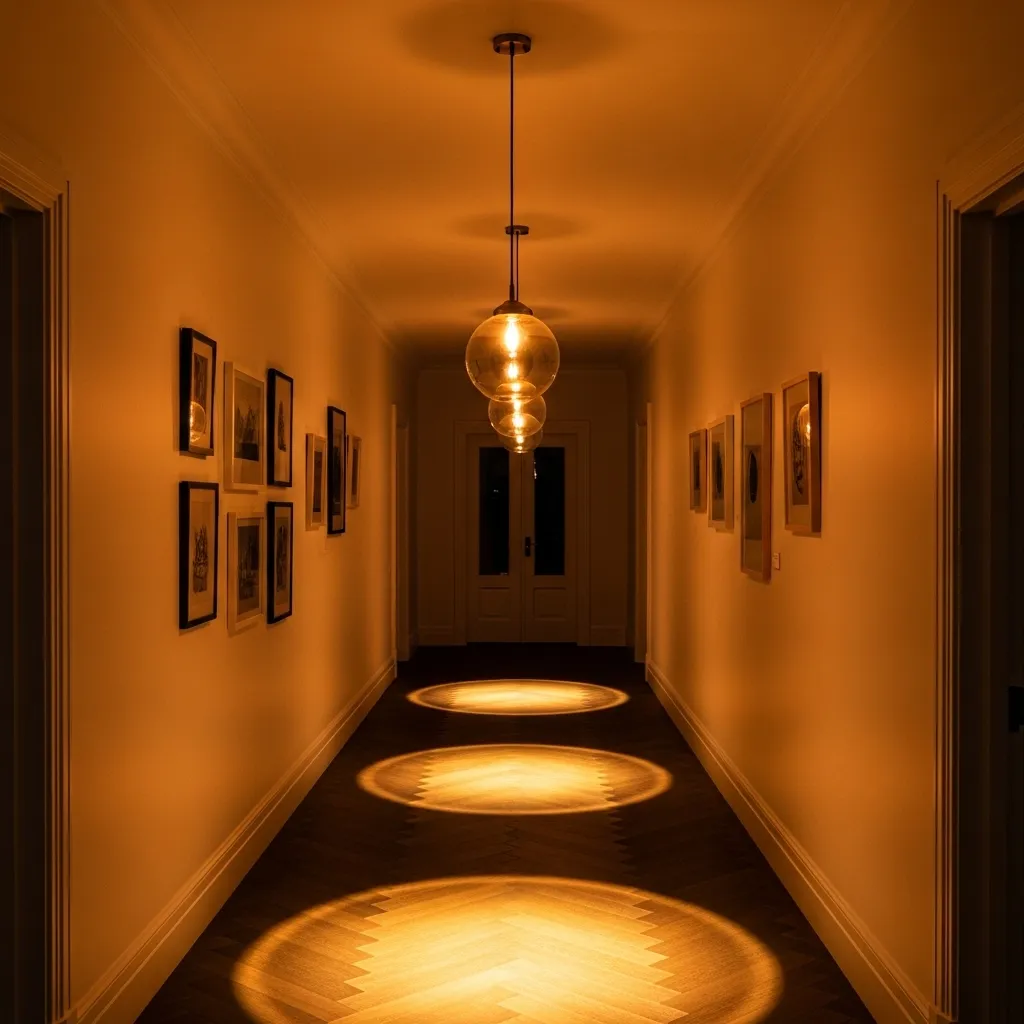
A series of pendant lights spaced at regular intervals down a hallway is the lighting approach that does the most to transform the spatial character of a corridor — where a single central fixture creates one undifferentiated zone of illumination, a pendant series creates a sequence of distinct light moments that gives the hallway temporal depth and visual rhythm. Walking through a hallway lit by a series of pendant lights has a genuinely different quality from walking through one lit by overhead recessed fixtures — the pendant series creates a feeling of progression, of moving from one warm moment to the next, that makes even a short corridor feel like a considered journey.
The spacing of the pendants matters enormously to how the series reads — too close together and the pools of light merge into something resembling a single extended overhead fixture, too far apart and the spaces between them feel dark and unlit rather than atmospherically shadowed. The ideal spacing creates pools that overlap slightly at floor level while maintaining distinct centers of brightness overhead, creating the visual rhythm that makes the pendant series feel like a designed lighting installation rather than a collection of individual fixtures.
2. Wall Sconce Pairs at Regular Intervals
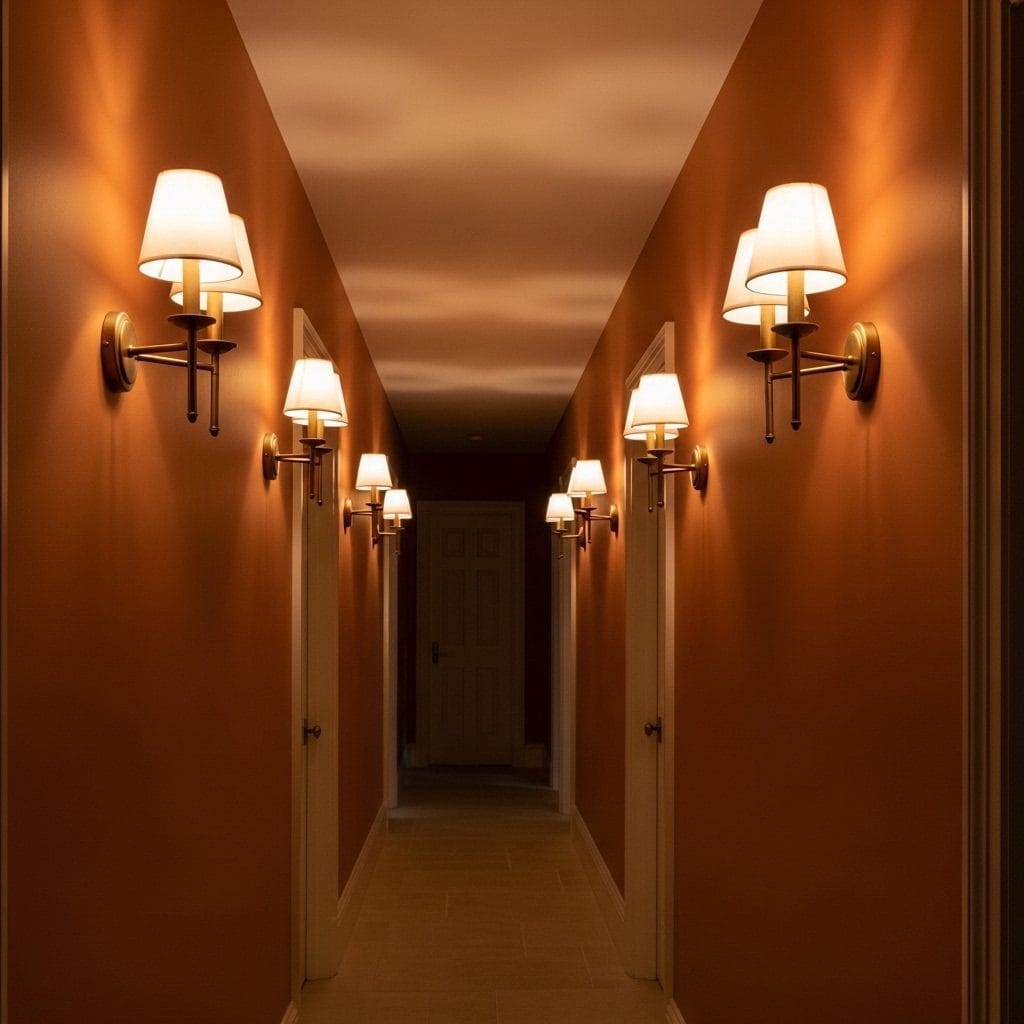
Wall sconces mounted in pairs on both sides of a hallway simultaneously create the most consistently flattering light quality of any hallway lighting approach — the bilateral illumination from two opposing sources eliminates the harsh shadows that single-source overhead or single-wall lighting creates, and the positioning at approximately face height rather than overhead means people standing in the hallway are lit warmly and evenly rather than from the unflattering angle that ceiling fixtures impose. It’s the hallway lighting approach that makes everyone look good, which matters more in the transitional social space of an entrance hallway than it might in a utility corridor.
The linen shade on the sconce is the specific detail that shifts the fixture from a utilitarian light source to a decorative element — the warm glow of lamp light through a fabric shade creates a quality that bare bulb sconces or frosted glass sconces simply can’t replicate. The shade diffuses the light source, softens the brightness, adds a layer of material warmth, and creates a lamp-like quality that makes the hallway feel like a proper room rather than a corridor with functional lighting.
3. Picture Lights Over Gallery Wall Artwork
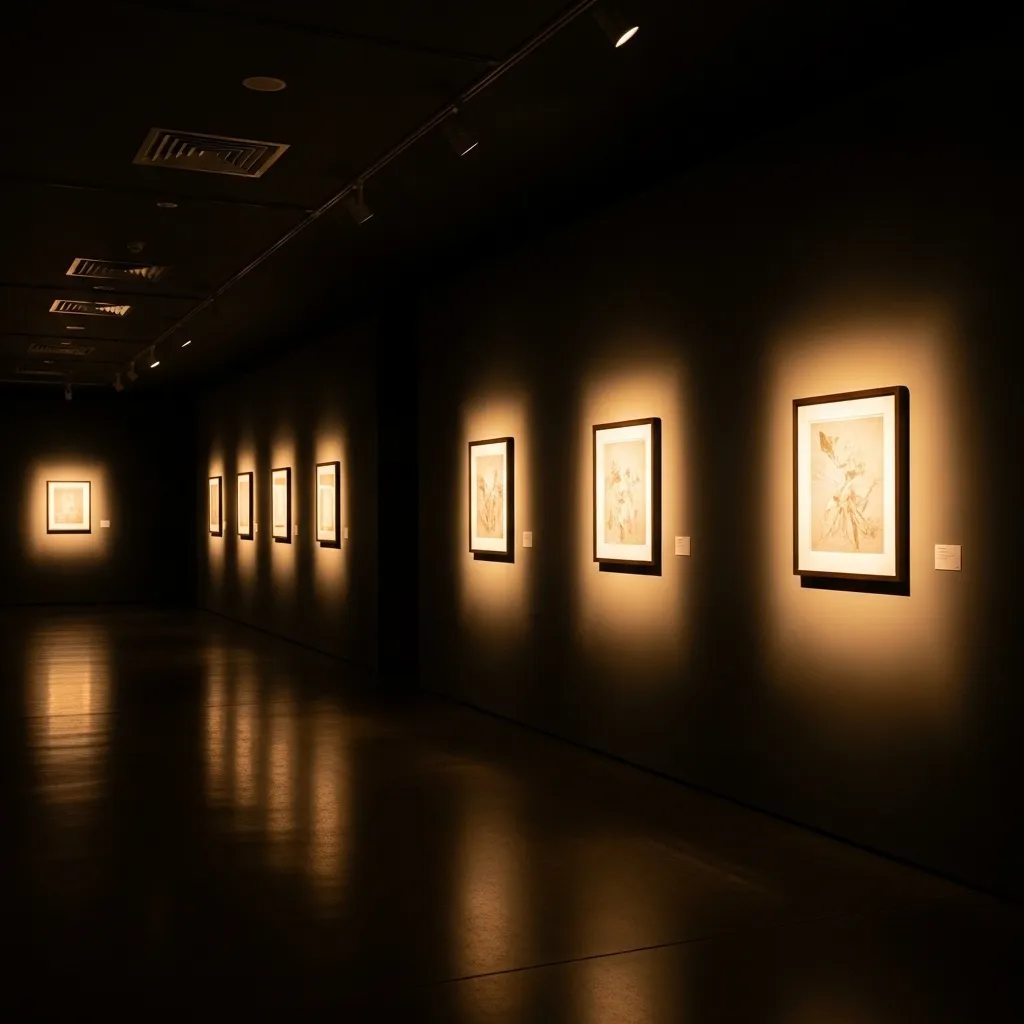
Picture lights installed over gallery wall artwork in a hallway create a fundamentally different relationship between the viewer and the art — instead of looking at artwork in general room light where everything is equally visible and equally dim, you’re looking at artwork that’s been specifically illuminated and that glows with its own warm light source. That focused illumination makes the artwork look better — colors are more accurate, textures are more visible, the quality of the piece is more evident — and it creates an atmosphere along the gallery wall that’s closer to a proper gallery or museum than a domestic corridor.
The darkness between the picture-lit artworks is as important as the light itself — when the general hallway lighting is kept low and the picture lights provide the primary illumination, the contrast between the bright artwork and the darker wall creates visual drama that makes each piece feel genuinely significant. The hallway becomes a series of illuminated moments rather than a uniformly lit passage, and the experience of moving along it has the quality of discovering each artwork in turn rather than seeing them all at once in flat overhead light.
4. Recessed Lighting With Warm CCT Temperature
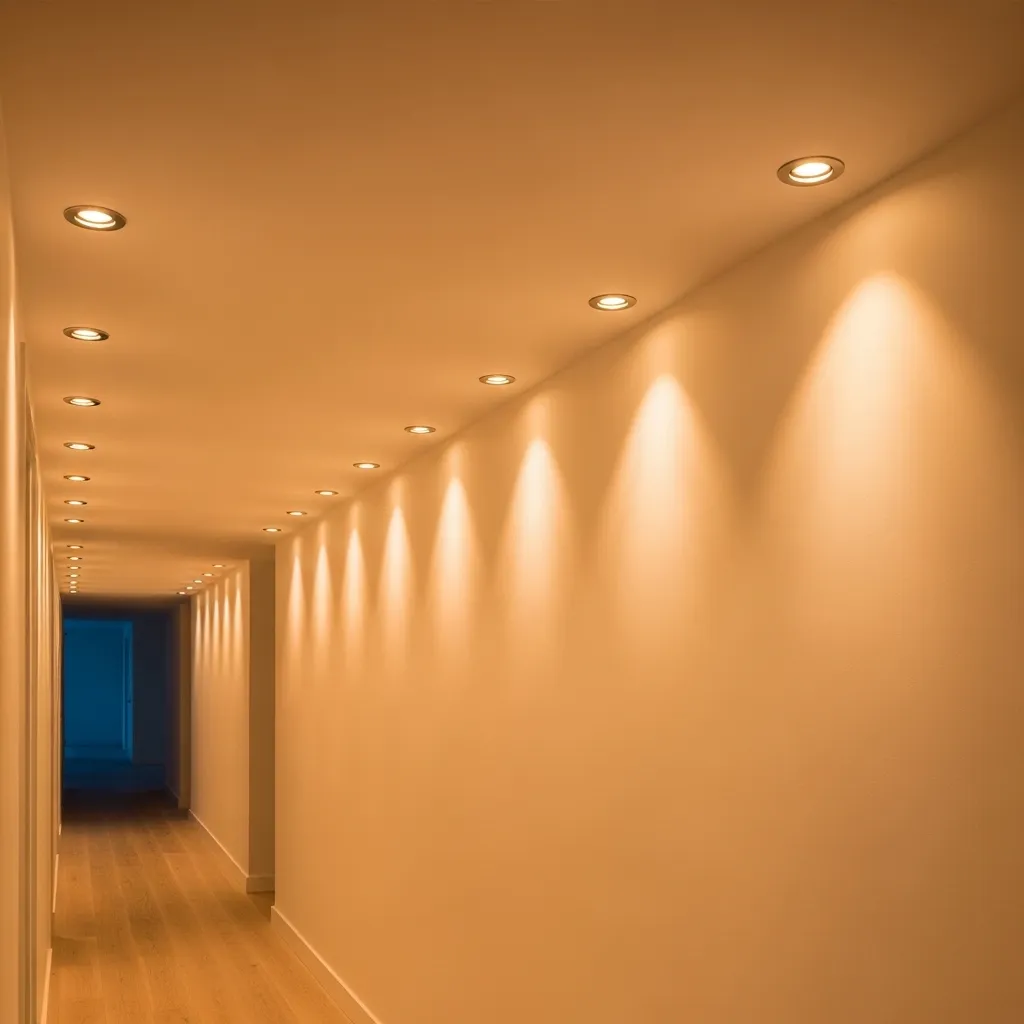
Recessed lighting done properly — with genuine attention to color temperature, fixture placement, and the visual rhythm created by the pattern of ceiling lights — can create a far more atmospheric hallway than its clean-ceiling aesthetic might suggest. The critical specification is color temperature: recessed fixtures in hallways should be 2700K or warmer, never the 4000K or 5000K cool white that cheaper installations often use, because the warm amber quality of 2700K light does the same atmospheric work that warm-toned pendant and sconce fixtures do while maintaining the clean, uncluttered ceiling that modern architecture often requires.
The placement pattern of recessed lights in a hallway is the design decision that most affects how the corridor feels — a single central row creates even but characterless illumination, while an offset or staggered pattern creates a subtle rhythm that gives the ceiling visual interest and makes the light quality feel more intentional and more atmospheric. Even a slight offset from the strict centerline changes the way the light falls on the walls and floor, creating slight asymmetries that are more interesting to experience while still reading as orderly and clean from a casual glance upward.
5. Industrial Edison Bulb Pendants
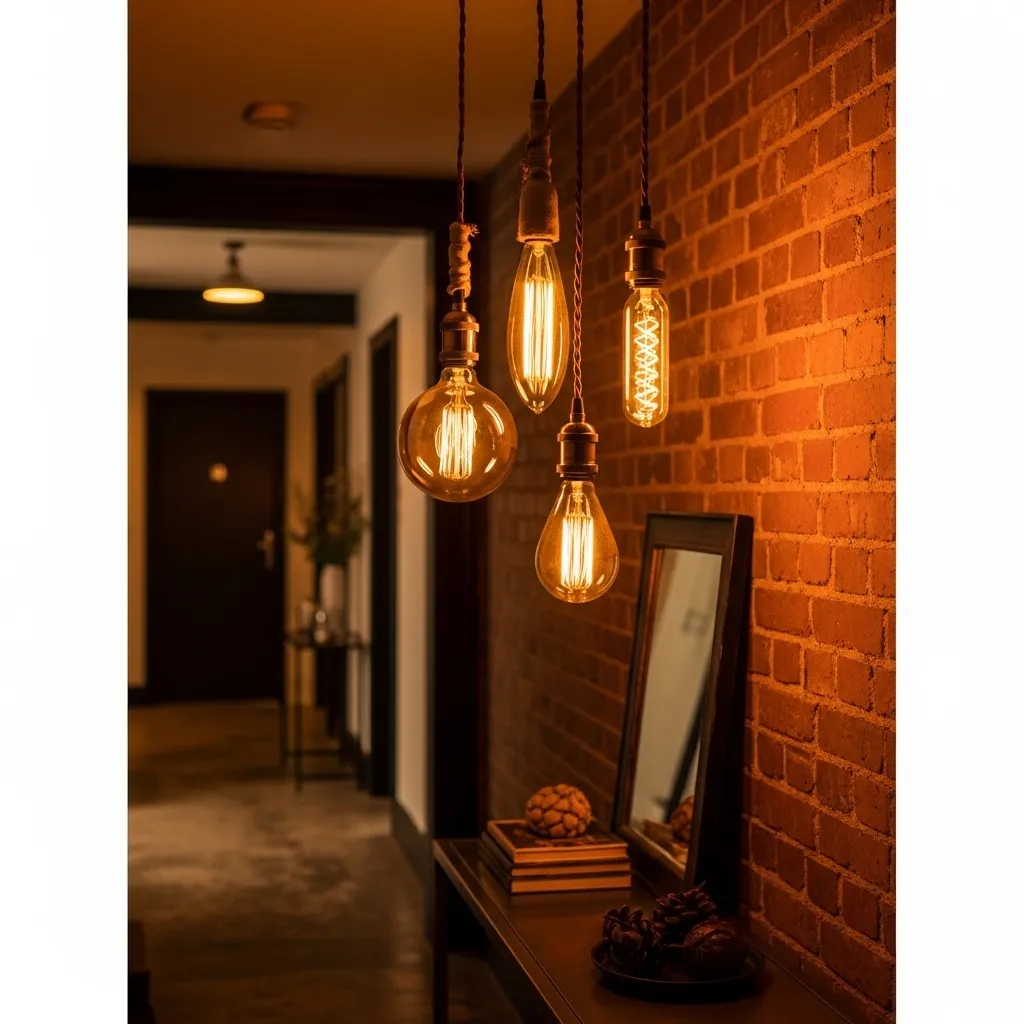
Edison filament bulbs in a hallway pendant arrangement create a quality of light that’s simultaneously nostalgic and perfectly contemporary — the visible glowing filament has an intimacy and warmth that no other light source produces, and the amber color temperature of a classic Edison bulb (typically around 2200K, even warmer than standard warm white) creates a light quality that’s genuinely flattering to skin tones and genuinely beautiful on natural materials like brick, wood, and concrete.
The clustering of pendants at different heights rather than spacing them individually down the corridor is the arrangement approach that works best with Edison pendants in particular because the visual complexity of the multiple visible filaments in close proximity creates an interesting, jewel-like quality when seen together that single isolated pendants don’t produce. The cluster becomes a light installation as much as a functional fixture, and the varied cord lengths add a dynamic, carefully unstudied quality that makes the installation feel artistic rather than merely practical.
6. Lantern-Style Fixtures for Traditional Architecture
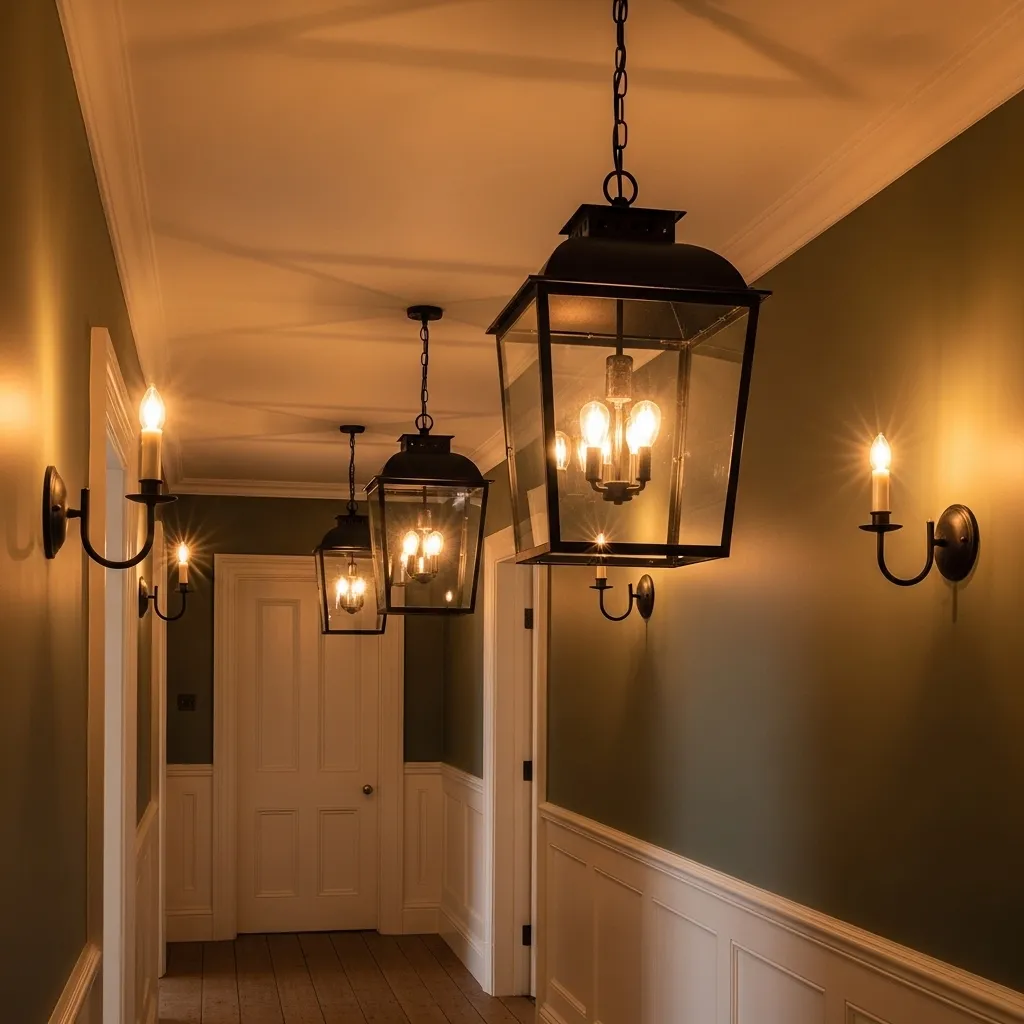
Lantern-style pendant fixtures in a traditional or period-influenced hallway create a lighting moment that references the history of domestic lighting in a way that purely contemporary fixtures can’t — the lantern form references the original outdoor and entrance lighting of pre-electric homes and brings that historical reference inside in a way that feels architecturally appropriate and genuinely beautiful. In a hallway with traditional architectural details like paneling, cornicing, or period-appropriate proportions, a lantern pendant feels like it belongs to the space in a way that a modern globe pendant or industrial fixture doesn’t.
The aged iron finish of the lantern is the specific material detail that prevents the traditional reference from feeling like a costume or a period reproduction — aged iron has a genuine craft quality and a surface complexity that painted black metal lacks, and it reads in a room alongside real architectural patina (old floorboards, period cornicing, handmade tiles) as a material of equivalent authenticity rather than a new element trying to look old.
7. LED Cove Lighting for Low-Ceiling Hallways
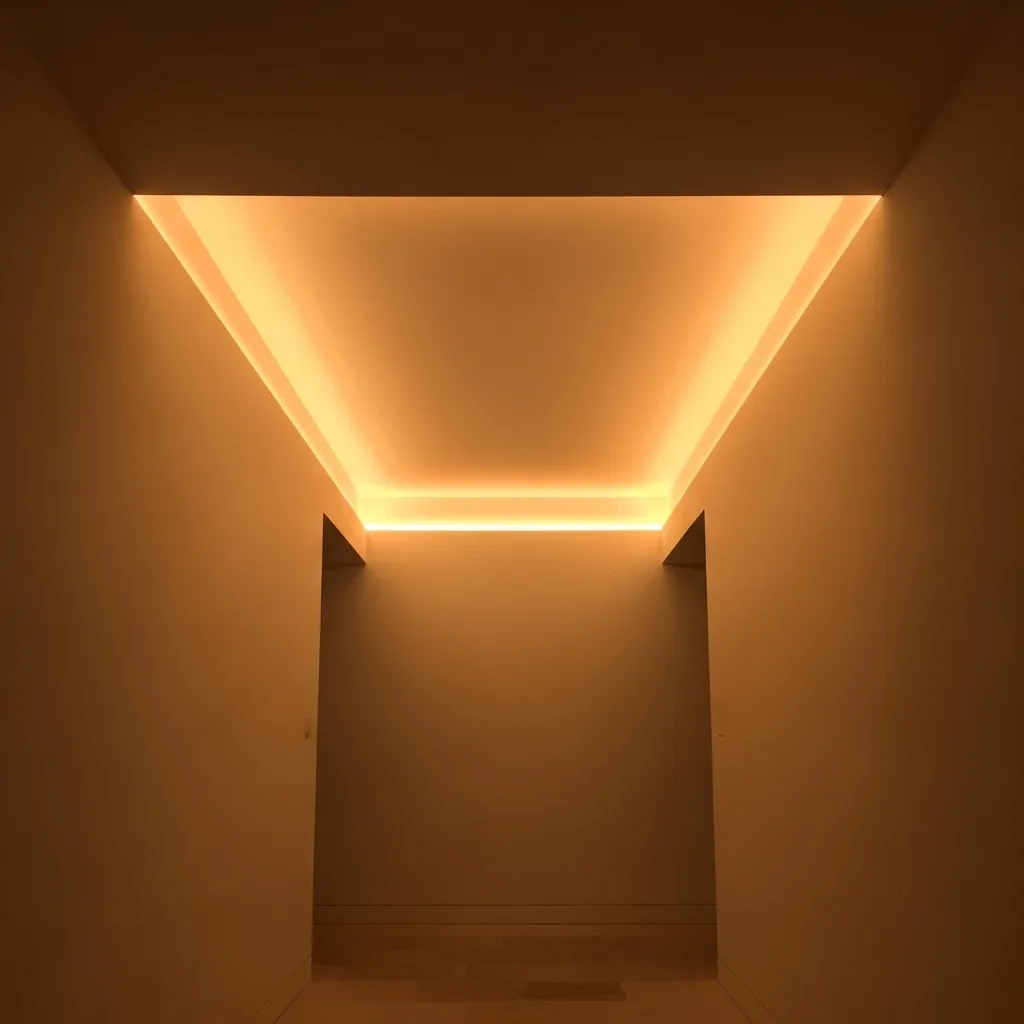
LED cove lighting installed at the ceiling perimeter of a low-ceilinged hallway is the lighting solution that addresses the most common hallway architectural challenge — the corridor with a ceiling height that feels oppressive rather than intimate — through the counterintuitive approach of directing light upward rather than downward. When light washes the ceiling from a cove rather than projecting from the ceiling downward, the ceiling becomes a luminous surface rather than a dark overhead plane, and the visual experience of the space shifts from feeling enclosed to feeling open and airy despite the unchanged physical dimensions.
The technical installation of LED cove lighting is surprisingly accessible — LED strip lights are available in warm color temperatures, are flexible enough to follow the perimeter of any ceiling, and can be mounted in a simple constructed timber reveal or within an existing cornice detail. The dimming capability of LED strip systems is especially valuable in a hallway cove installation because the intensity can be adjusted from a full bright wash for functional daytime use to a gentle, atmospheric glow for evening mood lighting, making the one installation serve two completely different purposes.
8. Architectural Wall Wash Uplighting
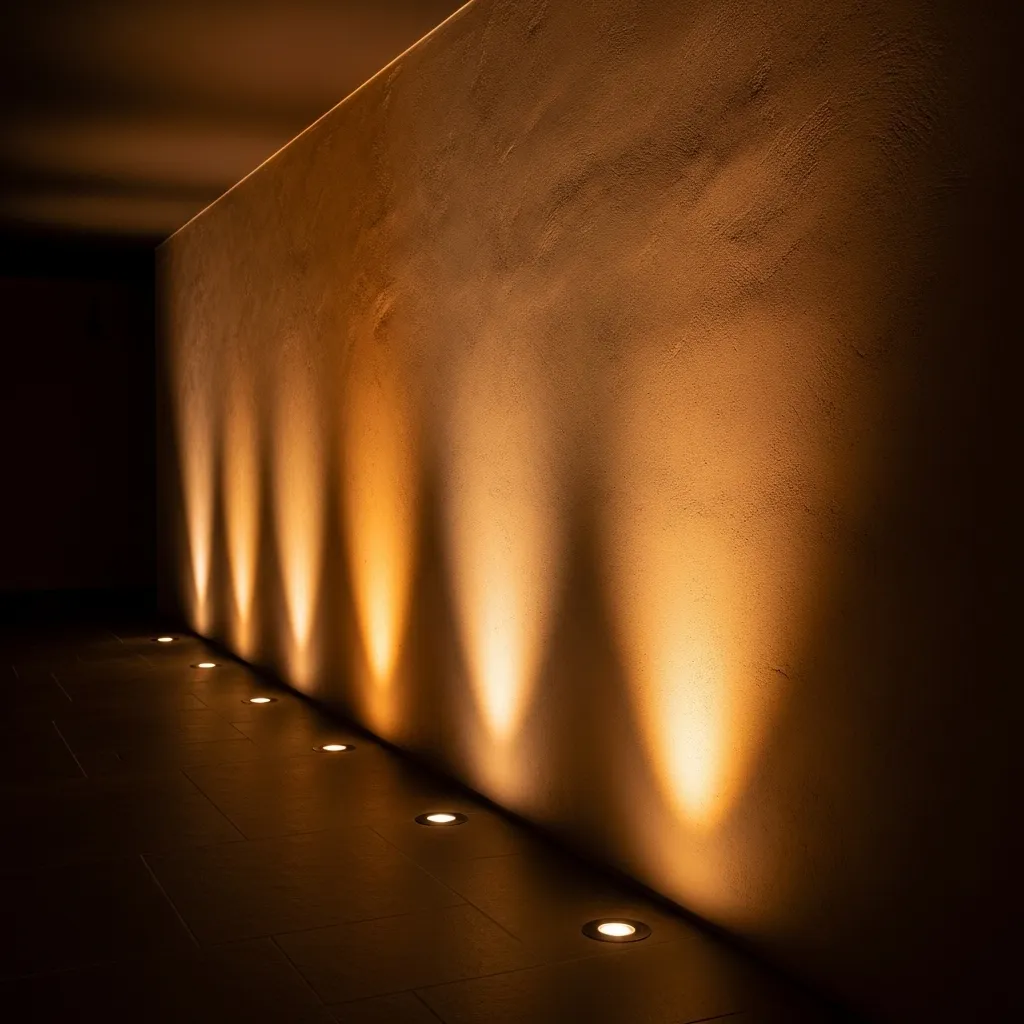
Architectural wall wash uplighting — floor-mounted fixtures that direct light upward across wall surfaces — creates the most dramatic and the most architectural of all hallway lighting effects, turning walls into luminous surfaces and making the ceiling dark in a way that’s surprisingly atmospheric rather than gloomy. The inversion of the conventional top-down lighting logic creates a completely different spatial experience: instead of a ceiling that’s the brightest plane in the room with everything below in relative shadow, the walls become the brightest surfaces and the ceiling recedes into warm darkness above.
The interaction between uplighting and textured wall finishes is one of the most beautiful lighting effects available in residential design — the raking light from a low uplight source reveals every variation in a limewash finish, every texture in a plaster wall, every grain in a natural material with a quality of depth and dimensionality that overhead lighting flattens completely. A textured wall in overhead light looks like a colored surface; the same wall in raking uplight looks like a material with genuine depth and three-dimensional character, and that difference transforms the perceived quality of the whole corridor.
9. Mirror-Integrated Lighting
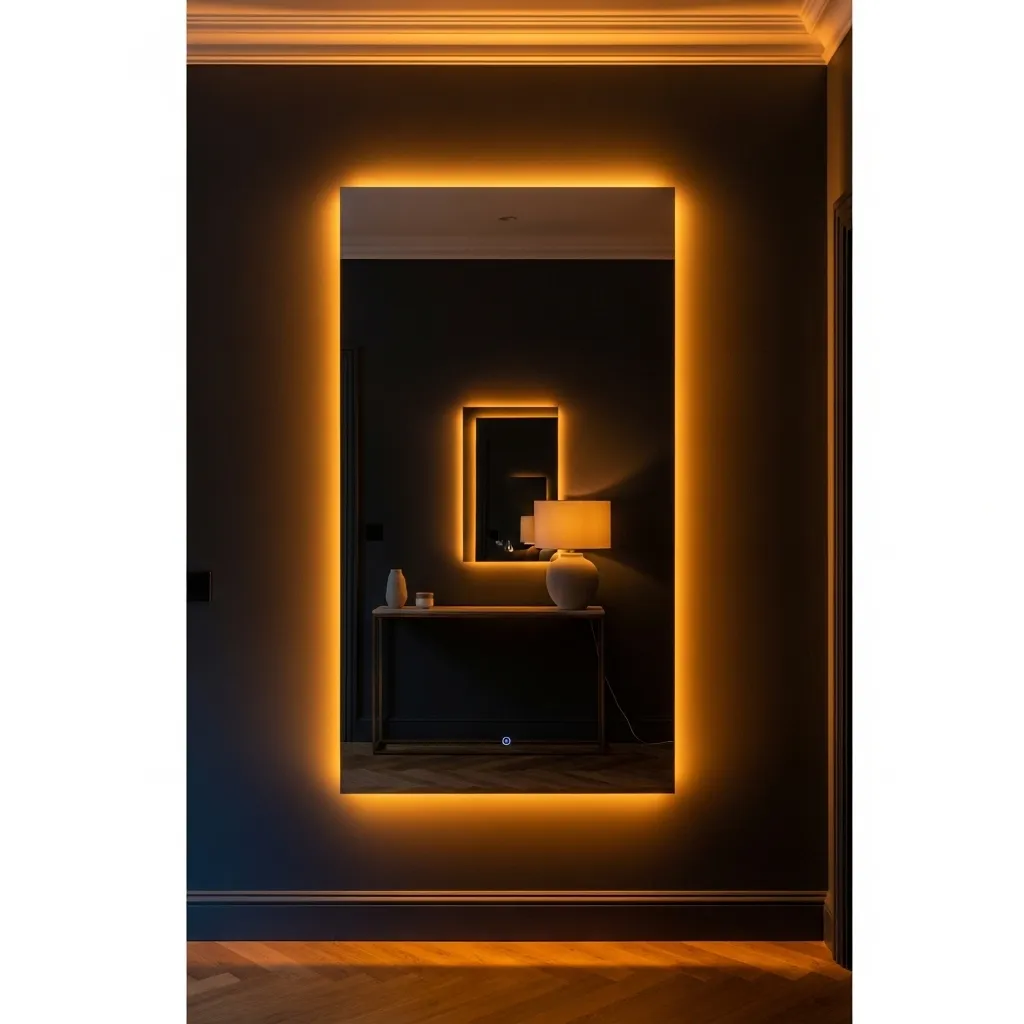
A mirror with integrated backlighting is the hallway lighting element that simultaneously addresses both the practical need for a mirror near the front door and the atmospheric need for warm, flattering light in a corridor — the backlit halo creates the specific quality of light that makes the reflection in the mirror look most flattering, and the floating, glowing quality of the lit mirror against a dark wall creates a visual focal point for the hallway that’s both functional and genuinely beautiful.
The backlight color temperature is critical to the flattering quality of mirror-integrated lighting — warm white at 2700K or warmer is the specification that creates genuinely attractive reflected light, whereas cool white or daylight temperatures create a clinical, unflattering quality that defeats the purpose of thoughtful hallway lighting. The backlight also serves as an excellent ambient light source for the whole corridor, casting enough soft indirect illumination from behind the mirror to navigate and use the hallway comfortably without any additional overhead lighting required.
10. Staircase Step Lighting
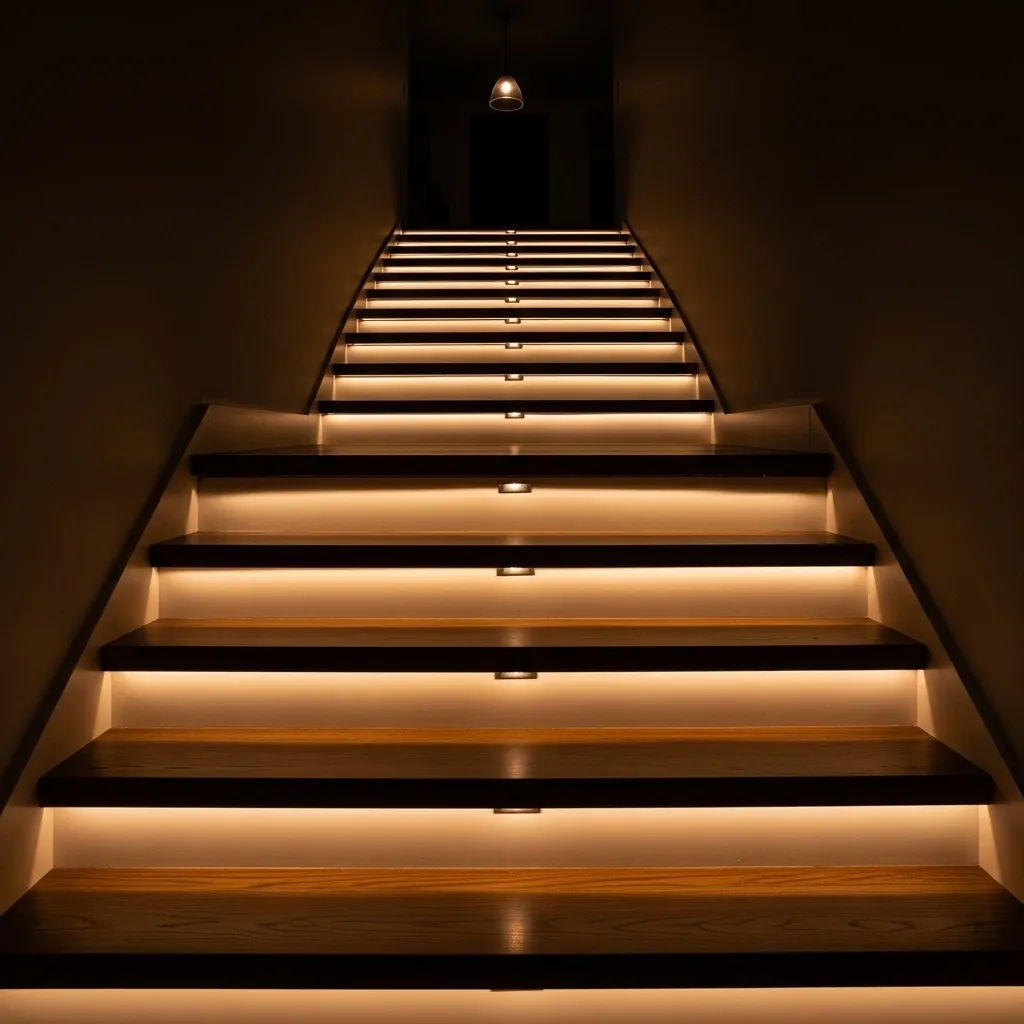
Staircase step lighting recessed into the risers is the safety-and-atmosphere combination that makes more design sense than almost any other dual-purpose lighting installation — it makes the staircase genuinely safer to navigate in low light by making each tread clearly visible, and it creates one of the most beautiful lighting effects available in domestic architecture by transforming a functional staircase into a glowing sculptural sequence. The practical justification makes the aesthetic investment feel reasonable and the aesthetic result makes the practical solution feel genuinely exciting.
The specific light quality of riser-recessed step lights — casting a warm horizontal band across each tread rather than illuminating the whole staircase from above — creates the dramatic effect because it makes visible the geometry of the stairs that overhead lighting usually renders flat. The alternating horizontal bands of warm light and shadow emphasize the rhythm of the ascending treads in a way that makes the staircase look architectural and considered rather than merely functional, and the effect is most beautiful at night when the contrast between the lit treads and the surrounding darkness is at its maximum.
11. Oversized Statement Pendant at the Hallway Entrance
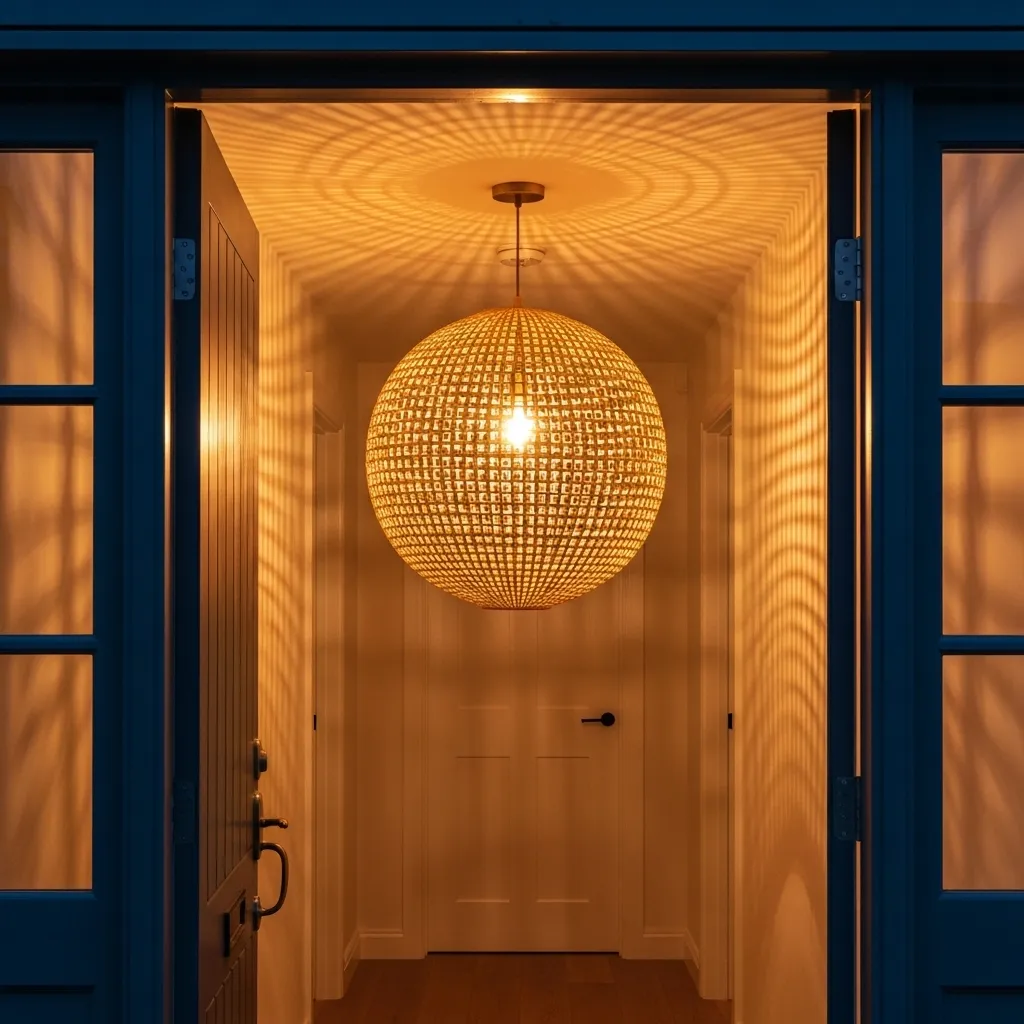
An oversized statement pendant at the hallway entrance is the lighting decision that creates the most immediate and lasting first impression for everyone who enters the home — it’s the first thing people see when the door opens, and its scale, material, and quality communicate more about the design sensibility of the interior in a single visual moment than anything else in the entrance could. A genuinely oversized pendant — one that feels slightly more generous than seems quite right when you first consider it — creates the bold, confident impression that makes people immediately feel they’ve entered a well-considered space.
The rattan globe is the statement pendant material that works across the widest range of interior contexts in 2026 — its warmth connects it to natural material palettes, its organic form works with both contemporary and traditional architecture, and the light pattern it creates through the woven texture is genuinely beautiful in a way that solid or glass pendants don’t produce. The dappled, botanical quality of light filtering through woven rattan on white walls creates a living, organic atmosphere that’s specific to this material and impossible to replicate with any other fixture type.
12. Console Table Lamp as Ambient Hallway Light
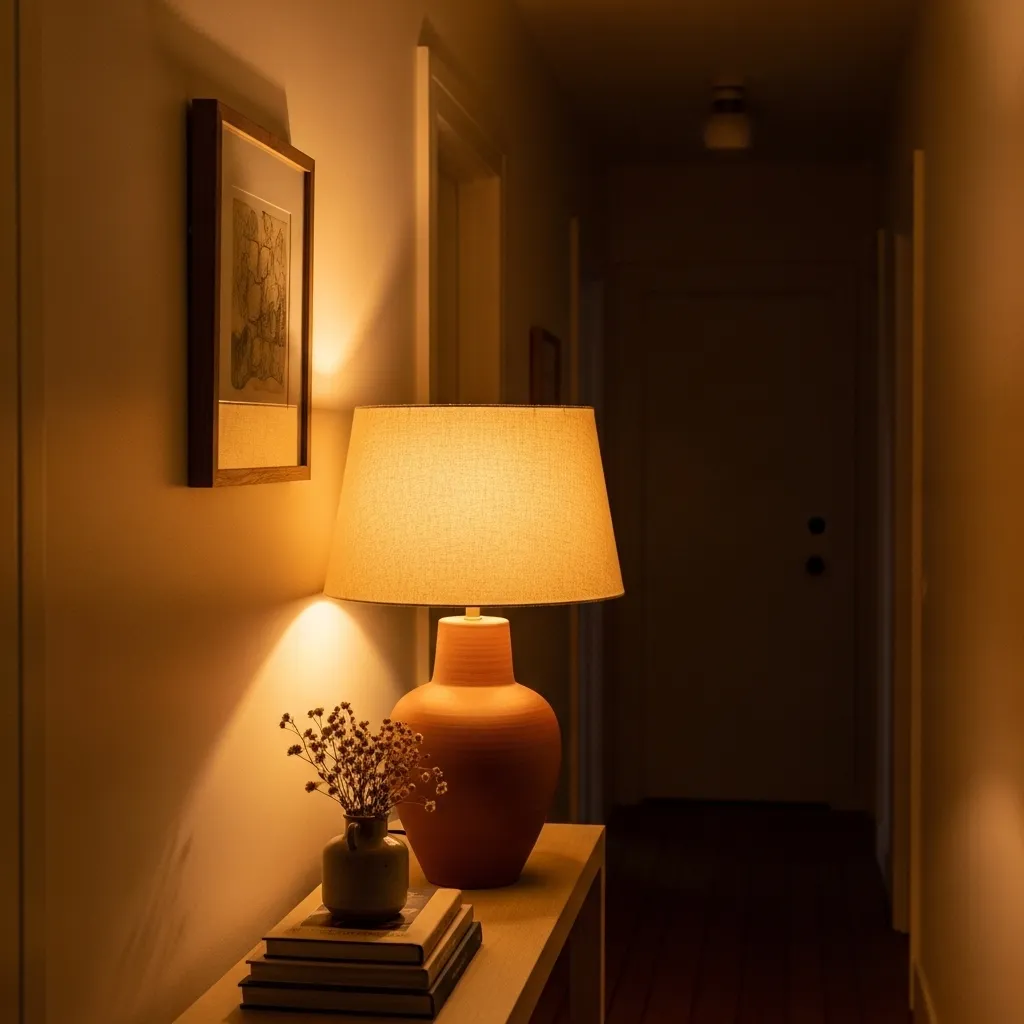
A table lamp on a hallway console table creates a quality of light that no ceiling fixture can approximate — the warm, intimate glow of a properly scaled table lamp at approximately chest height is the light quality that makes a corridor feel like a room rather than a utility space, because it references the lamp light of living rooms and bedrooms rather than the overhead light of offices and corridors. When a hallway has a console lamp as its primary or supplementary light source, the light quality signals that the space was designed to be inhabited rather than just traversed.
The lamp scale relationship to the console table is the detail that determines whether a hallway lamp looks like a design choice or a practical afterthought — the lamp should be tall enough relative to the table that its light source is above the table surface by a comfortable margin, and the shade should be wide enough relative to the base to create the full, generous spread of light that makes a table lamp feel warm and welcoming rather than focused and functional. A lamp that feels slightly too large for the table is usually better than one that feels too small.
13. Exposed Bulb Filament Sconces for Industrial Character
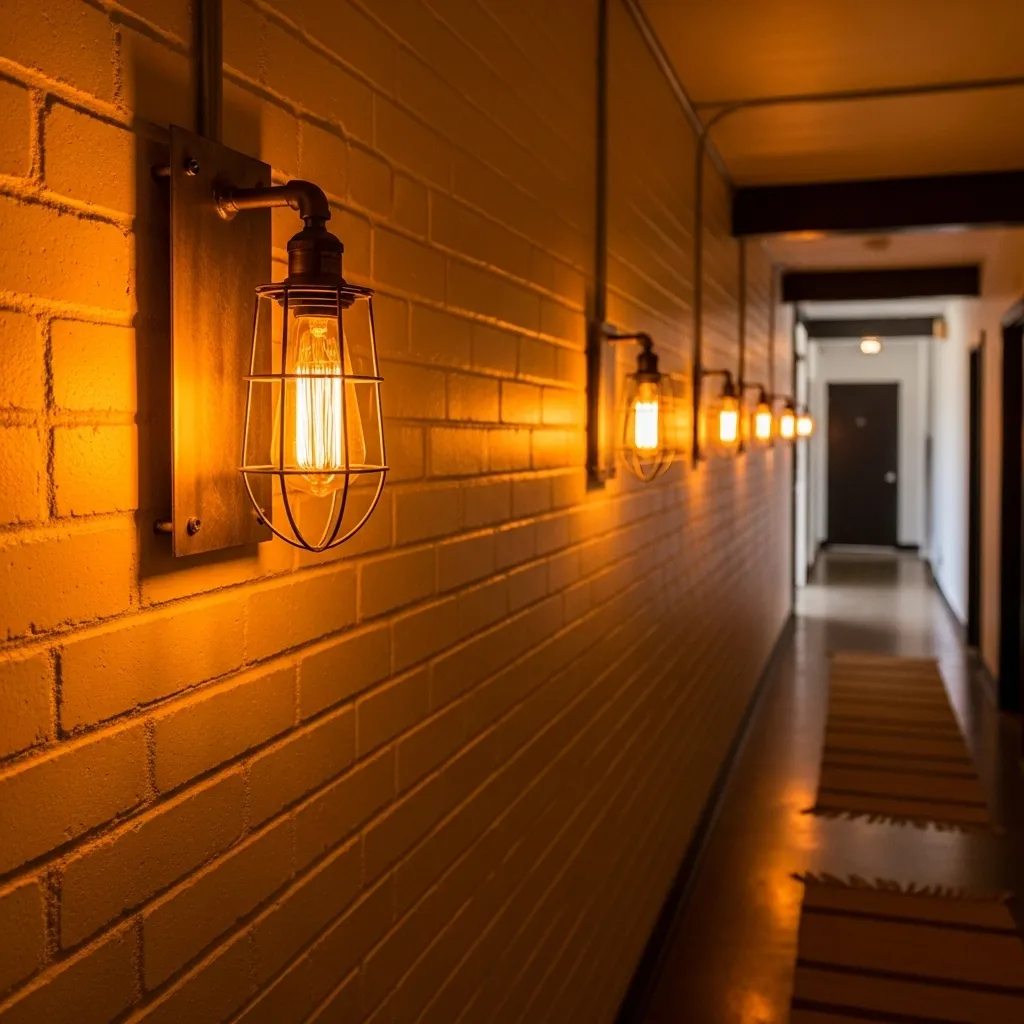
Exposed filament cage sconces are the industrial lighting fixture that has successfully crossed over from warehouse and commercial contexts into genuinely domestic residential design because the warmth of the Edison filament bulb within them is so fundamentally appealing that it overcomes any concern about the raw, mechanical quality of the cage itself. The visible filament is the design element that does all the atmospheric work — the cage is honestly utilitarian, but the glowing filament is beautiful, and the combination of honest mechanical form with beautiful warm light source creates a fixture that feels simultaneously genuine and considered.
The raw steel cage sconce works best in hallways that have some industrial or robust material quality to them — exposed brick, concrete floors, painted wood paneling, aged plaster — because the fixture’s aesthetic needs some material roughness nearby to feel at home. In a perfectly smooth, pristine white hallway the cage sconce can feel like a mismatch, but in a hallway with genuine material character the exposed fixture becomes part of a cohesive design language that celebrates honest materials and visible construction rather than concealing the mechanics of how things work.
14. Flush Ceiling Fixtures in a Deliberate Pattern
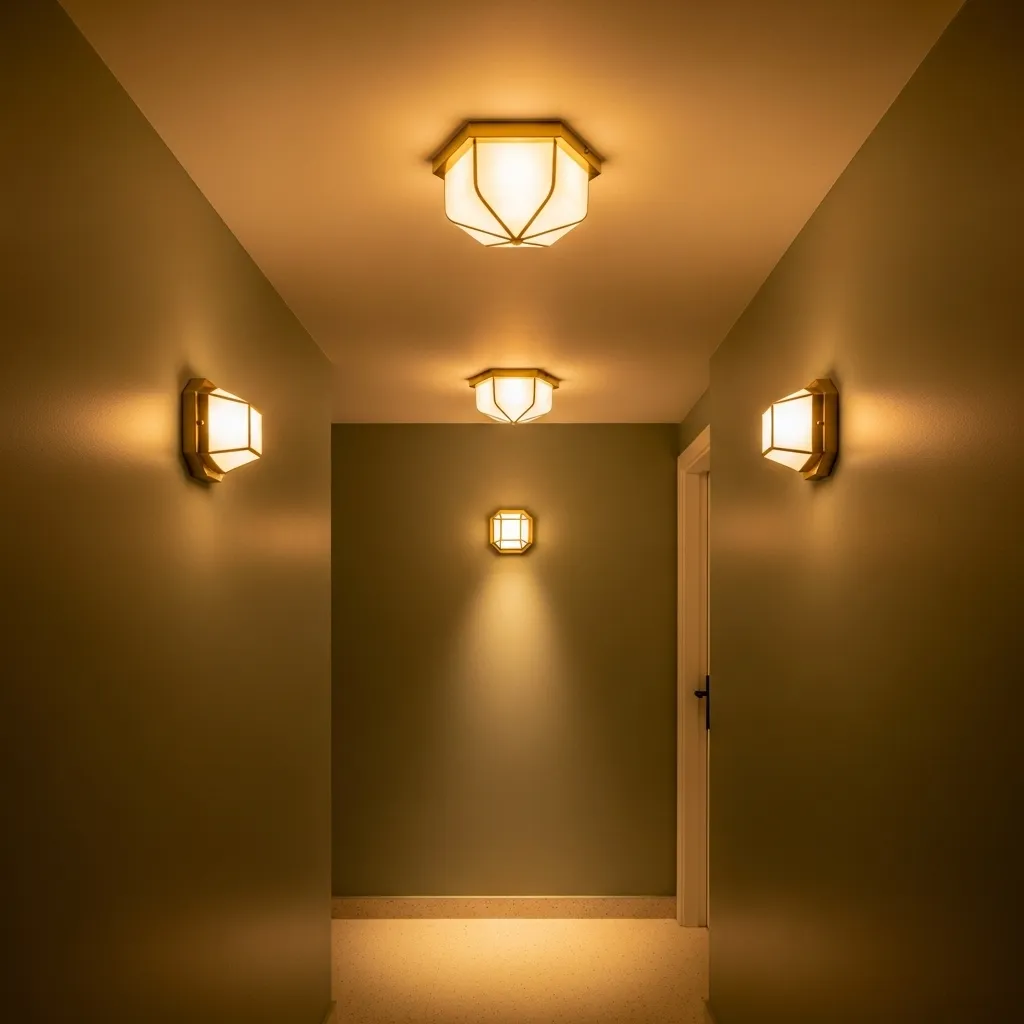
Flush ceiling fixtures have an unfair reputation as the least interesting lighting option for hallways, largely because most flush fixtures are chosen purely for their functional adequacy rather than their design quality, and then positioned in the conventional single-center arrangement that creates the most boring and least atmospheric possible result. When beautiful flush fixtures are chosen and then arranged in a deliberate pattern rather than a single centerline, the flush ceiling becomes an interesting design element that creates different light qualities at different points along the corridor without requiring pendant drops in low-ceiling spaces where pendants would be impractical.
The selection of the fixture itself is more important in a flush arrangement than in pendant or sconce arrangements because the fixture is more visible and more dominant on the ceiling — it needs to be genuinely beautiful as an object rather than just adequate as a light source. Brushed brass with frosted glass, hammered iron with seeded glass, cast ceramic with a handmade quality, polished chrome with geometric form — these are the flush fixture characteristics that make the ceiling installation feel like a design choice rather than a compromise.
15. Smart Lighting System With Scene Presets for Different Times of Day
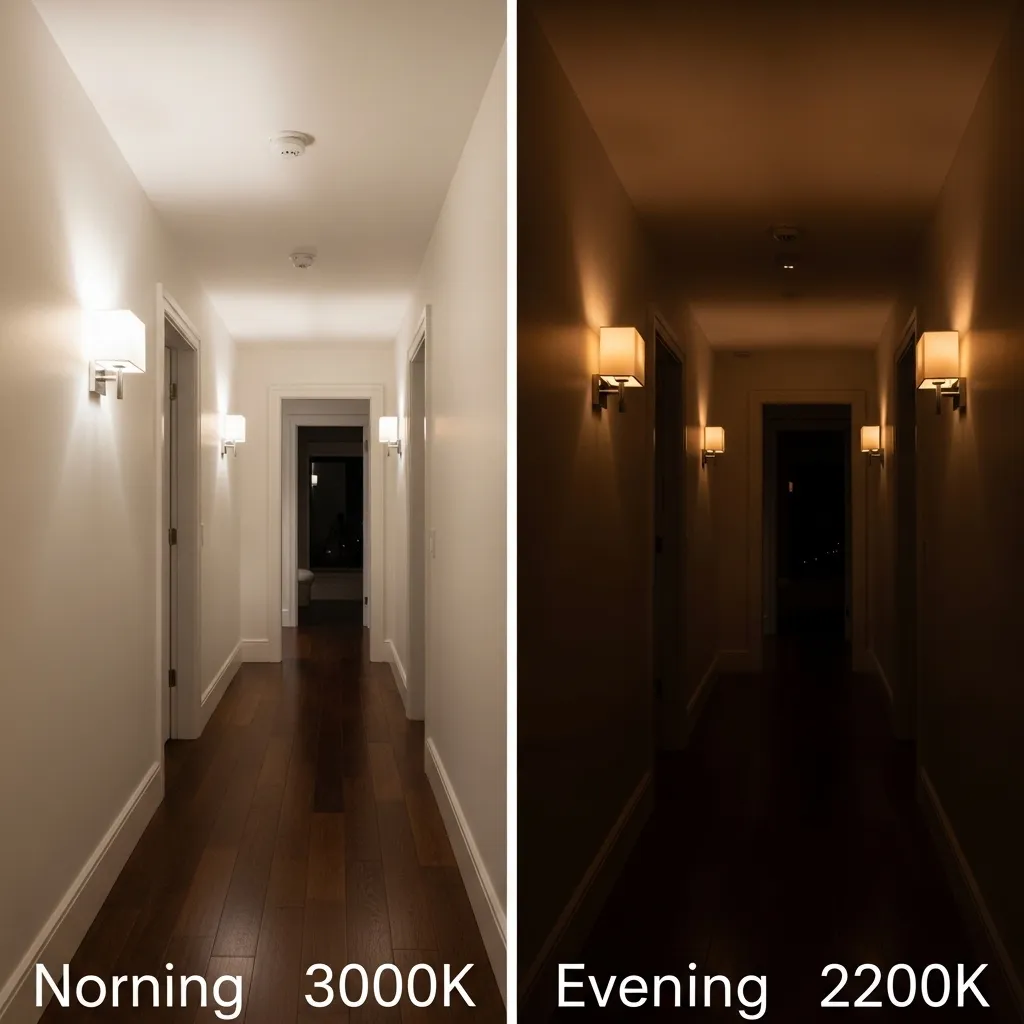
A smart lighting system with scene presets for different times of day is the hallway lighting investment that provides the most ongoing daily value because it makes the lighting genuinely responsive to how you’re actually using the space at different times rather than locked into a single static setup that’s simultaneously too bright for evenings and not bright enough for practical use. The morning scene — brighter, slightly cooler, energizing — is different from the afternoon scene, which is different again from the evening scene, and the ability to shift between these with a single voice command, a tap on a phone, or an automated schedule means the hallway always feels appropriate to the moment rather than always a compromise.
The color temperature shift between scenes is the technical detail that creates the greatest perceived difference — shifting from a practical 3000K daytime white to a warm 2200K evening amber changes the entire atmosphere of the hallway in a way that dimming alone doesn’t achieve. The cooler temperature of daytime light makes the space feel active, clear, and functional; the warmer temperature of evening light makes the same space feel intimate, welcoming, and restful. The ability to move between these two qualities in the same physical space with the same set of fixtures is what smart lighting systems do uniquely well, and the hallway — a space experienced at every hour of the day in every emotional state — benefits from that flexibility more than almost any other space in the home.