15 Home Office Ideas for Women in 2026 That Create a Space You Actually Want to Work In Every Day
If your current home office situation is a laptop on the kitchen table, a desk wedged into a bedroom corner that you try not to look at when you’re trying to sleep, or a spare room that nominally functions as an office but actually functions as a storage area with a desk somewhere in the middle of it — this roundup is going to show you what’s possible when you treat a home office as a genuinely designed space worthy of the same aesthetic consideration and personal investment as any other room in the house. The ideas here cover the full range of what a beautiful, functional, personally expressive home office can look like in 2026, from the lush botanical gallery wall that makes concentration feel like being in a garden, to the jewel-toned maximalist office that refuses the idea that a workspace has to be neutral and calm to be productive, the built-in bookcase wall that creates both storage and visual gravitas, the soft feminine color palette done with real sophistication, the vintage desk and contemporary accessories combination, the meditation and intention corner within the workspace, the standing desk setup that doesn’t sacrifice aesthetics for ergonomics, the shared office and creative studio configuration, the window-facing desk that prioritizes natural light and view, and several more directions that all share the quality of being genuinely personal rather than generically professional.
I’ve had a home office of some kind for most of my working life and the one consistent thing I’ve noticed across every version of it — the corner desk in the bedroom, the converted closet office, the dedicated room that was finally mine alone — is that the relationship between how the space looks and feels and how I work in it is direct and powerful and not something I’ve been able to argue myself out of with the logic that it shouldn’t matter. It matters enormously. A desk in a space that feels beautiful and personal and specifically like mine creates a quality of willingness to be at it that a desk in a neutral, functional, aesthetically unattended space simply doesn’t, and the accumulation of that willingness — over years of morning sessions and long afternoons and early evenings at the desk — makes a genuinely significant difference to the quantity and quality of work that happens there.
What I’ve come to understand about home office design specifically for women is that the dominant aesthetic of the professional workspace — the grey and navy and dark wood corporate office that most home office design has historically taken as its reference point — has never been the aesthetic that most women actually want to work in, and that designing a home office from a genuinely personal aesthetic starting point rather than from a corporate reference point creates a completely different and almost always better working environment. The permission to make a home office beautiful in the specific way that you personally find beautiful — not generically professional, not appropriately neutral, not designed to look credible in a video call background — is the most important design principle for any woman designing her own working space.
1. The Lush Botanical Gallery Wall Office
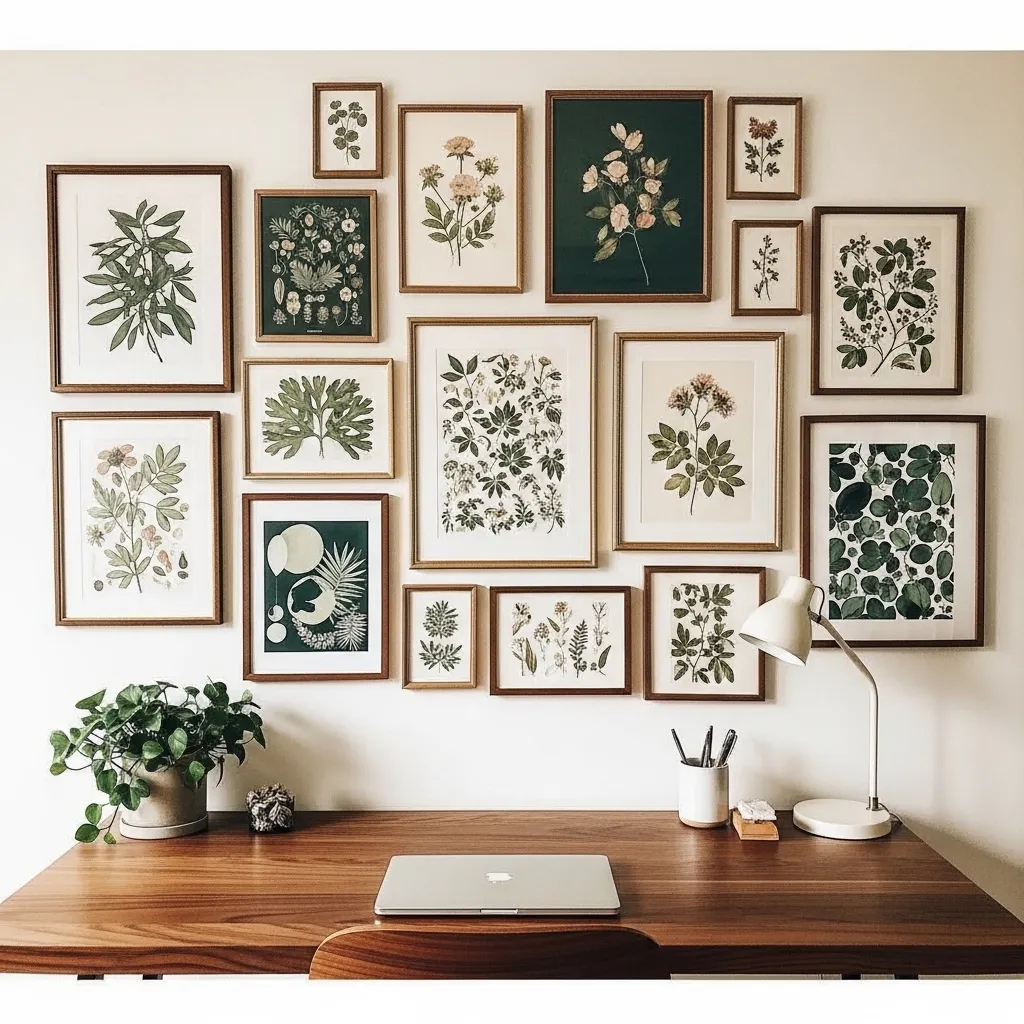
A botanical gallery wall behind the desk creates the working environment that makes concentration feel like being immersed in nature — the density of plant imagery in varying styles and scales creates a visual world at the desk that’s rich enough to provide genuine aesthetic pleasure at every glance without being so stimulating or so specific that it competes with focused thought. Botanical imagery specifically has the quality of being visually interesting without being emotionally activating in a way that portrait photography or abstract expressionism might be — plants are calming, they reference growth and natural cycles, and they create a consistent aesthetic conversation between the artwork and the real plants that a well-considered office always includes.
The mix of frame styles within a botanical gallery wall is the detail that makes it feel personally collected rather than purchased as a set — simple gold frames, natural wood frames, the occasional black frame, all in different sizes but sharing a botanical content and a consistent warm-green-and-cream palette. This consistency of content within variety of presentation is the gallery wall principle that creates richness without chaos, and in a home office context it creates a backdrop for work that’s genuinely beautiful to look at while being calm enough to let focus develop rather than demanding attention.
2. The Jewel-Toned Maximalist Office
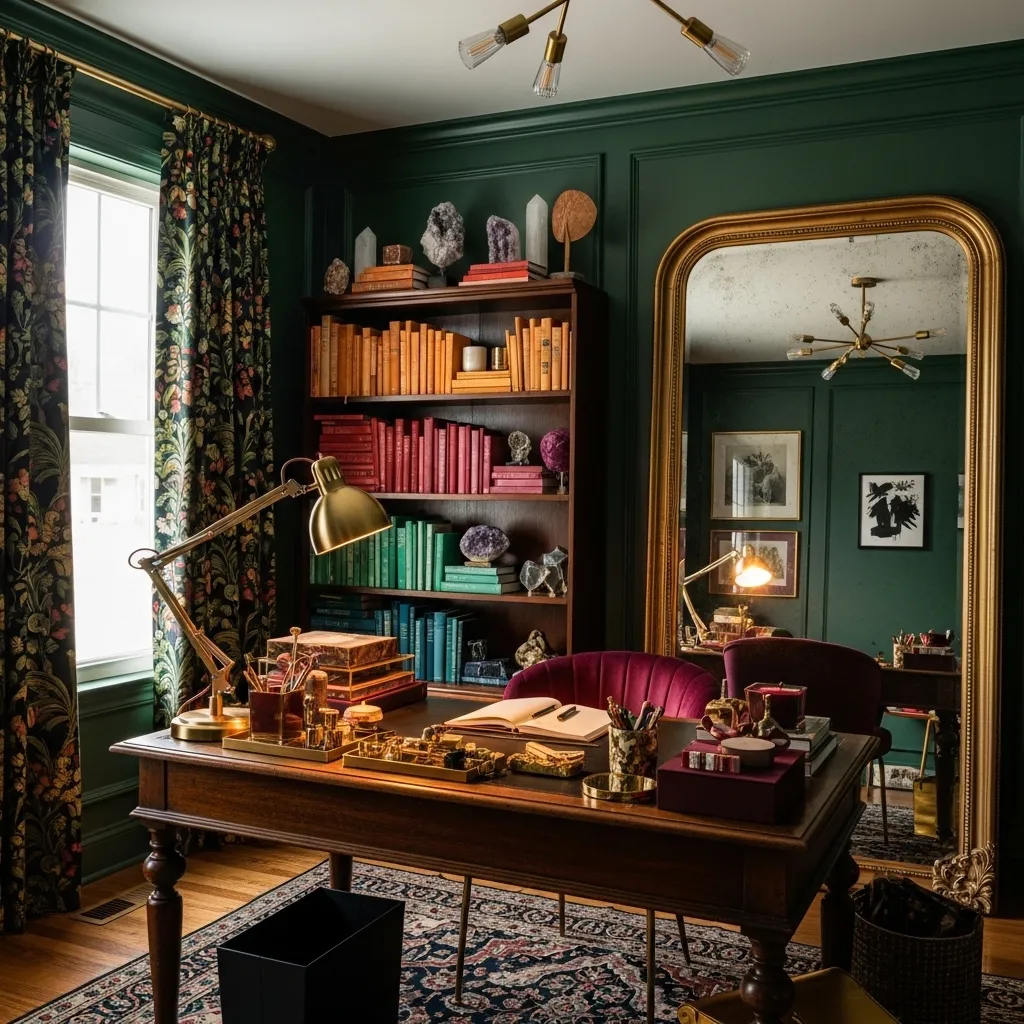
A jewel-toned maximalist home office is the design choice that most directly refuses the assumption that productivity requires neutrality — the assumption that bold color and abundant decoration are distractions from work rather than contributors to the quality and pleasure of working. The evidence from people who design their workspaces maximally, in the specific colors and with the specific objects that they find most beautiful and most personally meaningful, is consistently that abundance of beauty in a workspace increases rather than decreases the quality of work that happens there, because it creates a space you genuinely want to be in rather than one you endure.
Deep emerald green walls are the specific color choice that works best for a maximalist office because the depth of a dark jewel tone creates a cocoon-like quality of enclosure that supports focused work while feeling luxurious and intentional rather than austere or corporate. The color reads as confident and sophisticated rather than merely bold, and it creates a backdrop against which gold accessories, deep burgundy textiles, and botanical prints all appear more vivid and more beautiful than they would against lighter or neutral walls.
3. The Built-In Bookcase Wall Office
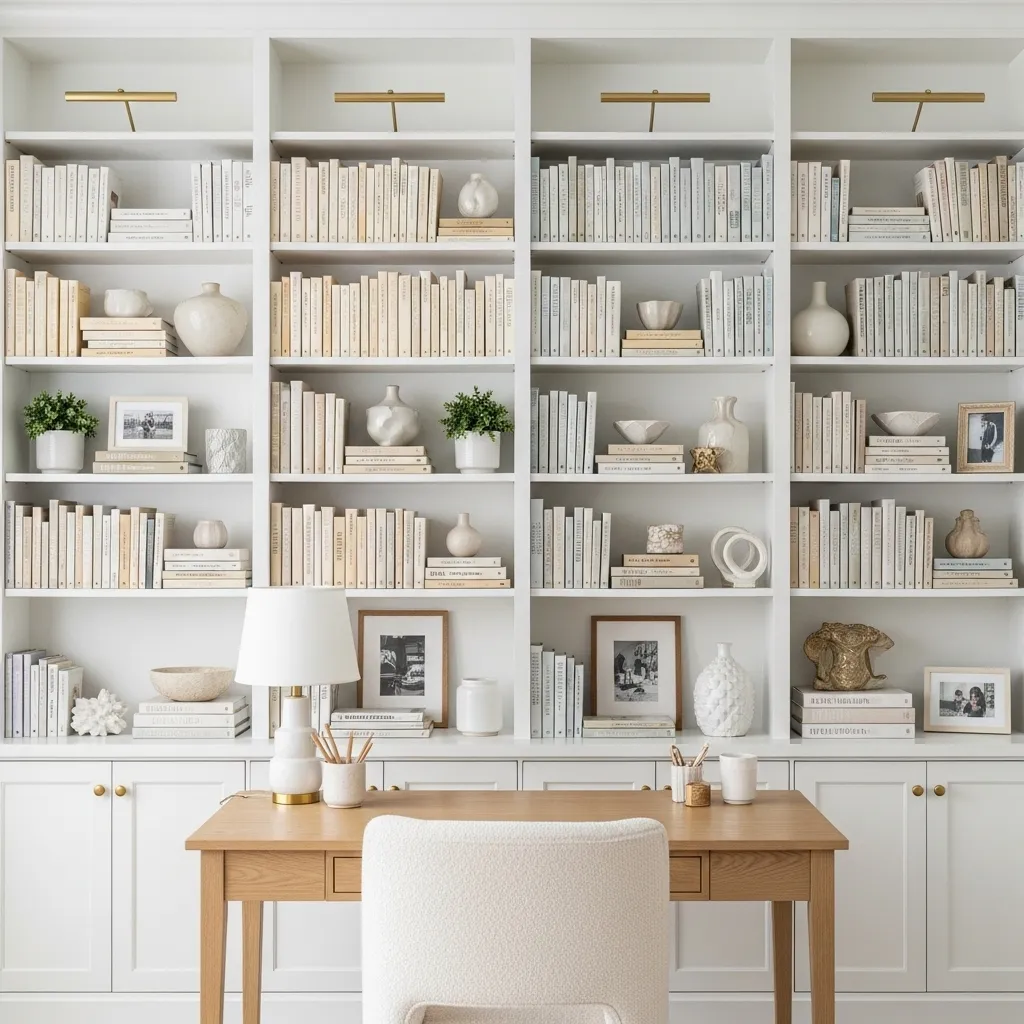
A floor-to-ceiling built-in bookcase wall in a home office creates the most immediate and most powerful sense of intellectual presence of any single office design element — it communicates that this is a space where ideas live and have accumulated over time, and it creates the specific quality of a private library that makes working at the desk in front of it feel like working in one of the most honored spaces in human intellectual history. The library wall is the backdrop that makes every video call, every focused work session, every morning coffee at the desk feel specifically significant and specifically personal.
The styling of the bookcase wall is the design work that transforms it from a storage solution into a designed environment — books arranged by color rather than subject or author create a visual composition that reads as decorative as well as functional, and the integration of non-book objects (plants, ceramics, photographs, small sculptures) at regular intervals across the shelves creates the rhythm and variety that prevents the library wall from reading as a single uniform plane of books. The principle is alternating dense book sections with more open, object-populated sections, creating a wall that has different visual densities at different points and rewards both the broad view from across the room and the close inspection from the desk.
4. The Soft Feminine Color Palette Done With Sophistication
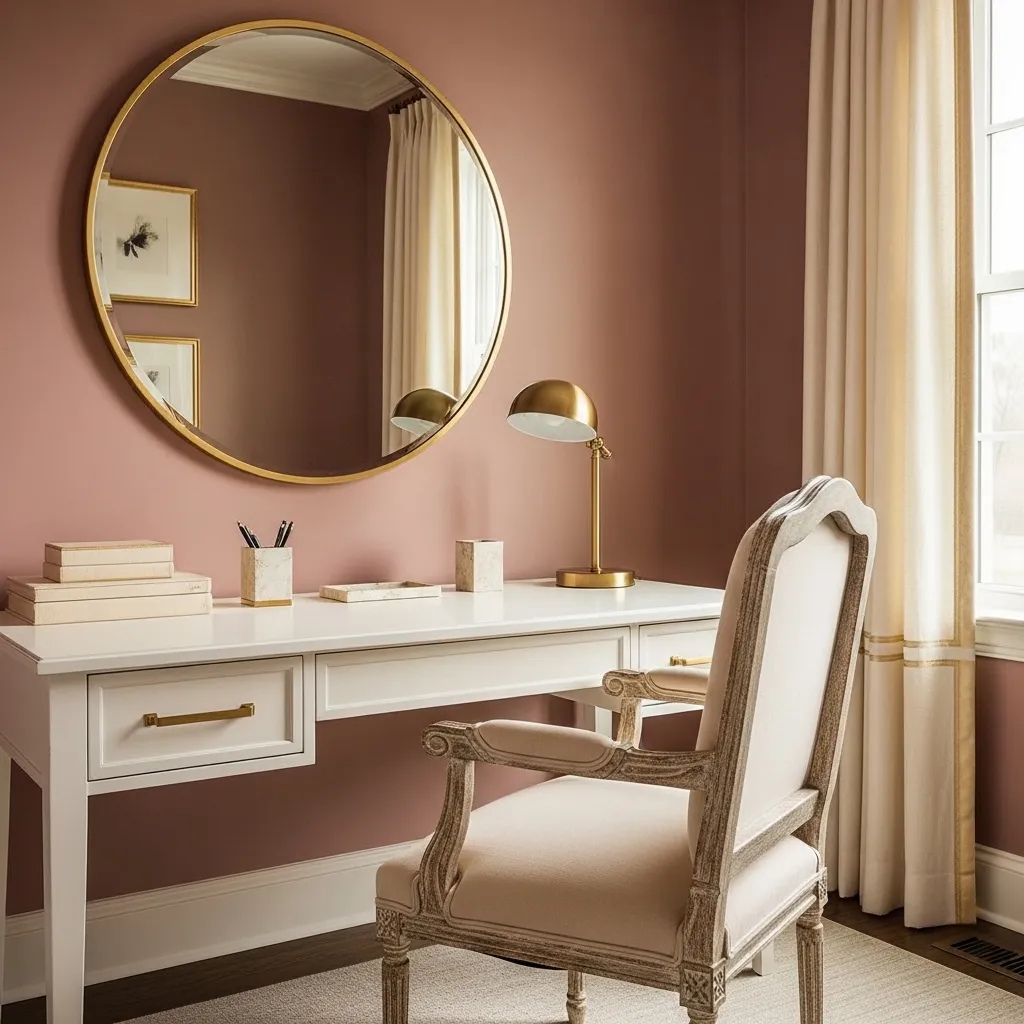
A feminine color palette in a home office executed with sophistication rather than sweetness requires the same principle that makes any color palette work at its best — depth and complexity within the chosen palette rather than a flat or unvaried application of a single tone. Dusty rose walls succeed where bright pink walls would fail because the dusty quality — the muted, warm-brown undertone that prevents the pink from reading as nursery-bright — gives the color the depth and seriousness that a sophisticated working environment requires while maintaining the warmth and femininity that makes the palette specifically, personally expressive.
The aged gold accessories and hardware are the detail that elevates a feminine color palette from sweet to sophisticated — bright brass or yellow gold would pull the palette toward the girlish end of the spectrum, while aged, slightly tarnished gold has a warmth and complexity that reads as genuinely beautiful rather than merely decorative. The combination of dusty rose walls with aged gold accents references a specific tradition of sophisticated French interior design that has always understood how to make feminine color genuinely elegant.
5. The Vintage Desk and Contemporary Accessories Office
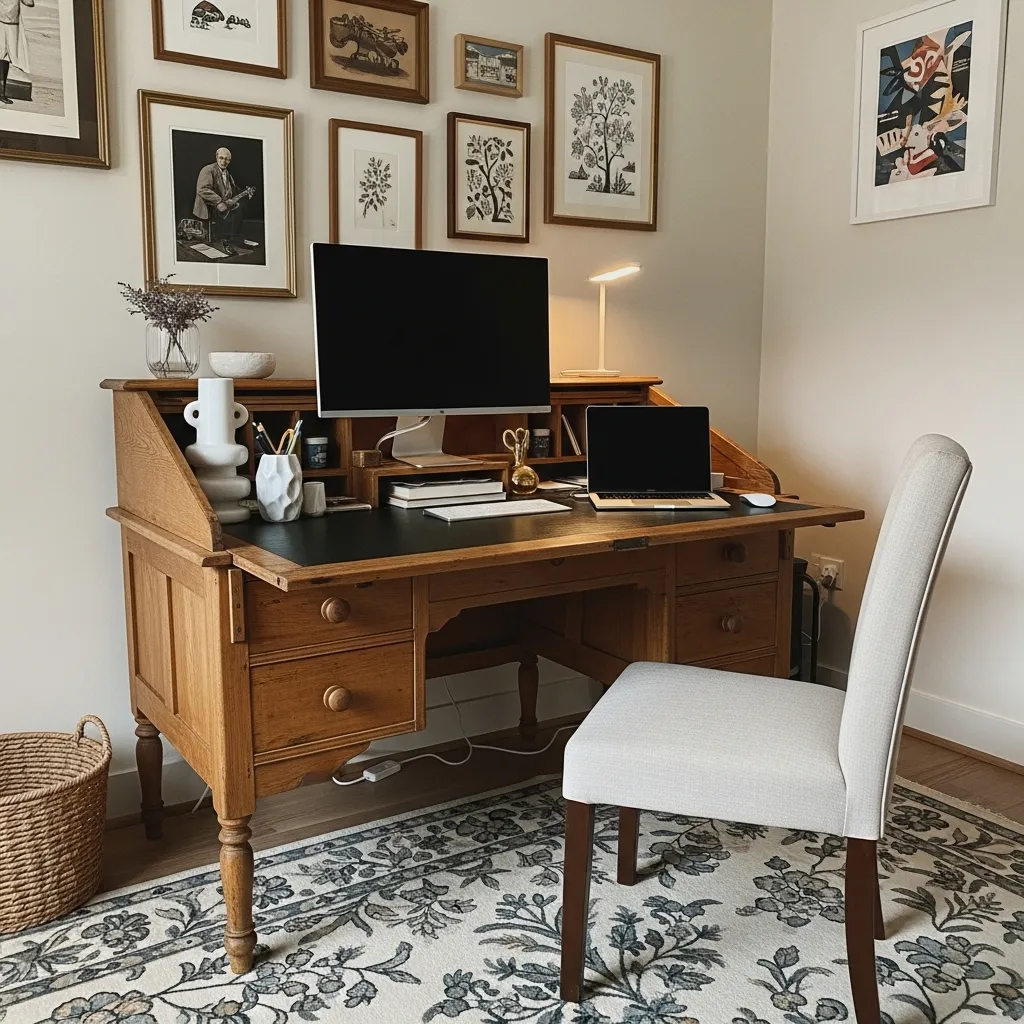
A vintage desk as the primary office furniture piece creates a home office with genuine character and historical presence that no contemporary desk — however well-designed — can replicate, because the vintage desk carries the evidence of previous lives and previous work sessions in its patina, its wear patterns, its specific marks and history. Working at a desk that has been worked at before creates a quality of continuity with the long human tradition of desk work that working at a brand-new flat-pack desk simply doesn’t provide.
The contemporary accessories on a vintage desk are what create the rustic modern tension that makes the combination so interesting — the sleek laptop and minimal monitor on a patinated antique desk create a conversation between centuries that highlights the beauty of both. The vintage desk looks more beautiful next to the clean lines of contemporary technology than it would surrounded by reproduction antique accessories, and the contemporary technology looks more interesting on a desk with genuine history than it does on a modern desk of equivalent function.
6. The Window-Facing Desk for Natural Light and View
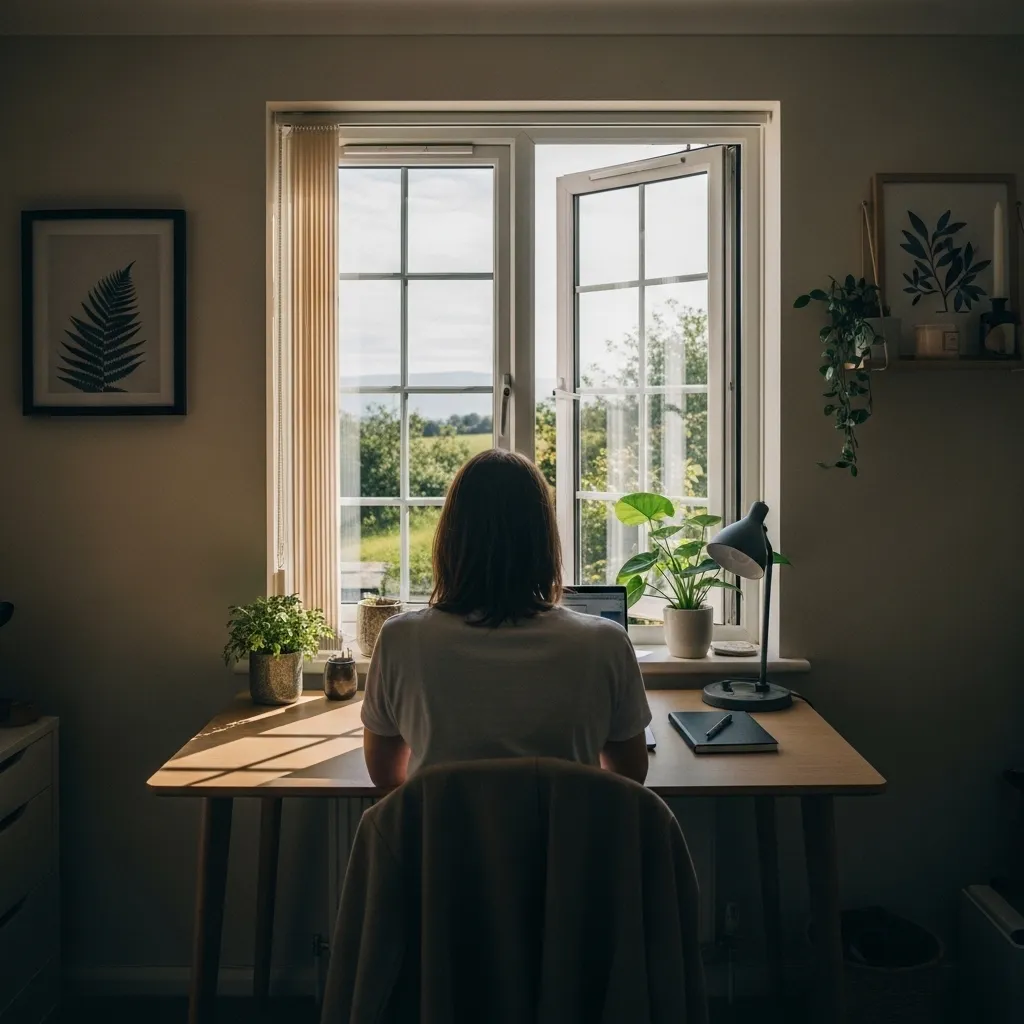
Positioning the desk to face a window rather than a wall is the single home office spatial decision with the highest impact on the daily experience of working — the difference between spending eight hours looking at a wall and spending eight hours looking at a changing view of sky, garden, trees, weather, and natural light is significant enough to affect mood, energy, and the quality of thinking over the course of a workday. The view provides the natural breaks and micro-rests that sustained focus requires, and the changing quality of natural light throughout the day creates a quality of temporal rhythm in the office that facing a wall entirely obscures.
The natural light quality of a window-facing desk also creates the most flattering and most functional lighting for video calls — natural light from a window in front of you illuminates your face from the most flattering angle possible, rendering skin tones accurately and eliminating the harsh overhead shadows and the dark-background quality that wall-facing desks with windows behind them create. The practical benefit of good video call lighting in a professional context is genuine and consistent, which means the window-facing desk serves aesthetic, psychological, and professional purposes simultaneously.
7. The Meditation and Intention Corner Within the Office
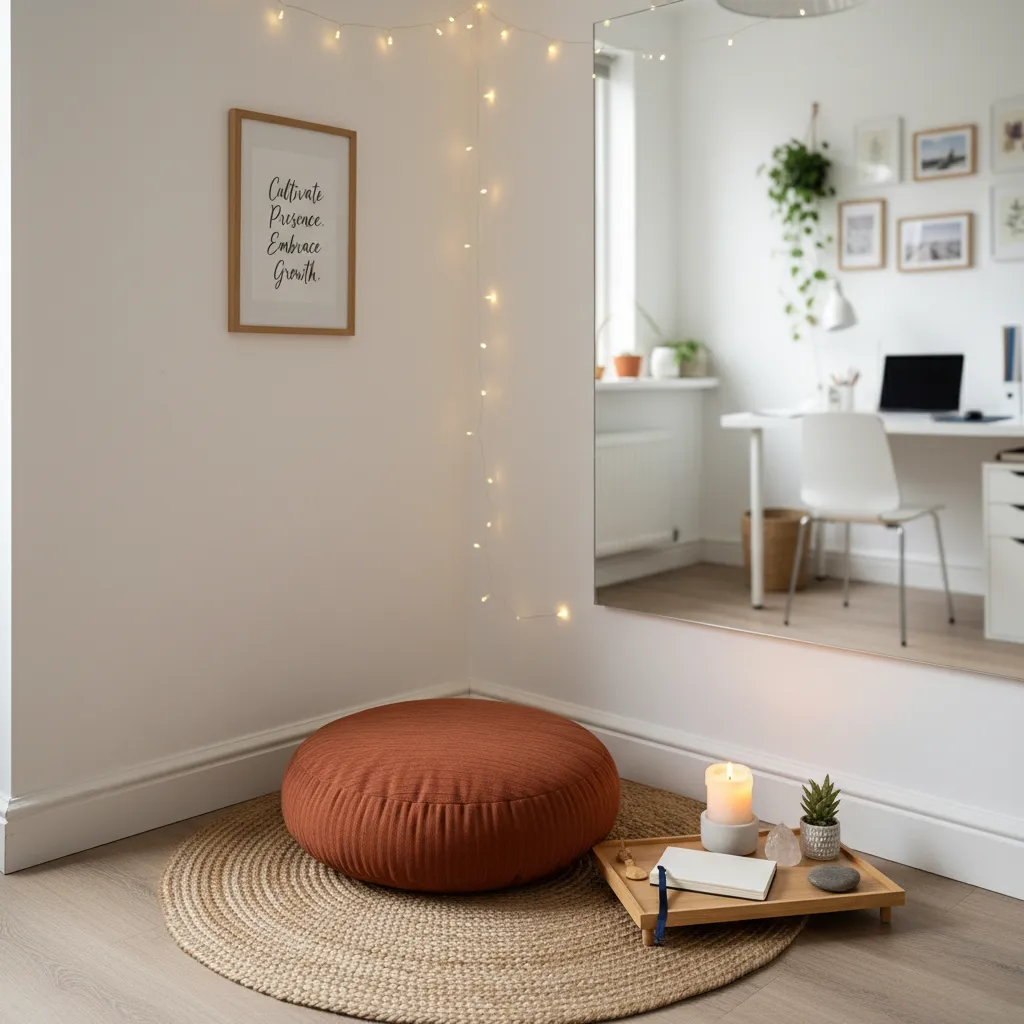
A dedicated meditation or intention-setting corner within a home office creates a specific spatial commitment to the practices of beginning and ending work with presence and intention rather than simply opening and closing the laptop — and that commitment, expressed architecturally as a specific designed space rather than merely as a personal aspiration, makes those practices more likely to actually happen. The physical existence of a meditation corner means there’s somewhere specific to go for the morning intention-setting or the midday breath or the end-of-day reflection, and that specificity is what transforms these practices from good intentions into established habits.
The low cushion on a small rug creates a floor-level space that’s physically and psychologically different from the desk — sitting on the floor, close to the ground, away from the desk and the screen, creates a different quality of awareness and presence that reinforces the distinction between the focused work state and the open, reflective state that meditation and intention-setting require. The separation of the meditation corner from the desk area within the same room creates two distinct zones with different purposes and different qualities, and that zone distinction is what makes the home office a complete working environment rather than just a desk in a room.
8. The Standing Desk Setup That Doesn’t Sacrifice Aesthetics
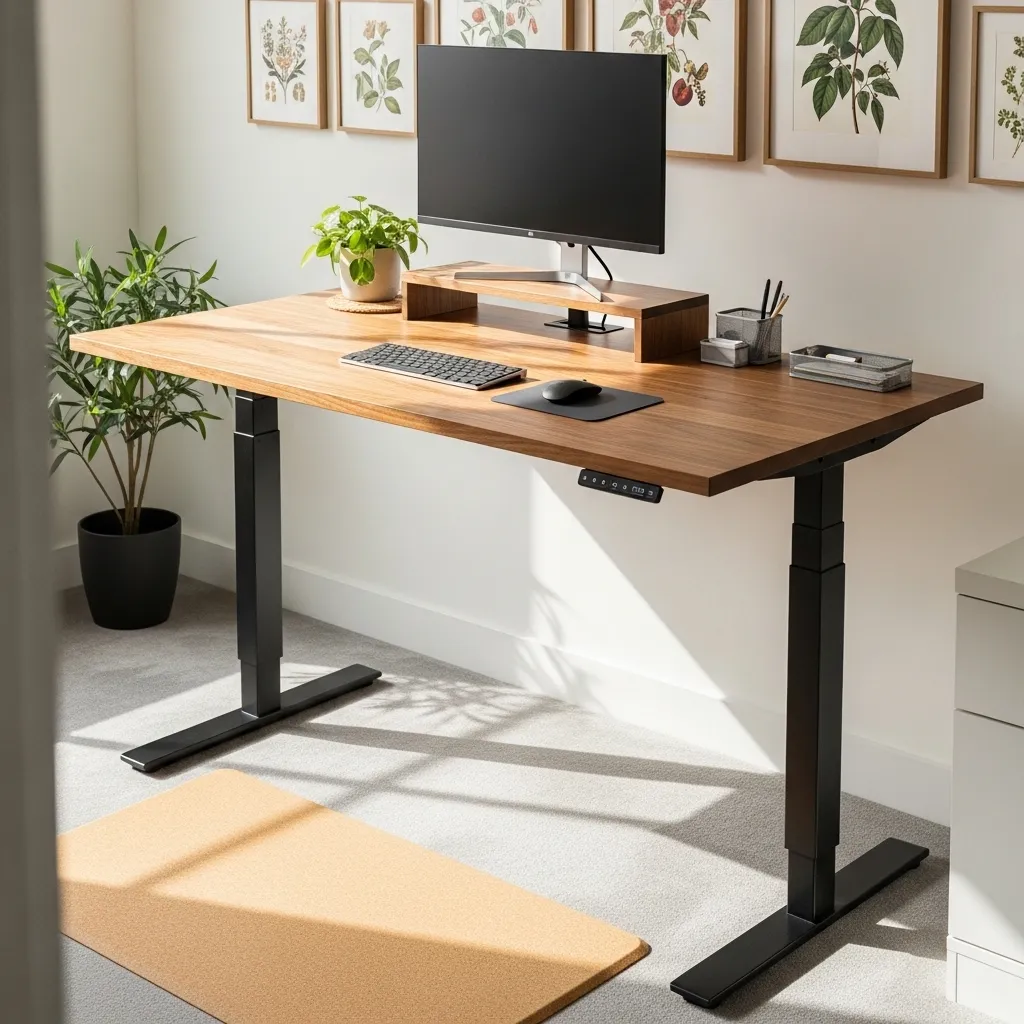
A standing desk in a home office that doesn’t sacrifice aesthetic quality is primarily a matter of choosing the right surface material and the right frame finish — the walnut top on a matte black frame is the combination that creates a standing desk with genuine visual presence rather than the typical standing desk aesthetic of laminate surface on a silver-grey mechanical frame. The warmth of real wood veneer or solid wood on the adjustable surface is the detail that does most of the aesthetic work, creating a desk that looks like a considered piece of furniture rather than a piece of ergonomic equipment.
The standing mat in a home office context deserves more aesthetic attention than it typically receives because it’s constantly visible on the floor in front of the desk and it significantly affects the overall visual quality of the workspace. A natural cork mat or a high-quality anti-fatigue mat in a warm neutral tone integrates much more gracefully into a designed office than the standard black foam mat that most standing desks are accompanied by — the warm material continues the natural material story of the desk surface and the office as a whole rather than introducing an incongruous black foam rectangle as the floor’s primary feature.
9. The Shared Creative Studio and Office
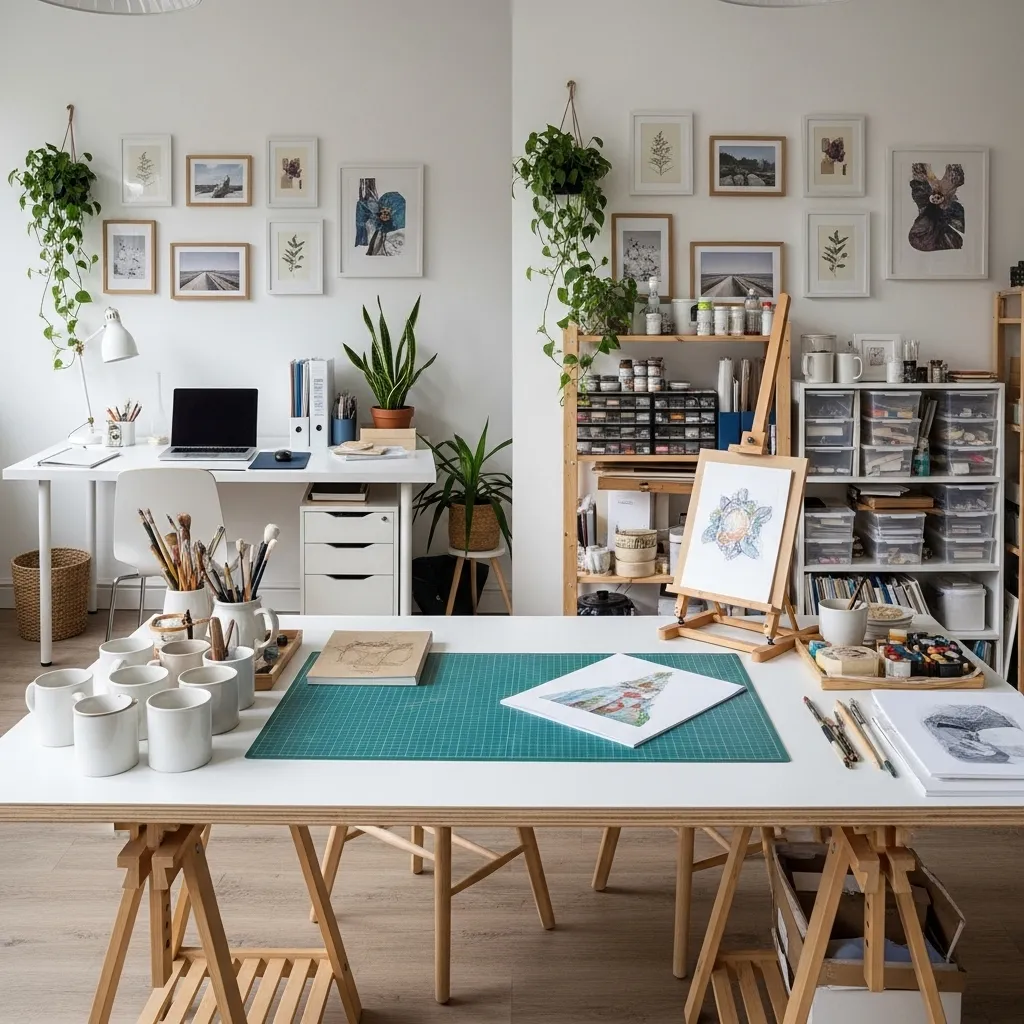
A shared creative studio and office space configuration acknowledges the reality that many women’s working lives involve both focused professional work and creative practice, and that these two modes of work benefit from being in proximity to each other rather than in separate rooms that require a physical move between working modes. The creative studio adjacent to the professional desk means that the transition from spreadsheet to sketchbook to canvas to screen can happen within a single consistent environment rather than requiring the interruption of moving between rooms.
The design challenge of a shared creative and office space is maintaining the clean organization of the professional desk zone while accommodating the productive mess of creative work in the studio zone — which requires genuine spatial separation between the two zones even within the same room. The professional desk should be entirely clear of creative materials, and the creative table should have its own dedicated storage and organization system so that materials don’t migrate to the desk and the desk’s clean working surface doesn’t get compromised by creative overflow.
10. The Gallery of Personal Achievements and Inspiration
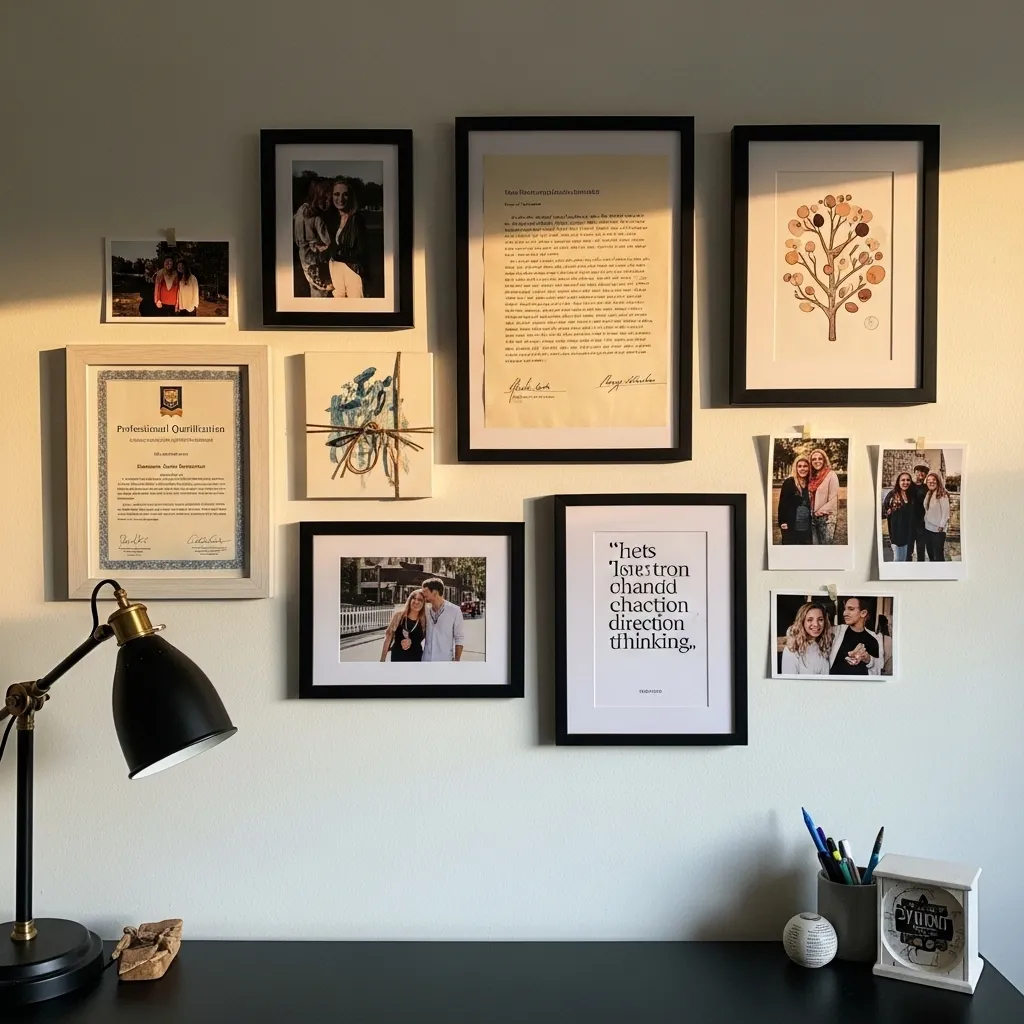
A gallery of personal achievements and meaningful inspiration behind the work desk creates a working environment where the motivation for the work is literally surrounding the person doing it — the professional qualification earned through years of effort, the mentor’s letter that changed the direction of thinking, the photograph from the moment when the work felt most meaningful, the quote that reoriented the whole approach. These are not generic motivational posters; they are specific, personal evidence of a specific, personal journey, and working in their presence creates a quality of connection to the meaning of the work that no purchased decoration can provide.
The informal, accumulated quality of a personal achievement gallery — clearly assembled over time as meaningful things arrived rather than designed at once — is precisely what distinguishes it from corporate office decoration and gives it its specific warmth and authenticity. The mix of professional and personal, the variety of frame styles that reflects the variety of occasions from which the pieces came, the evidence of time passing in the different periods the pieces represent — all of these qualities create a wall that tells a genuine story about a specific person rather than performing a generic idea of what an aspirational workspace should contain.
11. The Organized and Beautiful Desk Surface
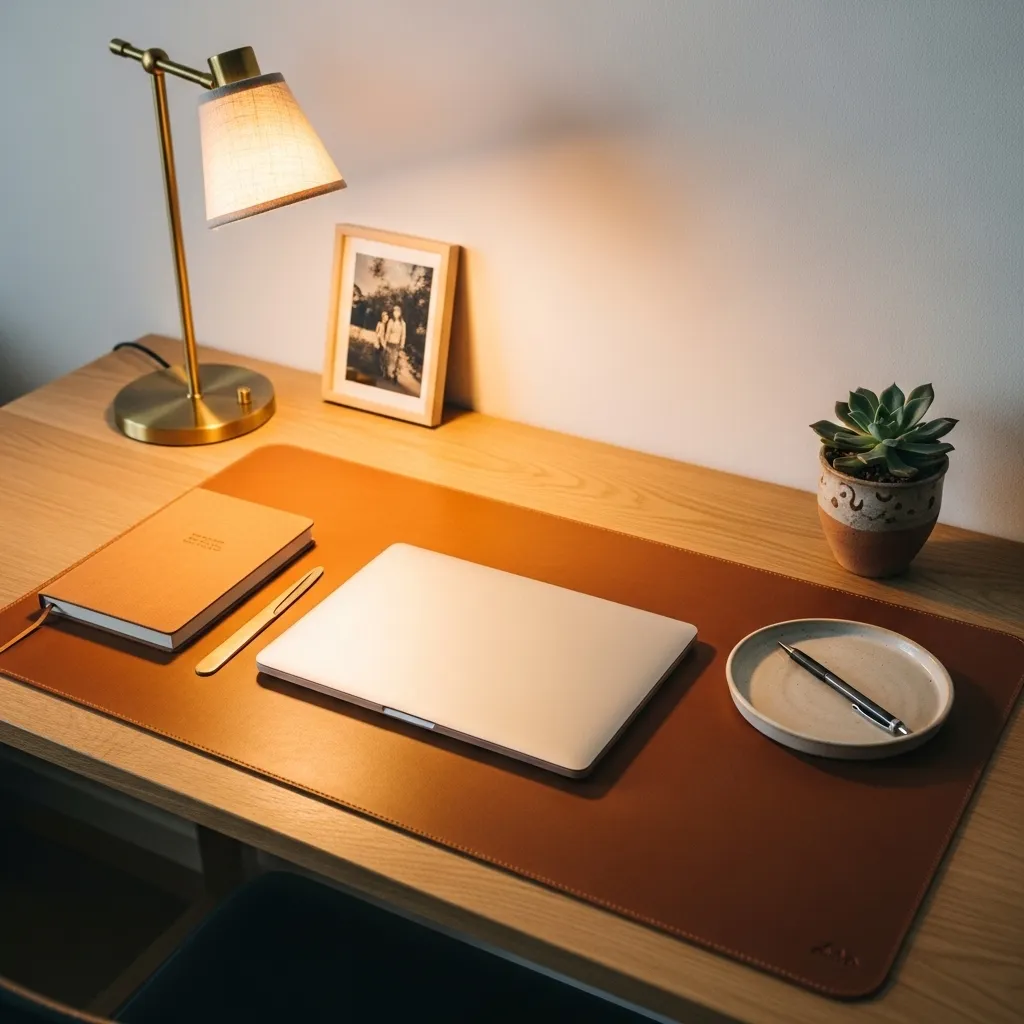
A beautifully organized desk surface — where every object has been chosen for its aesthetic quality as well as its functional purpose, and where the arrangement of objects creates a composed scene rather than a functional accumulation — is the home office element that creates the most powerful daily invitation to sit down and work. The desk surface is the first thing you see when you enter the office and the thing you look at most throughout the working day, and its quality as a visual environment directly affects the quality of the working experience.
The principle that makes a desk surface beautiful rather than merely organized is the same principle that makes any vignette beautiful — restraint, composition, and quality over quantity. A desk with six objects of genuine quality and considered arrangement is more beautiful and more pleasant to work at than the same desk with twenty objects of equal or greater quality but no organizing principle. The ruthless editing of the desk surface to only what’s genuinely needed and genuinely beautiful — the leather pad, the pen in a beautiful holder, the single plant, the notebook, the lamp, one personal photograph — creates a surface that feels like a specific, intentional place rather than a general surface that work happens on.
12. The Color-Coordinated Bookshelf as Office Backdrop
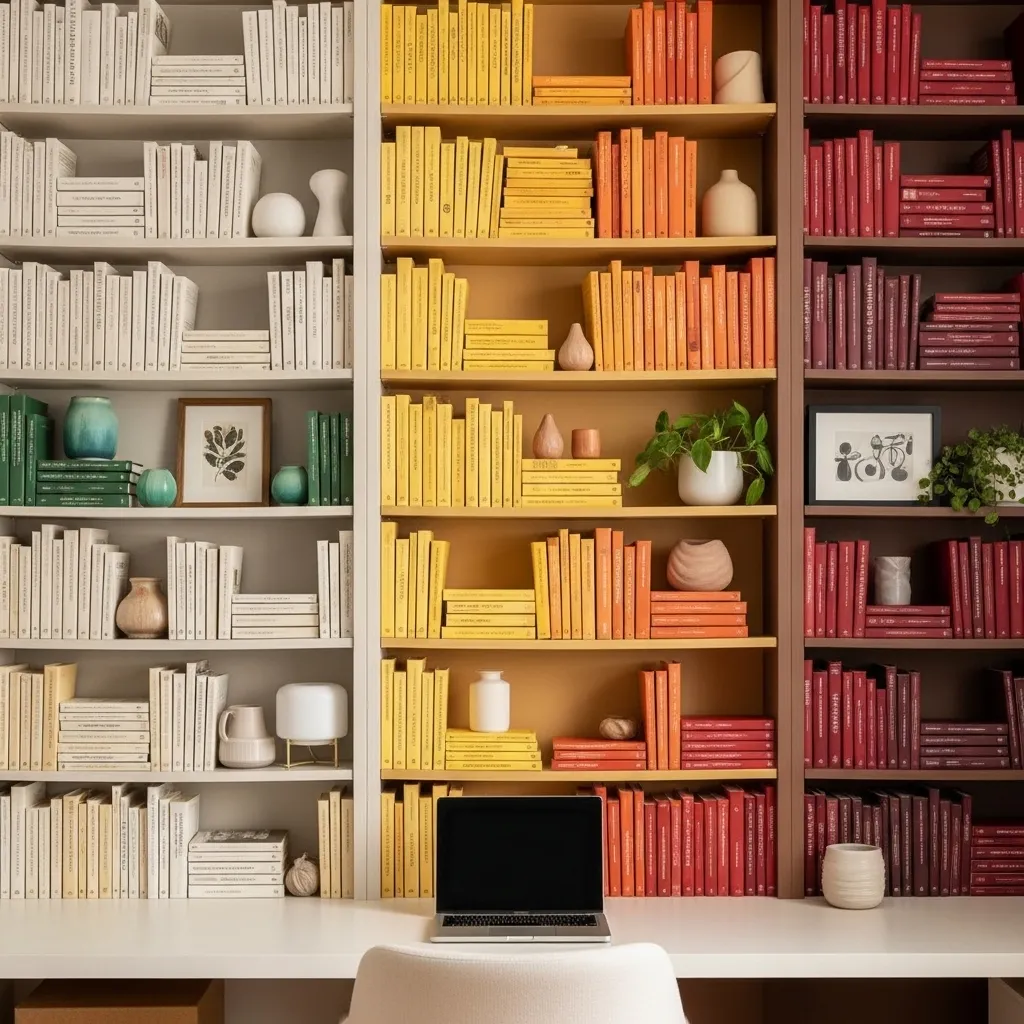
A color-coordinated bookshelf as the home office backdrop — books arranged in a warm spectrum rather than by subject or author — creates one of the most beautiful and most consistently admired video call backgrounds available, while also creating a warm, intellectually rich working environment that genuinely improves the daily experience of being at the desk. The color gradient of a well-executed rainbow bookshelf has a visual richness that rewards looking at from any distance, reading as a warm color composition from across the room and revealing its book content at closer range.
The arrangement of books by color requires accepting a temporary loss of subject-based organization in favor of aesthetic organization, which feels more radical before it’s done than it does after — in practice, most people who color-arrange their books find that they remember books by their cover appearance and can navigate their color-organized collection efficiently within a few weeks of the arrangement. The books are still organized and findable; they’re just organized by a visual property rather than a subject property, and the aesthetic benefit is so significant that it consistently justifies the organizational compromise.
13. The Plant-Filled Biophilic Office
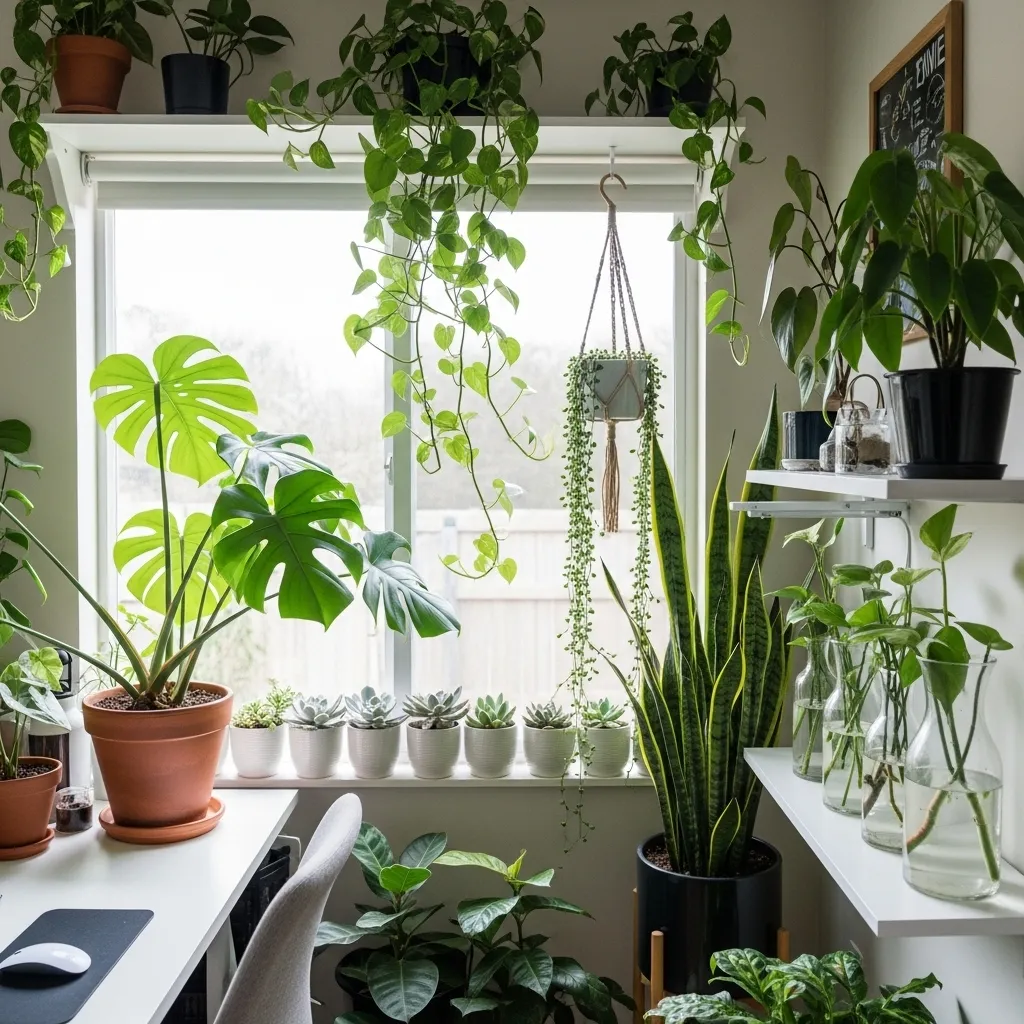
A genuinely plant-filled biophilic home office — with plants at every level from floor to ceiling, distributed throughout the room rather than grouped in one corner — creates a working environment that functions as a genuine restorative space as well as a productive one, because the consistent visual and olfactory presence of living plants in a workspace has documented effects on stress reduction, mood improvement, and cognitive performance that make the biophilic office one of the most evidence-based approaches to home office design available.
The distribution of plants at multiple heights and positions throughout the office is what creates ambient plant presence rather than a plant display — when there’s a large plant in the corner, a trailing plant by the window, a few small plants on the desk, and a hanging plant near the ceiling, the eye encounters plant life wherever it rests during the workday, creating a consistent connection to the natural world that a single large plant in one corner doesn’t provide. This ambient quality of nature throughout the office is the specific condition that creates the stress-reducing, focus-supporting effect — not the presence of plants as decoration, but plants as genuine environmental participants in the working space.
14. The Luxury Home Office With Upholstered Seating Area
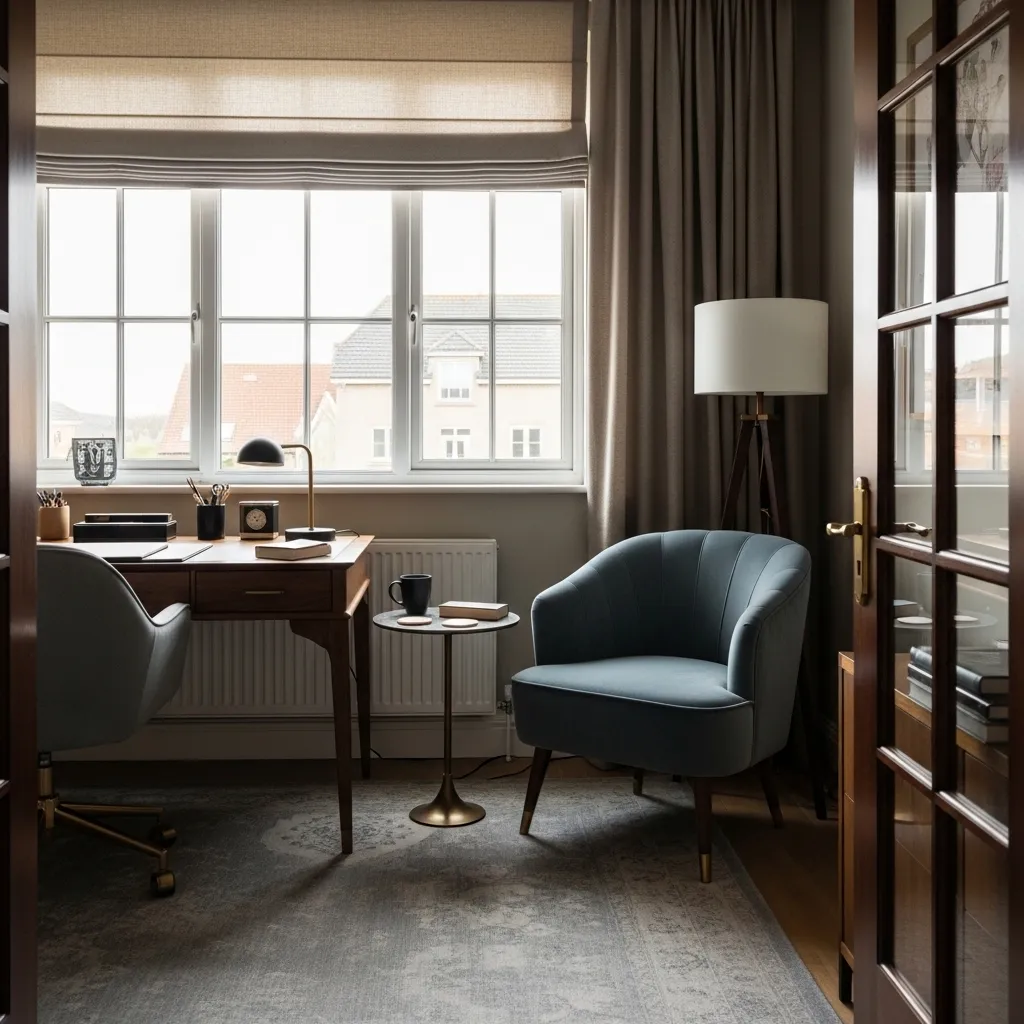
A proper seating area within a home office — an armchair and side table positioned away from the desk as a second working and thinking position — is the addition that transforms a home office from a single-purpose workspace into a multi-mode private study, and that transformation is the one that makes the office feel genuinely luxurious rather than merely well-equipped. Luxury in a working space is not primarily about the quality of the desk or the expensiveness of the technology; it’s about the quality and variety of the ways you can inhabit the space and the quality of options available for different modes of working.
Reading and thinking in an armchair is categorically different from reading and thinking at a desk — the physical relaxation of a good armchair creates a different cognitive state that’s often more conducive to the integrative, associative thinking that creativity and strategy require than the upright, task-focused posture of desk work. Having both positions available within the same room means the thinking and the executing happen in the same environment, with the transition between positions as simple as standing up and moving six feet rather than moving to a different room or a different part of the house.
15. The Seasonal and Intentional Office Refresh
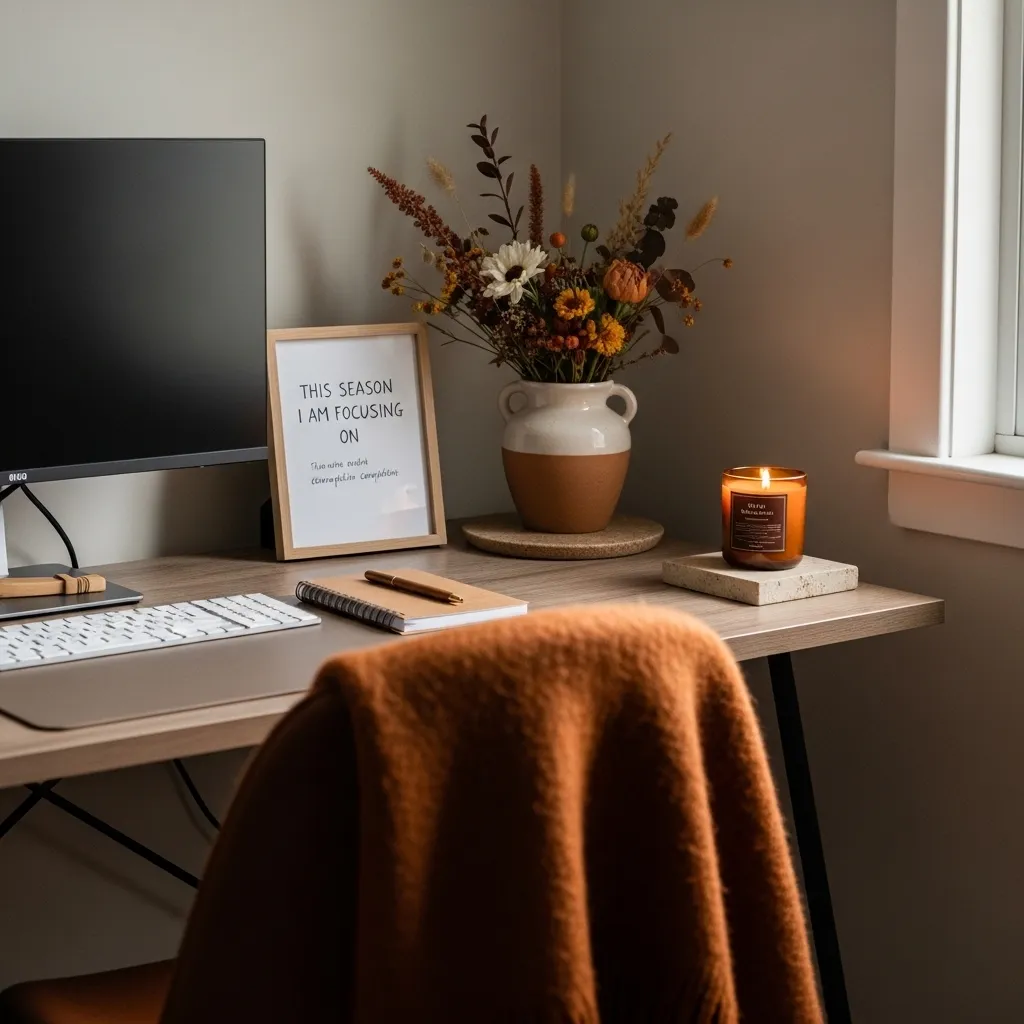
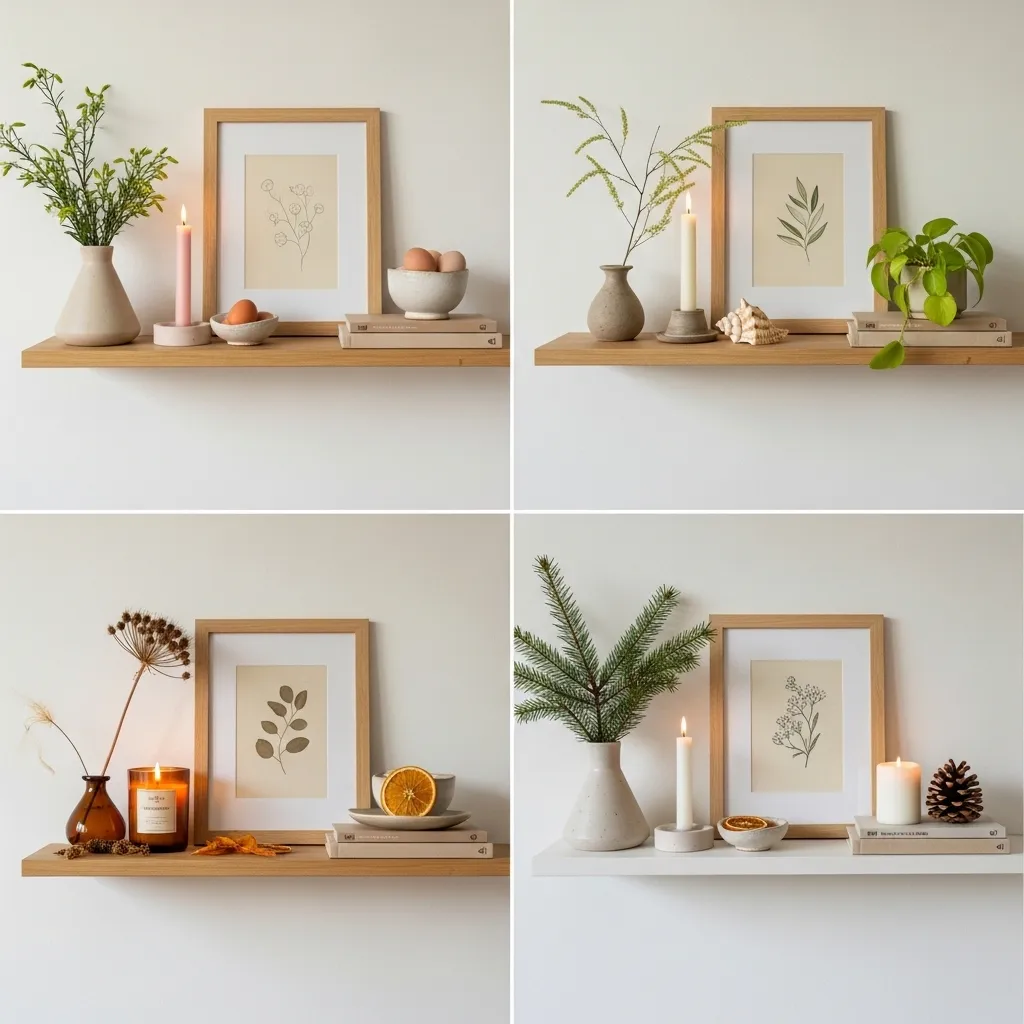
A seasonal and intentional office refresh — the practice of deliberately updating the objects, scents, textures, and intentions of the office space at the beginning of each new season — is the home office ritual that keeps the working environment feeling alive, current, and personally relevant rather than gradually becoming invisible through familiarity. The desk you set up in September looks different in September than it does in February if you’ve allowed the seasons to influence it; the desk you never change looks identical in February to how it looked in September except dirtier and more accumulated, and the difference in the quality of working in these two versions of the same desk is real and significant.
The specific seasonal updates that most effectively refresh a home office are those that engage multiple senses simultaneously — a seasonal candle or diffuser fragrance that changes with the season, a botanical or natural object that references the current season, a textile addition (throw, cushion) that responds to the changing temperature and light quality, and a written intention or seasonal focus that connects the working activity to the larger rhythms of the year. Together these small sensory and symbolic updates create a working environment that participates in the seasonal cycle of the year rather than existing outside it, and that quality of temporal connection is one of the most quietly sustaining qualities a personal working space can have.