15 Kitchen Island Ideas 2026 That Transform the Heart of Your Kitchen Into Something You Never Want to Leave
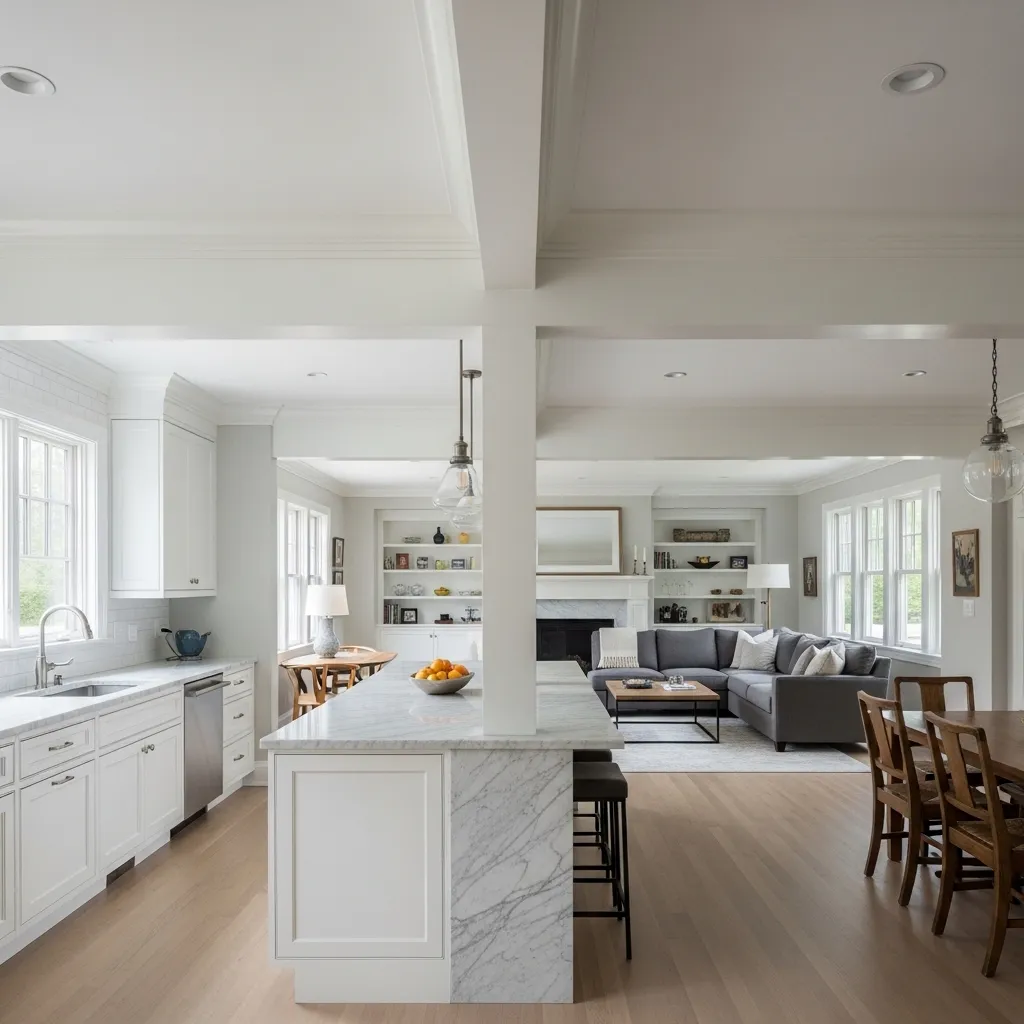
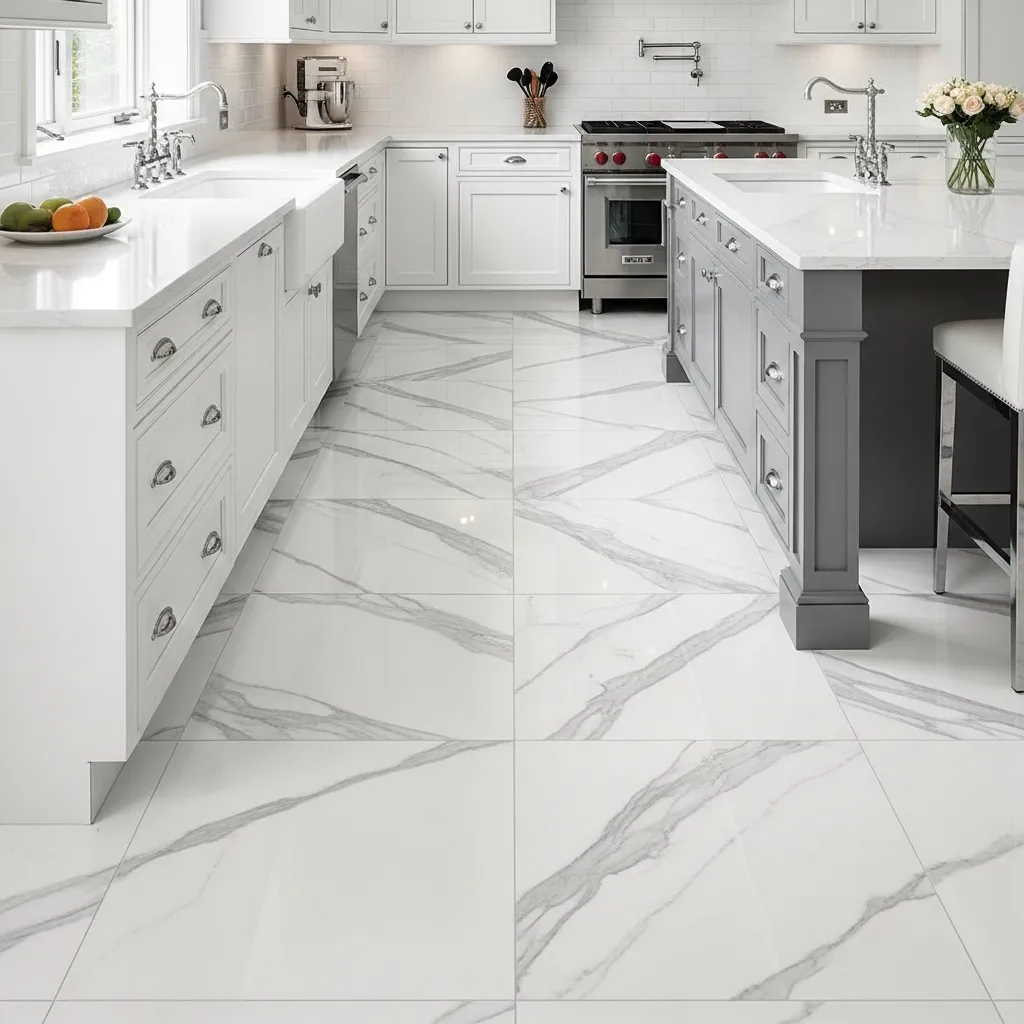
If your kitchen currently has a gap in the middle where an island could be, or an island that’s doing only one of the many things a well-designed island can do, or you’re planning a kitchen from scratch and trying to understand what’s actually possible in the center of the room before committing to anything — this roundup covers the full range of what kitchen islands have become in 2026, from the dramatic waterfall marble statement island that announces itself as the kitchen’s primary architectural feature, to the humble but brilliantly functional butcher block prep island that earns every inch of its footprint, the mixed material island that pairs contrasting surfaces for different work zones, the island with integrated seating that becomes the social center of the house, the low-profile island that maintains sightlines in an open-plan space, the color contrast island in a bold tone against neutral cabinetry, the island with a second sink for serious cooking, the storage-maximizing island that solves the small kitchen problem, the built-in appliance island with integrated dishwasher or wine fridge, and several more configurations that prove the kitchen island is the most versatile and most consequential single element in contemporary kitchen design.
The kitchen island is the piece of domestic furniture that has done the most to change how families and households actually live over the past thirty years — not the sofa, not the dining table, but the kitchen island, because it created a new category of space that didn’t exist in previous domestic architecture: a place in the kitchen that’s simultaneously for cooking and for being, for food preparation and for conversation, for the person making breakfast and for the person drinking coffee watching them make it. Before kitchen islands became ubiquitous, the kitchen was a room you went to for a specific functional purpose and left when that purpose was accomplished. The island turned the kitchen into somewhere you stayed, and that transformation in how the kitchen is used has genuinely changed how households relate to each other and how domestic life feels at its most daily and most intimate.
What I find most interesting about kitchen island design in 2026 is how sophisticated the understanding of what an island needs to do has become — the best islands are designed as multi-zone, multi-function surfaces that separate prep from serving from seating from storage in ways that make the kitchen dramatically more functional rather than just more beautiful. The purely decorative island — installed for the aesthetic of having an island without genuine functional planning — is the category that produces the most common kitchen design regret, and avoiding it requires thinking clearly about what you actually do in the kitchen, how many people cook simultaneously, how the island will be used for eating versus prep versus serving, and what storage it needs to contain.
1. The Waterfall Marble Statement Island
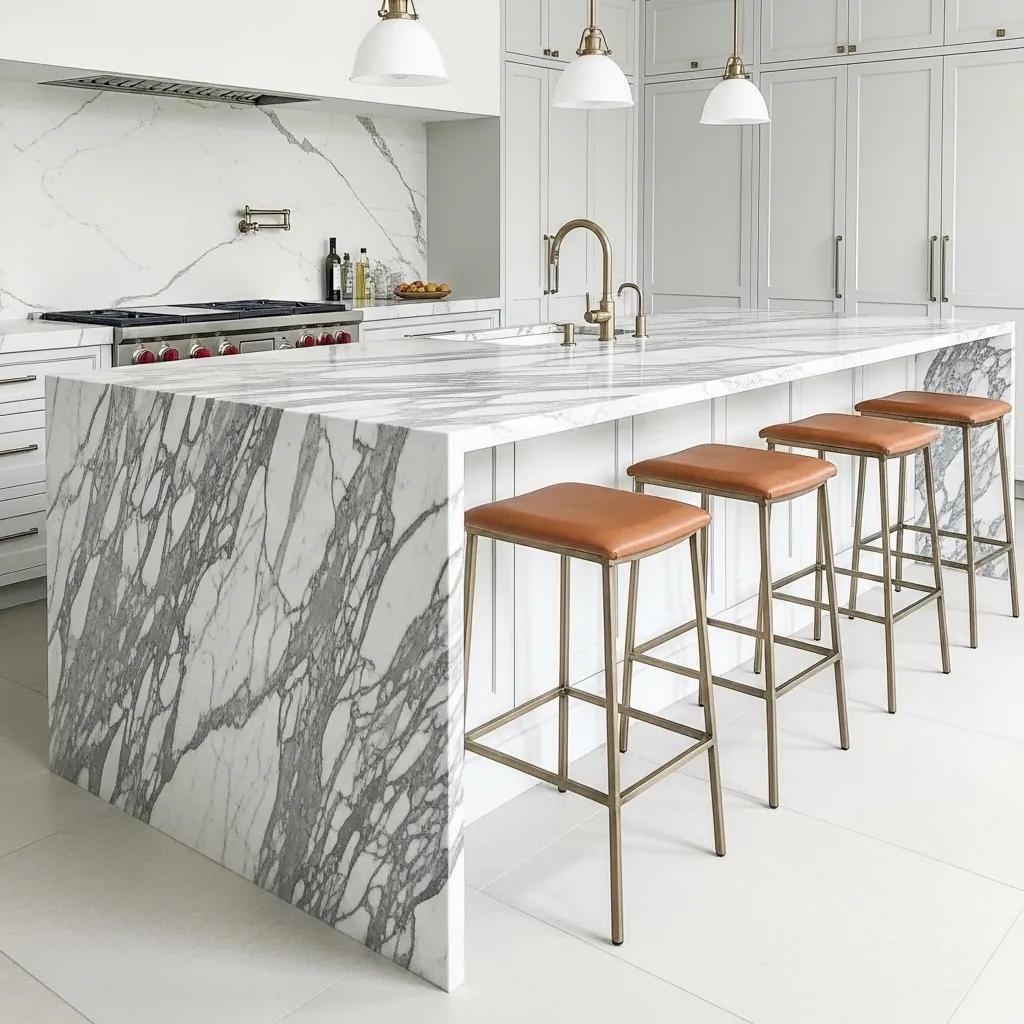
A waterfall marble island is the kitchen feature that communicates the highest design ambition most immediately and most completely — when a slab of Calacatta or Statuario marble with significant veining is matched at the corners and folded down the ends of the island in a continuous waterfall, the result is a piece of kitchen furniture that functions as sculpture as much as workspace. The veining that runs across the top and folds seamlessly down the sides creates a visual experience that changes as you move around the island — the pattern appears different from each approach, and the matched corners that make the fold possible are themselves a demonstration of the stone fabricator’s skill and the designer’s attention to detail.
The specific marble varieties that make the most dramatic waterfall islands are the ones with bold, directional veining — Calacatta with its grey and gold veining on white background, Statuario with its dramatic grey movement, Arabescato with its complex grey-and-white patterning — because the waterfall effect requires the veining to be matched and folded, and bold directional veining makes that fold dramatically visible while subtle or random veining makes it invisible. The selection of the specific slab for a waterfall application is the design decision that most determines the final result, and it requires looking at the full slab in person to understand how the veining will read when folded.
2. The Butcher Block Prep Island
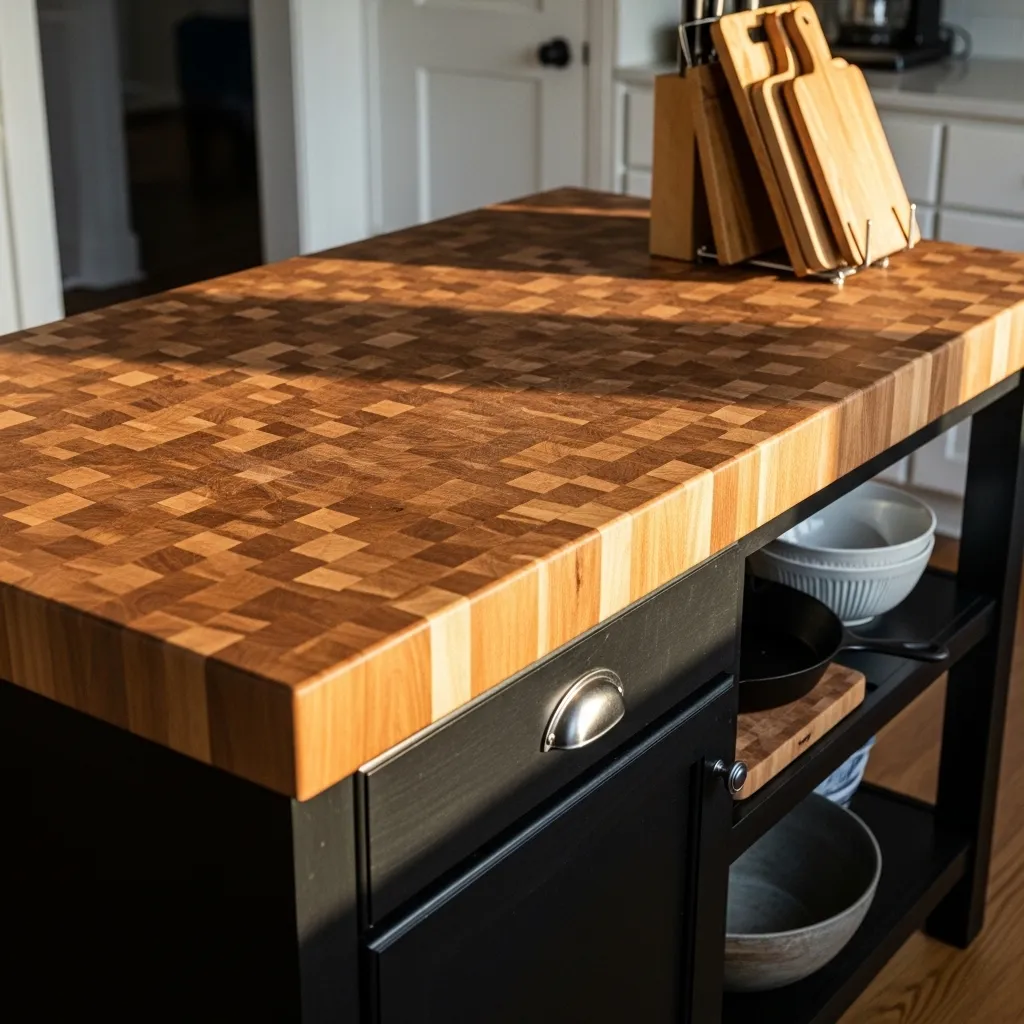
An end-grain butcher block island countertop is the kitchen surface that most honestly acknowledges the actual purpose of a kitchen — the cutting, the chopping, the kneading, the rolling, the daily physical work of food preparation that requires a surface that can be worked on directly rather than protected from working on. End-grain butcher block is the specific butcher block configuration with the best cutting properties because the end grain of the wood is the hardest surface and is self-healing in a way that face-grain wood isn’t — knife marks in end grain compress and close rather than scoring visibly, and the surface can be sanded and re-oiled periodically to restore a completely fresh working surface.
The character that a butcher block island develops with use — the honey tone that deepens from regular oiling, the slight knife marks that accumulate as evidence of actual cooking, the specific areas where the wood has worn to show the most frequent working zones — is not degradation but the development of the material into something more beautiful and more specifically personal than a new slab. A butcher block island in a kitchen that cooks seriously looks better after five years of use than it did the day it was installed, which is the exact opposite of most kitchen surfaces and one of the most genuinely valuable qualities any kitchen material can have.
3. The Color Contrast Island in a Bold Tone
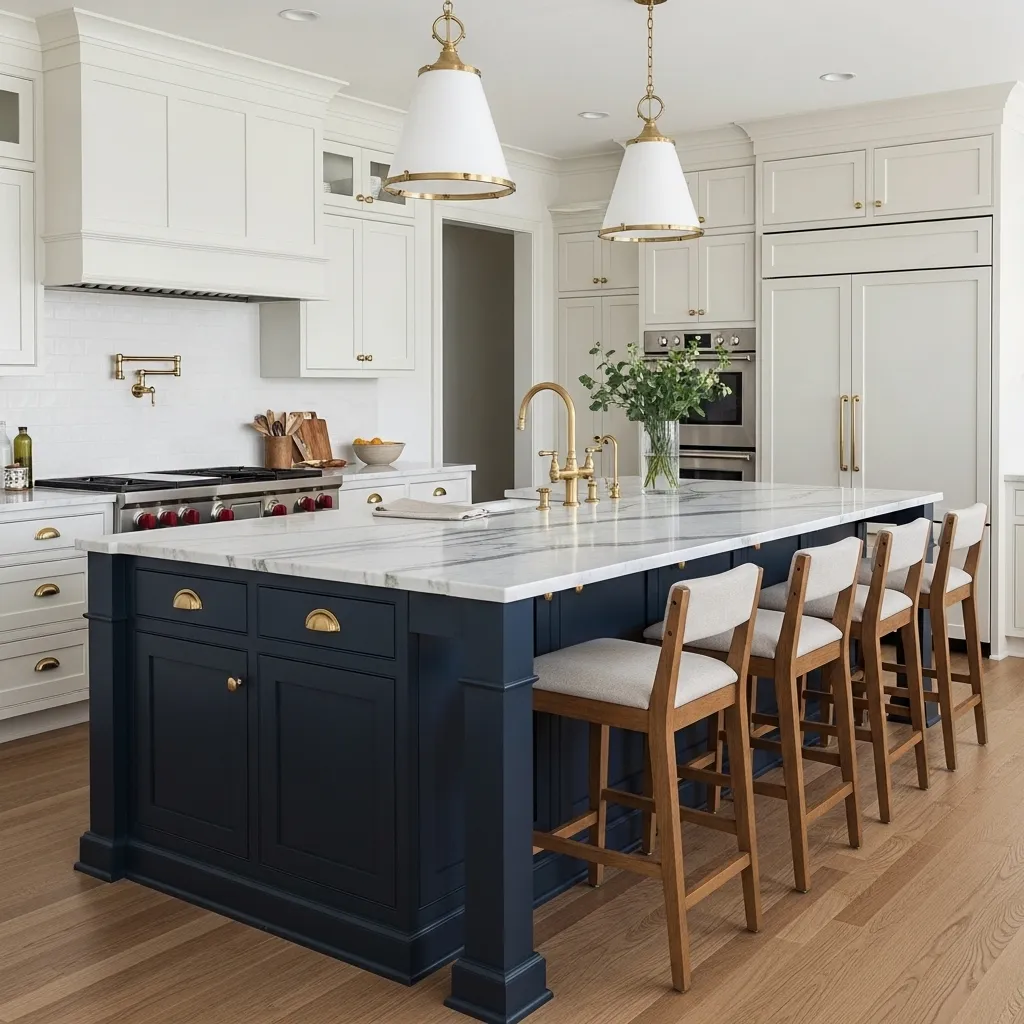
A color contrast island — in a bold, saturated tone against neutral surrounding cabinetry — is the kitchen design decision that creates the most visual drama and the most design confidence for the least structural or financial investment, because it requires only a paint decision rather than a material or architectural change. The island becomes a distinct piece of furniture within the kitchen rather than a continuation of the perimeter cabinetry, and that distinction changes the spatial organization of the kitchen dramatically — the colored island creates a clear focal point, a visual center, and a three-dimensional design element that a same-color island doesn’t.
The specific tones that work best as contrast island colors in 2026 are the muted, sophisticated versions of classic bold colors — deep navy rather than bright blue, forest green rather than bright green, warm terracotta rather than orange, dusty burgundy rather than bright red. These muted saturated tones have the visual impact of a bold color statement with the sophistication of a considered material choice, and they pair most beautifully with warm white cabinetry and natural stone countertops in a way that their brighter equivalents don’t quite manage.
4. The Island With Integrated Seating on One Side
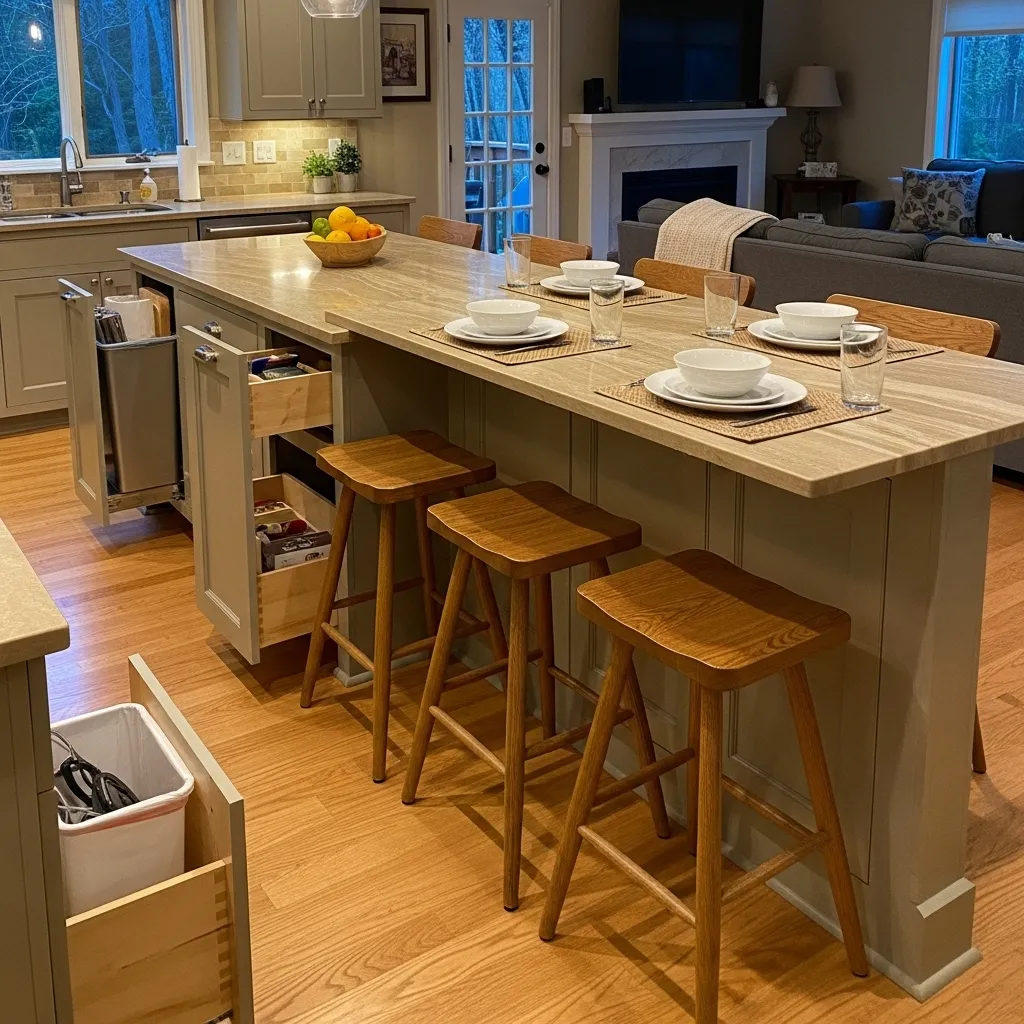
An island designed with integrated bar seating on one side is the configuration that most directly creates the social function that makes kitchen islands so central to contemporary domestic life — the seating that faces outward toward the living room or dining area creates a place where family members, guests, and children can be present in the kitchen, participating in conversation, drinking coffee, doing homework, and generally sharing the space with whoever is cooking without being in the way of the cooking. The island becomes the social mediator between the working kitchen and the living spaces around it.
The height relationship between the seating overhang and the working surface is the design detail that most affects how the seating side functions — a seating overhang at the same height as the working surface (standard counter height at thirty-six inches) creates a casual, slightly low seating experience, while a raised bar section at forty-two inches with corresponding bar-height stools creates a more elevated, slightly more formal seating experience. The choice between these two depends on the specific social quality you want the seating zone to have and on the sightline relationships in the broader open-plan space.
5. The Mixed Material Island With Two Surface Zones
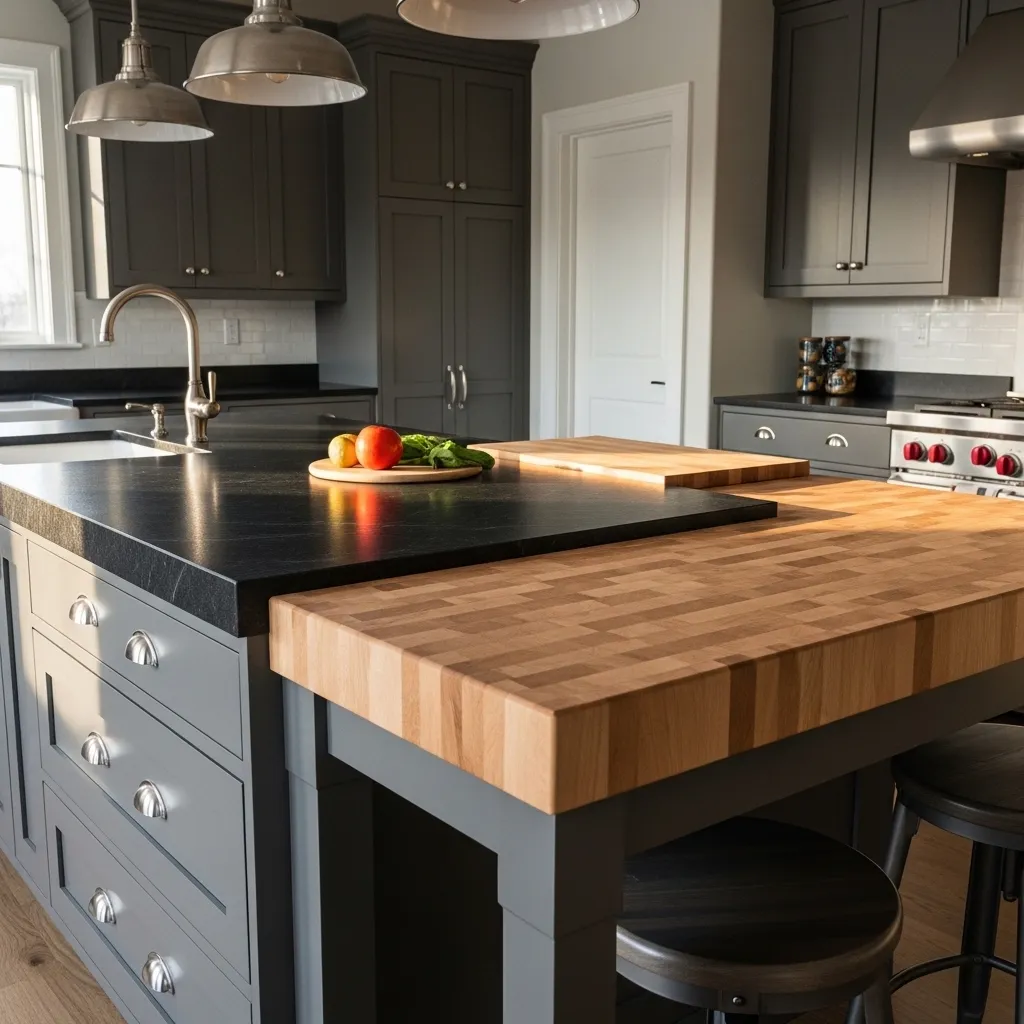
A mixed material island with two distinct surface zones — typically a stone or engineered surface for general cooking and prep combined with a butcher block or secondary stone for cutting and detailed prep — creates the most genuinely functional island configuration for serious cooks because different cooking tasks have genuinely different surface requirements that no single material satisfies equally well. Soapstone and marble are beautiful and heat-resistant but aren’t ideal cutting surfaces; butcher block is the ideal cutting surface but requires more maintenance than stone. Designing an island that provides both in their appropriate zones is the practical solution that the mixed material approach makes possible.
The visual quality of the mixed material island is also distinctive and beautiful — the meeting of two different materials at a precise junction on a single surface creates a designed moment that reads as intentionally composed rather than accidentally varied, and the material contrast highlights the qualities of both surfaces by placing them in direct proximity. Dark soapstone beside warm maple butcher block creates a color and texture contrast that makes each material appear more beautiful than it would in a homogeneous surface.
6. The Island With a Prep Sink and Dedicated Prep Zone
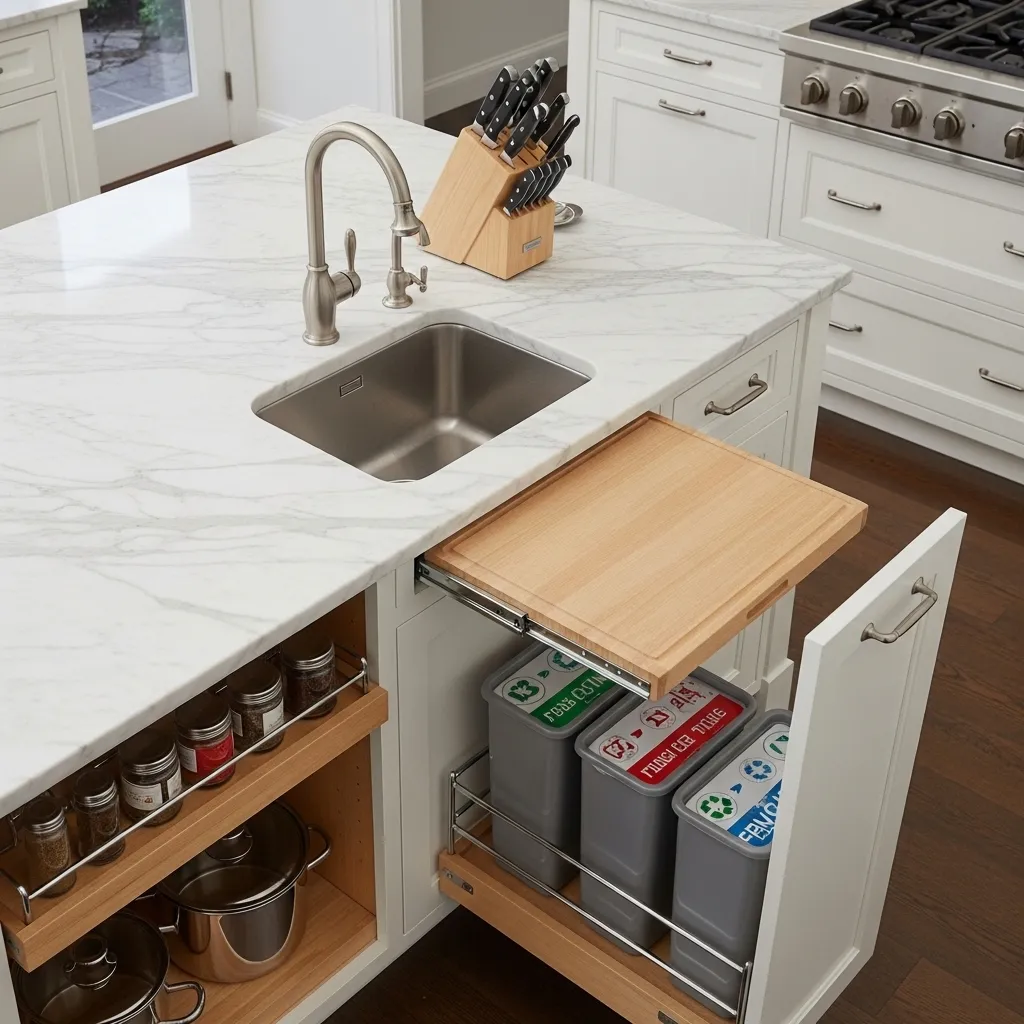
A second prep sink integrated into the kitchen island is the functional upgrade that most dramatically improves the experience of cooking seriously — in any kitchen where two people cook simultaneously, or where the cooking workflow involves frequent movement between water source and prep surface, the single sink at the perimeter creates a constant bottleneck. A prep sink in the island brings the water source to the center of the kitchen where most prep work actually happens, and the combination of island prep sink and perimeter main sink creates a kitchen that two people can use simultaneously without constant interference.
The prep sink in the island also changes the workflow logic of the whole kitchen — with water available at the center, washing vegetables, filling pasta pots, rinsing hands between tasks all happen at the island rather than requiring a trip to the perimeter wall. This reduction in kitchen movement during active cooking is the efficiency improvement that experienced cooks describe as transformative rather than merely convenient, because it changes the physical experience of cooking from one that involves constant traversal of the kitchen space to one that’s centered on the island as the primary working position.
7. The Small Kitchen Rolling Island
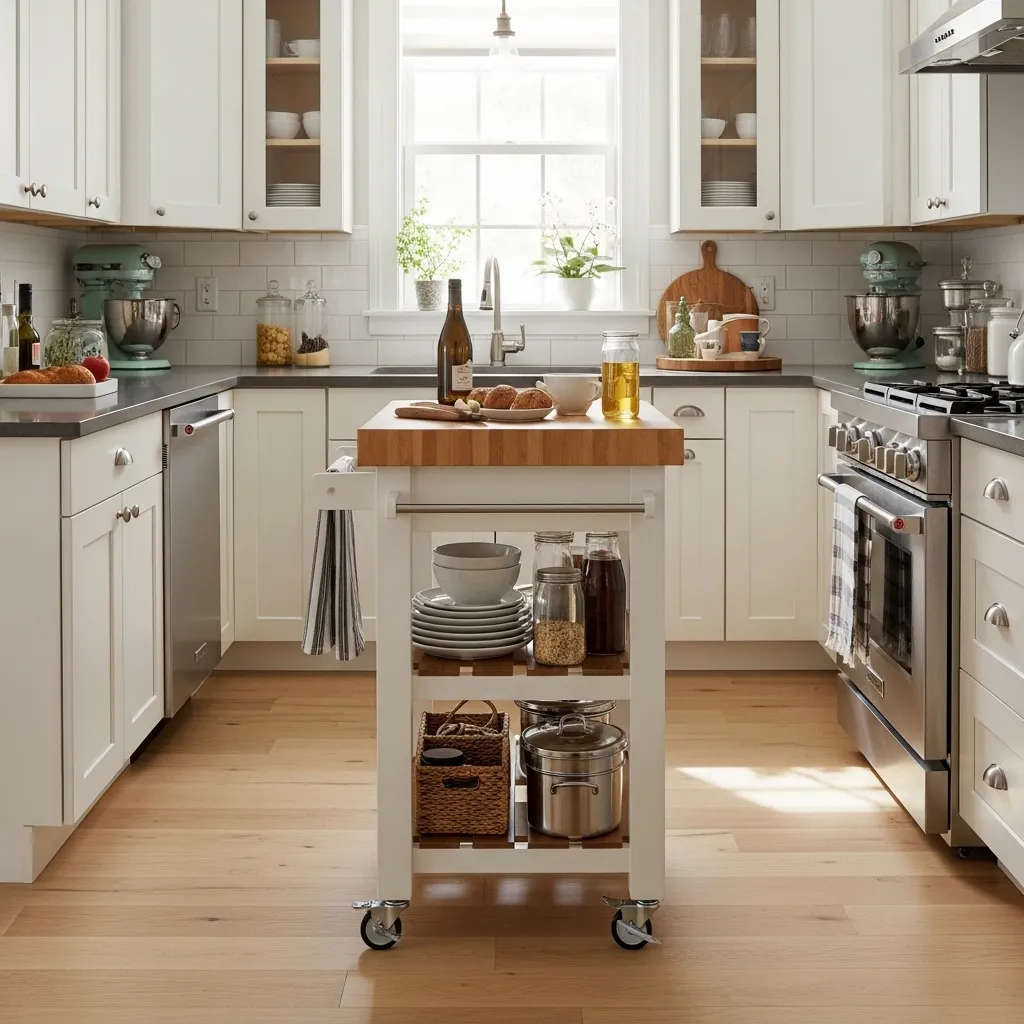
A rolling kitchen island on lockable casters is the kitchen island solution for spaces where a fixed island would compromise the kitchen’s traffic flow or reduce the flexibility needed for different cooking and cleaning modes — because the rolling island can be positioned centrally for prep work, moved to one side for cleaning, rolled against the wall for additional counter space when not in use as a central island, and taken to the dining area as a serving trolley for entertaining. This flexibility makes a rolling island genuinely more functional in certain kitchens than a fixed island of equivalent size.
The caster quality is the component that most determines whether a rolling island functions well or creates constant frustration — heavy-duty locking casters that genuinely lock flat and don’t creep when pressure is applied from the working surface are the specification that makes the rolling island stable enough to work at when locked and mobile enough to move easily when unlocked. Cheap casters that lock inadequately or roll too easily are the source of the frustration that makes some people regret rolling island purchases, while good casters make the rolling island feel as stable as a fixed one when locked and as easy to move as a piece of well-designed wheeled furniture.
8. The Island With Built-In Appliances
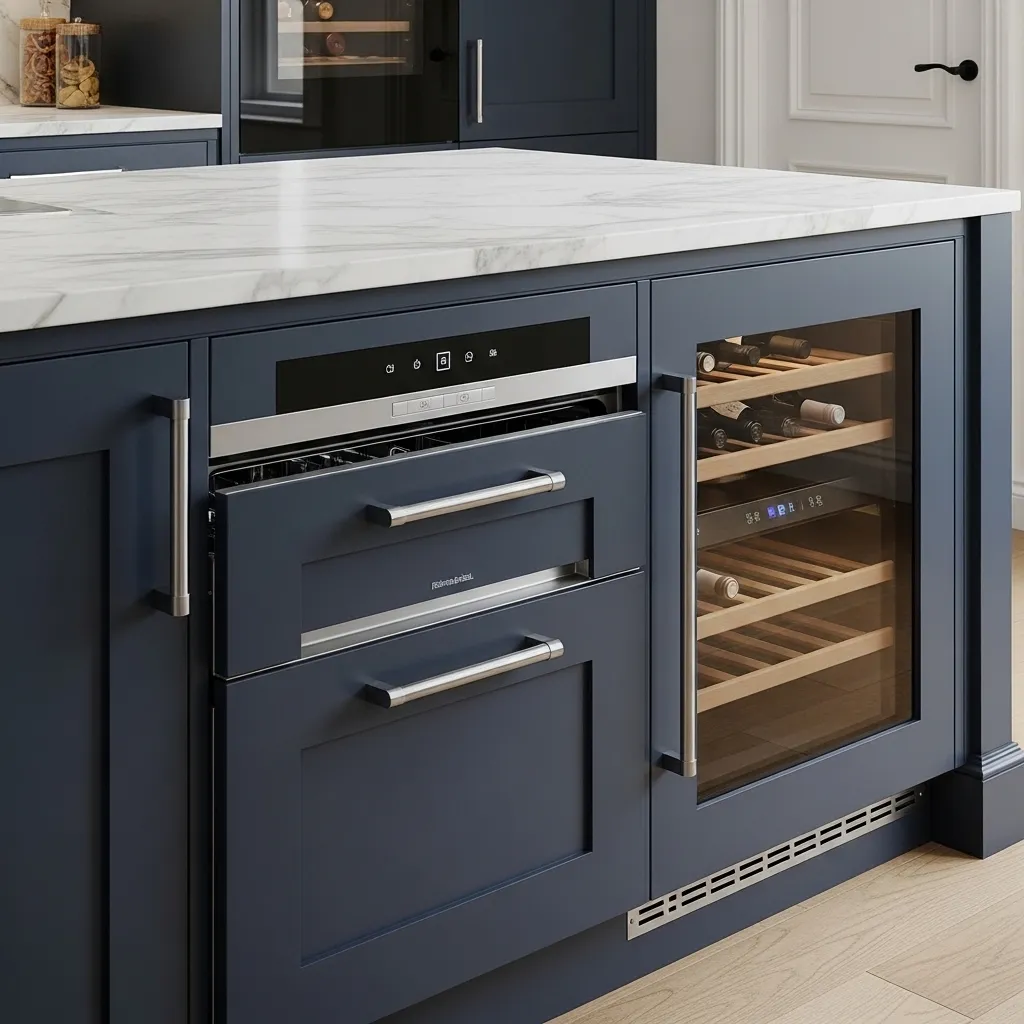
A kitchen island with built-in appliances — integrated dishwasher, wine fridge, warming drawer, or microwave drawer — creates the most efficiently organized kitchen possible by placing the appliances at the center of the kitchen where they’re used rather than at the perimeter where they create constant traffic patterns between the cooking zone and the appliance. The dishwasher in the island, positioned adjacent to the sink and the prep surface, means loaded dishes travel the shortest possible distance from use to washing, and the unloaded dishes have the shortest possible journey to their storage positions.
The panel-front integration of appliances into island cabinetry is the design decision that makes built-in island appliances read as an intentional design choice rather than an afterthought — when the dishwasher drawer and the wine fridge have cabinetry panels that match the island base, the appliances become invisible elements of the island’s design rather than visible mechanical intrusions. The continuous marble countertop above the appliance panels reinforces the integration by providing an uninterrupted surface that doesn’t acknowledge the mechanical complexity below it.
9. The Curved or Round Kitchen Island
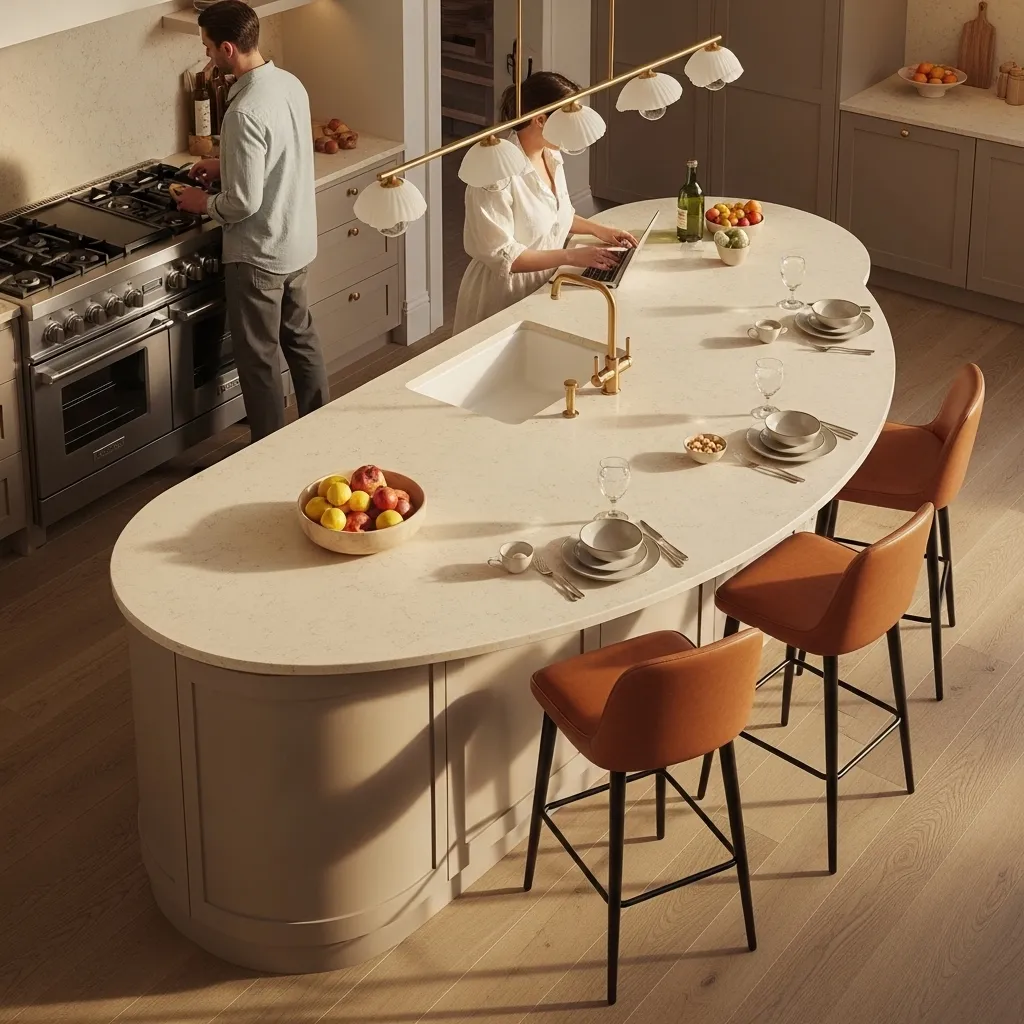
A curved or organically formed kitchen island is the configuration that creates the most sculptural and the most specifically designed kitchen of any island shape — the departure from the standard rectangle immediately communicates that the kitchen was designed rather than specified from standard options, and the organic form of a curved island creates spatial relationships with the surrounding kitchen that rectangles can’t. The concave working side of a kidney-shaped island creates a natural working position where the cook is surrounded by the workspace rather than standing at its edge.
The curved island also creates better traffic flow patterns in certain kitchen configurations — in a kitchen where multiple people move around the island simultaneously, a curved edge creates a more natural path of movement than a sharp rectangular corner, and the absence of corners means no one catches a hip on the island edge in passing, which is one of the persistent physical frustrations of rectangular island corners in busy kitchens.
10. The Dramatic Dark Island in a Light Kitchen
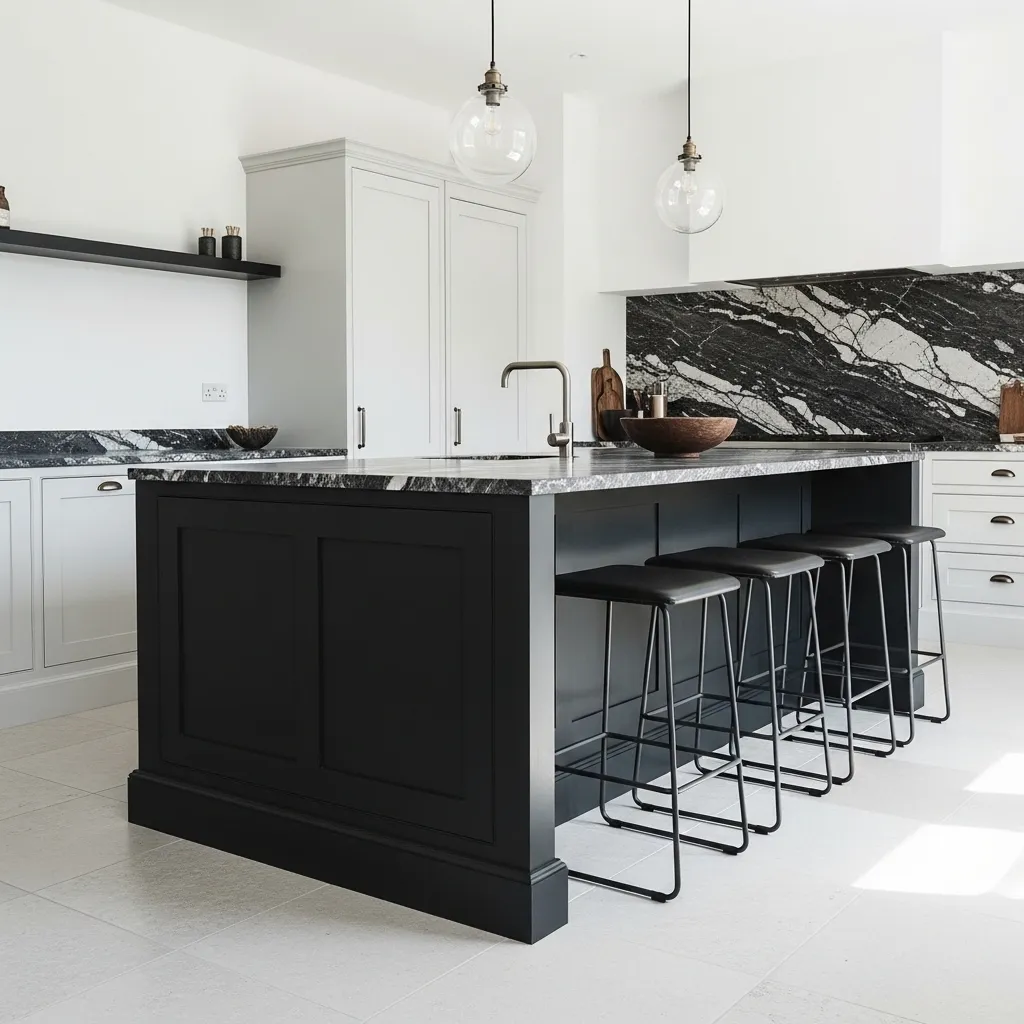
A dramatically dark island in a pale kitchen creates a visual dynamic that works on the principle of focused contrast — when all the surrounding surfaces are pale, the dark island becomes the room’s visual center with a magnetic quality that draws the eye from any position in the surrounding open-plan space. The island reads as a piece of furniture rather than a built-in, as an object placed in a room rather than a feature of the room, and that distinction is what gives it the specific dramatic quality that a same-color island doesn’t possess.
The dark island in a pale kitchen also creates a specific depth and shadow quality that pale islands don’t — the darkness absorbs light rather than reflecting it, creating an island that appears to have visual weight and physical presence rather than lightness. This quality makes the kitchen feel anchored in a way that an all-pale kitchen sometimes lacks, and it creates a natural hierarchy — the dark island is clearly the most important element in the kitchen space — that gives the room a clarity of design intention that undifferentiated pale kitchens can struggle to communicate.
11. The Island With a Built-In Breakfast Bar at Child Height
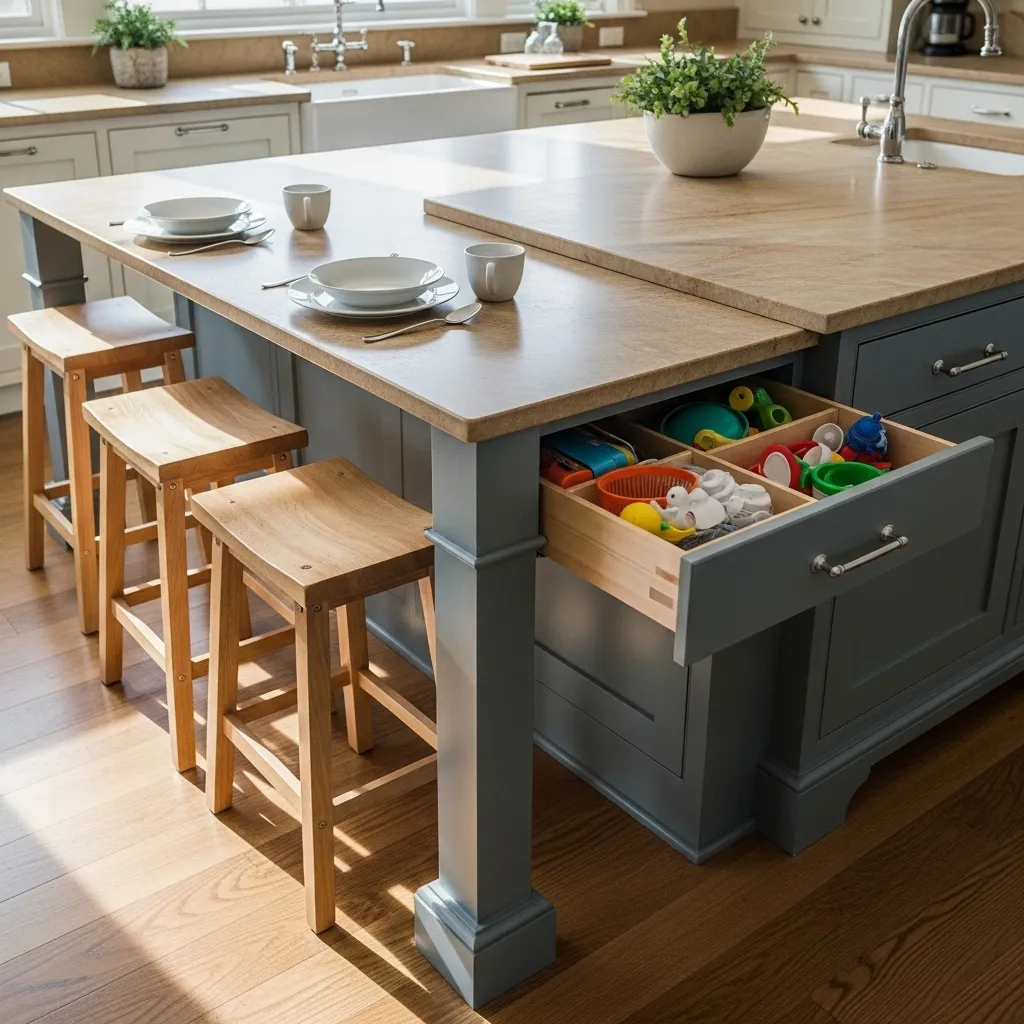
A kitchen island designed with two seating heights — a standard adult bar height and a lower child-appropriate seating zone — is the configuration that most genuinely serves a household with young children by creating a breakfast and snack space where children can be independently seated and independently mobile rather than requiring adult assistance to climb onto and down from bar stools designed for adults. The lower seating zone creates genuine independence for young children, which is both practically useful for parents and developmentally important for the children who can access, use, and leave their seating without asking for help.
The design integration of the two heights within a single island requires a specific counter edge detail where the lower overhang drops from the full counter height — a waterfall edge on the child side, a step detail, or a cantilevered lower shelf all create this height transition while maintaining the visual coherence of a single island design. The most seamless solution is a cantilevered lower counter on the child side that reads as an intentional design element rather than an afterthought, with the lower surface in a complementary material or the same material at a slightly different finish.
12. The Island With Open Shelving on One End
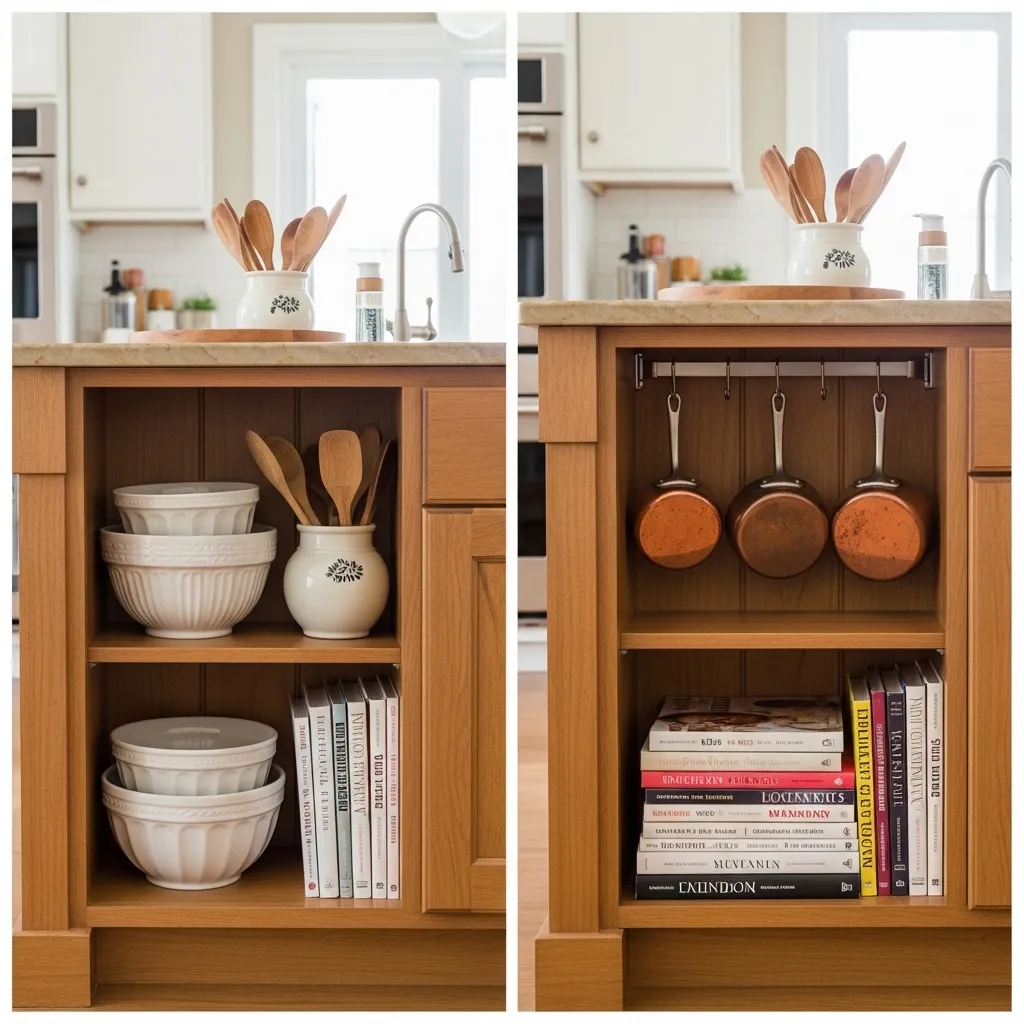
Open shelving on one end of a kitchen island creates a display and accessibility zone for the kitchen objects that are most frequently used and most beautiful — the everyday mixing bowls, the copper pots that get used every morning, the cookbooks that come off the shelf regularly, the wooden spoons that live in a ceramic pot because they’re used multiple times every cooking session. These are objects that benefit from being accessible without a cabinet door between them and the cook, and that are beautiful enough to display rather than conceal.
The end of the island is the ideal location for open shelving because it’s visible from the kitchen approach, creating an immediate impression of the kitchen’s character as you enter, and because it’s accessible from both the island working sides and the kitchen approach rather than being tucked against a wall where access is limited to one direction. An open shelving island end creates a display that’s visible from the living areas adjacent to the kitchen, which makes the kitchen feel inhabited and personal from beyond its boundaries rather than giving away its character only to those working within it.
13. The Island With Integrated Lighting
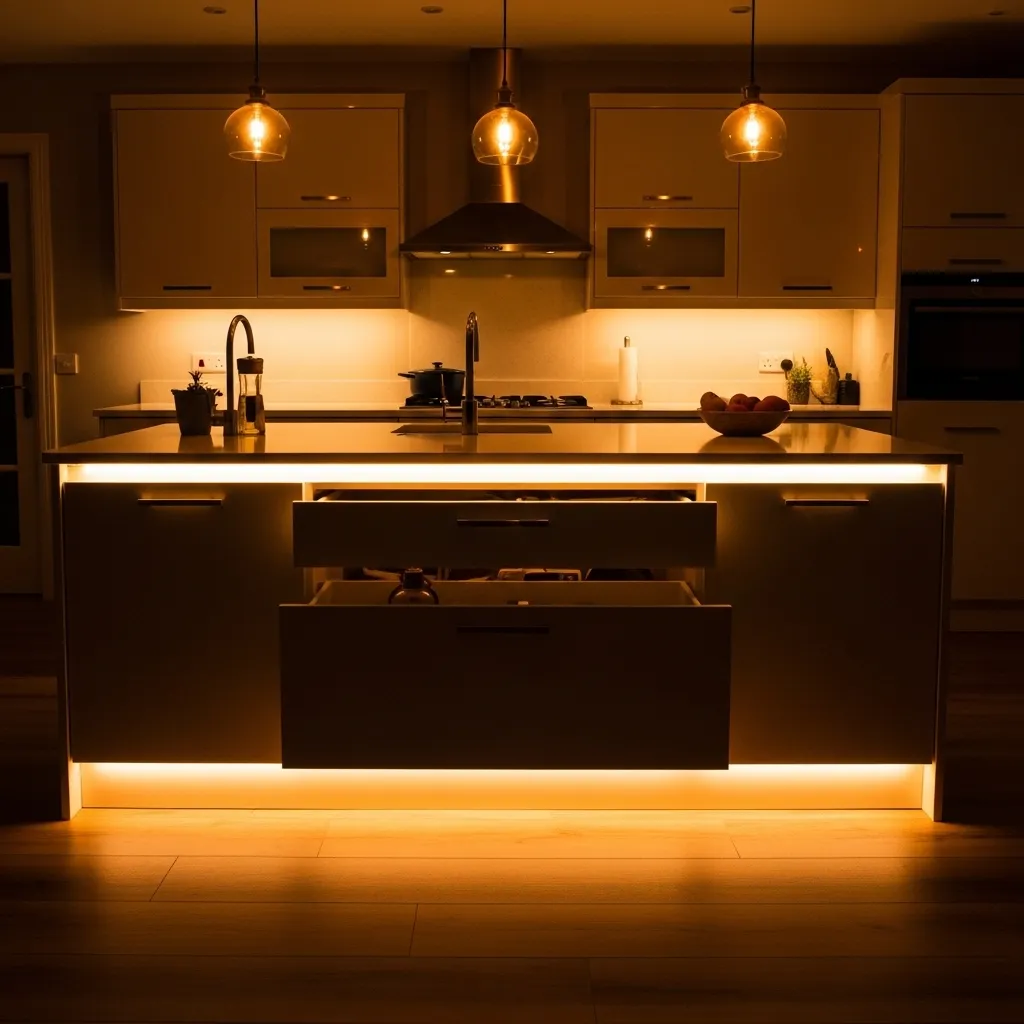
An island with multiple integrated lighting elements — under-cabinet task lighting, under-counter toe-kick lighting, pendant lighting above, and possibly interior cabinet lighting — creates the kitchen’s most atmospherically rich lighting environment because the multiple sources at multiple heights create the dimensional, layered light quality that makes the island feel like a designed destination rather than a functional surface. The under-counter LED strip creating a warm halo at floor level is the specific detail that most transforms an island’s appearance in evening light — it creates the impression that the island is floating slightly above the floor rather than sitting on it.
The toe-kick lighting at the base of the island is the element with the highest surprise and delight factor because it’s unexpected — most people don’t notice it in design photographs and then immediately want it when they experience it in person. The warm ambient glow it casts across the kitchen floor in evening light creates an atmospheric quality that’s similar to what candlelight does for a dining table — it makes the source of the light almost invisible and makes the light itself appear to come from within the room rather than from a specific fixture.
14. The Antique or Repurposed Island
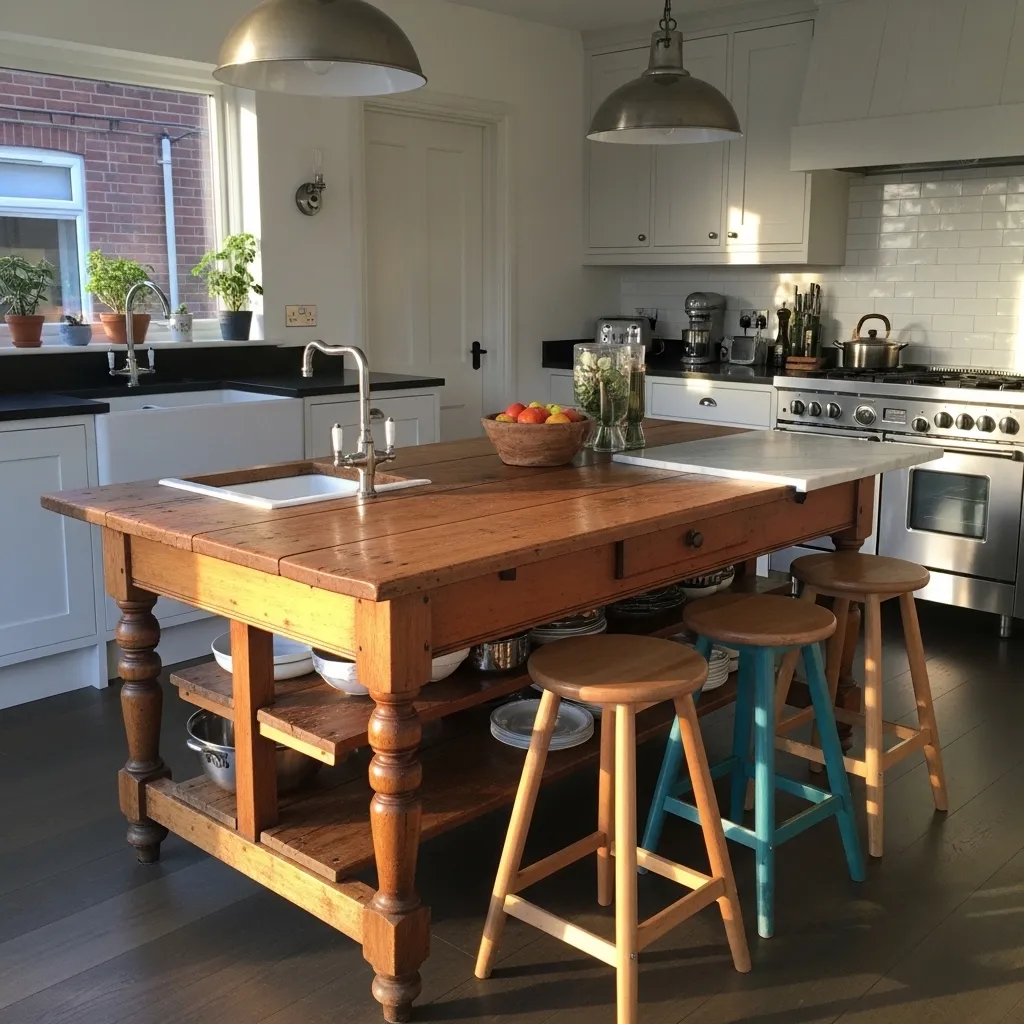
A repurposed antique or vintage piece as a kitchen island is the approach that creates the most instantly irreplaceable kitchen character — an actual antique farm table, butcher’s block, or piece of antique furniture converted into a kitchen island has a presence and authenticity that no custom-built island can replicate, because it brings the history and craft of the original object into a new context where its age and character are the primary design assets. The patina of a genuinely old wood surface, the worn quality of antique hardware, the slightly irregular proportions of furniture made before standardization — all of these qualities create an island that looks like no other island because it literally is no other island.
The practical conversion of an antique piece into a functional kitchen island requires thoughtful planning about what needs to be added — plumbing if a sink is desired, additional work surface in a more durable material if the original top isn’t food-safe, storage additions if the original piece lacks drawers or shelving. The key is adding these functional elements in a way that doesn’t compromise the character of the original piece — adding a marble slab to one end of an antique table rather than replacing its top, adding simple open shelving to existing stretchers rather than building entirely new storage, using contemporary hardware on any new additions that’s sympathetic in spirit if not identical in period.
15. The Outdoor Kitchen Island
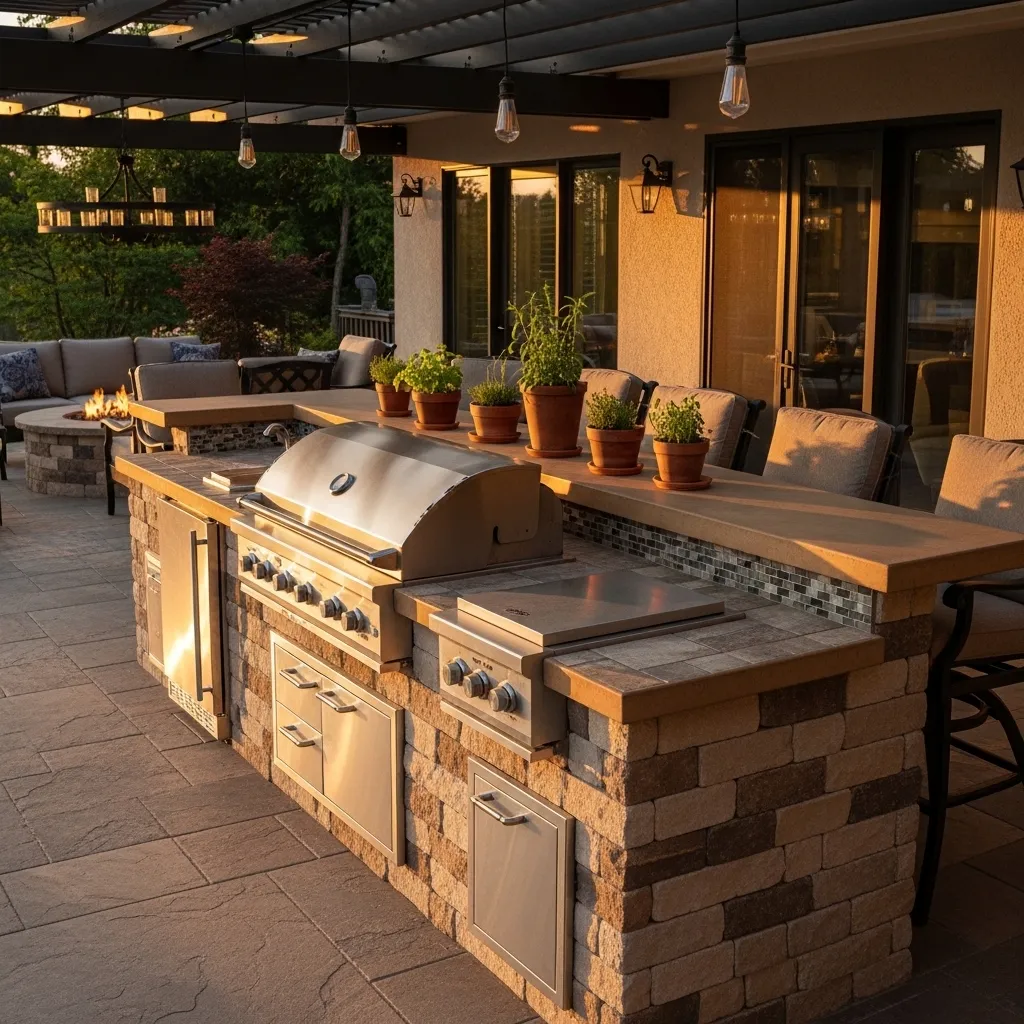
An outdoor kitchen island is the most transformative single addition to an outdoor entertaining space because it creates the same social dynamic that the indoor kitchen island creates inside — a central working surface around which cooking and socializing happen simultaneously, where the host can cook and engage with guests rather than disappearing indoors to prepare food and returning with it finished. The outdoor island makes outdoor entertaining genuinely hospitable rather than requiring the host to choose between cooking and participating.
The material specifications for an outdoor kitchen island are categorically different from interior kitchen requirements — stainless steel for appliances and certain surfaces because of its weather resistance, stone or concrete for countertops rather than wood or marble that can’t handle outdoor exposure, weatherproof cabinetry materials rather than standard wood construction. These material requirements create a different aesthetic from interior kitchens — more industrial, more robust, more honest in showing what outdoor cooking actually demands — and that specific outdoor kitchen aesthetic is one of the most genuinely beautiful and most characteristically contemporary approaches to outdoor entertaining space design available.