15 Open Kitchen Design Ideas
Open kitchens have completely transformed how we live in our homes, breaking down those walls that used to separate cooking from everything else and creating spaces where food prep, conversation, homework help, and entertaining all happen together seamlessly. There’s something inherently welcoming about an open kitchen—it invites people in, encourages gathering, and makes the cook feel like part of the action rather than isolated behind walls. Whether you’re working with a kitchen that flows into your living room, dining area, or a full great room concept, open layouts offer incredible flexibility for how you design and use your space, from choosing materials that flow from one area to the next to creating strategic zones that define different functions without building actual barriers.
I’ll be honest, open kitchens aren’t without their challenges—you have to think about sightlines from every angle, noise travels differently, and keeping things tidy matters more when everything’s on display. But when you get it right, the benefits are absolutely worth it. Natural light flows through multiple rooms, you can keep an eye on kids while cooking, guests naturally gather around the island instead of cramming into a closed-off kitchen, and the whole space just feels bigger and more connected. It completely changes the social dynamic of your home in the best way possible.
The key to a successful open kitchen design is creating visual cohesion while still defining different zones so each area has its own purpose and identity. You want the kitchen to flow naturally with your living and dining spaces without everything blending into one undifferentiated blob. This is where thoughtful material choices, strategic furniture placement, lighting layers, and architectural details come into play. Let’s explore some ideas that’ll help you create an open kitchen that’s beautiful, functional, and perfectly suited to how you actually live.
1. Large Kitchen Island with Seating
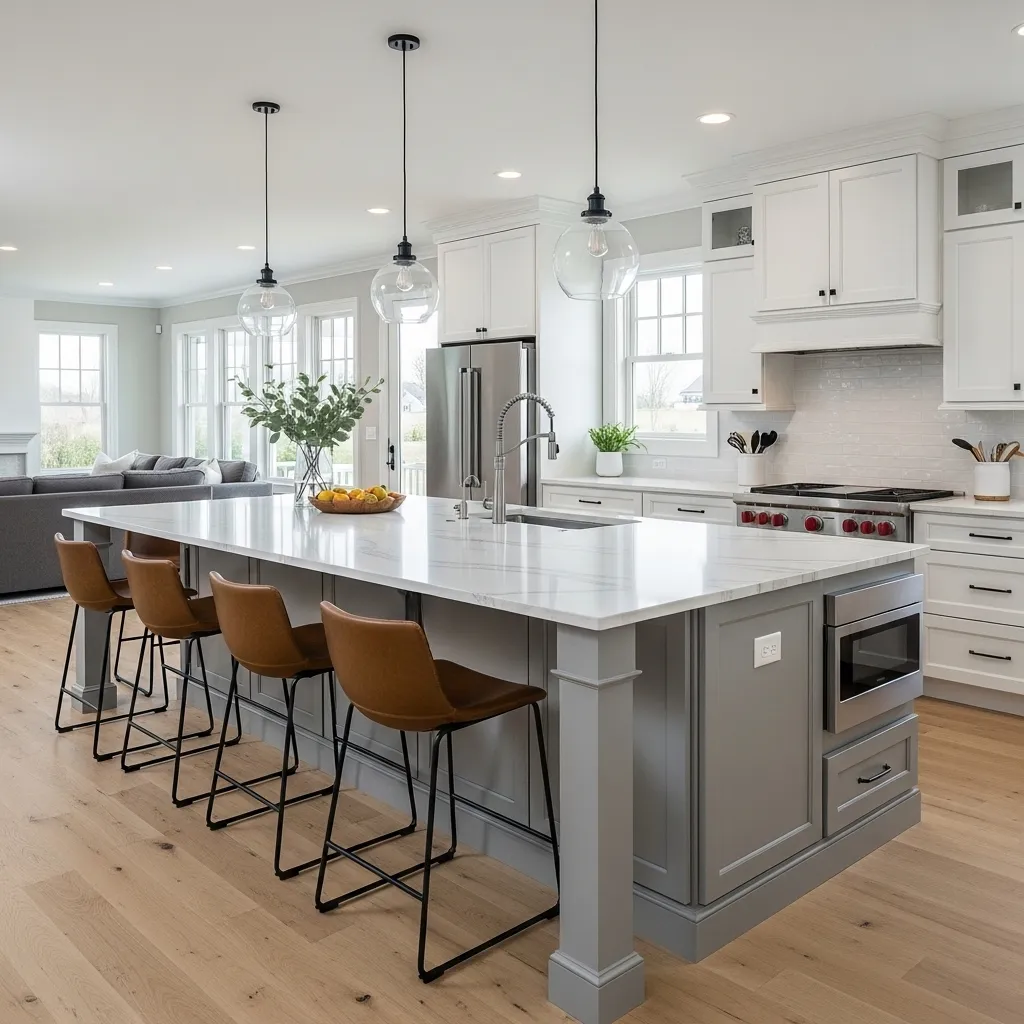
A large kitchen island is practically the centerpiece of any open kitchen layout, and when you add seating, it becomes so much more than just a prep surface—it’s where homework happens, where friends gather with wine while you cook, where quick breakfasts get eaten on busy mornings. The island acts as a natural divider between your kitchen and living areas without blocking sightlines or making the space feel closed off, which is exactly what you want in an open floor plan.
The key is making sure your island is substantial enough to anchor the space and provide real functionality. You need room for prep work, storage, possibly a sink or cooktop, plus that overhang for seating that’s deep enough for people to actually sit comfortably. Waterfall edges have become so popular because they create that finished, furniture-like quality that helps the island feel intentional and substantial. When you’re choosing materials, think about how they’ll look from all angles since the island is visible from everywhere in your open space—this is where you can splurge on that gorgeous countertop you’ve been eyeing.
2. Consistent Flooring Throughout
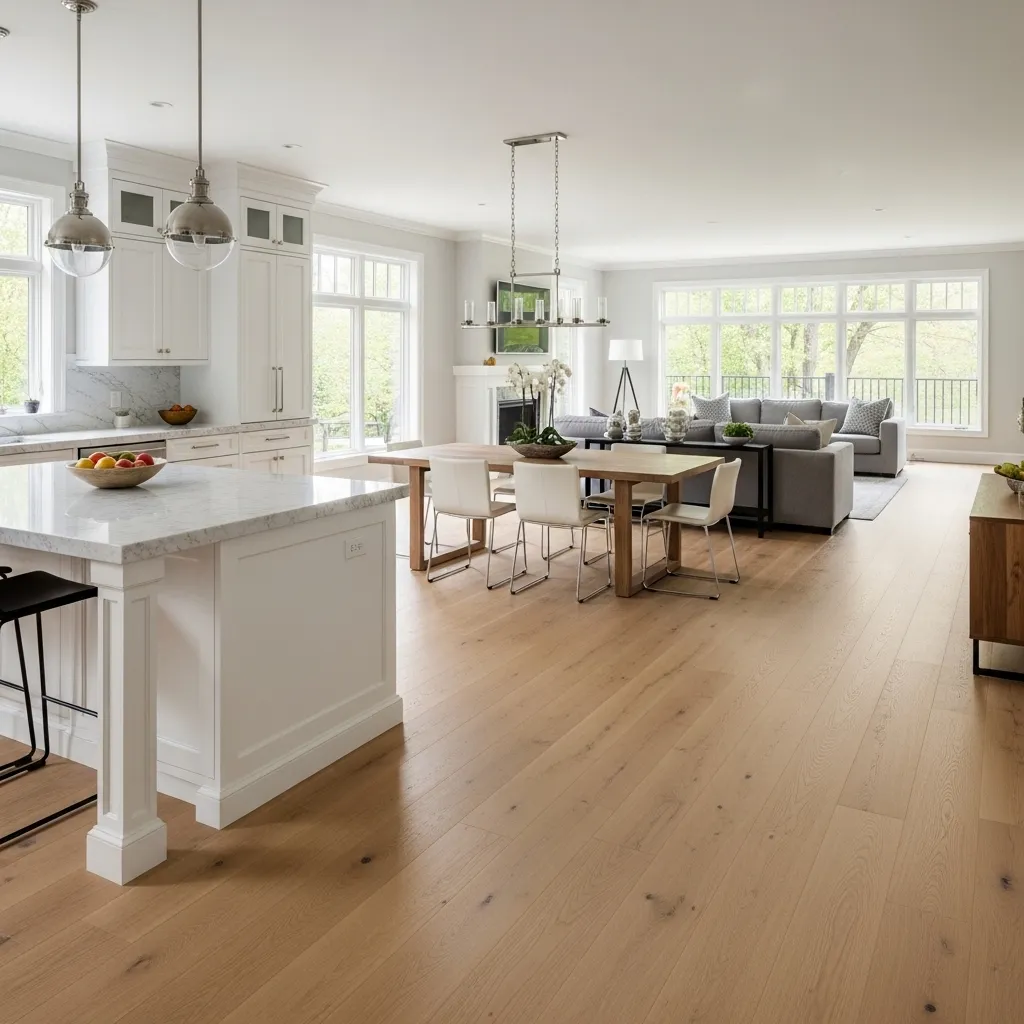
One of the smartest decisions you can make in an open kitchen is using the same flooring material throughout the entire space instead of changing materials between the kitchen, dining, and living areas. Those transitions where different flooring meets can visually chop up your space and make it feel smaller and more fragmented, but when you have continuous flooring flowing from one zone to the next, it creates this beautiful sense of cohesion and makes everything feel more expansive.
Hardwood is a classic choice that works beautifully in open concepts because it’s durable enough for kitchen traffic but also warm and inviting in living spaces. If you’re worried about water damage in the kitchen area, modern luxury vinyl planks can mimic wood so convincingly that no one will know the difference, and they’re completely waterproof. The key is choosing something that feels appropriate for all the functions happening in the space—practical enough for the kitchen but beautiful enough that you’re happy having it throughout your main living areas. That visual continuity is worth its weight in gold when you’re trying to make an open space feel intentional and well-designed.
3. Two-Tone Cabinets with Island Contrast
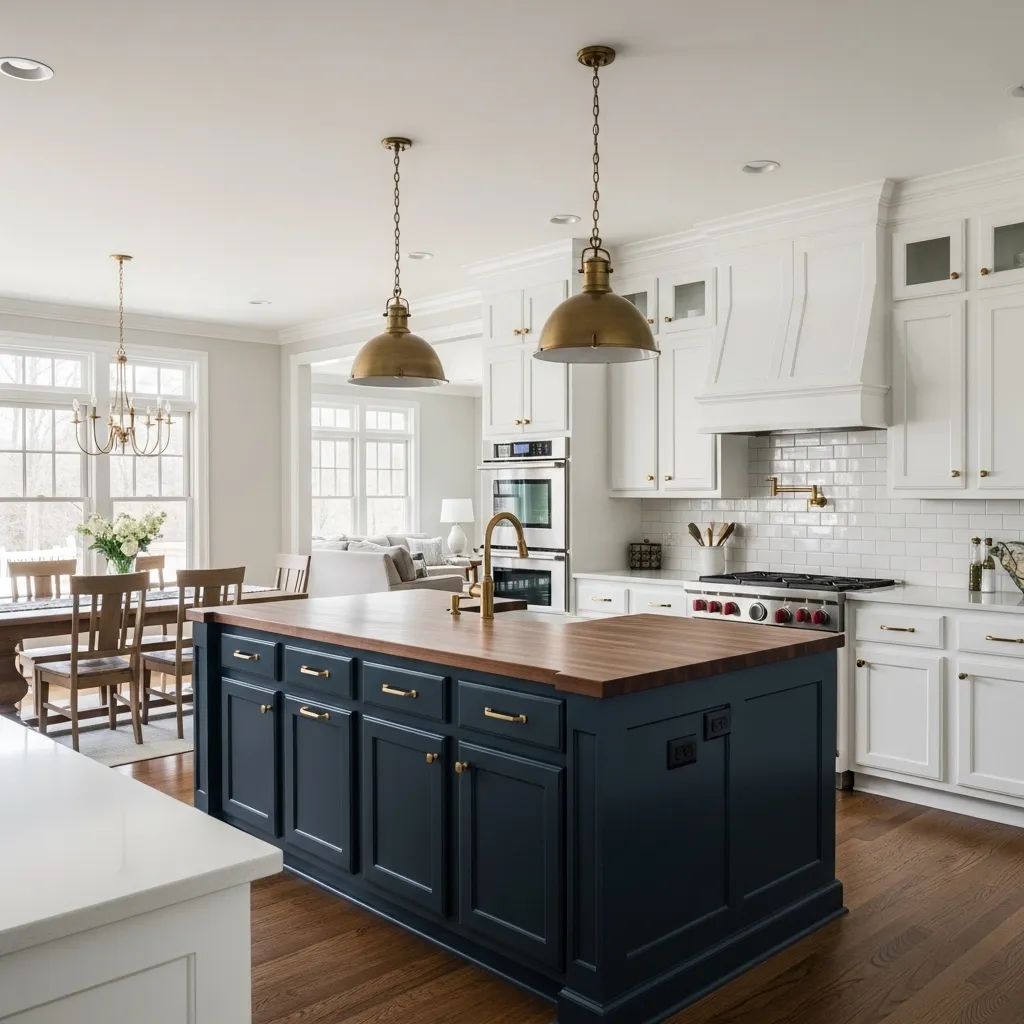
Two-tone kitchens have become incredibly popular, and for good reason—they add visual interest and depth while still maintaining a cohesive look. In an open kitchen layout, using a contrasting color for your island is particularly effective because it helps define the kitchen zone and creates a natural focal point that anchors the entire space. The island becomes this beautiful piece of furniture that bridges the kitchen and living areas.
The contrast needs to be intentional but not jarring. Classic combinations like white perimeter cabinets with a navy, forest green, or charcoal gray island work beautifully because you’re getting that pop of color and personality while keeping the overall palette grounded and sophisticated. The darker island color also tends to be more forgiving of wear and fingerprints compared to all-white cabinetry, which is a practical bonus. When your island is this much of a statement, you can keep your living and dining furniture relatively simple and let the kitchen be the star of your open layout.
4. Open Shelving Connecting to Living Space
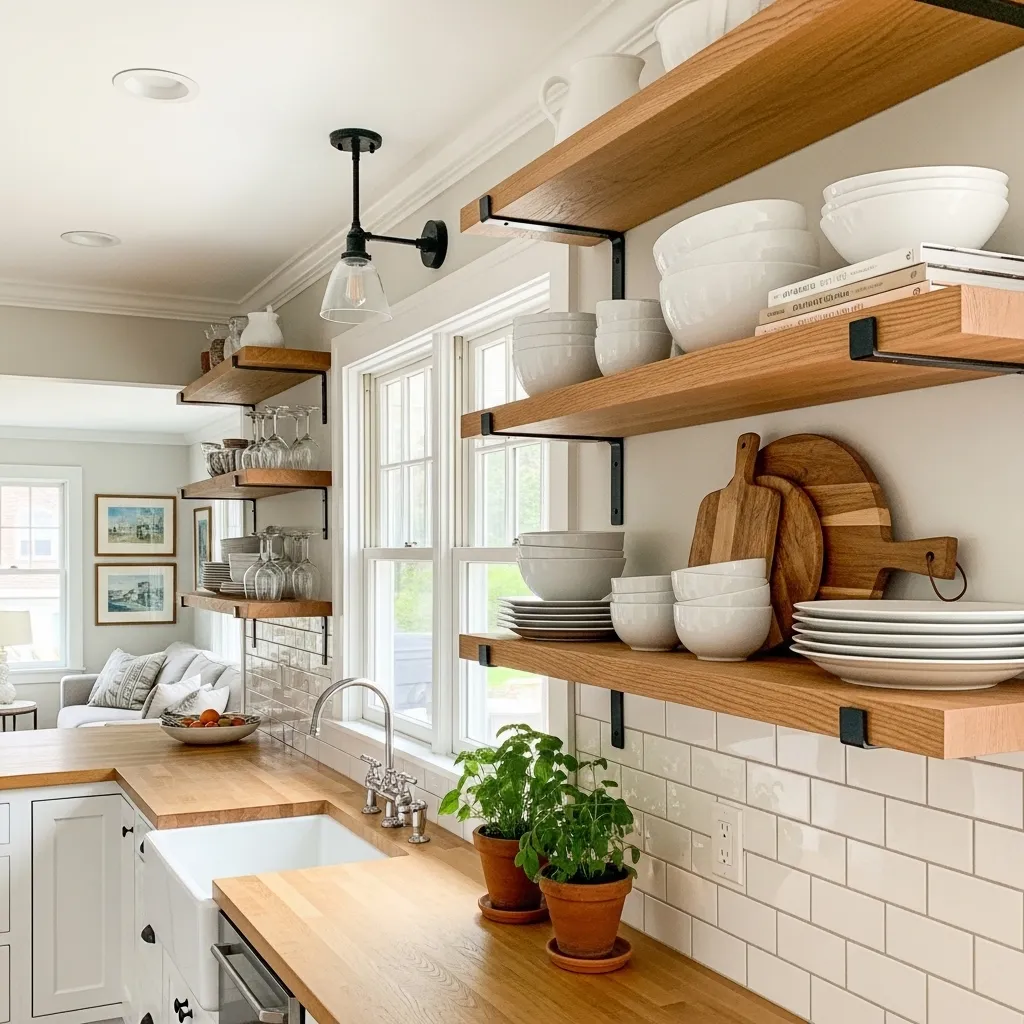
Open shelving in an open kitchen layout creates this wonderful double benefit—it makes your kitchen feel less closed-in and boxed-up while also strengthening the visual connection between your kitchen and living spaces. Without solid upper cabinets blocking sightlines, you get this lovely flow where you can see through from one area to another, and the whole space feels lighter and more breathable. It’s especially effective on the wall facing your living area.
The trick with open shelving is keeping it curated and attractive since everything is on display from every angle. You want a mix of functional everyday items and things that are actually pretty to look at—stacks of white dishes, wooden cutting boards, ceramic bowls, maybe a plant or two. Avoid the temptation to cram every shelf full or use them for random storage that’ll look messy from the living room. When done well, your open shelves become part of the décor for your entire open space, not just the kitchen. This approach works particularly well in smaller open layouts where upper cabinets might make the kitchen feel too heavy or imposing.
5. Glass Pendant Lights Defining Zones
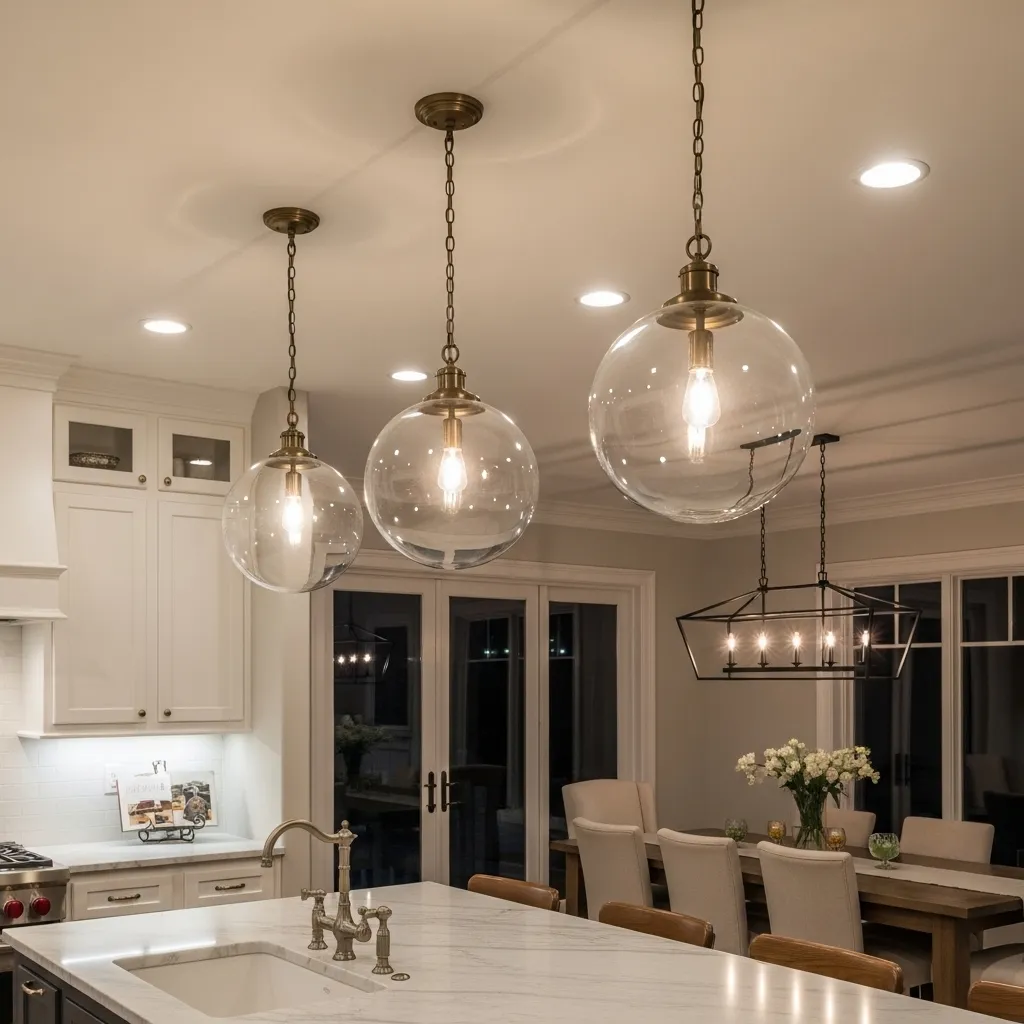
Lighting is absolutely crucial in open kitchens because it’s one of your most effective tools for defining different zones without building walls. Pendant lights above your island create a clear visual marker that says “this is the kitchen” while also providing essential task lighting for food prep and casual dining. Glass pendants in particular are perfect for open layouts because they’re substantial enough to make a statement but transparent enough that they don’t block sightlines or make the space feel closed in.
The beauty of using lighting to define zones is that it’s functional and decorative at the same time. You need good task lighting in your kitchen anyway, so why not make it beautiful and use it strategically to create visual separation? Varying your lighting fixtures between zones—maybe pendants in the kitchen, a chandelier over the dining table, and recessed lighting in the living area—helps each space maintain its own identity while still feeling cohesive. The key is choosing fixtures that complement each other in style and finish even if they’re not matchy-matchy identical.
6. Structural Beam or Column as Natural Divider
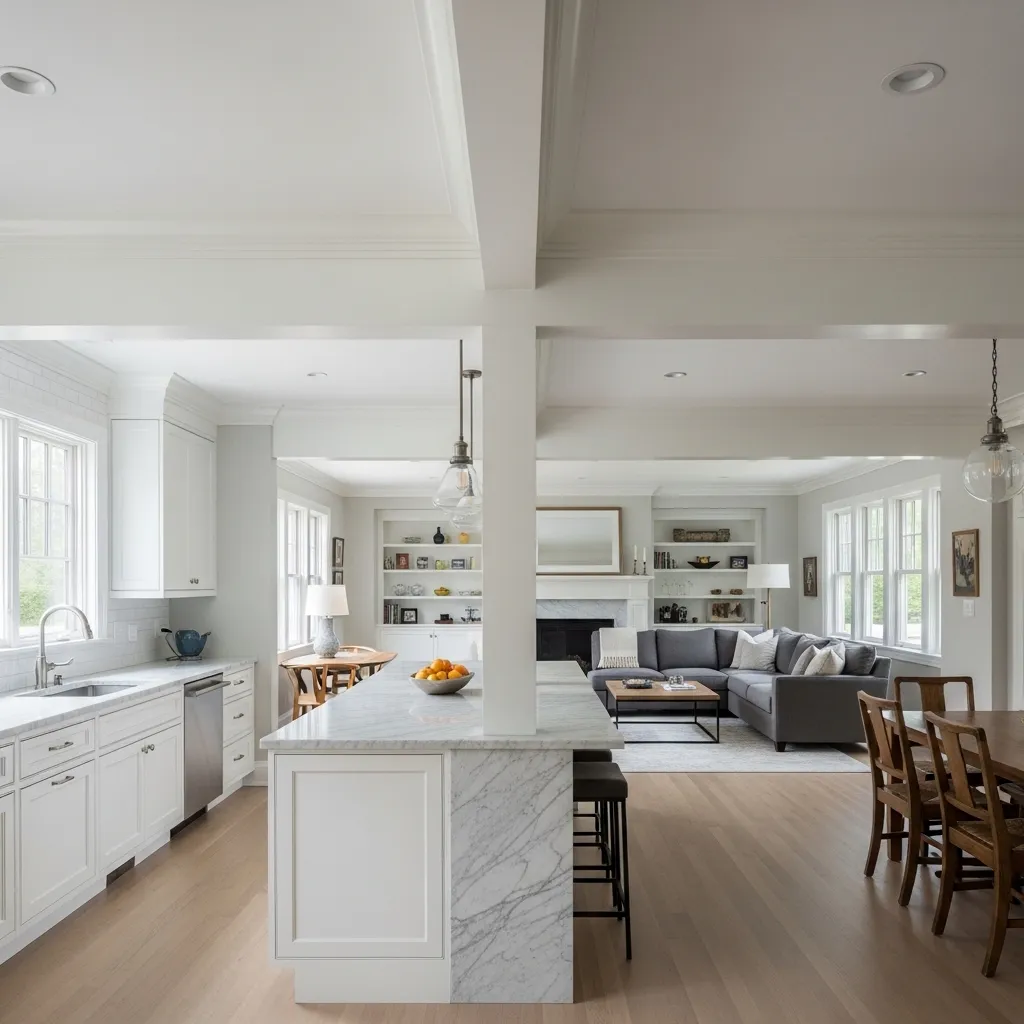
If you’re lucky enough to have structural beams or columns in your open layout, embrace them as architectural features that naturally define your zones rather than trying to hide them or wish them away. These elements can actually be incredibly helpful in open kitchens because they create visual breaks and suggest boundaries between spaces without blocking flow or sightlines the way walls would. They give your eye a place to pause and transition from one area to the next.
The key is treating them as intentional design elements rather than obstacles. Paint them to coordinate with your overall scheme, add decorative molding if that suits your style, or even use them as anchors for lighting fixtures or hanging pot racks. A beam running perpendicular to your kitchen can mark the boundary between cooking and living spaces beautifully, creating just enough separation that each area feels distinct while maintaining that open, connected feeling. It’s architecture doing the heavy lifting for your design, which is always a win.
7. Matching Bar Stools and Dining Chairs
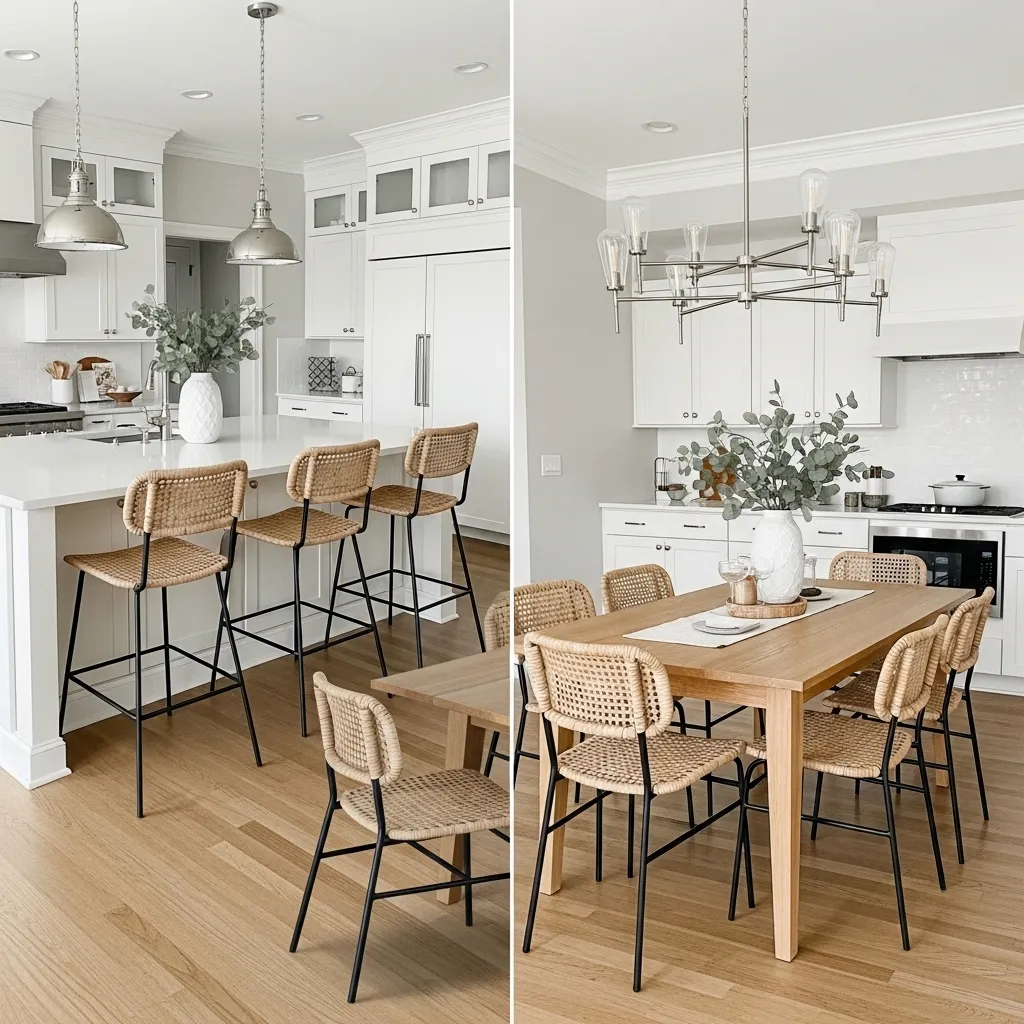
Creating visual cohesion in an open layout often comes down to the details, and matching or coordinating your kitchen island seating with your dining chairs is one of those subtle touches that makes a huge difference. When the seating throughout your open space relates to each other—whether that’s the same material, similar style, or coordinating color—it creates flow and makes the different zones feel like they belong together rather than looking like a furniture showroom where nothing connects.
You don’t have to be too literal about matching—the stools and chairs don’t need to be identical, they just need to coordinate in a way that feels intentional. Maybe they share the same wood tone, or similar metal frames, or the same upholstery fabric. This creates a thread that ties your kitchen to your dining area visually while still allowing each piece to be appropriately scaled for its function. It’s one of those designer tricks that seems small but really elevates the overall look and makes your open space feel thoughtfully curated rather than randomly assembled.
8. Vaulted or Cathedral Ceiling
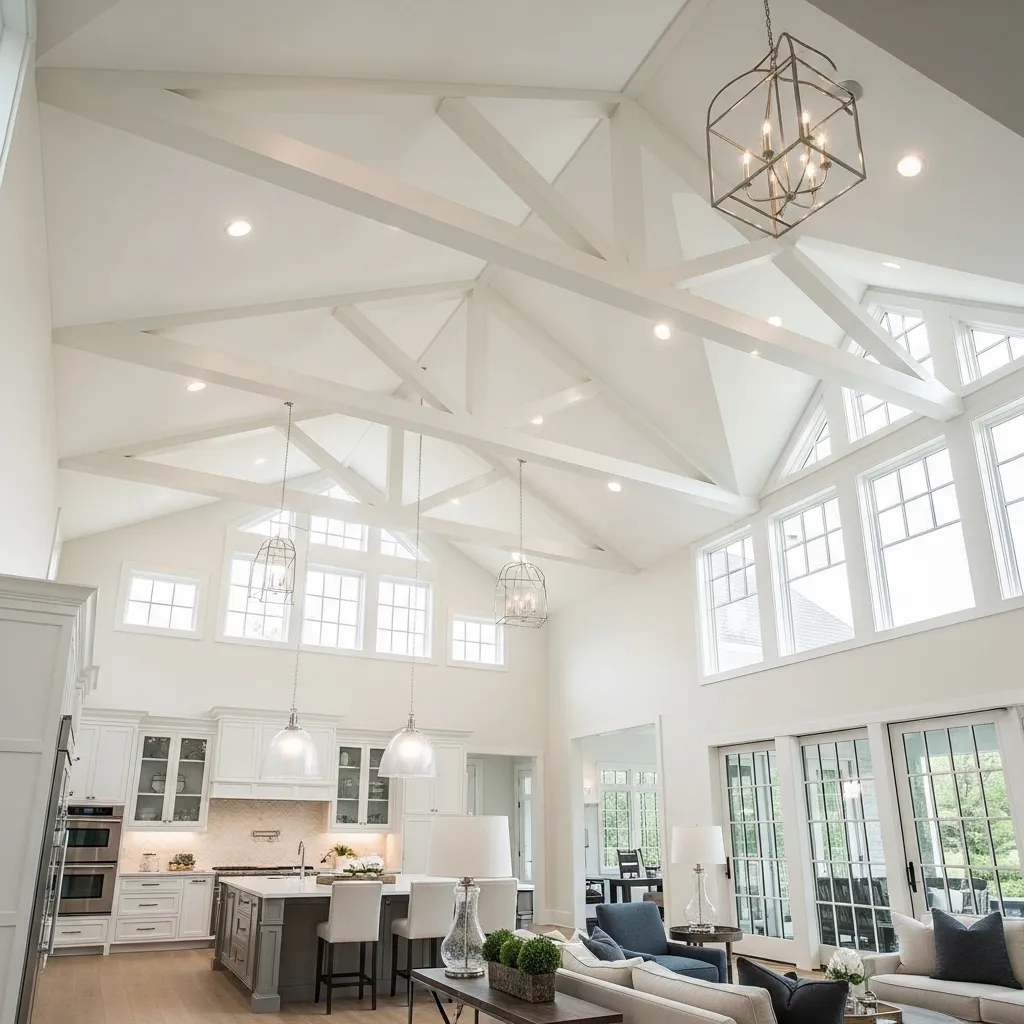
Vaulted or cathedral ceilings take open kitchen concepts to another level entirely—literally. That soaring ceiling height creates such a sense of space and grandeur that makes your open layout feel truly expansive rather than just open. The vertical volume gives your eye somewhere to travel upward, preventing that low-ceiling horizontal-only feeling that can sometimes happen in open floor plans, especially in newer construction.
The key to making vaulted ceilings work in open kitchens is balancing that dramatic height with elements that keep the kitchen feeling grounded and human-scaled. Exposed beams help bring the eye back down and create interesting architectural detail. Pendant lights at varying heights can emphasize the volume while still providing functional lighting at appropriate levels. Large windows make the most of that wall height and fill your entire open space with natural light. The result is a kitchen that feels both impressively spacious and comfortably livable—the best of both worlds.
9. Cohesive Color Palette Throughout
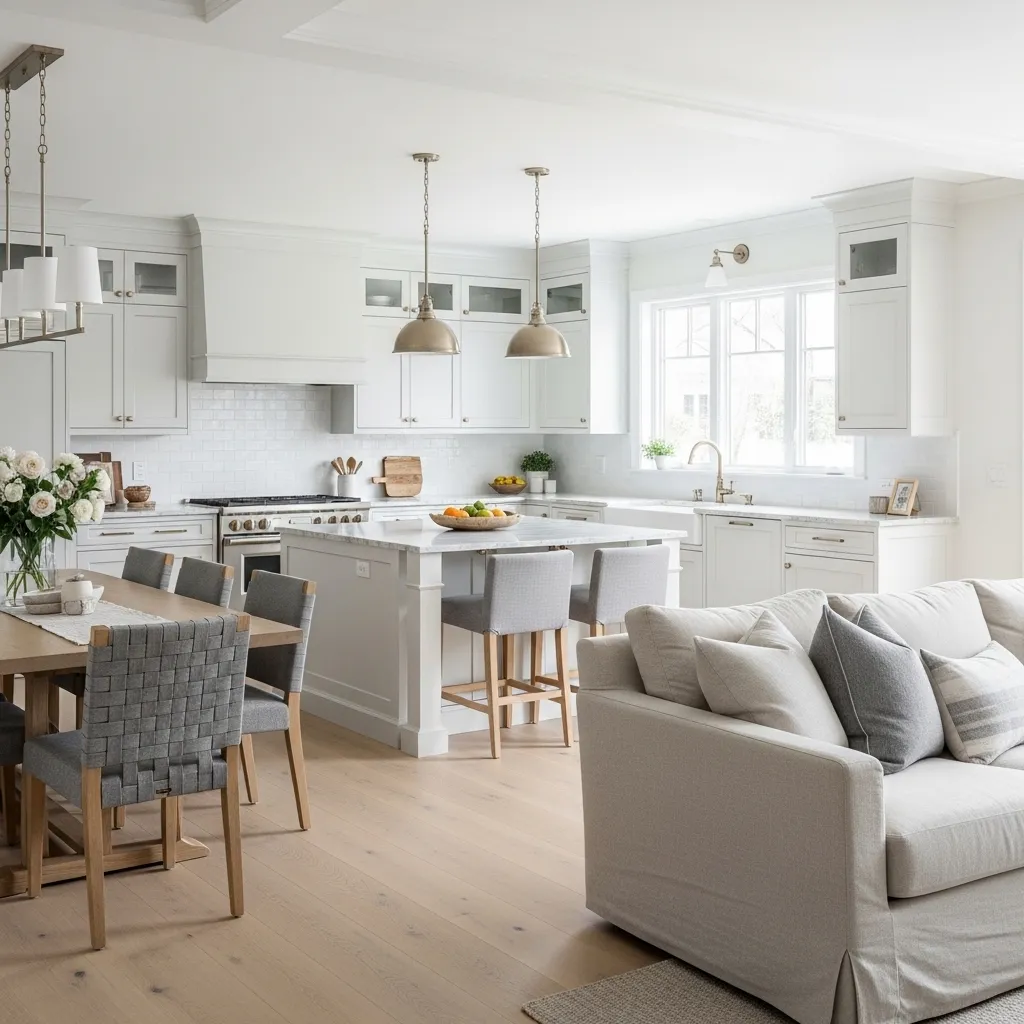
A cohesive color palette is absolutely essential in open kitchens because you’re essentially designing one large room rather than separate spaces that can have their own color schemes. When your kitchen, dining area, and living room all flow together visually, the entire space feels more harmonious, intentional, and actually larger because there are no jarring color transitions that break up the flow and chop the space into smaller segments.
This doesn’t mean everything needs to be the exact same color—that would be boring. Instead, choose a palette of complementary colors and stick with it throughout your open space. Maybe that’s various shades of white, gray, and natural wood tones. Maybe it’s warmer beiges, creams, and soft blues. The key is repetition and variation—repeat your main colors in different zones using different materials and textures to create interest while maintaining that visual thread that ties everything together. Your kitchen cabinets might be white, your dining chairs a soft gray, and your sofa a warm beige, but they all relate to each other and create one cohesive, beautiful space.
10. Sliding Barn Door for Optional Privacy
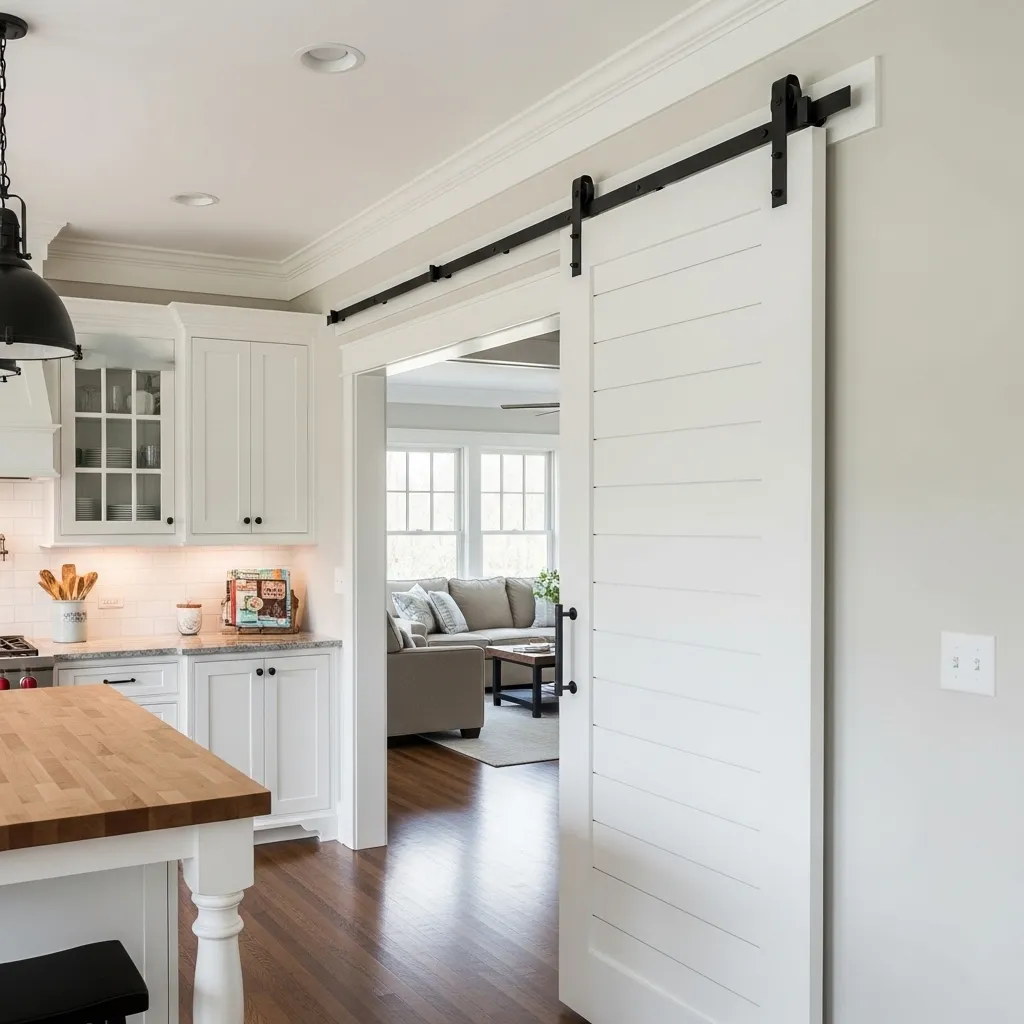
Sometimes you want the benefits of an open kitchen most of the time but also crave the option to close things off occasionally—maybe when you’re cooking something especially messy or smelly, when you’re entertaining in the living room but don’t want everyone seeing your disaster of a kitchen, or when you just want to contain the space a bit. A sliding barn door gives you that flexibility without the permanent commitment of a wall.
What’s great about barn doors in open layouts is that they become an architectural feature and design element even when they’re open. The hardware and door itself add visual interest and character, and you can choose styles ranging from rustic reclaimed wood to sleek modern glass to match your aesthetic. When open, the door slides discreetly along the wall, and when closed, you have an instant division that separates your kitchen from your living space. It’s the best of both worlds—open concept when you want it, defined rooms when you need them.
11. Banquette Seating Defining Dining Zone
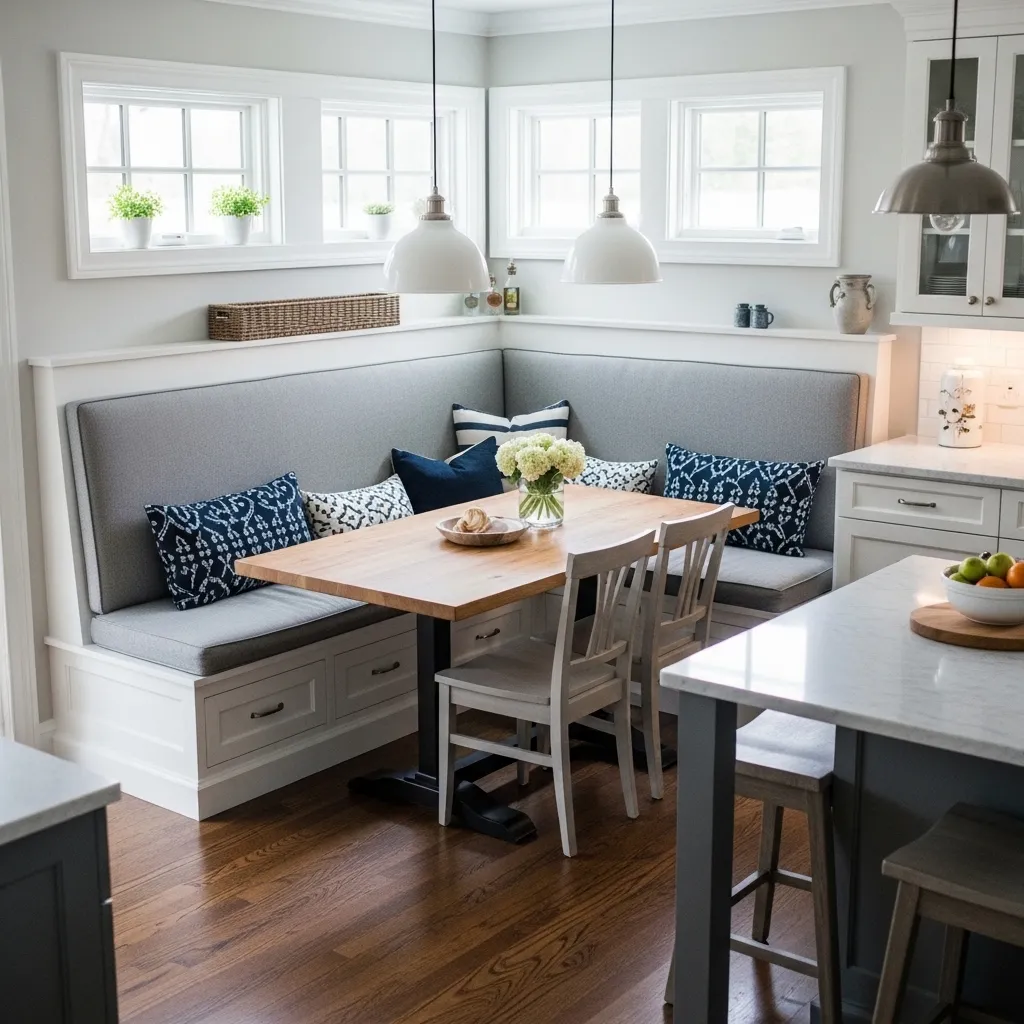
Built-in banquette seating is such a smart way to define your dining zone within an open kitchen layout while also adding tons of personality and functionality. The built-in nature makes it feel like an intentional architectural feature rather than just furniture you placed randomly, and it creates a cozy, intimate dining area that feels distinct from the kitchen without needing walls or major separation.
Banquettes are incredibly space-efficient too—you can tuck them into corners or along walls and fit more people around the table than you could with standard chairs all around. The built-in storage underneath is bonus square footage you wouldn’t have otherwise, perfect for storing linens, serving pieces, or kid stuff. The upholstered seating adds softness and comfort that makes lingering over meals more appealing, and it’s a great opportunity to bring in color, pattern, or texture that ties your dining area to your living room. The whole setup creates that restaurant-booth vibe people love while clearly defining where the dining zone begins and ends.
12. Large-Scale Artwork as Focal Point
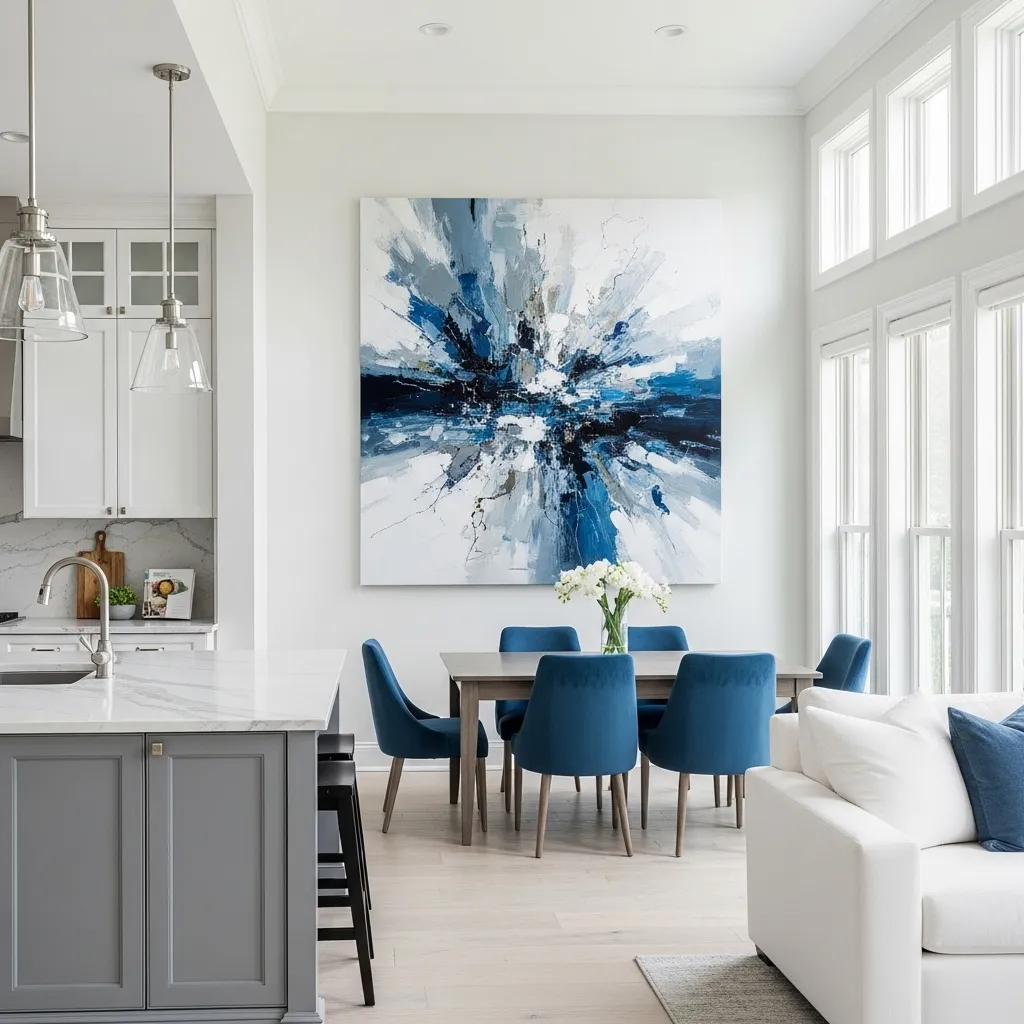
In open kitchen layouts where you’re designing one large connected space, a large-scale piece of artwork can serve as a unifying focal point that ties all your zones together and gives the entire space a sense of purpose and sophistication. Instead of treating the kitchen, dining, and living areas as separate rooms with their own focal points, one stunning piece of art that’s visible from multiple zones creates cohesion and elevates the whole space.
The key is choosing something substantial enough to hold its own in a large open area—this isn’t the place for a bunch of small frames or a tiny painting that’ll get lost. Go big and bold with your artwork choice, and use it as an opportunity to introduce color, pattern, or visual interest that can inform your design choices throughout the space. Maybe the blues in your abstract painting inspire your choice of dining chairs and throw pillows. Maybe a black and white photograph sets the tone for a monochromatic palette throughout. The artwork becomes the common thread that makes your open kitchen feel cohesive and intentional rather than just a big empty room.
13. Pass-Through Window to Outdoor Space
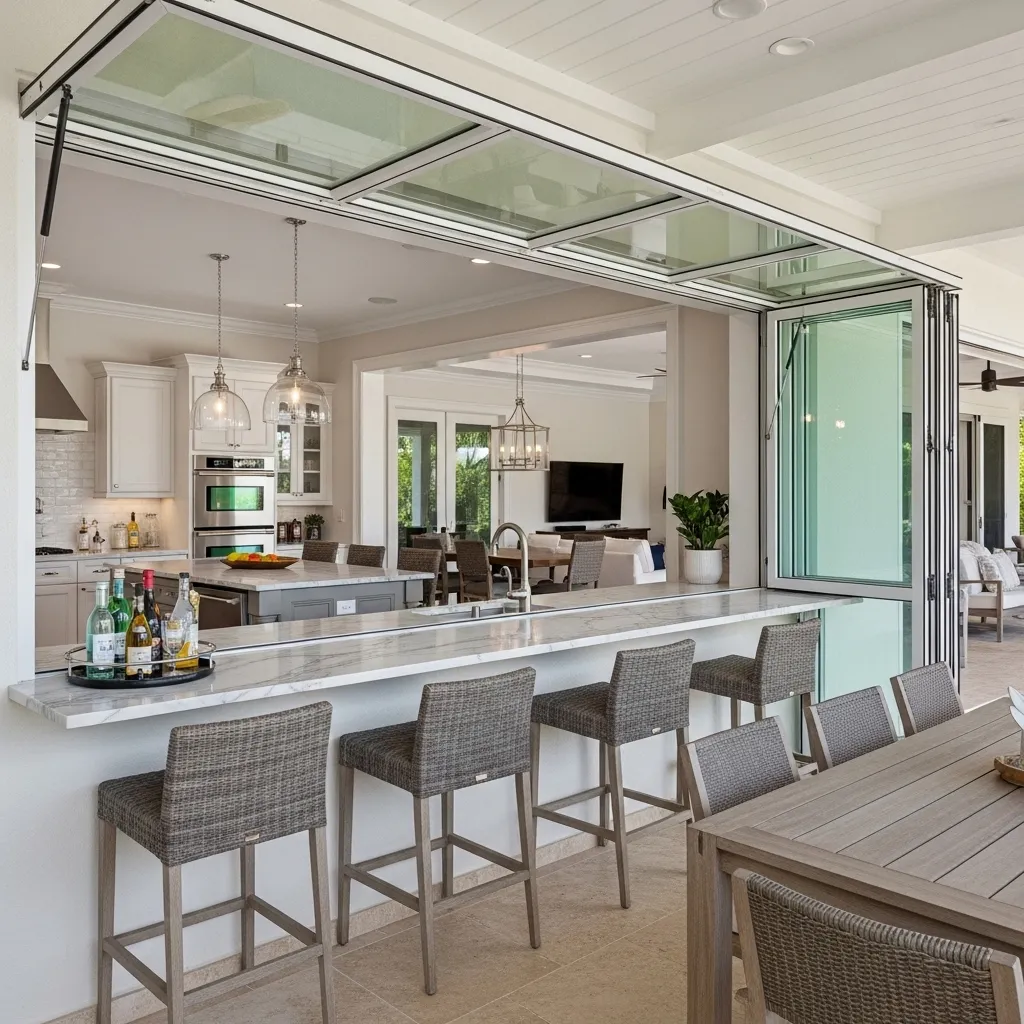
If your open kitchen has access to outdoor space, a pass-through window takes the open concept to another level entirely by connecting your indoor kitchen to outdoor living areas. This is perfect for entertaining because you can pass food and drinks directly outside without everyone having to funnel through a door, and it creates this incredible indoor-outdoor flow that makes your whole space feel so much larger and more connected to your surroundings.
Pass-through windows work beautifully in warm climates where you can keep them open much of the year, but even in seasonal climates, having that option during nice weather completely transforms how you use your space. When closed, it’s just a beautiful window bringing in natural light. When open, it becomes this interactive element that extends your kitchen functionality outdoors. The key is making sure your interior counter height aligns with an exterior counter or bar height surface so the pass-through is actually functional and not just decorative. It’s one of those features that makes your home feel resort-like and luxurious.
14. Kitchen Peninsula Instead of Island
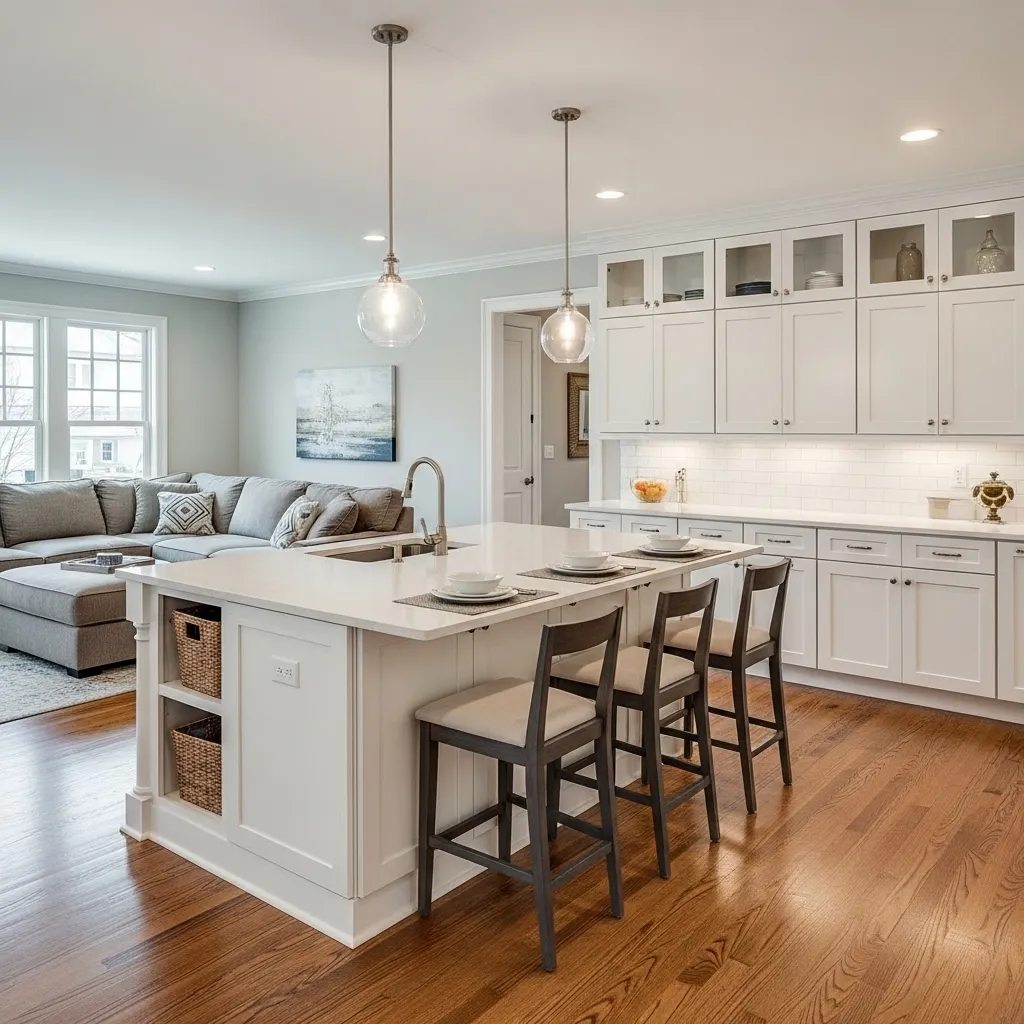
Peninsulas are an excellent alternative to islands in open kitchens, especially if your layout is more narrow or if you want a clearer definition between your kitchen and living zones. Because one end is attached to your wall of cabinets or a wall, the peninsula creates a more definite boundary while still allowing flow around the open end. It’s like a halfway point between a fully open layout and having a wall.
The peninsula provides all the benefits of an island—extra prep surface, storage, seating, possibly a sink or cooktop—while taking up less floor space and creating a more defined kitchen footprint. This can actually be really helpful in open layouts because it gives you a clear answer to “where does the kitchen end and the living room begin?” without needing furniture arrangements or rugs to do all that work. The seating side facing the living area creates that social connection while the working side faces the kitchen, so you get the best of both functional separation and open socializing.
15. Mixed Metals Throughout the Space
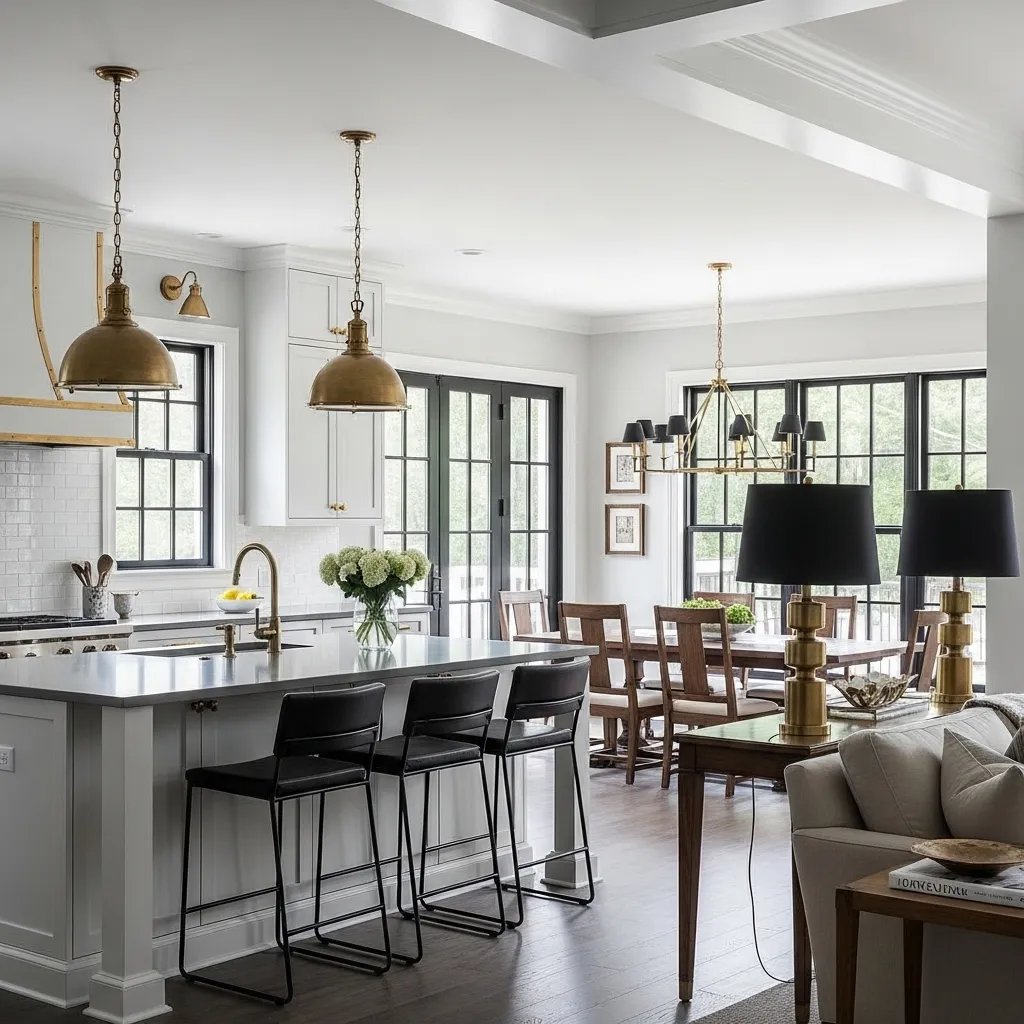
The days of matching every metal finish in your home are gone, and thank goodness because mixing metals adds so much more depth and interest to open kitchen layouts. When you thoughtfully combine different metal finishes throughout your open space—maybe brass pendants in the kitchen, black fixtures in the dining area, and chrome accents in the living room—you create this layered, sophisticated look that feels curated and personal rather than catalog-perfect.
The key to mixing metals successfully is intention and repetition. You want to repeat each metal finish in at least two or three places throughout your open space so it feels deliberate rather than random or mismatched. Maybe you have brass pendant lights and brass cabinet hardware in the kitchen that coordinate with brass table lamp bases in the living room. Maybe your black bar stools relate to black window frames and black picture frames. The repetition creates visual threads that tie your zones together while the variety keeps things interesting. Just avoid going too crazy—stick to two or three metal finishes max and let them work together to create a cohesive but dynamic look.