15 Plunge Pool Ideas That Turn a Small Footprint Into the Most Beautiful Feature in Your Outdoor Space
If you’ve been looking at your backyard, courtyard, terrace, or garden and thinking that a full-sized swimming pool is either financially out of reach or spatially impossible but wanting something more than a hot tub — something that creates a genuine water feature of architectural quality, something you can actually submerge yourself in on a hot afternoon, something that adds the specific kind of beauty to an outdoor space that only water can provide — plunge pools are the direction that contemporary landscape and outdoor design has been moving toward with increasing sophistication for the past several years, and the 2026 versions of them are genuinely extraordinary. The ideas here cover the full spectrum of what a plunge pool can be: the classic rectangular concrete plunge pool that functions as a miniature infinity edge with a view, the natural swimming pond that blurs the boundary between pool and garden, the rooftop plunge pool that makes a small urban terrace feel like a resort, the courtyard plunge pool that becomes the architectural center of an enclosed outdoor room, the lap-and-plunge hybrid that serves both therapeutic and aesthetic purposes, the hot-cold contrast plunge pool pair for serious wellness practice, the Japanese soaking bath inspired plunge pool with timber and stone, the indoor-outdoor plunge pool that connects interior and exterior space, the raised plunge pool that creates a water feature visible from inside the house, the mosaic-tiled plunge pool as a pure artistic statement, the plunge pool integrated into a deck or terrace, the natural rock and boulder plunge pool for a landscape-integrated approach, the urban rooftop plunge pool with city views, the minimalist black-tiled plunge pool for maximum drama, and the heated year-round plunge pool designed specifically for cold climate enjoyment.
I’ve become increasingly convinced over the past few years that the plunge pool is the outdoor feature with the highest beauty-to-footprint ratio available in residential design — that a well-designed plunge pool in a small courtyard or compact garden creates more visual beauty, more lifestyle value, and more genuine outdoor living quality than almost any other outdoor investment at a comparable scale. The reasons are multiple but they converge on one fundamental truth about water: it’s the material that most transforms its surroundings. A space with water in it is categorically different from the same space without water — the light reflections, the sound, the cooling effect on the surrounding air temperature, the specific quality of beauty that still water and moving water both create, the way water makes everything around it appear more vivid and more carefully designed — all of these qualities make a plunge pool not just a water feature but a complete transformation of the outdoor space it inhabits.
What makes a plunge pool different from a spa or hot tub isn’t just size — it’s the architectural quality of the design and the relationship between the pool and the outdoor space around it. A hot tub is an appliance placed in an outdoor space; a plunge pool is an architectural feature that defines and organizes the outdoor space around it. The best plunge pools aren’t additions to outdoor spaces; they’re the reason the outdoor space exists and makes sense.
1. The Classic Rectangular Concrete Plunge Pool
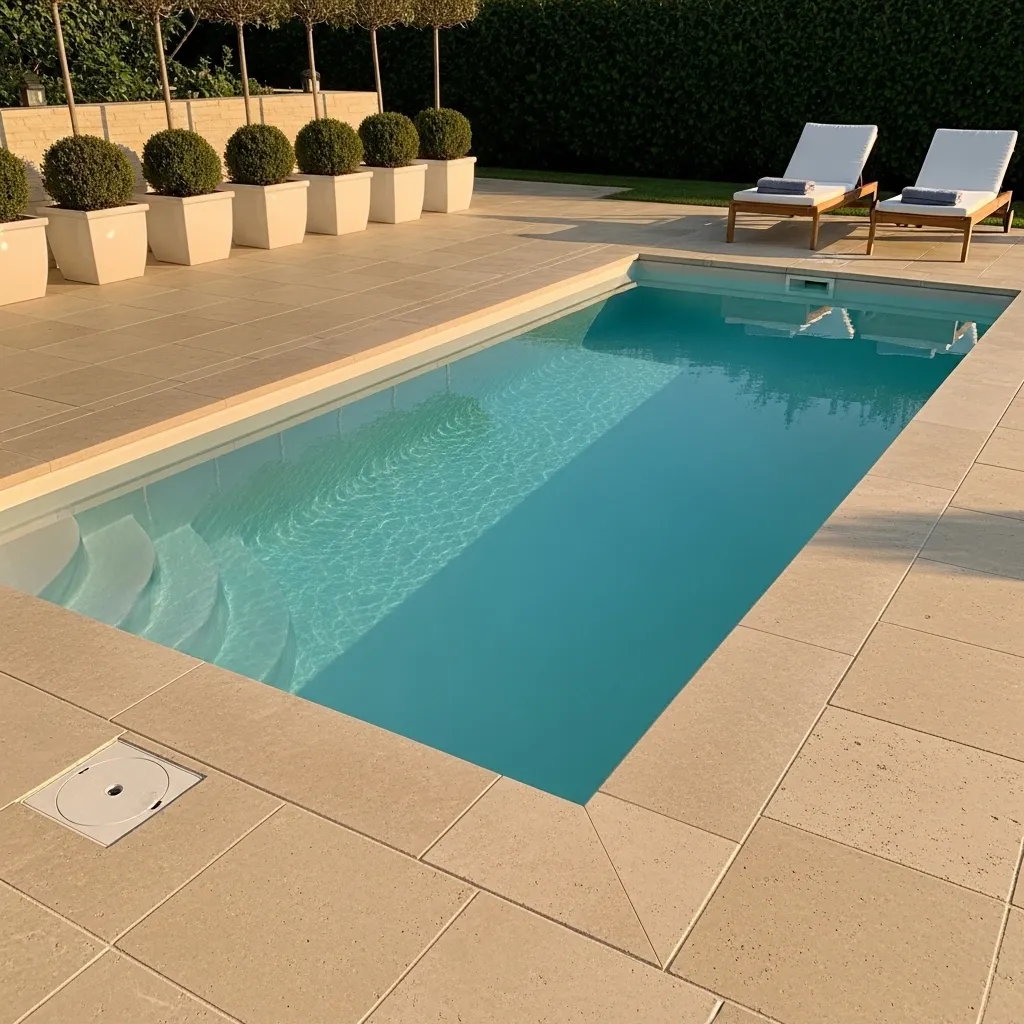
The classic rectangular concrete plunge pool is the foundation form from which all other plunge pool configurations derive their design logic — its geometric simplicity creates the clearest possible relationship between water and surrounding architecture, its straight edges align naturally with the rectilinear logic of most domestic terraces and courtyards, and its clean proportions allow the quality of the materials and the quality of the water surface to be the primary visual experiences rather than the pool’s form itself. A well-executed rectangular plunge pool in good stone or concrete with clean coping is one of the most quietly beautiful objects in residential landscape design.
The material of the pool interior finish is the decision that most determines the color and character of the water — white or pale grey plaster creates the clearest, most luminous blue-green water color, while darker finishes create deeper, more mysterious water tones that absorb rather than reflect light. The pale finish is the most universally beautiful in the widest range of lighting conditions, creating water that appears to glow from within on bright days and that reflects the sky and surrounding garden on overcast ones. The dark finish creates a more dramatic and more specific effect — extraordinary on a clear day but potentially less beautiful when the sky is grey.
2. The Natural Swimming Pond Plunge Pool
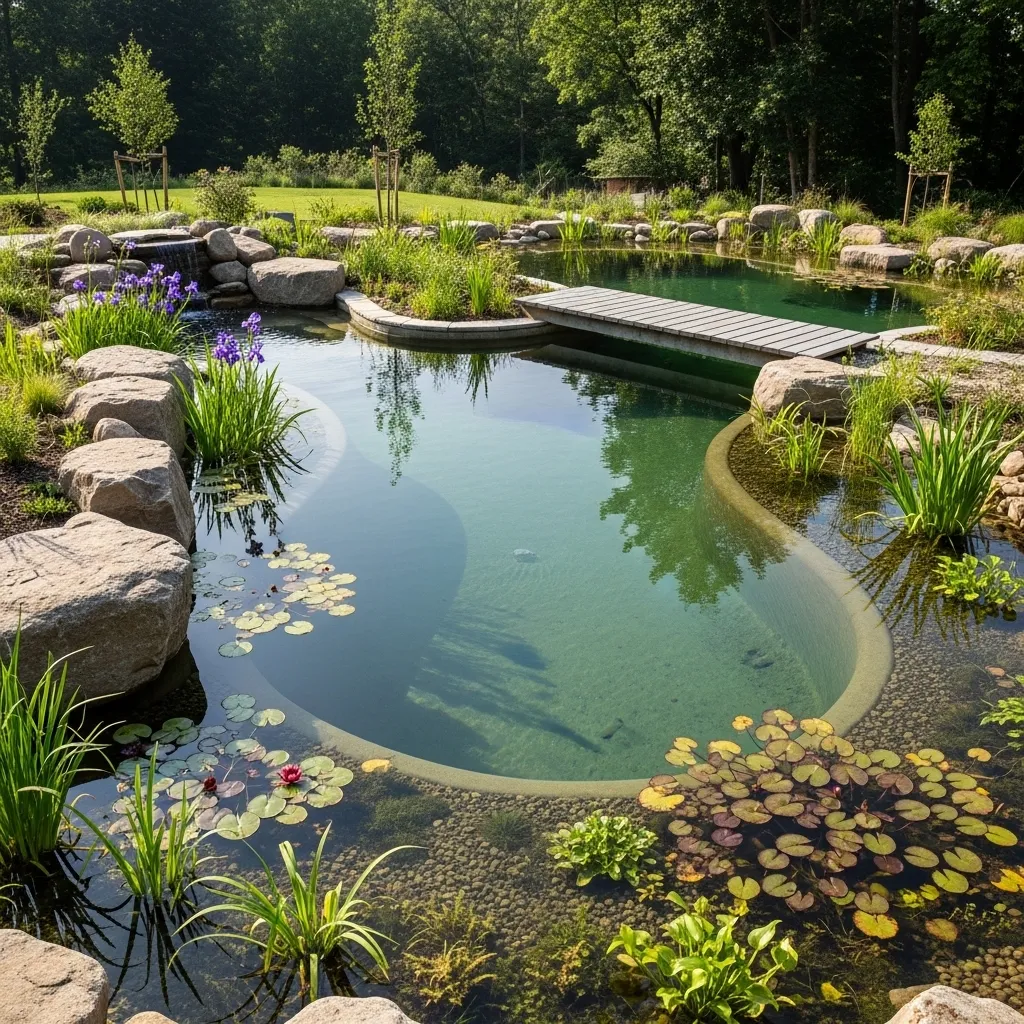
A natural swimming pond plunge pool — using biological filtration through planted regeneration zones rather than chemical treatment — creates the outdoor water feature most completely integrated with the garden ecosystem, producing a plunge pool that’s simultaneously a wildlife habitat, a garden design feature, and a bathing environment of extraordinary beauty. The biological clarity of naturally filtered water has a quality different from chemically treated pool water — slightly green-tinted, alive in the microscopic sense, cool and fresh in a specifically natural way — and the experience of swimming in naturally filtered water in a naturalistic pond setting is genuinely different from swimming in a conventional pool.
The planted marginal zones that provide biological filtration in a natural swimming pond are also the feature that most completely integrates the pool with the surrounding garden — the iris, rushes, and water plants that filter the water are the same plants that would grow at the edge of a natural pond, and their presence creates a pool that reads as part of the garden’s natural ecology rather than as an imported recreational appliance. Over time, the pond plants establish themselves and fill in, the water reaches biological balance, and the natural swimming pond becomes progressively more beautiful and more naturalistic rather than requiring the ongoing chemical management of a conventional pool.
3. The Rooftop or Terrace Plunge Pool
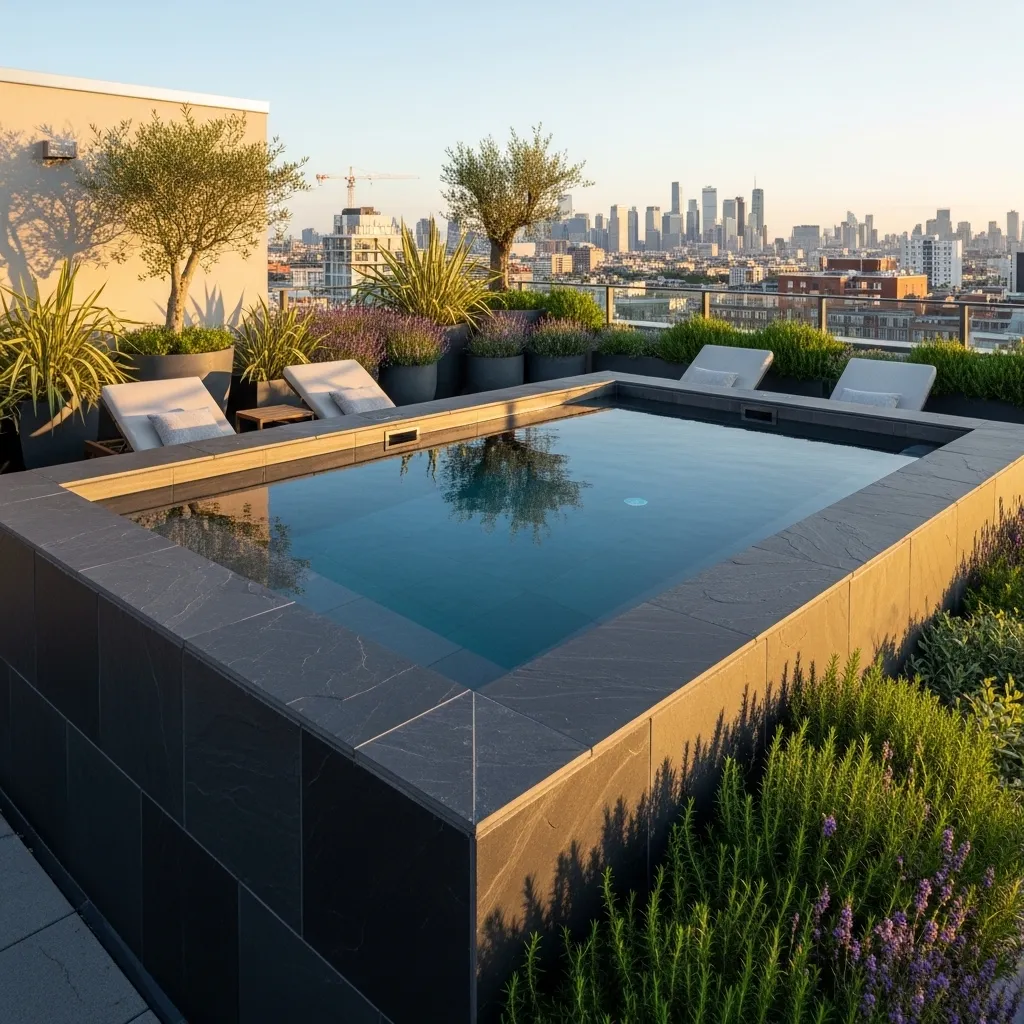
A rooftop or elevated terrace plunge pool creates the most dramatic residential water feature available in urban settings — the combination of a pool’s water surface with an elevated position and a city or landscape view creates a visual experience of extraordinary quality, where the pool water reflects the sky and the surrounding view in a mirror that appears to extend the terrace’s connection to the surrounding landscape dramatically beyond its actual boundaries. A rooftop plunge pool that reflects a city skyline or a mountain range or a garden vista is a genuinely extraordinary design feature that transforms a utilitarian rooftop terrace into one of the most beautiful spaces in the building.
The structural requirement of a rooftop plunge pool — that the roof structure must support the weight of the water, the pool shell, and the surrounding terrace — is the primary technical consideration that determines the pool’s feasibility, and it typically requires a structural engineer’s assessment before design work begins. Most concrete flat roofs can support a small plunge pool if properly assessed and potentially reinforced, but the structural requirement means rooftop plunge pools are most easily incorporated in new construction where the structural capacity can be designed in from the beginning rather than retrofitted.
4. The Courtyard Plunge Pool
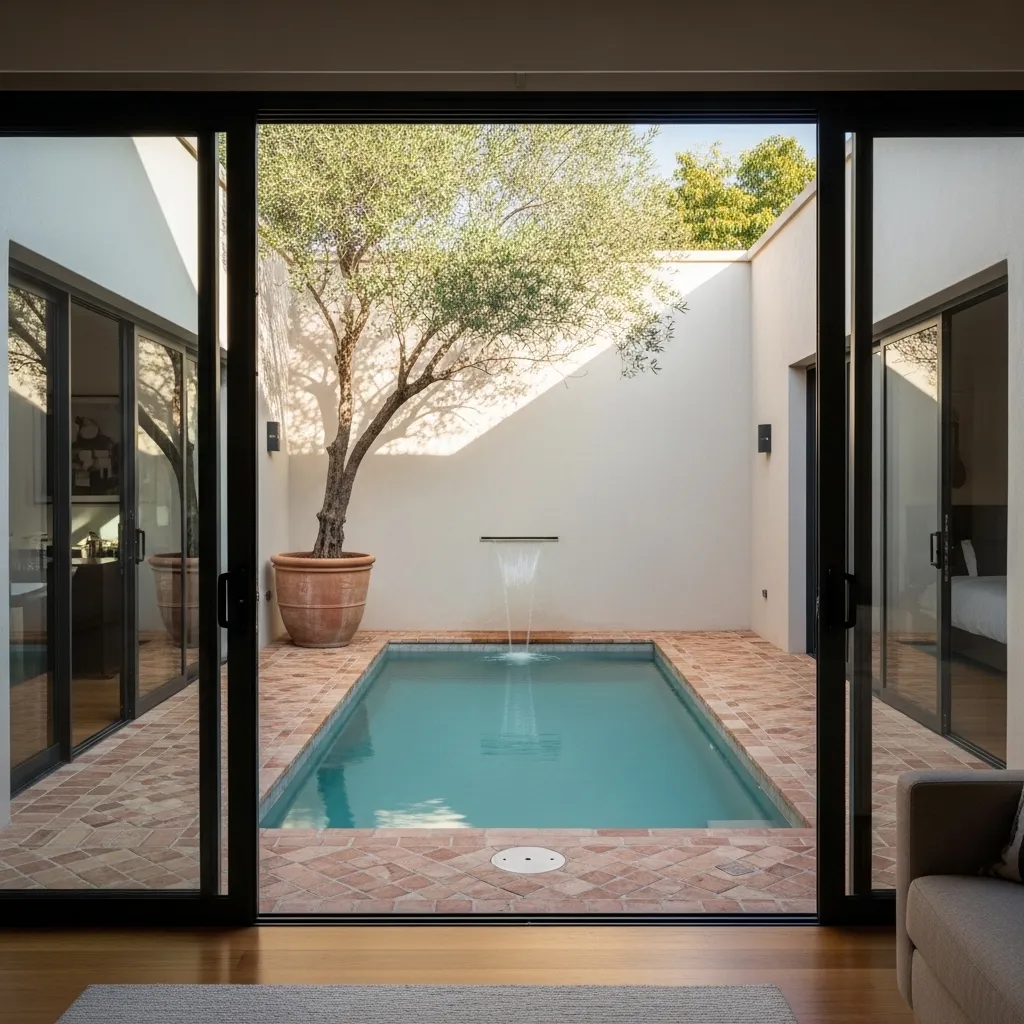
A courtyard plunge pool — positioned at the center of an enclosed outdoor room surrounded by the house’s interior spaces — creates the most intimate and most architecturally integrated plunge pool configuration, because the enclosed courtyard creates a specific quality of protected outdoor space that feels simultaneously interior and exterior, sheltered and open to the sky. The plunge pool at the center of this enclosed outdoor room becomes the courtyard’s primary architectural feature and organizational center, and its water surface is visible from every room that opens onto the courtyard, creating a constant visual connection between the interior life of the house and the water at its center.
The visibility of the courtyard plunge pool from interior rooms is the quality that makes this configuration specifically valuable beyond its outdoor use — a plunge pool visible through full-height glass doors from a living room or kitchen is a dynamic, light-reflecting architectural feature that changes the quality of the interior space by bringing the movement of water and the reflection of sky into the room’s visual field. Even when the pool is not being used for bathing, its presence as a visible water feature from inside the house contributes to the quality of the interior spaces around it continuously.
5. The Hot-Cold Contrast Plunge Pool Pair
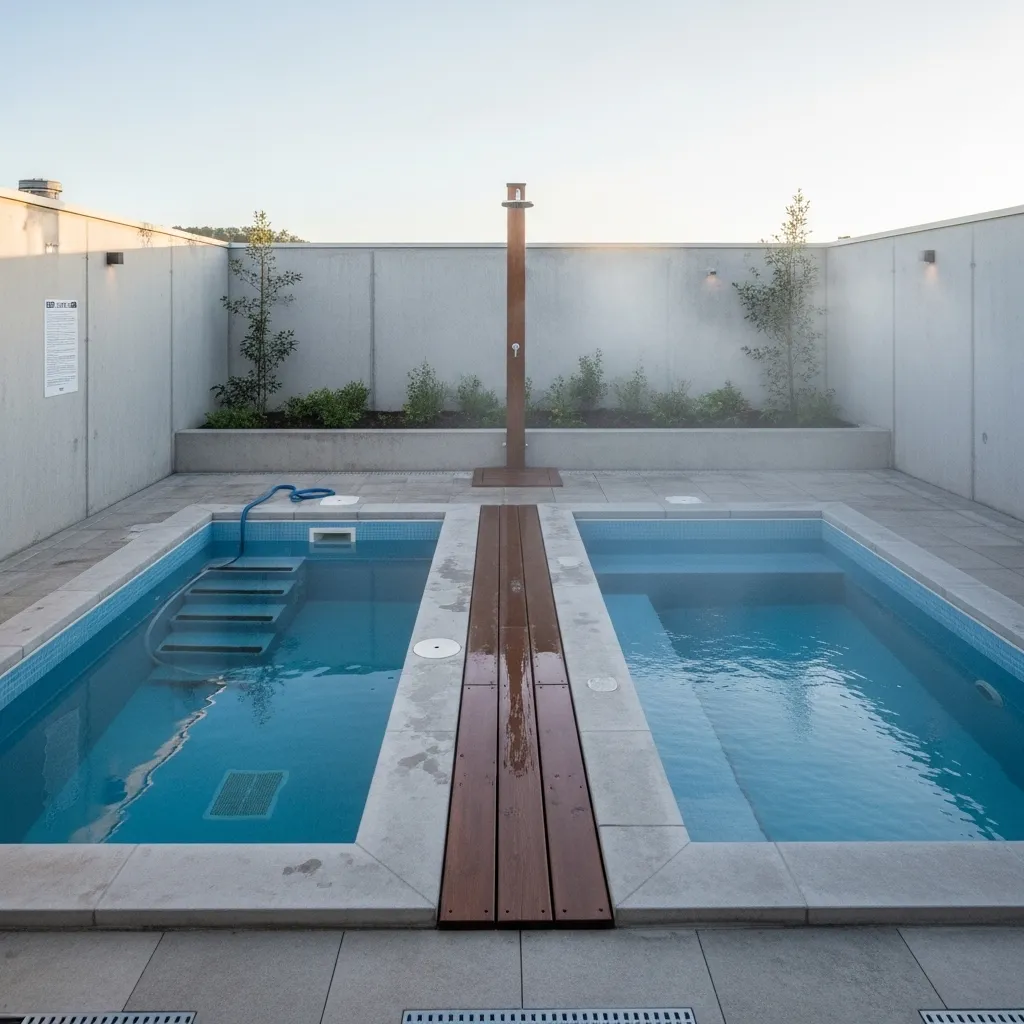
A hot-cold contrast plunge pool pair — a cold plunge and a heated soaking pool positioned for immediate transition between them — creates the most serious and most therapeutically significant wellness installation available in residential outdoor design, incorporating the contrast bathing practice that has defined Nordic and Japanese bathing traditions for centuries and that contemporary sports medicine and wellness science has validated as genuinely beneficial for recovery, circulation, immune function, and mood. The experience of moving from cold plunge to hot soak and back creates physiological effects that either alone doesn’t produce, and designing an outdoor space specifically around this practice creates a wellness environment of genuine daily utility.
The cold plunge specifically has become one of the most sought-after residential wellness features in 2026 — the combination of research supporting cold water immersion’s benefits and the visibility of cold plunge practice among athletes, wellness practitioners, and public figures has created significant demand for cold plunge installations that goes well beyond the traditional Nordic and Japanese contexts where contrast bathing has always been practiced. A residential cold plunge paired with a hot soak creates a complete contrast bathing installation that previously required access to a spa or Nordic bathing facility.
6. The Japanese Soaking Bath Inspired Plunge Pool
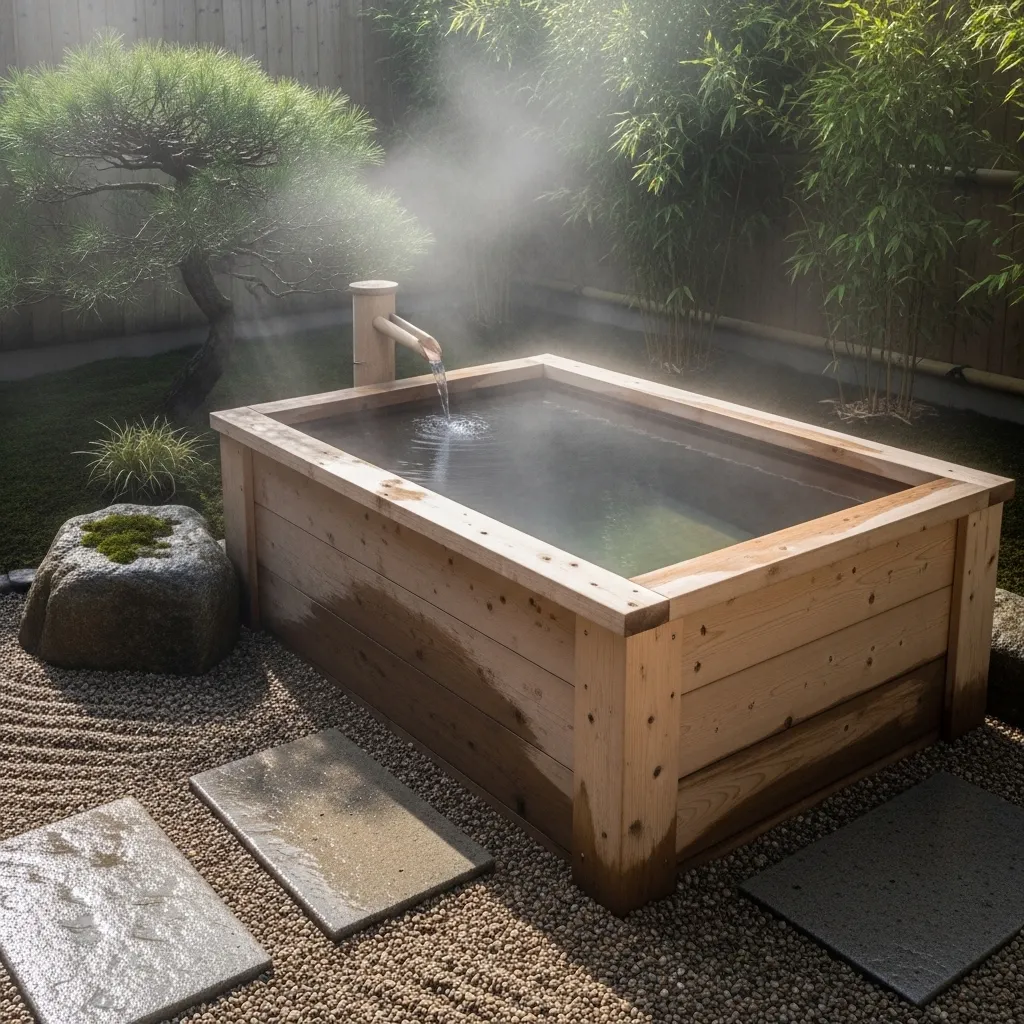
A Japanese soaking bath inspired outdoor plunge pool — using the deep, seated-immersion format of the traditional ofuro rather than the swimming-oriented format of Western pool design — creates the most meditative and most specifically wellness-oriented bathing experience available in residential outdoor design. The ofuro format, in which the bather sits or crouches in very hot water up to the chin rather than lying flat in a shallow bath or swimming in a longer pool, creates a depth of physical relaxation and mental stillness that the Western bathing tradition doesn’t quite replicate, and the outdoor ofuro in a carefully composed Japanese garden setting creates an experience that’s simultaneously physically therapeutic and aesthetically extraordinary.
The timber construction of a traditional Japanese soaking bath — hinoki cypress being the most authentic and most beautiful, its natural antimicrobial properties making it specifically suited to water immersion — creates a pool with a warmth and natural quality that concrete and tile can’t approach. The timber ages and weathers beautifully with proper care, darkening and softening with use in a way that connects the pool to the Japanese aesthetic tradition of wabi-sabi — finding beauty in the natural aging and imperfection of genuine materials. The fragrance of wet hinoki is itself a significant part of the Japanese bathing experience, releasing a specific cedar-pine scent that’s both calming and invigorating.
7. The Indoor-Outdoor Plunge Pool
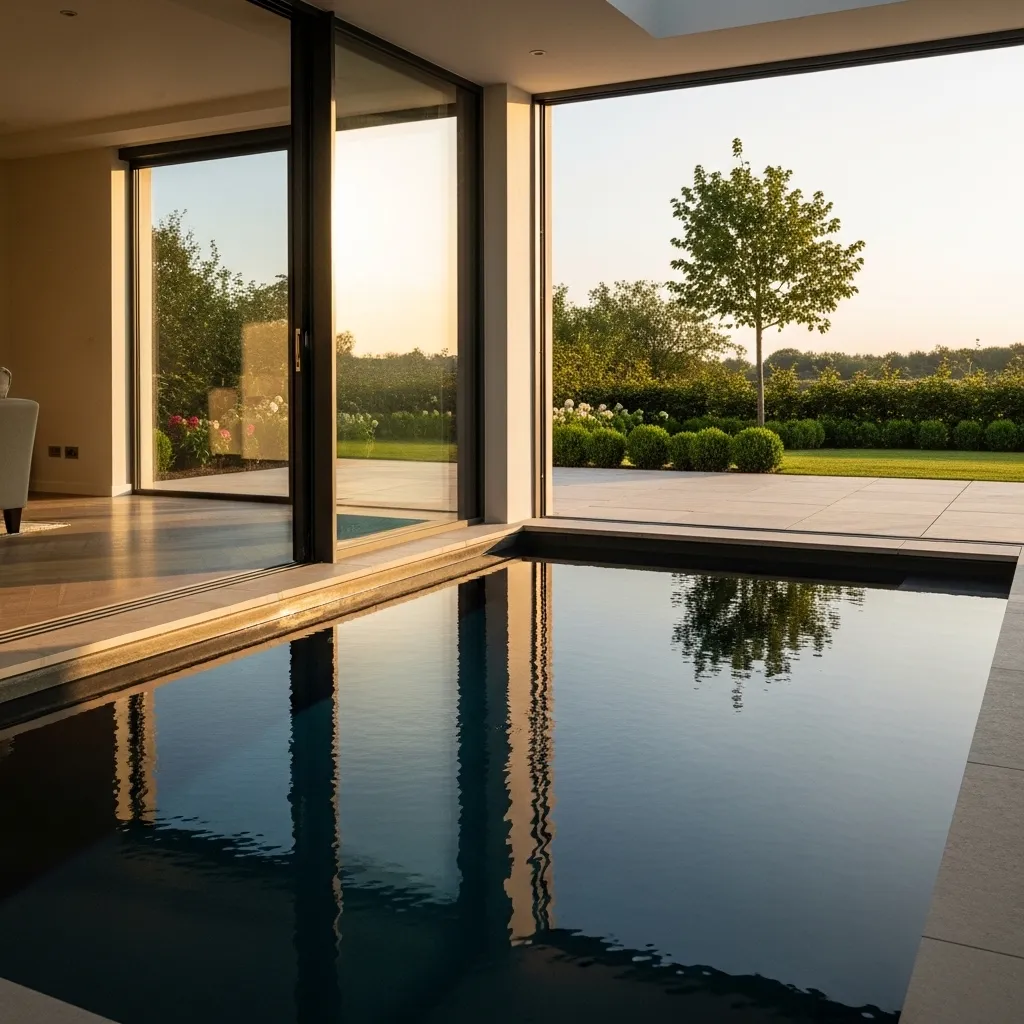
An indoor-outdoor plunge pool — where the pool extends continuously through a glass opening from an interior space to the exterior garden — creates the most architecturally ambitious and most spatially transformative plunge pool configuration available, because it dissolves the boundary between inside and outside at the level of the most elemental architectural element, water. A pool that exists simultaneously in two different spatial conditions — enclosed within the house and open to the garden — creates a spatial experience of continuity between inside and outside that no other architectural intervention quite achieves, and the water surface that connects the two spaces creates a mirror of light and reflection that changes both interior and exterior simultaneously.
The technical requirements of an indoor-outdoor pool — the waterproofing at the wall penetration, the heating system that can maintain comfortable water temperature in an interior space while the exterior section is open to ambient air, the glass wall or opening detail that seals adequately when closed while providing a genuine visual connection when open — are more complex than either a purely indoor or purely outdoor pool requires, but the experiential result justifies the additional complexity for spaces where the architectural opportunity exists.
8. The Raised Plunge Pool as Garden Feature
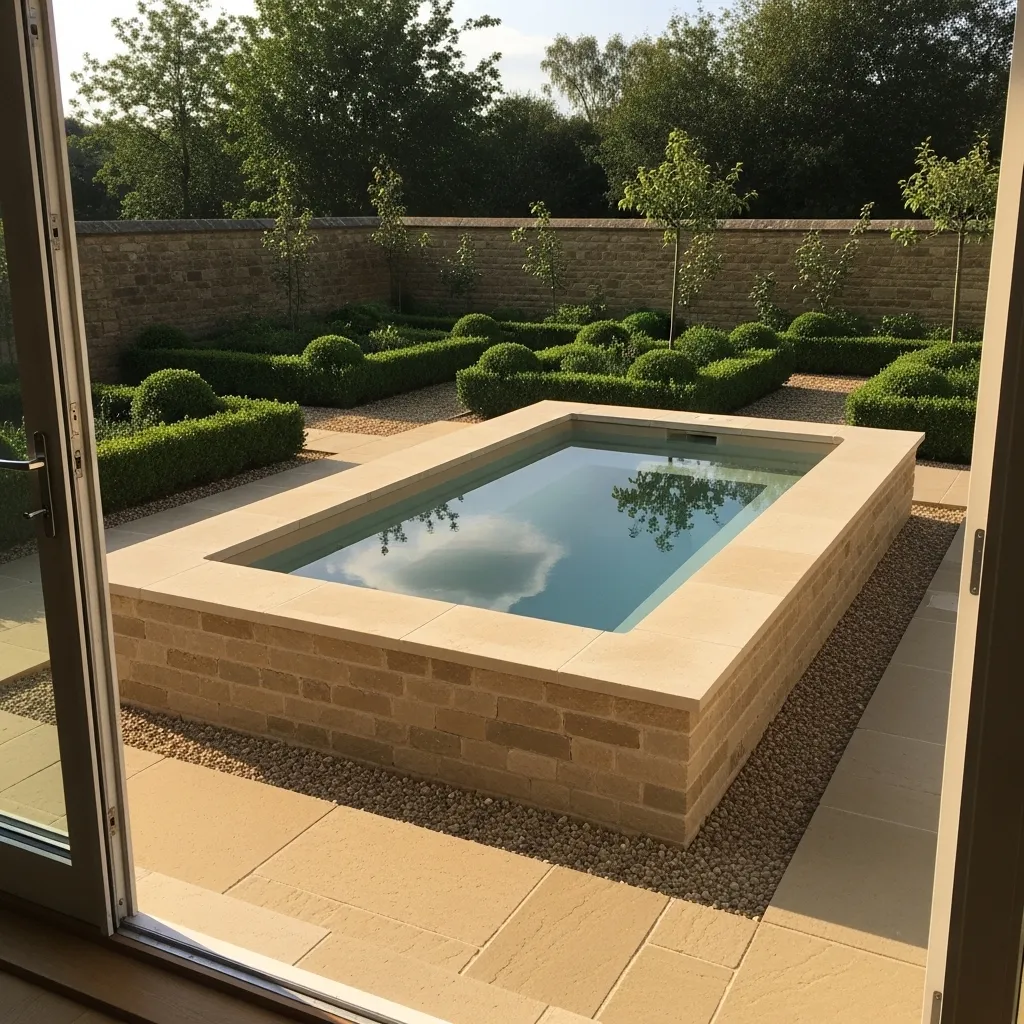
A raised plunge pool — with its water surface elevated above the surrounding garden grade on a stone or concrete plinth — creates a garden water feature of maximum visual impact because the elevated water surface becomes a reflective horizontal plane within the garden landscape that’s visible from inside the house, creating a mirror of sky and surrounding planting that changes with every shift in light and weather. Unlike a flush-set pool whose water surface reads as a hole in the ground when viewed from inside the house, a raised pool’s water surface reads as a positive object in the garden — a shimmering horizontal plane at a height that makes it visible and significant from the interior.
The raised pool’s coping edge at seating height is the functional detail that most adds to its lifestyle value beyond the purely visual — a coping that’s twelve to eighteen inches wide and at a comfortable sitting height (approximately eighteen inches above the pool surround grade) creates a seat wall around the pool that encourages casual poolside sitting, feet-in-the-water relaxation, and the specific quality of easy, informal pool adjacency that wide coping provides without requiring separate pool furniture.
9. The Mosaic-Tiled Plunge Pool
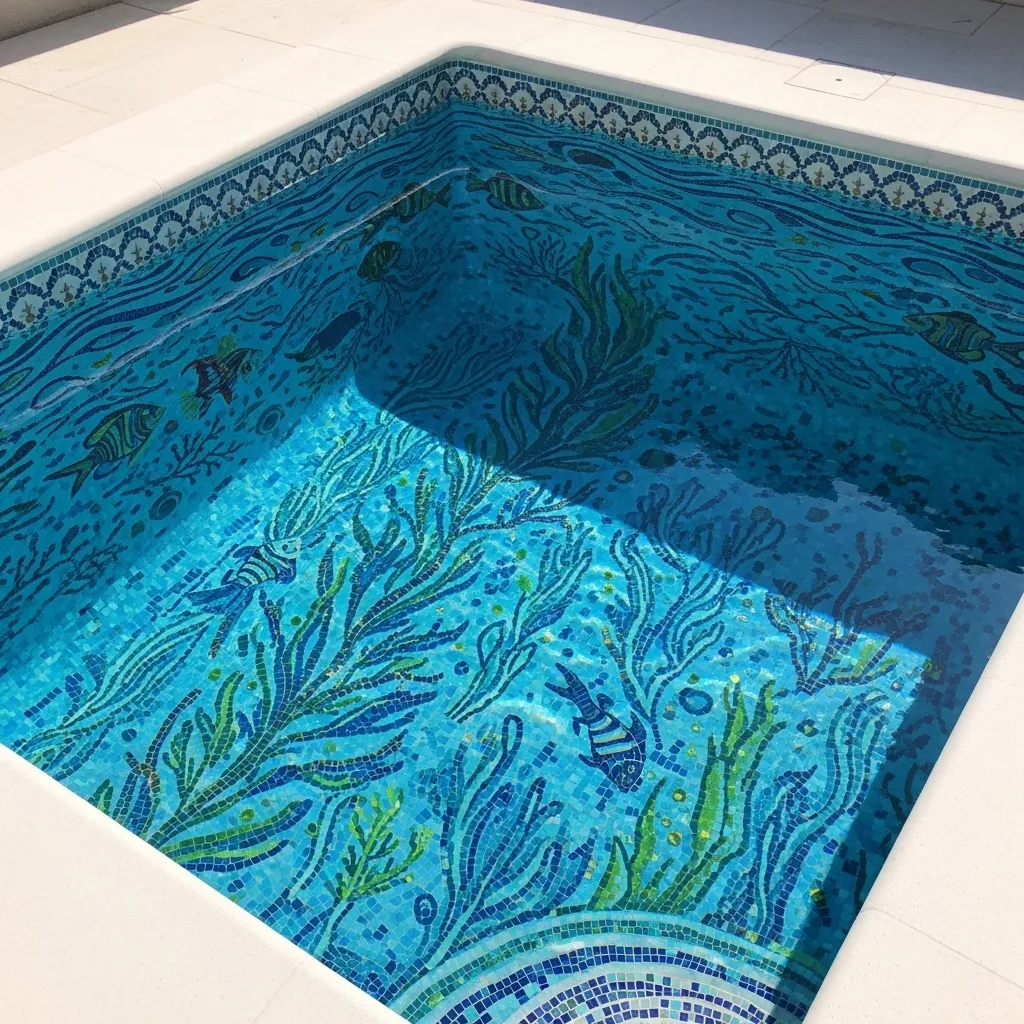
A mosaic-tiled plunge pool — with a hand-applied tessera mosaic covering the complete pool interior — creates the most overtly artistic and most specifically beautiful plunge pool configuration available, transforming the pool from a functional water feature into a genuinely artistic object that rewards sustained visual attention both from above the water surface and through it. The quality of light refraction through pool water onto a mosaic surface creates a moving light show on the pool floor and walls that changes continuously with the movement of the water surface and the angle of the sun, creating an experience of the pool that’s different at every moment and at every light condition.
The design of the mosaic itself is the artistic decision that most determines the pool’s specific character — the color palette, the pattern complexity, the figurative versus abstract choice, the scale of the individual tesserae. Traditional Mediterranean pool mosaics in blue and white reference the historical swimming pools of ancient Rome and the Byzantine tradition; colorful botanical or marine mosaics in jewel tones create a more exotic and more specifically artistic effect; geometric pattern mosaics in a restrained palette create the most contemporary and most architecturally resolved mosaic pool. Each represents a different relationship between the pool as functional object and the pool as art object, and the choice between them is fundamentally a choice about the role of art and decoration in the outdoor space.
10. The Integrated Deck Plunge Pool
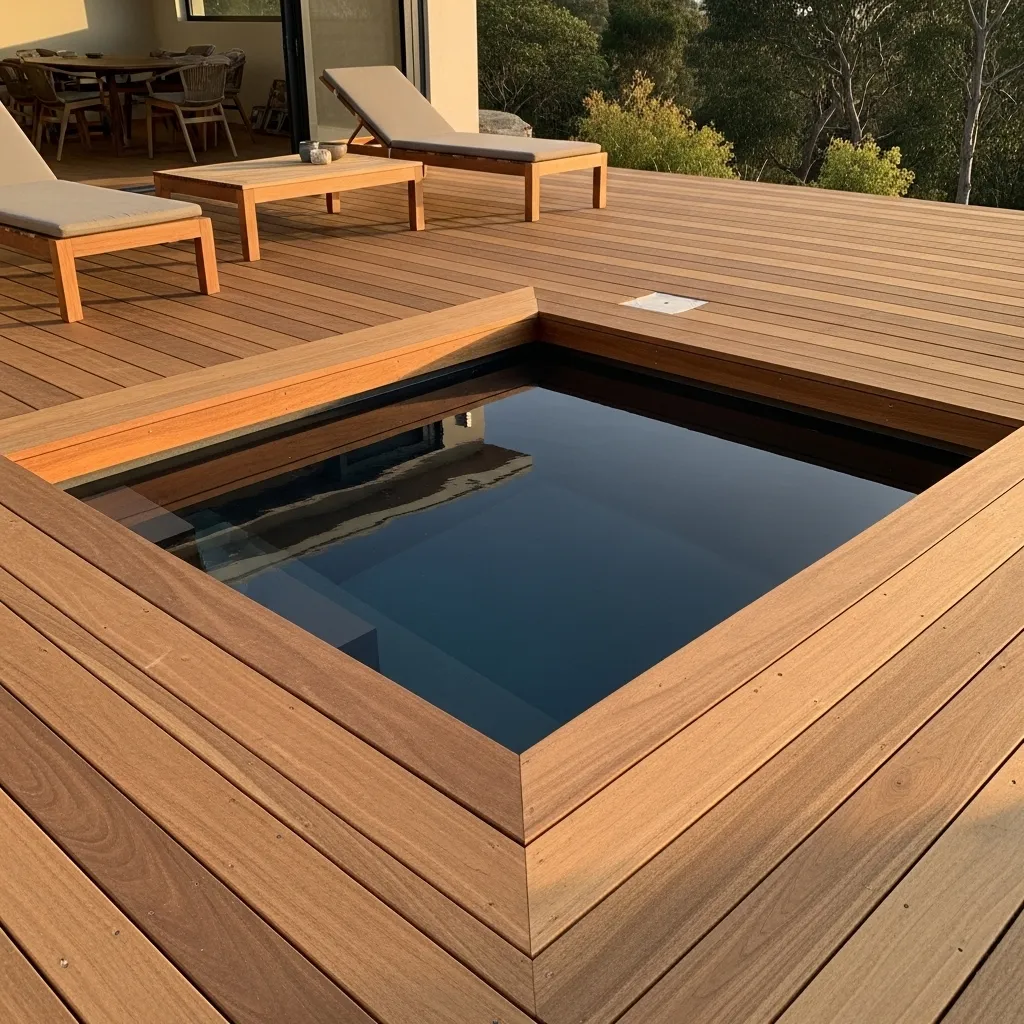
A plunge pool integrated flush into a timber deck — with the pool coping at the same level as the deck surface and the water maintained at or near that level — creates the most spatially seamless outdoor living configuration available, because the pool becomes a feature of the outdoor floor rather than an object placed on it. The continuous timber deck surface punctuated by the pool’s water creates an outdoor room where the boundary between the standing, walking, sitting, and swimming zones is fluid rather than marked by level changes or material transitions.
The timber deck material requires specific species selection for pool adjacency — hardwoods with natural oil content (ipe, teak, massaranduba) that resist the constant moisture and chemical exposure of pool proximity are the appropriate choices, as softer timbers and untreated hardwoods will degrade quickly in the wet pool environment. Ipe specifically is the deck material most commonly used with flush-set plunge pools because its extraordinary hardness and natural oil content make it virtually impervious to the moisture exposure that pool adjacency creates, and its warm honey-brown tone creates the most beautiful relationship with the blue-green water of a pale-finished plunge pool.
11. The Natural Rock and Boulder Plunge Pool
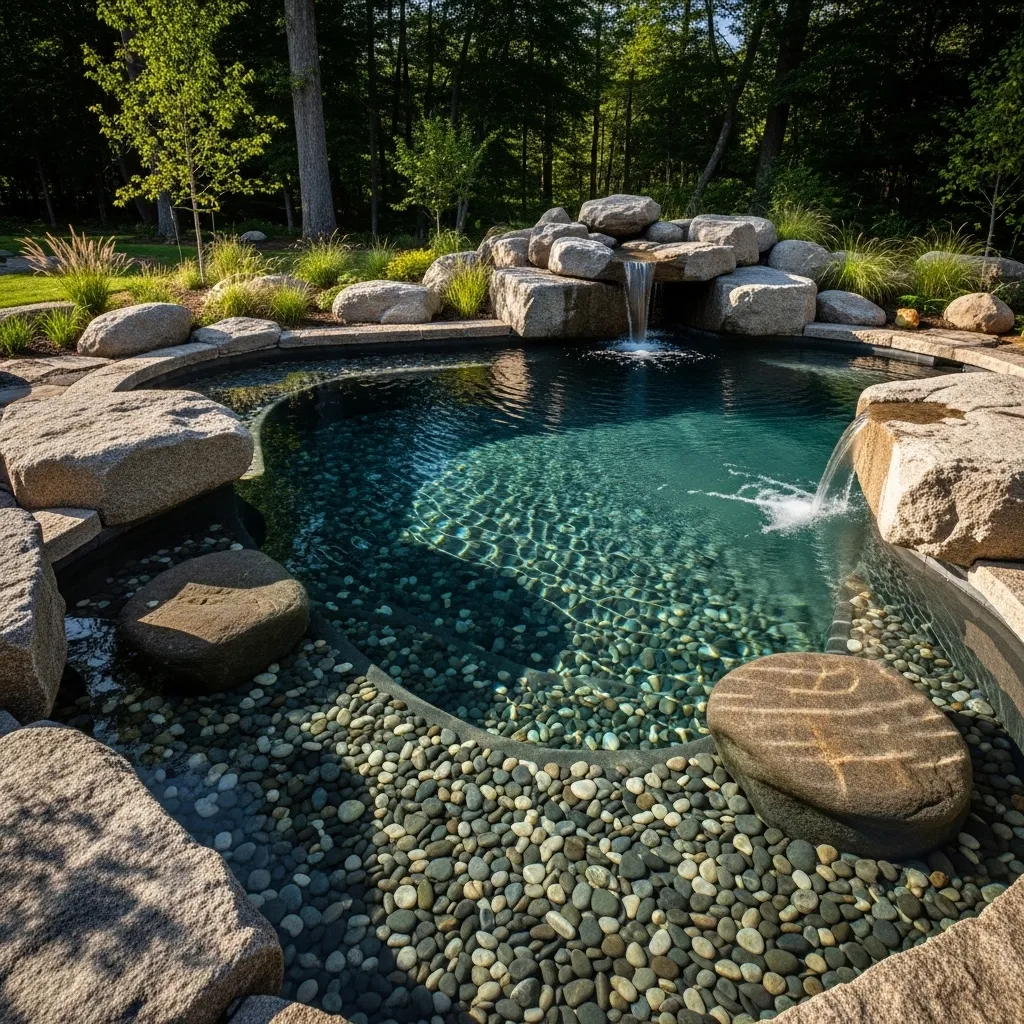
A natural rock and boulder plunge pool — incorporating genuine large-scale stone elements into the pool structure as defining architectural and aesthetic features — creates the most completely landscape-integrated plunge pool configuration, one that reads as a natural water feature discovered within the garden rather than a constructed pool installed in it. The scale and physical presence of genuine boulders — their weight, their permanence, their specific geological character — is irreplaceable by manufactured stone or concrete formed to look like rock, and a plunge pool that incorporates genuine boulders has a quality of natural authority that no simulation can approach.
The irregular pool form that results from designing around existing or placed boulders is a formal quality specifically aligned with the naturalistic aesthetic — the irregular edge references the organic forms of natural water bodies in a way that a geometric pool doesn’t, and the specific irregularity of the form (which comes from the actual arrangement of actual boulders rather than from an arbitrary organic shape drawn on paper) has a quality of natural logic that distinguishes it from pools whose irregular forms were designed purely for aesthetic effect.
12. The Minimalist Black-Tiled Plunge Pool
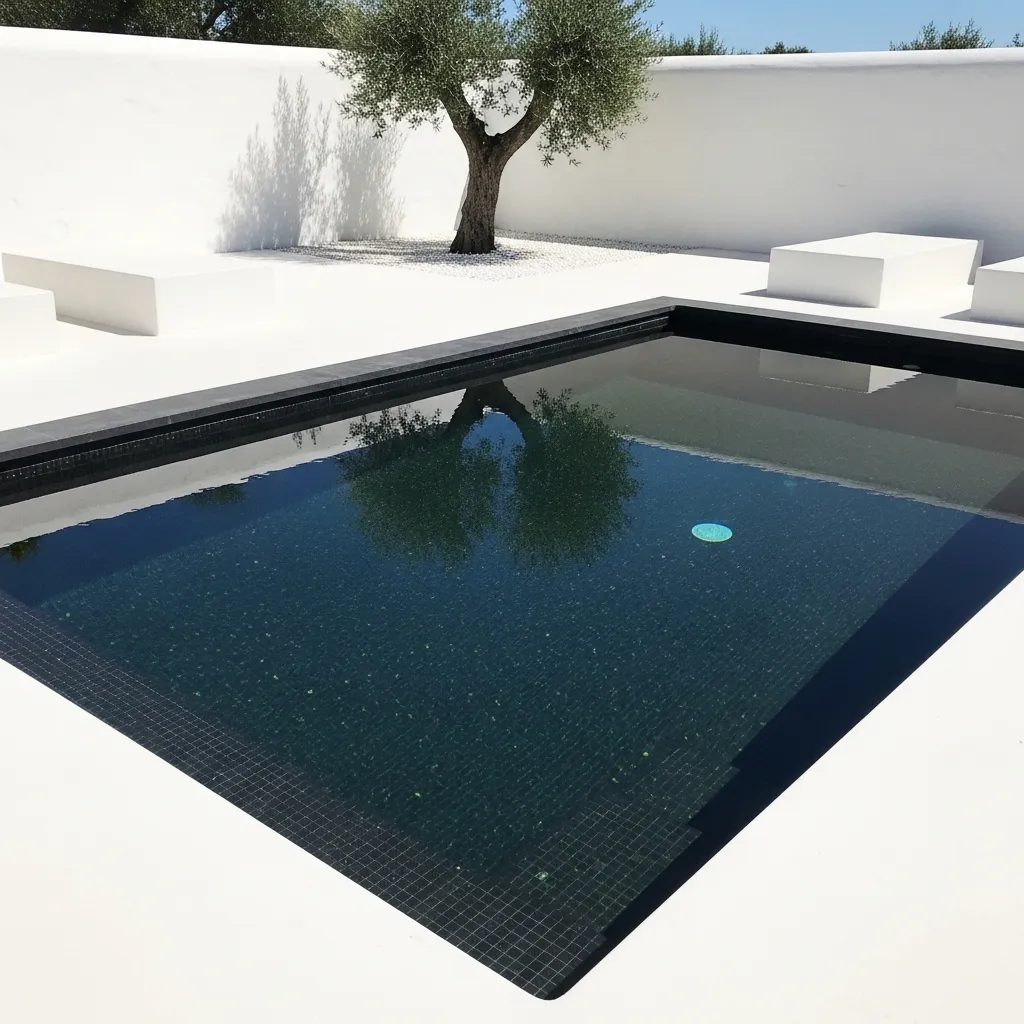
A minimalist black-tiled plunge pool creates the most dramatically beautiful and most architecturally bold residential water feature available — the dark pool surface transforms water from its conventional pale blue-green into something more like a mirror of dark glass, reflecting the sky, the surrounding garden, and the architecture of the house in an inverted image of extraordinary quality. The specific visual effect of a black pool surface changes with the angle of observation and the quality of the light — in direct sunlight it appears intensely dark with a brilliant sky reflection, in shade it appears as a deep, still, almost infinite surface, and in evening light it creates a perfect reflection of whatever lighting illuminates the surrounding space.
The matte black tile specifically — as opposed to glossy black — is the finish that creates the most sophisticated and most controlled visual effect, because matte surfaces absorb diffuse light rather than reflecting it directionally, creating the deep, velvety darkness of the water surface that glossy black tile’s specular reflection would disrupt. The combination of matte black tile and clear water creates a surface that appears to have no bottom — a quality of depth and mystery that makes the pool feel much larger and much more significant than its actual dimensions.
13. The Infinity Edge Plunge Pool With View
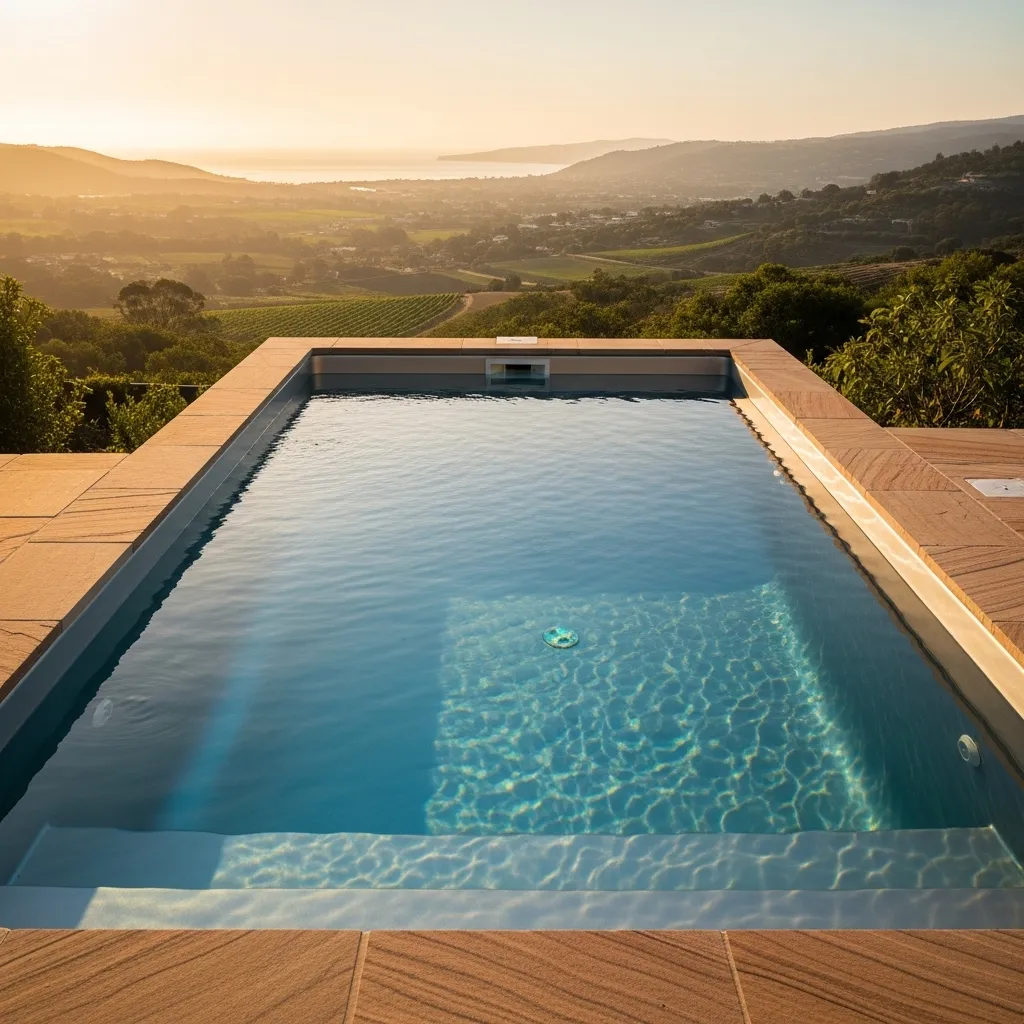
An infinity edge plunge pool — where one or more pool edges are designed to overflow into a hidden catch basin, creating the visual impression of water extending to the horizon — is the most theatrical and most view-specific plunge pool configuration available, creating a water feature whose specific beauty depends entirely on the quality of the view it’s designed to merge with. A well-positioned infinity edge plunge pool with a genuinely spectacular view creates a visual experience of extraordinary power — the sensation of floating at the edge of the landscape, with the pool water appearing to extend seamlessly into the valley, sea, or sky beyond, is one of the most beautiful residential experiences that architecture and landscape design can create together.
The positioning and orientation of the infinity edge relative to the primary view is the single most important design decision for an infinity pool — the overflow edge must face directly toward the most significant view feature (the horizon line, the valley floor, the body of water in the distance) for the visual merger to occur. An infinity edge oriented at the wrong angle to the view creates a dramatic pool edge detail that doesn’t achieve the visual merger that makes infinity pools so extraordinary, while an infinity edge oriented precisely toward the view creates the complete dissolution of boundary between water and landscape that defines the infinity pool experience.
14. The Plunge Pool With Integrated Outdoor Shower and Changing Area
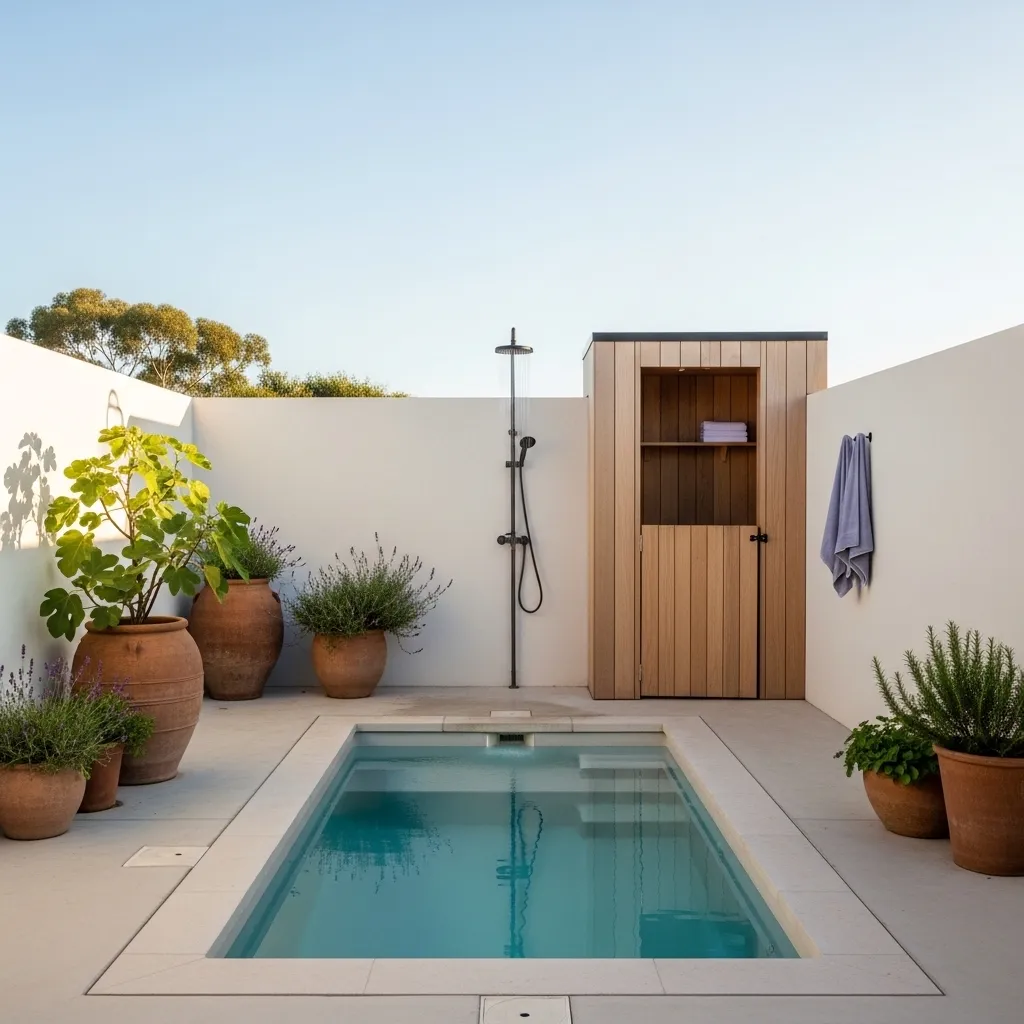
A plunge pool designed as the center of a complete outdoor bathing environment — with an adjacent outdoor shower, a changing area with storage, and a private enclosure that creates an outdoor room specifically dedicated to bathing — creates the most completely resolved and most genuinely usable plunge pool installation available, because the functional infrastructure of the bathing experience is designed in rather than improvised around the pool’s presence. The outdoor shower provides the pre-pool rinse that extends water quality and the post-pool rinse that transitions from bathing to daily life; the changing area provides the privacy and convenience that makes spontaneous pool use possible rather than requiring planning and preparation; and the enclosing walls create the private outdoor room that makes outdoor bathing feel genuinely luxurious rather than exposed and provisional.
The walled enclosure is the element that most transforms the outdoor bathing experience — the specific quality of privacy and containment that high walls create around an outdoor bathing space creates an atmosphere that’s simultaneously outdoors (open to sky, air, and weather) and protected (enclosed from the surrounding world), and that combination of openness and enclosure is the specific spatial condition that makes outdoor bathing feel most luxurious and most distinctly different from indoor bathing.
15. The Heated Year-Round Cold Climate Plunge Pool
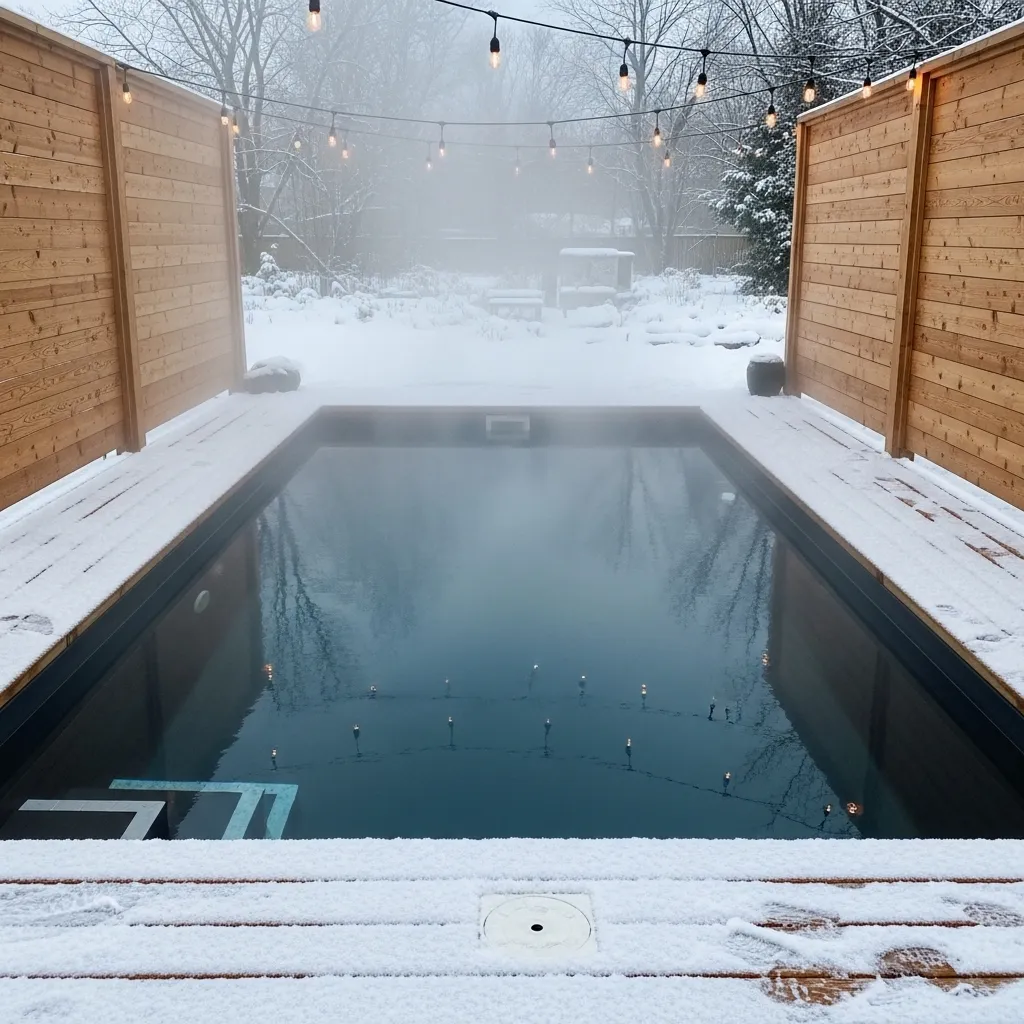
A heated year-round plunge pool designed specifically for cold climate enjoyment — with efficient heating, wind protection, good lighting for short winter days, and a design that acknowledges and celebrates the specific beauty of using warm water in cold ambient air — creates one of the most genuinely extraordinary residential outdoor experiences available, because the contrast between the warm water and the cold winter air creates a specific quality of outdoor bathing pleasure that’s simply not possible in warm climates. The steam rising from a heated pool on a cold morning, the sensation of warm immersion while snow falls, the view of a winter garden from the warmth of a heated plunge pool — these are experiences of specific, seasonal beauty that the year-round pool in a cold climate makes possible.
The specific design considerations for a cold climate plunge pool include heating efficiency (insulated pool shell and cover to minimize heat loss), wind protection (screens or walls that shelter the pool area from prevailing winds), lighting that creates atmosphere during the long winter evenings when the pool is most likely to be used, and a cover system that maintains water temperature when the pool is not in use while being easily removed for spontaneous use. These functional considerations, addressed thoughtfully in the design rather than as afterthoughts, create a pool that’s genuinely inviting and genuinely usable in cold months rather than one that’s technically heated but practically uncomfortable.