15 Retro Living Room Ideas
Retro living rooms celebrate the distinctive design aesthetics of past decades—typically the 1950s through 1980s—bringing the nostalgia, boldness, and optimism of these eras into contemporary homes. Unlike vintage design which embraces genuinely old pieces, retro style intentionally references past decades through color palettes, furniture silhouettes, patterns, and materials that defined specific periods, whether executed with authentic vintage finds or modern reproductions. The appeal of retro design lies in its playfulness, confidence, and departure from today’s minimalist neutrals—these are spaces that embrace color, pattern, geometric forms, and distinctive materials without apology. Retro rooms feel joyful, personality-filled, and unapologetically fun in ways that more serious or subdued styles cannot match.
What makes retro living rooms particularly exciting is the variety of distinct aesthetics available across different decades, each with its own recognizable palette, forms, and materials. The 1950s brought atomic age optimism with starburst clocks, kidney-shaped tables, and pastel palettes. The 1960s introduced bold geometric patterns, space-age forms, and vibrant oranges and teals. The 1970s embraced earth tones, macramé, shag carpets, and organic forms. The 1980s brought Memphis design with its clashing patterns, neon colors, and postmodern playfulness. You can commit to a specific decade’s aesthetic or create an eclectic retro mix that celebrates multiple eras, depending on which period resonates most strongly with your sensibilities.
The practical beauty of retro design is its accessibility—vintage furniture and décor from these decades is often affordable and readily available through thrift stores, estate sales, online marketplaces, and vintage specialty shops. Many pieces were mass-produced and built to last, meaning genuine vintage items can often be found at reasonable prices. Additionally, the popularity of retro aesthetics has spawned numerous furniture companies producing high-quality reproductions of iconic pieces, making the look achievable even without hunting for vintage originals. Let’s explore these retro living room ideas and create spaces that celebrate the bold, colorful, optimistic design of decades past.
1. Mid-Century Modern Foundation
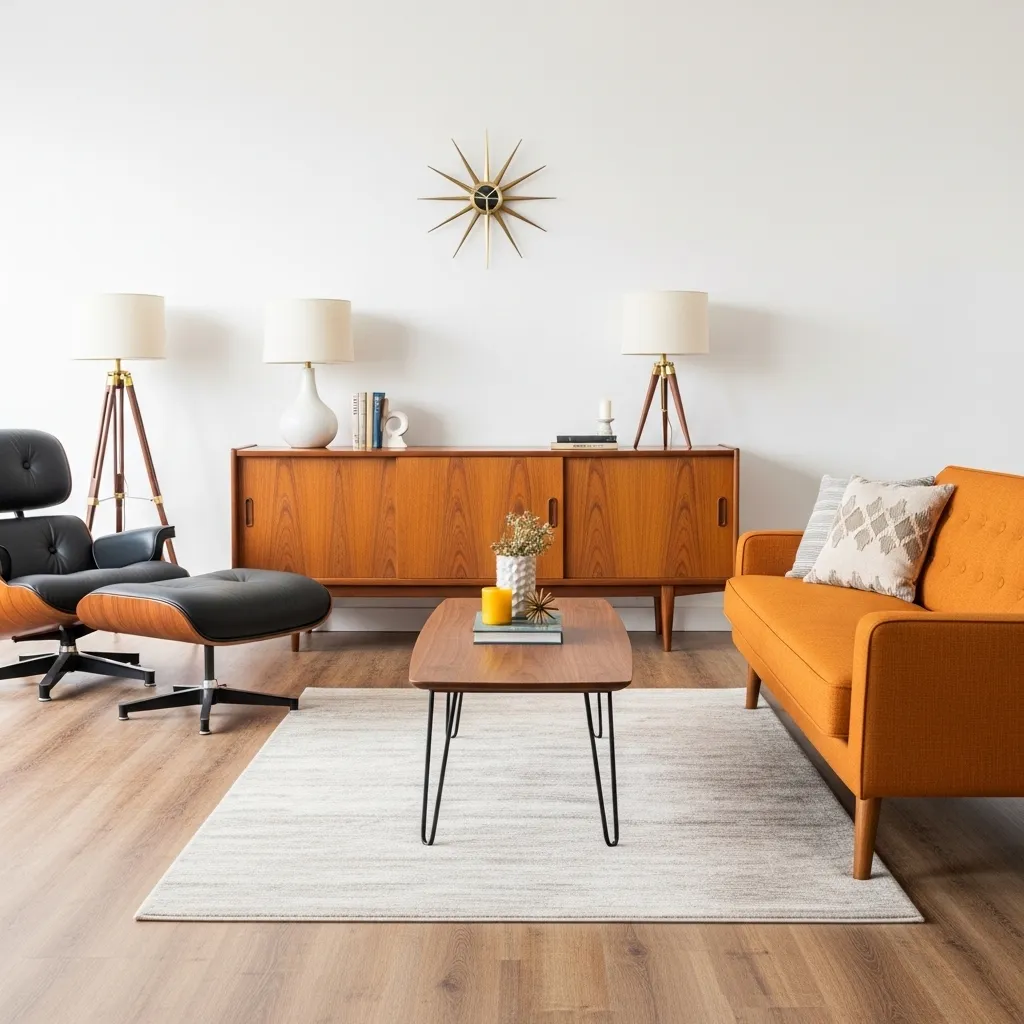
Mid-century modern design from the 1950s and early 1960s remains the most enduringly popular retro aesthetic, characterized by clean lines, organic shapes, warm wood tones, and functional beauty. The style balances minimalism with warmth, creating spaces that feel both sophisticated and livable. Iconic pieces like Eames chairs, Nelson clocks, and Noguchi tables have become design classics that transcend trends.
The key is incorporating signature mid-century elements—low-profile furniture with tapered legs, warm wood (teak, walnut, rosewood), atomic age motifs, and the period’s optimistic color palette. Choose a sofa with clean lines and wooden legs rather than bulky contemporary designs. Include wood storage pieces—credenzas, sideboards, or bookcases with sliding doors and beautiful grain. Add iconic seating—Eames lounge chair replicas, egg chairs, or womb chairs in period colors. Accessorize with starburst clocks, tripod lamps, ceramic planters, and abstract art. Use colors authentic to the period—mustard yellow, burnt orange, avocado green, teal, alongside warm woods and neutrals. The mid-century foundation creates sophisticated, timeless retro style that works in contemporary homes while celebrating 1950s-60s design innovation.
2. Bold Geometric Patterns from the 60s-70s
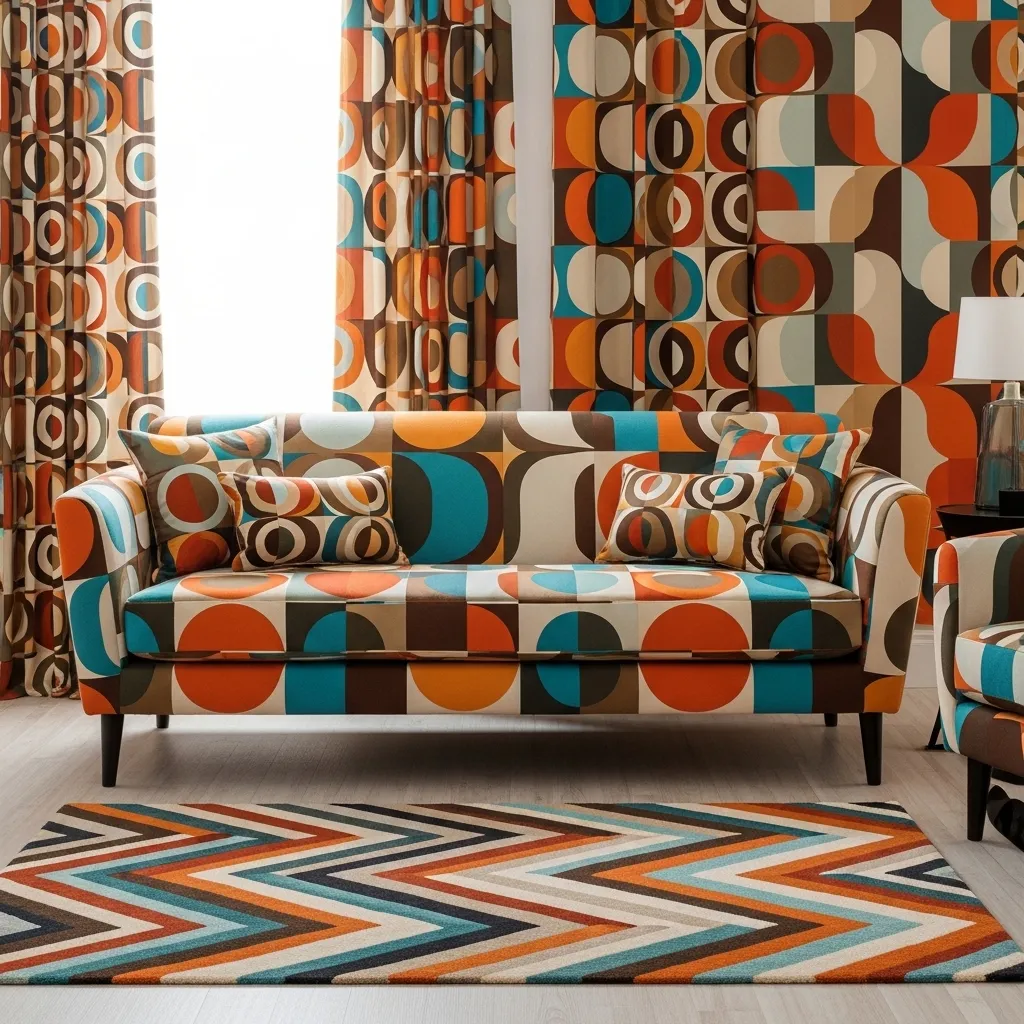
Bold geometric patterns are signature elements of 1960s and 1970s design, bringing energy, visual interest, and unmistakable retro character. The era embraced large-scale graphics, Op Art-inspired designs, and overlapping geometric forms in ways that feel daring and joyful compared to today’s more restrained patterns.
The key is layering geometric patterns thoughtfully without creating chaos. Choose one large-scale pattern for a major piece—perhaps geometric upholstery on the sofa or a bold patterned rug. Add smaller-scale coordinating patterns through pillows, curtains, or accent chairs. Use period-appropriate motifs—overlapping circles, hexagons, chevrons, sunbursts, or abstract geometric compositions. Stick to a cohesive color palette even while mixing patterns—perhaps orange, teal, brown, and cream throughout all patterns. Balance pattern-heavy elements with solid colors—if the sofa is boldly patterned, keep walls and larger furniture pieces solid. The geometric patterns should feel intentional and joyful rather than random or overwhelming. Include authentic vintage textiles if possible—original 1960s-70s fabrics have quality and character that reproductions struggle to match. The bold patterns create the visual energy and optimism that defined the era.
3. Vibrant 70s Earth Tone Palette
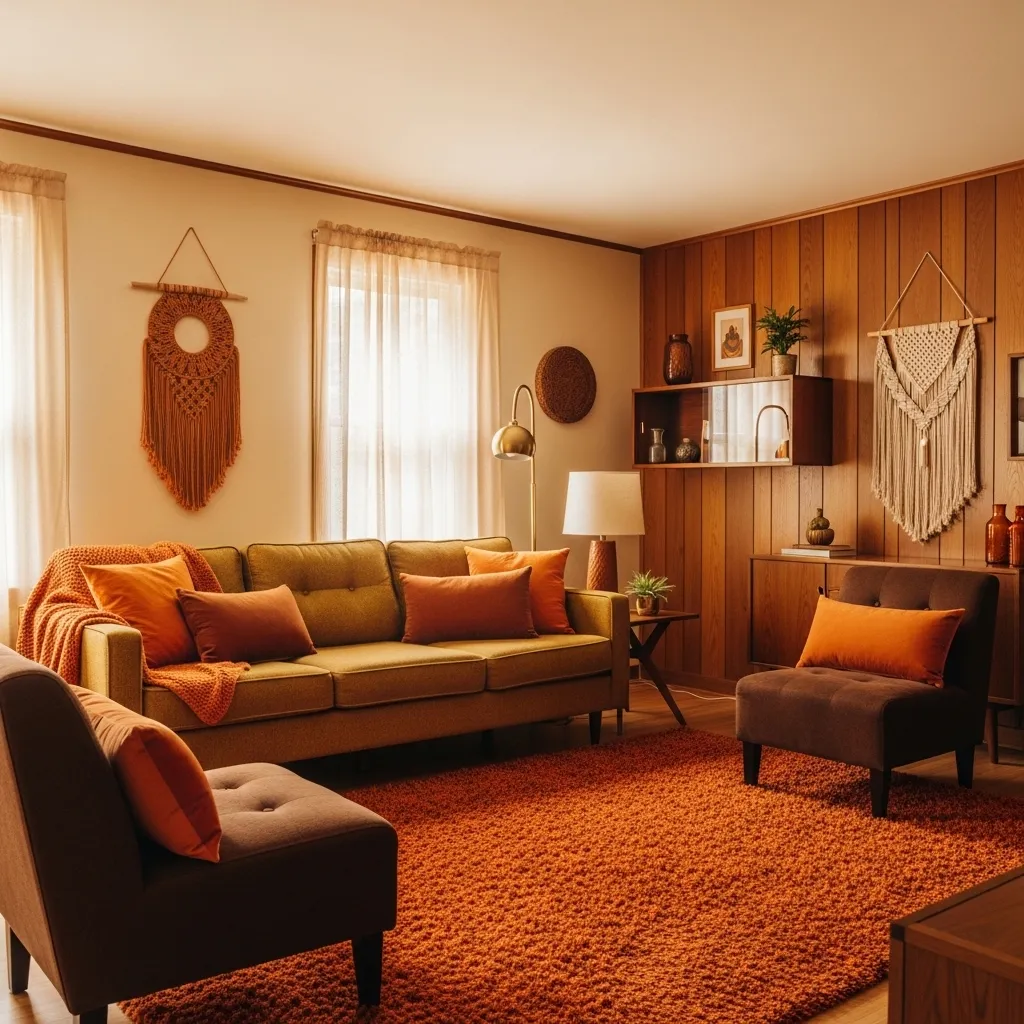
The 1970s earth tone palette—harvest gold, burnt orange, avocado green, chocolate brown, and rust—creates instant retro recognition and warm, enveloping atmosphere. While these colors fell out of favor for decades, they’ve experienced renewed appreciation for their warmth, coziness, and distinctive character. The palette creates spaces that feel genuinely retro rather than just vintage-inspired.
The key is embracing these colors confidently and combining them thoughtfully. Choose one or two primary colors—perhaps harvest gold and burnt orange—and use them prominently in upholstery and textiles. Add deeper browns and rust tones for grounding and depth. Include avocado green sparingly through accent pieces or plants. Use cream or tan walls to prevent the space from feeling too dark while maintaining warmth. Layer the colors rather than using each in equal measure—this creates depth and prevents the palette from feeling flat. Include authentic 70s materials—shag carpeting, wood paneling, brass fixtures—that enhance the period authenticity. The warm earth tones create cozy, nostalgic spaces that celebrate rather than apologize for their 1970s heritage.
4. Sunken Living Room Conversation Pit
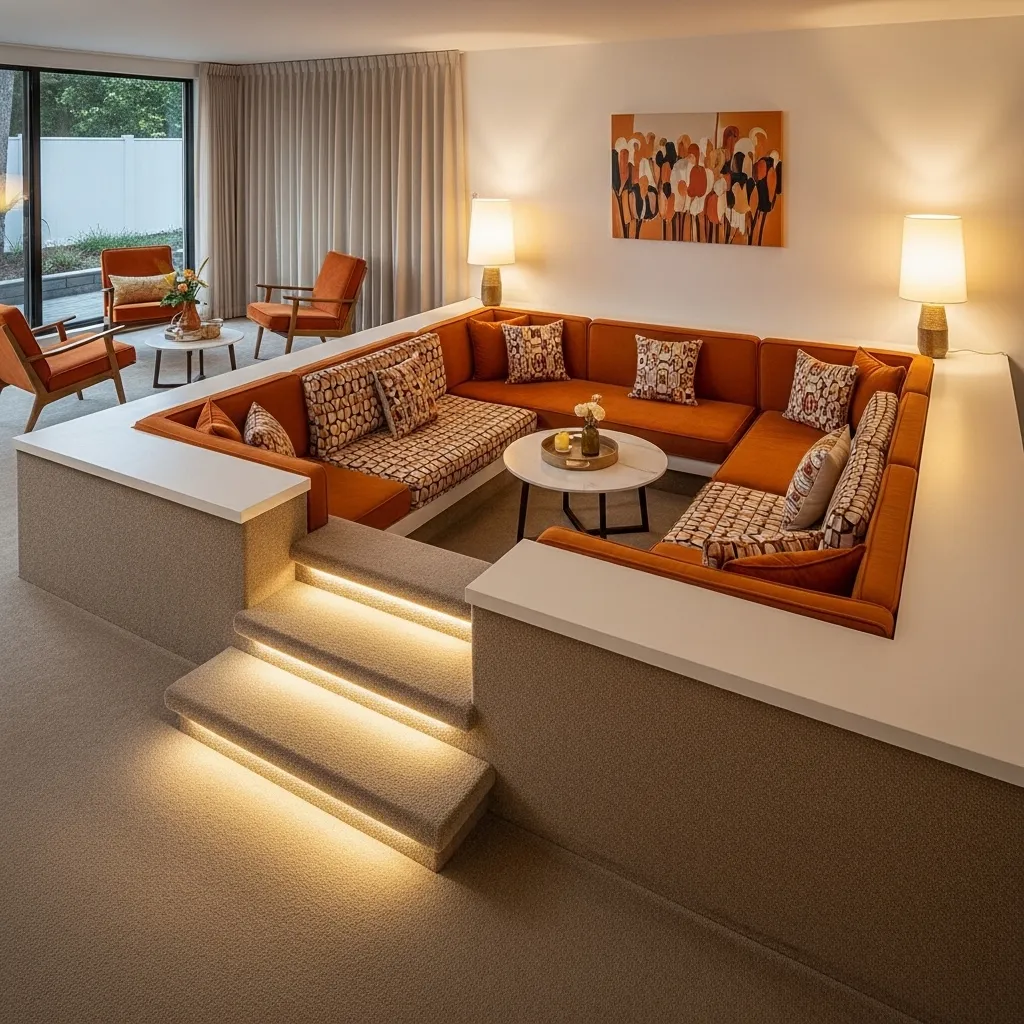
Sunken living rooms or conversation pits are perhaps the most iconic and distinctive retro architectural feature, most popular during the 1960s and 1970s. These lowered seating areas create intimate gathering spaces that encourage conversation and social interaction. While most modern homes don’t have them, incorporating this element—whether through actual construction or visual suggestion—creates undeniable retro authenticity.
The key is either incorporating an actual sunken area if constructing or renovating, or creating the conversation pit aesthetic through furniture arrangement and styling. For actual construction, drop the floor level 12-18 inches, create built-in seating around the perimeter, and ensure safe step access with proper lighting. Use period-appropriate upholstery—velvet, bold geometric fabrics, or tufted materials in retro colors. Add large floor cushions for flexible seating. For non-structural approaches, arrange low-profile furniture creating an enclosed, pit-like seating area and use area rugs to define the space. Add sunken lighting effects through floor lamps or recessed lighting. The conversation pit aesthetic—whether actual or suggested—creates that quintessential retro gathering space that defined mid-century social living.
5. Teak and Walnut Wood Furniture
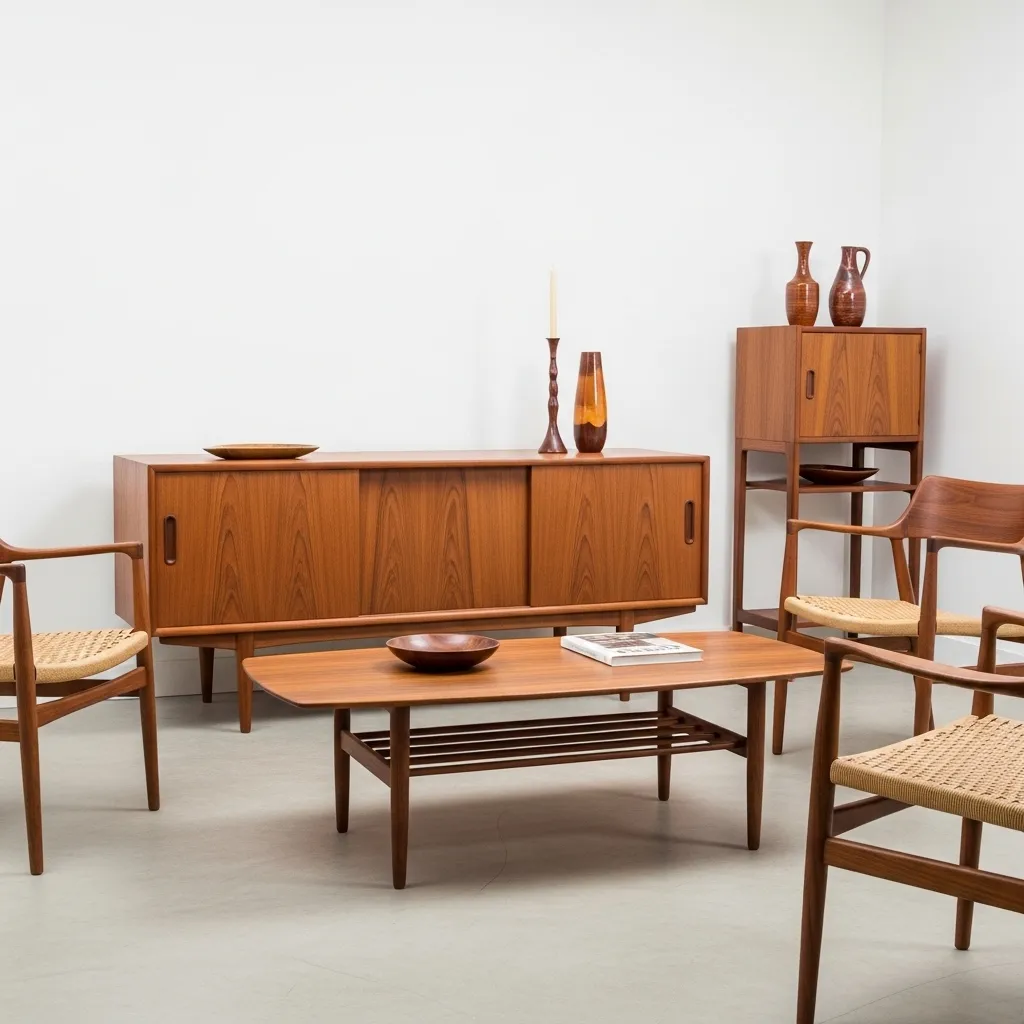
The warm, rich woods—particularly teak, walnut, and rosewood—are fundamental to authentic mid-century and retro design. These materials defined an era of craftsmanship and bring organic warmth, beautiful grain patterns, and timeless appeal. Quality wood furniture from this period was built to last and often represents better construction than contemporary equivalents.
The key is sourcing authentic vintage pieces or quality reproductions and letting the wood’s natural beauty shine. Seek out teak credenzas, sideboards, and storage pieces—often available affordably through estate sales and online marketplaces. Include walnut coffee tables, side tables, or dining furniture showcasing beautiful grain. Add rosewood accents through smaller pieces or details. Danish modern teak pieces often represent excellent value and quality. Let the wood be the star—avoid covering beautiful surfaces with unnecessary décor or clutter. Maintain wood properly with appropriate oil or wax preserving the finish. Mix wood tones if desired—teak, walnut, and rosewood can coexist beautifully. The rich wood furniture creates the warm, organic foundation essential to retro living rooms while providing functional, beautiful pieces that will last decades.
6. Shag Carpeting and Textured Rugs
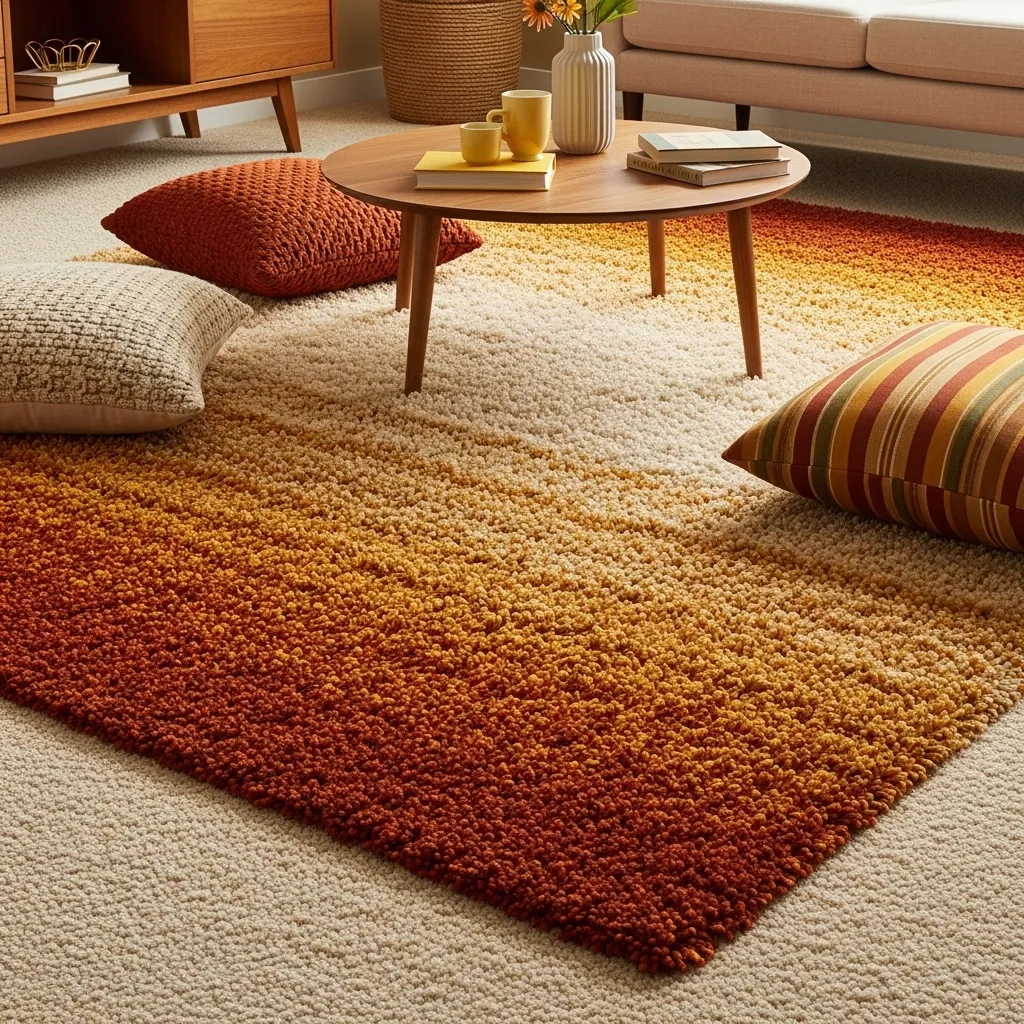
Shag carpeting is synonymous with 1970s design—the deep, luxurious pile was a status symbol and created the soft, textured foundation perfect for the era’s casual, floor-sitting lifestyle. While wall-to-wall shag carpeting has practical challenges, incorporating shag rugs brings authentic texture without permanent commitment.
The key is choosing quality shag in period-appropriate colors and styling it authentically. Select deep-pile shag rugs (1.5-2 inches or deeper) in 70s colors—harvest gold, rust, cream, chocolate brown, or avocado green. Position shag rugs in seating areas where the texture can be appreciated and where floor seating might occur. The shag works beautifully with low-profile furniture that doesn’t hide the rug’s texture. For maximum authenticity, consider wall-to-wall shag in a dedicated room if you’re committed to the aesthetic—modern shag is easier to maintain than vintage versions. Maintain shag properly—regular vacuuming and occasional deep cleaning keep it looking luxurious. The shag provides that essential 70s texture and creates cozy, inviting foundation that’s both visually and tactilely retro.
7. Statement Lighting with Retro Fixtures
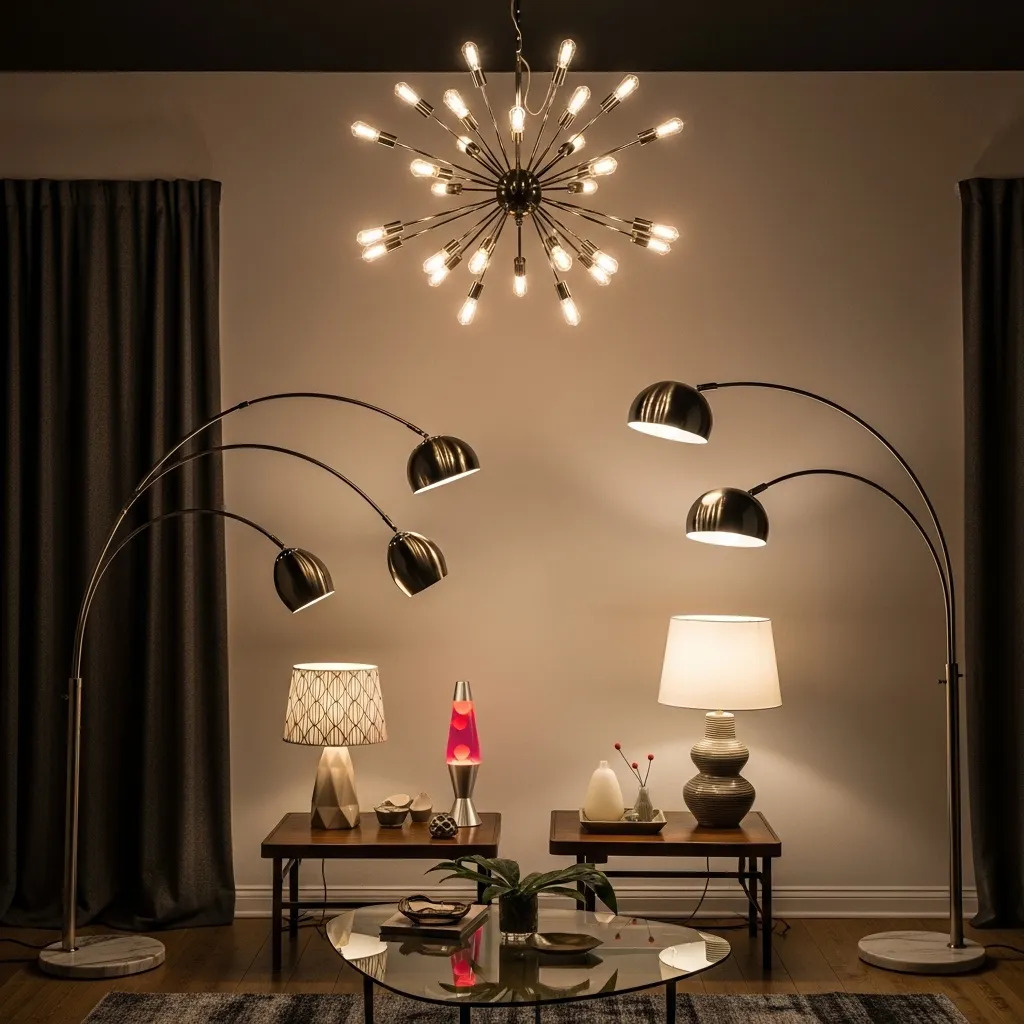
Lighting fixtures from the mid-century and retro periods are highly distinctive and sculptural—they function as art pieces while providing illumination. Iconic designs like Sputnik chandeliers, arc floor lamps, and tripod table lamps immediately communicate retro aesthetic and create focal points.
The key is selecting authentic vintage fixtures or quality reproductions that capture period design. Include a statement ceiling fixture—a Sputnik chandelier with radiating arms, a globe pendant cluster, or a tiered disc design in brass, chrome, or colored metal. Add arc floor lamps—the sweeping curved arm creates dramatic sculptural presence perfect for reading or accent lighting. Incorporate period table lamps—ceramic bases with geometric forms, tripod wooden bases, or hourglass shapes with coordinating shades. For playful retro kitsch, include a lava lamp creating mesmerizing, period-appropriate movement. Choose finishes authentic to the era—brass, chrome, teak, or ceramic in period colors. The distinctive lighting fixtures create visual interest, provide necessary illumination, and serve as conversation pieces that anchor the retro aesthetic.
8. Vinyl Record Player and Media Console
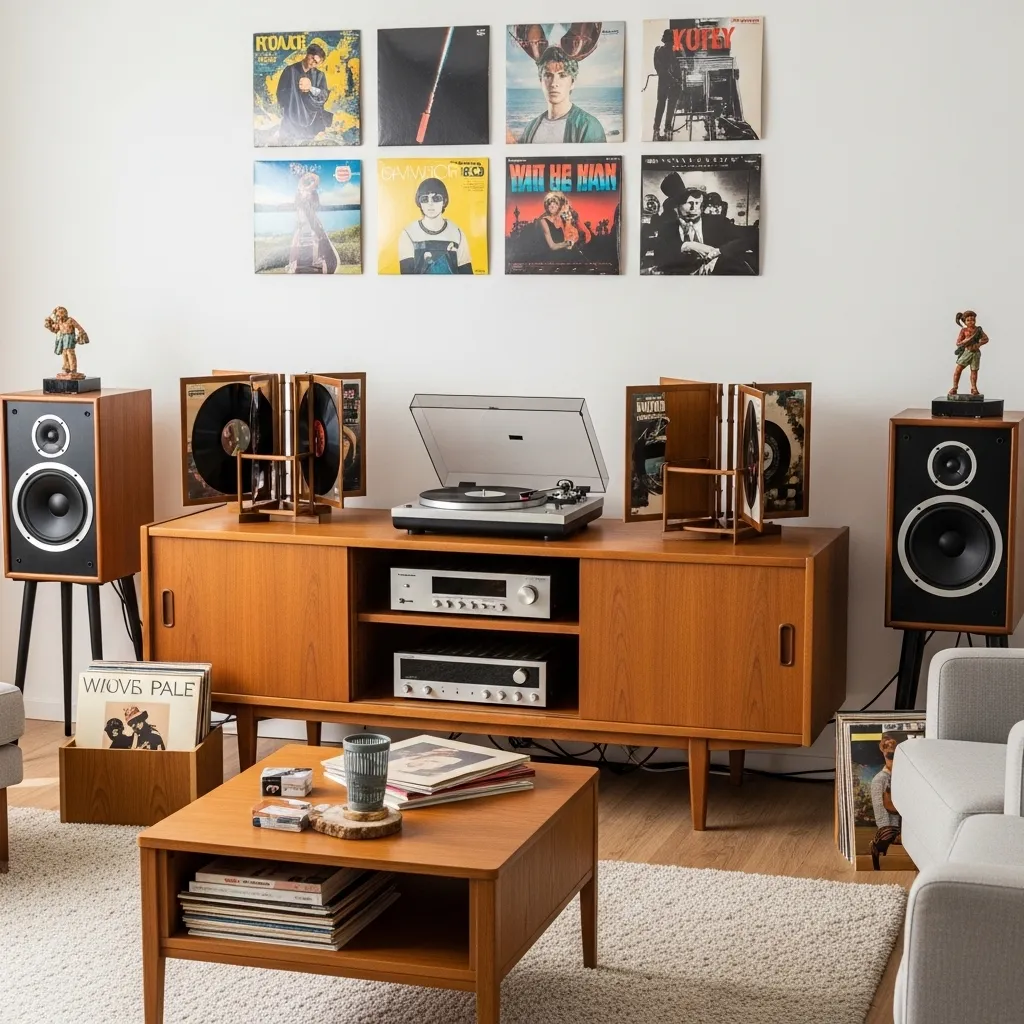
Vinyl records and turntables are experiencing genuine revival, making them both authentically retro and practically relevant. A record player setup creates a focal point that’s both nostalgic and functional, celebrating analog music in an increasingly digital world. The ritual of selecting, handling, and playing records creates the intentional listening experience that defined pre-digital eras.
The key is creating a complete, functional music station with authentic styling. Source a quality turntable—either restored vintage models or modern players with retro styling. House it in period-appropriate furniture—a mid-century credenza, teak media console, or purpose-built vinyl storage unit. Build or source proper record storage keeping albums accessible and properly stored. Display select album covers as rotating artwork—their large-format graphics are genuinely beautiful. Include period-appropriate speakers or modern speakers with vintage aesthetic. Make the setup functional—this should be your actual music system, not just decoration. Start or expand a vinyl collection—thrift stores and record shops offer affordable vintage albums. The functional record player setup creates authentic retro living while providing genuinely satisfying analog audio experience.
9. Macramé and Woven Wall Hangings
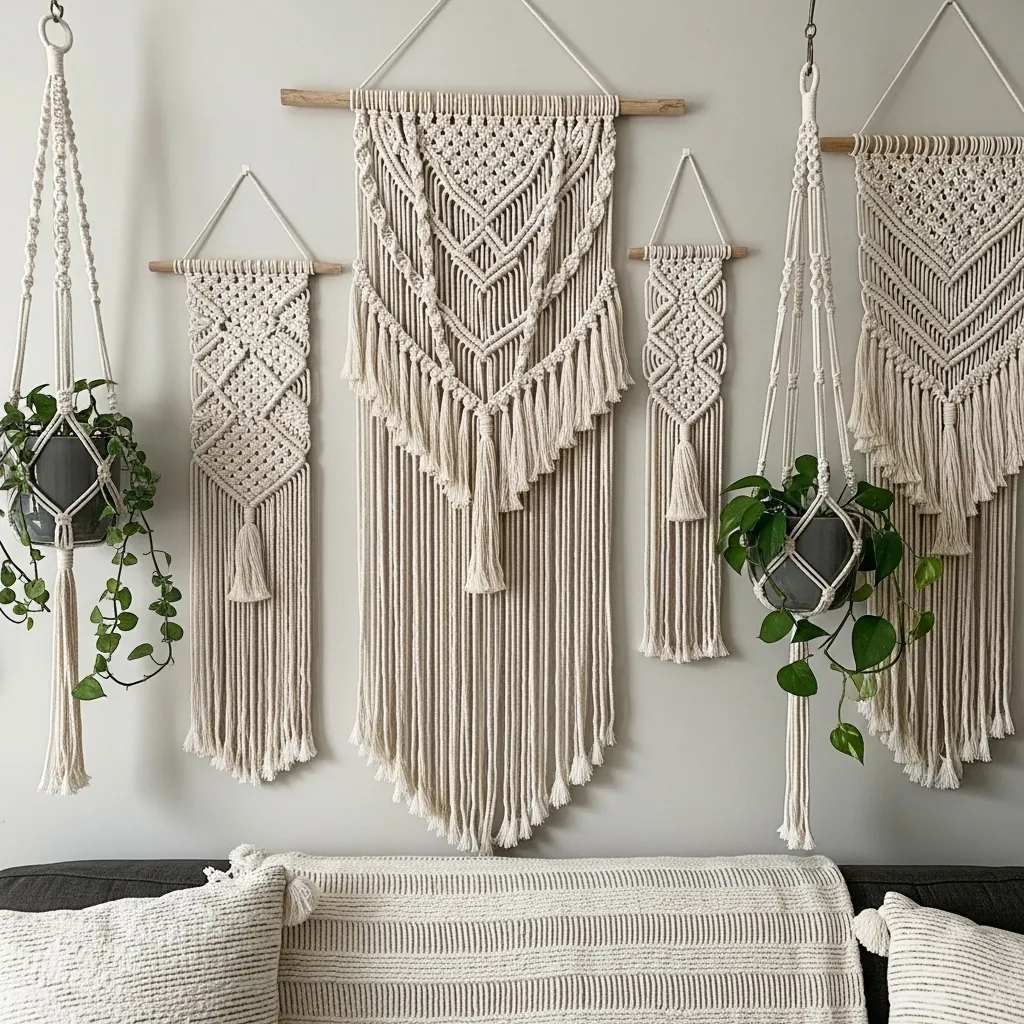
Macramé wall hangings epitomize 1970s bohemian style, bringing handmade texture, organic materials, and the decade’s embrace of craft and natural elements. These knotted textile pieces create dimensional texture and soften hard surfaces while adding authentic period character.
The key is incorporating quality macramé pieces that showcase the craft’s intricacy. Source vintage macramé from thrift stores and estate sales—70s pieces often feature complex knotwork and excellent craftsmanship. Alternatively, support contemporary makers creating macramé in traditional styles, or learn the craft and create your own pieces. Hang substantial wall pieces creating focal points—these should be sizable enough to make impact, not tiny decorative items. Add macramé plant hangers suspending greenery at varied heights. Include woven wall hangings in complementary styles. Choose natural fibers—cotton or jute in cream, natural, or subtle earth tones that work within your palette. Position macramé where its texture can be appreciated and where it balances harder surfaces like wood furniture or painted walls. The macramé creates that essential 70s bohemian texture and celebrates handcraft.
10. Colorful Lucite and Acrylic Furniture
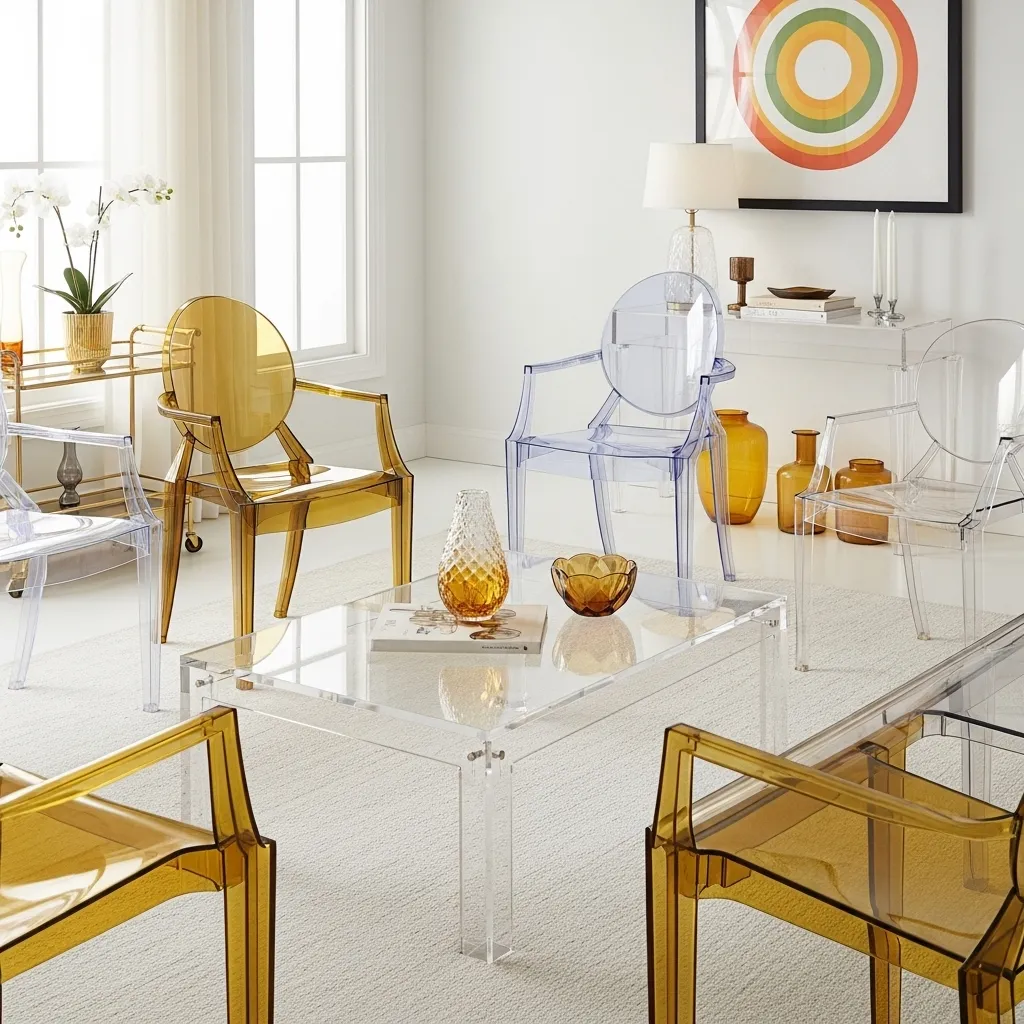
Lucite and acrylic furniture epitomized the space-age, forward-looking optimism of 1960s-70s design. The transparent materials created modern, light-reflecting furniture that felt futuristic and sophisticated. Clear pieces maintain visual openness while providing function, making them particularly effective in smaller spaces.
The key is incorporating lucite pieces strategically for impact and spatial flow. Include a lucite coffee table or side tables creating functional surfaces without visual bulk. Add acrylic ghost chairs—modern reproductions are widely available—providing seating without cluttering sight lines. Consider a lucite console, bar cart, or shelving unit showcasing the material while providing storage. Mix clear lucite with period colors—amber, smoked, or tinted acrylic in retro hues adds color while maintaining some transparency. Pair lucite furniture with period textiles and wood pieces creating contrast between modern transparency and traditional materials. The lucite should feel intentional—not everything should be acrylic, but strategic pieces create that space-age aesthetic. Keep lucite clean and scratch-free maintaining its clarity and modern appearance. The transparent furniture creates airy, futuristic atmosphere that defined retro modernism.
11. Memphis Design Bold Color and Pattern
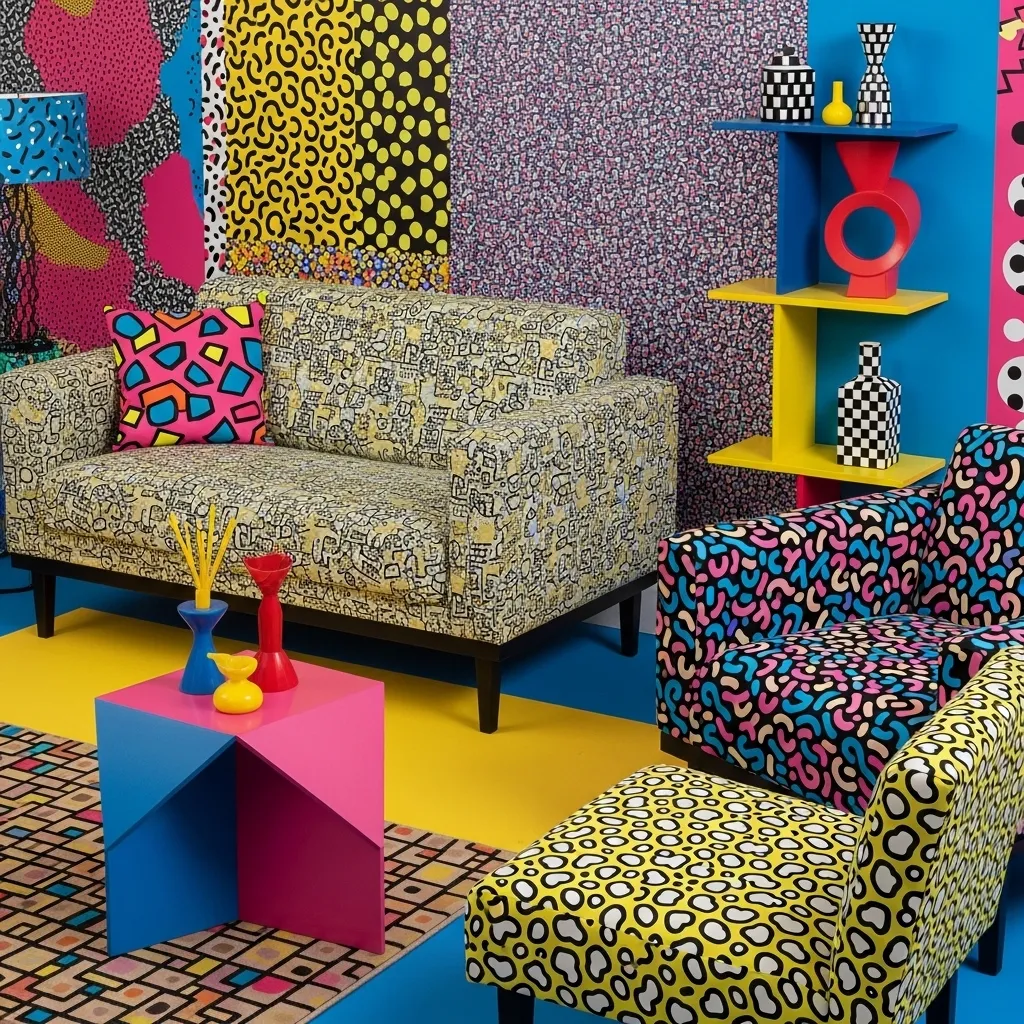
Memphis Design, the 1980s Italian design movement, represents the most radical departure from mid-century restraint—it celebrated clashing patterns, neon colors, plastic laminates, and asymmetrical forms with postmodern playfulness. The aesthetic is polarizing but undeniably bold and joyful, perfect for those wanting maximal retro impact.
The key is embracing the movement’s irreverent rule-breaking with confidence. Mix patterns that conventionally clash—geometric prints with squiggles, dots with abstract shapes. Use bold, saturated colors including neon pink, electric blue, yellow, turquoise, and black creating high-contrast combinations. Include furniture with unexpected forms—geometric coffee tables in primary colors, asymmetrical shelving, or sculptural chairs in bold patterns. Add plastic laminate surfaces in vibrant colors. Layer pattern extensively—if mid-century favors restraint, Memphis celebrates abundance. Include Memphis-inspired or actual 80s pieces—many are now affordable as vintage items. Balance the intensity with some neutral elements preventing complete visual chaos. The Memphis aesthetic creates joyful, energetic, conversation-worthy spaces that celebrate 1980s postmodern exuberance.
12. Vintage Bar Cart and Cocktail Culture
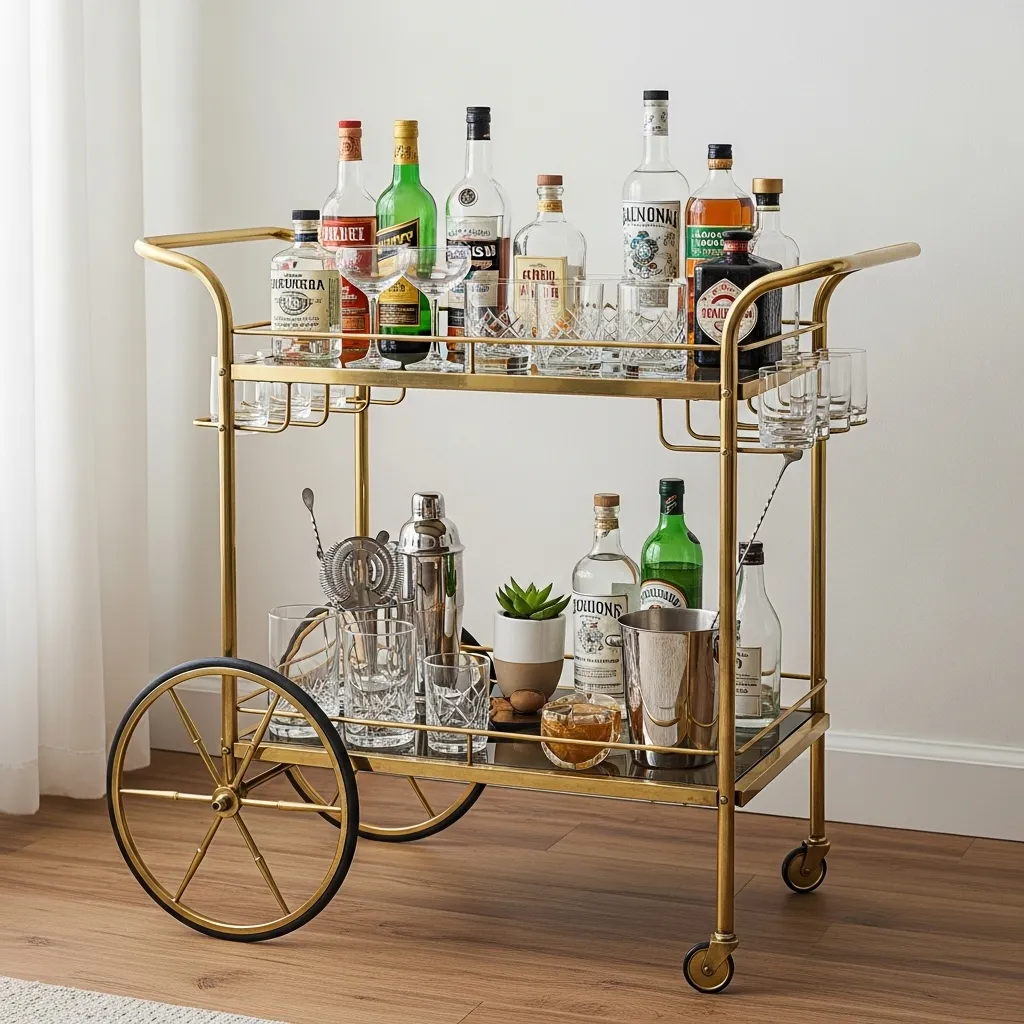
Bar carts epitomize mid-century entertaining and the cocktail culture that defined 1950s-60s social life. These mobile serving stations are both functional and decorative, creating focal points that communicate sophistication and hospitality. The resurgence of cocktail culture makes bar carts both authentically retro and practically relevant.
The key is sourcing an authentic or authentic-styled cart and styling it beautifully. Find vintage bar carts—brass and glass, chrome and glass, or wood with brass—through estate sales and vintage shops. Look for wheels and multiple tiers for authentic style and function. Stock with appropriate glassware—coupe glasses, martini glasses, highball glasses, rocks glasses—sourcing vintage pieces or modern reproductions. Display spirits in attractive bottles—vintage decanters add authentic style. Include cocktail tools—shaker, jigger, muddler, ice bucket, strainer—in vintage metals. Style the cart attractively—arrange bottles by height, display glassware, add small decorative elements. Use the cart functionally for entertaining, not just display. The bar cart creates sophisticated focal point and facilitates the home cocktail culture that defined mid-century social life.
13. Retro Wallpaper and Feature Walls
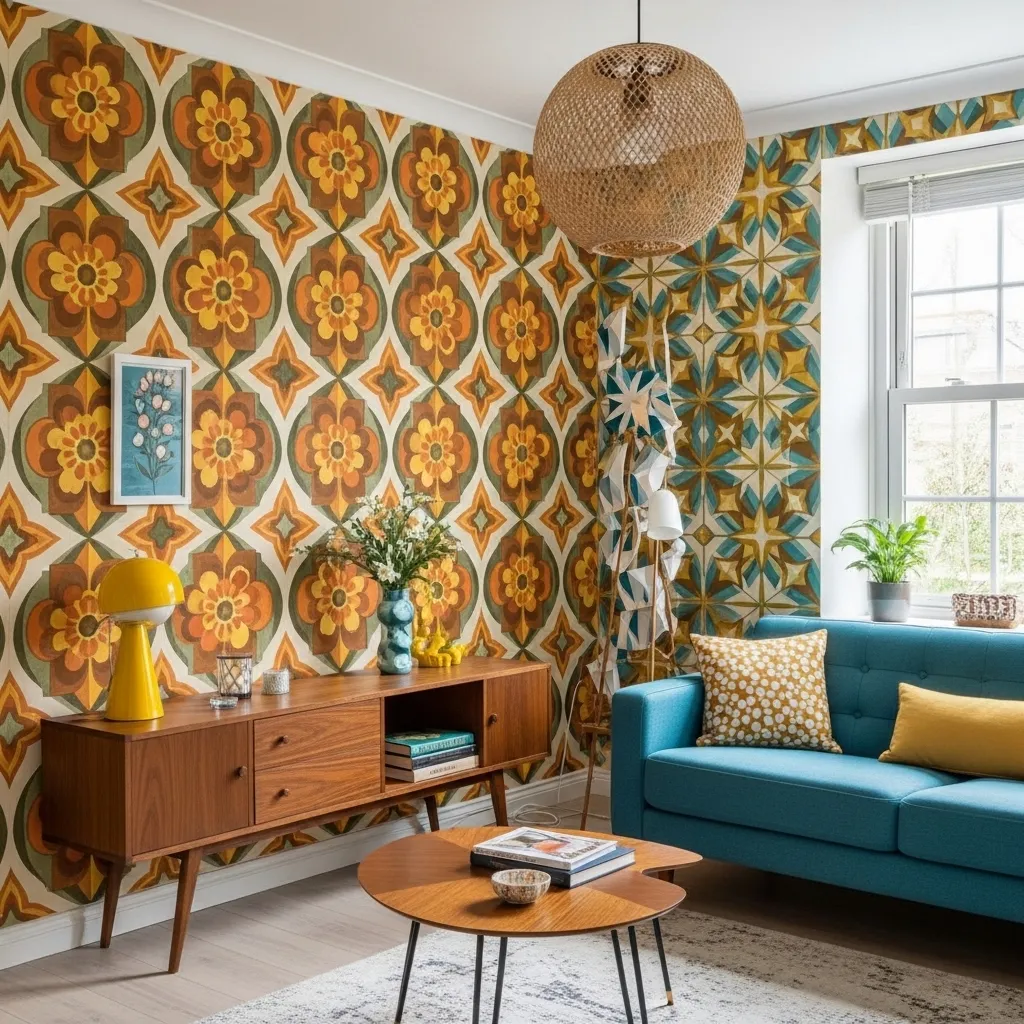
Retro wallpaper brings instant period atmosphere and dramatic visual impact. The bold patterns, distinctive color combinations, and large-scale graphics that characterized wallpaper from the 1950s-80s create unmistakable vintage character. A single wallpapered feature wall can transform an entire room’s aesthetic.
The key is selecting authentic period patterns and using them strategically. Source actual vintage wallpaper—available through specialty dealers, though installation can be challenging. Alternatively, numerous companies produce reproduction retro wallpaper in authentic patterns and colors. Choose patterns authentic to your target decade—atomic starbursts and boomerangs for 50s, large-scale florals or geometric shapes for 60s-70s, bold graphics for 80s. Select colors true to the period—avocado and harvest gold for 70s, teal and pink for 50s, neon brights for 80s. Apply to one feature wall rather than the entire room preventing pattern overwhelm. Coordinate the wallpaper with furniture, textiles, and accessories creating cohesive environment. The bold wallpaper creates instant retro atmosphere and serves as the room’s focal point and conversation piece.
14. Low-Profile Sectional Seating
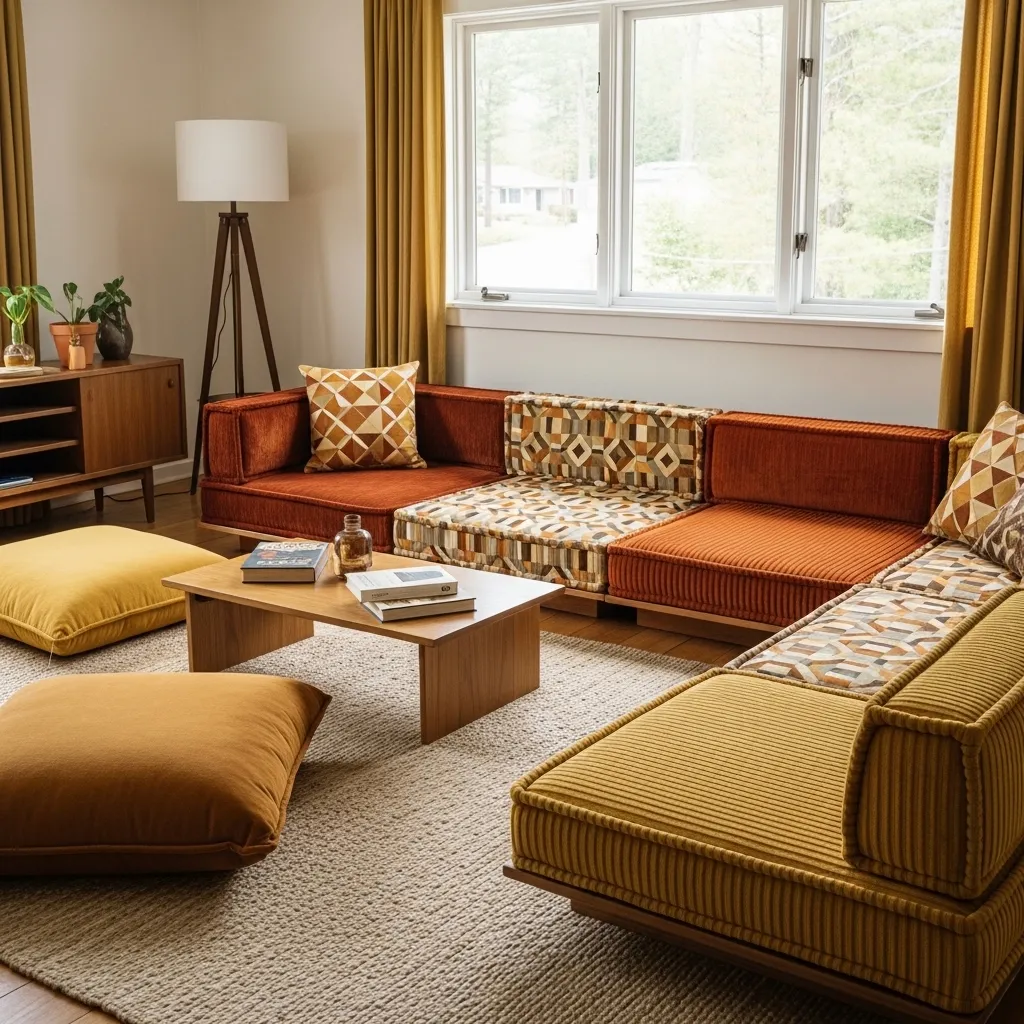
Low-profile modular sectional seating epitomizes 1970s casual living and the era’s embrace of relaxed, informal lifestyles. The floor-level seating encouraged lounging, floor-sitting, and casual entertaining that departed from earlier generations’ more formal living room arrangements.
The key is sourcing or recreating low-profile seating and styling it for casual comfort. Find vintage modular sectionals—often available affordably since they fell out of fashion—or source modern low-profile sectionals. Look for minimal leg height, platform bases, or legless designs sitting directly on the floor. Choose period upholstery—velvet, corduroy, or bold geometric fabrics in 70s colors. Arrange modular pieces creating conversation-friendly configurations. Add large floor cushions, poufs, or oversized pillows for supplemental casual seating. Include a low coffee table appropriate to the seating height. Layer with throws and pillows in coordinating retro fabrics. The low-profile seating creates that relaxed, casual 70s atmosphere where formal entertaining gives way to comfortable lounging and intimate conversation.
15. Retro Color-Blocked Walls
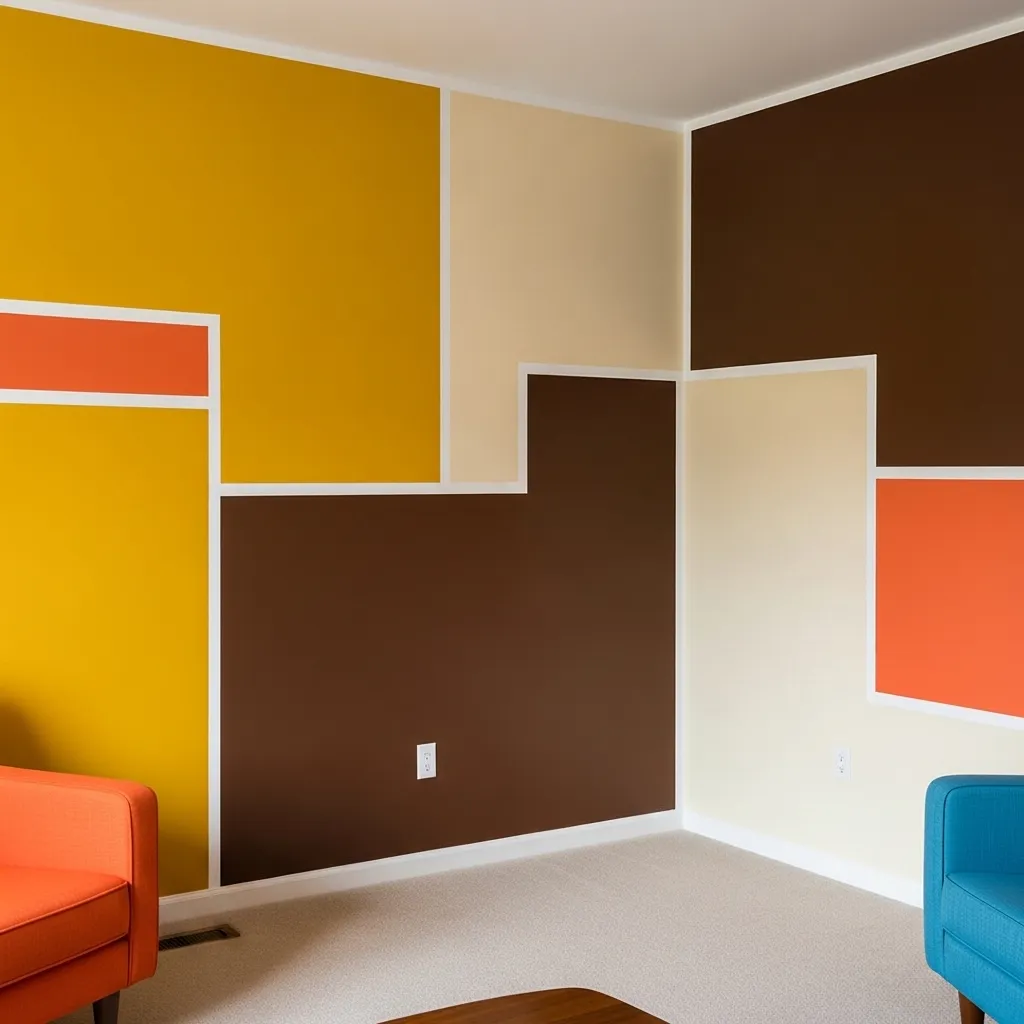
Color-blocked walls create dramatic retro impact through paint alone, referencing the bold geometric graphics and confident color use that defined 1960s-70s design. This treatment transforms plain rooms into graphic statements while remaining budget-friendly and DIY-accessible.
The key is planning thoughtful color blocking that enhances rather than fights your space’s architecture. Choose 2-4 colors from your retro palette—perhaps harvest gold, chocolate brown, rust, and cream. Design geometric divisions—horizontal bands at different heights, vertical sections dividing walls, or asymmetrical shapes creating interest. Use painter’s tape creating crisp lines between colors. Consider color blocking that enhances architectural features—painting alcoves different colors, emphasizing one wall, or creating faux paneling through paint. Ensure adequate contrast between colors so divisions read clearly. Coordinate painted colors with furniture, textiles, and accessories creating cohesive environment. The color-blocked walls create bold, graphic impact characteristic of retro design while providing budget-friendly transformation that can be changed when tastes evolve.