15 Vintage Living Room Ideas That Create Warmth, Character, and the Specific Beauty That Only Time and Accumulation Can Produce
If you’ve been drawn to the vintage living room aesthetic but uncertain about the difference between a room that looks collected and genuinely beautiful and a room that looks cluttered and accidentally assembled — between the vintage living room that creates an atmosphere of warmth, history, and specific personal character that no newly decorated room can replicate and the vintage living room that simply looks like it hasn’t been updated — this guide covers every significant approach to creating living rooms that use vintage, antique, and historically resonant objects and materials to create spaces of genuine beauty rather than merely aged ones. The fifteen ideas here span the complete spectrum: from the maximalist Victorian parlor approach where density of objects and richness of surface creates a room of extraordinary visual abundance, through the mid-century modern vintage living room where specific period furniture creates both aesthetic integrity and genuine design quality, the French provincial living room where the patina of painted furniture and toile and aged stone creates a specific Gallic warmth, the collected bookshelf living room where the accumulation of books and objects over decades creates the room’s primary character, the vintage textile living room where aged kilims and faded velvets and worn linen create the warmth of the space, the Californian bohemian vintage living room where eclectic mix creates joyful visual abundance, the English country house living room where comfortable chintz and aged wood and genuine dog-eared character define the aesthetic, the Danish modern living room where specific Scandinavian vintage pieces create warm contemporary relevance, the Hollywood Regency revival living room where glamour and drama are expressed through vintage finds, the vintage global travel living room where objects from different cultures and continents create a room of extraordinary international character, the Southern gothic living room where dark drama and vintage grandeur define the atmosphere, the vintage artist’s studio living room where the accumulated objects of a creative life create the room’s identity, the Arts and Crafts living room where the specific material philosophy of that movement creates rooms of natural, handmade beauty, the vintage reading room designed specifically around the pleasure of books and reading, and the contemporary vintage hybrid that brings selected vintage pieces into a clean contemporary setting.
The vintage living room has a specific aesthetic advantage over the newly decorated room that I’ve come to understand more clearly over years of looking at both — it’s not that old things are automatically more beautiful than new things, because they’re not, but that a room assembled over time through genuine choices made across many years has a quality of accumulated personal history and accumulated aesthetic judgement that a room designed and installed in one moment can’t replicate. Every piece in a room that has been lived in and genuinely collected carries the story of how it arrived — the market where it was found, the relative whose estate it came from, the impulse purchase that turned out to be exactly right, the deliberate search that ended when the specific right piece finally appeared. These stories accumulate in the room as atmosphere rather than as narrative, as a quality of warmth and genuine inhabitation that professionally styled rooms consistently lack regardless of their objective quality.
What makes vintage living rooms beautiful rather than merely old is the specific quality of the editing that’s happened over time — the removing of pieces that didn’t work as other pieces arrived to replace them, the gradual discovery of which combinations create warmth and which create confusion, the development of a personal aesthetic sensibility through years of looking and choosing and living with things and learning from them. The vintage room that’s genuinely beautiful is the product of an ongoing aesthetic education expressed through accumulated objects, and that quality of accumulated knowledge and accumulated choice is what creates the specific atmosphere of a room that feels like it belongs to someone specific and has been created by that specific person’s specific life.
1. The Victorian Parlor — Maximalist Warmth and Object Density
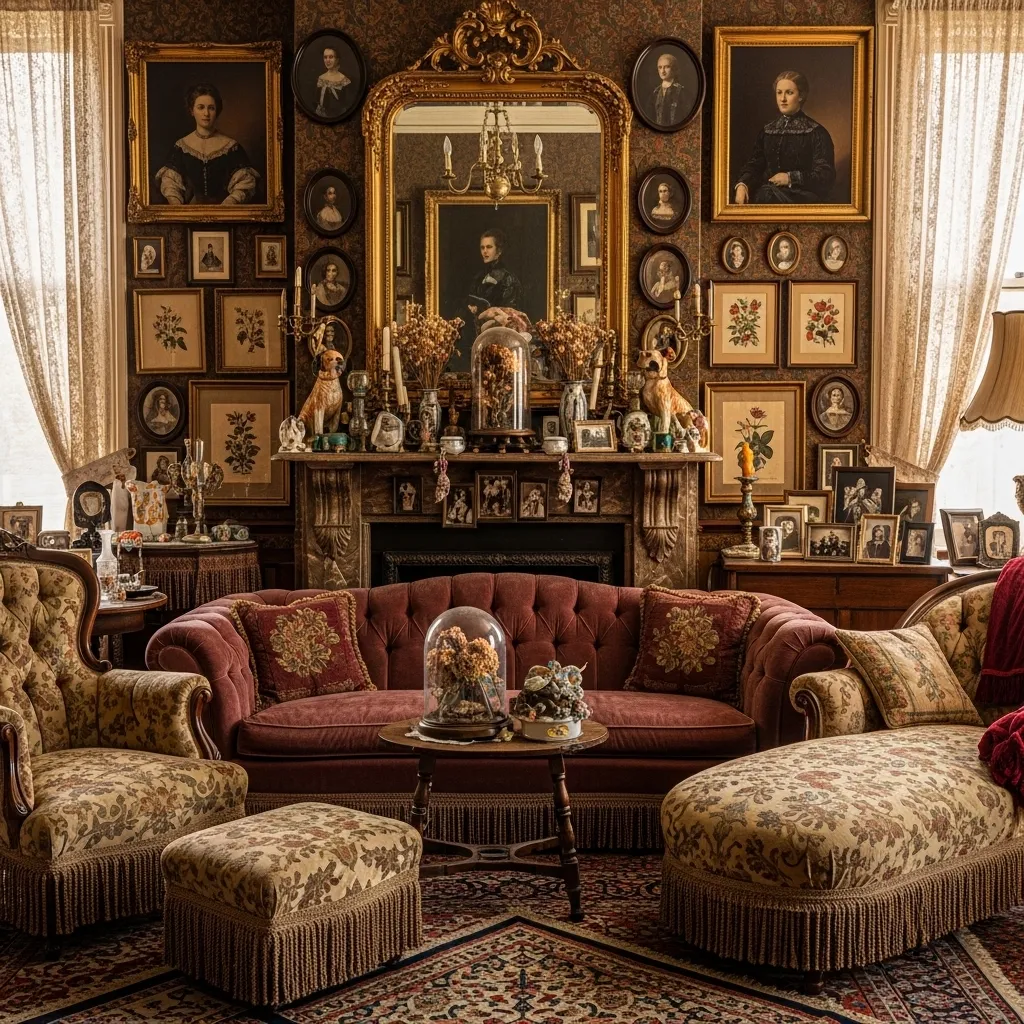
The Victorian parlor living room is the maximalist vintage approach at its most historically grounded and most visually abundant — a room where the Victorian principle that beauty comes from richness and accumulation and display rather than from restraint and reduction has been fully embraced. The specific qualities that create a genuine Victorian parlor atmosphere rather than a pastiche of one are the specific period objects — the glass dome over dried flowers, the ceramic dogs on the mantelpiece, the button-back velvet upholstery with its original tufting and fringe, the heavy gilt frames on the gallery wall — and the specific quality of aged surface that genuine period pieces have. A room with reproduction Victorian furniture and mass-produced Victorian-style objects reads as themed; a room with genuine Victorian pieces, however mixed with later additions, reads as genuinely inhabited by someone who loves that period.
The density of objects on the Victorian mantelpiece is the specific element that most communicates the period’s decorative philosophy — the Victorian mantelpiece was understood as a display stage for the family’s accumulated objects of beauty and significance, and a sparsely decorated mantelpiece in a Victorian parlor is a contradiction in terms. The layered arrangement of the Victorian mantelpiece — objects at multiple heights, objects in front of and behind each other, objects at the mantelpiece edge and the mantelpiece back — creates a composition of genuine visual complexity that rewards sustained attention and that communicates abundance rather than restraint as the room’s fundamental value.
2. Mid-Century Modern Vintage — Design Integrity and Period Warmth
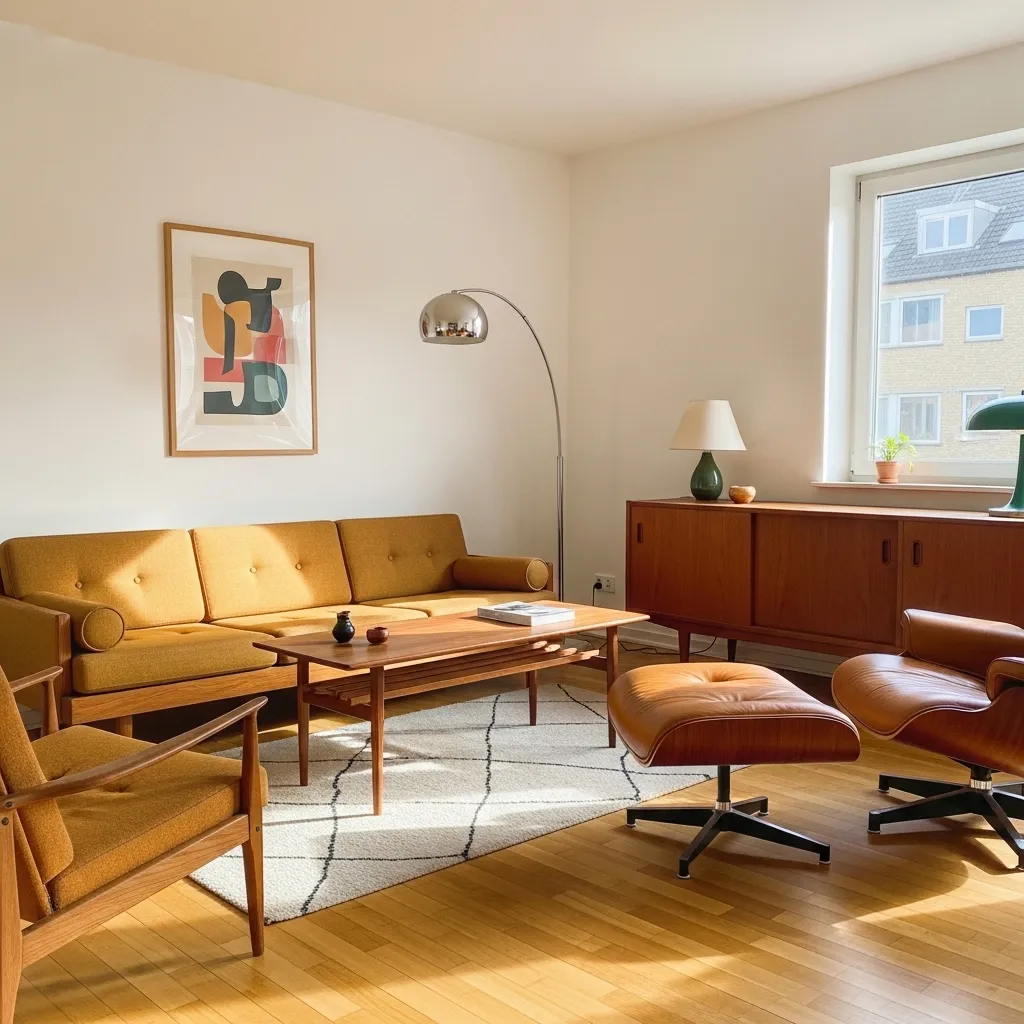
A genuine mid-century modern vintage living room — with actual vintage 1950s and 1960s furniture rather than contemporary reproductions — creates the living room with the most specific historical integrity and the most authentic design quality available in the vintage aesthetic, because the genuine pieces of that period were designed by some of the most accomplished furniture designers of the twentieth century and were made to standards of craftsmanship and material quality that contemporary mass-market reproductions rarely match. The Eames lounge chair in original rosewood and leather, aged to the specific warmth that decades of use and care create, is a categorically different object from its contemporary authorized reproduction — the same design, but with the accumulated warmth of genuine use and genuine time that reproduction cannot contain.
The specific quality of faded vintage fabric on genuine mid-century upholstered pieces is the detail that most clearly distinguishes genuine vintage from high-quality reproduction — the mustard wool that has faded over sixty years to a warm, slightly muted tone has a specific quality of aged color that’s impossible to manufacture. New fabric in the same color is brighter, more saturated, more uniformly colored than the same fabric aged through decades of light exposure and use, and that difference in color quality — subtle but immediately felt — is what creates the specific warmth of genuine vintage upholstery that reproduction pieces, however accurately they reproduce the design, can’t replicate.
3. French Provincial — Patina, Painted Wood, and Faded Elegance
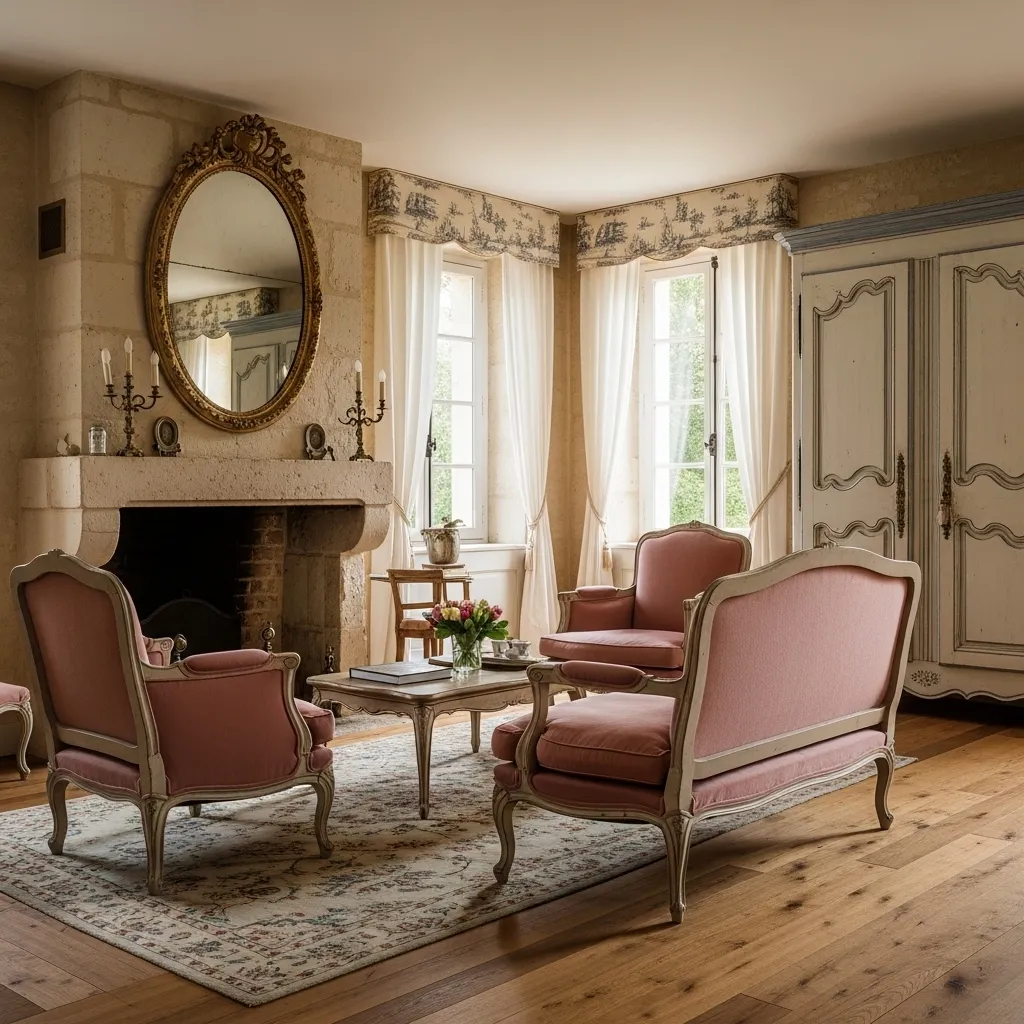
The French provincial vintage living room creates the most specifically romantic and most gracefully aged of all vintage living room atmospheres — the specific quality of French domestic interiors from the eighteenth and nineteenth centuries, where quality materials and elegant proportions were combined with a comfortable informality and a willingness to let beautiful things age gracefully rather than replacing them when they show wear, creates rooms of extraordinary warmth and refined beauty that the English country house approach shares but expresses differently.
The bergère chair is the specific French furniture form that most completely embodies the French provincial living room’s aesthetic — the closed upholstered armchair with its carved wood frame and its comfortable, enveloping quality of seating creates a chair that’s simultaneously elegant and comfortable, formal in its construction and inviting in its proportions. A pair of genuine French bergère chairs in original or sympathetically reupholstered fabric in faded provincial tones — dusty rose, faded blue, soft grey-green — creates an immediate quality of French domestic elegance that no other furniture form quite achieves.
4. The Collected Bookshelf Living Room
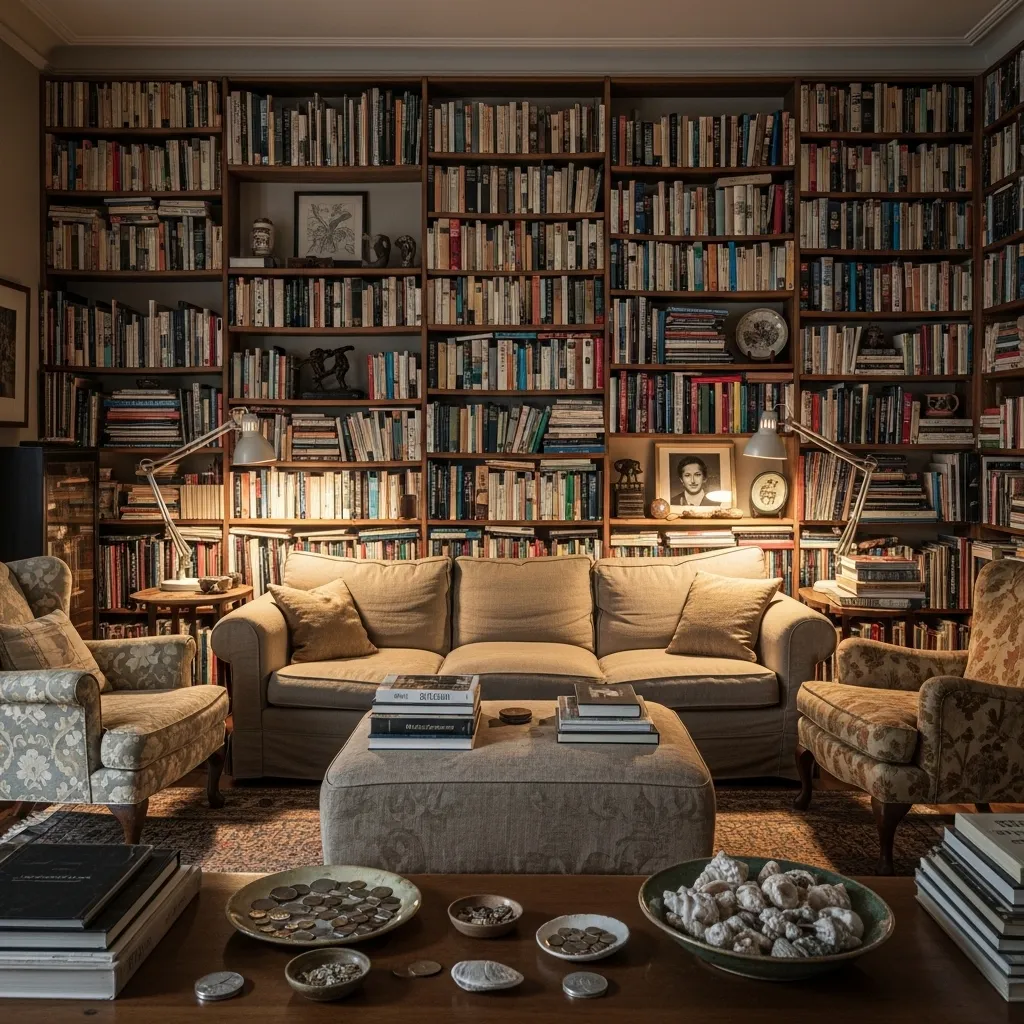
A living room where the walls are lined with genuinely accumulated books — not books purchased for their spines or arranged by color for visual effect, but books that have been actually read and actually kept for specific reasons — creates the most intellectually rich and most genuinely personal vintage living room atmosphere available, because a personal library is simultaneously a room’s most decorative element and its most honest autobiographical statement. Every book on a shelf that has been read represents a specific choice to keep rather than discard, and the accumulated choices of a lifetime of reading create a library that’s a complete map of a specific intellectual and emotional life.
The integration of personal objects among the books — the shells, the photographs, the ceramics, the coins, the small figures — is the element that transforms a room with a lot of bookshelves into a genuine library living room of personal character. These objects are not styling elements placed to create visual interest among the books; they’re objects with specific personal significance that have been kept alongside specific books that have specific personal significance, and their presence among the books communicates that this library is a lived-in, personally meaningful space rather than an accumulated collection managed for visual effect.
5. The Vintage Textile Living Room
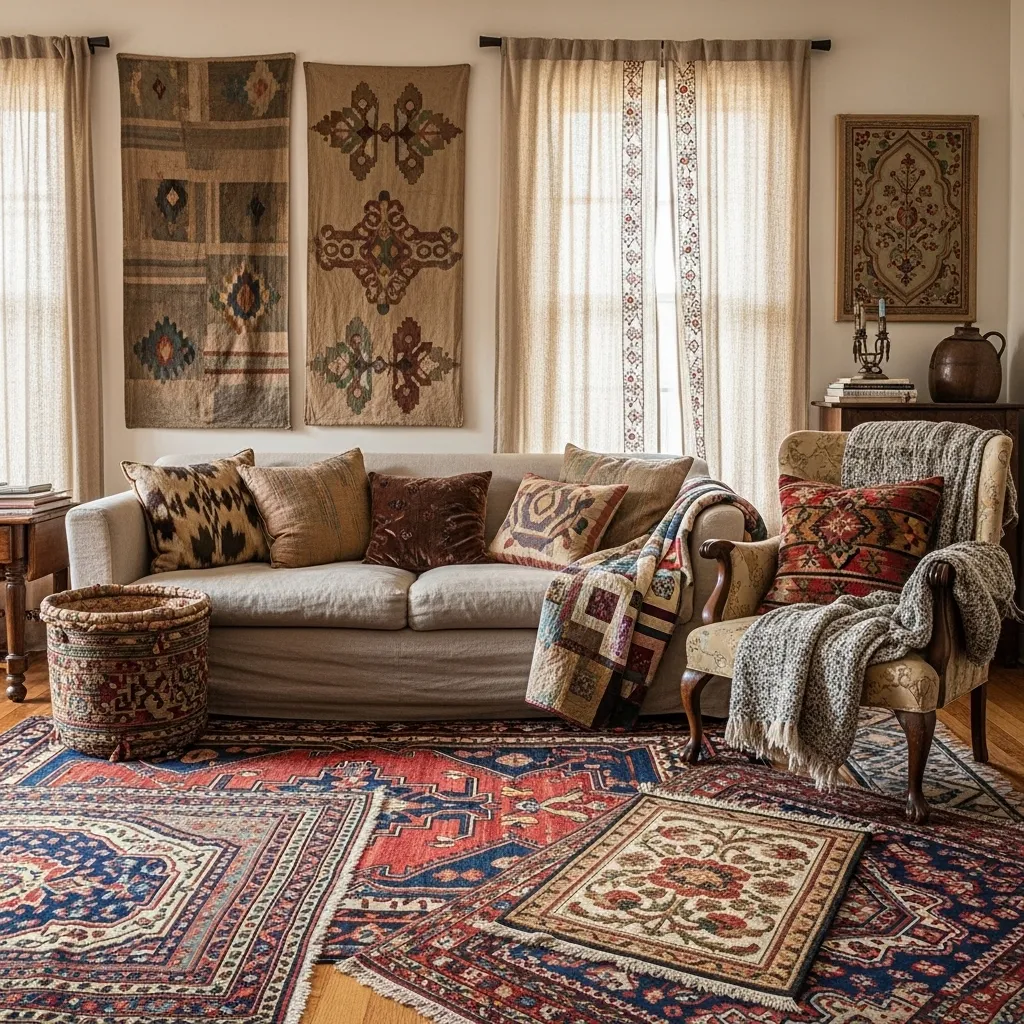
A vintage textile living room — where the primary design material is accumulated aged textiles rather than furniture or paint or architectural elements — creates the warmest and most tactilely rich of all vintage living room approaches, because textiles are the domestic materials that most directly create physical comfort and physical warmth, and aged textiles specifically have a quality of softness and color depth that new textiles don’t possess. The faded kilim, the worn velvet cushion, the aged linen curtain — all have a quality of color that’s been worked and softened by time, a depth and complexity that fresh dye on new fabric simply doesn’t achieve.
The overlapping rug approach is the floor treatment that most completely creates the vintage textile living room’s characteristic warmth — multiple rugs of different origins, different ages, and different patterns layered to cover most of the floor creates a richly textured floor surface that simultaneously provides visual warmth (the accumulated color of multiple rugs), physical warmth (the depth of layered textile underfoot), and the quality of accumulated collection (multiple rugs from different sources and different periods creating a floor that reads as gathered over time rather than selected as a set).
6. English Country House — Comfortable Grandeur and Dog-Eared Charm
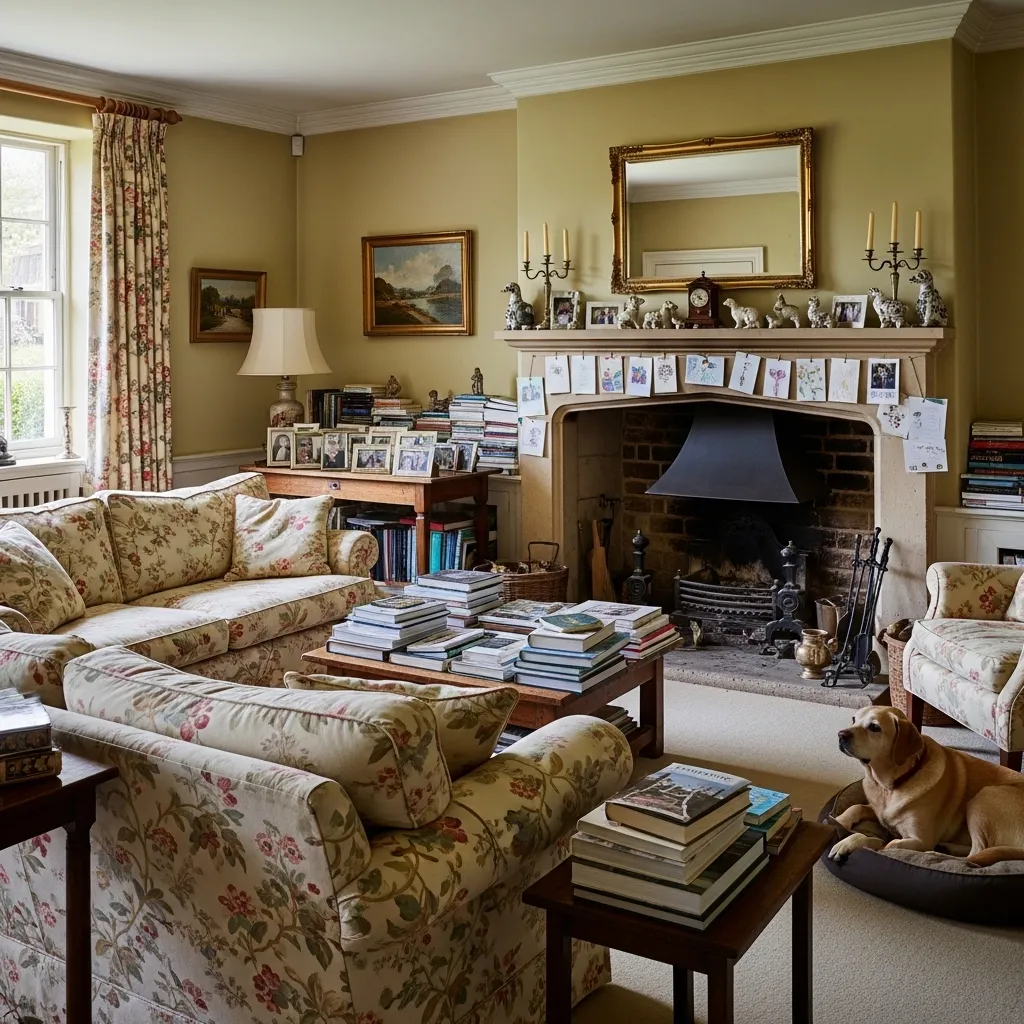
The English country house living room is the vintage aesthetic that most specifically values the evidence of genuine use over the preservation of perfect condition — the faded chintz, the crowded mantelpiece, the books stacked everywhere, the worn patch by the fire — all communicate a room that has been genuinely lived in and genuinely loved rather than maintained in a state of preserved elegance. This is the vintage aesthetic that most clearly refuses the idea that a beautiful room needs to be a perfect room, and that refusal is precisely what creates the specific warmth and comfort that English country house rooms consistently provide.
The faded chintz is the specific textile that most completely embodies this aesthetic’s values — a chintz that still looks new has not yet become beautiful in the country house sense; a chintz that has been bleached by years of light and softened by years of use to the watercolor pale tones of faded flowers has acquired the specific beauty that the aesthetic values above the freshness it began with. This is the principle — that use and time improve rather than degrade — that defines English country house aesthetics at their most genuinely beautiful and most specifically different from any other vintage approach.
7. Danish Modern — Warm Vintage Scandinavian
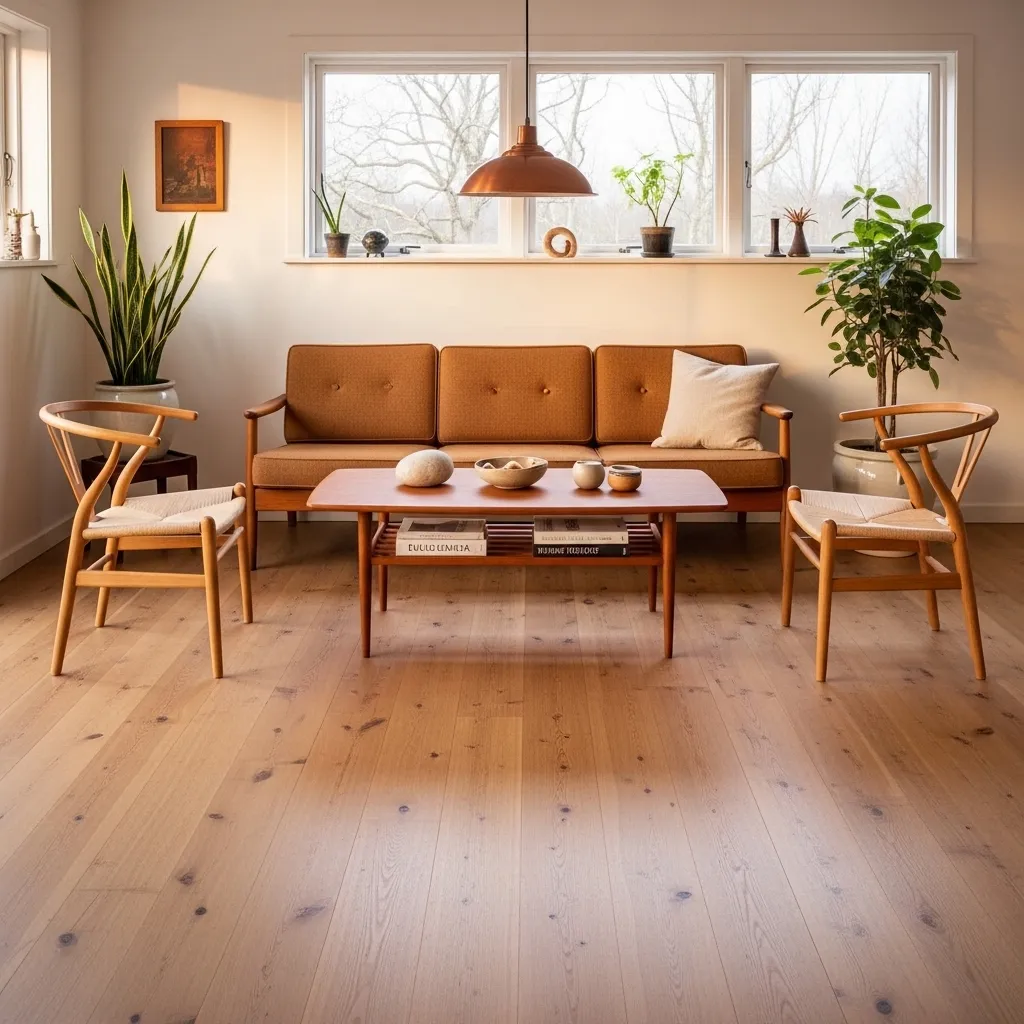
Genuine vintage Danish modern furniture creates the living room with the most complete expression of mid-twentieth century Scandinavian design philosophy — the belief that beautiful design should be available for everyday use, that craft quality and material honesty are the foundations of good design, that the human body’s comfort and the domestic space’s warmth should be the primary considerations in furniture design. These values, expressed in the specific forms and materials of 1950s and 1960s Danish furniture, create a living room that is simultaneously historically significant and completely contemporary in its relevance.
The Hans Wegner chair — whether the Wishbone Chair in natural paper cord or the Shell Chair in original upholstery or the Peacock Chair in its sculptural form — is the specific vintage Scandinavian piece that most completely embodies the period’s design philosophy, combining extraordinary craft quality, natural material beauty, organic ergonomic form, and the specific warmth of wood and natural fiber into a single furniture object of remarkable achievement. The presence of one or two genuine vintage Wegner chairs in a living room creates a quality of design seriousness and material quality that elevates the entire space.
8. Hollywood Regency Revival — Glamour Through Vintage Finds
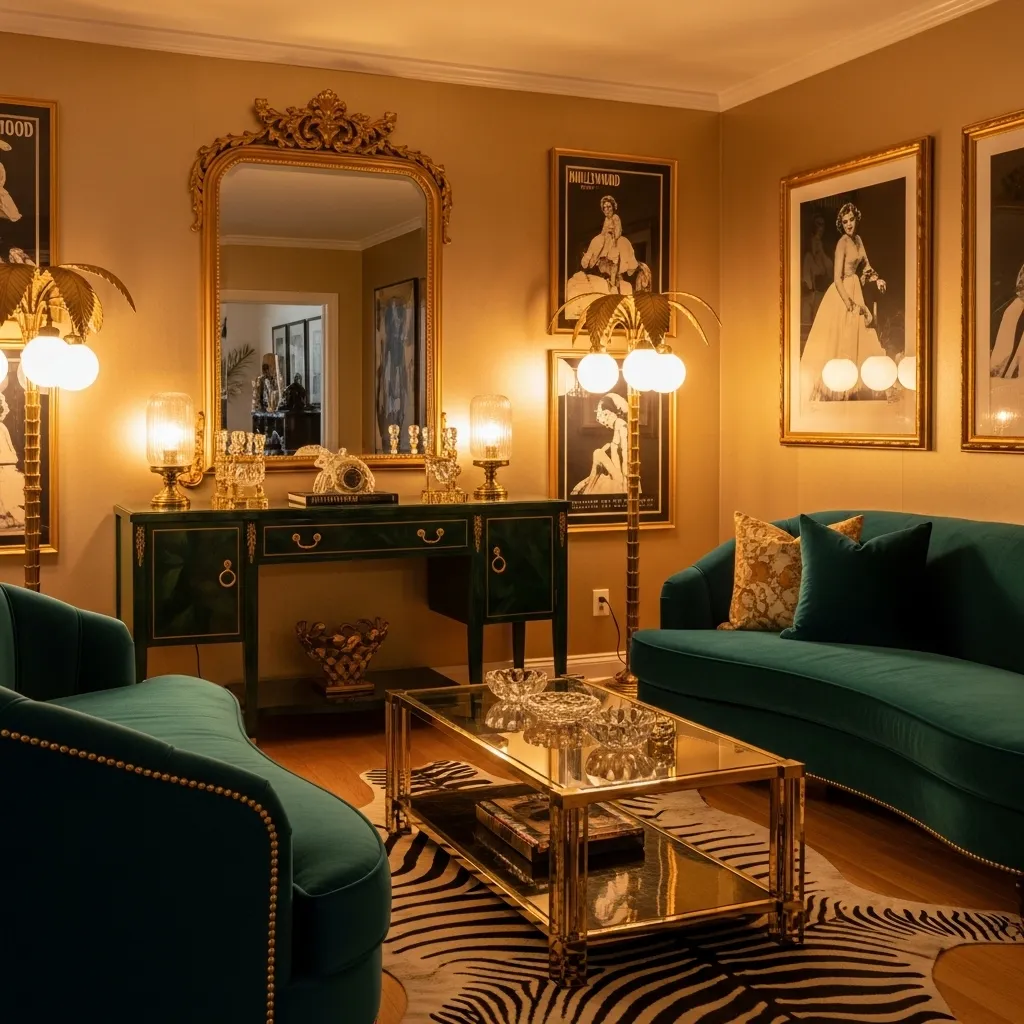
The Hollywood Regency vintage living room is the vintage aesthetic most committed to drama, glamour, and the specific quality of theatrical beauty that the film industry’s golden age created in the domestic spaces of its participants and admirers. The Hollywood Regency aesthetic — characterized by lacquer and velvet and mirror and gold and the bold graphic contrast of rich color against gleaming metal — was always about the performance of luxury and the performance of glamour, and assembling this aesthetic through genuine vintage finds creates a room with both the theatrical quality of the style and the material authenticity of genuine period pieces.
The genuine vintage pieces of the Hollywood Regency period — the original lacquered console, the brass palm tree lamp, the smoked glass coffee table, the velvet curved sofa with nail head trim — have a quality of material presence that reproduction pieces in the same style lack, because the specific lacquer quality of the 1940s and 1950s, the specific brass casting of the period, the specific velvet quality of original upholstery have physical characteristics that are products of their period’s manufacturing methods and materials and that contemporary reproduction, however skillful, cannot fully replicate.
9. Vintage Global Travel — Objects From Everywhere
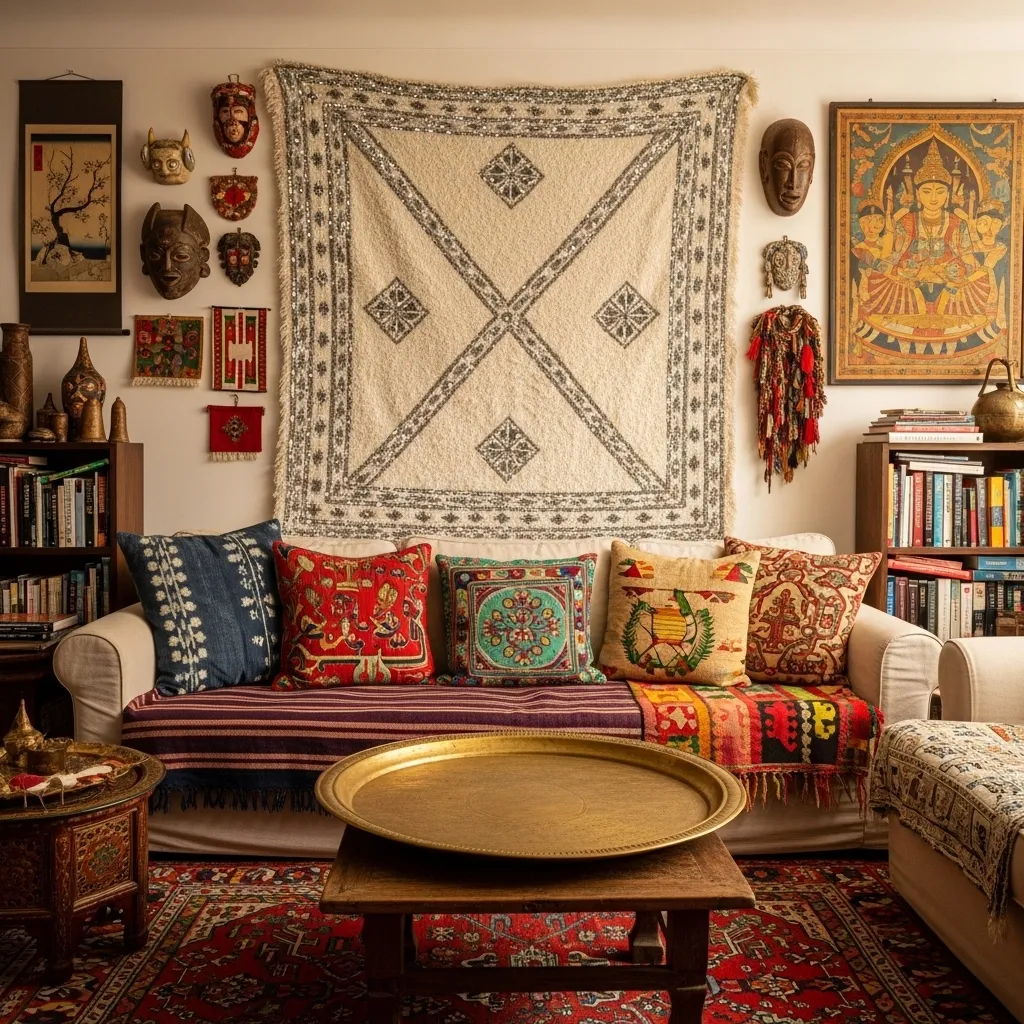
A vintage global travel living room — assembled from objects genuinely collected across decades of travel to different cultures and countries — creates the most personally specific and most geographically rich of all vintage living room aesthetics, one that can only be assembled through genuine experience and genuine collecting rather than through purchasing a curated collection of global aesthetic objects. Every piece in this room carries a specific provenance — the Moroccan blanket purchased in a specific market on a specific trip, the Japanese woodblock print found in a specific shop in a specific city, the suzani cushion acquired through a specific encounter with a specific maker — and that specific provenance, even when not verbally communicated, is present in the room as atmosphere.
The specific quality that distinguishes a genuine global travel living room from a decorative invocation of world cultures is the consistency of personal aesthetic sensibility across objects from very different origins — genuine collectors don’t collect everything from every culture but develop over time a specific eye for the qualities they find beautiful across cultures, and the accumulated objects of this specific eye create a room with genuine aesthetic coherence despite its geographic diversity. The collector who is drawn to the specific quality of handmade textile in every culture collects a suzani and a Japanese katazome and a Guatemalan weaving not because they are representative of their cultures but because they each express the specific quality of hand-textile-making that this specific person finds beautiful across all its cultural expressions.
10. The Southern Gothic Living Room
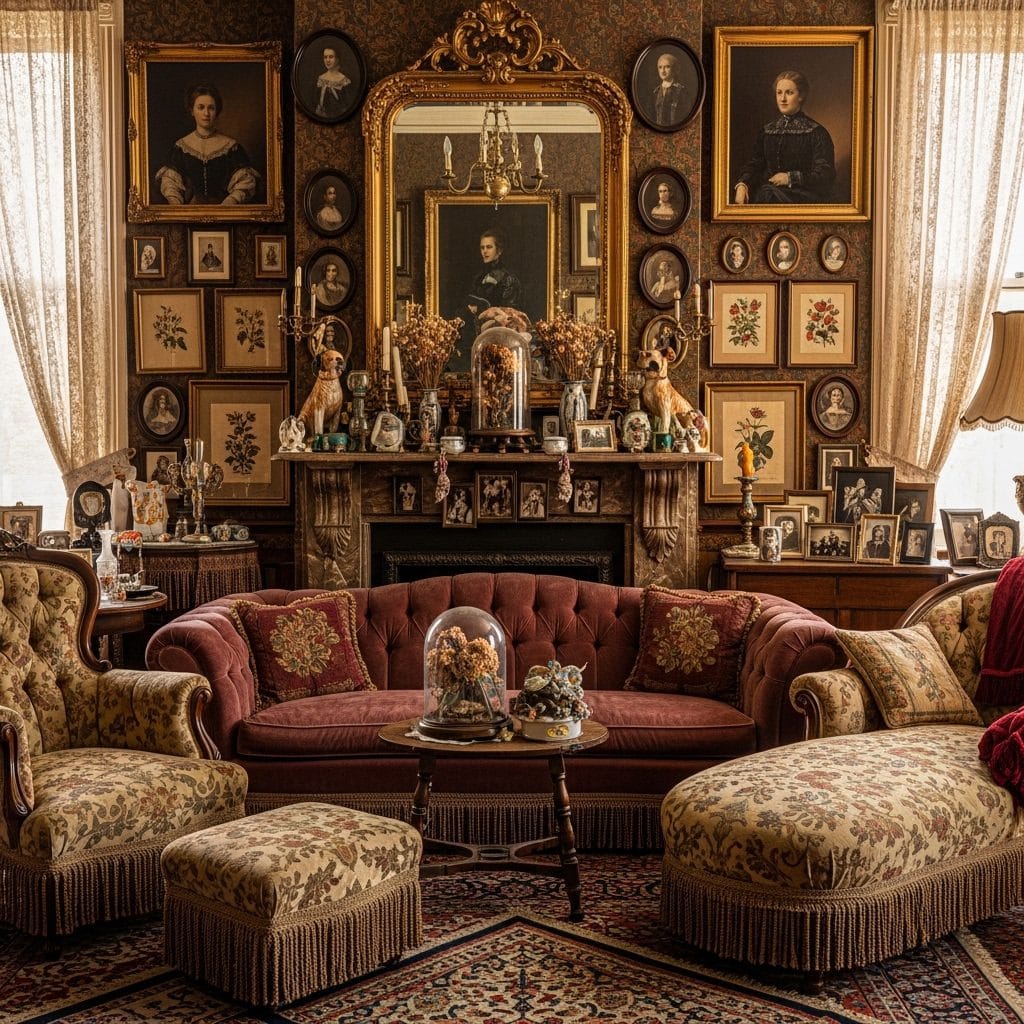
The Southern Gothic vintage living room creates the most dramatically atmospheric and most theatrically charged of all vintage living room aesthetics — a room where the beauty of decay and the beauty of things past their prime is embraced rather than resisted, where the faded grandeur of a once-magnificent room is understood as more beautiful in its current faded state than it was in its original freshness, where darkness and heaviness and the weight of the past are understood as aesthetic qualities rather than conditions requiring remedy. This is the vintage aesthetic that most directly engages with time as a force that creates beauty rather than erasing it.
The collection of ancestral portraits — whether genuinely ancestral or collected from antique dealers and estate sales for their formal, period-appropriate quality — is the specific wall treatment that most creates the Southern Gothic living room’s atmosphere of family history and accumulated generations. The antique portrait, with its formal pose and its specific quality of historical painterly style, creates a wall of presences — people from the past looking out into the present — that gives the room a temporal depth no other wall treatment achieves. The practice of collecting antique portraits of strangers and installing them as though they were ancestors is both a Southern Gothic decorating tradition and a philosophical statement about the nature of inherited culture and accumulated history.
11. The Vintage Artist’s Studio Living Room
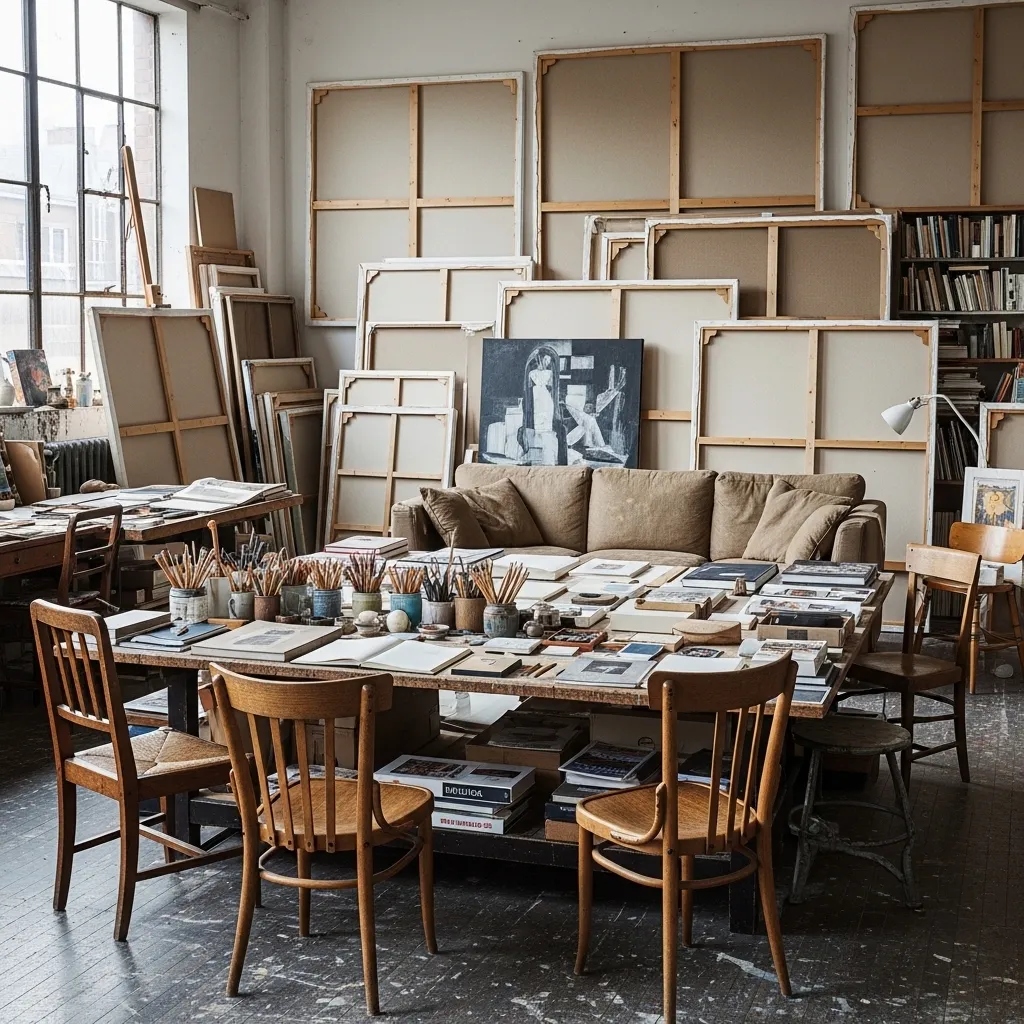
A vintage artist’s studio living room — where the living space and the creative working space are not separated but genuinely integrated, where the objects of creative work and the objects of domestic life coexist in one abundant, personally expressive room — creates the most genuinely creative and most specifically personal of all vintage living room environments. The artist’s studio living room is defined by its dual function rather than despite it — the canvases and sketchbooks and collections of interesting things are not intrusions into a domestic space but genuine inhabitants of it, as necessary to the room’s character as the sofa and the books.
The unfinished work propped against the wall — the canvas in progress, the sculpture at its penultimate stage, the sketch pinned to the wall as reference — is the specific element that most clearly communicates the studio living room’s dual function and that creates the specific quality of active creative life that finished works displayed as final objects don’t provide. A room where work in progress is visible communicates that making is continuously happening here, that the creative life is not something that happens elsewhere and is brought home for display but something that inhabits this room directly and continuously.
12. Arts and Crafts — Natural Materials and Handmade Beauty
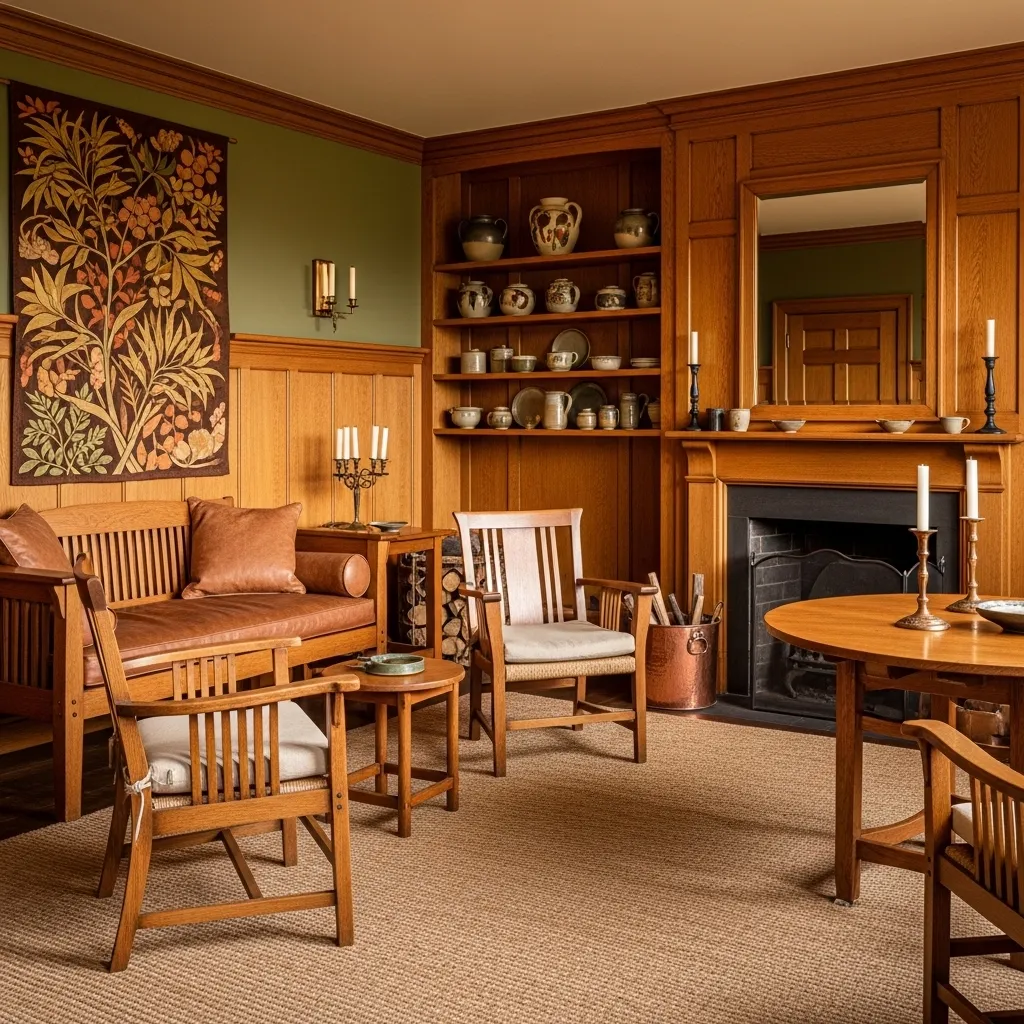
An Arts and Crafts living room — built on the specific design philosophy of William Morris and his contemporaries, who believed that the industrial revolution’s replacement of handcraft with machine production was destroying both the quality of objects and the dignity of those who made them — creates the vintage living room with the most coherent philosophical foundation and the most clearly articulated material values. Every object in a genuine Arts and Crafts room is there because it was made by hand using natural materials and honest construction methods, and the accumulated presence of genuinely handmade objects of natural materials creates a room of extraordinary material integrity that mass-manufactured objects, however skillfully designed, simply don’t achieve.
The handmade ceramic is the Arts and Crafts object that most clearly expresses the movement’s values — the visible throwing marks of the potter’s hands, the specific quality of the glaze that results from natural mineral compounds and wood-fired kilns, the slight asymmetry of a form made by hand rather than cast in a mold all communicate the maker’s presence in the object in a way that industrially manufactured ceramics eliminate. A collection of genuine period Arts and Crafts pottery — Rookwood or Grueby or Newcomb or any of the American art potteries of the 1890s through 1920s — creates a display of extraordinary material beauty and genuine historical significance in an Arts and Crafts living room.
13. The Vintage Reading Room
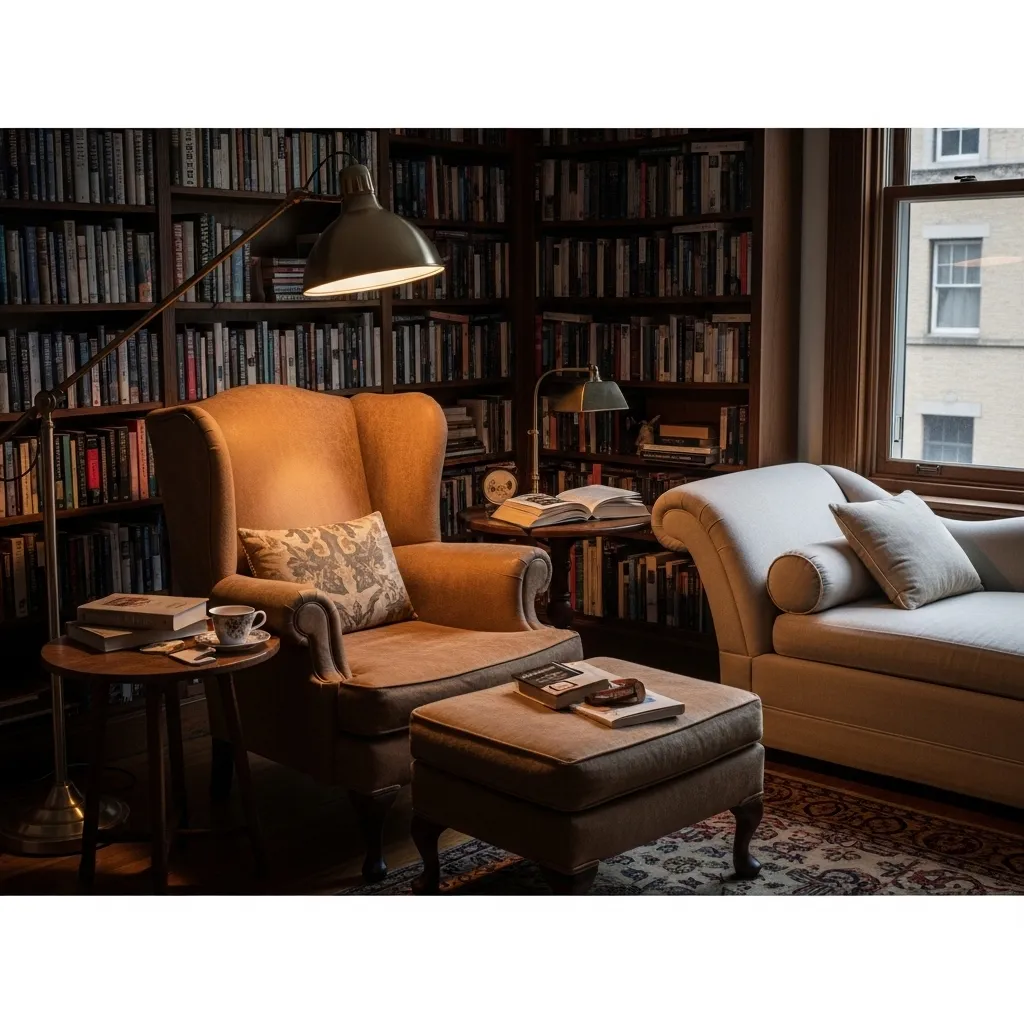
A vintage reading room — designed specifically and unapologetically around the pleasure of books and reading as the room’s primary purpose — creates the most specifically pleasurable and most genuinely used living room possible for the person who loves reading, because it treats reading not as an activity that happens to occur in a multi-purpose living room but as a specific practice that deserves a specifically designed space with specifically considered equipment. The quality of the reading chair, the quality and positioning of the reading lamp, the proximity of books, the warmth of the enclosing atmosphere — all of these are not decorative considerations but functional requirements of the reading experience, and getting them right creates a room that enables and invites reading rather than merely accommodating it.
The reading lamp is the most functionally critical element in the reading room — the quality of light for reading is not merely a matter of sufficient lumens but of the specific quality of warm, directional light at the right height and angle that illuminates the page without creating glare or strain. A large, adjustable floor lamp with a warm incandescent or high-quality LED bulb positioned at exactly the right height for the specific chair creates reading light of genuinely superior quality, and the physical pleasure of reading in genuinely good light — after years of reading in merely adequate light — is one of the most immediately appreciated practical improvements the reading room can provide.
14. The Bohemian California Vintage Room
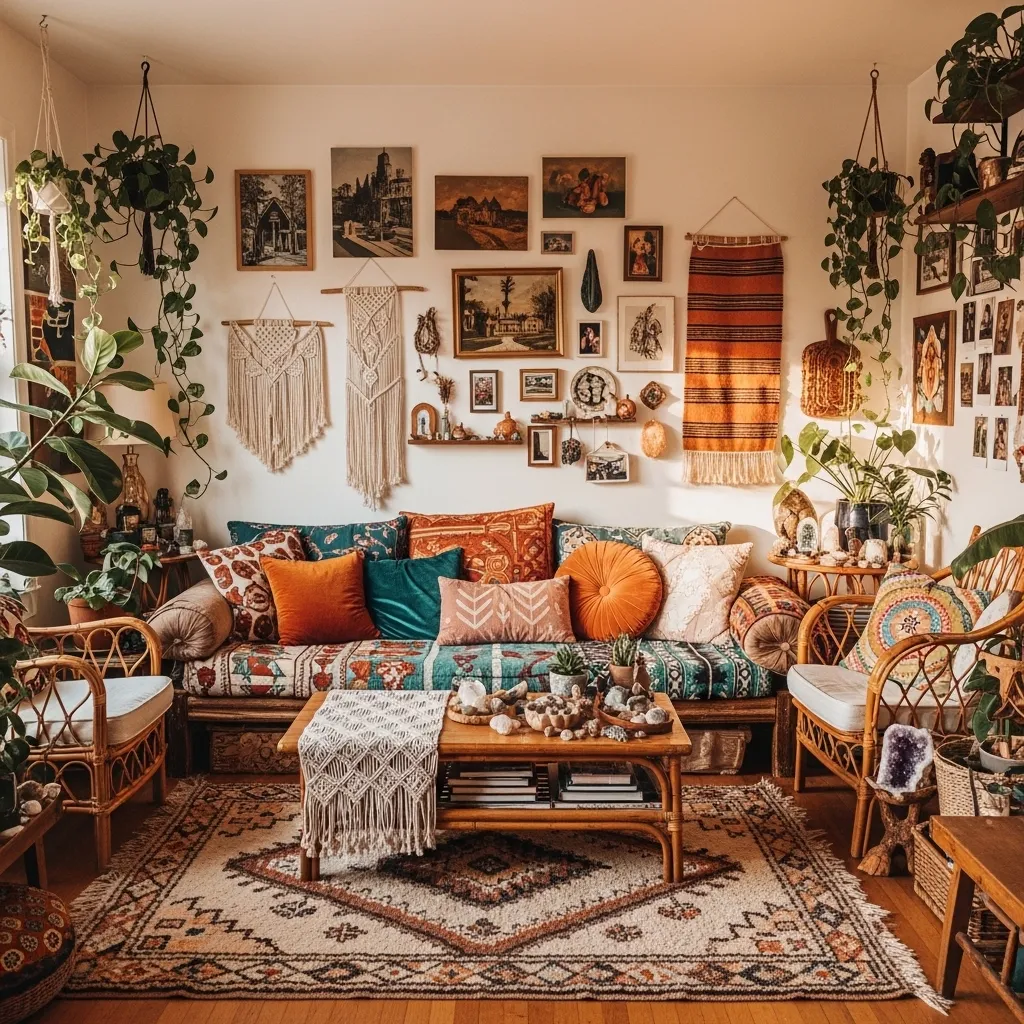
The California bohemian vintage living room is the vintage aesthetic that most celebrates eclectic mixing — the willingness to bring together vintage finds from multiple periods, multiple aesthetics, and multiple cultures and let them create their own composition without the organizing principle of a specific period or style. Where mid-century modern vintage requires period coherence and English country house vintage requires national coherence, the California bohemian approach requires only personal coherence — a room where every object is genuinely loved by the person who chose it, regardless of its period or origin.
The joyful quality of the California bohemian room is its most distinctive characteristic — it’s the vintage aesthetic that most clearly refuses to be serious or solemn about the business of collecting and decorating, that treats the accumulation of beautiful and meaningful objects as a pleasure rather than a project, that allows mismatching and imperfection and the occasional wrong note as part of the room’s charm rather than as failures to be corrected. This quality of joyful aesthetic permission creates living rooms of extraordinary personal warmth that the more disciplined vintage aesthetics, whatever their specific beauty, sometimes lack.
15. The Contemporary Vintage Hybrid
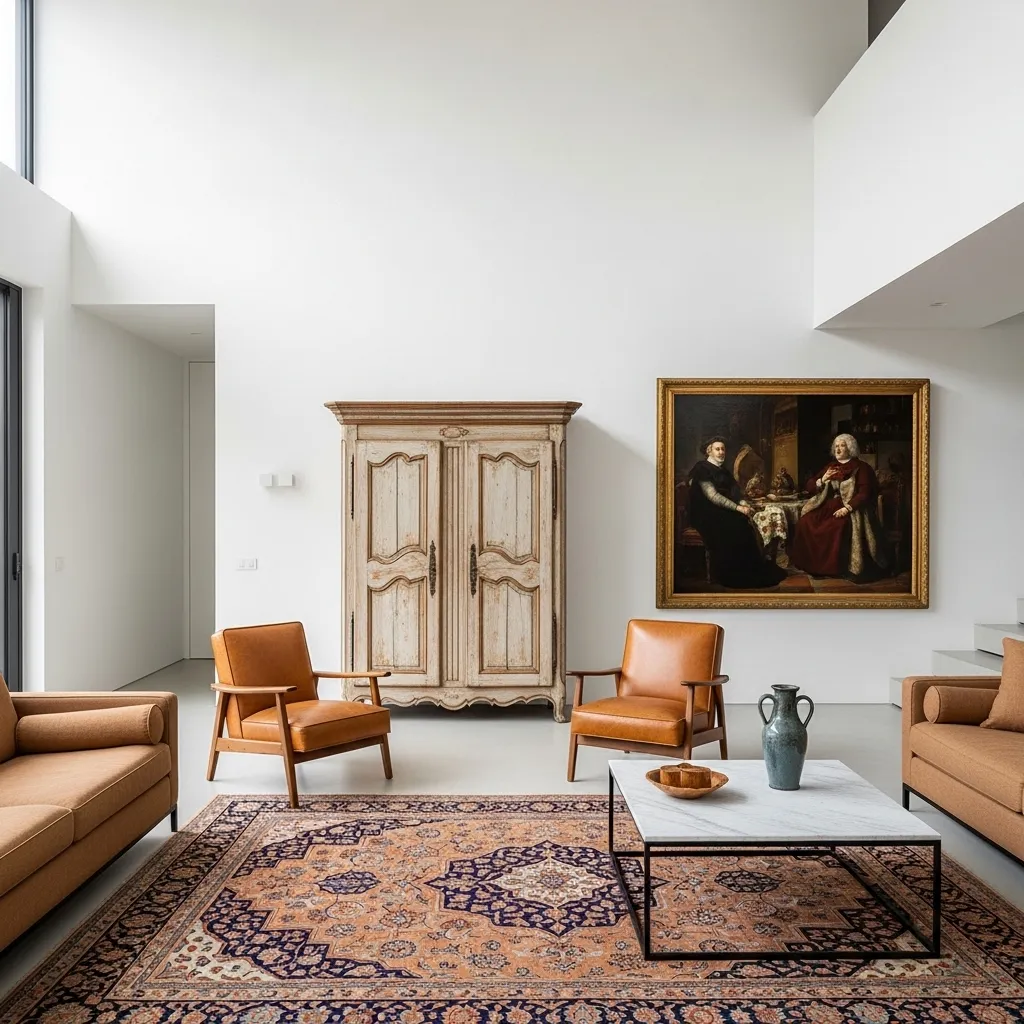
The contemporary vintage hybrid — where selected vintage pieces of genuine quality and genuine character are placed within a clean contemporary architectural setting — creates the most sophisticated and most visually precise of all vintage living room approaches, because the contrast between the clean contemporary setting and the specific vintage pieces allows each vintage piece to be seen with a clarity and a quality of attention that a uniformly vintage room doesn’t provide. When a magnificent antique armoire stands against a smooth white wall in a clean contemporary room, it can be seen as a complete object of specific beauty; when the same armoire stands in a room of equally elaborate Victorian furniture, it becomes part of a visual field where individual pieces compete for attention.
The selection principle for the contemporary vintage hybrid is the inverse of the maximalist vintage approach — where the maximalist approach values abundance and accumulation, the contemporary hybrid values the selection of a very small number of genuinely magnificent pieces and the creation of a setting that allows those pieces to be fully seen. This selection requires both greater confidence in aesthetic judgement (choosing three pieces to furnish a room requires more certainty about each piece’s quality than choosing thirty) and greater restraint (resisting the temptation to add more pieces when the space allows it), but the result is a living room of extraordinary clarity and extraordinary respect for the specific beauty of the chosen vintage objects.