18 Bookshelf Ideas
Bookshelves are so much more than just functional storage for books—they’re opportunities to showcase your personality, display treasured collections, create architectural interest, and genuinely transform a room’s character and functionality. Whether you’re an avid reader with hundreds of volumes that need homes, a minimalist who wants a curated display space, or someone who sees shelving as a chance to add visual drama and practical storage to a room, the right bookshelf can completely change how a space looks and works. The beauty of bookshelf design is its incredible versatility—shelving can be built-in or freestanding, traditional or wildly creative, purely functional or primarily decorative, and everything in between.
What I love about thinking creatively about bookshelves is how they solve multiple problems at once. Yes, they store and organize your books, but they also fill vertical space beautifully, create focal points, provide homes for plants and decorative objects, display family photos and artwork, and can even serve as room dividers or architectural features that add character to otherwise bland walls. In homes where built-in millwork isn’t original to the architecture, adding thoughtful shelving can create that custom, designed-for-you feeling that makes a house feel truly finished and intentional. And unlike many furniture pieces, bookshelves are inherently practical—they’re working every day, not just sitting there looking pretty.
The challenge with bookshelves is balancing function and aesthetics—you want enough capacity to actually hold your books and belongings, but you also want the shelving itself to be attractive and the styling to look curated rather than cluttered. The best bookshelf solutions consider both the physical structure and how it will be filled and styled. Think about shelf depth, spacing between shelves, weight capacity, how the proportions work with your room size, and whether you need doors to hide some contents while displaying others. Let’s explore these ideas and figure out how to incorporate beautiful, functional shelving that works perfectly for your space and how you actually live.
1. Floor-to-Ceiling Built-In Library Wall
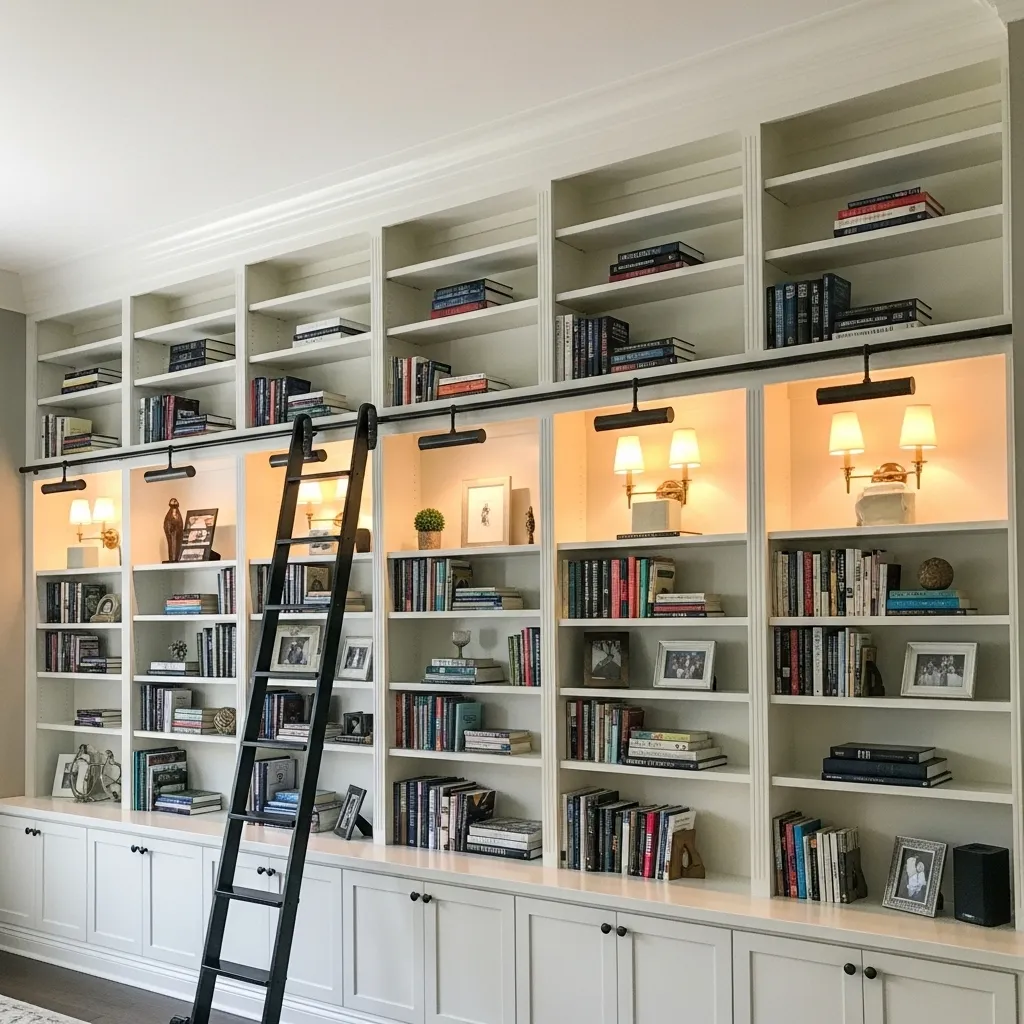
Floor-to-ceiling built-in bookshelves create the ultimate library wall and make such a powerful architectural statement. When shelving spans an entire wall from floor to ceiling, it becomes an integral part of the room’s architecture rather than just furniture, and it maximizes every possible inch of vertical storage space. This is particularly valuable in homes with high ceilings where that upper space would otherwise go unused.
The library ladder isn’t just decorative—it makes those upper shelves genuinely accessible and functional rather than wasted space you can’t reach. There’s something undeniably romantic and special about a rolling ladder that references classic libraries and old bookstores. The key to making floor-to-ceiling shelving work is mixing open shelves with some closed storage at the bottom so you have places to hide less attractive necessities while displaying your beautiful books and objects. Paint the built-ins the same color as your walls for a seamless, integrated look, or use a contrasting color to make them a bold feature. This is an investment that genuinely adds value to your home and creates a stunning focal point.
2. Asymmetrical Modern Shelving
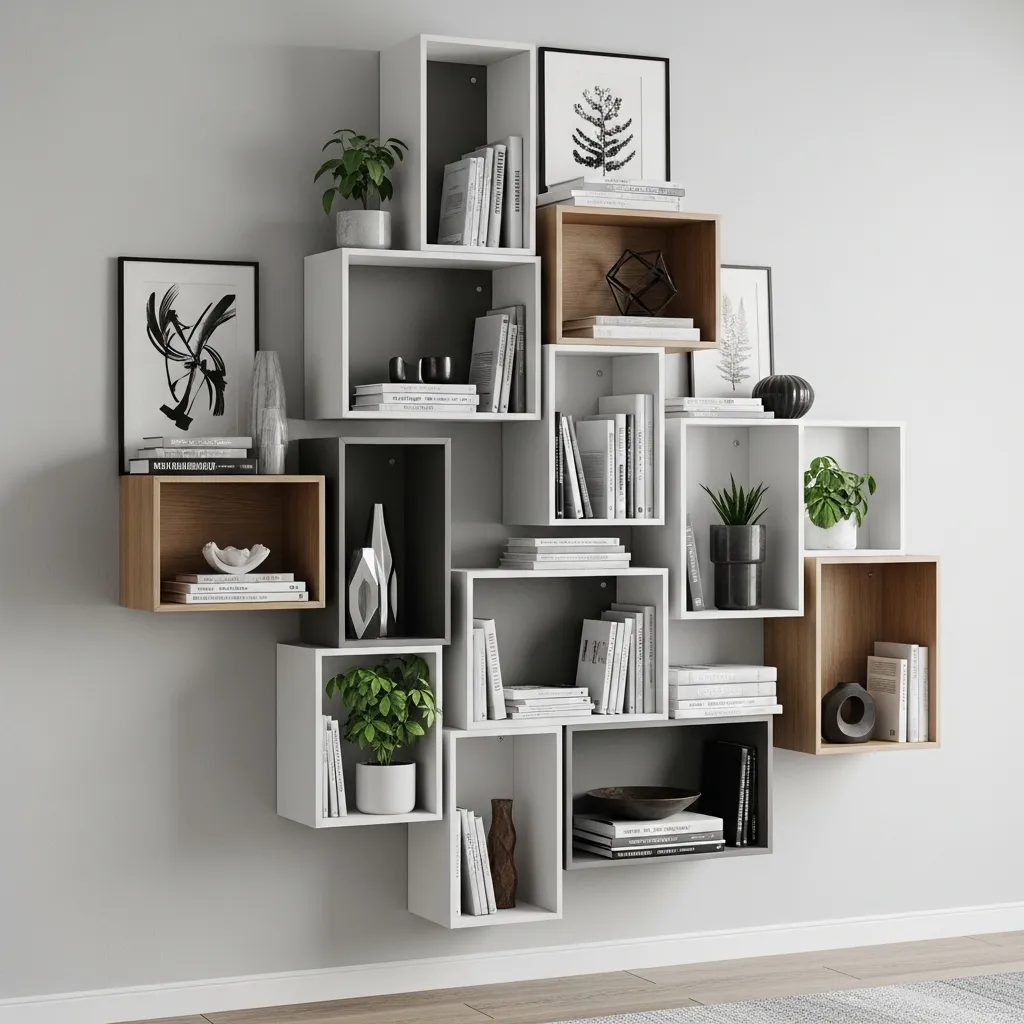
Asymmetrical shelving throws out the traditional rules of matched, aligned shelves and instead creates something more sculptural and artistic. The irregular arrangement of boxes, cubes, and shelves at different heights and depths creates visual movement and interest that symmetric shelving can’t achieve. It’s modern, dynamic, and makes the shelving itself a piece of art rather than just functional storage.
This approach works particularly well in contemporary and modern spaces where you want something visually interesting that breaks from traditional forms. The varying shelf sizes and depths allow you to display different types of objects—small cubbies for decorative items, larger shelves for books, deep boxes for bigger pieces. The key is planning the arrangement thoughtfully so it looks intentional rather than random, with a balanced composition overall even if individual elements are asymmetric. Modular systems make this approach accessible since you can arrange and rearrange components until you find the perfect composition. Style it with careful curation—asymmetrical shelving works best when it’s edited and intentional rather than packed full.
3. Bookshelf as Room Divider
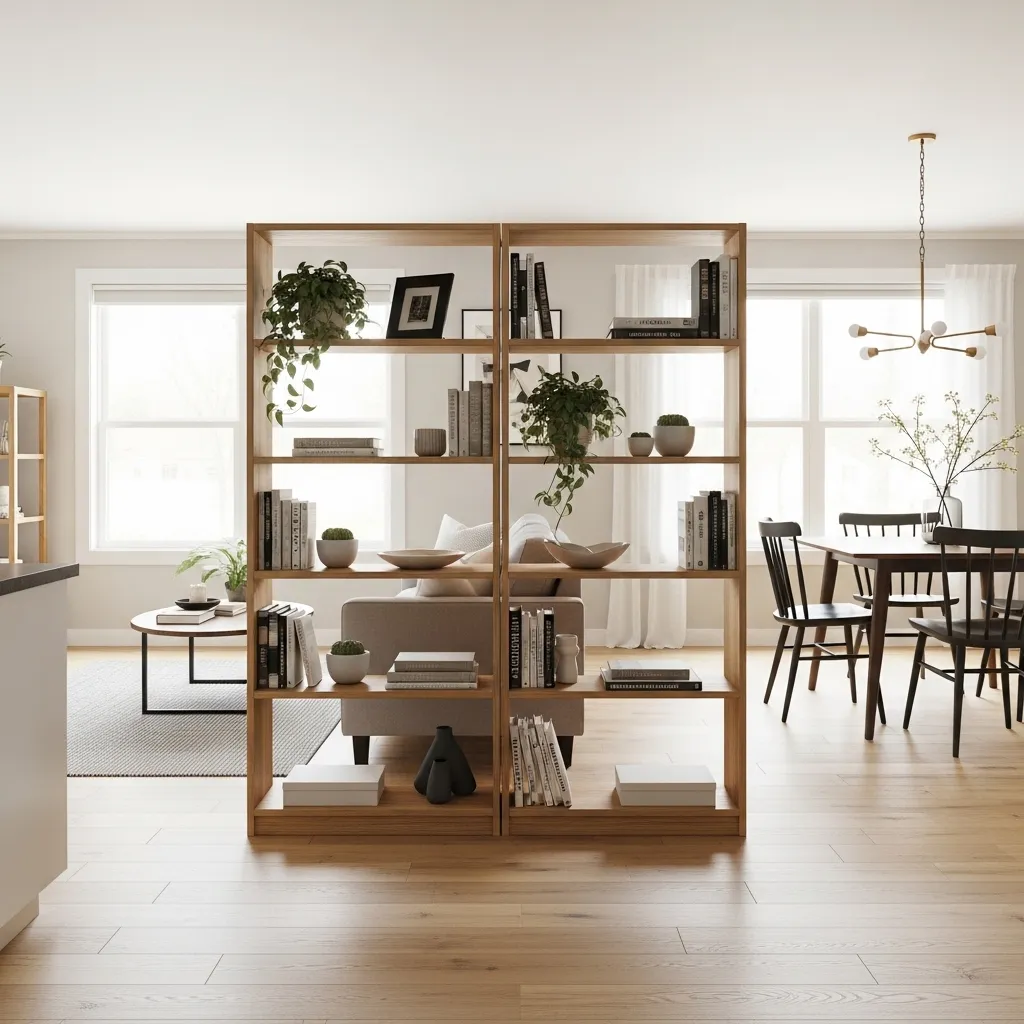
Using a bookshelf as a room divider is such a smart solution in open floor plans where you want to create distinct zones without building walls that close off space or block light. A freestanding bookshelf that’s open on both sides provides storage and display while maintaining visual connection between spaces. It’s separation with transparency, which is exactly what many open-concept spaces need.
The height is important—keeping it around six feet or under means you maintain sightlines and conversation across spaces while still creating definition. Double-sided accessibility means both rooms benefit from the storage, and styling needs to consider both views—what looks good from the living room side should also look intentional from the dining room side. This works beautifully between living and dining areas, between a bedroom sleeping zone and a home office area, or even in a large studio apartment to create a bedroom alcove. Choose a freestanding piece that’s substantial enough to feel intentional but not so heavy it overwhelms, and style it beautifully since it’s visible from multiple angles.
4. Corner Shelving Maximizing Space
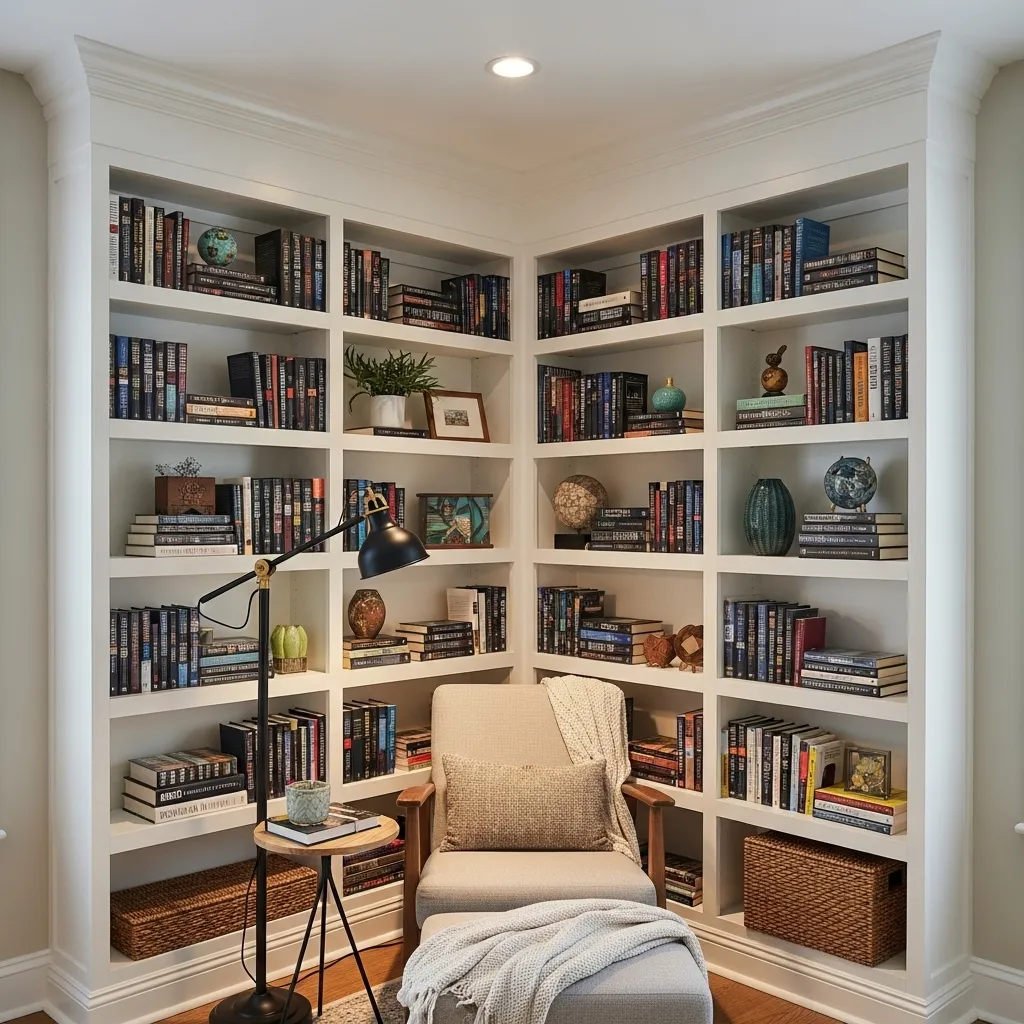
Corner shelving is brilliant for utilizing those awkward corner spaces that are often wasted or difficult to furnish. When you build or install shelving that wraps around an interior corner, you’re creating tons of storage while also creating an intimate, cozy alcove—perfect for a reading nook, home office corner, or display area. The wraparound configuration makes the space feel intentional and purposeful rather than leftover.
The key is making sure the shelving is accessible on both walls and that the corner itself is designed thoughtfully—sometimes a diagonal corner shelf works better than trying to make a sharp 90-degree turn. Built-in corner shelving can be custom-designed to fit your exact space and needs, while freestanding corner shelving units are available in various styles and can be moved if needed. This approach works particularly well in smaller spaces where every square foot counts, transforming a difficult-to-use corner into valuable storage and a charming focal point. Add a comfortable chair in front and you’ve created a destination within your room.
5. Industrial Pipe and Wood Shelving
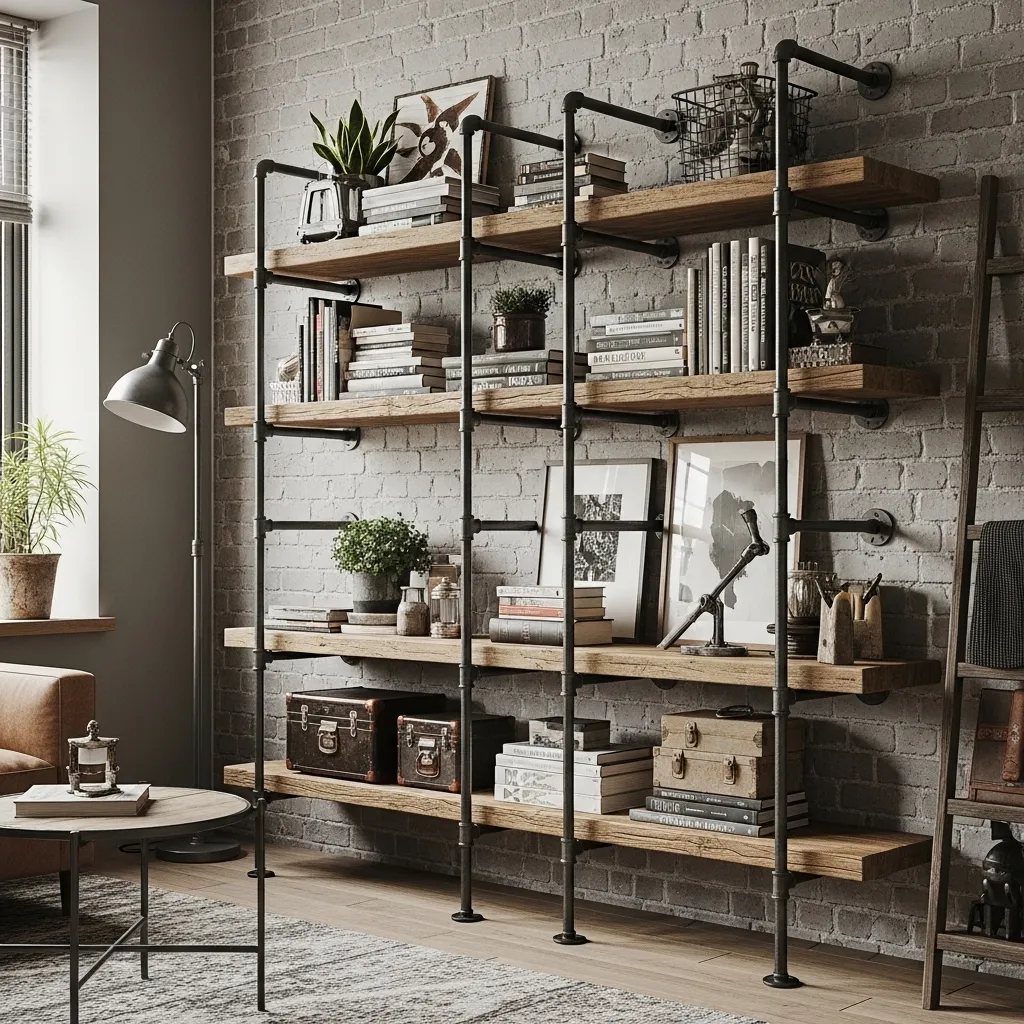
Industrial pipe and wood shelving brings such character and raw, authentic style to a space. The exposed plumbing pipes serving as the structural framework aren’t trying to be pretty or polished—they’re celebrating utility and industrial materials, which is exactly what makes this aesthetic so appealing. Combined with thick wood planks, especially reclaimed wood with character and age, you get shelving that feels substantial and full of personality.
This approach is relatively DIY-friendly for handy people—you can buy pipe fittings and flanges at hardware stores and wood from lumber yards or reclaimed wood suppliers, then assemble according to your exact specifications. The beauty is in the customization and the honest materials. The industrial aesthetic works particularly well in lofts, urban apartments, or any space where you want that raw, unfinished edge. Style these shelves with a mix of books and objects that complement the industrial vibe—vintage finds, plants in simple pots, utilitarian objects. The shelving becomes a feature wall that adds serious character.
6. Bookshelf Behind a Sofa
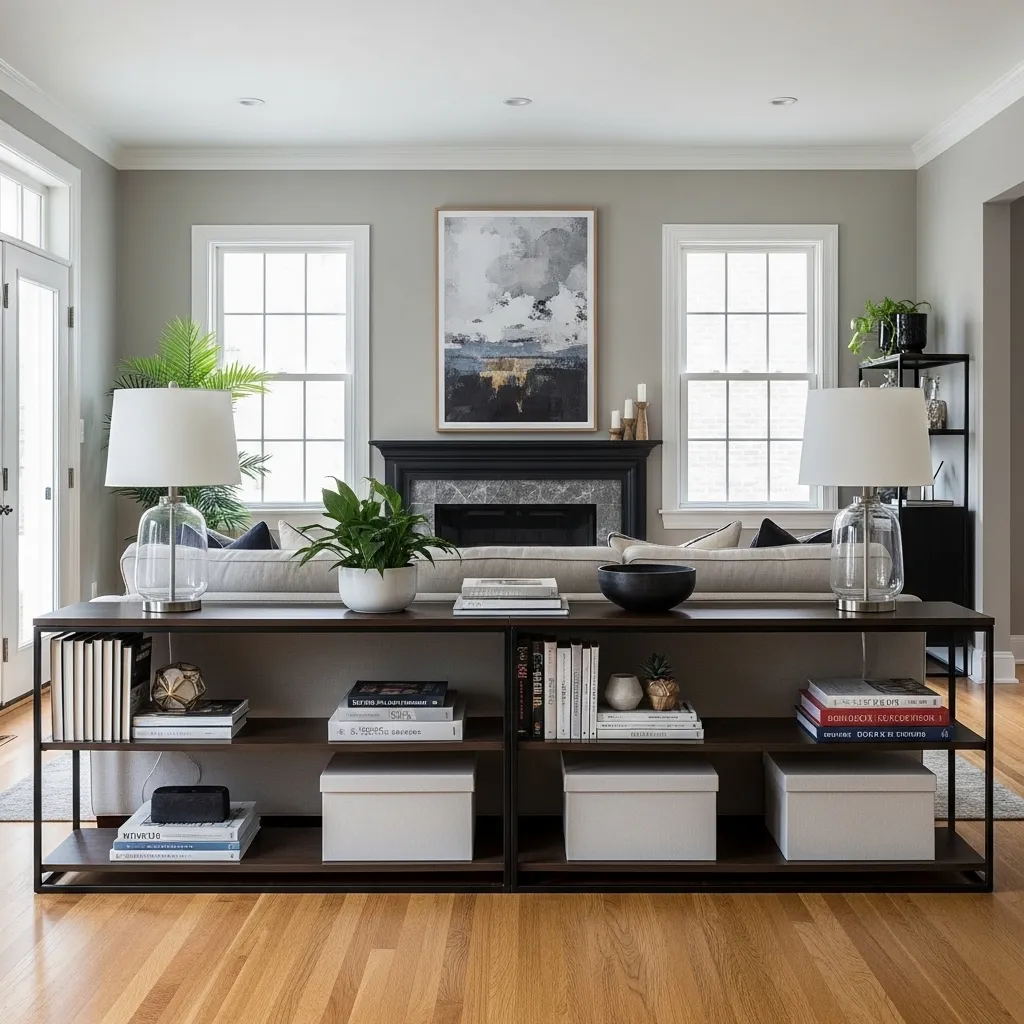
Positioning a bookshelf directly behind your sofa is such a smart space-planning move, especially in open floor plans where your sofa floats in the room rather than sitting against a wall. The bookshelf provides a “back” for the sofa, creating a more finished, intentional look while also providing valuable storage and display space. It’s furniture doing double duty beautifully.
The height relationship is important—the bookshelf should be around the same height as your sofa back or slightly lower so it doesn’t look awkward or create a visual wall. The shelving provides a convenient surface for table lamps, drinks, books you’re currently reading, and decorative objects, essentially functioning like a console table but with the added bonus of book storage. This works particularly well in studio apartments or open-concept spaces where you need to define zones, or when your sofa placement doesn’t allow for it to sit against a wall. Choose a bookshelf with an attractive back finish since it will be visible from the sofa side, or use a double-sided unit.
7. Ladder Leaning Bookshelves
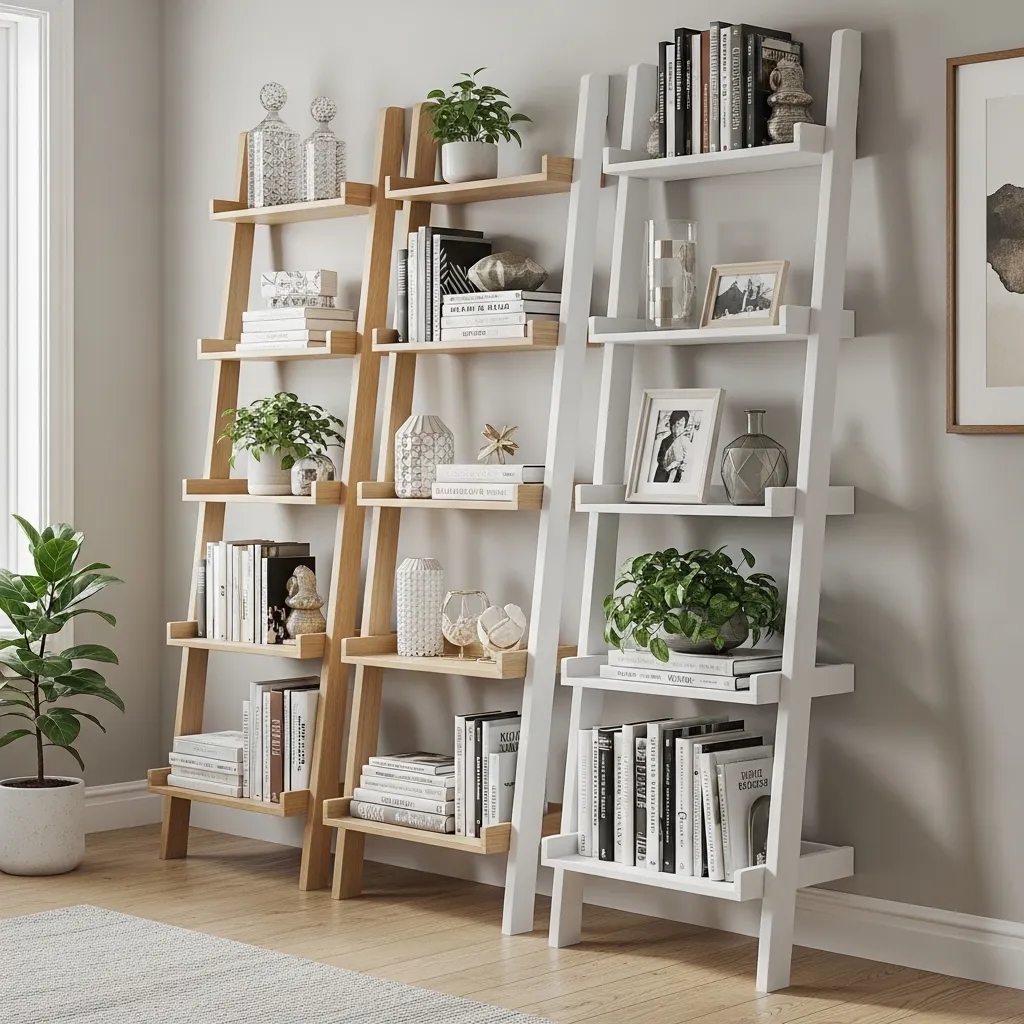
Ladder-style leaning bookshelves have such a light, casual footprint compared to traditional bookcases. The angled lean creates visual interest and dynamic energy, and because they don’t require mounting to walls, they’re perfect for renters or anyone who wants flexibility. The progressive shelf depths—narrower at top, wider at bottom—follow the natural lean and create a pleasing proportion.
These work particularly well when you group multiple ladder shelves together rather than using just one, creating a more substantial display that still maintains that light, airy feeling. The style works across aesthetics—natural wood for Scandinavian or rustic vibes, white-painted for coastal or minimalist, black for modern edge. The open design means you style them more selectively than packed floor-to-ceiling shelving—these call for curated, edited displays where each item gets space to breathe. Perfect for smaller spaces or bedrooms where heavy built-ins might feel too substantial. Just make sure they’re positioned securely and won’t tip.
8. Built-In Window Seat with Flanking Shelves
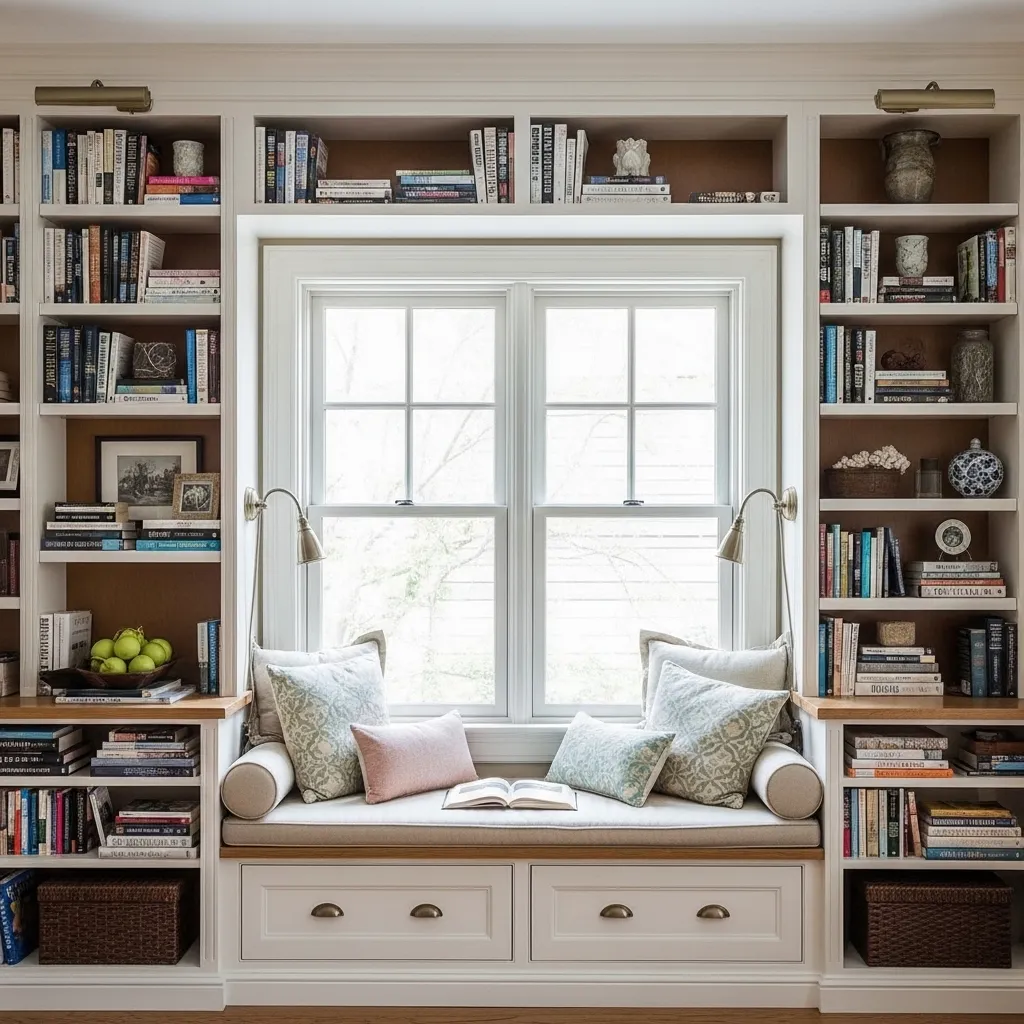
A window seat flanked by built-in bookshelves creates the ultimate reading nook and makes beautiful use of window space that might otherwise be awkward to furniture. The bookshelves on either side create a cozy, embracing alcove that makes the window seat feel like a special destination rather than just extra seating. You’re literally surrounded by books with natural light flooding in—it’s a reader’s paradise.
The built-in nature makes this feel custom and special, adding genuine architectural character to a room. The storage under the window seat provides bonus space for extra books, blankets, or seasonal items, maximizing functionality. This configuration works particularly well with larger windows or bay windows where you have the depth needed for comfortable seating. The shelves can extend all the way to the ceiling to maximize storage, or stop at a lower height for a cozier feel. Add comfortable cushions, good reading light, and maybe a small side table, and you’ve created a spot where people will genuinely want to curl up with books.
9. Color-Coded Book Organization
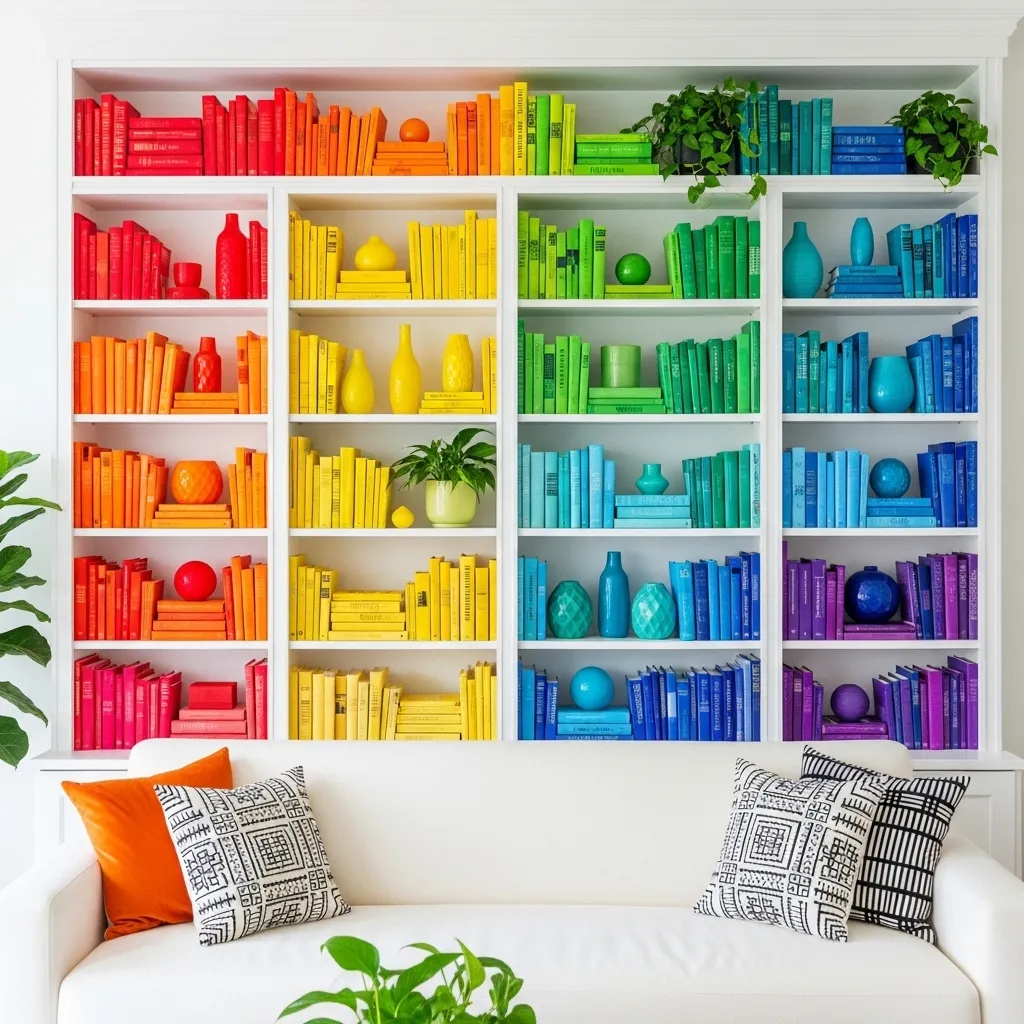
Organizing books by color creates such a visually striking display that transforms your bookshelf into a piece of art. The rainbow progression or monochromatic color-blocking catches the eye immediately and creates order and impact that random book placement can’t achieve. It’s decorative while still being completely functional—you can still read and access all your books, they’re just organized by spine color rather than by author or subject.
This approach works best with larger book collections where you have enough of each color to create substantial sections. The visual payoff is immediate—that rainbow progression across your shelves is genuinely beautiful and photographs wonderfully. Some people worry about not being able to find books organized this way, but many readers remember their books by cover color anyway, and the visual beauty often outweighs the slight inconvenience. You can combine color organization with other styling—stack some books horizontally in their color section, add coordinating decorative objects, include plants. The key is commitment to the system and being willing to prioritize visual impact.
10. Minimalist Floating Box Shelves
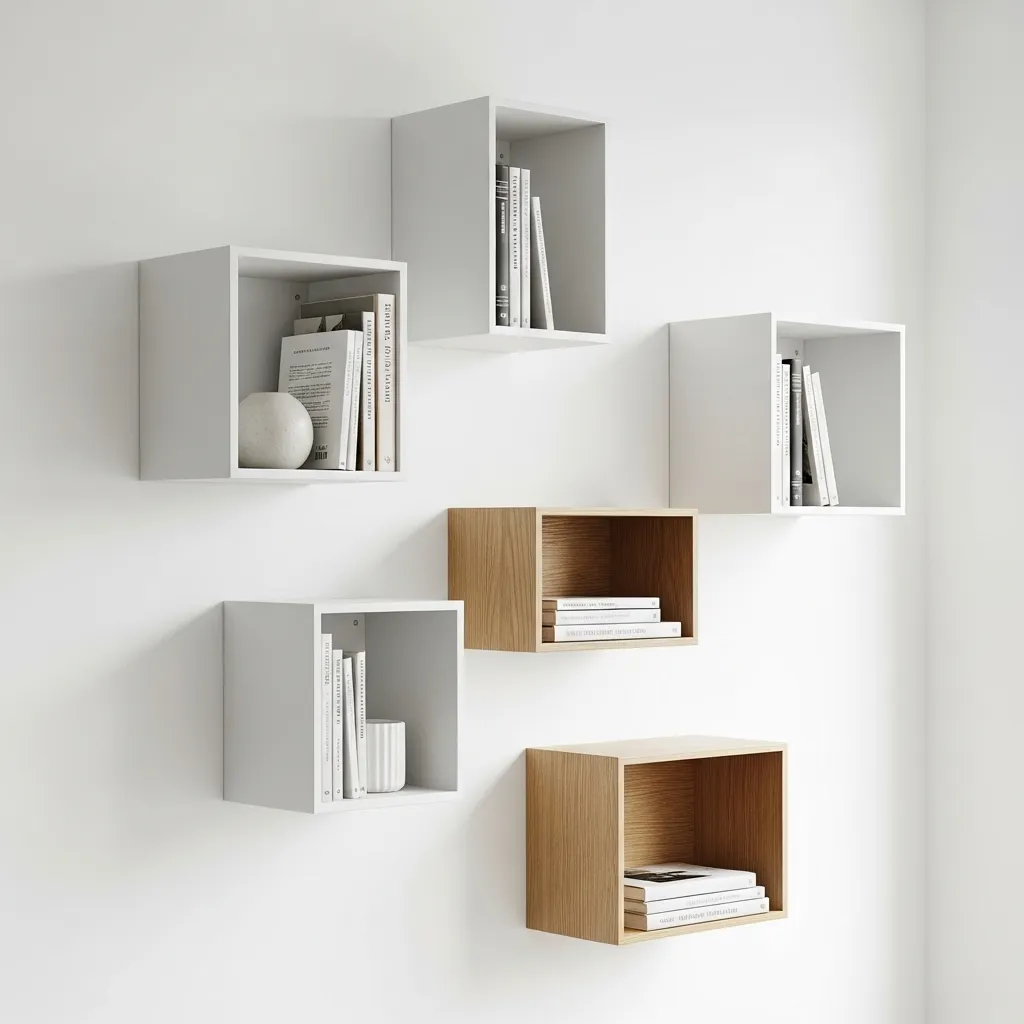
Minimalist floating box shelves take the opposite approach from maximal floor-to-ceiling bookcases, instead creating carefully curated moments of display against generous wall space. Each box becomes a small vignette rather than part of a larger shelving system, and the floating installation with hidden brackets creates this clean, seamless look where the boxes appear to hover.
This approach works beautifully in modern and minimalist spaces where less is more and every element needs to be intentional. Instead of housing hundreds of books, you’re displaying your absolute favorites or the most beautiful books alongside carefully chosen objects. The breathing room between boxes prevents visual clutter and creates a calm, edited aesthetic. This only works if you’re genuinely willing to edit your book collection and commit to the minimalist approach—trying to cram too many books into floating boxes defeats the purpose and looks cluttered. It’s about quality over quantity, curation over accumulation.
11. Vintage-Style Barrister Bookcases
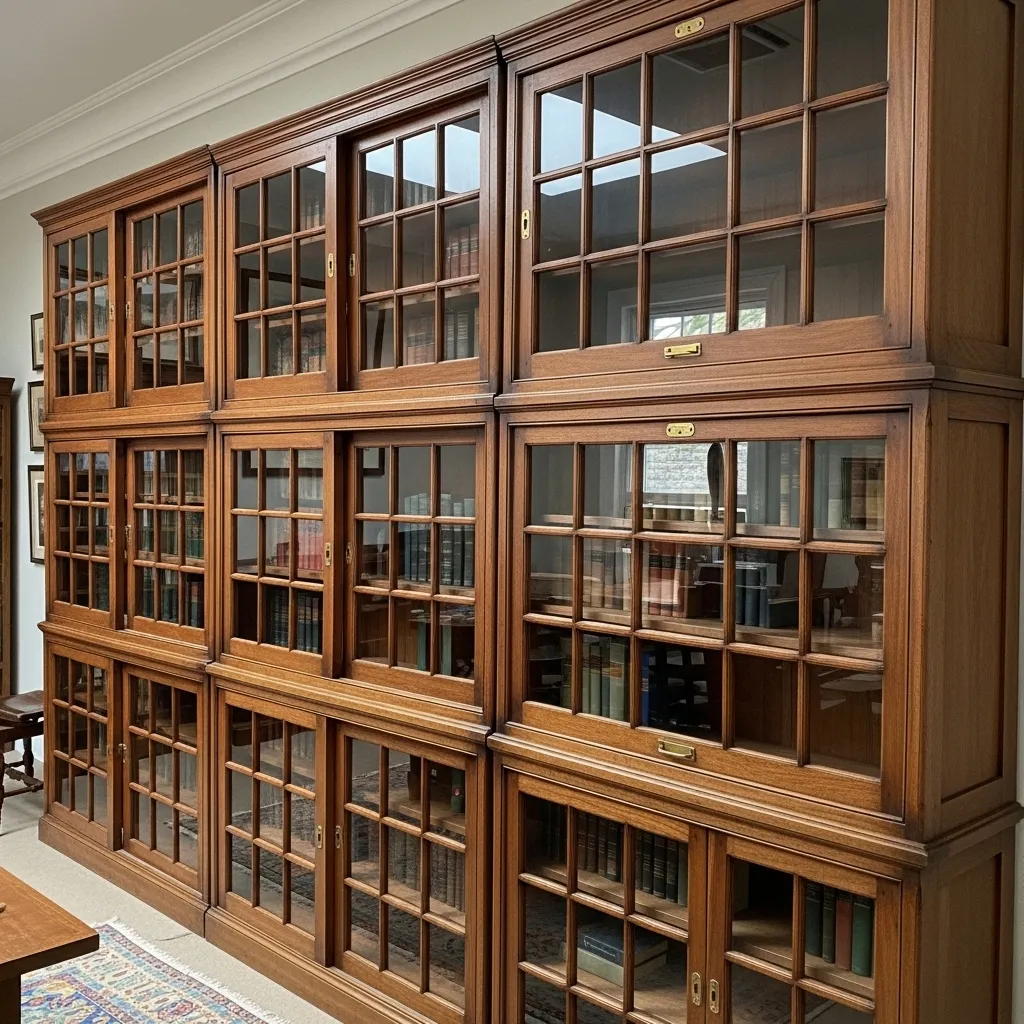
Barrister or lawyer’s bookcases bring such classic charm and authentic period character. These modular stacking bookcases with lift-up glass fronts were originally designed for law offices and libraries in the early 20th century, and their practical design and handsome proportions still work beautifully today. The glass fronts protect books from dust while keeping them visible, and the modular stacking allows you to build exactly the configuration you need.
Authentic vintage barrister bookcases can be found at antique stores, estate sales, and online, and they’ve often been beautifully maintained. New reproductions are also available if you want the look without hunting for vintage pieces. The dark wood—typically oak or mahogany—brings richness and traditional elegance, and the brass or metal hardware adds authentic detail. These work wonderfully in traditional, vintage, or eclectic spaces where that historical reference adds character. Stack them floor to ceiling for maximum storage, or use just one or two units for a desk hutch or smaller display. The modular nature means you can start small and add more as your collection grows.
12. Open Shelving in Alcoves
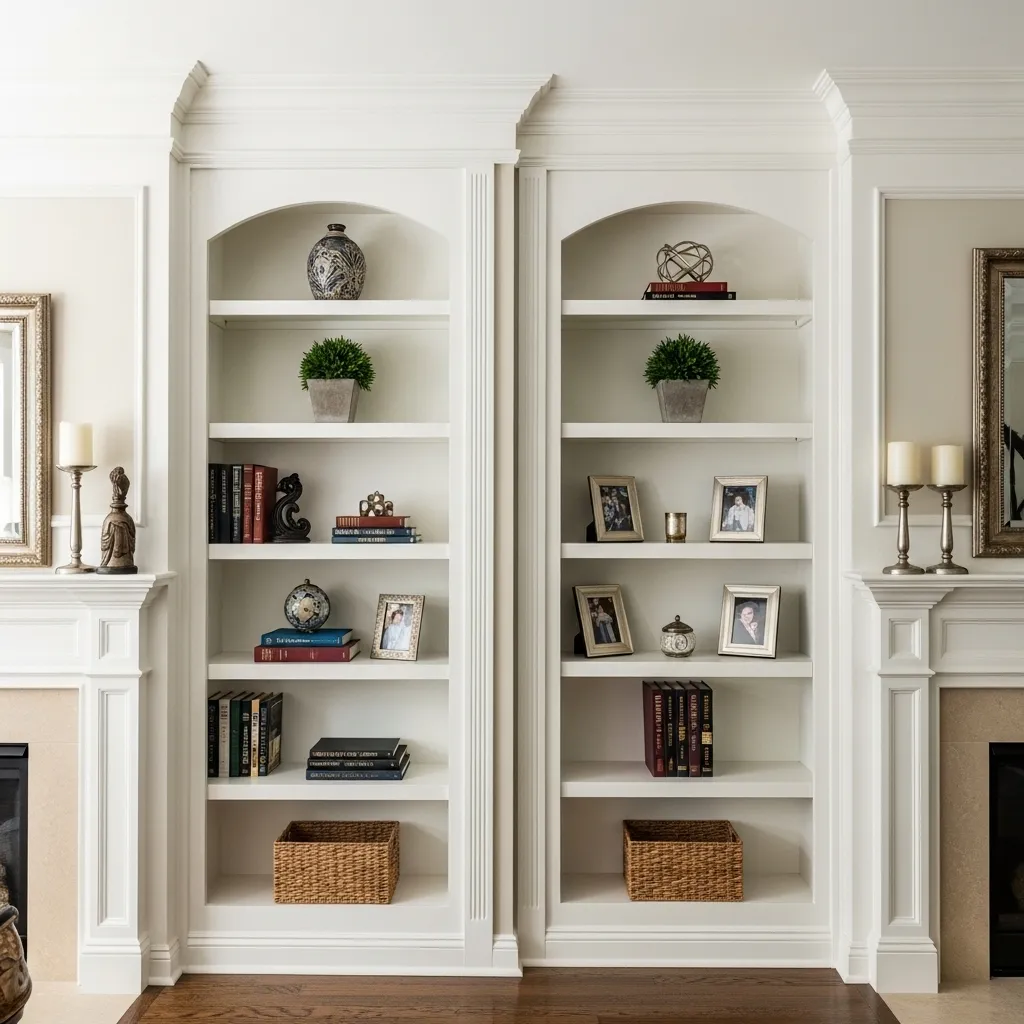
Alcoves—especially those flanking fireplaces—are perfect opportunities for built-in shelving that feels integrated with your home’s architecture. These recessed spaces can be awkward to furnish with freestanding pieces, but custom shelving turns them into beautiful, functional display areas. The symmetry of matching shelving on either side of a fireplace creates visual balance and harmony that’s inherently pleasing.
Built-in shelving in alcoves can be designed to match your room’s existing trim and molding, making them feel original to the house rather than added later. Paint them the same color as your walls for a seamless look, or in a contrasting color to make them feature walls. The styling matters enormously with symmetrical alcove shelves—you want some coordinated elements between the two sides without being too matchy-matchy. Maybe similar color schemes, similar proportions in how you arrange items, or thematic connections that create cohesion. These built-ins add genuine value to your home and create beautiful storage and display that works with your architecture rather than fighting it.
13. Metal Grid or Wire Shelving
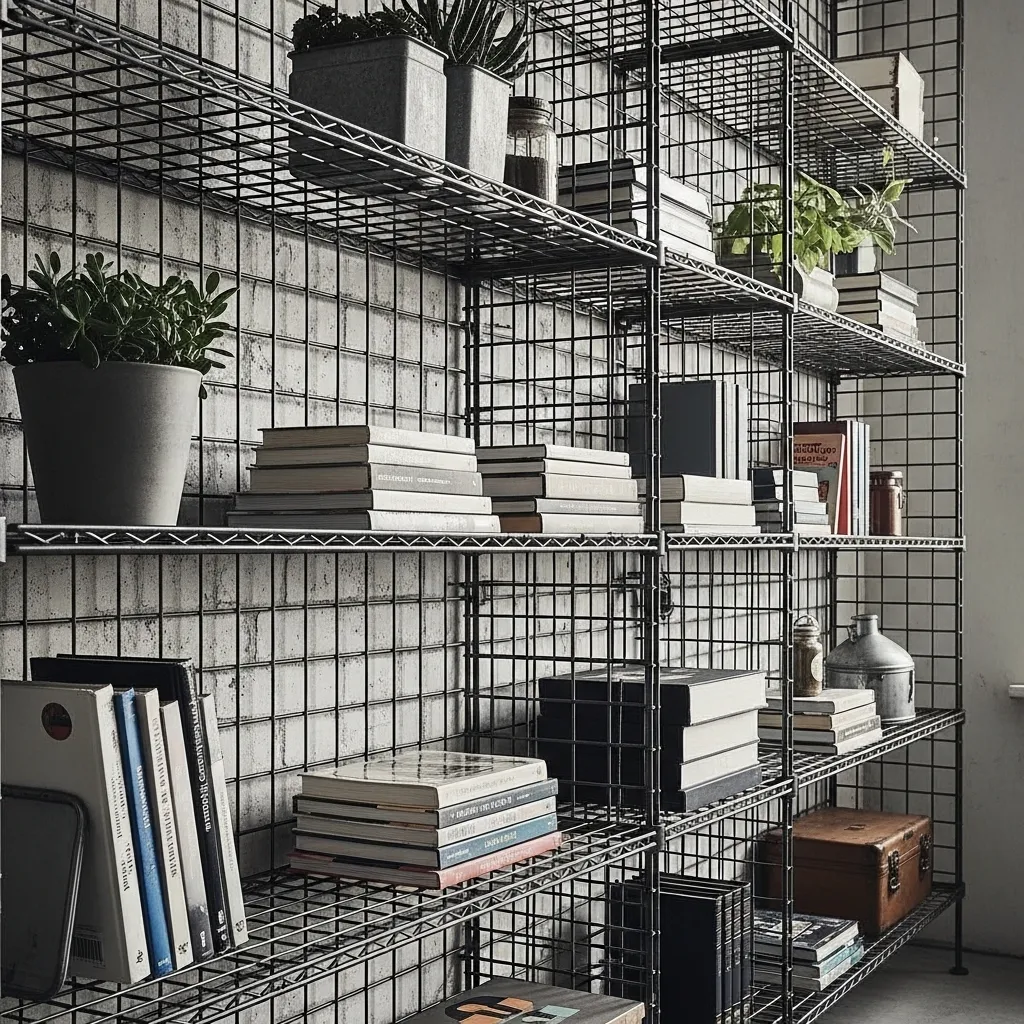
Metal grid or wire shelving brings that authentic industrial, utilitarian aesthetic where function is celebrated rather than hidden. The open wire construction is the opposite of solid wood shelving—it’s transparent, light passes through it, and you can see through it, creating a completely different visual weight. This style references restaurant kitchens, warehouses, and industrial spaces where wire shelving is chosen for practical reasons.
The beauty is in that industrial honesty—this shelving isn’t trying to be pretty or decorative, it’s purely functional, which in itself becomes the aesthetic. Books can be stacked on the wire shelves, though some people add wood boards on top of the wire for a more substantial surface. The style works particularly well in lofts, industrial-styled apartments, or anywhere you want that raw, unfinished edge. Plants look particularly good on wire shelving since light can reach them from multiple angles. The affordability is a bonus—commercial wire shelving units are relatively inexpensive compared to custom built-ins, making this accessible for renters and budget-conscious decorators. Style it with a mix of books, industrial finds, and functional objects.
14. Bookshelf Styled as Curiosity Cabinet
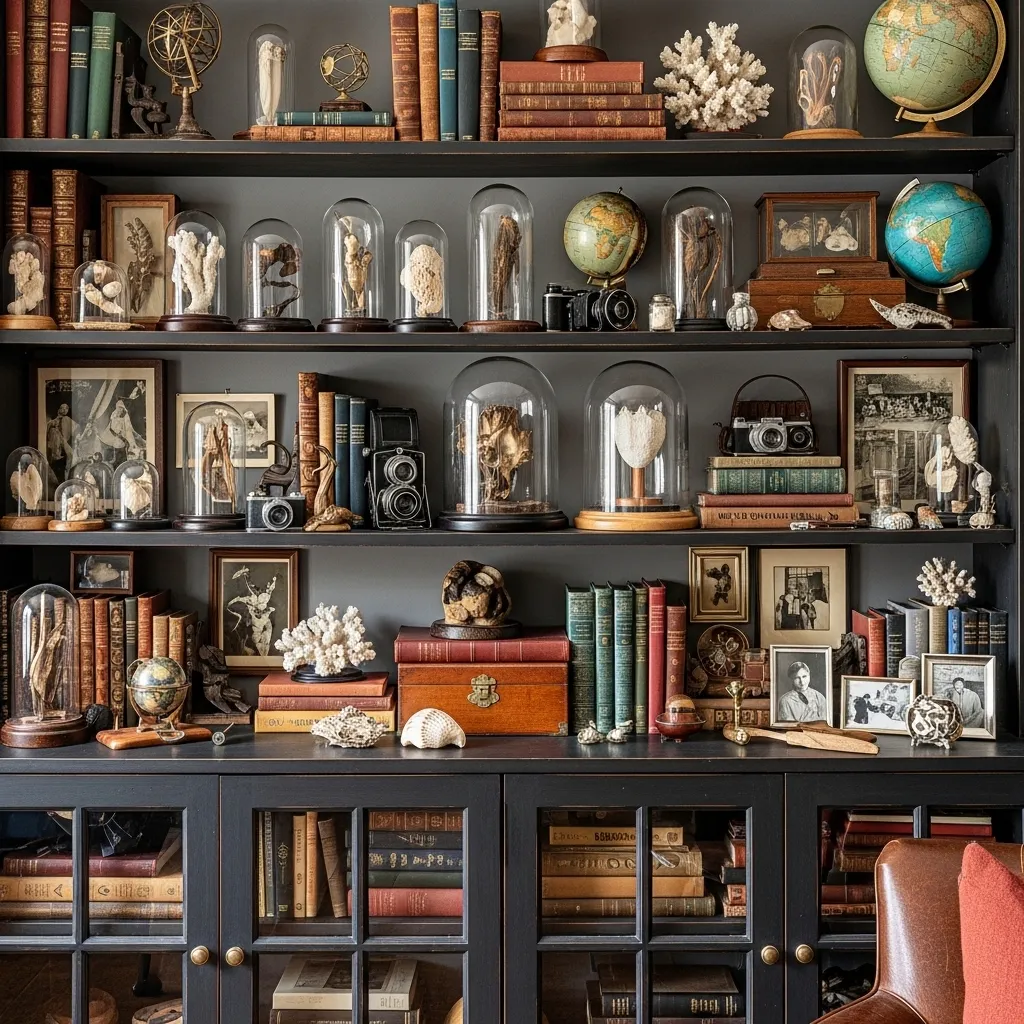
Styling a bookshelf as a cabinet of curiosities creates such visual richness and tells a story about the owner’s interests, travels, and collections. Instead of just books, you’re displaying all the fascinating objects you’ve gathered—vintage finds, natural specimens, travel souvenirs, heirlooms, scientific instruments, whatever speaks to you. The result feels personal, layered, and genuinely interesting rather than just decorative.
This approach works best when you have actual interesting things to display rather than trying to fake it with generic décor store items. The objects should mean something to you—that shell from a memorable beach trip, that vintage camera inherited from your grandfather, that weird specimen you found at a flea market. The mix of books and objects creates rhythm and variety, and the layering of items at different depths adds dimensionality. This styling works particularly well in traditional, eclectic, or vintage-inspired spaces where that collected quality fits the aesthetic. It’s personal and idiosyncratic in the best possible way, creating a bookshelf that’s genuinely unique and reflects who you are.
15. Horizontal Book Display Shelves
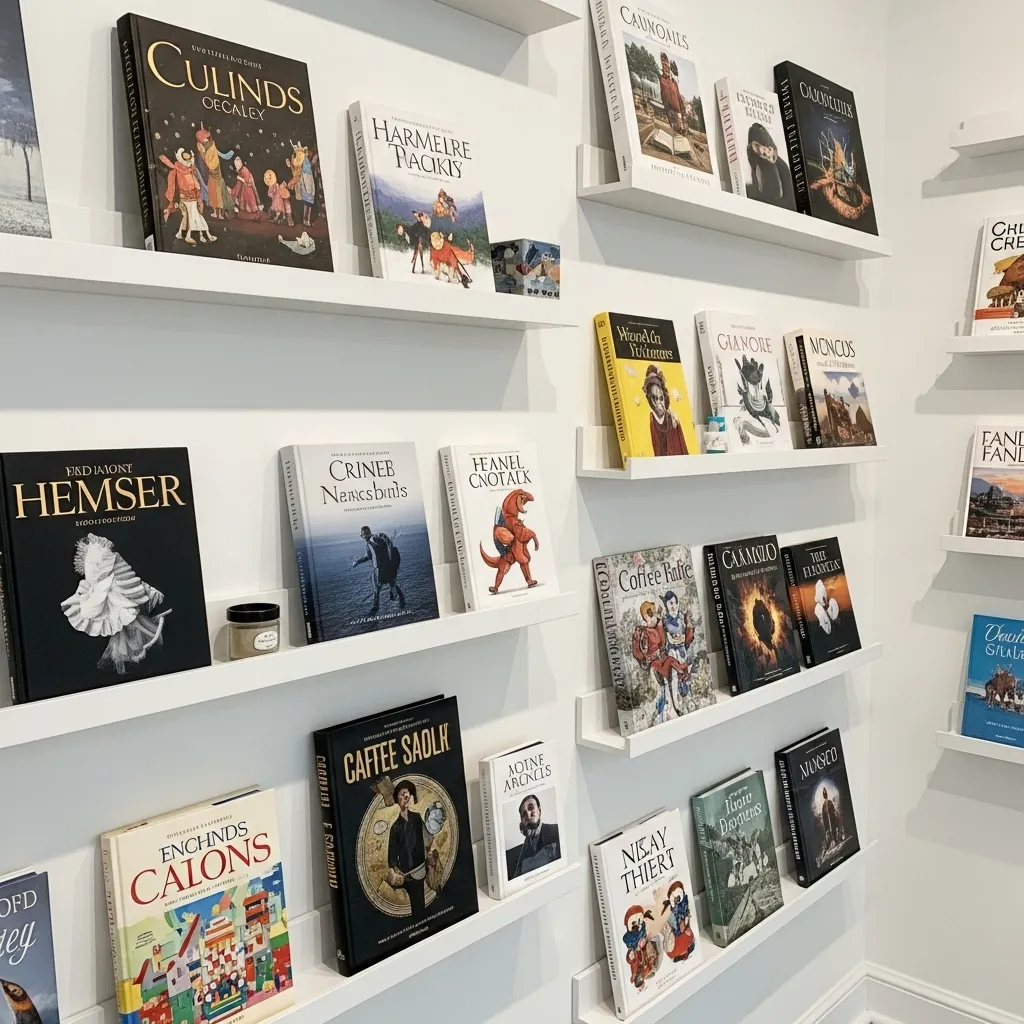
Picture ledge shelves that display books cover-forward rather than spine-out create a completely different aesthetic from traditional shelving. You’re treating books like artwork, showing off their beautiful cover designs and making them much more visually engaging and accessible. This approach works particularly well for children’s books, coffee table books, cookbooks, or any books with attractive covers you want to highlight.
The cover-forward display makes books more inviting and easier to grab—you can see exactly what you’re reaching for rather than scanning spines. The downside is space efficiency—you can’t fit nearly as many books this way as you can spine-out—but what you lose in capacity you gain in visual impact and accessibility. This works beautifully in kids’ rooms where you want books to be enticing and easy to choose, in kitchens for cookbooks that double as décor, or anywhere you want to celebrate particularly beautiful books. Layer multiple picture ledges at different heights to create a gallery wall effect with books as the art.
16. Recessed Built-In Bookshelf Wall
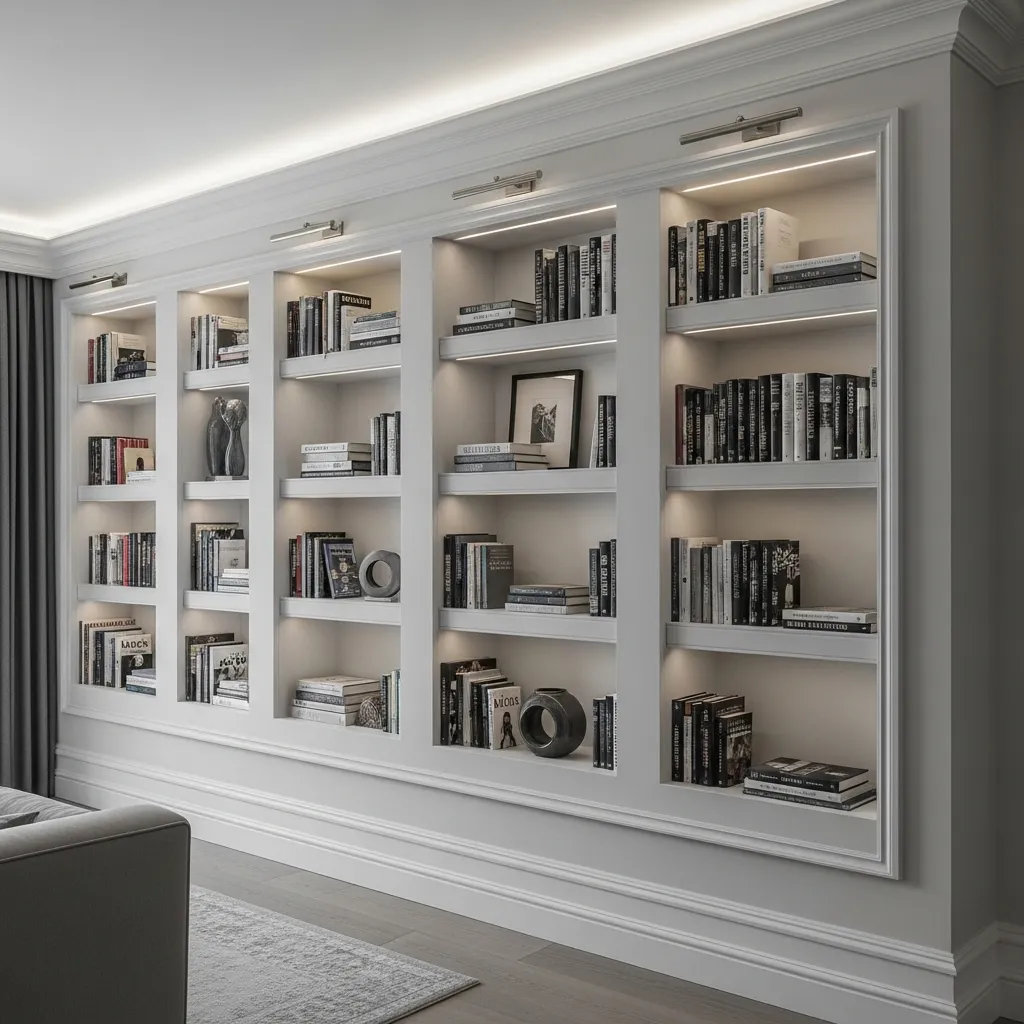
Recessed built-in shelving that’s carved into the wall creates such a seamless, permanent-looking installation that adds genuine architectural character. Unlike shelving that projects into the room, recessed shelves save precious floor space while still providing substantial storage. The shelving becomes part of the wall itself rather than an addition to it, creating clean lines and integrated storage.
This approach typically requires construction and framing between wall studs or building out the wall to create depth, so it’s more involved than surface-mounted shelving. But the result is incredibly elegant and custom-looking. Painting the shelves the same color as your walls creates a monochromatic, sophisticated appearance where the books and objects provide the color and visual interest. Add subtle lighting—LED strips under shelves or above behind crown molding—to highlight your collection and create ambiance. This works beautifully in formal living rooms, libraries, or primary bedrooms where you want storage to feel integrated and elegant rather than utilitarian.
17. Antique Armoire Repurposed as Bookshelf
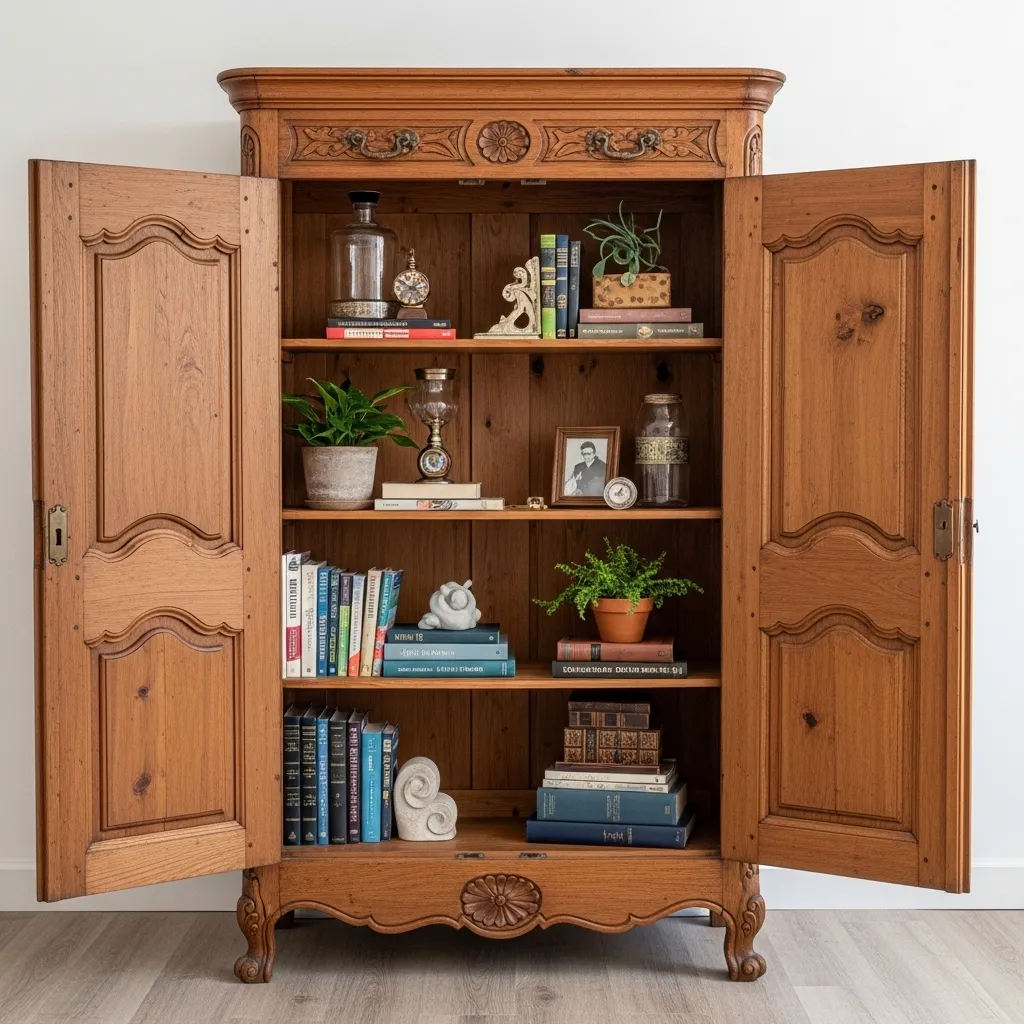
Repurposing a vintage armoire as open shelving by removing the doors creates such a beautiful blend of furniture and storage with genuine character and history. The architectural details of an antique armoire—carved moldings, original hardware, aged wood patina—become the frame for your book display. You get the storage benefits of shelving with the beauty and presence of a statement furniture piece.
This approach works wonderfully in vintage, farmhouse, eclectic, or traditional spaces where that aged quality and substantial furniture presence fits the aesthetic. The interior can be painted a contrasting color or wallpapered to create a surprise element and backdrop for your books. The deep shelves typical of armoires can accommodate larger books, objects, or stacked storage boxes. Look for armoires at estate sales, antique stores, or online marketplaces—pieces with damaged or missing doors that would otherwise be difficult to sell are perfect candidates for conversion and often available at lower prices. It’s sustainable, characterful, and creates a truly unique bookshelf solution.
18. Modular Cube Storage System
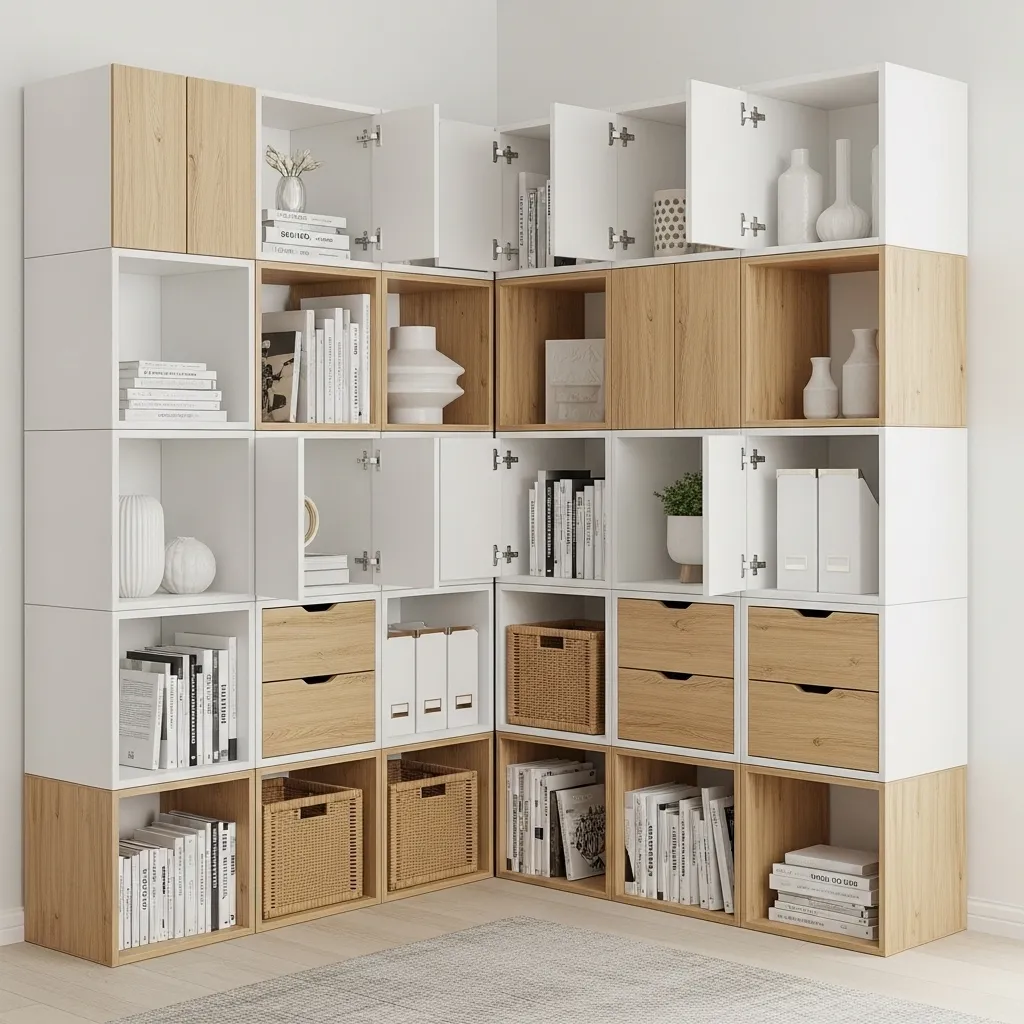
Modular cube storage systems offer incredible flexibility and customization—you can configure them to your exact needs and reconfigure as those needs change over time. The individual cubes can be arranged in countless ways, and you can mix open cubes with closed cabinets, drawers, or fabric bins to create the perfect balance of display and hidden storage. It’s shelving that evolves with you.
The uniform cube size creates visual order and rhythm even when the contents vary, and the modular approach means you can start with a few units and add more as your collection grows or as you move to a new space and need a different configuration. Many systems allow you to stack cubes floor-to-ceiling or arrange them in L-shapes, room dividers, or custom formations. The clean, contemporary aesthetic works particularly well in modern and minimalist spaces, and the flexibility makes these systems incredibly practical for renters, growing families, or anyone whose needs change over time. Style each cube intentionally—some all books, some with objects, some with hidden storage—to create variety within the uniform structure.