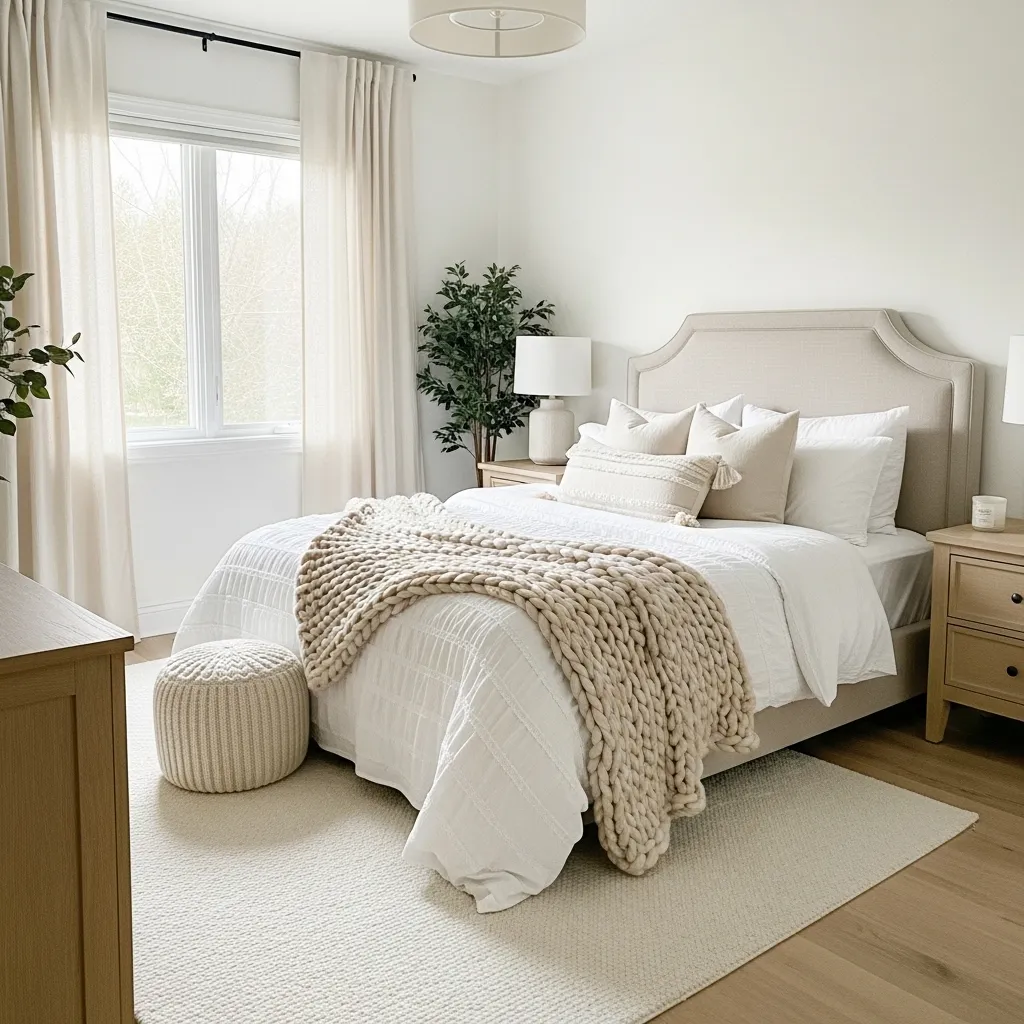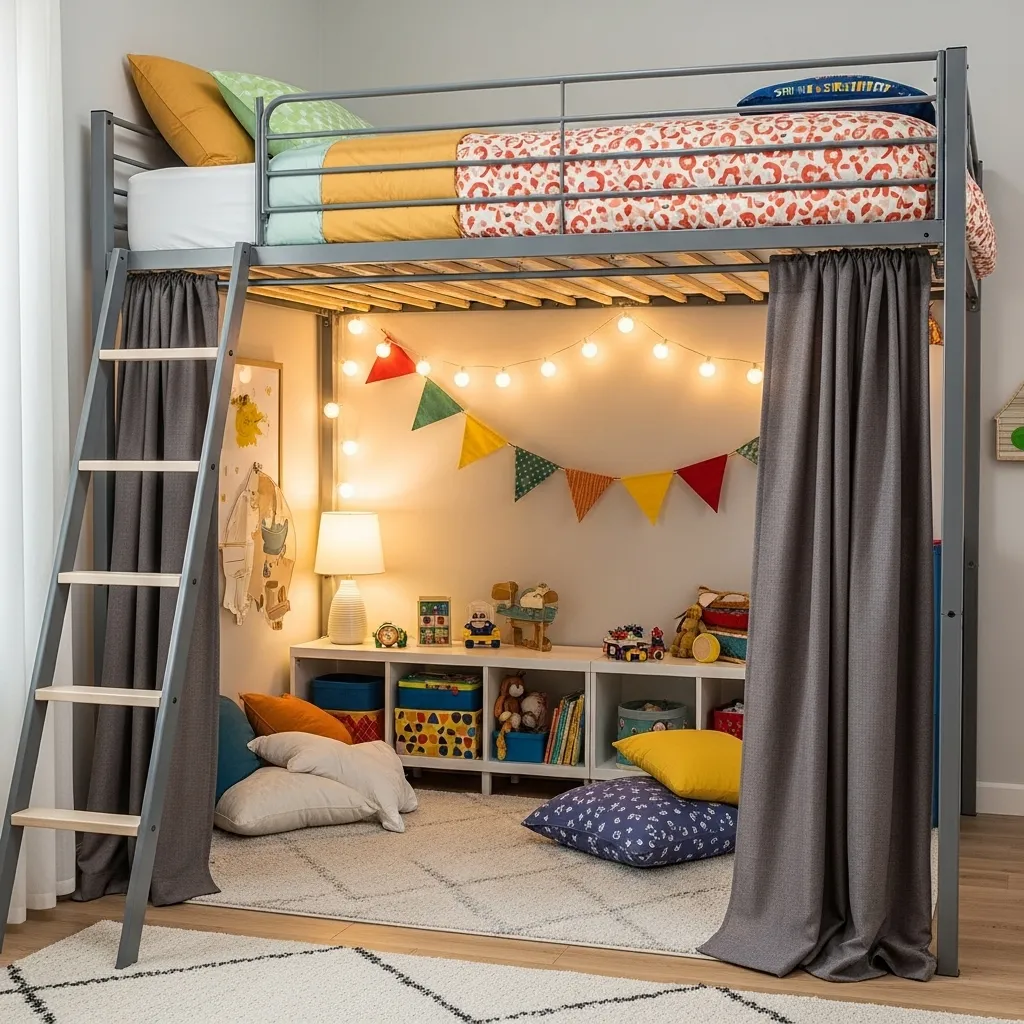
20 Cozy Apartment Bedroom Ideas for Ultimate Comfort That Transform Your Sleeping Space Into a Genuine Sanctuary
If your apartment bedroom is currently functional but not particularly inviting — a room where you sleep adequately but don’t especially want to linger, where the morning coffee and the evening reading and the Sunday afternoon nap don’t happen because the room hasn’t been designed to invite those specific pleasures — this guide covers every significant approach to creating the genuinely cozy, genuinely comfortable, genuinely personal apartment bedroom that you’ll want to spend time in far beyond the hours of actual sleep. The twenty ideas here span the complete spectrum of what cozy apartment bedroom design looks like at every level of investment and every aesthetic preference: from the foundational bedding investment that creates more comfort per dollar than any other bedroom decision, through the lighting transformation that changes the entire atmosphere of the room without touching a single structural element, the textile layering approach that creates the specific warmth and sensory richness of a room that feels genuinely enveloping, the reading nook creation that turns an unused corner into the room’s most beloved destination, the warm paint color that creates immediate atmospheric transformation, the canopy and curtain treatments that create intimacy and enclosure around the bed, the vintage and personal object approach that creates a room specifically belonging to its inhabitant, the plant and botanical strategy that brings genuine life into the sleeping space, the ambient sound and sensory environment that completes the cozy atmosphere beyond the visual, the small furniture and accent piece choices that create layered warmth at floor and surface level, and the complete bedroom transformation approaches that bring every cozy element together into a genuinely extraordinary sleeping sanctuary.
The cozy apartment bedroom has a specific quality that distinguishes it from merely comfortable bedrooms and from beautifully designed bedrooms that aren’t particularly inviting — it’s the quality of genuine welcome, of a room that appears to have been prepared for your specific comfort and your specific pleasure, of a space where the light is warm and the textiles are layered and the temperature is right and the sensory environment creates a specific quality of ease that makes staying in the room longer feel not like idleness but like genuine restoration. This quality of genuine welcome is not created by expensive furniture or professional design — it’s created by the specific attention to sensory detail that distinguishes a room designed for comfort from a room designed for appearance.
What I’ve come to understand about cozy bedroom design specifically is that it operates primarily through the senses rather than primarily through visual aesthetics — the warmth of layered wool and linen textiles, the amber quality of warm lamplight, the specific fragrance of a candle or linen spray, the sound quality created by soft furnishings that absorb rather than reflect sound, the tactile pleasure of a rug underfoot on a cold morning. These sensory qualities are available in any bedroom regardless of its size or its architectural quality, and they create the specific atmosphere of genuine coziness that no amount of purely visual styling creates without them.
1. The Foundational Bedding Investment — Layers of Genuine Warmth
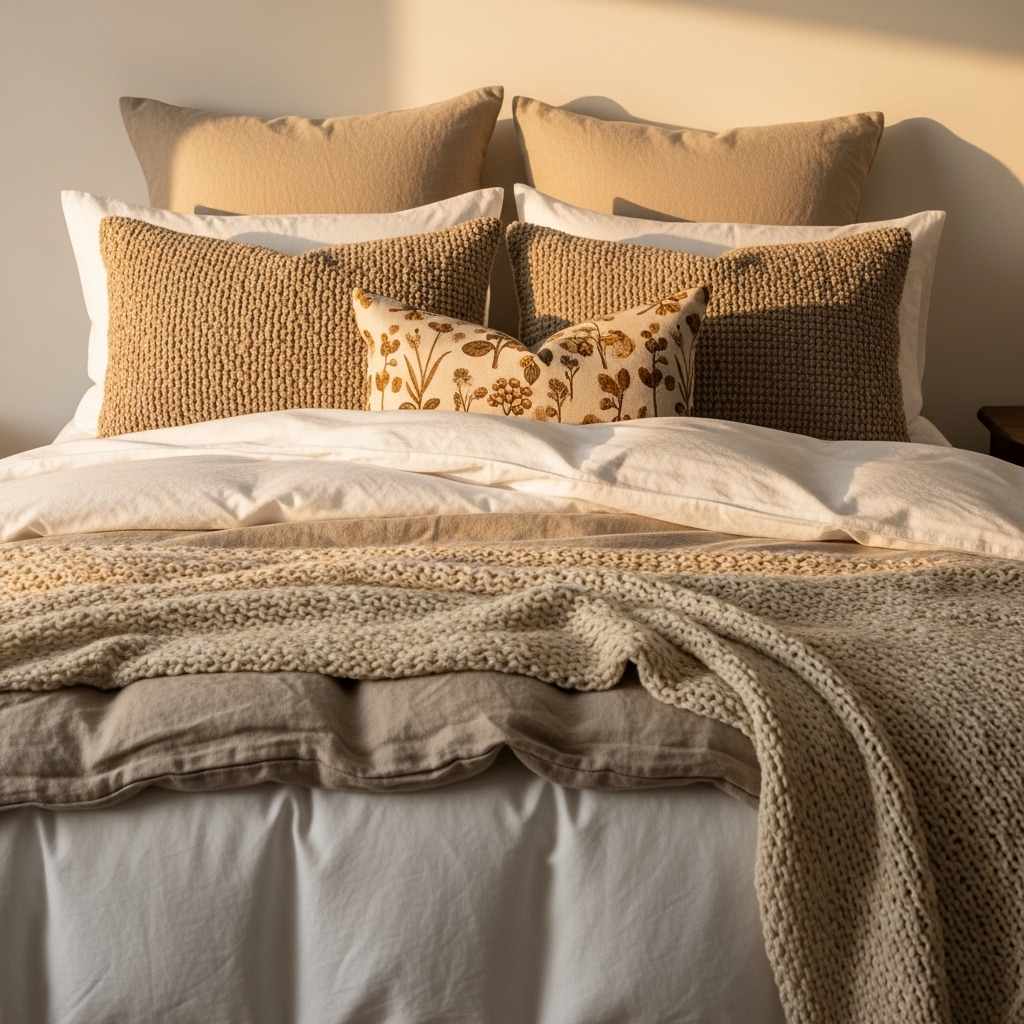
The bedding is the most important single investment in a cozy bedroom because it determines the quality of the room’s most central element — the bed’s appearance and the bed’s feel — and because the bed occupies the dominant visual position in any bedroom and sets the tone for the room’s overall atmosphere more than any other element. A bed dressed with beautiful, layered, textured bedding creates a bedroom that appears warm and inviting regardless of the quality of the surrounding elements; a bed dressed with thin, mismatched, or inadequate bedding undermines the quality of every other element in the room.
The layering principle is what distinguishes a genuinely cozy bed from a merely made bed — sheets plus duvet is adequate; sheets plus duvet plus throw plus layered pillows plus textured details creates the specific quality of warmth and abundance that makes a bed genuinely inviting. Each layer adds a different textile character — the smooth coolness of the linen sheet, the cloud-like warmth of the duvet, the chunky tactile richness of the knit throw, the varying textures of the pillow collection — and their accumulation creates a bed that engages multiple senses simultaneously in a way that a single-layer arrangement doesn’t.
2. Warm Ambient Lighting — Replacing the Overhead Fixture
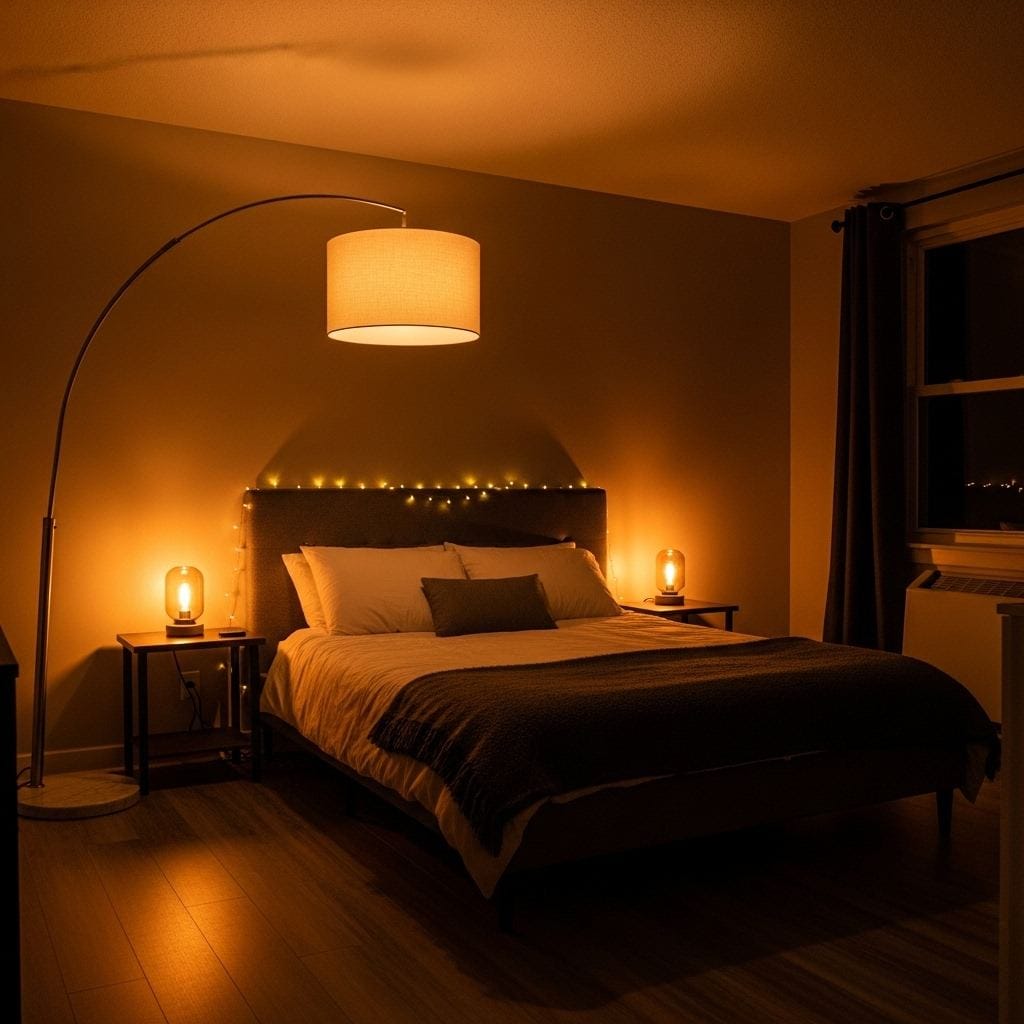
Replacing overhead bedroom lighting with multiple warm lamp sources at human height is the single most impactful atmospheric improvement available in any bedroom — because overhead lighting creates a flat, even illumination that eliminates shadow and depth and creates the clinical quality of a well-lit office or retail space, while multiple warm lamps at human height create the layered, warm, shadow-rich atmosphere that distinguishes a genuinely cozy bedroom from a merely illuminated one. The psychological effect of warm lamplight at human height is specifically associated with safety, warmth, and rest — the evolutionary association between firelight at human height and the safety of shelter — and it creates a quality of relaxation that overhead lighting actively prevents.
The specific warmth of the lamp bulbs is the technical detail that most determines the quality of this transformation — 2700K warm white bulbs create the amber quality closest to candlelight and most associated with genuine coziness, while 3000K creates a slightly brighter warm white that works well for reading while maintaining warmth, and anything above 3000K creates a quality of light that reads as work lighting rather than rest lighting. The investment in warm bulbs throughout every lamp in the bedroom is the lowest-cost, highest-return atmospheric improvement available.
3. The Textile Layering Approach — Creating Sensory Richness
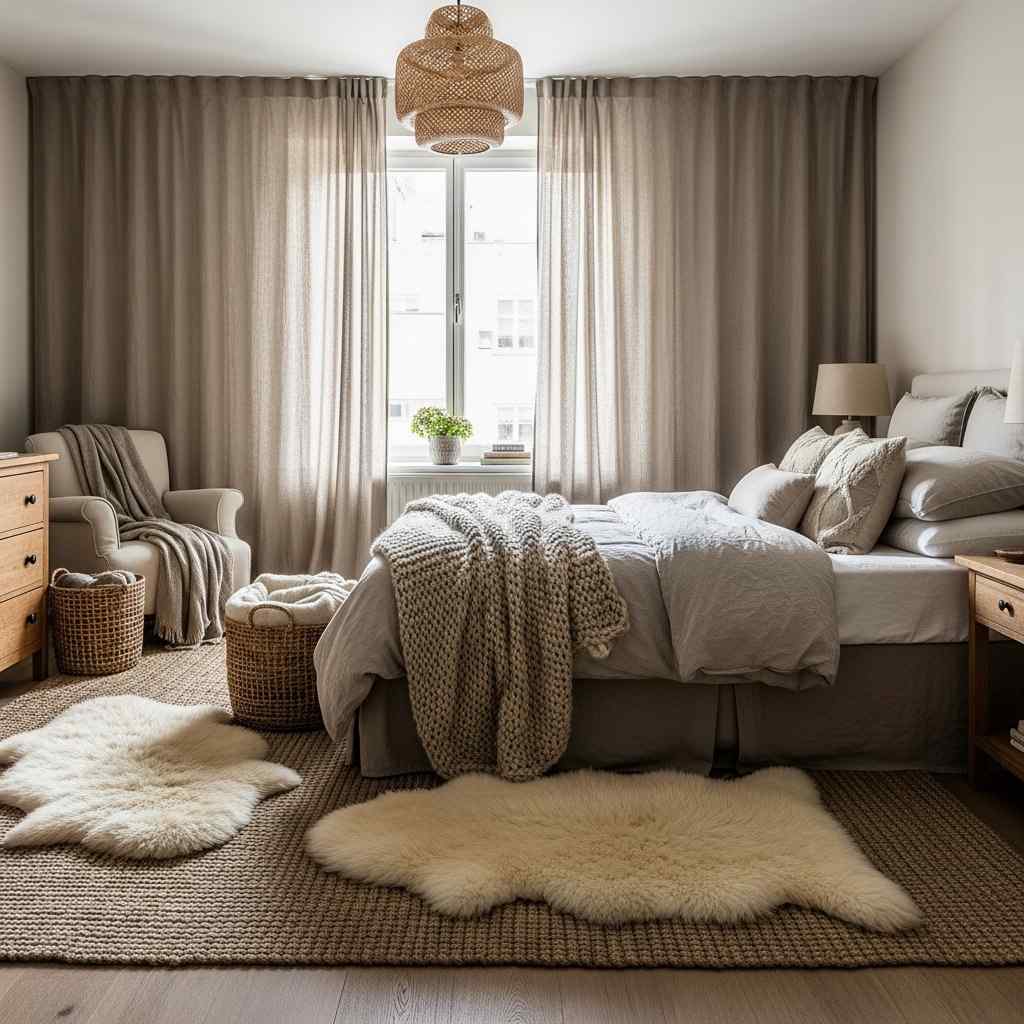
Textile layering at every level — floor, bed, chair, window, wall — creates the bedroom atmosphere of maximum sensory warmth and maximum visual richness from entirely non-permanent, entirely renter-friendly interventions. Unlike paint or fixtures or furniture, textiles can be accumulated gradually, changed seasonally, moved between rooms, and adjusted without consequence, making them the most flexible and most accessible of all cozy bedroom elements.
The specific natural fibers that create the most warmth and the most sensory richness are wool, linen, cashmere, cotton, and sheepskin — all natural, all aging beautifully, all providing genuine thermal warmth as well as visual warmth. The combination of these different natural textures throughout the room creates a material world of extraordinary sensory variety — the rough warmth of a jute rug, the smooth coolness of linen sheets, the dense warmth of a wool throw, the cloud-like softness of a sheepskin — and that variety creates sensory richness that a single-texture room, however luxurious its individual textile, can’t achieve.
4. The Reading Nook — Creating the Room’s Most Beloved Corner
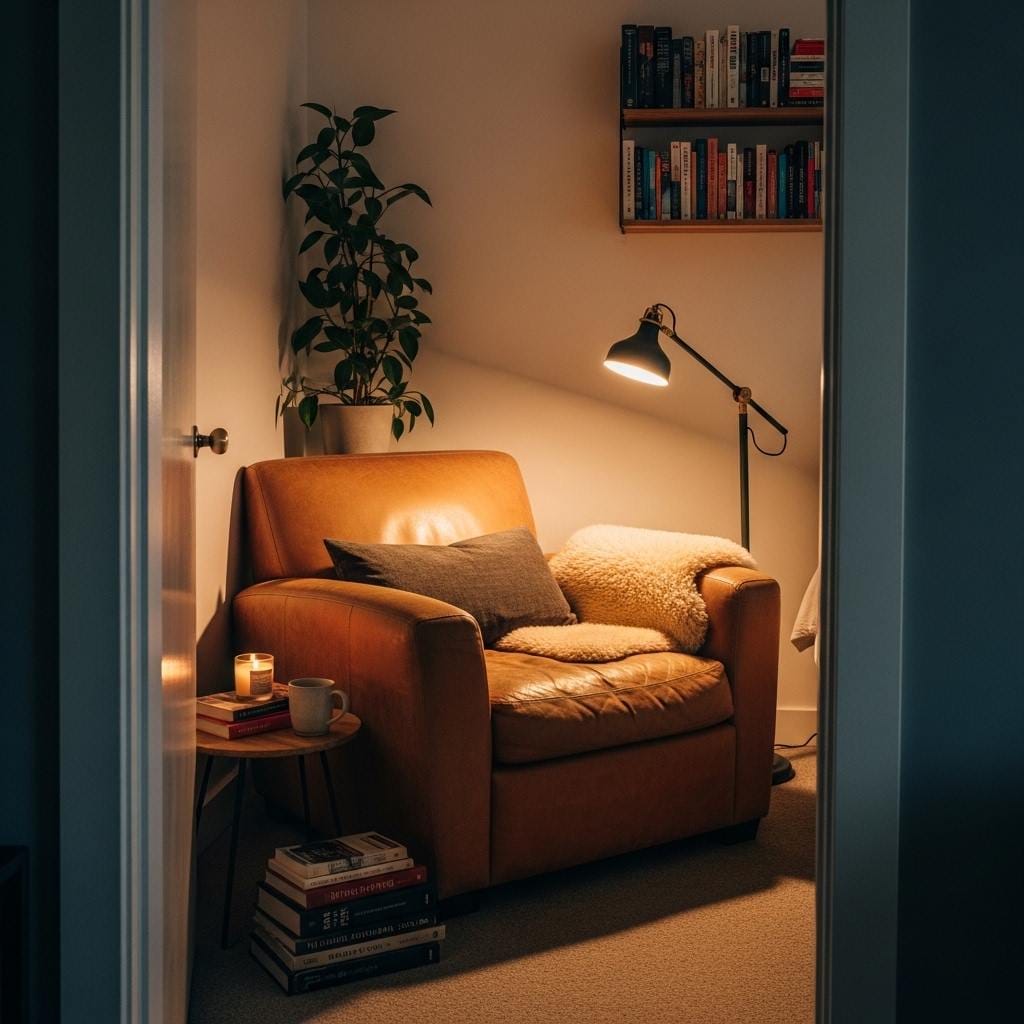
A reading nook in an apartment bedroom is the specific addition that transforms the room from purely a sleeping space into a complete personal sanctuary — a room that provides not just the function of sleep but the specific pleasures of reading, thinking, morning coffee, and the particular quality of private time that a beautifully designed personal corner creates. The reading nook doesn’t require a large space — a corner of three or four feet on each side is sufficient for a chair, a lamp, a side table, and a plant — but it requires genuine design attention: the right chair for the right quality of extended sitting, the right lamp positioned for the right quality of reading light, the right surface for the cup and the book.
The chair selection is the most important decision in creating a genuinely used reading nook versus a decorative one — a chair that’s genuinely comfortable for extended reading (deep enough for legs to be tucked up, high enough to support the back properly, with appropriate armrests for holding a book for extended periods) creates a nook that’s actually used for reading; a beautiful chair that’s uncomfortable for extended sitting creates a styling element that never quite fulfills its implied purpose. The investment in genuine sitting comfort is the investment that creates the reading nook rather than the reading chair.
5. Deep Warm Wall Color — Atmospheric Transformation
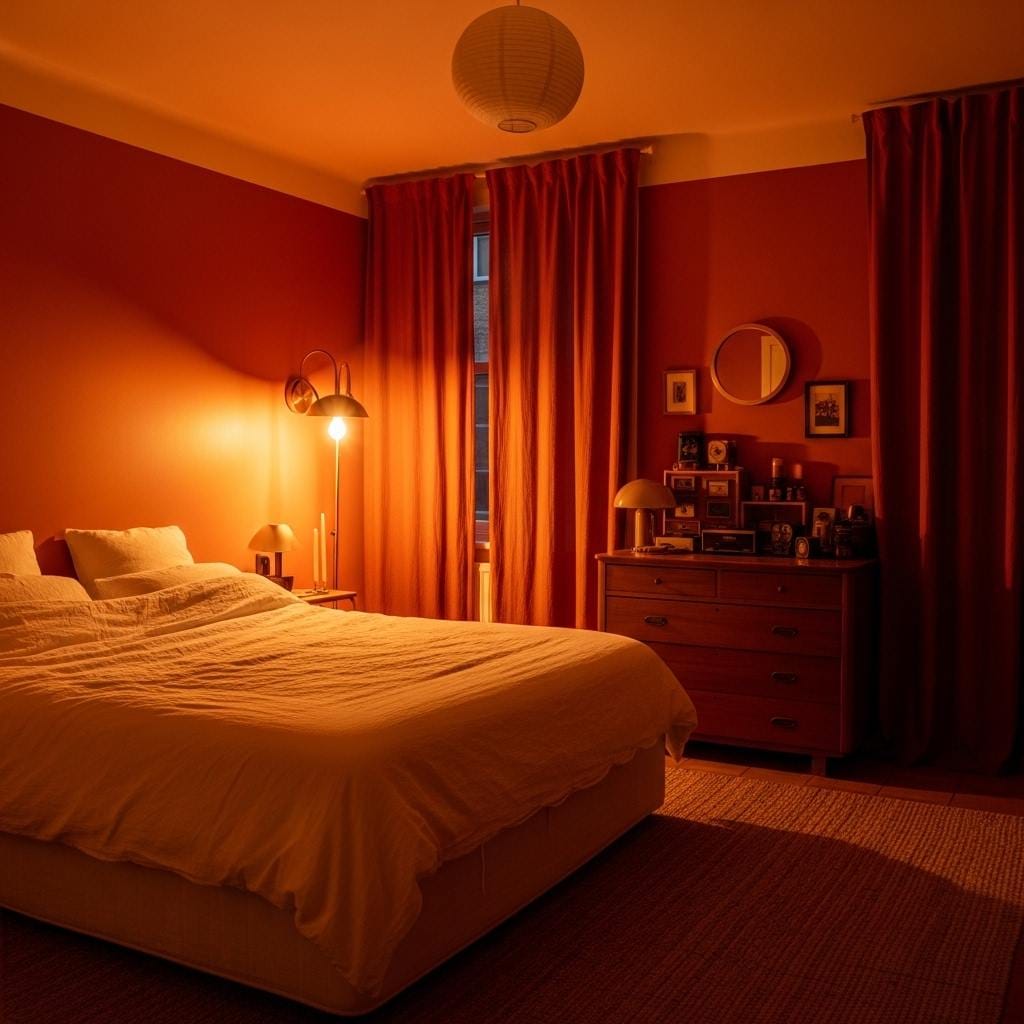
Deep warm wall color — terracotta, warm rust, deep sage, rich burgundy — is the bedroom improvement that creates the most complete atmospheric transformation for the lowest cost, because wall paint is the least expensive material that covers the most surface area and creates the most pervasive atmospheric effect. A bedroom with genuinely colored walls has a quality of specific, committed aesthetic identity that white or neutral walls — however clean and however sophisticated — simply don’t provide, and that quality of committed color creates the specific psychological warmth that most distinguishes a cozy bedroom from a merely clean one.
The terracotta specifically creates the bedroom with the most ancient and most specifically warm quality — the color of baked earth, of Mediterranean tile, of the specific warmth of sun-warmed clay — and it creates a room where the color itself feels warm regardless of the actual temperature, where the visual experience of warm terracotta contributes to the perceived warmth of the space in a way that cooler colors don’t. Terracotta also has the specific quality of aging beautifully with the lamp light that cozy bedrooms use — in warm amber lamplight, terracotta walls appear to glow with their own internal warmth.
6. Canopy and Bed Curtains — Intimacy and Enclosure
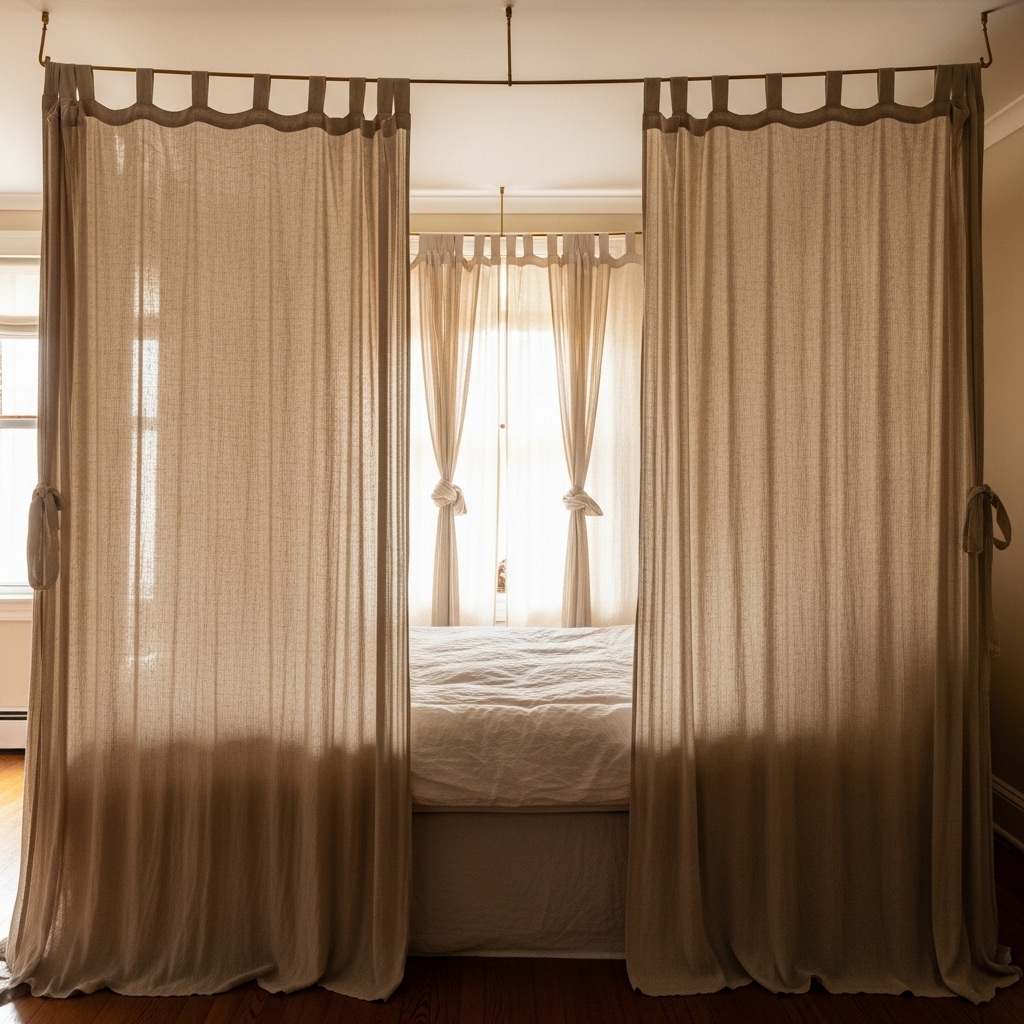
A bed canopy created from ceiling-mounted rods and sheer linen curtains creates the most dramatically cozy sleeping environment available in any bedroom without requiring a four-poster bed — the curtained enclosure creates the specific psychological quality of shelter and protection that enclosed sleeping spaces have provided throughout human history, from the bed curtains of medieval bedchambers to the canopied beds of nineteenth-century European interiors to the contemporary desire for defined, enclosed sleeping spaces in open-plan environments.
The sheer linen specifically is the fabric that creates the most beautiful canopy because it provides enclosure without darkness — the semi-transparency of sheer linen lets the morning light filter through in a warm, diffused quality that waking up to is genuinely pleasurable, while providing enough visual separation between the sleeping zone and the surrounding bedroom that the enclosed feeling is real rather than suggested. The linen’s natural cream-white tone creates warmth rather than the clinical quality that pure white sheer fabrics can create.
7. Vintage and Personal Objects — A Room That Belongs to Someone Specific
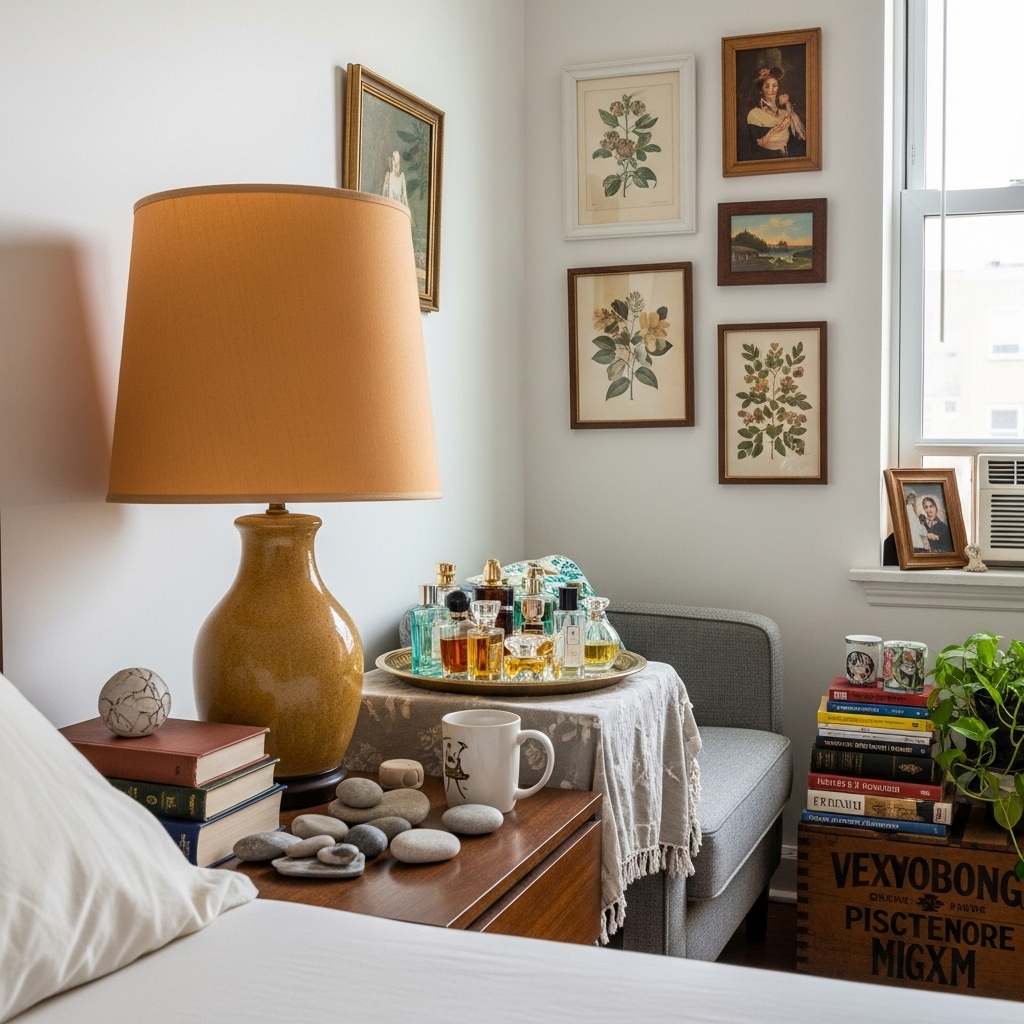
A bedroom furnished with genuinely personal and genuinely accumulated vintage objects — things that arrived from specific places at specific moments through specific choices — creates the most irreplaceable and most specifically cozy bedroom atmosphere, because it creates a room that belongs to a specific person rather than to an aesthetic category. The cozy bedroom is not an aesthetic achievement but a personal one, and the personal objects that communicate specific histories and specific choices are the elements that most completely create the quality of genuine inhabitation that makes a bedroom feel like a genuine personal sanctuary rather than a pleasantly designed sleeping room.
The vintage ceramic lamp on the bedside table is the specific object that most efficiently creates both functional warmth and aesthetic character in a bedroom — it provides warm amber light at the perfect reading and ambient level, creates a design element of genuine character and historical connection, and communicates something specific about the person who chose it that a contemporary lamp in the same position doesn’t. The combination of function and character in a single object is the quality that distinguishes the most cozy bedroom objects from the merely decorative ones.
8. The Scent Environment — Creating Atmosphere Beyond the Visual
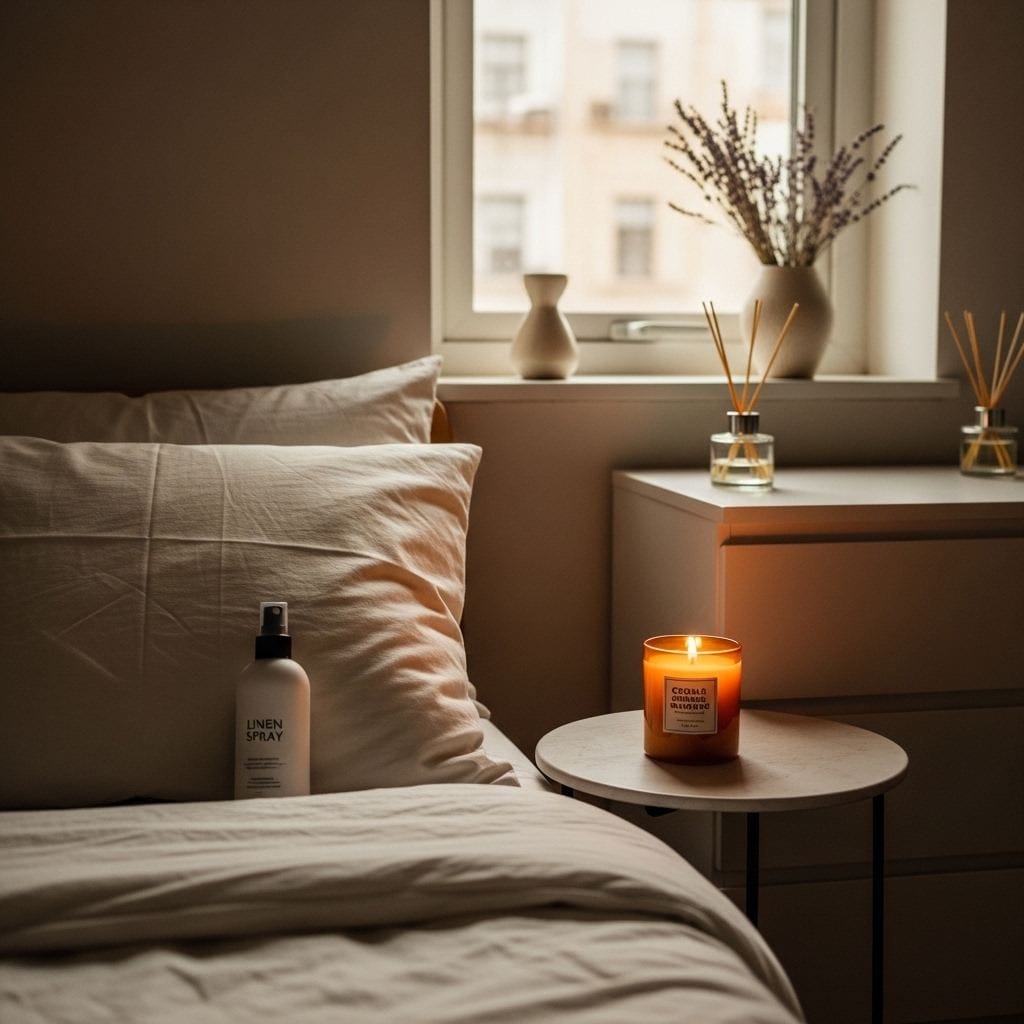
A deliberate scent environment — candles, diffusers, linen spray, dried botanicals — creates a dimension of cozy bedroom atmosphere that purely visual design cannot provide, because scent creates atmospheric associations and triggers emotional responses in a direct, unmediated way that visual elements don’t. The specific scents of warm amber, cedar, sandalwood, vanilla, and lavender are the scent family most consistently associated with warmth, safety, and rest, and their presence in a bedroom creates a quality of welcome that works on the nervous system before the conscious mind registers the visual environment.
The linen spray specifically — applied to pillowcases and the duvet cover before sleep — creates the most direct sensory connection between the bedroom’s scent environment and the actual experience of sleeping in the room, because the scent encountered at the moment of lying down and breathing in becomes directly associated with the quality of rest that follows. The specific quality of a pillow that smells of lavender or clean cotton spray creates the specific invitation to rest that is the most precise and most effective cozy bedroom sensory element.
9. Floor Rug Layering — Warmth Underfoot and Visual Depth

Floor rug layering in a bedroom — a large natural fiber base rug with a smaller, more characterful rug on top — creates the warmest and most visually rich bedroom floor treatment available at any budget level, because the layering multiplies the floor’s warmth, its tactile quality, and its visual interest in a way that a single rug, however large or however beautiful, doesn’t achieve alone. The large base rug creates coverage and warmth across the full floor; the smaller patterned rug creates the visual interest and personality that a uniform large rug lacks; and their combination creates a floor that reads as both spatially generous and specifically designed.
The placement of the smaller rug specifically beside the bed on the getting-up side — positioned so that the first foot to touch the floor in the morning lands on the warmest, softest surface rather than on cold wood or tile — is the functional detail that creates the most immediately felt daily comfort improvement. The quality of the first foot contact in the morning is a surprisingly significant contributor to the overall quality of the morning experience, and a genuinely warm, genuinely soft surface at that specific position is the functional purpose that makes the bedroom rug a genuine comfort investment rather than purely a decorative one.
10. String Lights — The Inexpensive Magic Maker
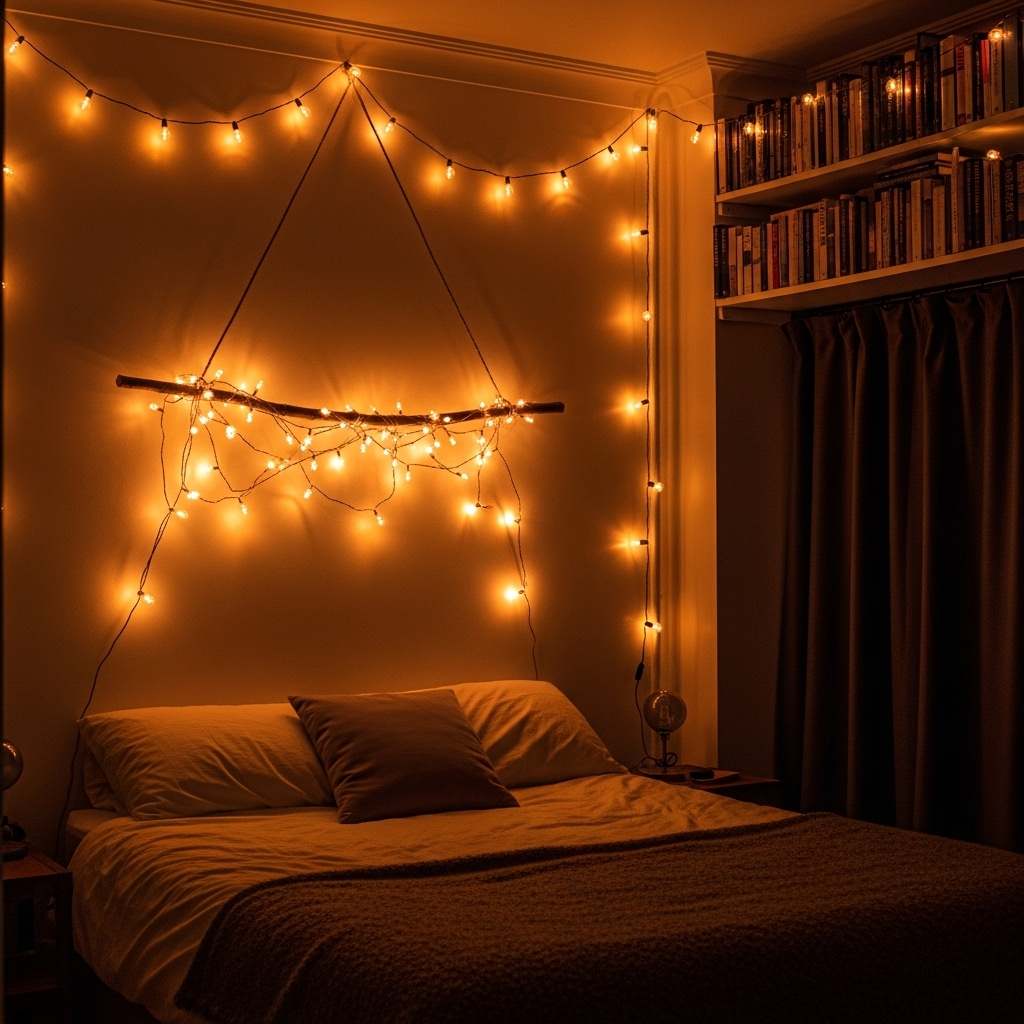
String lights in a bedroom create the most atmosphere per dollar of any bedroom addition — the specific quality of multiple small warm points of amber light creates a quality of warmth and intimacy that references stars, candlelight, and fireflies, all of which carry deep associations of warmth, magic, and the specific pleasure of light in darkness. The investment in a quality set of warm amber string lights — copper wire with warm micro-lights rather than the cool LED strip lights that create the wrong quality of light entirely — creates a bedroom atmospheric element that provides years of daily pleasure at the cost of a single dinner out.
The specific positioning of string lights matters more than the quantity — string lights wound through branches or draped behind a sheer canopy or strung along a bookshelf edge create genuinely beautiful effects; string lights draped directly on the wall in a predictable geometric pattern create a less interesting effect that reads as a decoration rather than an atmosphere. The most beautiful string light arrangements are those where the lights illuminate something — a botanical branch, a sheer curtain, the edges of shelves — rather than creating light for its own sake.
11. Headboard Creation — Making the Bed’s Primary Visual Element
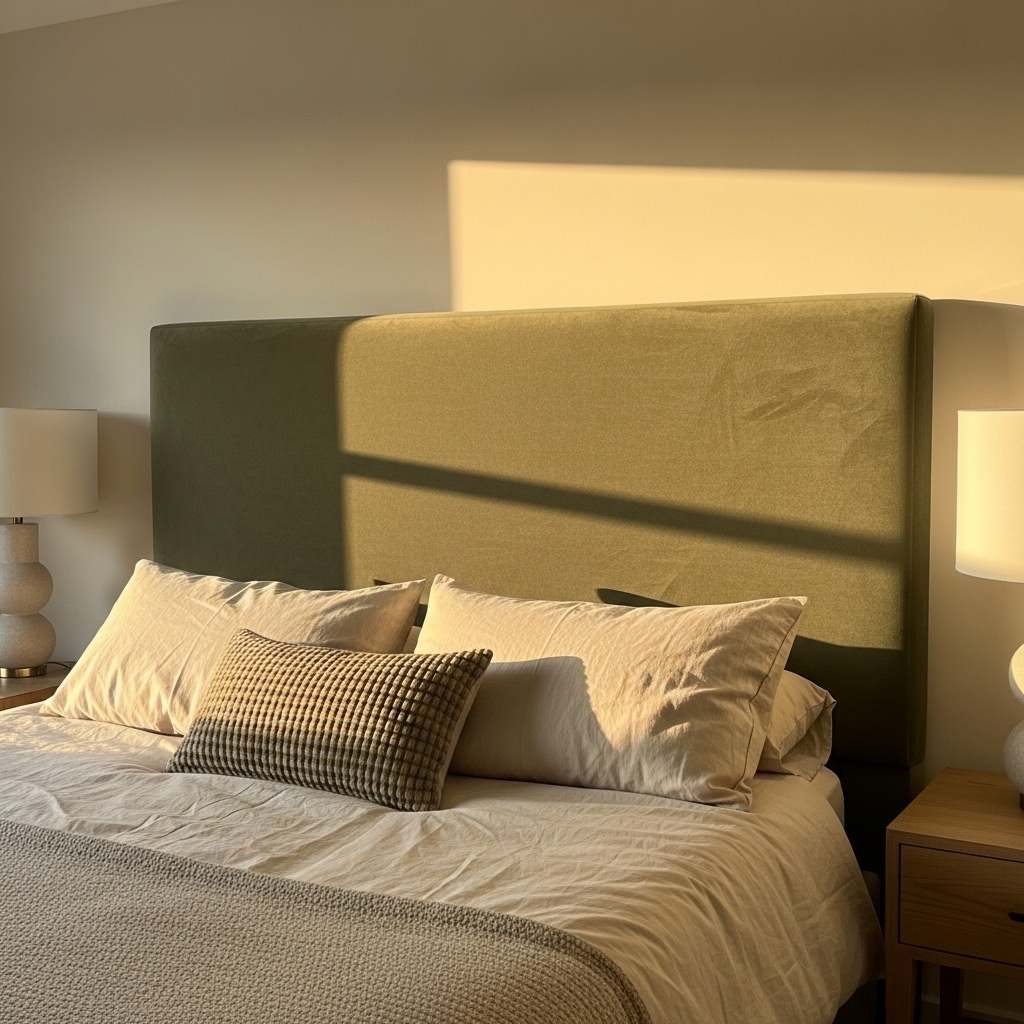
A DIY upholstered headboard — a plywood panel covered in batting and fabric and mounted to the wall — creates the bedroom’s most significant single design element at a fraction of the cost of a purchased headboard and with the specific advantage of being customized to the exact fabric and size that the bedroom requires. The upholstered headboard is the bedroom element that most creates the specific quality of luxurious comfort — the soft surface to lean against while reading in bed, the visual warmth of fabric behind the pillows, the color and texture statement that anchors the bed visually in the room.
The fabric selection is the headboard’s most important design decision — a fabric in a rich color and a sensory texture (velvet, boucle, linen) creates a headboard of genuine luxury and genuine visual impact, while a plain cotton in a neutral tone creates a headboard that’s present but not powerful. The investment in a beautiful fabric for a DIY headboard creates a result that reads as more expensive than a purchased headboard of equivalent cost, because the specific luxury of a rich velvet or a warm boucle communicates material quality that mid-price purchased headboards in their standard fabrics don’t achieve.
12. Plant Abundance — Bedroom as Botanical Sanctuary
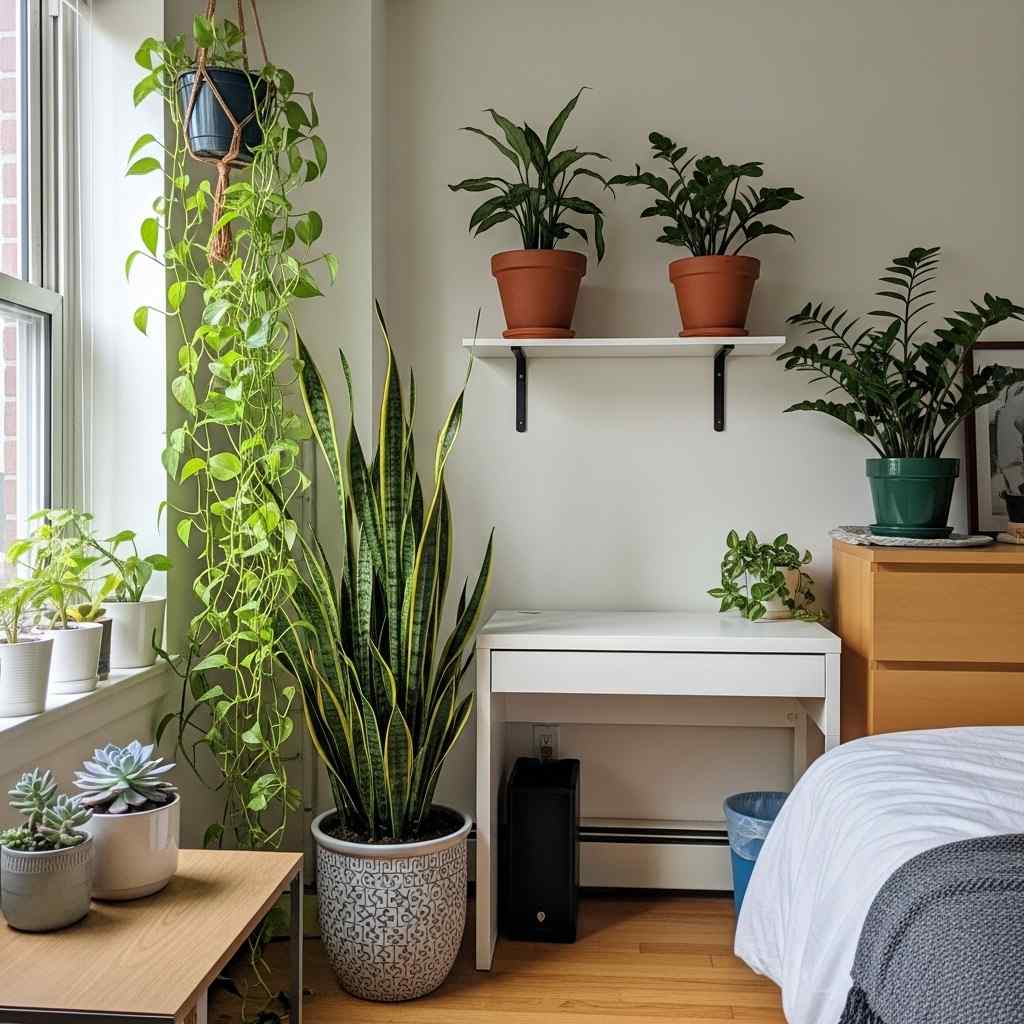
A bedroom with abundant plants — distributed at every level from floor to ceiling, in every corner and on every available surface — creates the most genuinely life-filled and most specifically restorative sleeping environment available, because the presence of living plants in a sleeping space creates the sensory qualities of being near nature (clean air, subtle fragrance, the specific quality of organic living forms) that human biology is specifically designed to find restful and restorative.
The specific plants selected for a bedroom need to work in the bedroom’s specific light conditions — snake plants, ZZ plants, and pothos are among the most low-light tolerant and most genuinely beautiful bedroom plants, requiring virtually no natural light while maintaining their visual quality; succulents and cacti require a sunny window but create extraordinary architectural beauty in the right light conditions. The selection of plants appropriate to the actual light conditions of the specific bedroom is the most important botanical decision, because a plant in inadequate light gradually deteriorates and creates the opposite of the intended botanical warmth.
13. The Gallery Wall — Personal Visual World Around the Bed
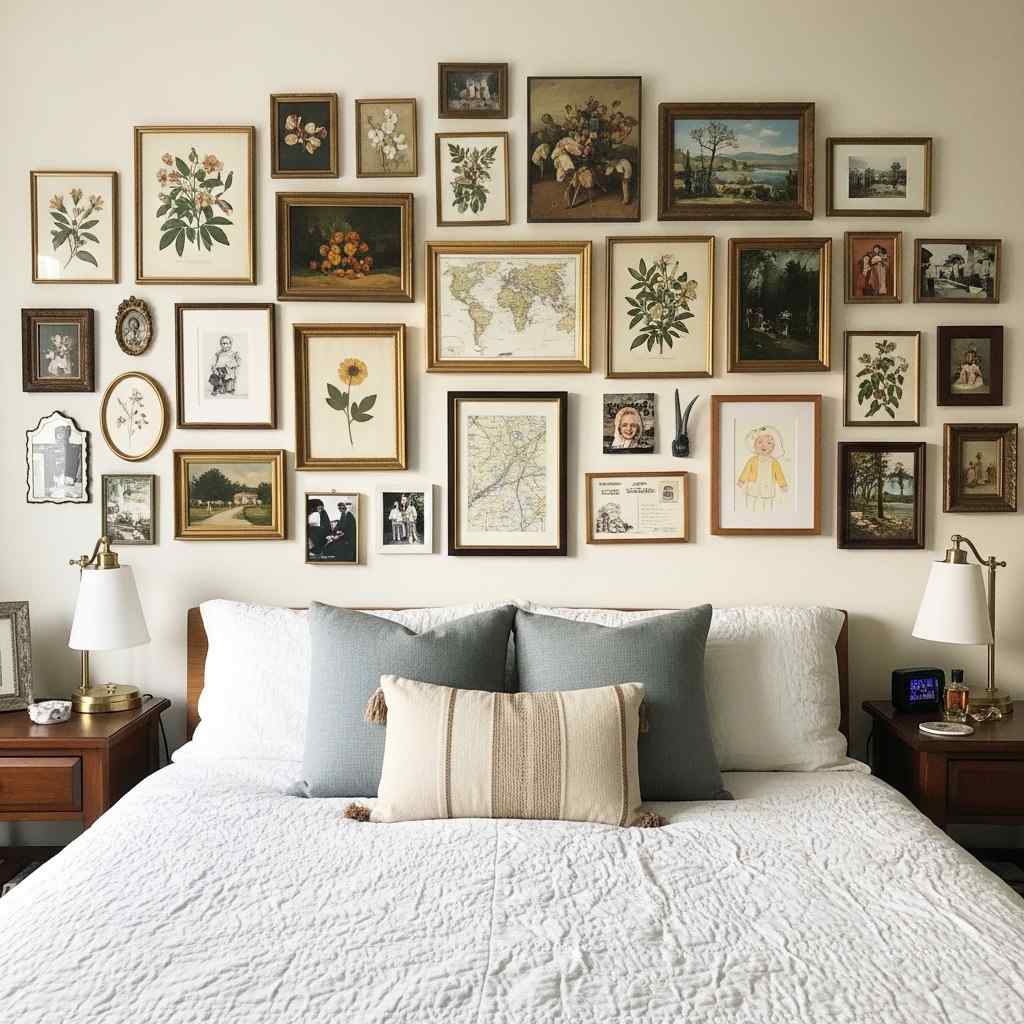
A personal gallery wall surrounding the bed creates the sleeping environment that most completely communicates a specific personal history and a specific aesthetic sensibility — the wall above the bed is the last thing seen before sleep and the first thing seen upon waking, and filling it with personally meaningful artwork creates a daily visual experience of genuine personal resonance that a bare wall or a single purchased print entirely lacks. The gallery wall is the bedroom element that most makes the room specifically yours rather than a room that could be anyone’s.
The density of the gallery is what creates the surrounding, enveloping quality that distinguishes a genuine bedroom gallery from a few pieces of art on a wall — when the gallery extends from bedside table height to ceiling across the full headboard wall and possibly onto adjacent walls, the sleeping space becomes genuinely surrounded by personal visual material, and the quality of that surrounding creates the most complete personal expression that a bedroom can achieve.
14. The Curtain Investment — Floor-to-Ceiling Drama
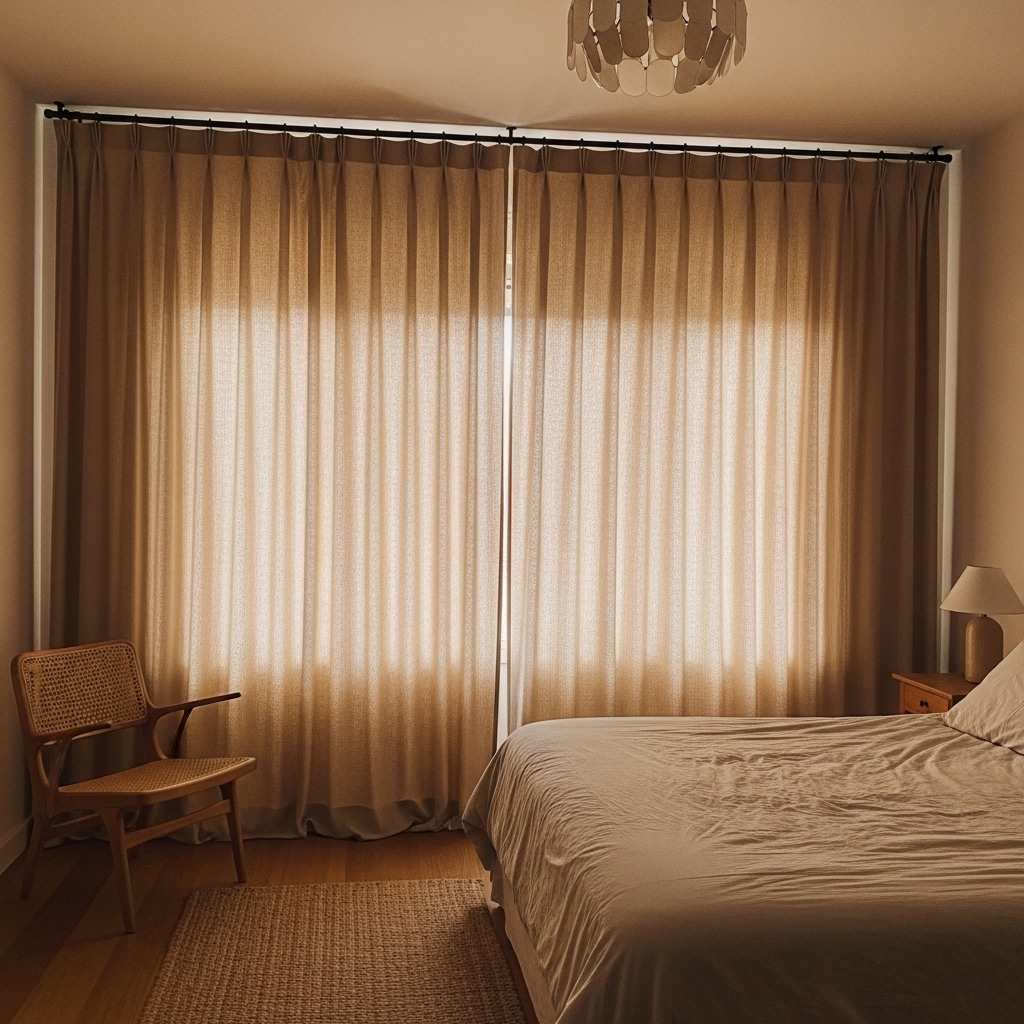
Floor-to-ceiling curtains hung from ceiling-height rods — the most common curtain specification mistake being rods hung just above the window rather than at the ceiling — create the single most dramatic bedroom visual transformation available from a single element change. Curtains hung at ceiling height make the ceiling appear dramatically higher, the windows appear dramatically larger, and the room appear dramatically more designed than curtains hung at the standard above-window height, because the floor-to-ceiling drop of fabric treats the window as an architectural opportunity rather than a functional opening.
The fullness of the curtains is the quality detail that most determines their visual impact — curtains with insufficient fabric width hang straight and flat, lacking the soft folds and generous gathering that create the specific visual richness of beautiful curtains. Properly full curtains — with at least two and a half to three times the window width in fabric gathered onto the rod — create rich, layered folds that catch the light at multiple angles and create a surface of genuine visual depth and movement that flat curtains entirely lack.
15. The Warm Color Palette — Cohesion Through Color Story
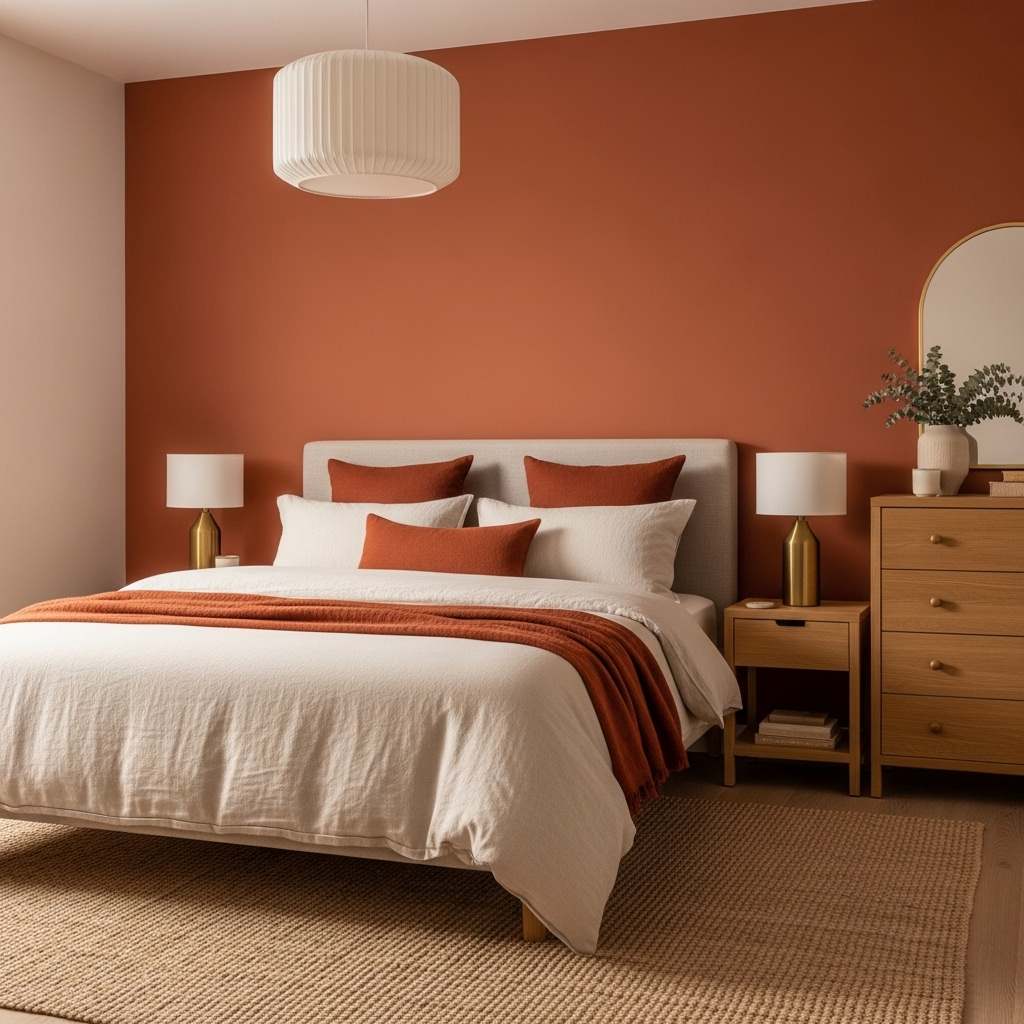
A consistent warm color palette — selecting every element in the bedroom from within a specific family of warm, coordinated tones rather than mixing colors from different temperature families — creates the bedroom of maximum visual cohesion and maximum warmth. The warm palette specifically — terracottas, creams, rusts, warm naturals, warm woods — creates the specific quality of visual warmth that distinguishes the genuinely cozy bedroom from the merely organized one, because warm colors read as warm even before the textural and sensory elements of coziness are added.
The palette discipline — choosing every new bedroom element to fit within the established color story rather than introducing whatever appeals at the moment of purchase — is the design practice that creates the cohesive bedroom of genuine beauty rather than the accumulated bedroom of pleasant individual elements. A bedroom where every purchase decision is evaluated against the existing palette creates over time a room of genuine visual harmony; a bedroom where each purchase is made independently creates over time a room of pleasant pieces that don’t quite cohere.
16. The Bookshelf Bedroom — Literature as Room Character
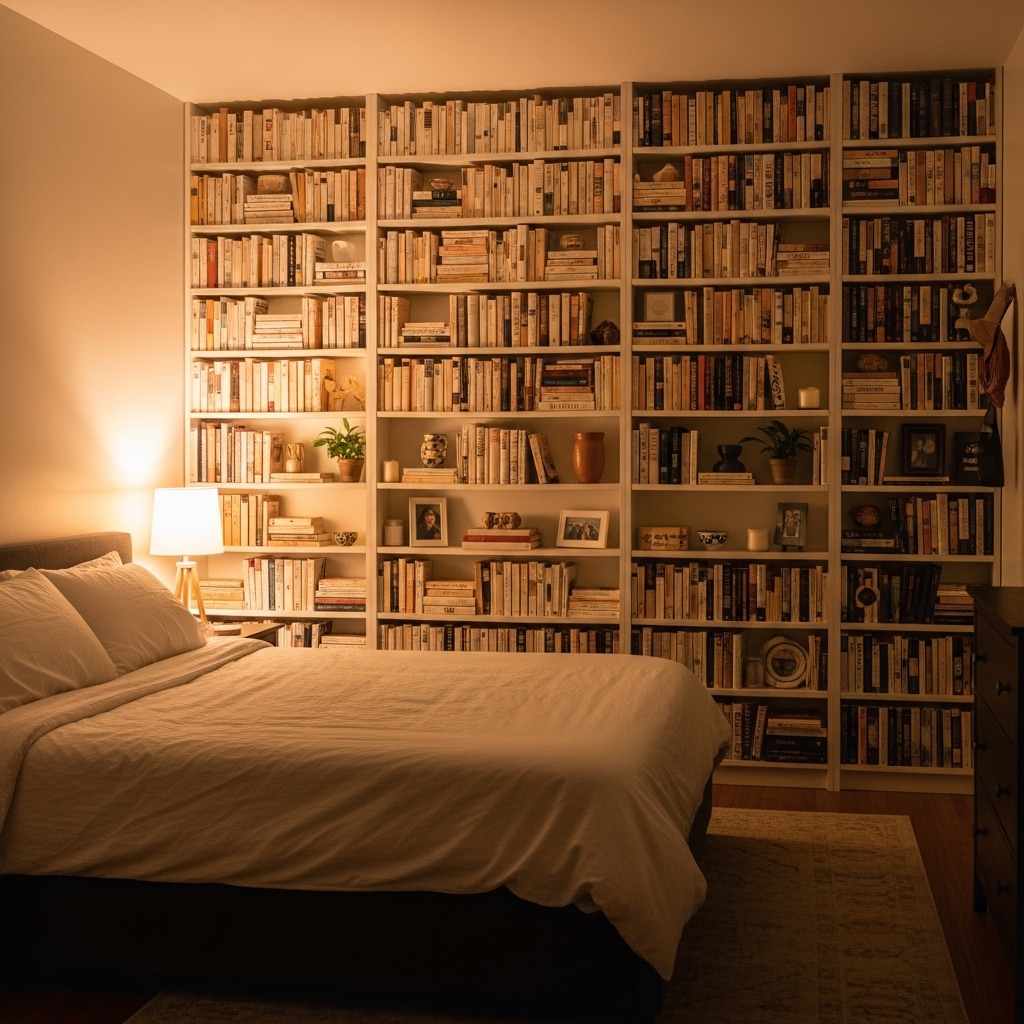
A bedroom with a full wall of floor-to-ceiling bookshelves creates the most specifically literary and most intellectually warm sleeping environment — a room where going to sleep is going to sleep surrounded by books, where the last visual experience before sleep is the accumulated knowledge and pleasure of a personal library. The bookshelf bedroom creates a quality of comfort that goes beyond the physical — the psychological comfort of being surrounded by books, by the specific warmth of a personal library, is a comfort that book-lovers consistently describe as genuinely restorative.
The arrangement of books in a warm color gradient rather than by subject or author is the visual choice that most transforms the bookshelf from functional storage to designed element — the color gradient creates a continuous warm composition across the full wall that reads as a designed background for the room rather than a reference library. This arrangement sacrifices easy subject-based navigation (though most readers find they navigate by memory and color anyway) in favor of the visual warmth that makes the bookshelf bedroom genuinely beautiful.
17. The Hygge Bedroom — Danish Coziness Philosophy Applied
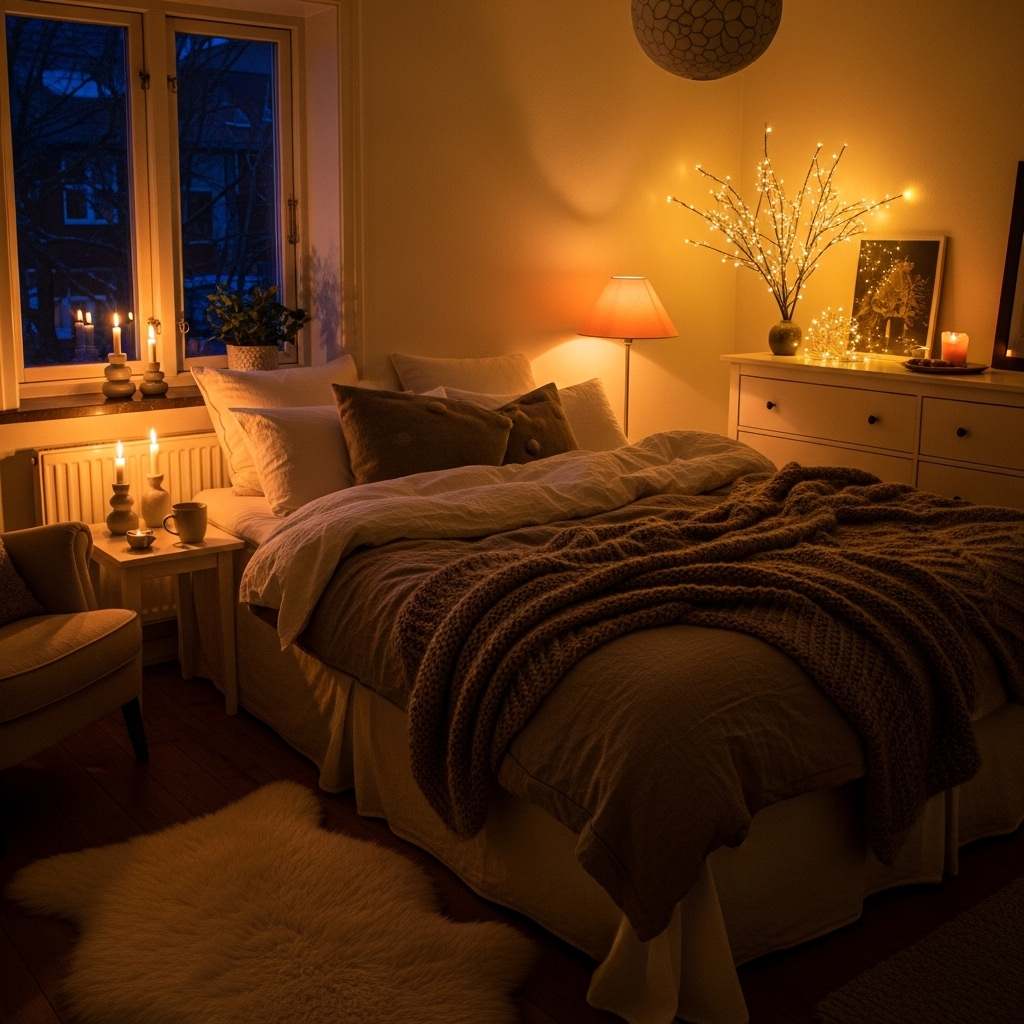
The hygge bedroom — inspired by the Danish concept of coziness, togetherness, and the specific quality of warm domestic pleasure that the Scandinavian winter has generated as a cultural response — creates the most deliberately and most specifically cozy sleeping environment, one where every element has been chosen specifically to contribute to the quality of warmth and ease that hygge describes. Hygge is not an aesthetic but a feeling — the feeling of being warm and comfortable and specifically content — and the hygge bedroom creates the conditions for that feeling rather than simply creating a pleasing visual environment.
The candles are essential to the hygge bedroom in a way that no other light source substitutes for — the specific flickering warmth of real candlelight, with its living quality of movement and its specific amber quality of light, creates the hygge atmosphere at its most fundamental. A bedroom lit by candles alongside lamps creates a quality of warmth and intimacy that only candlelight provides, and the specific act of lighting candles before settling into bed is itself a ritual of transition from the day’s activity to the evening’s rest that reinforces the quality of the cozy bedroom experience.
18. The Multifunctional Small Bedroom — Every Inch Designed
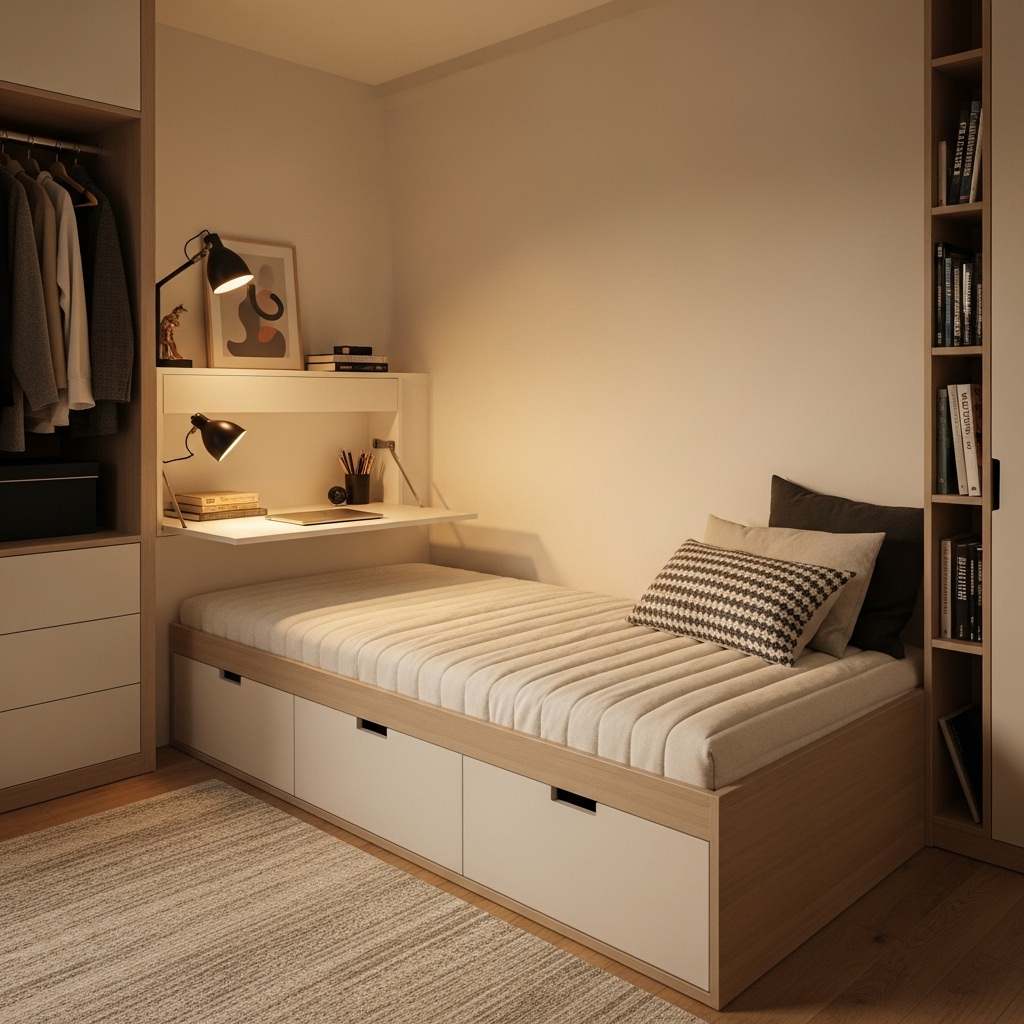
A small apartment bedroom designed for maximum multifunctionality — where every piece of furniture serves multiple purposes and every surface and wall has been considered for its storage and functional potential — creates the small bedroom that lives large rather than the small bedroom that simply feels small. The multifunctional small bedroom is not a room of compromises but a room of intelligent design, where the constraints of small scale have been used as design challenges that create more thoughtful and more specific solutions than a larger bedroom with unlimited space would generate.
The under-bed storage is the most significant space-multiplying element in a small bedroom because it creates the equivalent of an additional dresser’s worth of storage without occupying any floor space — the floor plan of a queen bed is approximately thirty-four square feet of floor area that, in a bed with proper under-bed storage, becomes usable storage rather than simply structural support. Quality under-bed storage drawers built into a platform bed create storage capacity equivalent to a full chest of drawers at no additional floor footprint.
19. The Maximalist Cozy Bedroom — Abundance as Warmth

A maximalist cozy bedroom — where the principle of abundance is the primary design value — creates the most visually rich and most completely enveloping sleeping environment, a room where every surface and every corner offers something beautiful to rest the eye on and where the accumulated warmth of many beautiful things creates an atmosphere of extraordinary personal richness. The maximalist bedroom is not a bedroom that has too much in it; it’s a bedroom that has exactly enough of the right things arranged with genuine care, where the abundance feels intentional and joyful rather than accumulated and chaotic.
The organizing principle that distinguishes a beautifully maximalist bedroom from a cluttered one is the coherence of the palette — a maximalist bedroom where every object exists within a specific color story (even a broad one) reads as richly layered and intentionally abundant; a maximalist bedroom where objects from competing palettes create visual chaos reads as cluttered regardless of the individual quality of each object. The maximalist palette discipline — choosing objects from within a warm jewel-toned palette or a warm earthen palette or a warm botanical palette — creates the condition within which abundance becomes beauty rather than noise.
20. The Complete Cozy Bedroom — Every Element United
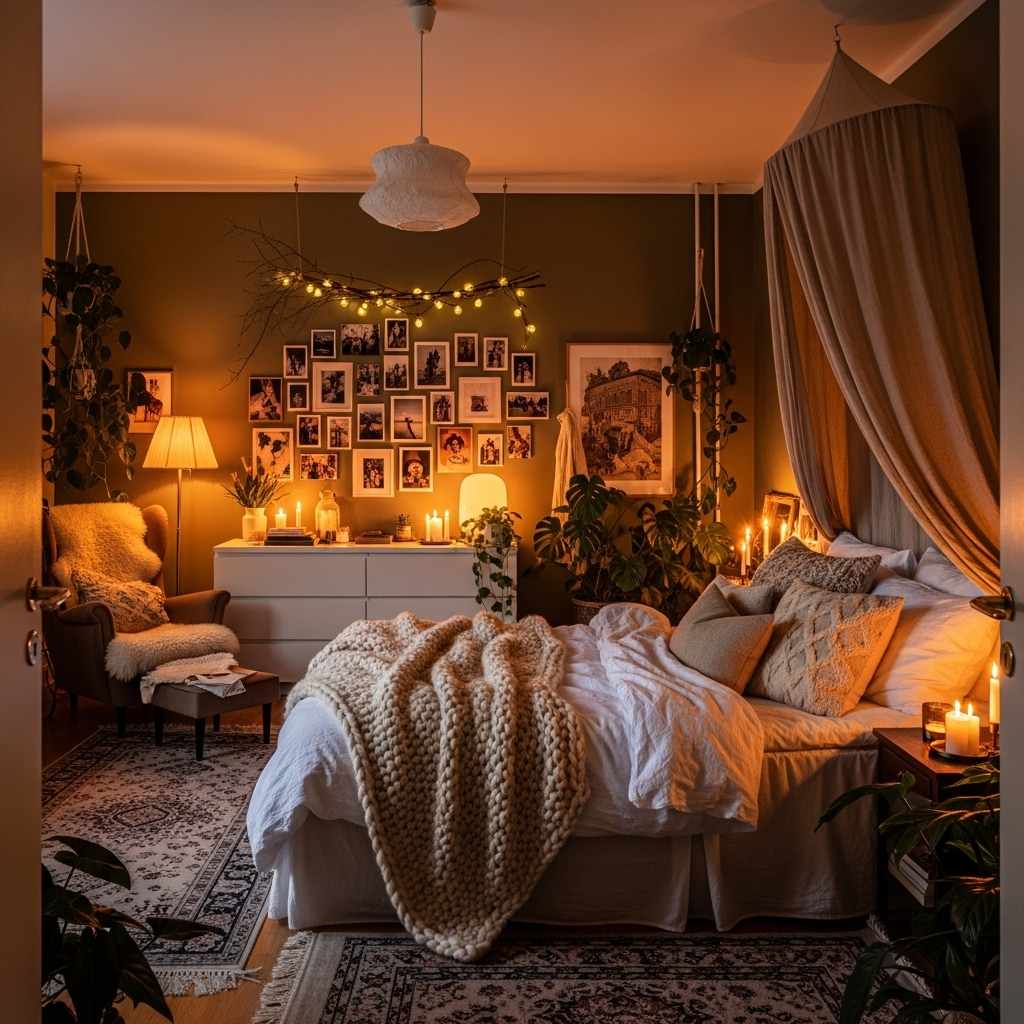
A completely realized cozy bedroom — where every element from wall color through bedding layers through lighting through textiles through plants through personal objects through scent works together in a cohesive, mutually reinforcing whole — creates an environment of extraordinary atmospheric quality that no individual element, however excellent, creates alone. The complete cozy bedroom is not the sum of its individual elements but the product of their relationships — the way the warm wall color makes the lamp light appear warmer, the way the layered bedding makes the canopy feel more enveloping, the way the personal gallery wall makes the botanical atmosphere feel more specifically yours.
The quality that makes the complete cozy bedroom genuinely extraordinary rather than merely well-decorated is the quality of genuine personal investment — the choice of wall color that’s specifically your favorite color, the bedding layered to specifically your sensory preferences, the plants chosen for your specific relationship to botanical life, the personal objects accumulated through your specific life and your specific aesthetic journey. The genuinely cozy bedroom is ultimately not a design achievement but a personal one — a room that reflects a specific person’s specific definition of comfort and creates the specific quality of sanctuary that that specific person’s life requires.