20 Modern Black Kitchen Ideas
Black kitchens have evolved from being considered too dark or risky into one of the most sophisticated, dramatic, and sought-after design choices in modern homes. There’s something incredibly powerful about a black kitchen—it makes a statement, it exudes confidence, and when done right, it creates this sleek, timeless elegance that never feels dated or trendy. The beauty of black in kitchens is its versatility—it can feel moody and dramatic, crisp and contemporary, warm and inviting, or industrial and edgy depending on how you use it and what you pair it with. Black is also incredibly forgiving in practical ways, hiding fingerprints, minor scratches, and daily wear far better than lighter colors, which is no small consideration in a hardworking kitchen.
I’ll admit that black kitchens aren’t for everyone, and they do require some thoughtfulness to execute successfully. You need adequate lighting—both natural and artificial—to prevent the space from feeling like a cave. You need to consider your room size and ceiling height, though I’ve seen stunning black kitchens in surprisingly compact spaces where the dark color actually creates depth and intimacy rather than claustrophobia. And you need to think about balance—whether that’s through contrasting elements like white countertops or brass hardware, or through texture and finish variations that create interest within the black palette itself. But when all these elements come together, the result is absolutely breathtaking.
What’s exciting about modern black kitchen design in 2025 is the incredible range of approaches we’re seeing. It’s not just about painting cabinets black anymore—we’re seeing black soapstone counters, matte black appliances that blend seamlessly, black terrazzo and concrete, dramatic black tile in unexpected patterns, mixed finishes combining matte and glossy black, and creative uses of black as an accent rather than the dominant color. The trend has matured beyond just being bold for boldness’s sake into genuinely sophisticated design that’s both beautiful and highly functional. Let’s explore these ideas and figure out how to incorporate black into your kitchen in a way that feels right for your space and style.
1. Matte Black Cabinets with Brass Hardware
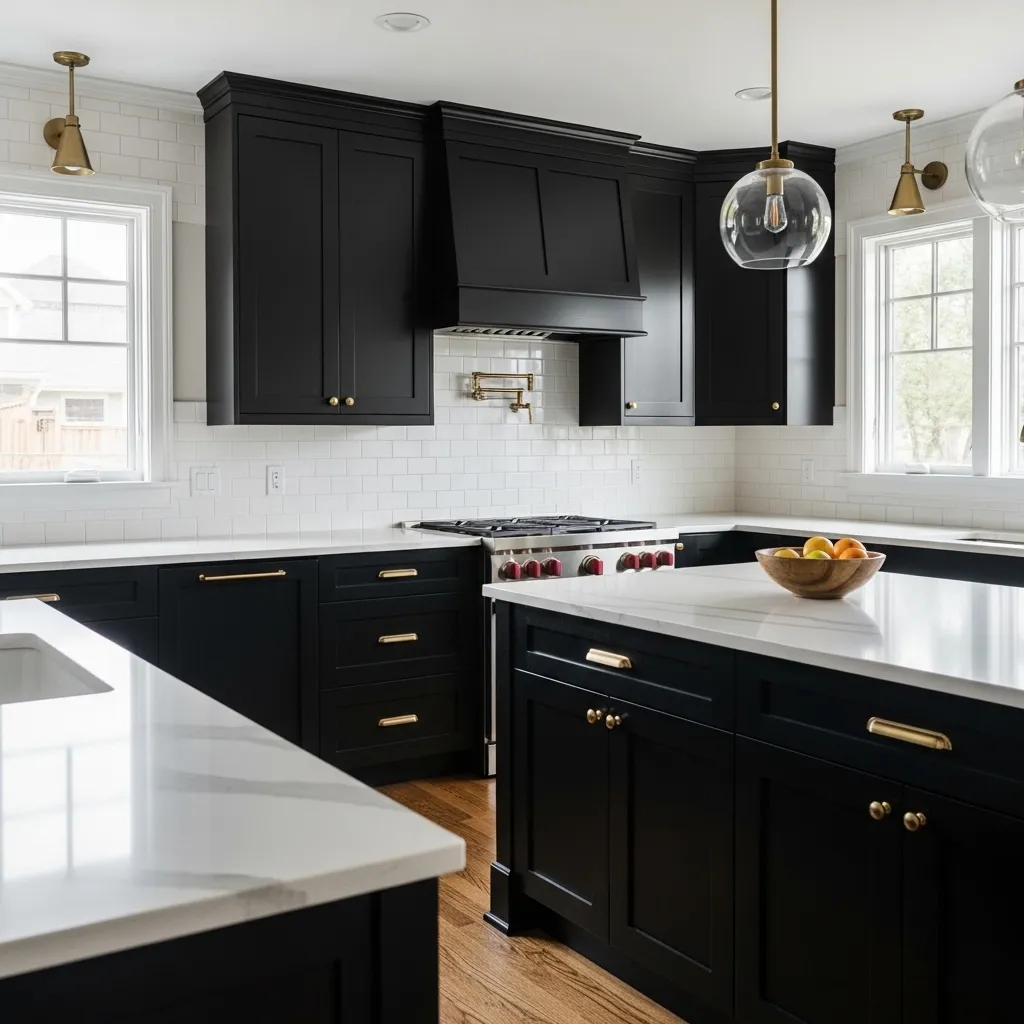
Matte black cabinets have this incredible sophistication that glossy black can’t quite achieve—the matte finish feels more modern, more refined, and somehow more timeless. It’s like the difference between a tuxedo and something shiny and costume-like. When you pair that deep, velvety black with warm brass hardware, you create this beautiful tension between the cool darkness and warm metallics that feels both contemporary and classic at the same time.
The brass hardware is absolutely crucial to making this work—it provides warmth, visual interest, and those little moments of light and shine that prevent an all-matte-black kitchen from feeling too flat or heavy. The white countertops are equally important, providing that essential contrast and bright workspace where you’re actually preparing food. This combination has serious staying power because it’s rooted in classic color theory and material contrast rather than fleeting trends. The matte finish also has the practical benefit of showing fewer fingerprints and smudges than glossy surfaces, which is invaluable in a kitchen where you’re constantly touching cabinet doors.
2. Black and White Marble Countertops
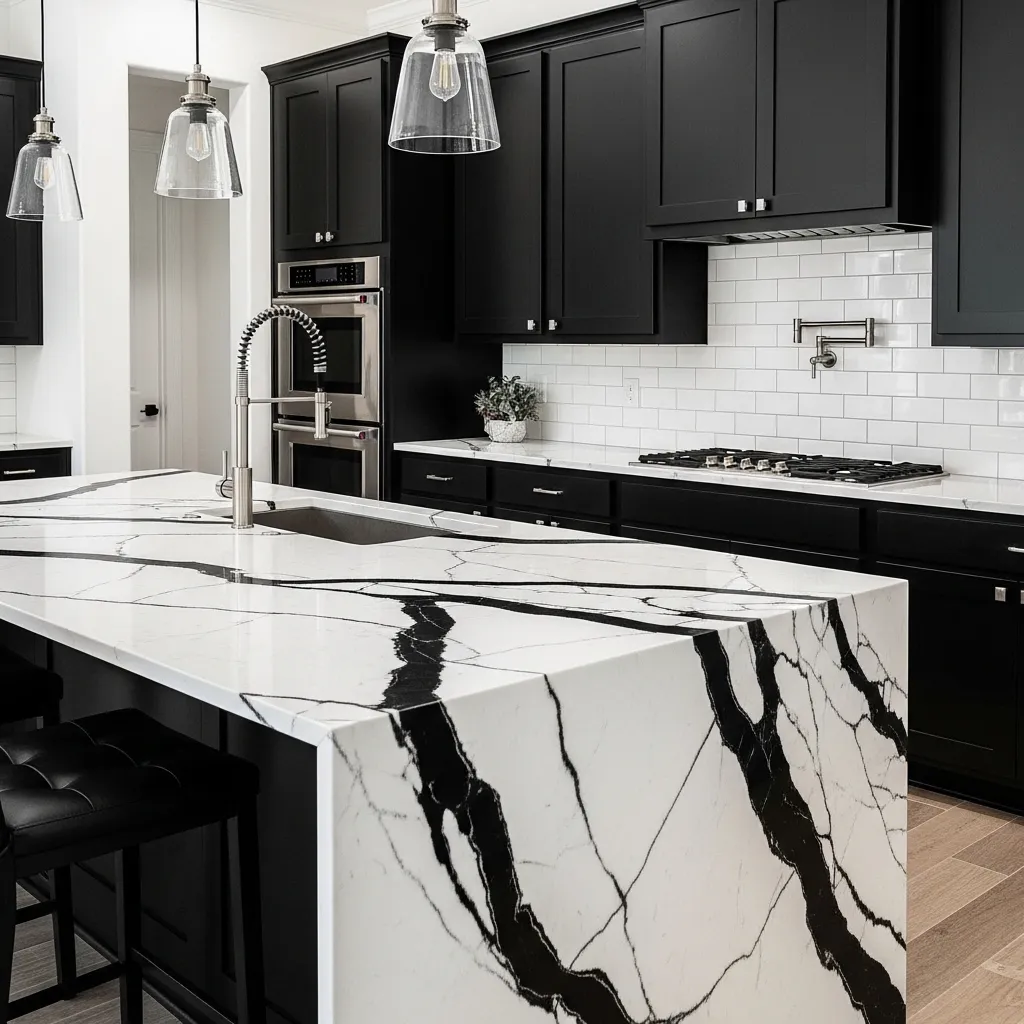
When you’re working with black cabinets, choosing a white marble with black veining for your countertops is such a smart move because it creates this beautiful visual bridge between the dark lower cabinets and lighter upper elements. The veining ties everything together in an organic way that feels intentional rather than just “dark bottom, light top.” Marbles like Calacatta with their dramatic black veining are particularly striking and create genuine wow-factor.
The waterfall edge on an island really shows off the marble’s pattern and creates that high-end, furniture-like quality that elevates the entire kitchen. Yes, marble requires maintenance and sealing, and you need to be careful with acidic substances, but many people feel the beauty is worth the care—or you can opt for quartz that mimics the look with less maintenance. The contrast of the black veining against white stone catches the eye and creates movement and interest that solid-colored counters can’t achieve. It’s dramatic without being over-the-top, luxurious without being stuffy.
3. Black Shiplap or Vertical Paneling
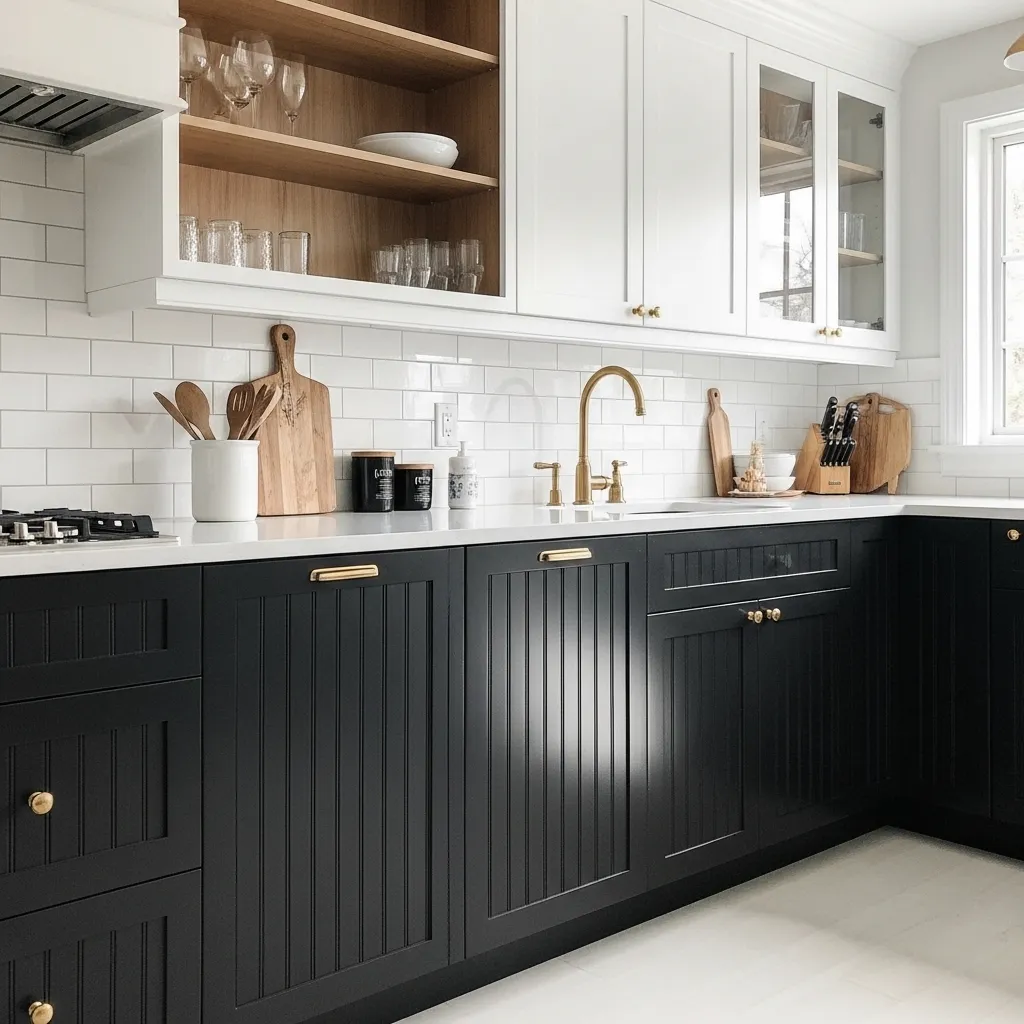
Adding texture to black cabinetry through shiplap or vertical paneling creates so much more visual interest than flat, smooth cabinets. The shadow lines between the boards catch light differently throughout the day, creating this subtle play of light and dark that adds dimension and prevents the black from feeling too heavy or monolithic. Vertical orientation is particularly smart because it draws the eye upward and makes your kitchen feel taller.
This approach feels more organic and less stark than solid black cabinets, and it has this interesting ability to work in both modern farmhouse kitchens and sleek contemporary spaces depending on what you pair it with. The texture also means you’re not relying solely on hardware or other elements to create visual interest—the material itself is doing that work. When light hits those grooves and edges, you get beautiful variation within the black that makes the space feel more dynamic and alive. It’s a sophisticated take on black cabinetry that feels current and will age beautifully.
4. Black Lower Cabinets with White Uppers
The two-tone approach with black lowers and white uppers is a smart way to get the drama and sophistication of black cabinetry while maintaining brightness and keeping the kitchen from feeling too dark or cave-like. The dark lower cabinets ground the space and hide the inevitable scuffs and dirt that accumulate near the floor, while the white uppers keep things feeling light, open, and visually spacious. It’s the best of both worlds.
This configuration is particularly effective in kitchens with lower ceilings where all-black cabinets might feel oppressive. The white upper portion draws the eye upward and creates the illusion of height while the black base provides weight and stability. The clear division at the counter level creates a crisp, intentional look rather than appearing indecisive. You can play with this concept too—maybe the island is all black while perimeter cabinets are two-tone, or maybe you reverse it with white lowers and black uppers for a more unexpected look. The key is commitment to the concept and clean execution.
5. All-Black with Gold Fixtures and Faucet
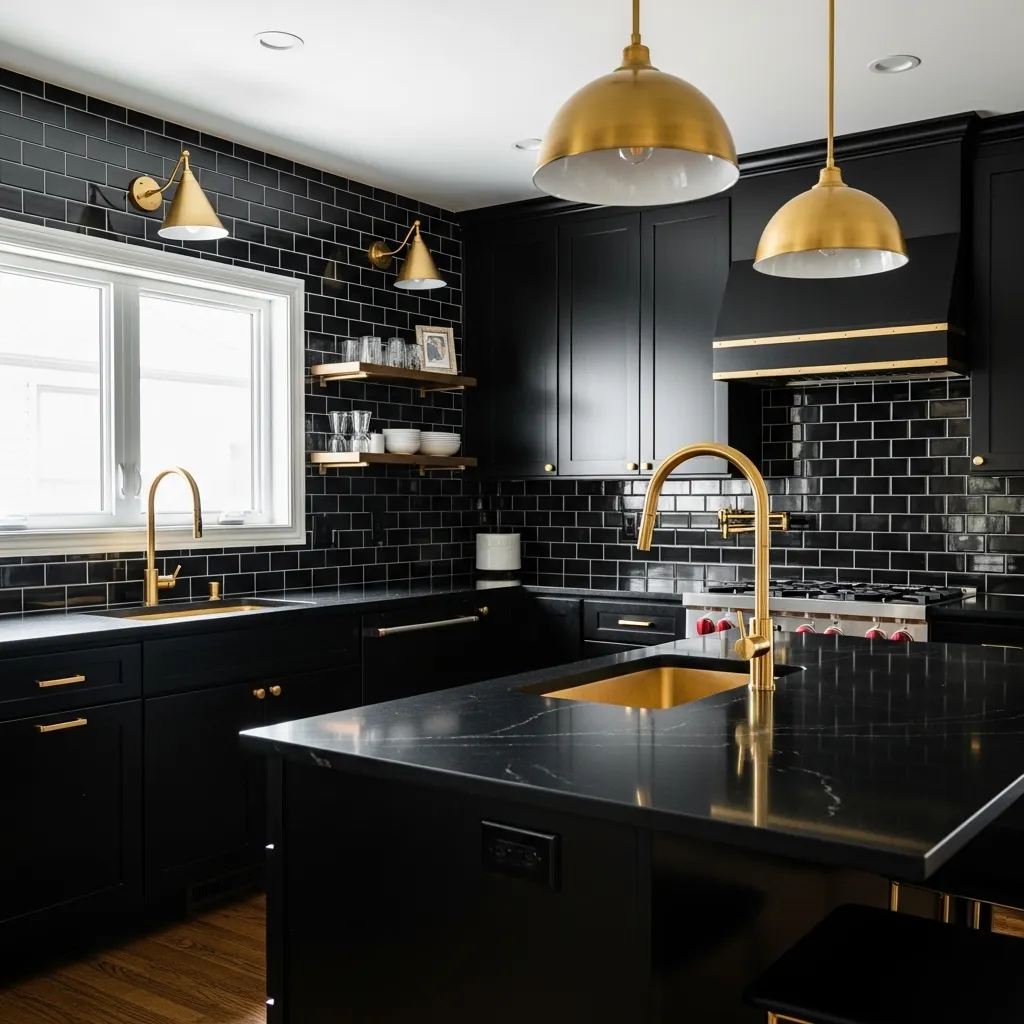
Going all-in on black—cabinets, counters, and even the backsplash—creates this incredibly bold, cohesive look that feels confident and modern. It’s not for the faint of heart, but when executed well with adequate lighting and those crucial warm gold elements, it’s absolutely stunning. The gold fixtures become like jewelry against the black, creating these beautiful moments of light and warmth that prevent the space from feeling too dark or cold.
The key to making an all-black kitchen work is layering different textures and finishes within the black palette so you get variation and depth rather than one flat, monotonous surface. Maybe your cabinets are matte, your counters have some subtle pattern or texture, and your backsplash has dimensionality through subway tile layout or a different material. The gold elements are essential for warmth—they catch light beautifully and create visual breaks that let your eye rest. This approach requires excellent lighting, both natural and artificial, but the result is a kitchen with serious drama and sophistication that makes a powerful design statement.
6. Black Kitchen Island with Wood Perimeter
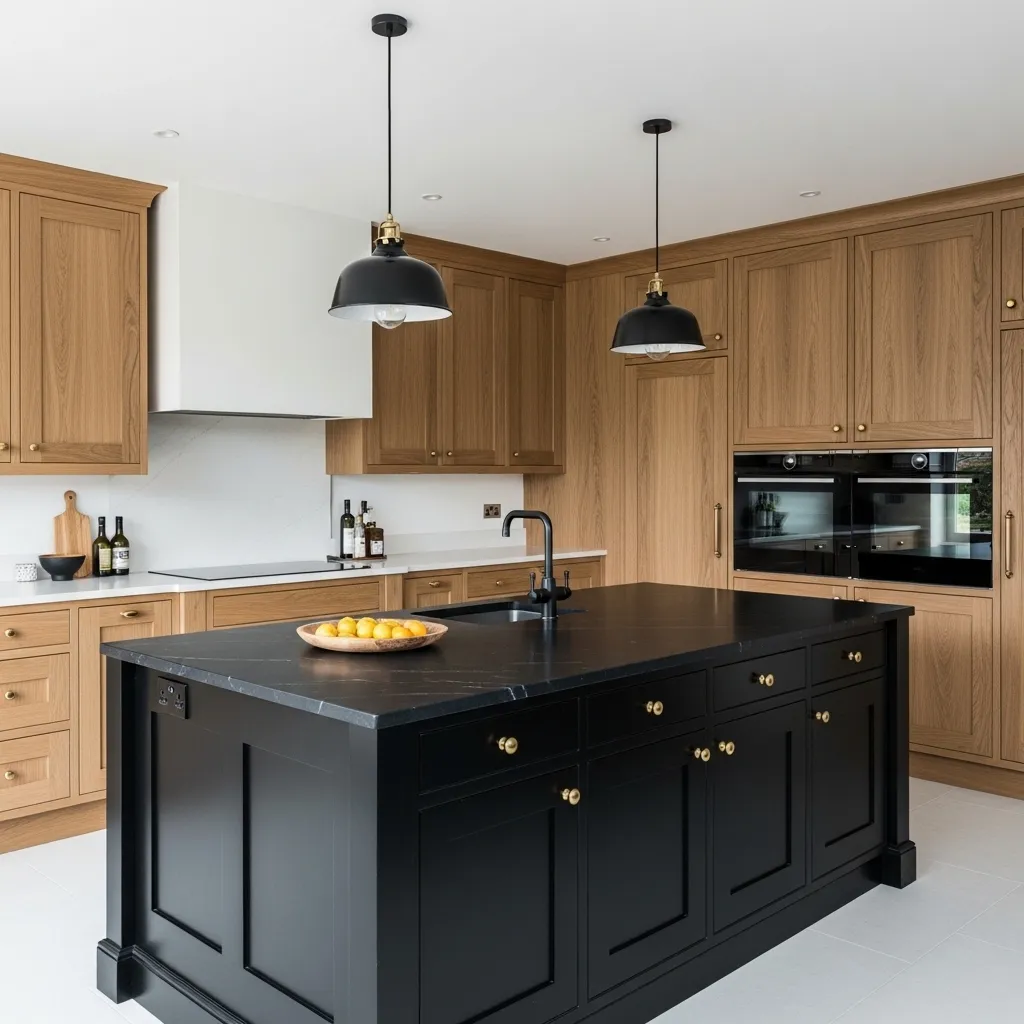
Using black strategically on just the island while keeping perimeter cabinets in natural wood is such a smart approach that gives you that dramatic black element without overwhelming your kitchen. The black island becomes an instant focal point—it’s what your eye goes to first when you enter the room—while the warm wood perimeter keeps the space feeling inviting and organic rather than too stark or cold.
This configuration works particularly well in open-concept kitchens where the island is visible from living areas because it creates definition and grounds the kitchen zone within the larger space. The natural wood brings warmth and texture that prevents the kitchen from feeling too modern or austere, and wood’s organic quality balances the bold, graphic quality of the black island. You can play with wood tones depending on your style—lighter oak for Scandinavian-modern vibes, rich walnut for more traditional warmth, or even reclaimed wood for rustic character. The contrast creates visual interest and gives you flexibility in styling—the black provides drama while the wood provides warmth.
7. Black Soapstone Countertops
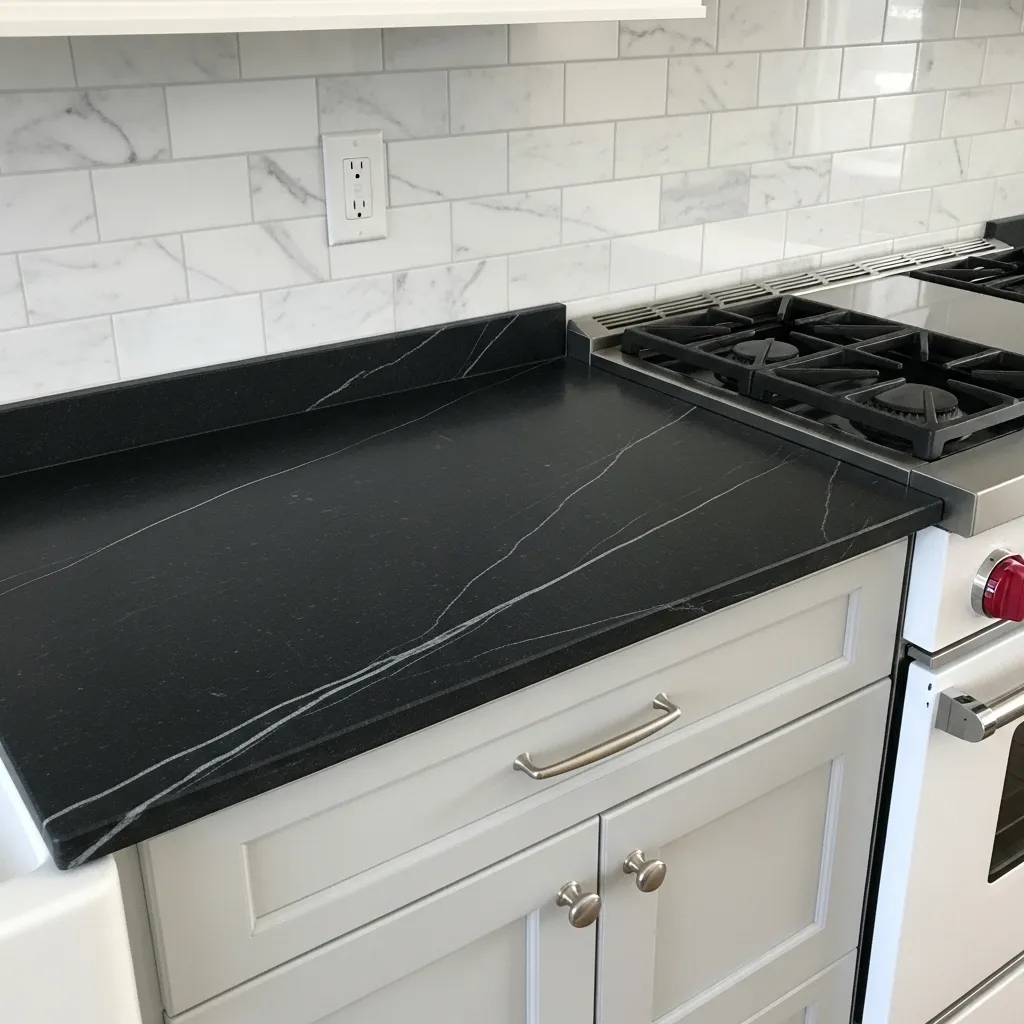
Soapstone offers a completely different approach to incorporating black in your kitchen—instead of painted cabinets, you’re using a natural stone that’s been used for centuries and has this beautiful, timeless quality. The soft matte finish of soapstone is completely unique—it’s almost velvety to the touch—and the subtle white veining that runs through it keeps it from being a solid, harsh black. It feels organic and warm despite being a dark material.
What’s special about soapstone is how it ages and develops character over time. The surface darkens slightly and develops a patina with use and oiling, creating this lived-in, loved quality that synthetic materials can’t replicate. It’s incredibly heat-resistant (you can set hot pans directly on it), non-porous and naturally antibacterial, and any scratches or imperfections can be sanded out and re-oiled. When paired with lighter cabinetry, soapstone counters provide that dramatic dark element while maintaining a connection to natural materials and traditional craftsmanship. It’s black with soul and history rather than just a bold color choice.
8. Black Terrazzo Floors
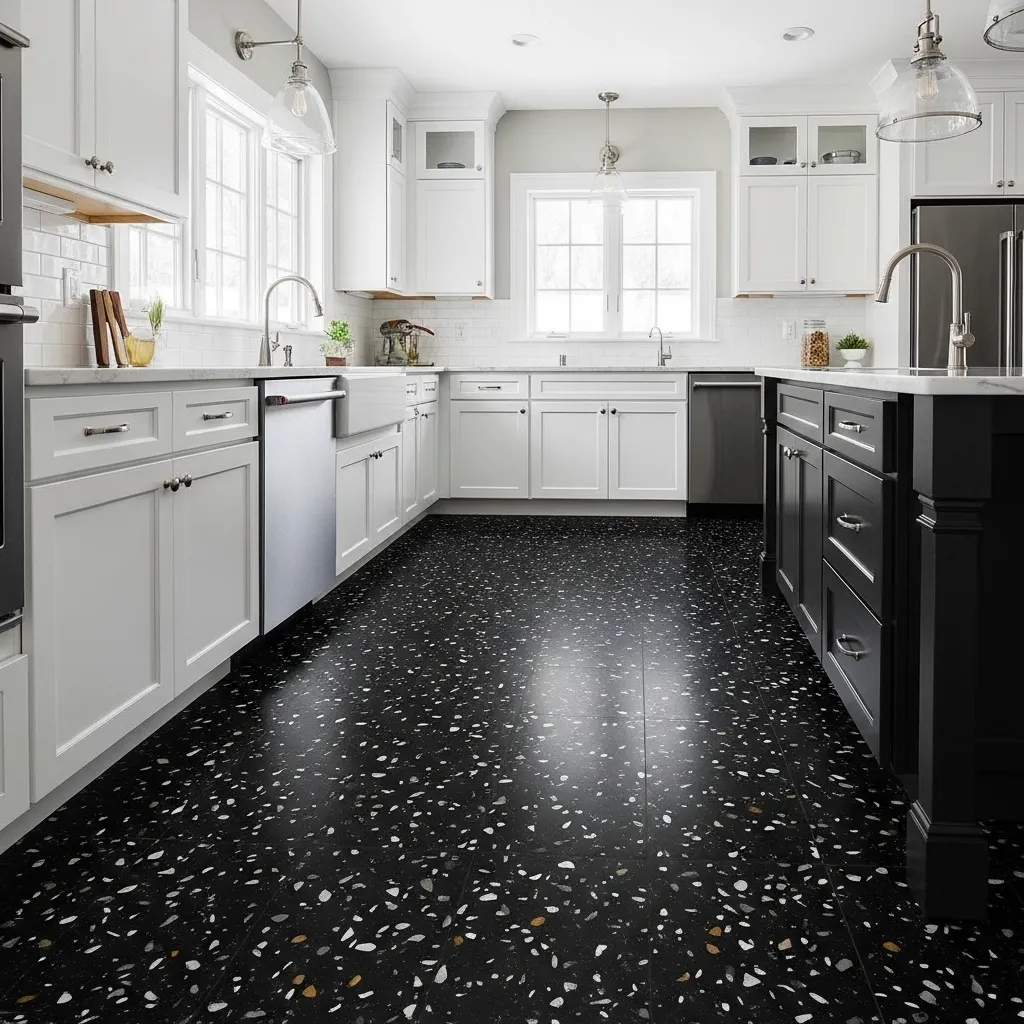
Black terrazzo flooring brings pattern, texture, and visual interest to your kitchen floor while maintaining that dramatic dark foundation. Unlike solid black tile that can feel heavy, terrazzo’s aggregate chips—in white, gray, gold, or even colored stones—create this subtle sparkle and movement that keeps the floor from feeling too stark. It’s sophisticated and has a wonderful modern-vintage quality that feels both current and timeless.
The beauty of terrazzo is its durability and longevity—this is flooring that will literally last the life of your home. The pattern hides dirt and wear beautifully, and the polished surface is easy to clean. When you use black terrazzo on the floor with lighter cabinetry above, you create beautiful grounding without the darkness being at eye level where it might feel overwhelming. The floor becomes a foundation that anchors the space and adds serious design credibility. Modern terrazzo has evolved beyond the institutional look of decades past into something genuinely beautiful that works in high-end residential kitchens.
9. Black Tile Backsplash in Geometric Pattern
A black tile backsplash in an interesting geometric pattern gives you that dramatic black element in a way that feels decorative and intentional rather than heavy or dark. Because the backsplash is a relatively small surface area compared to cabinets or floors, you can go bold with pattern and color without it overwhelming the entire kitchen. The geometric shapes create movement and visual texture that catches the eye and becomes a genuine focal point.
The slight sheen or glaze on the tiles is important—it reflects light and creates depth through the interplay of the pattern and the reflective surface. Different tile shapes create different effects: hexagons feel geometric and modern, arabesque or Moroccan shapes feel more global and artisan, elongated subway or picket tiles in a vertical stack create height, and fish scales or scallops feel organic and playful. Pair the black backsplash with lighter cabinets and counters so it can be the star, and make sure you have good under-cabinet lighting to highlight the pattern. It’s a sophisticated way to incorporate black that adds genuine design interest.
10. Matte Black Appliances Integrated
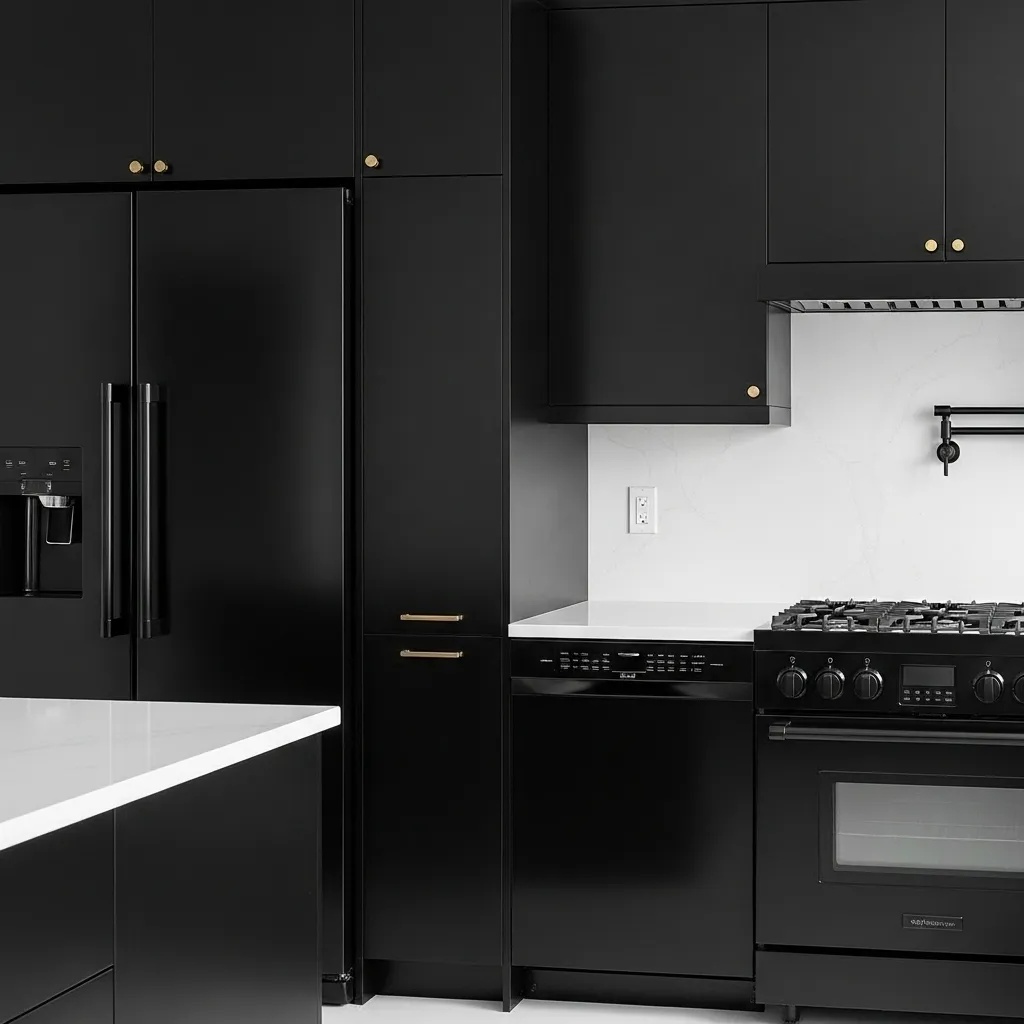
Matte black appliances have become increasingly available and they’re a game-changer for creating cohesive black kitchens. When your appliances match your cabinetry finish, they essentially disappear into the design rather than standing out as separate elements, creating this beautiful, seamless look that feels incredibly custom and sophisticated. It’s the opposite of stainless steel’s shiny prominence—these appliances quietly blend in.
The integrated approach works particularly well in modern and contemporary kitchens where clean lines and minimalism are priorities. You eliminate visual clutter and create a uniform surface that’s both dramatic and calming. The key is making sure your appliances and cabinets are truly matching in finish—both matte, similar black tones—so the integration reads as intentional rather than just similar. Panel-ready appliances where you can attach matching cabinet fronts take this even further for the ultimate seamless look. When everything blends together in black, the lighter counters and any open shelving or glass-front cabinets become focal points, creating a balanced composition where every element has its place.
11. Black Metal Frame Glass Cabinets
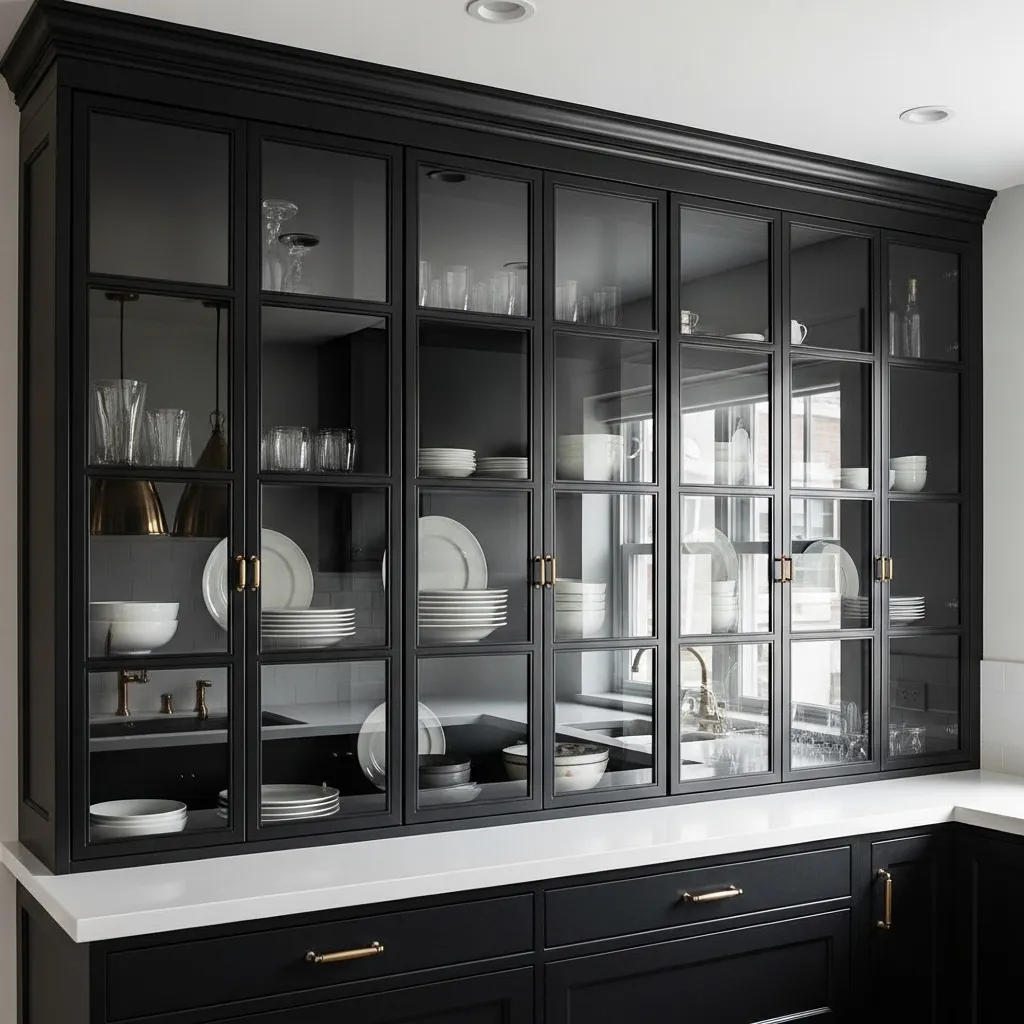
Black metal-framed glass cabinets give you the graphic impact and architectural interest of black cabinetry while being significantly lighter and more transparent than solid black uppers. They’re inspired by industrial steel windows and factory aesthetics, bringing that element of authenticity and character that feels both vintage and contemporary. The frames create these beautiful grid lines that add structure and pattern to your kitchen.
What’s practical about glass-front cabinets is that they force you to keep what’s inside organized and beautiful—which can be a feature rather than a bug if you enjoy curating your dishware and glassware. Display your prettiest pieces, use matching containers for pantry items, or back the cabinets with wallpaper or paint for additional interest. The transparency prevents the upper cabinets from visually weighing down the space the way solid black uppers might, while the black frames still provide that dramatic element and visual connection to black lower cabinets or other black elements. It’s a sophisticated middle ground that provides the best of both approaches.
12. Black Concrete or Cement Countertops
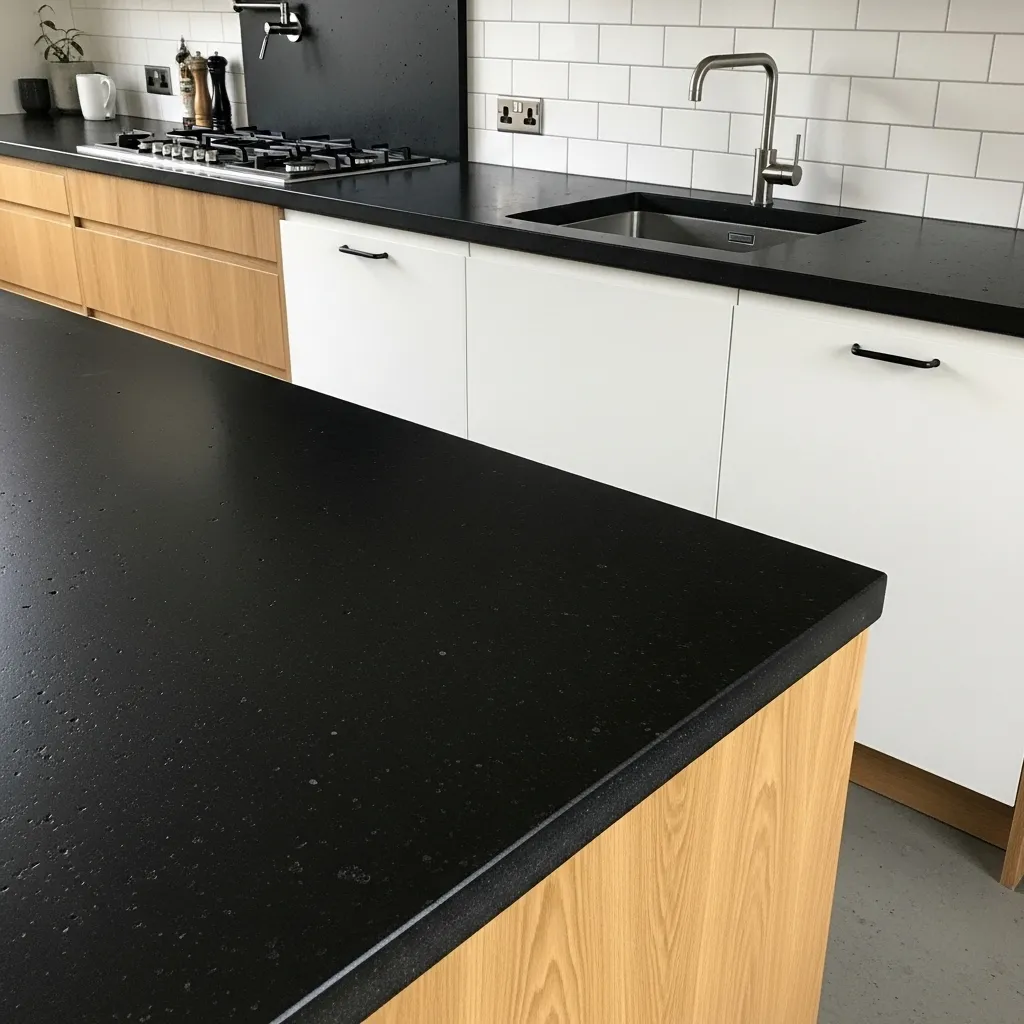
Black concrete countertops bring this incredible raw, industrial quality to modern kitchens while providing a completely unique take on incorporating black. Unlike stone or quartz that’s mined or manufactured, concrete is poured and finished by hand, creating surfaces with subtle variations, organic imperfections, and genuine character. The matte finish and slightly rough texture (even when sealed smooth) give it this authentic, artisan quality.
What’s appealing about concrete is its customizability—it can be tinted to exactly the shade of black you want, finished to the level of smoothness you prefer, and even embedded with aggregate, glass, or other materials for additional interest. It develops a patina over time, aging and evolving with your kitchen in a way that synthetic materials don’t. When sealed properly, it’s durable and heat-resistant, though it does require maintenance and resealing periodically. Paired with wood cabinetry, it creates this beautiful marriage of natural materials. With white cabinets, it provides dramatic contrast with organic warmth. It’s black with texture and soul.
13. Black Grout with White or Light Tile
Using black grout with white or light-colored tile is such a smart way to incorporate black in a subtle but impactful way. The grout lines create this beautiful grid pattern that adds structure, definition, and modern graphic quality to simple tile. It’s a way to make basic subway tile or standard field tile feel current and intentional rather than builder-basic. The black lines draw the eye and create pattern where there otherwise wouldn’t be any.
This approach is also incredibly practical—black grout doesn’t show dirt, mildew, or staining the way white grout does, which is hugely valuable in kitchens where you’re dealing with cooking splatter and moisture. The maintenance benefits alone make it worth considering. The graphic quality works beautifully in modern and contemporary kitchens, and it’s a relatively subtle way to test the waters with black if you’re not ready to commit to black cabinets or counters. The contrast is bold but not overwhelming since it’s created through lines rather than large surfaces. You get visual interest and modern sophistication without darkness.
14. Black Floating Shelves
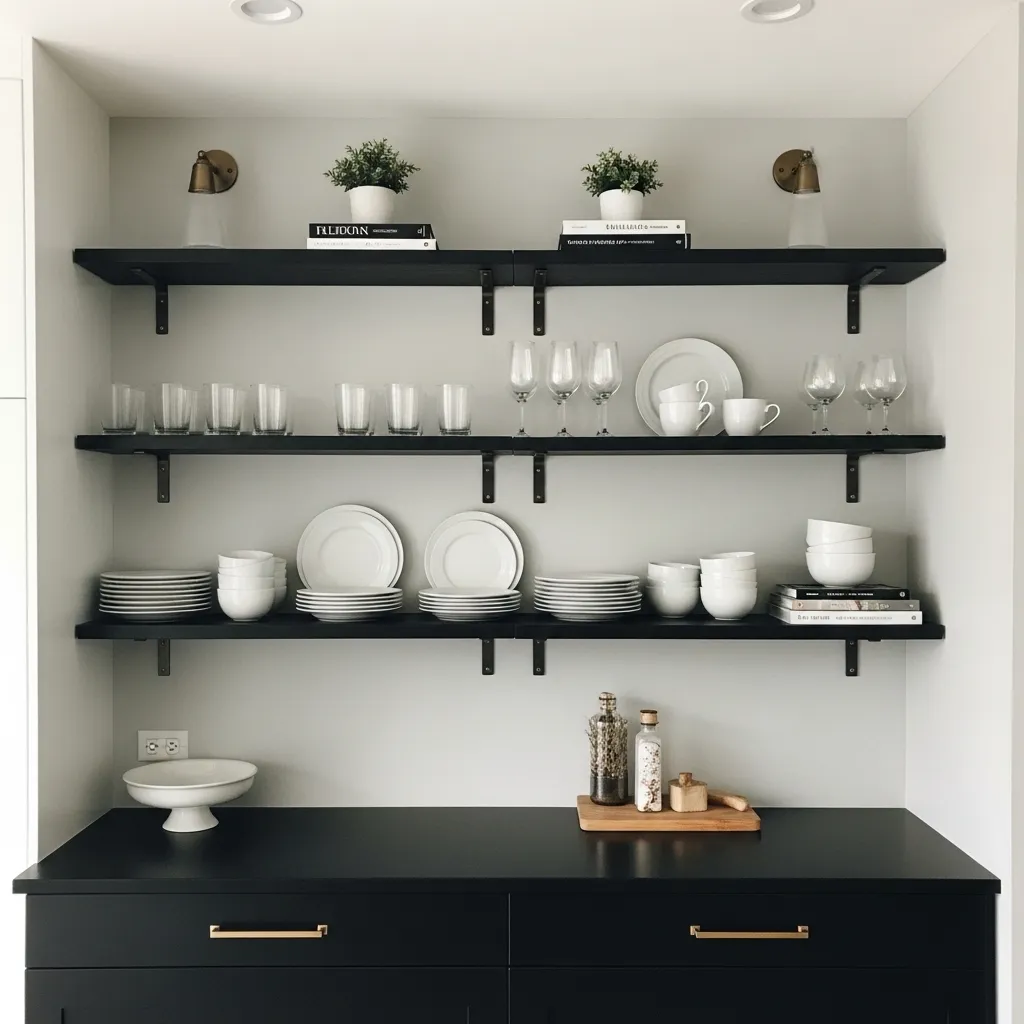
Black floating shelves offer a completely different approach to incorporating black in your kitchen—instead of solid cabinetry, you’re using open shelving that provides storage and display while maintaining airiness and openness. The black color creates graphic lines and structure without the visual weight of enclosed cabinets. It’s particularly effective in smaller kitchens where solid upper cabinets might feel too heavy or closed-in.
The key to making open shelving work is commitment to keeping it organized and attractive—what’s on those shelves is always visible, so it needs to look intentional. Use the black shelves to display your prettiest dishes, glassware, and serving pieces. Incorporate some plants, cookbooks, or decorative objects for variety. The contrast between black shelves and white or light walls creates beautiful definition, and when you display lighter-colored items on the black shelves, they pop beautifully. This approach gives you the modern edge of black while maintaining the practical openness of no upper cabinets, and it works beautifully in styles from industrial to Scandinavian modern.
15. Black Range Hood as Statement
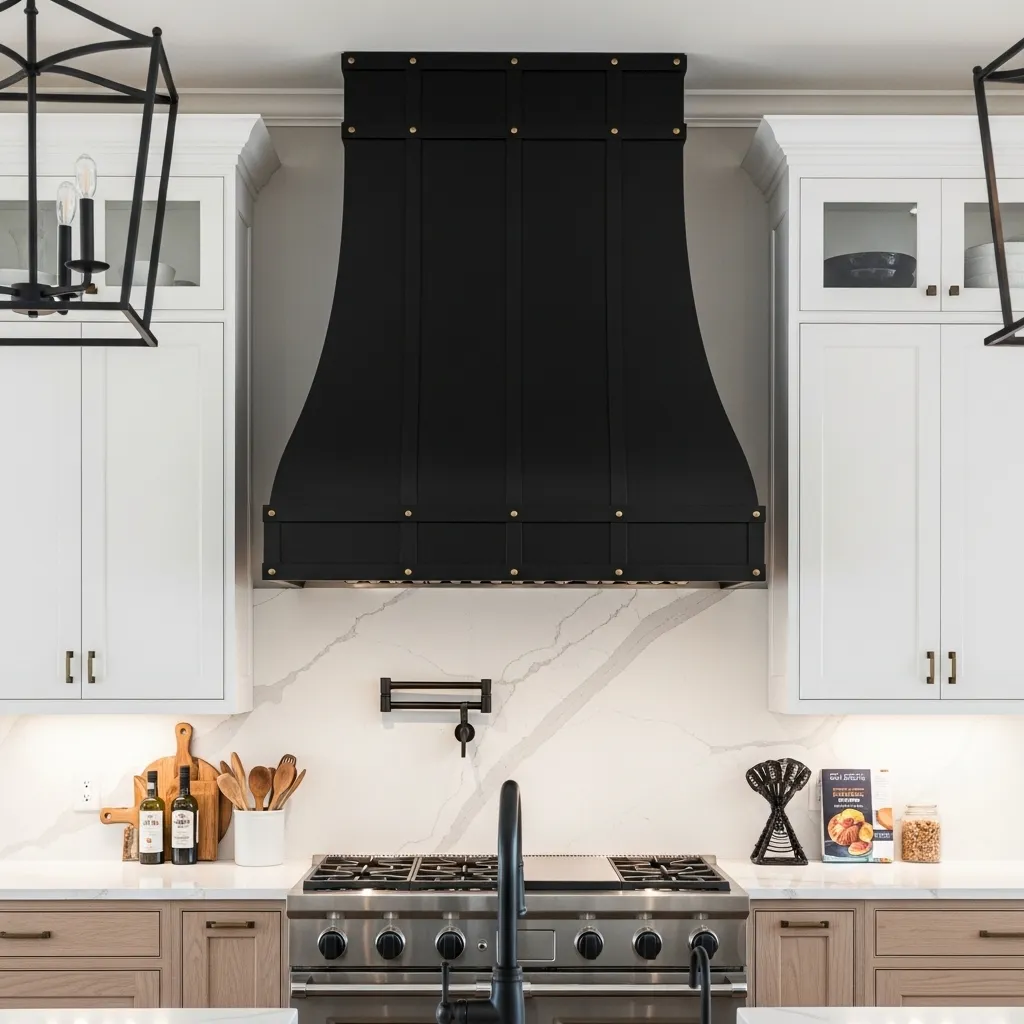
A black range hood—especially a large, custom one with architectural presence—creates such a powerful focal point in a kitchen without requiring you to commit to black throughout the entire space. The hood becomes a sculptural element, almost like a piece of functional art, that anchors the cooking zone and draws the eye immediately. It’s dramatic and bold while being confined to one specific element.
Custom metal hoods can be shaped in interesting ways—curved, geometric, modern, traditional—and the black finish gives them serious presence and gravitas. Wood hoods painted matte black create a different aesthetic, more integrated and architectural, like a black beam or architectural element that happens to be the ventilation. When everything around the hood is lighter—white cabinets, light backsplash, bright counters—the black hood absolutely pops and becomes the star of the kitchen. You can enhance it with details like brass straps, copper rivets, or interesting shapes that add character. It’s a strategic use of black that delivers maximum impact with focused application.
16. Black Window Frames and Doors
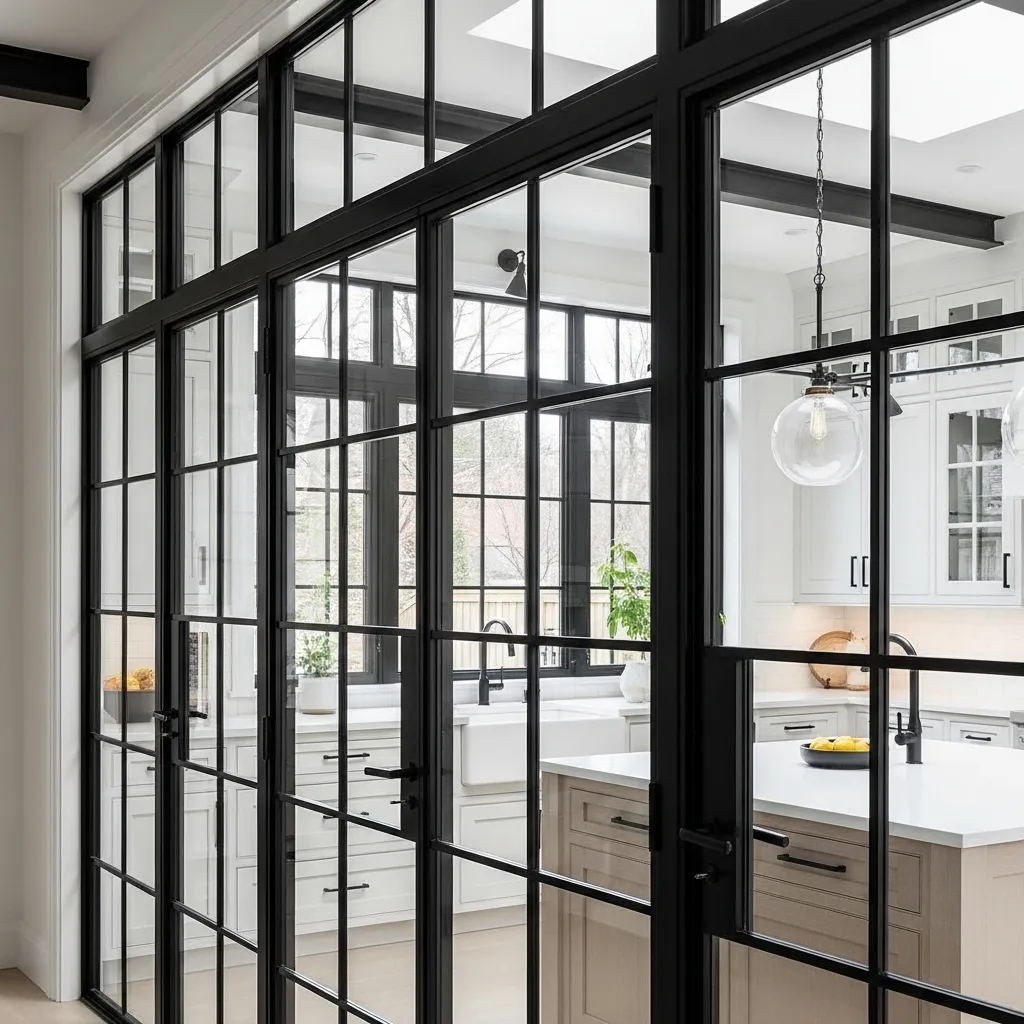
Black window frames and door frames create such incredible architectural impact and graphic interest without requiring dark cabinetry or surfaces. The frames create these strong, defined lines that add structure and modern industrial character to your kitchen, channeling that steel-window factory aesthetic that’s so popular right now. They’re particularly effective in kitchens with large windows or glass doors where the frames become significant visual elements.
What’s brilliant about black frames is that they coordinate beautifully with other black elements you might incorporate—hardware, fixtures, appliances—creating a cohesive black accent thread throughout the kitchen without overwhelming it. The frames also emphasize and celebrate the windows themselves, highlighting the natural light and views rather than trying to minimize the window’s visual presence with white frames that blend in. This works especially well in modern farmhouse, industrial, and contemporary kitchens where that architectural definition enhances the overall aesthetic. The black frames make even standard windows feel more custom and intentional.
17. Black Ceiling Treatment
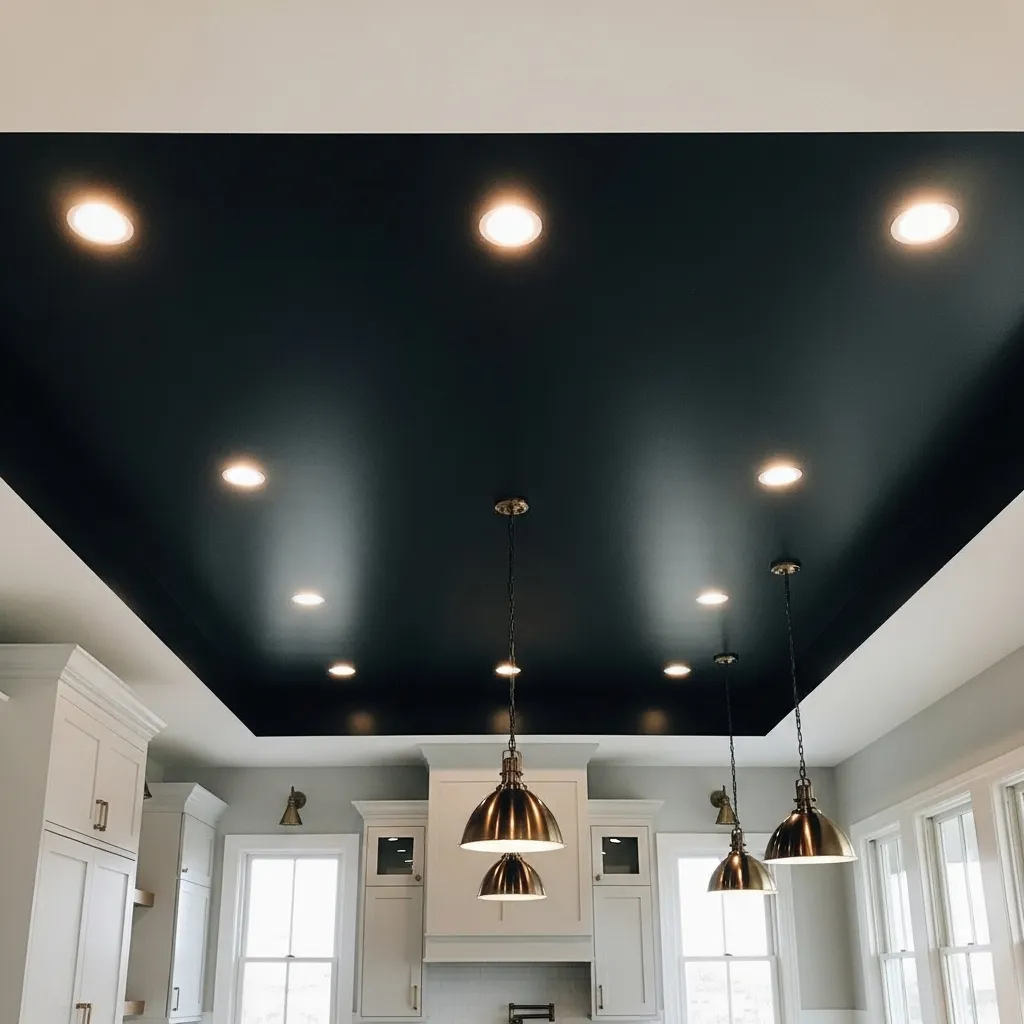
Painting your kitchen ceiling black is an unexpected and sophisticated design move that creates drama and coziness without affecting your actual work surfaces or storage. The black overhead makes the ceiling visually recede, which can actually make rooms with lower ceilings feel more intimate and special rather than cramped. It’s counterintuitive but effective—instead of trying to make the ceiling disappear with white, you’re making it a dramatic feature.
The contrast between a black ceiling and white or light walls and cabinets is striking and modern. Lighting becomes more prominent and beautiful against the black—recessed lights create pools of light, pendant fixtures really stand out, and under-cabinet lighting becomes more important and effective. This approach works particularly well in open-concept kitchens where you want to define the kitchen zone from adjacent spaces, or in kitchens with interesting ceiling details like beams or coffers that you want to emphasize. It’s bold and sophisticated, creating atmosphere and personality through an often-overlooked surface. Just ensure you have adequate lighting so the space remains functional and welcoming.
18. Blackened Steel or Iron Elements
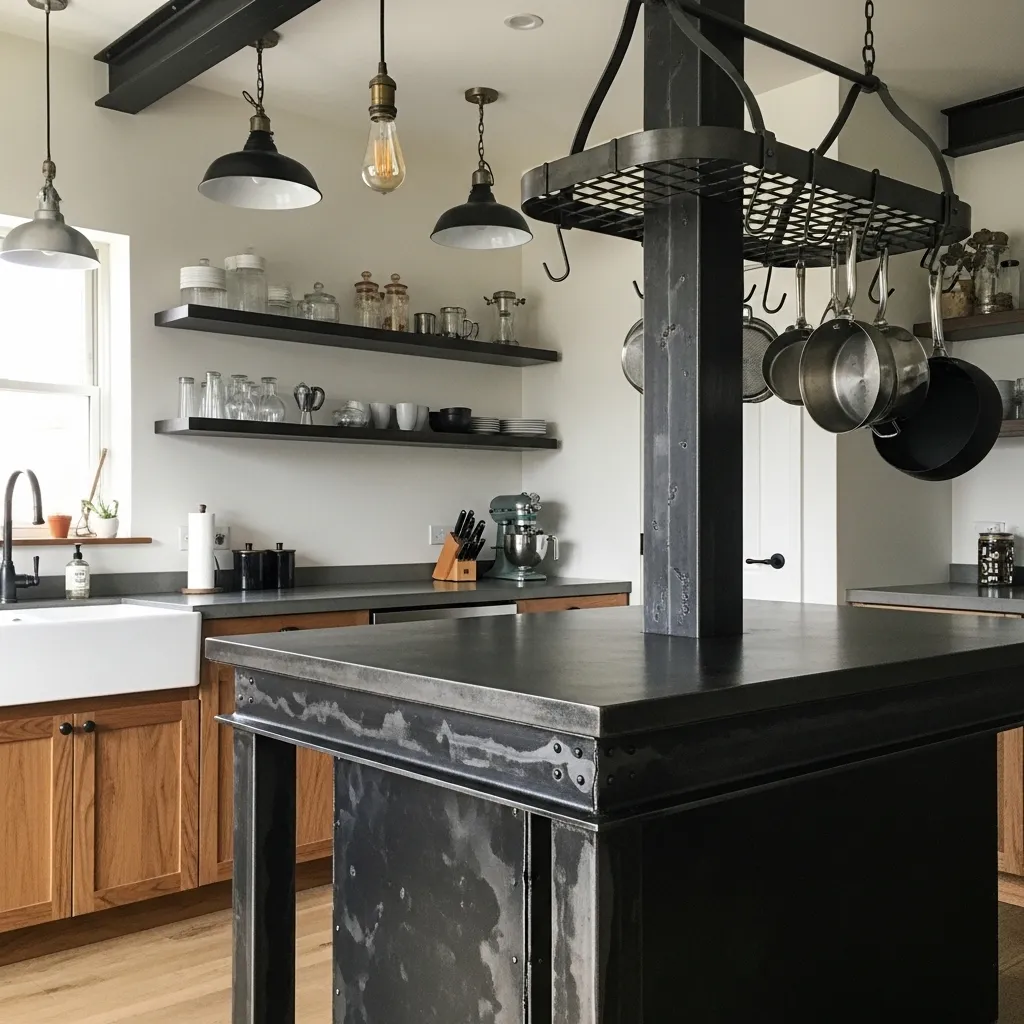
Blackened steel and iron bring a completely different quality of black to kitchens—it’s not paint or finish, it’s the actual color of the metal that’s been treated or aged. The slightly rough, matte surface has organic variations and character that painted black can’t replicate. It’s authentically industrial and artisan, connecting to traditional metalworking and craftsmanship. These elements bring both visual weight and genuine historical reference.
Incorporating blackened steel through an island base, floating shelves, pot racks, or architectural beams adds drama while celebrating materials and craft. The dark metal pairs beautifully with natural wood, concrete, brick, and stone—all the materials that make up industrial and rustic-modern kitchens. Unlike painted black elements that can feel surface-level, blackened metal has depth and authenticity. It ages beautifully, developing patina over time rather than showing wear. This approach works especially well if you’re drawn to industrial, farmhouse-industrial, or rustic-modern aesthetics where material authenticity matters. The black comes from the material itself, which feels more honest and grounded.
19. Black and Natural Wood Contrast
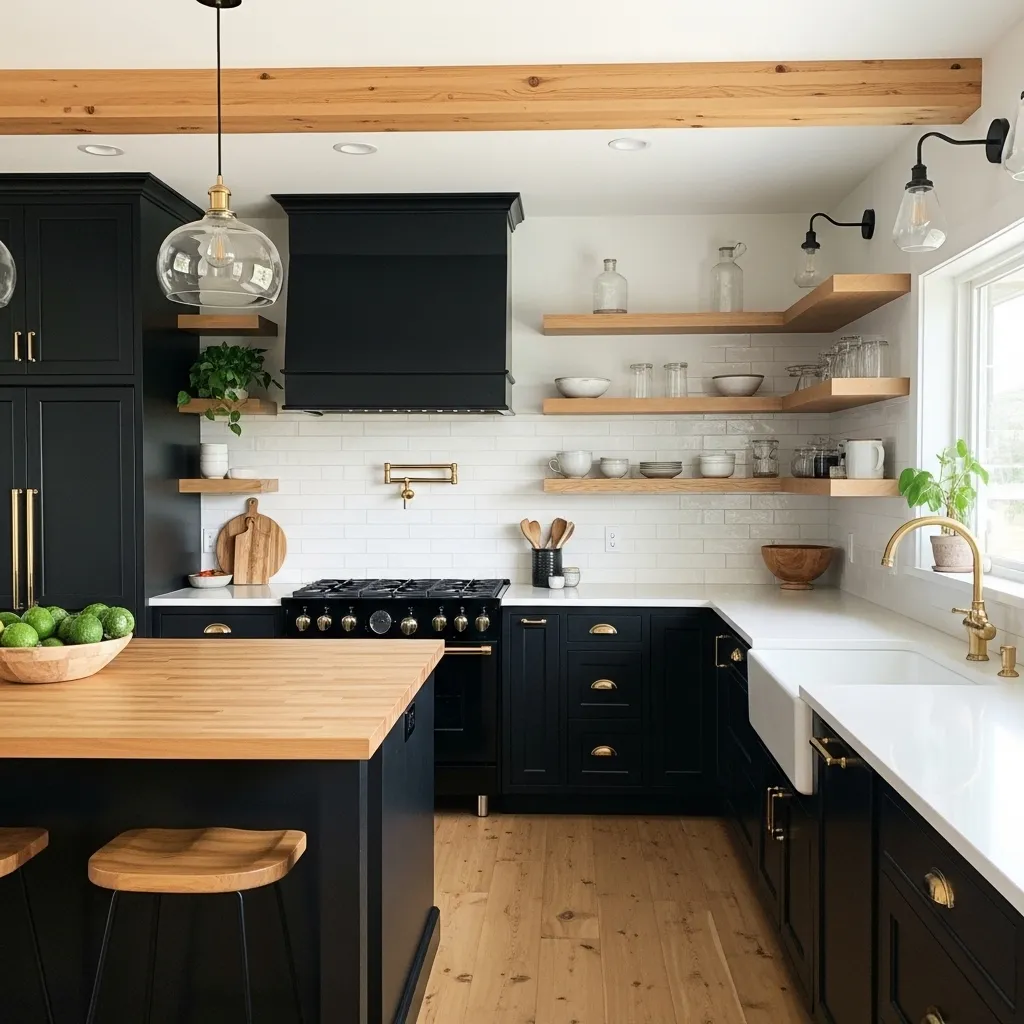
The combination of black cabinetry with natural wood elements creates such a beautiful balance—the black provides drama, edge, and sophistication while the wood brings organic warmth, texture, and a connection to nature. Together, they create a kitchen that’s both bold and welcoming, modern and timeless. The contrast is powerful but not harsh because wood’s natural quality softens the graphic nature of black.
This pairing works across various styles depending on your wood choice and how you incorporate it. Light oak or maple creates a Scandinavian-modern vibe, rich walnut brings traditional warmth, reclaimed wood adds rustic character, and butcher block brings practical warmth to work surfaces. The wood can appear in countertops, flooring, open shelving, ceiling beams, or even just cutting boards and accessories. The key is enough wood presence to genuinely warm the space and provide balance to the black. Add white or light elements for brightness and you have a sophisticated, layered kitchen with depth and character that avoids both the coldness of all-black and the flatness of all-wood.
20. Black Accent Wall with Open Shelving
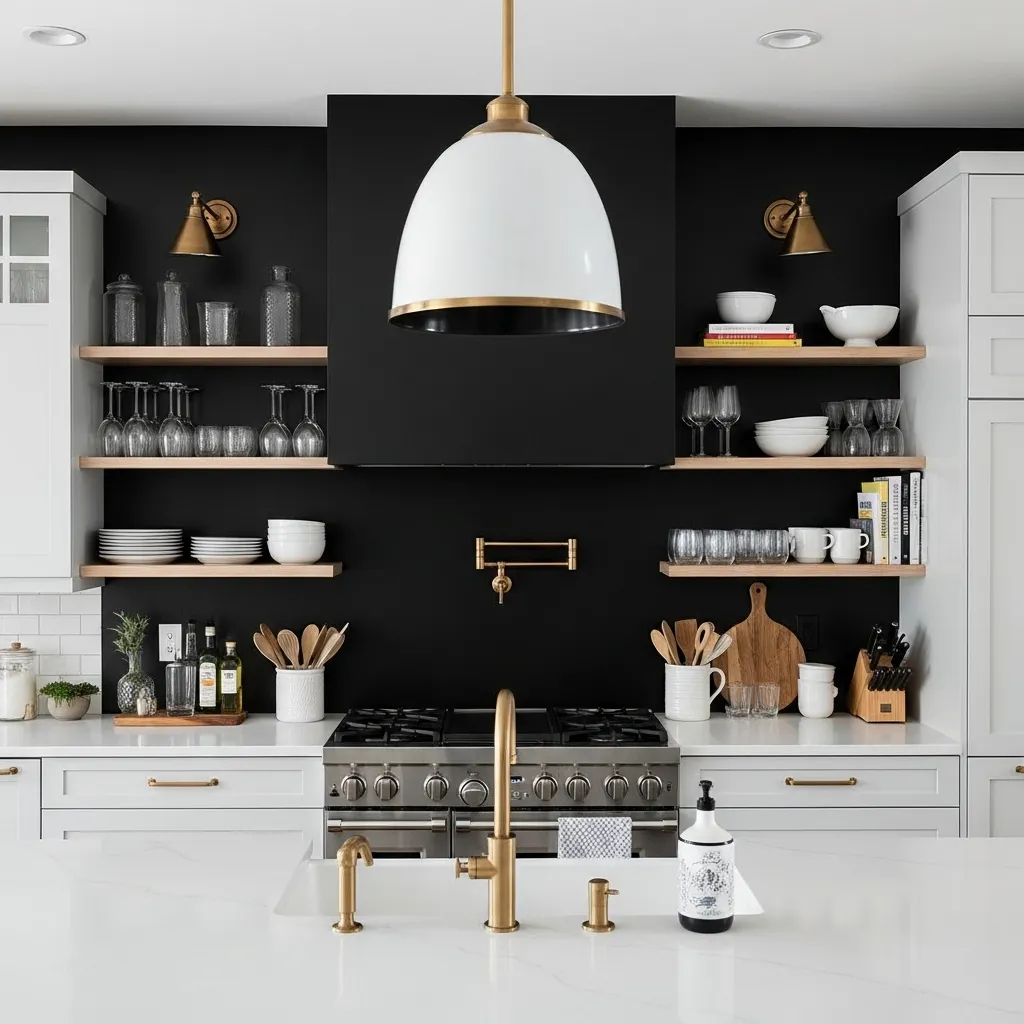
Using black on just one accent wall with open shelving is a strategic way to incorporate dramatic black without committing to it throughout your entire kitchen. The black wall creates instant depth and makes whatever is displayed on it really pop—white dishes look crisp and graphic, colorful pottery stands out beautifully, and even everyday items become more visually interesting against the dark background. It’s like creating a built-in backdrop for your kitchen styling.
This approach is particularly effective behind your range or sink where you want to create a focal point and define that functional zone. The black provides drama and grounds the space while the open shelving keeps it from feeling too heavy or closed-in. You get to curate what’s displayed against the black, creating an ever-changing composition that reflects your style and the seasons. When the rest of your kitchen is light and bright, that one black wall becomes a powerful design moment without overwhelming the space or making it feel dark. It’s black with restraint and intention, which is often the most successful approach.