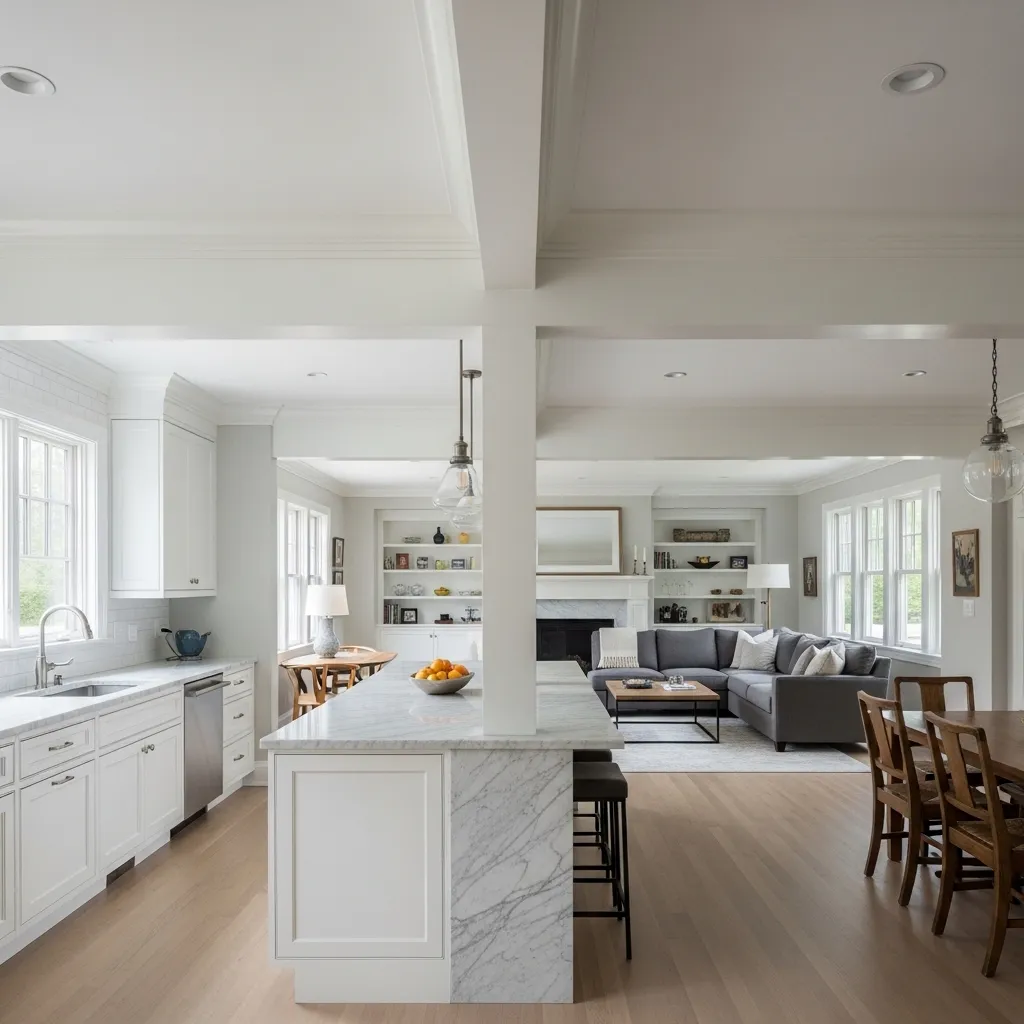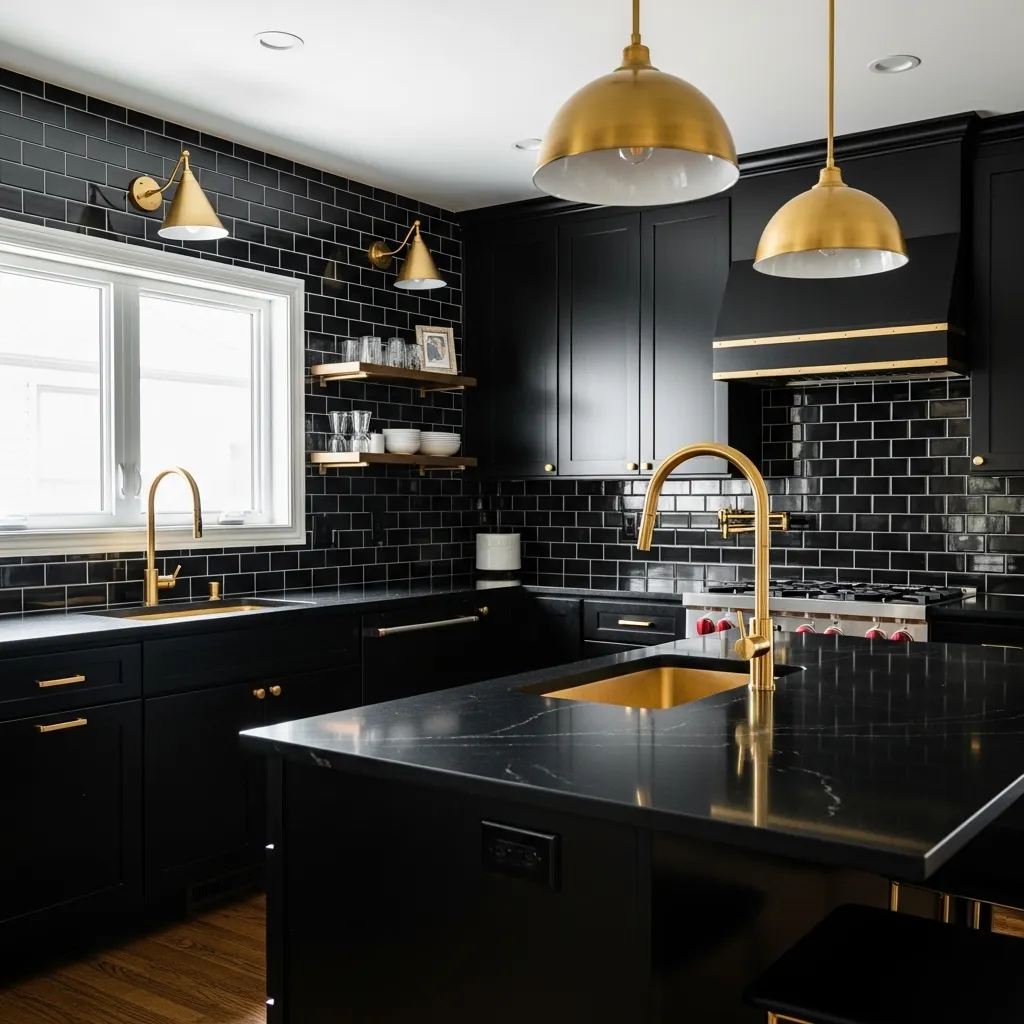
15 Kitchen Floor Ideas for 2026
Kitchen floors have come such a long way from the basic vinyl or builder-grade tile that used to be the standard, and in 2025, the options are honestly exciting enough that your flooring can be a genuine design statement rather than just a practical afterthought. We’re seeing a beautiful shift toward materials that balance durability with serious style—floors that can handle spills, dropped pans, and high traffic while also looking gorgeous enough to anchor your entire kitchen design. Whether you’re drawn to natural materials with organic variation, bold patterns that add personality, or sleek modern finishes that feel contemporary and clean, there’s never been a better time to think creatively about what goes beneath your feet in the kitchen.
What I love about the current flooring trends is how they’re moving away from that matchy-matchy perfection and embracing character, texture, and authenticity. We’re seeing more natural stone with all its beautiful imperfections, reclaimed and aged wood looks, handmade cement tiles with slight variations that prove they’re artisan-crafted, and large-format tiles that minimize grout lines for a more seamless, sophisticated appearance. There’s also this wonderful focus on sustainability and longevity—people are investing in quality materials that’ll last decades rather than chasing the cheapest option that’ll need replacing in five years.
The practical side of kitchen flooring hasn’t been forgotten either. Today’s materials are smarter than ever, with luxury vinyl that’s completely waterproof and looks indistinguishable from real hardwood or stone, porcelain tiles that mimic concrete or terrazzo with incredible realism, and sealed surfaces that resist staining and make cleanup easier than ever. The sweet spot in 2025 is finding that perfect intersection of beauty, durability, and maintainability—flooring that works as hard as you do in the kitchen while looking effortlessly beautiful. Let’s dive into these ideas and find the perfect foundation for your kitchen.
1. Wide-Plank White Oak Hardwood
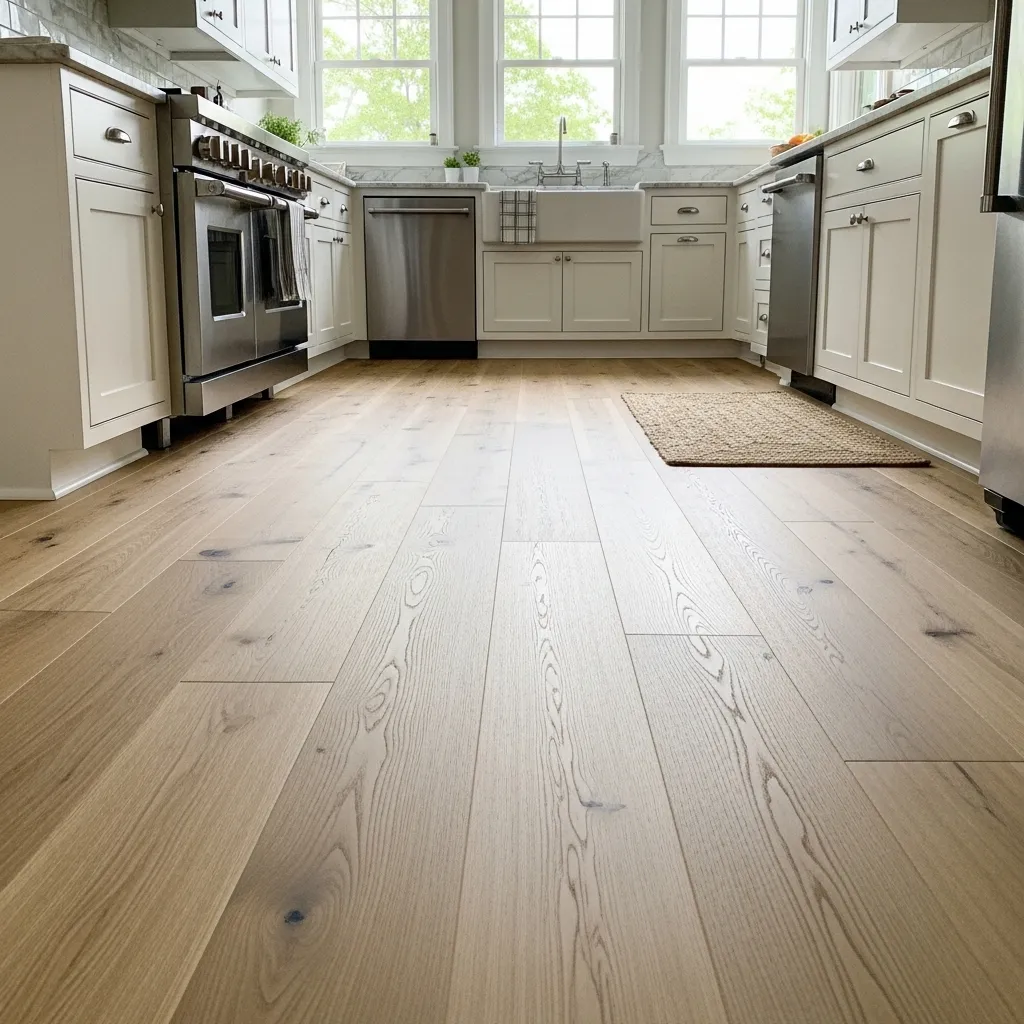
Wide-plank white oak is absolutely dominating kitchen floors in 2025, and it’s easy to see why. The wider planks—we’re talking seven inches and up—create this beautiful, less-busy look that makes your kitchen feel more spacious and sophisticated compared to the narrow two-inch strips that were popular years ago. White oak specifically has this gorgeous grain pattern and warm undertone that works with literally any style from modern farmhouse to contemporary minimalist.
The natural finish is key here rather than anything too glossy or overly dark-stained. That matte or satin finish shows off the wood’s authentic beauty while being more forgiving of scratches and wear than high-gloss finishes. Yes, hardwood in kitchens requires some maintenance and you need to be careful about water spills, but modern finishing techniques make it much more durable than it used to be. The warmth and character it brings is absolutely worth it, and it ages beautifully, developing a patina that just adds to its charm over time.
2. Large-Format Porcelain Tiles in Concrete Look
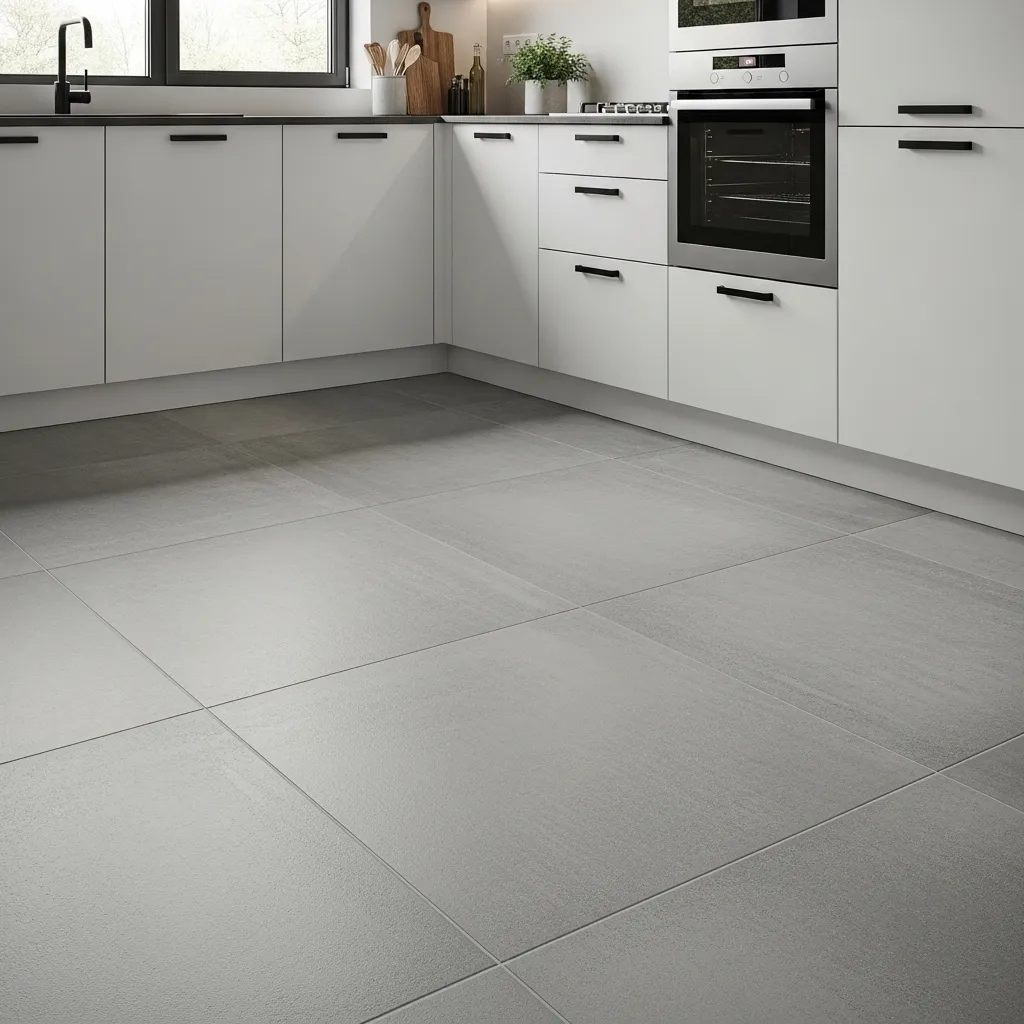
Large-format tiles that mimic concrete are huge in 2025, bringing that industrial-chic aesthetic without the downsides of actual concrete floors. These porcelain tiles have gotten so good at replicating the look of poured concrete—complete with subtle color variations, realistic texture, and that cool, sophisticated vibe—that most people can’t tell the difference. The large format means fewer grout lines, which creates a more seamless, modern look and makes cleaning significantly easier.
What makes this trend so appealing is the perfect balance of aesthetics and practicality. You get that high-end, contemporary concrete look but with a surface that’s completely waterproof, stain-resistant, easy to clean, and much warmer underfoot than actual concrete. The neutral gray tones work beautifully as a backdrop for any cabinet color or style, and the subtle variations prevent it from looking flat or boring. This is particularly perfect for modern and contemporary kitchens where you want that clean, minimalist foundation that lets your cabinetry and design choices shine.
3. Checkerboard Pattern in Black and White
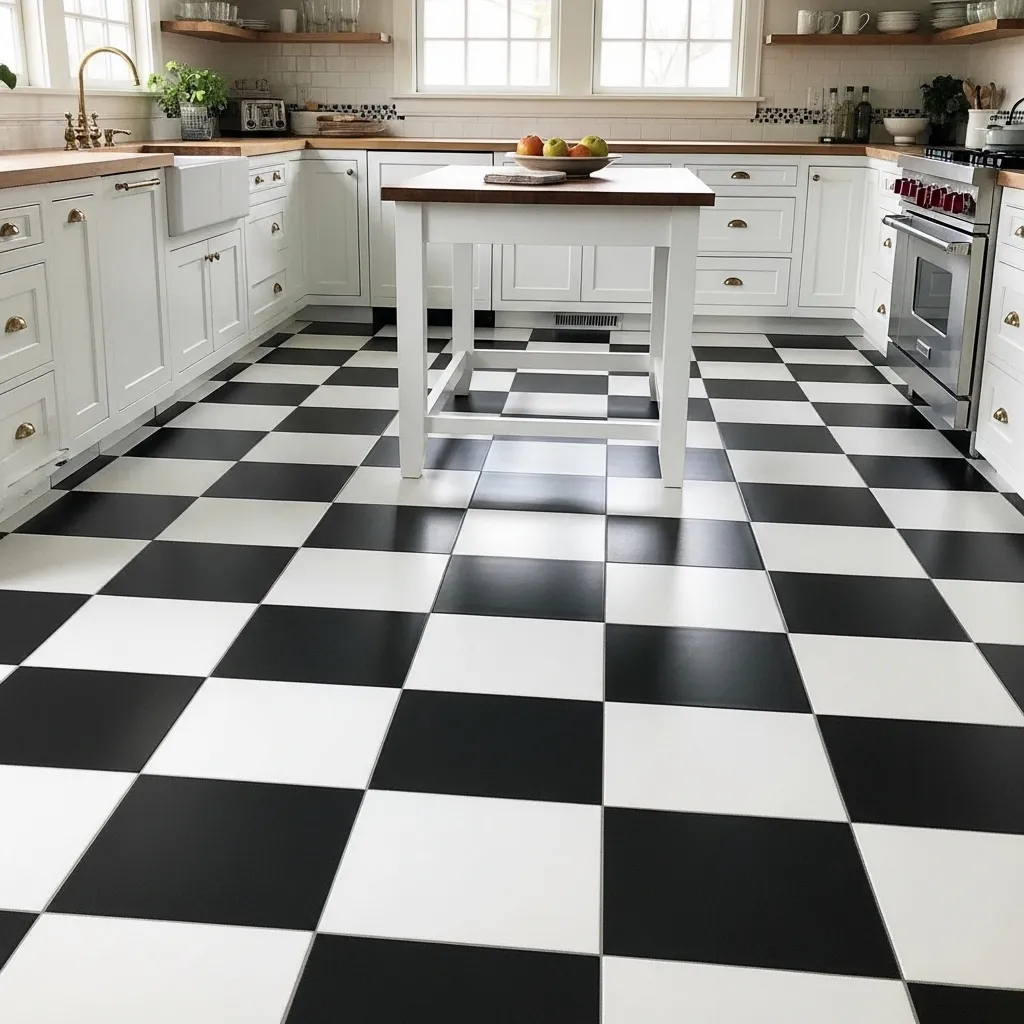
Checkerboard floors are making a serious comeback in 2025, and I’m completely here for it. There’s something timelessly chic about that high-contrast black and white pattern—it’s been used in everything from vintage diners to elegant European kitchens, and it still feels fresh and intentional today. The graphic pattern adds instant personality and visual interest to your kitchen without needing to do anything dramatic with your walls or cabinets.
What I love about this look is how it works across different kitchen styles. In a farmhouse kitchen with white cabinets and vintage-inspired fixtures, it feels charming and nostalgic. In a more modern kitchen with sleek cabinets and contemporary hardware, the same pattern reads as bold and graphic. The key is keeping your tiles matte or honed rather than glossy—that softer finish feels more current and sophisticated than the shiny ceramic tiles of decades past. Just be prepared for it to be a focal point that demands attention, which means keeping your upper cabinetry and counters relatively simple so the floor can be the star.
4. Luxury Vinyl Plank in Weathered Gray Oak
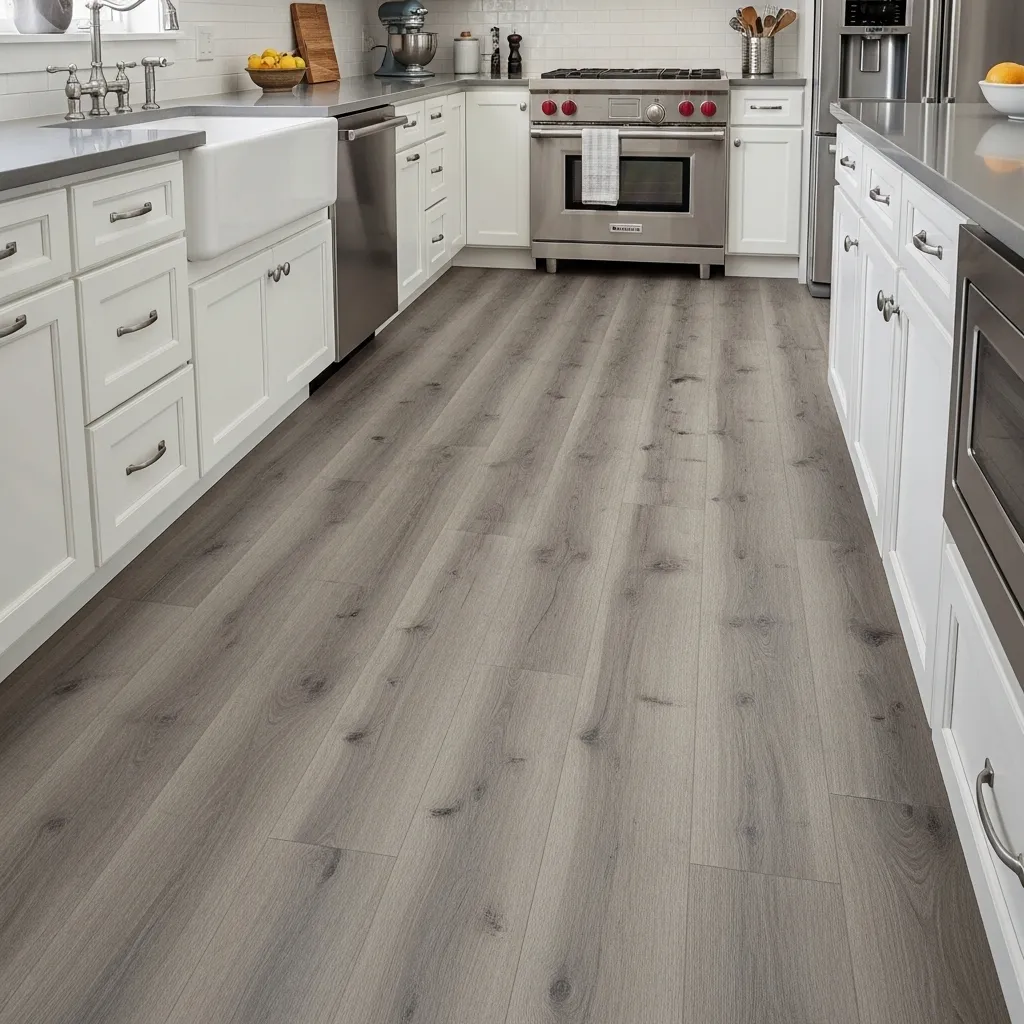
Luxury vinyl plank has absolutely exploded in popularity, and the 2025 versions are so incredibly realistic that even flooring professionals have trouble distinguishing them from real hardwood at first glance. The weathered gray oak look is particularly on-trend right now—that soft, aged appearance with gray undertones feels modern and sophisticated while still bringing warmth to your kitchen. The texture and embossing mimic real wood grain so convincingly that you get all the beauty without any of the water-damage anxiety.
The practical benefits are honestly game-changing for kitchens. LVP is completely waterproof, which means spills, splashes, and even standing water won’t damage it. It’s softer and warmer underfoot than tile, quieter than hardwood, and incredibly durable against scratches and dents. Installation is often DIY-friendly with click-lock systems, and it costs significantly less than hardwood while looking just as good. For busy families or anyone who wants a beautiful kitchen floor without constant maintenance stress, this is the sweet spot of form meeting function.
5. Herringbone Pattern Natural Wood
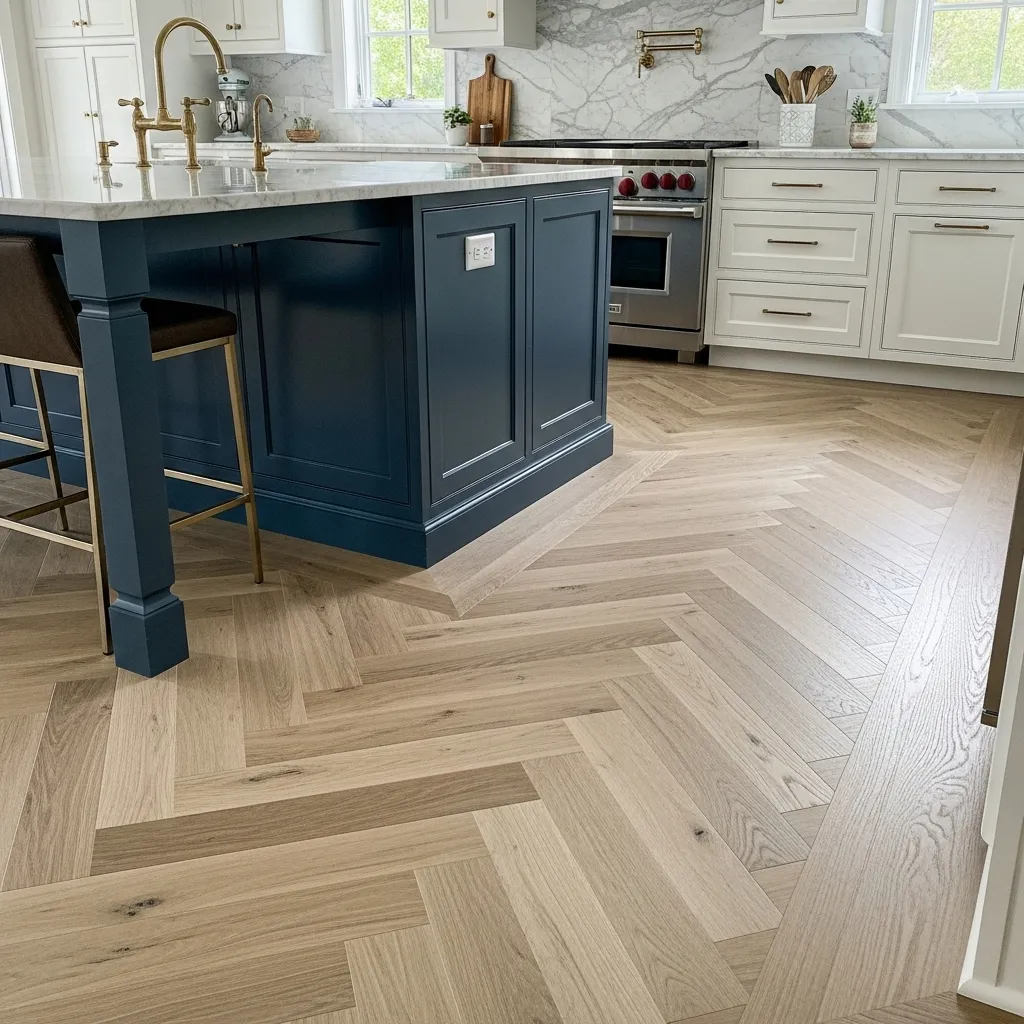
Herringbone wood floors bring such an elevated, sophisticated feeling to kitchens in 2025, taking standard hardwood flooring up several notches through the intricate pattern. That classic V-shaped weaving pattern has been used in European homes for centuries, and it still feels special and luxurious today. What’s beautiful about herringbone is how it adds visual interest and movement without being loud or overwhelming—it’s pattern with refinement.
The installation does require more labor and material than straight planks, which makes it pricier, but the impact is absolutely worth it for people who want something truly special underfoot. The pattern naturally draws the eye through the space and can even make your kitchen feel larger by creating directional flow. In 2025, we’re seeing herringbone primarily in natural wood tones with matte finishes rather than the dark stains or glossy finishes of previous eras. This keeps the look feeling fresh and current while celebrating the timeless appeal of the pattern itself.
6. Terrazzo-Look Porcelain Tiles
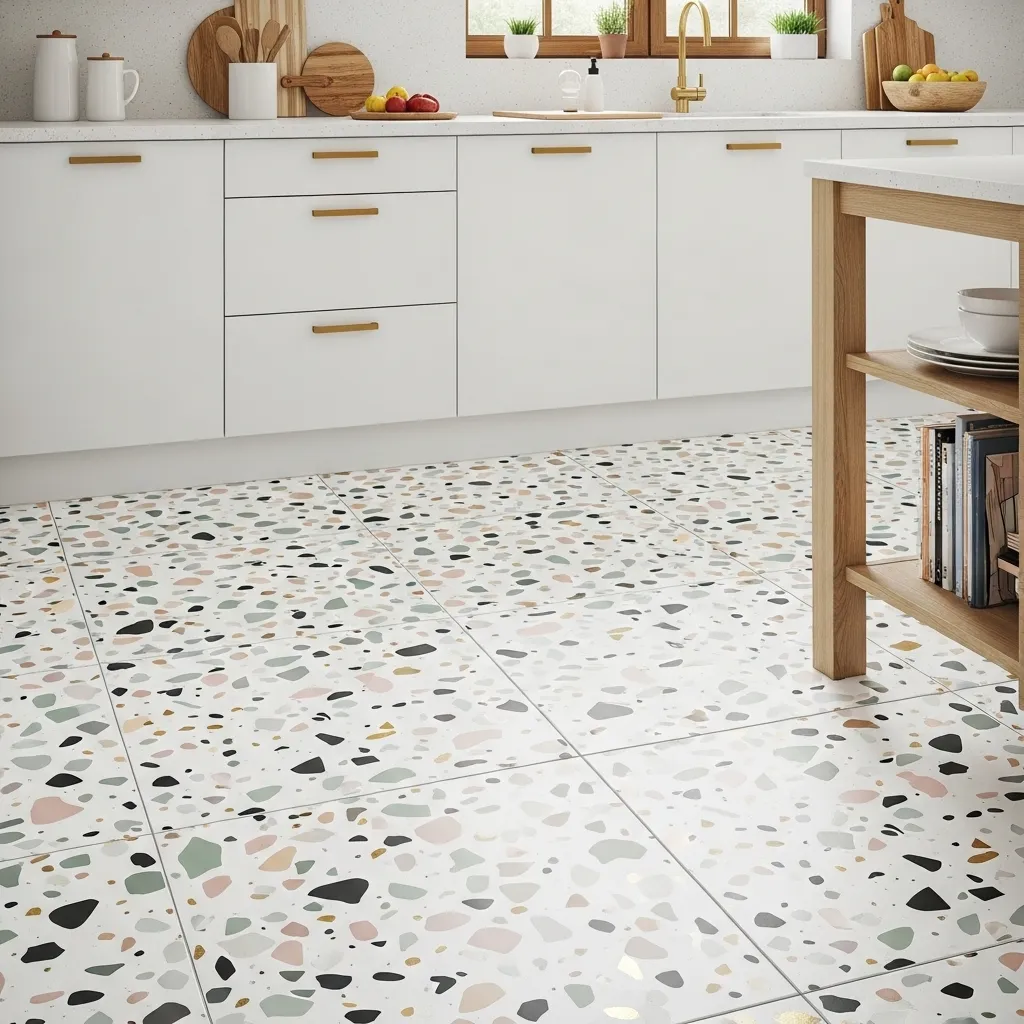
Terrazzo is having a major moment in 2025, but rather than the heavy, traditional terrazzo that requires professional installation, we’re seeing gorgeous porcelain tiles that capture the look with way more versatility and affordability. The modern versions feature softer color palettes—think pastels, neutrals, and subtle metallics—rather than the primary colors of vintage terrazzo, making them feel contemporary and fresh instead of retro.
What makes terrazzo-look floors so appealing is that playful yet sophisticated vibe they bring. The scattered colorful chips add personality and visual interest, but because they’re distributed randomly across a neutral base, the overall effect is surprisingly versatile and not overwhelming. It’s a way to incorporate pattern and color on your floor without committing to bold geometric patterns or solid dark colors. Plus, the busy nature of terrazzo is incredibly forgiving of crumbs, dirt, and wear—everything just blends in rather than showing every speck. It’s beautiful and practical, which is exactly what kitchen floors need to be.
7. Matte Black Hexagon Tiles
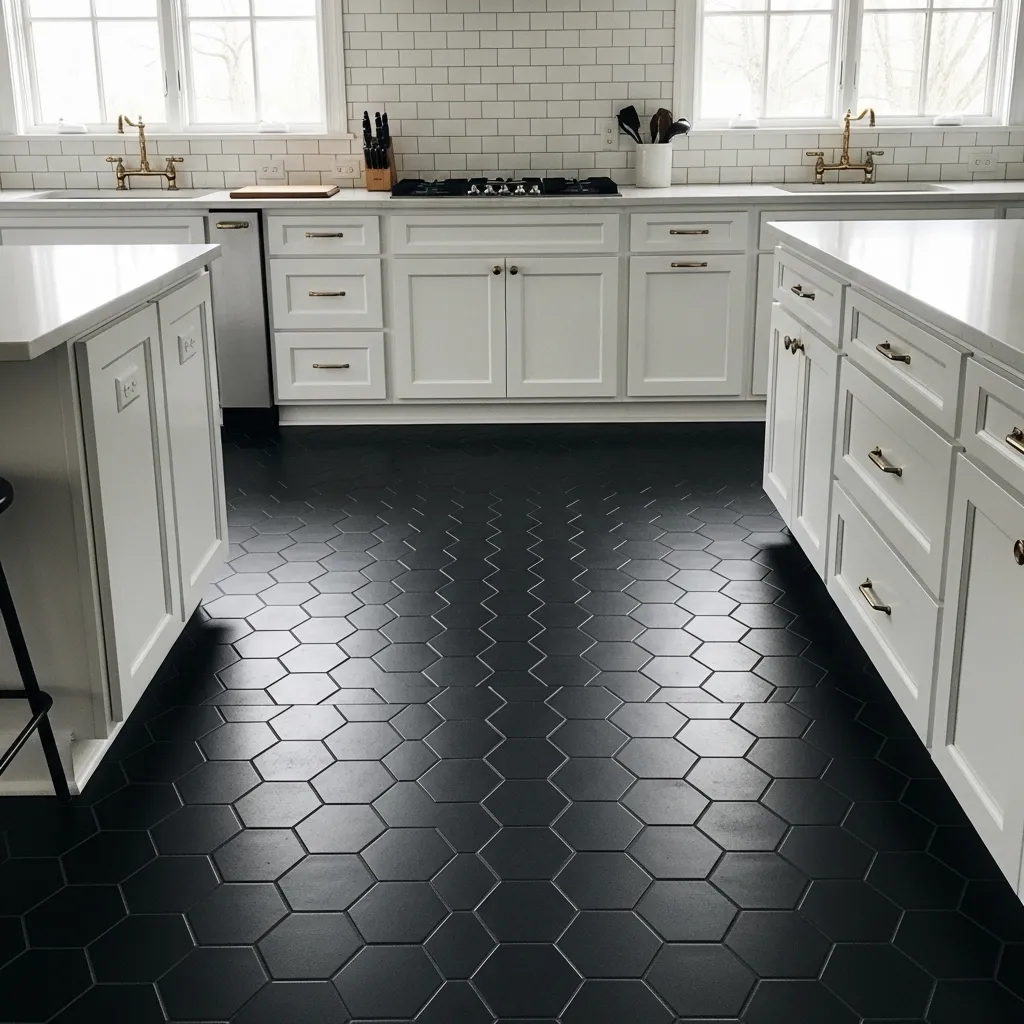
Matte black floors are bold and definitely not for everyone, but in 2025 they’re being embraced by people who want to make a serious design statement. The hexagon shape adds geometric interest that prevents a solid black floor from feeling too heavy or flat, and the matte finish is crucial—it’s sophisticated and modern rather than shiny and harsh. This works particularly well in kitchens with tons of natural light and predominantly white or light-colored cabinetry where you need that grounding contrast.
The drama of a black floor creates this incredible foundation that makes everything else in your kitchen pop. Your white cabinets look crisper, your brass fixtures gleam more beautifully, your colorful accessories stand out more vividly. It’s also surprisingly practical in terms of hiding dirt and wear—black tiles with dark grout are incredibly forgiving. The main consideration is making sure you have enough light in your kitchen so the dark floor enhances rather than overwhelms. When done right, it’s sophisticated, modern, and absolutely unforgettable.
8. Natural Stone in Mixed Sizes
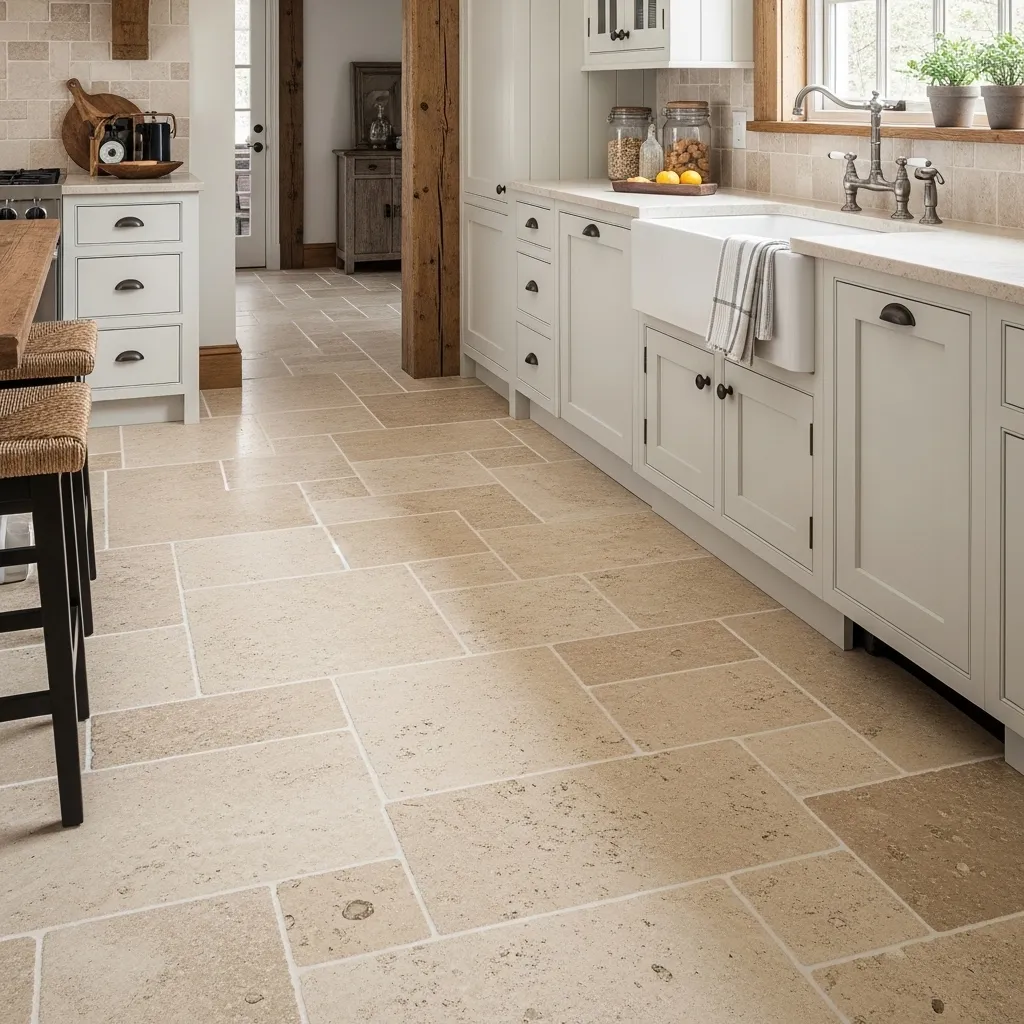
Natural stone in mixed sizes brings such authentic, old-world character to kitchens in 2025, especially for people drawn to European-inspired or rustic-elegant styles. Limestone, travertine, or even slate installed in varying tile sizes creates this irregular, organic pattern that feels like it’s been there for centuries. Each stone has its own unique coloring, veining, and texture, so no two floors are exactly alike—you’re getting something truly one-of-a-kind.
The mixed-size installation pattern is what really makes this special. Instead of uniform tiles creating a grid, you get this artful arrangement that feels intentional yet organic, like the floors you’d find in a centuries-old French farmhouse or Italian villa. The natural material does require sealing and a bit more maintenance than porcelain, but many people feel that the authentic beauty and character are worth the extra care. The stone also stays cool underfoot, which is lovely in warmer climates, and it ages beautifully, developing a patina that just adds to its charm.
9. Chevron Pattern Luxury Vinyl
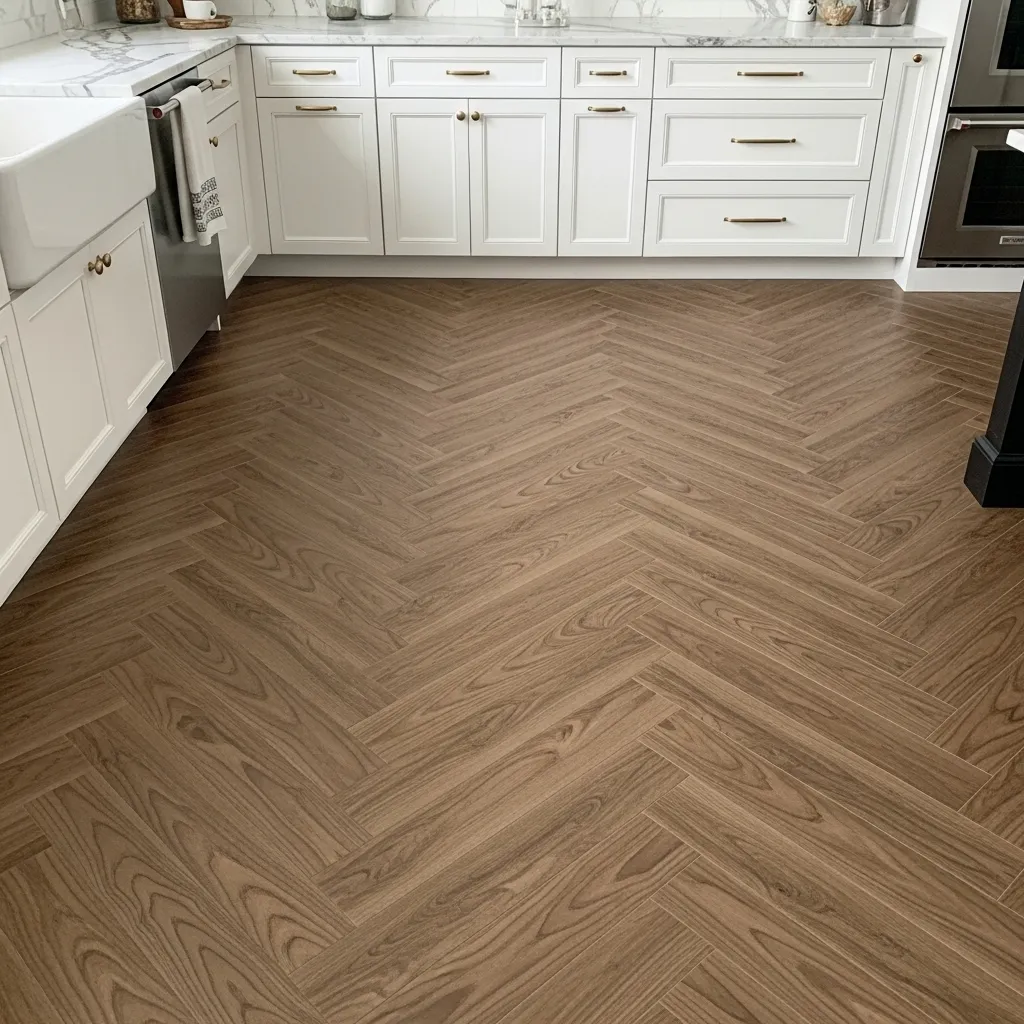
Chevron is like herringbone’s more precise, geometric cousin, and in 2025 it’s being beautifully executed in luxury vinyl plank for people who want that sophisticated pattern without the cost and water-sensitivity of real hardwood. The key difference is that chevron planks are cut at angles so they meet in perfect points creating those clean V-shapes, while herringbone uses rectangular planks that create a broken zigzag. Chevron feels a bit more formal and intentional.
What’s brilliant about doing chevron in luxury vinyl is that you get all the visual drama and elegance of the pattern with complete waterproof protection and easy maintenance. The installation does require precision cutting and professional installation to get those perfect angles, but the result is stunning. The pattern works especially well in galley kitchens or narrow spaces where the directional flow of the chevron can actually make the space feel wider or longer depending on which way you run it. It’s a statement floor that combines classic elegance with modern practicality.
10. Warm Terracotta Tiles
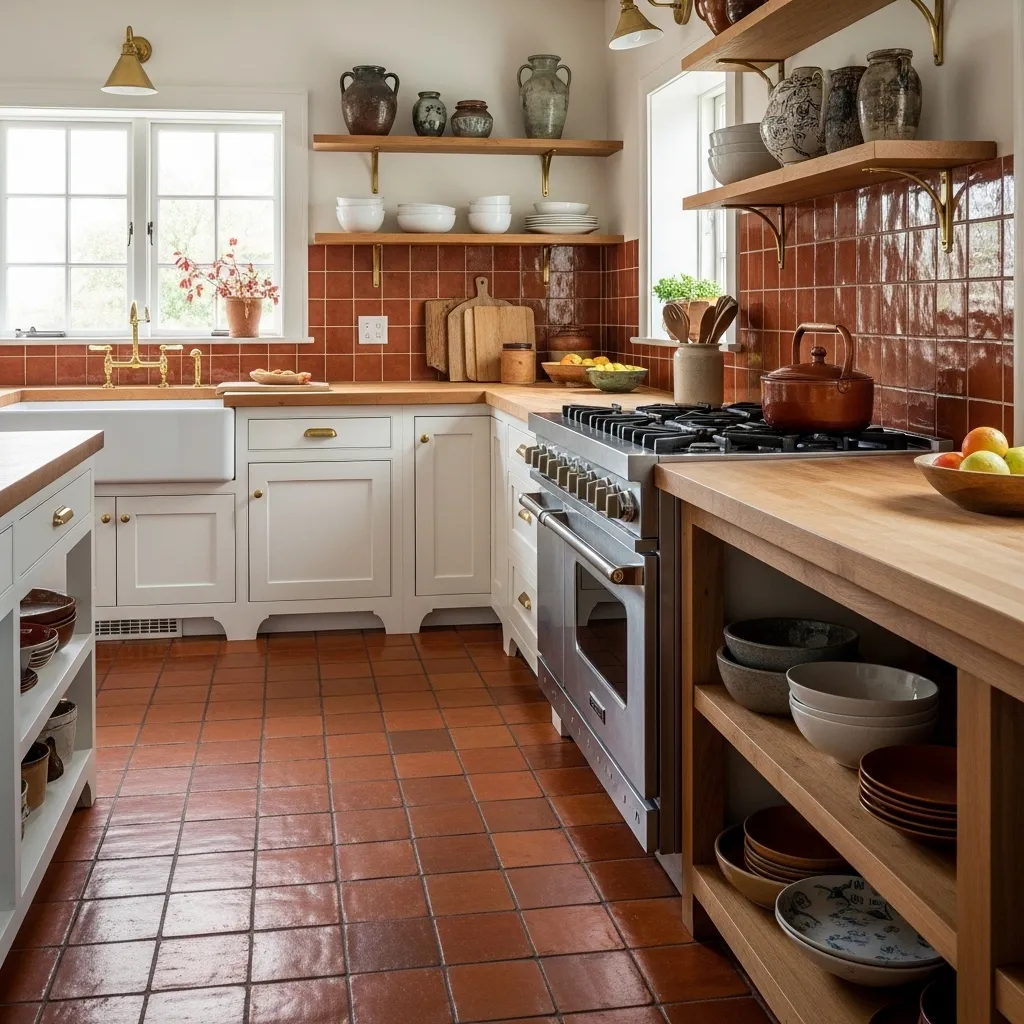
Terracotta tiles are experiencing a renaissance in 2025 as people embrace warmer, earthier palettes and Mediterranean-inspired design. These clay tiles in those gorgeous rust, orange, and warm brown tones bring instant warmth and character that you just can’t achieve with cooler materials. They feel authentic, handcrafted, and deeply connected to traditional building practices that have been used for centuries around the Mediterranean.
The beauty of terracotta is in its imperfections—the slight color variations from tile to tile, the handmade quality, the way it ages and develops a patina over time. Modern versions are often sealed to make them more stain-resistant than traditional terracotta, but many people actually prefer leaving them unsealed or lightly sealed to maintain that authentic matte appearance. These tiles work beautifully in Spanish-style homes, modern farmhouse kitchens, or anywhere you want to create warmth and character. They pair gorgeously with natural woods, whites, and brass metals for that current organic-modern aesthetic.
11. Marble-Look Porcelain in Large Format
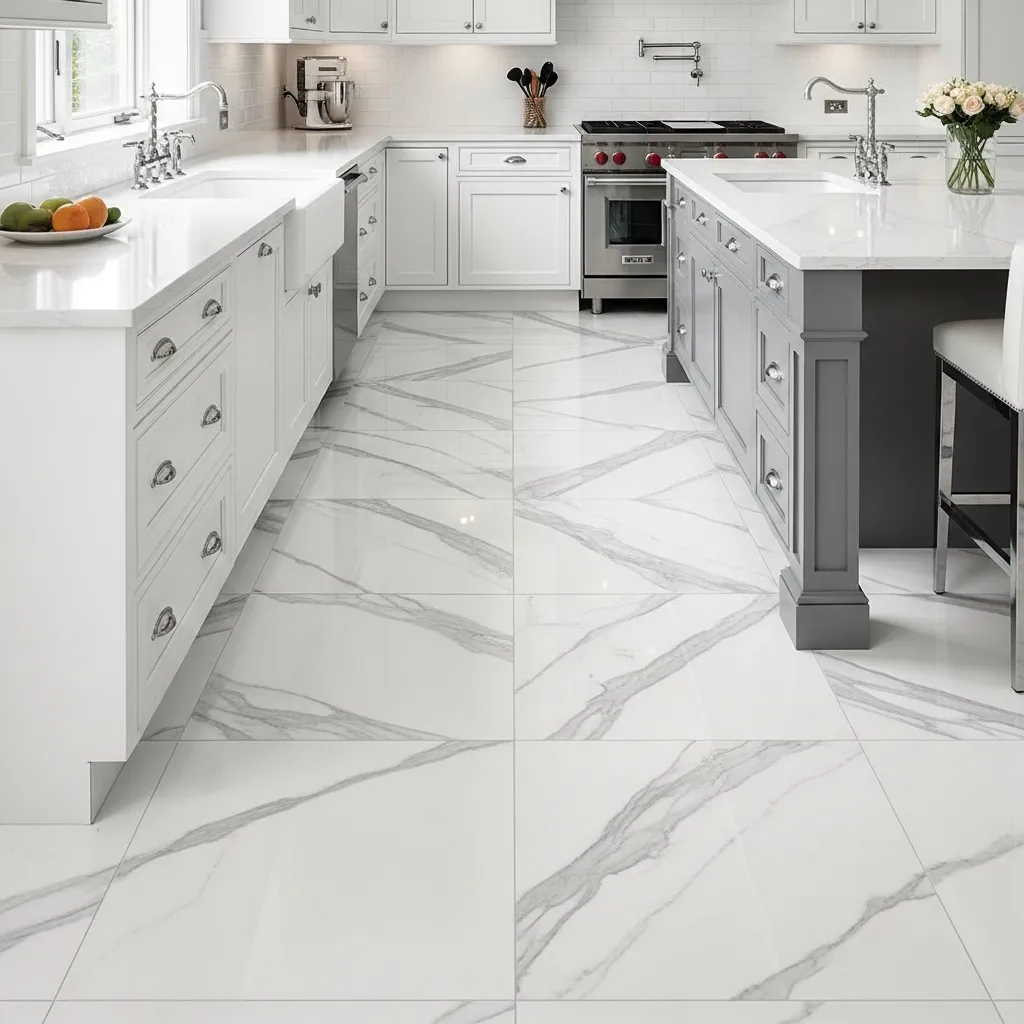
Marble-look porcelain has become so sophisticated in 2025 that it’s genuinely difficult to distinguish from real marble, and for kitchen floors, that’s a complete game-changer. You get all the elegance and luxury of marble veining without the staining, etching, and maintenance nightmares that come with actual marble floors. The large format tiles in 36-inch squares create this seamless, sophisticated look that feels incredibly high-end.
Book-matching the tiles—where you arrange them so the veining patterns mirror each other—takes it to another level of luxury and makes the floor look like it was cut from large slabs of marble. The porcelain is completely waterproof, highly durable, resistant to scratches and stains, and requires basically zero maintenance beyond regular cleaning. For people who love the look of marble but want something practical for a working kitchen, this is the perfect solution. The cool tones also work beautifully with the current trend toward white and light gray kitchens, creating a cohesive, elegant foundation.
12. Cork Flooring in Natural Tones
A warm, eco-friendly kitchen with natural cork flooring in honey and tan tones creating a soft, comfortable surface with subtle texture and natural variation. The cork tiles have a gentle mottled appearance with the natural material’s characteristic flecking and organic pattern. The sustainable flooring provides cushioned comfort underfoot and natural warmth. White cabinets, wood countertops, and plants throughout create an organic, nature-inspired kitchen. The cork’s warm tones add coziness and pair beautifully with natural materials. Soft natural light highlights the cork’s subtle texture. The camera angle shows the cork flooring’s natural color variation and soft, organic appearance.
Cork flooring is having a comeback moment in 2025 as people prioritize sustainability and comfort in their kitchen designs. Cork is an incredibly eco-friendly material—it’s harvested from the bark of cork oak trees without harming them, it’s renewable, and it’s biodegradable. Beyond the environmental benefits, cork is wonderfully soft and cushioned underfoot, which is such a blessing when you’re standing at the counter prepping meals or doing dishes. It’s also naturally antimicrobial and resistant to mold and mildew.
Modern cork floors have come a long way from the boring cork tiles of decades past. Today’s versions come in beautiful natural tones and can even be finished to look more polished and refined while still maintaining that warm, organic quality. The subtle texture and natural variation add warmth without being loud or demanding attention. Cork does require sealing to make it water-resistant for kitchen use, but once properly sealed and maintained, it’s surprisingly durable. The soft, cushioned feel and warm tones create such a comfortable, welcoming kitchen environment.
13. Geometric Encaustic Cement Tiles
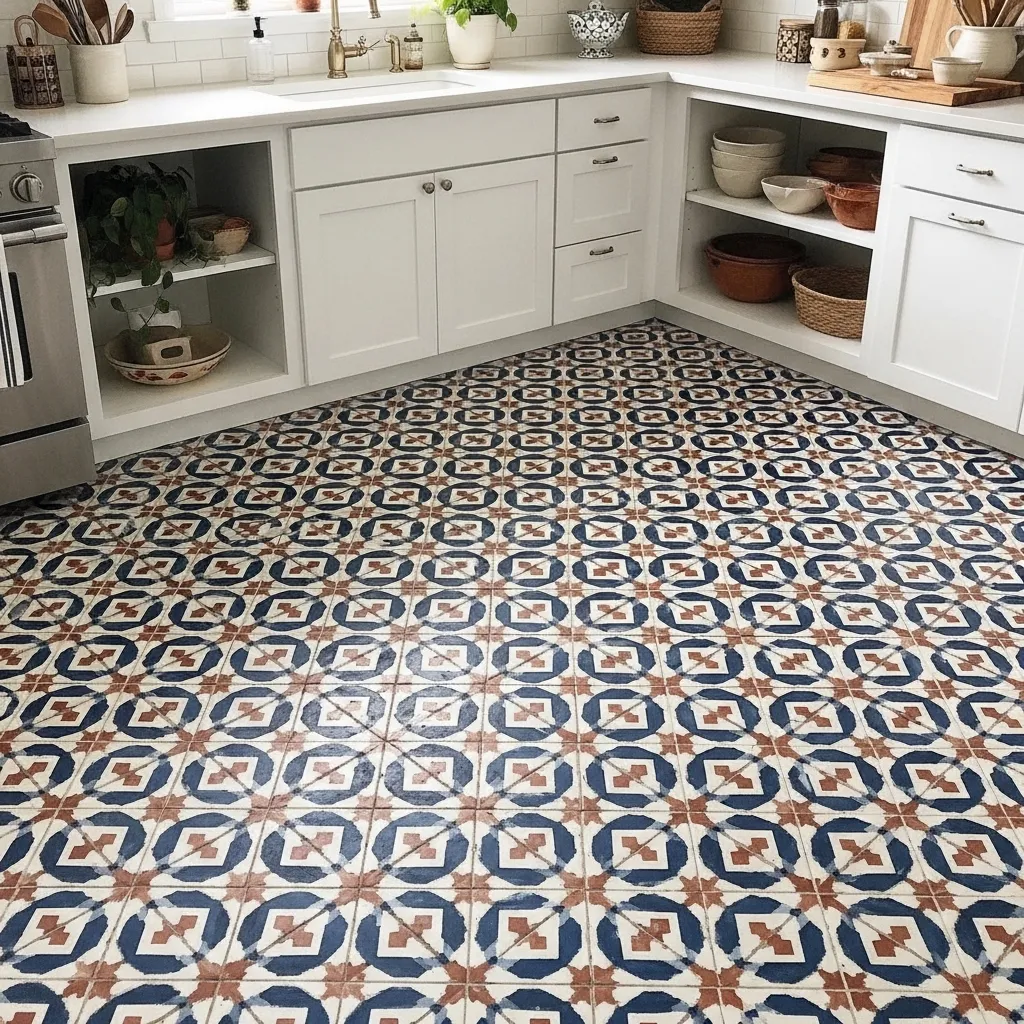
Encaustic cement tiles are absolutely having their moment in 2025, bringing bold pattern and artisan quality to kitchen floors for people who want something truly special and unique. These handmade tiles with their geometric patterns and rich colors create instant personality and visual interest—this is definitely a statement floor that becomes the focal point of your entire kitchen. The slight variations from tile to tile prove they’re handcrafted, which adds to their charm and authenticity.
The patterns range from traditional Moroccan and Spanish designs to more modern geometric compositions, so you can find something that works with your aesthetic whether that’s global-inspired, modern, or eclectic. The key to making bold patterned floors work is keeping everything else relatively simple—solid-colored cabinets, minimal upper cabinetry, simple countertops. Let the floor be the jewelry that makes the whole outfit work. These tiles do require sealing and some maintenance, but for people who want a kitchen floor with serious personality and one-of-a-kind character, they’re absolutely worth it.
14. Reclaimed Wood with Mixed Widths
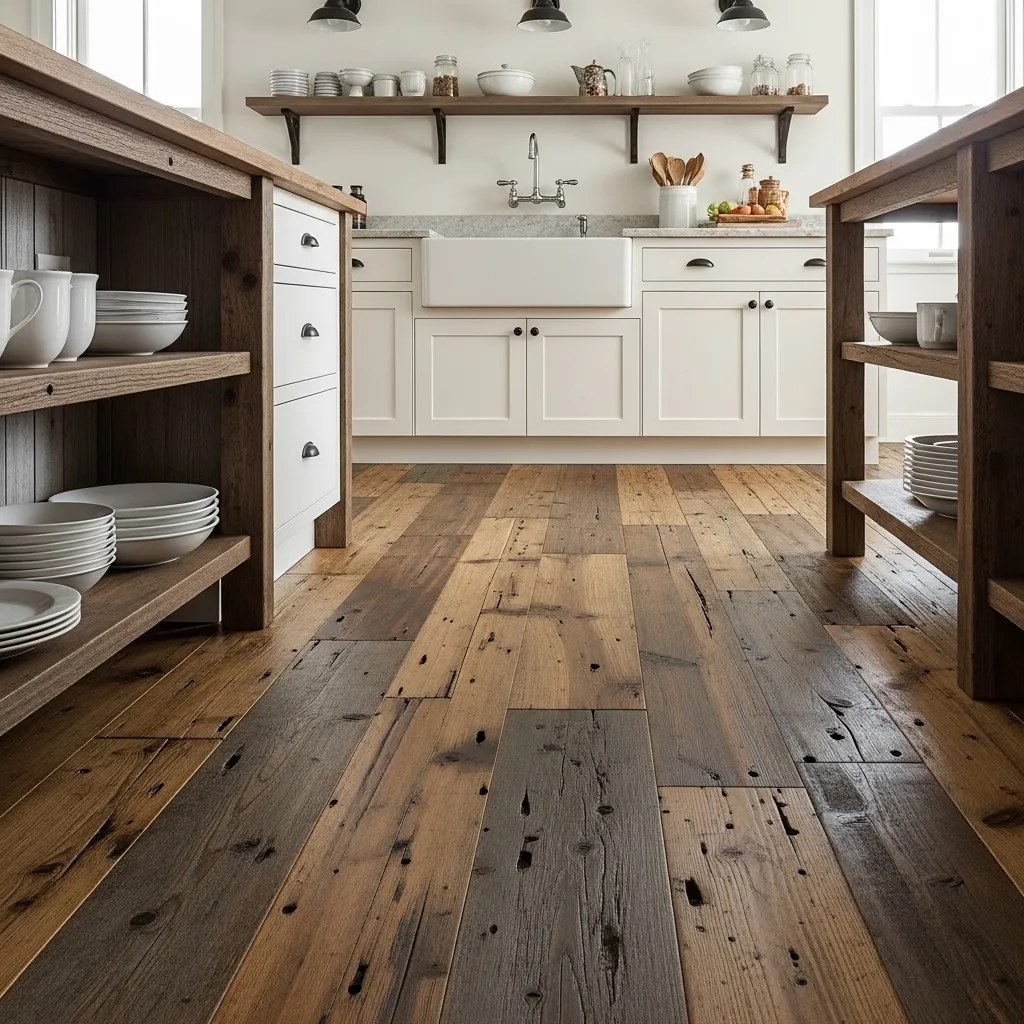
Reclaimed wood floors bring instant soul and history to kitchens in 2025, which is exactly what people are craving as a counterpoint to the overly perfect, mass-produced aesthetic. Using planks of varying widths adds to that organic, collected-over-time feeling—it looks like the floor has always been there rather than like something you installed last week. Each plank has its own story with unique weathering, nail holes, saw marks, and grain patterns that you simply cannot replicate with new wood.
The mixed tones and widths create visual interest without needing any pattern or design—the natural variation is beautiful enough on its own. This approach works particularly well in farmhouse, rustic, or transitional kitchens where you want that authentic, lived-in character. The wood does need to be properly sealed for kitchen use to protect against moisture and spills, but when cared for, it just gets more beautiful with age. You’re essentially adding a piece of history and sustainability to your kitchen—giving old materials new life instead of consuming new resources.
15. Polished Concrete with Aggregates
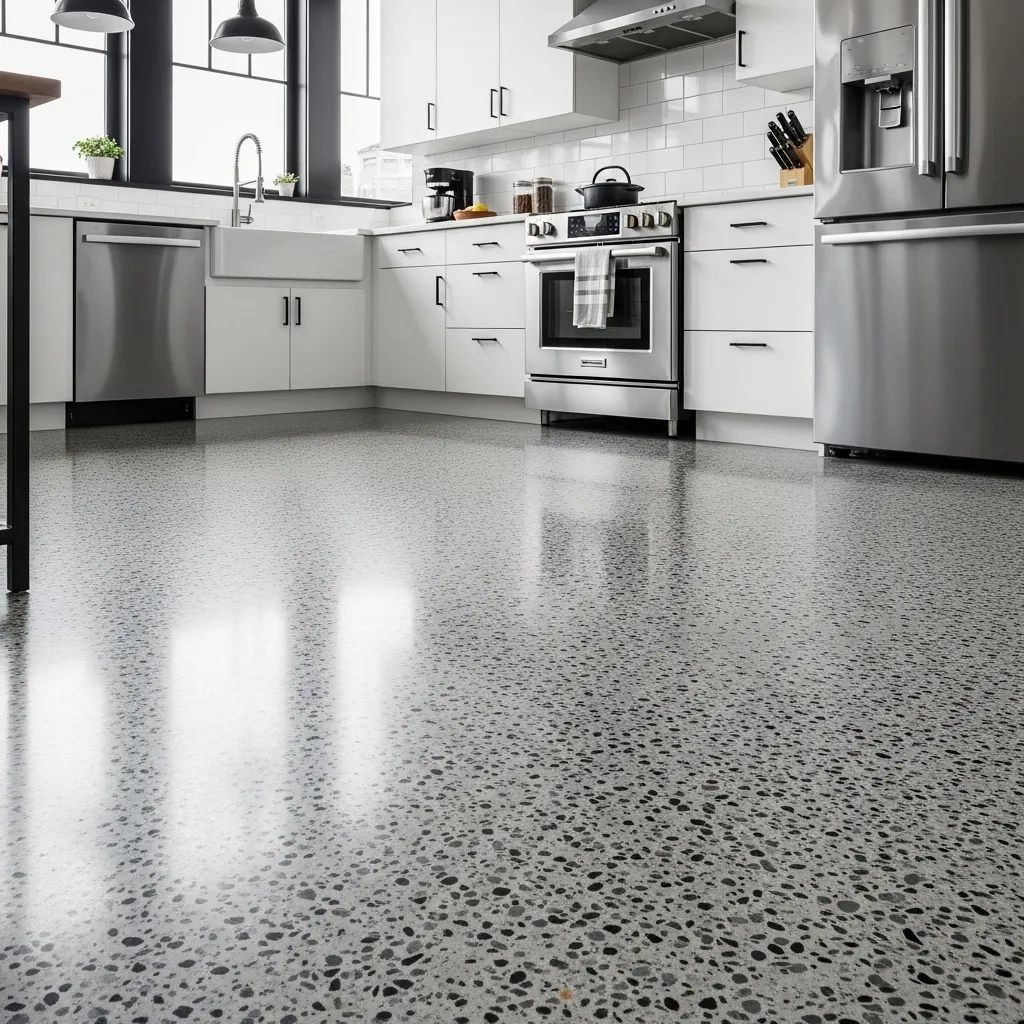
Polished concrete with exposed aggregates is absolutely trending in 2025 for people who love modern, industrial aesthetics and want something truly unique underfoot. This isn’t your basic gray concrete slab—the surface is ground down to expose the beautiful stones and aggregates mixed into the concrete, then polished to a smooth, sealed finish that has subtle sheen and almost a terrazzo-like quality. The result is sophisticated, one-of-a-kind, and incredibly durable.
The seamless nature of concrete floors is a huge part of their appeal—no grout lines to clean, no seams, just one continuous surface that makes your kitchen feel larger and more cohesive. Concrete is also incredibly practical: it’s virtually indestructible, easy to clean, and when properly sealed, resistant to stains and moisture. The thermal mass properties mean it stays cool in summer and can work beautifully with radiant floor heating in winter. The cool industrial vibe works perfectly with modern and contemporary kitchens, and the exposed aggregates add just enough visual interest to keep it from feeling too stark or cold.