17 Leather Couch Living Room Ideas
Leather couches have this incredible ability to anchor a living room with substance, quality, and timeless style that few other furniture pieces can match. There’s something inherently sophisticated about leather—it speaks to craftsmanship, durability, and investment in quality rather than disposable trends. Unlike fabric sofas that can look dated or worn after a few years, a good leather couch actually improves with age, developing a beautiful patina and character that tells the story of your life lived on it. Whether you’re drawn to the classic elegance of a cognac leather Chesterfield, the relaxed comfort of a distressed brown sectional, or the sleek modernity of a black leather sofa, leather brings warmth, texture, and visual weight that transforms how a living room feels.
What I appreciate most about leather couches is their incredible versatility across design styles. The same material can feel traditional in a library-like setting with dark wood and Persian rugs, contemporary in a minimalist space with clean lines and neutral tones, industrial in a loft with exposed brick and metal accents, or bohemian when layered with textiles and plants. Leather also comes in such a range of colors beyond the typical browns—rich cognacs and tans, deep blacks and grays, even unexpected colors like navy, green, or burgundy. And the finish options—from buttery soft aniline leather to more durable pigmented finishes to distressed vintage looks—mean you can find exactly the right leather for your lifestyle and aesthetic.
The practical benefits of leather furniture shouldn’t be overlooked either. It’s incredibly durable and long-lasting when properly cared for, it doesn’t trap pet hair and allergens the way fabric does, spills wipe off easily rather than soaking in, and it actually becomes more comfortable over time as it softens and molds to your body. For families with kids or pets, a quality leather couch often proves more practical than light-colored fabric despite seeming like a luxury. Let’s explore these living room ideas and figure out how to style your leather couch in a way that feels fresh, intentional, and perfectly suited to how you actually live.
1. Cognac Leather with Navy Accents
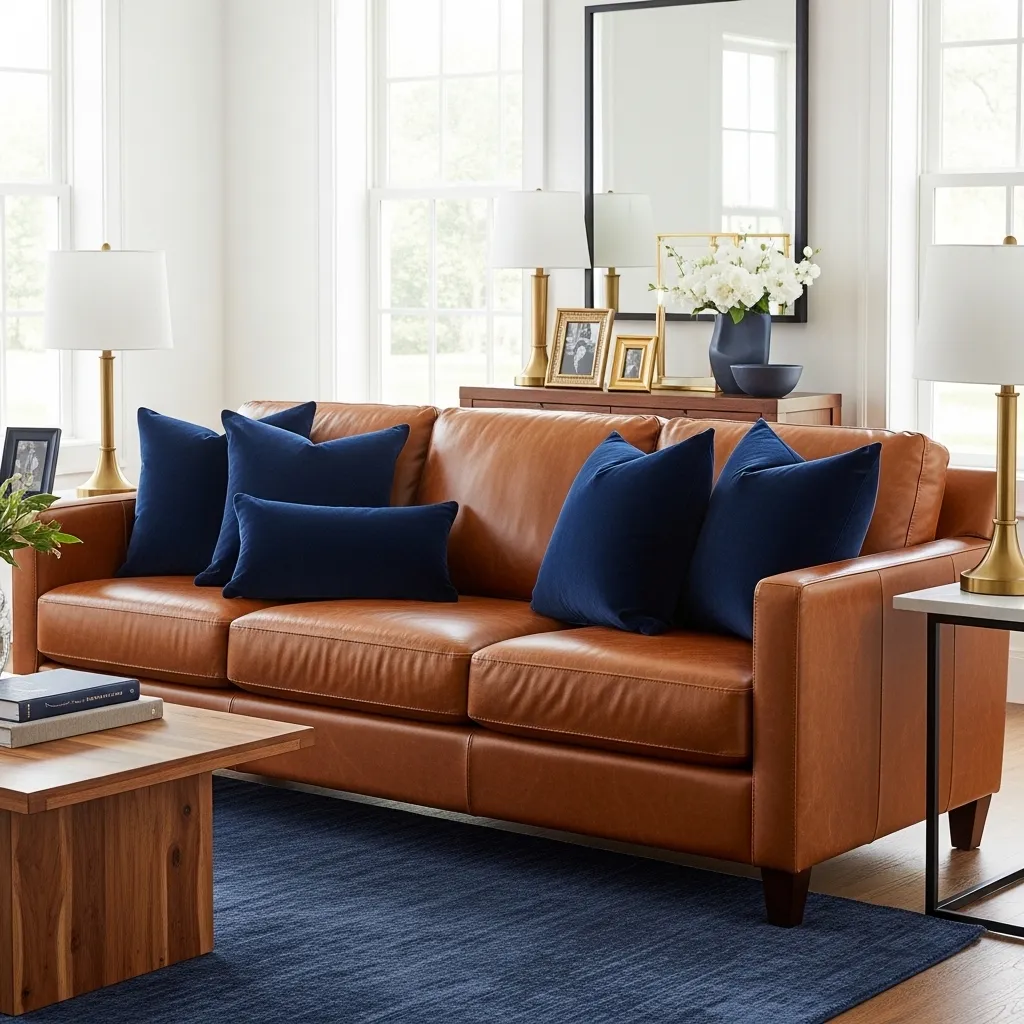
Cognac leather is that perfect warm brown with amber and honey tones that brings instant richness and sophistication to a living room. When paired with deep navy blue accents—throw pillows, rugs, or even an accent chair—you create this beautiful classic color combination that feels both traditional and fresh. The warm cognac and cool navy balance each other perfectly, creating depth and visual interest without being loud or trendy.
This combination works across styles from traditional to transitional to modern. The cognac leather provides warmth and that lived-in, quality feeling, while the navy adds structure and keeps it from feeling too casual or rustic. Add brass or gold metallic elements to enhance the warm tones, incorporate white or cream to brighten, and layer in natural materials like wood and linen for texture. The result is a living room that feels pulled-together and sophisticated while still being completely livable and welcoming. The cognac leather ages beautifully, developing richer tones and character over time.
2. Black Leather in Minimalist Space
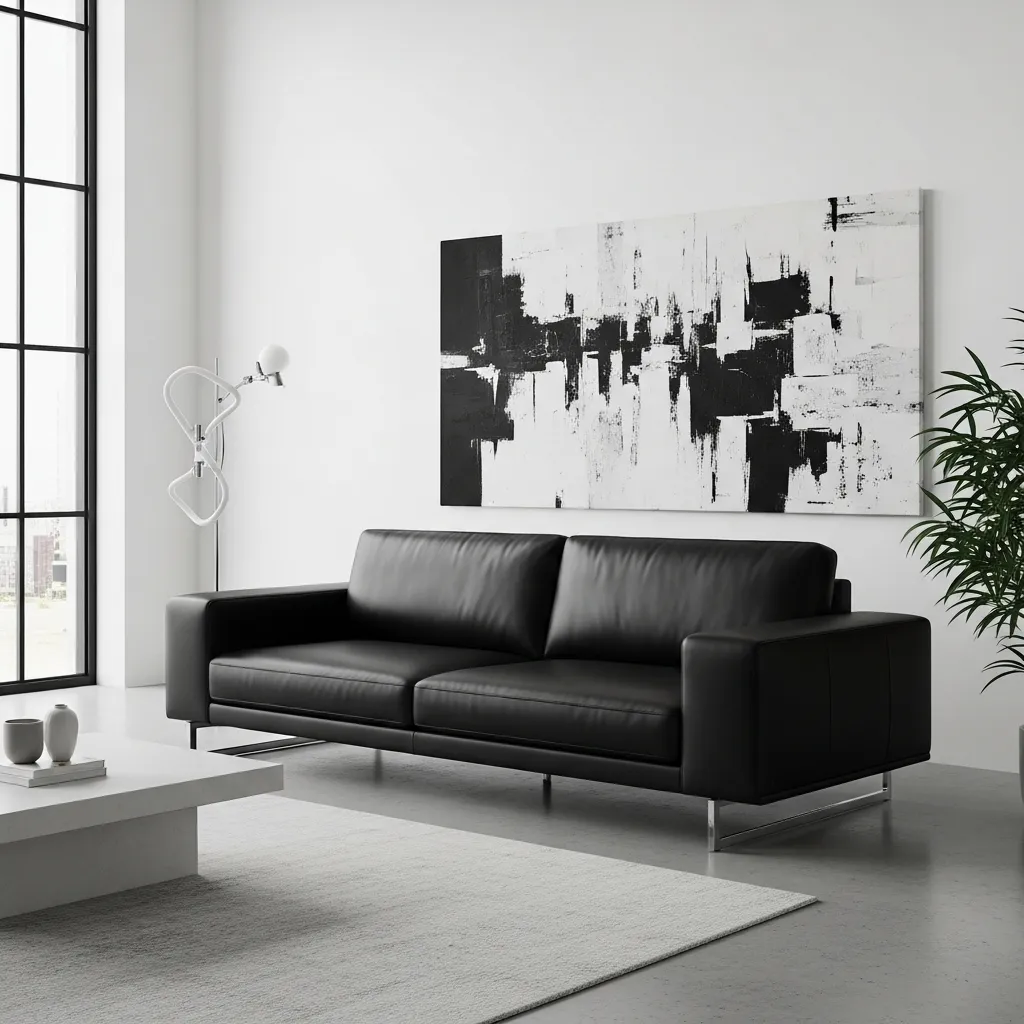
Black leather in a minimalist setting creates such powerful sophistication and restraint. The dark sofa provides visual weight and grounding in an otherwise spare space, preventing minimalism from feeling too cold or empty. Black leather has this incredible ability to feel both substantial and sleek—it’s present without being fussy, bold without being loud. The clean lines of a modern leather sofa complement minimalist aesthetics perfectly.
The key to making black leather work in minimalist spaces is balancing it with lighter elements—white walls, light floors, generous natural light. The black becomes an anchor and focal point rather than making the space dark. Keep accessories and décor minimal and intentional—one beautiful piece of art, a sculptural lamp, a single plant. The leather’s texture provides visual interest without needing pattern or color. This approach works particularly well in urban apartments, lofts, or contemporary homes where that clean, sophisticated aesthetic is the goal. The black leather maintains the minimalist ethos while providing comfort and livability.
3. Distressed Brown Leather with Vintage Rugs
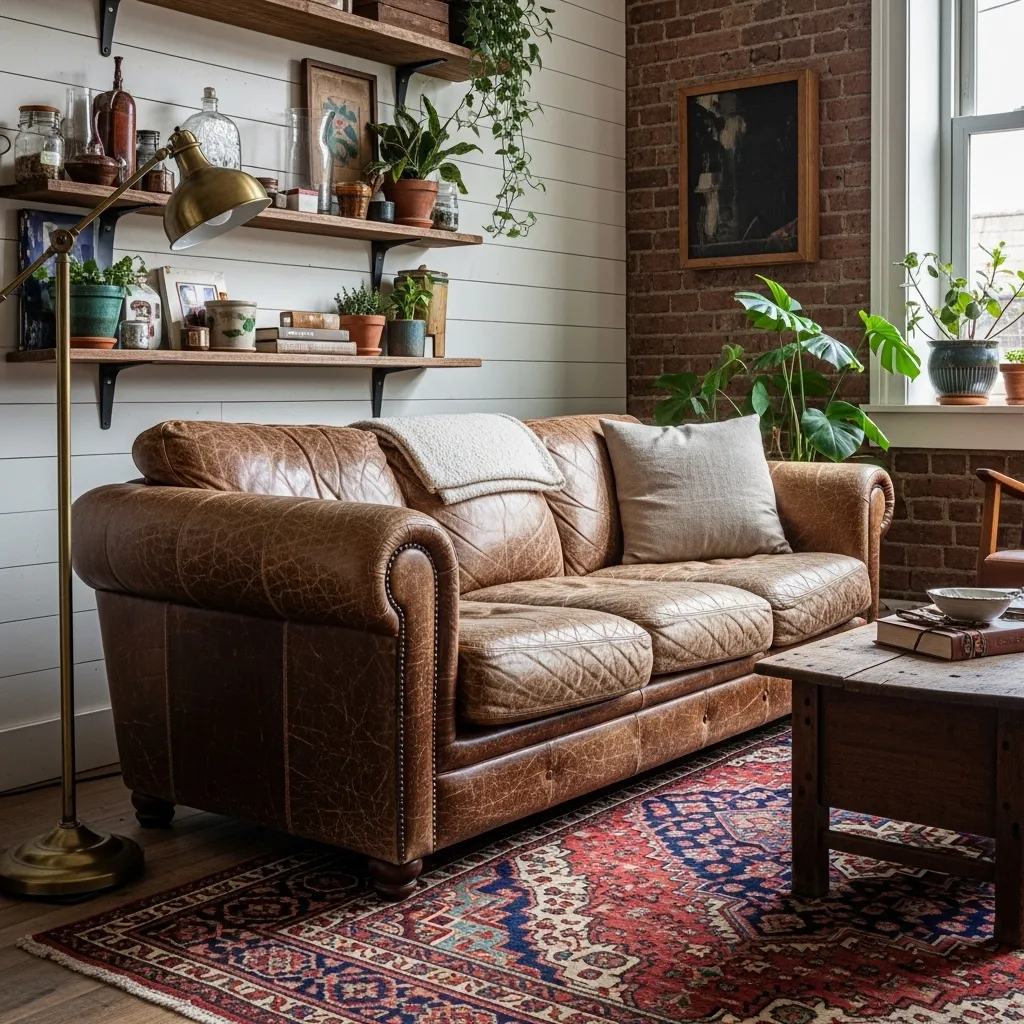
Distressed leather with its worn, aged appearance brings such authentic character and warmth—it looks like it has history and stories to tell. When paired with vintage rugs that also have age and character, you create this beautiful layered, collected aesthetic that feels personal and genuine rather than showroom-perfect. The combination celebrates imperfection and authenticity in a way that’s incredibly inviting.
This approach works wonderfully in bohemian, eclectic, vintage, or modern farmhouse spaces where that lived-in quality is valued. The distressed leather doesn’t require babying—it’s already worn, so new marks and aging just add to the character. The vintage rug brings color, pattern, and softness that balances the leather’s texture. Layer in other vintage finds, plants, collected objects, and varied textures to create depth and interest. The result is a living room that feels warm, personal, and genuinely comfortable—a space that invites you to sink in and stay awhile. The imperfections are features, not flaws.
4. Tan Leather Sectional in Open Concept
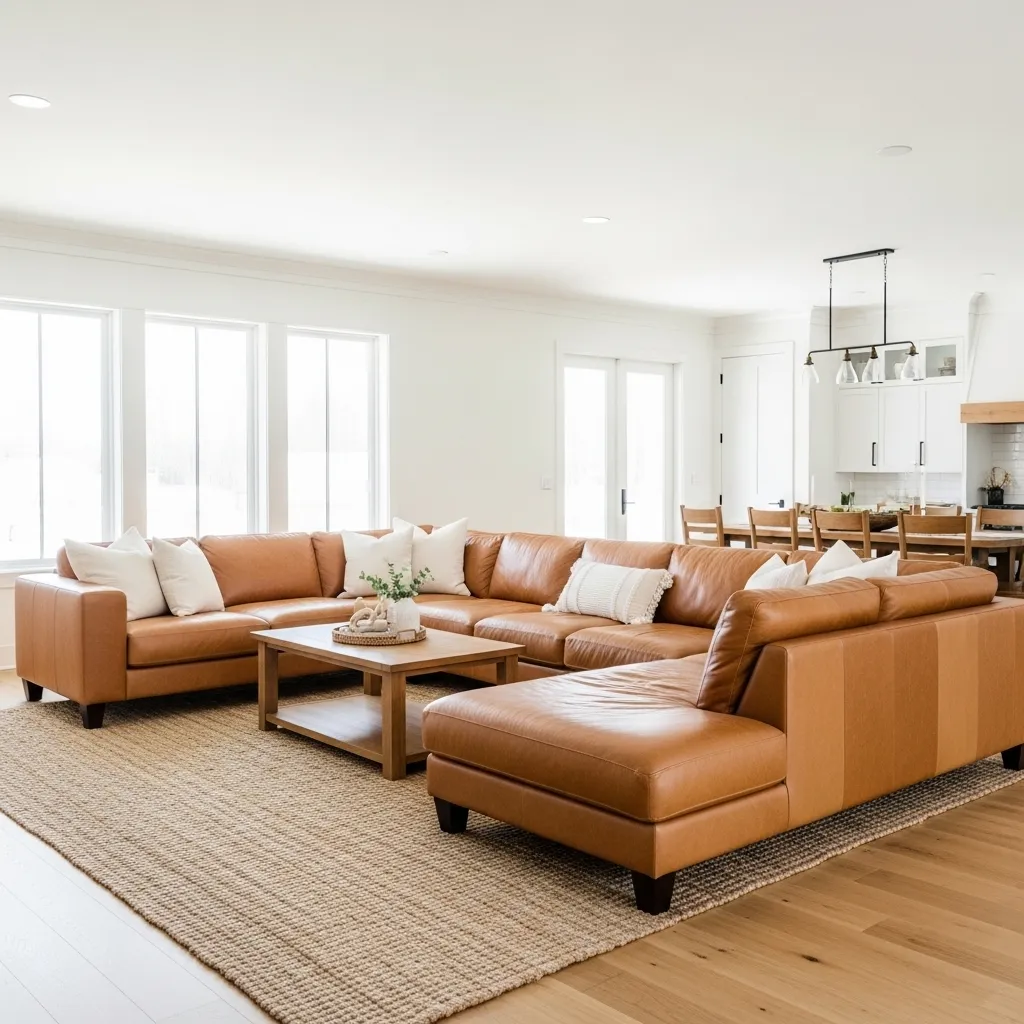
Tan or camel-colored leather sectionals are perfect for open-concept spaces because their substantial size and warm neutral color provide grounding and definition without creating visual barriers. The sectional creates a clear living room zone within the larger open space while its neutral leather tone keeps it from being too heavy or dominating. Leather’s durability makes it ideal for high-traffic family spaces where the sectional will see constant use.
The warm tan leather works beautifully with the natural materials and neutral palettes common in open concepts—wood floors, white kitchens, natural fiber rugs. It provides warmth and comfort without competing with the architecture or other zones. The large scale of a sectional offers plenty of seating for families and gatherings, and leather’s easy-clean properties are practical for busy households. Layer in soft textiles through throw pillows and blankets to add comfort and color without permanent commitment. The tan leather serves as a versatile foundation that works with changing seasons and evolving décor preferences.
5. Chesterfield Sofa in Traditional Library
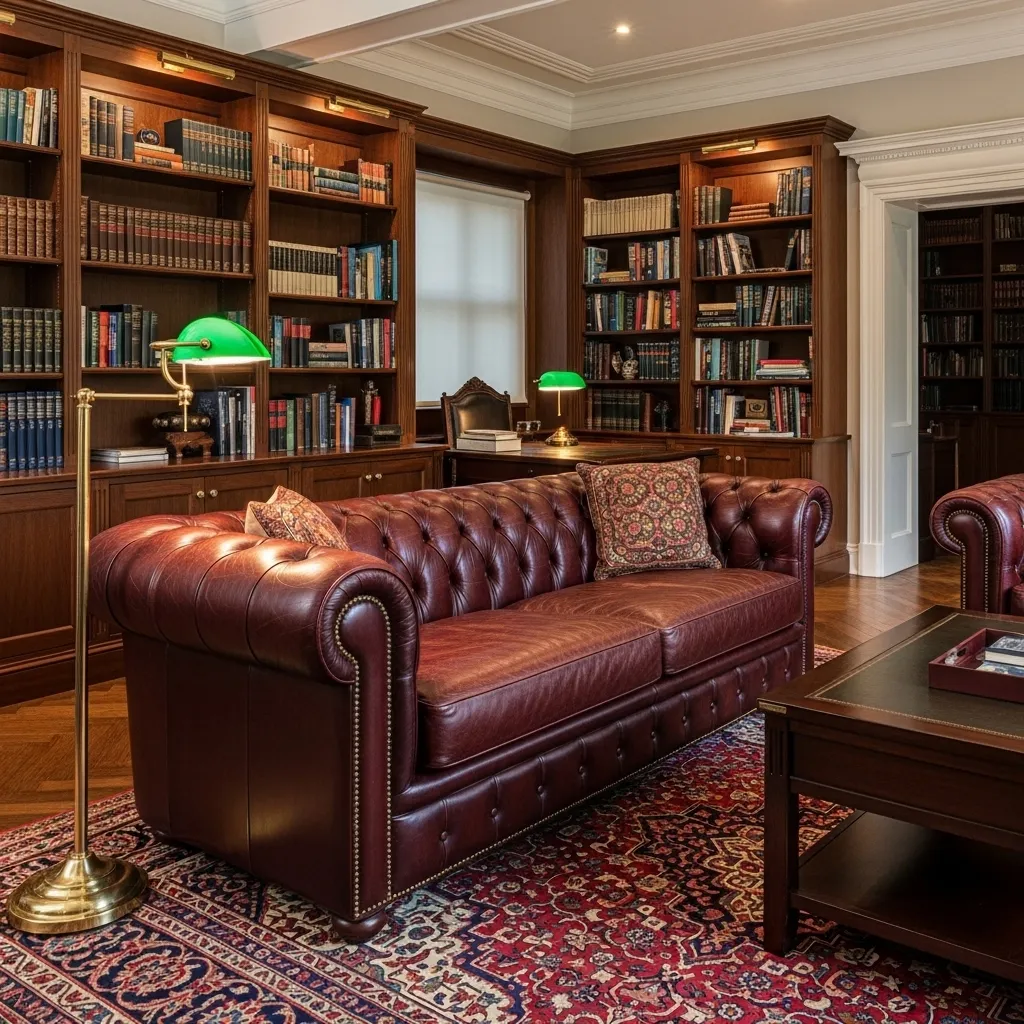
The Chesterfield sofa is an icon of traditional leather furniture—those deep button tufts, rolled arms, and low back create a distinctive silhouette that’s been popular for over 200 years. In a traditional library or study setting with built-in bookshelves, rich wood, and classic architectural details, a Chesterfield feels perfectly at home. The leather upholstery in deep burgundy, forest green, or rich brown adds luxury and gravitas.
What makes the Chesterfield enduring is its formal elegance combined with genuine comfort—the deep tufting provides support, and the low arms make it comfortable for lounging and reading. While traditionally found in men’s clubs and libraries, Chesterfields work in various settings when styled appropriately. In traditional spaces, embrace the formality with Persian rugs, brass accents, and rich wood. In more eclectic settings, a Chesterfield can be the traditional anchor balanced with modern elements. The tufted leather is a statement piece that commands attention and creates instant atmosphere and sophistication.
6. White/Cream Leather in Scandinavian Setting
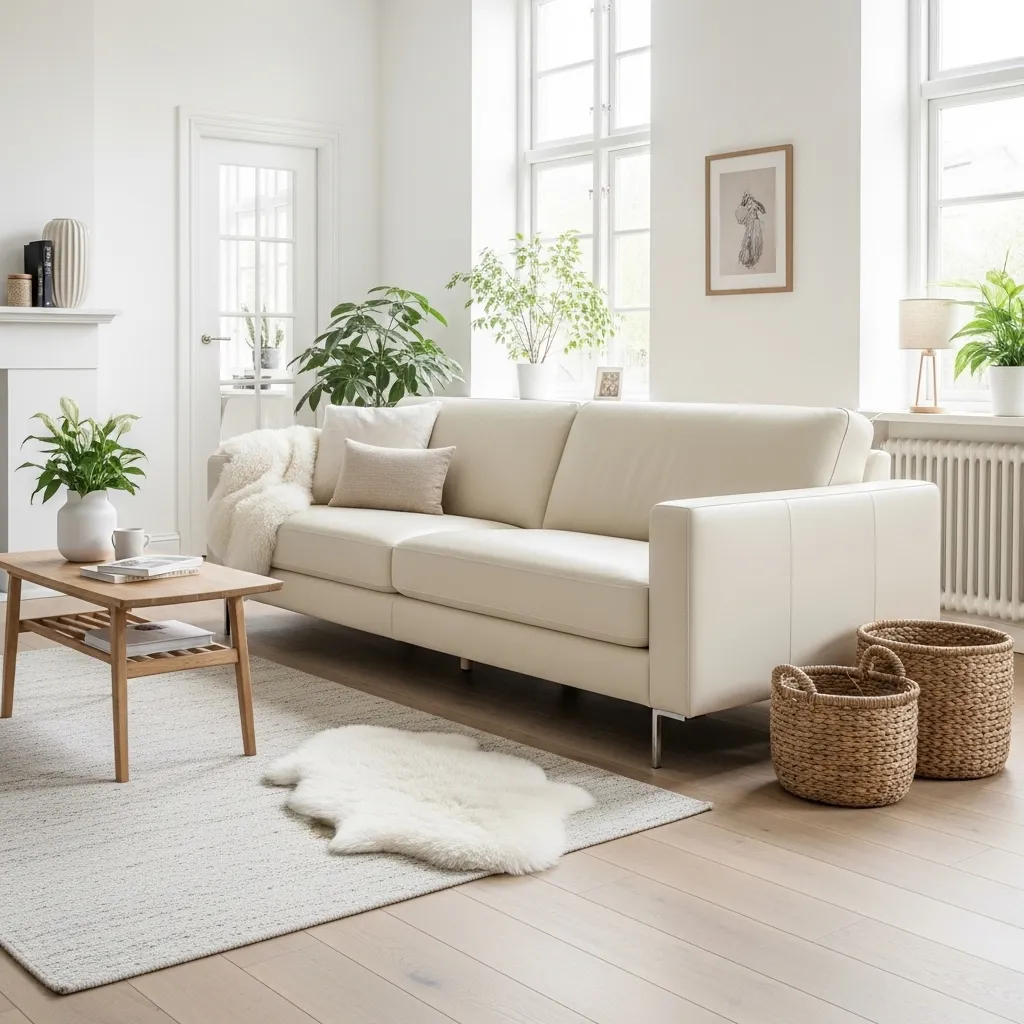
Cream or off-white leather brings all the durability and aging benefits of leather while maintaining the light, airy aesthetic that’s central to Scandinavian design. Unlike white fabric that shows every mark and requires constant cleaning, pale leather actually improves with age, developing a beautiful patina while remaining practical and cleanable. The natural material aligns perfectly with Scandinavian values of quality, simplicity, and connection to nature.
The pale leather provides a sophisticated alternative to the ubiquitous white fabric sofas while being far more practical for actual living. It wipes clean easily, doesn’t trap dirt and allergens, and ages beautifully rather than looking worn. Pair it with the light woods, white walls, and minimal décor characteristic of Scandinavian style, and you have a living room that’s bright, calm, and genuinely livable. Add warmth through natural textures—sheepskin, linen, jute, wood—and minimal greenery. The cream leather is the perfect anchor for a light, serene living space that doesn’t sacrifice durability or longevity.
7. Two-Tone Leather Combination
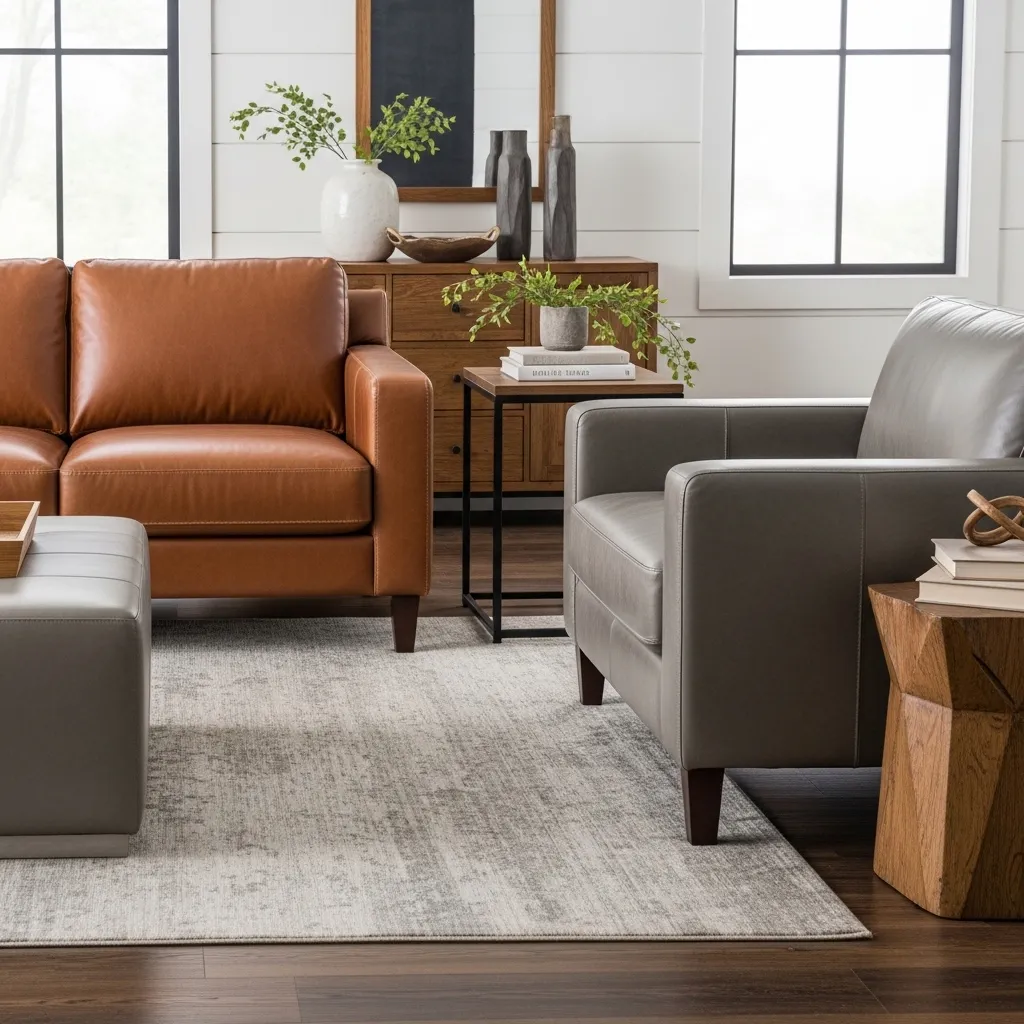
Mixing different leather tones in one living room creates depth and visual interest while maintaining material cohesion. A cognac or brown leather sofa paired with a gray leather chair, or a black leather sofa with tan leather accent chairs, creates intentional contrast that’s more sophisticated than matching everything perfectly. The shared material—leather—provides cohesion while the color variation adds dynamism.
This approach works particularly well in eclectic or transitional spaces where that collected, non-matching aesthetic is valued. The different leather tones can represent different pieces acquired over time rather than a matching set, which feels more authentic and personal. Tie the two tones together through other elements—a rug that incorporates both colors, throw pillows that bridge the tones, or artwork that contains similar hues. The leather’s shared texture and material quality creates unity despite the color variation, resulting in a living room that feels curated and sophisticated rather than haphazardly furnished.
8. Industrial Loft with Dark Leather
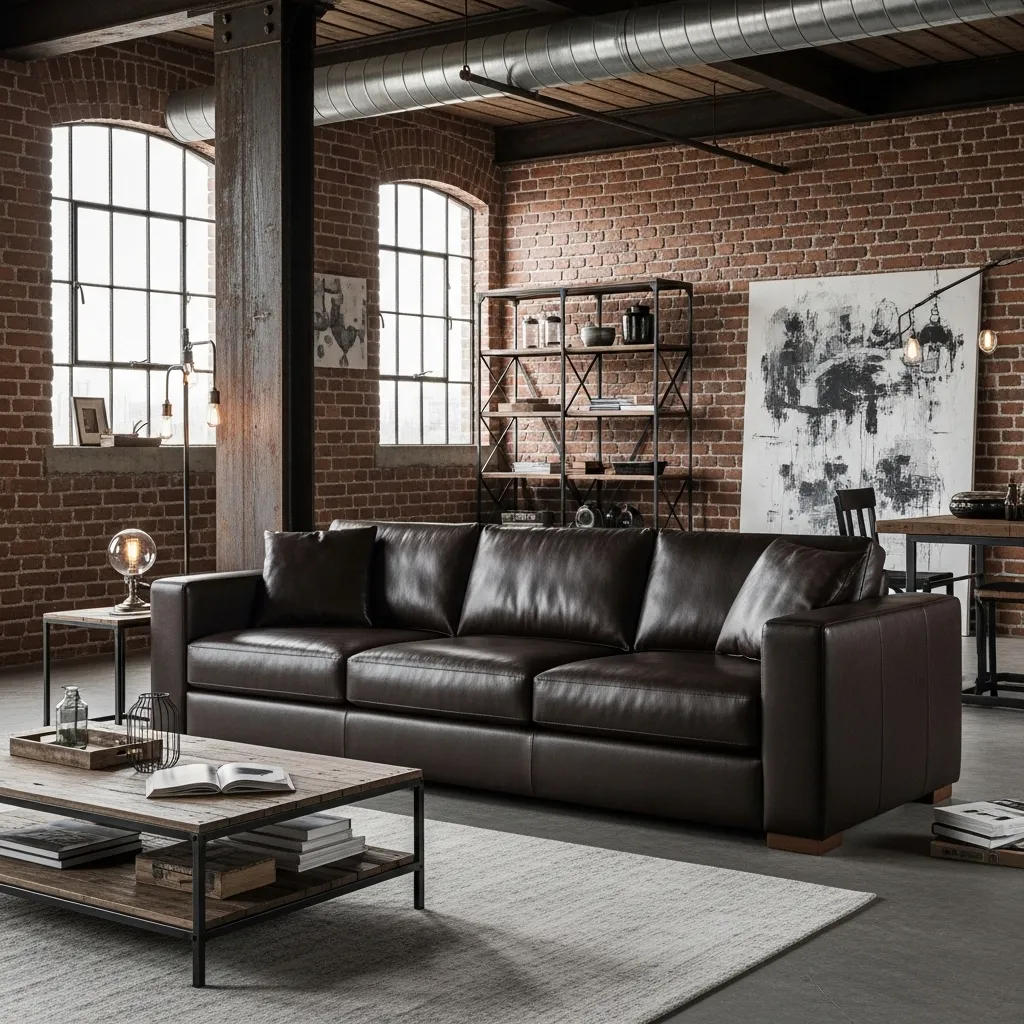
Dark leather—deep brown or black—works beautifully in industrial lofts and urban spaces where that masculine, raw aesthetic is desired. The substantial leather sofa provides comfort and livability within the hard surfaces typical of industrial spaces—exposed brick, concrete, metal. The leather’s warmth and organic quality balance the cool industrial materials, preventing the space from feeling too hard or sterile.
Industrial style celebrates honest materials and utilitarian design, and leather fits perfectly into that ethos—it’s functional, durable, and ages authentically. The worn, distressed look of vintage leather or the clean lines of modern leather both work depending on your specific aesthetic. Keep accessories minimal and intentional—metal accents, vintage industrial finds, oversized artwork. The dark leather anchors the space and provides the seating comfort essential for making an industrial loft actually livable rather than just visually interesting. Add plants and warm lighting to soften the hard edges and create balance.
9. Leather Sofa with Layered Textiles
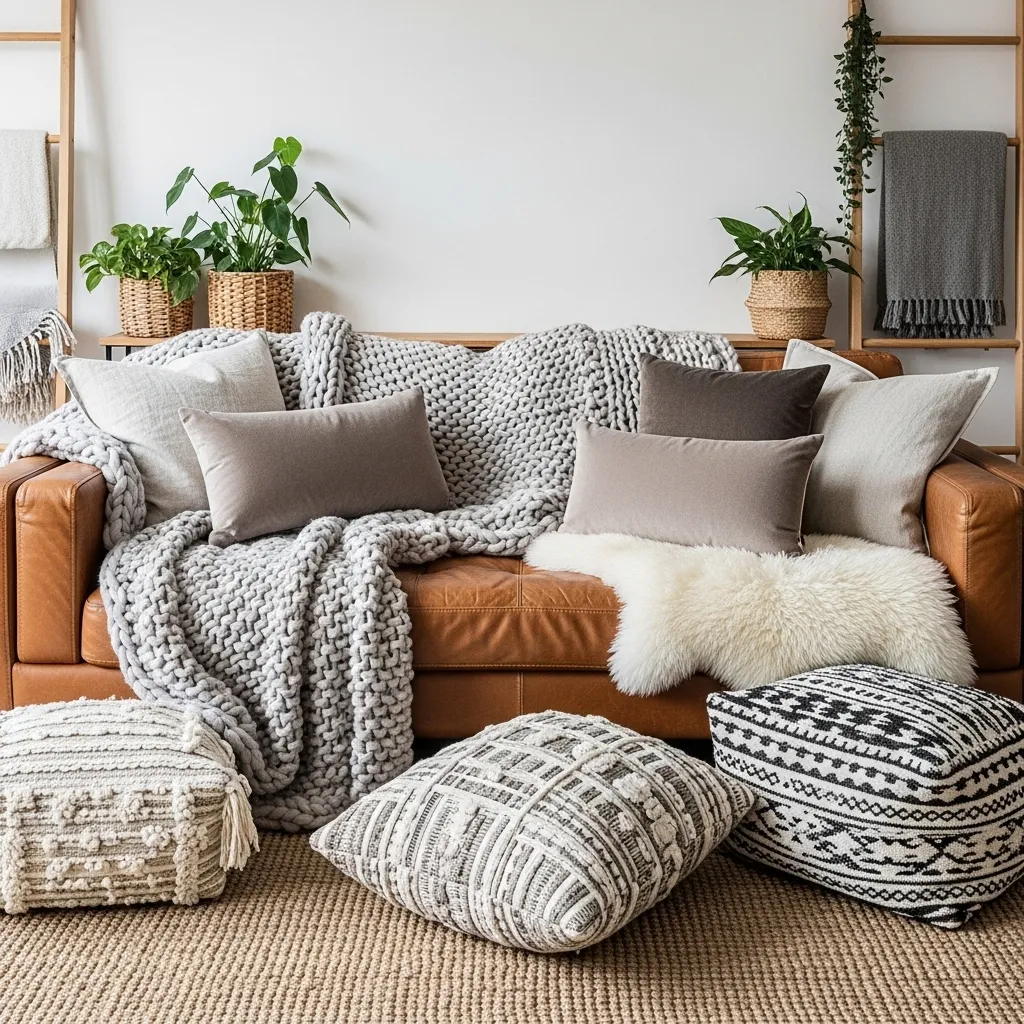
One of the best ways to make a leather sofa feel inviting and comfortable is layering it generously with soft textiles that provide contrast to the leather’s smooth surface. Chunky knit blankets, soft linen pillows, plush velvet cushions, and sheepskin throws add visual softness, color, and comfort while also making the sofa more versatile across seasons—add layers for cozy winter comfort, remove them for a cooler summer aesthetic.
The contrast between leather’s smooth, cool surface and soft, warm textiles creates beautiful tactile variety that makes the sofa more inviting and comfortable. The textiles also allow you to easily change colors, patterns, and style without replacing the sofa itself—switch out pillows and throws seasonally or when you want a refresh. This approach works particularly well for making leather sofas feel less formal or masculine—the soft layers add warmth and approachability. Choose textiles in colors and patterns that complement your leather tone, and don’t be afraid to layer generously for that collected, cozy feeling.
10. Camel Leather with Jewel Tone Accents
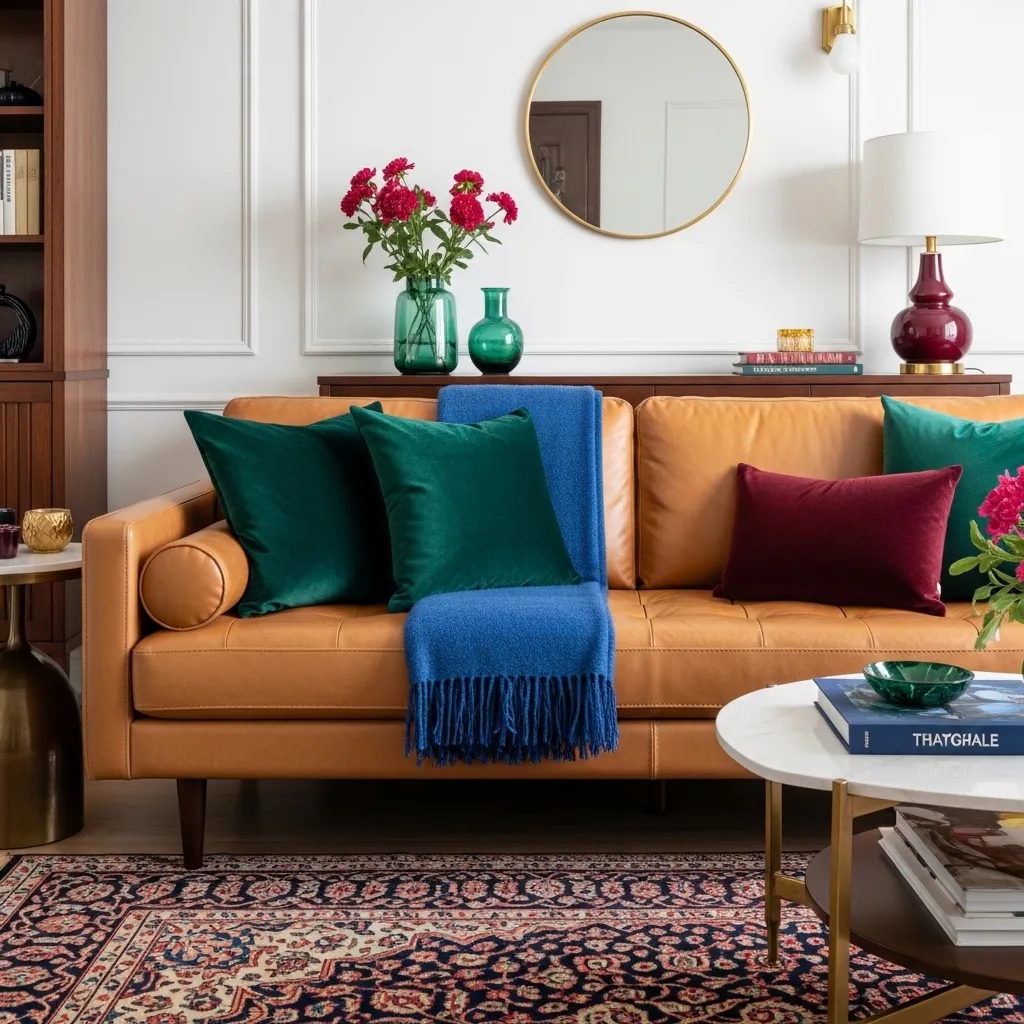
Camel or tan leather provides the perfect neutral foundation for rich jewel tone accents—emerald green, sapphire blue, ruby red, amethyst purple. The warm, neutral leather allows these saturated colors to really pop and create drama without overwhelming the space. The combination feels luxurious and sophisticated while still being grounded by the neutral leather base.
This approach lets you incorporate rich, saturated colors you love without committing to them permanently through major furniture pieces. Jewel tone pillows, throws, artwork, or accent chairs can be changed out if your taste evolves, while the neutral leather sofa remains timeless. The warm camel tones complement jewel colors beautifully—the leather’s inherent richness and quality matches the luxurious feeling of jewel tones. Add metallic accents in gold or brass to enhance the luxe vibe. The result is a living room that feels rich, layered, and sophisticated while maintaining versatility through that neutral leather foundation.
11. Modern Leather Loveseat Pair
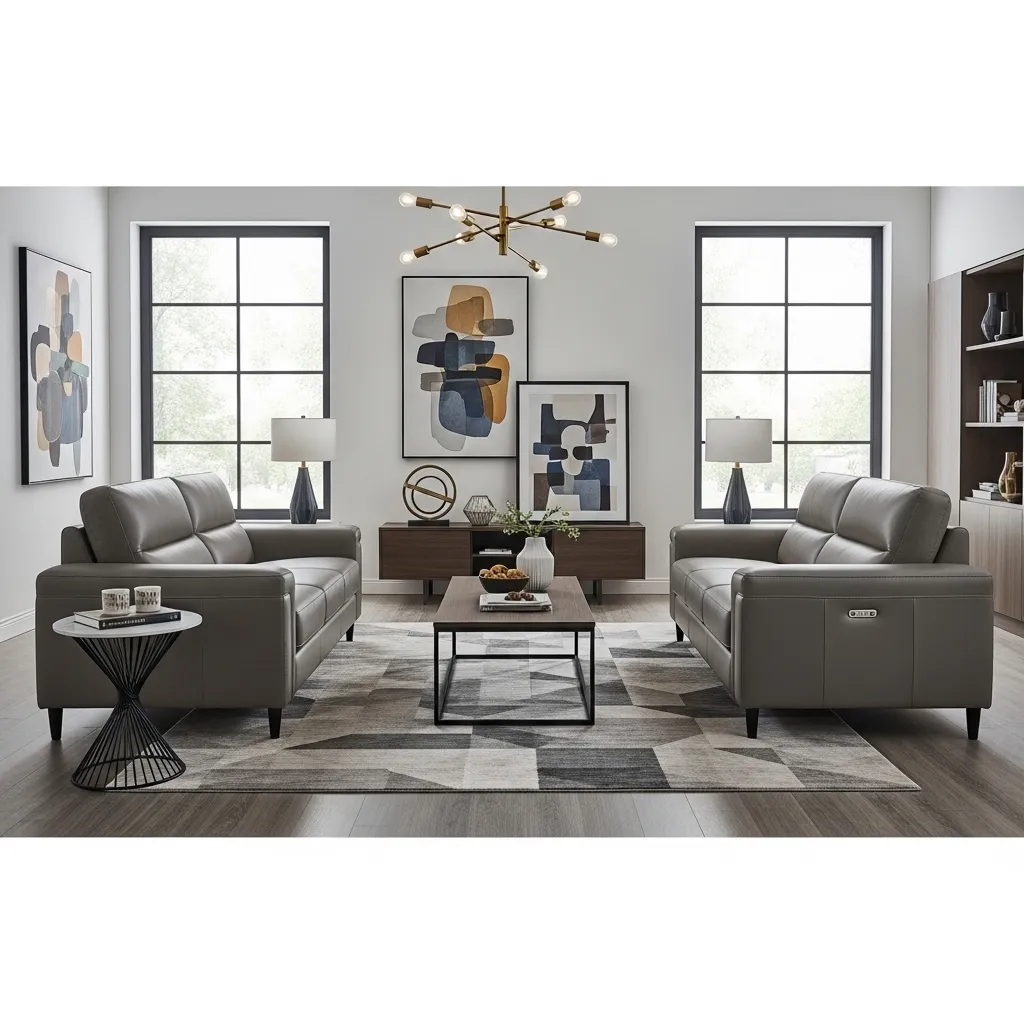
Using two matching leather loveseats instead of one large sofa creates a more dynamic, flexible seating arrangement that encourages conversation and feels more intentional and designed. The symmetrical facing arrangement creates visual balance and formality that works beautifully in modern and contemporary spaces. Gray or charcoal leather feels current and sophisticated while being neutral enough to work with various color palettes.
This configuration works particularly well in smaller living rooms where a large sectional would overwhelm, or in more formal living rooms where that symmetrical arrangement creates elegance. The loveseats can be moved and reconfigured as needed, offering more flexibility than a single large piece. The modern leather in gray tones feels fresh and contemporary rather than traditional, and the clean lines complement modern architecture and décor. Add a substantial coffee table between them to anchor the arrangement, and style simply with minimal accessories to maintain the clean, modern aesthetic.
12. Cognac Leather with White and Greenery
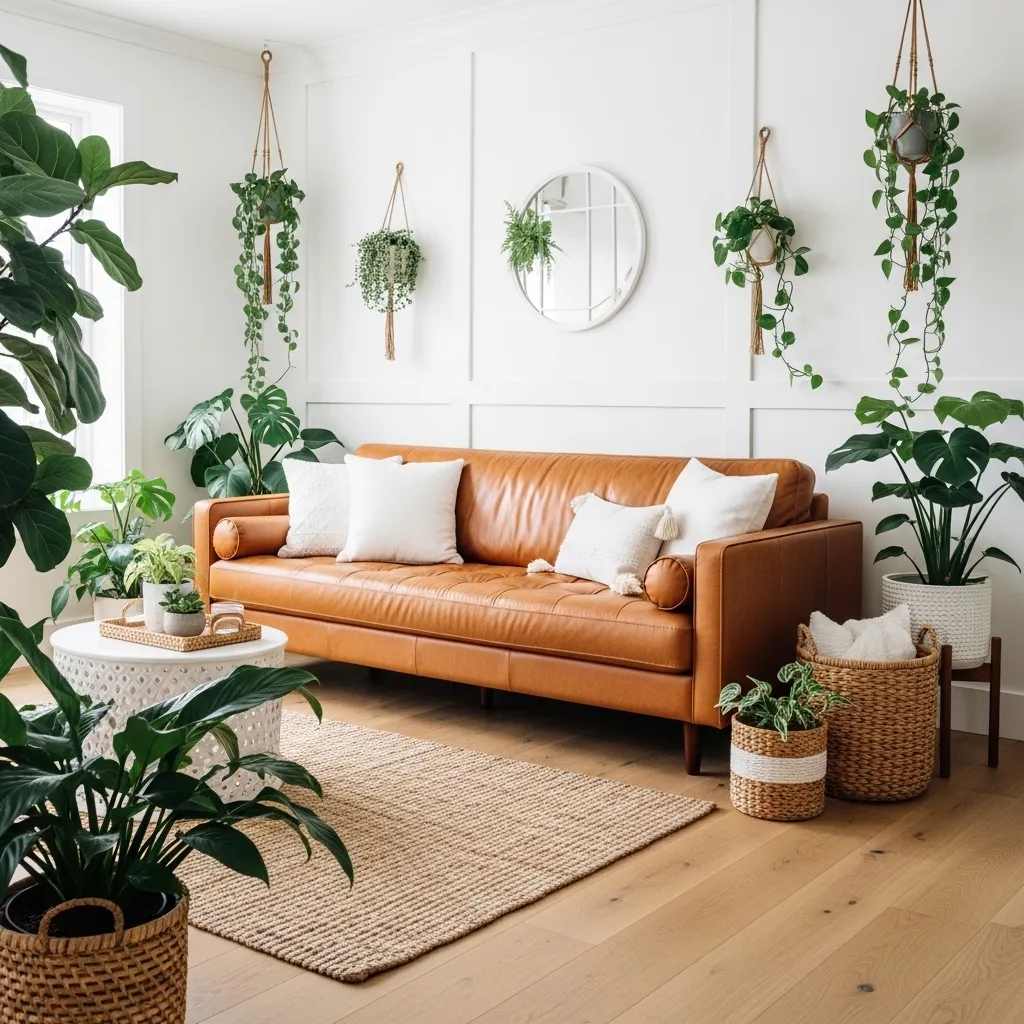
Cognac leather against white walls creates such beautiful, warm contrast—the rich leather tones really pop against the crisp white background. When you add generous greenery throughout the space, you create this organic modern aesthetic that feels fresh, alive, and grounded. The combination of warm leather, clean white, and natural green is timeless and works across seasons and styles.
Plants love living rooms with leather furniture because leather doesn’t trap moisture or create issues if leaves occasionally touch it, unlike fabric sofas. The greenery provides the color and life that prevents an all-neutral room from feeling boring, while the white keeps everything bright and the cognac provides warmth and richness. This palette works particularly well in homes with good natural light where the white amplifies brightness and the plants thrive. Add natural materials like jute, linen, wood, and rattan to enhance the organic feeling. The result is a living room that feels warm, inviting, and connected to nature while maintaining sophistication through the quality leather foundation.
13. Tuxedo Sofa in Velvet and Leather
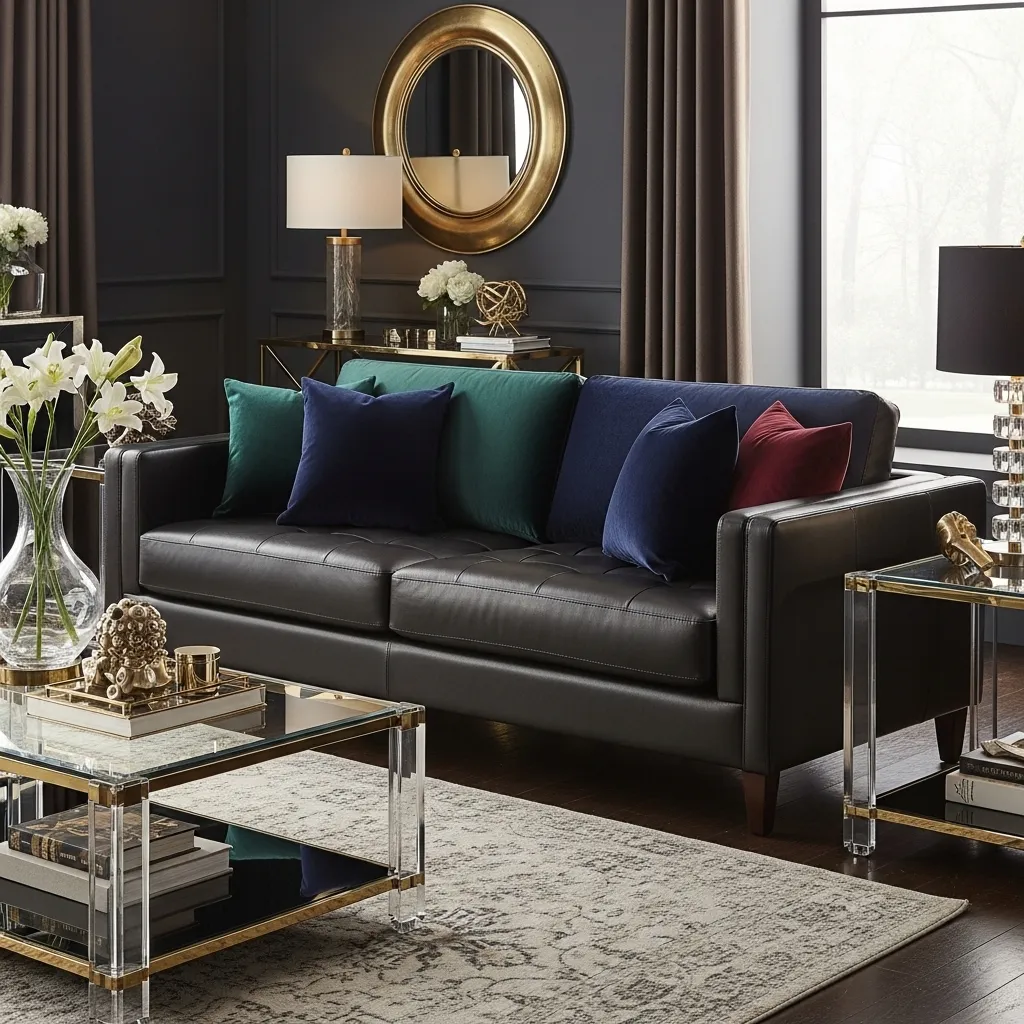
The tuxedo sofa with its equal-height arms and back has such clean, modern lines, and combining leather with velvet creates beautiful material contrast—the smooth, durable leather where bodies sit and arms rest, with soft, luxurious velvet cushions for comfort and visual interest. This mixed-material approach adds sophistication and depth that single-material sofas can’t achieve.
The combination works particularly well in glam, transitional, or modern spaces where that material mixing feels intentional and sophisticated. The leather provides the durability and easy-clean properties essential for a sofa, while the velvet adds the softness and visual luxury you want for cushions and pillows. You can play with color combinations—black leather with jewel-tone velvet, cognac leather with navy velvet, gray leather with emerald velvet. The tuxedo silhouette itself is inherently sophisticated, and the material mixing elevates it further. Add metallic accents and luxe materials throughout to complement the elevated sofa.
14. Vintage Leather with Mid-Century Modern
Vintage leather sofas from the mid-century modern era (or quality reproductions) have this perfect combination of clean lines, quality craftsmanship, and aged character that works beautifully in MCM-styled spaces. The leather’s natural aging and patina add authenticity, and the simple, functional design philosophy of mid-century furniture means the pieces still feel current and relevant today.
The warm brown leather common in vintage pieces complements the teak, walnut, and rosewood prevalent in mid-century furniture. The aged leather brings warmth and organic texture that balances the clean lines and sometimes stark minimalism of MCM design. Surround the vintage leather sofa with other iconic mid-century pieces—molded plastic chairs, tapered-leg furniture, geometric patterns, brass and wood combinations. The worn leather doesn’t need to be perfect—the patina and age marks are features that add to the authentic vintage vibe. This works for true vintage collectors and those who simply love the mid-century aesthetic and want that lived-in, authentic feeling.
15. Gray Leather in Transitional Space
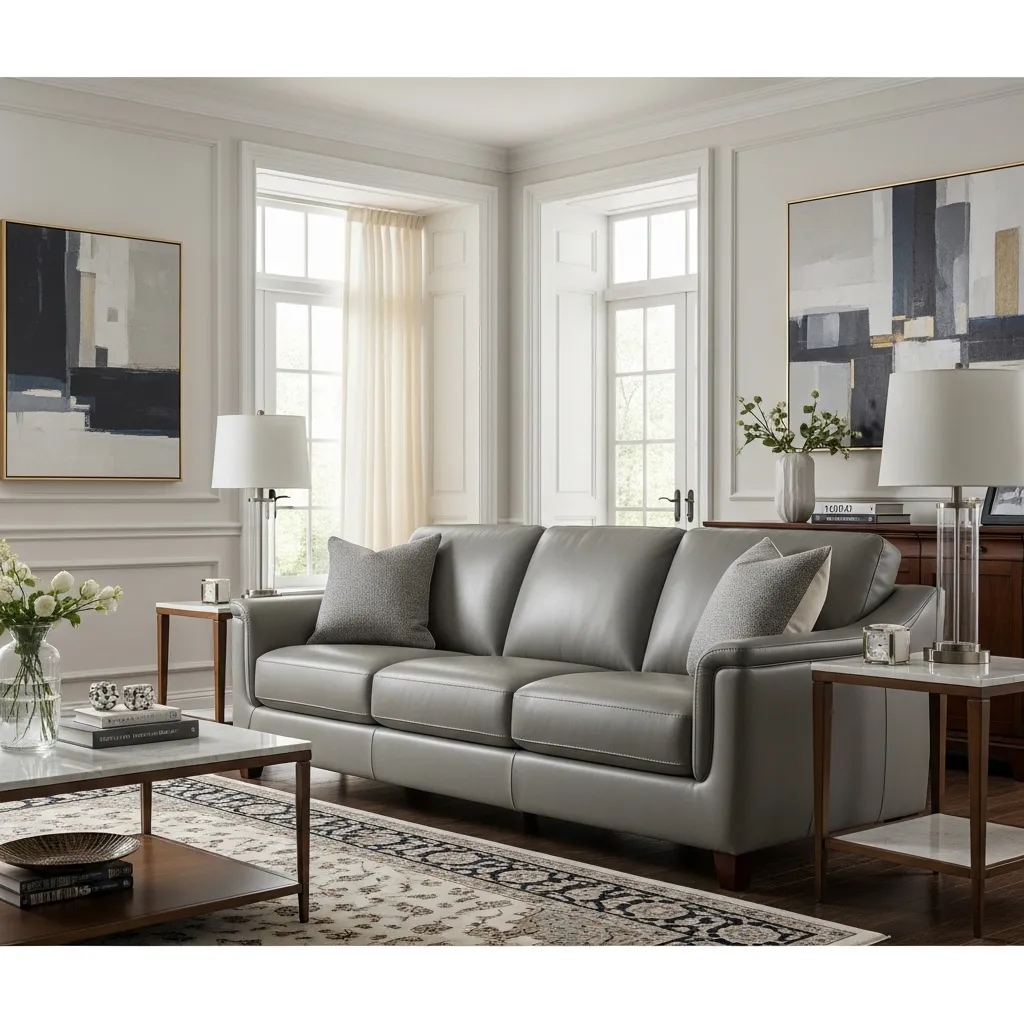
Gray leather is the perfect choice for transitional spaces that blend traditional and contemporary elements—it’s neutral and sophisticated enough to work with traditional architecture and furnishings, yet cool and modern enough to feel current and fresh. The gray tone is inherently versatile, working with both warm and cool color palettes and bridging different style periods seamlessly.
Transitional design is all about balance—combining the best of traditional and contemporary—and gray leather embodies that balance. It’s not as casual as distressed brown leather or as formal as a burgundy Chesterfield, not as stark as black or as expected as tan. The neutral gray allows flexibility in styling—you can layer in traditional elements like patterned rugs and classic wood furniture, or contemporary pieces like abstract art and sleek metals. The leather itself provides quality and longevity associated with traditional furniture while the gray color and clean lines feel contemporary. This is an excellent choice for anyone who wants sophistication without committing fully to either traditional or modern aesthetics.
16. Petite Leather Apartment Sofa
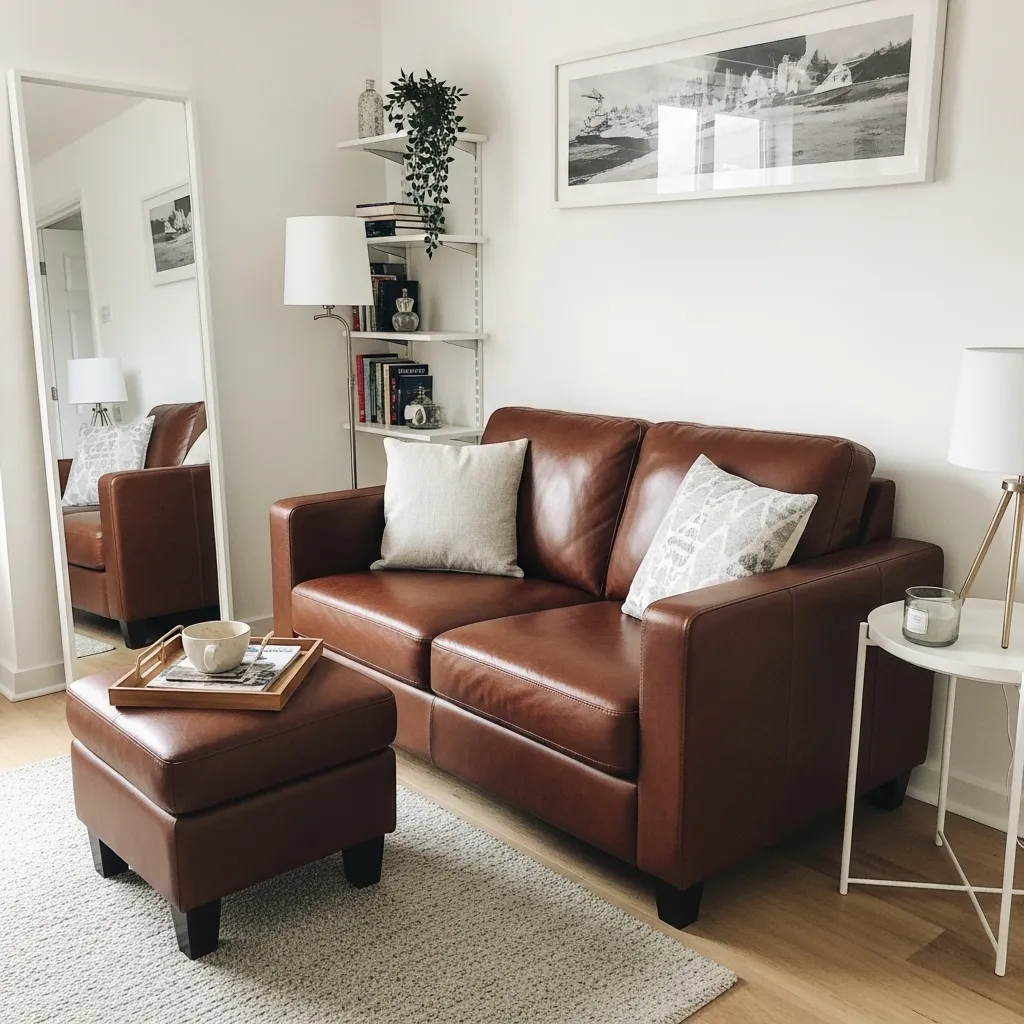
Leather sofas work beautifully in small apartments and compact living rooms when scaled appropriately—a petite loveseat or apartment-sized sofa in leather provides all the quality, durability, and style of larger pieces without overwhelming limited square footage. Leather’s inherent substance and quality actually works in your favor in small spaces by making the room feel more designed and intentional despite the size limitations.
The key is choosing appropriately scaled pieces—look for shallower depths, narrower arms, and shorter overall lengths that fit your space comfortably. Leather in darker tones can actually work well in small spaces because it provides visual grounding and doesn’t show dirt, though lighter leathers can work too if you want to keep things bright. The durability of leather is particularly valuable in small spaces where the sofa gets constant use and close traffic. Pair with space-saving elements like wall-mounted storage, dual-purpose ottomans, and minimal accessories. The leather provides the quality and style while smart space planning makes everything functional.
17. Statement Leather Sofa with Minimal Everything Else
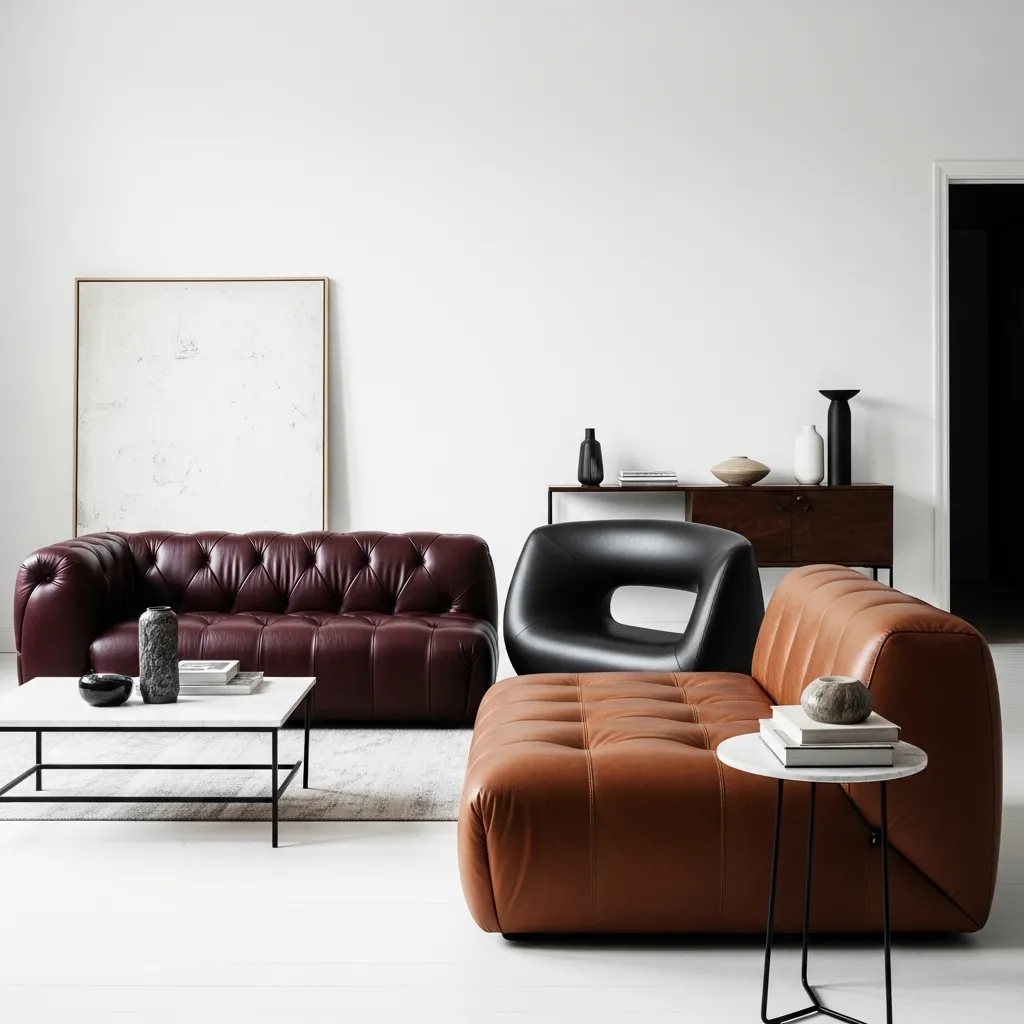
When you invest in a truly special leather sofa—whether that’s an heirloom-quality Chesterfield, a designer piece with sculptural lines, or a custom-made sectional in beautiful leather—sometimes the best approach is keeping everything else minimal and letting the sofa be the star. This works particularly well with distinctive pieces in unusual colors, significant scale, or exceptional craftsmanship that deserve to be showcased.
The minimal surrounding approach means the sofa’s quality, craftsmanship, and design can really be appreciated rather than competing with busy patterns, competing focal points, or visual clutter. This requires confidence and restraint—resisting the urge to fill every surface and wall—but the result is sophisticated and intentional. Choose one beautiful piece of art, a simple but quality coffee table, excellent lighting, and perhaps one or two carefully selected accessories. The leather sofa provides all the warmth, texture, color, and interest the room needs. This approach works in modern, minimalist, or contemporary spaces where that edited aesthetic is valued, and it ensures your investment piece gets the attention it deserves.