11 Small Cottage Kitchen Ideas
Small cottage kitchens have this magical ability to feel cozy, charming, and utterly inviting in ways that larger, more modern kitchens sometimes struggle to achieve. There’s something about the compact proportions, vintage-inspired details, and lived-in character that makes these spaces feel like the heart of a home rather than just a place to cook. Whether you’re working with an actual historical cottage or trying to create that warm, collected-over-time aesthetic in a newer space, small cottage kitchens are all about maximizing charm while making every inch functional. From open shelving that displays pretty dishes to farmhouse sinks that anchor the room, from beadboard details that add texture to vintage-inspired hardware that completes the look, these ideas prove that small doesn’t mean sacrificing style or personality.
I grew up visiting my grandmother’s tiny cottage kitchen where everything had its place and the whole room felt like a warm hug, and I’ve spent years trying to recreate that feeling in my own homes. That kitchen was probably eight by ten feet at most, but it never felt cramped because everything was so thoughtfully arranged and beautiful in its simplicity. There were open shelves displaying her collection of transferware, a deep porcelain sink that could handle the biggest roasting pans, glass-front cabinets where you could see her everyday dishes, and this worn wooden table tucked into a corner where we’d shell peas or roll out pie dough.
What I’ve learned about small cottage kitchens is that they require a different mindset than modern kitchens—you’re not trying to hide everything behind sleek cabinet doors or create minimalist expanses of empty counter. Instead, you’re curating what you display, choosing functional items that are also beautiful, and embracing the fact that your kitchen tools and dishes are part of the aesthetic. The best cottage kitchens feel collected and personal rather than designed all at once, with layers of texture, vintage finds mixed with new pieces, and imperfections that add character rather than detract from it. Small size becomes an advantage because every detail is visible and contributes to the overall charm.
1. Open Shelving with Vintage Dish Display
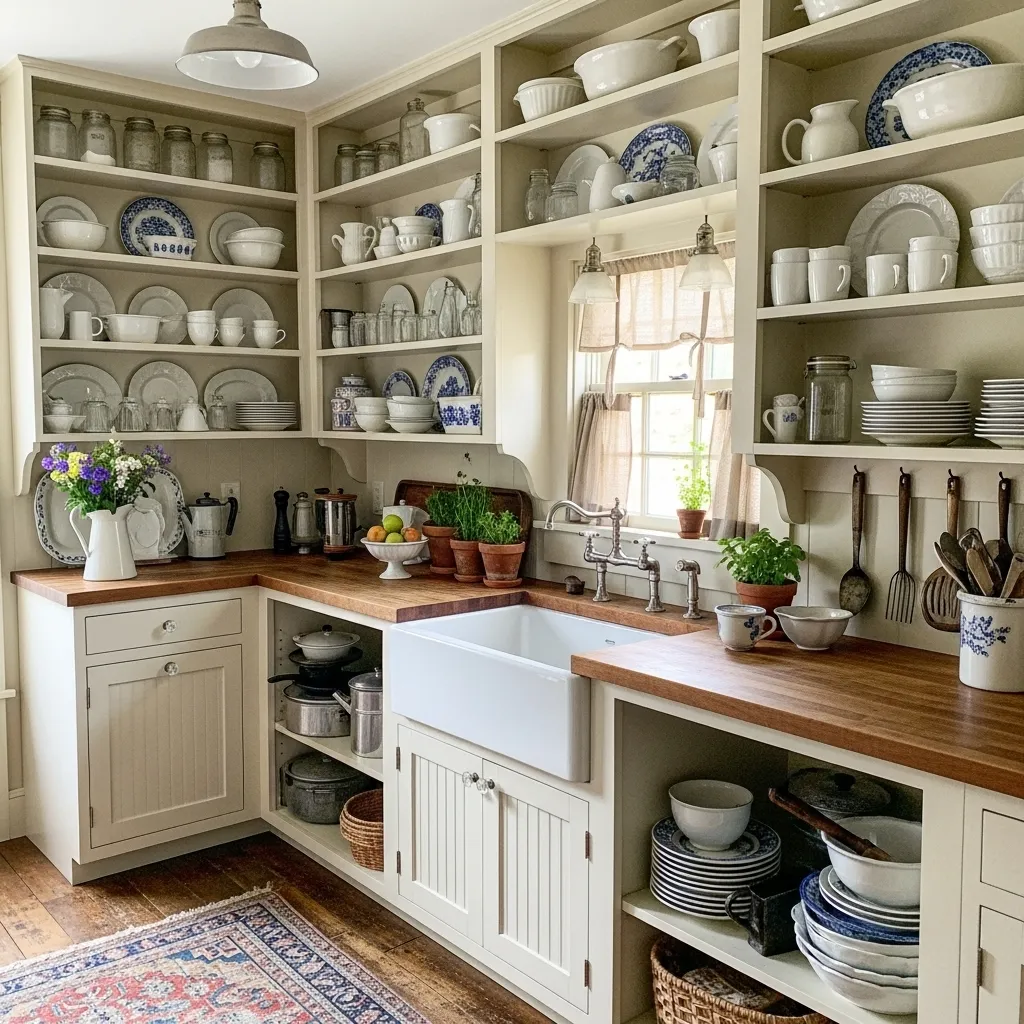
My open shelving wall started as a budget solution when I couldn’t afford upper cabinets in my cottage renovation, but it became my favorite feature and something I’d never change even with unlimited funds. The key to making open shelves work in a small space is being ruthlessly curated about what you display—everything needs to earn its spot by being both functional and beautiful. I’ve collected the white ironstone and blue transferware over years from estate sales and antique shops, and each piece has a story that makes using them feel special rather than precious.
The practical reality is that open shelves do get dusty and require more maintenance than closed cabinets, but for me, the trade-off is worth it because I love seeing my dishes displayed and the shelves make the small kitchen feel bigger by not having solid cabinet doors closing off the wall. I organized everything by color and type, which creates visual calm despite having lots of items visible. The lower shelves hold everyday dishes I use constantly, while the top shelves display more decorative pieces and less-frequently-used serving platters. This setup has made me a more organized cook because I can see exactly what I have at a glance instead of rummaging through dark cabinets.
2. Apron Front Sink with Window View
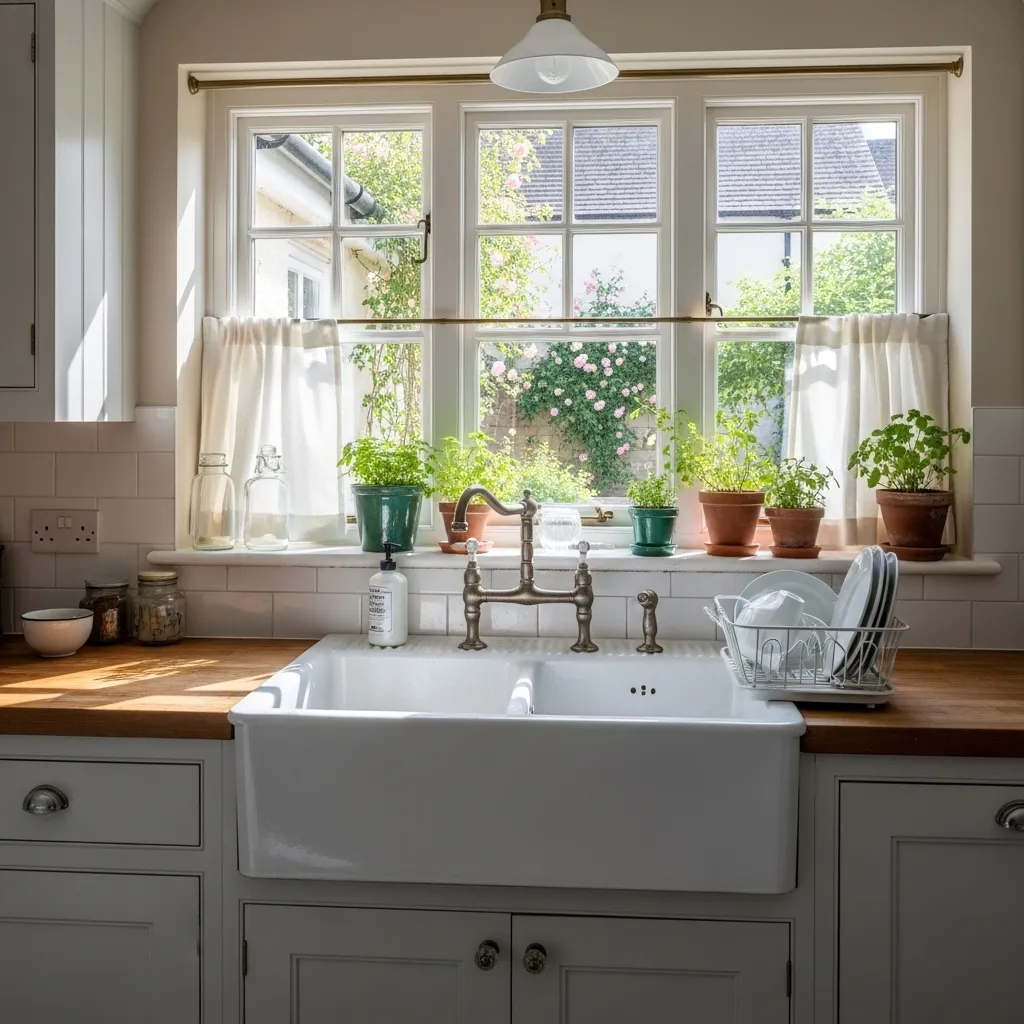
Installing this deep farmhouse sink was the single best functional decision in my cottage kitchen because it can actually fit my largest pots and baking sheets, which my old undermount sink never could. The apron front extends past the cabinet face, which feels authentic to cottage style and also means I can stand closer without the counter edge digging into me during long dish-washing sessions. I chose white porcelain because it’s classic and beautiful, though I’ll admit it shows every chip and stain—but those marks just add to the lived-in cottage character.
Positioning the sink under the window was non-negotiable for me because washing dishes while looking at the garden instead of a wall transforms a chore into something almost meditative. I planted climbing roses specifically to frame the view from the sink, and watching them bloom while doing morning dishes brings me genuine joy. The deep basin means things can pile up without looking too chaotic, and I can fill it with soapy water for hand-washing delicate items or soaking roasting pans. The vintage bridge faucet was an investment but worth every penny for the authentic detail it brings—modern faucets in farmhouse style just don’t have the same presence or character.
3. Painted Wood Floors with Vintage Rug
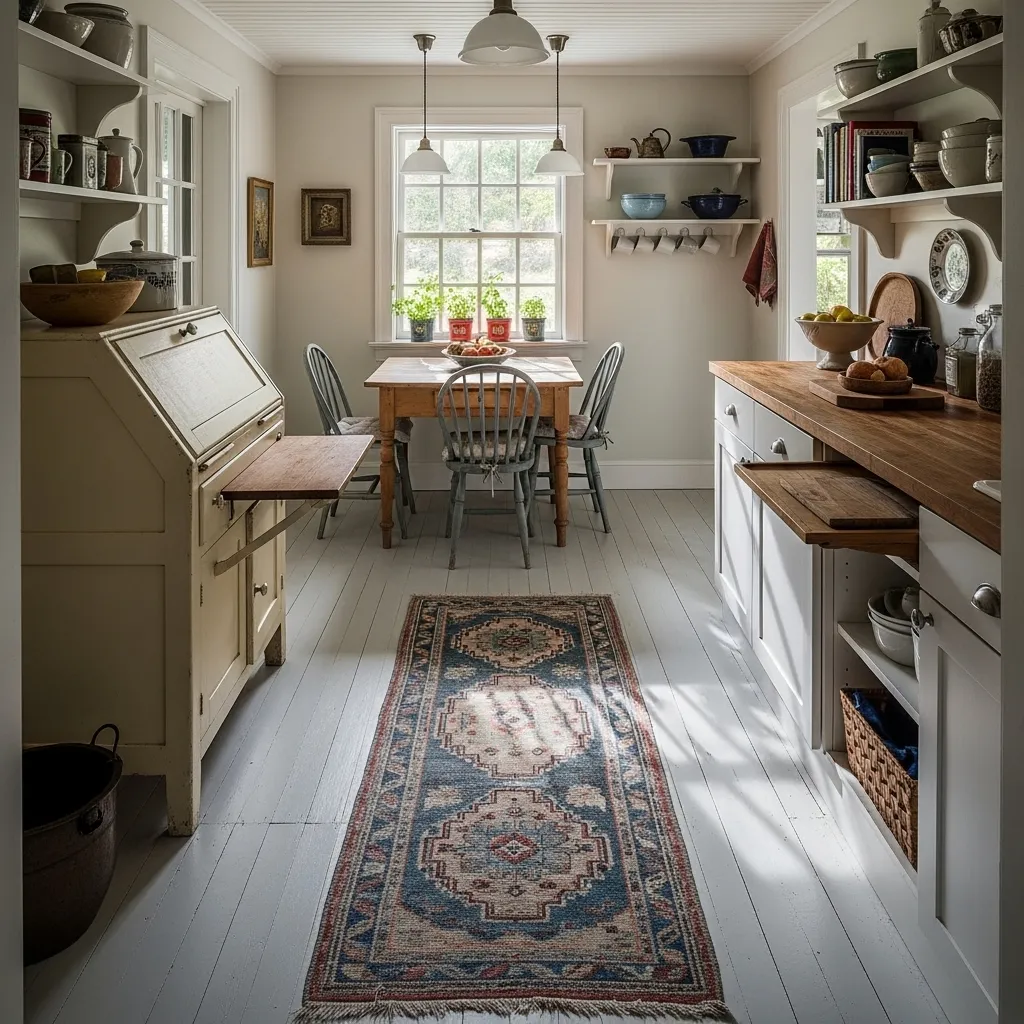
Painting my old pine floors white was terrifying because it felt so permanent, but it completely transformed my dark cottage kitchen into a bright, airy space that feels bigger than its actual seven-foot width. I used porch and floor paint designed to withstand traffic, and the natural wear pattern that’s developed over five years just adds to the cottage charm—the darker wood showing through in spots looks intentional and loved rather than damaged. The white floors reflect light beautifully, which is crucial in a small kitchen with limited natural light.
The vintage rug was essential for adding warmth and preventing the all-white from feeling too stark or cold. I found mine at an estate sale for almost nothing because it was faded and worn, but those imperfections are exactly what give it cottage character. The rug defines the walkway through the kitchen and makes standing at the sink or stove more comfortable on my feet. I take it outside and beat it clean a few times a year, which feels delightfully old-fashioned and actually works better than vacuuming for getting out embedded dirt. The combination of painted floors and a worn rug creates this layered, collected-over-time look that new materials could never replicate.
4. Glass-Front Cabinets with Beadboard Backing
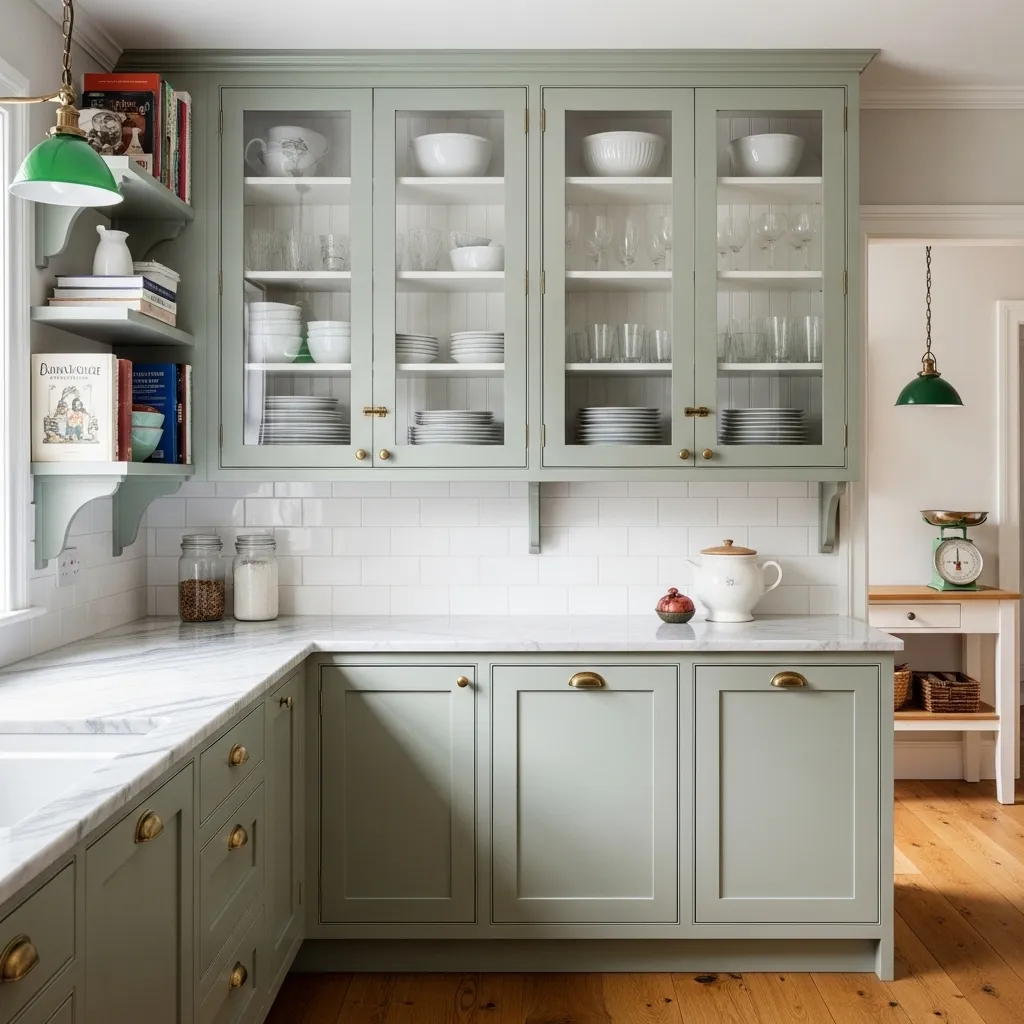
My glass-front cabinets force me to keep things organized, which initially felt like pressure but has actually made me a tidier person overall. The beadboard backing inside the cabinets adds cottage detail and also provides a uniform background that makes whatever’s displayed look more intentional, even if my dish collection is a mix of patterns and sources. I keep my everyday white dishes in these cabinets because they look cohesive and pretty behind glass, while more mismatched items live in the solid-door cabinets.
The sage green color was inspired by vintage painted furniture I’ve seen in antique shops, and it brings just enough color to keep the kitchen from feeling too all-white without being overwhelming in the small space. The brass latches are reproduction vintage hardware that I splurged on, but they add authentic detail that modern pulls couldn’t match. I love being able to see where everything is without opening cabinet doors, and the glass fronts reflect light around the kitchen, which helps the space feel brighter. The cabinets have become a display opportunity as much as storage—I arrange things with an eye toward how they look from outside, which has made me more conscious of what I own and whether it deserves precious cabinet space.
5. Butcher Block Counters with Vintage Details
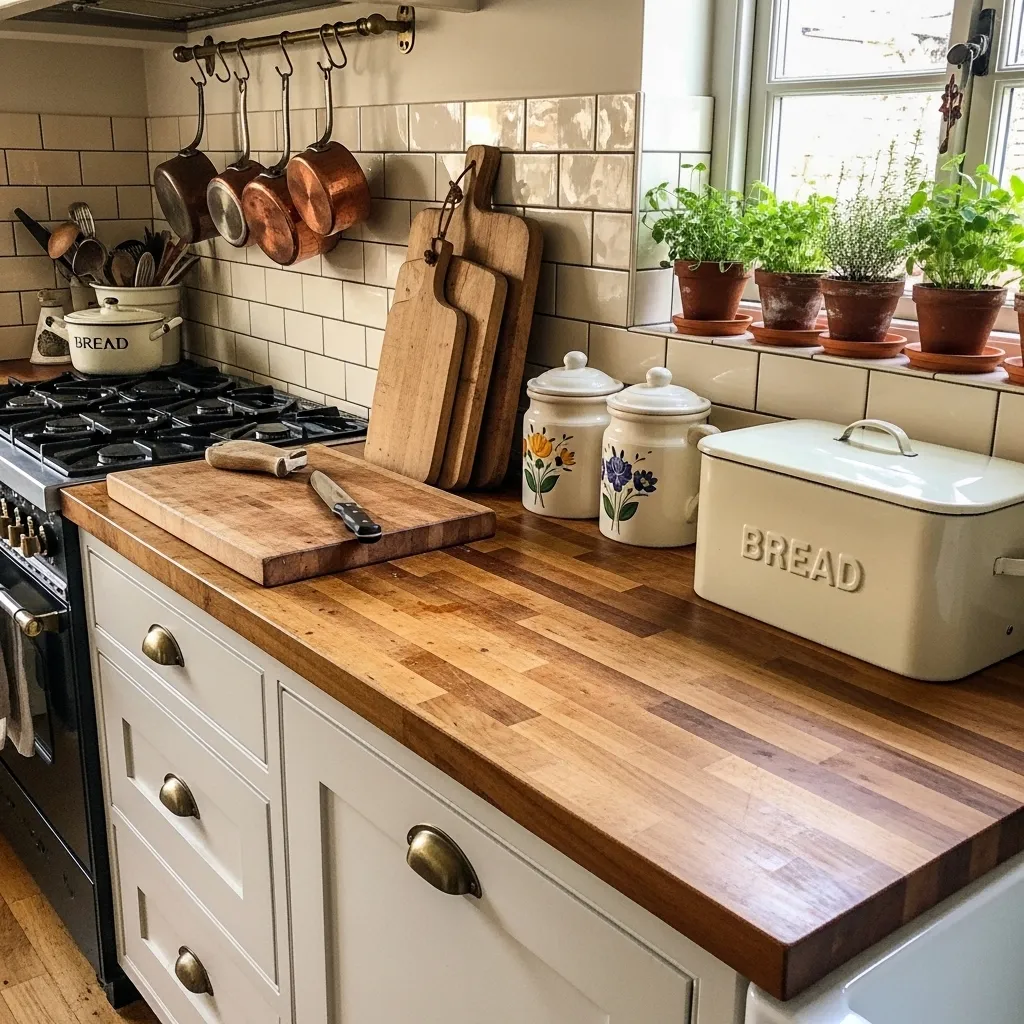
Choosing butcher block counters for my cottage kitchen was about embracing imperfection and the honest wear that comes from actually using a kitchen. The wood develops character over time—knife marks from years of chopping, slight stains from beet juice or wine, subtle warping from moisture—and all of it just makes the counters feel more authentic and loved. I oil them every few months with food-safe mineral oil, which is the only maintenance they need, and the process is meditative and satisfying.
The warmth of wood counters completely changes the feeling of the kitchen compared to stone or laminate—there’s a tactile quality and natural variation that makes the space feel organic and welcoming. I use the butcher block as an actual cutting surface, which horrifies some people who treat their counters like museum pieces, but to me that’s the point of having wood—it’s meant to be used. The vintage accessories I’ve collected over the years look perfect against the wood tones, and the whole kitchen has this cohesive warmth that ties everything together. Butcher block is definitely not for everyone, especially perfectionists who can’t handle the patina and wear, but for cottage style where lived-in character is the goal, it’s absolutely perfect.
6. Compact Corner Breakfast Nook
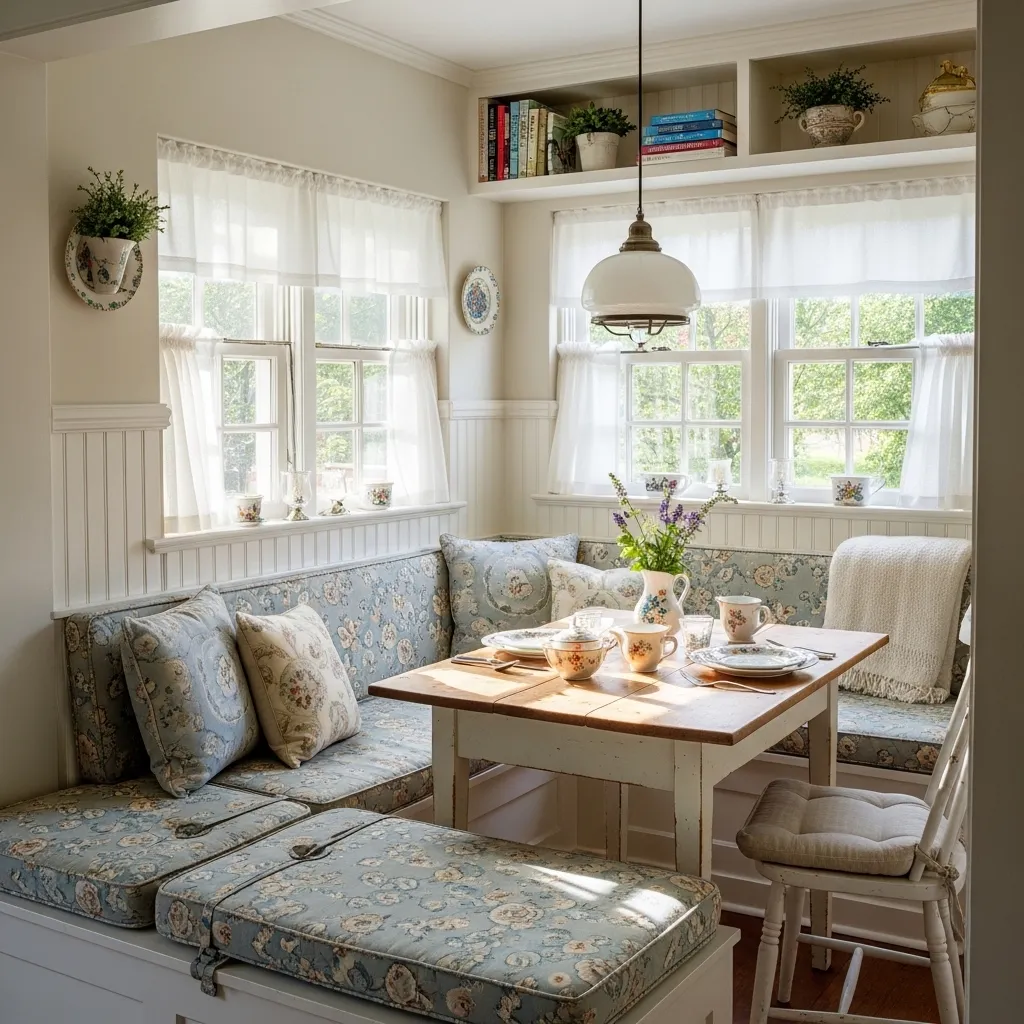
Creating this breakfast nook in an awkward corner was the key to making my tiny cottage kitchen feel complete—it added essential seating without taking up floor space that a freestanding table and chairs would require. The built-in benches with storage underneath were custom-made to fit the exact dimensions of the corner, maximizing every inch. I use the storage for linens, seasonal dishes, and entertaining supplies that don’t need to be accessed daily.
The floral upholstery is admittedly impractical for a kitchen, but I treated it with fabric protector and it’s held up surprisingly well to spills and crumbs. The vintage fabric pattern was something I found at an estate sale and had recovered onto new cushions, giving it an authentic cottage look that new fabrics can’t quite replicate. Having a dedicated spot for morning coffee and casual meals has changed how we use the kitchen—it’s become a gathering place for everything from breakfast to homework to evening tea. The windows on two sides make it the brightest spot in the kitchen, and watching birds at the feeder outside while eating breakfast has become my favorite daily ritual.
7. Freestanding Vintage Hutch Storage
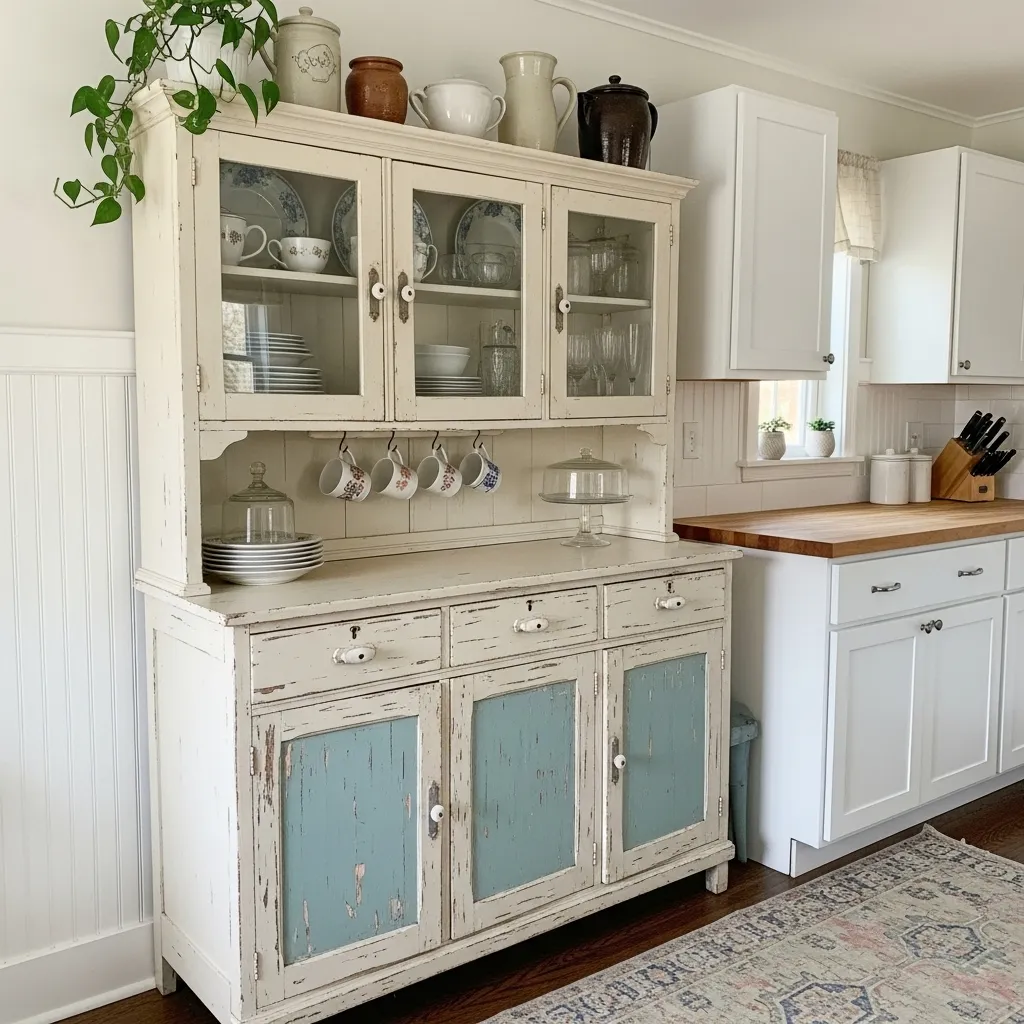
My vintage hutch was an estate sale find that I had to have even though I had no idea where it would go—it was just too beautiful with its original wavy glass and layered paint history to pass up. It ended up being the perfect solution for my small cottage kitchen’s storage problem, providing way more capacity than built-in cabinets would in the same footprint. The upper glass section lets me display pretty dishes while keeping them dust-free, and the lower solid cabinets hide all the less-attractive kitchen necessities.
The distressed paint finish shows layers of cream, blue, and even some original green peeking through, which tells the story of its hundred-plus year history. I didn’t refinish or touch up anything—the worn paint and slightly crooked doors are part of its charm and authenticity. The hutch has become the focal point of the kitchen and sets the tone for the whole cottage aesthetic. I’ve arranged my vintage dish collection inside with an eye toward color and pattern, and opening those glass doors to get a teacup feels special every single time. This piece proves that freestanding furniture can work beautifully in kitchens and often has more character than built-in cabinets.
8. Exposed Ceiling Beams with Hanging Storage
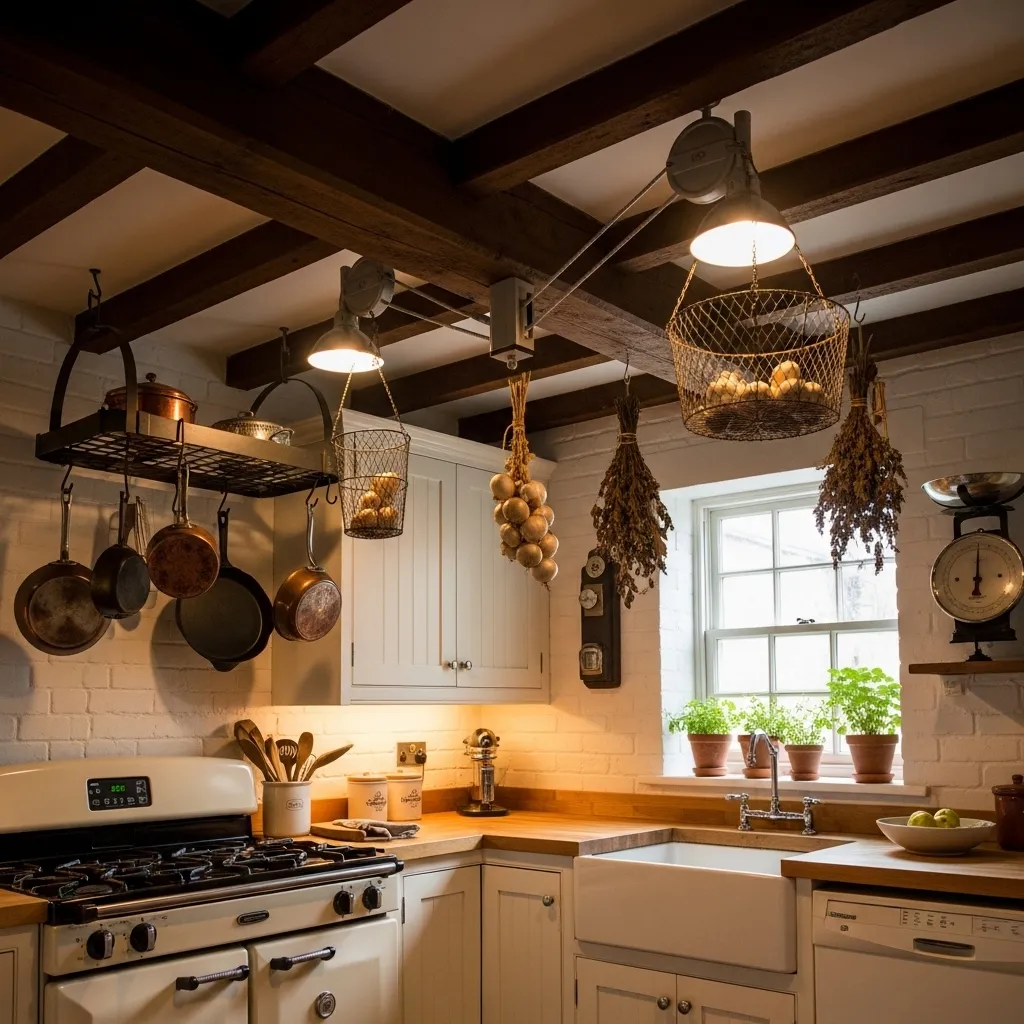
The exposed beams in my cottage kitchen are original to the 1920s house, and learning to use them as functional storage rather than just architectural detail was a revelation. The hanging pot rack keeps my most-used pans accessible while freeing up an entire lower cabinet for other storage. I installed sturdy hooks directly into the beams for hanging everything from garlic braids to my grandmother’s vintage hand mixer, creating this layer of visual interest overhead while solving real storage challenges.
The low ceiling height that comes with exposed beams could feel claustrophobic, but I’ve embraced it as part of the cottage’s cozy character. The dark wood beams against white walls create beautiful contrast and definition. I’m careful about what I hang and how I arrange it—too much and it looks cluttered, too little and the opportunity is wasted. The copper pots hanging overhead catch and reflect light beautifully, adding warmth to the space. My tall friends occasionally bump their heads on the hanging pots, which I consider a small price to pay for the character and functionality. This approach to storage feels authentic to how historical cottages would have maximized limited space.
9. Vintage Wallpaper Accent Wall Behind Open Shelves
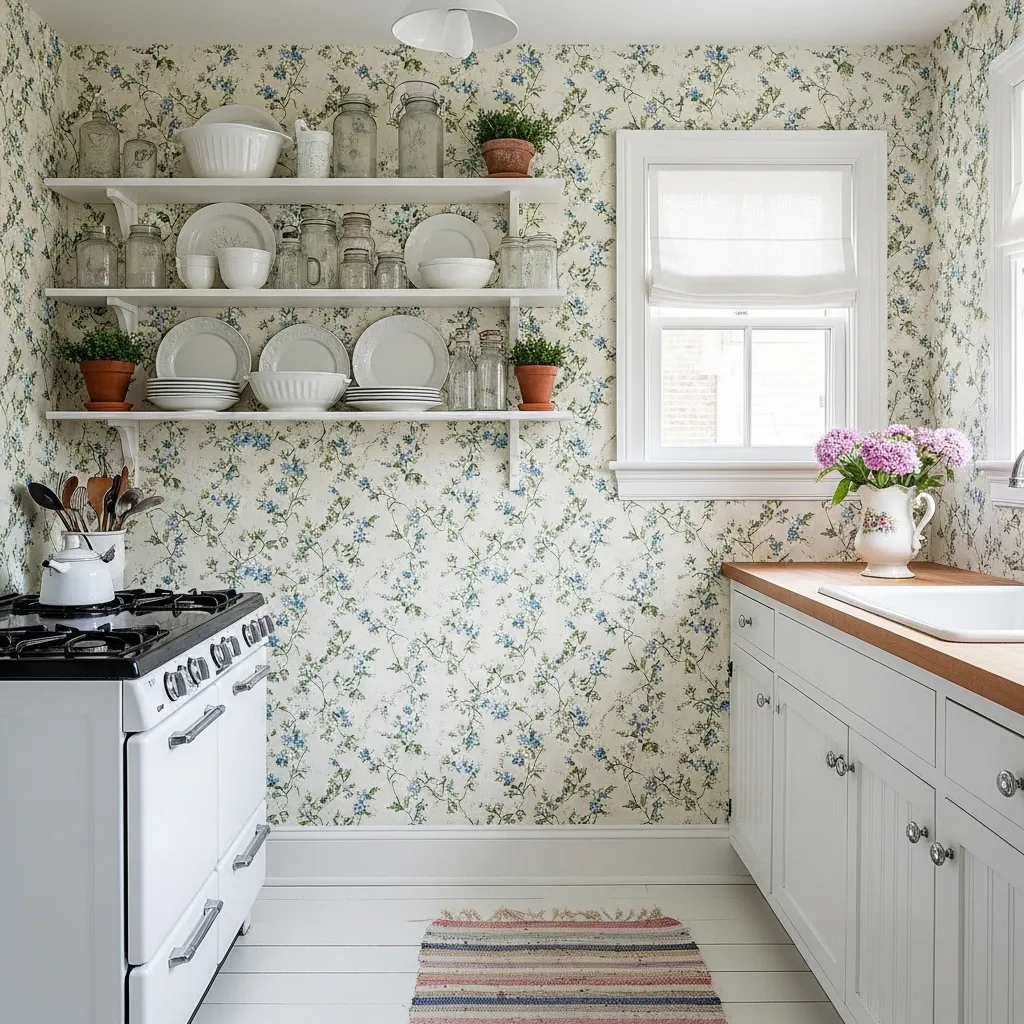
Adding vintage-inspired wallpaper to one wall of my small cottage kitchen was risky—I worried it would be too busy or overwhelming in a compact space—but I chose a small-scale delicate pattern and it ended up being the perfect amount of charm and personality. The key was limiting it to one wall and using open shelving in front of it rather than solid cabinets, so you see glimpses of the pattern between displayed items rather than large expanses. The wallpaper peeks through and adds this layer of interest without dominating.
I chose a pattern that looked authentically vintage with soft, faded colors rather than a bright, crisp modern print, which helps it feel like it could have been there for decades. The installation was straightforward—I prepped the wall carefully and used traditional wallpaper paste, and it’s held up beautifully for three years with no peeling despite kitchen humidity. The pattern adds softness and femininity to balance the more utilitarian elements like the stove and sink. When friends visit, the wallpaper is always what they comment on first—it gives the kitchen instant personality and makes it memorable in a way that plain painted walls never would.
10. Vintage Enamel Stove as Focal Point
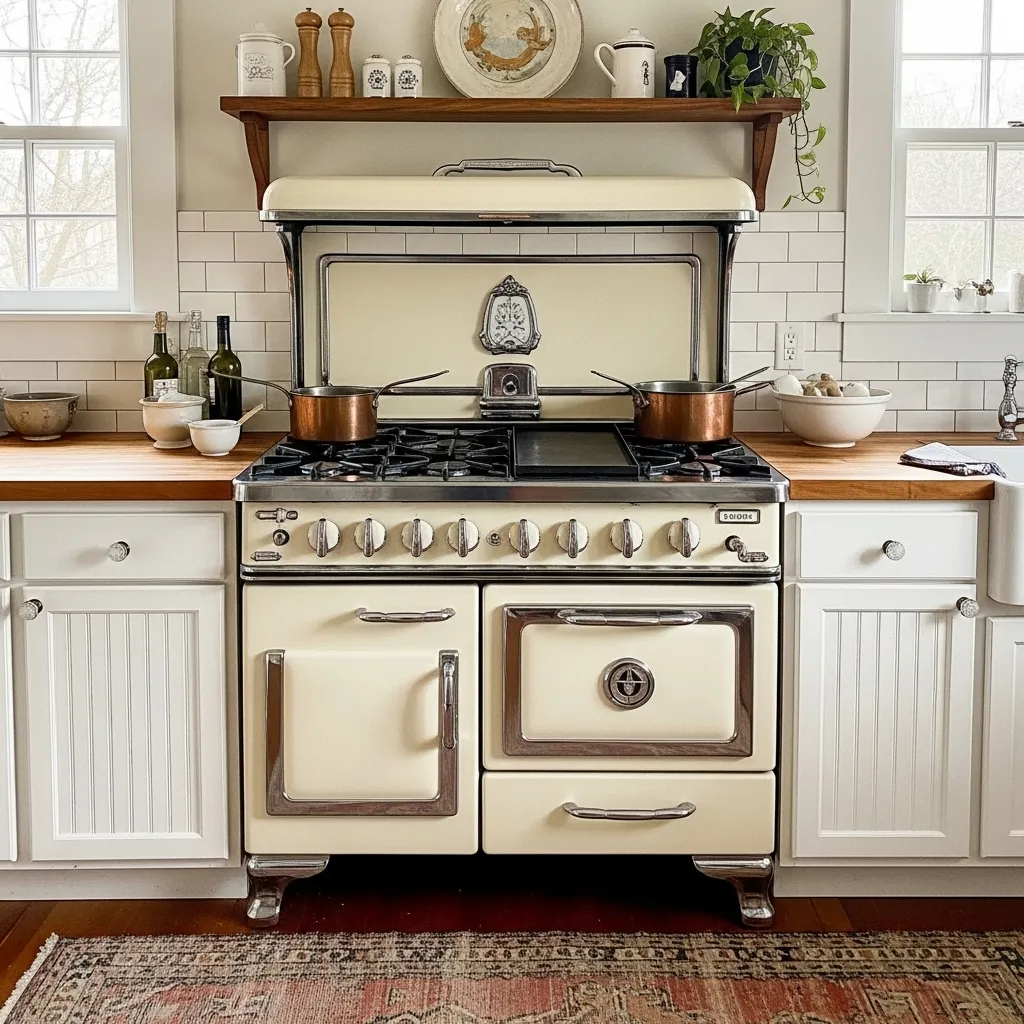
My vintage-style stove is hands-down the most extravagant purchase I’ve made for my cottage kitchen, but it instantly established the aesthetic and became the anchor that everything else revolves around. I chose a reproduction rather than a truly antique stove because I wanted vintage looks with modern functionality—things like even heat distribution and accurate temperature control that old stoves struggle with. The cream enamel is classic cottage and hides splatters better than stark white while still feeling light and bright.
The stove’s substantial presence works beautifully in my small kitchen because it’s such a strong focal point that the rest of the room can be simple—plain white cabinets, basic subway tile, minimal accessories. The vintage styling brings instant character that would take years to develop through collected accessories and wear. I cook on this stove every single day, and the experience is genuinely different than cooking on a modern range—the heavy grates, the substantial knobs, even the sound of the oven door closing all feel special and intentional. It’s proven that sometimes one significant investment piece is better than a bunch of smaller purchases, especially when it sets the tone for the entire space.
11. Dutch Door with Cottage Garden View
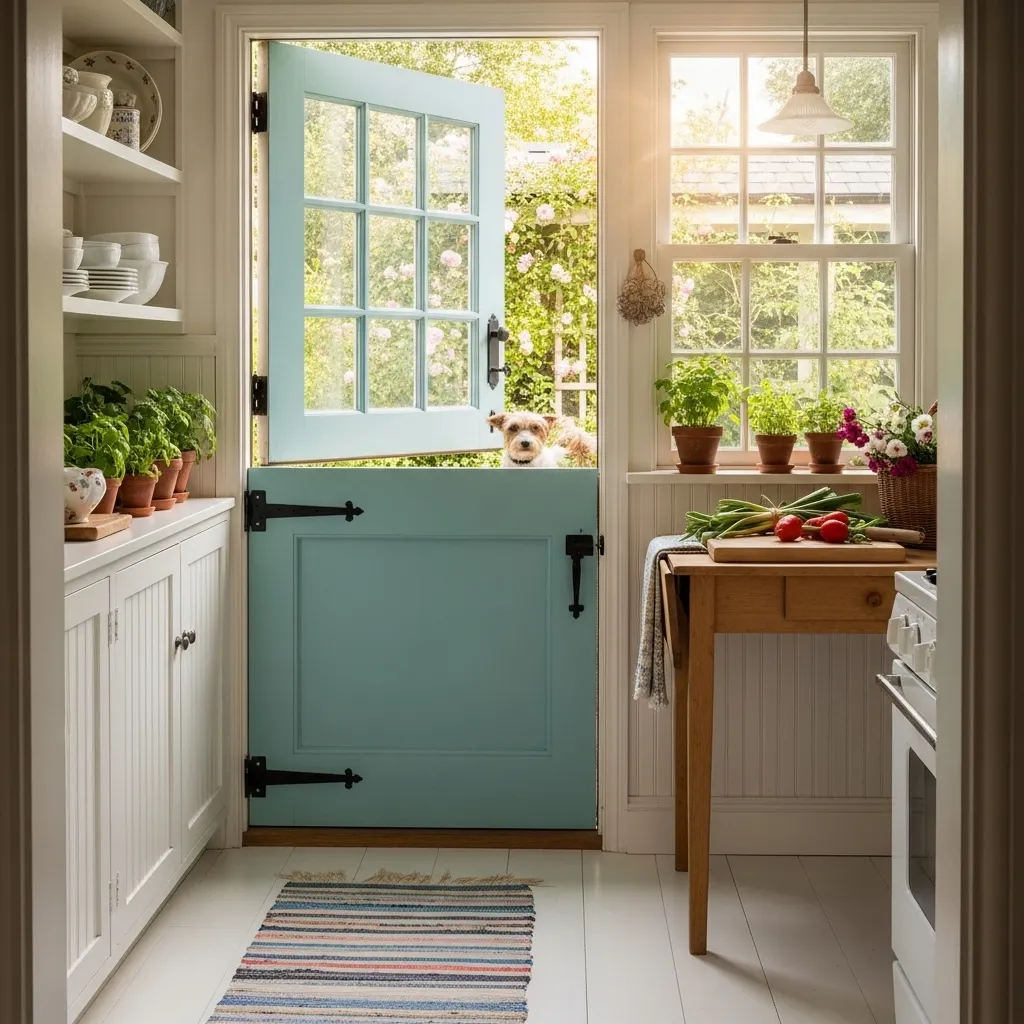
Installing a Dutch door was purely about recreating the cottage aesthetic I’d fallen in love with in English countryside homes, but it turned out to be incredibly functional too. Being able to open just the top half means I can let in fresh air and garden views while keeping pets or small children safely inside, and the cross-breeze through the upper door significantly helps with kitchen ventilation while cooking. The robin’s egg blue color was inspired by vintage cottage doors I’d seen, and it brings just enough color to the white kitchen without being overwhelming.
The garden view through the open door genuinely improves my time in the kitchen—I can watch birds, check on the vegetable garden, and feel connected to the outdoors while doing dishes or cooking. The traditional hardware and divided light glass in the upper portion add authentic cottage details that make the door feel like it’s been there for a hundred years. On nice days, I keep the top open from morning until evening, and the kitchen feels like an extension of the garden. The Dutch door has become my favorite architectural element in the cottage and something guests always comment on—it’s both beautiful and functional, which is the perfect combination for cottage style.