10 TV Wall Ideas for Living Rooms
The TV wall has become the modern focal point in most living rooms, replacing the traditional fireplace as the element around which furniture is arranged and family life centers. Yet so often, televisions end up looking like awkward black rectangles floating on blank walls—purely functional but aesthetically jarring. The challenge is integrating this necessary technology into your living room design in a way that looks intentional and beautiful rather than like an afterthought. When thoughtfully designed, a TV wall can be genuinely stunning—combining practical media storage, display opportunities for meaningful objects, architectural interest, and yes, that screen we all use daily, into a cohesive, attractive focal point that enhances rather than detracts from your living room’s aesthetic.
What makes TV wall design so important is that this is likely the wall you and your guests look at most frequently. It’s the backdrop for movie nights, the view from your sofa during daily unwinding, and often the first thing visible when entering the room. A well-designed TV wall creates visual balance, provides essential storage for media equipment and everyday items, offers display opportunities that add personality, and integrates technology seamlessly rather than letting it dominate. The best TV walls feel purposeful and complete rather than looking like someone just mounted a screen and called it done.
The design possibilities for TV walls range from minimalist floating installations that let the screen be the focus, to elaborate built-in systems with cabinetry and shelving, to feature walls with textured materials or bold colors that make the TV area a true architectural moment. Your choice depends on your space, budget, storage needs, and aesthetic preferences—whether you want the TV to blend in and disappear when not in use, or embrace it as a centerpiece and design around it intentionally. Let’s explore these TV wall ideas and figure out how to create a focal point that’s both beautiful and perfectly functional for how you actually live.
1. Floor-to-Ceiling Built-In Entertainment Center
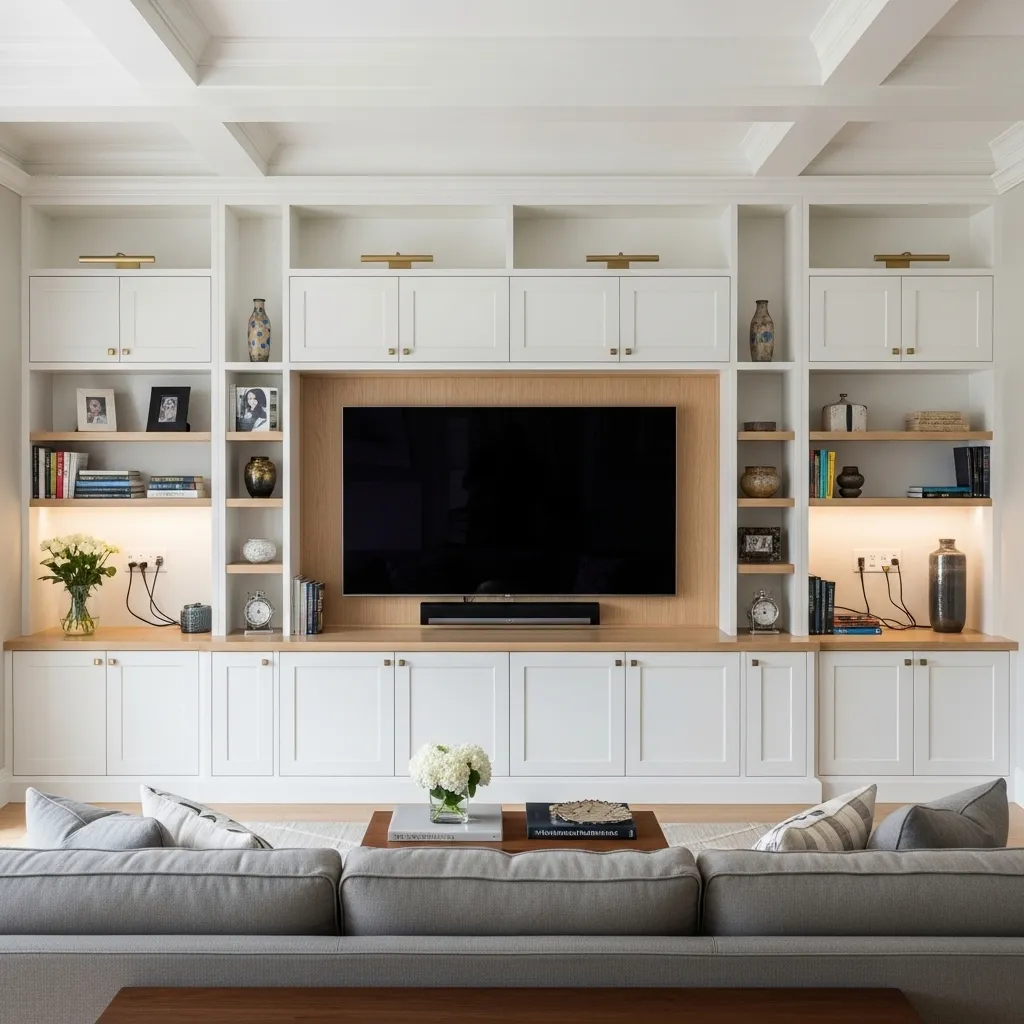
Floor-to-ceiling built-ins create the most complete, custom-looking TV wall solution by transforming the entire wall into organized storage and display with the television seamlessly integrated. This approach provides maximum storage—closed cabinets hide clutter, media equipment, and everyday items, while open shelving displays books, objects, and creates visual interest. The TV becomes one element within a larger architectural composition rather than a lone rectangle on a blank wall.
The built-in approach works particularly well in living rooms where storage is needed—it eliminates the need for separate bookcases, media consoles, or storage furniture by incorporating everything into one cohesive wall system. The custom millwork can be designed to exact specifications, accommodating your specific TV size, equipment needs, and storage requirements. Paint built-ins the same color as walls for seamless integration, or use contrasting wood tones or colors to make the wall a feature. Include integrated lighting—LED strips under shelves create ambiance and highlight displayed items. Wire management systems keep cables organized and hidden. The investment is significant but creates genuinely custom storage and a finished, designer look that adds real value to your home.
2. Minimalist Floating TV with Hidden Storage
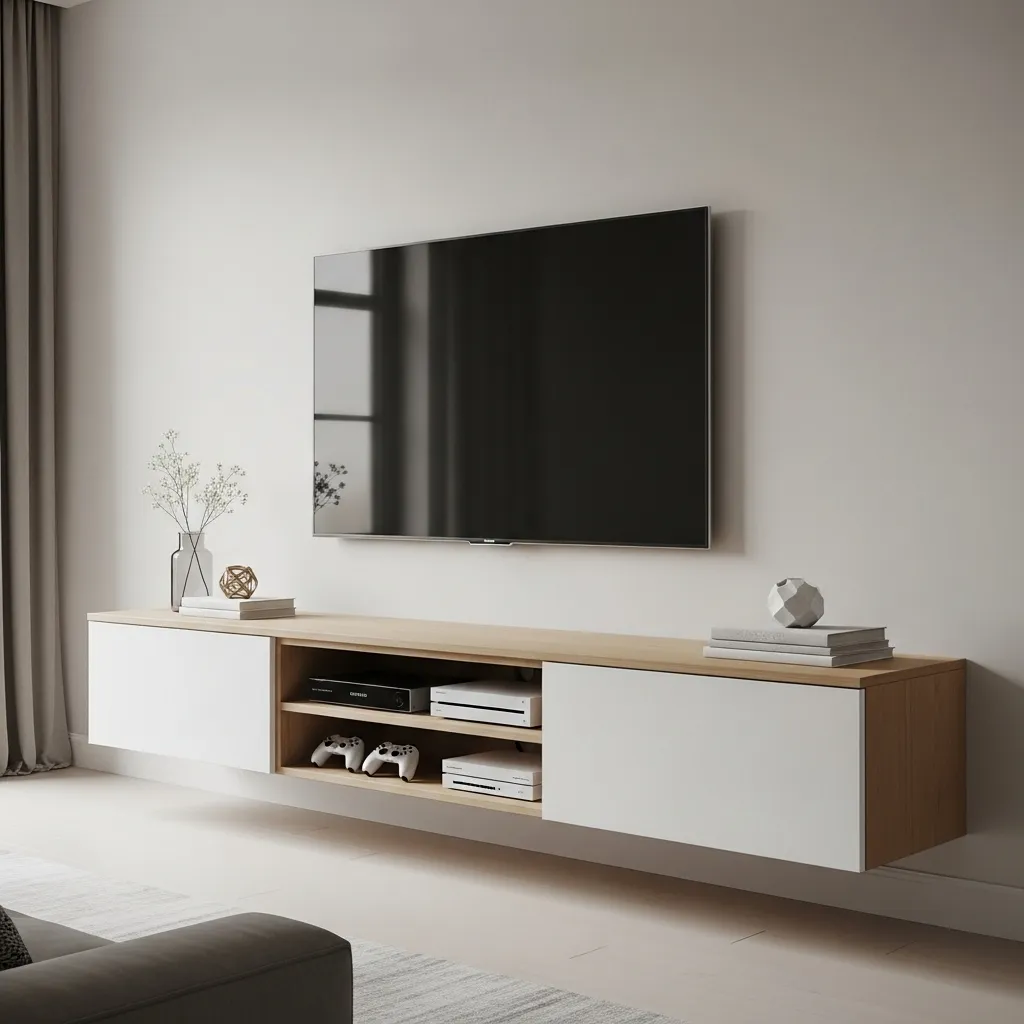
The minimalist floating approach creates the cleanest possible TV wall by eliminating visible clutter, hardware, and unnecessary decoration. The TV mounts flush to the wall with cables routed internally or through cable management systems, creating the appearance of a screen simply floating on the wall. The floating media console below provides essential storage while maintaining the clean, hovering aesthetic through hidden mounting brackets.
This approach requires planning—in-wall cable management ideally happens during construction or renovation, though retrofit solutions exist. The floating console must be properly anchored to studs to support weight. Choose consoles with push-to-open or handleless doors to maintain clean lines. Keep the wall itself simple—no competing artwork or decoration. The minimalist aesthetic works beautifully in modern and contemporary living rooms where simplicity and clean lines are priorities. While this approach provides less storage than full built-ins, it creates maximum visual calm and lets the TV be present when on, nearly invisible when off. The result is a living room that feels spacious, uncluttered, and intentionally minimal.
3. Accent Wall with Wood Slat Paneling
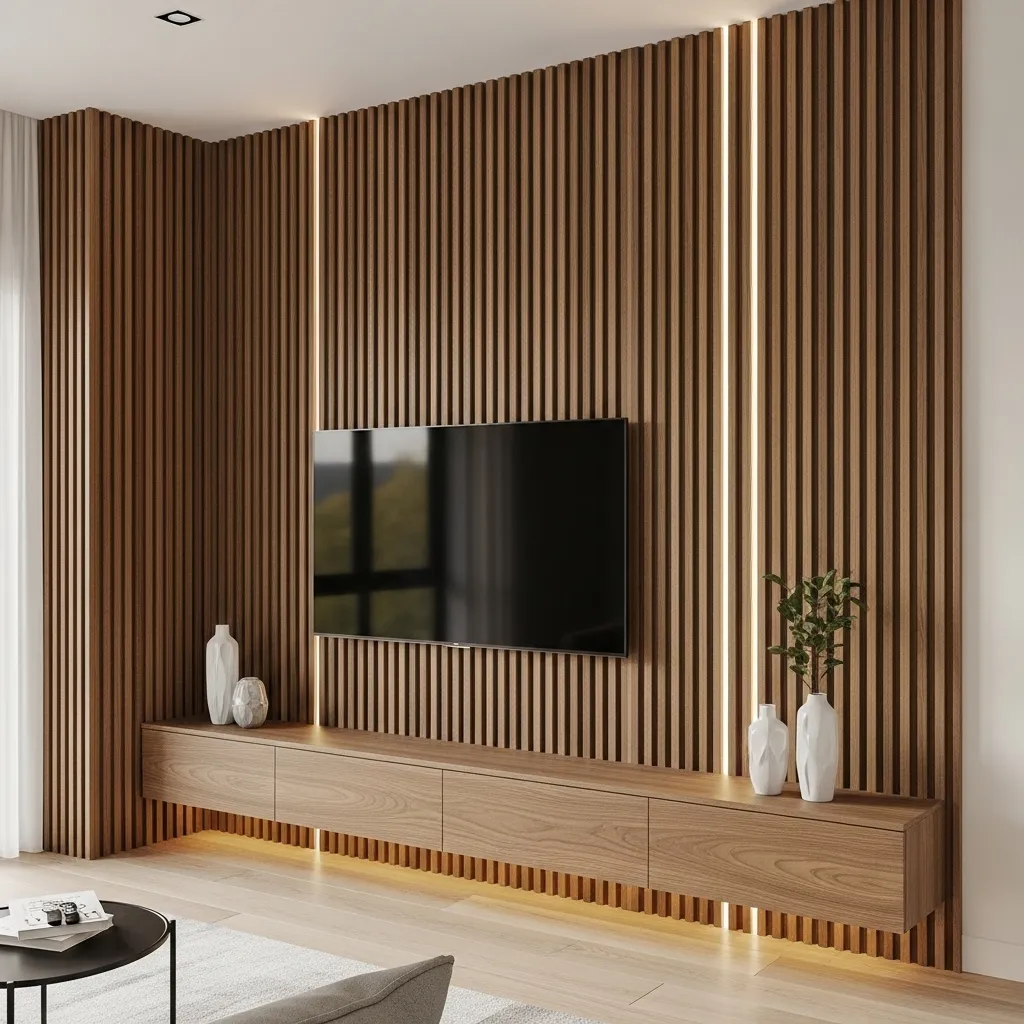
Wood slat accent walls create beautiful texture and architectural interest that makes the TV wall a genuine design feature rather than just a place to hang a screen. The vertical slats add warmth through natural material, create visual rhythm through repetition, and provide a textured backdrop that actually helps the TV blend in rather than standing out starkly against a flat wall. The dimensionality creates interest even when the TV is off.
The slats can be applied directly to the wall or mounted to a backing panel for easier installation. Spacing typically ranges from ½ inch to 2 inches between slats—narrower spacing creates a denser look, wider spacing feels more open. Wood species and finish should coordinate with other wood in the room—floors, furniture, or trim. Optional backlighting with LED strips behind the slats creates dramatic ambiance and gentle illumination perfect for movie watching. The media console should coordinate with the wood species for cohesion. This approach transforms the TV wall from purely functional to genuinely architectural, adding warmth and texture that enhances the entire living room. It works across styles from mid-century modern to contemporary to transitional.
4. Gallery Wall Surrounding TV
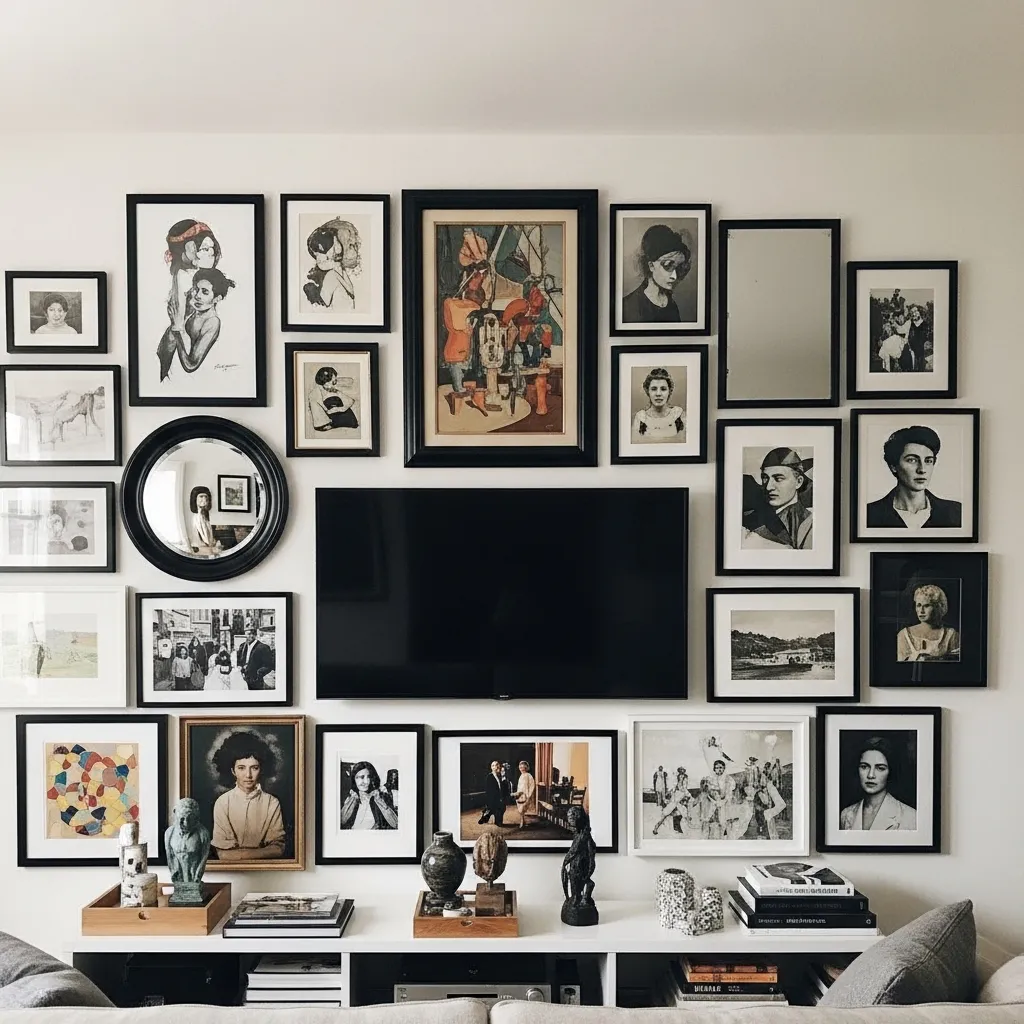
Gallery walls that incorporate the TV create a brilliant solution for people uncomfortable with the television as the sole focal point—by surrounding it with meaningful art, photographs, and objects, the TV becomes one element within a larger curated display rather than dominating the wall. The black screen actually blends with black frames when off, becoming less visually prominent than it would be alone on a blank wall.
The key is thoughtful curation and arrangement. Plan your layout on the floor first, arranging frames until you achieve pleasing composition and balance. Use frames in varying sizes but unified finish—typically black to coordinate with the TV bezel. Include actual art, family photos, mirrors, or objects that matter to you rather than generic filler. The TV can be centered with symmetrical arrangement around it, or positioned off-center within an asymmetrical composition. Extend the gallery wall beyond just the TV area to create a larger moment. The result is a living room where art and memory share the focal wall with technology, creating something more personal and layered than a TV alone could achieve.
5. Stone or Brick Feature Wall
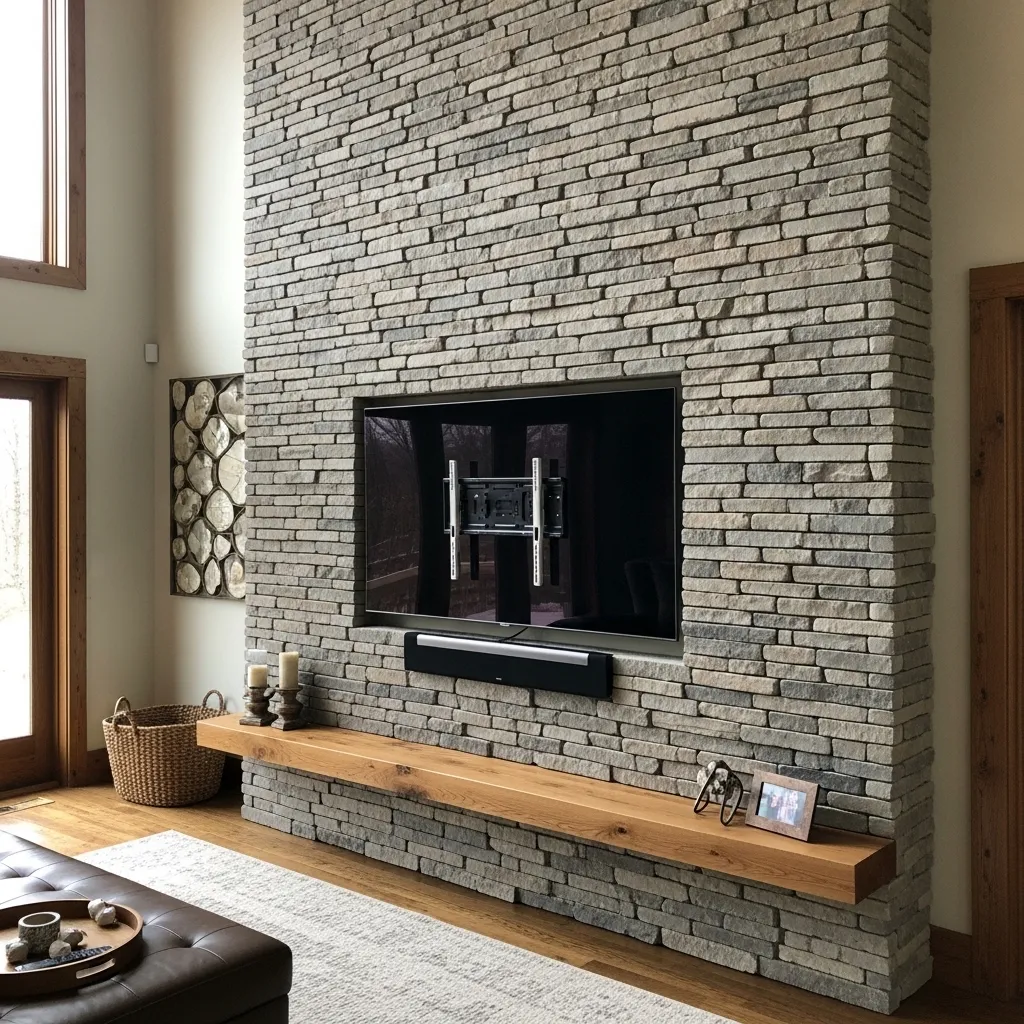
Stone or brick accent walls bring incredible texture, natural material beauty, and substantial presence that transforms the TV wall into genuine architecture. The organic, three-dimensional surface creates visual interest that helps the flat TV screen blend rather than clash. Stone provides depth and character that plain drywall cannot achieve, making the entire wall a feature rather than just the TV being a lone element.
Natural stacked stone, cultured stone veneer, or exposed brick all create this effect with varying costs and installation complexity. The textured surface requires specialized mounting hardware rated for masonry installation. A floating wood mantel—whether rough-hewn for rustic style or sleek and simple for modern aesthetics—can define the TV area and provide a display ledge. The stone or brick should extend significantly beyond just the TV area to feel intentional—ideally floor to ceiling and wall to wall, or at least a substantial section that creates genuine architectural impact. This works beautifully in mountain homes, rustic-modern spaces, industrial lofts, or anywhere you want natural material warmth and substantial presence. The stone wall creates a living room with genuine character and grounds the technology in natural, timeless materials.
6. Built-In with Fireplace Below TV
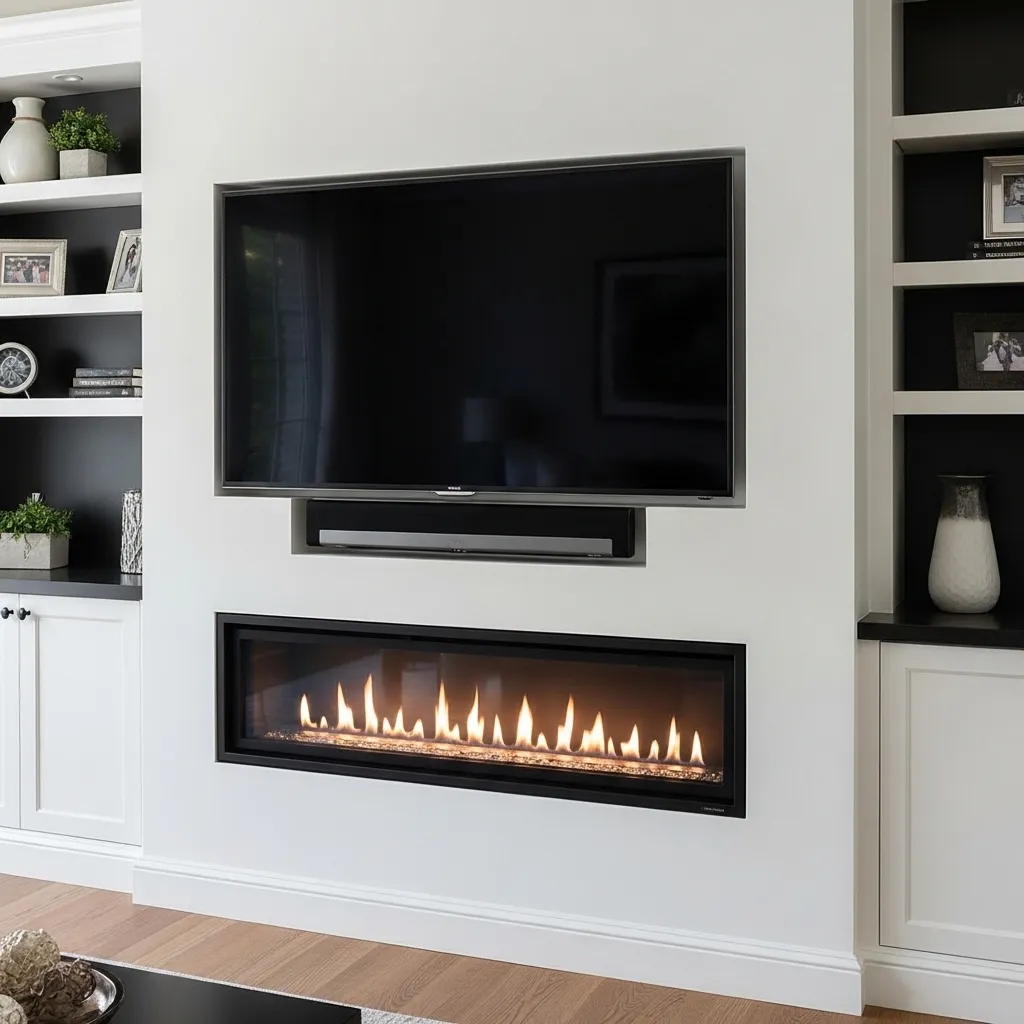
Stacking the TV above a fireplace creates the ultimate modern focal point—combining fire’s traditional gathering power with the screen’s contemporary role. The linear gas fireplace provides ambiance and warmth without the heat concerns of wood-burning that might damage electronics. The built-in cabinetry surrounding both elements creates a composed, intentional installation that integrates both features into one cohesive wall system.
The key considerations are TV height and heat management. Mounting the TV above the fireplace often places it higher than ideal viewing angle—tilting or pull-down mounts help mitigate this. Linear gas fireplaces produce less heat rise than wood-burning, and proper insulation and heat shields protect the TV. The fireplace should be proportional to the TV and surrounding built-ins—a 50-60 inch linear fireplace typically works well with 55-75 inch TVs. Built-in cabinets flanking the stacked elements provide essential storage while creating visual balance. This arrangement works particularly well in formal living rooms or great rooms where both fireplace and TV are desired but wall space is limited. The combination creates a focal point that serves multiple purposes beautifully.
7. Dark Painted Accent Wall
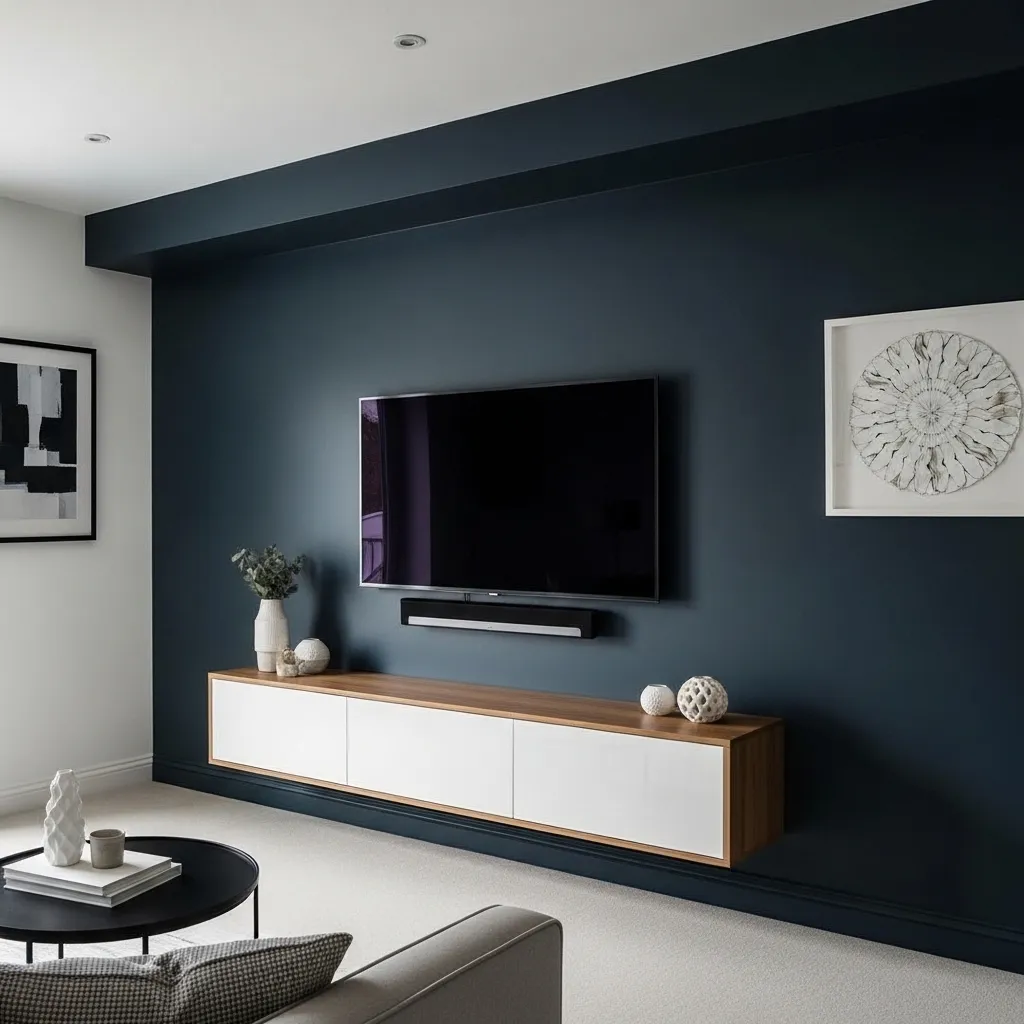
A dark painted accent wall behind the TV creates sophisticated drama while actually helping the television blend in and become less visually prominent. When the wall is charcoal, navy, or black, the TV’s dark bezel essentially disappears against the background when the screen is off, becoming far less conspicuous than it would be on a white wall. The dark wall creates depth and architectural interest while being an incredibly affordable transformation.
The key is committing to the full wall—half-measures or small sections don’t create the same impact. The dark color should extend wall to wall and floor to ceiling for maximum effect. Keep the remaining three walls light to maintain brightness and prevent the room from feeling cave-like. Natural light helps balance the dark wall. The floating media console should provide contrast—natural wood warmth or white brightness against the dark wall. Artwork, plants, or decorative objects in lighter tones will pop beautifully against the dark backdrop. This approach works particularly well in modern, contemporary, or transitional living rooms where sophisticated moodiness is desired. The dark wall creates genuine atmosphere and makes the TV feel integrated rather than like an afterthought.
8. Shiplap or Horizontal Wood Planks
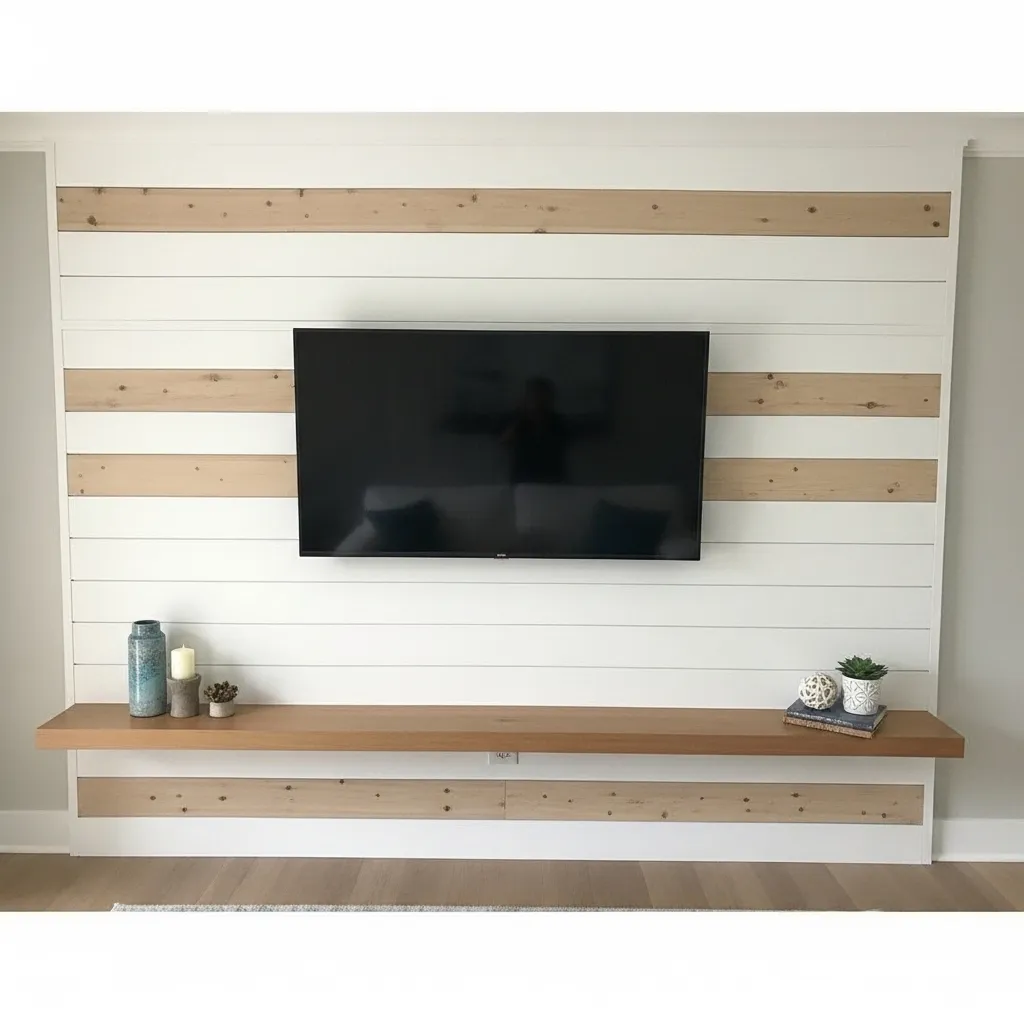
Shiplap and horizontal wood plank walls bring farmhouse charm and textured interest that helps the TV wall feel more architectural and intentional. The horizontal lines create movement and visual rhythm, and the slight shadow lines between boards add subtle dimensionality. Painted white, shiplap creates bright, casual coastal or farmhouse vibes. Left natural or stained, wood planks bring warmth and organic texture.
Installation can be actual tongue-and-groove shiplap, simple overlapping planks creating shadow lines, or even high-quality peel-and-stick options for renters. The planked wall should extend beyond just the immediate TV area to feel substantial—ideally the full wall. A floating wood shelf below the TV provides minimal surface for soundbar or small decorative items while maintaining the clean lines. This approach works beautifully in modern farmhouse, coastal, Scandinavian, or casual contemporary living rooms where that relaxed, textured quality is desired. The wood wall creates warmth and character that prevents the TV from looking stark or out of place, instead integrating it into a textured, welcoming environment.
9. Backlit Panel Behind TV
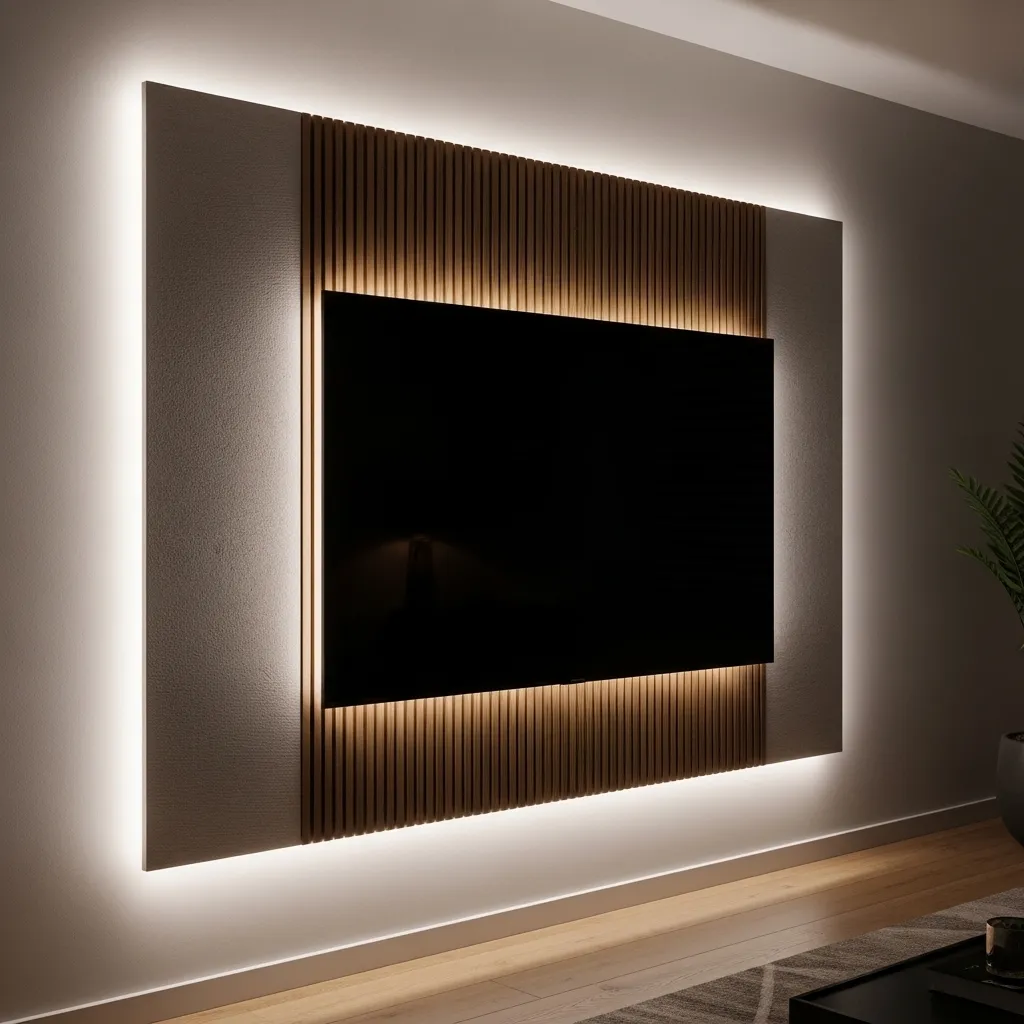
Backlit panels behind the TV create dramatic ambiance and visual interest while serving practical purposes—the soft glow reduces eye strain during viewing by minimizing the contrast between the bright screen and dark wall, and the lighting creates atmosphere perfect for movie nights. The backlit effect makes the TV appear to float, adding architectural interest to an otherwise simple wall mount.
The panel behind the TV can be constructed from various materials—wood slats with LED strips behind them, frosted acrylic panels with edge or back lighting, fabric panels with backlighting, or even textured materials that glow when lit from behind. The panel should extend several inches beyond the TV on all sides to create a defined frame effect and ensure the glow is visible. LED strips are affordable, easy to install, and often come with remote controls or smart integration allowing color and brightness adjustment. The backlighting can be subtle white for sophistication or colored for drama and fun. This approach creates a TV wall with genuine wow-factor and atmosphere while being relatively affordable and DIY-friendly. It transforms TV watching into a more immersive, theatrical experience.
10. Symmetrical Built-In Bookcases Flanking TV
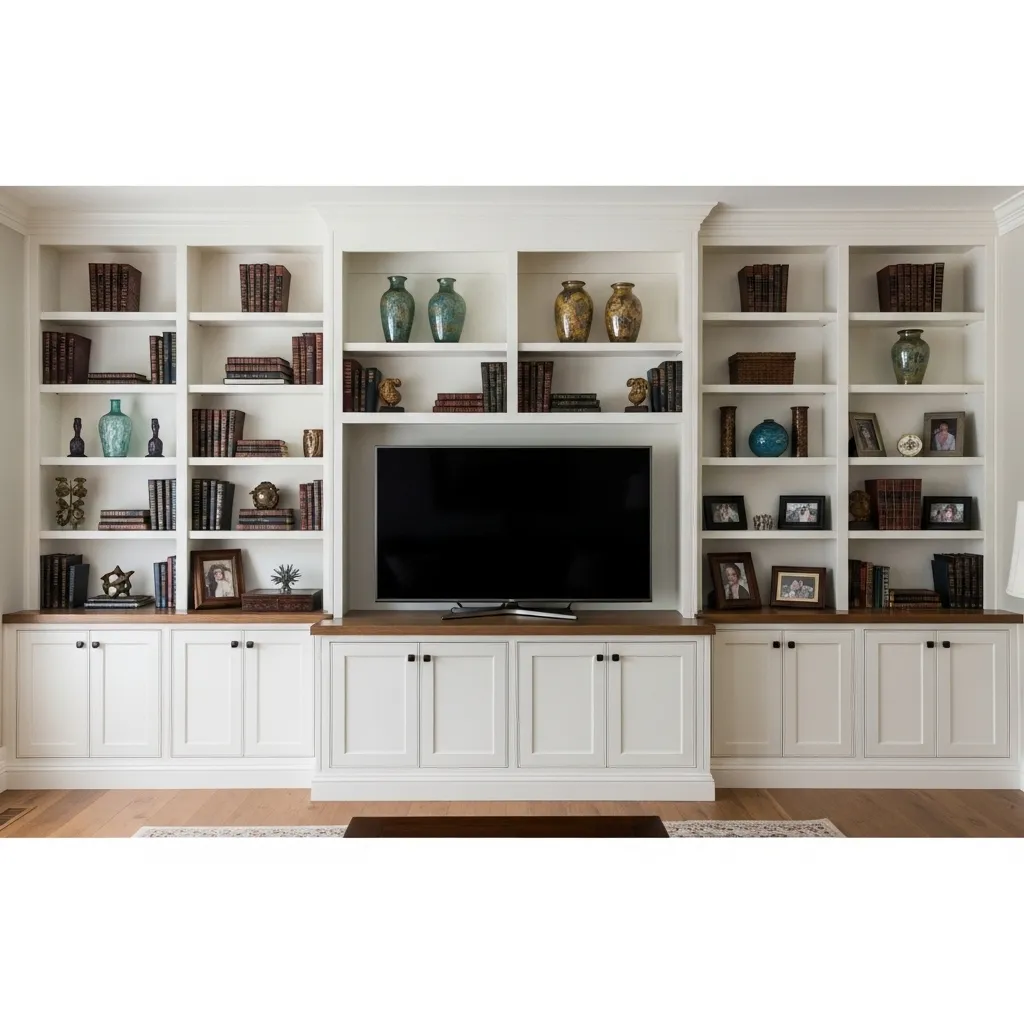
Flanking built-in bookcases create beautiful symmetry and balance while providing extensive storage and display opportunities that make the TV feel integrated rather than isolated. The matching bookcases on either side create visual weight that balances the TV, preventing it from feeling like a lone element floating awkwardly. The books and displayed objects add personality, warmth, and lived-in character that pure media cabinets cannot provide.
The symmetrical composition appeals to traditional design sensibilities and creates inherent visual balance. The bookcases should match in dimensions, styling, and finish for true symmetry. Shelving can be adjustable to accommodate books of various heights. Mix books with decorative objects, family photos, plants, and meaningful items to create curated, attractive displays. The TV can sit on a cabinet base between the bookcases or mount to the wall if the bookcases don’t extend fully to meet in the center. This approach works beautifully in traditional, transitional, or classic living rooms where that symmetry and balance are valued. The extensive storage makes this practical for book lovers while creating a TV wall that’s warm, personal, and genuinely attractive whether the screen is on or off.