13 Ways to Decorate Your Porch for Winter
Winter porch decorating presents unique opportunities to create welcoming, festive outdoor spaces that celebrate the season’s beauty while providing warm hospitality during the coldest months. Unlike spring and summer when porches overflow with colorful flowers and lush greenery, winter decorating relies on different elements—evergreens, berries, natural textures, layered textiles, and strategic lighting—to create visual interest and seasonal charm despite dormant gardens and bare branches. A thoughtfully decorated winter porch signals warmth and welcome to visitors braving cold weather, creates curb appeal when landscapes are at their barest, and provides something beautiful to see from inside looking out during those long winter months when outdoor living isn’t practical.
What makes winter porch decorating so rewarding is the transformation it creates during the season when outdoor spaces often look neglected or forgotten. While neighbors’ porches sit bare and uninviting, a decorated winter porch stands out dramatically, bringing life and beauty to the front of your home when it’s needed most. The decorating also extends beyond just the winter holidays—while Christmas and New Year celebrations provide obvious decorating opportunities, winter itself lasts several months in many climates, and creating non-holiday winter décor that celebrates the season from January through early spring ensures your porch remains attractive and welcoming throughout the coldest period.
The practical considerations of winter decorating differ significantly from other seasons. Materials must withstand freezing temperatures, snow, ice, and winter winds without deteriorating. Fresh flowers aren’t viable, so you rely on evergreens, dried materials, and weather-resistant artificial elements. Decorations should be secured properly against winter storms. And the overall effect should create warmth and welcome despite harsh conditions—using warm-toned lighting, cozy textiles (even if just for visual effect), and arrangements that suggest comfort and hospitality. Let’s explore these winter porch decorating ideas and create an outdoor space that remains beautiful and inviting throughout the coldest season.
1. Evergreen Arrangements in Large Planters
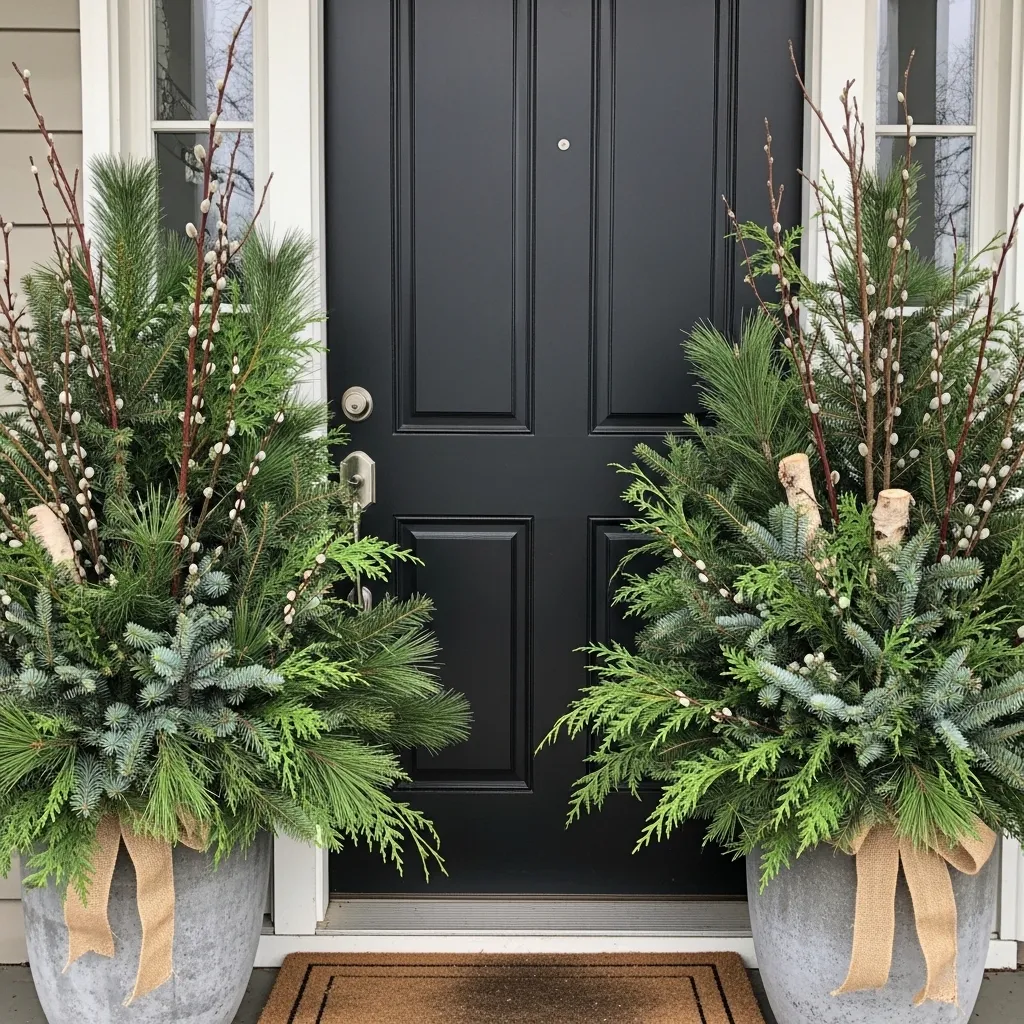
Evergreen arrangements in large flanking planters create the most impactful, traditional winter porch decoration. The fresh evergreens provide living color and texture when everything else is brown and dormant, the pleasant scent welcomes visitors, and the substantial arrangements frame your entrance beautifully. Unlike summer flowers that need constant replacement, winter evergreen arrangements last for months with minimal maintenance.
The key is creating full, abundant arrangements with varied evergreen textures. Mix different evergreen types—pine’s long needles, fir’s soft branches, cedar’s flat sprays, spruce’s dense needles—for visual interest within the green palette. Cut branches at varying lengths and arrange to create height and dimension rather than flat bouquets. Add branches with colorful elements—red-twig dogwood’s burgundy stems, winterberry’s red berries if available in your area, or birch’s white bark for contrast. Secure branches in planters using floral foam designed for fresh arrangements, or simply push stems into soil if planters contain dirt. Water occasionally during mild spells to keep evergreens fresh. The arrangements typically last 2-3 months in cold climates, providing greenery throughout the winter season. Add pinecones, berries, or ribbon for additional interest.
2. Layered Winter Textiles and Blankets
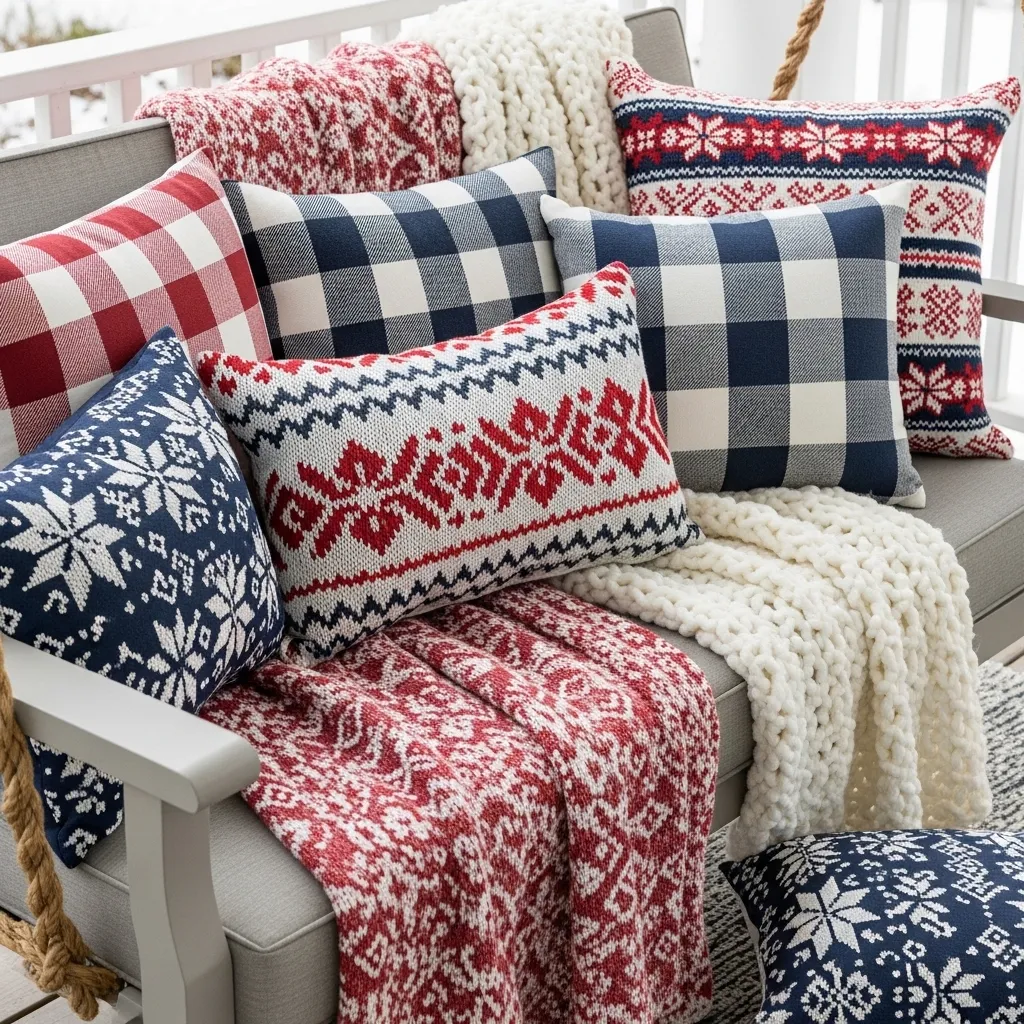
Winter textiles transform porch furniture from cold, uninviting surfaces into spaces that look cozy and welcoming despite freezing temperatures. While you might not actually sit on the porch during winter, the visual suggestion of comfort and warmth creates appealing, homey atmosphere. The textiles add color, pattern, and softness that winter landscapes lack.
The key is choosing weather-appropriate materials and being realistic about maintenance. True outdoor fabrics rated for winter use can remain outside, but higher-quality decorative textiles should be brought inside during snow, rain, or extreme cold to prevent damage. Choose winter-appropriate patterns and colors—buffalo check, plaids, cable knits, snowflakes, or winter wildlife in reds, whites, grays, and navy create seasonal appropriateness. Faux fur throws and chunky knit blankets add texture and cozy appeal. Layer multiple pillows in coordinating patterns for abundance. If your porch is covered and protected, textiles can remain out longer. For exposed porches, consider bringing decorative textiles inside during bad weather and returning them during pleasant spells. The visual effect is worth the minimal effort—your porch looks inviting and lived-in rather than abandoned for the season.
3. Outdoor Lanterns with Candles or Lights
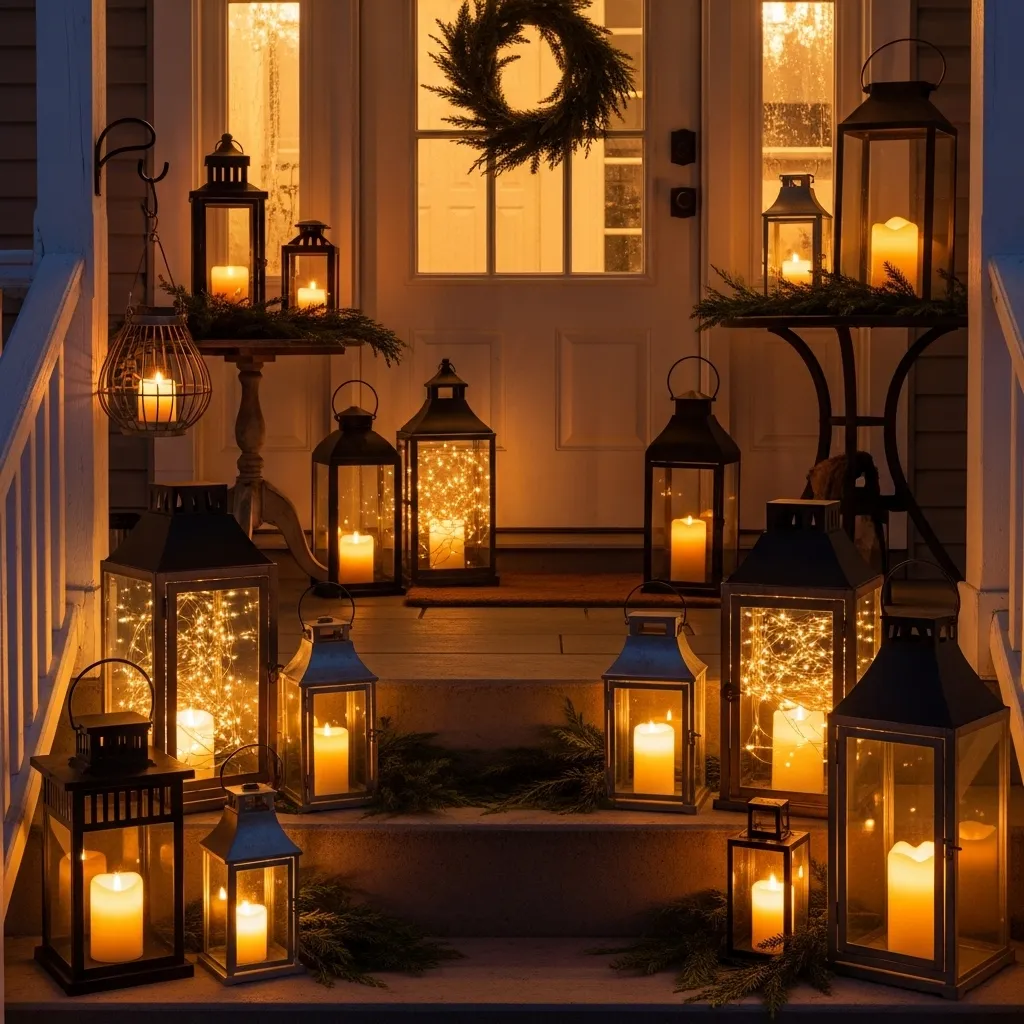
Lanterns solve winter’s early darkness problem while adding decorative charm and creating magical atmosphere. The warm glow welcomes visitors approaching in the dark, makes your porch visible and inviting from the street, and creates cozy ambiance that combats winter’s long, dark evenings. Lanterns work across decorating styles from farmhouse to traditional to coastal.
The key is using multiple lanterns in varied sizes rather than just one or two. Cluster three lanterns of graduating sizes on porch steps, place matching lanterns on either side of the door, hang lanterns from hooks or shepherd’s crooks, or arrange several on porch tables and surfaces. Use battery-operated LED candles for worry-free lighting that won’t blow out in wind or create fire hazards, or use real pillar candles if you’ll monitor them. Some lanterns can hold string lights coiled inside for a different effect. Choose lantern finishes that coordinate with your home’s exterior—black for modern, galvanized for farmhouse, bronze for traditional. Tuck small evergreen sprigs, pinecones, or berries around lantern bases to connect them to other winter décor. Set timers so lanterns illuminate automatically during dark hours. The result is a porch that glows warmly throughout winter evenings.
4. Birch Log Bundles and Natural Elements
Natural elements create beautiful winter porch décor that celebrates the season’s organic beauty rather than fighting against it. Birch logs, branches, pinecones, and dried materials have inherent winter appropriateness and require no maintenance while providing texture, form, and natural beauty. This approach works beautifully for people who want seasonal decoration without traditional holiday themes.
The key is layering multiple natural elements for richness and interest. Bundle birch logs—their white bark is particularly beautiful in winter—and tie with natural twine, burlap, or leather cord. Lean bundles against walls, porch columns, or beside planters. Gather larger branches—birch, willow, or dogwood—in galvanized buckets or vintage crocks positioned at porch corners. Scatter pinecones in bowls, baskets, or directly on surfaces. Hang grapevine wreaths for organic texture. Include dried botanical elements like hydrangea blooms or ornamental grasses if you harvested them in fall. These natural materials withstand winter weather beautifully and actually look most appropriate in cold months. The neutral palette of whites, browns, and grays works from November through March without appearing specifically holiday-focused.
5. Winter Wreath on the Front Door
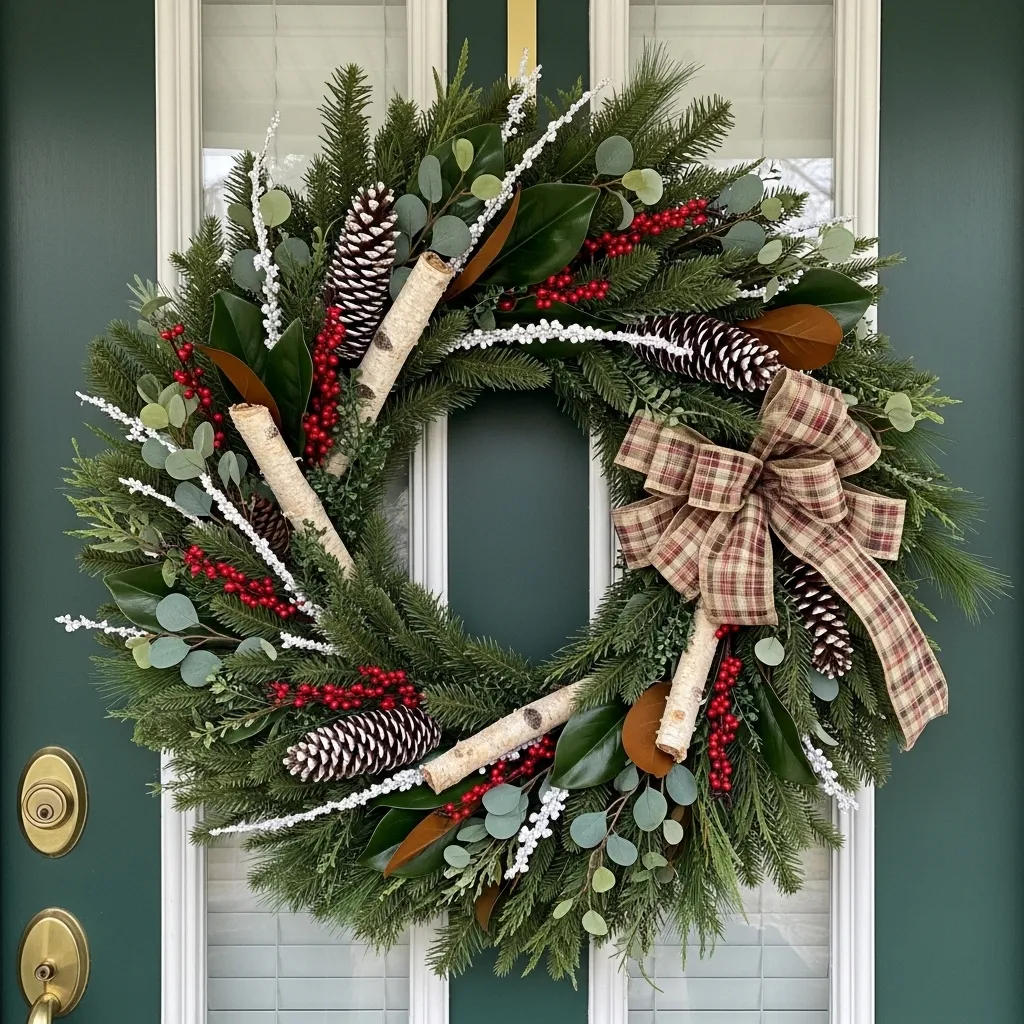
A beautiful wreath on the front door is perhaps the most classic winter porch decoration, creating instant seasonal appeal and welcoming atmosphere. The circular evergreen wreath has symbolic and aesthetic significance—representing hospitality, eternity, and the cycle of seasons while providing lush greenery and pleasant scent during dormant winter months.
The key is choosing or creating a wreath with substance and appropriate scale. A substantial 24-30 inch wreath creates proper proportion on standard doors—too small looks insignificant, too large overwhelms. Fresh evergreen wreaths have wonderful scent and authentic appeal but dry out over several weeks. Artificial wreaths made from quality materials can look quite realistic and last for years. Decorate with elements that work throughout winter—pinecones, birch branches, berries, eucalyptus, dried orange slices—rather than specifically Christmas elements if you want the wreath to remain appropriate from December through February. Choose ribbon in subtle winter colors and patterns rather than bright holiday red. Hang securely using a wreath hanger designed for your door type. The wreath creates a focal point and signals seasonal attention to your home’s appearance.
6. String Lights and Outdoor Lighting
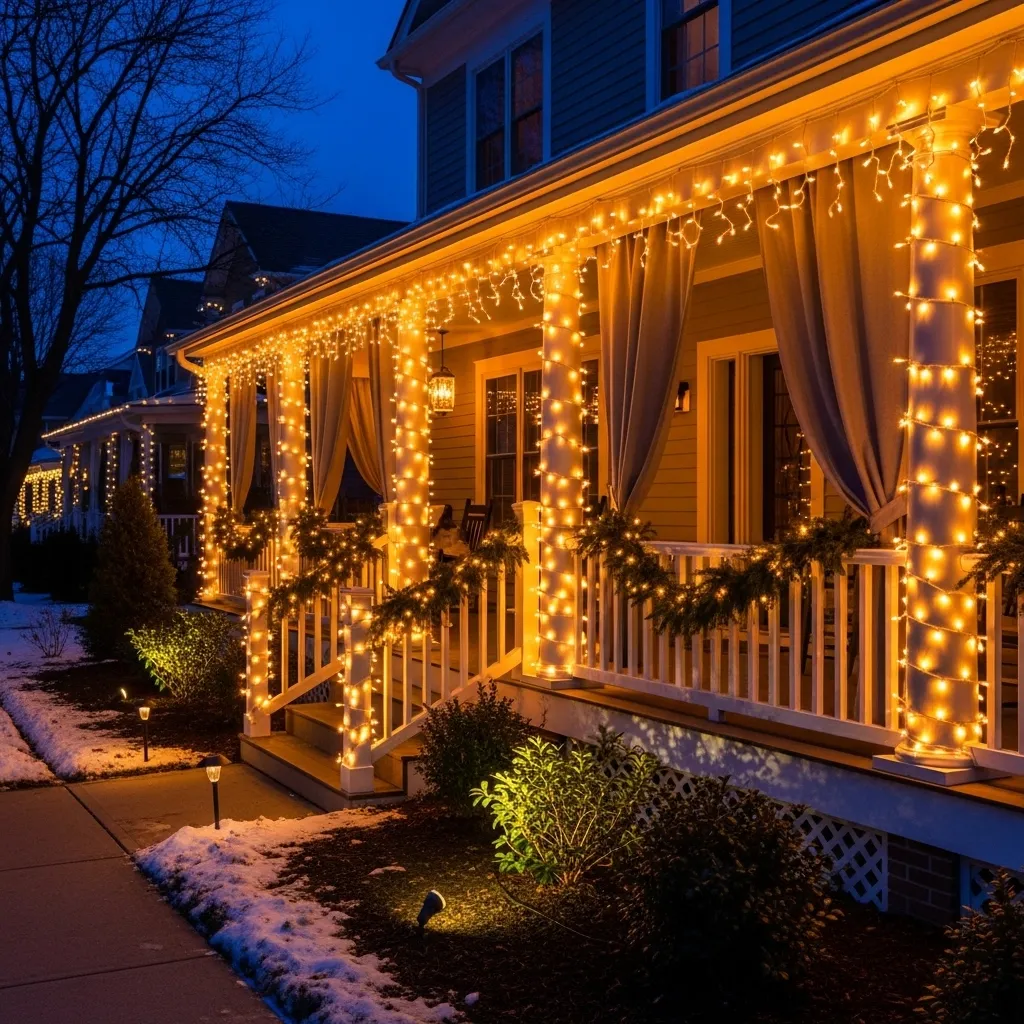
String lights and layered outdoor lighting transform winter porches from dark, abandoned spaces into glowing, magical environments during the long dark hours. The warm illumination creates instant welcome, highlights your decorative efforts, makes your home stand out in the neighborhood, and provides practical lighting for entering and exiting during winter’s extended darkness.
The key is using warm white LED lights rather than cool white—the warmer tones feel cozier and more inviting. Wrap lights around porch columns in spiral patterns, outline railings, drape along rooflines or overhead beams, or create light curtains hanging vertically. Use outdoor-rated lights designed for winter weather and connect to outdoor outlets with GFIP protection. Consider timers so lights automatically illuminate at dusk and turn off late evening or at dawn. Add path lighting to safely guide visitors from sidewalk to porch. Uplights tucked into plantings can highlight architectural features or large evergreen arrangements. The layered approach creates depth and dimension. Solar-powered path lights offer eco-friendly options requiring no wiring. The comprehensive lighting makes your winter porch a beacon of warmth and hospitality during the darkest months.
7. Vintage Sleds and Skates Display
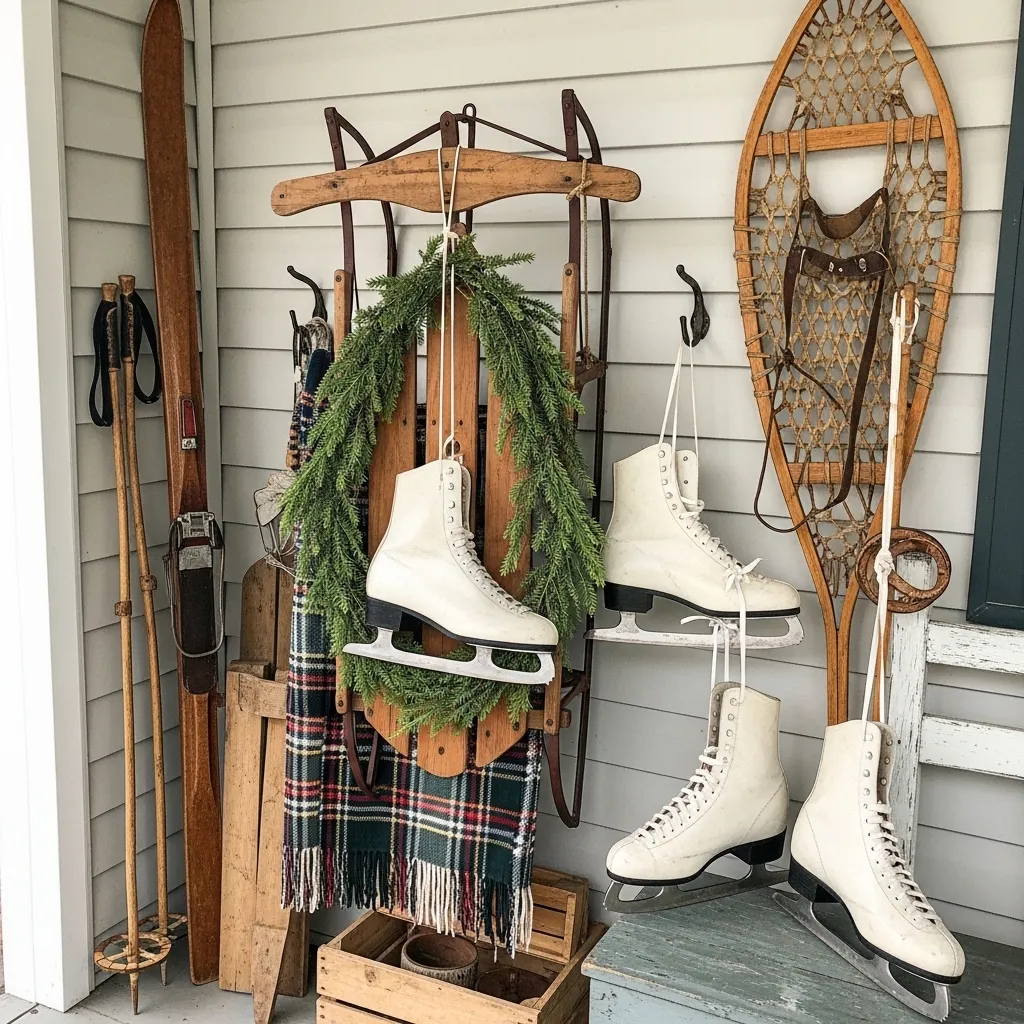
Vintage winter sports equipment brings nostalgic charm and celebrates winter activities and traditions. The weathered sleds, skates, skis, and snowshoes have become collectible decorative items that add character, tell stories, and create genuine winter atmosphere. The vintage items reference simpler times and winter’s recreational joys rather than just enduring cold months.
The key is finding authentic vintage pieces with good patina and character—antique stores, estate sales, flea markets, and online marketplaces often have old sleds and skates. Look for wooden sleds with metal runners showing age and use, leather ice skates with worn blades, or vintage skis with old bindings. Display prominently—lean a sled against the wall near the door, hang skates by their laces from hooks or over the sled edge, prop skis in a corner. Enhance with simple winter elements—a plaid blanket draped over the sled, evergreen garland woven through skate laces, a vintage thermos nearby suggesting hot cocoa after winter play. The vintage pieces work throughout winter and can remain through early spring, celebrating the season’s activities. The nostalgic display adds character and conversation-worthy interest.
8. Winter Planters with Branches and Berries
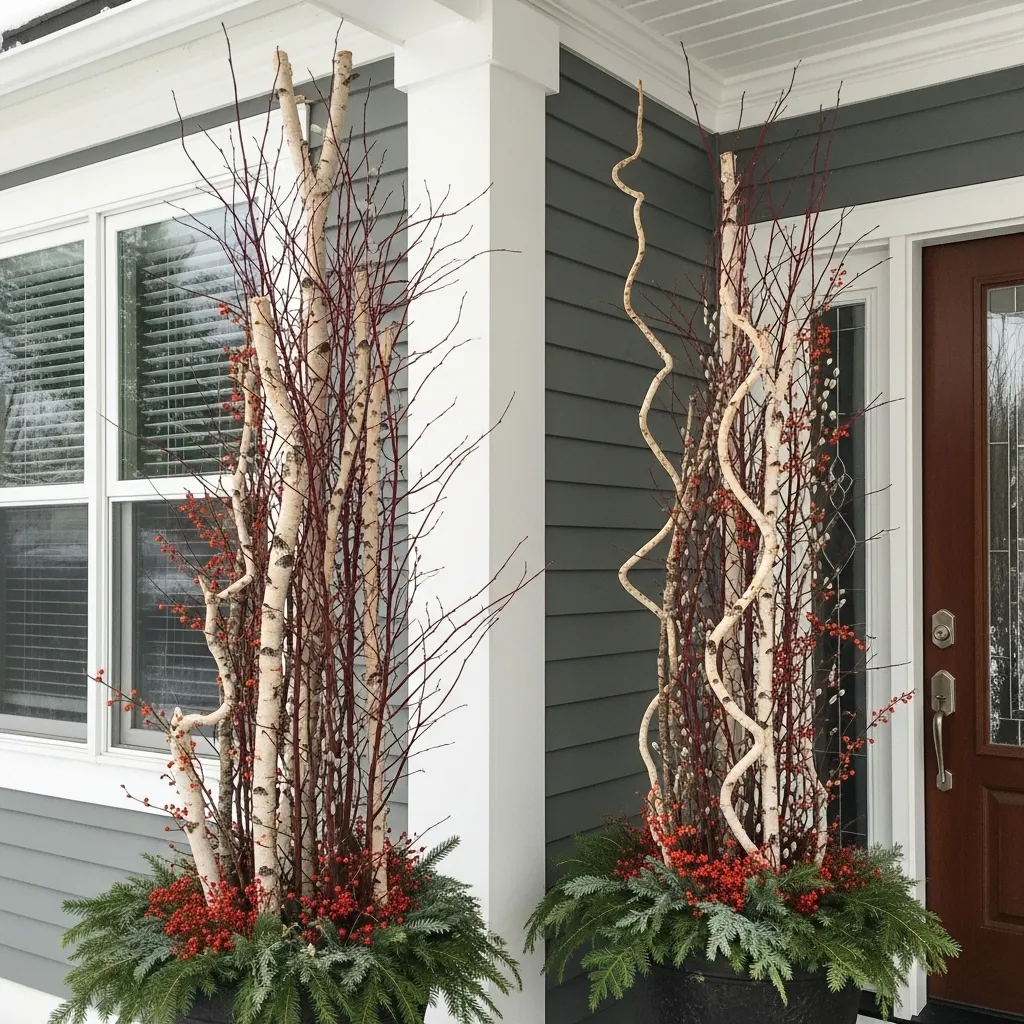
Tall branch arrangements in large planters create dramatic vertical interest and sculptural beauty that’s particularly effective in winter when landscapes are at their flattest and most horizontal. The upright branches draw the eye upward, frame entryways powerfully, and become even more beautiful when adorned with snow or ice. This approach requires fewer materials than fully filling planters with evergreens while creating significant visual impact.
The key is choosing branches with winter interest and arranging them for maximum height and presence. Birch branches with distinctive white bark create strong visual impact. Red-twig dogwood’s burgundy stems provide color. Curly willow’s twisted forms add sculptural interest. Mix tall branches of varying types for textural variety. Include berry branches if available—winterberry’s bright red berries, bittersweet’s orange berries (check local regulations—it’s invasive in some areas). Cut branches long—4-6 feet—for dramatic height. Secure in planters using floral foam, stones for weight, or simply push stems into soil if containers have it. The branches need no water once cut and last the entire winter. Add a collar of evergreen boughs around the base to finish the arrangement and add fullness. The tall, sculptural displays create impressive winter presence.
9. Faux Fur or Cable Knit Stockings
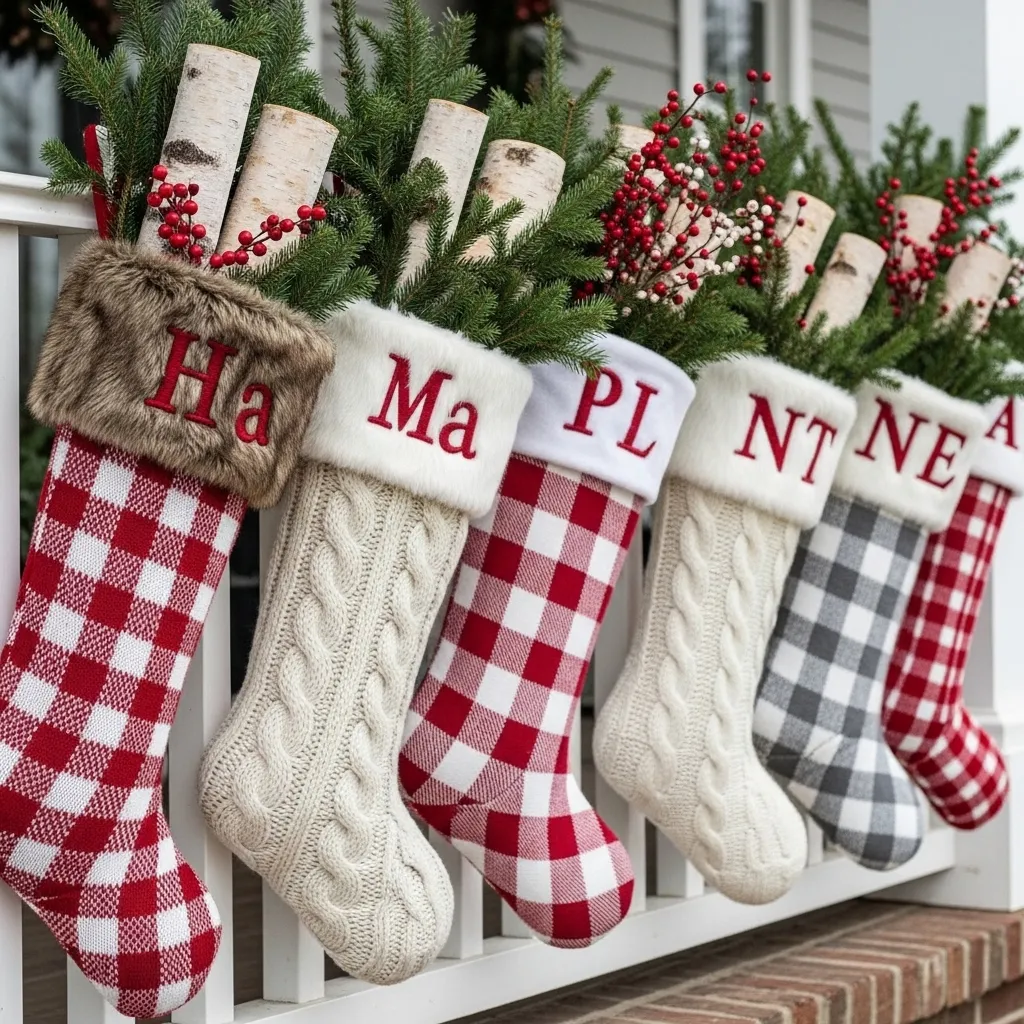
Oversized decorative stockings bring playful, festive charm to winter porches while referencing beloved holiday traditions. Used as containers for natural materials rather than just hanging empty, the stockings become functional decorative elements that add softness, texture, and whimsy. This approach works particularly well if you have children or simply want your porch to feel cheerful and welcoming.
The key is choosing weather-appropriate materials and using stockings creatively. Look for oversized stockings—18-24 inches long—in materials that can handle weather or bring inside during bad weather. Faux fur stockings in white or cream feel luxurious, chunky cable knit adds cozy texture, or traditional patterns like buffalo check or fair isle create classic appeal. Hang from porch railings using clips or hooks, attach to columns, or suspend from the roofline. Fill stockings with evergreen branches, birch logs, berry stems, or even wrapped packages for a “gifts left outside” appearance. Personalize with names, initials, or leave blank. The playful stockings add charm that appeals to both children and adults, creating a welcoming, festive porch that celebrates winter’s magic.
10. Galvanized Buckets and Vintage Containers
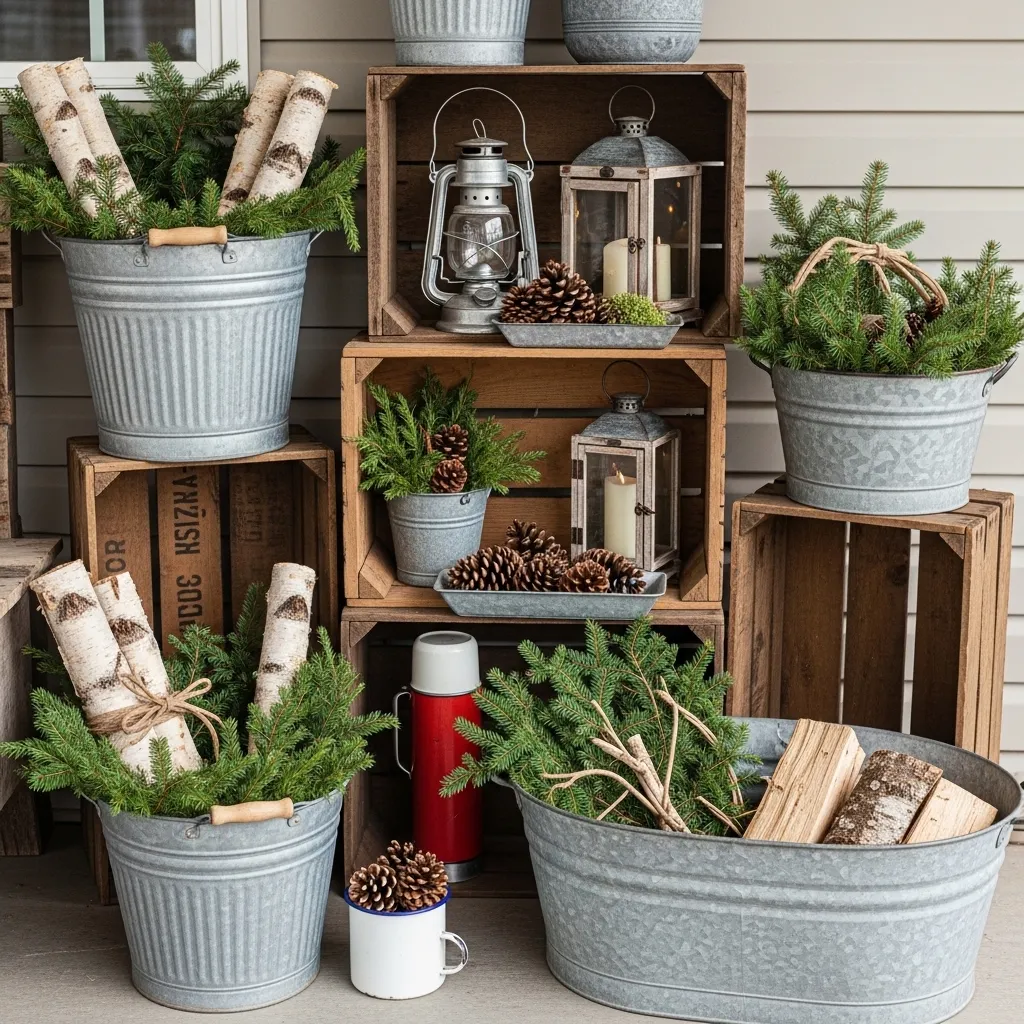
Vintage containers—galvanized buckets, wooden crates, old washtubs, enamelware—bring instant character and provide functional holders for winter greenery and decorative elements. The weathered metals and aged wood have patina and authenticity that new containers lack, and the utilitarian objects reference simpler, rural traditions appropriate to winter’s stripped-down aesthetic.
The key is collecting containers with genuine age and character rather than overly distressed new pieces trying to look old. Seek true vintage galvanized buckets showing rust and wear, wooden crates with original stamping or labels, old enamelware with chipped edges. Use buckets to hold evergreen arrangements, birch bundles, pinecone collections, or firewood. Stack wooden crates at different heights creating platforms for displaying lanterns, small trees, or seasonal objects. Large washtubs can hold substantial evergreen arrangements or logs. The containers themselves become decorative through their age and character. Mix sizes and types for variety while maintaining the cohesive vintage aesthetic. The functional, weathered containers feel authentic and appropriate to winter’s practical, stripped-down season.
11. Winter Window Boxes
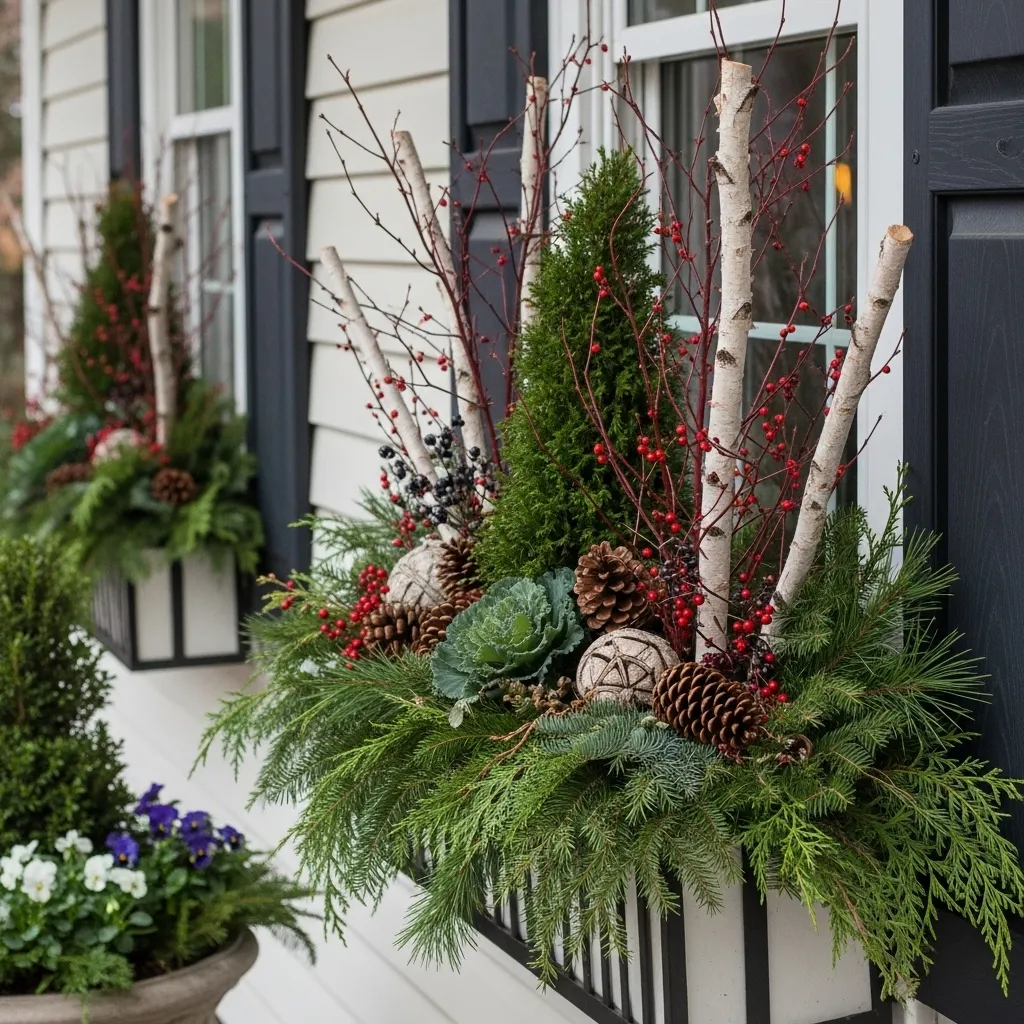
Window boxes filled for winter create additional opportunities for seasonal greenery and bring decoration to eye level where it’s immediately visible and appreciated. Rather than leaving boxes empty during winter or removing them entirely, filling them with appropriate winter elements extends their beauty and function throughout the year. The boxes create continuity and cohesion when coordinated with other porch decorations.
The key is choosing winter-appropriate materials that withstand cold and create attractive displays. Fill boxes with cut evergreen boughs—pine, fir, cedar—creating lush, overflowing arrangements. Add vertical elements like birch branches or berry-laden stems for height and interest. Include pinecones tucked among greenery. In milder climates (zones 6-7 and warmer), you can plant actual winter-blooming pansies, violas, or ornamental kale that survive freezes and provide living color. Small evergreen shrubs or topiaries planted in boxes provide structure. Coordinate window box arrangements with your wreath and flanking planters—use similar greenery types, berries, or decorative elements creating cohesive appearance. The eye-level greenery has immediate impact and shows attention to detail throughout your porch decoration.
12. Outdoor Winter Rugs and Doormats
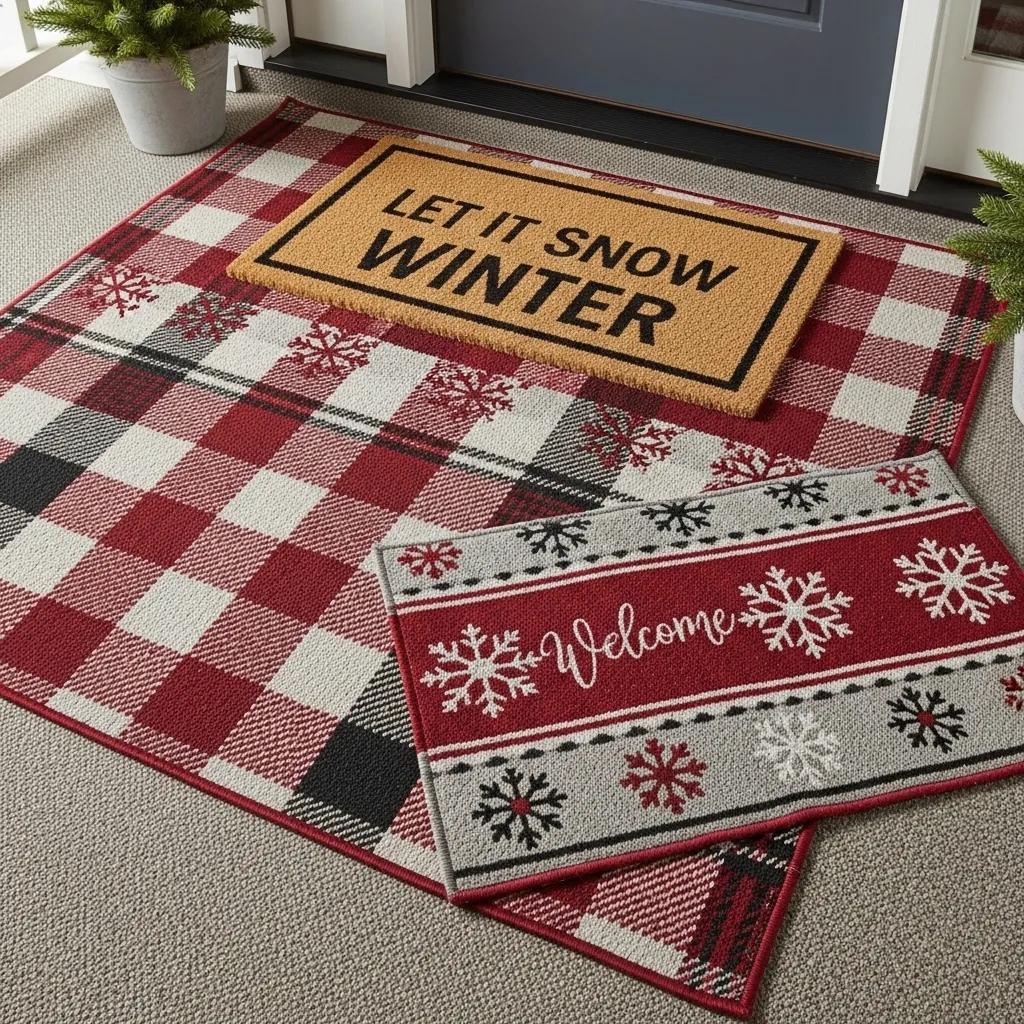
Outdoor rugs and seasonal doormats are often overlooked but create immediate impact at the entry point where visitors first arrive. The textiles add color, pattern, warmth, and seasonal messaging while serving the practical function of catching snow, mud, and debris before it enters your home. Quality outdoor rugs designed for weather exposure can remain outside all winter.
The key is choosing truly weather-resistant materials designed for outdoor use—polypropylene, recycled plastic, or treated natural fibers that resist moisture, fading, and mildew. Select winter-appropriate patterns and colors—buffalo check, plaids, snowflakes, winter wildlife, or geometric patterns in reds, greens, grays, and neutrals. Size appropriately—the rug should be large enough to create presence without overwhelming the porch, typically covering the main traffic area. Layer a decorative seasonal doormat over or in front of the larger rug for additional seasonal messaging and function. Look for coir, rubber, or synthetic fiber doormats with winter greetings or motifs. The rugs can remain out all winter or be brought inside during heavy snow and returned when conditions improve. The textiles create immediate seasonal welcome and show thoughtful attention to entry decoration.
13. Pinecone and Berry Garland
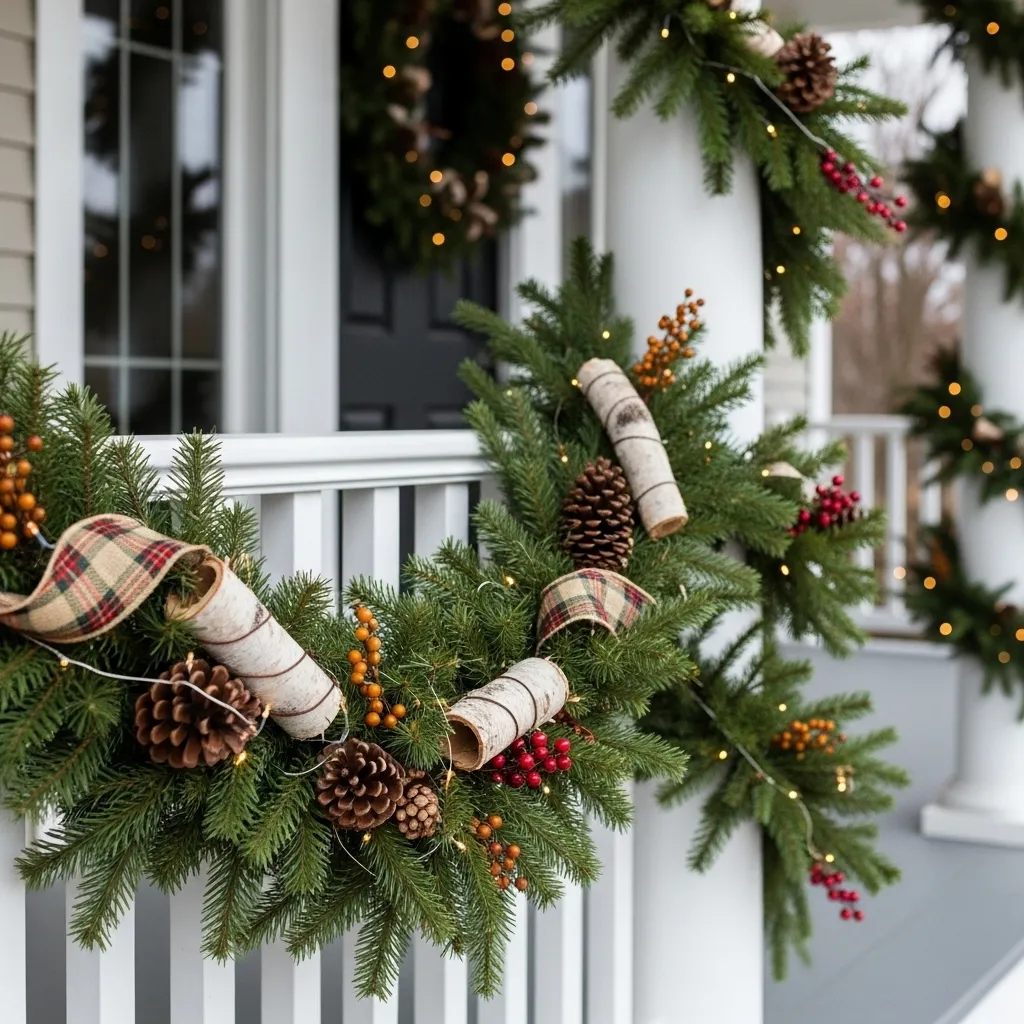
Garland creates flowing, continuous decoration that connects separate porch elements into cohesive displays. Whether draped along railings, wrapped around columns, framed around doors, or hung in swags, garland adds lush greenery and creates professional-looking, polished decoration. The natural materials reference traditional winter decorating while remaining appropriate beyond specific holidays.
The key is choosing quality garland—either fresh evergreen boughs wired together creating authentic scent and appearance, or high-quality artificial evergreen that looks realistic from a distance. Enhance basic garland by wiring in additional elements—clusters of pinecones in varying sizes, berry sprays (real or artificial), small birch bark pieces, or dried botanical elements. Secure garland along railings using zip ties or floral wire (remove before spring to avoid damage). Wrap around columns in spiral patterns. Frame doorways or windows with swags. Weave ribbon through for additional color and pattern—burlap for rustic, plaid for traditional, velvet for elegance. Consider adding battery-powered LED string lights woven through for evening illumination. Fresh garland lasts several weeks in cold weather; artificial garland can remain all season. The flowing greenery creates cohesive, polished winter decoration that elevates your entire porch presentation.