11 Ways to Make Your Room Aesthetic
Creating an aesthetic room isn’t about following rigid design rules or buying expensive furniture—it’s about cultivating a personal space that’s visually cohesive, thoughtfully curated, and genuinely reflects your taste and personality. The term “aesthetic” has evolved to encompass various specific styles—from minimalist and Scandinavian to cottagecore, dark academia, and Y2K revival—but at its core, an aesthetic room is simply one that’s been intentionally designed with attention to visual harmony, mood, and atmosphere. These spaces feel complete and considered, where every element seems to belong and contribute to an overall vibe. Unlike rooms that accumulate random items over time, aesthetic rooms have clear visual identities and create specific feelings when you enter them—whether that’s calm and serene, cozy and romantic, or energizing and creative.
What makes aesthetic rooms so appealing, especially to younger generations who’ve popularized the concept, is their Instagrammable quality and the way they serve as personal expression. These aren’t just bedrooms—they’re curated environments that reflect interests, values, and aspirations. An aesthetic room tells a story about who you are or who you want to be. It creates a backdrop for your life that feels intentional rather than default. The process of creating an aesthetic room is itself rewarding—making mood boards, hunting for specific pieces, DIY-ing elements, and gradually transforming a basic space into something that feels uniquely yours provides creative satisfaction and a sense of control over your environment.
The beautiful thing about creating an aesthetic room is that it’s achievable on almost any budget through thrifting, DIY projects, digital prints, and strategic prioritization. You don’t need to buy everything new or expensive—in fact, the most characterful aesthetic rooms often mix vintage finds, handmade elements, and affordable pieces with a few investment items. The key is having a clear vision, being selective about what you include, and paying attention to details like color palette, lighting, and arrangement. Let’s explore these ways to transform your room into an aesthetic space that reflects your personal style and creates the atmosphere you crave.
1. Define Your Specific Aesthetic and Create a Mood Board
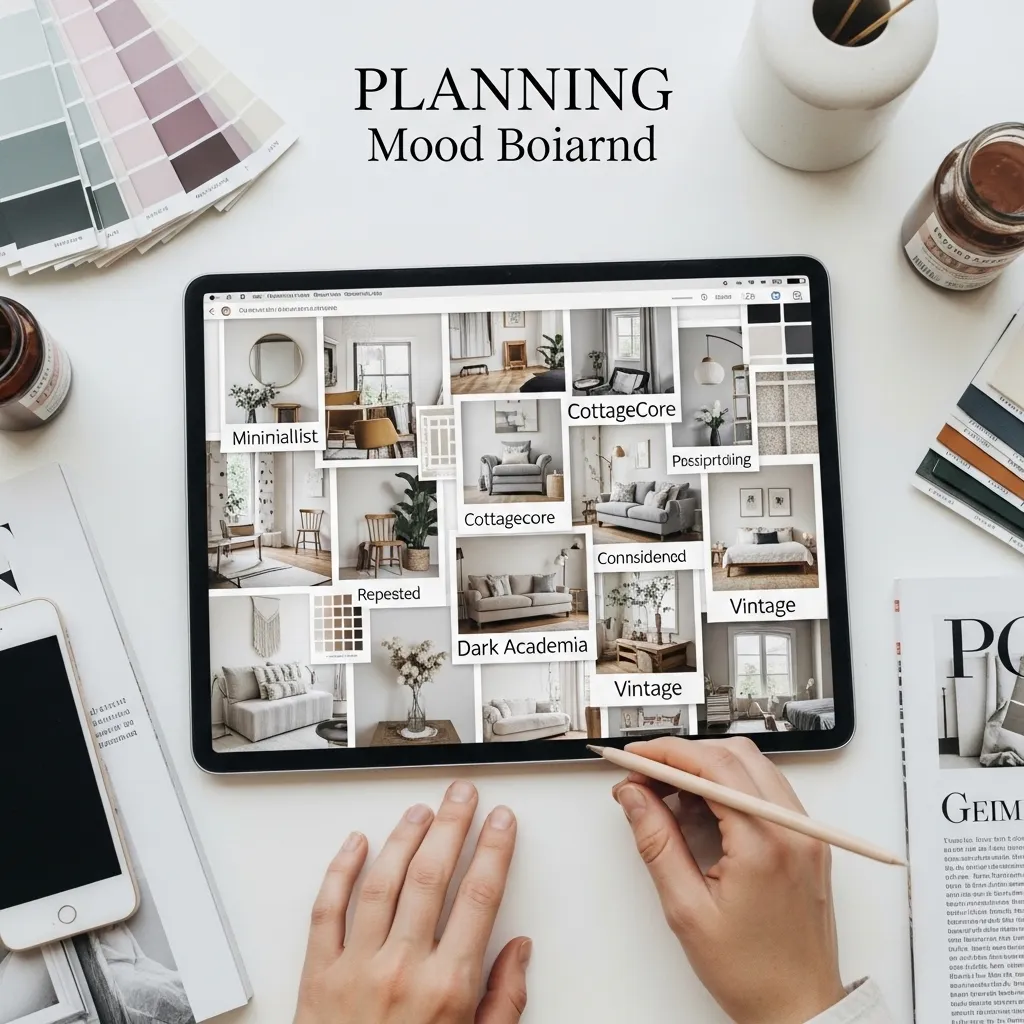
Before buying anything or making changes, define your specific aesthetic and create a comprehensive mood board. This crucial planning step prevents random purchases and ensures all elements work together cohesively. The mood board becomes your reference point for all decisions, ensuring consistency and intentionality.
The key is being specific rather than generic. Instead of “aesthetic” or “pretty,” define your exact style—minimalist Scandinavian, romantic cottagecore, moody dark academia, vintage 70s, modern boho, soft girl, Y2K revival, or whatever resonates with you. Create a digital mood board using Pinterest, Canva, or similar platforms, gathering images that capture your desired vibe. Notice patterns—what colors repeat? What materials and textures appear frequently? What’s the overall mood—calm and minimal, cozy and layered, dramatic and moody? Extract your color palette (typically 3-5 colors that work together), identify key furniture styles, and note specific elements that define the aesthetic. Save specific product inspiration, DIY ideas, and room layouts. Physical mood boards with magazine clippings, paint chips, and fabric swatches make the vision tactile. Reference your board before making any purchase or change, ensuring everything aligns with your defined aesthetic.
2. Establish a Cohesive Color Palette
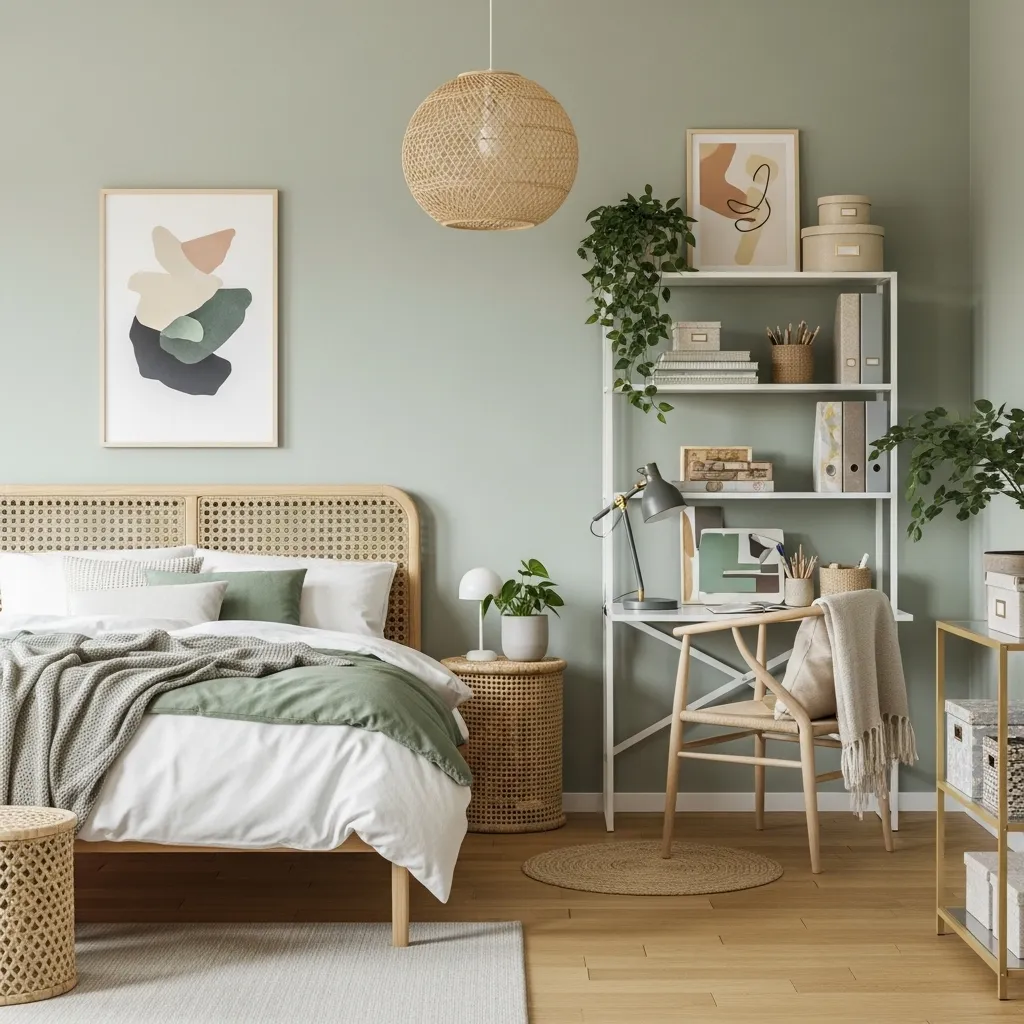
A cohesive color palette is perhaps the most powerful tool for creating an aesthetic room. When colors are carefully coordinated and consistently applied throughout the space, even mismatched or budget furniture feels intentional and harmonious. The color restriction creates instant sophistication and visual calm.
The key is choosing 3-5 colors and enforcing them strictly. Select colors that define your chosen aesthetic—pastels for soft girl, earth tones for cottagecore, black/white/gray for minimalist, jewel tones for dark academia. Include neutrals (white, cream, beige, gray) as foundation, one or two main colors for impact, and perhaps one accent color for variety. Apply this palette to everything—wall color, bedding, curtains, rugs, artwork, storage containers, desk accessories, even book covers and plants pots. Avoid introducing random colors just because you like something—if it doesn’t fit the palette, it doesn’t belong. Use color in varied saturations and tones for depth while maintaining the overall palette. The consistent color scheme creates visual unity that’s fundamental to aesthetic rooms. Everything feels intentional and coordinated rather than randomly collected.
3. Invest in Quality Bedding and Textiles
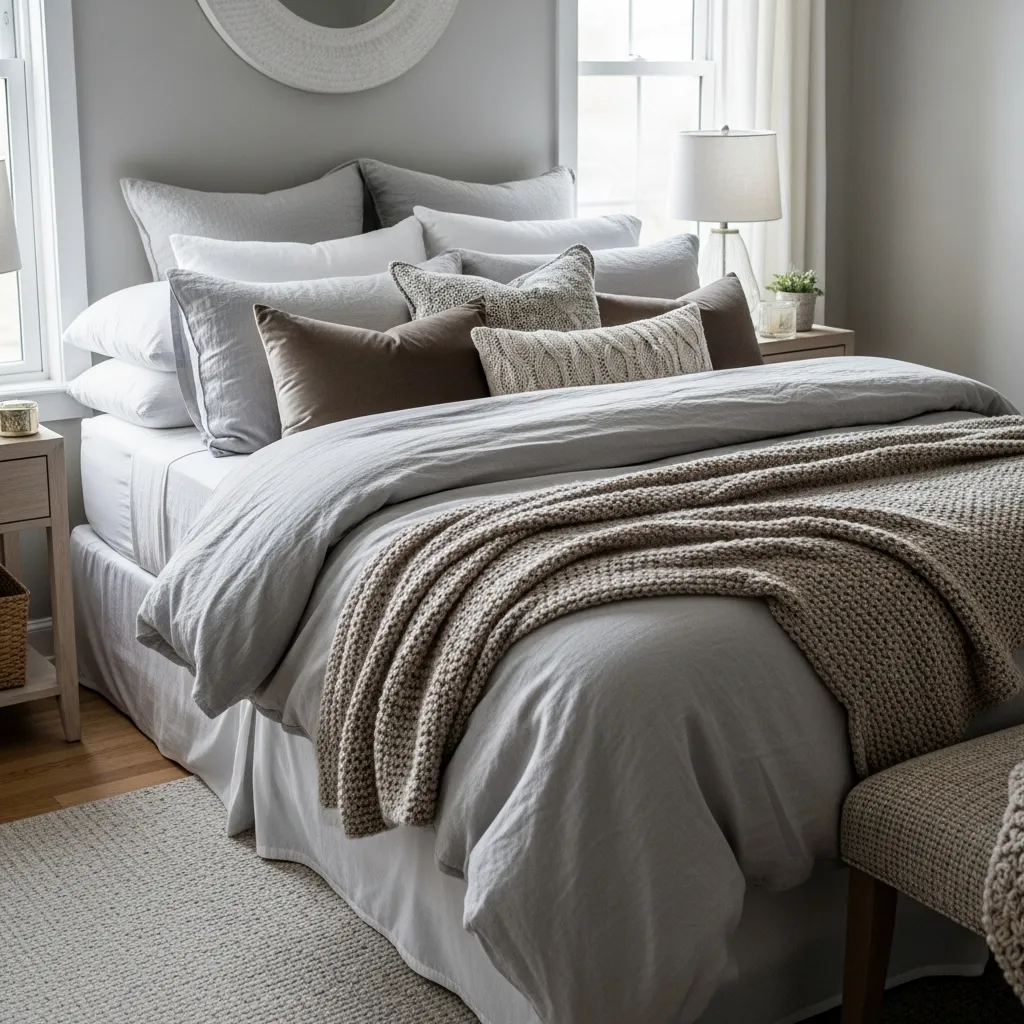
Quality bedding transforms your bed from purely functional furniture into the aesthetic centerpiece of your room. Since the bed typically occupies the most visual space and is the focal point of bedrooms, investing in beautiful bedding creates maximum impact. Well-styled bedding is also incredibly photogenic—the foundation of those aesthetic room photos.
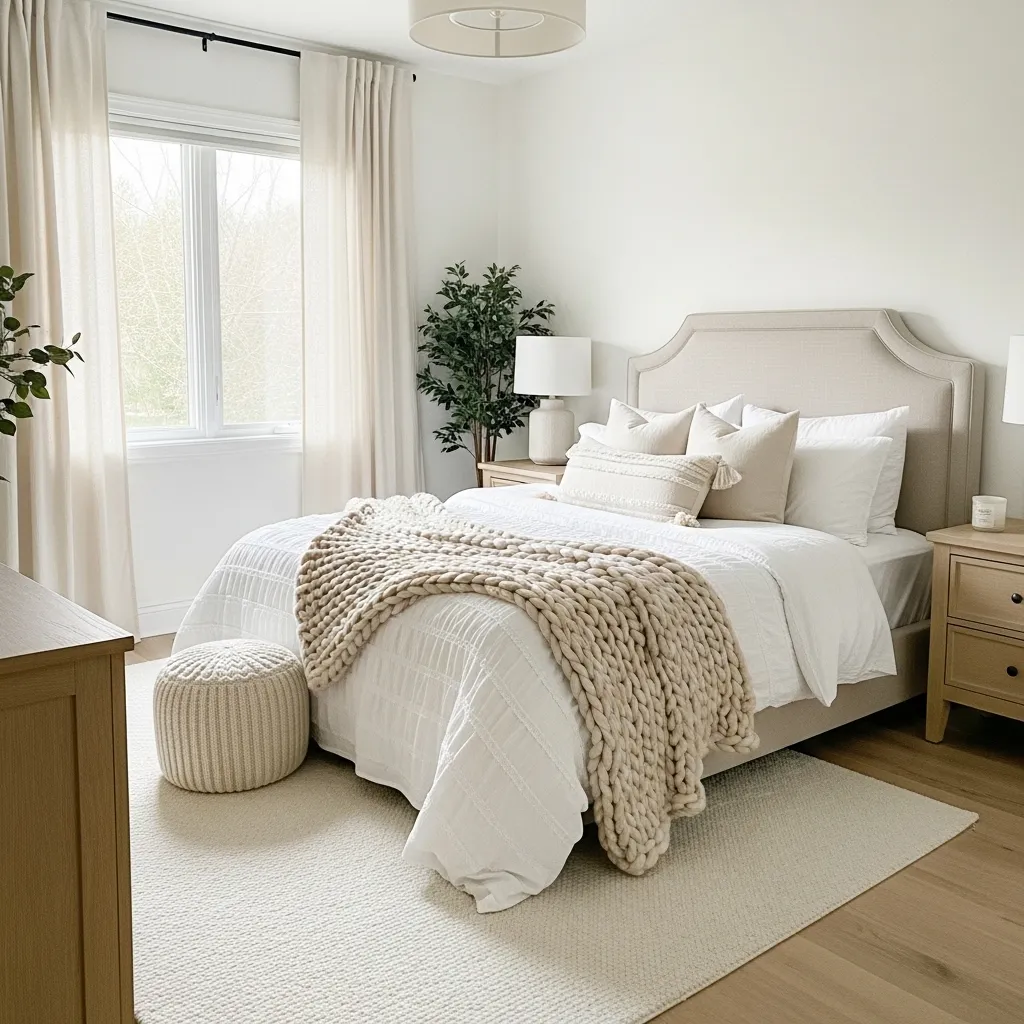
The key is layering quality textiles in your color palette for both comfort and visual richness. Start with good sheets in white, cream, or your neutral base color—crisp cotton or soft linen depending on your aesthetic. Add a substantial duvet or comforter in coordinating color. Layer multiple pillows—standard sleeping pillows, larger euro shams at the back, smaller decorative pillows in front creating depth and abundance. Mix textures—smooth cotton, nubby linen, soft velvet, chunky knits—within your color palette. Drape a throw blanket artfully across the foot of the bed. Keep everything clean and pressed—wrinkled, stained bedding undermines any aesthetic. Make your bed daily, styling it intentionally rather than just pulling covers up. The beautifully layered bed becomes your room’s centerpiece and most Instagrammable element, immediately establishing aesthetic credibility.
4. Create a Gallery Wall or Curated Art Display
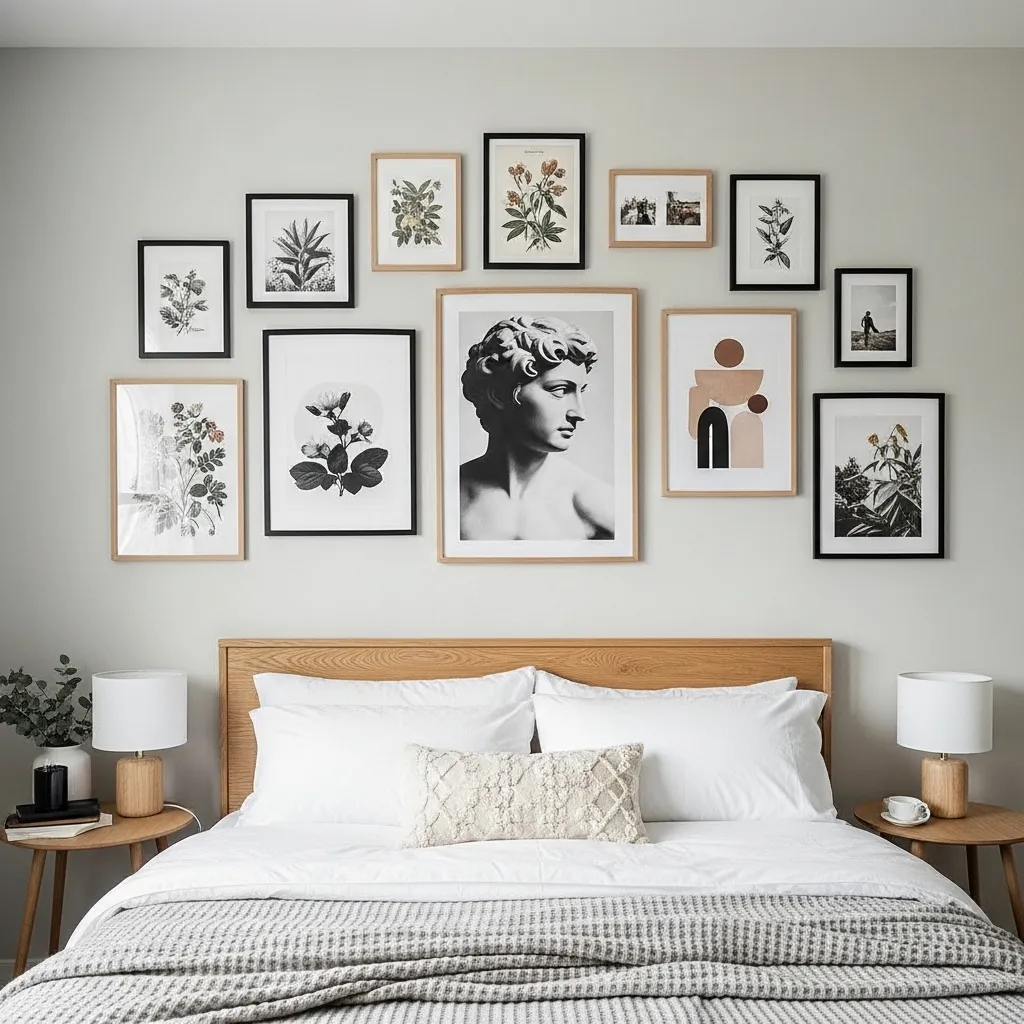
Gallery walls or curated art displays add personality, visual interest, and that crucial “curated” quality that defines aesthetic rooms. The selected artwork communicates your interests and aesthetic while creating focal points on otherwise blank walls. This is where you can express individuality while maintaining cohesiveness.
The key is curating artwork that supports your specific aesthetic and arranging it thoughtfully. Choose prints, photographs, or artwork that aligns with your defined style—vintage botanical prints, classical art reproductions, aesthetic photography, inspirational quotes in beautiful typography, abstract minimalist pieces, or personal photographs edited to match your palette. Download and print affordable art from Etsy, Society6, or public domain sources rather than buying expensive originals. Frame consistently—all matching black frames for modern, all natural wood for warm minimalist, or intentionally varied vintage frames for eclectic. Plan your arrangement on the floor first, ensuring balanced composition. Hang at proper height—typically centered at 57-60 inches from floor. The gallery wall should feel cohesive through shared colors, themes, or framing while providing visual interest and revealing your personality. It’s the perfect balance of personal expression and aesthetic cohesion.
5. Add Plants for Life and Natural Elements
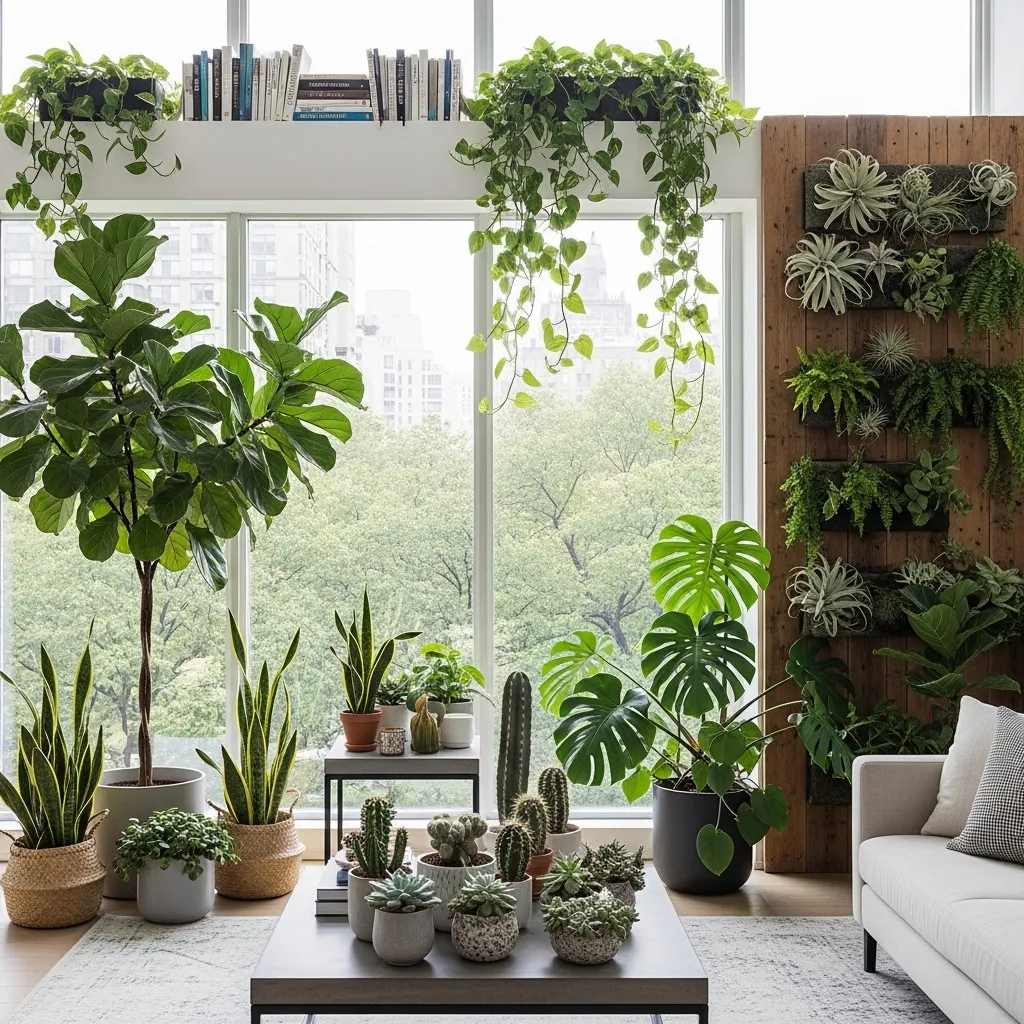
Plants bring life, color, texture, and natural beauty that’s essential to almost every aesthetic. The organic, living elements soften hard edges, add varying heights and textures, and create that connection to nature that makes rooms feel fresh and alive rather than static and sterile. Plants are also incredibly photogenic and feature heavily in aesthetic room inspiration.
The key is choosing plants appropriate to your light conditions and selecting pots that coordinate with your aesthetic. Assess your natural light—bright light supports most plants, medium light works for pothos and philodendrons, low light limits options to snake plants and ZZ plants. Choose varied plant types and sizes—a large statement plant (fiddle leaf fig, monstera, bird of paradise) anchors a corner, medium trailing plants (pothos, string of pearls) soften shelves, small plants (succulents, air plants) accent surfaces. Pot everything in containers matching your aesthetic—minimal white or concrete for modern, terracotta for warm boho, vintage vessels for cottagecore, matching ceramic for cohesive look. Group plants at varied heights creating mini indoor gardens. Care for them properly—healthy, thriving plants look aesthetic; struggling, dying plants undermine it. The plants bring essential natural elements that complete aesthetic rooms.
6. Install Ambient and Accent Lighting
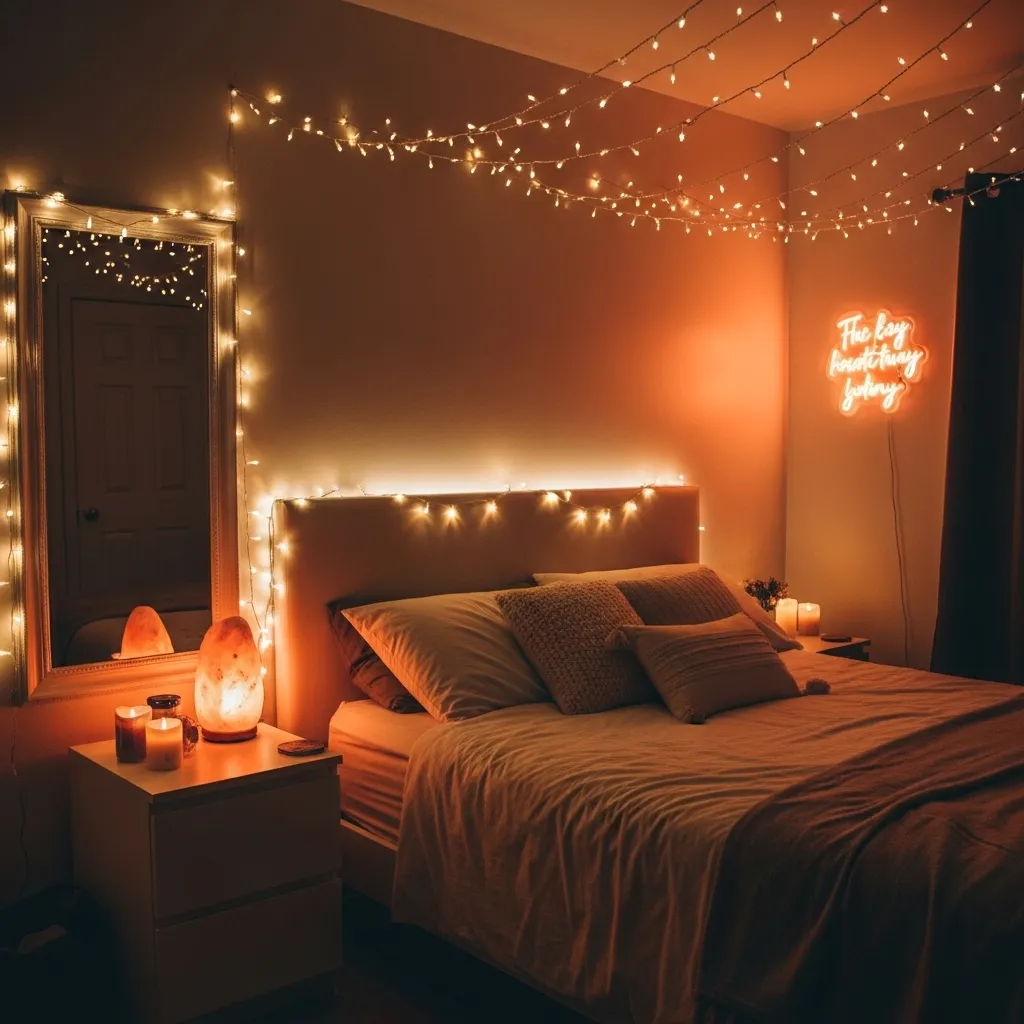
Lighting dramatically impacts mood and is crucial for creating aesthetic spaces—harsh overhead lighting ruins even beautiful rooms, while warm, layered lighting creates that cozy, Instagram-worthy glow. Multiple light sources at varied heights create depth and allow you to adjust ambiance for different activities and times of day.
The key is layering decorative lighting that creates atmosphere rather than just function. Add string lights or fairy lights—drape across ceilings, wrap around bed frames, outline mirrors, or hang in curtains creating magical twinkle. Install LED strip lights behind headboards, under beds, or along shelves for modern glow effects—choose warm white or customize colors matching your aesthetic. Include table lamps with aesthetic bases and warm bulbs on nightstands or desks. Add candles (real or LED) in coordinating holders for flickering ambient light. Consider a neon sign with a word or phrase that resonates with your aesthetic. Avoid harsh overhead lighting—use it minimally or install dimmer switches. The layered, warm lighting creates cozy ambiance perfect for aesthetic photos and actual living.
7. Organize and Display with Aesthetic Storage
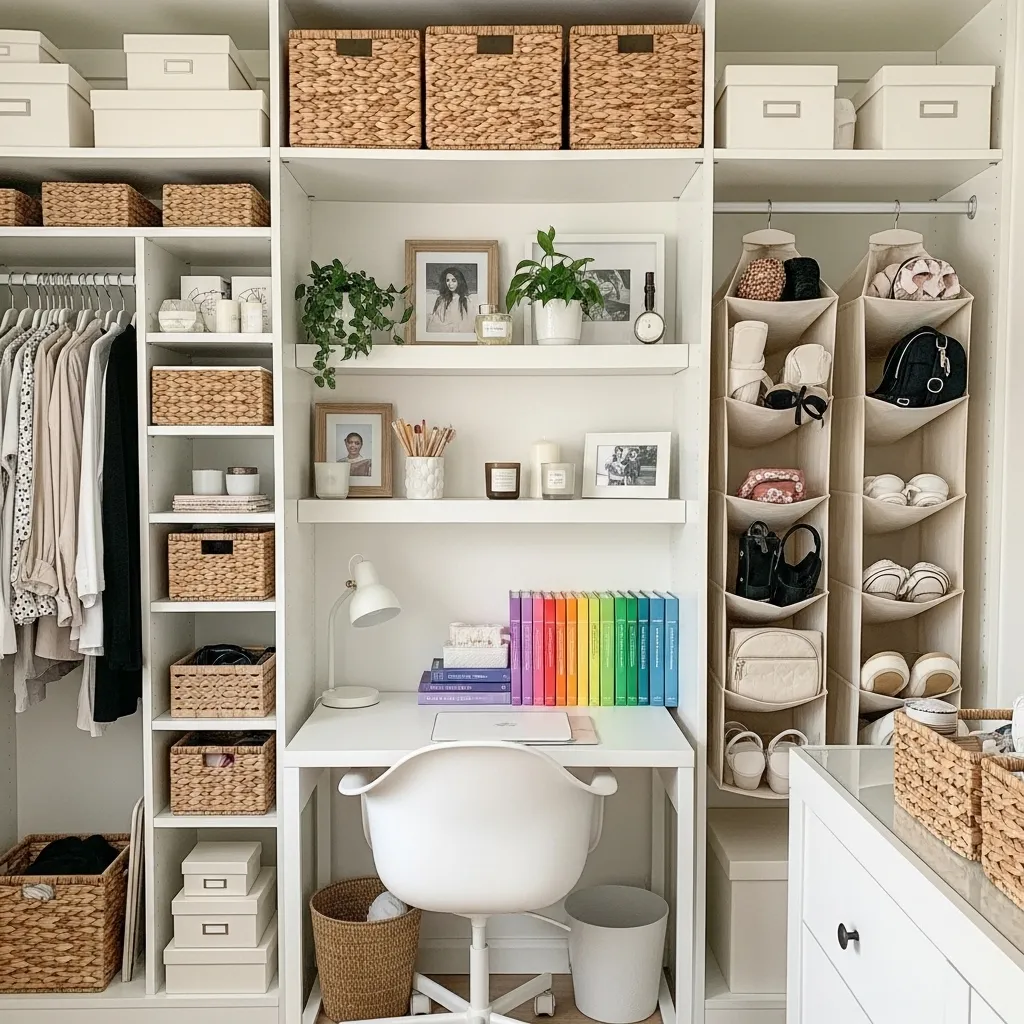
Organization is fundamental to aesthetic rooms—clutter and chaos undermine even beautiful individual elements. Aesthetic storage solutions keep necessary items organized while contributing to rather than detracting from the room’s visual appeal. The goal is everything having a designated home that’s both functional and attractive.
The key is choosing storage that coordinates with your aesthetic and displaying only curated items openly. Use matching baskets—seagrass, woven, or wire in finishes matching your style—to organize closet shelves and under-bed storage. Coordinating boxes or bins hold desk supplies, accessories, and miscellaneous items. Cover mismatched book spines with matching paper or arrange books by color creating satisfying rainbow gradients. Use aesthetic containers for everyday items—glass jars for cotton swabs, pretty trays for jewelry, decorative boxes for charging cables. Open shelving should display only curated, aesthetic items—plants, candles, meaningful objects, beautiful books—arranged with breathing room rather than crammed full. Hide genuinely unattractive necessities in closed storage. Maintain organization religiously—aesthetic rooms require ongoing discipline to remain clutter-free and intentional.
8. Add Texture Through Textiles and Layers
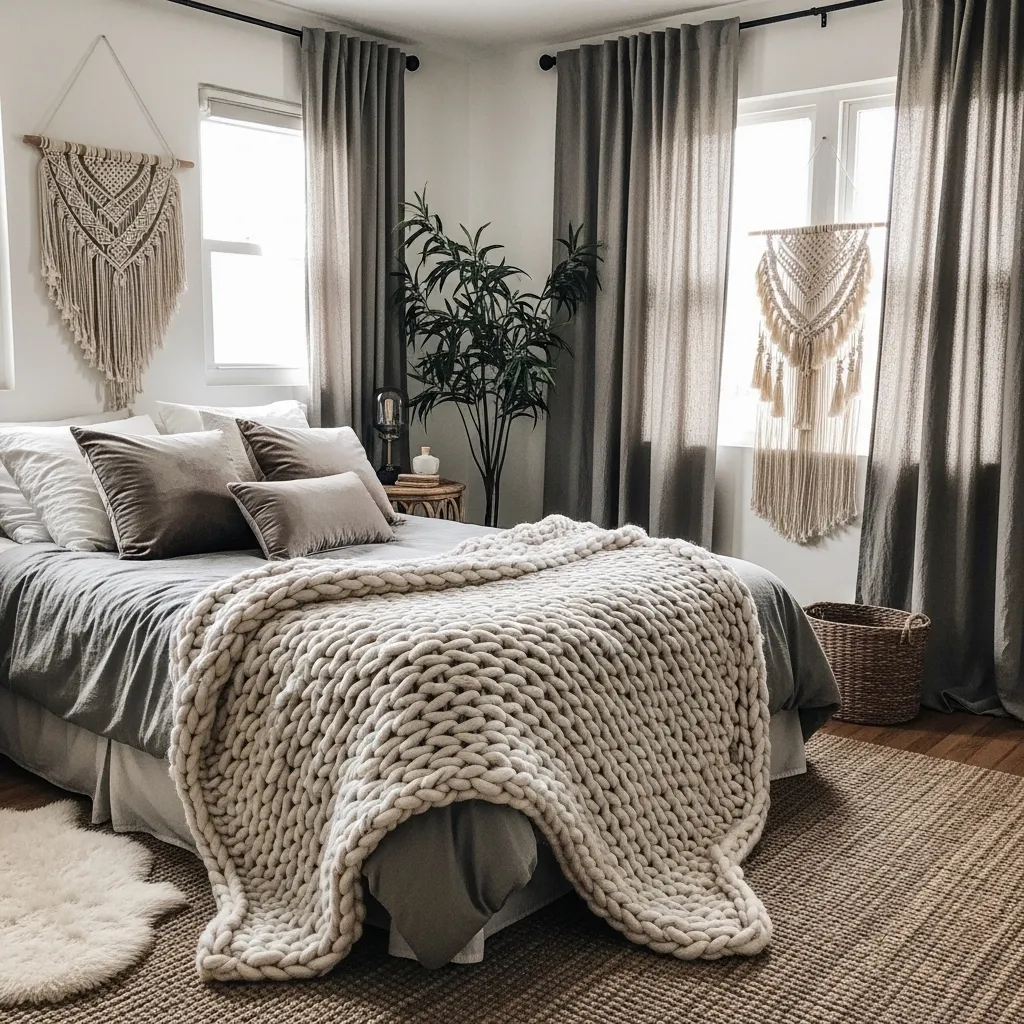
Texture creates depth and interest within restricted color palettes—it’s how you avoid rooms feeling flat or monotonous when using limited colors. Layering varied textures adds tactile richness and visual complexity while maintaining color cohesion. Texture makes rooms feel cozy, lived-in, and sophisticated rather than sparse or boring.
The key is deliberately including varied textures throughout the room while respecting your color palette. Mix smooth and rough, soft and structured, chunky and delicate. Add chunky knit throws and pillows for touchable coziness. Include velvet pillows or curtains for soft sheen. Linen bedding and curtains provide natural, nubby texture. Jute, sisal, or shag rugs add underfoot texture. Macramé wall hangings or woven baskets add dimensional texture. Wood furniture provides grain and natural texture. Even within all-white or monochromatic rooms, varied textures create richness and prevent flatness. Layer generously—multiple throw pillows in different textures, overlapping rugs, curtains over blinds. The textural variety creates sophisticated depth while your cohesive colors maintain visual calm and aesthetic coherence.
9. Create a Dedicated Aesthetic Work or Vanity Space
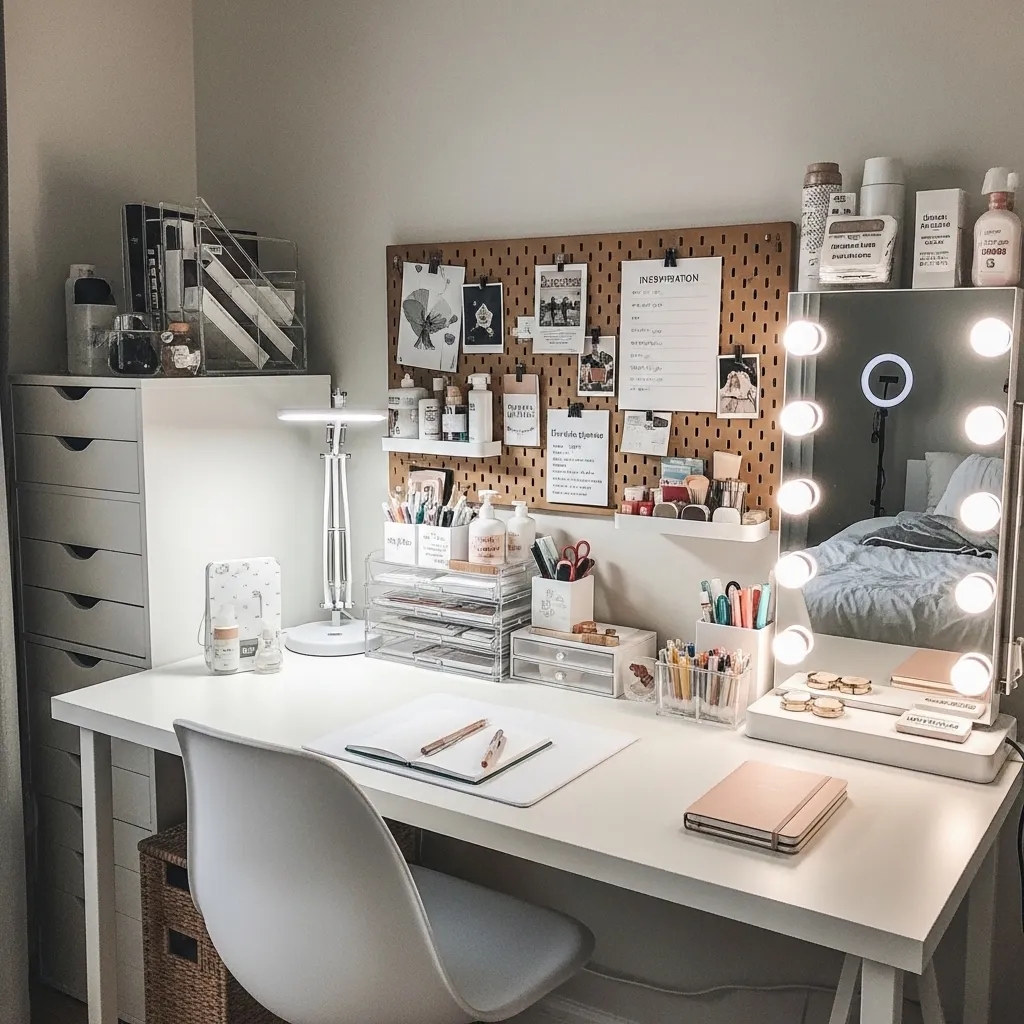
A dedicated desk or vanity space that’s both functional and aesthetic creates a work area that inspires productivity while maintaining the room’s visual coherence. Unlike generic desks that become cluttered catch-alls, aesthetic workspaces are carefully curated to be both useful and beautiful.
The key is selecting furniture matching your aesthetic and organizing with discipline. Choose a desk appropriate to your style and space—minimal Scandinavian desk, vintage writing desk, modern acrylic desk, or repurposed table. Organize with aesthetic storage—matching desk organizers, pretty pen holders, coordinating file boxes. Display only essentials and beautiful items—aesthetic notebooks, plant, inspirational print, quality desk lamp. Create an inspiration board using corkboard, pegboard, or magnetic board displaying photos, quotes, and goals in organized, aesthetic arrangement. Include good task lighting—modern desk lamp, ring light, or clip-on light in coordinating finish. For vanity setups, add a mirror with lighting and organize makeup and skincare in aesthetic containers. Keep the surface mostly clear—put away items after use rather than allowing permanent clutter. The functional workspace becomes a beautiful, inspiring area rather than a cluttered eyesore.
10. Incorporate Personal Touches and Meaningful Items
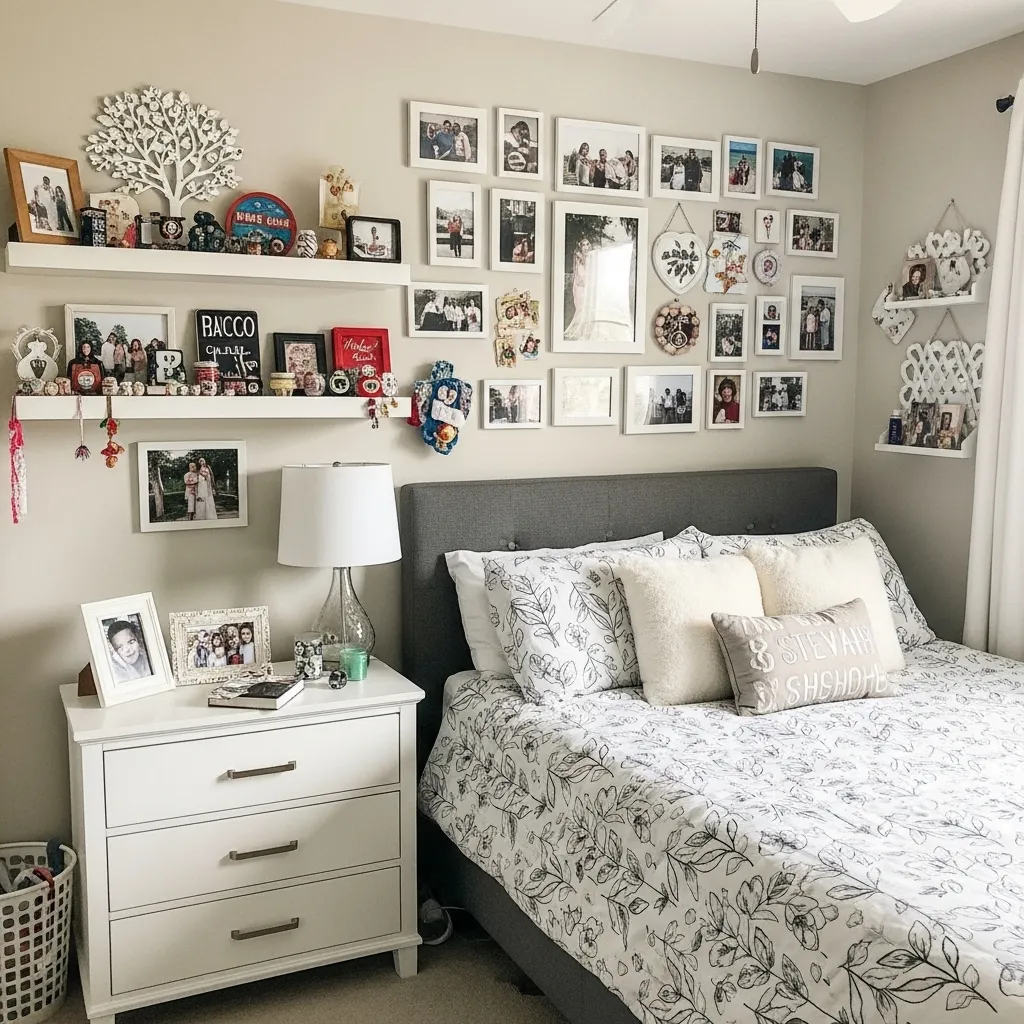
Truly aesthetic rooms balance visual cohesion with personal meaning—they’re not sterile showrooms but lived-in spaces reflecting real people. The challenge is incorporating personal items and meaningful objects without disrupting the carefully created aesthetic. The solution is selective display and creative integration.
The key is curating what you display and finding ways to make personal items work within your aesthetic. Choose which personal items to display—select pieces with genuine meaning rather than displaying everything. Frame personal photographs in coordinating frames matching your gallery wall aesthetic. Display meaningful objects on dedicated shelves with breathing room rather than cluttered surfaces. For items that don’t match your color palette but have deep significance, get creative—spray paint items in coordinating colors, house them in aesthetic containers, limit them to one “personal shelf,” or rotate seasonal displays. Incorporate hobbies and interests aesthetically—art supplies in matching containers, instrument displayed as décor, sports equipment in coordinating storage. The personal touches prevent your room from looking like a catalog while maintaining the visual coherence that defines aesthetic spaces.
11. Style Surfaces and Shelves Intentionally
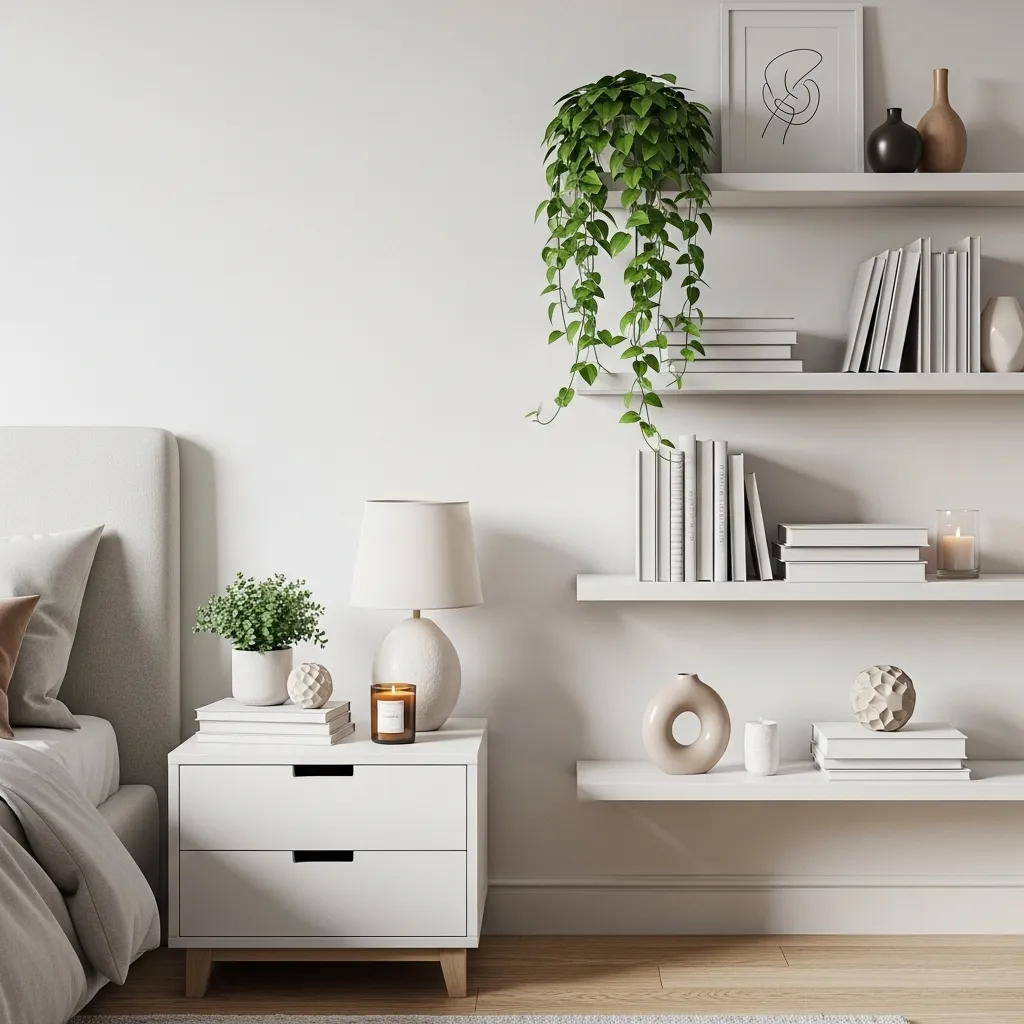
Surface and shelf styling is what separates aesthetic rooms from basic spaces—it’s the thoughtful arrangement of objects that creates those Instagram-worthy vignettes. Well-styled surfaces look curated and intentional rather than cluttered or bare, striking the perfect balance between functionality and beauty.
The key is applying basic styling principles consistently throughout the room. Use odd numbers—groups of three or five objects create more dynamic, interesting arrangements than even numbers. Vary heights—tall, medium, and short items create dimensional interest. Layer items—place objects in front of artwork, stack books, overlap frames. Use the rule of thirds—imagine surfaces divided into thirds and place items at intersection points rather than dead center. Include functional and beautiful items together—a lamp (functional) styled with a plant and books (beautiful). Ensure everything displayed is either genuinely beautiful, actually functional, or personally meaningful—remove random clutter and knick-knacks. Leave breathing room—surfaces shouldn’t be packed but shouldn’t be completely empty. Maintain your styling—dust regularly, refresh arrangements when they become stale, and resist the urge to add more. The intentional styling creates those perfect, aesthetic vignettes that make rooms photographable and beautiful.