15 Tiny Mudroom Ideas for Small Entryways That Actually Work
If you’ve been tripping over shoes, losing jackets to the floor, and feeling a low-grade sense of chaos every time you walk through your front door, this one’s for you — because a tiny entryway doesn’t have to mean a messy, stressful one. There are so many clever ways to carve out a functional mudroom moment in even the smallest of spaces, from built-in bench nooks and vertical hook walls to slim cabinet solutions, hidden storage ottomans, and unexpected corners that get completely transformed with a little intention. The ideas in this roundup prove that square footage is honestly overrated when it comes to creating an entryway that actually works for real life.
I used to think a mudroom was something you only got if you had a house with an actual dedicated room — like a bonus space with built-ins and a sink and a dog washing station that only existed in magazine spreads. Then I moved into a place with a front door that opened directly into the living room, and out of pure desperation I figured out how to create the feeling of a mudroom in about four feet of wall space. A narrow bench, some hooks, a small basket situation for shoes, and suddenly the chaos had a home. It wasn’t Pinterest-perfect, but it worked, and that changed how I thought about entryway organization entirely.
What I’ve learned from years of obsessing over small space solutions is that the best tiny mudrooms share a few things in common: they go vertical, they double up on function, and they commit to a system that matches how the people living there actually behave. Because a beautiful mudroom that doesn’t match how your household actually operates is just a pretty room that still has shoes on the floor. So here are 15 ideas that are both genuinely good-looking and genuinely useful — even in the tiniest of entryways.
1. The Floating Bench With Hidden Shoe Storage
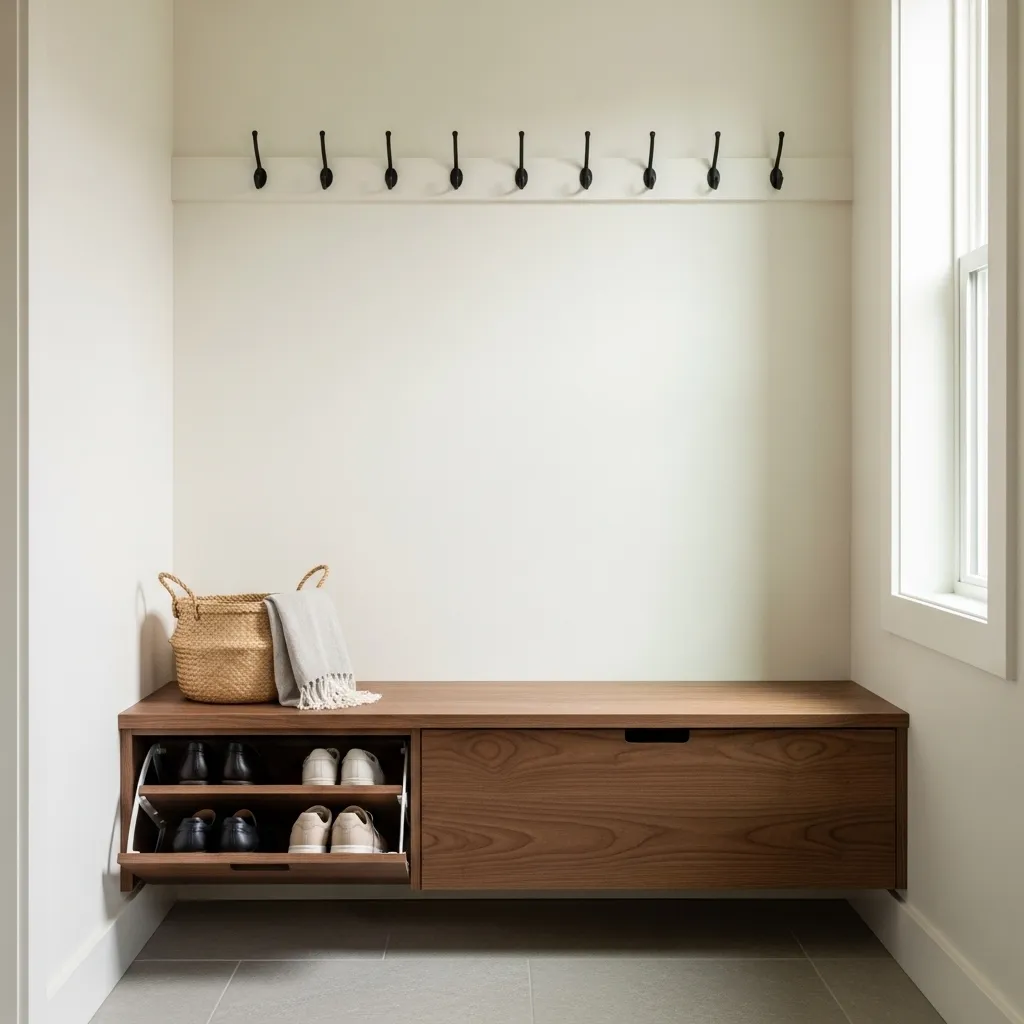
A floating bench is one of the smartest things you can put in a tiny entryway because it does three things at once — it gives you a place to sit while putting on shoes, it creates visual breathing room by keeping the floor partially visible underneath, and when you add drawers or cubbies below it, it swallows an enormous amount of shoe clutter without taking up any extra floor space.
The floating aspect is key in small spaces because anything that goes wall-to-wall and floor-to-ceiling feels heavy and room-shrinking. When you can see the floor underneath a bench, the space reads as bigger than it is. Add a basket on top for catch-all items and a row of hooks above and you’ve got a complete mudroom system in about 18 inches of depth.
2. Vertical Shiplap Hook Wall With Ledge Shelf
A shiplap hook wall sounds like a farmhouse-specific thing but it actually works across a huge range of styles — the texture it adds to an entryway is what makes the space feel designed rather than just functional. Even if the rest of your home is modern or minimal, a shiplap panel behind your hooks creates a visual moment that anchors the whole entry and makes it feel intentional.
The ledge shelf above the hooks is the move that takes it from basic to brilliant. That slim shelf becomes prime real estate for the things that need to live near the door — keys, sunglasses, a small plant, a candle — without cluttering the hooks themselves. It’s a system that looks good even on a chaotic Tuesday morning when the jackets are piled and the basket is overflowing.
3. Built-In Locker Cubbies for Each Family Member
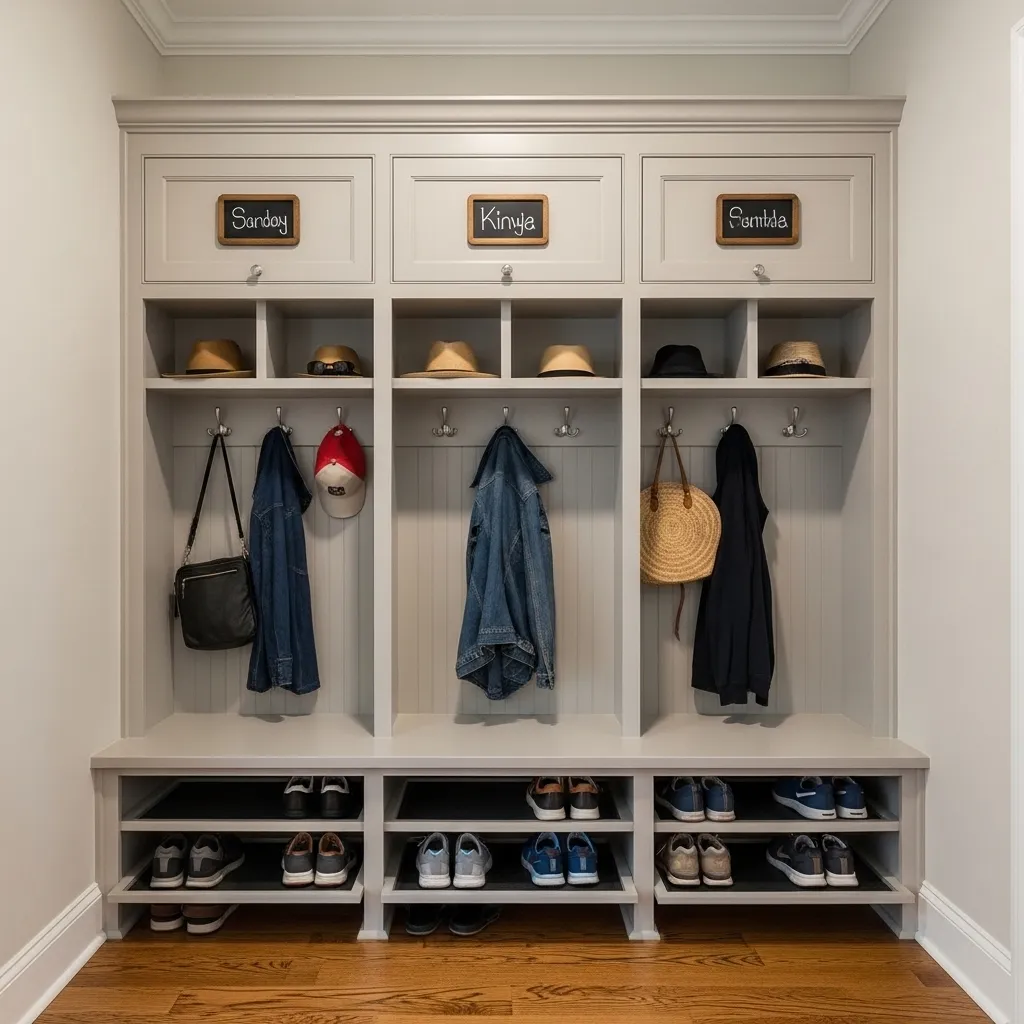
Assigning each person their own cubby is genuinely one of the most effective mudroom strategies for families because it removes the “where does this go” question entirely — everyone knows exactly where their stuff lives, and everyone is responsible for their own space. Even small children can manage their own little locker when everything is at the right height and labeled clearly.
You don’t need a professional builder for this either — IKEA and similar retailers have modular systems that can be configured into convincing built-in-looking lockers, and a little trim work and paint to match the walls makes them look completely custom. Three slim lockers in a four-foot wide entryway is extremely doable and makes an enormous difference in daily life.
4. A Slim Console Table With Baskets Underneath
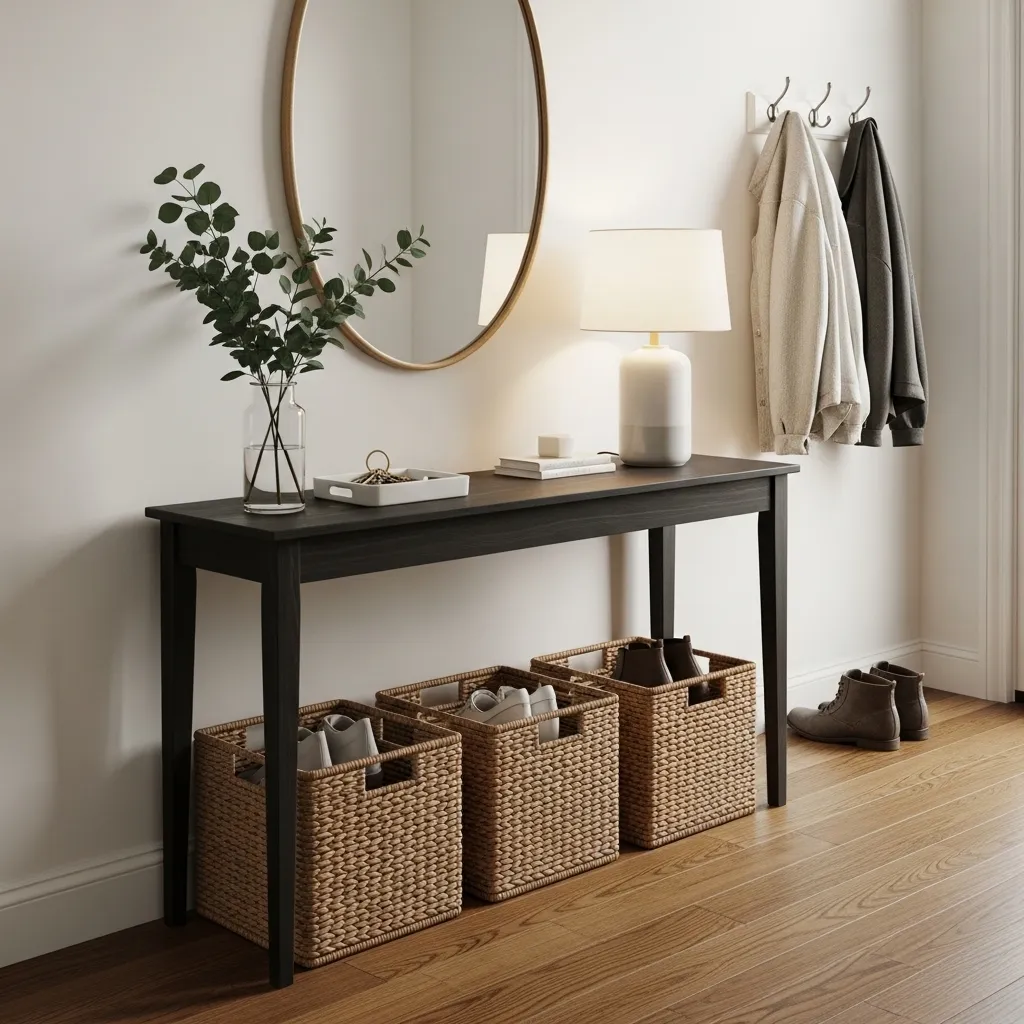
A console table is the secret weapon of tiny entryways because it looks like furniture rather than storage infrastructure — it makes the entryway feel like a designed room rather than a survival strategy. And when you tuck baskets underneath, you suddenly have shoe storage that costs very little and looks genuinely put together.
The key is matching your baskets and keeping the tabletop edited. One tray, one plant, one lamp — that’s your entire tabletop situation. Resist the urge to pile things on top and let the baskets below do the heavy lifting for actual storage. This works especially well in apartments and older homes where built-ins aren’t an option.
5. Over-the-Door Organizer Turned Entryway Station
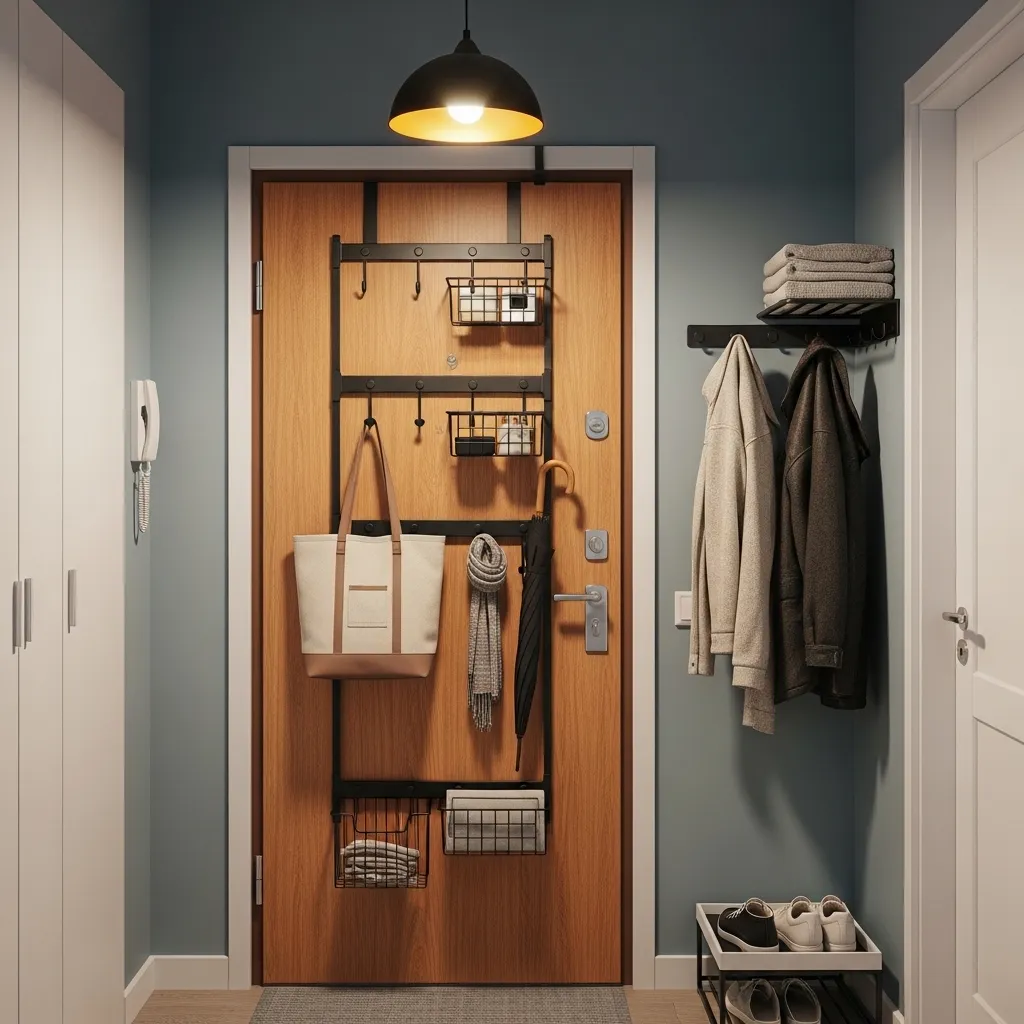
If you’re renting or simply can’t put holes in walls, the back of your front door is an entire untapped storage wall you might be completely ignoring. A good over-the-door organizer — especially one in a metal or wood finish that looks intentional rather than plastic-dorm-room — can hold an impressive amount of entryway essentials without taking up a single inch of floor space.
Look for ones with a combination of hooks and basket sections so you can handle both jackets and smaller items like gloves, dog leashes, and sunglasses. Styled well, with a coordinating basket on the floor for shoes and a small plant nearby, this can genuinely look like a proper entryway setup rather than a workaround.
6. Mudroom Bench Nook Built Into a Closet
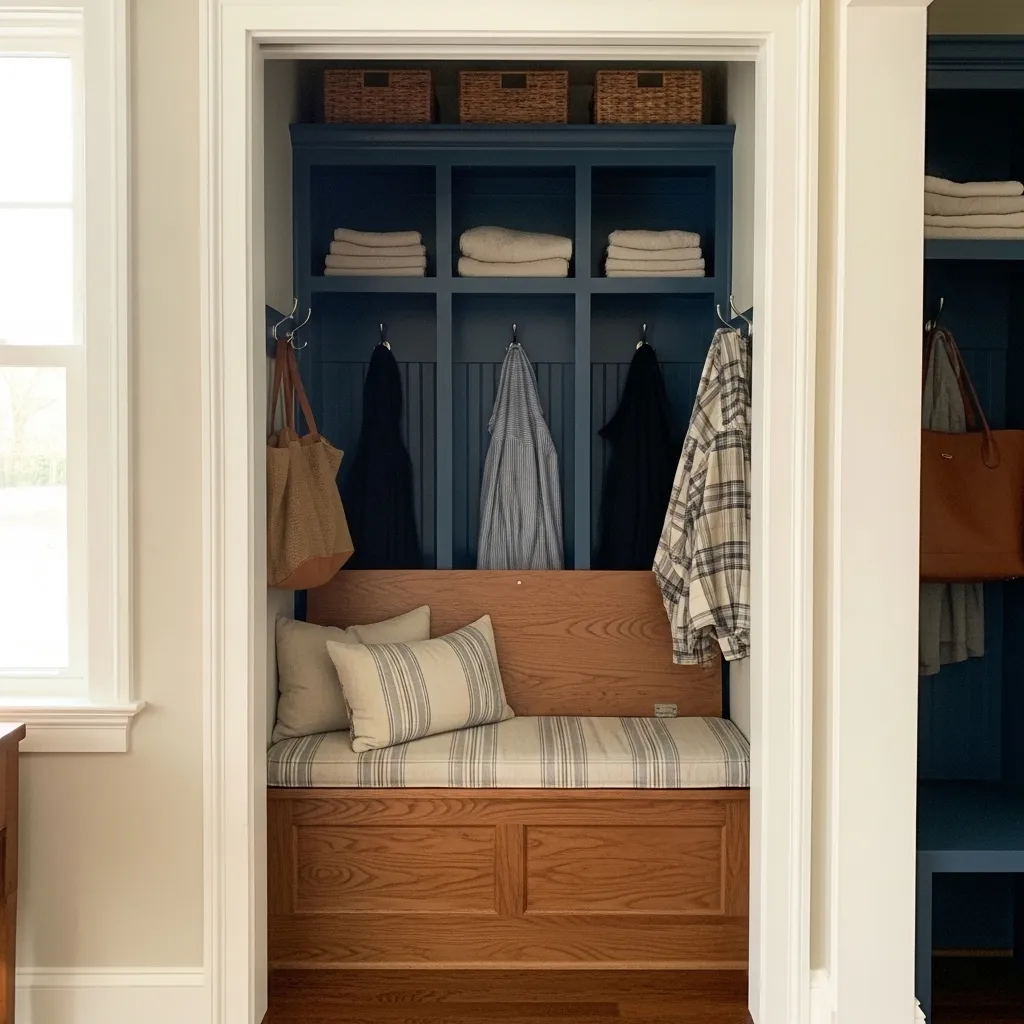
If you have a coat closet near your front door, removing the doors and converting it into an open mudroom nook is one of the most impactful small-space moves you can make. What was essentially a dark cave where coats went to get wrinkled becomes an organized, beautiful, functional entryway system — and you gain visual space in the process because open niches read as intentional rather than just a hole in the wall.
Painting the interior of the nook a different color from the surrounding walls is the trick that makes it look like a design feature rather than a renovation. Deep navy, hunter green, or even a warm terracotta inside the nook against white walls outside creates a jewel-box effect that looks expensive and considered. Add a cushion and some baskets and you genuinely won’t miss the closet doors.
7. Narrow Pegboard Command Center
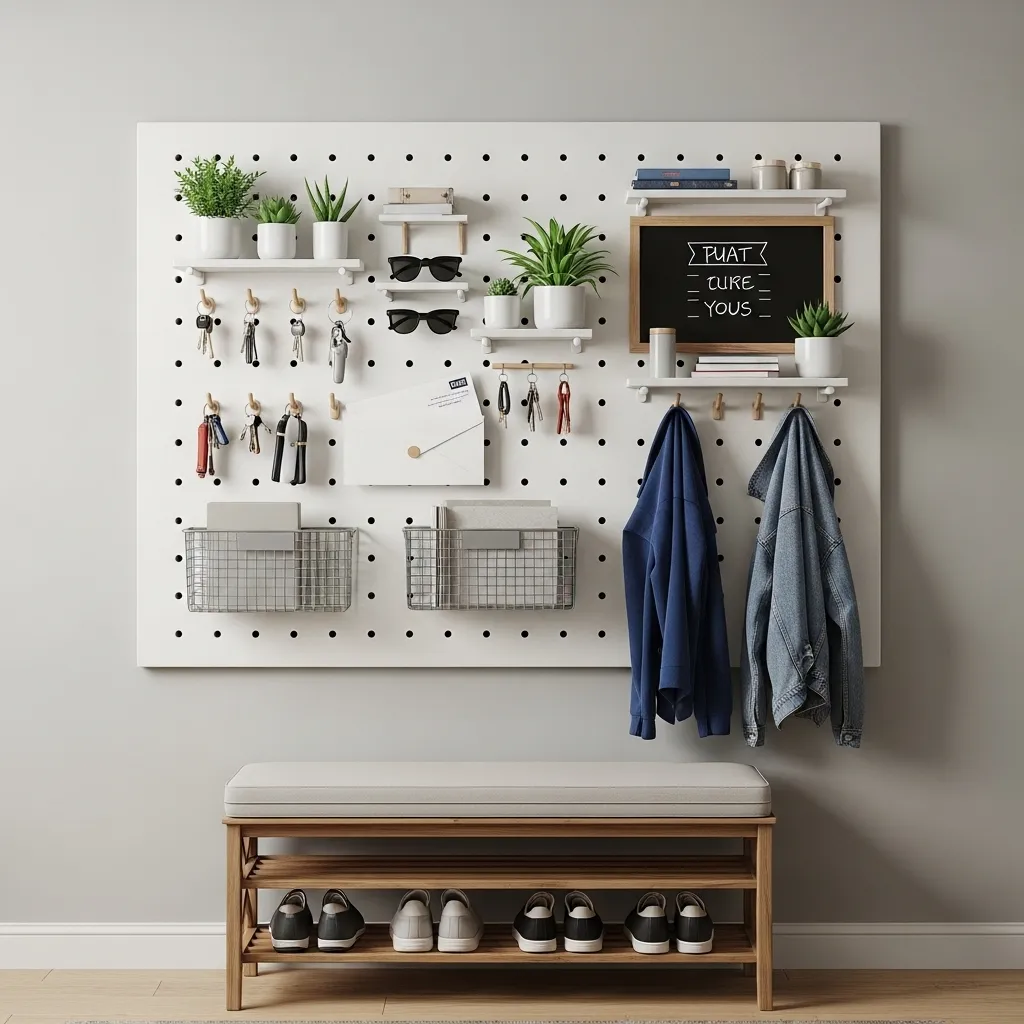
Pegboard gets a bad reputation for being workshop-adjacent and utilitarian, but a painted pegboard with thoughtfully chosen accessories is actually one of the more stylish entryway storage solutions out there right now — especially in modern, eclectic, or Scandinavian-influenced spaces. The modular nature of it means you can reconfigure as your needs change without any new holes in the wall.
The range of things you can hang on a pegboard entryway system is genuinely impressive: hooks for keys and bags, small shelves for plants and sunglasses, a little basket for mail, a chalkboard tile for notes and lists. It’s a complete command center that fits in as little as two feet of horizontal wall space and costs a fraction of what built-ins would.
8. Window Seat Bench With Shoe Drawers
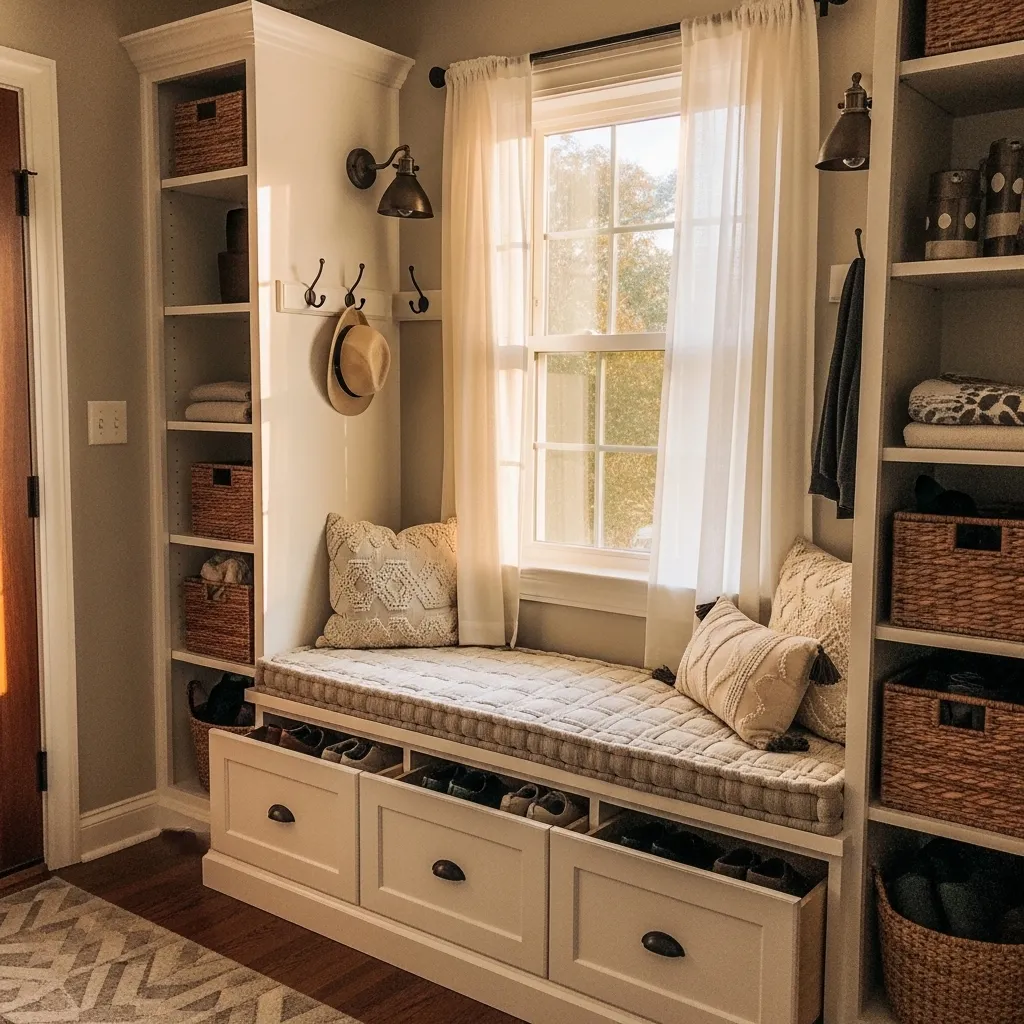
If your entryway happens to have a window on one of the walls — even a small one — building a bench seat below it is the coziest, most charming thing you can do with that space. You get seating, you get natural light, and when you add drawers below for shoes, you’ve got a complete mudroom setup that feels like it was designed specifically for the house.
The shelving on either side of the window seat is what elevates it from a simple bench to a full storage wall. Keep the shelves narrow — even eight inches deep is enough for baskets, folded hats, and small bins — and the whole setup can fit in a surprisingly tight space while making the entryway feel like one of the most considered rooms in the house.
9. Industrial Pipe and Wood Hook Rail
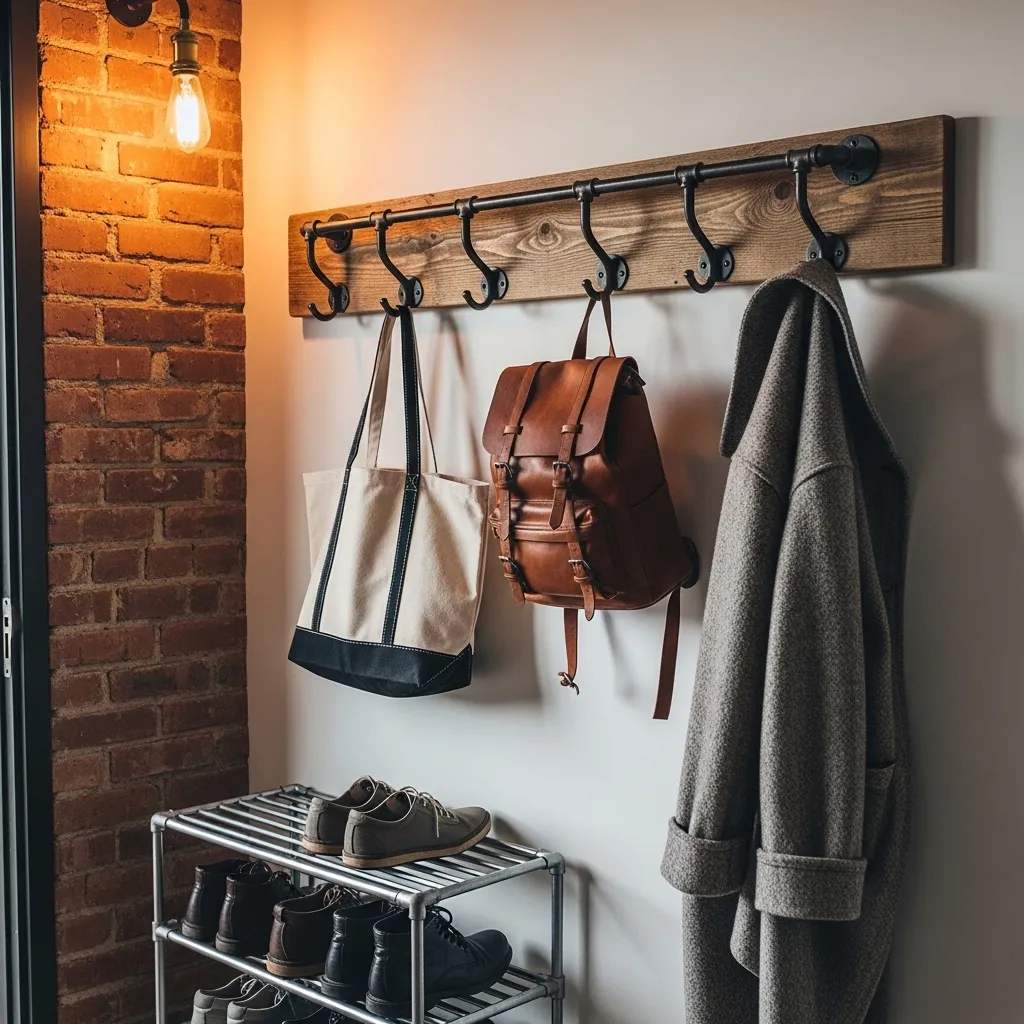
The pipe-and-wood hook rail is one of those DIY solutions that looks like it came from a boutique home store and costs about thirty dollars in plumbing supplies. The combination of dark iron pipe and warm reclaimed wood has a warmth and character that mass-produced hook rails just don’t have — and it’s incredibly easy to customize to whatever length and configuration fits your wall.
It works especially well in entryways with exposed brick, concrete, or any kind of industrial or eclectic aesthetic, but honestly it reads as cool in pretty much any context. Pair it with a metal wire shoe rack below to keep the industrial thread going, and the whole entryway has a cohesive, intentional feel that feels curated without trying too hard.
10. Freestanding Coat Tree With Shoe Tray
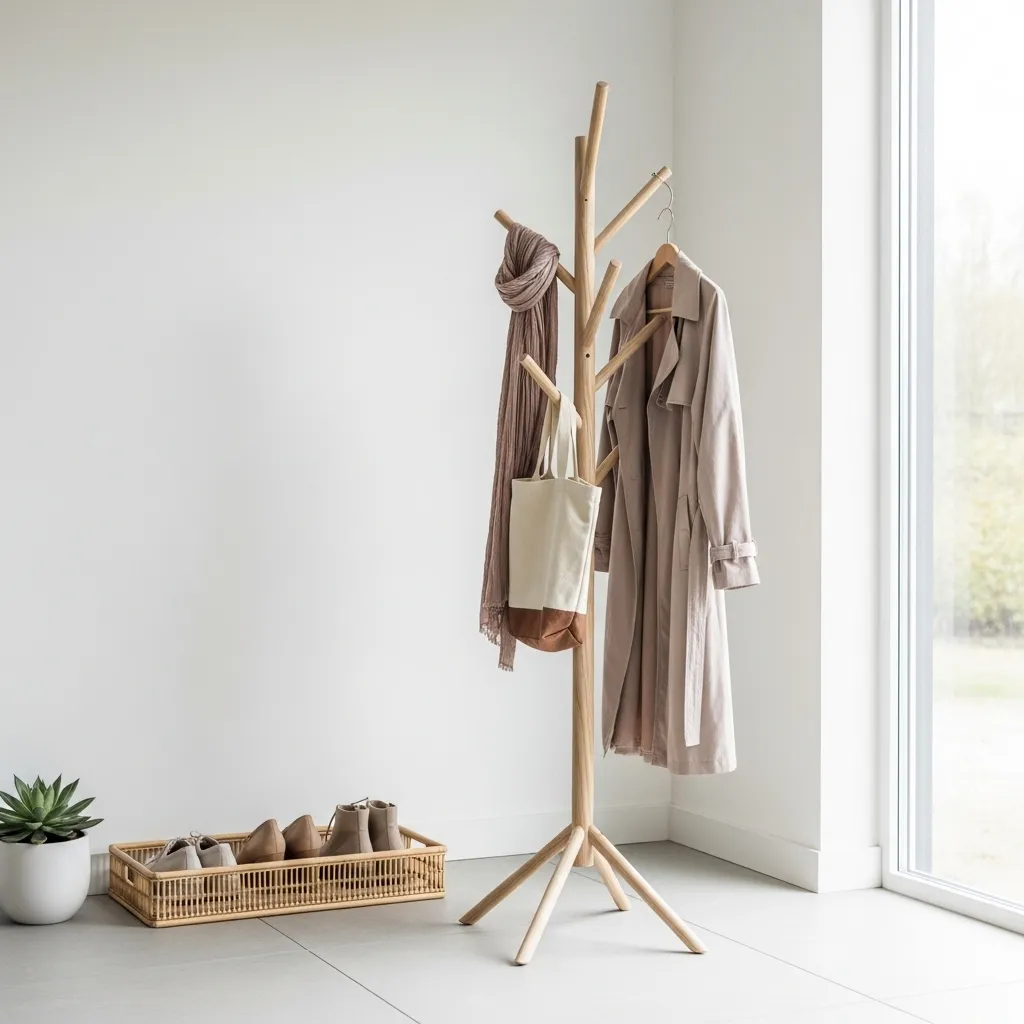
A coat tree is possibly the lowest-commitment, highest-impact entryway solution for people who rent, move frequently, or simply don’t want to drill a single hole in a wall. A good one — in wood rather than plastic, with enough branches to actually be functional — can do an enormous amount of organizational work for a piece of furniture that takes up maybe two square feet of floor space.
The shoe tray underneath is the detail that makes it feel like a system rather than just a standalone piece of furniture. Keep the tray low and shallow — a flat woven tray or a simple rubberized mat works perfectly — and suddenly the coat tree has a little home base that corrals the whole entry. Simple, elegant, and totally moveable.
11. Tall Narrow Armoire Repurposed as Mudroom Cabinet
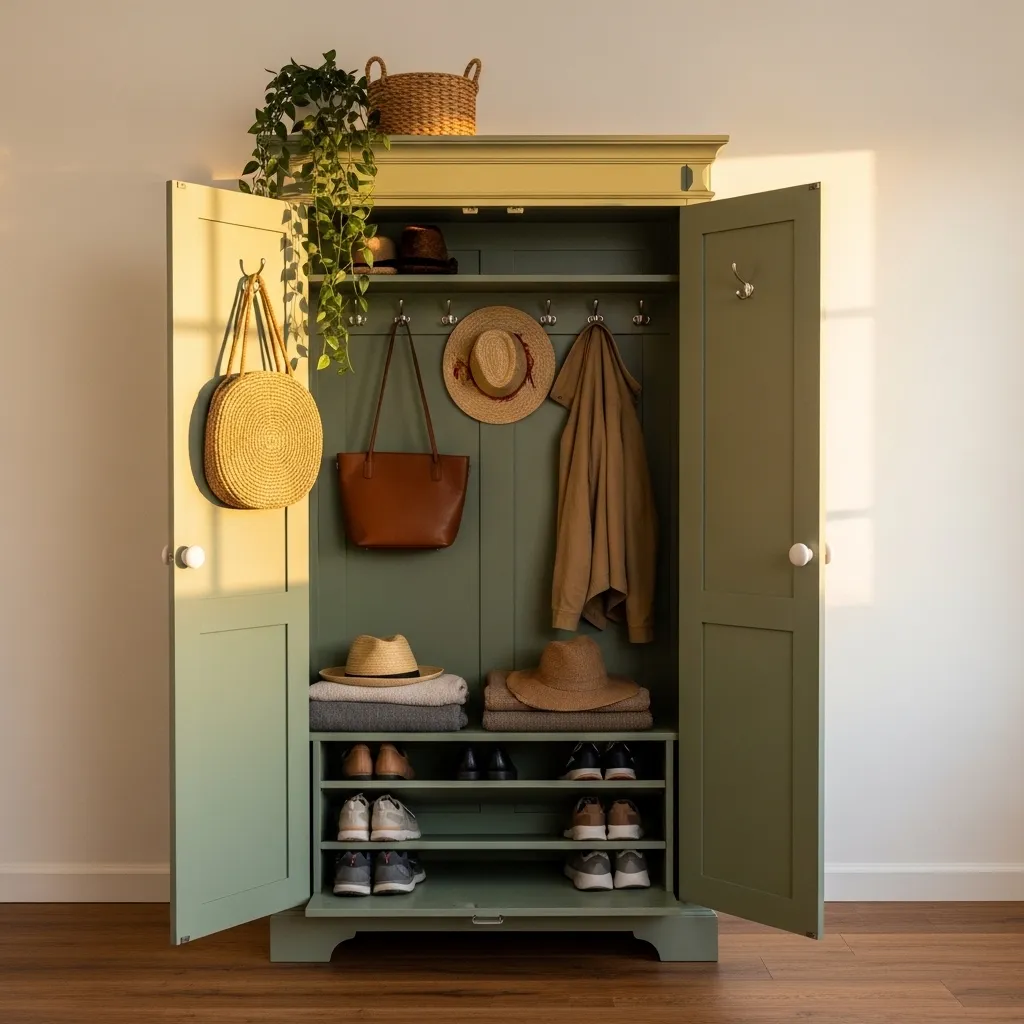
A tall narrow armoire — thrifted, inherited, or bought from a discount furniture store — can be completely transformed into a self-contained mudroom cabinet that hides absolutely everything behind two closed doors. Open it to reveal a hook for every family member, a shelf for hats and sunglasses, and a shoe situation at the bottom. Close it and the entryway looks completely serene.
The key is mounting hooks on the inside of the door panels, which most people never think to do — it doubles the usable interior space and makes the whole cabinet dramatically more functional. A fresh coat of paint in a color that works with your home’s palette turns a thrift store find into something that looks completely intentional and custom.
12. Floating Shelves With Labeled Baskets
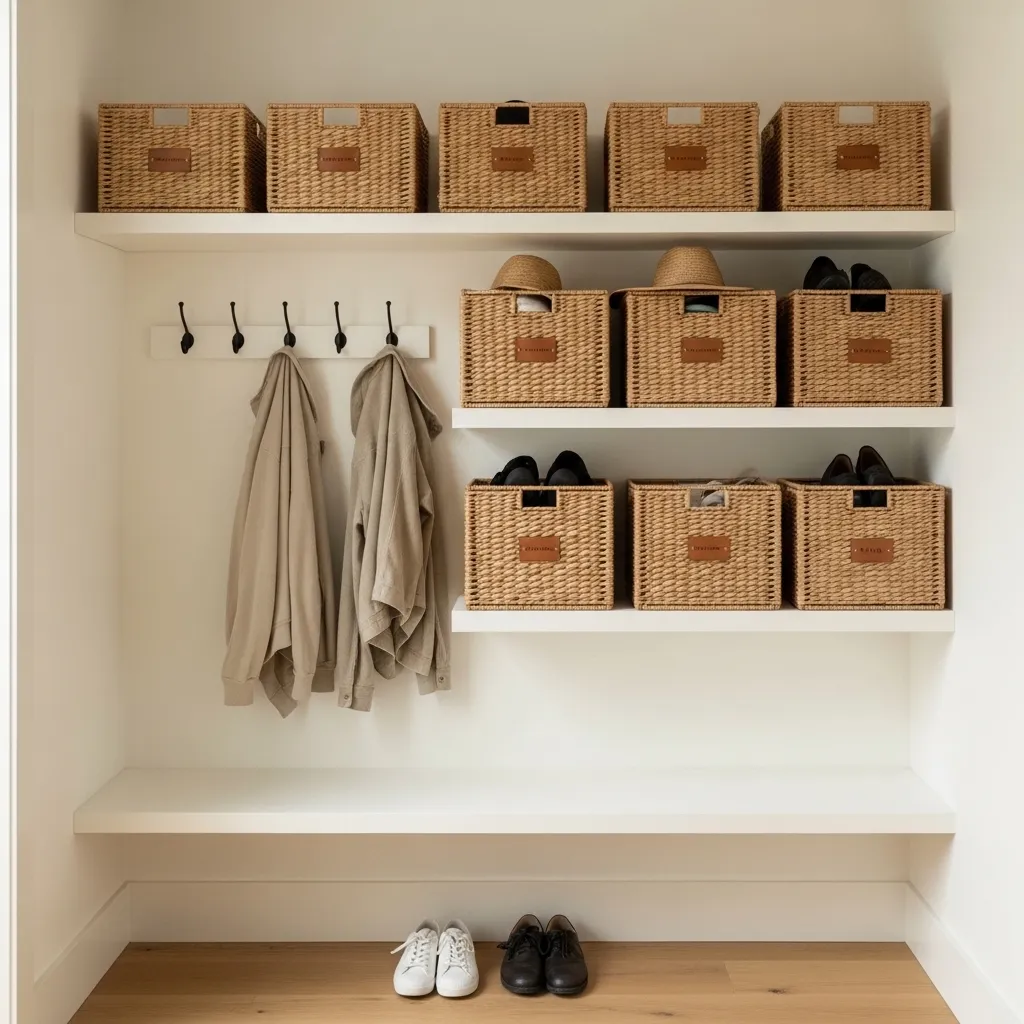
The labeled basket system on floating shelves is a classic for a reason — it’s one of the most flexible mudroom solutions because you can reconfigure the baskets as your needs change without any renovation work. New baby? Add a basket. Dog joins the family? There’s a basket for that. Kids grow out of needing their own labeled cubby? Repurpose it.
Using matching baskets rather than a mix of different containers is the organizational tip that makes this look genuinely polished rather than chaotic. Even if the contents of each basket are completely different, the matching exteriors create a visual uniformity that reads as tidy and intentional. It’s the easiest way to make a floating shelf situation look like it was designed by someone who really knows what they’re doing.
13. Chalkboard Wall Panel With Built-In Hooks
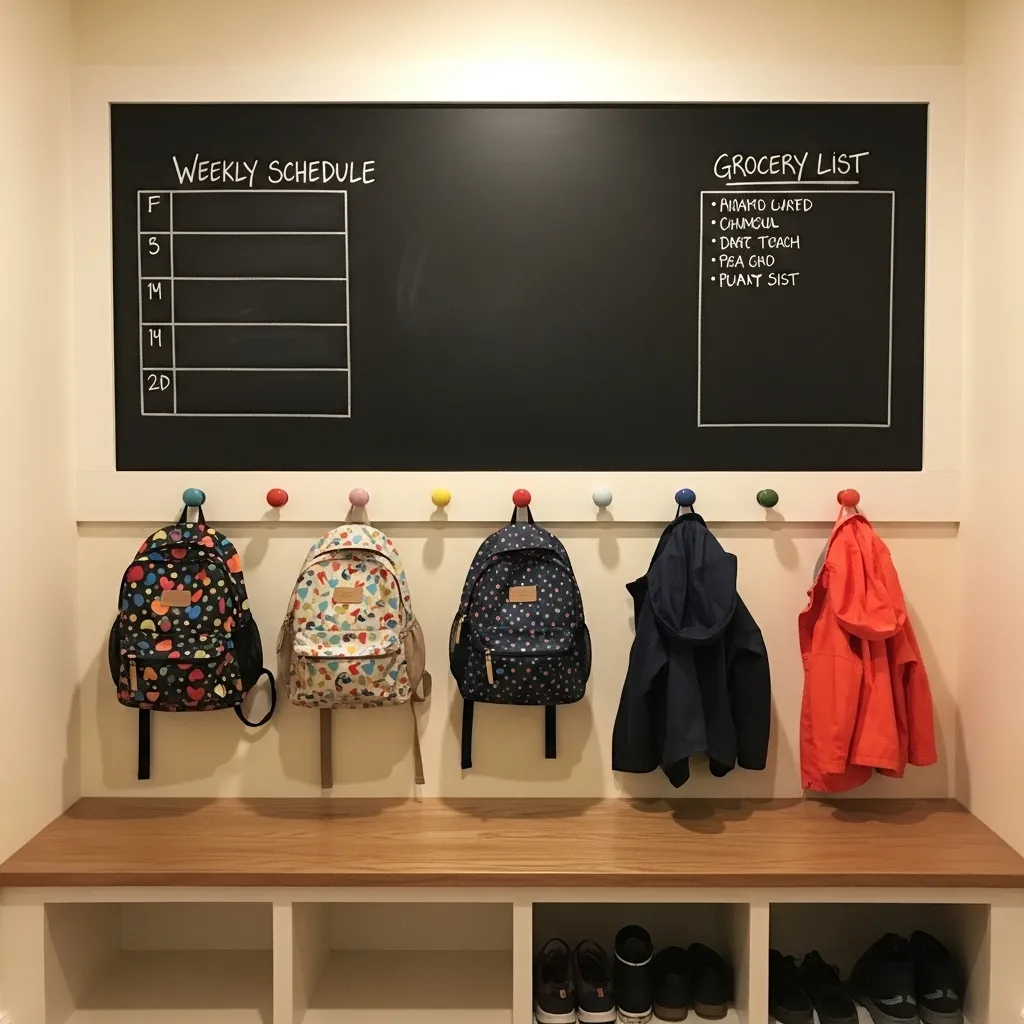
A chalkboard entryway wall is a game-changer for families with kids because it solves two problems at once — it gives you a communication hub right where everyone passes through twice a day, and the hooks along the bottom turn it into a functional storage wall. Notes, schedules, reminders, and grocery lists all live in a place where nobody can claim they didn’t see them.
Chalkboard paint is one of the more affordable and commitment-friendly wall treatments because it goes over almost any surface with a few coats. You can paint a full wall, a large rectangle, or even just a panel inside your entryway nook — and the matte black creates a grounding, graphic backdrop that makes the whole entry feel designed rather than default.
14. Mudroom Moment in a Rental With Command Strips
Renting absolutely does not mean accepting an entryway that doesn’t work. Command strips and adhesive hooks have come an incredibly long way in terms of weight capacity and design quality — there are matte black metal options now that look completely intentional and can hold a surprisingly heavy jacket or bag without pulling paint when you eventually remove them.
The trick with a rental mudroom moment is layering — a folding bench for seating and shoe storage, a cluster of adhesive hooks in an intentional pattern on the wall above, a removable wallpaper panel to create a backdrop, and a basket on top of the bench for catch-all items. None of it requires a single hole and the whole thing comes together and breaks down in about an afternoon.
15. Entryway Mudroom Nook With Wallpaper Accent
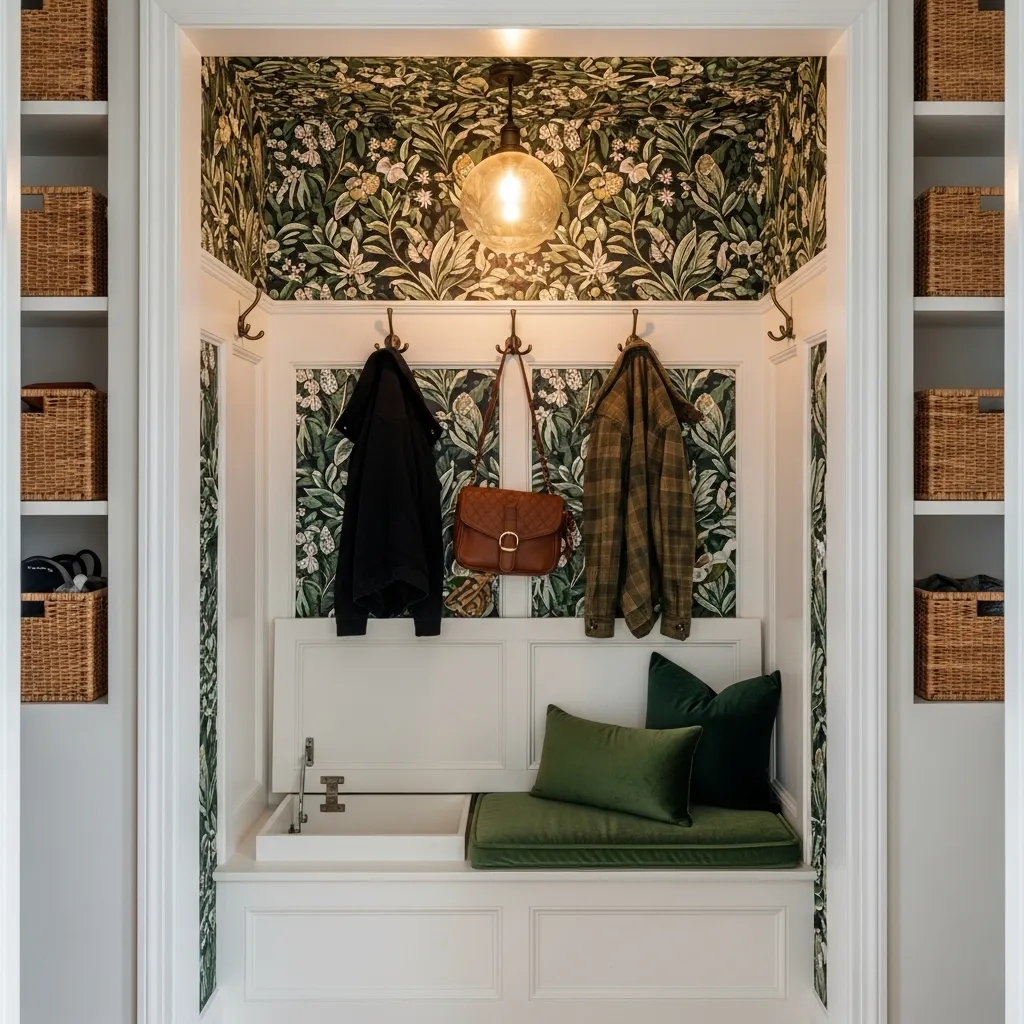
Using wallpaper in a tiny mudroom nook is one of those design decisions that feels disproportionately impactful — even a single wall of bold pattern in a small entryway makes the whole space feel like it was professionally designed. The wallpaper becomes the art, the backdrop, the personality of the room, and everything else can be kept simple and let the pattern do the heavy lifting.
Deep botanical prints in jewel tones, classic stripes, geometric patterns, or even a simple grasscloth texture all work beautifully in an entryway because the space is transitional — you’re passing through it rather than staring at it for hours, so you can afford to be bolder than you might be in a main living space. Pair it with simple white built-ins, aged brass hardware, and a velvet or linen bench cushion and you’ve got something that feels truly special every single time you walk through the door.