11 Staircase Makeover Ideas That Transform the Most Overlooked Space in Your Home
If your staircase has been sitting there looking tired, builder-basic, or just completely invisible in the background of your home, you’re seriously missing one of the best design opportunities in the entire house — because staircases are essentially a vertical gallery, a architectural feature, and a first impression all rolled into one, and when you actually pay attention to them the transformation can be jaw-dropping. From painted risers with bold patterns and wallpapered stringer walls to dramatic dark wood treads, gallery wall stairways, shiplap feature walls, carpet runner statements, modern iron baluster upgrades, and whitewashed everything, there are so many directions you can take a staircase makeover that the hardest part is honestly just picking one and committing to it.
I walked past my own staircase for two full years without ever really seeing it — it was just the thing I used to get from the ground floor to the bedrooms, beige carpet and all, totally unremarkable and kind of depressing if I’m honest. Then I pulled up the carpet on a whim one Saturday afternoon expecting to find subfloor underneath and discovered beautiful original oak treads that just needed sanding and staining. Standing at the bottom of the stairs that evening looking up at warm, honey-toned wood where beige carpet used to be was one of those renovation moments that genuinely makes you emotional — the bones were there the whole time and I just hadn’t looked.
What I’ve learned since diving deep into staircase transformations is that this space rewards boldness in a way that other rooms don’t quite — because it’s transitional, you move through it rather than sitting in it, so you can afford to be more dramatic with pattern, color, and contrast than you might be in a living room or bedroom. A staircase can handle a wallpaper you’d never put in a main room, a paint color that would feel intense on four walls, a level of detail that would feel overwhelming in a larger space. It’s the perfect place to take a design risk and absolutely nail it.
1. Painted Stair Risers With Bold Pattern
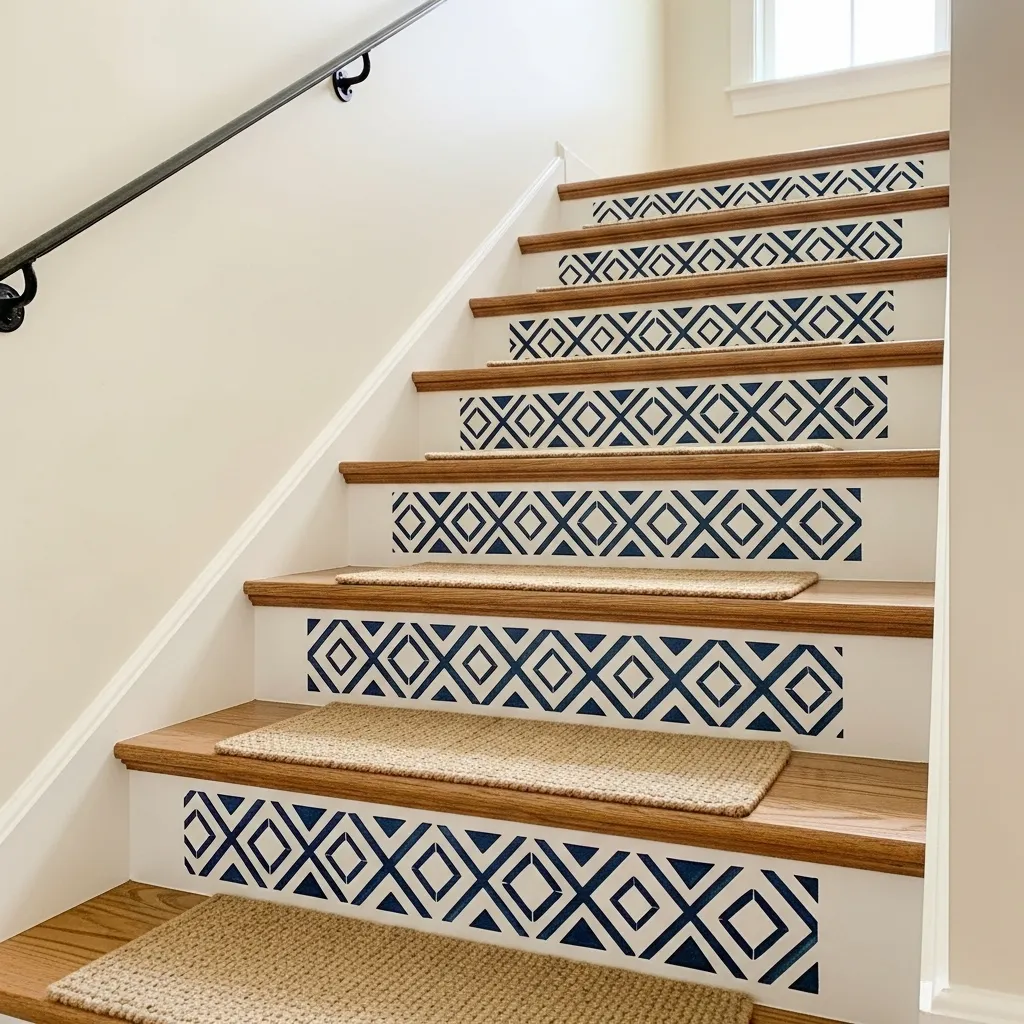
Painted stair risers are one of the highest-impact, lowest-cost staircase makeovers you can do — a can of paint and a steady hand (or a simple stencil) and the whole staircase becomes a feature rather than a background element. The risers are essentially a collection of small canvases that together create a pattern you see in one sweeping glance from the bottom of the stairs.
Geometric patterns are the most forgiving for DIYers because the clean lines are easier to execute crispy than organic or hand-drawn designs — but stripes, simple florals, Moroccan-inspired tiles, and even abstract brush strokes all work beautifully. The key is choosing a palette that connects to the rest of your home so the painted risers feel like a deliberate design extension rather than a random burst of personality with no context.
2. Dramatic Dark-Stained Wood Treads
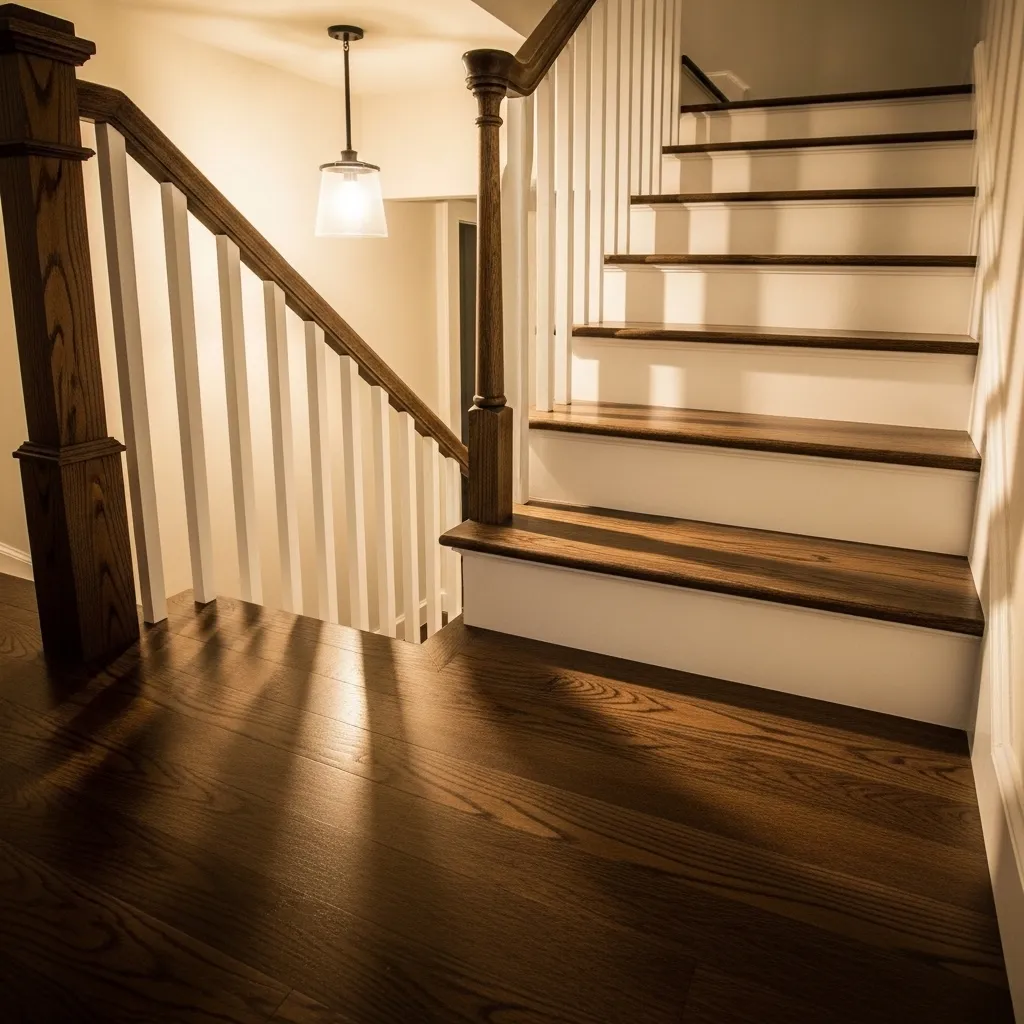
There is something about a dark wood staircase that feels genuinely luxurious — it has the kind of weight and presence that makes a home feel more serious and considered, like it was designed rather than just assembled. And the contrast of dark espresso treads against bright white risers is one of the most classically beautiful combinations in staircase design, endlessly elegant and never dated.
If your existing treads are in reasonable condition, refinishing them in a dark stain is a relatively accessible project — sanding, staining, and sealing takes a weekend of work but the result looks like a complete renovation. Pair the dark treads with white everything else — risers, balusters, wall — and the staircase becomes the most sophisticated space in the house almost overnight.
3. Wallpapered Staircase Wall
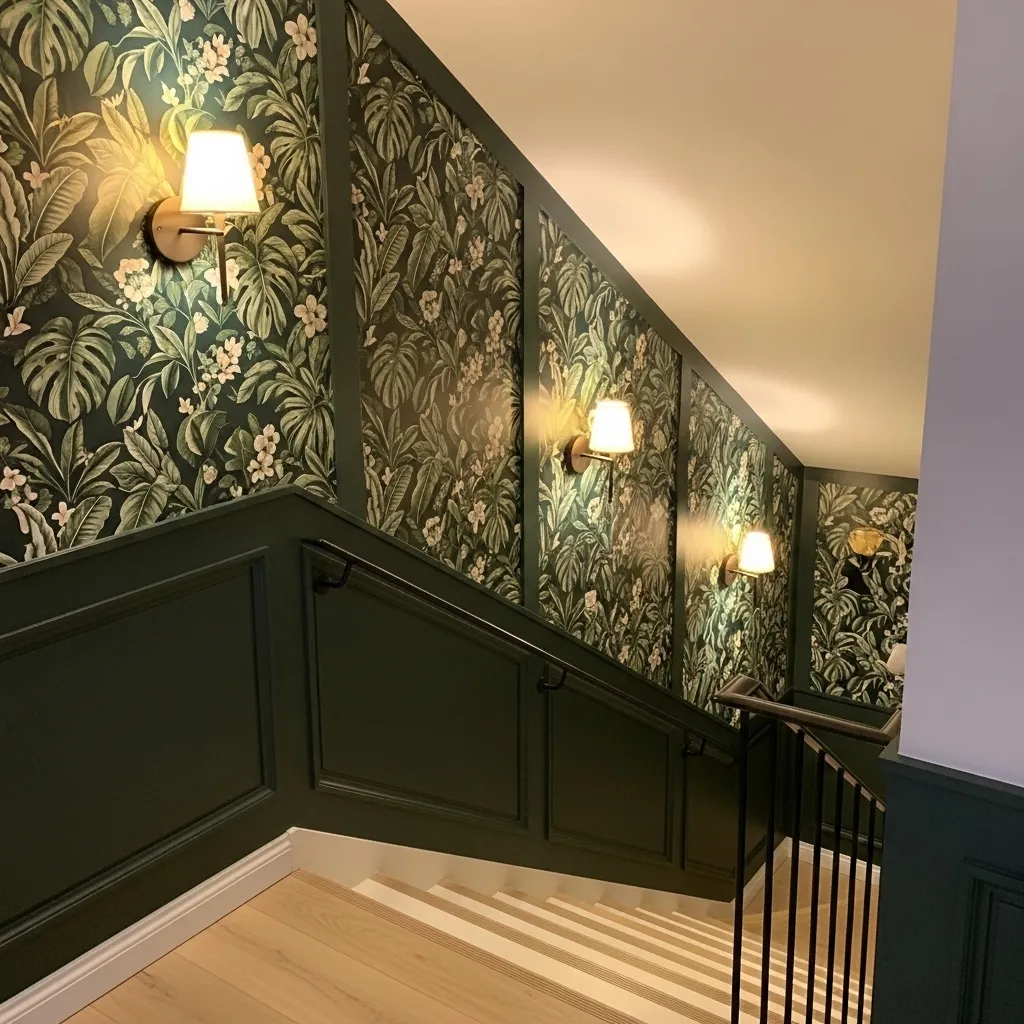
The wall that runs alongside a staircase — often called the stringer wall — is one of the largest uninterrupted wall surfaces in most homes, and most people paint it white and completely ignore it. Wallpapering it is the move that changes the entire character of the space instantly, especially when you choose a pattern bold enough to hold its own at a distance and in passing.
Botanical prints, geometric patterns, maximalist florals, classic stripes, and even scenic murals all work magnificently on a staircase wall because the scale and angle of the wall gives the pattern room to breathe and be seen properly. The angled ceiling line where the wall meets the slope of the staircase creates an interesting framing element that actually highlights the wallpaper rather than complicating it.
4. Modern Black Iron Balusters Upgrade
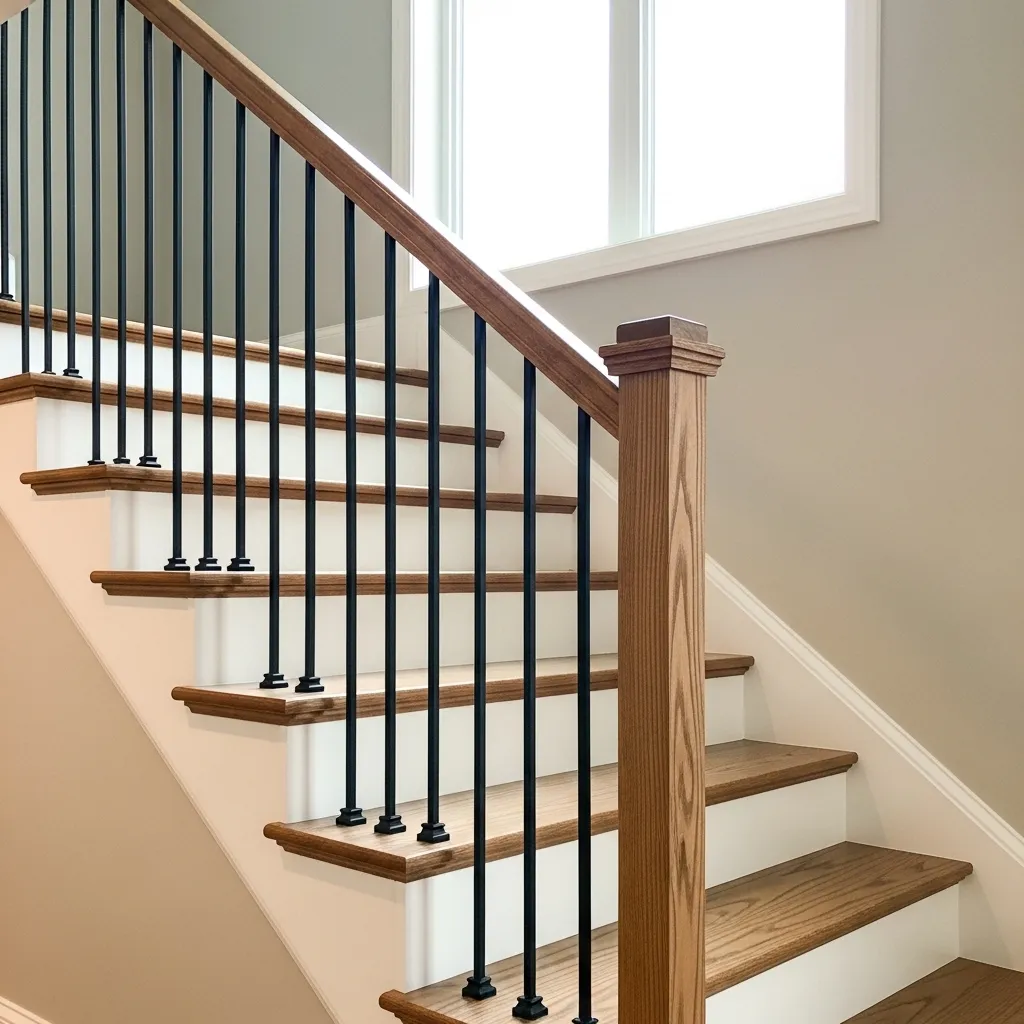
Swapping out old wooden or brass balusters for sleek matte black iron ones is one of those staircase updates that costs a fraction of a full renovation but reads like a complete overhaul — it’s the hardware upgrade equivalent for staircases, and the difference is genuinely remarkable. Where dated wooden spindles make a staircase disappear into the background, black iron balusters create definition and visual interest that makes the whole staircase feel architectural.
The matte black finish is particularly effective because it works across such a wide range of interior styles — it feels modern and industrial in a contemporary home, classic and refined in a traditional one, and globally inspired when paired with warm wood tones and natural textures. It’s one of the safest bold choices you can make in a home because it’s hard to get wrong.
5. Staircase Gallery Wall
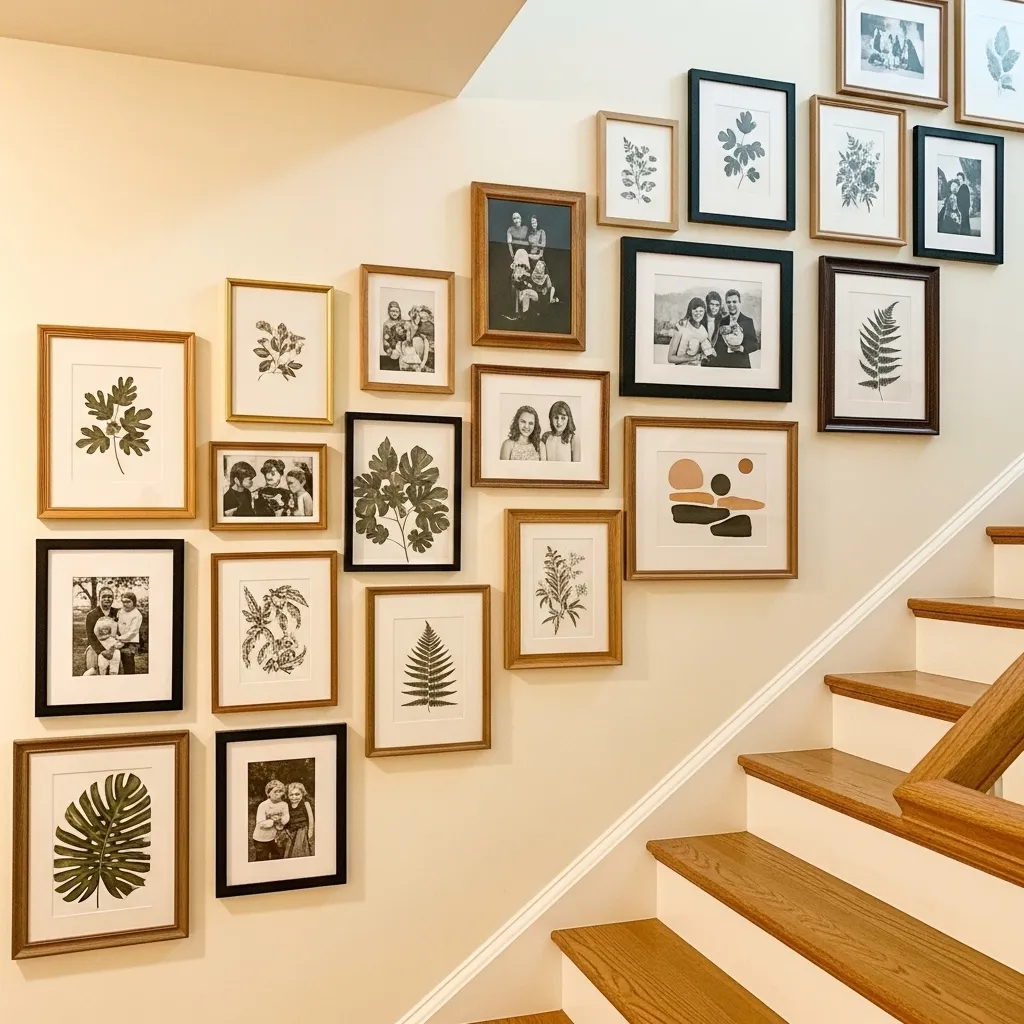
A gallery wall along the staircase is one of the most personal and meaningful things you can do with that long diagonal wall — it turns a transitional space into a family museum, a curated collection of images and art that tells a story and gives people something genuinely interesting to look at every time they go up or down the stairs. Done well, it’s the detail that guests always comment on first.
The key to a staircase gallery wall looking intentional rather than chaotic is establishing a cohesive element that ties all the frames together — whether that’s a consistent color palette in the artwork, a consistent frame finish, or a mix of both. Following the diagonal line of the staircase with your frame arrangement rather than fighting it is the compositional move that makes the whole thing feel designed rather than randomly hung.
6. Shiplap Staircase Feature Wall
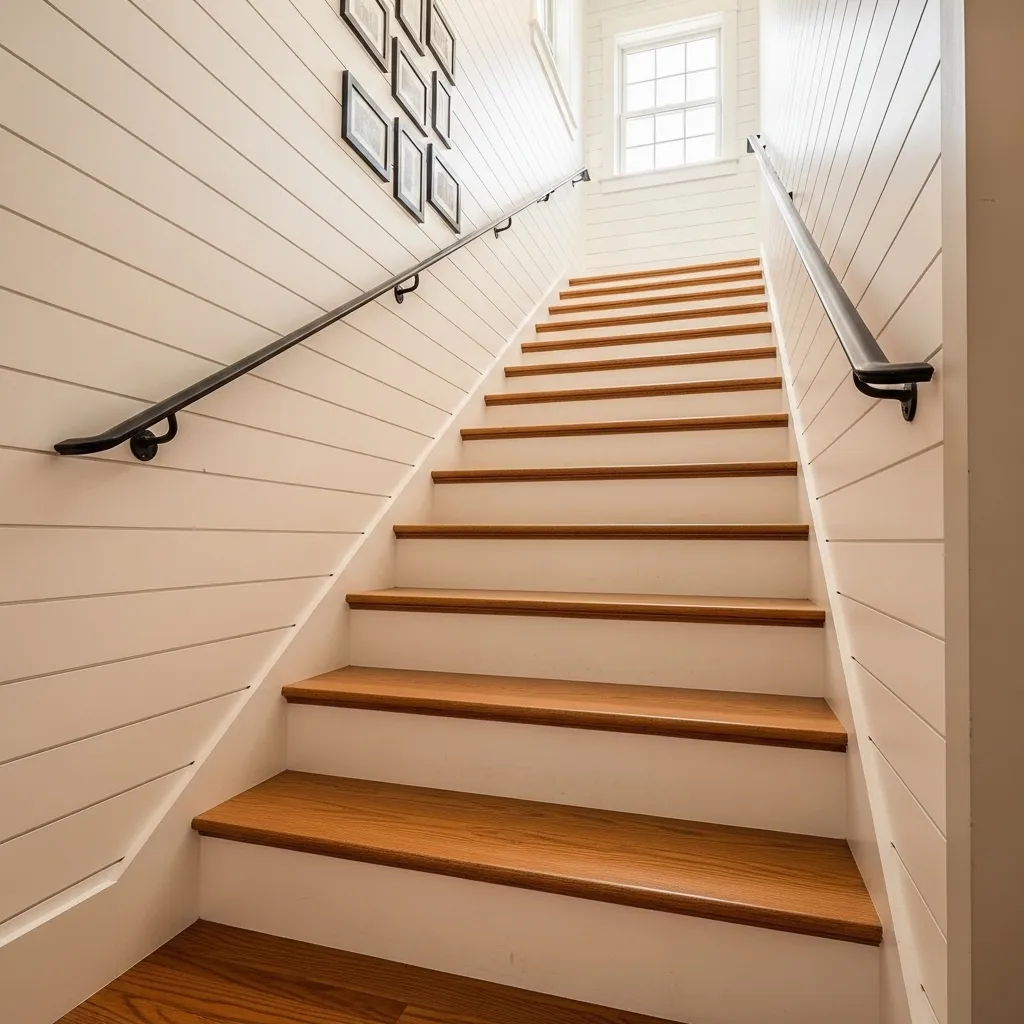
Shiplap on a staircase wall brings in that instant warmth and texture that flat-painted walls simply can’t achieve — the shadow lines between the boards create a subtle depth and rhythm that makes the wall feel alive and interesting even in a very neutral palette. Painted white, it reads as clean and fresh; left in a natural wood tone, it adds rustic warmth; painted in a color, it becomes a genuine statement.
It’s a project that’s very achievable as a DIY undertaking — shiplap boards are straightforward to cut and install, and the angled ceiling line at the top of the staircase wall is really the only tricky part of the cut. The return on the time investment is enormous because the texture it adds to the staircase changes the whole feel of that space, making it feel genuinely cozy and considered rather than just a functional pathway between floors.
7. Carpet Runner on Hardwood Stairs
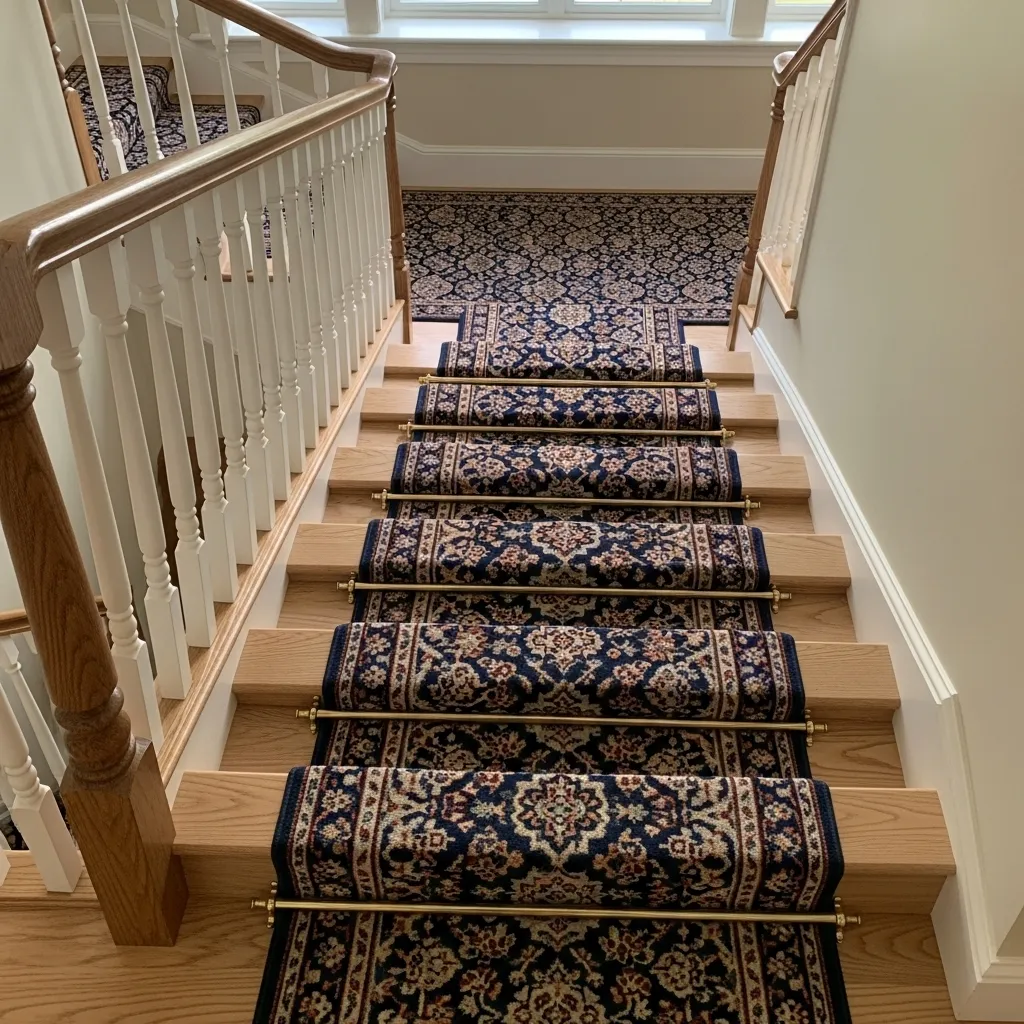
A carpet runner on a hardwood staircase is a layered, sophisticated solution that gives you the beauty of exposed wood on either side of the runner and the warmth, softness, and sound-dampening benefits of carpet down the center. It’s genuinely the best of both worlds — and the stair rods that hold the runner in place add a finishing detail that looks incredibly refined and traditional.
The pattern of the runner is where the personality comes in — a classic Persian or Turkish-inspired pattern in jewel tones adds enormous warmth and a collected, traveled quality to a traditional staircase. A simple stripe is graphic and modern. A botanical or floral runner is romantic and cottage-like. Whatever direction you choose, the runner immediately makes the staircase feel like a designed feature rather than a utilitarian surface.
8. Whitewashed or Limewashed Staircase
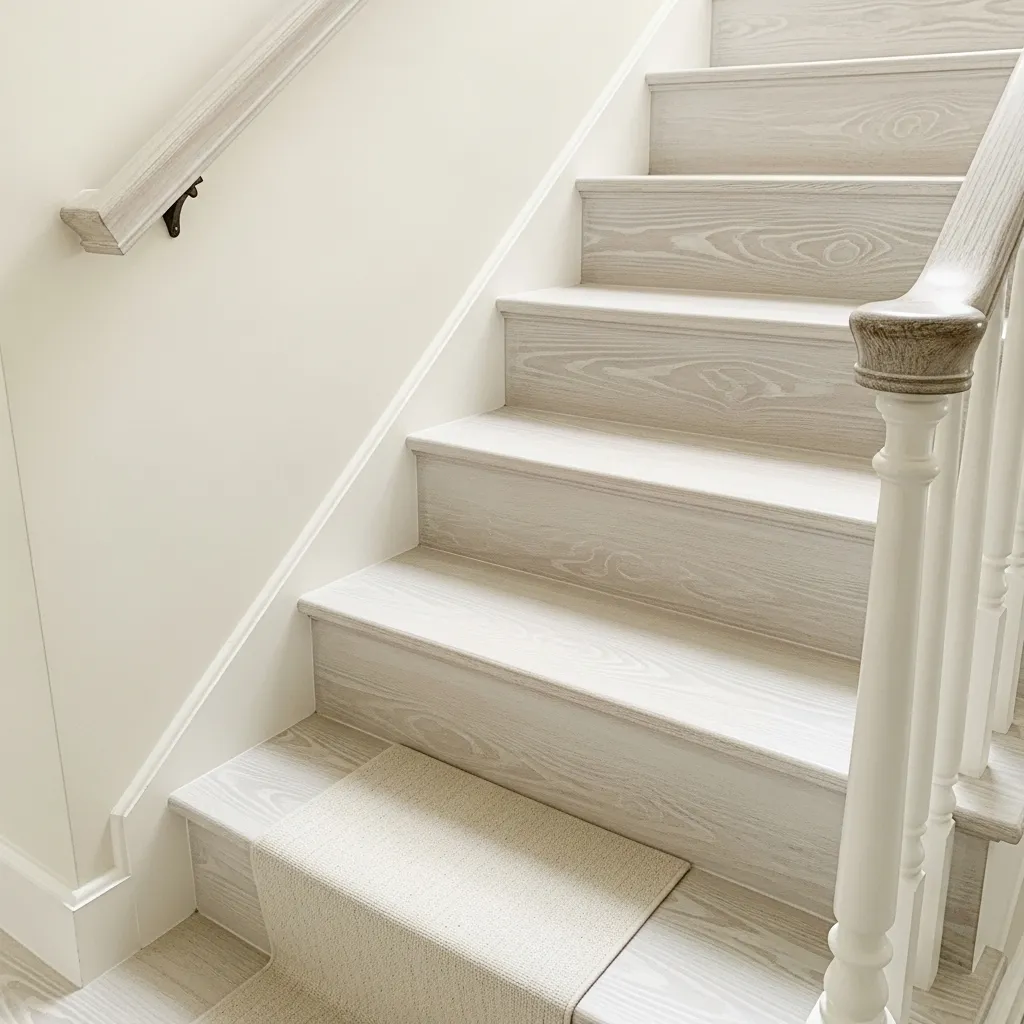
A whitewashed staircase creates something that painted or stained stairs simply can’t — a finish that feels aged and organic and genuinely Scandinavian in the best possible way, where the wood grain tells its own story through the translucent white. It makes a staircase feel like it’s been in a Swedish farmhouse for a hundred years and has accumulated all that time gracefully.
The technique itself is really approachable — you thin white paint or use a dedicated whitewash product, apply it to raw or lightly sanded wood, and then immediately wipe back to the desired opacity. More wiping means more wood grain showing through; less wiping means a more opaque, chalky result. Either way, the outcome is something with texture and warmth and character that flat white paint completely lacks.
9. Bold Black Painted Staircase
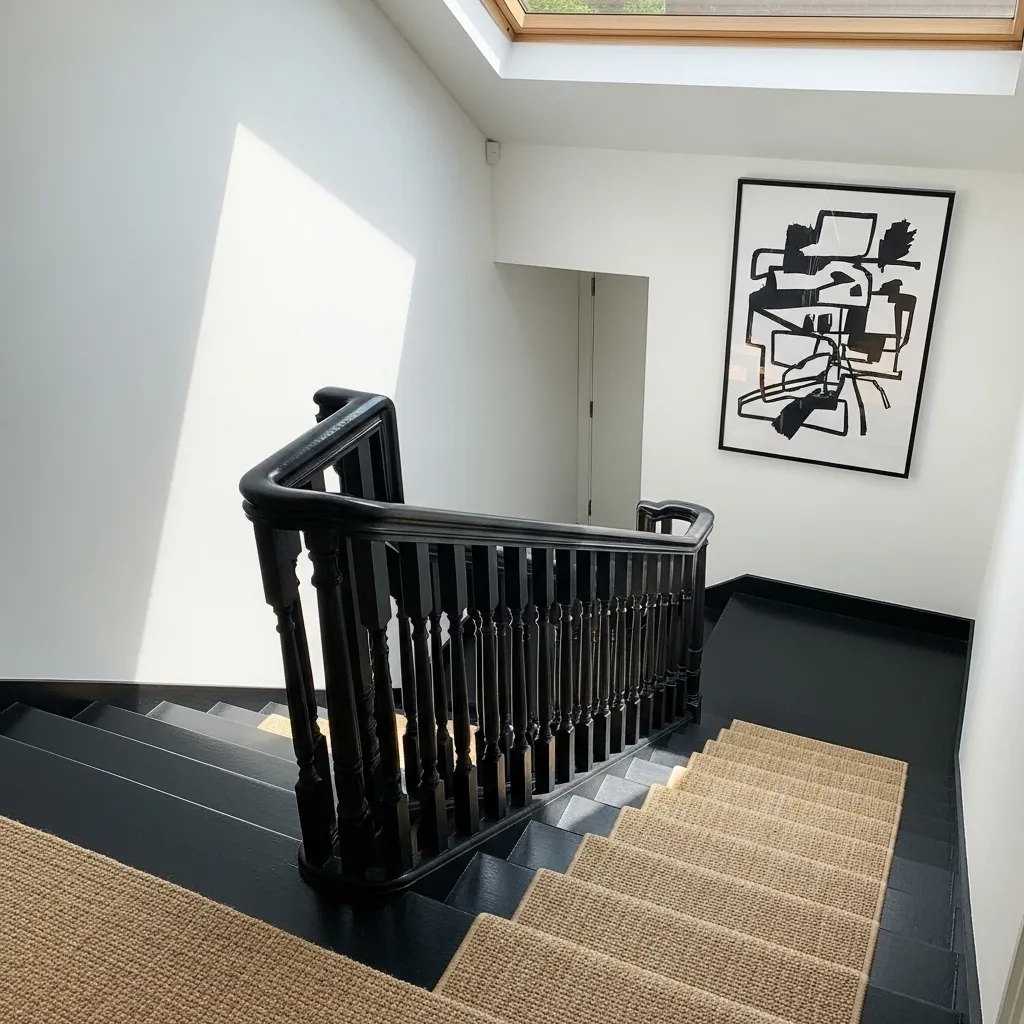
An all-black staircase is one of the boldest things you can do in a home interior and one of the most visually stunning when it’s done right. Against white walls it becomes almost sculptural — a graphic, architectural element that stops you in your tracks and completely reframes how you experience the space. It’s the kind of choice that sounds terrifying until you see it and then immediately makes sense.
The matte finish is essential — a high-gloss black would show every scuff and footprint within about forty-eight hours, whereas a flat or matte black has a depth and richness that reads as intentional and hides the realities of daily wear far more gracefully. The natural jute runner down the center adds warmth and texture that prevents the all-black from feeling cold or severe, and gives the eye a warm landing point in all that drama.
10. Stenciled Tile-Effect Risers
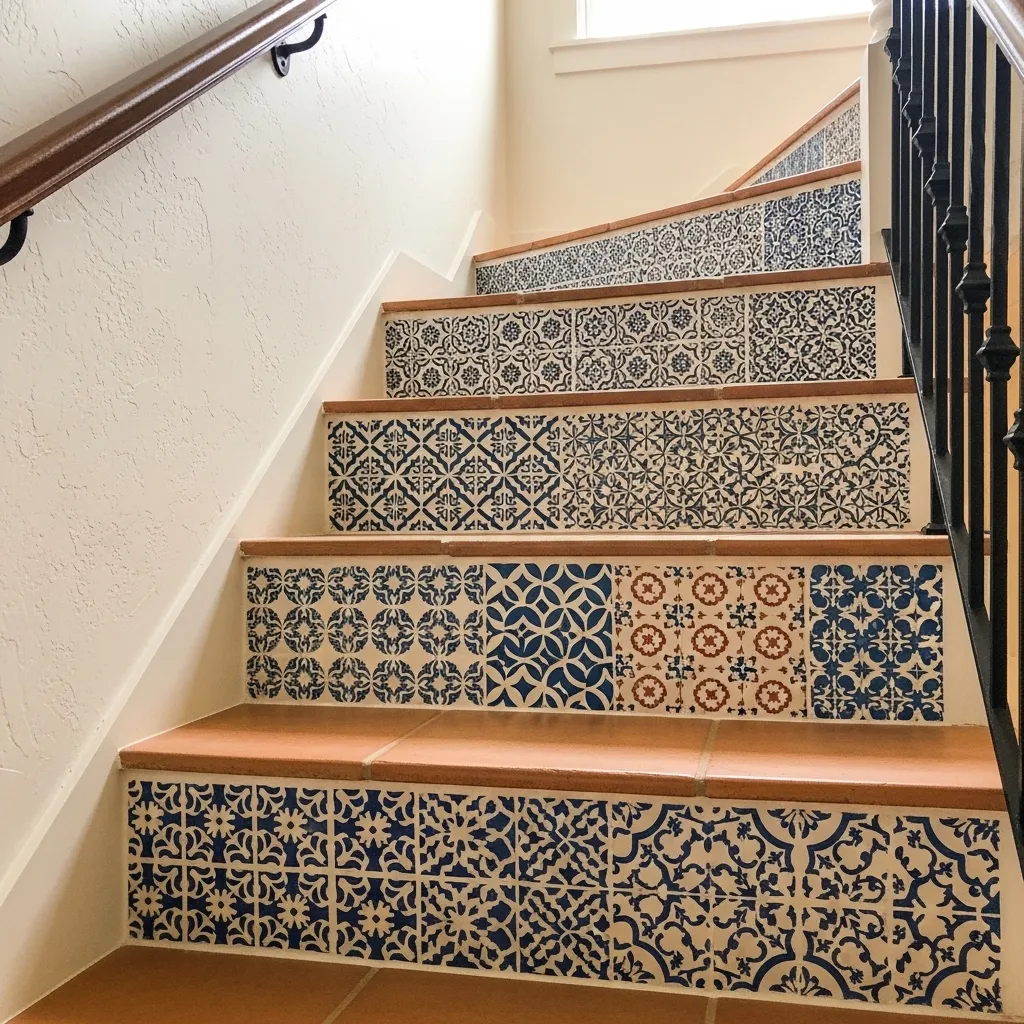
Stenciled tile-effect risers are the painted riser concept taken to its most decorative, artisan-inspired conclusion — each step becomes its own tiny work of art, and together they create the effect of hand-painted Portuguese or Moroccan tiles that would cost a fortune to actually install. The stenciling technique is patient work but genuinely achievable, and the result is something completely unique to your home.
Using a different pattern on each riser rather than repeating the same one gives the staircase a collected, curated quality — like the tiles were gathered from different places over time. Keep the color palette consistent across all the different patterns so the whole staircase reads as cohesive even with the variety of designs. Two or three colors used in different arrangements across the risers creates beautiful visual rhythm without chaos.
11. Floating Staircase With Open Risers
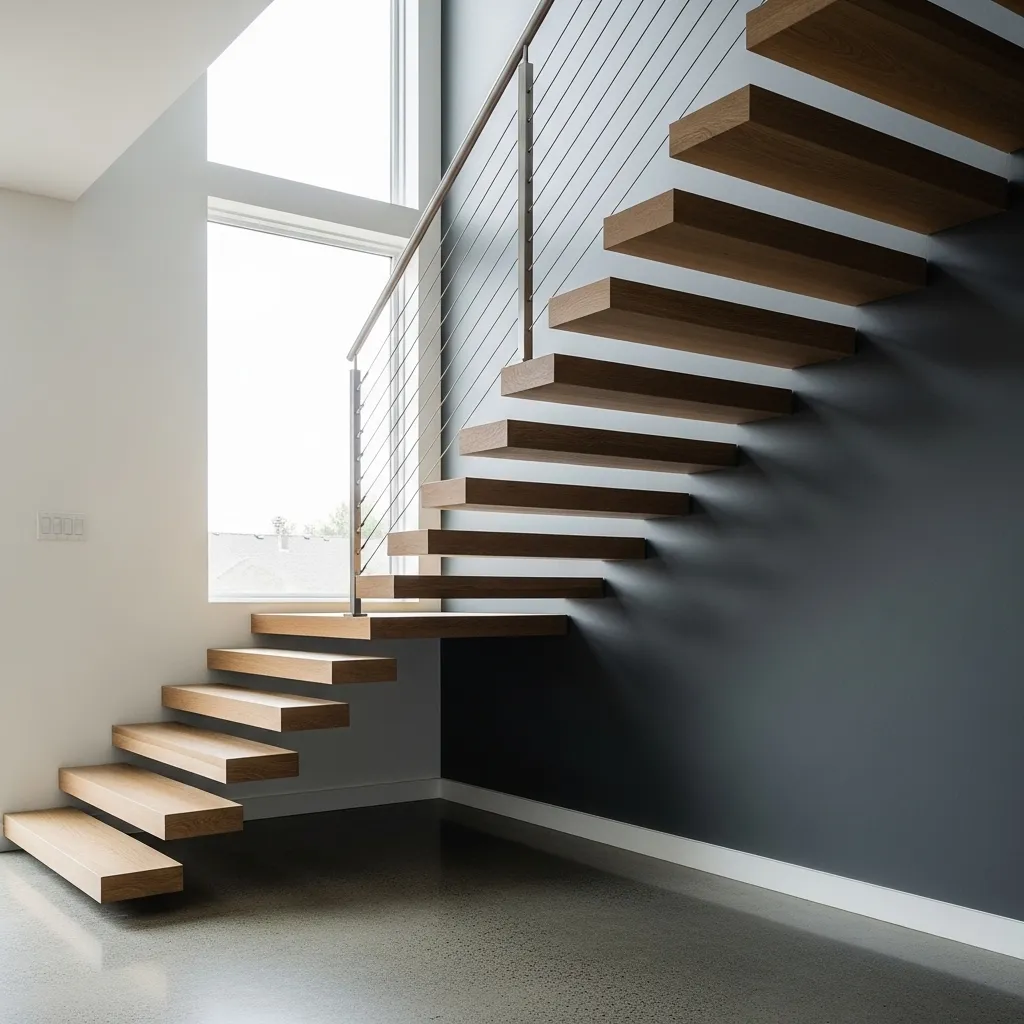
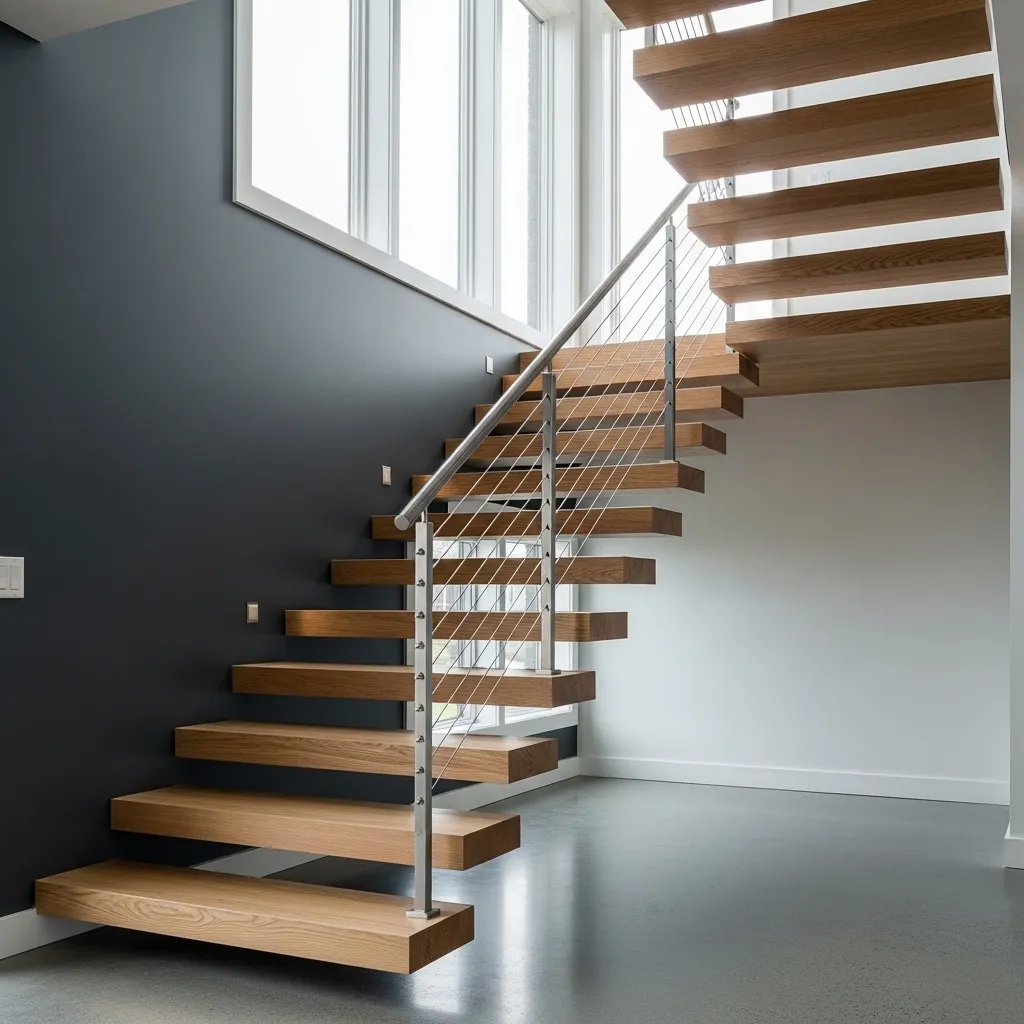
A floating staircase with open risers is the most architecturally dramatic of all staircase makeovers — it transforms a functional element into a genuine design statement that changes the entire spatial quality of the home. By removing the risers entirely, you allow light to pass through the staircase, making adjacent spaces feel connected and the staircase itself feel like it’s barely there despite being the most visually striking element in the room.
This is the one makeover on this list that really does require professional installation — the structural engineering of cantilevered treads is not a weekend DIY project. But as a renovation investment, it’s one that pays dividends in how fundamentally it changes the feel of the home. Cable or glass panel handrails rather than traditional balusters maintain the open, architectural quality and let the beautiful grain of the solid wood treads be the true star of the show.