15 White Kitchen Cabinet Ideas for 2026 That Feel Fresh, Considered, and Anything But Basic
If you’ve been wondering whether white kitchen cabinets are still worth doing in 2026 or whether they’ve finally crossed the line into overdone territory, the answer is a very confident yes — they’re absolutely still worth it, and the way people are doing them right now is more interesting and intentional than ever before, with approaches ranging from warm creamy whites paired with unlacquered brass and fluted glass inserts to bright crisp whites with dramatic dark countertops, limewashed cabinet finishes, two-tone combinations where white plays a supporting role to a bolder color, open shelf hybrids, shaker profiles with unexpected hardware, and high-gloss lacquer treatments that make white feel genuinely luxurious rather than default. The ideas here cover the full spectrum of what white cabinets can look like in 2026 — from quietly elevated to genuinely jaw-dropping.
What’s changed about white kitchens in the last couple of years is the conversation around warmth. For a long time the dominant white kitchen aesthetic was cool, bright, almost clinical — stark white shaker cabinets, white marble countertops, white subway tile, stainless appliances, the whole thing. And while that look is still beautiful done well, there’s been a real collective shift toward warmer whites, warmer metals, warmer stones, and warmer wood accents that make a white kitchen feel genuinely inviting rather than just clean. The best white kitchens being designed right now feel like they belong to a real person who actually cooks in them, rather than a showroom display that’s never had a pot of pasta boiling on the stove.
The hardware story in white kitchens has also completely evolved — the days of matching brushed nickel on everything are well and truly behind us, and in their place is a much more interesting and layered approach to mixing metals, aged finishes, unexpected materials, and even mixing hardware styles within the same kitchen. A white cabinet is essentially a blank canvas that makes every hardware choice feel deliberate and visible, which means you can afford to take more risks and be more specific about the details than you might with a colored cabinet where the finish itself is doing more of the visual work.
1. Warm White Shaker Cabinets With Unlacquered Brass Hardware
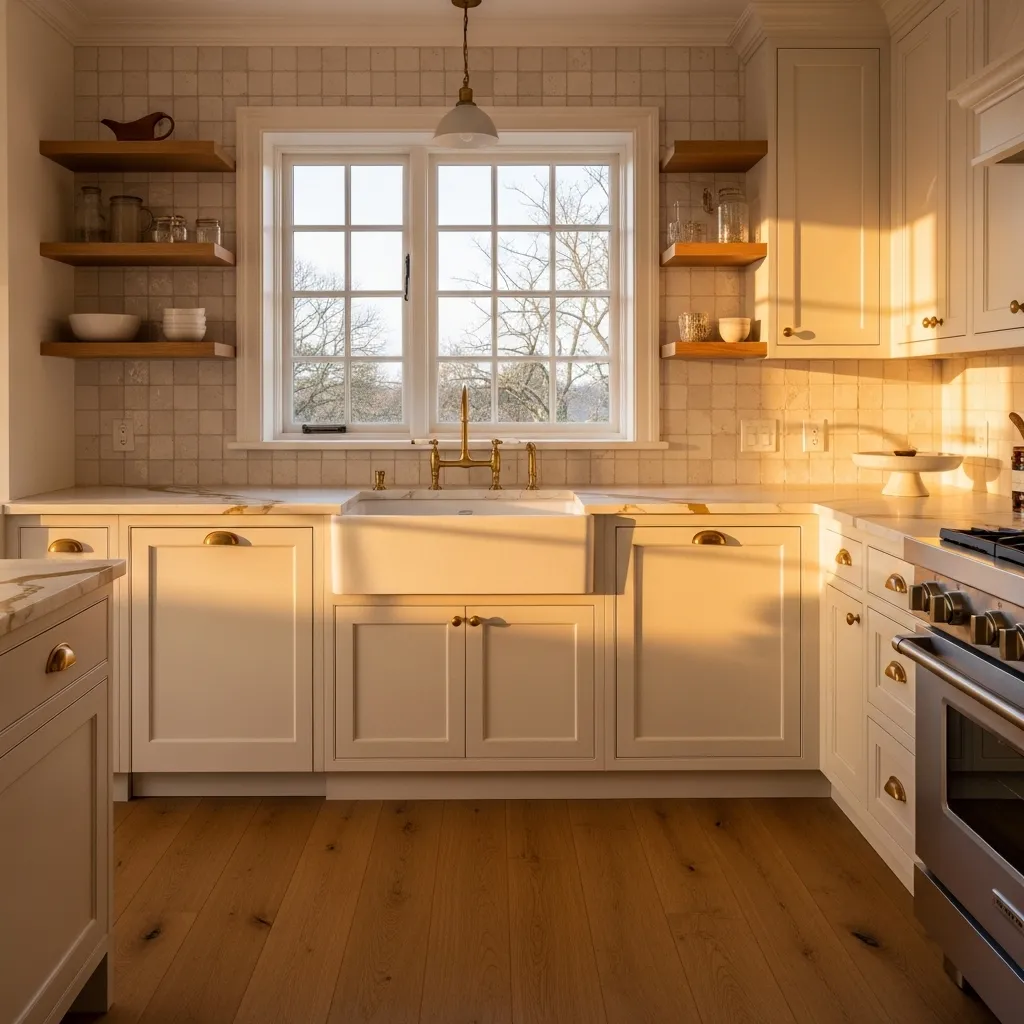
Warm white shaker cabinets with unlacquered brass hardware is the combination that’s defining the elevated traditional kitchen aesthetic in 2026 — it’s classic without being stiff, warm without being heavy, and the unlacquered brass brings in that beautifully imperfect, living-finish quality that aged and patinas over time in a way that feels genuinely personal and collected. Unlacquered brass isn’t shiny and perfect — it develops a depth and character with use that lacquered brass never achieves, and in a white kitchen it creates exactly the right amount of warmth.
The zellige tile backsplash is the supporting player that makes this kitchen feel current rather than timeless-in-a-boring-way — those handmade, slightly irregular tiles with their variable glaze catch light differently throughout the day and add a textural richness to what could otherwise be a very flat white backdrop. Pair the whole thing with warm wood open shelves flanking the window and you’ve got a kitchen that manages to feel both considered and completely lived-in.
2. High-Gloss White Lacquer Cabinets With Dramatic Dark Stone
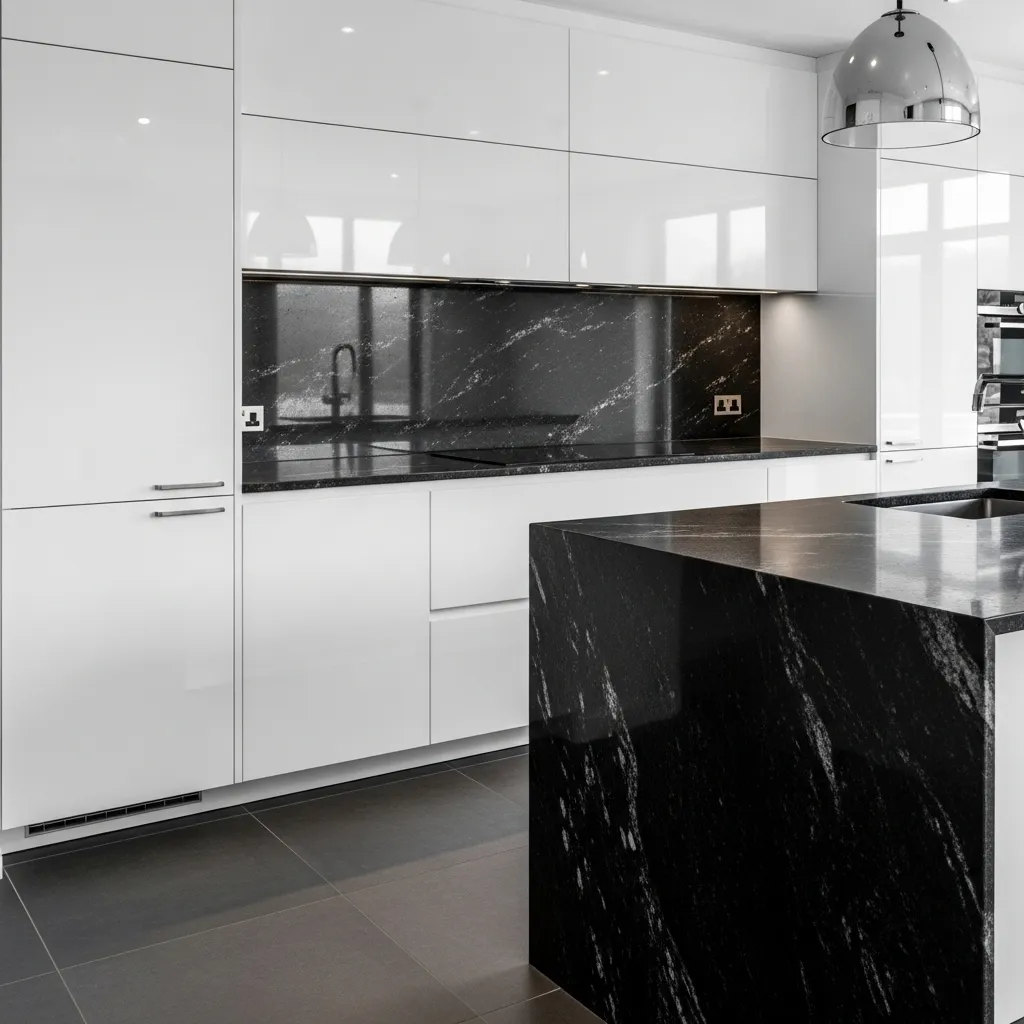
High-gloss white lacquer cabinets are a completely different proposition from painted or thermofoil white — the lacquer finish has a depth and richness that makes white feel genuinely luxurious, almost like a piece of furniture rather than a kitchen installation. When the light hits a lacquered cabinet front it creates reflections and gradients that give the surface a three-dimensional quality that flat paint simply can’t replicate.
Pairing that glossy white with dark, leathered stone is the move that prevents high-gloss from feeling cold or sterile — the textural contrast between the reflective smooth white and the rough, matte dark stone is incredibly satisfying and creates a kitchen that feels both high-design and genuinely tactile. The waterfall island edge is the detail that completes the picture, showing off the drama of the stone slab and grounding the whole kitchen with something weighty and permanent.
3. White Cabinets With Fluted Glass Inserts
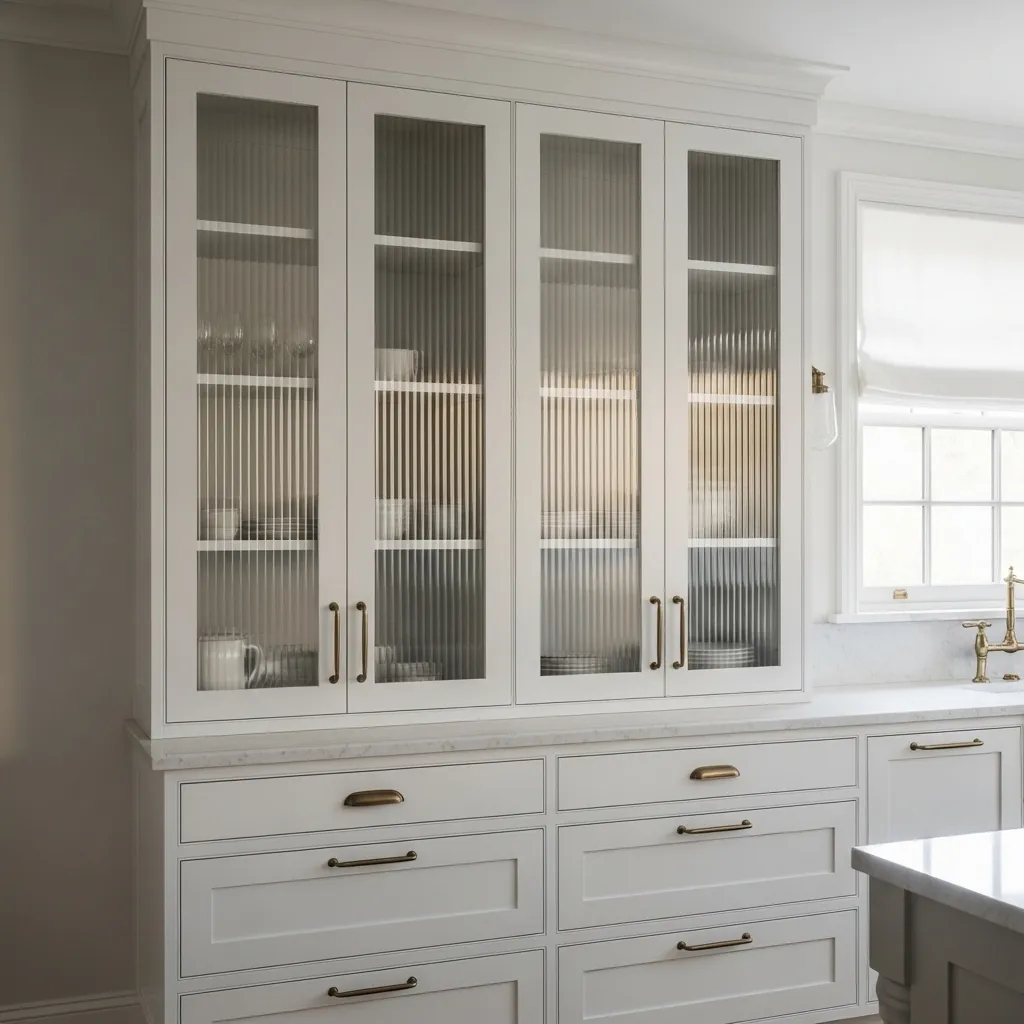
Fluted glass inserts in white kitchen cabinets are the detail that separates a well-designed kitchen from a truly considered one in 2026 — that reeded, ribbed glass texture adds a layer of visual interest and softness that plain glass panels lack, and the way it diffuses light from within the cabinet creates a warmth and depth that makes the upper cabinets feel architectural rather than just functional storage boxes.
The practical benefit alongside the aesthetic one is that fluted glass hides what’s inside without fully concealing it — you can see the general shapes and colors of what’s stored, which helps you locate things, but the imperfection of the glass means mismatched dishes and random stacking don’t read as chaos from across the kitchen. It’s forgiving storage that still looks beautiful, and in a white kitchen where every detail is visible, that’s a genuinely useful quality.
4. Creamy White Cabinets With Terracotta Tile Floor
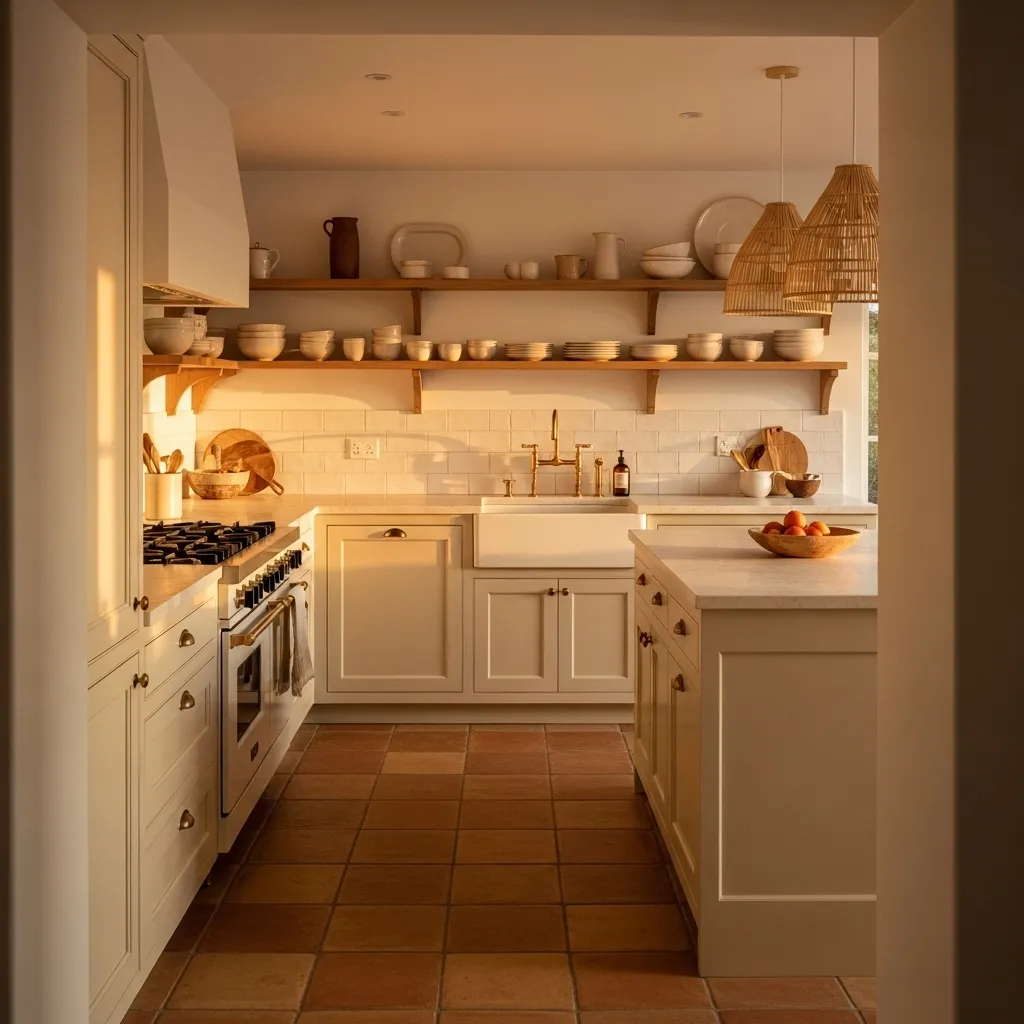
Creamy white cabinets with a terracotta tile floor is a combination that creates instant warmth — the yellow undertones in the cream and the burnt orange of the terracotta are in the same warm family and they reinforce each other beautifully, giving the kitchen a glowing, sun-drenched quality that feels like somewhere in southern Europe rather than a standard domestic kitchen. It’s an intensely livable color combination that never feels cold or clinical.
The key to making this work is making sure your creamy white has enough yellow in it to truly complement the terracotta rather than fighting it — a too-cool white or a too-pink white will look off against the warm orange of the floor. Test your paint sample against the actual terracotta tile you’re using before committing, and look at both in morning and evening light before deciding. Get the white right and the whole kitchen sings.
5. White Cabinets With Sage Green Island
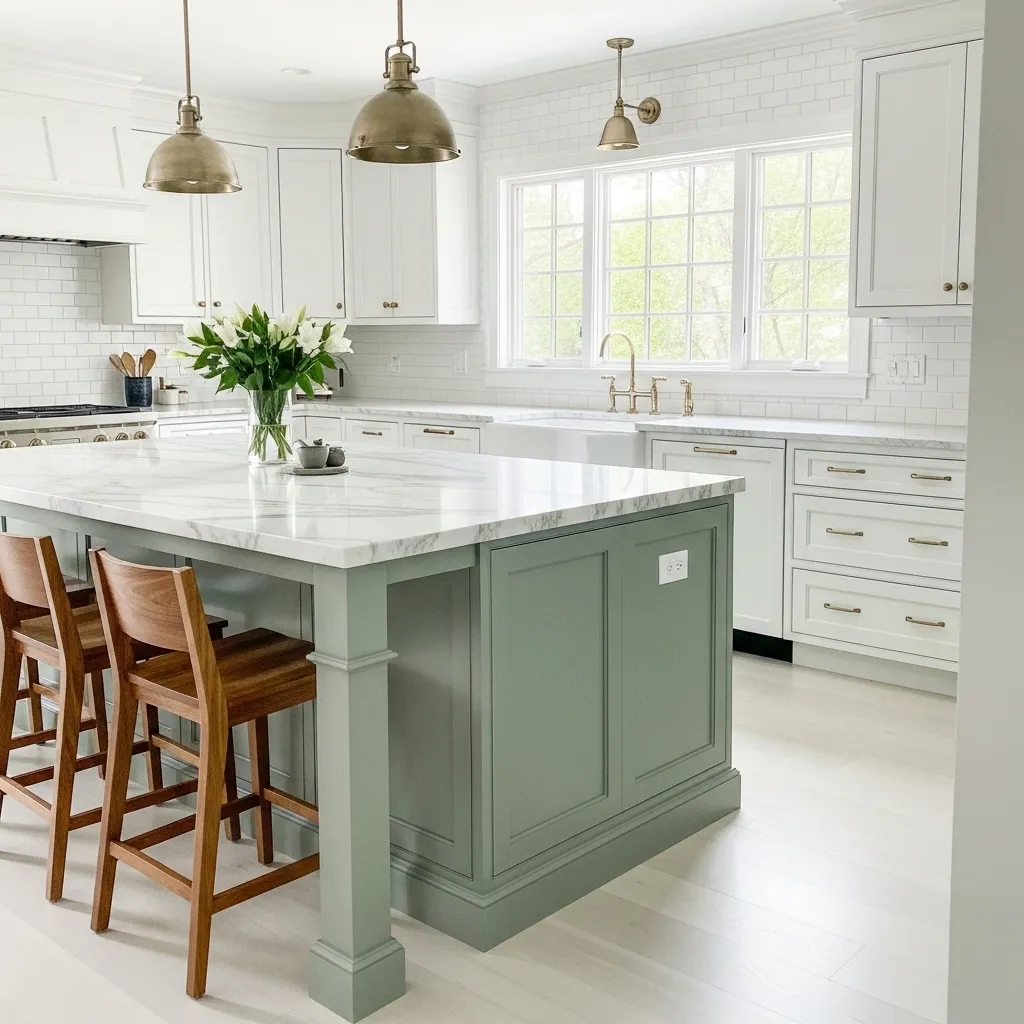
The white cabinet and sage green island combination is the two-tone kitchen pairing that’s dominating 2026 renovations — and for good reason, because it works on almost every level simultaneously. The white keeps the kitchen feeling light and airy, the sage brings in warmth and color and personality without overwhelming, and the two together create a color story that feels completely current without being aggressively trendy in a way that will look dated in three years.
The brass hardware is the thread that ties the two colors together — using the same finish on both the white cabinets and the sage island creates continuity in a design that could otherwise feel like two separate rooms pushed together. It’s a small detail that makes an enormous difference to how cohesive the finished kitchen feels, and warm brass in particular bridges the gap between green and white in a way that cooler metal finishes simply can’t.
6. White Cabinets With Limewash Plaster Walls
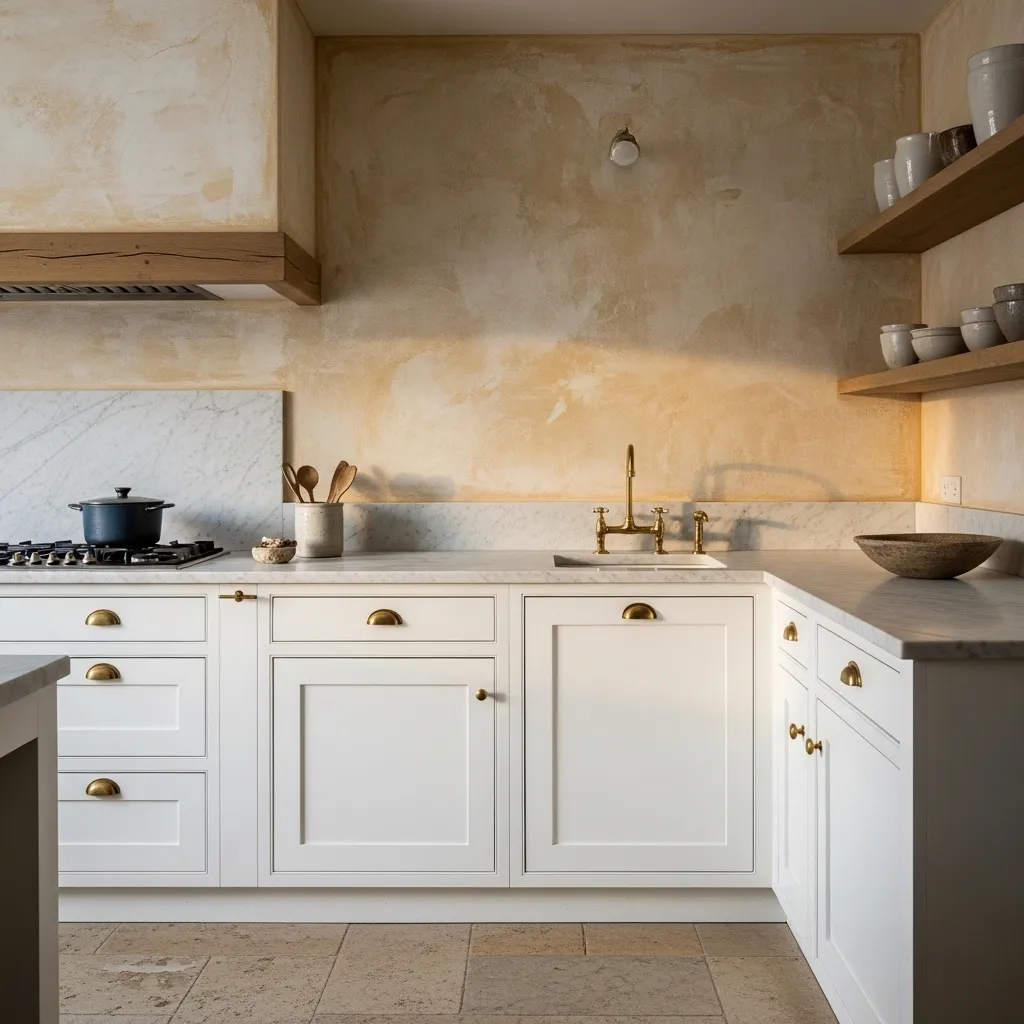
Limewash plaster walls behind white kitchen cabinets create a textural dialogue between the smooth and the rough that’s one of the most beautiful material combinations in contemporary kitchen design — the clean, flat white of the cabinet fronts becomes even more crisp and precise against the layered, imperfect quality of the limewashed wall, and each material makes the other look better by contrast.
The decision to use limewash as the backsplash rather than tile is the brave move that takes this kitchen from interesting to genuinely extraordinary — it requires a limewash product that’s been sealed for moisture resistance, but when done correctly it creates a backsplash that looks completely unique and artisanal in a way that no tile can replicate. The color variation in limewash means the wall shifts from almost white to warm ochre depending on the light, and that living quality is endlessly beautiful.
7. White Inset Cabinets With Chicken Wire Glass
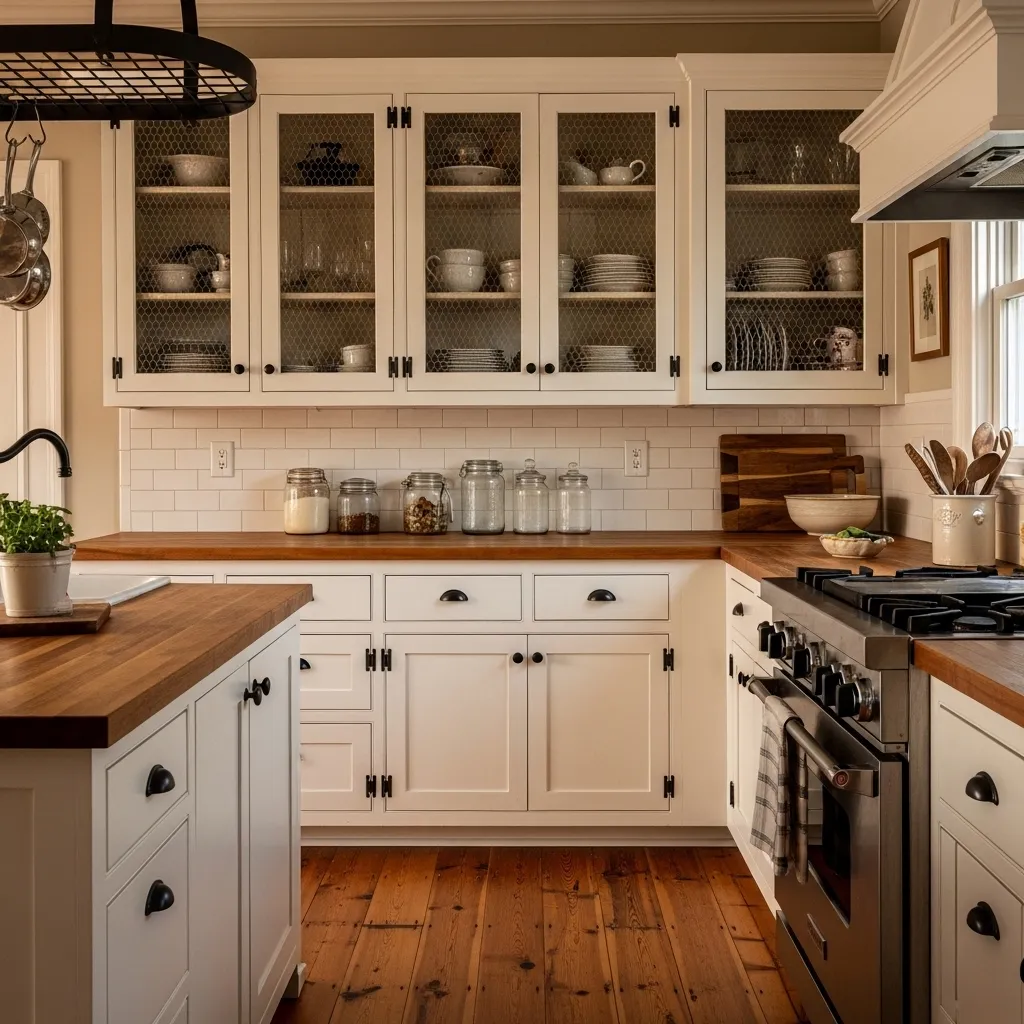
Inset cabinet construction — where the door sits recessed within the frame rather than overlaying it — is the detail that gives white kitchen cabinets the quality of freestanding furniture rather than flat-pack installation, and in 2026 the demand for this furniture-like quality in kitchens is driving a real resurgence of inset cabinetry that was previously considered too expensive or old-fashioned to be relevant.
The chicken wire glass insert is the vintage detail that makes inset cabinets feel genuinely charming rather than just expensive — it references old country house kitchens and farmhouse pantries and creates a warmth and nostalgia that plain glass or solid panels lack. What’s inside the cabinet becomes part of the decoration, so this is the approach that rewards an edited, beautiful collection of dishes and glassware displayed with intention.
8. Bright White Cabinets With Black Matte Hardware and Accents
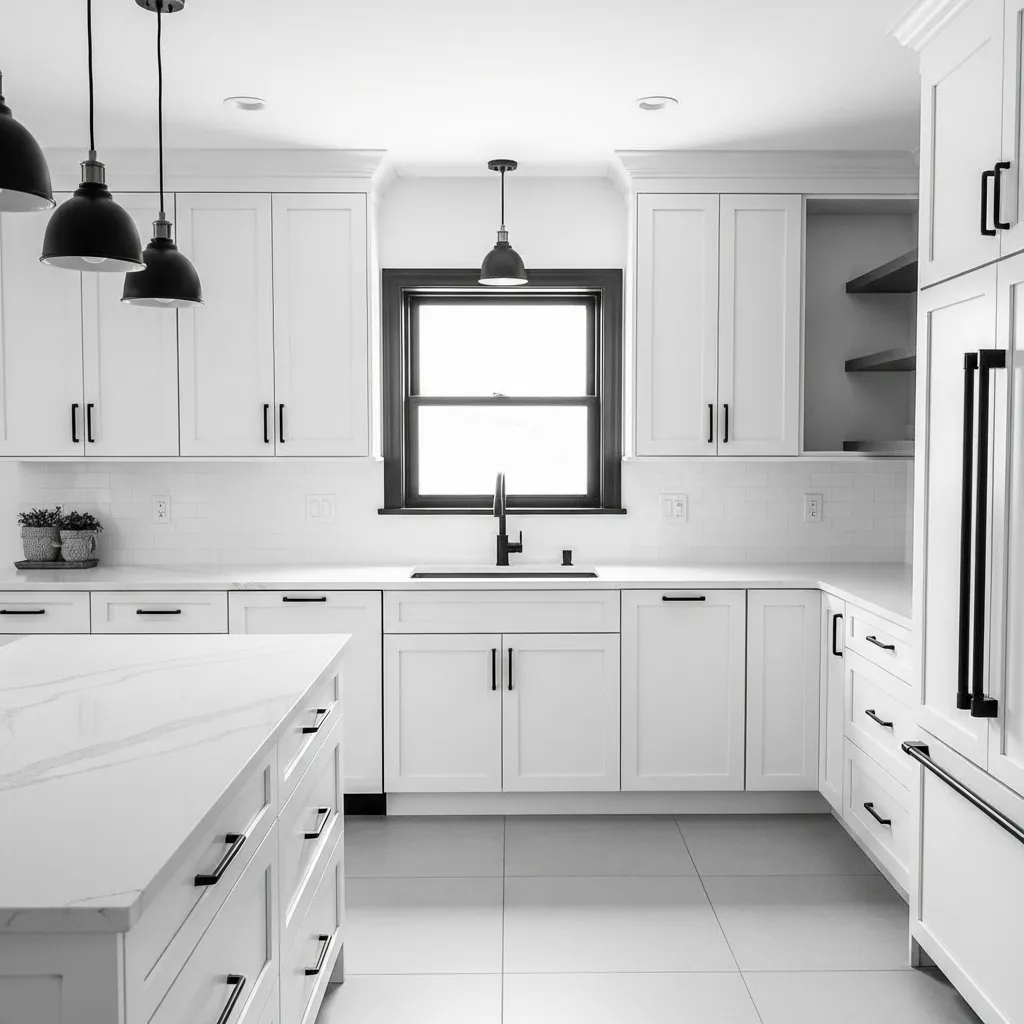
Bright white cabinets with matte black hardware and accents is the modern classic that doesn’t age — the graphic contrast between clean white and true matte black is so fundamental and satisfying that it transcends trend cycles and just reads as smart, well-considered design in any era. In 2026 the approach has gotten more refined with black extending beyond just the hardware to window frames, faucets, pendant lights, and shelf brackets, creating a cohesive thread of black that runs through the whole kitchen.
The flatness of the matte black finish is specifically important in this combination — a shiny black would create a completely different, more dramatic and less livable effect, whereas matte black absorbs light quietly and creates a precise, graphic quality that’s authoritative without being aggressive. It’s a combination that looks equally good in a tiny apartment kitchen and a large open-plan family kitchen because the ratio of black to white can flex to suit the scale of the space.
9. White Cabinets With Bold Patterned Tile Backsplash
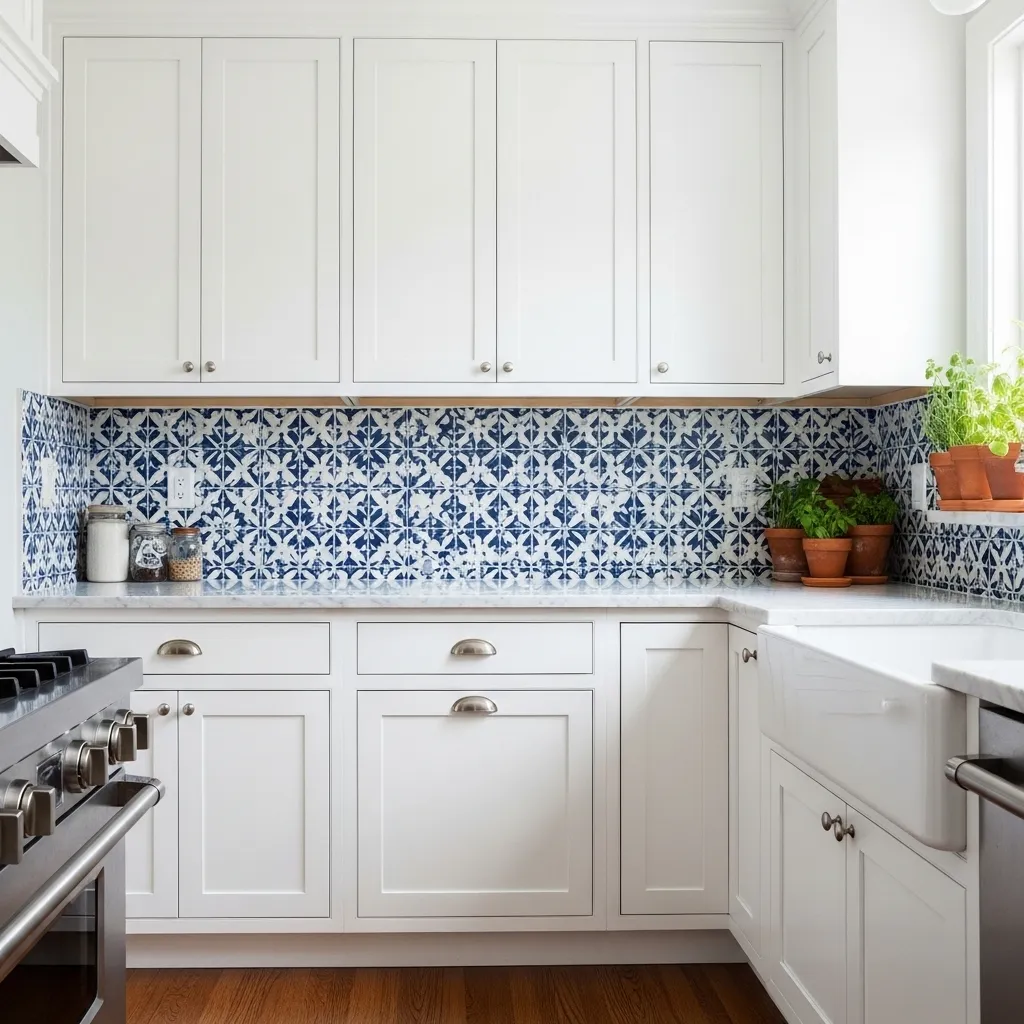
White cabinets exist on a spectrum from background to foreground, and when you pair them with a bold patterned backsplash tile the cabinets move firmly into background territory — they become the quiet, clean frame that makes the tile pop with maximum impact. This is one of the smartest ways to have a bold, personality-driven kitchen without committing to a strong cabinet color, because the tile can theoretically be retiled if your tastes change while the white cabinets stay permanently relevant.
Moroccan and Portuguese-inspired geometric patterns in blue and white are particularly beautiful against white cabinets because the white in the tile pattern connects back to the cabinet color and creates a sense of continuity even within the contrast. Cobalt, navy, and indigo tile patterns all work magnificently, and the warmth of wood floors beneath keeps the blue and white combination from feeling too nautical or cold.
10. White Cabinets With Open Shelving Hybrid
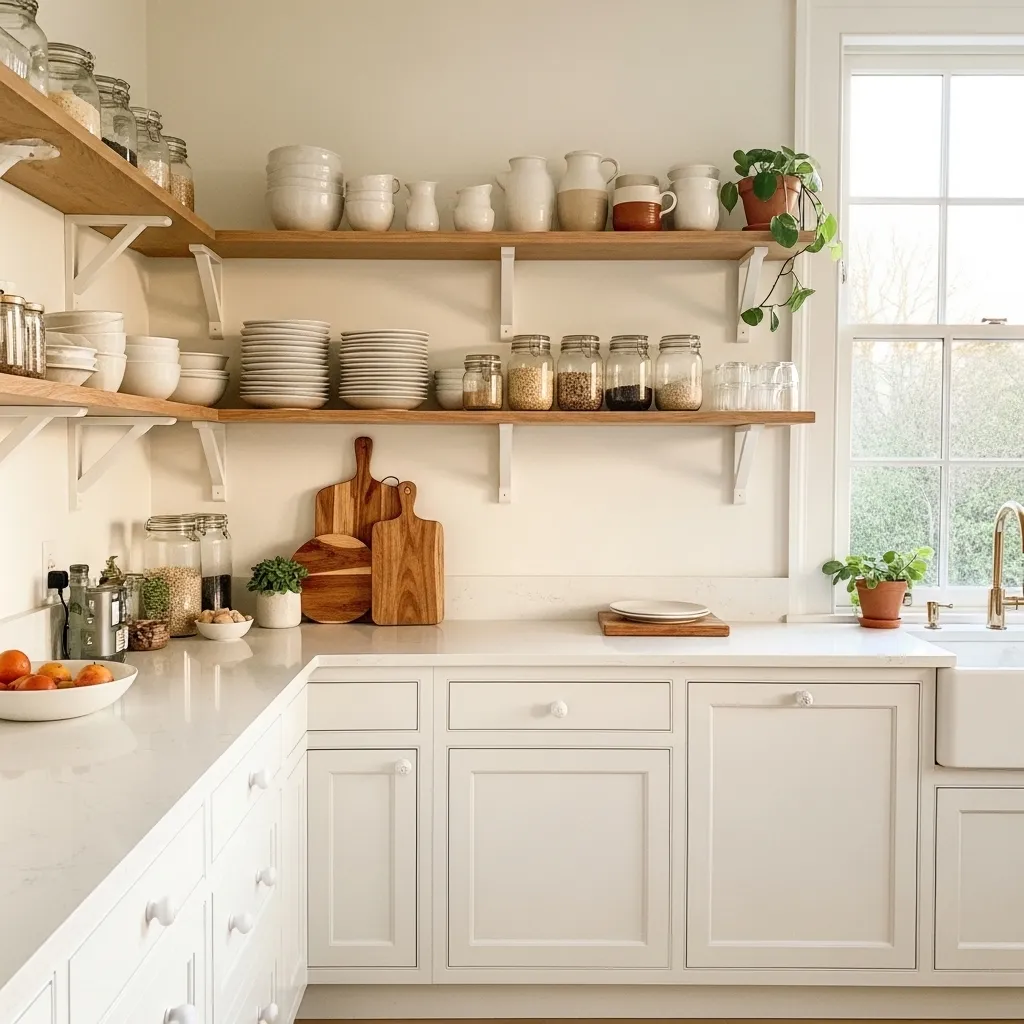
The hybrid kitchen — lower cabinets paired with open shelves in place of upper cabinets — is one of the most popular kitchen configurations of 2026 because it creates a sense of openness and airiness that traditional upper cabinet kitchens lack, while still providing enough closed storage in the lowers for the things you’d rather not display. The open shelves become a curated display that makes the kitchen feel genuinely personal and lived-in.
The styling of open shelves is what makes or breaks this approach — perfectly styled open kitchen shelves look beautiful and intentional, poorly styled ones look like someone gave up on putting things away. The rule that works consistently is mixing functional items with beautiful ones in roughly a two-to-one ratio, keeping colors relatively contained to two or three tones, and always including at least one plant or bunch of greenery on each shelf to add life and prevent the display from feeling static.
11. White Cabinets With Warm Walnut Floating Island
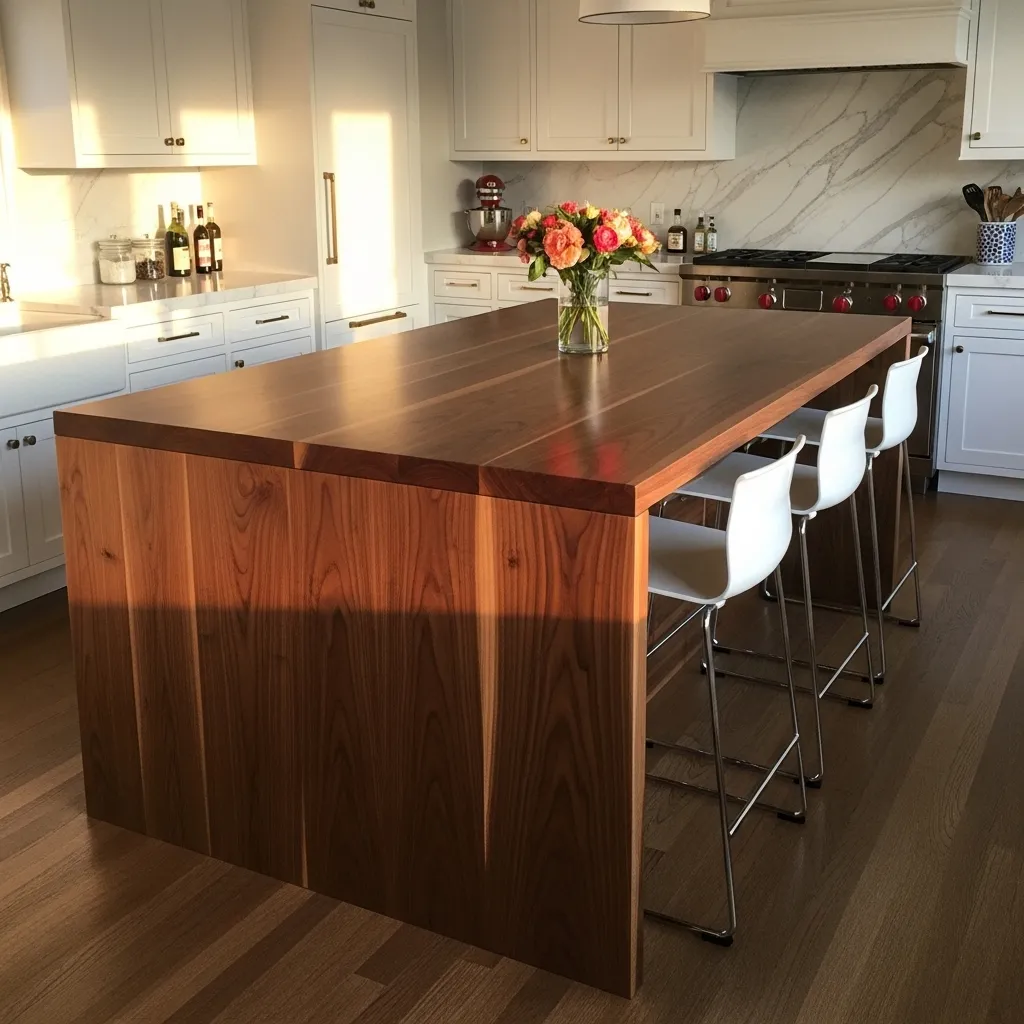
A solid walnut floating island against white kitchen cabinets creates one of the most beautiful material contrasts in contemporary kitchen design — the warm, complex grain of the walnut wood against the clean, flat white of the painted cabinets is visually rich in a way that’s completely different from the stone-and-white combinations that have dominated kitchen design for years. Wood feels warmer, more furniture-like, more human.
The floating quality of the island — sitting on legs rather than flush to the floor — is what gives it the furniture character that distinguishes it from a standard built-in island. You can see underneath it, which makes the kitchen feel larger and gives the island a lightness that a floor-to-floor cabinet island never achieves. It’s a piece you could imagine moving if you ever renovated again, which gives the whole kitchen a more personal and less permanent quality that feels exactly right for 2026.
12. White Cabinets With Concrete Countertops
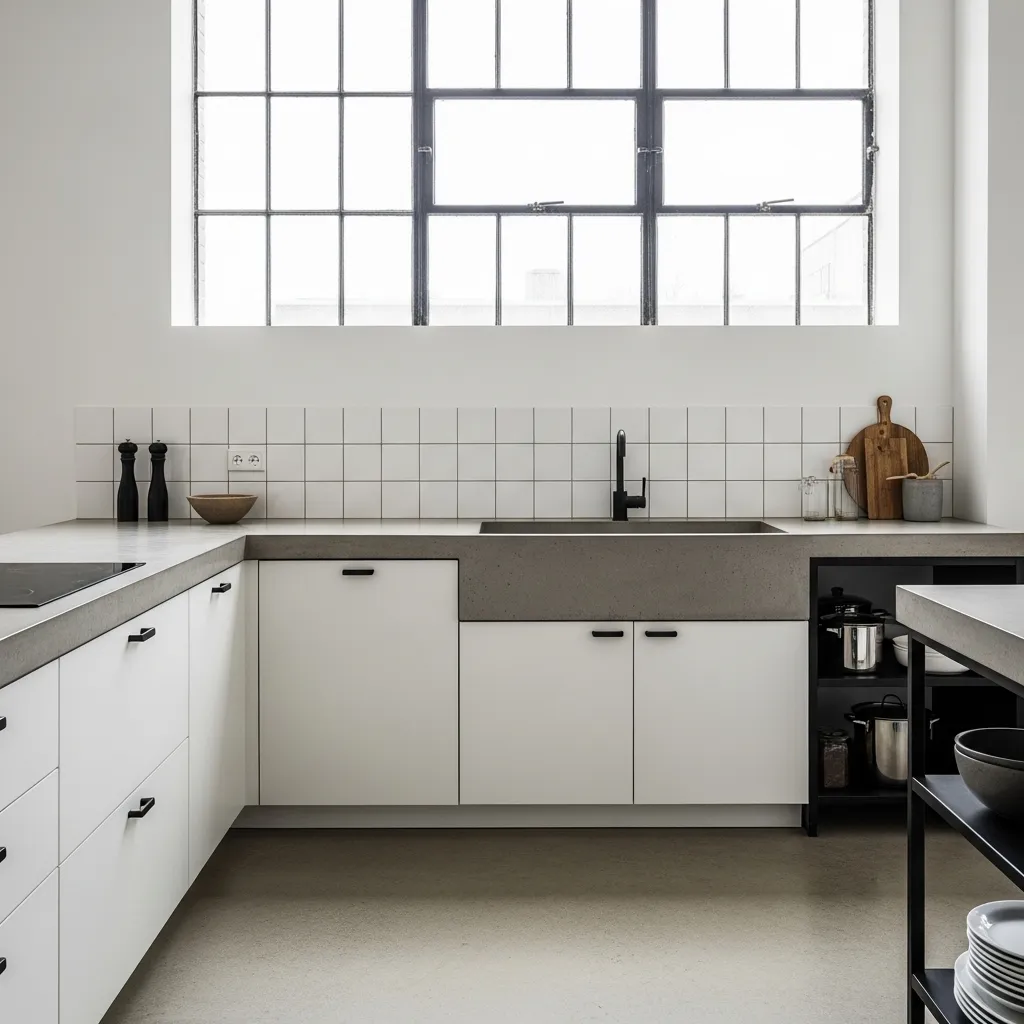
Concrete countertops with white cabinets is the pairing that gives a kitchen genuine industrial credibility without going full warehouse — the white cabinets soften the rawness of the concrete and keep the space livable and domestic, while the concrete brings in a material depth and weight that makes the kitchen feel substantial and genuinely different from every other white kitchen on the block.
Poured concrete countertops are a commitment — they require sealing and some maintenance and they will develop a patina over time that shows use — but that’s precisely what makes them interesting. Unlike quartz or even marble, concrete doesn’t try to look perfect and it gets better as it ages rather than fighting against the evidence of everyday cooking life. For the person who wants a white kitchen that genuinely has a point of view, concrete is the countertop choice that delivers it.
13. Antique White Cabinets With Distressed Finish
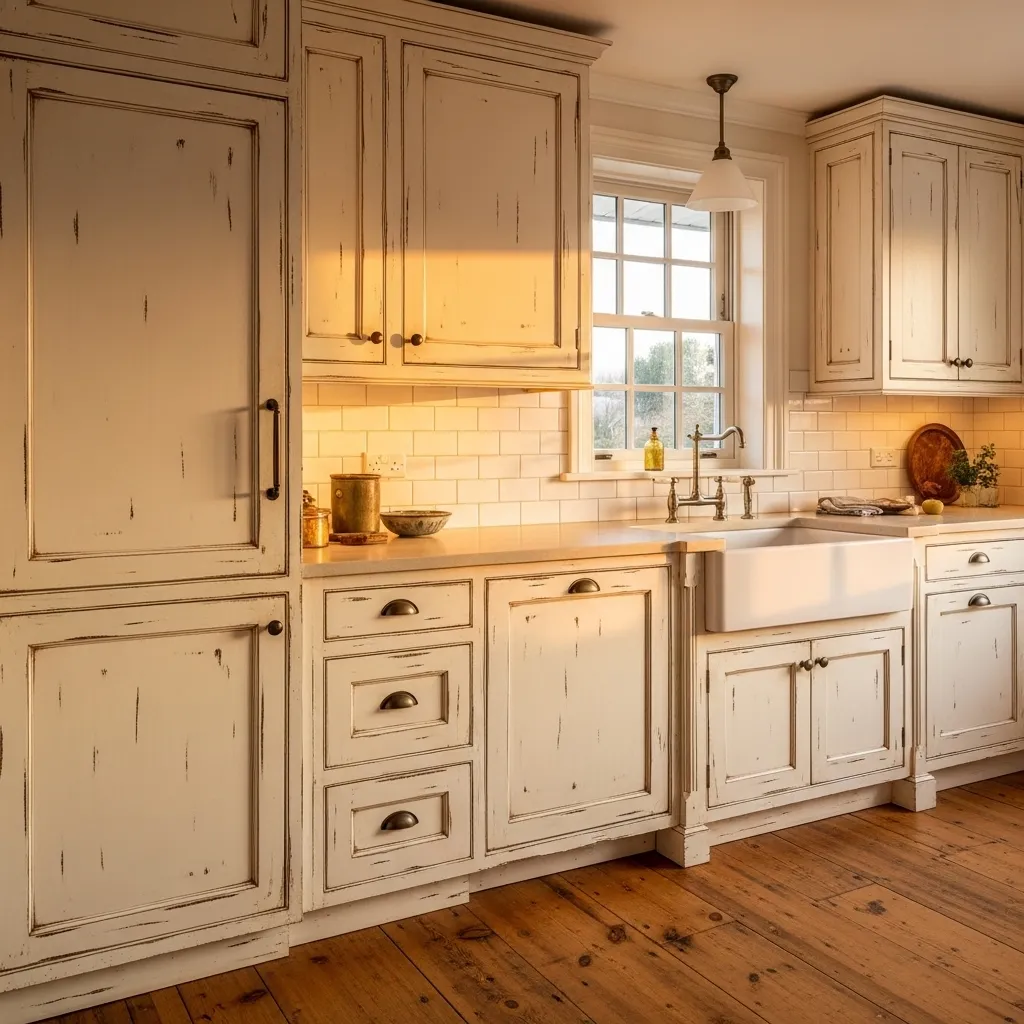
Antique white with a distressed finish is the cabinet treatment for people who want their kitchen to feel like it was installed by the people who built the house rather than a recent renovation — that sense of permanence and history is incredibly difficult to manufacture and incredibly beautiful when it’s achieved well. The key is restraint in the distressing technique. Light wear at the edges and corners only, revealing the layers of paint that would realistically accumulate over decades of use, rather than the heavy sandblasting that makes distressed cabinets look like a costume.
The supporting cast of warm cream limestone, ivory grout, and worn pine floors reinforces the aged, antique quality of the cabinets without anyone element feeling forced or theatrical. Everything in this kitchen should look like it arrived at different times over many years and found its way together naturally — which is the exact opposite of how most kitchens are designed, and exactly what makes this approach feel so special and rare.
14. White Cabinets With Dramatic Arched Details
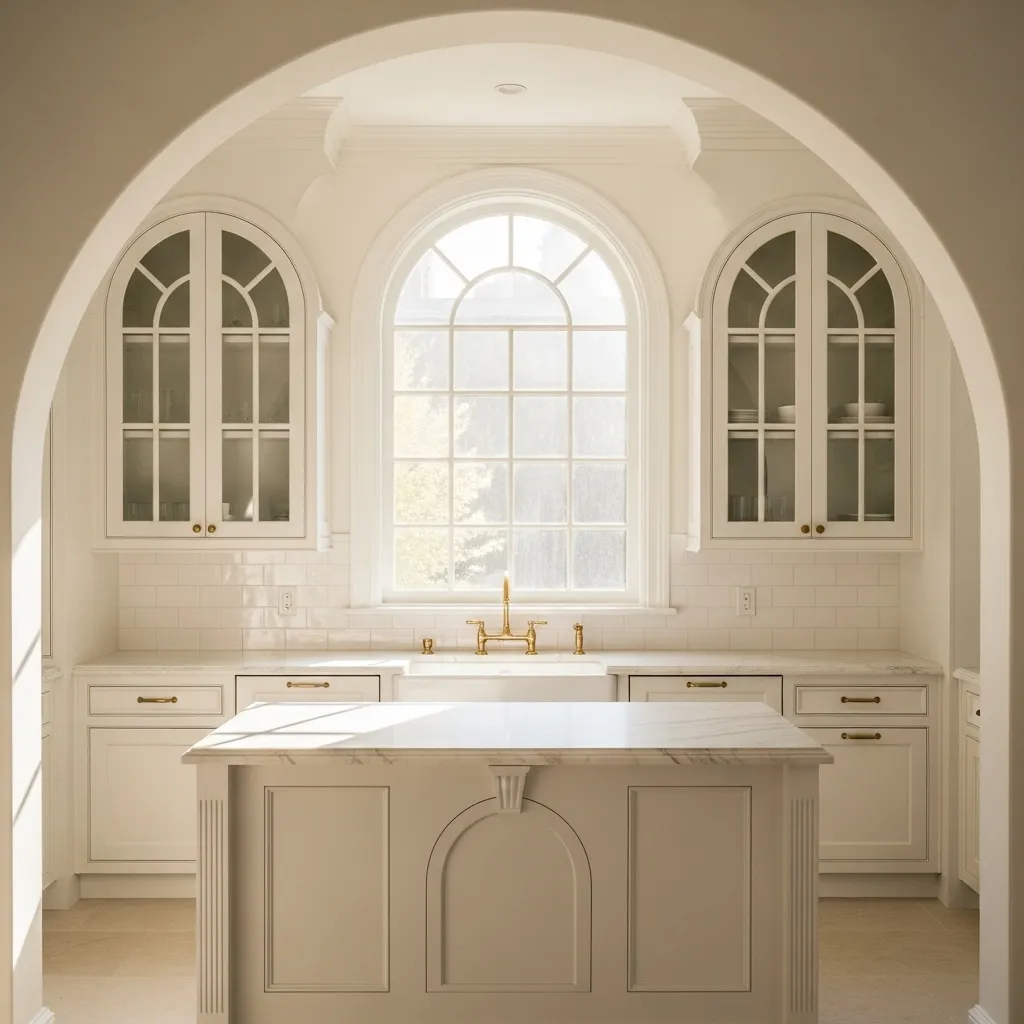
Arched cabinet doors on white kitchens are the architectural detail that’s defining high-end kitchen design in 2026 — that soft curved top to the upper cabinet door immediately elevates the whole kitchen from furniture to architecture, giving the space a sense of deliberate design that runs from the macro level down to each individual cabinet detail. When the arch motif is repeated in a window, a doorway, or a panel inset on the island, it creates a cohesive architectural language throughout the kitchen that feels genuinely considered.
The arch works particularly beautifully with reeded glass inserts because the curved top of the door and the vertical lines of the fluted glass create a dialogue between horizontal and vertical, curved and straight, that’s compositionally satisfying in a way that most kitchen cabinet details simply aren’t. It’s a kitchen that looks like somebody thought very carefully about every decision, and the white paint lets all of that architectural thinking be seen clearly without distraction.
15. White Cabinets With Maximalist Brass and Marble
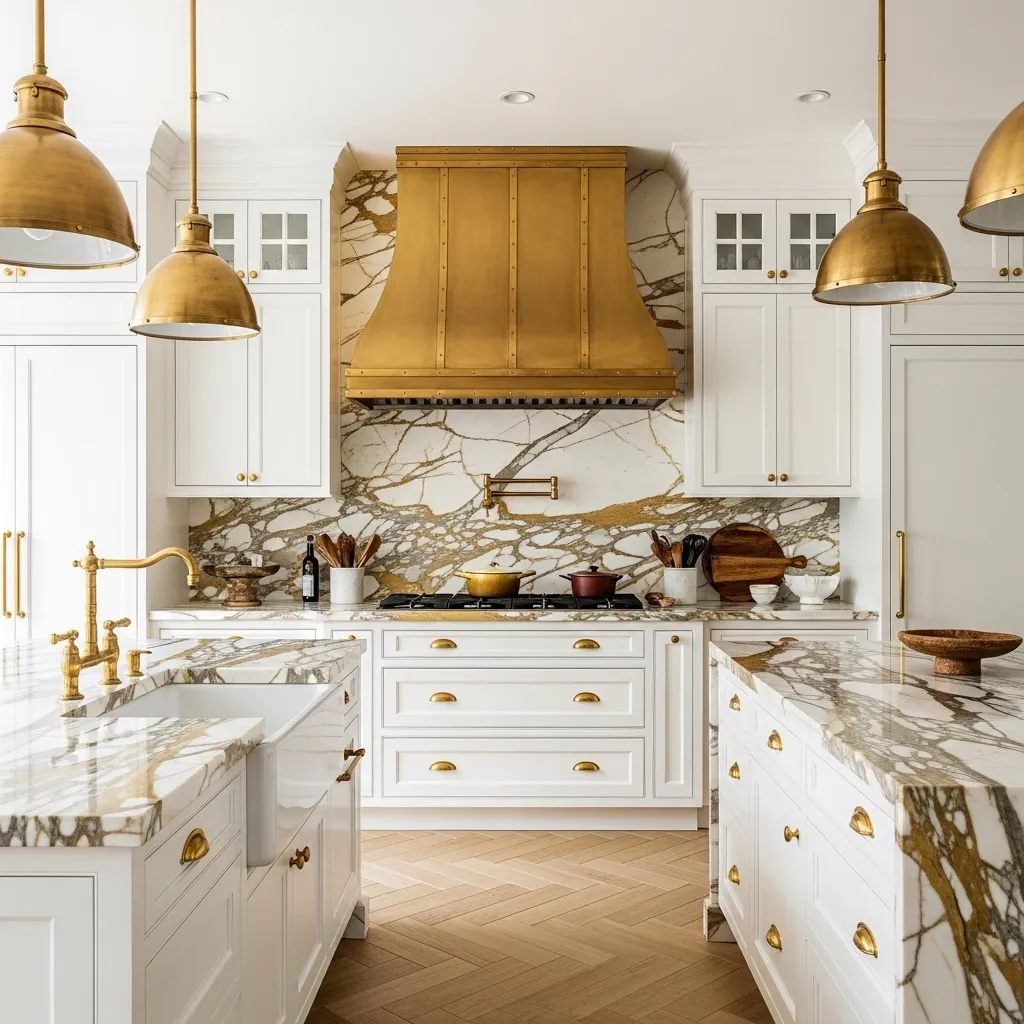
White cabinets as the backdrop for maximalist brass and marble is the approach that proves white doesn’t have to mean restrained — when you pair it with the richest, most dramatic Calacatta Gold marble and commit fully to brass on every hardware piece, every fixture, and every fitting, the white becomes the quiet foundation that lets all of that warmth and luxury sing at full volume. It’s a kitchen that manages to be simultaneously simple in its color story and incredibly complex in its material richness.
The full-height marble backsplash slab behind the range — carried all the way to the ceiling — is the decision that takes this kitchen from beautiful to spectacular. Instead of a tiled backsplash that interrupts the marble at counter height, the slab continues unbroken from countertop to ceiling, showing the full sweep of the veining as a single piece. It’s an investment that pays off every single day because no tile arrangement, however beautiful, can replicate the drama of a continuous marble slab in that position.