15 Japandi Bedroom Ideas for 2026 That Feel Genuinely Calm, Beautiful, and Completely Livable
If you’ve been circling the Japandi aesthetic for a while — drawn to those bedrooms that manage to feel simultaneously minimal and warm, spare and deeply comfortable, modern and ancient all at once — this is the year to actually commit, because the way Japandi is being interpreted in 2026 has moved beyond the slightly cold, overly austere version of the aesthetic that dominated a few years ago into something that feels genuinely livable and personal and warm in a way that makes you want to spend real time in the room rather than just photograph it. The ideas here cover the full contemporary range of what Japandi bedroom design looks like right now — from low platform beds with handwoven linen bedding and wabi-sabi ceramic vessels, to shoji-inspired room dividers filtering soft morning light, warm limewash walls with natural material layering, futon-inspired sleeping platforms on polished concrete, dark walnut and white linen combinations, moss and stone garden-inspired bedside moments, and several more directions that prove the Japandi philosophy of finding beauty in simplicity is richer and more varied than any single aesthetic mood board can capture.
I came to Japandi design through sheer exhaustion with the alternative — a bedroom that had accumulated too much stuff over too many years of adding things without ever subtracting them, too many colors competing for attention, too many objects that didn’t mean anything to me but that I’d kept because removing them felt like a decision I’d have to make consciously. Eventually I made the decision consciously, cleared everything out, and started again with a platform bed in natural oak, white linen, and one single ceramic vessel on the bedside shelf that I genuinely loved. The room felt dramatically different from the first night, and the quality of sleep I got in it was noticeably different too — something about the visual quiet of a spare room creates a kind of psychological permission to actually rest that a cluttered or overstimulating room doesn’t allow.
What Japandi brings together that neither Japanese minimalism nor Scandinavian minimalism achieves independently is warmth — specifically the warmth that comes from natural materials, warm wood tones, handmade textures, and the deliberate inclusion of objects that carry meaning or demonstrate craft. A purely Japanese minimal bedroom can feel austere in a way that’s beautiful but slightly uncomfortable to actually live in. A purely Scandinavian bedroom can feel clinical in its whiteness. Japandi takes the best quality from each tradition — the Japanese attention to craft, material quality, and the beauty of imperfection, combined with the Scandinavian commitment to livable comfort, cozy textiles, and warm natural materials — and creates something that feels both ancient in its values and completely current in its application.
1. Low Platform Bed With Handwoven Linen Bedding
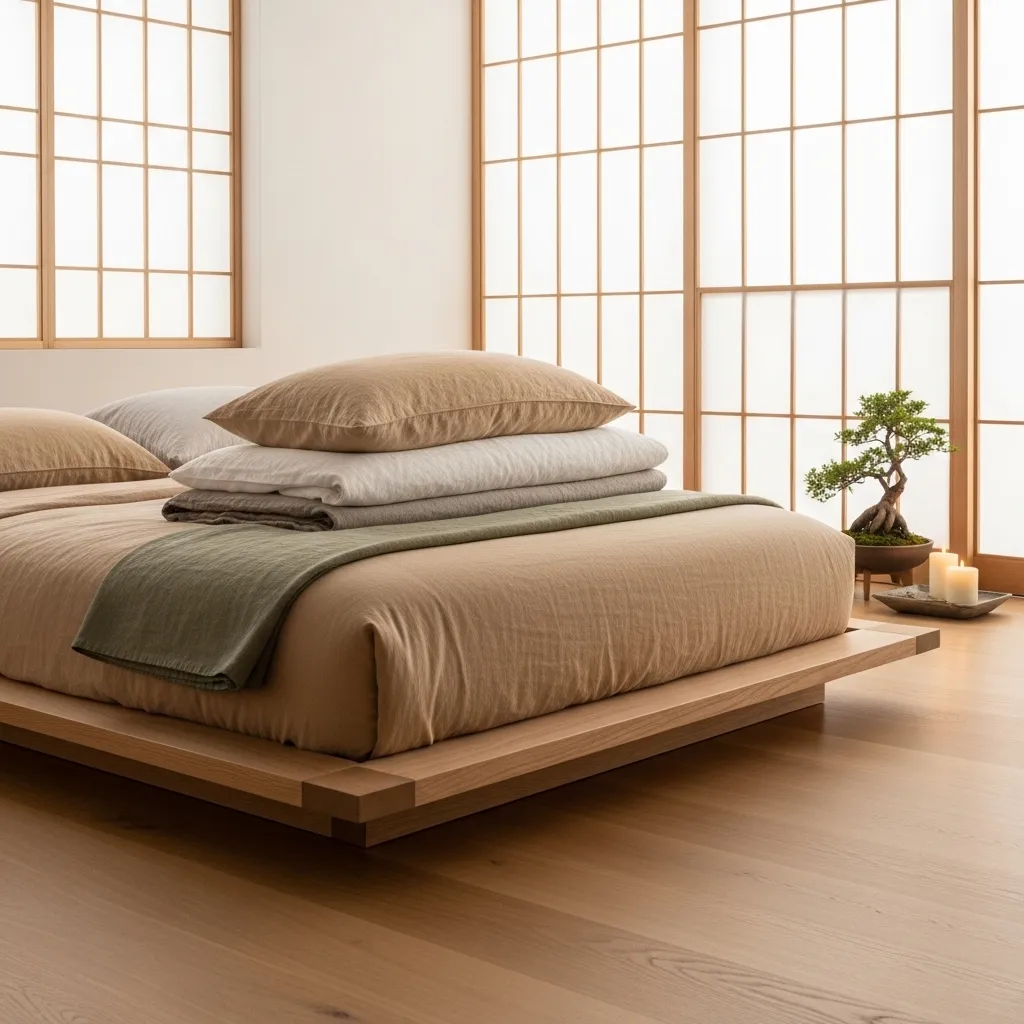
The low platform bed is the foundational Japandi bedroom element because it embodies the philosophy of the aesthetic in its most direct physical form — by bringing the sleeping surface close to the floor, it creates a sense of groundedness and humility that high-profile Western beds don’t have. The relationship between the body and the floor is different when the bed is low, more connected and less elevated, and that physical quality translates into a psychological one — you feel genuinely settled and close to the ground rather than elevated above it.
Handwoven linen is the bedding material that the Japandi bedroom deserves because it has all the qualities that the aesthetic values most — visible texture that demonstrates the process of its making, natural color that varies slightly across the weave, a quality that improves with washing rather than degrading, and a combination of warmth and breathability that makes it genuinely the best possible material to sleep in regardless of aesthetic considerations. The slight imperfection of a handwoven textile, the irregularity in the weave, is the wabi-sabi quality that a perfectly smooth cotton percale completely lacks.
2. Warm Limewash Walls With Natural Material Layering
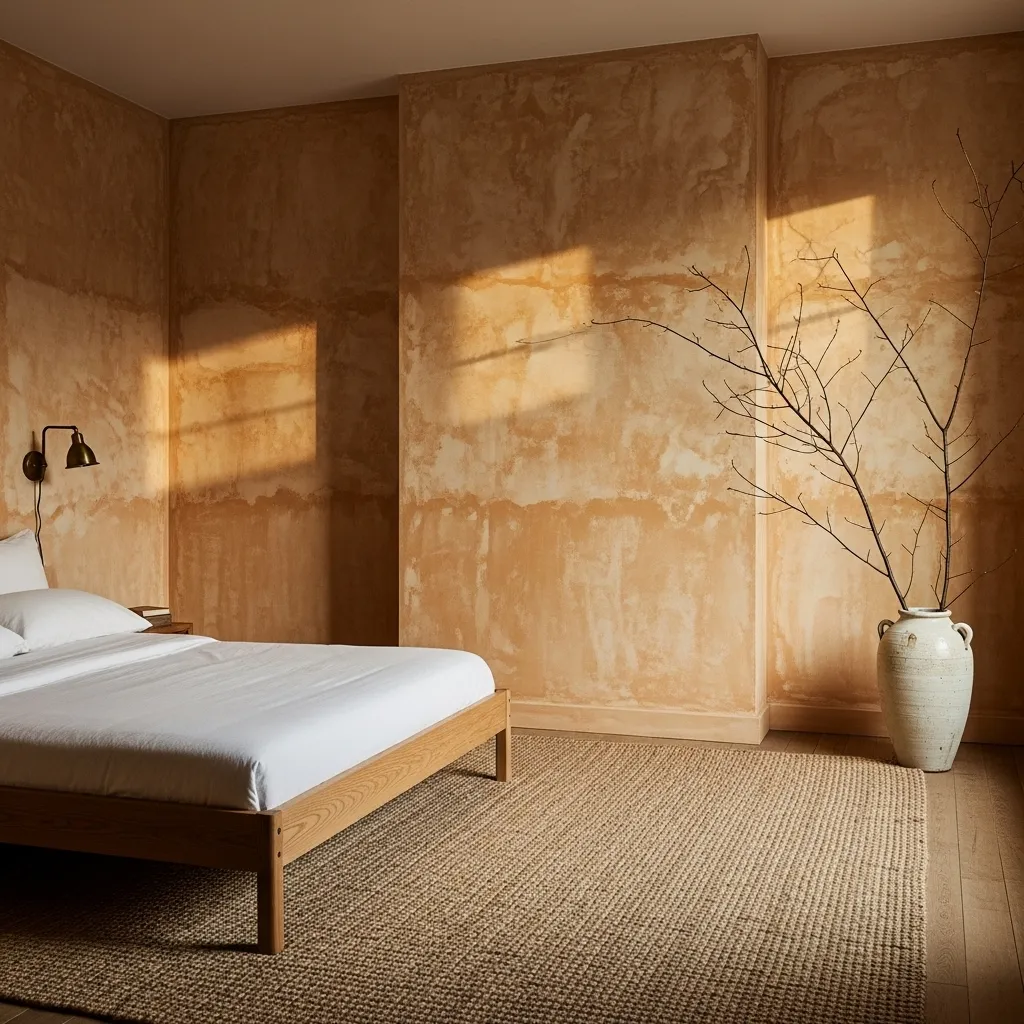
Limewash walls in a Japandi bedroom solve the aesthetic problem that plain white walls create in this style — the flatness of painted white can make a spare room feel cold and unfinished, whereas limewash adds texture and warmth and depth that makes the same spare room feel genuinely rich and considered. The warm amber-sand tone specifically is the limewash color that works best in a Japandi bedroom because it references the natural materials — warm wood, woven textiles, ceramic — that populate the room and creates a cohesive warm color envelope around all of them.
The interplay between the limewash texture and the natural afternoon light is what makes this wall treatment most beautiful — the raking light of afternoon or evening sun traveling across an uneven limewash wall creates shadow and highlight variations that change throughout the day and make the wall feel alive and dynamic rather than static. It’s a wall that looks different at nine in the morning than it does at four in the afternoon than it does in lamplight at night, and that quality of responsiveness to light is one of the most valuable things you can have in a bedroom that you inhabit at every hour of the day.
3. Shoji Screen Room Divider and Light Filter
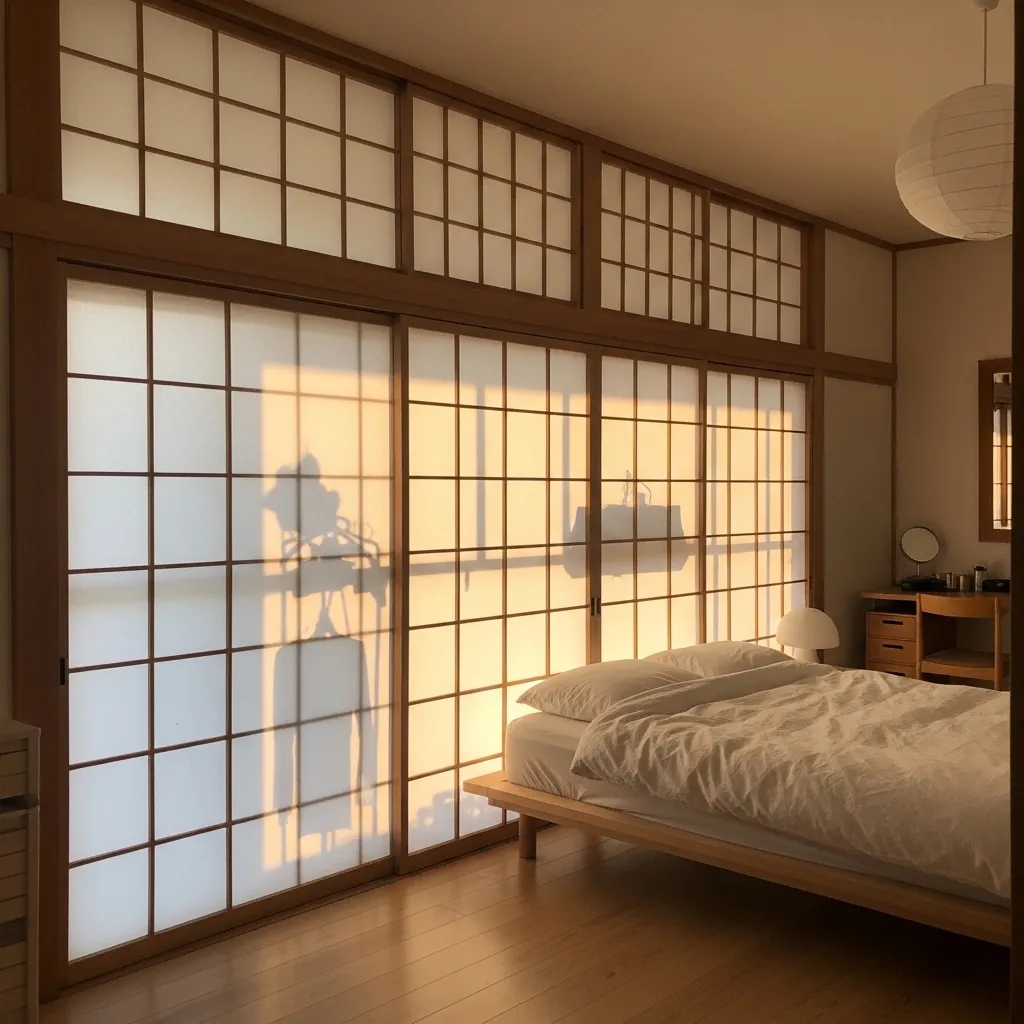
Shoji screens as interior room dividers are the Japandi bedroom element that most directly references the Japanese architectural tradition, and they do something in a bedroom that no other room division method achieves — they divide space while simultaneously softening and distributing the light that passes through them, creating a quality of illumination in the sleeping space that’s unique to translucent screens and genuinely unlike any other light source. Morning light through rice paper has a quality that’s been valued in Japanese architecture for centuries and has never been improved upon.
The practical function of a shoji screen divider in a bedroom is equally significant — it creates a separate visual zone for dressing, storage, or working without building a wall, maintaining the spacious quality of the original room while providing the psychological separation between sleep space and activity space that modern bedroom design often neglects. In studio apartments and open-plan bedrooms especially, a shoji screen creates a sense of dedicated sleeping space that profoundly affects the quality of sleep within it.
4. Dark Walnut and White Linen Contrast Bedroom
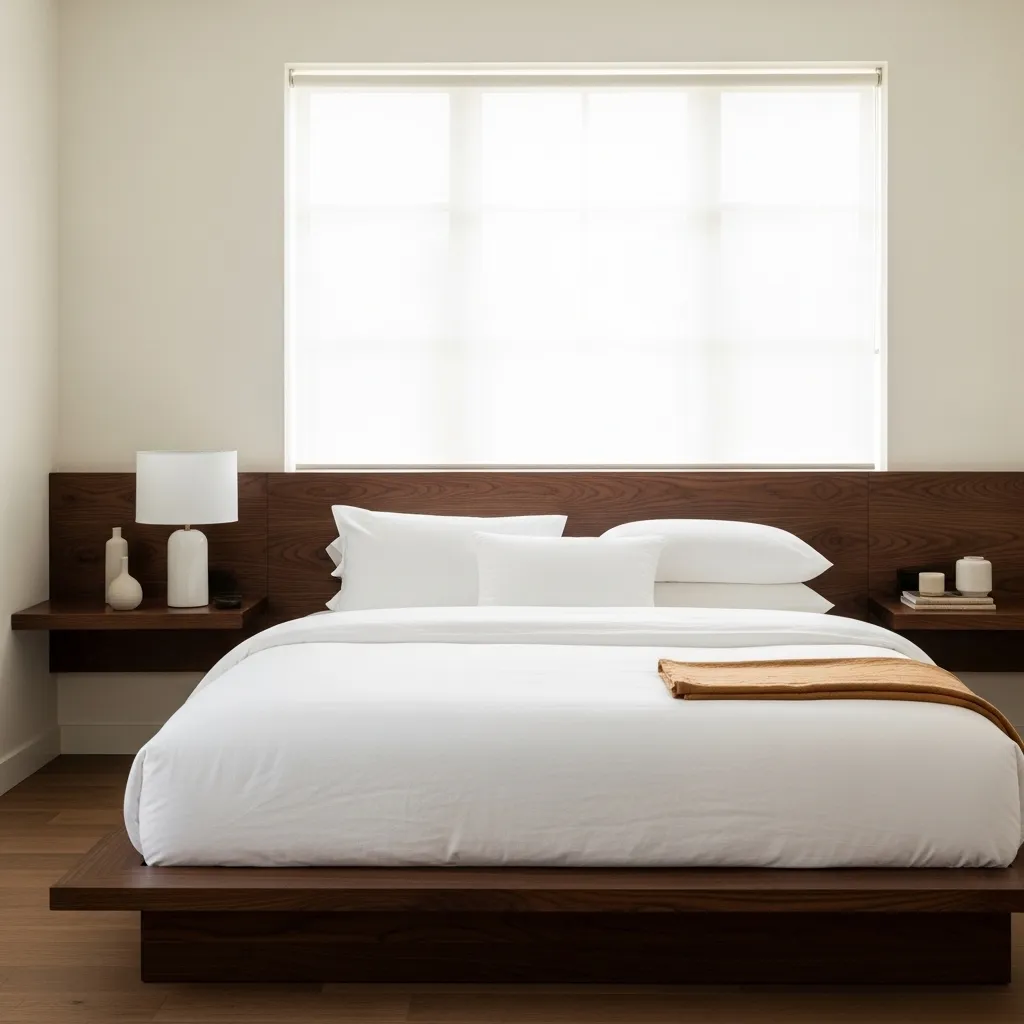
Dark walnut against bright white linen is the Japandi bedroom combination that achieves the aesthetic’s characteristic warmth-through-contrast effect most directly — the darkness of the walnut grain makes the white of the linen appear even more luminous, and the warmth of the wood prevents the white from feeling cold or clinical. It’s a pairing that’s been central to Japanese furniture tradition — dark lacquered wood against pale natural fabric — and that the Scandinavian tradition has approached from the other direction through its use of dark wood furniture against white painted rooms.
The grain of dark walnut is specifically important in this combination because it’s visible enough to be genuinely interesting — the varied dark and medium tones running through the wood, the occasional figuring in a well-selected piece, the distinction between the end grain and the face grain of different parts of the frame. These are the material details that Japandi design asks you to notice and appreciate, and dark walnut rewards that attention more generously than almost any other readily available furniture timber.
5. Wabi-Sabi Ceramic and Stone Bedside Vignette
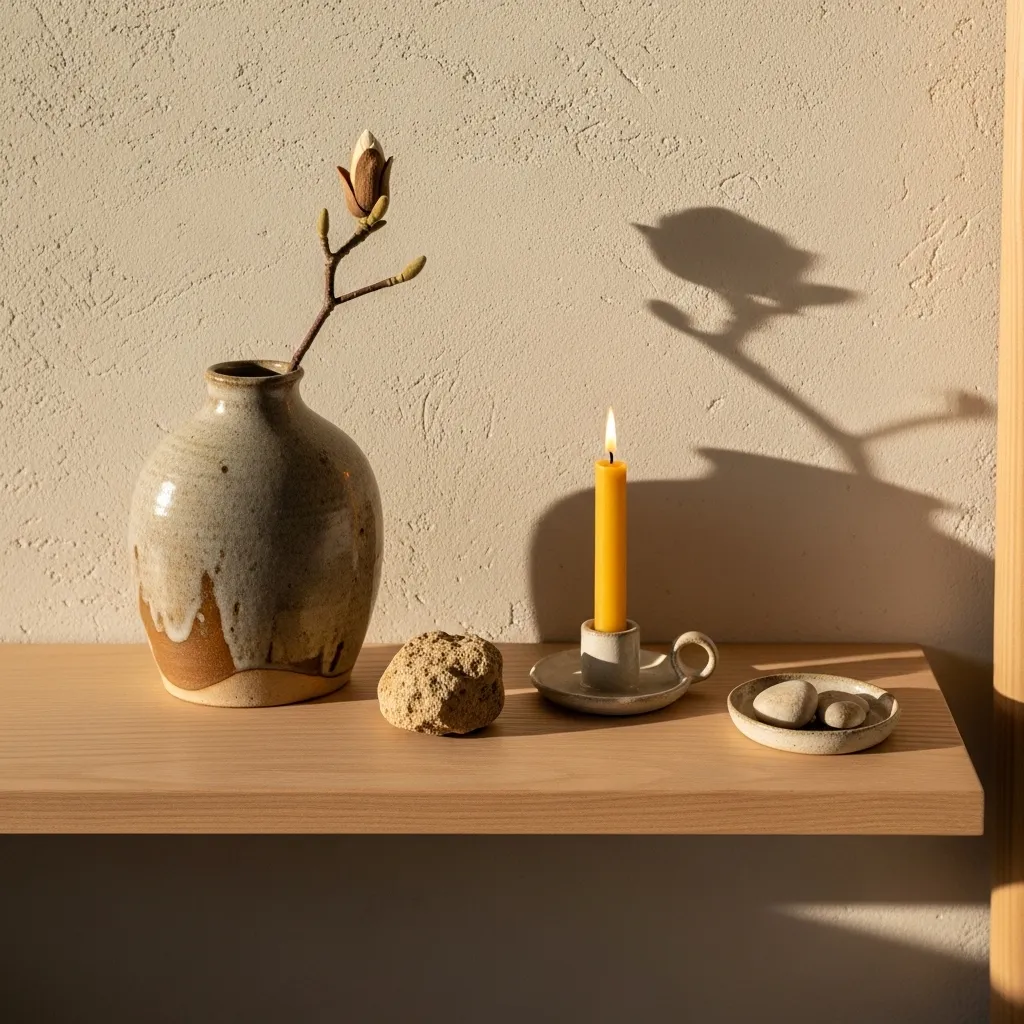
A bedside vignette composed of wabi-sabi objects — hand-thrown ceramics with visible irregularities, found stones, a single branch, a simple candle — is the Japandi bedroom detail that communicates the aesthetic’s values most completely in the smallest possible space. Each object has been chosen not for perfection but for character, not for decoration but for meaning, and the restraint of using very few objects with genuine presence rather than many objects with none creates a composition that rewards the kind of close, slow looking that the first and last moments of each day naturally invite.
The wabi-sabi philosophy — the Japanese aesthetic concept of finding beauty in imperfection, impermanence, and incompleteness — is most accessible and most beautiful in small, close-range compositions like a bedside arrangement precisely because the intimacy of the space invites the close attention that wabi-sabi objects require. You don’t appreciate the throwing marks on a ceramic vase from across a room; you appreciate them at the distance of someone lying in bed looking sideways at their bedside table, which is exactly the distance from which a bedroom bedside vignette is designed to be experienced.
6. Organic Shaped Furniture and Curved Forms
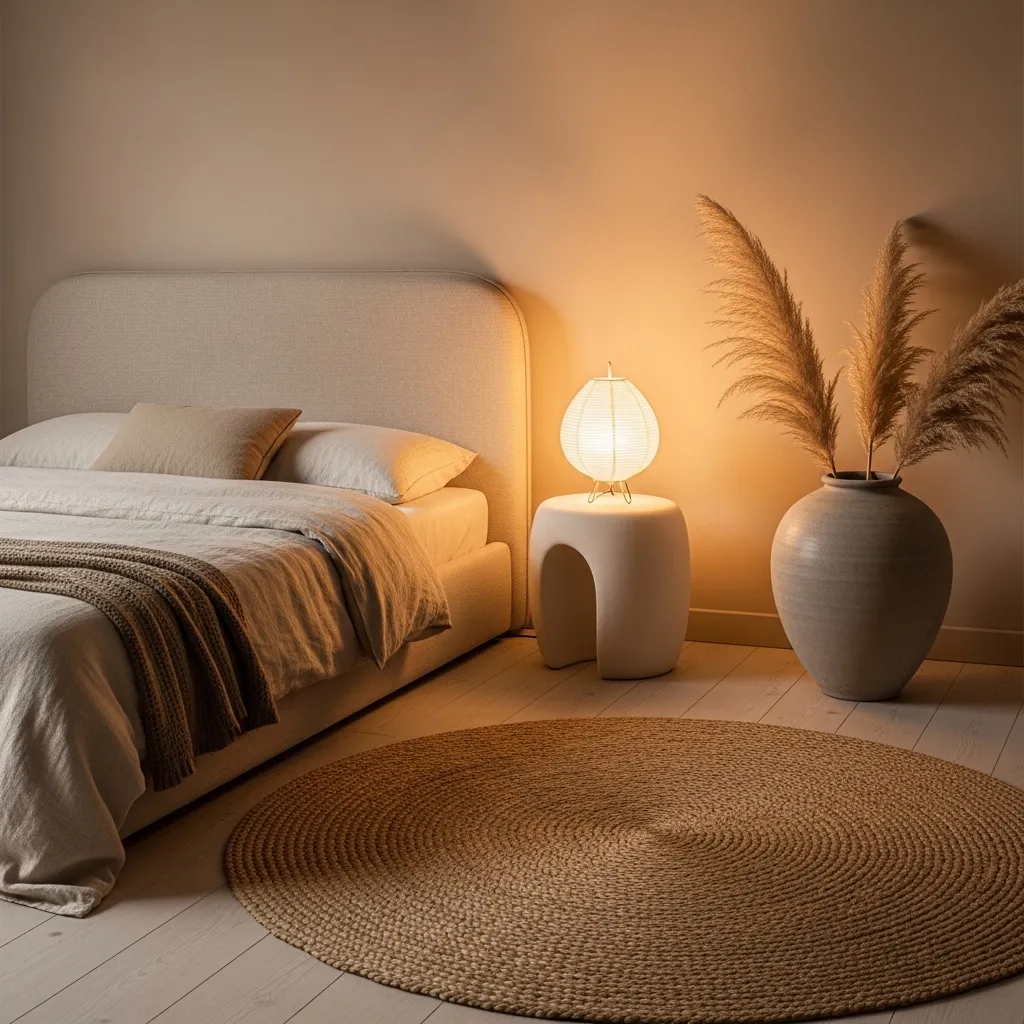
The introduction of organic, curved forms into Japandi bedroom design is the 2026 evolution that makes the aesthetic feel most contemporary and most warm — the slightly softer, more rounded version of Japandi furniture design that’s emerging right now takes the material values and the restraint of the traditional aesthetic and adds a physical gentleness that strict rectilinear forms don’t provide. A curved linen headboard has a tactile warmth that a straight-edged platform bed doesn’t, and a round organic ceramic side table has a different kind of presence than a rectangular one.
This evolution reflects something broader happening in interior design in 2026 — a move away from the strictness of early minimalism toward something more humanistic, more body-aware, more attuned to the physical comfort of the people inhabiting the space. Japandi with soft organic forms is Japandi that has decided human comfort is as important as visual discipline, and the rooms that result from that decision feel genuinely more livable and more loving than their harder-edged predecessors.
7. Moss and Stone Garden-Inspired Bedroom Corner
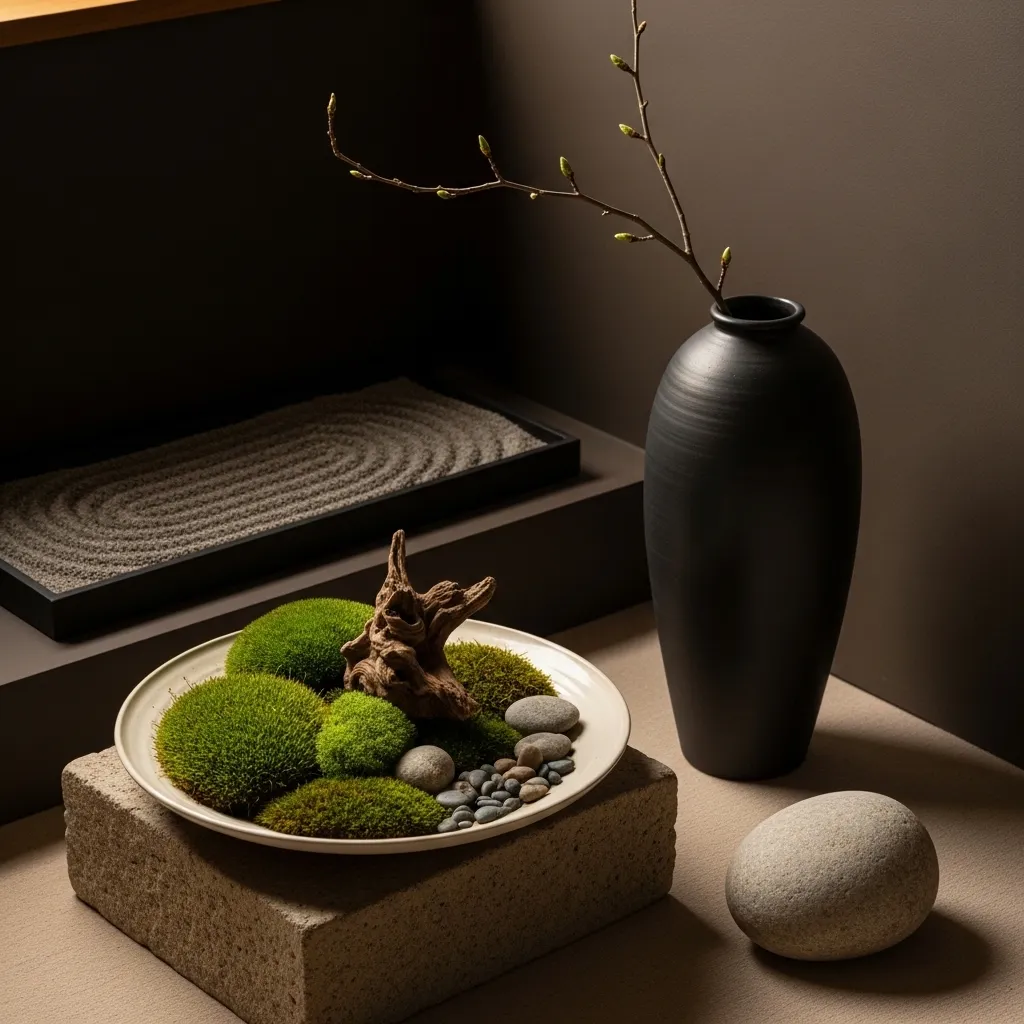
Bringing Japanese garden elements into a bedroom — the moss, the stone, the single branch, the raked gravel — is the Japandi bedroom idea that most directly honors the Japanese tradition of viewing miniature nature as a form of meditation and a source of daily beauty. The Japanese garden tradition of creating entire landscapes in miniature, of distilling the essence of mountain and forest and water into a shallow tray of moss and stone, is one of the most sophisticated aesthetic philosophies in human history and it translates into a bedroom corner with remarkable beauty and directness.
The miniature moss garden specifically is the bedroom addition that creates the most profound sense of calm — there is something genuinely soothing about looking at living moss, about its small-scale perfection and its quiet, unhurried growth, that works on the nervous system in a way that manufactured objects and even cut flowers don’t. Moss is alive and growing in real time in a way you can almost perceive if you pay attention long enough, and that quality of slow, patient life is exactly the right energy for a room dedicated to rest and renewal.
8. Natural Fiber Textile Bedroom With Layered Warmth
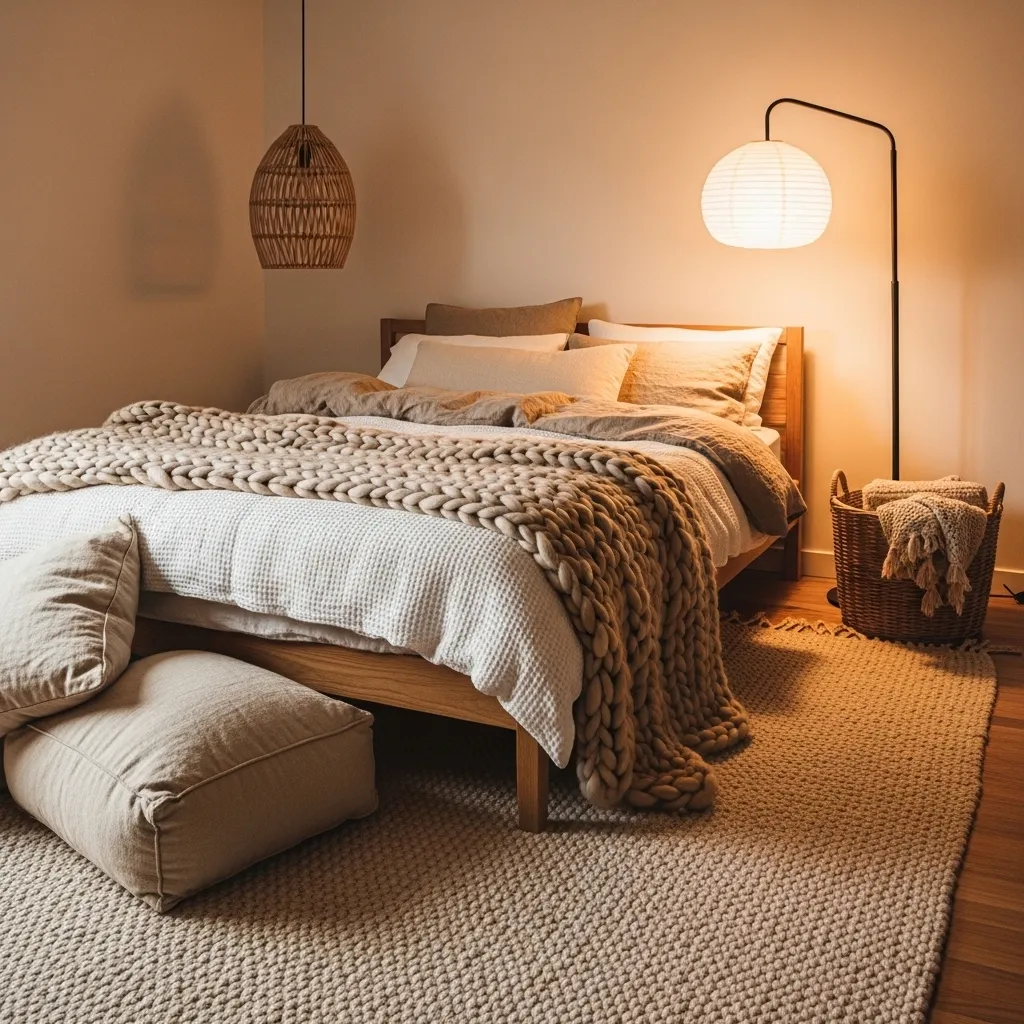
A Japandi bedroom where warmth comes entirely from layered natural fiber textiles rather than color or pattern demonstrates one of the aesthetic’s most important principles — that richness can be achieved through material and texture rather than through visual complexity. A room that’s essentially neutral in color but rich in textile texture and natural material variation creates a sensory warmth that’s deeply satisfying without being visually stimulating in a way that interferes with sleep.
The specific natural fibers that build this kind of warmth — wool, linen, cotton in its undyed natural state, jute, rattan, seagrass — all share the quality of being visually interesting at close range while remaining quiet from a distance, and that combination of intimate detail and macro calm is exactly what a bedroom needs. From the doorway, the room reads as simple and spare. From the bed, surrounded by all those layered textures and natural material variations, it feels extraordinarily rich and considered.
9. Polished Concrete Floor With Warm Wood Accents
Polished concrete flooring in a bedroom creates a quality of surface that no other flooring material achieves — the slightly reflective, smooth grey plane reads as both warm and cool simultaneously depending on the light, and it creates a sense of continuity and groundedness that tiled or wood-floored rooms don’t have. The Japandi bedroom on polished concrete has a distinctly contemporary quality that positions it firmly in 2026 rather than in any previous decade of Japandi-adjacent design.
The warm wood accents against the concrete floor are essential to preventing the concrete from feeling cold or industrial — the walnut furniture grounds the room in warmth and human craft, and the jute rug bridges the gap between the cool grey floor and the warm furniture in a way that makes the whole material composition feel intentional and balanced. This is the Japandi bedroom for people who are drawn to the architectural end of the aesthetic, who want their bedroom to feel like it could be in a beautifully designed concrete building in Tokyo or Copenhagen.
10. Neutral Palette With Single Accent Color
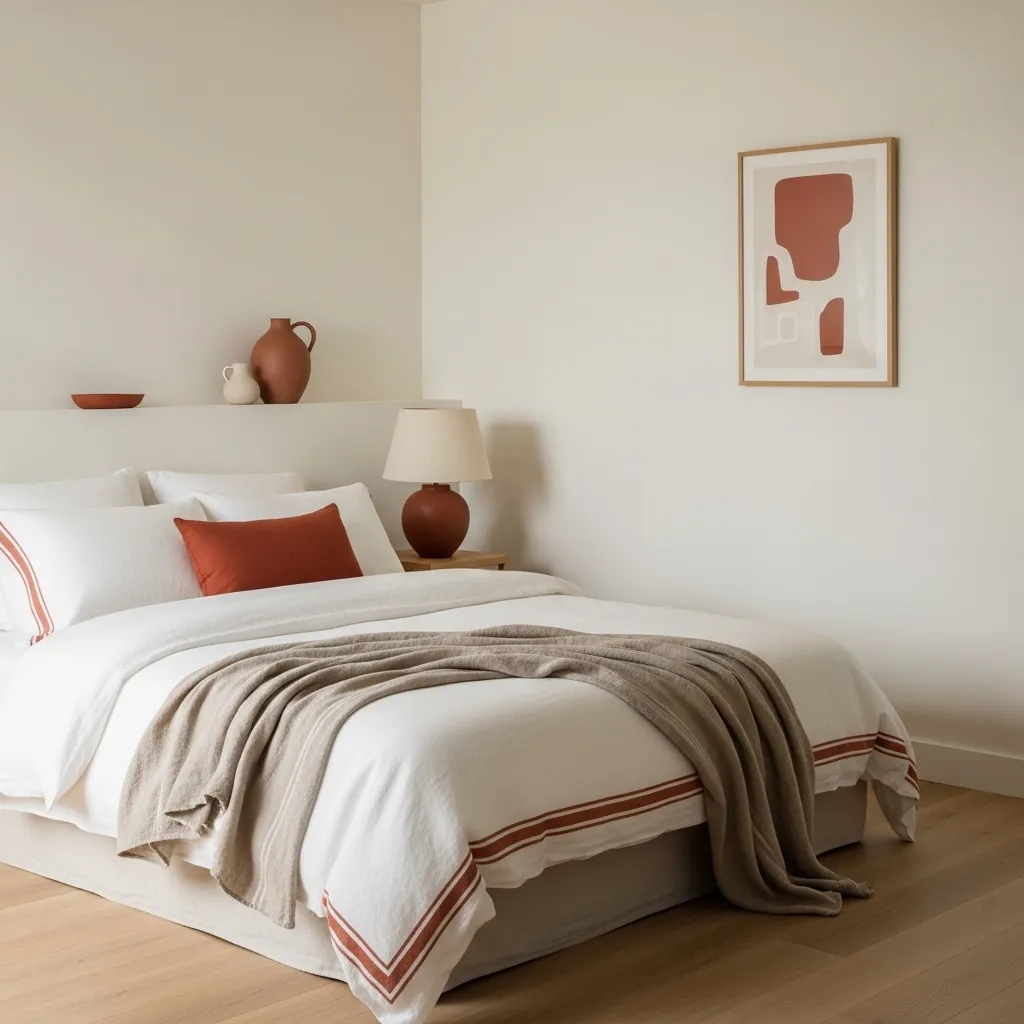
The single accent color in a neutral Japandi bedroom is the design strategy that most elegantly solves the aesthetic’s primary challenge — how to create a room that has visual warmth and personality without the visual stimulation of multiple colors competing for attention. By choosing one color and introducing it in very small, carefully placed measures throughout the room, you create a color narrative that feels deliberately composed rather than randomly assembled, and that quality of intention makes even a very restrained room feel completely considered.
The choice of which single color to use matters enormously — it should be a warm, natural tone that feels like it belongs in the same color family as the natural materials it’s being placed alongside. Terracotta, warm charcoal, deep sage, warm rust, aged indigo — these are the accent colors that feel genuinely at home in a Japandi context because they reference natural pigments, natural dyes, and natural materials rather than synthetic color references. The restraint of a single accent color is what gives each small appearance of that color its genuine visual weight and presence.
11. Floating Furniture and Visual Lightness
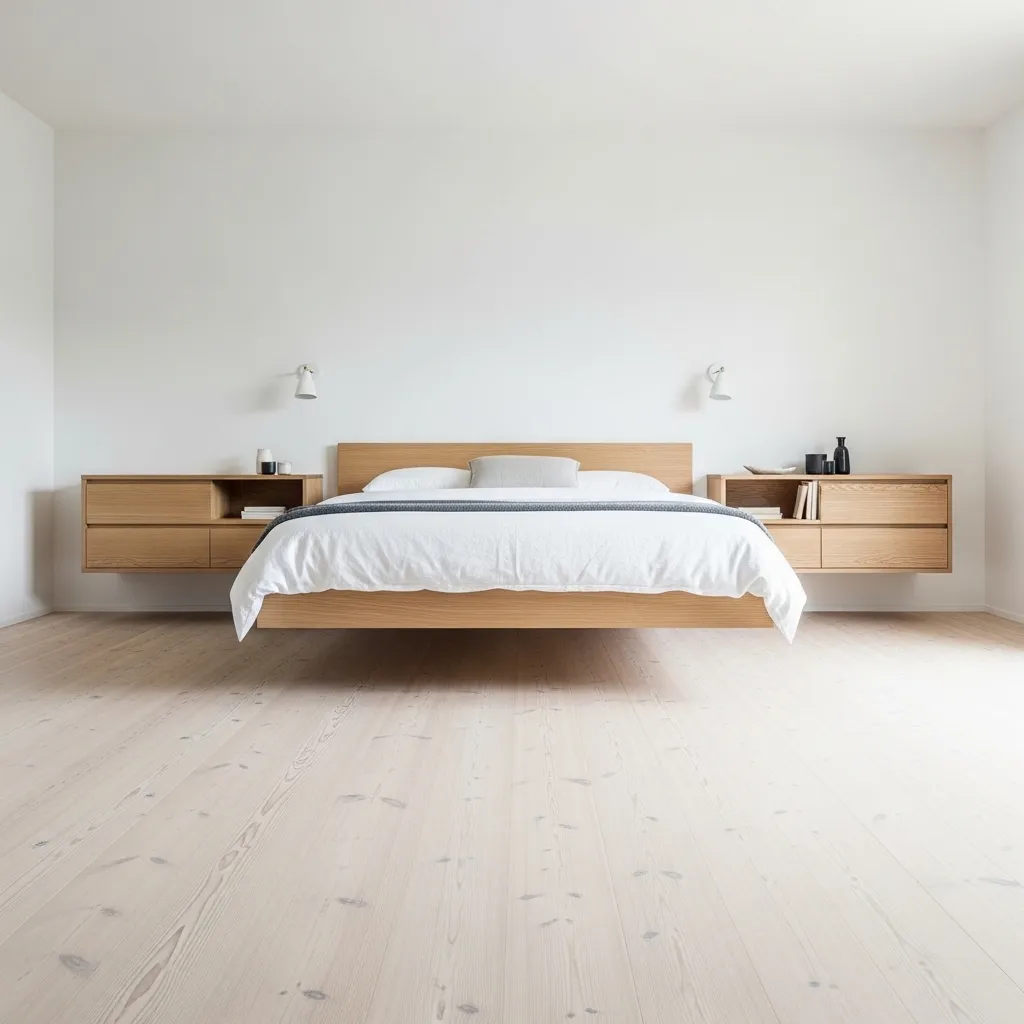
Floating furniture — beds, shelves, dressers all wall-mounted with visible floor below — is the Japandi bedroom strategy that creates the greatest sense of spaciousness in any given room size, and in 2026 it’s being applied with particular sophistication to create bedrooms that feel genuinely airy and calm regardless of their actual square footage. The continuous floor plane that floating furniture reveals is a visual experience that ground-level furniture simply can’t provide — you see the room’s full floor area, the space feels larger, and the visual quiet of an uninterrupted surface creates a sense of calm that interrupted floor space doesn’t.
The Japanese interior tradition has always understood the value of visual lightness — of furniture that hovers rather than sits, that seems to have minimal impact on the space rather than claiming it. This comes from a different relationship to the floor itself, which in traditional Japanese interiors is a living surface used for sitting, sleeping, and moving through, and which contemporary Japandi design honors by keeping it as clear and visible as possible even when the room is fully furnished.
12. Handmade Ceramic and Craft Object Bedroom
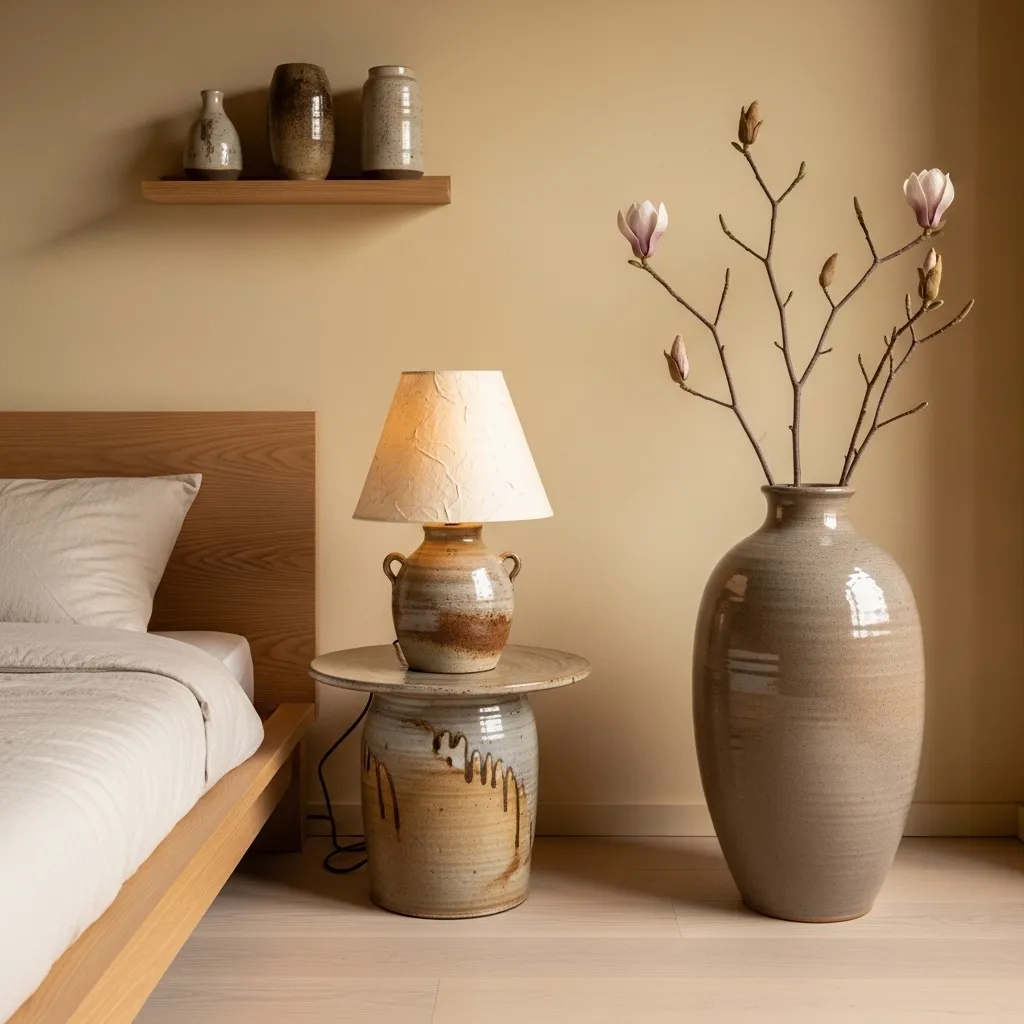
A Japandi bedroom where every object is handmade by a craftsperson rather than manufactured by a machine creates a quality of presence and authenticity that mass-produced objects genuinely cannot replicate — and this is a distinction that the Japandi aesthetic makes central to its values. The hand-thrown ceramic lamp base, the ceramic vase with its visible throwing marks, the shelved ceramic pieces each with their own individual character — these objects carry the evidence of human hands and human decisions in their surfaces in a way that factory objects are specifically designed to eliminate.
The investment in genuinely handmade objects is the investment that the Japandi philosophy considers most important, more important than expensive materials or rare woods — because the quality of craft and the evidence of making is what gives an object the kind of presence that transforms a room from a set of furniture into a collection of things worth caring about. A room full of carefully chosen handmade ceramics in neutral tones contains as much personality and warmth as a room full of color and pattern, but it communicates that personality in a language of material and craft rather than visual stimulation.
13. Dark Japandi Bedroom With Charcoal and Black Walnut
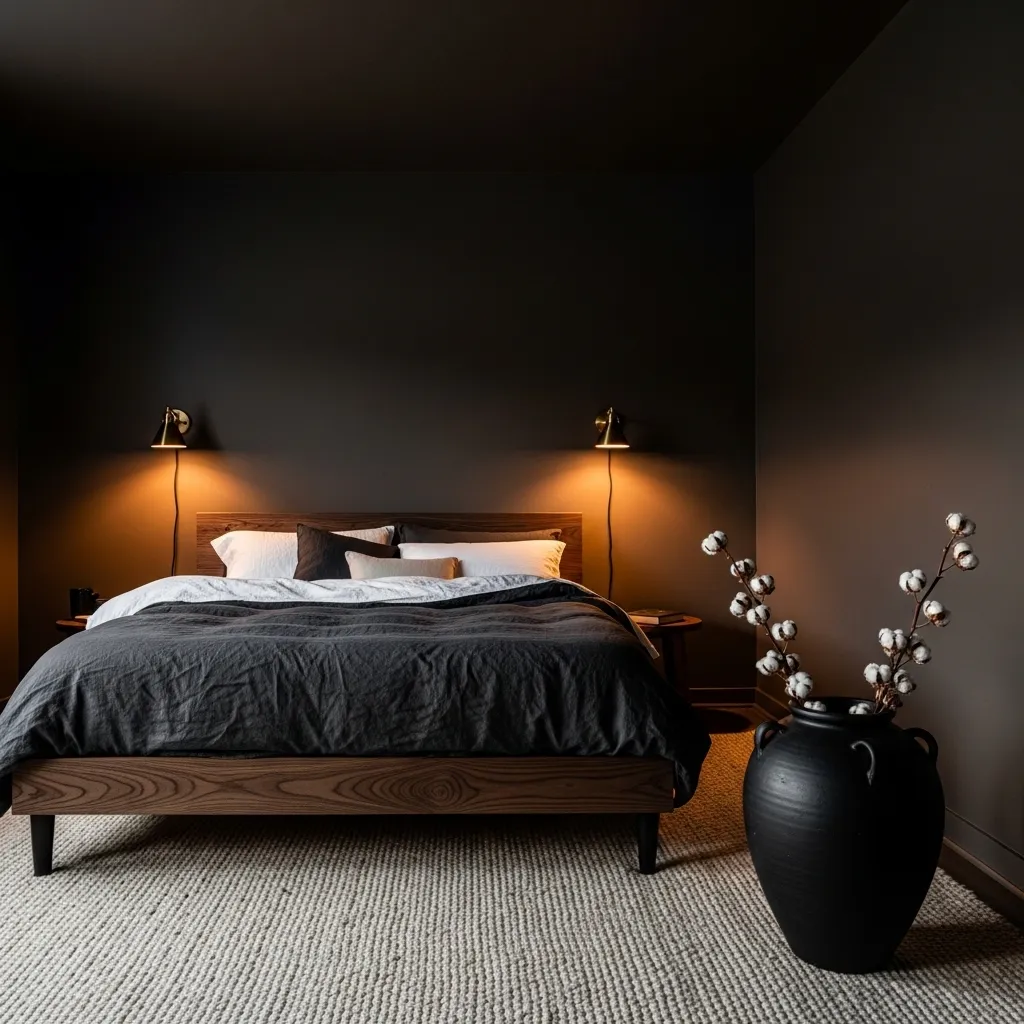
Dark Japandi is the 2026 interpretation that breaks most decisively from the light, airy version of the aesthetic that dominated its early popularity — and it creates something that feels more intimate, more atmospheric, more specifically adult in its sensibility than pale Japandi can achieve. Deep charcoal walls in a Japandi bedroom create the same quality of visual quiet as white or cream walls but with an added depth that makes the room feel genuinely immersive rather than simply spare.
The specific charcoal that works in a Japandi context needs warm brown undertones rather than blue or grey ones — a warm charcoal reads as a deeply saturated version of the natural material tones in the room rather than as a neutral gone dark, and that connection to the warm wood and warm ceramic tones of the other materials is what keeps the room feeling grounded and human rather than cold and dramatic in a way that would be antithetical to the Japandi spirit.
14. Japandi Bedroom With Indoor Garden Corner
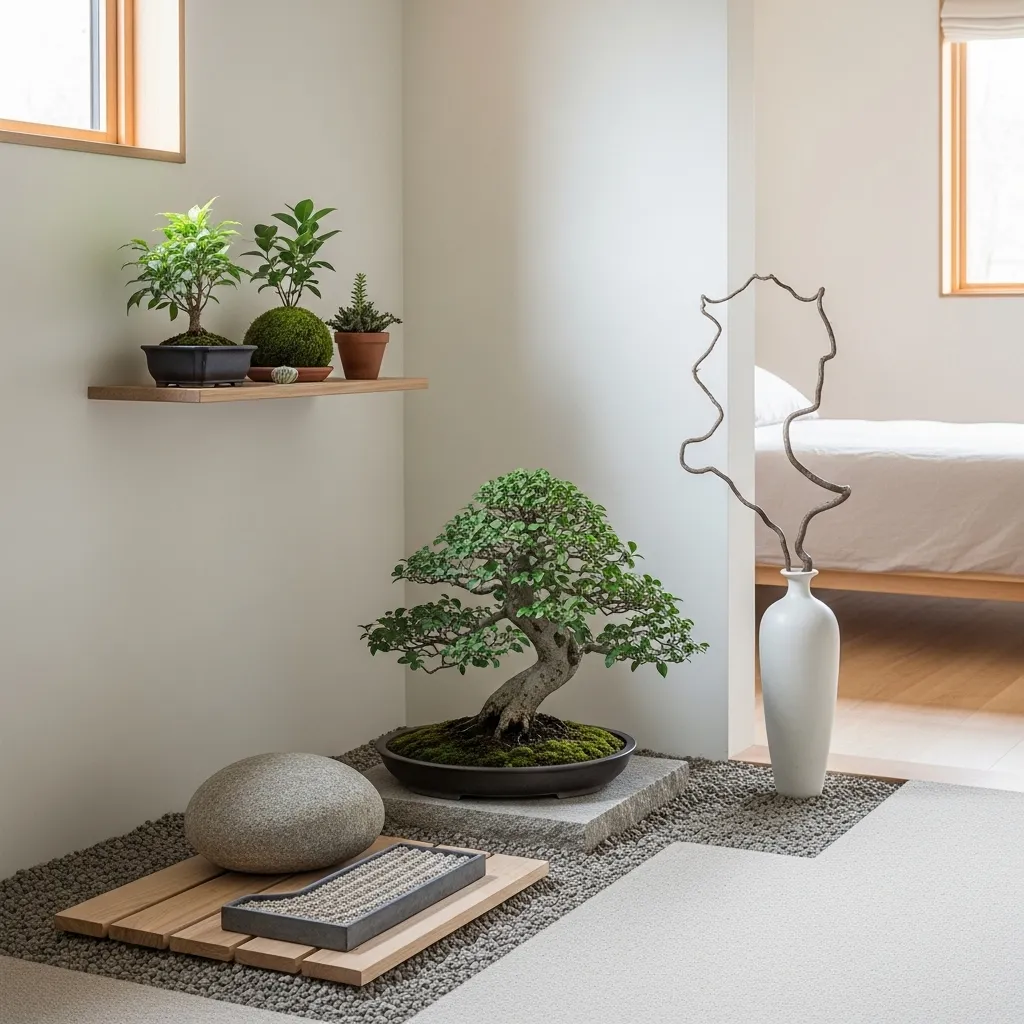
A dedicated indoor garden corner in a Japandi bedroom is the element that brings the outside world most directly into the sleeping space — the Japanese tradition of bringing nature inside, of treating living plants and natural objects with the same reverence given to crafted objects, is one of the defining qualities of the aesthetic and one of the most practical ways to create calm and beauty in a bedroom simultaneously. A bonsai, a few small potted plants, a stone, a raked gravel tray — together these create a corner of the room that is genuinely alive and growing and changing slowly through the seasons.
The commitment to caring for the indoor garden is part of what makes it meaningful in a Japandi context — the daily or weekly attention given to watering, adjusting, pruning, noticing growth and change is itself a practice of the kind of mindful attention that the Japanese aesthetic tradition has always valued. A room that requires this kind of attentive care becomes a room that rewards it, and a bedroom with a living garden corner is a bedroom that gives you a reason for gentle, mindful attention every morning before the rest of the day begins.
15. Minimalist Japandi Bedroom With One Artwork
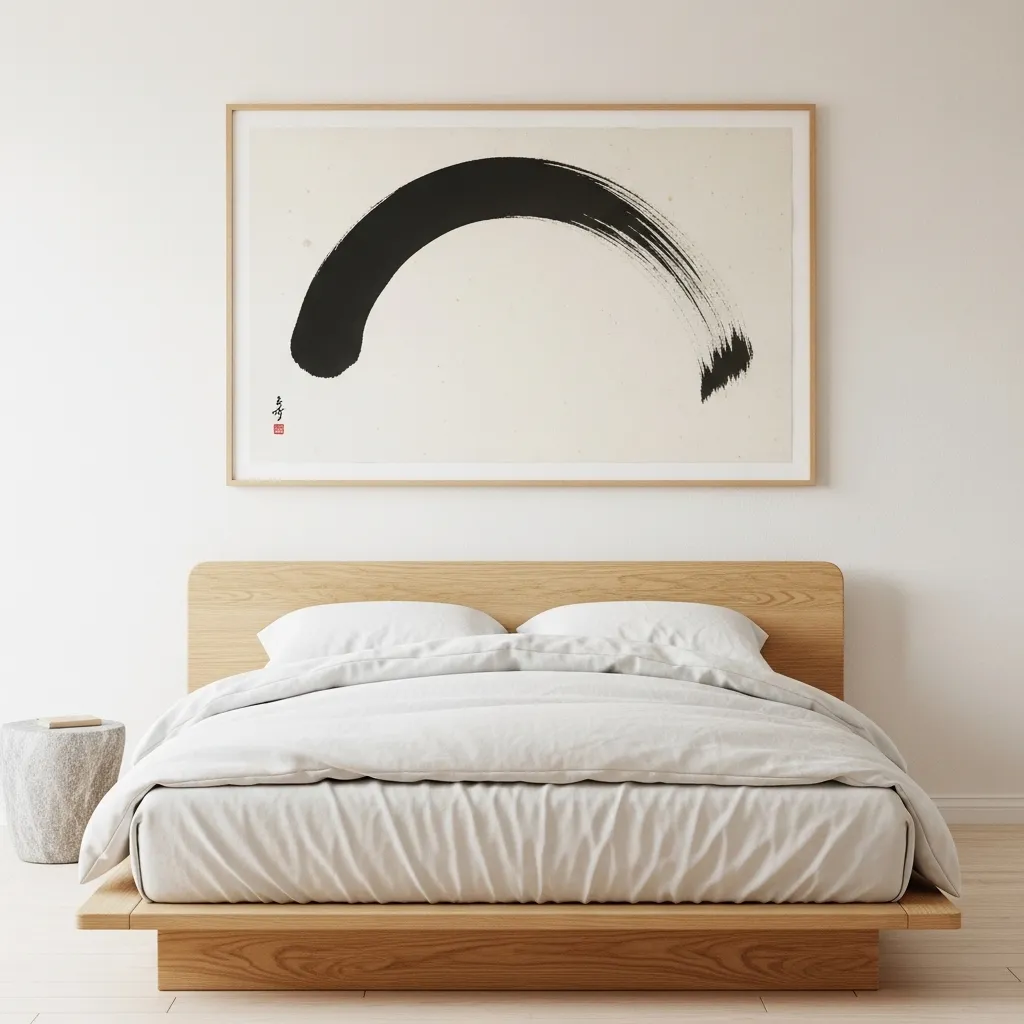
A single piece of artwork as the sole visual focus of an otherwise completely bare Japandi bedroom is the design decision that demonstrates the most confidence in the power of restraint — by refusing to add anything else to the walls, by giving that one piece of art the entirety of the room’s available visual attention, you create a relationship between the viewer and the artwork that’s only possible in the absence of competing visual information. You actually see the artwork rather than registering it as one element among many.
The choice of artwork matters enormously in this context — it needs to be worthy of the complete attention it’s going to receive, which means it needs to be genuinely excellent rather than merely attractive, and it needs to have qualities that reward extended looking rather than giving up their interest in a single glance. Japanese ink brushwork — particularly a single confident stroke on handmade paper — has this quality of rewarding slow, close attention, showing more complexity and more skill the longer you look, and that characteristic makes it the ideal artwork for a Japandi bedroom where it will be looked at every day for years.