14 Kids Bedroom Ideas That Make Their Space Feel Like the Best Room in the House
If you’ve been staring at your child’s bedroom wondering how to make it feel genuinely magical and functional at the same time — a place where they actually want to spend time, where their specific personality is reflected in every corner, and where the space grows with them rather than dating itself within a year — the ideas in this roundup cover the full range of what a children’s bedroom can be in 2026, from dreamy canopy beds with twinkling fairy lights and reading nooks tucked into every available corner, to bold wall murals, adventure-themed bunk setups, nature-inspired green sanctuaries, Montessori-influenced low bed configurations, creative art studio corners, cozy loft beds with study spaces below, and several more directions that treat children’s spaces with the same design seriousness given to any room in the house. Because children deserve rooms that are genuinely considered and beautiful, not just themed and convenient.
I remember with real clarity the feeling of having a bedroom that felt completely mine — the specific pleasure of being in a space that reflected my own interests and personality rather than a generic idea of what a child’s room should look like. That sense of ownership over a personal space is something children feel very deeply and very early, and the investment of real thought and care into creating a bedroom that feels genuinely tailored to a specific child rather than assembled from a generic kit pays back in how the child inhabits and loves the space over years. A child who loves their bedroom retreats to it happily, reads in it independently, creates in it freely — and those habits of independent, imaginative, self-directed time are some of the most valuable things a good childhood bedroom environment can support.
What makes a great children’s bedroom isn’t really about having the most elaborate theme or the most expensive furniture — it’s about creating a space that serves the actual child in it, that supports the specific activities they love, that reflects their particular aesthetic sensibility even as it develops and changes, and that has enough flexibility built in to evolve as they grow without requiring a complete overhaul every few years. The ideas here all share that quality — they’re specific enough to feel genuinely designed and designed enough to last beyond a single phase of childhood.
1. The Canopy Bed Fairytale Bedroom
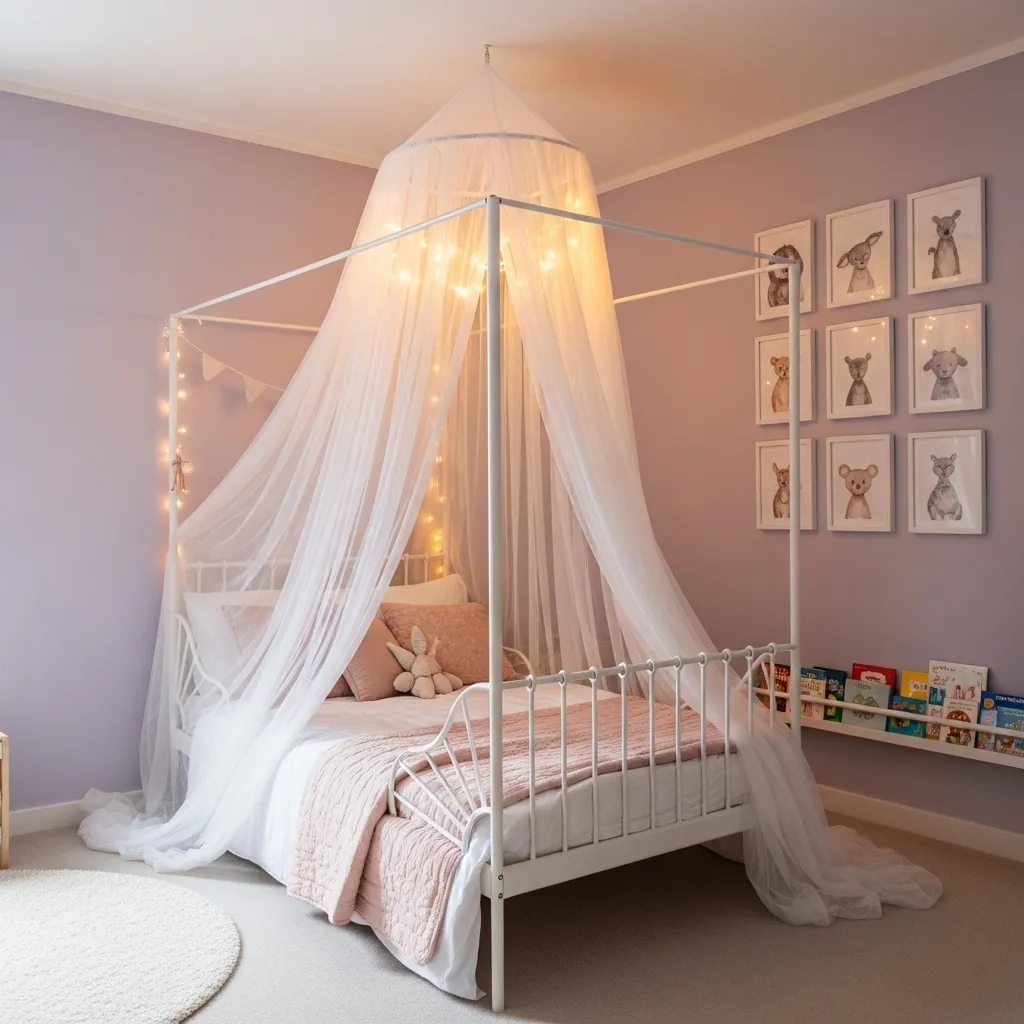
A bed canopy transforms the sleeping space into something genuinely special — the physical enclosure of fabric overhead and on the sides creates a sense of private, contained space within the larger room that children find deeply appealing at an instinctive level. The canopy bed taps into the universal childhood desire for a secret hiding place, a personal territory within the shared territory of the house, and it does so in a way that’s visually beautiful from both inside and outside the canopy. The child who falls asleep under a glowing canopy of fairy lights is having a fundamentally different bedtime experience from the child in an open bed, and that difference in the felt quality of the sleeping space genuinely matters to children in ways that adults sometimes underestimate.
The design flexibility of a canopy is one of its practical virtues — it can be as simple as a length of sheer fabric hung from a single ceiling hook over the bed, or as elaborate as a full four-poster frame with multiple fabric layers, and it can be updated, re-colored, and refreshed as the child grows without any structural changes to the room. A canopy that’s blush and white for a five-year-old can be updated to deep forest green for a ten-year-old and to cream and gold for a teenager, always providing the same sense of personal space overhead.
2. The Bold Wall Mural Bedroom
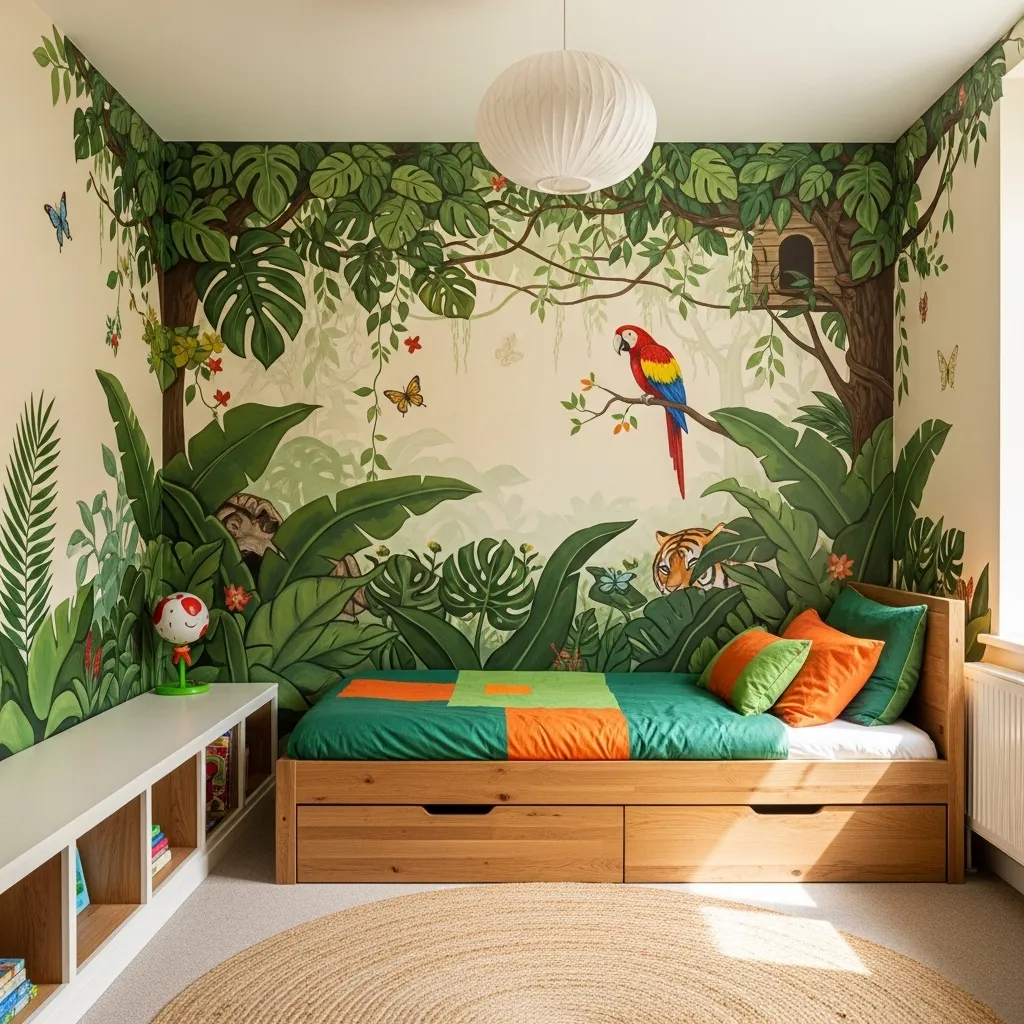
A hand-painted wall mural in a child’s bedroom is the design investment that creates the most lasting and most meaningful impression of all the ideas on this list — it’s completely unique, completely personal to that specific child in that specific room, and it creates a visual world that becomes part of the child’s memory of childhood in a way that no removable decoration or purchased art print can replicate. Children who have a mural in their room often describe it decades later with specific, detailed affection — they remember the hidden animals they used to find, the way the light hit the painted leaves at different times of day, the specific corner of the mural they used to stare at while falling asleep.
The jungle or nature mural is particularly enduring because it transcends specific cultural references, toy franchises, and trend cycles that can make more topically themed murals feel dated within a few years. A beautifully painted jungle wall remains beautiful and engaging from toddlerhood through early adolescence, growing richer and more interesting as the child’s capacity for noticing detail develops. The investment in a skilled muralist — or the commitment to painting it yourself over several weekends — pays back in years of genuine daily pleasure for the child inhabiting the room.
3. The Loft Bed With Study and Play Space Below
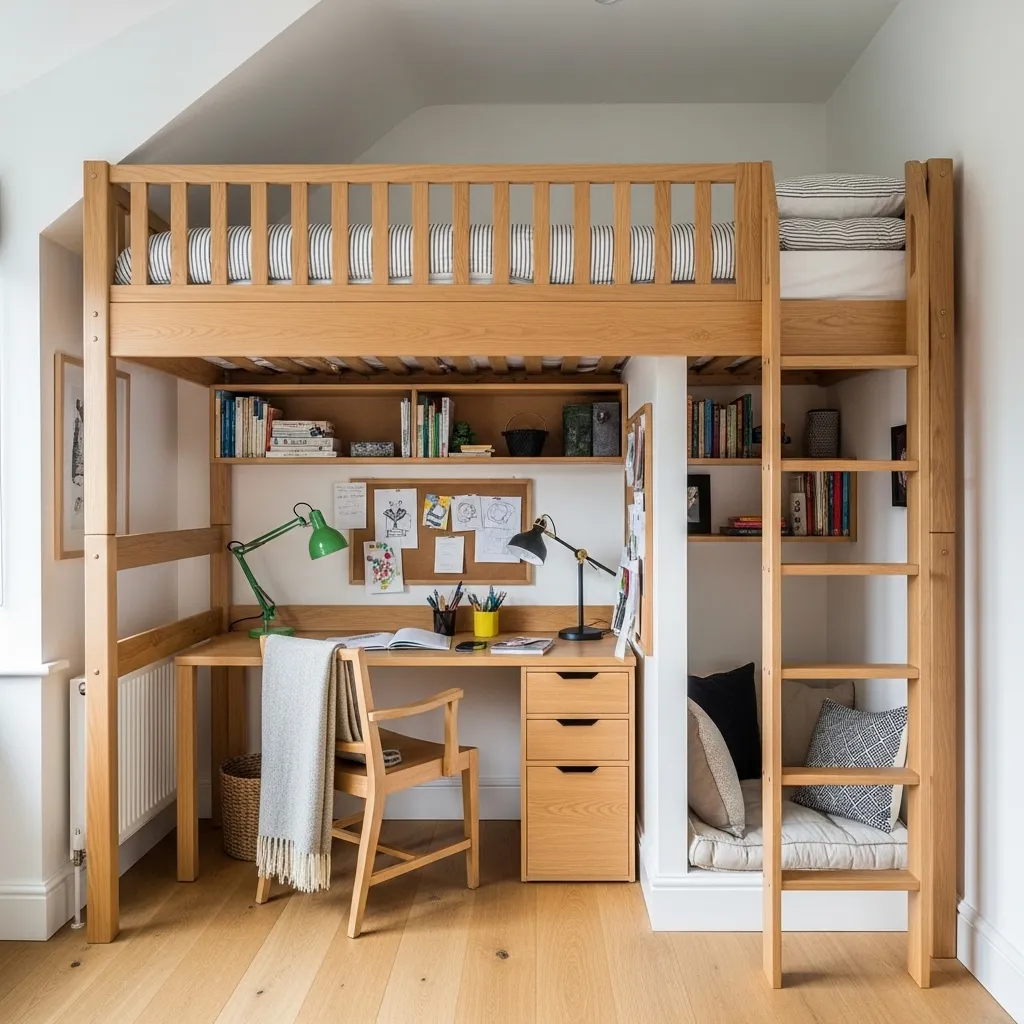
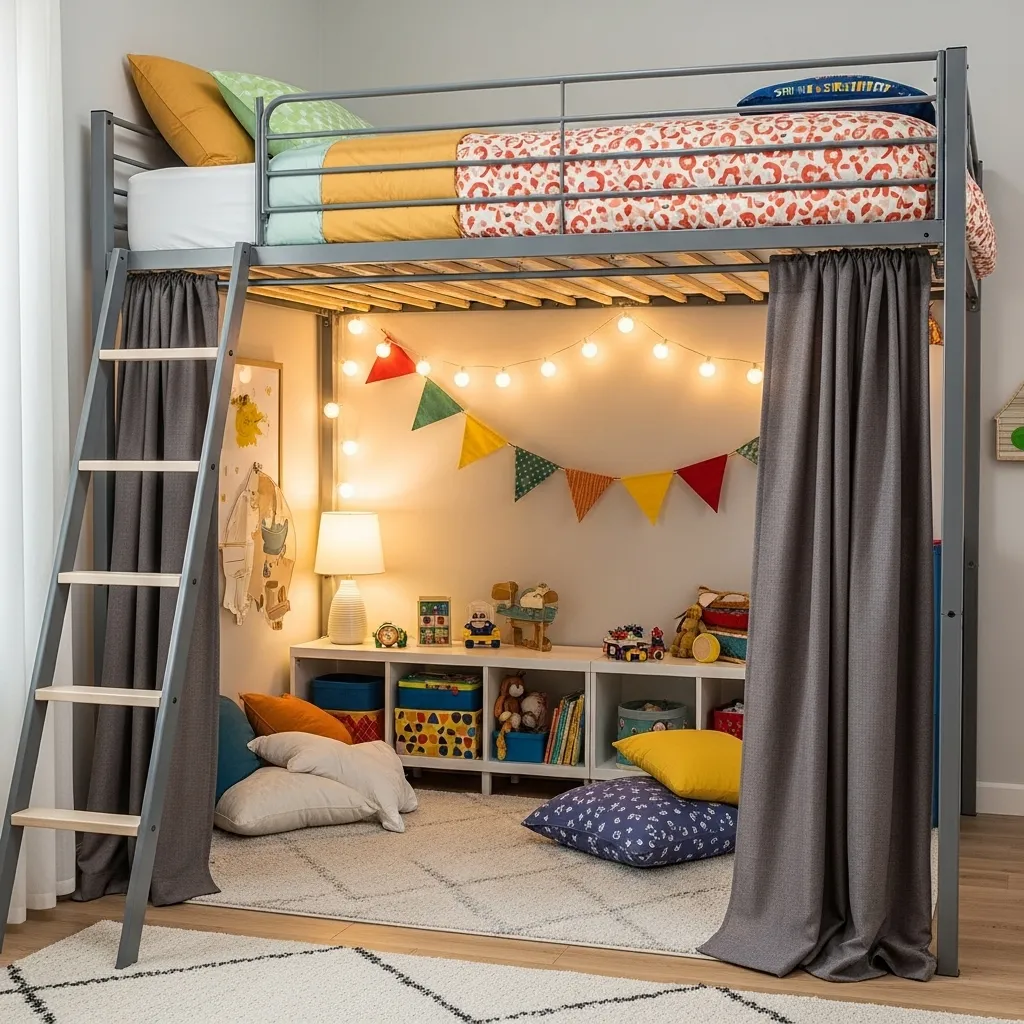
A loft bed that creates genuine usable space below is the children’s bedroom solution that best addresses the fundamental challenge of making a small room serve multiple purposes simultaneously — sleeping, studying, playing, and having personal space all have different spatial and atmospheric requirements that a single-level room has to juggle awkwardly, whereas a loft bed separates the sleeping zone vertically from the activity zones below and gives each zone its own distinct character and appropriate furnishing.
The desk under the loft is positioned perfectly for study because it’s naturally separated from the sleeping area above, creating a psychological distinction between the space where you rest and the space where you work that flat-room bedroom setups struggle to achieve. Children who study at a proper desk in a dedicated study zone — even a small one under a loft — consistently develop better study habits than children who do homework on the bed, and the spatial separation that the loft creates is one of the most practical and lasting contributions a bedroom design can make to a child’s daily functioning.
4. The Montessori-Inspired Floor Bed Bedroom
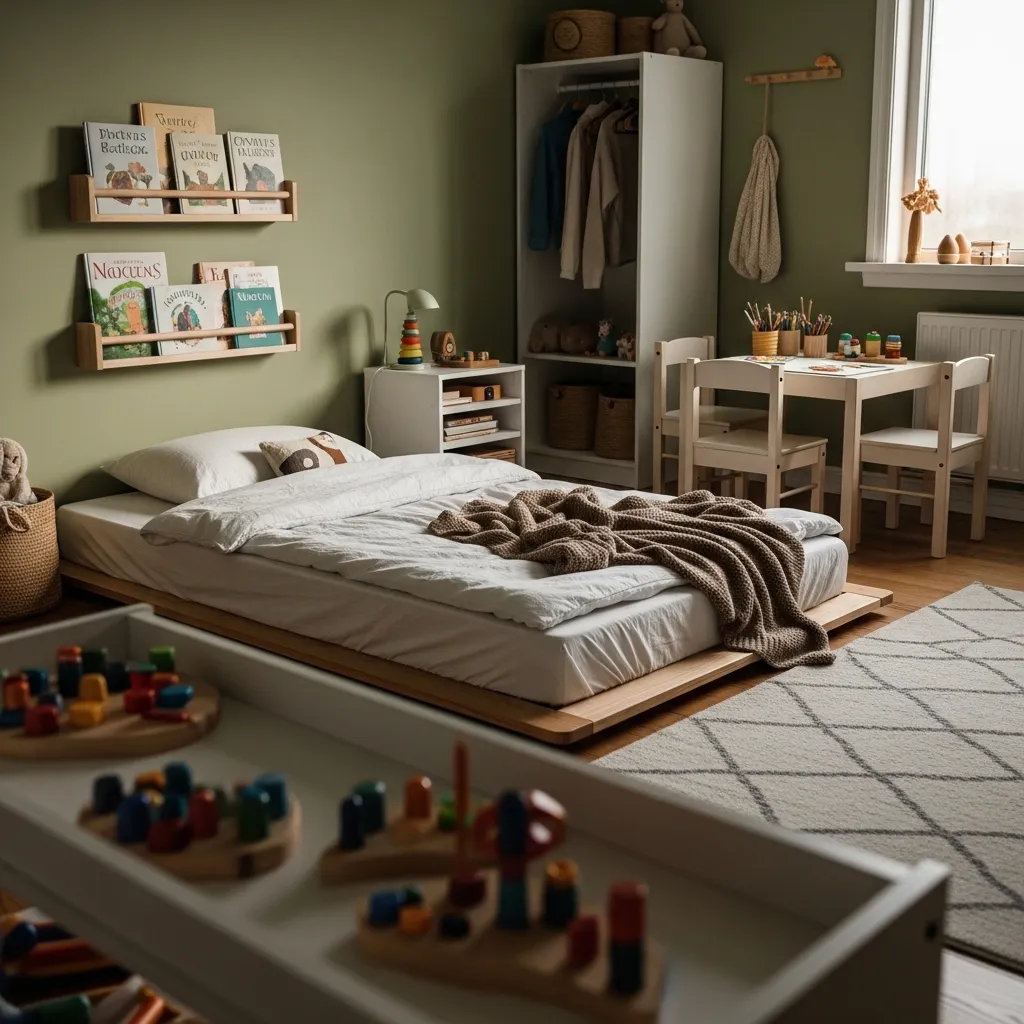
The Montessori-inspired floor bed bedroom is designed around a philosophy of childhood that takes children’s independence and self-determination seriously as values rather than just aspirational goals — every element of the room is placed and scaled for the child’s independent access rather than adult convenience, and the cumulative effect of a room that a child can fully navigate without assistance is a child who develops confidence, independence, and agency in their own space that transfers meaningfully into other areas of their life.
The floor bed specifically embodies this philosophy by allowing a child to get in and out of bed independently from the earliest age, to transition between sleep and waking on their own schedule rather than waiting for adult intervention, and to experience their sleeping space as continuous with rather than elevated above the rest of their room. The spatial equality of the floor bed — where the child at floor level and the bed are at the same height — is a small architectural gesture toward treating the child as a person with their own relationship to their space rather than someone who needs to be contained and managed.
5. The Adventure and Explorer-Themed Bedroom
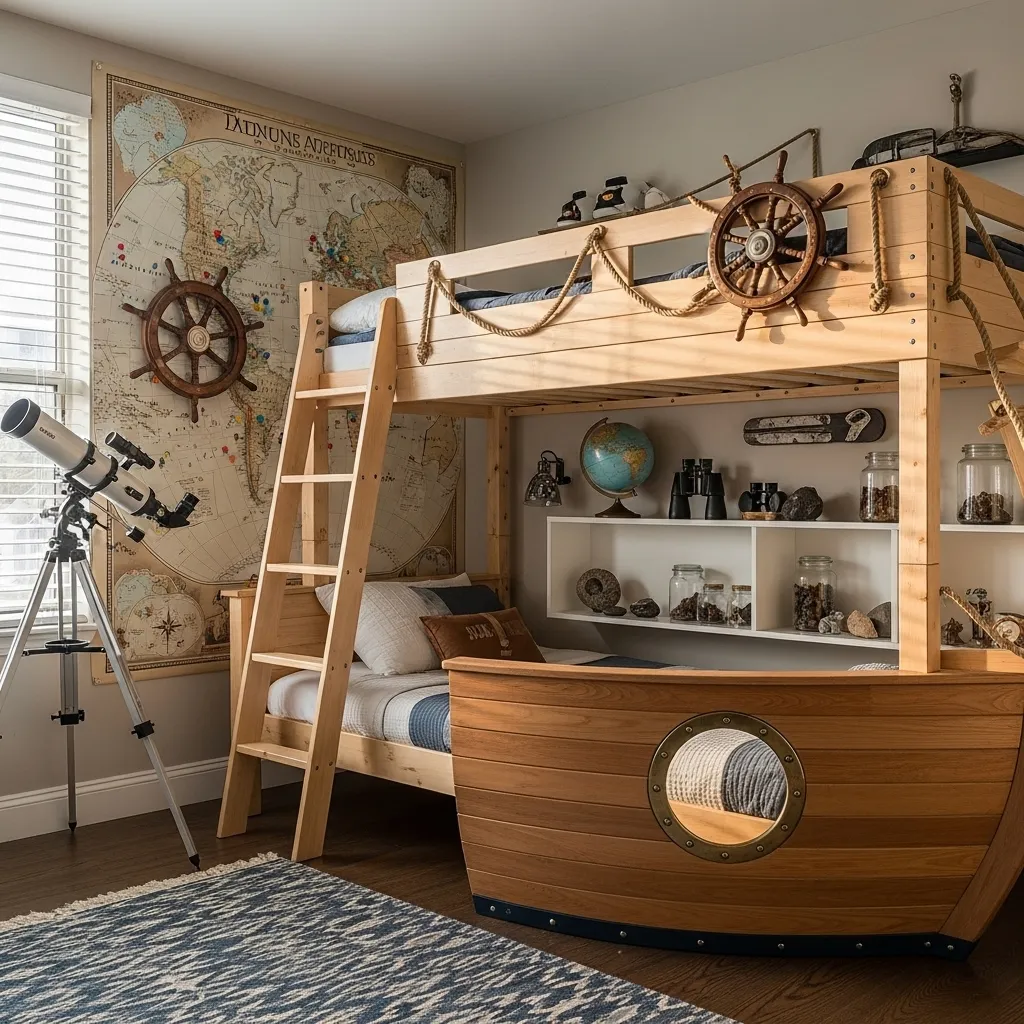
An adventure and explorer-themed bedroom designed around genuine curiosity — maps, telescopes, collected specimens, navigation instruments, natural objects — creates a space that actively encourages the qualities of curiosity, observation, and wonder that define the explorer mindset and that good education and good parenting are both trying to cultivate. The difference between a commercial theme bedroom and an explorer bedroom is the difference between consuming a story about adventure and actually inhabiting the tools and artifacts of adventuring, and children intuitively understand that distinction in how they engage with the space.
The world map as the primary wall feature is the design choice that makes the adventure bedroom intellectually genuinely rich rather than just aesthetically exciting — a child who falls asleep looking at a world map, who can trace ocean routes and identify mountain ranges and locate countries they’ve read about, is developing a spatial and geographical imagination that has real and lasting value. The map makes the bedroom a learning environment without the room ever feeling like a classroom, because the learning it invites is curiosity-driven and self-directed rather than prescribed.
6. The Creative Art Studio Corner Bedroom
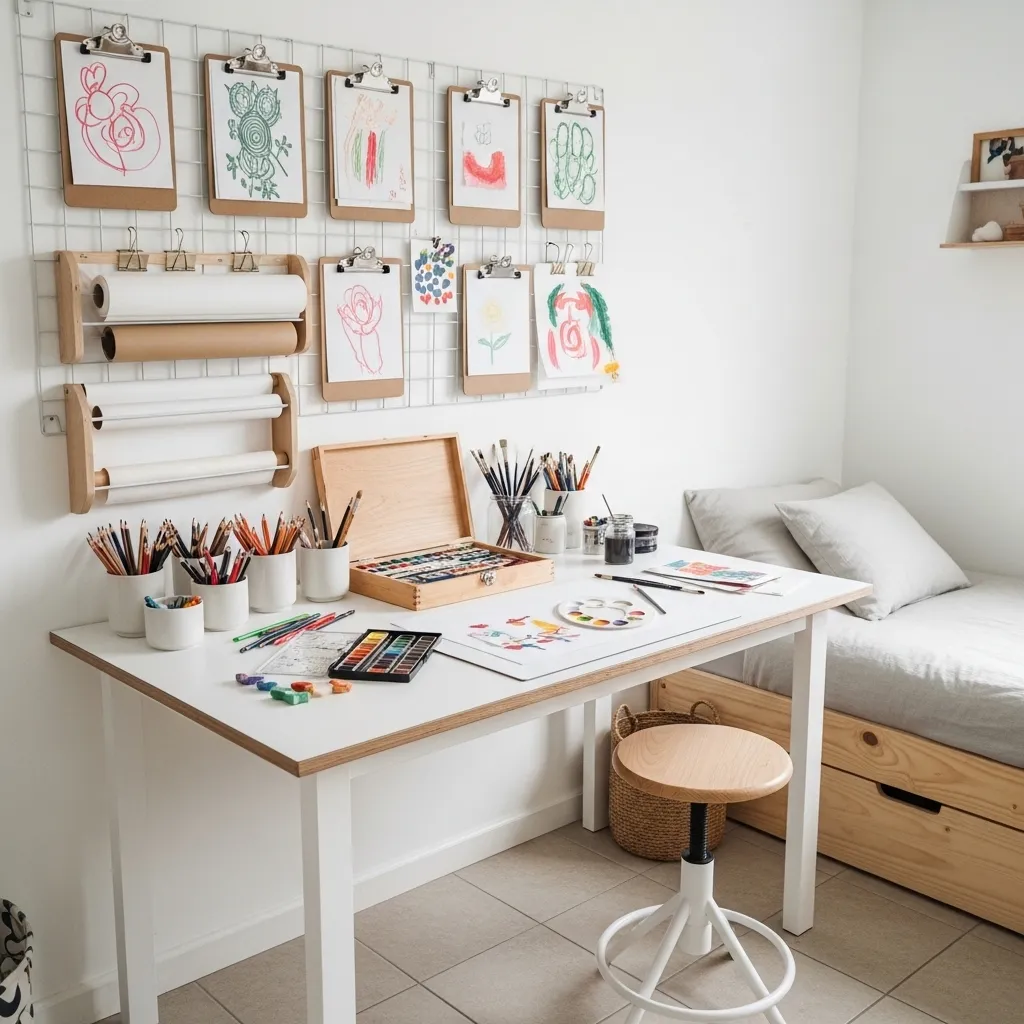
A dedicated art corner within a bedroom — with a proper work surface, organized supplies, and an immediate display system for finished work — communicates something deeply important to a creative child about the value of their making practice. When the supplies are organized and accessible rather than buried in a drawer or requiring adult retrieval, and when the workspace is dedicated and ready rather than requiring setup and breakdown each time, the barrier to beginning a creative session drops to essentially nothing and creative practice becomes something that happens spontaneously and regularly rather than only when conditions are managed.
The display system for the child’s own artwork is the detail that elevates an art corner from a functional workspace to a genuine studio — when the work a child makes is displayed with the same intentionality as gallery-hung art, framed in clipboards or suspended on wire with small clips, the message to the child is that their creative output has genuine value and deserves to be seen. That message matters deeply to creative children and contributes to the development of creative confidence that is one of the most valuable things a childhood bedroom environment can support.
7. The Nature and Forest-Inspired Bedroom
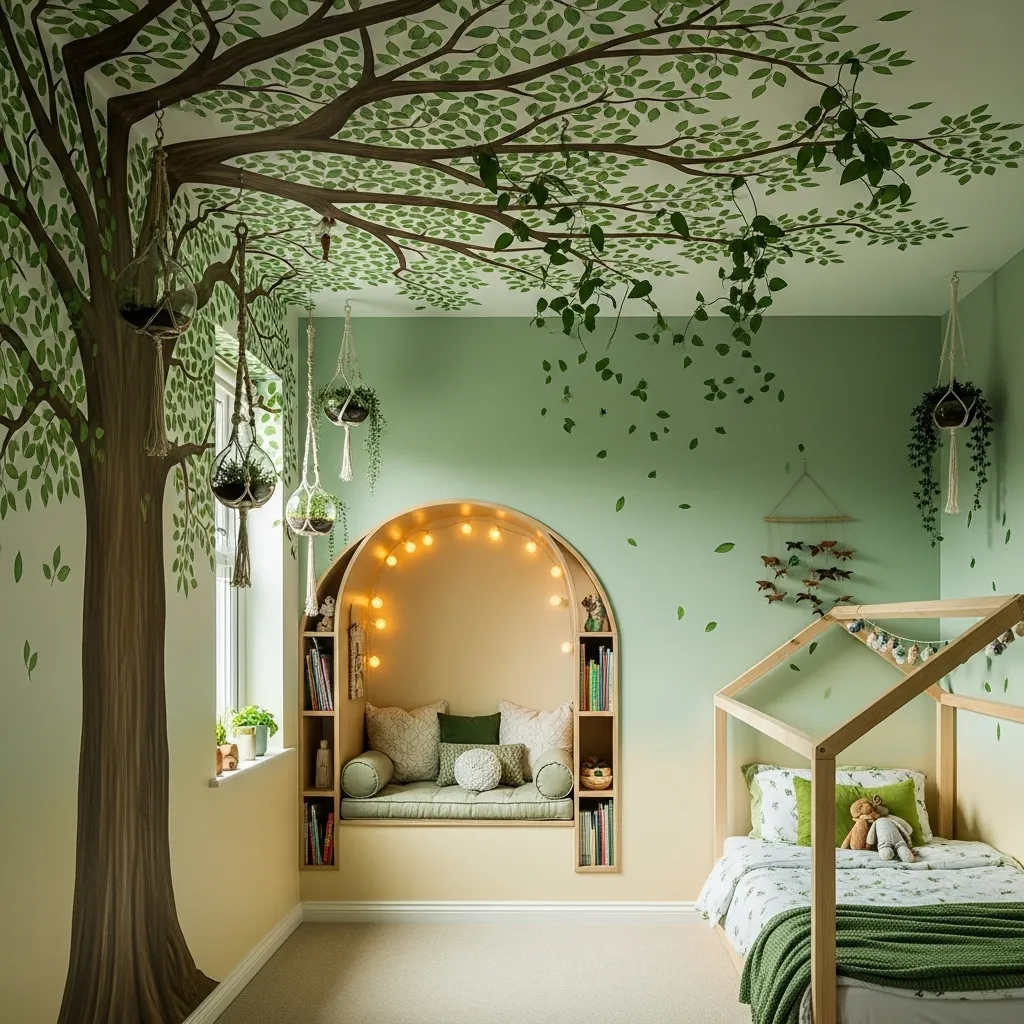
A forest-themed bedroom designed with botanical authenticity rather than cartoon simplicity creates an environment that children find genuinely calming and genuinely stimulating simultaneously — the natural color palette of greens and creams and warm browns has documented calming effects on the nervous system, while the richness of a well-painted tree mural with detailed leaves and hidden details provides the visual interest and discovery that children’s rooms need to be engaging rather than just pretty.
The reading nook built beneath the tree mural is the spatial detail that takes the nature theme from a design concept into a genuine lived experience — the enclosed nook beneath a painted tree canopy recreates the feeling of a natural hideout or treehouse in miniature, the kind of enclosed natural space that children instinctively seek out and play in outdoors. Bringing that spatial experience indoors through careful architecture and painting creates a reading environment with a specific quality of sheltered naturalness that supports deep, focused, voluntary reading in a way that a chair beside a bookshelf cannot match.
8. The Maximalist Color and Pattern Bedroom
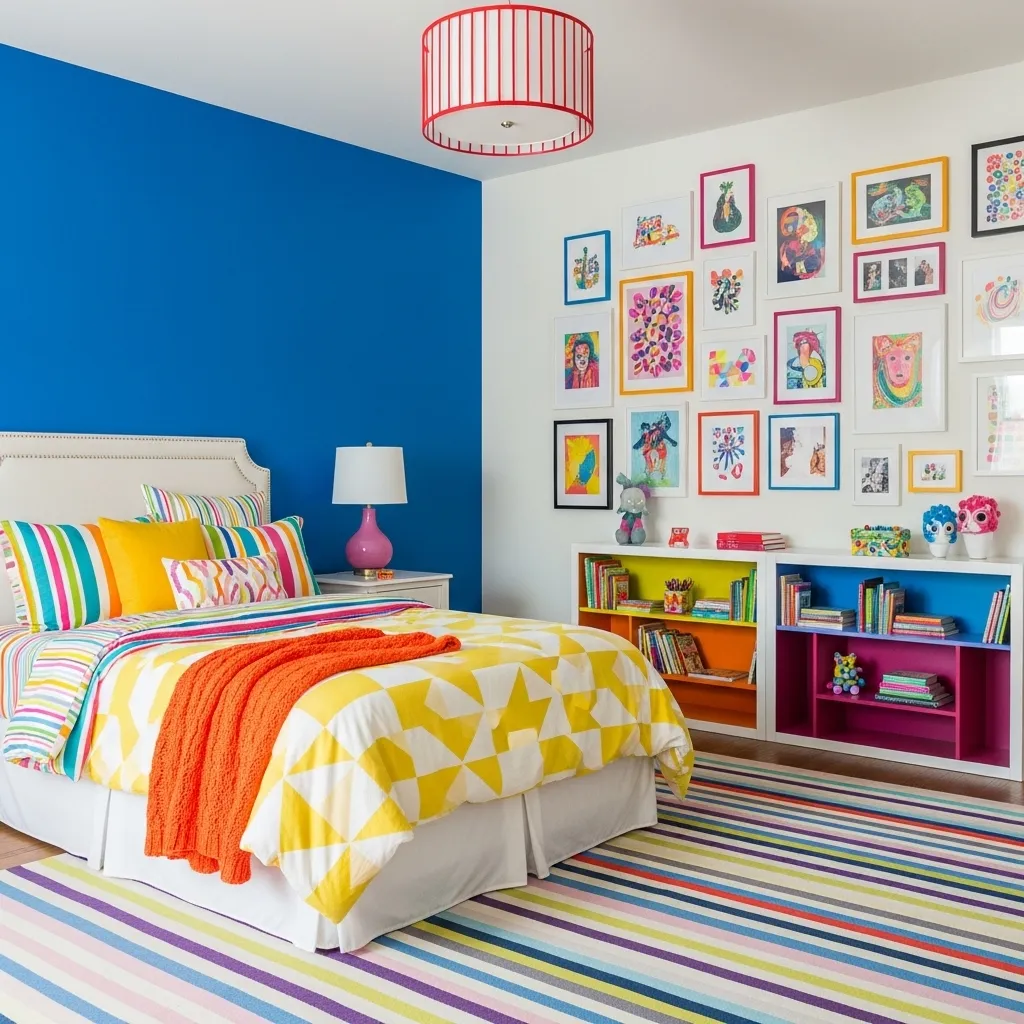
A maximalist, fully colored children’s bedroom designed without apology for its abundance of pattern and hue is the room for the child whose personality is itself maximalist — the child who fills every piece of paper to the edges when drawing, who wears the most colorful outfit they own every single day, who finds beauty in accumulation and richness and visual abundance rather than in restraint. For that child, a bedroom designed in their true aesthetic language is more than just a pleasant room — it’s a space that feels like genuine permission to be exactly who they are, and that quality of acceptance expressed through design is one of the most powerful gifts a room can give.
The rainbow bookshelf — each shelf painted a different color of the visible spectrum — is the furniture piece that’s both practically useful and genuinely playful, and it creates a natural organizational system where the child can find books by the color of the shelf they belong to rather than needing to remember a more abstract organizational principle. Organization systems that align with how children actually think and perceive are the ones that children actually maintain, and a color-organized bookshelf is one of the best examples of design that serves children’s cognitive style rather than asking children to adapt to an adult organizational logic.
9. The Cozy Hygge-Inspired Children’s Bedroom
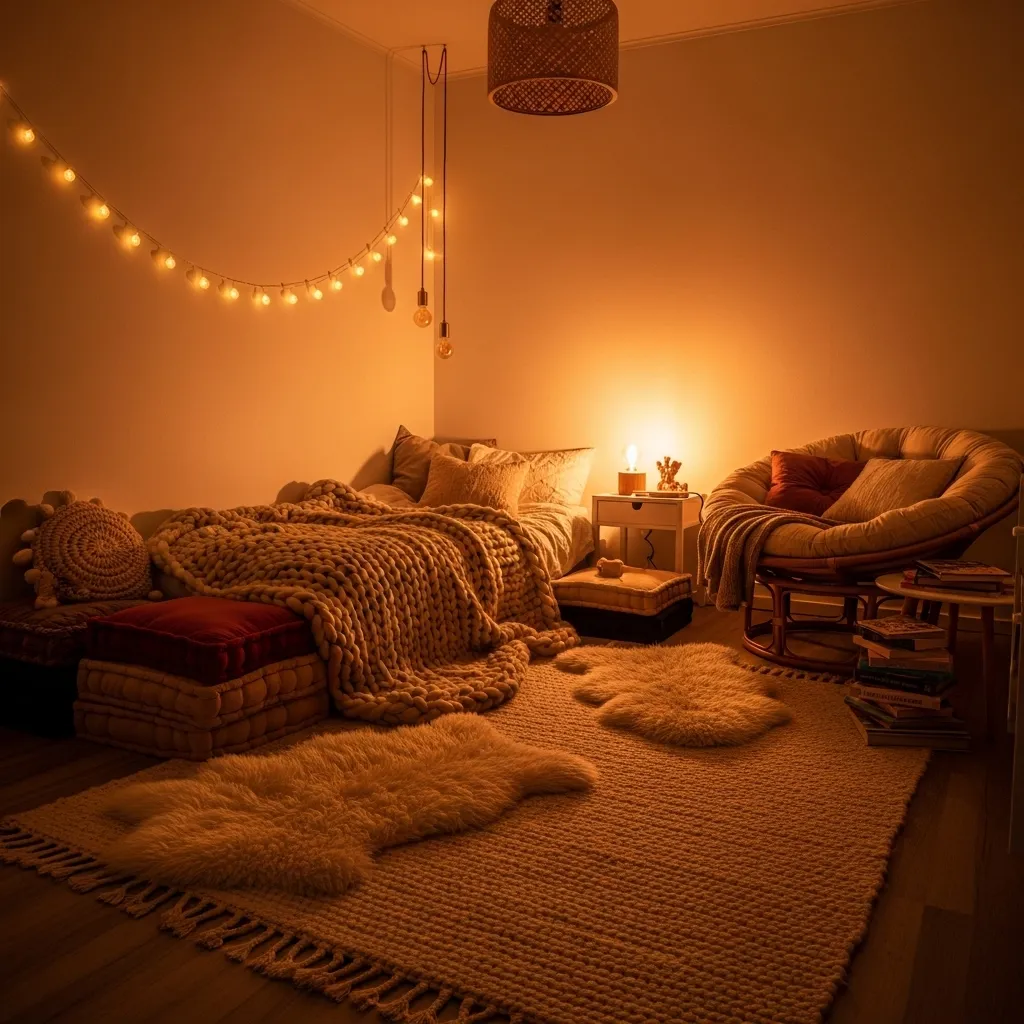
A hygge-inspired children’s bedroom — designed specifically around the quality of physical warmth, soft texture, gentle light, and contained comfort — creates the conditions for the kind of deep, self-directed rest and quiet play that children need in order to process the stimulation of their days and develop the capacity for independent calm that busy modern childhoods often struggle to support. A room that feels genuinely cozy and physically comfortable invites the child to stay in it, to read in it, to do quiet things in it, rather than always seeking stimulation and activity elsewhere.
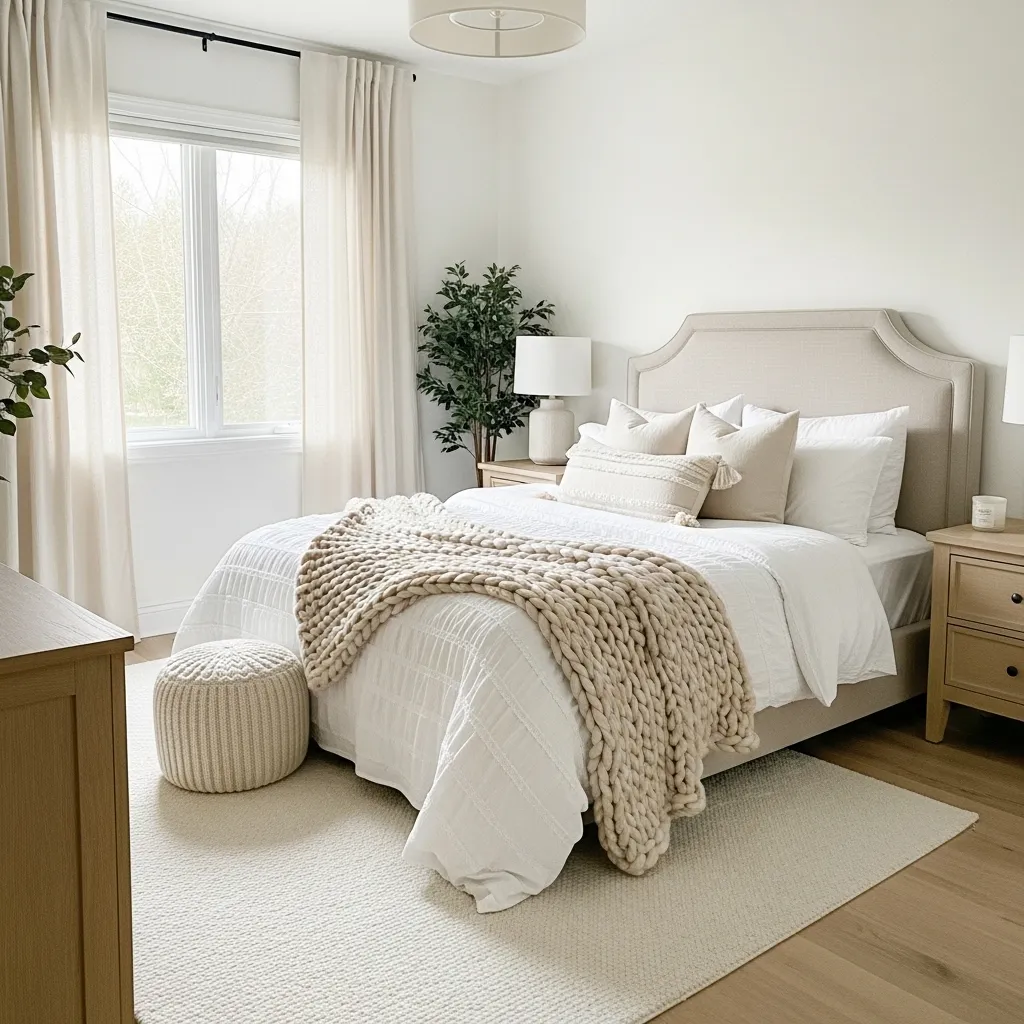
The specific textures of a hygge bedroom — the chunky knit blanket, the fluffy rug, the papasan chair with its deep cushion, the soft lamplight rather than overhead fluorescents — all contribute to a sensory environment that signals safety and comfort at a very fundamental physical level. Children are more physically attuned to their environments than adults in many ways, and the tactile warmth of soft, heavy textiles combined with warm, low-level lighting creates a room that the nervous system recognizes as genuinely restful in a way that cool, hard, bright rooms simply don’t.
10. The Shared Bedroom for Siblings Done Well
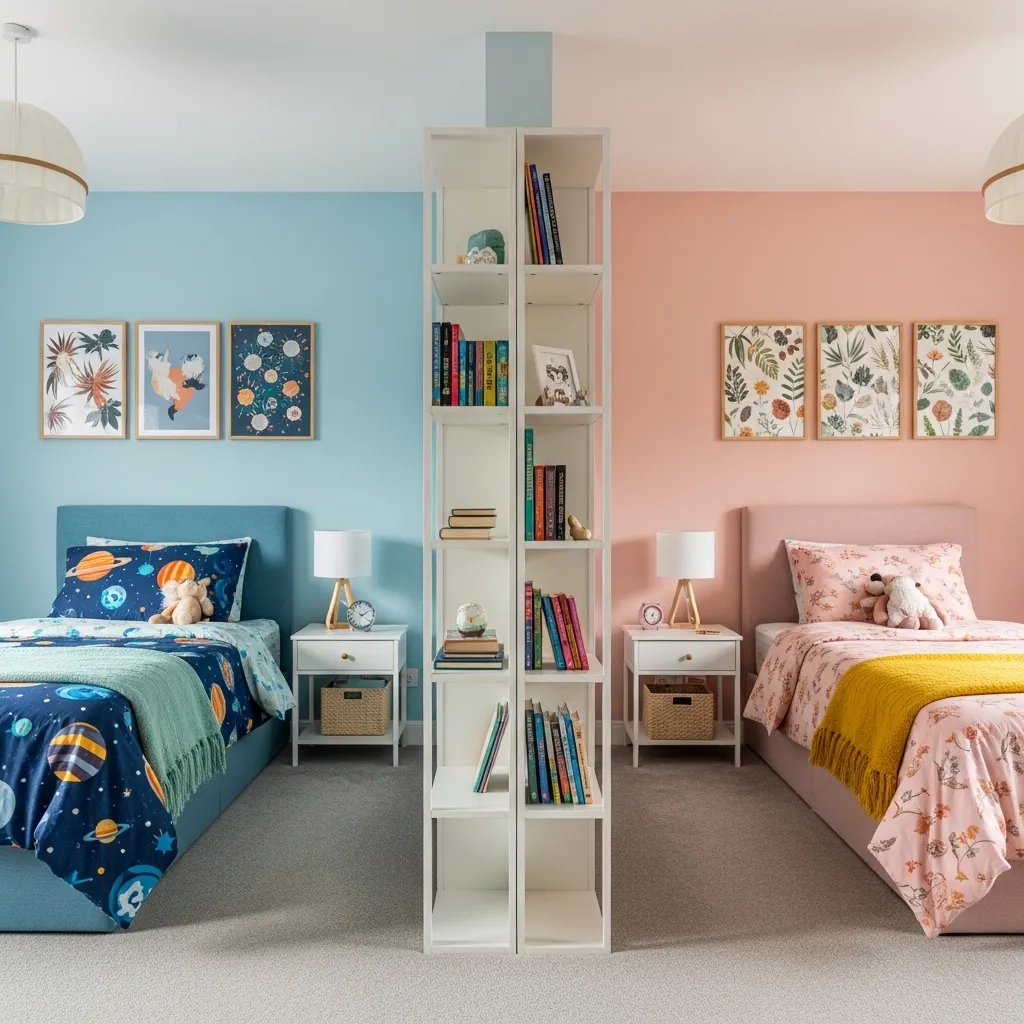
A shared bedroom designed with genuine respect for each child’s need for personal territory — their own aesthetic, their own storage, their own wall space, their own zone — creates a shared living situation that children can inhabit cooperatively rather than contentiously. The single biggest source of conflict in shared children’s bedrooms is the feeling of invasion — of one child’s things, space, or aesthetic encroaching on the other’s — and a design that creates clear, respected zones for each child removes most of the spatial grounds for conflict before it begins.
The bookshelf room divider is the design solution that achieves zone separation without requiring architectural modification — it creates a visual and spatial boundary that both children recognize and respect because it has physical presence, while also serving as shared storage accessible from both sides and keeping the room feeling like one cohesive space rather than two separate rooms awkwardly sharing a floor plan. The children’s bedroom designed around their actual needs for both shared space and personal territory is the one that functions happily for the years they share it.
11. The Sports and Active Life Bedroom
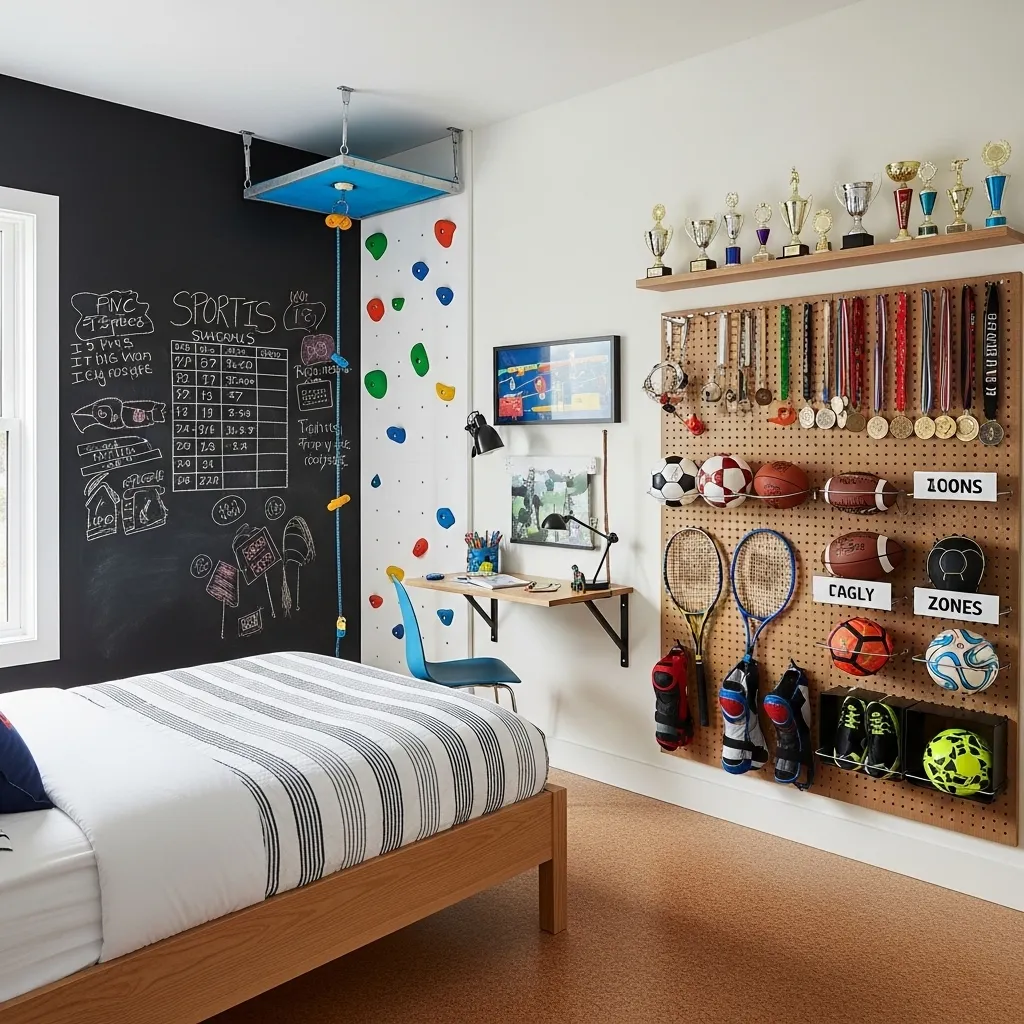
A sports-themed bedroom that expresses genuine athletic interest through functional design — the climbing wall, the equipment storage, the chalkboard for scores and planning — rather than through licensed merchandise and themed decor creates a space that respects the child’s passion as a genuine life practice rather than a consumer identity. The difference matters to children more than adults often realize, and a room that treats sport as something you actually do rather than something you buy creates a different and better relationship between the child and their sporting life.
The climbing wall panel in a children’s bedroom is the physical activity feature that provides the most daily use and the longest lasting value of any active bedroom addition — children climb it in the morning before school, after school before homework, before bed as a final energy release, and on weekends when the weather is poor. The physical confidence and upper body strength that regular climbing practice builds is genuinely significant, and having that practice available in the bedroom means it happens daily as a natural part of the room’s use rather than requiring a special trip somewhere.
12. The Teenage Transition Bedroom
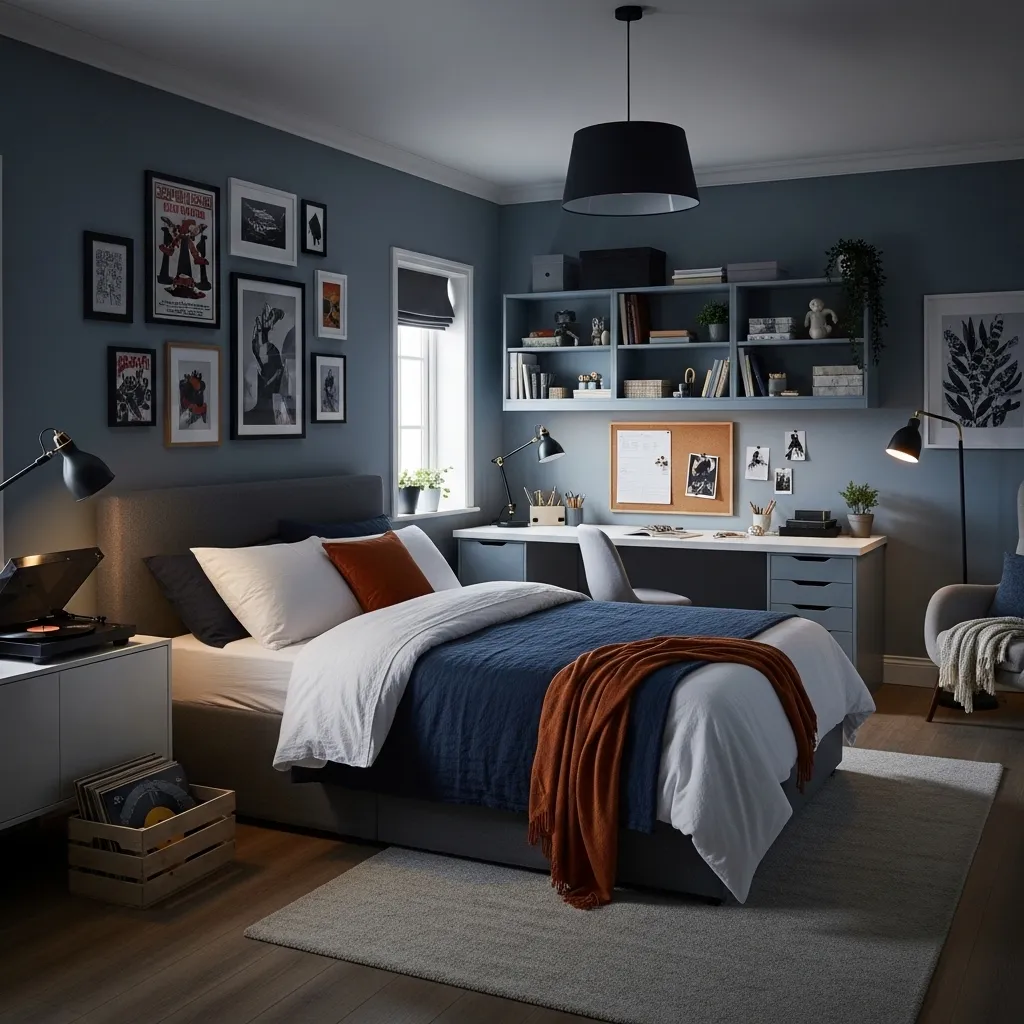
The transition from child’s bedroom to teenager’s bedroom is one of the most significant design moments in a child’s life precisely because it’s one of the first opportunities for a young person to exercise genuine authority over their own environment and to have that authority respected by the adults in their life. A bedroom redesign that happens in genuine collaboration with the emerging teenager — taking their aesthetic preferences and their changing activity needs seriously — communicates respect for their developing identity in a way that has genuine psychological value beyond the design itself.
The practical needs of a teenage bedroom differ substantially from those of a younger child — a proper study desk that supports hours of homework and online learning becomes genuinely important, space for personal collections and creative projects that express developing identity matters more, and the social dimension of a space that can host a friend or two comfortably becomes relevant. Designing for these actual changing needs rather than simply updating the decor while keeping the room’s functional organization the same is what makes a teen bedroom transition feel like a genuine recognition of growth rather than a cosmetic update.
13. The Outdoor and Adventure Reading Nook Bedroom
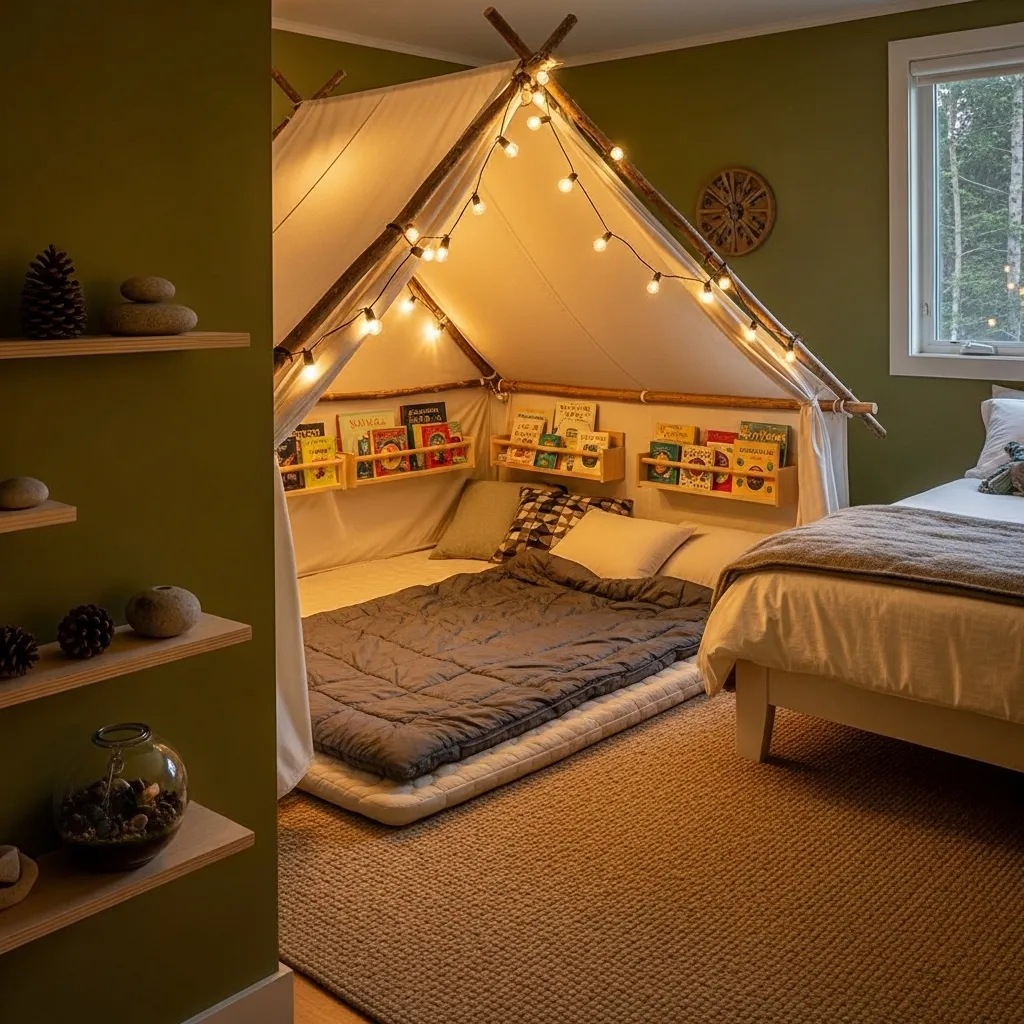
A reading nook built to resemble a camping tent or outdoor shelter brings the specific quality of outdoor adventure into the bedroom in a way that genuinely transforms how children inhabit their reading space — the enclosed, slightly wild quality of a tent nook creates the psychological atmosphere of adventure and discovery that makes reading feel like an expedition rather than a quiet activity, and that reframing of reading as an adventure is one of the most valuable associations a bedroom can build in a child who is developing their relationship with books and reading.
The specific appeal of an enclosed reading space with its own lighting is deeply connected to children’s instinctive preference for spaces that feel both private and cozy — the tent nook satisfies the same need as the blanket fort that children construct spontaneously, but does so permanently and beautifully, making the experience of having a private, enclosed, book-filled retreat available at any moment rather than requiring construction and deconstruction. A child who has this space available is a child who will use it regularly and voluntarily, and that voluntary, regular reading time is worth more than any educational intervention in developing a lifelong reader.
14. The Gallery and Creative Display Bedroom
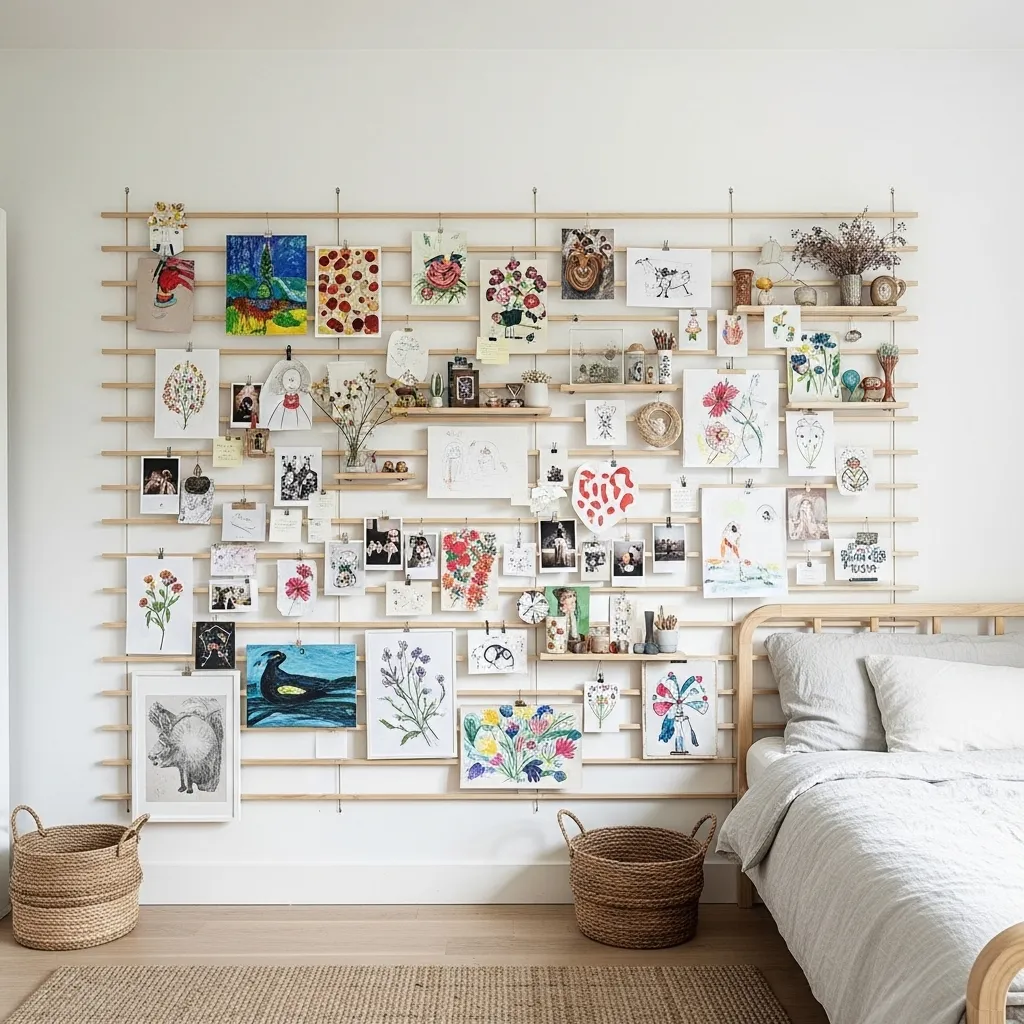
A bedroom organized around the display of a child’s own creative work as the primary decoration — where the walls are genuinely covered in things the child made rather than things purchased to hang on them — creates a profoundly different relationship between the child and their room than a conventionally decorated bedroom creates. When the room reflects the child’s own creative output rather than a designer’s or manufacturer’s vision of what a child’s room should look like, the child experiences genuine ownership of the space in the deepest sense — this is not just my room, this is a room that is made of me, that shows who I am and what I make and what I find interesting.
The modular display system — the wall of wooden slats that allows artwork to be added, moved, and updated without damage to walls — is the infrastructure that makes this living gallery practical over years and years of changing output and changing interests. The display can evolve with the child, with the primary school paintings gradually replaced by middle school photography and then by teenage graphic design or writing, always reflecting the current creative self of the person living in the room. It’s the bedroom that grows the most gracefully of any idea on this list precisely because it’s designed to change and because those changes are the point.