15 Ways to Decorate Your Study Table That Make You Actually Want to Sit Down and Work
If your study table has been functioning as a flat surface for piling things rather than a genuinely pleasant place to think and create and work — if it’s the desk you use because you have to rather than the desk you go to because it feels good to be there — this roundup is going to change how you think about what a study table can be, because the difference between a desk that feels like a chore and a desk that feels like a destination is almost entirely in the details surrounding the work surface itself. The ideas here cover everything from creating a lush plant corner that makes the desk feel alive, to building a curated pegboard organization system above the surface, designing a layered lighting setup that makes everything look beautiful at any hour, styling a thoughtful vignette of meaningful objects, creating a proper book display, adding a vintage or antique element that gives the desk personality, developing a cohesive color story across all your desk accessories, incorporating texture through natural materials, building a vision board or inspiration wall behind the desk, using art prints to anchor the space visually, and several more approaches that treat the study table as a designed environment rather than a functional surface with stuff on it.
I spent most of my student and early working life at desks that were either relentlessly utilitarian — a flat surface, a chair, a lamp, nothing else — or chaotically over-accumulated with the debris of months of work without any organizational intentionality. Neither extreme felt good. The utilitarian desk felt cold and uninspiring, the kind of space where work was a duty rather than a pleasure. The chaotic desk felt overwhelming and anxiety-inducing, where the visual noise of unmanaged objects competed with the mental work that needed to be done. The desk that actually worked — the one I designed deliberately for the first time in my late twenties, with real thought about what should be on it and why — felt completely different from the first day, and the quality of the work I did at it improved in ways that I’m fairly certain were related to the quality of the environment I’d created for doing it.
What I’ve come to understand about study table decoration is that it’s not really decoration in the ornamental sense — it’s environment design. Every object on or around a desk either contributes to or detracts from the quality of focus, the emotional state, and the practical functioning of the person working there. The most beautiful desk setups are the ones where every element has been chosen not just for how it looks but for how it makes the desk feel to be at, and those two criteria — aesthetic and felt experience — are more closely connected than they might initially seem.
1. Build a Lush Plant Corner
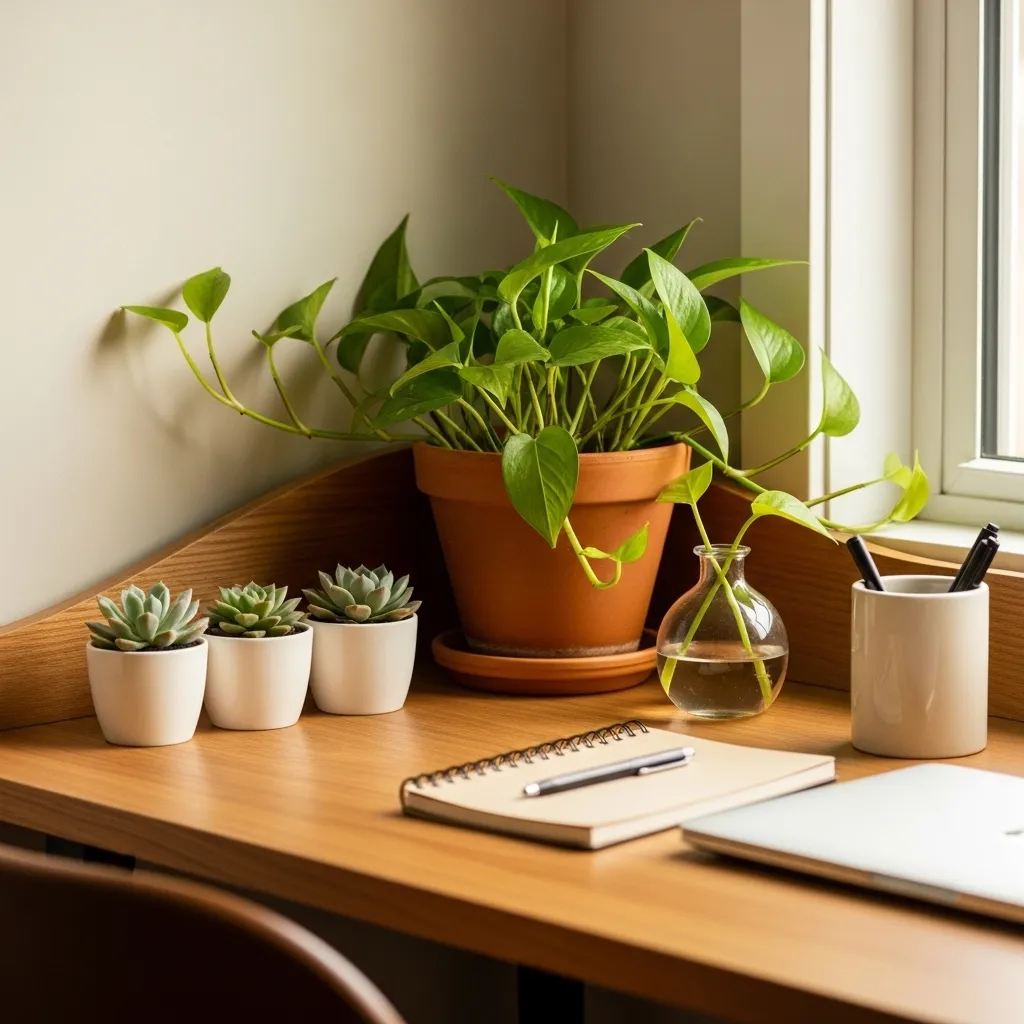
A dedicated plant corner on a study table creates something that no other desk accessory can provide — a small living ecosystem that changes slowly over time, that responds to the light and conditions of the workspace, and that creates a quality of organic presence at the desk that genuinely affects the atmosphere of working there. Research consistently supports what most people know intuitively: having living plants visible while working reduces stress, improves mood, and increases the sense of wellbeing at the desk. The plant corner is functional decoration in the most direct sense.
The pothos is the ideal primary plant for a desk corner because it grows enthusiastically in the moderate light conditions of most study setups, trails beautifully over the desk edge or beside the monitor, tolerates the dry air of heated rooms and air conditioning, and communicates its watering needs clearly without dramatic overreaction. A well-placed pothos on a desk grows visibly over weeks and months in a way that creates a satisfying sense of the desk as a living environment rather than a static one, and that sense of growth and change is one of the most quietly motivating qualities a study space can have.
2. Create a Layered Lighting Setup
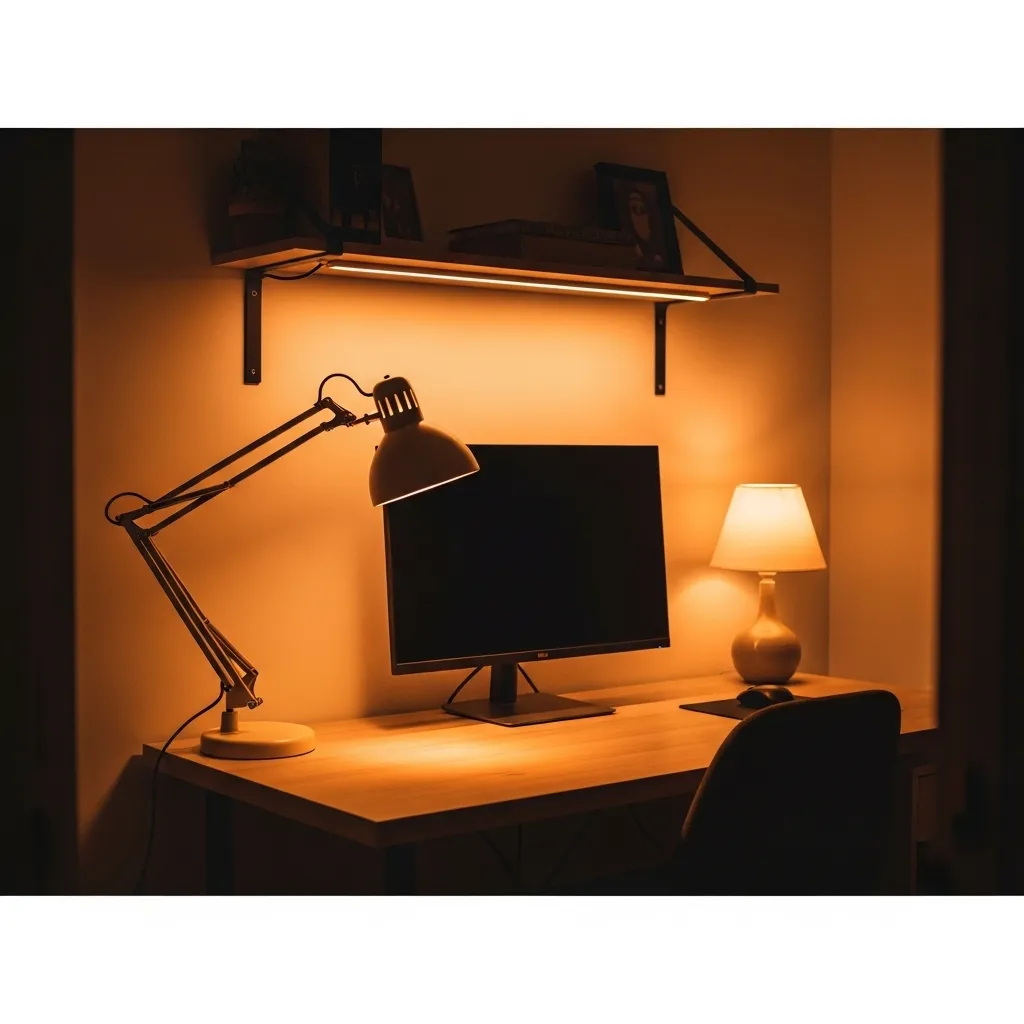
Layered lighting at a study desk — combining task lighting for the work surface, ambient lighting for the surrounding space, and accent lighting for atmosphere — creates a completely different quality of light environment from the single overhead fixture or single desk lamp that most desks rely on. The layering principle is the same one that makes professionally lit spaces feel so much better than domestically lit ones: multiple light sources at different heights and intensities eliminate the harsh shadows that single-source lighting creates and produce a warm, dimensional illumination that makes the space feel genuinely pleasant to be in rather than adequately lit.
The LED strip light mounted under a shelf or cabinet above the desk is the specific addition that most transforms a basic desk setup into something that feels designed and atmospheric — the warm backlight it creates on the wall behind the monitor reduces eye strain by eliminating the high-contrast between a bright screen and a dark surrounding wall, and it creates a warm halo effect around the workspace that reads in photographs as the signature of a beautifully styled desk setup. It’s the ten-dollar upgrade with the highest visual return on any desk.
3. Design a Pegboard Organization System
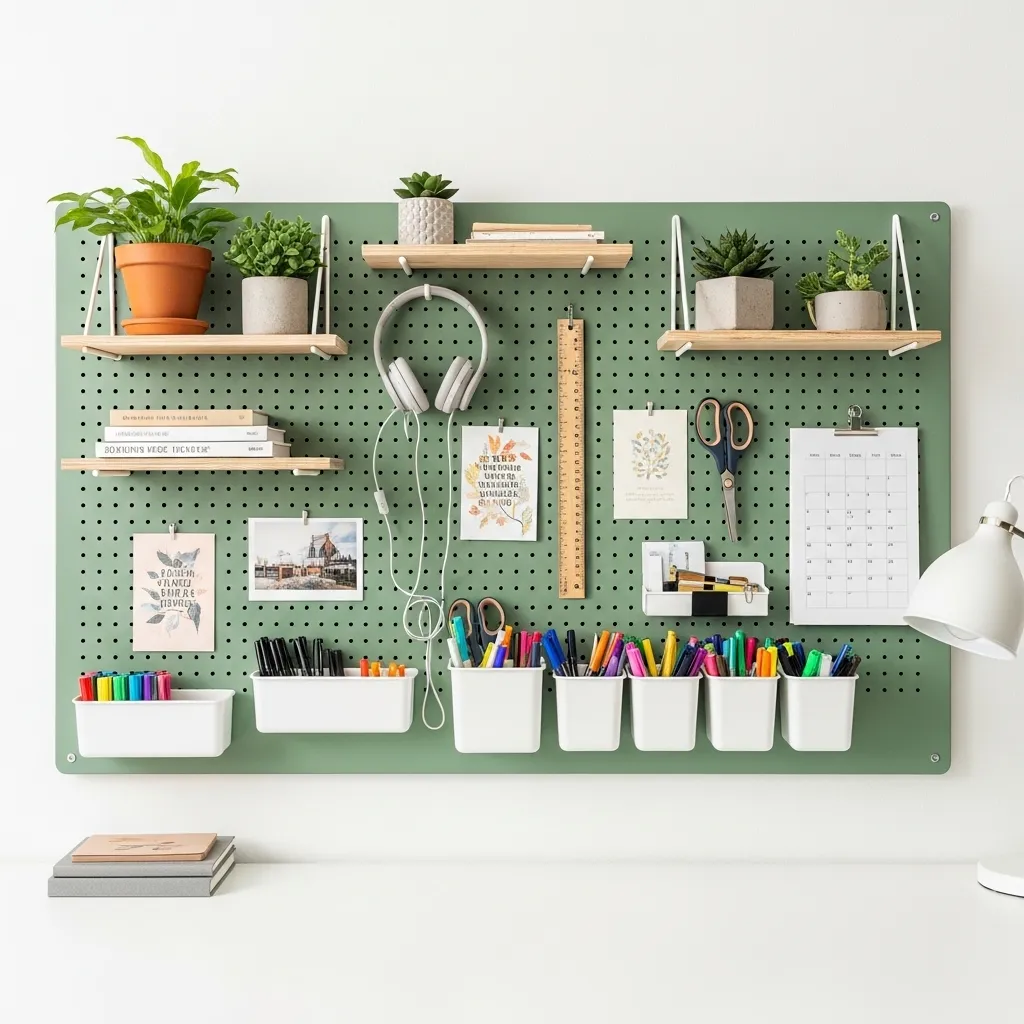
A pegboard above a study desk is the organizational system that works best for creative and academic desk users who need genuinely varied supplies accessible immediately without cluttering the desk surface itself — by mounting everything used regularly on the wall above the desk, the horizontal work surface remains clear for the actual work while everything needed is within arm’s reach on the vertical surface above. The pegboard turns dead wall space above the desk into the most organized and most visually interesting element of the whole setup.
The color of the pegboard is the design decision that most determines whether the system feels like a design feature or a garage storage solution — a painted pegboard in a considered color (sage green, deep navy, warm terracotta, dusty rose, matte black) immediately signals that aesthetic consideration went into the system rather than just functional thinking. The accessories chosen for the pegboard matter equally — a mix of wooden shelves, metal hooks, and small bins in cohesive finishes creates a system that looks curated and considered rather than industrial and utilitarian.
4. Curate a Meaningful Object Vignette
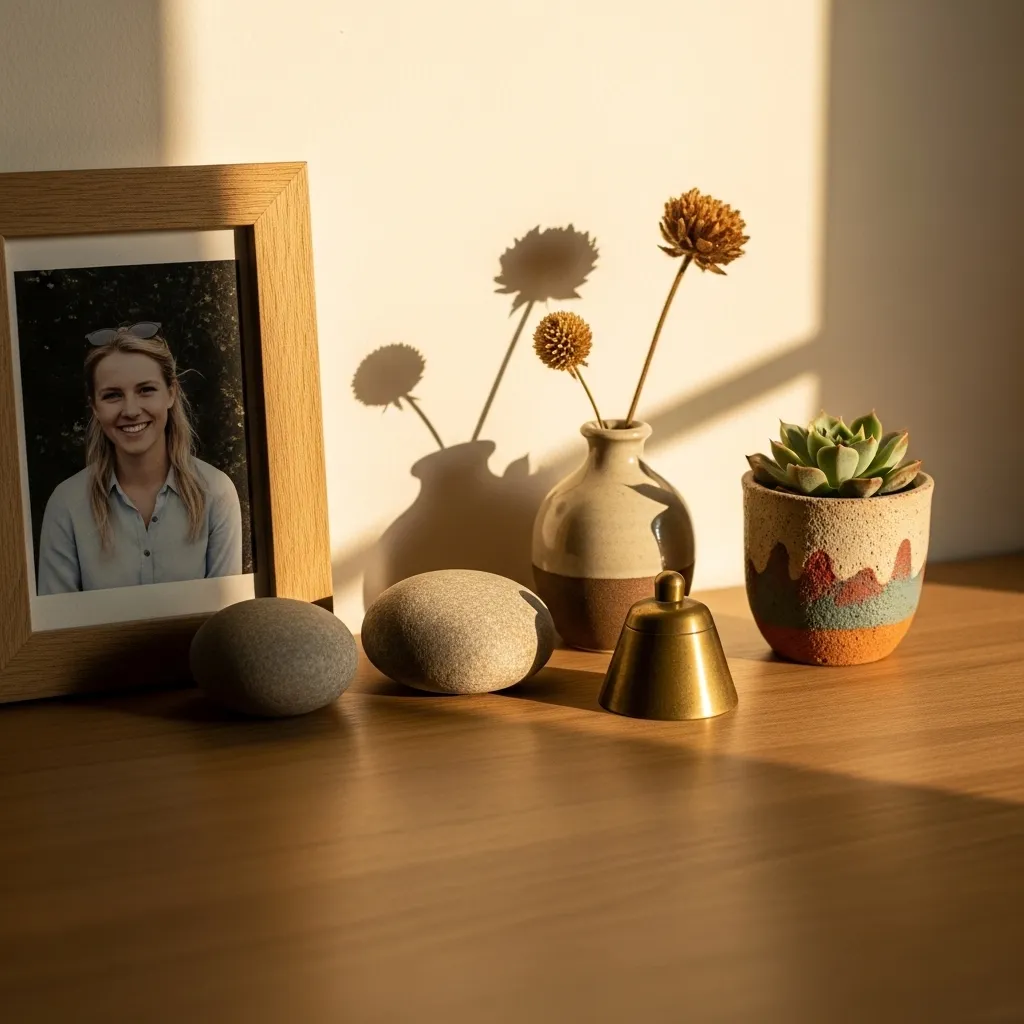
A curated desk vignette — a small, carefully composed grouping of objects that have personal meaning or sensory beauty — is the study table element that most distinguishes a desk that’s been thought about from one that’s merely functional. The vignette creates a small visual rest point within the work environment, a corner of the desk that’s specifically not about productivity but about the particular quality of beauty and meaning that surrounds you while you work. Looking up from a screen toward a small composition of objects you love is a different experience from looking up toward a pile of papers or an empty wall, and that small difference in what you see in your peripheral vision and in your rest glances accumulates into a meaningfully different working experience over hours and days and years.
The discipline of limiting the vignette to five or six objects maximum is the rule that keeps it feeling like a composed scene rather than clutter in a specific location — more objects and it becomes an accumulation, fewer and it lacks the relational quality between objects that makes a vignette work as a composition. Each object should earn its place through genuine beauty, tactile interest, or personal meaning, and the arrangement should create visual hierarchy with one object clearly dominant (the framed photograph, the larger ceramic vessel) and the others supporting it.
5. Create a Proper Book Display
Books displayed beautifully on and around a study desk are the desk decoration with the highest intellectual and atmospheric payoff — they communicate something specific about the person working there, they create visual warmth through the varying colors and textures of their spines, and they serve as a constant, ambient reminder that thinking and reading and learning are the activities this space is dedicated to. A desk surrounded by books feels like a place where ideas live, and that feeling — whether or not it’s consciously registered — affects how you sit down at the desk and what you bring to the work you do there.
The cover-out book display is the specific technique that makes books both decorative and genuinely engaging — when covers face outward rather than spines, you see the actual content of each book rather than just its title in small text, which creates a more visually interesting display and keeps you in an active, interested relationship with the books rather than treating them as background objects. A small book ledge that displays six or eight books cover-out above the desk creates a changing gallery of ideas that can be rotated with the seasons of reading and working.
6. Add a Vintage or Antique Element

A single vintage or antique element among contemporary desk accessories creates the most character-rich and most visually interesting desk composition because the contrast between old and new highlights the quality of each — the patina of an old brass lamp looks more beautiful next to a clean modern notebook than it would surrounded by other antique objects, and the clean lines of modern accessories look more considered next to an object with genuine history and craft behind it. The mix creates a desk that tells a story about the person using it rather than one that looks like it was assembled from a single collection.
The vintage desk lamp is the element with the highest double return — it contributes aesthetically while serving the most important practical function at the desk, providing task lighting that a beautiful lamp makes genuinely pleasurable rather than merely functional. A well-chosen vintage lamp in brass or adjustable steel from the mid-century period is typically both more beautiful and more functionally useful than most contemporary equivalents, and the investment in finding the right one pays back in daily visual pleasure that a new lamp purchased for its specifications doesn’t provide.
7. Develop a Cohesive Color Story
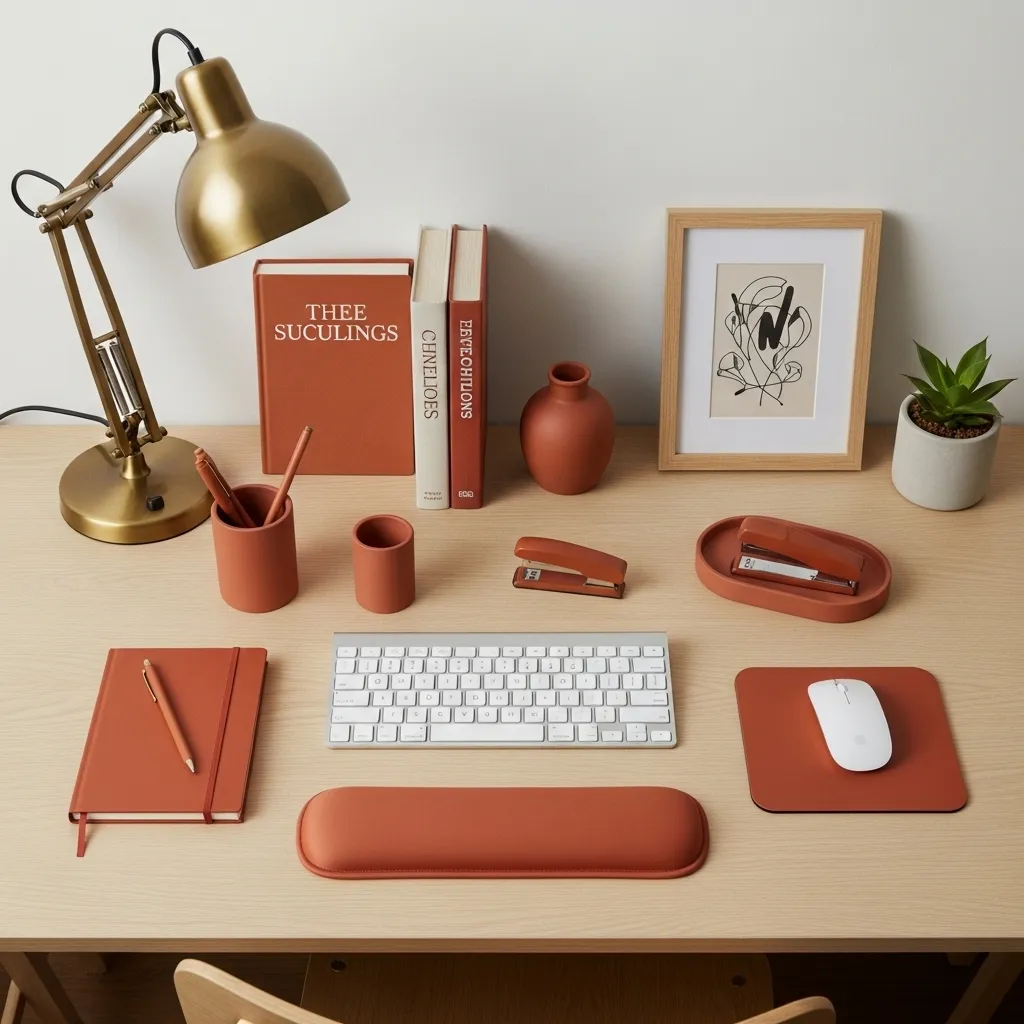
A deliberately cohesive color story across all desk accessories is the styling approach that most immediately transforms a study table from a collection of individually adequate objects into something that looks genuinely designed — the consistency of palette makes the eye read the desk as a composed whole rather than a set of separate things that happen to share a surface, and that quality of visual coherence communicates intention and care in a way that randomly colored accessories never do regardless of their individual quality.
The practical method for achieving a cohesive desk color story is to choose three tones — one dominant, one secondary, and one accent — and then be genuinely disciplined about replacing any object on the desk that falls outside those tones. The discipline is the hard part, because it means sometimes replacing a perfectly functional object that doesn’t fit the palette, but the visual result of that discipline is so dramatically better than the alternative that the replacement consistently feels worth it. A consistent desk palette doesn’t have to be expensive to achieve — repainting a pen holder, replacing a mouse pad, choosing a new notebook in the right color are small individual investments that add up to a transformed desk when they’re all pulling in the same direction.
8. Incorporate Natural Material Textures
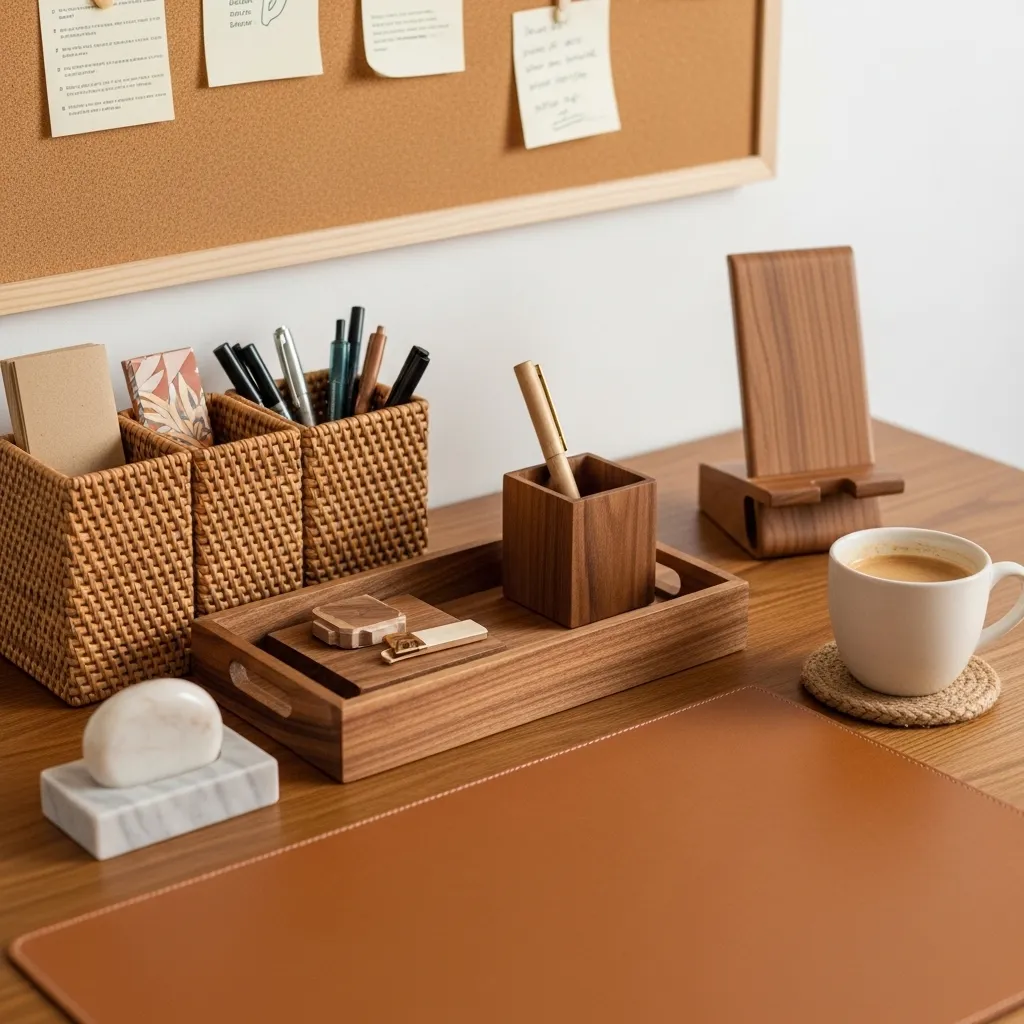
A study desk decorated entirely through natural materials — wood, rattan, cork, leather, marble, jute — creates a quality of warmth and sensory richness that synthetic materials can never approximate, because natural materials have an inherent variation and imperfection that makes them visually and tactilely interesting in ways that smooth, uniform synthetic surfaces don’t. The slight irregularities in a piece of walnut wood, the varied texture of woven rattan, the cool smoothness of marble against the warm grain of wood — these sensory contrasts create a desk environment that’s genuinely pleasant to be at rather than merely functional.
The natural material desk is also the one most likely to improve with age rather than degrading — a wooden tray develops a patina, a leather desk pad softens and darkens with use, a cork board accumulates the pleasant evidence of years of pinned notes and intentions. These materials develop character over time in a way that makes the desk feel increasingly personal and increasingly beautiful as the years pass, creating a relationship between the desk objects and the person using them that no plastic or synthetic equivalent can develop.
9. Build a Vision Board or Inspiration Wall
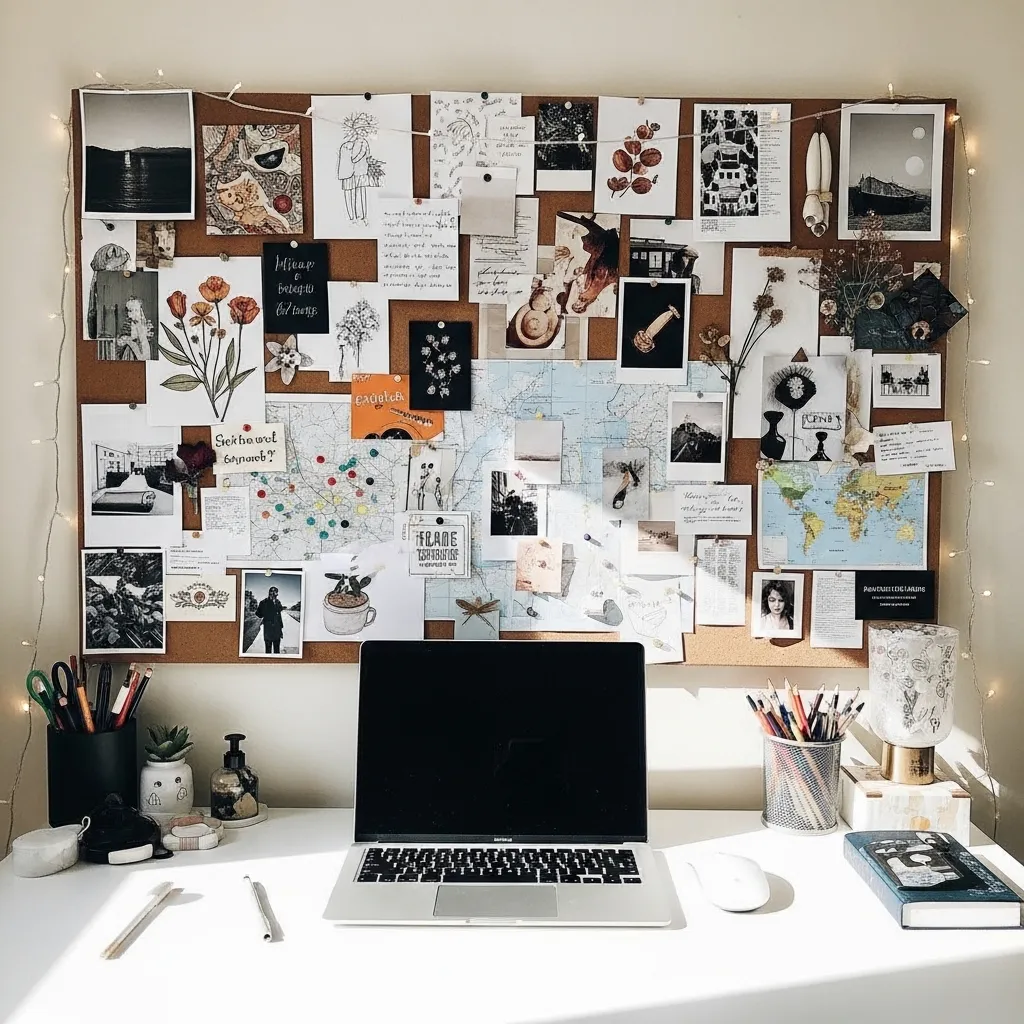
A vision board or inspiration wall directly above the study desk is the desk decoration that does the most work on motivation and creative direction — it creates a physical environment where the ideas and aspirations that drive your work are constantly visible rather than stored in a notebook or a digital file that requires deliberate retrieval. When the images and words and references that connect to your goals are literally surrounding your visual field while you work, they influence your thinking in a low-level, persistent way that creates genuine alignment between the environment you work in and the work you’re trying to do.
The specific combination of elements on a vision board matters far more than its visual tidiness — the most effective inspiration walls are genuine expressions of current fascination and aspiration rather than curated aesthetic compositions, which means they often look slightly messy and dense from a distance but reward close inspection with a genuine wealth of specific, meaningful content. The fairy lights strung through the board soften the density of content and add a quality of warmth and dreaminess that makes the board feel like a creative sanctuary rather than a goal-tracking exercise.
10. Frame and Display Your Own Creative Work
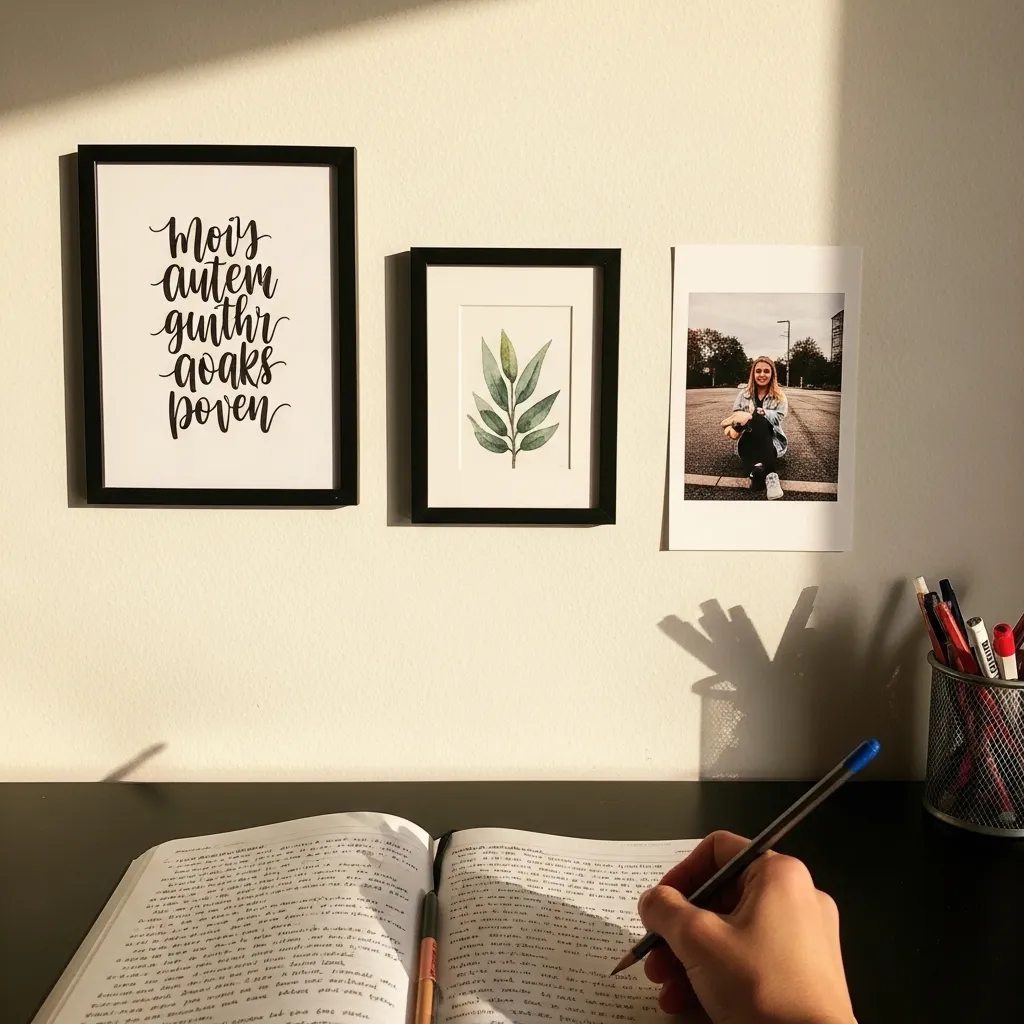
Displaying your own creative work above your study desk is the decoration decision that creates the most profound sense of ownership over the space — when the work on the walls was made by the person sitting at the desk, the environment becomes genuinely personal rather than personally assembled from external sources, and that distinction matters to creative people in a way that’s hard to articulate but very real to experience. Looking up from current work toward previous work creates a kind of dialogue between past and present creative self that is uniquely motivating and grounding.
The key to making personal work display feel considered rather than egotistical is editing and presentation — choosing a small number of pieces that genuinely represent your best or most significant work, framing them consistently and simply, and hanging them with the same care you’d give to purchased artwork. The simplicity of the presentation elevates the work, whereas a densely covered wall of everything you’ve ever made has the opposite effect, overwhelming the space and reducing the visibility and impact of each individual piece.
11. Create a Scent and Sensory Corner
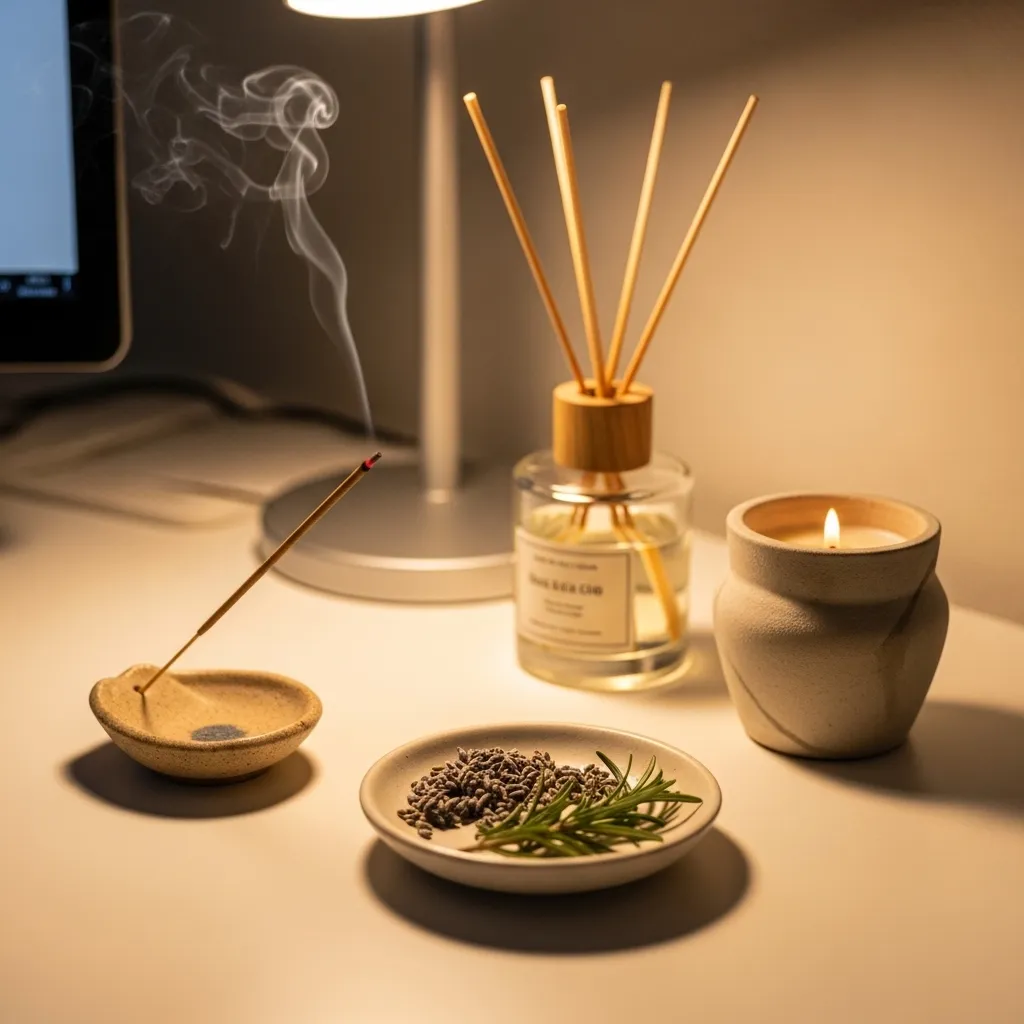
A sensory corner on a study desk — dedicated to fragrance and the small rituals of lighting a candle or incense before beginning work — creates a quality of environmental richness that purely visual decoration doesn’t provide and that contributes to the working experience in a way that’s felt but rarely consciously articulated. Scent is the sense most directly connected to mood and memory, and having a workspace associated with a specific, pleasant fragrance creates a powerful environmental cue for focus and creative engagement that becomes more effective over time as the association between the scent and the work state deepens through repetition.
The ritual dimension of the sensory corner is as important as the sensory one — the act of lighting incense or a candle before sitting down to work is a small ceremony that marks the beginning of a work session in a way that creates a psychological threshold between being generally in the room and specifically beginning to work. This kind of threshold ritual is something that highly productive people across many fields practice in various forms, and the sensory corner provides the physical objects that make the ritual possible.
12. Install a Small Floating Shelf Above the Desk
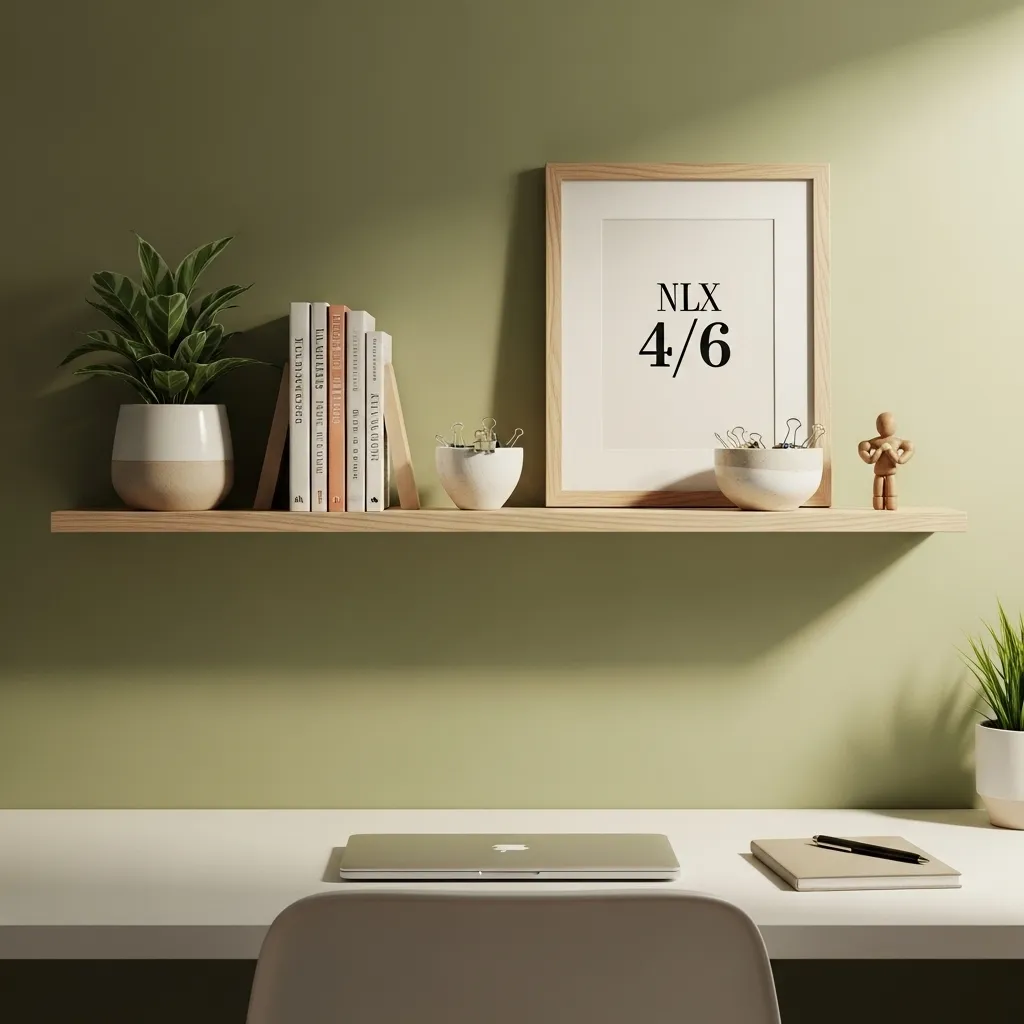
A floating shelf above the study desk creates an elevated display zone that lifts some of the desk surface decoration off the horizontal plane and creates visual interest at a second height level, giving the desk setup more vertical dimension and making the whole arrangement feel more three-dimensional and architecturally considered than a flat desk surface with objects on it. The shelf also creates a natural home for the objects that add character to the desk environment without needing to be directly on the work surface — plants, books, small decorative objects — freeing the desk itself for the tools of actual work.
The height of the shelf above the desk is the installation detail that matters most functionally — too low and it blocks sightlines and feels crowding, too high and it becomes a secondary space with no visual relationship to the desk below. The ideal height when seated is approximately at eye level or just above, which places the shelf contents within easy visual range during normal working posture and makes the shelf feel like an extension of the desk environment rather than a separate wall installation that happens to be above the desk.
13. Introduce a Chalkboard or Whiteboard Surface
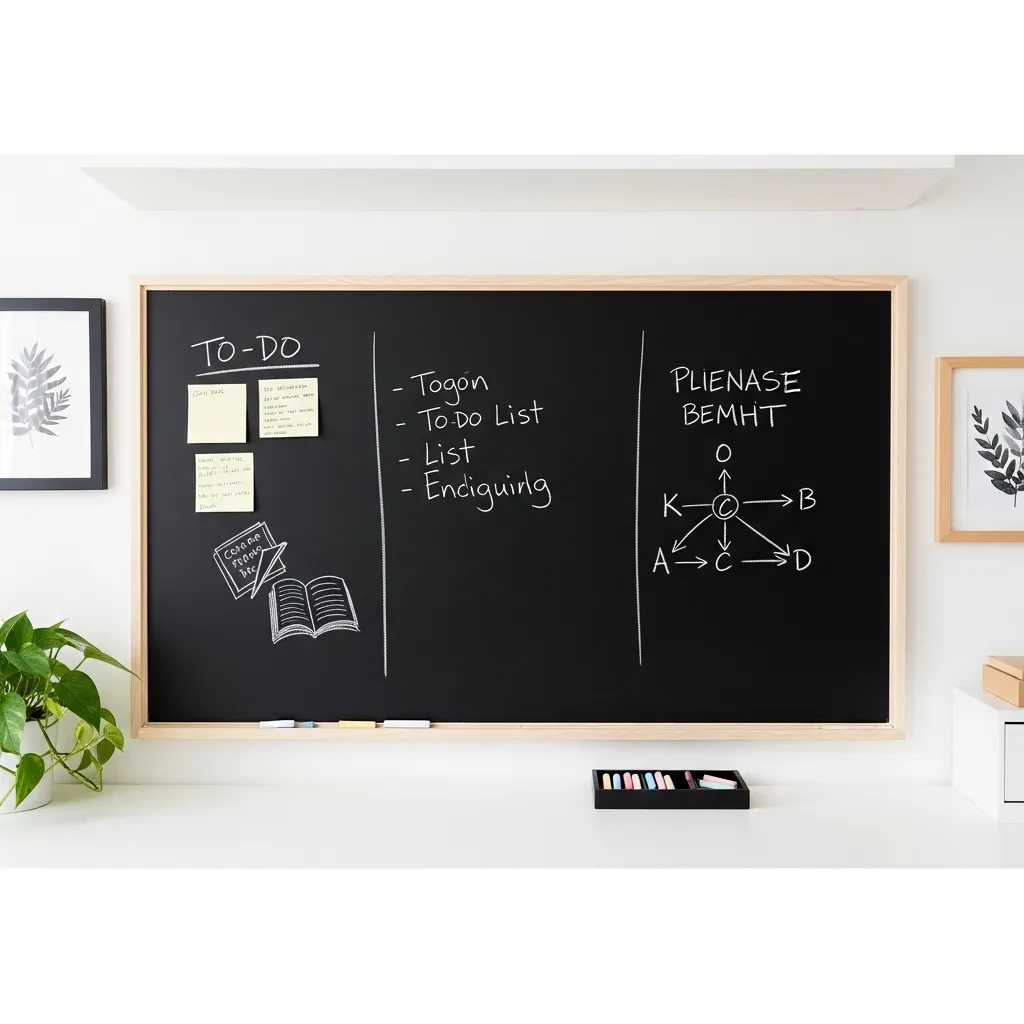
A chalkboard surface above a study desk is the decoration that most directly integrates the work into the visual environment of the workspace — instead of a wall that exists separately from the work being done at the desk below, the chalkboard wall becomes part of the work itself, covered in diagrams and notes and lists and sketches that make visible the thinking process happening at the desk. The chalkboard is simultaneously decoration and functional tool, and that dual quality is what makes it especially suited to a study environment where the visual environment should be connected to intellectual activity rather than separate from it.
The framed chalkboard section — painting a defined rectangle with a border rather than an entire wall — is the installation approach that makes chalkboard paint look like a deliberate design feature rather than an unfinished or accidental wall treatment. The frame gives the chalkboard clear boundaries and creates a sense of it as a designed surface with specific purpose rather than an area of dark paint on a wall, and it allows the chalkboard to coexist with other wall elements like prints and shelves without overwhelming the composition.
14. Use a Statement Desk Mat or Leather Pad
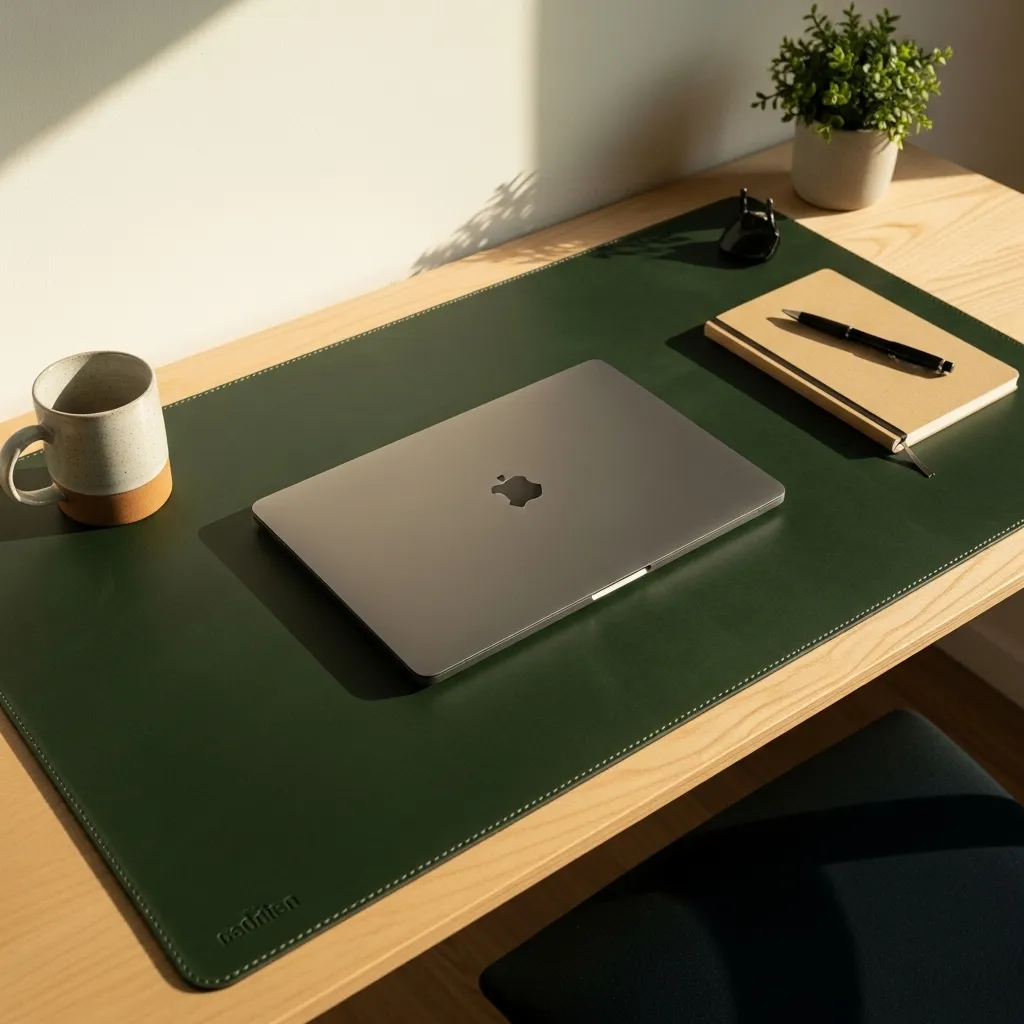
A large, quality desk mat or leather pad is the single desk accessory with the highest transformative impact per dollar because it immediately and completely changes the visual character of the entire desk surface — where a bare wooden or laminate desk surface reads as generic and undesigned, a beautiful leather or felt pad reads as considered and refined and creates a specific zone for work that both looks and feels different from the surface around it. The tactile quality of working on leather or quality felt rather than bare wood or laminate is also genuinely better — the slight cushioning under the wrists, the way a pen moves differently across leather than across wood, the warmth of the material under your palms — all contribute to a working experience that’s more physically pleasant.
The color of the desk mat is the choice that most determines how the desk reads visually — deep forest green, warm tan, rich burgundy, and soft grey are the colors that work best as desk mat surfaces because they’re rich enough to feel considered without competing with the screen or the work surface. A mat in these colors becomes the backdrop that makes everything placed on top of it look better, creating the same effect that a colored wall has on art hung against it — the background color makes the foreground objects more vivid and more visible.
15. Create a Seasonal Desk Update Ritual
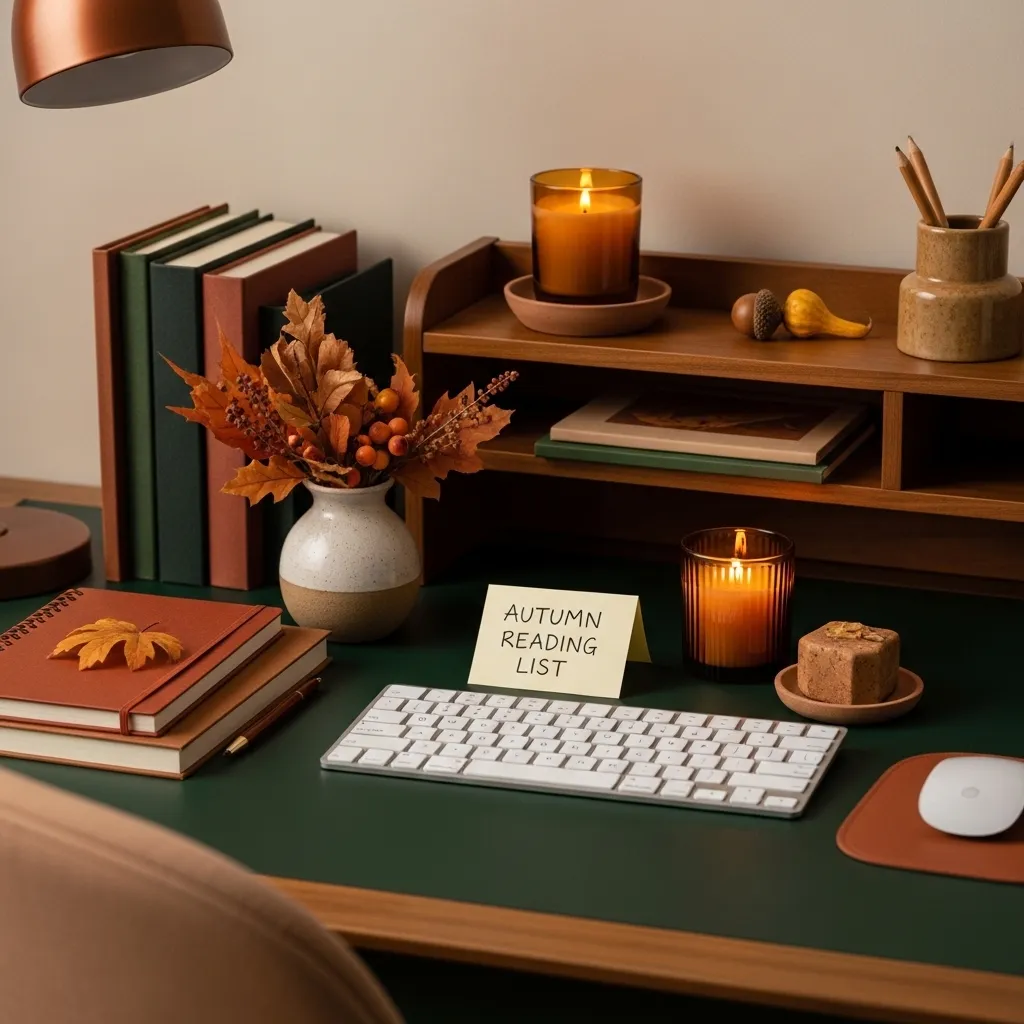
A seasonal desk update ritual — spending thirty minutes four times a year refreshing the decorative elements of your study table to reflect the current season — is the practice that keeps the desk feeling alive and current and personally connected rather than gradually becoming invisible through familiarity. The seasonal update doesn’t require significant investment or effort: swapping the desk plant for a seasonal specimen, introducing a seasonal candle scent, changing the color of the notebook and pen holder, adding a small seasonal object to the vignette are small individual changes that together create a desk environment that responds to the time of year and connects the work space to the natural world outside.
The ritual dimension of the seasonal update is as valuable as the visual result — the act of deliberately attending to the desk environment four times a year creates a relationship of ongoing care with the space that makes it feel like a living environment rather than a static setup. A desk that’s been recently tended to feels different from a desk that hasn’t been thought about in months, even when the changes made are small, because the act of tending communicates to the person using the space that it matters and deserves attention, which in turn makes the person using it feel that their work and their workspace matter too.