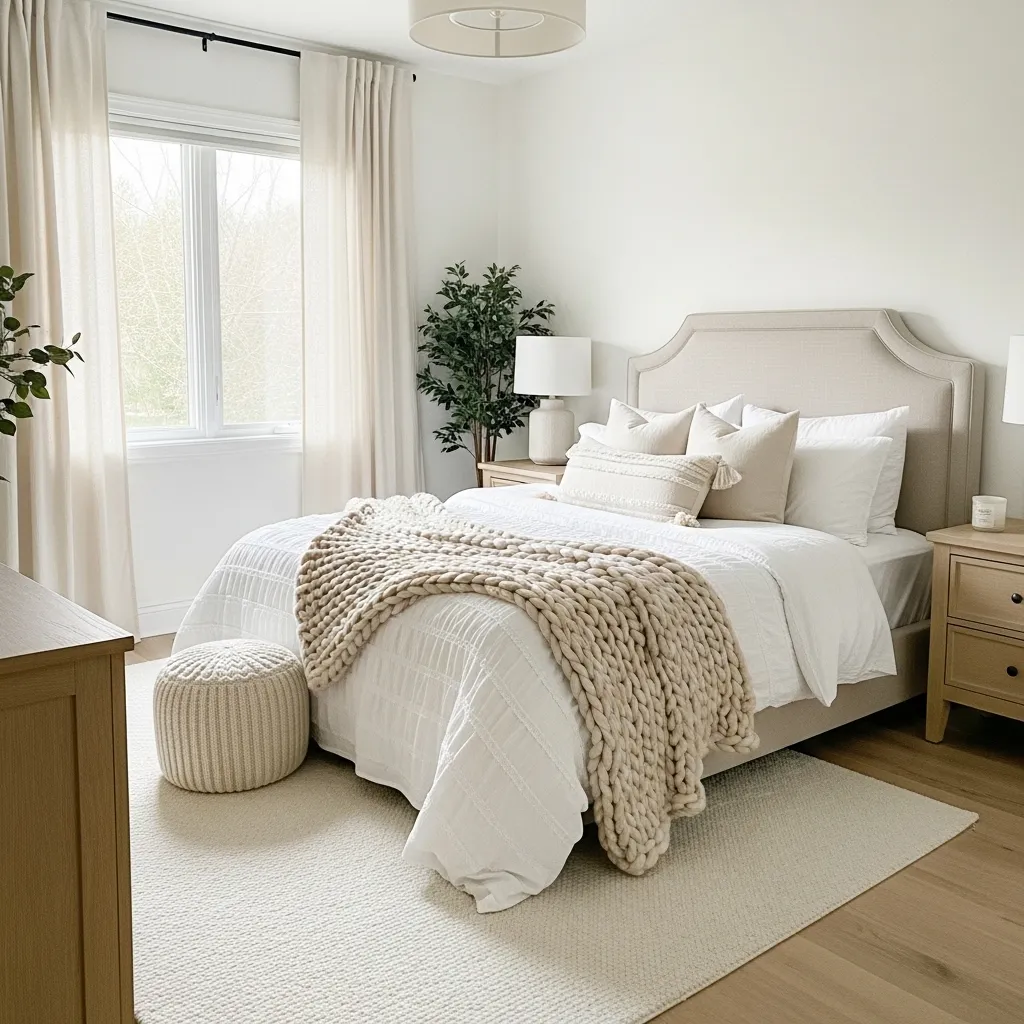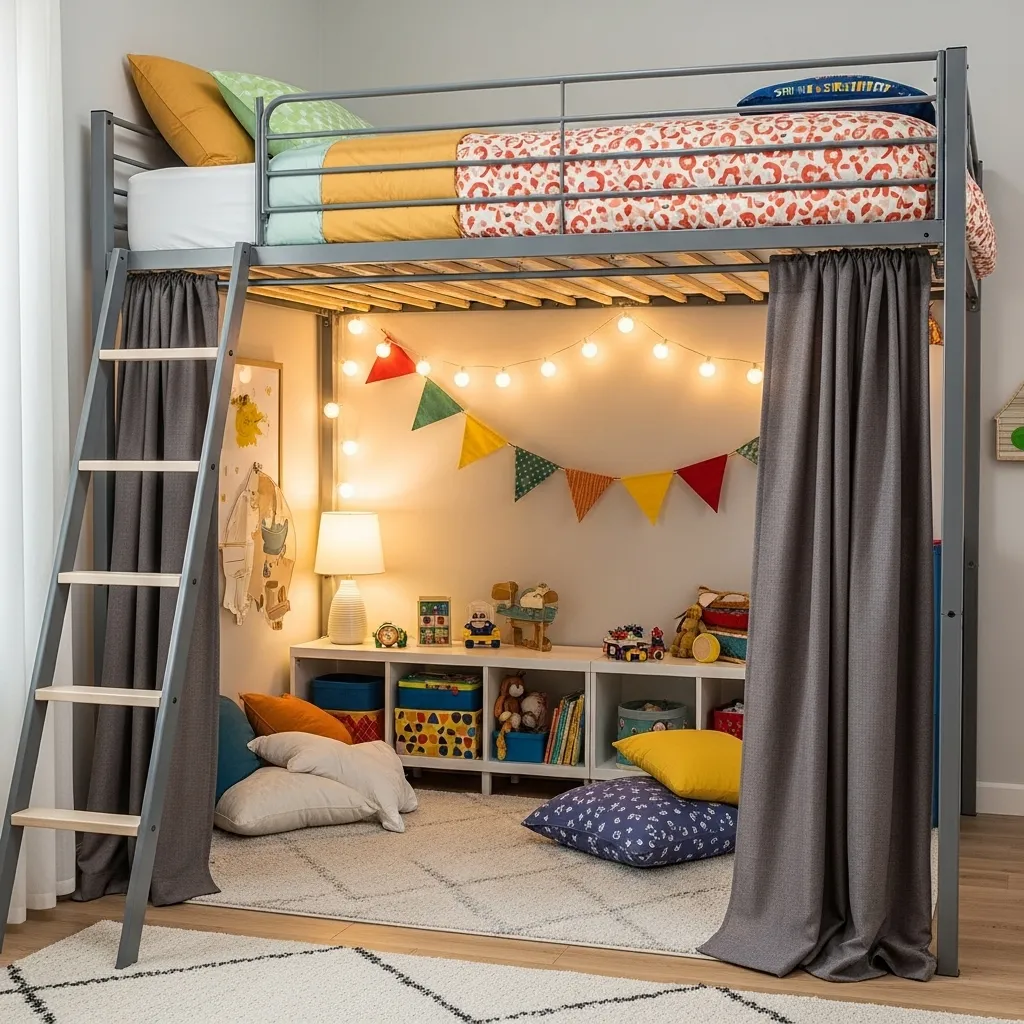
15 Ways to Decorate a Small Bedroom That Make the Space Feel Bigger, Warmer, and Completely Yours
If you’ve been making peace with a small bedroom by telling yourself there’s nothing much you can do with the space — that it’s just too cramped for good design, too constrained for real personality, too small to be anything other than a place where a bed fits and not much else — this is the article that’s going to dismantle that story completely, because small bedrooms are not design problems to be solved so much as design opportunities to be understood, and the approaches available for making a small bedroom feel genuinely beautiful, spatially generous, and deeply personal are more varied and more exciting than most people realize. The ideas here cover everything from the specific paint and color strategies that make walls recede or advance in ways that change perceived dimensions, to mirror placement that doubles apparent space, to vertical storage that draws the eye upward, multifunctional furniture that earns every square inch, bedding layering that creates luxury without bulk, statement ceiling treatments that redirect attention upward, concealed storage solutions, gallery walls scaled for intimate spaces, botanical and plant additions that bring life without consuming floor space, lighting approaches that create depth and warmth, and several more strategies that have been refined specifically for the constraints and opportunities of small bedrooms.
My first apartment bedroom was approximately nine feet by eleven feet with one window, one radiator that took up half of one wall, and a ceiling low enough that I could touch it standing on the bed. I spent the first six months believing the room was simply too small to be pleasant, treating it as a place to sleep rather than a room to inhabit. Then I started making deliberate decisions — painting the walls a deep, warm color instead of the default white, getting a bed with built-in storage underneath, hanging a large mirror on the back of the door, layering the bedding with genuine care, bringing in one good lamp rather than relying on the overhead fixture — and the room didn’t get any bigger but it became somewhere I genuinely wanted to be. The transformation was entirely in how the fixed elements were approached rather than in the fixed elements themselves.
What I’ve come to understand about small bedroom decoration is that the conventional advice — keep it light, keep it minimal, keep furniture small — is about a third right and two thirds wrong. Light colors can work but so can deep, rich colors that create an enveloping, intentional atmosphere rather than a cold, clinical one. Minimalism can work but so can a bedroom that’s beautifully layered with textiles and art and objects, because abundance done with intention reads as rich and considered rather than cluttered. Furniture scaled down can work but sometimes one properly scaled piece makes more sense than several pieces that are too small for the room. The real principle underlying all good small bedroom design is intention — every decision made deliberately rather than by default.
1. Paint the Walls a Deep, Enveloping Color
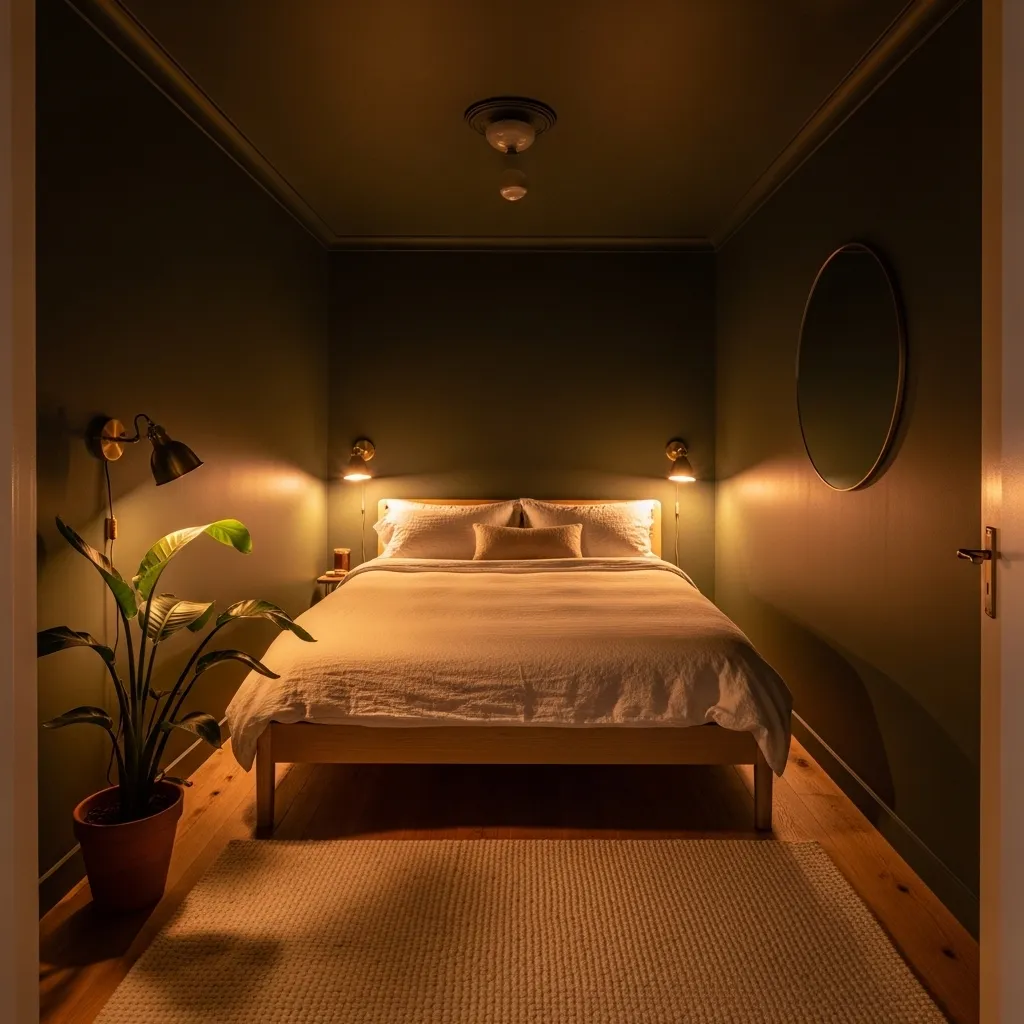
Painting a small bedroom in a deep, enveloping color — forest green, navy, warm charcoal, rich terracotta — is the counterintuitive decision that consistently surprises people with how dramatically it improves rather than worsens the experience of a small space. The conventional wisdom says that dark colors make small rooms feel smaller, and in terms of measured perception that’s technically true — dark walls do absorb more light and reduce the apparent size of a room slightly. But the quality of intimacy that dark walls create in a small bedroom is far more valuable than the few inches of perceived space that light walls provide, because a bedroom is a space that benefits from feeling enclosed and cocooning rather than airy and expansive.
The specific magic of dark walls in a small bedroom is that they make the walls recede into warm shadow while the furnishings — the white linen bed, the warm lamp, the pale floor — advance into light, creating a depth and three-dimensionality that flat white walls don’t have. The room doesn’t feel smaller so much as it feels more like a specific, intentional place — a room that has a character and atmosphere that white walls never generate regardless of what’s placed against them.
2. Use a Large Mirror Strategically
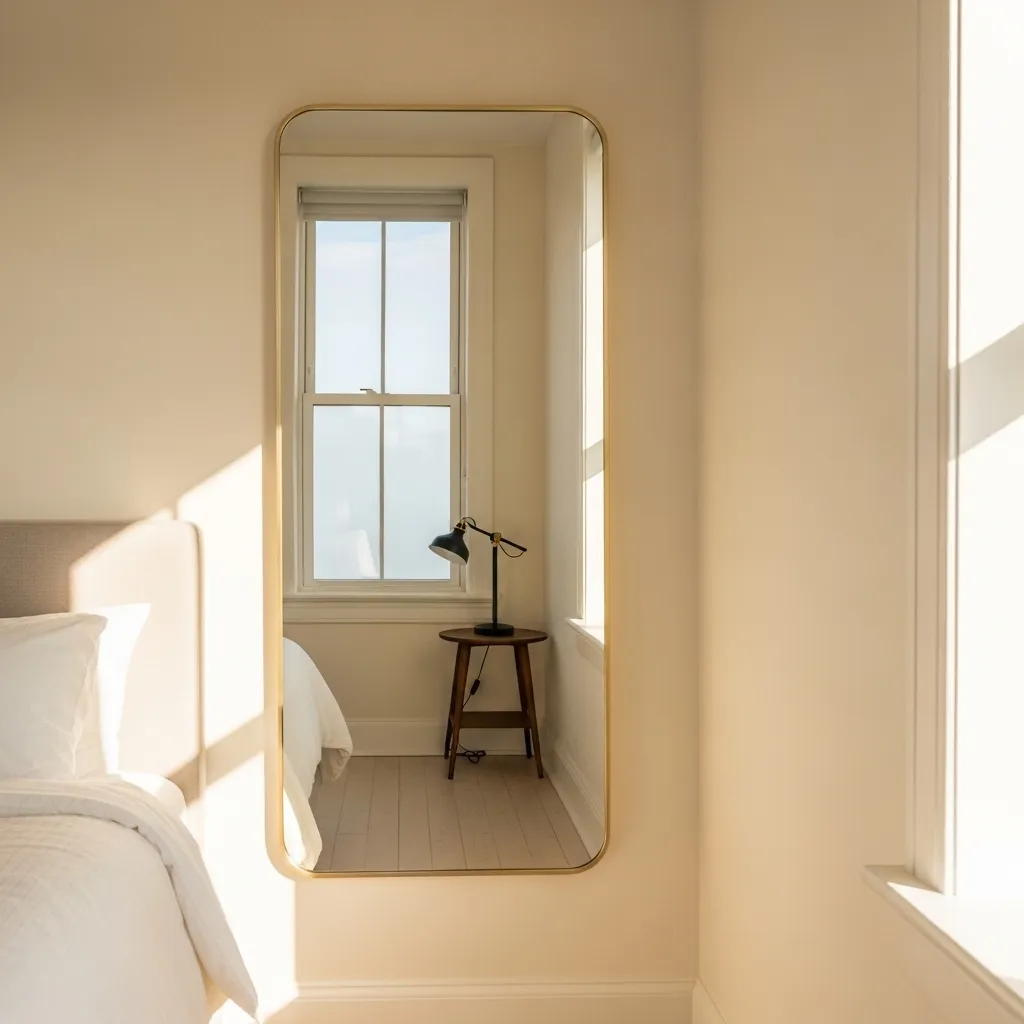
A large mirror in a small bedroom is the oldest and most reliable spatial illusion in interior design — it genuinely does expand the perceived dimensions of a space by creating a visual continuation of the room beyond the reflective surface, and when positioned to reflect a window it doubles the apparent natural light in a way that makes a small, potentially dark bedroom feel genuinely bright and airy. The mirror is the single most impactful purchase you can make for a small bedroom from a spatial perception standpoint, and its effectiveness is proportional to its size — a large mirror makes a dramatic difference, a small mirror makes almost none.
The positioning of the mirror is the decision that determines how well it works — a mirror facing a window reflects the sky and the light and the view, creating a second apparent window of equivalent size and brightness. A mirror facing a blank wall reflects more wall, which adds depth without adding light. A mirror on the back of the door is a space-efficient compromise that adds the spatial benefit without requiring any floor or wall area. All three positions work but the window-facing position creates the most dramatic improvement to the light quality of the room.
3. Choose a Bed With Built-In Storage
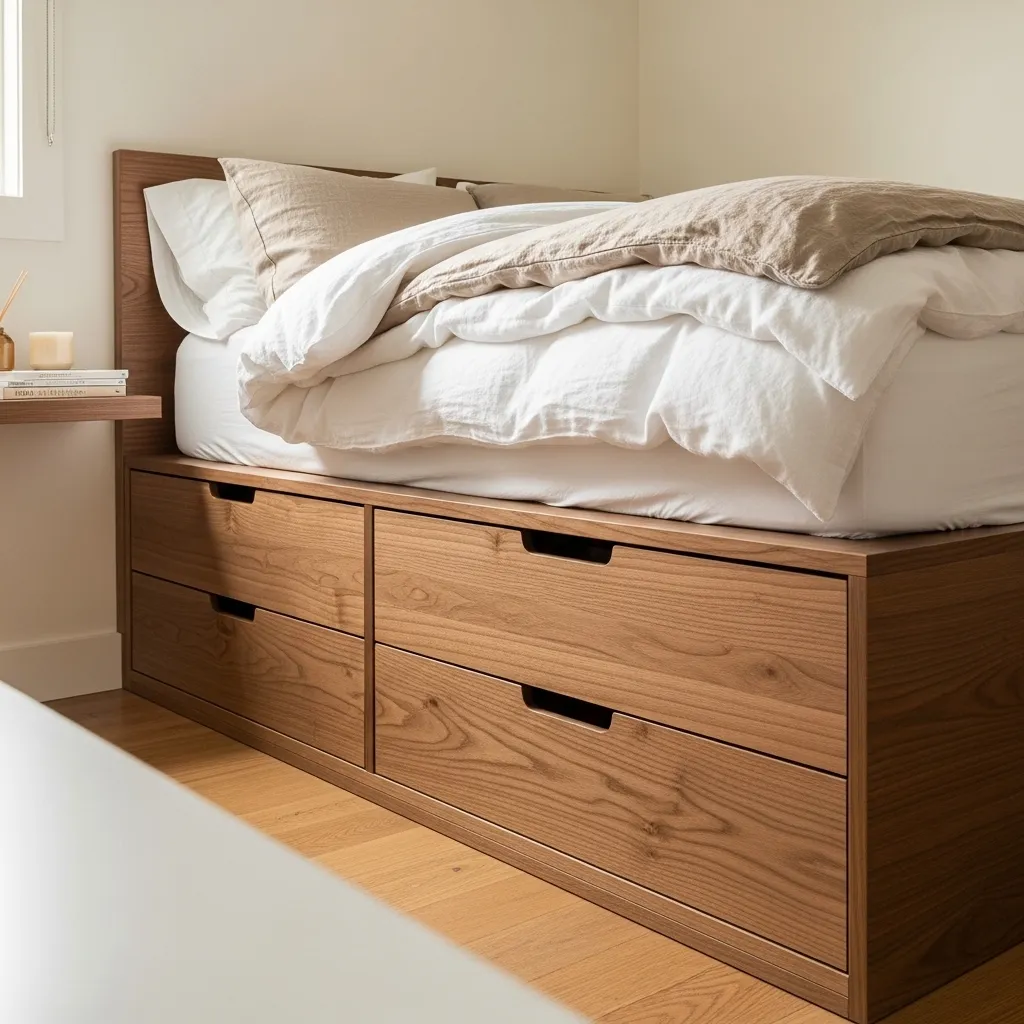
A bed with built-in storage drawers in the base is the furniture investment that most efficiently solves the fundamental small bedroom problem — the shortage of storage space that leads to the visual clutter of things with nowhere to live ending up piled on surfaces and the floor. Under-bed storage drawers in a well-designed platform bed can accommodate a genuinely significant volume of folded clothing, bed linens, seasonal items, and other bedroom essentials in the space below the sleeping surface that would otherwise be either wasted entirely or used for inefficient loose storage accessible only by getting on the floor.
The built-in drawer system is specifically more useful than the bed-lift storage system that relies on lifting the mattress to access a single storage cavity, because drawers allow genuinely organized, accessible storage where individual items can be retrieved without disturbing others. The organizational logic of drawers — where categories of items can be separated and labeled and found without searching — applies as effectively in a bed base as in a dresser, and the space efficiency of building storage into the furniture footprint that has to be there anyway (the bed) rather than adding additional furniture footprints to the room makes it the small bedroom storage solution with the highest return.
4. Hang Curtains From Ceiling to Floor
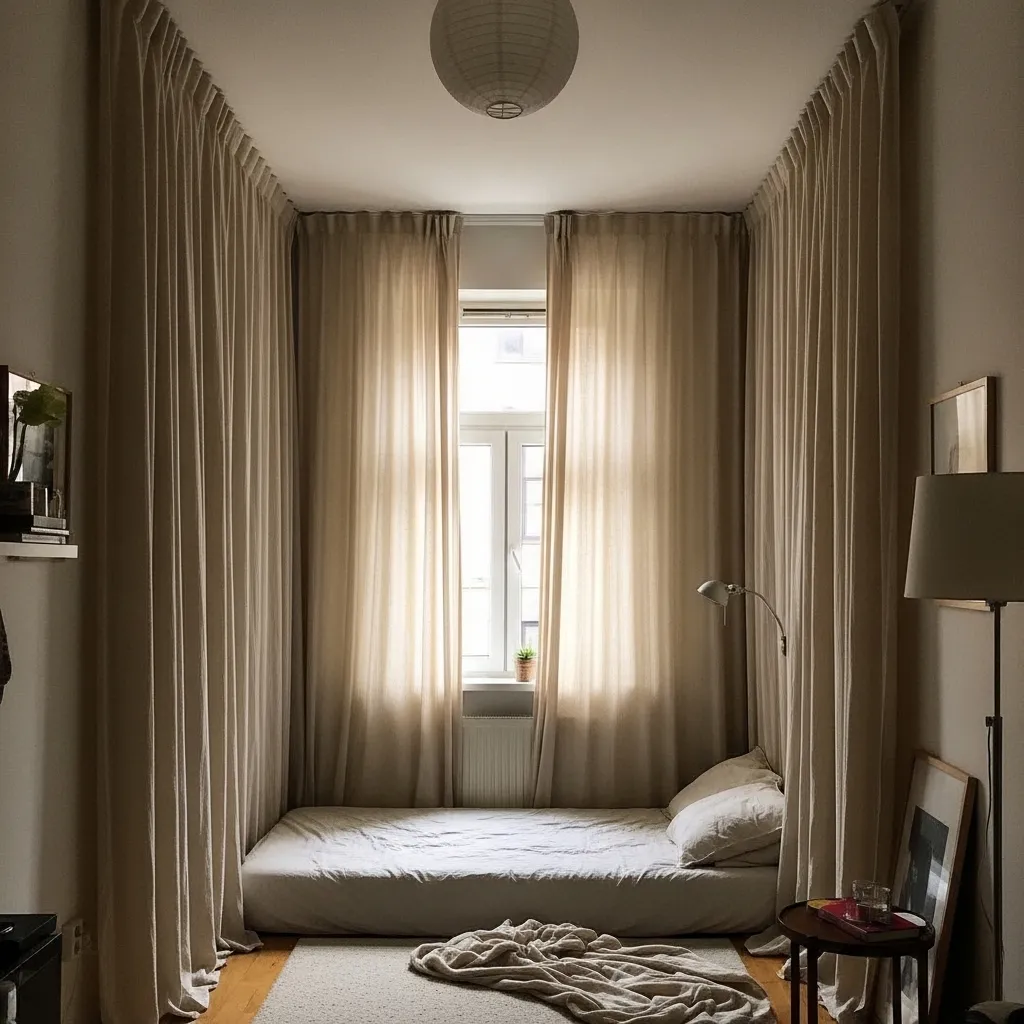
Hanging curtains from ceiling height to floor is the single most effective architectural illusion available to a small bedroom without any actual structural modification — it draws the eye from floor to ceiling in one continuous vertical sweep, making the ceiling appear higher and the room appear taller than its actual dimensions. The principle is the same one that fashion uses when dressing for height: the longer the vertical line, the more the eye perceives height, and curtains that extend from the ceiling to the floor create the longest possible vertical line in a bedroom.
The width of the curtains matters as much as their height for this effect — when the curtain rod extends at least twelve inches beyond the window frame on each side, and the curtains are wide enough to cover this extended rod when open, the window appears significantly wider than its actual frame. The combination of apparent height from the ceiling-to-floor hang and apparent width from the extended rod creates an impression of a window that’s dramatically larger than the actual opening, making the bedroom feel more generously proportioned in both dimensions simultaneously.
5. Use Vertical Space With Floor-to-Ceiling Shelving
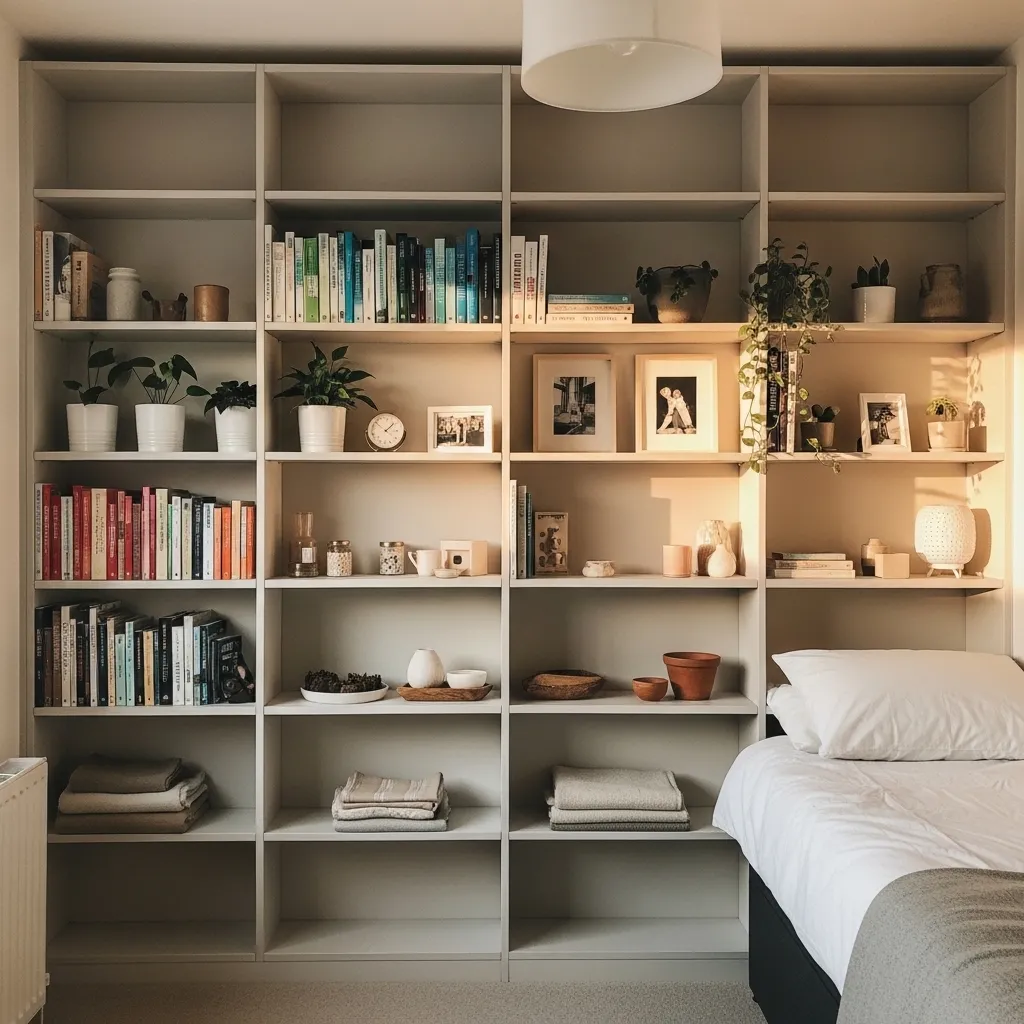
Floor-to-ceiling shelving on one wall of a small bedroom creates vertical storage capacity that would require several additional pieces of freestanding furniture to replicate at floor level — but unlike those freestanding pieces, it consumes no additional floor area beyond the depth of the shelves themselves (typically ten to twelve inches) and creates a wall of organized display that functions simultaneously as storage and as the room’s primary decorative element. The visual effect of a full-height shelving wall in a small room is to extend the apparent height of the space by providing a continuous vertical surface that draws the eye upward from floor to ceiling.
The styling of the shelving is the detail that determines whether it reads as a designed feature or a utilitarian storage solution — books arranged by color rather than randomly, plants distributed across multiple shelves at different heights, a mix of decorative objects and functional items, space maintained between groups of objects rather than packing every shelf to capacity. The same shelving unit styled carelessly looks like more mess; styled thoughtfully it looks like a built-in library that was always meant to be there.
6. Layer Bedding Thoughtfully for Luxury Without Bulk
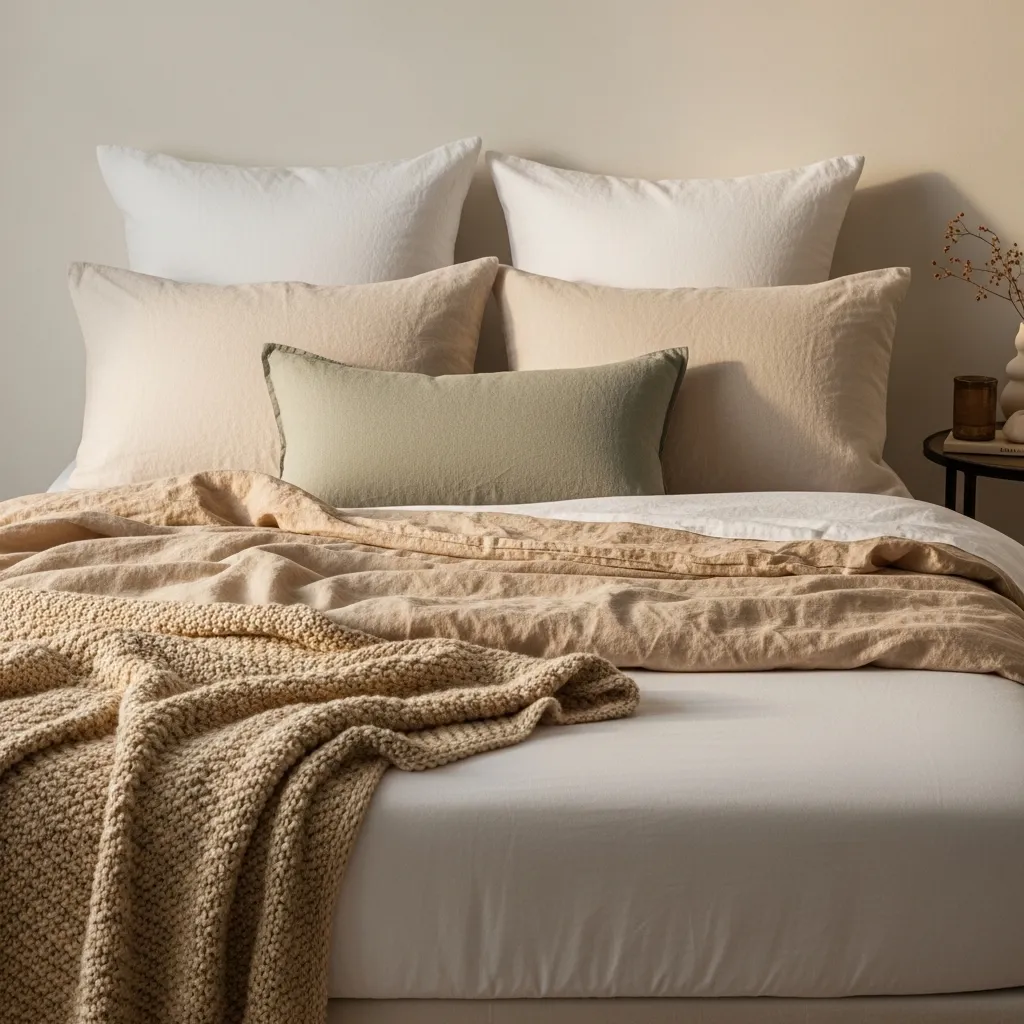
A well-layered bed in a small bedroom does more to create the sense of a beautifully designed room than any other single element — when the bed is dressed with genuine care and the layering is composed thoughtfully, the bed becomes a piece of furniture with the presence and visual weight of a designed focal point, and a small room with a genuinely beautiful bed at its center feels like a considered, intimate space rather than a cramped one. The bed is always the largest piece of furniture in a bedroom and it occupies the largest visual proportion of any view of the room, which means the quality of its presentation determines the quality of the room’s presentation to a greater degree than anything else.
The layering principle for luxury bedding is additive from base to top — fitted sheet providing the clean base, then the main duvet or comforter, then the decorative pillows creating height variation at the top, then the throw at the foot providing texture and casual warmth. The throws and extra pillows don’t add weight or bulk when they’re lightweight textiles like linen and thin cotton knit — they add only visual richness and layered texture, creating the abundant quality of a beautifully dressed bed without making the physical sleeping experience less comfortable.
7. Mount Bedside Lighting on the Wall
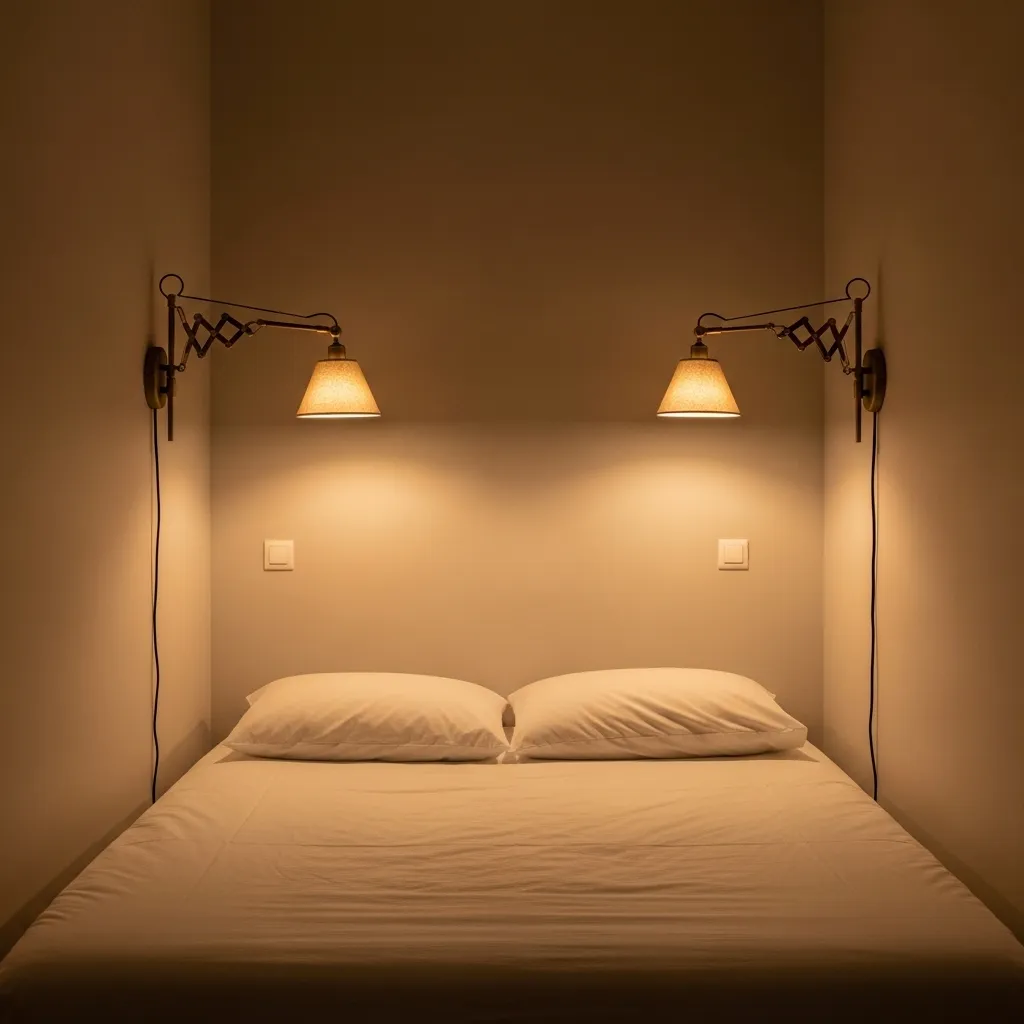
Wall-mounted bedside sconces are the lighting solution that simultaneously improves the atmosphere of a small bedroom and frees up the most precious spatial resource in any small room — the floor area. When bedside lighting is on the wall, the small tables that would otherwise be needed to support table lamps become unnecessary, and the floor area on both sides of the bed — typically two rectangles of roughly eighteen by twenty-four inches each — is reclaimed as clear, open floor space that makes the room feel dramatically less crowded than the identical room with two bedside tables occupying those positions.
The swing-arm sconce specifically is the wall light that does the most practical work as bedside lighting because it can be adjusted for different tasks — swung outward and angled downward for reading, swung back and angled toward the wall for softer ambient light, and angled precisely for any other use case. This flexibility makes the wall sconce more functionally useful than a fixed table lamp as well as more spatially efficient, which is the double advantage that makes it the consistently recommended choice for small bedroom bedside lighting.
8. Create a Feature Wall With Wallpaper
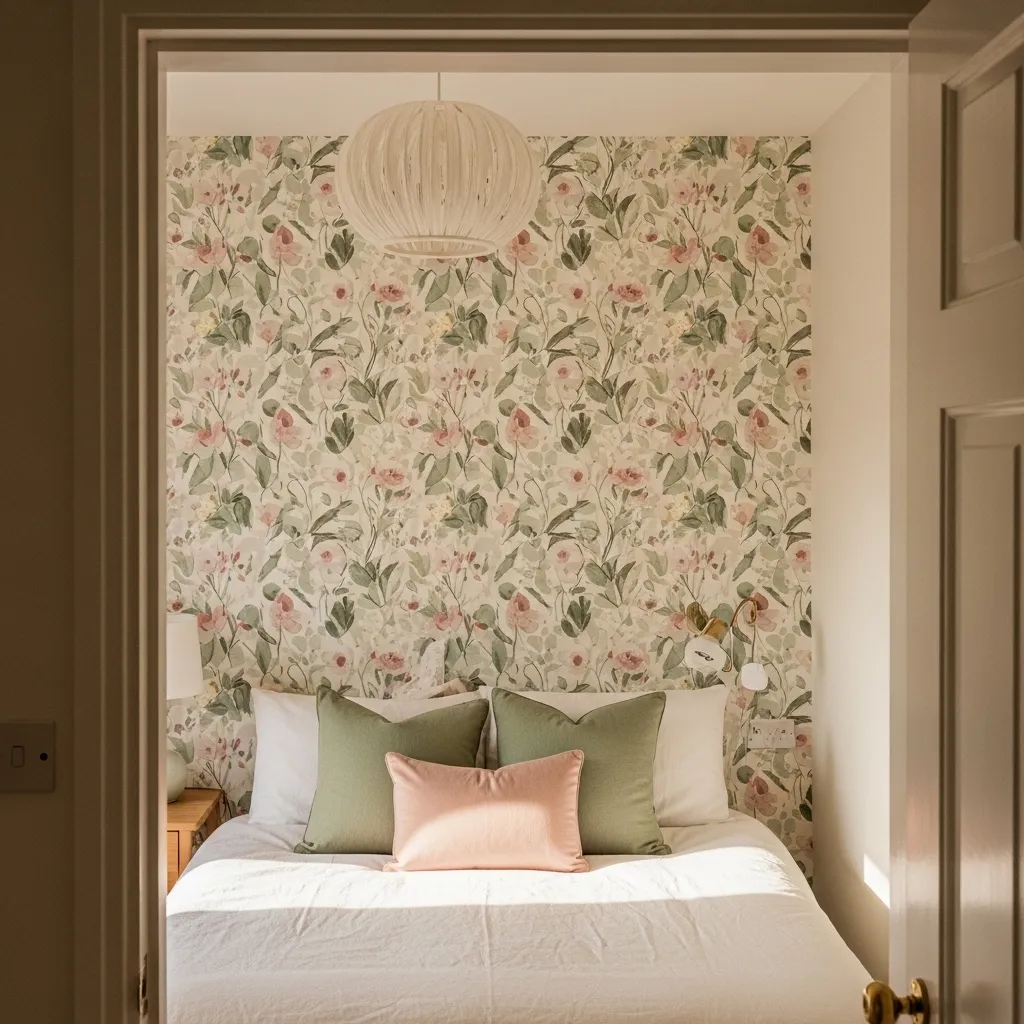
A single feature wall of wallpaper in a small bedroom — applied only to the headboard wall rather than all four walls — creates the maximum visual impact of wallpaper for the minimum coverage and minimum investment, and the strategic placement on the wall behind the bed creates an instant focal point that makes the room feel organized and designed in a way that four white walls or even four wallpapered walls doesn’t always achieve. The single feature wall principle works because it creates hierarchy in the room — one wall is clearly more important than the others, and that hierarchy makes the room feel larger and more clearly structured.
The botanical wallpaper on the headboard wall specifically creates the effect of sleeping in front of a lush garden backdrop — the organic, living quality of botanical illustration makes the wall feel alive rather than decorative, and the softness of watercolor-style botanicals creates a gentleness that’s specifically appropriate for a sleeping space. The color story of the wallpaper connects directly to the bedding through the cushion choices, creating the cohesion between wall and bed that makes the feature wall feel like an integrated design decision rather than a decorative addition applied independently.
9. Install a Statement Ceiling Treatment
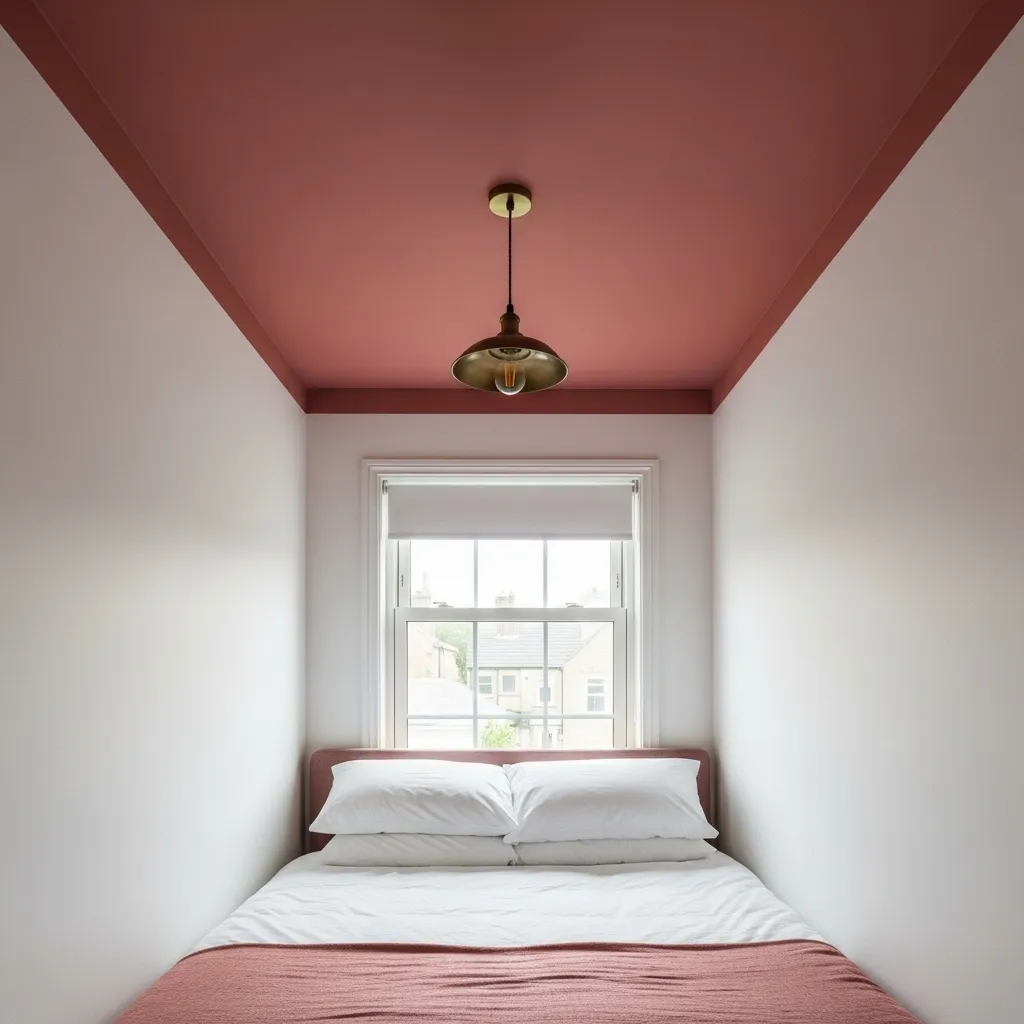
Painting the ceiling of a small bedroom in a statement color — warmer or deeper than the walls, not just white — is the design decision that most dramatically changes the felt experience of a room’s proportions without changing any of its physical dimensions. A white ceiling in a small room emphasizes the vertical limits of the space; a colored ceiling creates an enveloping, intentional atmosphere where the ceiling becomes part of the design rather than the edge of the room. The psychological experience shifts from awareness of constraint to awareness of enclosure, and in a bedroom those are very different qualities — constraint feels limiting while enclosure feels safe and cocooning.
The color choice for a statement ceiling matters enormously — it should be related to but distinct from the wall color rather than randomly selected, creating a tonal relationship that makes the ceiling feel like a deepening or warming of the room’s palette rather than a random addition. A warm dusty rose ceiling above warm cream walls, a deep navy ceiling above medium blue walls, a warm terracotta ceiling above warm white walls — these related-but-distinct combinations create color depth that makes a small room feel rich and considered rather than randomly painted.
10. Maximize Natural Light With Strategic Choices
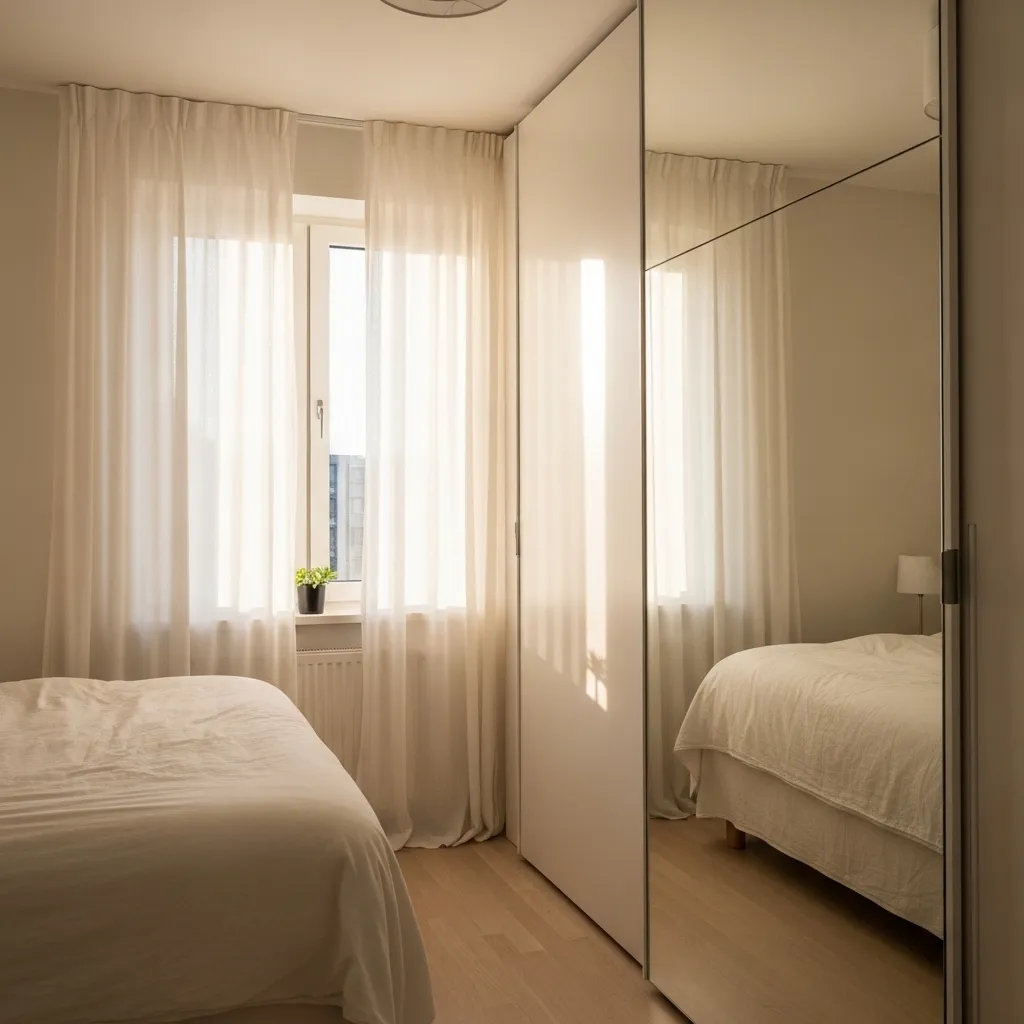
Maximizing natural light in a small bedroom is the approach with the highest return in felt spaciousness because light is the fundamental spatial element — a light-filled small room feels dramatically more generous than an identically sized room with less light, and the quality of natural light in a bedroom directly affects mood, energy, and the perception of the space throughout the day. Every design decision can be evaluated through the lens of whether it captures and distributes light or blocks and absorbs it.
The specific decisions that most effectively maximize natural light in a small bedroom are keeping the window sill completely clear, using sheer rather than opaque curtain panels as the primary window treatment, placing a large mirror on the wall adjacent or opposite to the window to reflect light into the darker parts of the room, choosing pale and warm-reflective colors for walls and bedding, and selecting furniture with legs rather than floor-to-floor panels so that light can reach beneath furniture pieces. None of these is a dramatic or expensive decision individually, but their cumulative effect on the light quality of a small bedroom is genuinely significant.
11. Use Floating Furniture to Clear the Floor
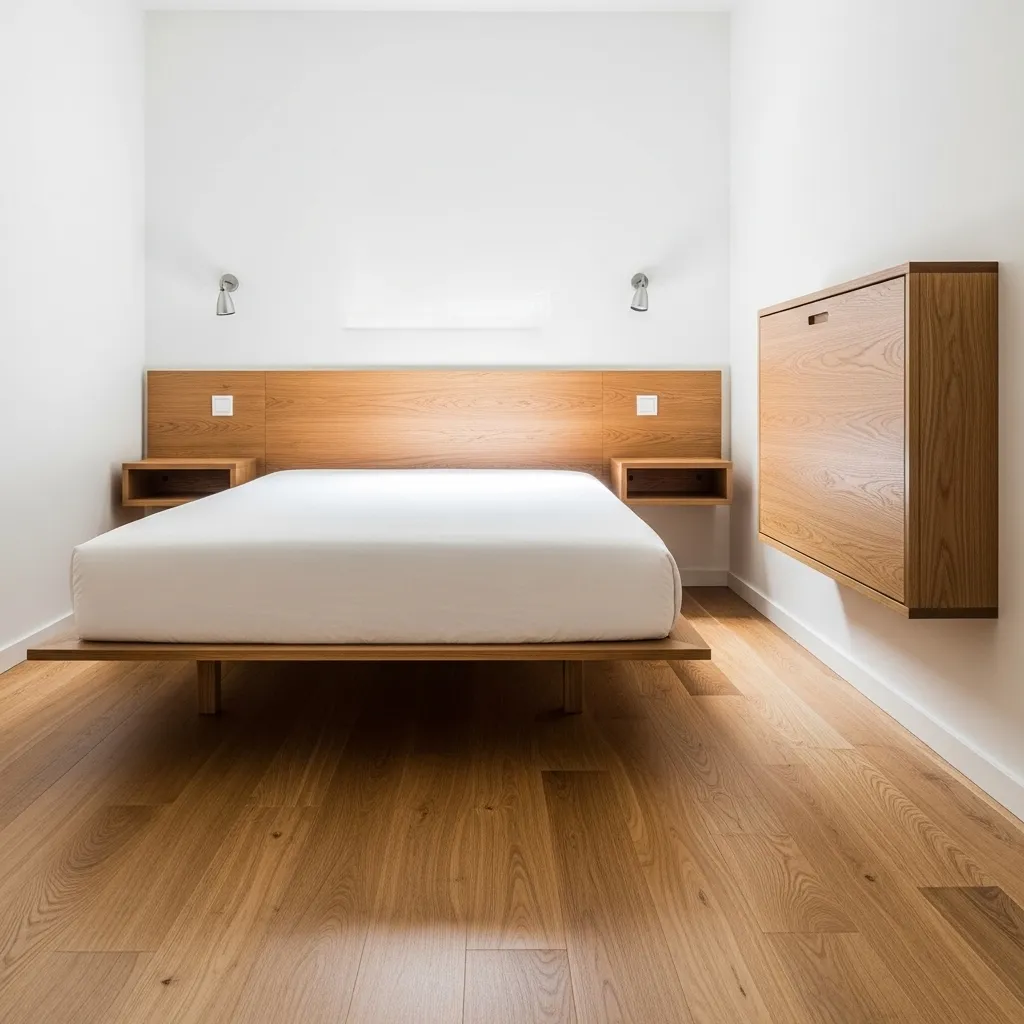
Floating furniture — pieces mounted on the wall with their bases elevated above the floor or with their floor contact minimized — creates the visual impression of more floor area than the room actually has by making the floor plane as continuous and uninterrupted as possible. The floor of a small bedroom with freestanding furniture at every position has its surface constantly interrupted by furniture bases, which fragments the visible floor area into multiple small sections that each feel smaller than they are. The same floor as a nearly continuous plane, with furniture floating above it, reads as a single generously sized surface even when its actual dimensions haven’t changed.
The floating bedside shelf specifically is the furniture substitution with the highest spatial return — trading two bedside tables for two floating shelves eliminates approximately four to six square feet of floor interruption, which is a significant percentage of the total floor area in a small bedroom. The floating shelves provide equivalent surface area for the lamp, water, book, and phone that the bedside table holds, while the floor below remains clear and the room gains the spacious quality of that uninterrupted floor plane.
12. Build a Cozy Reading Nook Into an Alcove or Corner
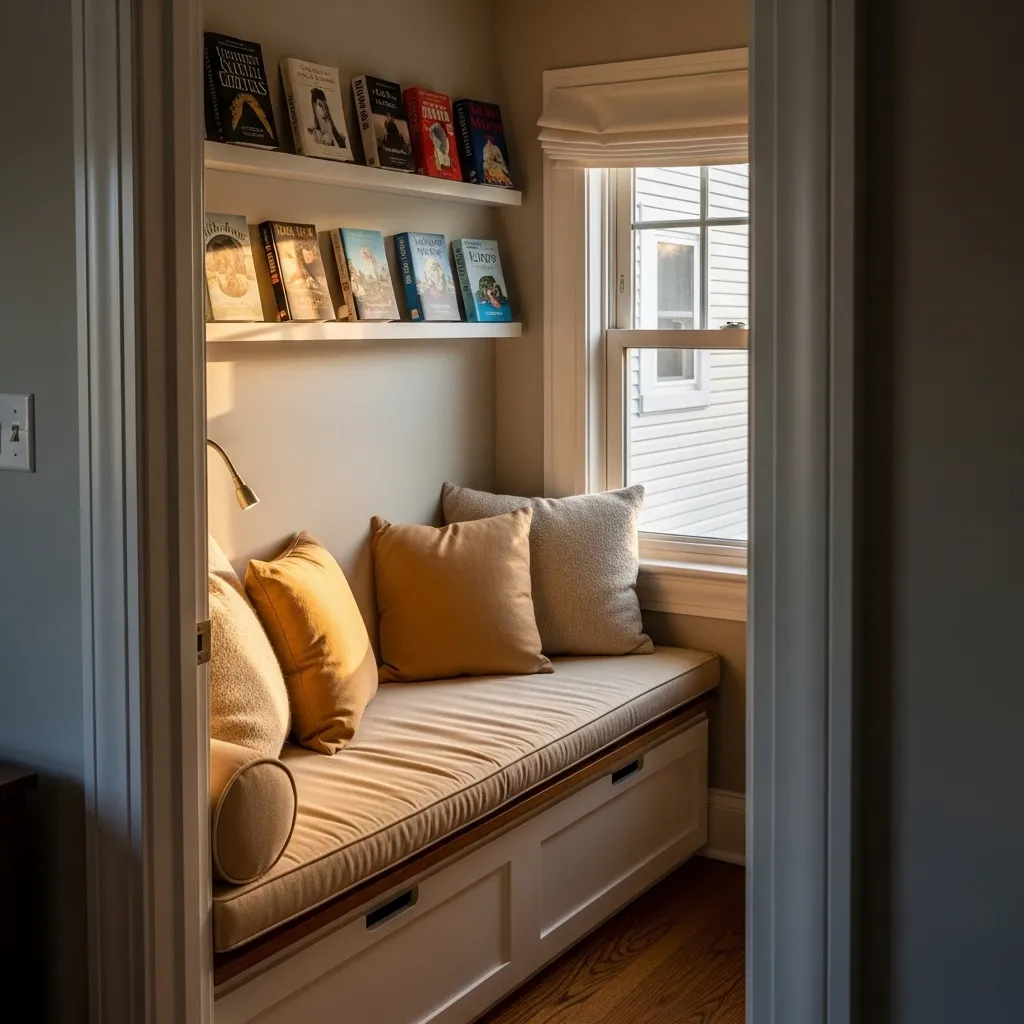
A reading nook built into an alcove or corner of a small bedroom performs the valuable design function of transforming what is typically the most spatially awkward part of any bedroom — the corners and alcoves where furniture placement is difficult and space tends to feel wasted — into the most desirable and most used spot in the room. The enclosed quality of a corner nook creates the sense of a room within a room, a private retreat space within the already intimate space of the bedroom, and that quality of specific enclosure is deeply appealing in a way that an open corner with a chair and a lamp doesn’t replicate.
The built-in storage within the window seat base is what makes the reading nook a complete solution rather than just a comfortable seating addition — the lift-up storage accessed from the seat surface provides substantial hidden storage for bulky items like extra bedding, seasonal clothing, or anything else that needs a home in the bedroom without being visible. The combination of comfortable seating, reading light, book storage on the shelves above, and practical storage in the base makes the nook one of the most space-efficient and most pleasant additions possible to a small bedroom.
13. Create a Gallery Wall Scaled for a Small Room
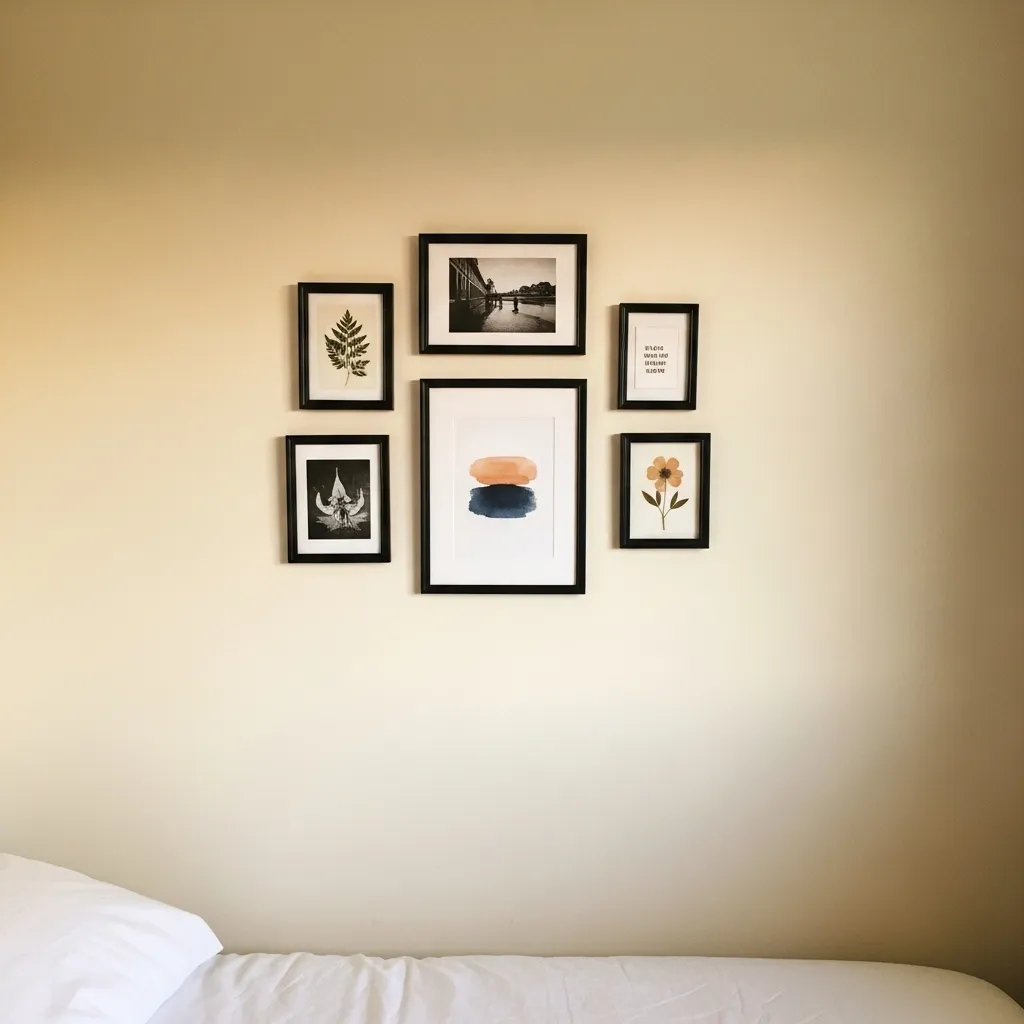
A gallery wall in a small bedroom requires a different approach from gallery walls in larger rooms — instead of spanning a full wall with an abundant collection of frames, a small bedroom gallery works best as a tightly composed cluster scaled appropriately to the wall section it occupies and to the furniture it’s positioned above. The principle is that the cluster should feel like one composed artwork when viewed from a distance, with its individual components becoming visible only at closer range, rather than a sprawling installation that competes with the room’s limited wall space.
The tight clustering of frames — with gaps between frames of one to two inches rather than the four to six inches common in larger gallery arrangements — creates a composition that reads as dense and intentional rather than scattered, and the density gives it visual weight proportional to its actual size. A tightly clustered small gallery on the wall above the bedside creates a more significant visual moment than a loosely spaced arrangement of the same frames would, because the tight spacing reads as deliberate artistic composition while loose spacing reads as items that haven’t yet been properly arranged.
14. Use Rugs to Define and Warm the Space
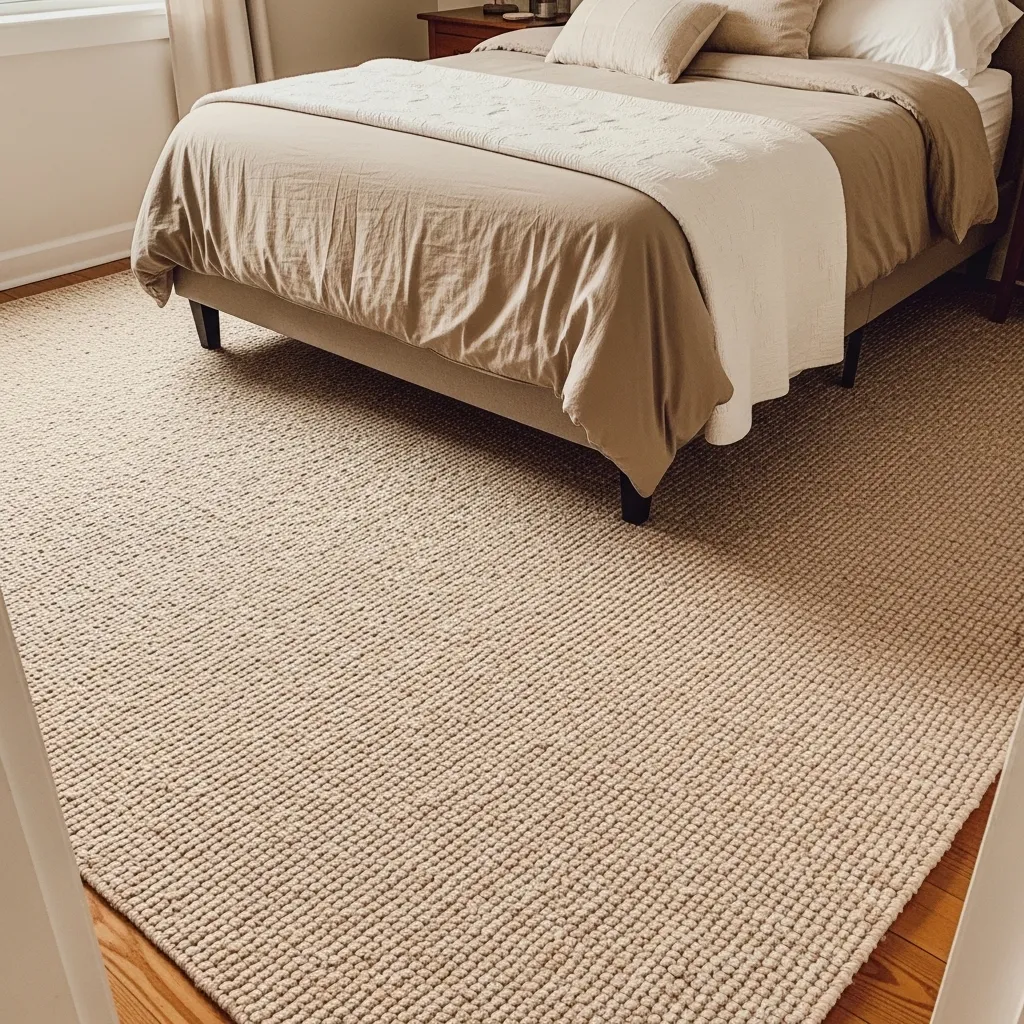
A properly sized rug in a small bedroom — one large enough that the bed sits on it rather than beside it — creates the spatial anchor that makes the room feel like a designed environment rather than a space where furniture has been placed pragmatically. The rug defines the bed zone as a deliberate composition, creates a warm horizontal layer between the floor and the bed, adds acoustic softening that makes the room feel quieter and more intimate, and contributes the tactile warmth of stepping onto soft material when getting out of bed that bare floor can’t provide.
The sizing of the rug is the decision most people get wrong in small bedrooms — the conventional instinct is to use a smaller rug to avoid overwhelming a small room, but this instinct produces precisely the opposite of the intended effect. A too-small rug in a bedroom creates an awkward island that makes the furniture arrangement look uncertain and the room feel unanchored, whereas a properly large rug that the bed sits on creates a sense of intentional zone definition that makes the room feel more organized and more spacious. The rule of thumb is that the rug should extend at least eighteen inches beyond the sides of the bed and at least twenty-four inches at the foot.
15. Bring in Personality With a Mix of Vintage and New
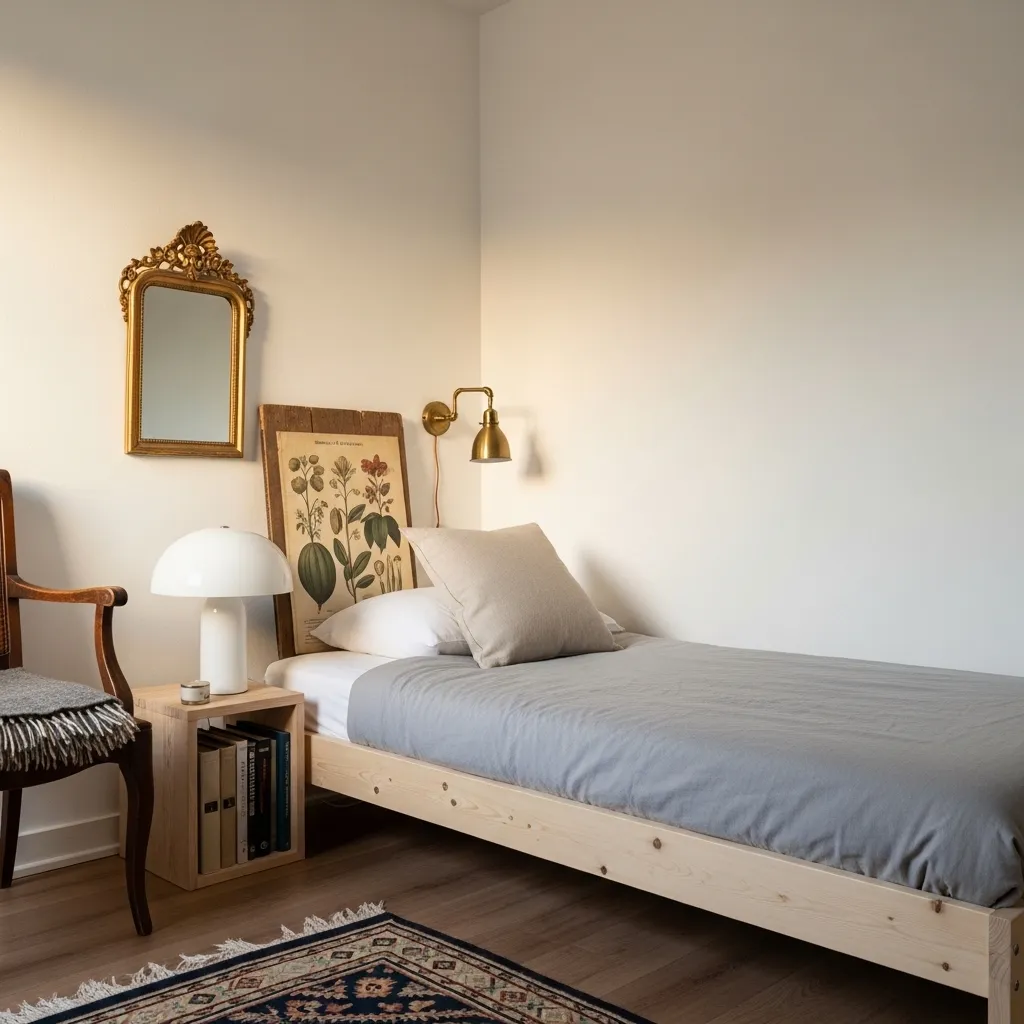
A small bedroom decorated with a deliberate mix of vintage and contemporary pieces has a quality of personality and specificity that rooms decorated entirely from contemporary sources almost never achieve — because vintage objects carry history and craft and the evidence of other lives that manufactured contemporary objects lack, and that quality of accumulated character makes a room feel genuinely inhabited rather than recently assembled. A single genuine vintage piece among contemporary furniture and accessories does more for the character of a small bedroom than any number of new decorative purchases from the same aesthetic.
The specific vintage pieces that work best in a small bedroom are those that provide visual character without consuming significant space — a small ornate mirror, a vintage brass lamp, an antique ceramic vase, a found wooden chair, an old botanical print — rather than large vintage furniture pieces that compete with contemporary pieces for the limited floor area. The vintage element should be the accent that gives the room its specific personality, with the contemporary pieces providing the clean, functional backdrop against which the vintage character is most clearly visible and most beautifully contrasted.