15 Scandinavian Living Room Ideas for 2026 That Feel Genuinely Warm, Livable, and Quietly Beautiful
If you’ve been drawn to the Scandinavian living room aesthetic but slightly put off by the versions of it that feel too cold, too sparse, too aggressively minimal to actually live in comfortably — the all-white rooms with one perfect object on an otherwise empty shelf that look extraordinary in photographs and exhausting in reality — this roundup is specifically for the warmer, more livable, more genuinely inviting interpretation of the aesthetic that’s defining how Scandinavian design looks and feels in 2026. The ideas here cover the full range of what contemporary Scandinavian living room design encompasses: the layered natural textile approach that creates warmth without visual complexity, the warm wood and white plaster combination that’s the aesthetic’s most enduring material pairing, the hygge-inspired fireplace and candle arrangements that make winter evenings feel genuinely special, the carefully considered gallery wall approach that adds personality without clutter, the statement sofa in a muted saturated tone, the indoor plant arrangements that bring nature inside in a specifically Scandinavian way, the mixed wood tone approach that feels contemporary rather than matched-set, the architectural lighting with warm pendants and floor lamps, the linen and wool textile layering that adds sensory richness, and several more directions that prove Scandinavian design is not about emptiness but about the specific quality of warmth and beauty that comes from choosing things carefully and letting each one matter.
I came to Scandinavian design through a period of wanting less rather than more — a moment of genuine exhaustion with the accumulation of objects and colors and patterns that I’d spent a decade thinking was what made a home feel rich and personal. The paring back felt like relief rather than sacrifice, and what I discovered in the space that opened up when I removed the things that weren’t essential was that the things that remained became genuinely visible and genuinely valued in a way that they hadn’t been when surrounded by everything else. A simple ceramic vase that had been invisible in a crowded shelf became beautiful when it was one of three things on a clear surface. A warm oak floor that had been covered by too many rugs became the most beautiful element of the room when it was allowed to breathe. The Scandinavian principle of deliberate selection — of having fewer things and having each one be right — created a room that felt more personal rather than less, because everything in it had been kept for a genuine reason.
What makes Scandinavian living room design feel specifically beautiful rather than merely minimal is the quality of warmth that runs through it — the warm oak and pine, the natural linen and wool textiles, the amber candlelight, the plants and dried botanicals, the gentle curves of well-designed furniture, the sense of a room that’s oriented toward comfort and rest and the particular pleasures of long Nordic evenings spent inside. The aesthetic is not about deprivation but about the specific kind of abundance that comes from warmth and quality and care rather than quantity and variety and newness.
1. The Warm Wood and White Plaster Foundation
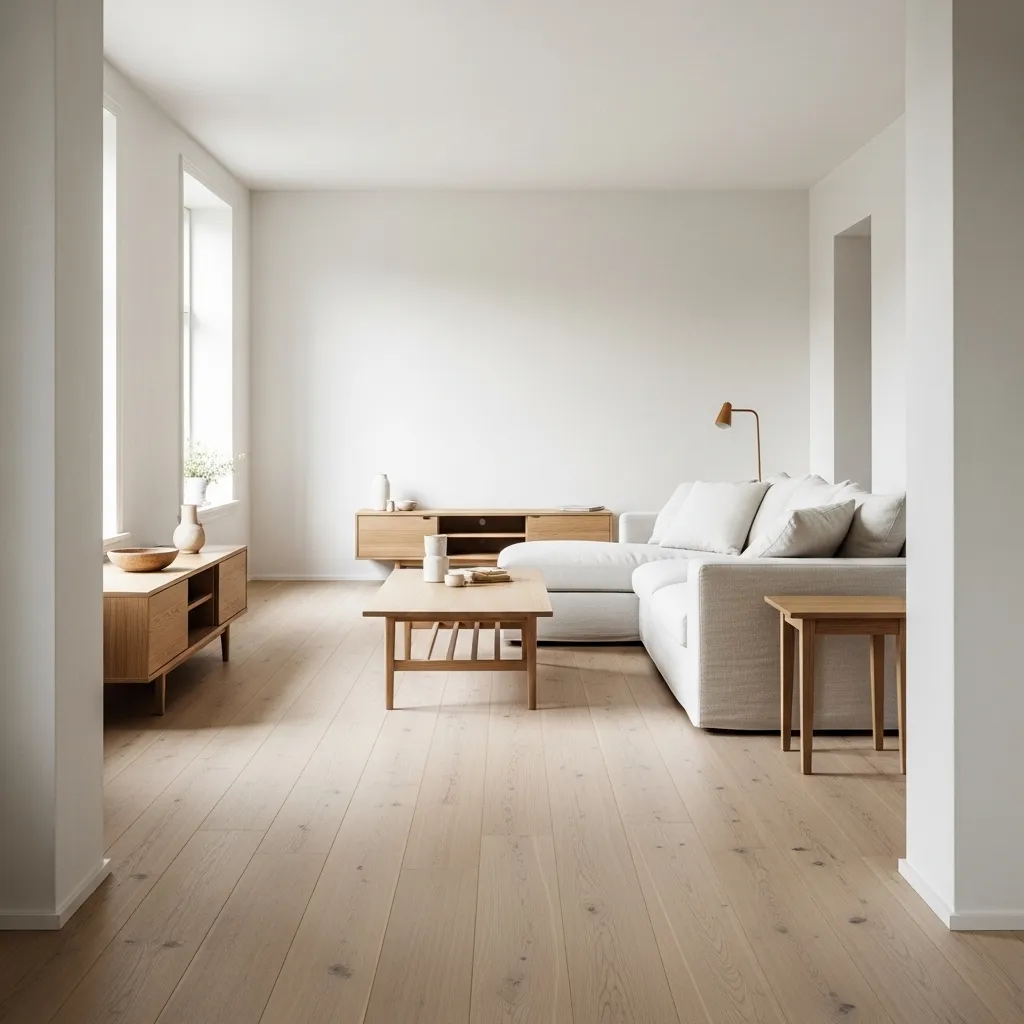
Warm pale oak and white plaster walls are the material combination that most purely expresses the Scandinavian living room aesthetic because they reference the specific qualities of Nordic domestic architecture — the pale wood of birch and pine forests, the white plaster of traditional Nordic houses built to maximize the reflection of limited winter light — while translating them into a contemporary residential context that feels timeless rather than period or regional. Every other design decision in a Scandinavian living room is made in relationship to these two foundational materials, and getting them right creates the backdrop against which everything else reads correctly.
The specific tone of both materials matters enormously — the oak should be pale and warm rather than dark or orange-toned, with a natural or light-oiled finish that allows the grain to be visible rather than a glossy lacquer that sits on the surface. The plaster walls should be warm white rather than cool white, with the slight imperfection of a hand-applied finish rather than the machine-flat perfection of standard paint, because that quality of warmth and slight imperfection is what distinguishes a room that feels lived-in and human from one that feels clinical and designed.
2. Hygge Fireplace and Candle Arrangement
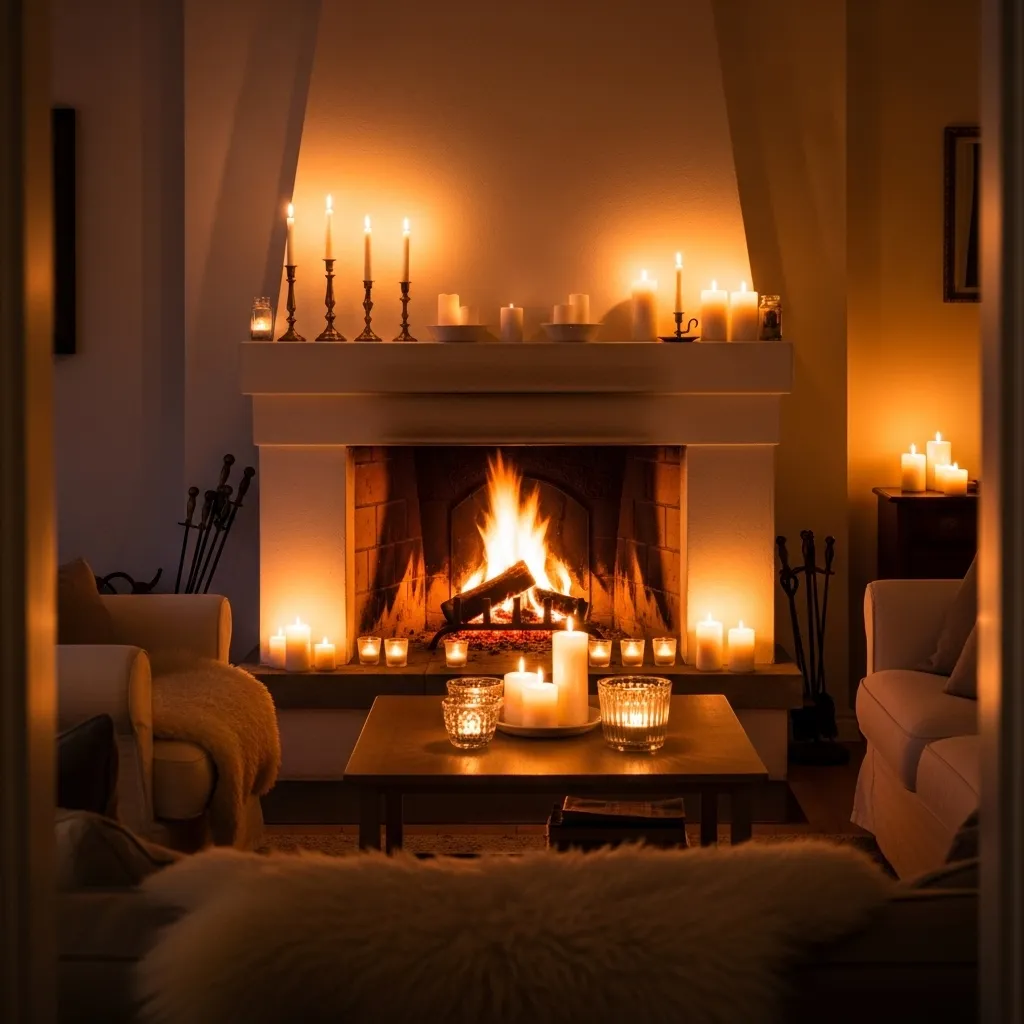
The hygge-inspired living room centered on a fireplace and candle arrangement is the most specifically Scandinavian of all living room configurations because it embodies the concept of hygge — the Danish and Norwegian idea of coziness, togetherness, and the specific pleasure of warmth and light on a cold dark evening — in its most direct physical form. The fireplace is the room’s hearth and social center, the candles are the ambient light that creates the warm, flickering atmosphere that transforms an ordinary evening at home into something genuinely pleasurable, and the arrangement of comfortable seating within the warmth of the fire creates the physical conditions for the quality of relaxed, present contentment that hygge describes.
The candle arrangement on the mantelpiece and hearth is the styling detail that most determines the visual character of a Scandinavian fireplace — unlike the symmetrical paired-candlestick formality of traditional English mantelpiece styling, the Scandinavian approach is intentionally asymmetric and varied, with candles of genuinely different heights, different forms, and different scales grouped in organic clusters that create visual rhythm without rigid structure. The variety within the arrangement — slim tapers beside chunky pillars beside tiny tea lights — creates a composition that looks like it was gathered and placed with care rather than purchased as a set.
3. The Statement Sofa in a Muted Saturated Tone
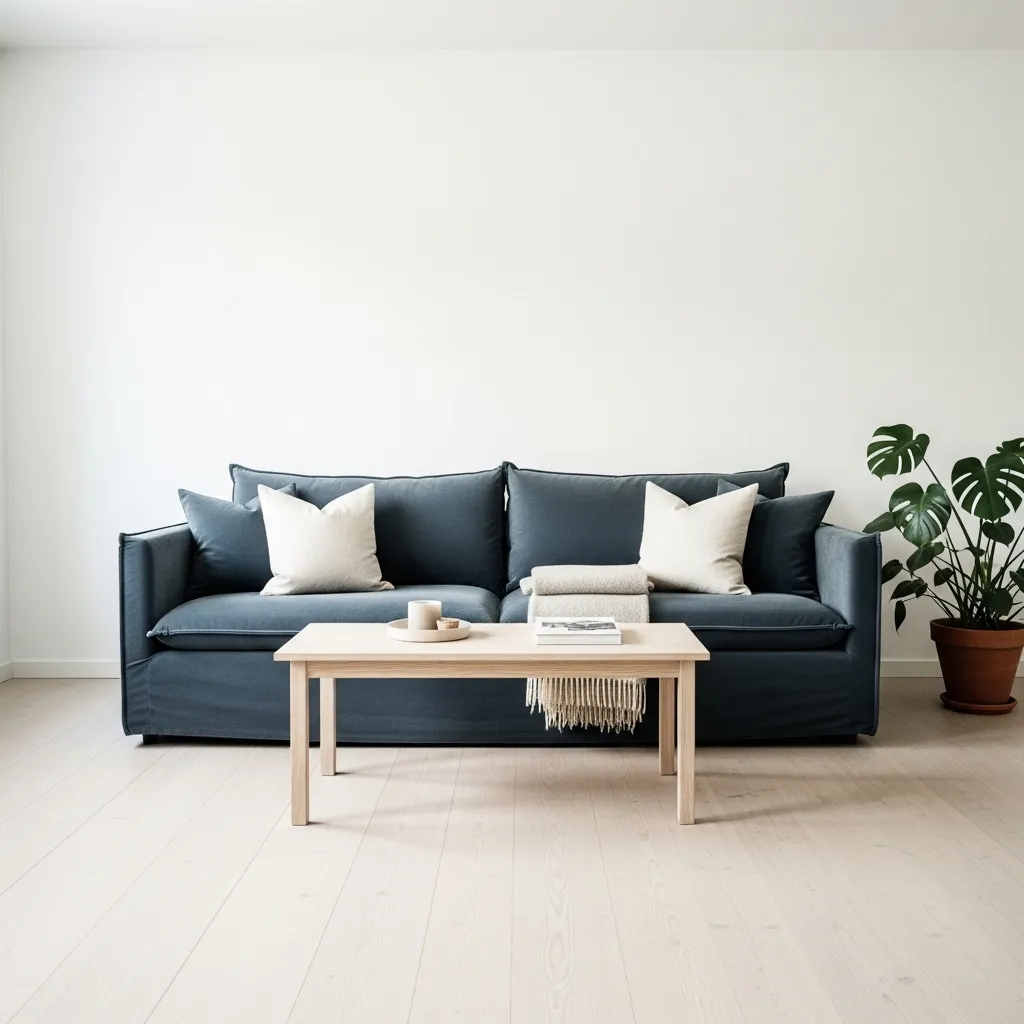
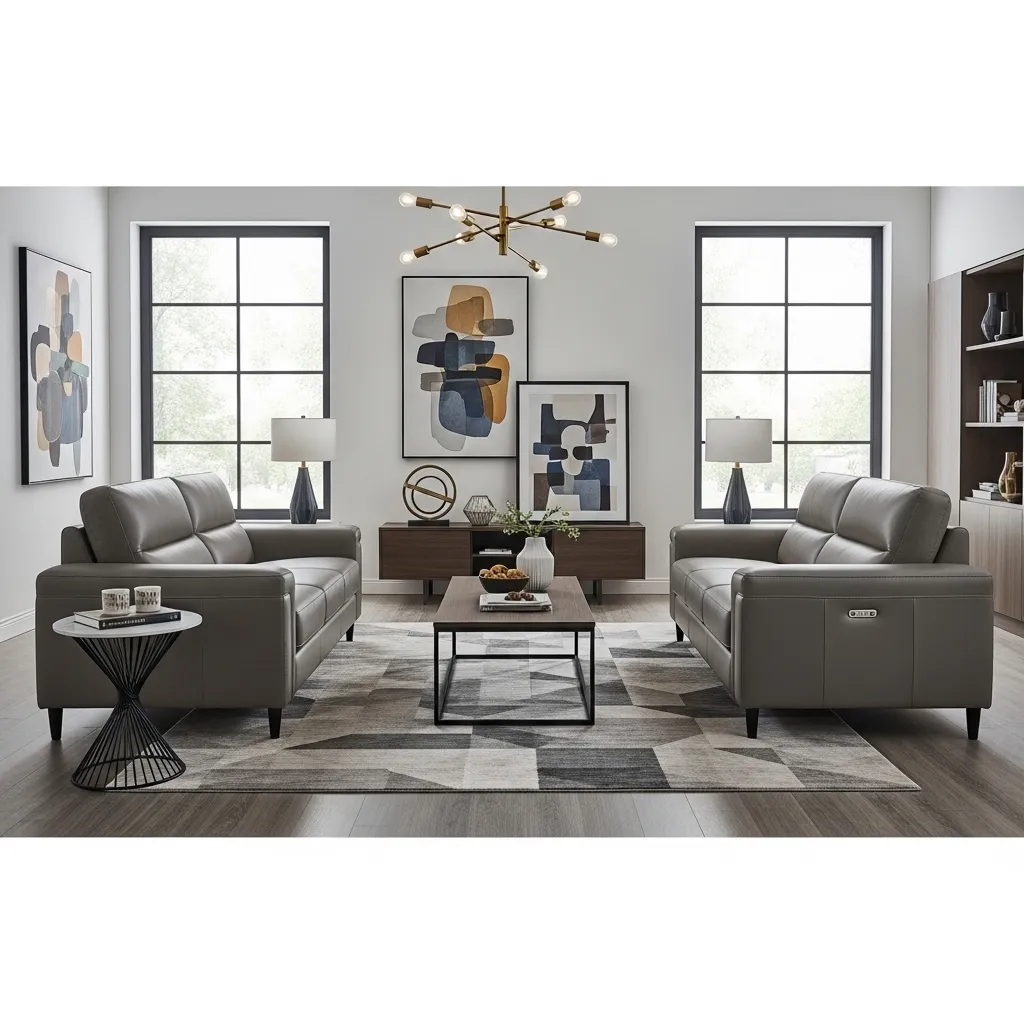
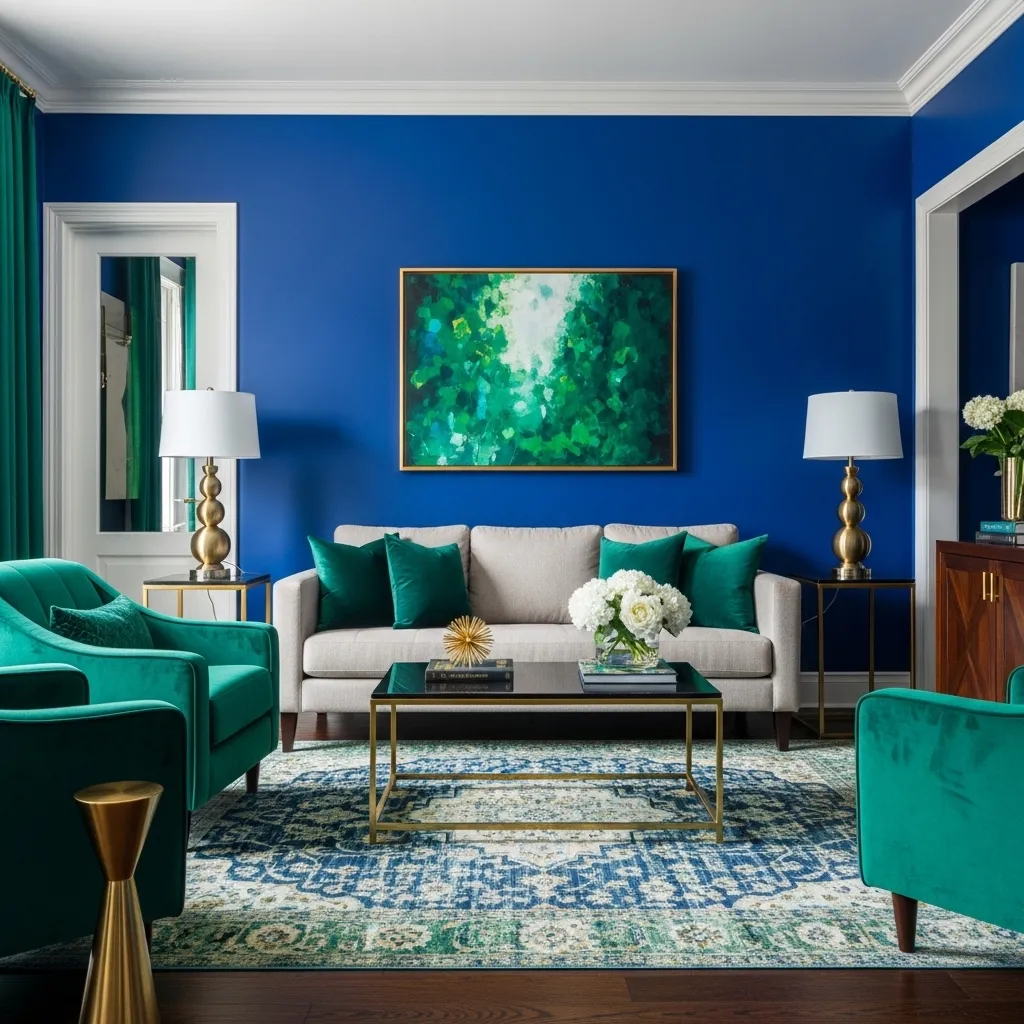
A statement sofa in a muted, dusty saturated tone — the specific palette of Nordic nature, the grey-blues of winter sky and frozen lake, the dusty greens of pine and moss, the warm roses of summer midnight sun — is the Scandinavian living room decision that adds the most warmth and personality to an otherwise neutral room while maintaining the aesthetic’s characteristic restraint. The saturation is present but muted, the color is clear but not bright, and the result is a sofa that reads as confidently colored without being loud or dominant — a color that you want to sit in rather than sit back from.
The quality of the velvet or brushed fabric on a statement sofa is the detail that makes or breaks this approach — a muted dusty blue in a flat, mid-quality fabric reads as slightly sad and colorless, while the same color in a high-quality brushed velvet reads as deeply beautiful because the pile direction creates light and dark variations that make the color appear to shift and live. The investment in a genuinely good sofa fabric is the investment with the highest daily visual return of anything in the living room, because the sofa is the piece most looked at and most used.
4. Layered Natural Textile Warmth
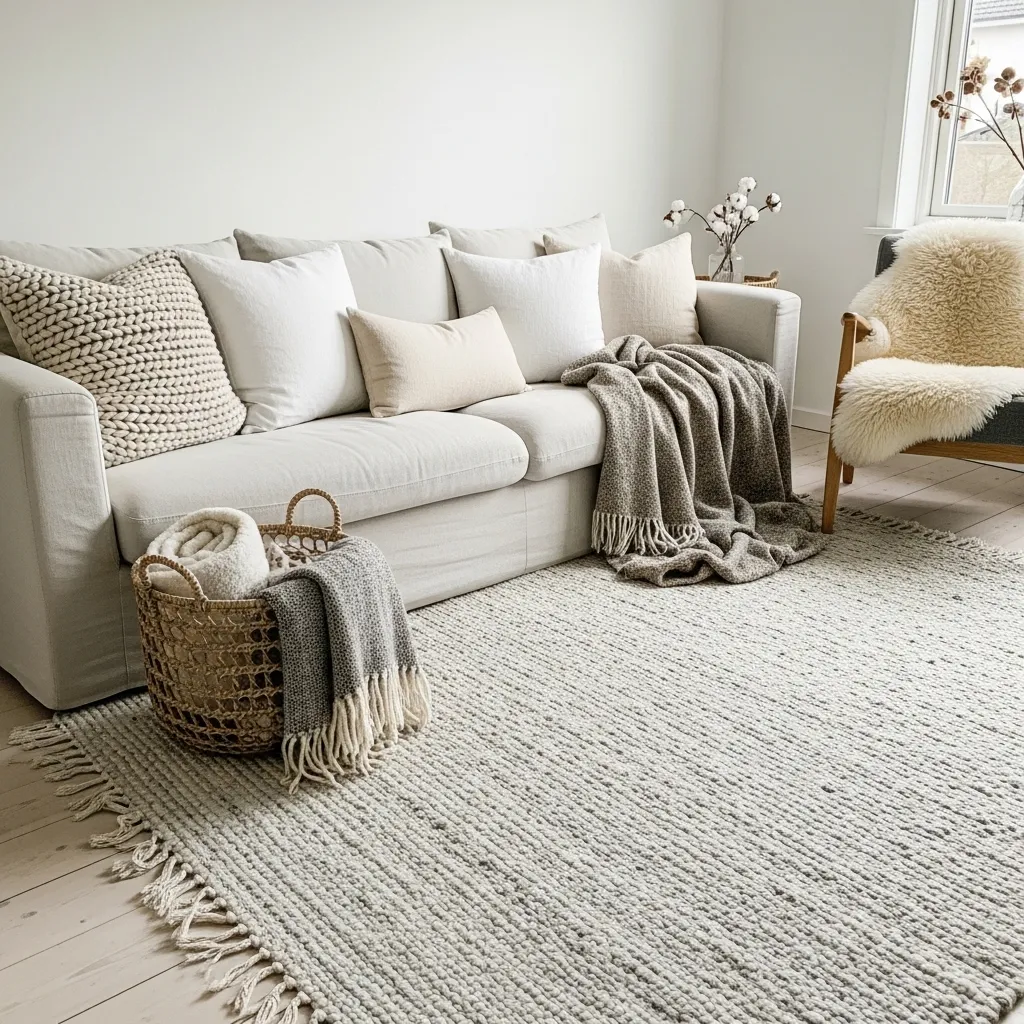
Natural textile layering is the Scandinavian living room approach that creates the richest and most sensory warmth from the simplest possible color palette — a room built on white, cream, and natural tones where every surface and every piece of furniture is covered in natural fiber textiles of varying textures creates a visual and tactile richness that feels genuinely luxurious without any of the visual complexity of pattern or multiple colors. The richness comes entirely from the contrast between textures — the smooth linen against the chunky knit against the flatweave wool against the sheepskin — and that textural contrast is what makes a monochromatic natural room feel rich rather than bland.
The specific natural fibers that build Scandinavian textile warmth are wool, linen, cotton, seagrass, and sheepskin — all of them natural, all of them varying in texture, all of them aging beautifully and improving with use rather than degrading. The wool throws and cushions add genuine warmth both visually and thermally, the linen provides the smooth contrast that makes the wool feel richer, the sheepskin on the armchair creates a specific quality of generous, slightly wild natural luxury, and the seagrass basket beside the sofa holds yet more textiles — because in a proper hygge living room, there are always more throws than you’ll need, and that excess is the point.
5. The Indoor Plant Arrangement Done Scandinavian
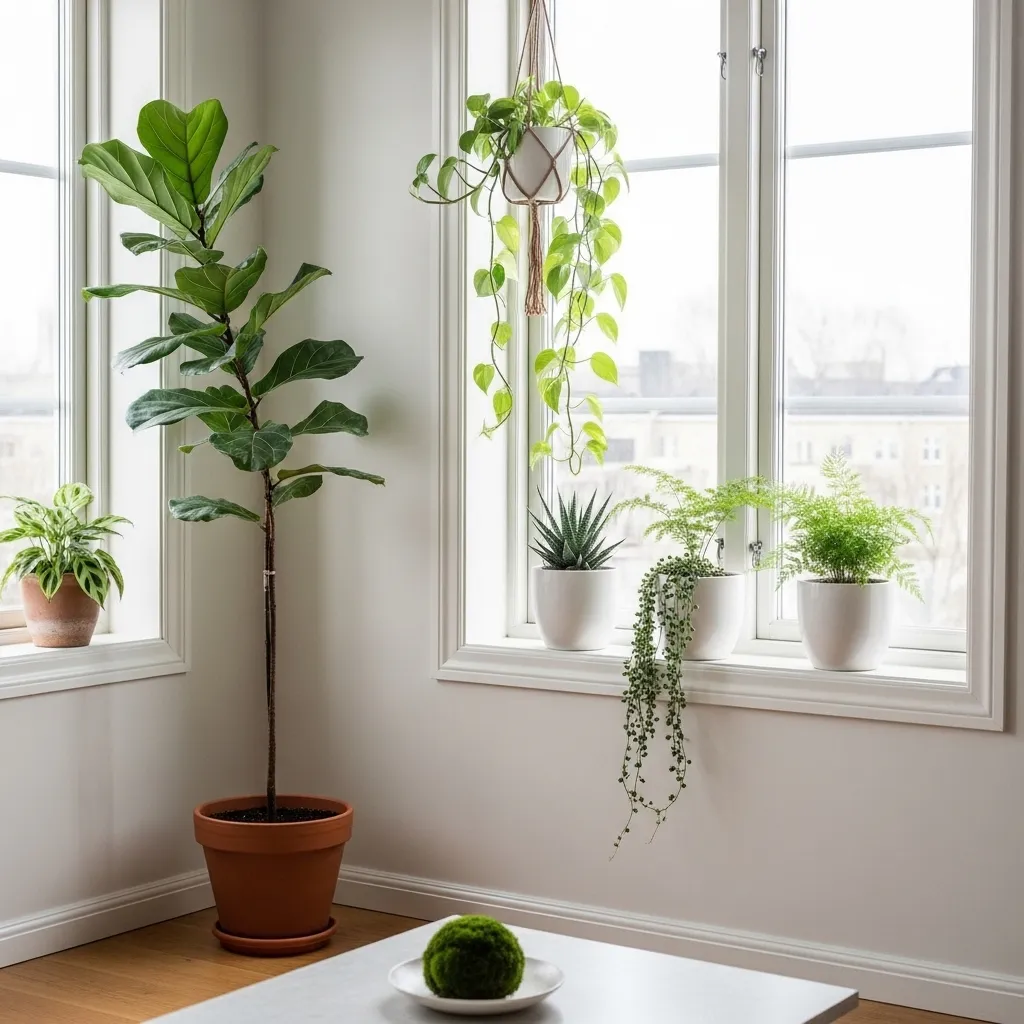
The Scandinavian approach to indoor plants is distribution rather than collection — instead of grouping plants together in one area to create a botanical moment, the Scandinavian principle places individual plants or very small groupings at different heights and positions throughout the room, creating an ambient botanical presence that feels like nature has inhabited the room rather than been installed in a corner of it. A single large plant in the floor corner, a trailing plant cascading from the ceiling, a small botanical vignette on the windowsill, and one small specimen on the coffee table together create more botanical atmosphere than the same plants grouped together, because the distribution means you’re always near a plant wherever you are in the room.
The specific plant selection for a Scandinavian living room favors structural, graphic forms over fussy or elaborate ones — the fiddle leaf fig with its large architectural leaves, the trailing pothos with its clean cascading growth pattern, the small succulent with its precise geometric form. These are plants with strong visual identities that contribute to the room’s aesthetic even when not the primary focus, and they’re chosen for the quality of their form and presence rather than for their rarity or difficulty of cultivation.
6. Architectural Lighting With Warm Pendants and Floor Lamps
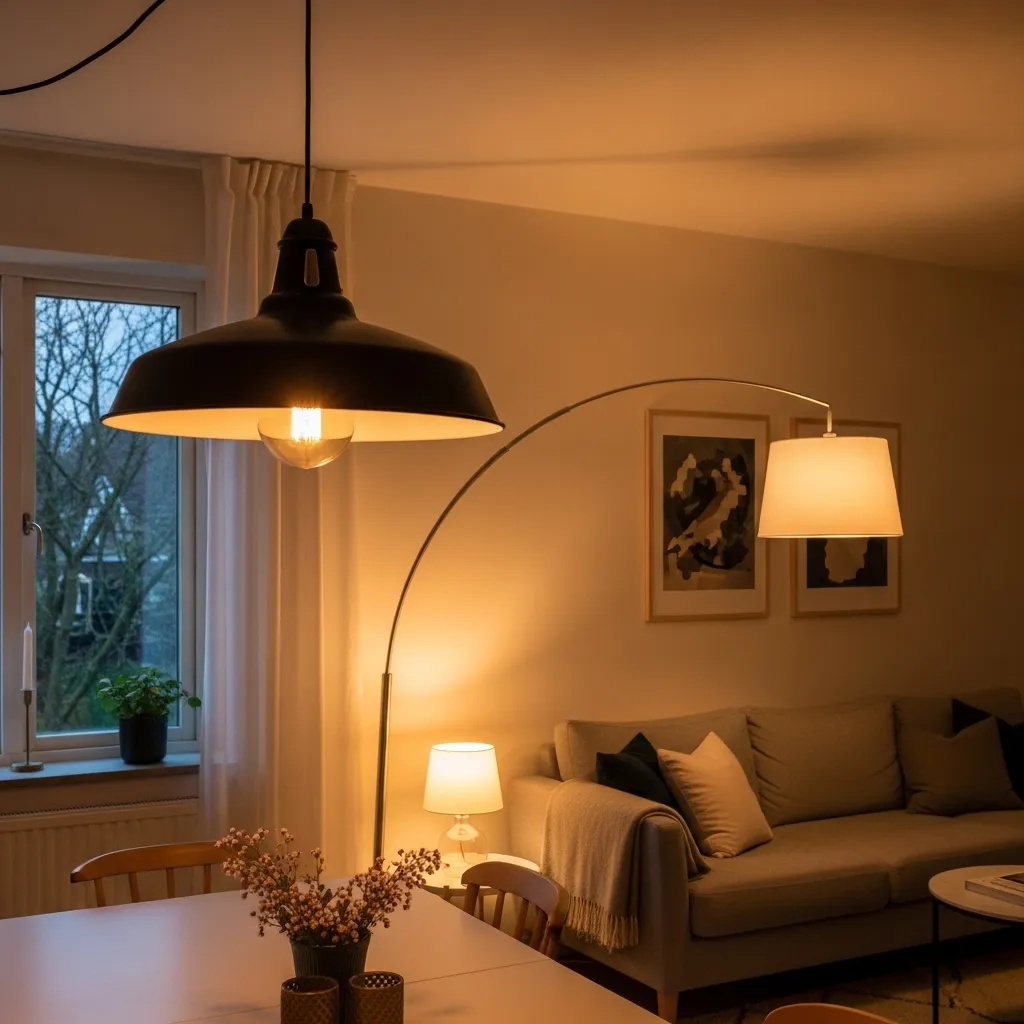
Architectural lighting in a Scandinavian living room is a matter of replacing overhead lighting almost entirely with a layered system of pendant, floor, and table lamps — because the Scandinavian living tradition has always understood that the quality of interior light matters enormously to wellbeing in a climate where natural daylight is limited for months at a time, and that the warm, amber glow of lamp light at human height creates a quality of intimacy and comfort that overhead ceiling light can never produce regardless of its color temperature or dimming capability.
The specific lamp forms most characteristic of Scandinavian lighting design are the wide-shade pendant with a classic profile that became iconic through Danish designers like Poul Henningsen, the arc floor lamp that reaches over a seating area without requiring a ceiling mount, and the simple table lamp with a natural fabric shade that creates a warm pool of light at surface height. Together these three sources at three different heights create the layered lighting environment that makes a Scandinavian living room feel genuinely atmospheric and genuinely warm rather than simply adequately illuminated.
7. The Scandinavian Gallery Wall
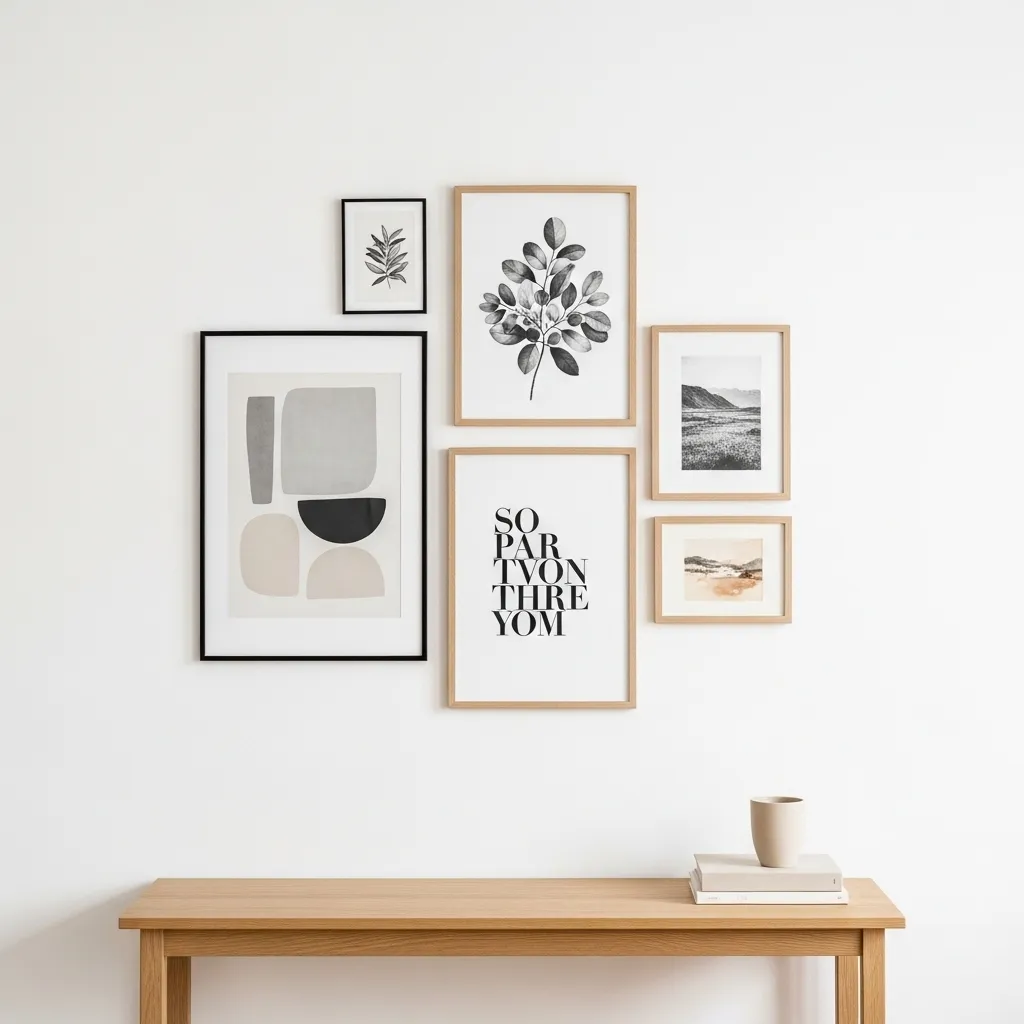
A Scandinavian gallery wall differs from the maximalist gallery wall tradition in almost every important characteristic — where the maximalist approach celebrates abundance and variety and the accumulation of pieces over time, the Scandinavian approach is deliberately edited, typically limited to five to eight pieces maximum, with a cohesive color palette across all the artwork, a consistent or intentionally limited frame style, and a composition that has clear visual logic rather than the deliberately salon-style abundance of the maximalist arrangement.
The artwork content of a Scandinavian gallery wall tends toward the quiet and the natural — abstract prints in muted tones, botanical illustrations, landscape photography, typographic work in neutral palettes — rather than the bold, colorful, or figurative artwork that might appear in a maximalist arrangement. This content preference is consistent with the aesthetic’s broader principle of finding beauty in subtlety and restraint, and it creates gallery walls that contribute to the room’s calm atmosphere rather than creating a zone of visual excitement within it.
8. The Organic Form Furniture Mix
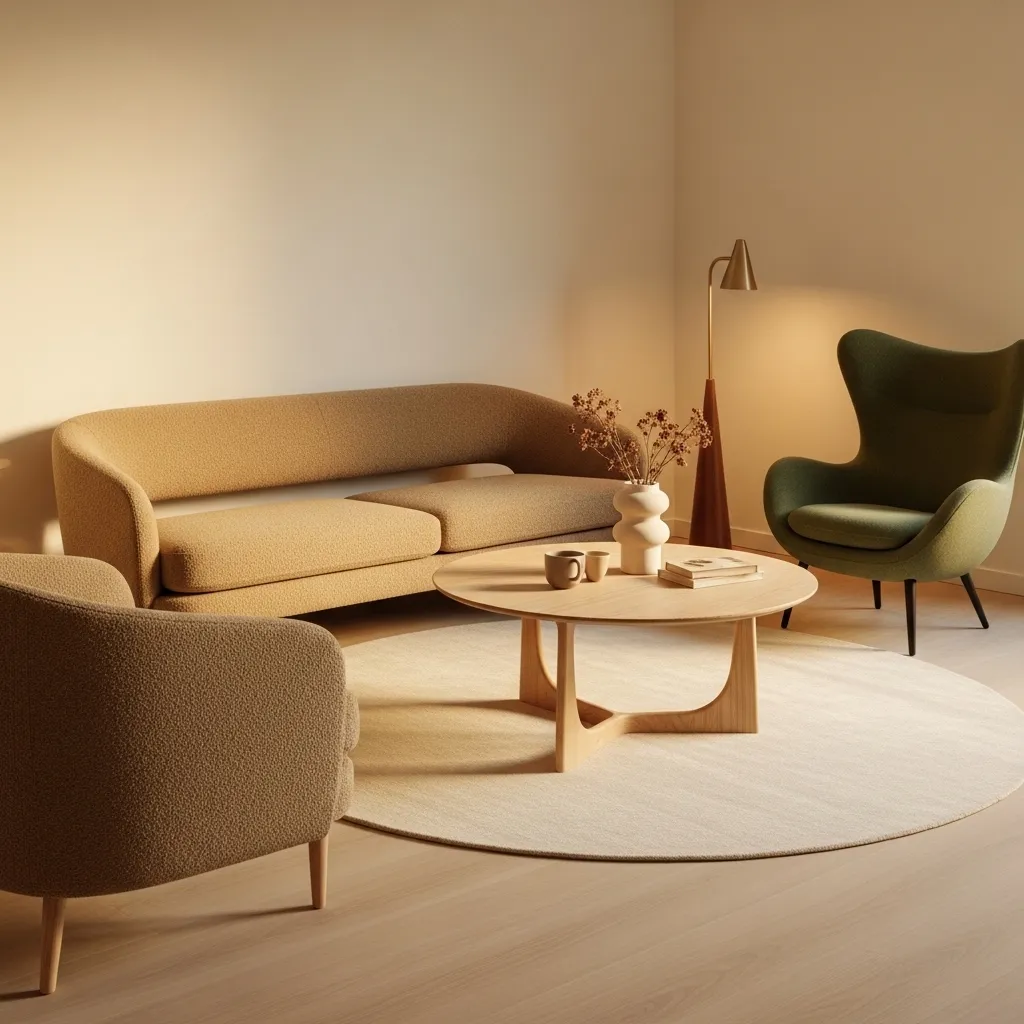
The shift toward organic, curved furniture forms in Scandinavian design is the 2026 evolution that makes the aesthetic feel most warmly contemporary and most humanistically inviting — the furniture of classic mid-century Scandinavian design was always characterized by beautiful organic forms (think the Egg Chair, the Swan Sofa, the organic wooden bowls of Danish craftsmen) and contemporary Scandinavian furniture design is returning to that organic tradition with sofas that curve rather than angle, coffee tables that are round rather than rectangular, chairs that embrace the body rather than simply supporting it.
Boucle fabric has become the defining upholstery material of this organic Scandinavian moment — its loopy, textural surface adds warmth and softness to furniture forms that might otherwise read as too spare or too cool, and its natural off-white and warm cream tones work perfectly with the pale wood and white plaster palette of the classic Scandinavian interior. A boucle sofa with gently curved arms is the furniture piece that most efficiently communicates the warmth and contemporary quality of the 2026 Scandinavian living room.
9. The Minimal Mantel and Shelf Vignette
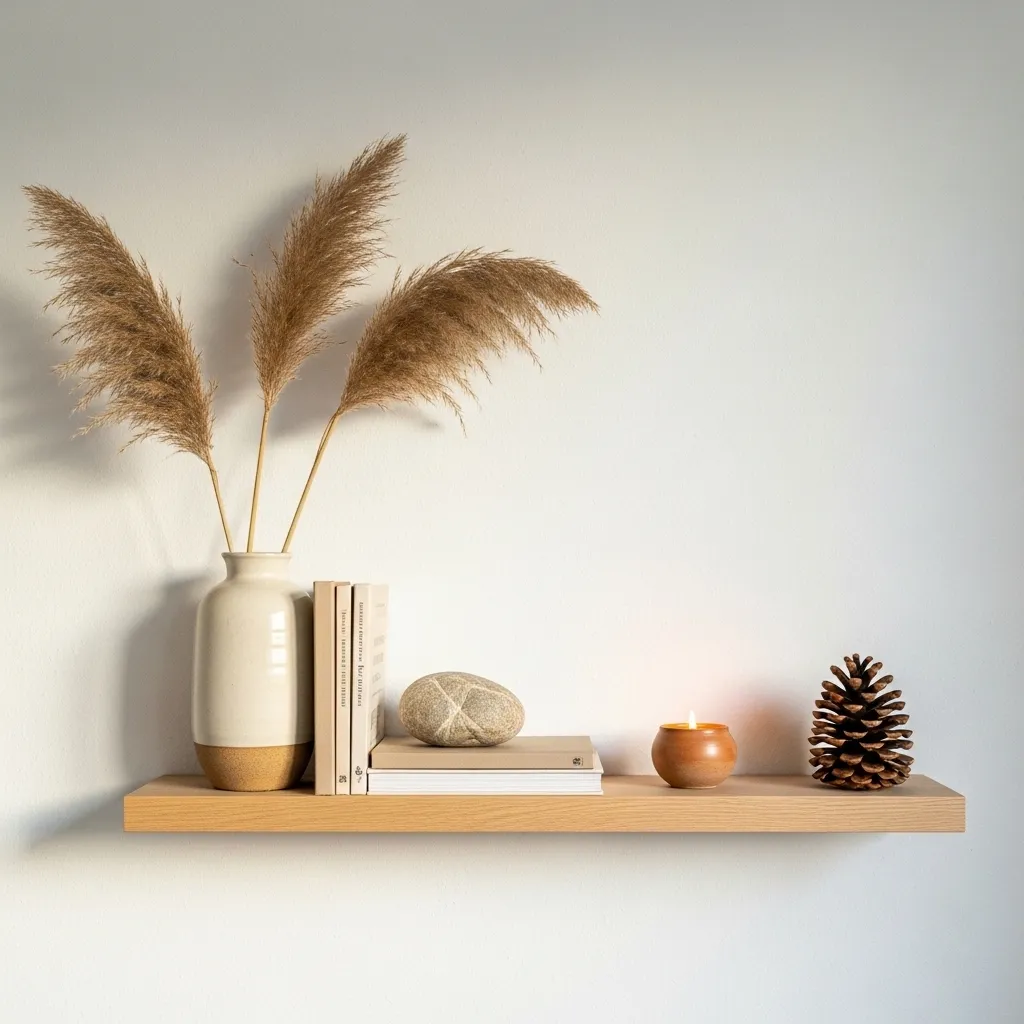
The Scandinavian shelf vignette is the design element that most purely expresses the aesthetic’s organizing philosophy — that objects are most beautiful when they have space to be fully seen, that the empty space around an object is as important as the object itself, and that a surface with three carefully chosen things is more beautiful than the same surface with fifteen things of equivalent individual quality. The restraint of the Scandinavian vignette is not minimalism for its own sake but a specific understanding of how attention and beauty work — that abundance of objects dilutes attention across all of them equally, while scarcity of objects concentrates attention on each one.
The specific objects that appear in a Scandinavian shelf vignette are typically drawn from nature or from craft — a beautiful stone, a dried botanical, a hand-thrown ceramic, a piece of driftwood, a simple candle, a pinecone. These are not objects purchased specifically for decoration but objects that have been collected or selected for their specific intrinsic beauty, and the combination of natural materials and craft objects on a pale wood shelf against a white wall creates a composition that feels like a considered meditation on material beauty rather than a decorated surface.
10. Warm Greige Walls as an Alternative to White
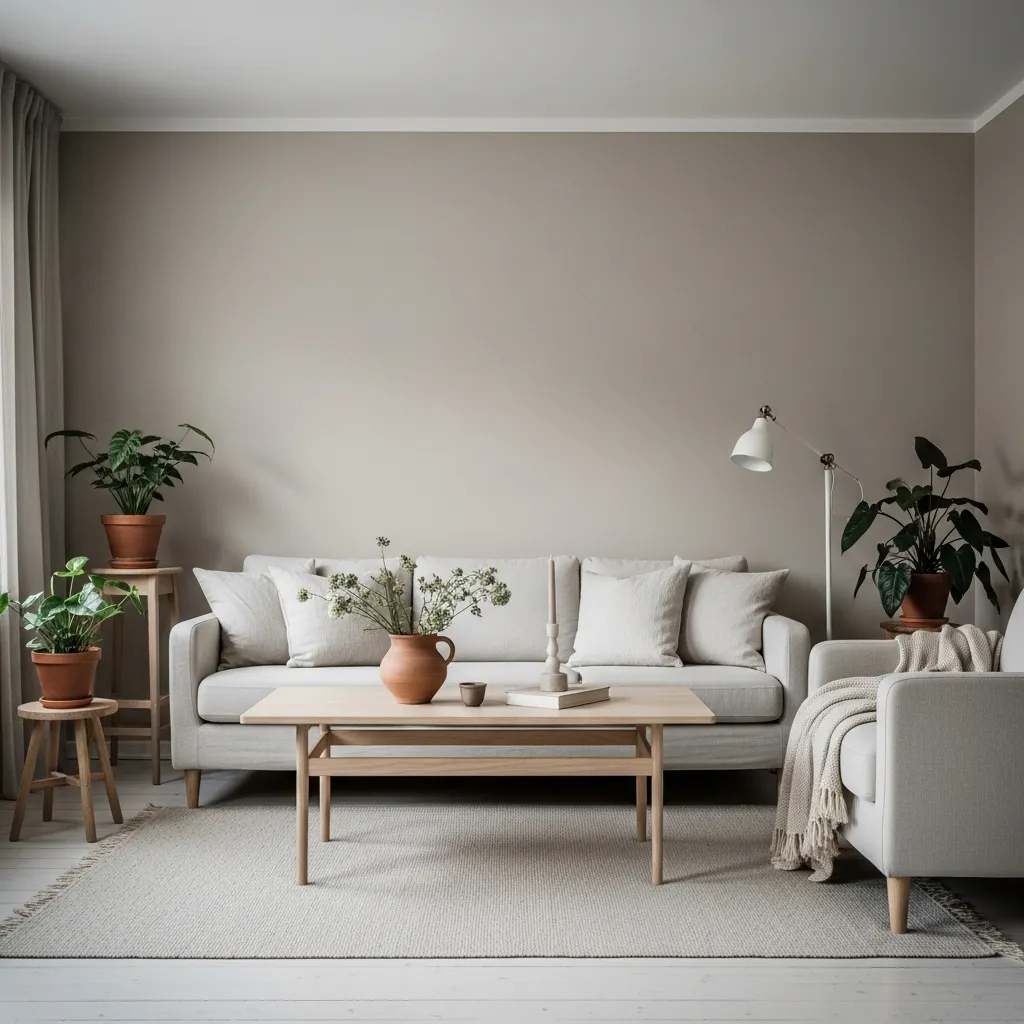
Warm greige — the quiet, warm grey-beige that sits at the intersection of the Nordic grey palette and the warm sandy tones of natural materials — is the wall color that improves on conventional white for Scandinavian living rooms because it provides the same neutral, recessive background that white walls provide while adding a quality of warmth that pure white lacks. In a room built on pale woods, natural linens, and warm candlelight, white walls can feel slightly clinical or cold when the light is grey or the day is overcast, whereas warm greige walls remain warm and inviting regardless of the quality of natural light.
The specific greige tones that work best in a Scandinavian living room have a warmth that tips slightly toward sand or warm stone rather than toward cool grey — the warm undertone prevents the color from reading as grey when the light changes, and it creates a wall color that appears to glow very slightly in lamplight in a way that pure white and cool grey walls don’t. This subtle warmth in the wall color creates the foundation for the room’s hygge atmosphere rather than working against it.
11. The Wabi-Sabi Natural Object Display
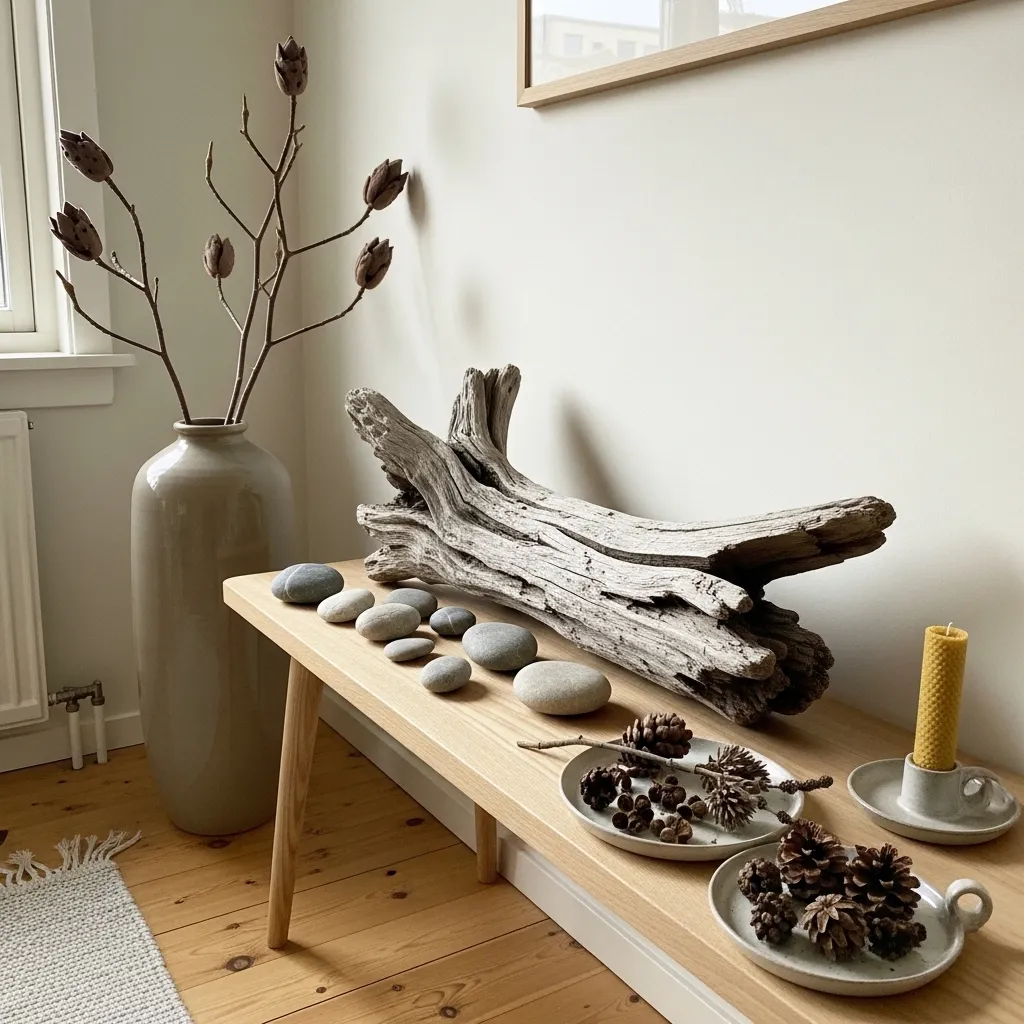
The display of natural objects in a Scandinavian living room — driftwood, stones, dried botanicals, seed pods, branches, pinecones — is the design tradition that most directly connects the interior to the natural world outside and that creates the specific quality of calm, grounded beauty that the aesthetic consistently seeks. These are not decorative objects purchased because they look like natural objects; they are actual natural objects selected for their specific beauty — the particular grey of that stone, the exact curve of that driftwood piece, the precise elegance of that dried branch — and placed in the interior with the same care given to any designed object.
The wabi-sabi quality of these natural objects — their imperfection, their irregularity, the evidence of natural processes in their forms and textures — is precisely what gives them their value in a Scandinavian interior context. A perfectly smooth stone is less interesting than one with a vein of white running through it; a straight dried branch is less interesting than one that curves unexpectedly; a single intact pinecone is less interesting than one partially opened. The specific, individual character of natural objects found and chosen rather than manufactured and purchased is the quality that makes a natural object display feel genuinely meaningful rather than decoratively incidental.
12. The Mixed Wood Tone Living Room
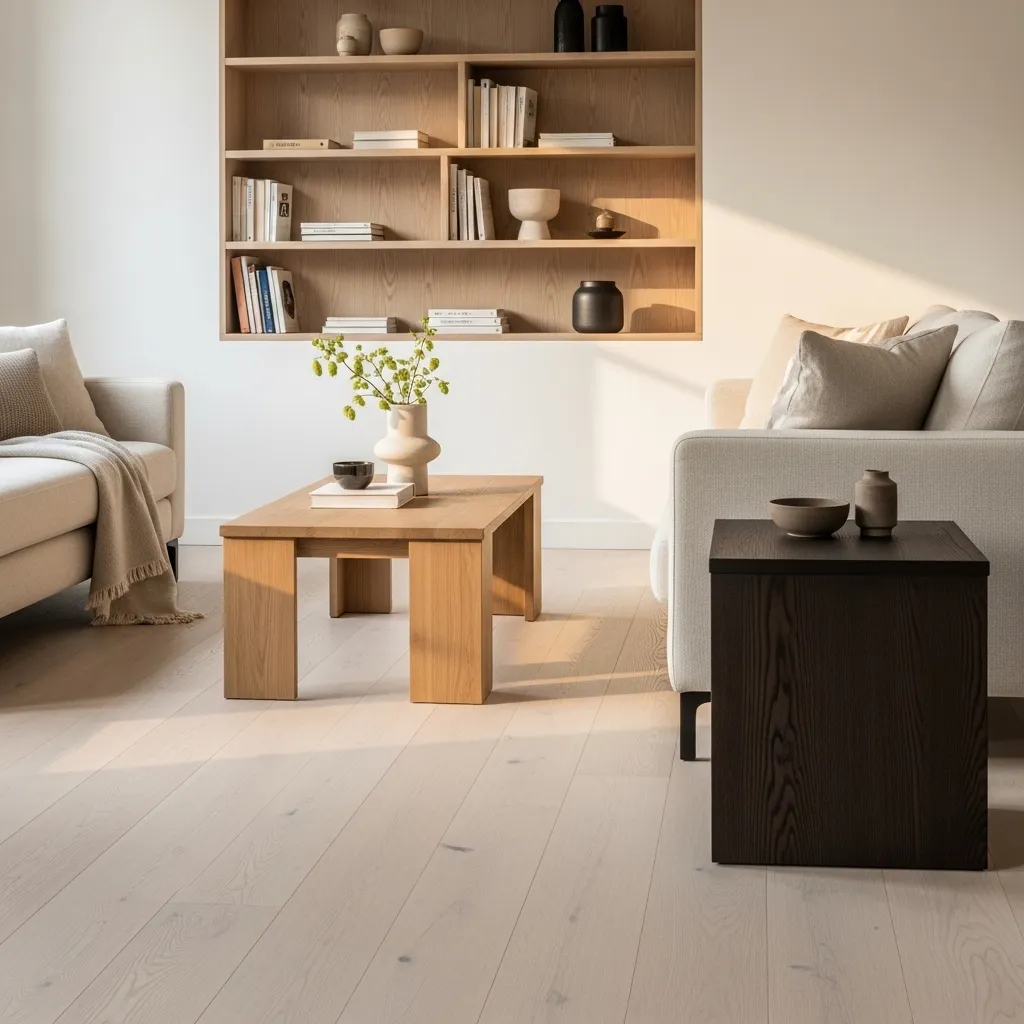
The mixed wood tone living room is the contemporary Scandinavian approach that has moved beyond the older convention of matching all wood furniture to the same species and finish — a convention that created rooms that looked safe and coordinated but slightly lifeless and over-managed. The contemporary Scandinavian understanding is that wood tones, like colors, are most interesting when they exist in deliberate contrast and conversation with each other, creating depth and visual richness that a single tone can’t achieve.
The principle that makes mixed wood tones work together rather than clash is maintaining a consistent warmth direction across all the tones — if all the woods share warm undertones (all moving from pale warm to deep warm rather than mixing warm and cool), they will read as a cohesive family even while being clearly different. Pale ash alongside medium warm oak alongside dark smoked oak creates a warm wood spectrum; pale ash alongside cool grey-toned beech alongside warm oak creates a less cohesive mix because the cool grey-beech is pulling in a different tonal direction from the other two.
13. The Low Furniture and Floor-Level Living Arrangement
Low furniture arranged close to the floor is the Scandinavian living room approach that most directly references the Japanese-influenced design tradition that Nordic designers have engaged with since the mid-twentieth century — the principle that living close to the floor creates a quality of groundedness and physical intimacy that higher furniture doesn’t provide, and that the visual calm of a horizontal, low-level room is different in character from the more vertical organization of conventional Western furniture heights.
The low sofa specifically changes the quality of sitting and conversation — at fourteen to sixteen inches of seat height rather than the conventional eighteen to twenty inches, you sit closer to the ground, more reclined, more physically settled into the room rather than upright at its edge. The difference in physical experience is subtle but genuine, and combined with the visual effect of a room where all the furniture hugs the floor rather than rising to mid-height, the low furniture arrangement creates a living room that feels genuinely restful and grounded in a way that conventionally proportioned rooms rarely achieve.
14. The Scandinavian Dining Nook Within the Living Room
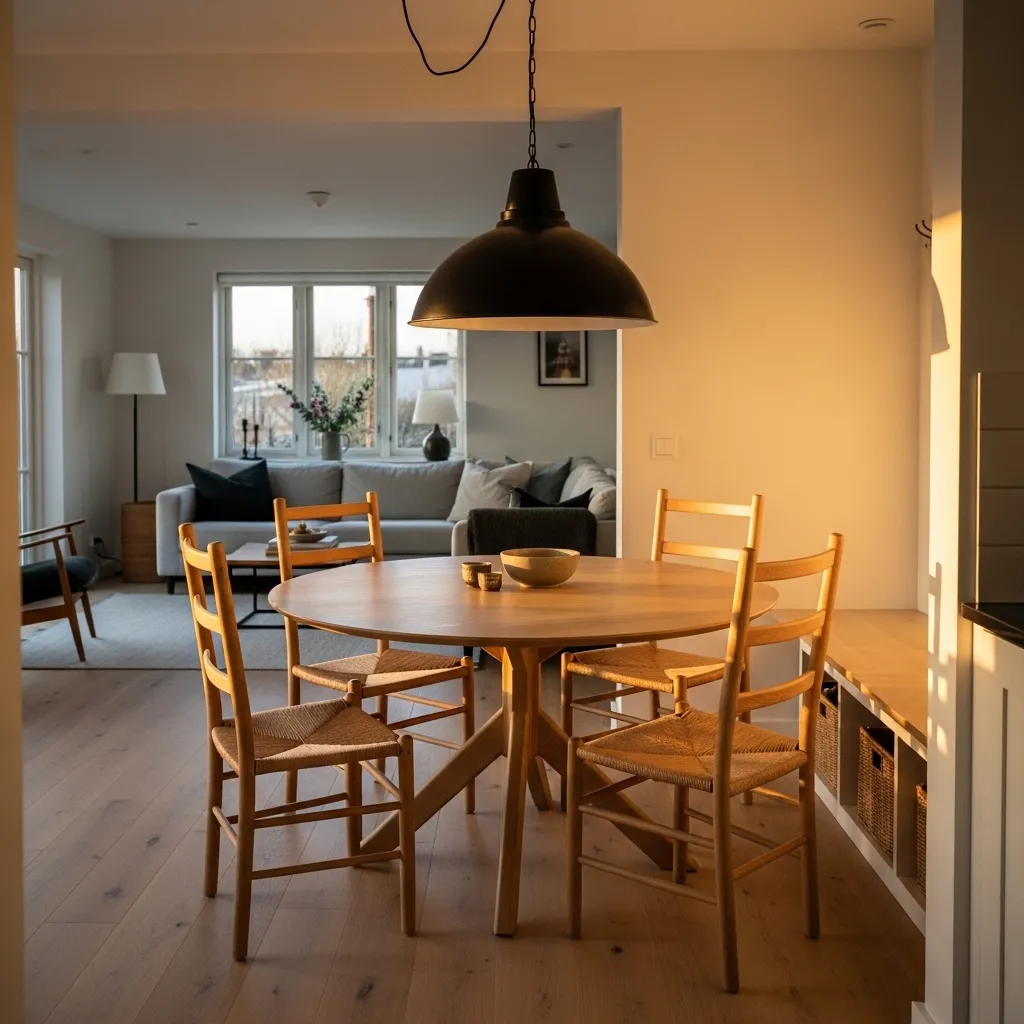
A dining nook within the open-plan Scandinavian living room creates one of the most characteristic and most beautiful spatial arrangements of Nordic domestic architecture — the integration of eating, living, and cooking within a single connected space that feels abundant rather than cramped, where different activities happen in different zones of one continuous room rather than in separated rooms. The dining nook specifically creates an intimate eating space within the larger living space, defined by the pendant light above the table rather than by walls or room dividers.
The round table is the specific dining table form most suited to a Scandinavian dining nook because its circular plan is naturally intimate and social — everyone at a round table is equidistant from everyone else, which creates a different quality of conversation and connection than rectangular tables where hierarchy of position becomes relevant. The single pedestal base of a round Scandinavian table also creates maximum legroom and access from all sides, and the visual simplicity of the pedestal form — one clean column rather than four legs — is consistent with the aesthetic’s preference for clean, minimal furniture profiles.
15. The Seasonal Decoration Approach to a Scandinavian Living Room
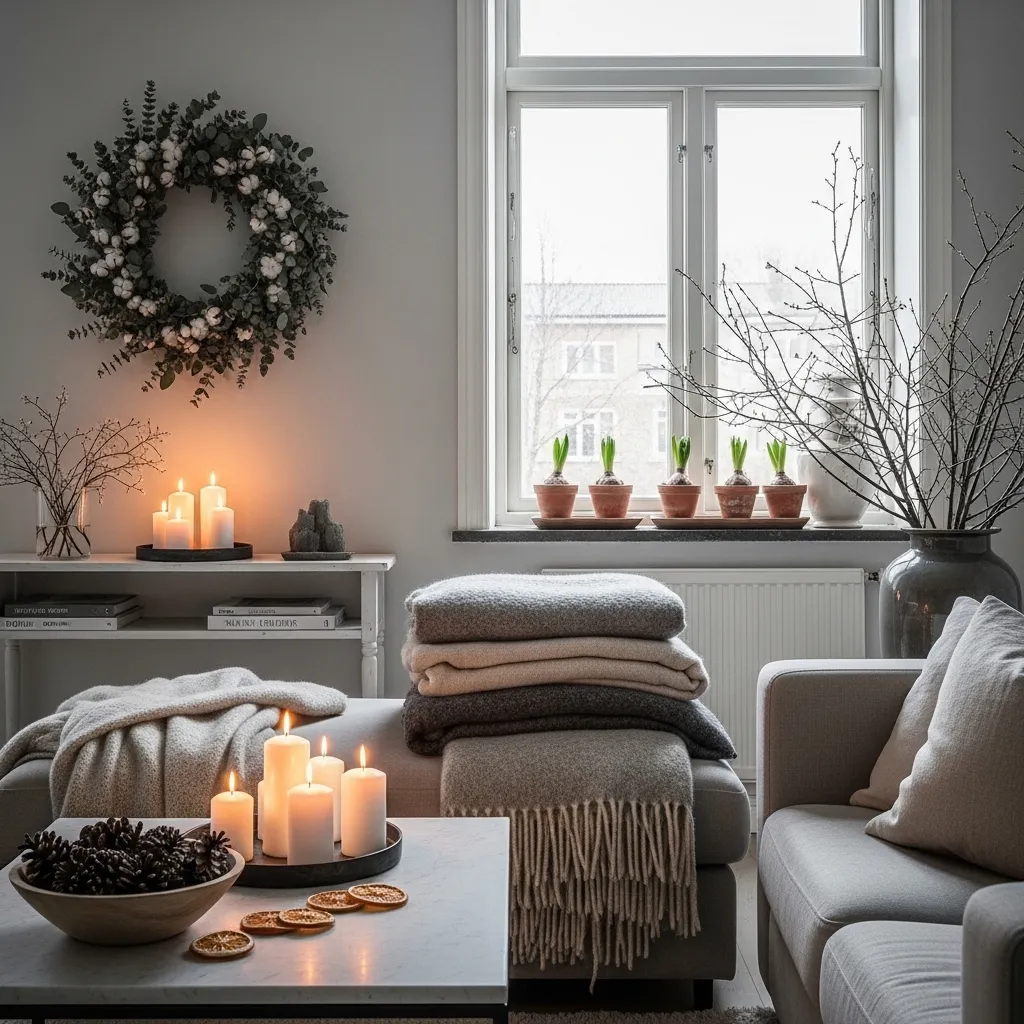
The Scandinavian approach to seasonal decoration is one of the most beautiful expressions of the aesthetic’s values — rather than maintaining a static, permanent design throughout the year or doing a complete seasonal overhaul that replaces one set of decorations with another, the Scandinavian tradition adds natural, seasonal layers to an underlying room that remains constant. The pale oak floors and white walls and natural linen sofa are always there; what changes are the botanical additions, the candle arrangements, the textile density, and the small natural objects that connect the interior to whatever the season outside is doing.
The winter layer is the most characteristic and most elaborate of the seasonal additions — the increased candle density that compensates for the limited natural light, the forced bulbs on the windowsill that bring spring promise into the dark months, the additional wool throws and sheepskin layers that respond to the cold, the dried botanicals and winter branches that reference the landscape outside — because winter is the season that Nordic domestic culture has developed the most sophisticated traditions for managing indoors, and those traditions have accumulated into one of the most beautiful and most emotionally resonant approaches to seasonal interior decoration in the world.