15 Rustic Modern Kitchen Ideas 2026 That Balance Raw Beauty With Genuine Functionality
If you’ve been trying to articulate what you want from a kitchen renovation or refresh and the answer keeps landing somewhere between the warmth and texture of a farmhouse kitchen and the clean lines and functionality of a modern one — between exposed timber beams and handleless cabinetry, between rough-hewn stone and polished concrete, between the patina of aged brass and the precision of matte black steel — then rustic modern is the design language you’ve been circling, and it’s one of the richest and most livable kitchen aesthetics available because it refuses to choose between character and function, between beauty and practicality, between the evidence of natural materials doing what natural materials do and the clean, purposeful organization of a kitchen that actually works. The ideas in this roundup cover the full spectrum of what rustic modern kitchen design looks like in 2026 — from the exposed timber beam treatment that immediately transforms the character of any kitchen ceiling, to the mixed material approach that pairs raw stone with matte black hardware, the open shelf and closed cabinet balance that creates both display and organization, the vintage-meets-contemporary appliance styling, the dramatic island configurations, the warmth of handmade ceramic tile, and several more directions that prove the most interesting kitchens are the ones that hold genuine tension between opposing qualities and resolve it beautifully.
I spent years trying to design kitchens in my head as either purely modern or purely rustic, and both directions always felt slightly wrong in the same specific way — the purely modern kitchen felt cold and performative, like a space that was designed to look impressive rather than to cook in, where every fingerprint on a glossy surface felt like a failure and every piece of kitchen equipment left out on the counter felt like a violation of the aesthetic. The purely rustic kitchen felt unpredictable in a way that created practical anxiety — beautiful in photographs taken from one angle at one time of day, but potentially dark, difficult to clean, and organized around aesthetic rather than functional logic. The rustic modern resolution of those two directions creates the kitchen that has always made the most sense to me: warm enough to feel genuinely inviting, clean enough to feel genuinely functional, with natural materials that age well rather than requiring constant maintenance to maintain their appearance.
What makes the rustic modern kitchen specifically work as an aesthetic synthesis is its approach to imperfection — where purely modern kitchen design treats imperfection as a failure condition to be avoided, and purely rustic kitchen design treats imperfection as a prerequisite and sometimes a performance, rustic modern treats imperfection as a natural quality of real materials that’s beautiful precisely because it’s real. A slab of live-edge walnut has an irregular edge because it came from a tree that grew irregularly, and that irregularity is more interesting and more beautiful than any edge a machine could cut. A handmade ceramic tile has slight variations in its glaze because it was made by hand, and those variations create a surface that catches light differently at every point and rewards looking at in a way that perfectly uniform manufactured tile never does.
1. Exposed Timber Beams on the Kitchen Ceiling
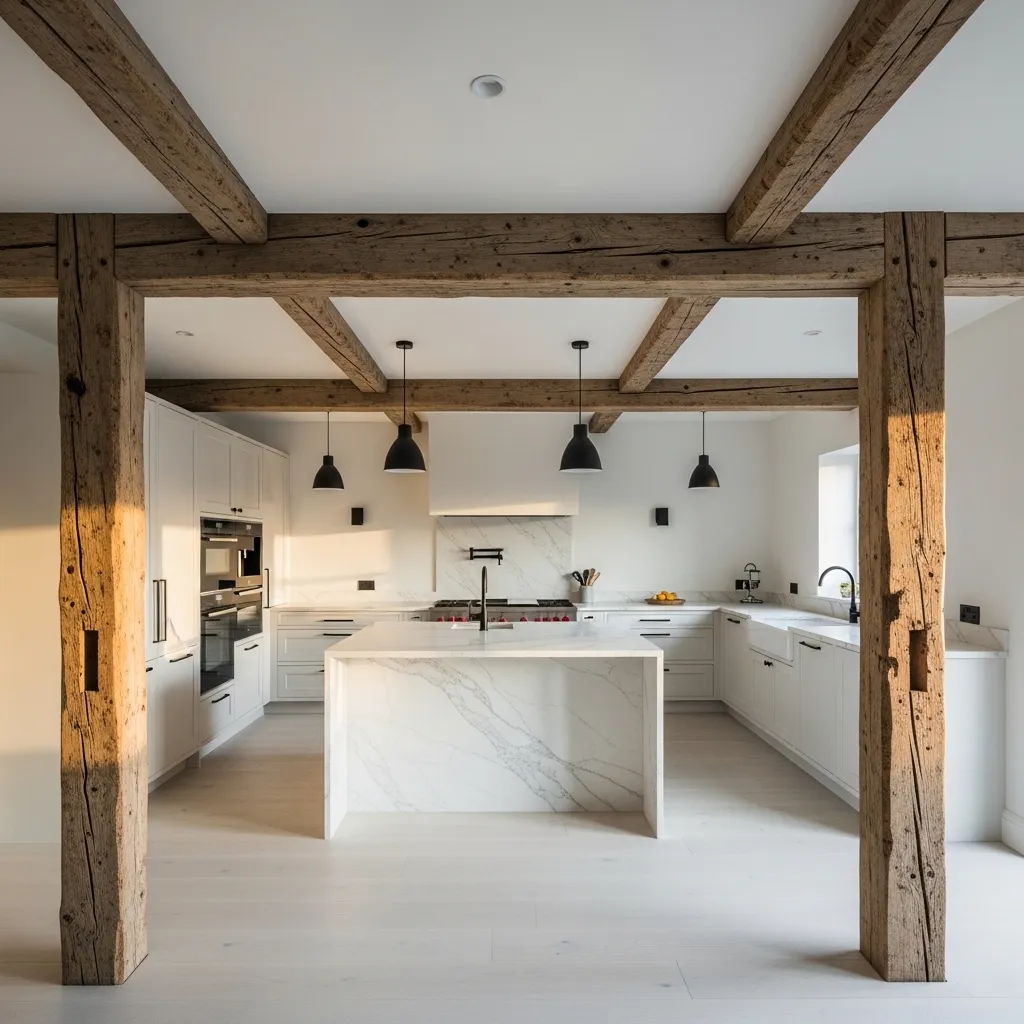
Exposed timber beams on a kitchen ceiling are the single architectural element that does the most to establish the rustic side of a rustic modern kitchen — they bring the vocabulary of barns, farmhouses, and old agricultural buildings into a contemporary interior in a way that immediately and completely changes the atmospheric character of the space without requiring any changes to the cabinetry, fixtures, appliances, or other kitchen elements. A completely modern kitchen with exposed beams above it feels like a different kind of space from a completely modern kitchen without them — warmer, more grounded, more connected to material history.
The specific character of the beams matters enormously — genuinely aged reclaimed beams with weathering, saw marks, nail holes, and the patina of actual use have a presence and authenticity that new beams stained to look old simply cannot replicate. The imperfections of real reclaimed timber are the evidence of its actual history, and that quality of authentic age is what creates the specific warmth that makes rustic modern kitchens feel so different from purely modern ones. Sourcing genuinely reclaimed timber from barns, industrial buildings, or salvage yards requires more effort than buying new beams, but the result is categorically different and worth the additional work.
2. Handmade Ceramic Tile Backsplash
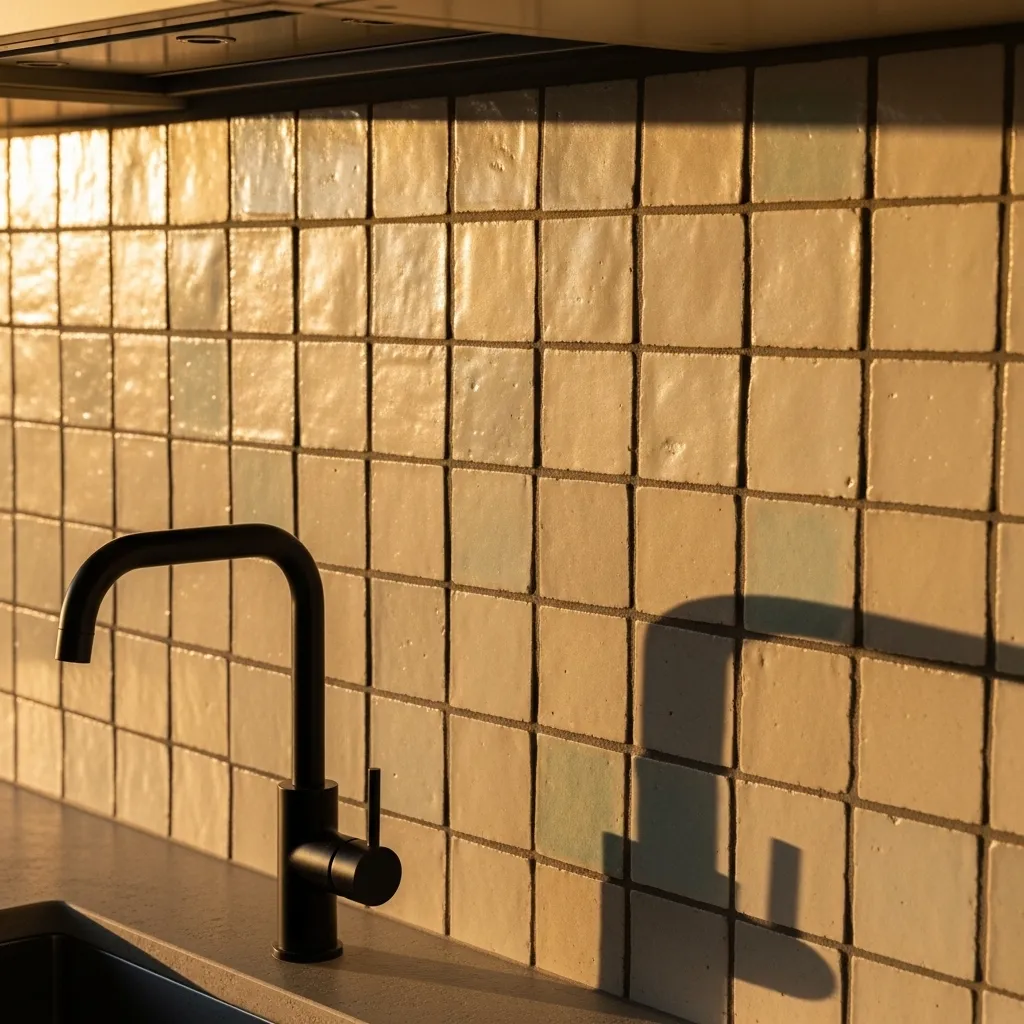
A handmade ceramic tile backsplash is the kitchen surface that creates the most warmth and character at the most intimate viewing distance — it’s the surface you look at while standing at the sink or cooking at the range, seen at close range multiple times a day, and the quality of variation in handmade glazing rewards that close, frequent attention in a way that machine-manufactured tile’s perfect uniformity can’t. Every handmade tile is slightly different from every other — different glaze pooling, different surface texture, different color variation — and the accumulated difference of hundreds of slightly different tiles creates a surface that’s visually alive and interesting in a way that’s completely impossible to manufacture.
The specific handmade tile that works best in a rustic modern kitchen is one where the variation is genuine but subtle — not dramatically different tiles that call attention to themselves individually, but tiles where the variation reveals itself gradually as you look, where the surface seems to shift and shimmer as the light changes. The warm off-white with slight blue-green undertones in the glaze is the most beautiful and most versatile of these because it works with both warm wood tones and cool stone surfaces, and it has the quality of aged plaster or traditional limewash that references historical European kitchen traditions without literally replicating any specific period style.
3. Mixed Material Island With Live Edge or Raw Stone
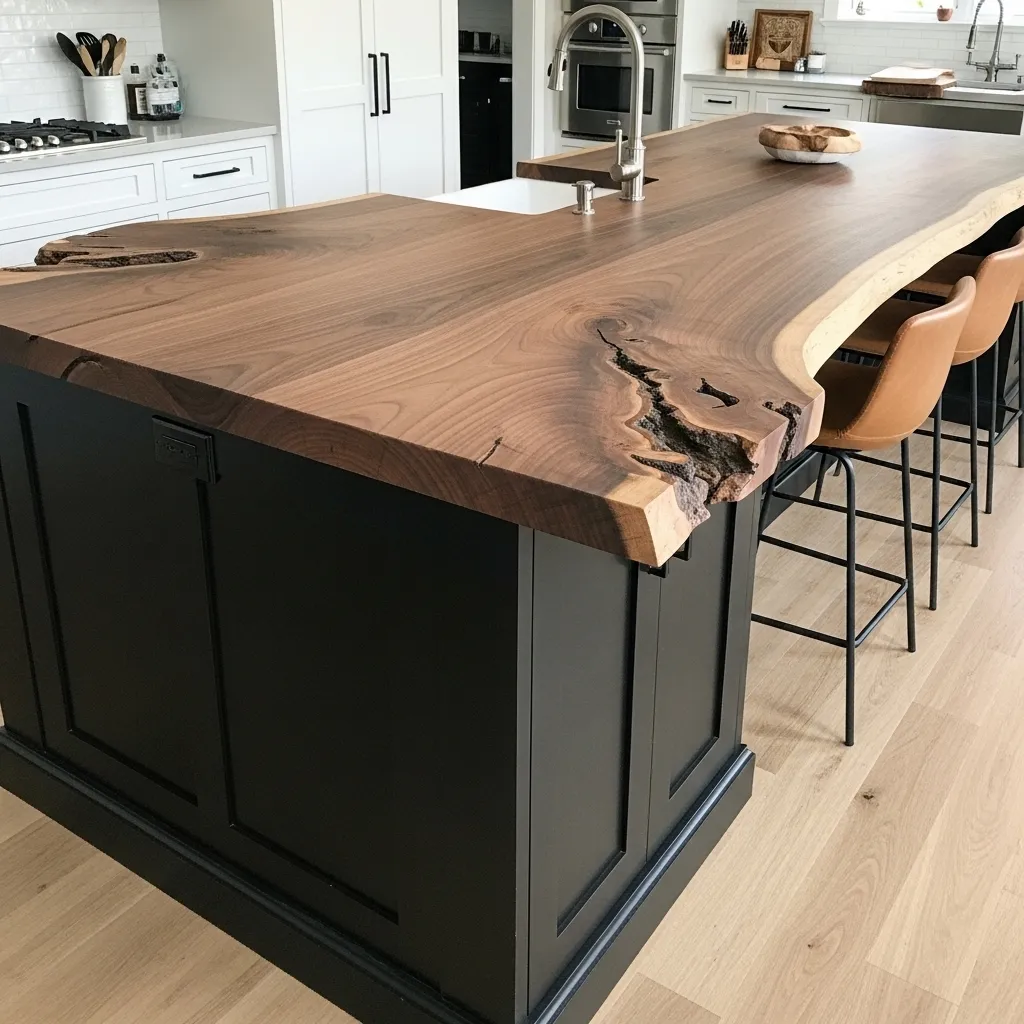
A live-edge walnut slab island countertop is the single most dramatic rustic modern kitchen feature available — the irregular, organic edge of the live slab declares immediately and unambiguously that this is a surface made from a specific real tree, with all the individuality and imperfection that entails, and the contrast between that raw organic edge and the precision of the modern kitchen cabinetry around it creates the aesthetic tension that defines rustic modern at its most confident. No two live-edge slabs are the same, which means a kitchen with a live-edge island countertop is specifically unique in a way that no amount of material selection from standard options can achieve.
The pairing of the live-edge walnut with a matte black island base is the combination that reads most contemporary — the precision of the matte black flat panel cabinetry creates a clean, modern foundation that makes the organic wildness of the walnut top appear even more dramatic by contrast, and the matte surface of the black paint shares a quality of non-reflective depth with the walnut grain that creates a material conversation between the two elements. Glossy white cabinetry under the same walnut top would look less resolved, because the glossy white recedes in character while the matte black holds its own alongside the powerful natural material above it.
4. Shaker Cabinetry in a Deep Natural Tone
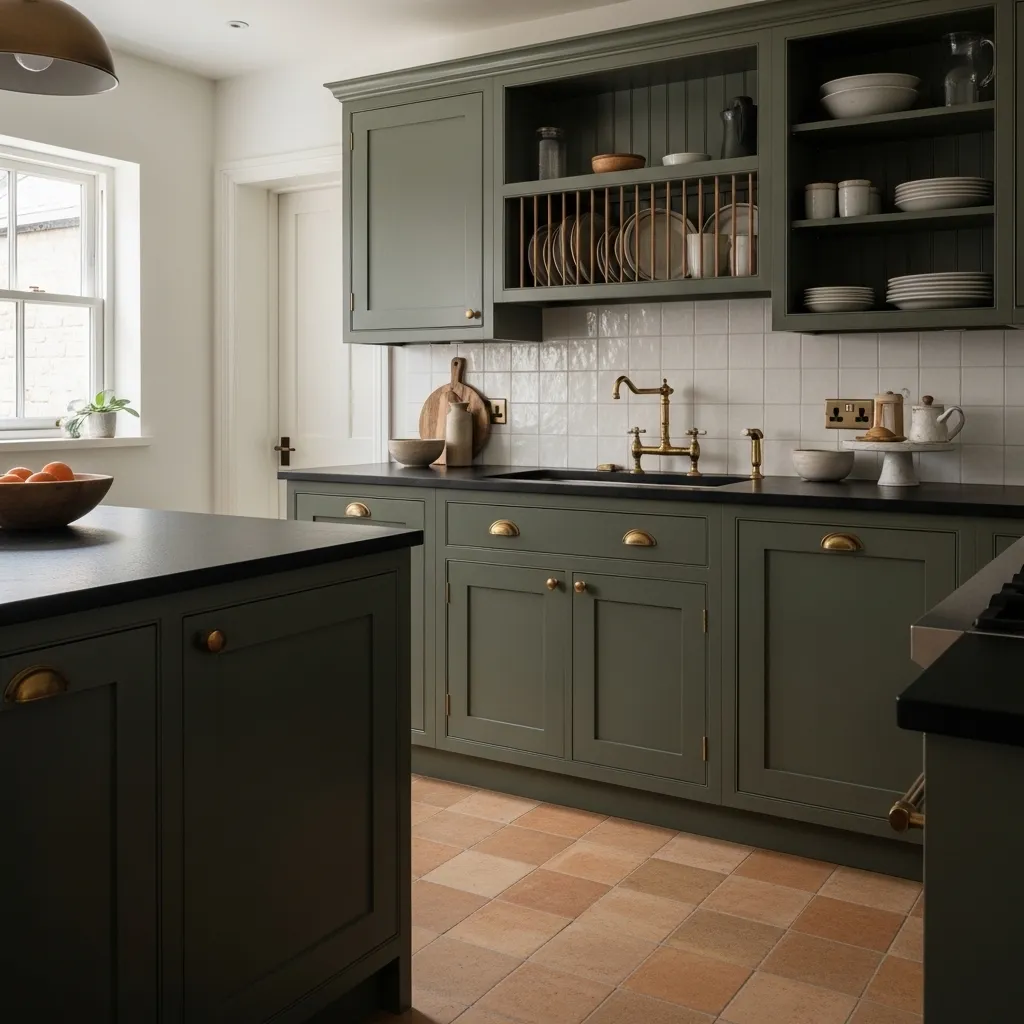
Shaker cabinetry in a deep, natural-reference color — forest green, warm navy, deep terracotta, muted sage — is the rustic modern kitchen decision that brings together the clean, functional simplicity of Shaker design tradition with the color depth and warmth that references the natural world, creating cabinetry that reads as contemporary in its profile and proportions while feeling grounded and warm in its color. The Shaker door profile specifically is the detail that distinguishes this from purely modern handleless cabinetry — the simple recessed panel creates a modest architectural element that adds shadow and depth to the cabinet face without the ornate detailing of traditional kitchen styles.
The aged brass hardware on Shaker cabinetry is the pairing that most consistently creates the rustic modern material conversation — the warmth and slight imperfection of aged brass against the clean, flat profile of a Shaker door creates a combination that’s neither purely traditional nor purely modern but something more interesting than either. Aged brass (unlacquered or lightly lacquered so it continues to develop patina naturally) changes and deepens over time in a way that polished chrome or brushed nickel doesn’t, and that quality of developing character is specifically aligned with the rustic modern aesthetic’s valuing of materials that improve with age.
5. Concrete Countertops With Warm Undertones
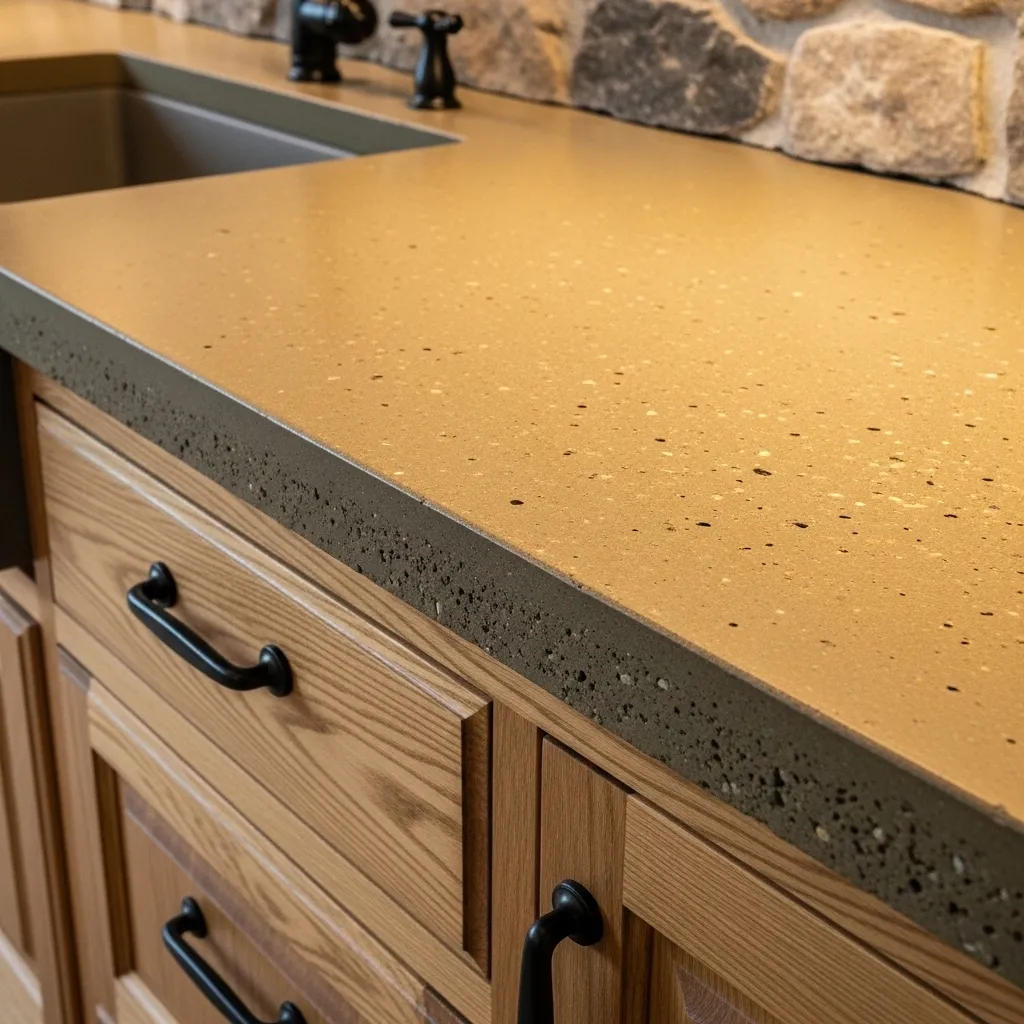
Concrete countertops in a warm-toned mix — achieved by adding warm aggregate, warm pigment, or using a warmer base cement than the default grey — are the rustic modern kitchen surface that bridges the gap between the industrial-cool of standard concrete and the warm natural tones of stone or wood. Standard grey concrete in a kitchen can read as too industrial and too cool for the warmth that rustic modern requires, but warm-toned concrete has a quality of aged plaster or rammed earth that fits perfectly within the rustic modern palette while maintaining the specific visual character of concrete — the visible aggregate, the slight imperfection of poured surfaces, the thickness of the slab edge.
The poured-in-place concrete countertop is the most authentic expression of this surface because it’s made in the actual kitchen rather than fabricated elsewhere and installed, which means it has a continuous quality — no seams between countertop sections — and a specific fit to the exact dimensions of the kitchen that prefabricated countertops can’t achieve. The slight variations that occur during pouring, the occasional aggregate cluster at the surface, the small irregularities in the finished surface — all of these are the evidence of the hand-made process that gives concrete countertops their character and distinguishes them from the perfect uniformity of engineered stone.
6. Open Shelving in Natural Wood Above Closed Cabinetry
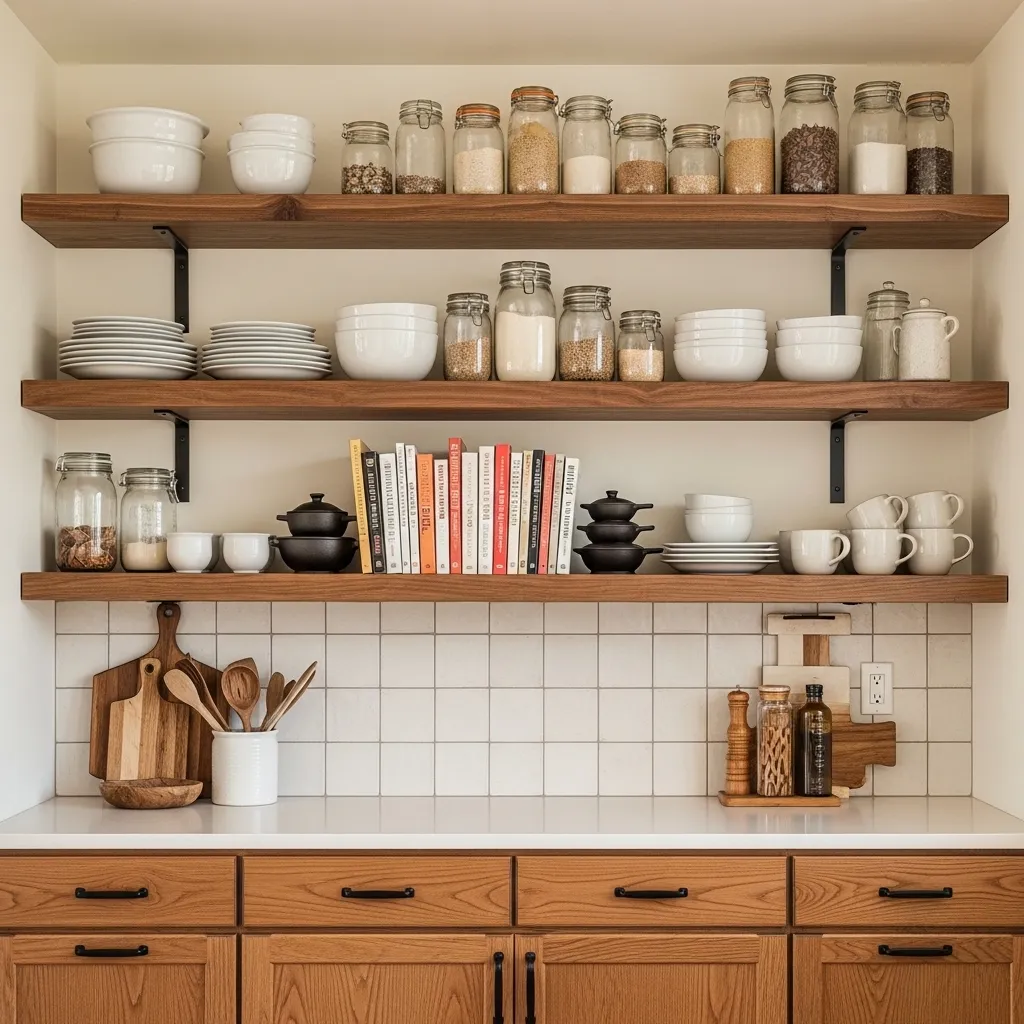
Open shelving above closed lower cabinetry is the rustic modern kitchen configuration that creates the most display space and the most warmth in the upper kitchen zone while maintaining the practical storage capacity that fully closed kitchen cabinetry provides below. The open upper shelves display the most beautiful kitchen objects — the ceramic dishes, the glass jars, the cast iron, the cookbooks — making the kitchen feel like a curated collection of objects chosen for both function and beauty, while the closed lower cabinets contain the less beautiful necessities in organized invisibility.
The thickness and quality of the shelf boards is the detail that most determines whether open shelving reads as beautifully rustic modern or as temporary and unfinished — a thick, solid walnut or oak board of genuine two-inch thickness on simple black iron brackets reads as a considered design decision, while a thin MDF shelf on white plastic brackets reads as a practical afterthought regardless of what’s displayed on it. The material quality of the shelf itself is always visible because it’s the backdrop against which everything displayed is seen, and that backdrop needs to be genuinely beautiful to make the display beautiful.
7. Raw Stone Feature Wall Behind the Range
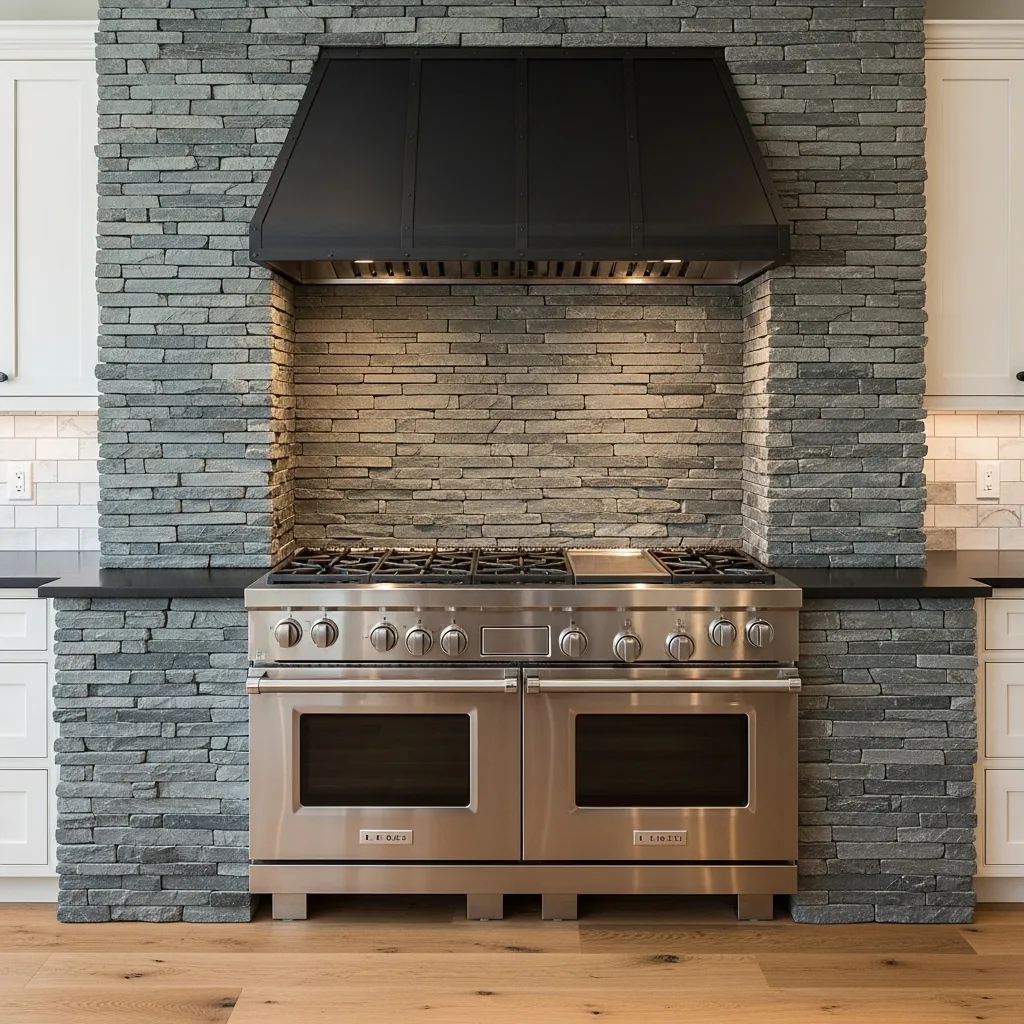
A raw, unpolished stone feature wall behind the kitchen range is the architectural statement that most directly brings the geological world into the domestic kitchen — the layered, irregular faces of stacked slate or fieldstone at the range wall create a surface that looks like a section through the earth itself, with all the variation in color, texture, and form that natural stone deposits produce. The contrast between this geological rawness and the precision of a professional kitchen range is one of the most visually dramatic and most characteristically rustic modern juxtapositions possible in a kitchen.
The selection of the stone is the decision that most determines the visual quality of the feature wall — slate, fieldstone, schist, quartzite, and sandstone all have different color ranges and different textures that create different atmospheres when stacked. Slate in its deep grey-green is the most dramatic and most contemporary feeling; fieldstone in warm grey and buff tones is the most rustic and most farmhouse-referencing; quartzite with its crystalline quality catches light more brilliantly than the others. The thickness of the stone pieces and the regularity of the horizontal layering also affect the character significantly — thin, precisely layered courses create a more refined result while irregular, varied thickness creates a more truly raw and ancient quality.
8. Matte Black Hardware and Fixtures Throughout
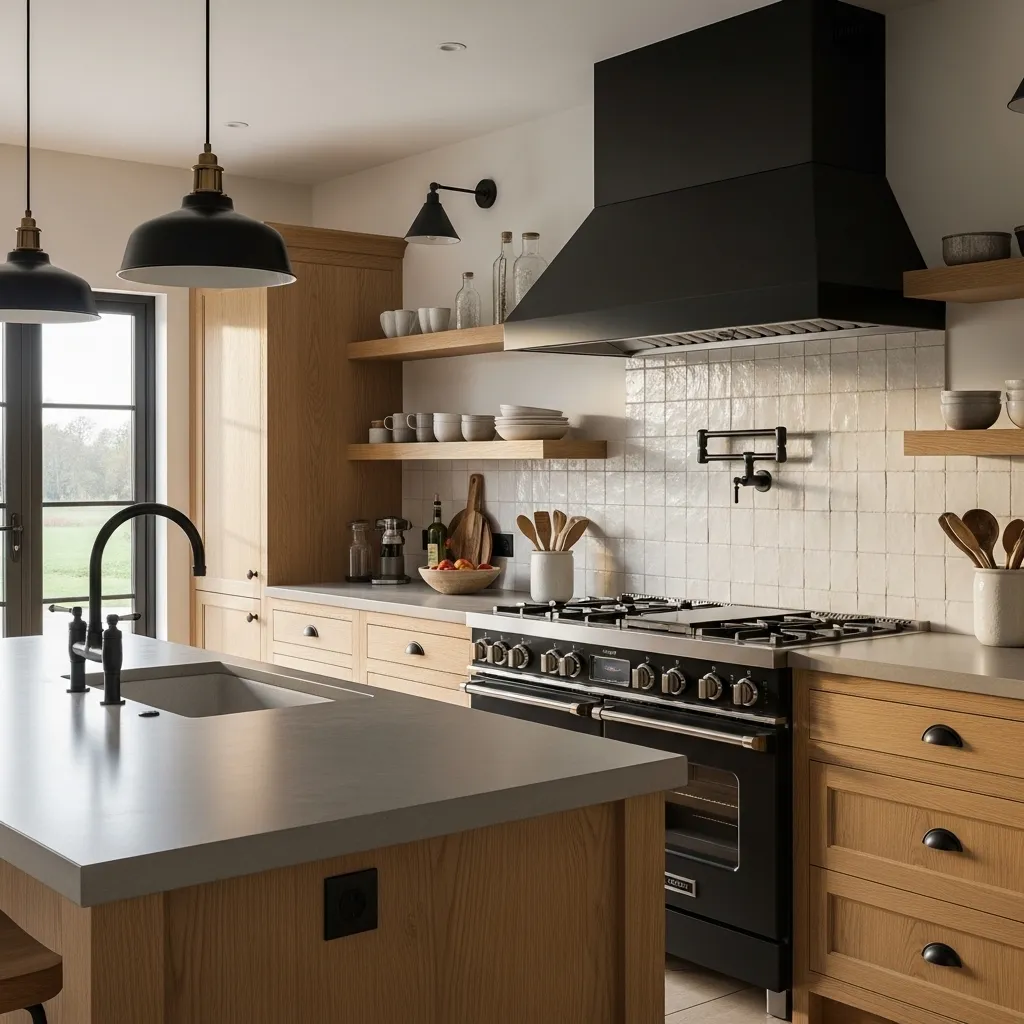
Matte black hardware and fixtures as a consistent accent throughout a rustic modern kitchen is the design decision that most efficiently creates visual coherence in a kitchen built from varied natural materials — when the tap, the cabinet pulls, the range hood, the pendant fittings, and the shelf brackets are all in the same matte black finish, they create a connective thread that runs through the whole kitchen and ties together the different natural materials around it into something that reads as a composed design rather than a collection of individual material choices.
The matte surface of the black finish is specifically important to the rustic modern aesthetic — polished black chrome would read as too glossy and too industrial, while matte black has a depth and quietness that complements rather than competing with the warmth of natural materials. Matte black recedes slightly in the visual hierarchy of the kitchen, allowing the natural materials — the grain of the oak, the texture of the stone, the variation in the ceramic tile — to be the primary visual elements while the black hardware serves as the precise, contemporary counterpoint that gives those organic materials their modern context.
9. Farmhouse Sink in Fireclay or Natural Stone
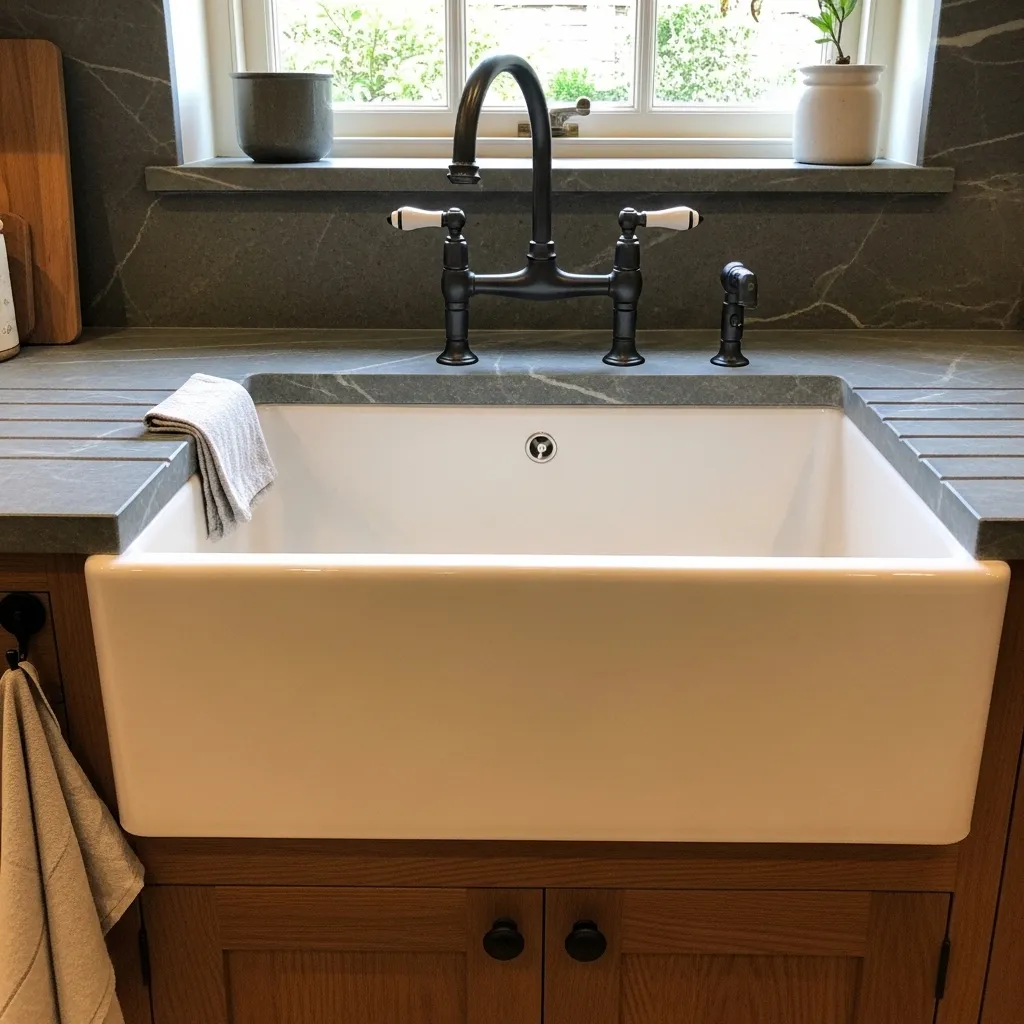
A farmhouse apron-front sink in fireclay or natural stone is the kitchen element that most directly references the agricultural and domestic history of the farmhouse kitchen tradition while being completely compatible with contemporary kitchen organization and plumbing. The deep, single-basin format of the farmhouse sink is both historically rooted and practically excellent — the large single basin accommodates large pots and baking sheets that divided basins make awkward, and the apron front that extends beyond the cabinet face creates a distinctive profile that establishes the sink as an architectural feature of the kitchen rather than just a functional fixture.
Fireclay specifically has qualities that stainless steel and composite sinks lack — its slightly warm off-white tone has the warmth of aged ceramic rather than the clinical brightness of white enamel, its fired surface has the subtle texture of a handmade material rather than the mechanical perfection of cast materials, and it develops a quality of patina over time as the glaze micro-abrades and the surface deepens in character rather than simply scratching and staining as less substantial materials do. A fireclay farmhouse sink in a well-used kitchen looks better after five years of cooking and cleaning than it did when first installed.
10. Warm Terracotta or Stone Floor in the Kitchen
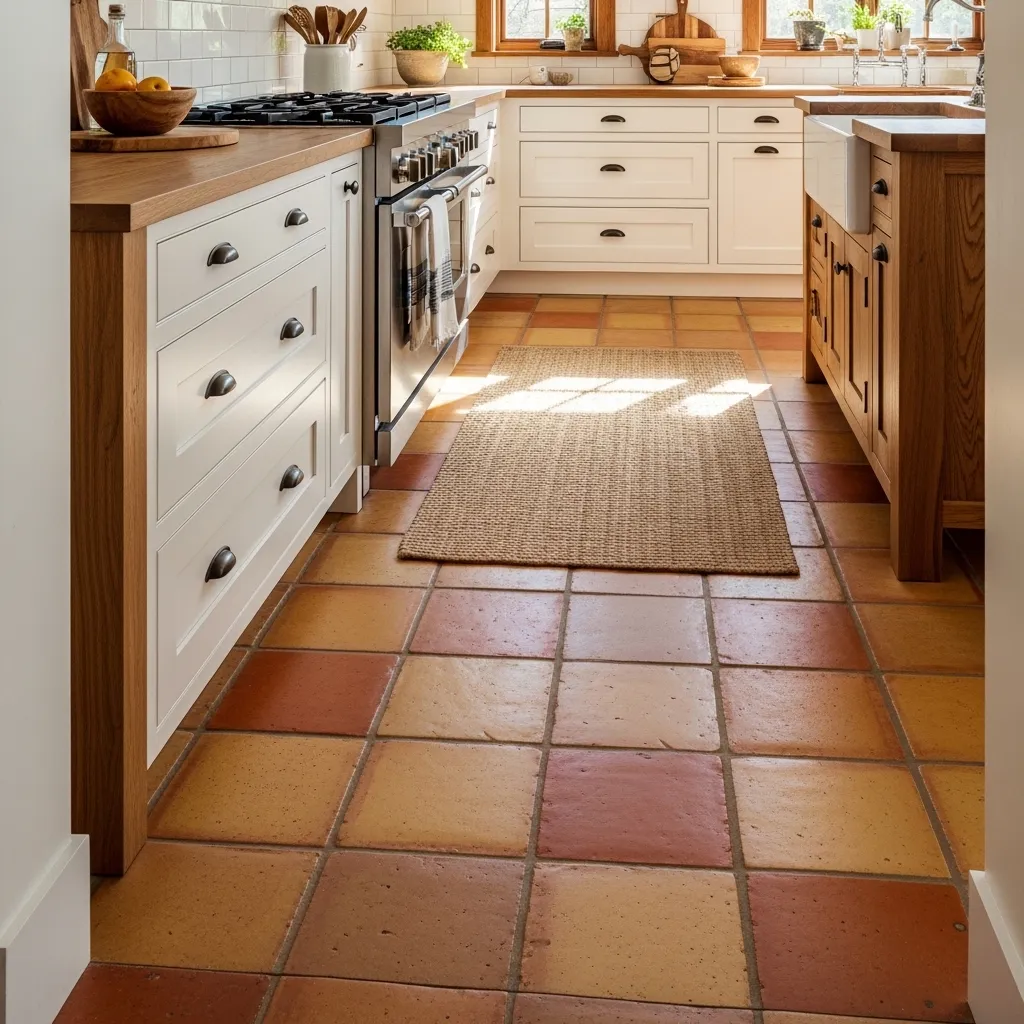
A terracotta tile floor in a kitchen is the material decision that most completely transforms the thermal quality of the whole space — the warm amber and red-orange tones of natural fired clay create a floor that appears to radiate warmth upward through the room in a way that stone, concrete, and wood floors don’t quite achieve. The terracotta floor is the foundation that makes every other material choice in the kitchen appear warmer — the white cabinetry above it looks creamier than it would over a grey stone floor, the wood tones appear richer, the matte black hardware appears less severe, and the overall atmosphere appears more genuinely inviting and less architecturally cool.
Authentic terracotta tiles — fired from natural clay rather than manufactured from ceramic — have the characteristic variation in tone and texture that comes from natural materials processed by hand and fired in kilns where temperature variation across the batch creates different results in different tiles. This variation is precisely the quality that makes terracotta floors beautiful — the individual tiles are slightly different from their neighbors in tone, in surface texture, in the precise character of their matte surface, and the accumulated variation of many slightly different tiles creates a floor that shimmers and shifts as the light changes rather than sitting flat and uniform underfoot.
11. Reclaimed Wood Ceiling or Feature Panel
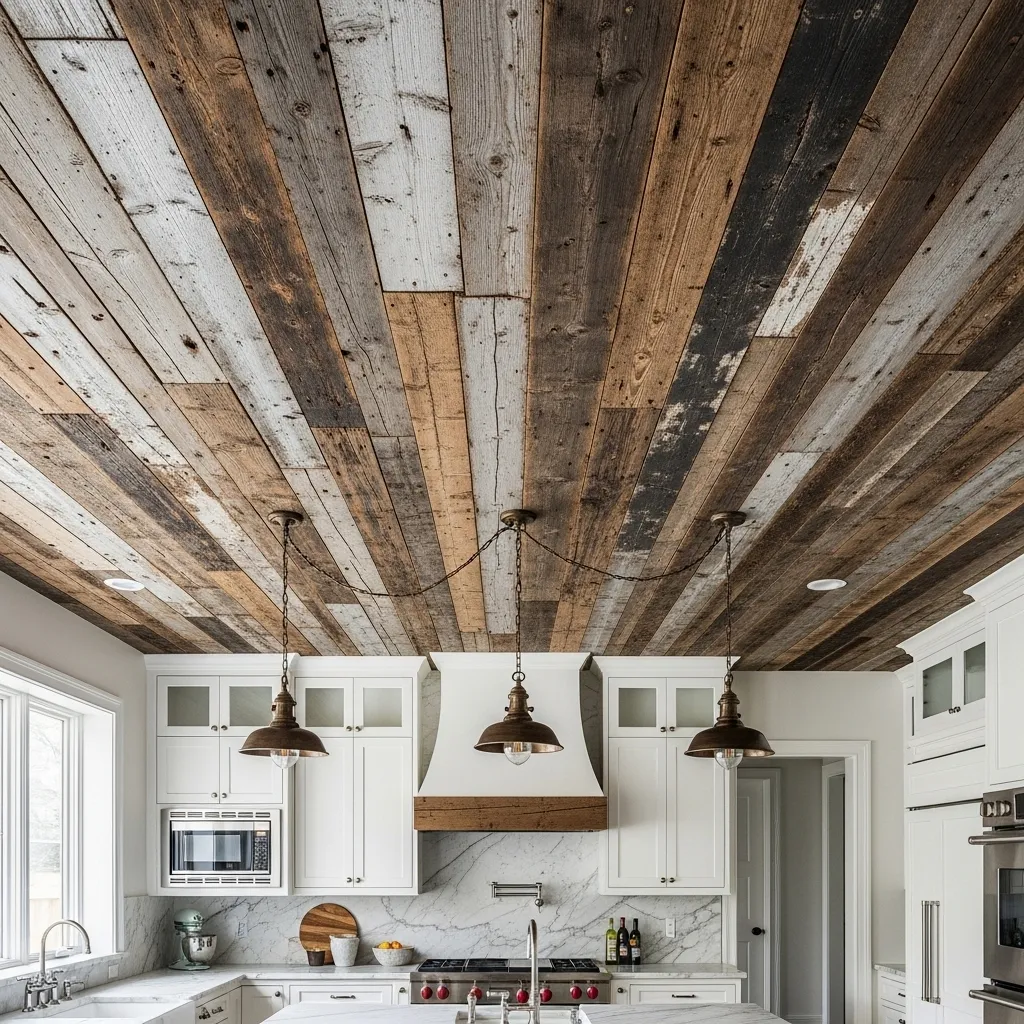
A reclaimed wood ceiling treatment is the architectural intervention that creates the most dramatic character transformation in any kitchen — the ceiling is the largest single surface in a kitchen and typically the least attended to, and covering it in genuinely reclaimed timber boards with all the variation and history of old wood immediately changes the felt character of the entire space. A kitchen with a reclaimed wood ceiling feels like a different category of room from a kitchen with a smooth white plaster ceiling regardless of the cabinetry, countertops, or appliances below it.
The variation in a well-sourced reclaimed wood ceiling — boards from different original sources having different tones, different grain patterns, different histories visible in their surfaces — creates a ceiling with the complex, rich visual quality of a painting that no uniformly finished ceiling can approach. The silver-grey of genuinely weathered old wood, the warm brown of barn timber, the occasional darker board from a different species, all create a color composition overhead that changes with the light and rewards looking up at in a way that a white plaster ceiling doesn’t invite.
12. Industrial Pendant Lights Over the Island
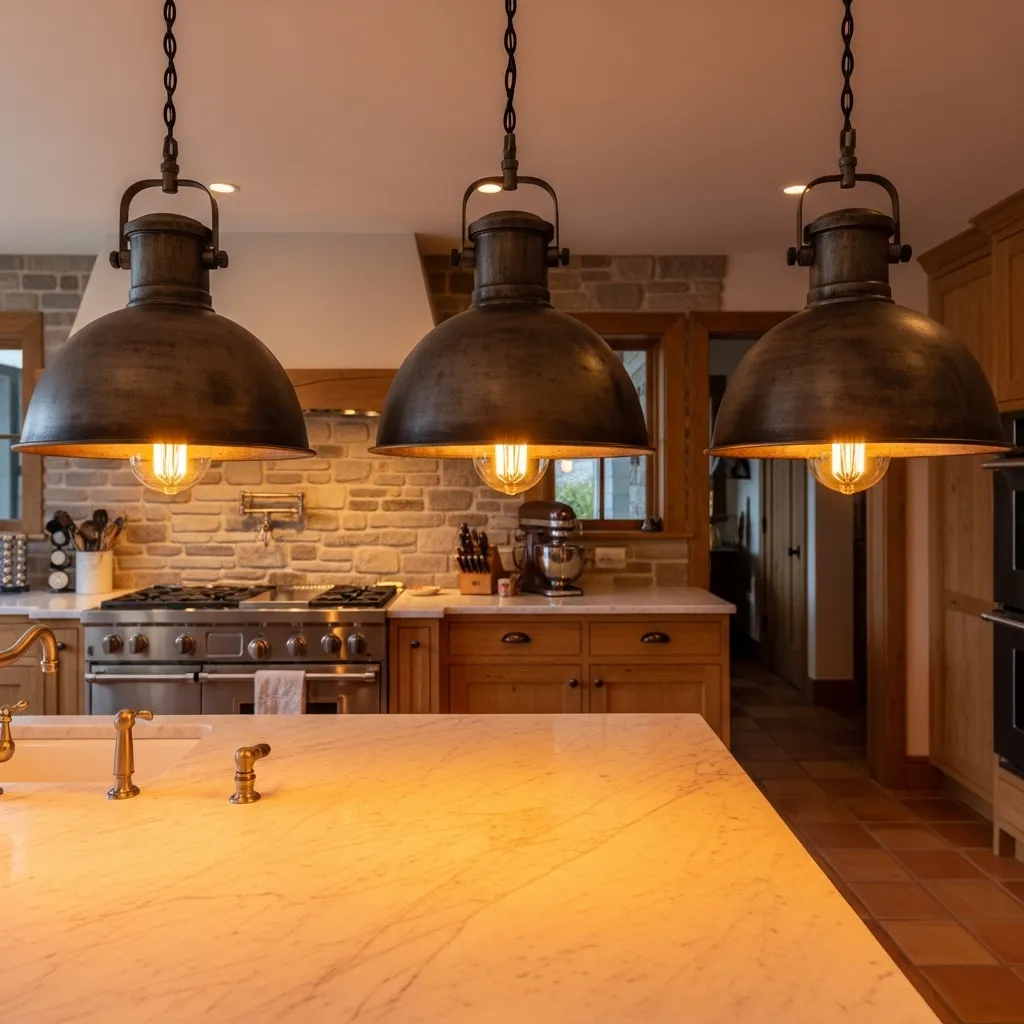
Industrial-style pendant lights with a raw iron or aged metal finish above a kitchen island are the lighting element that most efficiently creates the rustic modern connection between contemporary kitchen design and the industrial and agricultural architecture that the aesthetic references — the exposed Edison bulb, the raw metal shade, the visible cord all communicate an honest approach to materials and construction that’s consistent with the rustic modern philosophy of letting materials be what they are rather than concealing or refining them beyond their natural character.
The row of three identical pendants above an island is the lighting configuration that creates the most satisfying visual rhythm — the repetition of three identical forms at the same height creates a series that reads as an architectural element rather than individual decorative fixtures, and the spacing of three lights above a typical kitchen island length creates warm overlapping light pools that illuminate the entire island surface evenly while maintaining the distinctive character of individual pendant light sources. Two pendants above an island are always slightly less satisfying than three for the same reason that two eyes on a face are less satisfying than one — the odd number creates a natural center that even numbers lack.
13. The Integrated Pantry or Larder Cabinet
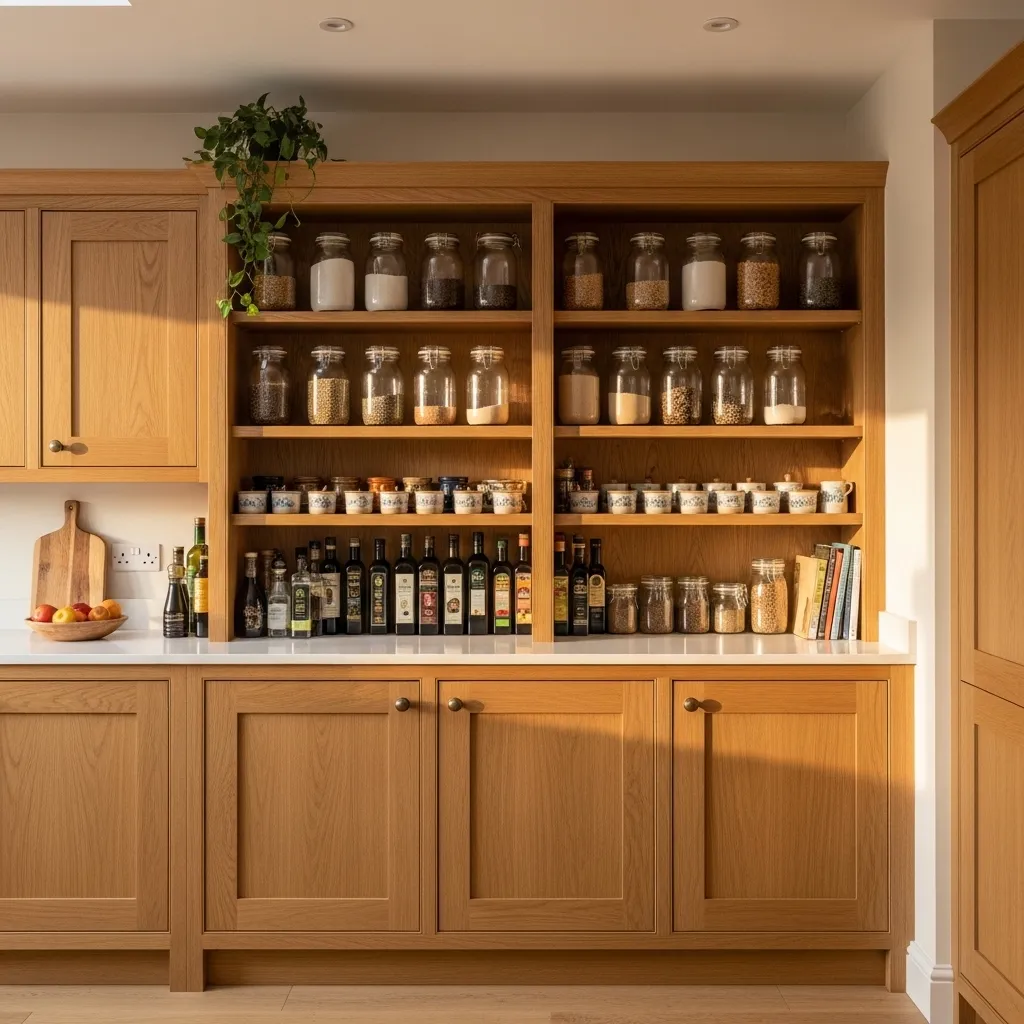
An integrated floor-to-ceiling pantry or larder cabinet in a rustic modern kitchen creates the organizational centerpiece that the farmhouse kitchen tradition was built around — a dedicated, permanent home for food storage that’s visible and accessible rather than concealed in various cupboards throughout the kitchen and managed with difficulty. The larder cabinet as a dedicated piece of kitchen furniture rather than an arrangement of standard upper and lower cabinets has a different quality of presence in the kitchen, reading as a significant functional element rather than as background storage.
The combination of closed lower storage and open upper display is the configuration that makes a larder cabinet both visually interesting and practically functional — the closed lower zone contains the less beautiful or the bulk items that don’t benefit from display, while the open upper zone displays the beautiful packaging of artisan products, the warm amber of olive oil bottles, the warm tones of stored grains in glass jars, and the occasional plant or ceramic that personalizes the storage. This combination of hidden and revealed creates the kind of organized richness that characterizes a genuinely well-considered kitchen rather than merely an efficiently stored one.
14. Natural Plaster or Limewash Walls in the Kitchen
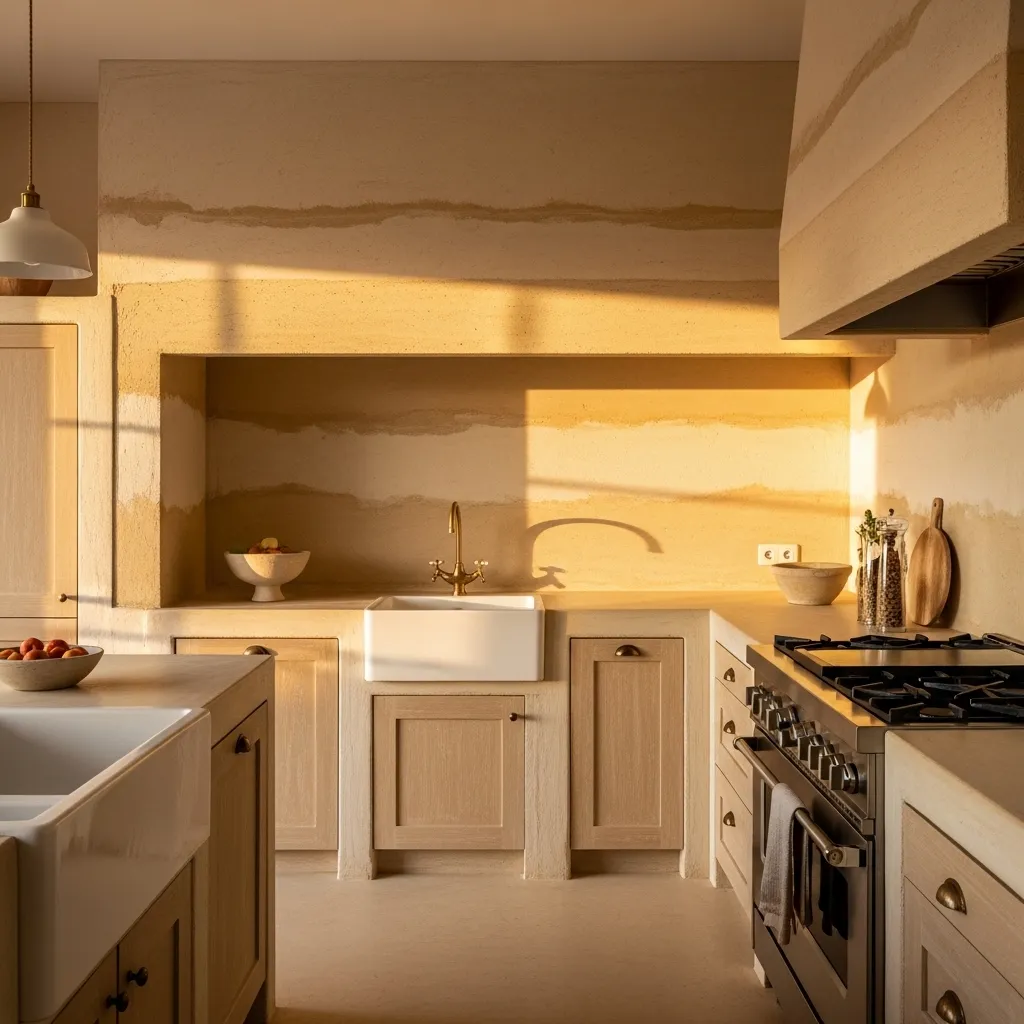
Natural lime plaster or limewash on kitchen walls creates the surface treatment that most completely transforms the atmospheric quality of a kitchen from contemporary to genuinely ancient-feeling — the layered depth of a properly applied lime plaster, with its subtle color variation and handworked texture, creates walls that appear to have centuries of history rather than a recent renovation, and that sense of depth and age is the quality that gives a rustic modern kitchen its most authentic and most atmospheric character.
The warmth of the sand and cream tones typical of lime plaster is specifically valuable in a kitchen environment — a warm-toned plaster surface makes every other warm material in the kitchen appear warmer (the wood tones, the terracotta, the brass hardware, the handmade ceramic tiles) while providing a background that’s simultaneously rustic in its texture and modern in its overall effect because the simplicity of an untreated plaster wall is cleaner and less decorated than any paneling or tile alternative. It’s the wall treatment that achieves the greatest warmth through the greatest simplicity.
15. The Rustic Modern Breakfast Nook Within the Kitchen
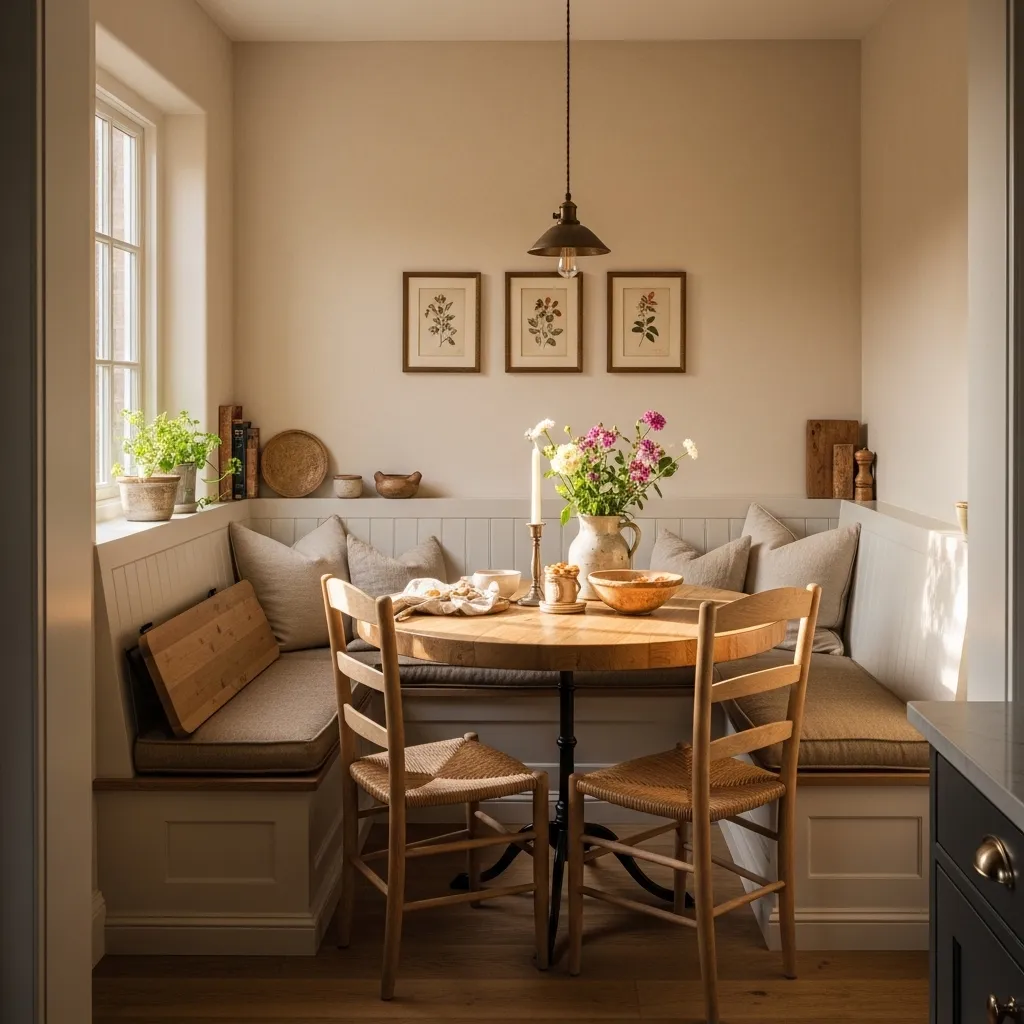
A built-in breakfast nook within the kitchen creates the most intimate and most characteristically warm eating space available in any kitchen configuration — the enclosed, built-in quality of the nook, with its bench seating and cushion and small pendant light and personal corner character, creates a space that feels specifically cozy and specifically domestic in a way that a freestanding dining table in an adjacent dining room simply doesn’t. The nook belongs to the kitchen, it’s warmed by the kitchen, it smells of the kitchen, and it creates the morning coffee and evening conversation space that integrates eating and cooking in the most natural and most pleasurable possible way.
The built-in bench storage is the practical element that makes a kitchen nook genuinely earn its footprint — the lift-up bench seat providing access to substantial storage below means the nook contributes to the kitchen’s organizational capacity rather than simply occupying floor space. This storage is ideal for bulky kitchen items that are used infrequently — large serving dishes, seasonal baking equipment, extra linens — and removing them from cabinet space creates organizational breathing room throughout the rest of the kitchen that improves daily function considerably.