15 Small Moody Dark Bathroom Ideas 2026 That Turn the Tiniest Room Into the Most Atmospheric Space in Your Home
If you’ve been looking at your small bathroom — the one that’s probably painted white because white is what small rooms are supposed to be, because light colors are supposed to make small spaces feel bigger, because the conventional wisdom about small bathrooms has been drummed into renovation culture so thoroughly that almost nobody questions it — and feeling vaguely dissatisfied with its cheerful, practical, entirely uninspiring neutrality, this is the article that gives you permission to go dark. Because the conventional wisdom about small bathrooms and light colors is wrong in the most interesting possible way — not marginally wrong, not wrong-in-specific-circumstances wrong, but fundamentally wrong about what makes a small room feel good to be in. Small dark rooms don’t feel smaller than small white rooms. They feel different. They feel atmospheric and intentional and enveloping in a way that small white rooms simply never manage, and the bathroom — the room where you spend focused, quiet, intimate time every morning and evening — is specifically the room where that quality of atmosphere matters most and where the investment in creating it pays back most generously every single day.
I painted my first small bathroom a deep charcoal grey after years of it being a slightly yellowed builder’s white that I’d been meaning to repaint since I moved in, and the transformation was so immediate and so complete that I stood in the doorway for several minutes trying to understand what had actually changed. The room was the same size. The fixtures were the same. The lighting was the same. But the atmosphere was completely different — instead of a small white room that felt like it was apologizing for its size, it felt like a specific place with a specific intention, a room that knew what it wanted to be and had committed to that. The combination of the dark walls and the white fixtures and the warm lamp I’d added created something that felt genuinely beautiful rather than merely acceptable, and I’ve been dark-bathroom-converted ever since.
What makes a small dark bathroom work rather than feel oppressive is the same set of principles that makes any small dark space feel luxurious rather than claustrophobic — the quality and warmth of the light sources within the dark space, the presence of reflective elements that multiply available light, the selection of dark tones with warmth rather than cold undertones, and the commitment to treating the darkness as the design intention rather than as a practical compromise. A dark bathroom done with genuine conviction and good lighting is one of the most beautiful domestic spaces possible. A dark bathroom done hesitantly, with one dark wall and three nervous white ones and overhead fluorescent lighting, is none of those things. These fifteen ideas show how to do it with conviction.
1. All-Over Charcoal With Brass Fixtures and White Ceramics
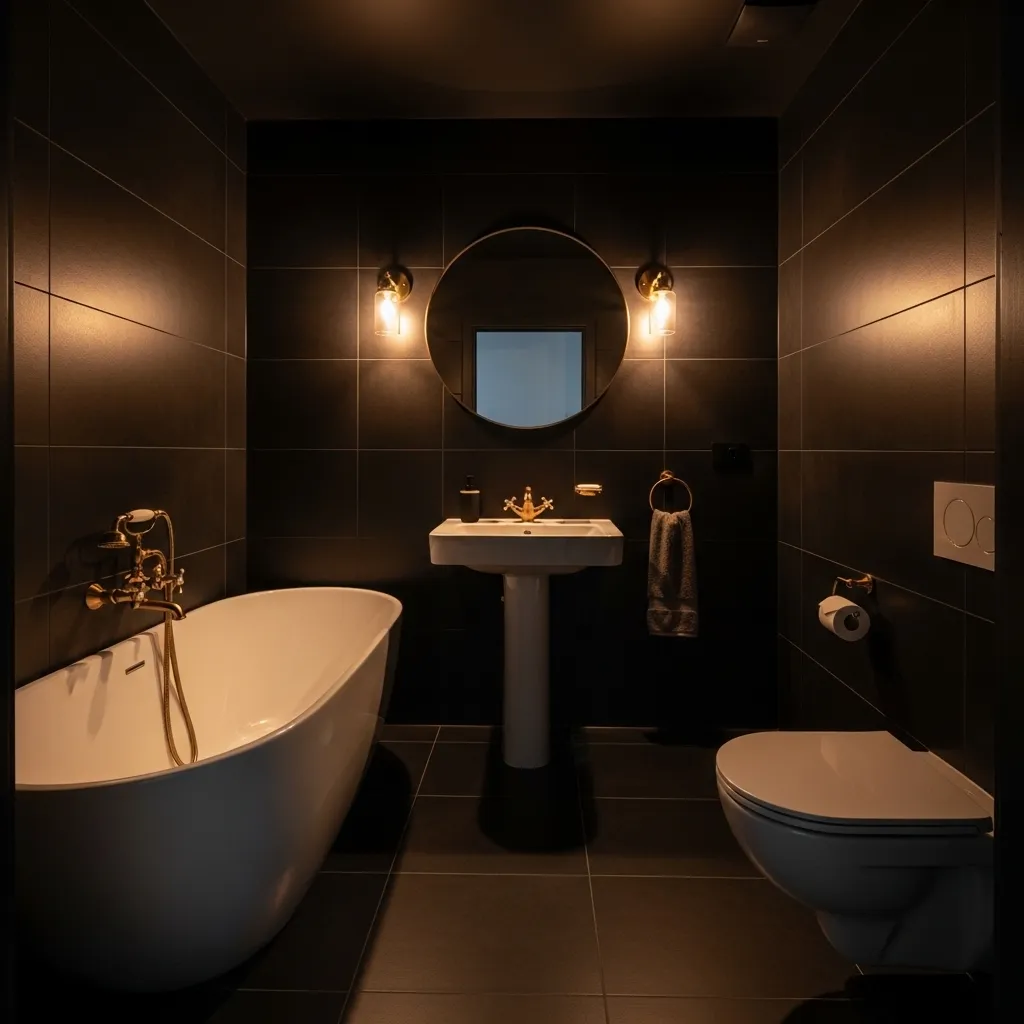
All-over charcoal — walls, ceiling, floor, and cabinetry all in the same deep warm grey — is the small bathroom treatment that creates the most complete and most atmospheric dark envelope, and it’s the approach that requires the most commitment while delivering the most dramatic result. The conventional fear is that a small bathroom with dark everything will feel oppressive and cave-like, and the conventional wisdom is to leave at least the ceiling white to provide some sense of height and openness. The conventional wisdom is wrong. When the ceiling is the same dark tone as the walls, the boundaries of the room dissolve in the same warm darkness and the space feels continuous and enveloping rather than bounded and defined — a quality of infinity rather than enclosure.
The white ceramic fixtures are the essential counterpoint that makes all-over dark work in a bathroom — the freestanding tub, the pedestal sink, the toilet, all in brilliant white ceramic, create luminous objects that appear to float in the dark space rather than sitting on its floor and against its walls. This visual relationship between dark space and floating white objects is one of the most beautiful spatial effects in interior design and it requires the dark backdrop to be complete — a white fixture against a partly-white wall is just a fixture against a wall, while the same white fixture against an entirely dark room becomes something genuinely magical.
2. Deep Navy Walls With White Subway Tile Wainscot
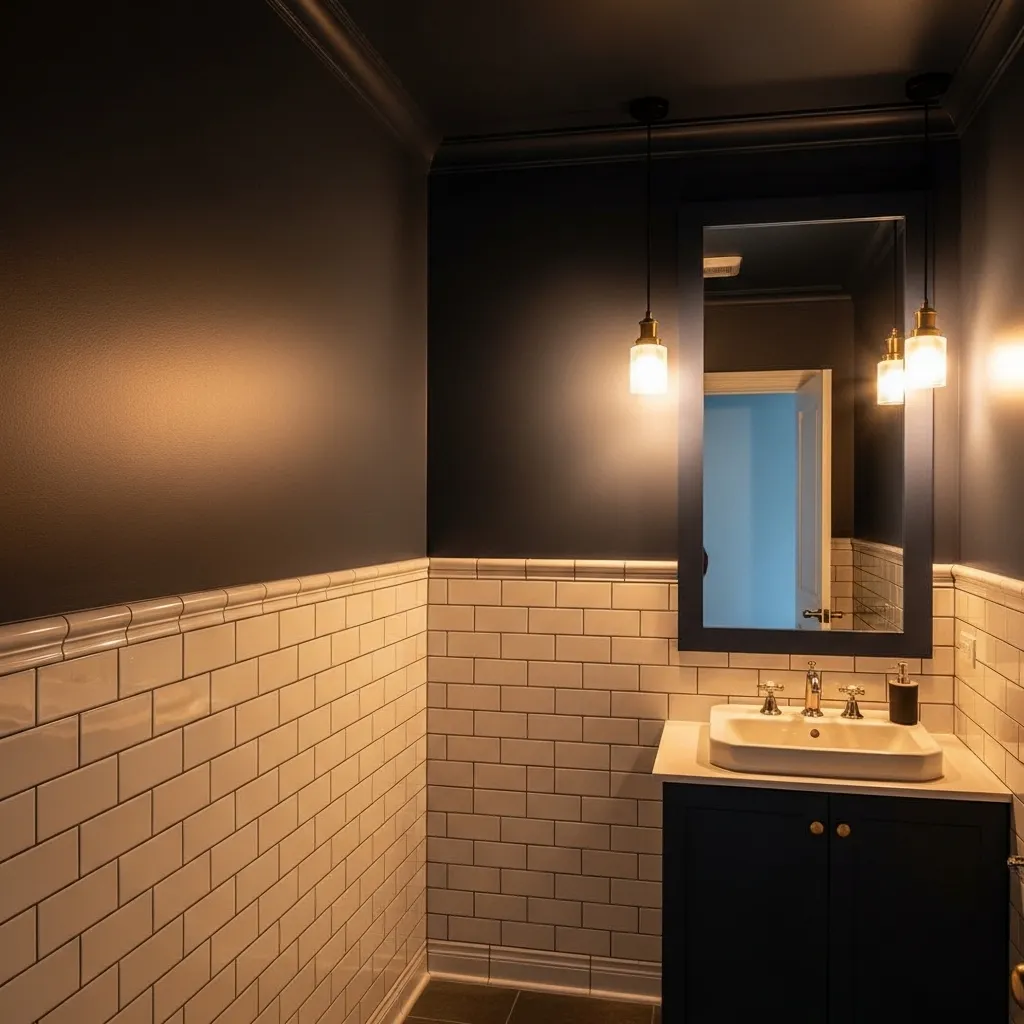
Deep navy above a white subway tile wainscot is the small bathroom combination that achieves maximum visual drama and maximum architectural character with the most historically grounded and most technically proven material pairing — the white subway tile below references over a century of bathroom and kitchen tradition, while the deep navy above creates the moody, atmospheric backdrop that gives the conventional tile an entirely unconventional feeling. The combination reads as both classic and contemporary simultaneously, which is the combination most likely to remain beautiful rather than dating.
The dark grout in the subway tile is the detail that most determines whether the tile reads as contemporary and moody or as traditional and clean — white grout with white subway tile creates a conventional bathroom surface that fights against the dark navy above rather than working with it, while dark grey grout with white subway tile creates a graphic, high-contrast tile surface that participates in the dark and moody atmosphere of the room rather than contradicting it. The dark grout line makes each tile individually visible, creating a more interesting and more complex surface than the near-invisible white grout alternative.
3. Forest Green With Natural Stone and Brass
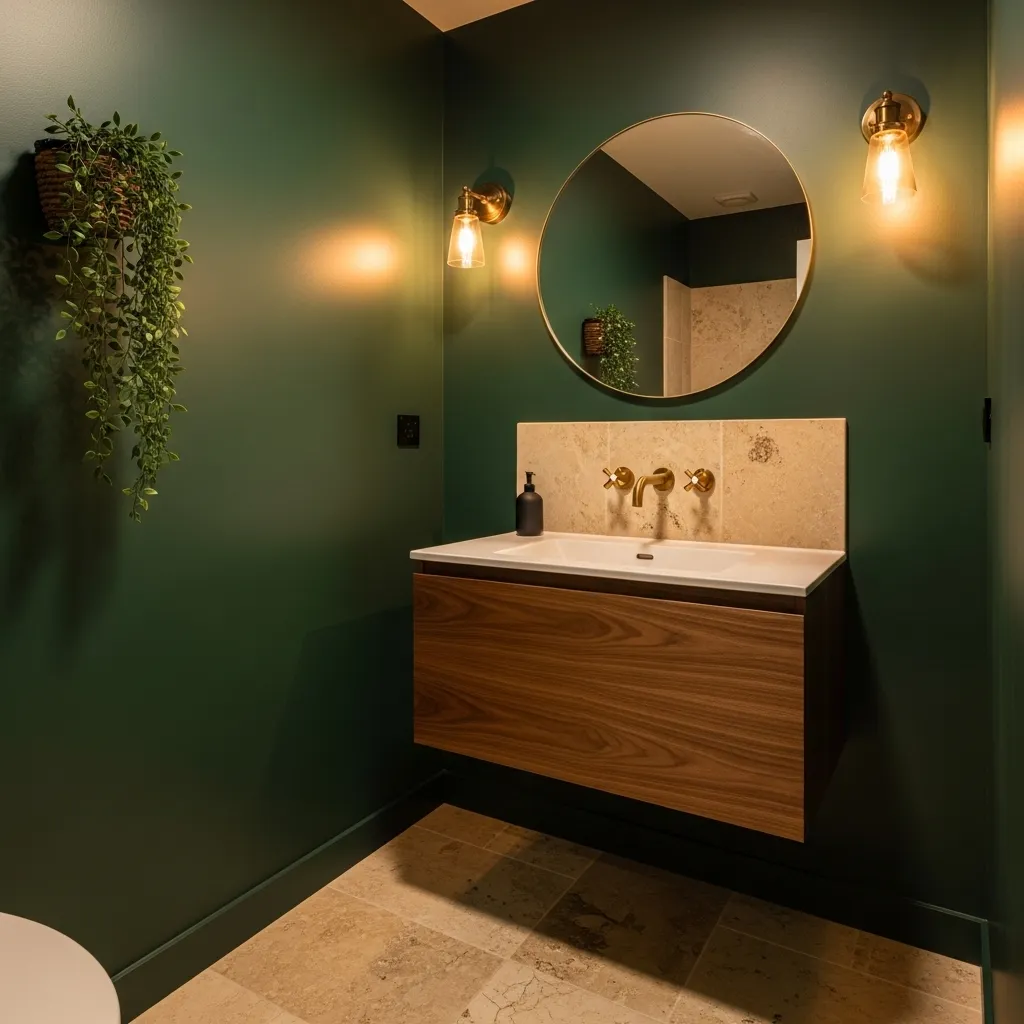
Forest green walls in a bathroom create a specific quality of botanical atmosphere — the feeling of being enclosed by nature rather than by architecture — that no other dark color quite achieves, because green has an inherent connection to the plant world that makes dark green walls read as lush and living rather than simply dark. The specific tone of forest green matters enormously — it should be a shadowed, complex green rather than a bright or cool-toned one, with enough warm or earthy undertone to feel specifically like the deep color of shade-grown leaves rather than a paint-chip green.
The warm natural travertine floor is the material that most beautifully complements forest green walls because its cream and warm-buff tones provide a warm natural contrast that connects the bathroom to an outdoor, geological world while the green walls connect it to the botanical one — together they create a bathroom that feels like a beautiful natural grotto rather than a decorated domestic room. The travertine’s fossil inclusions and irregular veining provide the specific organic imperfection that reinforces the natural material story the forest green walls begin.
4. Dramatic Black With Gold Fixtures and Marble
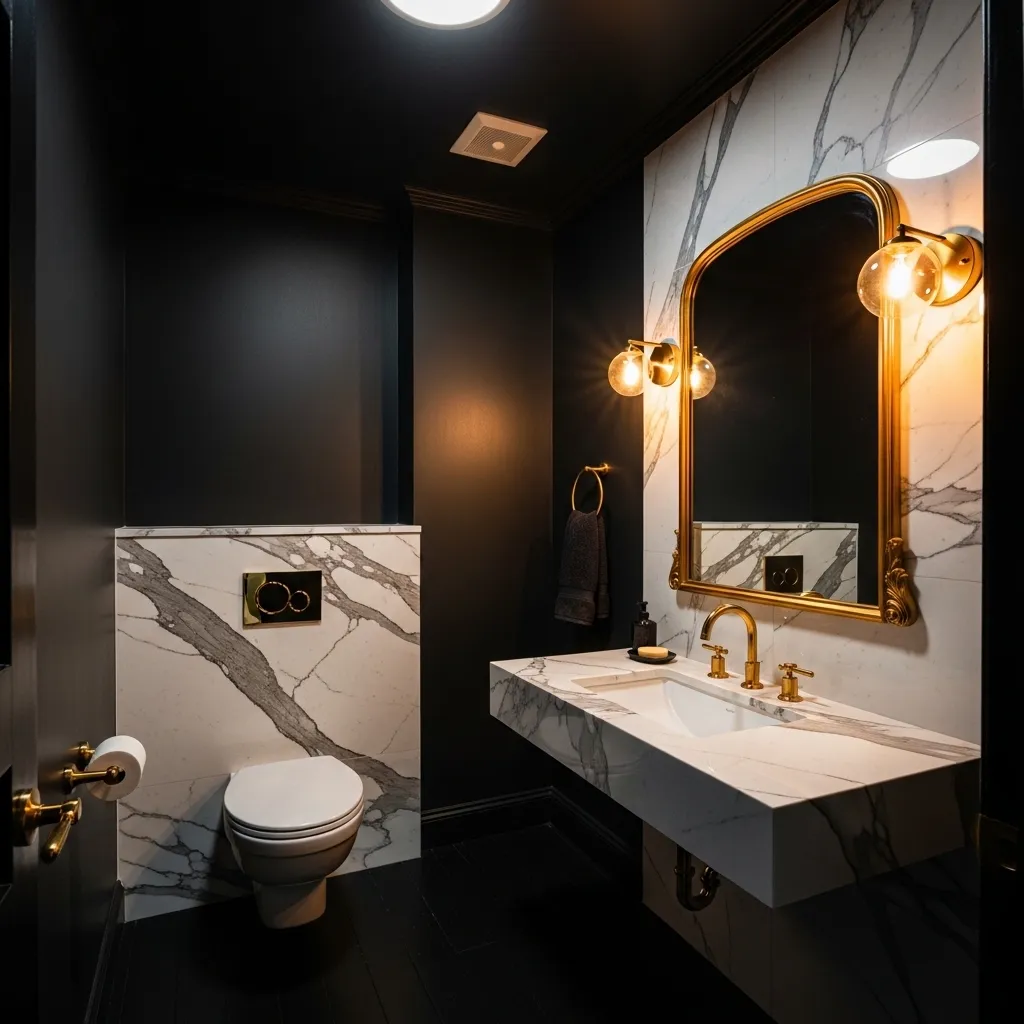
Matte black walls with polished gold fixtures and white marble is the bathroom combination that creates the most overtly glamorous and most dramatically theatrical small bathroom atmosphere — it’s the bathroom that feels genuinely luxurious in the way that the best hotel bathrooms feel luxurious, where every material choice has been made for maximum sensory impact and where the small size of the room concentrates that luxury rather than diluting it across a larger space. A large bathroom with these materials would be impressive; a small bathroom with these materials is overwhelming in the best possible way.
The matte quality of the black walls is the specific finish that makes this combination work rather than feel oppressive — glossy black walls in a small bathroom would reflect the gold fixtures and the marble in ways that could feel busy and disorienting, while matte black absorbs light and creates the deep, velvety darkness that makes the gold fixtures appear to glow against it. The contrast between the light-absorbing matte black surfaces and the light-reflecting polished gold and marble creates a dramatic chiaroscuro — light and dark in strong contrast — that gives the small bathroom the visual energy of a much larger and more elaborate space.
5. Moody Burgundy With Vintage Fixtures
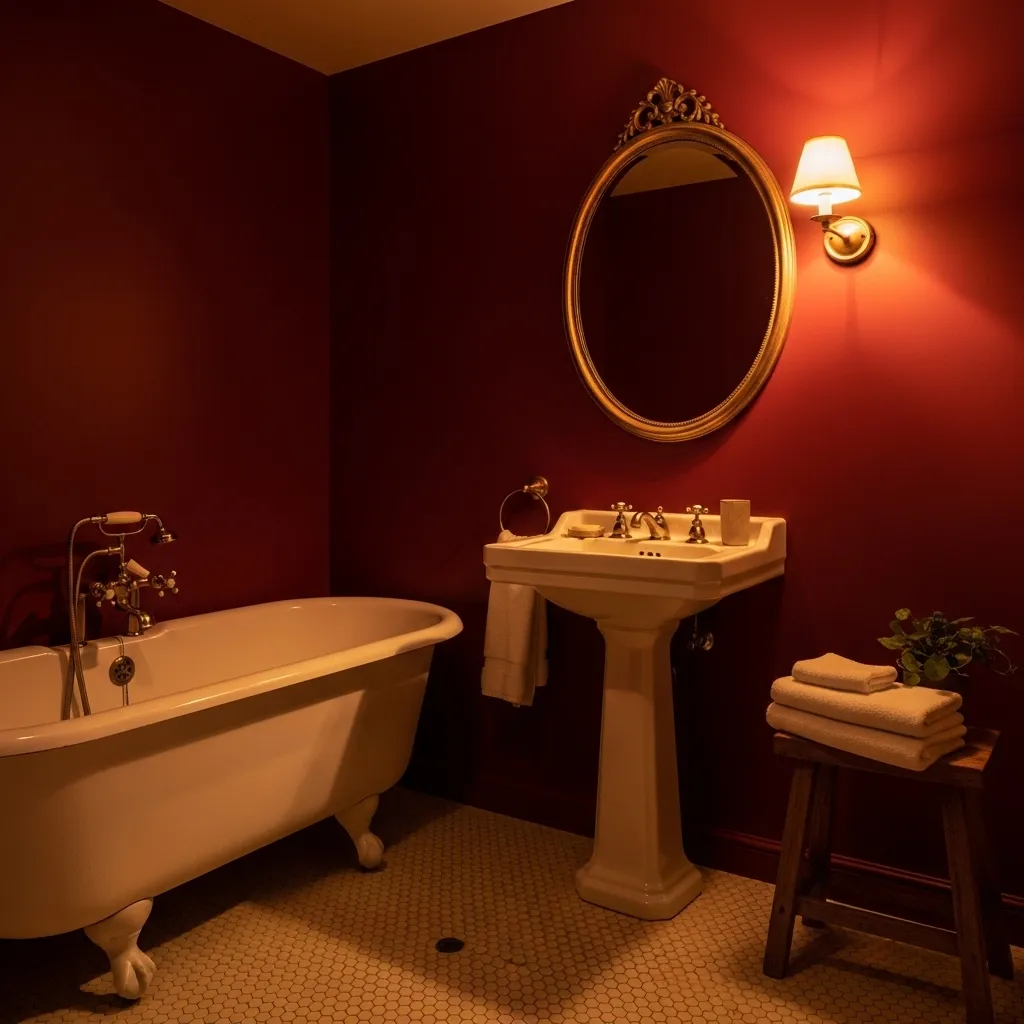
Deep burgundy walls in a bathroom create a quality of warmth and intimacy that’s completely different from the coolness of navy or charcoal and from the botanical quality of forest green — burgundy reads as specifically luxurious and specifically sensory, referencing the warmth of wine cellars and velvet curtains and the specific quality of candlelit spaces that have been created for pleasure rather than function. A bathroom in deep burgundy is a bathroom that takes the bathing experience seriously as a form of daily luxury rather than a functional necessity.
The vintage fixtures against deep burgundy walls create a room that feels like it could be in a beautifully maintained old European hotel — the kind of bathroom that’s been in continuous use for a century and has accumulated its specific atmosphere through layers of use and care rather than through a single deliberate design moment. The claw-foot tub specifically is the vintage fixture that most perfectly suits deep burgundy walls because its white enamel curves provide the luminous white counterpoint that dark walls need, and its exposure of all four legs rather than concealment behind a skirt creates the floating quality that dark rooms require of their white elements.
6. Dark Chocolate and Warm Wood Japandi Bathroom
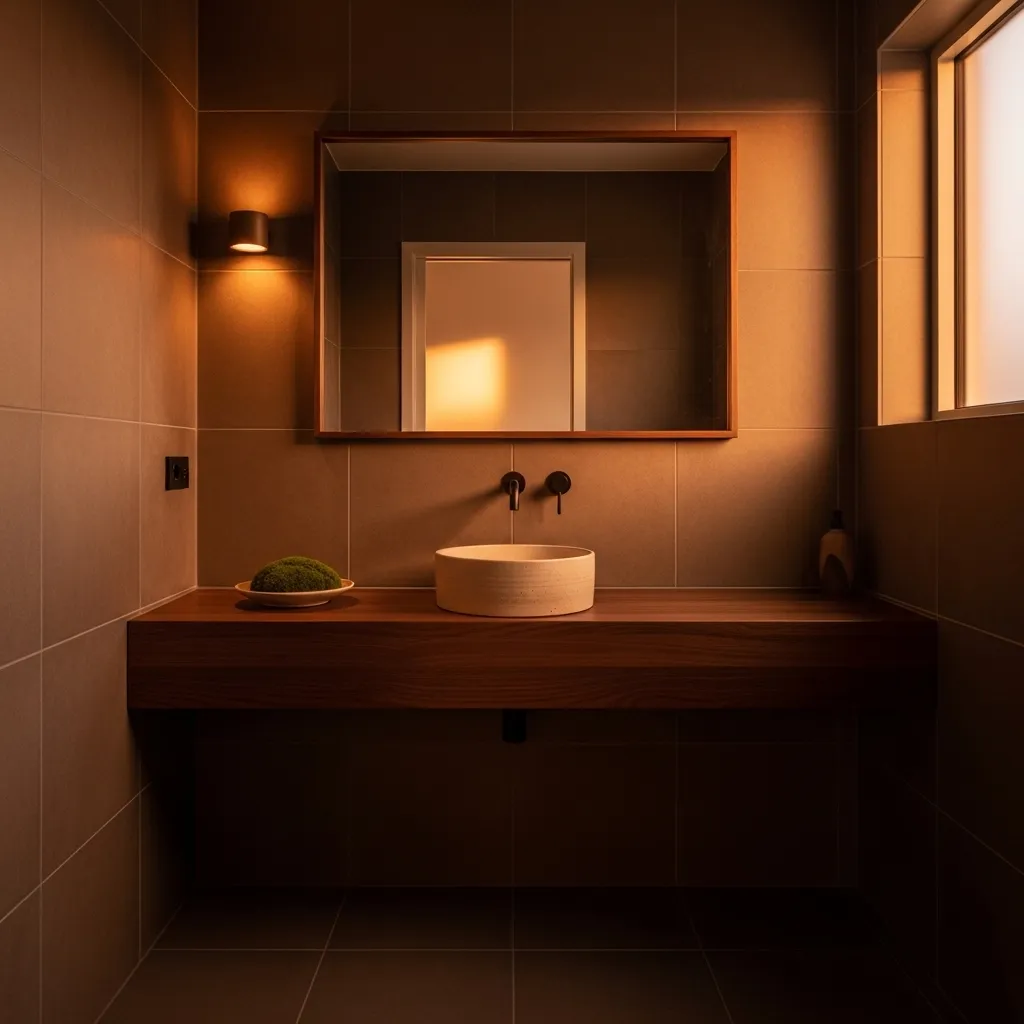
A Japandi-influenced dark bathroom in deep chocolate brown and warm walnut creates the most grounded and most serene of all the dark bathroom atmospheres — where navy creates drama and burgundy creates warmth and black creates glamour, the deep warm brown of chocolate-toned tiles creates a quality of earth and rootedness that’s specifically calming and specifically appropriate for the bathroom as a space of quiet, daily renewal. The Japanese aesthetic concept of wabi-sabi — finding beauty in imperfection and incompleteness — is most easily expressed through natural and near-natural materials in their most honest tones, and deep earth-toned tile paired with warm walnut creates exactly this quality.
The hand-thrown ceramic basin sitting on the walnut vanity is the specific element that introduces the wabi-sabi quality most directly — the visible throwing marks, the slight asymmetry of the handmade form, the warm off-white of the clay body showing through the glaze create a basin that rewards close inspection and that communicates the human craft of its making in a way that machine-made ceramics eliminate. In a small bathroom where every object is seen closely every day, this quality of revealing craftsmanship at intimate range is precisely the kind of everyday luxury that the Japanese aesthetic tradition has always valued.
7. Dramatic Dark Tile Feature Wall Behind the Mirror
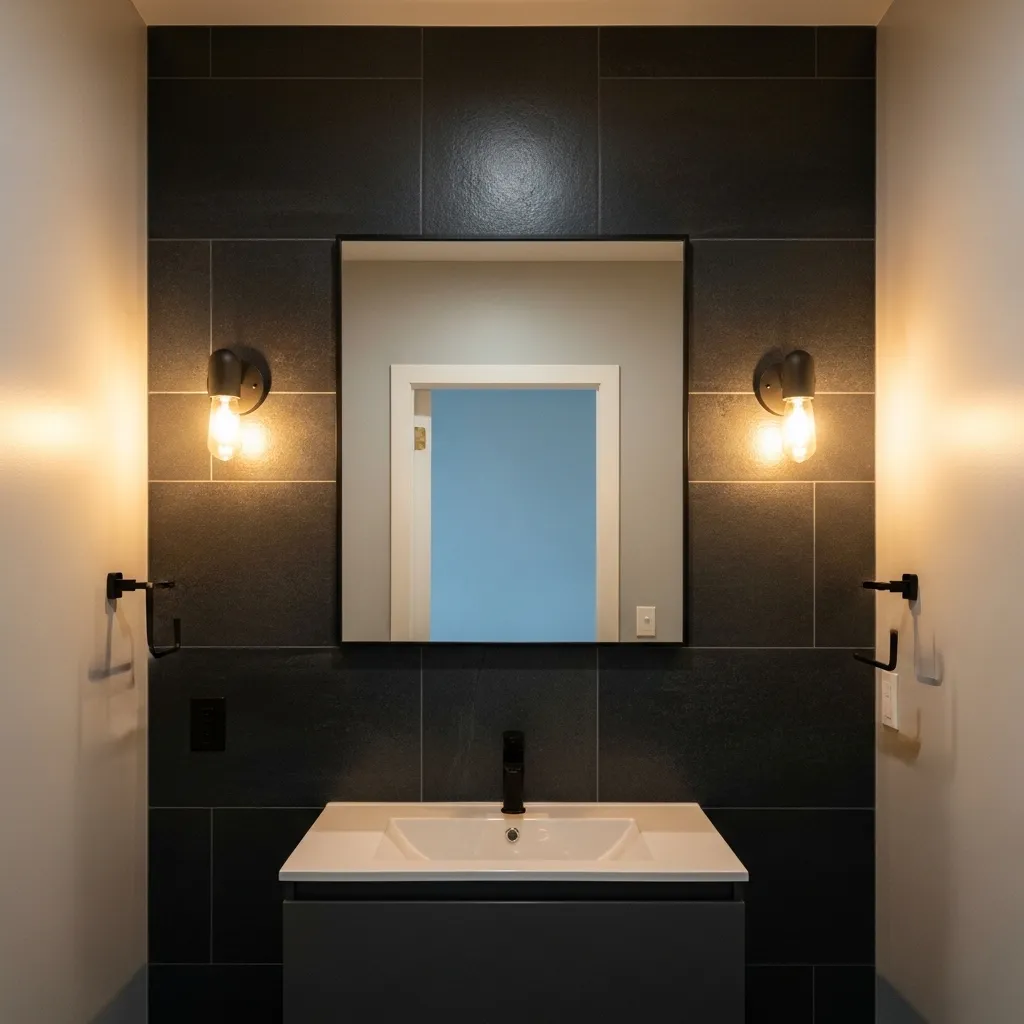
A dark tile feature wall behind the vanity mirror — with the remaining walls in a lighter coordinating tone — is the approach that creates the maximum dark bathroom drama with the minimum commitment, making it the ideal entry point for anyone who wants the moody bathroom atmosphere without painting every surface dark. The single dark wall creates the focused dramatic backdrop that makes the mirror zone feel theatrical and designed, while the lighter surrounding walls prevent the overall space from feeling as enclosed as an all-dark treatment.
The size of the mirror relative to the dark tile wall is the proportion that most determines how the feature wall reads — a small mirror on a dark wall looks like a dark wall with a mirror hanging on it, while a large mirror that fills most of the wall’s width creates a dramatic relationship where the dark tile frames the mirror and the mirror reflects a different view of the room, creating a visual complexity and depth that makes the small bathroom feel considerably larger than its physical dimensions. The mirror should be as large as the wall and vanity proportions allow.
8. Inky Blue-Black With Terrazzo Floor
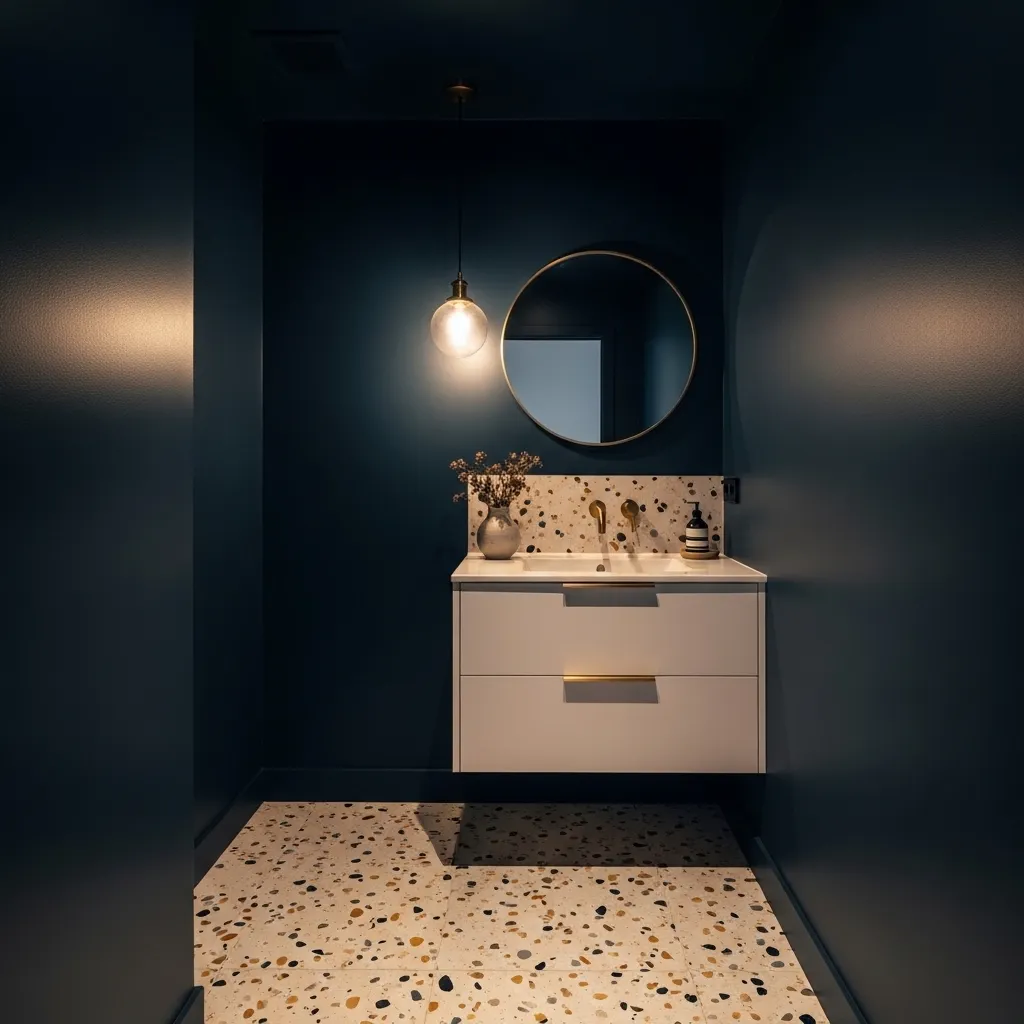
Inky blue-black — a dark tone that sits at the ambiguous border between very dark navy and very dark black — is the most sophisticated and most versatile of all the dark bathroom colors because it reads differently in different light conditions, appearing almost black in artificial light and revealing its deep blue quality in natural light. This quality of color-shifting makes a bathroom in inky blue-black feel alive and responsive to time of day in a way that a fixed, clearly-named color doesn’t — the bathroom in the morning is slightly different from the bathroom in the evening, and that daily variation creates an ongoing quality of discovery and interest.
The warm cream terrazzo floor with gold aggregate is the ideal pairing for inky blue-black walls because the terrazzo’s warm cream base prevents the floor from reading as simply a dark room with a pale floor, and the gold flecks in the aggregate connect directly to the gold bathroom fixtures, creating a color thread that runs from floor to faucet in a way that creates material coherence without matching materials. The complexity of the terrazzo pattern — every square inch slightly different due to the random distribution of aggregate — provides the visual interest and richness that the dark walls above it absorb rather than provide.
9. Deep Teal With Handmade Moroccan Tile
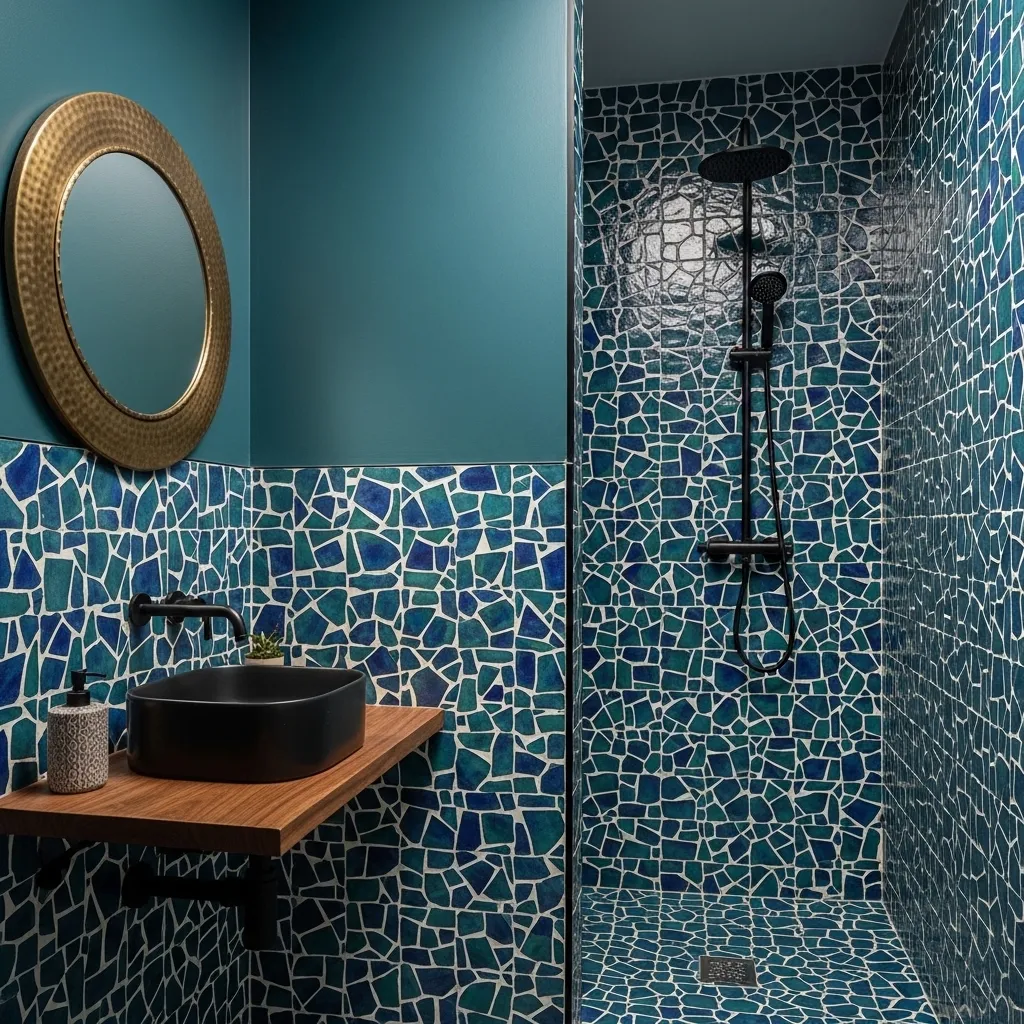
Deep teal walls with handmade Moroccan zellige tile creates the most texturally complex and most visually rich of all the dark bathroom treatments — the zellige tile, with its small irregular format and highly reflective glaze, creates a surface that seems to move and shimmer as the light changes and as the viewer moves, because the slightly different angle of each hand-cut piece reflects light from a slightly different direction. A wall of zellige in a small bathroom catches the light from the vanity mirror sconces and multiplies it across hundreds of small reflective surfaces, creating a room that appears lit from within.
The specific appeal of zellige in a dark teal bathroom is the way the tile’s warm, slightly irregular surface temperature creates a warmth that contradicts the inherent coolness of teal as a color — teal walls alone can read as cool and slightly clinical, but the warm, handmade quality of zellige tile introduces a craft warmth and a physical complexity that makes the teal feel rich and warm rather than cool and austere. The combination of a cool sophisticated color with a warm handmade material is one of the most reliably beautiful tensions in interior design.
10. Matte Black Walls With Exposed Copper Pipes
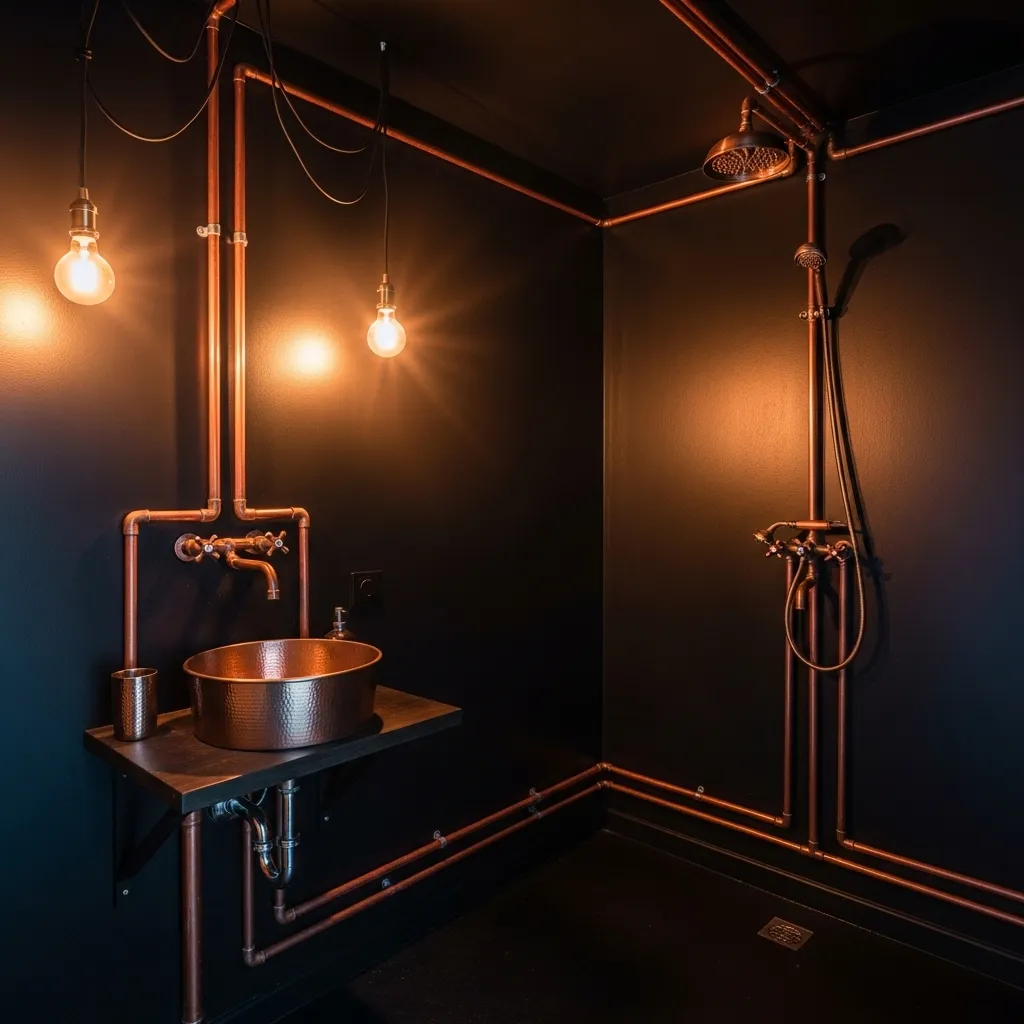
Deliberately exposed copper plumbing against matte black walls is the industrial-luxe bathroom treatment that turns what would normally be hidden functional infrastructure into the room’s primary decorative element — by choosing to reveal rather than conceal the plumbing, the bathroom’s mechanical reality becomes its aesthetic reality, and the warm copper tone of quality copper pipe becomes the material that provides the warmth and visual interest that the dark walls absorb.
The warmth of copper against matte black is one of the most beautiful material combinations available in interior design — the orange-pink of new copper and the warmer, darker tones of aged copper against the deep, light-absorbing matte black create a contrast that’s simultaneously dramatic and warm, industrial and precious. As copper ages in the humidity of a bathroom it develops the beautiful blue-green patina of verdigris at the joints and fittings, adding another layer of color and character to the surface over time — a bathroom that literally improves with the natural aging of its plumbing, which is the kind of material relationship that only genuinely high-quality, genuinely intentional material choices can create.
11. Dark Plum and Antique Mirror Glass
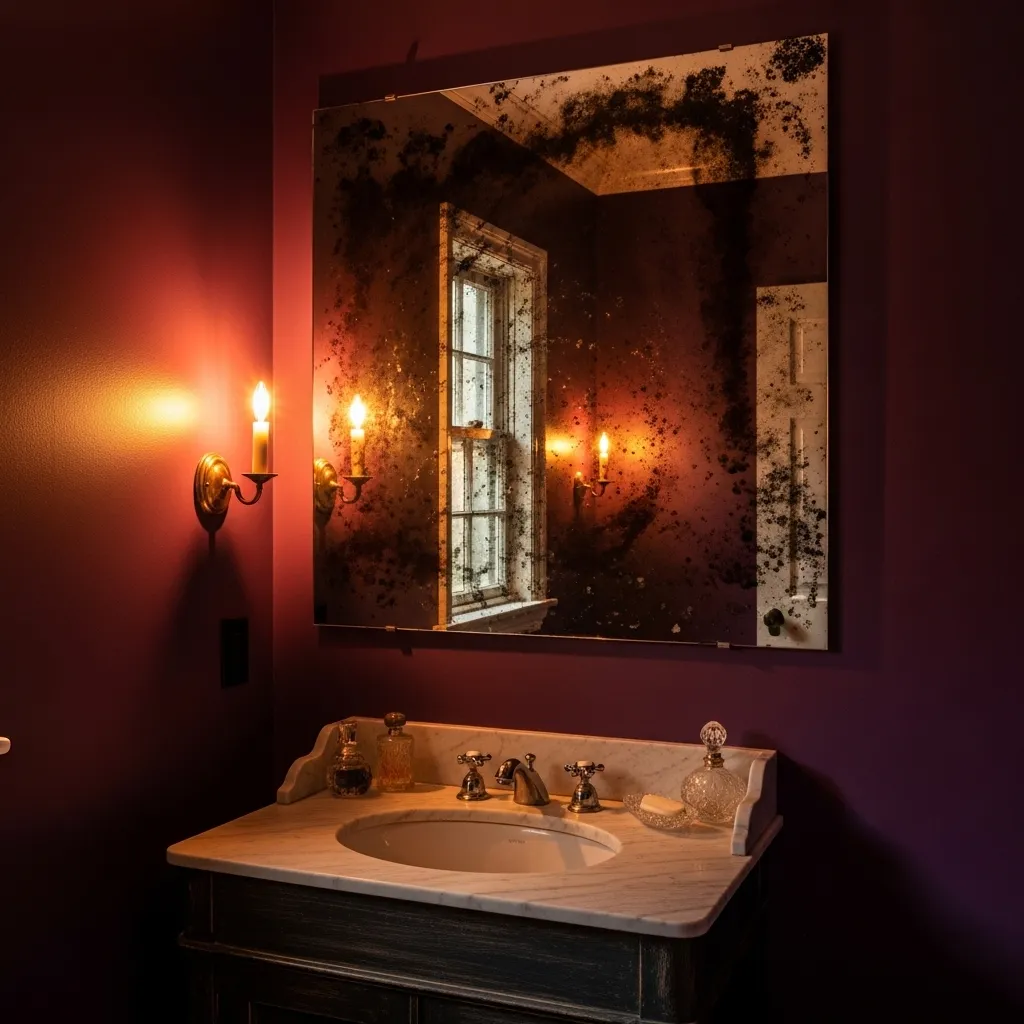
Deep plum walls in a bathroom create the most overtly romantic and most specifically sensory of all dark bathroom atmospheres — plum has the warmth of burgundy with an additional cool-blue depth that creates a color of genuine complexity and genuine sophistication, one that shifts noticeably between warm artificial light (where it reads warmer and more red) and cool natural light (where it reads cooler and more blue-purple). This color-shift quality makes a plum bathroom feel like a room that changes character with the time of day and the quality of light, creating an ongoing experience of subtle discovery rather than the visual constancy of a fixed color.
Antique mirror glass as the primary bathroom mirror surface is the material choice that most amplifies the romantic atmosphere of dark plum walls — the foxing and irregular silvering of antique mirror creates reflections that are warm, flattering, and slightly dream-like rather than the sharp, literal accuracy of modern mirror glass. Looking at yourself in antique mirror glass in a dark plum bathroom lit by warm lamps is a specifically beautiful experience, one where the imperfection of the reflection and the warmth of the surrounding atmosphere create a quality of self-seeing that’s genuinely kind and genuinely beautiful rather than merely accurate.
12. The Dark Bathroom With Maximalist Plant Life
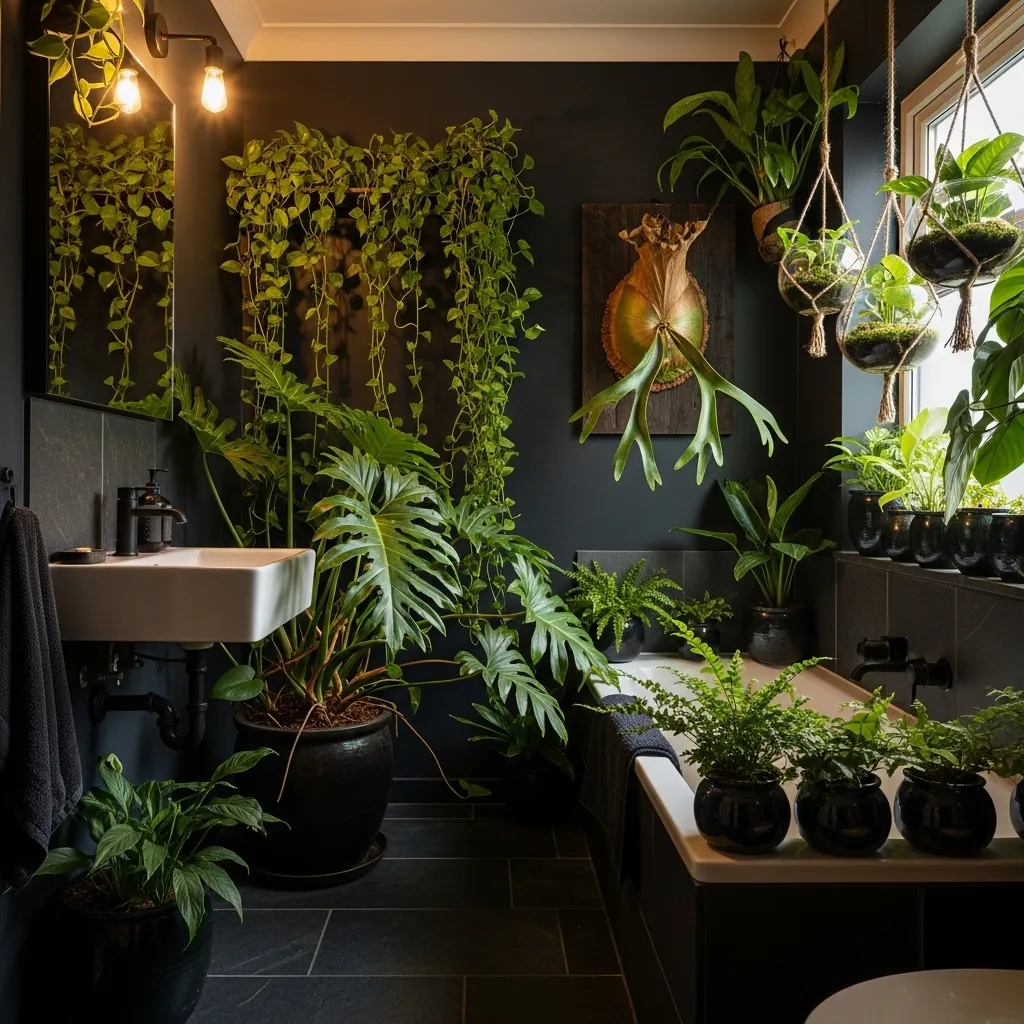
A dark bathroom with maximalist plant life is the interior design treatment that creates the most genuinely immersive and most atmospheric of all bathroom environments — the combination of deep dark walls and extraordinary plant density creates a space that feels genuinely removed from the domestic world, a private grotto where the normal spatial logic of a small bathroom dissolves into a lush, dimly lit botanical experience. The plants thrive in the high humidity of a bathroom environment, growing more lushly than they would in the drier air of other rooms, and their growth over months and years makes the bathroom progressively more lush and more beautiful rather than degrading as painted surfaces eventually do.
The specific plant selection for a dark bathroom needs to account for the lower light conditions that dark walls create — tropical varieties that evolved in the shade of forest canopies are the natural choice, and they’re the most beautiful. Philodendrons with their large, architectural leaves, pothos that trail and cascade endlessly, staghorn ferns that mount beautifully on wooden boards, various fern species that love humidity — all of these plants are specifically adapted to low-light, high-humidity conditions and will grow with genuine enthusiasm in a dark bathroom with a window or adequate supplementary lighting.
13. Slate Grey With Raw Concrete Accents
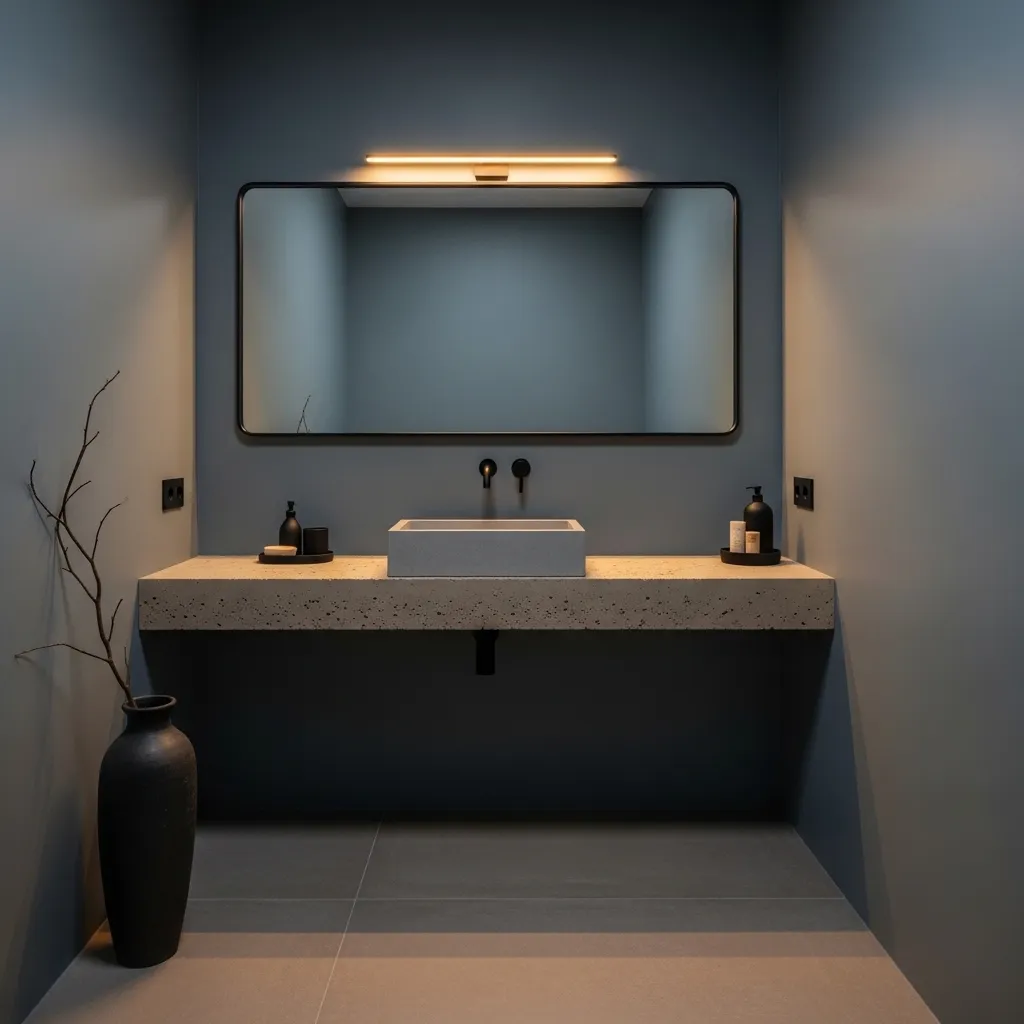
Slate grey walls with raw concrete accents create the most specifically architectural and most restrained of all dark bathroom treatments — a room that communicates design intelligence and material honesty rather than decoration, where the beauty comes from the quality of the materials and the precision of the detailing rather than from color drama or surface pattern. This is the dark bathroom for people who find beauty in reduction, in the specific quality of honest materials in their most natural state.
The warmth of the concrete is the essential counterpoint to the cool slate grey of the walls — raw concrete with a warm-toned aggregate mix has a quality of earth and warmth that contradicts the industrial associations of the material, and the contrast between the cool grey of the walls and the warm grey of the concrete creates a subtle but genuine material tension that gives the room its interest. This is a room of greys — but the greys are specific and different from each other, each with its own temperature and texture and quality, and that specificity within apparent similarity is precisely the kind of sophisticated material conversation that distinguishes genuinely considered design from merely dark design.
14. Deep Terracotta With Hand-Painted Tile Details
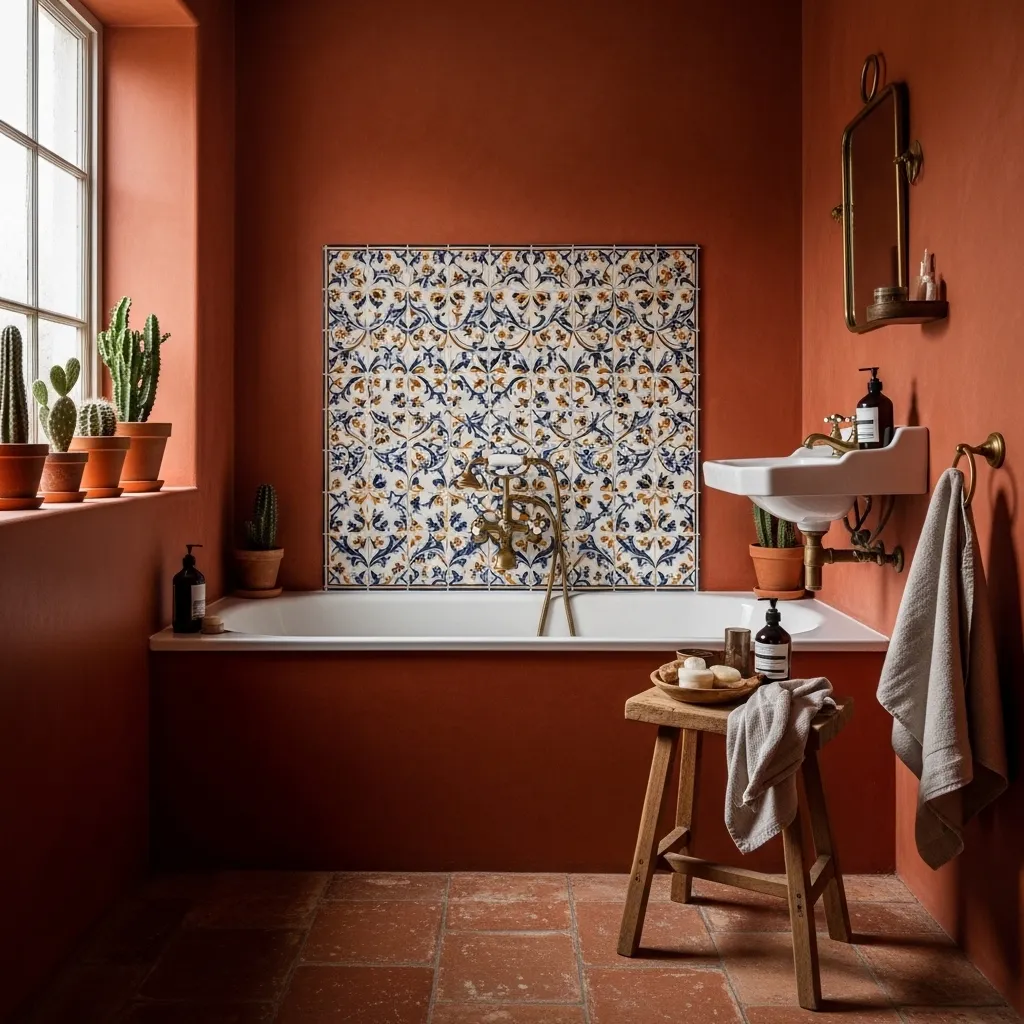
Deep terracotta walls in a bathroom create the warmest and most specifically ancient-feeling of all dark bathroom treatments — the color references the baked clay of Mediterranean and North African architecture, the warm redness of desert soil, the specific warmth of firelight on earth walls, and this accumulated cultural reference creates a bathroom that feels simultaneously ancient and completely contemporary. Terracotta in a bathroom reads as deeply warm and deeply human — earth-toned, fire-baked, warm in a way that’s specifically organic rather than decoratively warm.
Hand-painted ceramic tiles as a focused decorative panel within terracotta walls is the detail that elevates the terracotta bathroom from a warm, moody space into a specifically beautiful and specifically crafted one — the hand-painted pattern introduces pattern and color and the visible evidence of skilled making into a bathroom that would otherwise be rich in material but quiet in decoration. The traditional floral or geometric patterns of hand-painted Mediterranean tile have a specific beauty that machine-made tile can’t replicate, because the slight variation in each painted element and the irregularity of hand-applied glaze create a surface that catches light differently across its width and rewards close inspection with the specific pleasure of looking at something genuinely made.
15. The Moody Dark Bathroom at Night — Candlelit Bathing
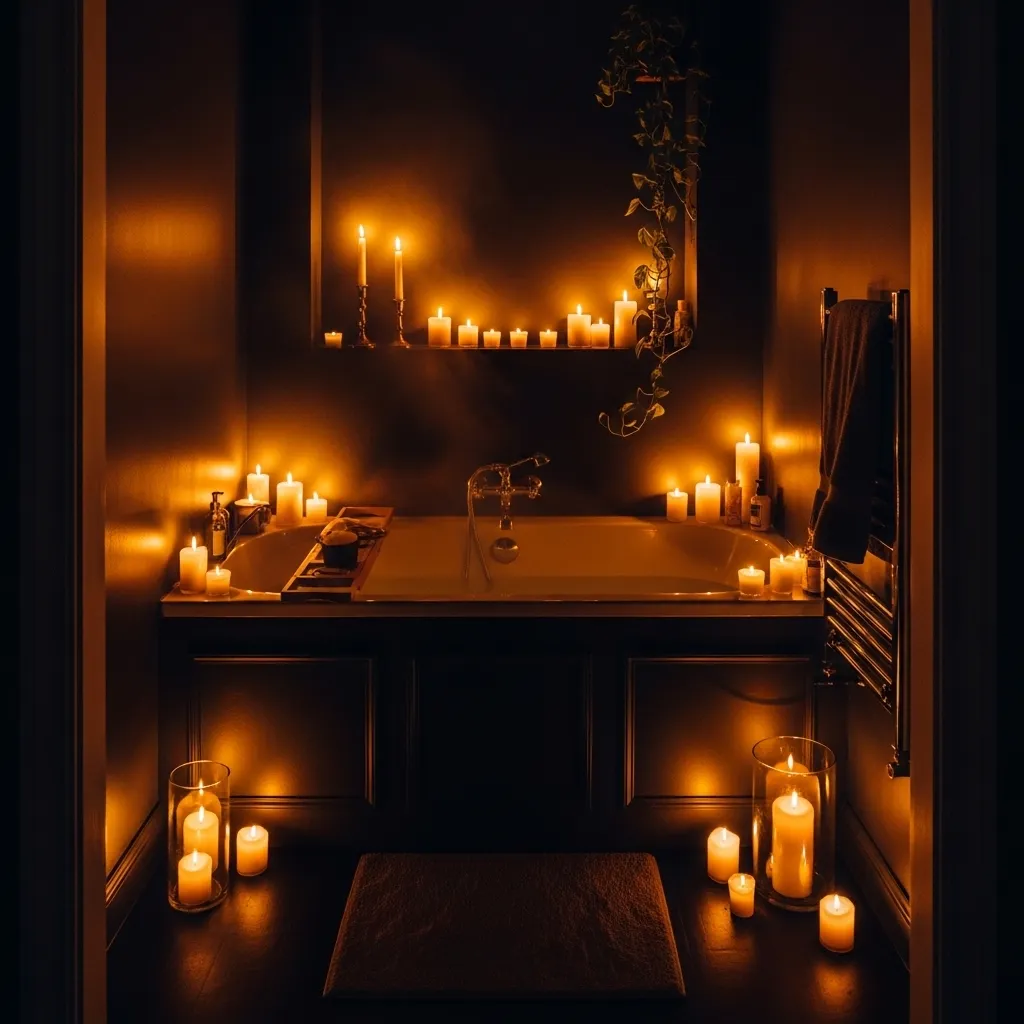
The ultimate expression of the moody dark bathroom is experienced at night, lit exclusively by candles — the configuration that transforms a bathing ritual from a functional necessity into a genuinely restorative and genuinely sensory experience. A dark bathroom specifically designed for this experience — with surfaces that absorb rather than reflect overhead light, with flat surfaces positioned throughout for candle placement, with fixtures that look beautiful in warm flickering light rather than requiring bright illumination to be navigated — is the bathroom that justifies the entire dark bathroom philosophy by creating an experience that’s simply not possible in a light, bright, conventionally lit bathroom.
The design principle for a bathroom intended to be used regularly by candlelight is to place flat surfaces for candle placement at multiple heights throughout the space — shelf above the tub, edge of the tub itself, floor beside the tub in stable glass holders, vanity surface, top of the toilet cistern — so that the candlelit version of the room can be created easily and quickly rather than requiring elaborate setup. A bathroom with ten or fifteen candles distributed throughout at different heights, all lit together, creates an extraordinary quality of warm, flickering light that makes the dark walls glow and the white ceramic fixtures appear almost incandescent, and that creates a bathing experience so specifically beautiful and so genuinely restorative that it becomes the specific reason you chose to go dark in the first place.