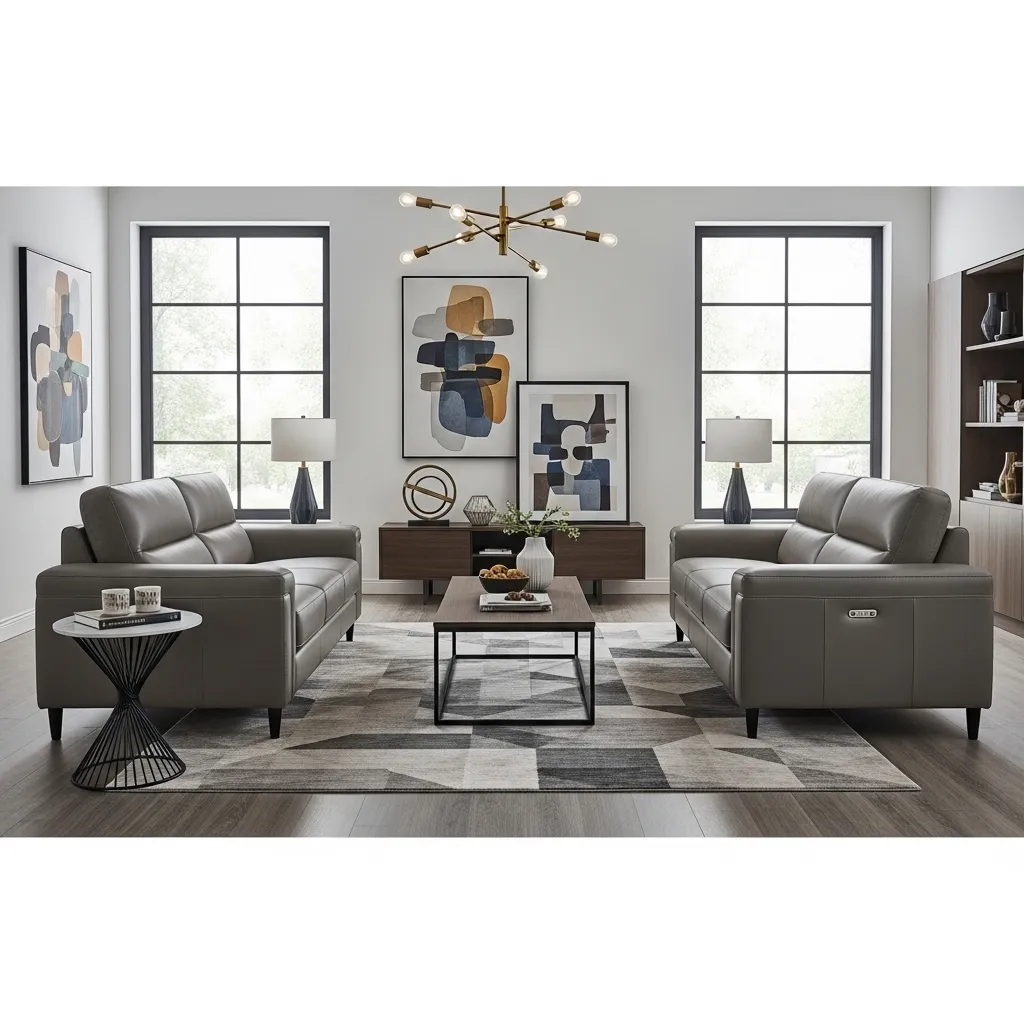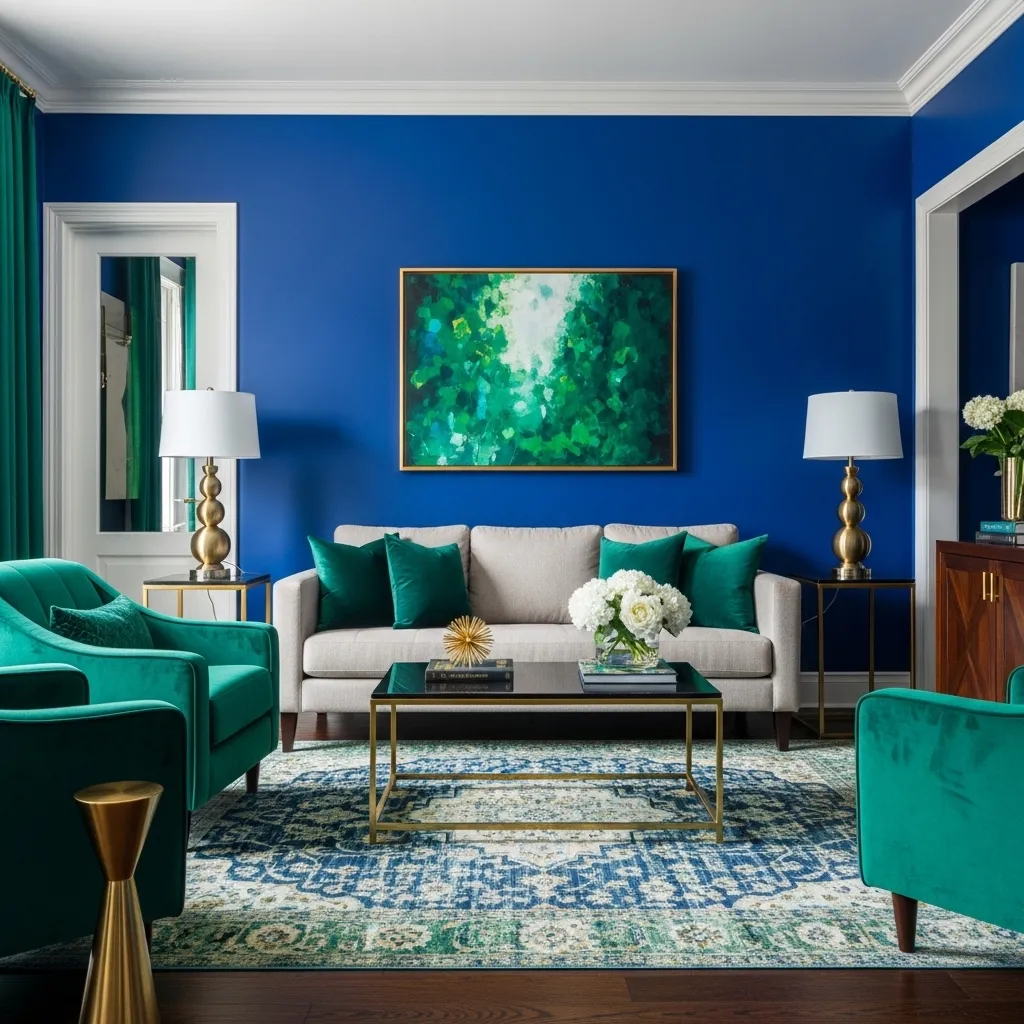
15 Modern Contemporary Living Room Ideas for 2026 That Feel Genuinely Current Without Being Cold
If you’ve been looking at living rooms described as modern or contemporary and finding them consistently beautiful in photographs but slightly uninviting in person — rooms that feel resolved and composed but not warm, designed but not inhabited, impressive but not comfortable — the interpretation of contemporary design that’s defining the best living rooms of 2026 is specifically the one that has solved that problem. What contemporary residential design has understood this year, more clearly than in previous years, is that modernity and warmth are not in opposition and never were, and that the living room that feels most genuinely current is not the coldest or the most minimal or the most aggressively architectural but the one that brings contemporary clarity of form and material quality into genuine conversation with human comfort, sensory warmth, and the specific evidence that real people live and rest and gather there. The ideas in this roundup cover the full range of what contemporary living room design looks like in 2026 — from the warm organic material layering that defines the year’s most admired interiors, to the sculptural furniture moment, the statement ceiling treatment, the considered art and gallery approach, the biophilic living wall, the modular sectional as social architecture, the warm concrete and plaster material combination, the bold geometric rug as room anchor, the mixed metal finish approach that replaced the single-metal convention, and several more directions that together describe a contemporary design moment that is simultaneously more sophisticated and more livable than any previous version of it.
Contemporary design has a particular challenge that historical and traditional styles don’t face — it has to be current without being trendy, forward-looking without being cold, modern without abandoning the warmth and human scale that makes a living room actually function as the social heart of a home. The easiest version of contemporary design fails this challenge by prioritizing visual discipline over sensory warmth, producing rooms that photograph beautifully and feel cold in person. The version of contemporary design worth doing — the version that appears in the best living rooms of 2026 — succeeds by treating warmth not as a compromise of contemporary principles but as their highest expression, understanding that the most sophisticated contemporary design creates environments where people genuinely want to spend time rather than environments that demonstrate the sophistication of the designer.
What characterizes the contemporary living room aesthetic of 2026 specifically is a shift in material values — away from the cool, reflective, hard surfaces that defined minimalist contemporary rooms of the previous decade and toward warm, tactile, organic materials that are still clean in form and sophisticated in selection but that prioritize sensory richness and physical comfort alongside visual clarity. Curved forms have consolidated their position as the dominant furniture silhouette, warm natural materials have replaced cool manufactured ones as the prestige surface choices, and the living room’s social function has been explicitly prioritized in how furniture is arranged and scaled.
1. Warm Organic Material Layering
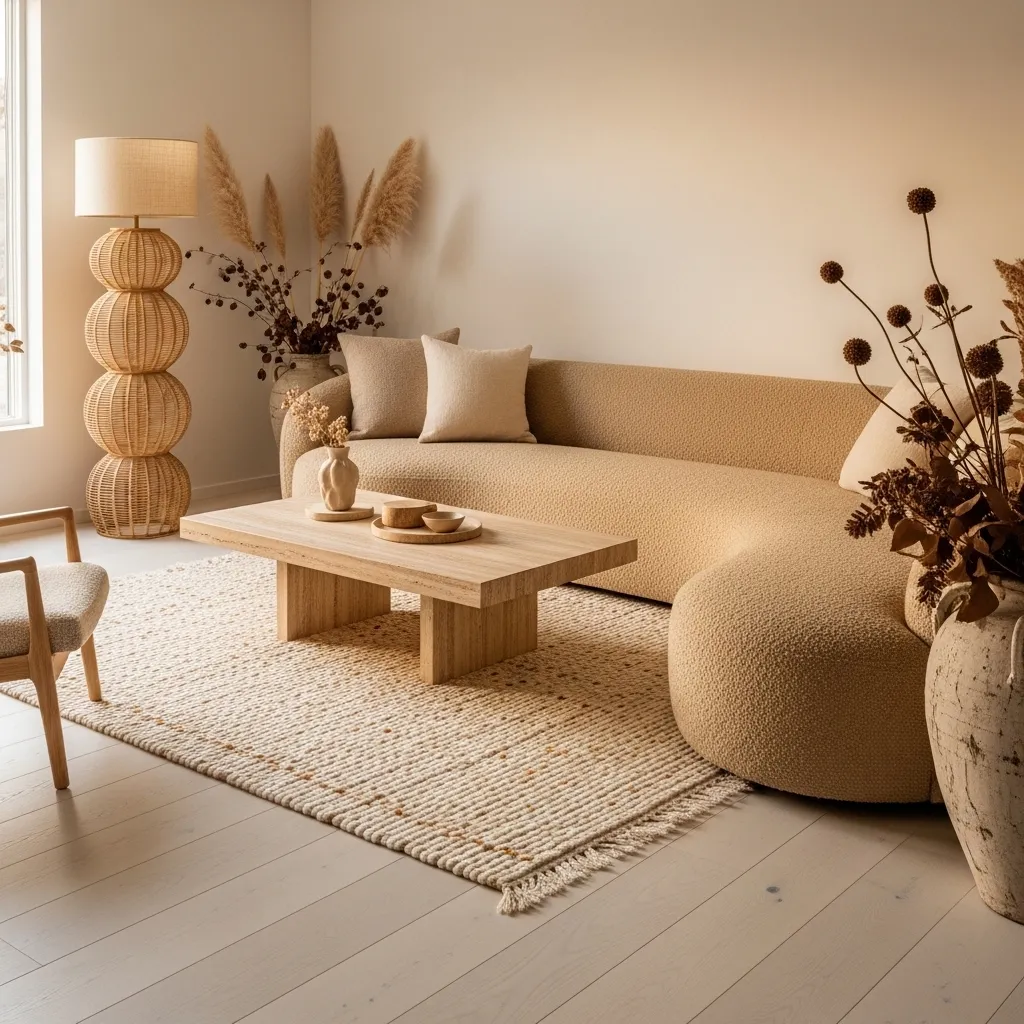
Warm organic material layering — building a contemporary living room through the accumulation of natural materials at different scales and textures rather than through color, pattern, or bold architectural interventions — is the design approach that defines the most admired contemporary interiors of 2026 because it achieves sophistication and warmth simultaneously, creating rooms that feel genuinely luxurious through material quality rather than through visual complexity. The boucle sectional, the travertine coffee table, the white oak floor, the hand-knotted rug, the rattan lamp — each of these is a warm, natural material with its own specific texture and character, and their accumulation creates a richness that’s felt as much as seen.
The principle that makes material layering work rather than reading as a random accumulation of expensive things is the consistency of the warmth direction — every material in the room should share a quality of warmth, whether the visual warmth of honey-toned wood or the tactile warmth of boucle fabric or the material warmth of hand-knotted wool. When all the materials in a room are pulling toward warmth rather than coolness, the layering creates a cohesive environment of warmth rather than a collection of individual warm objects.
2. The Sculptural Furniture Statement
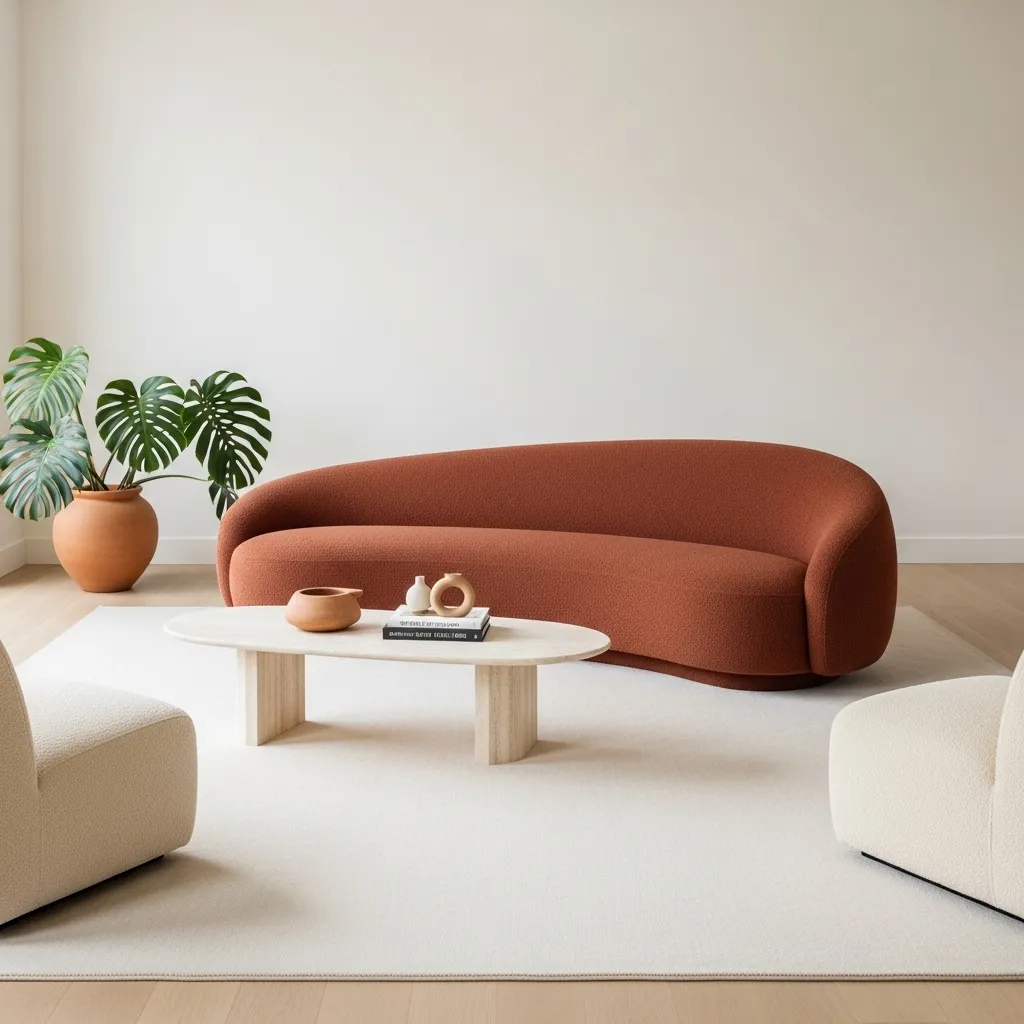
A sculptural furniture piece as the living room’s primary design statement — treated with the same seriousness and the same reverence for form that a sculpture or piece of art receives — is the contemporary approach to furnishing a living room that most clearly distinguishes a designed space from a decorated one. When the sofa is chosen for its specific sculptural form rather than for its practical specifications, when it’s positioned as an object to be seen from all sides rather than pushed against a wall, when everything around it is simplified to allow its form to be fully appreciated, the living room becomes a gallery of contemporary design with the sofa as the primary exhibit.
The continuous curved back of a wrap-around sculptural sofa creates a specific spatial quality — it defines the seating zone as an interior space within the larger room, with the sofa’s back forming a low curved wall that separates the seating area from the surrounding room. This spatial definition through furniture form rather than through architectural partitions is one of the most sophisticated tools in contemporary interior design, and a well-chosen sculptural sofa is the furniture piece most capable of creating it.
3. The Statement Ceiling Treatment
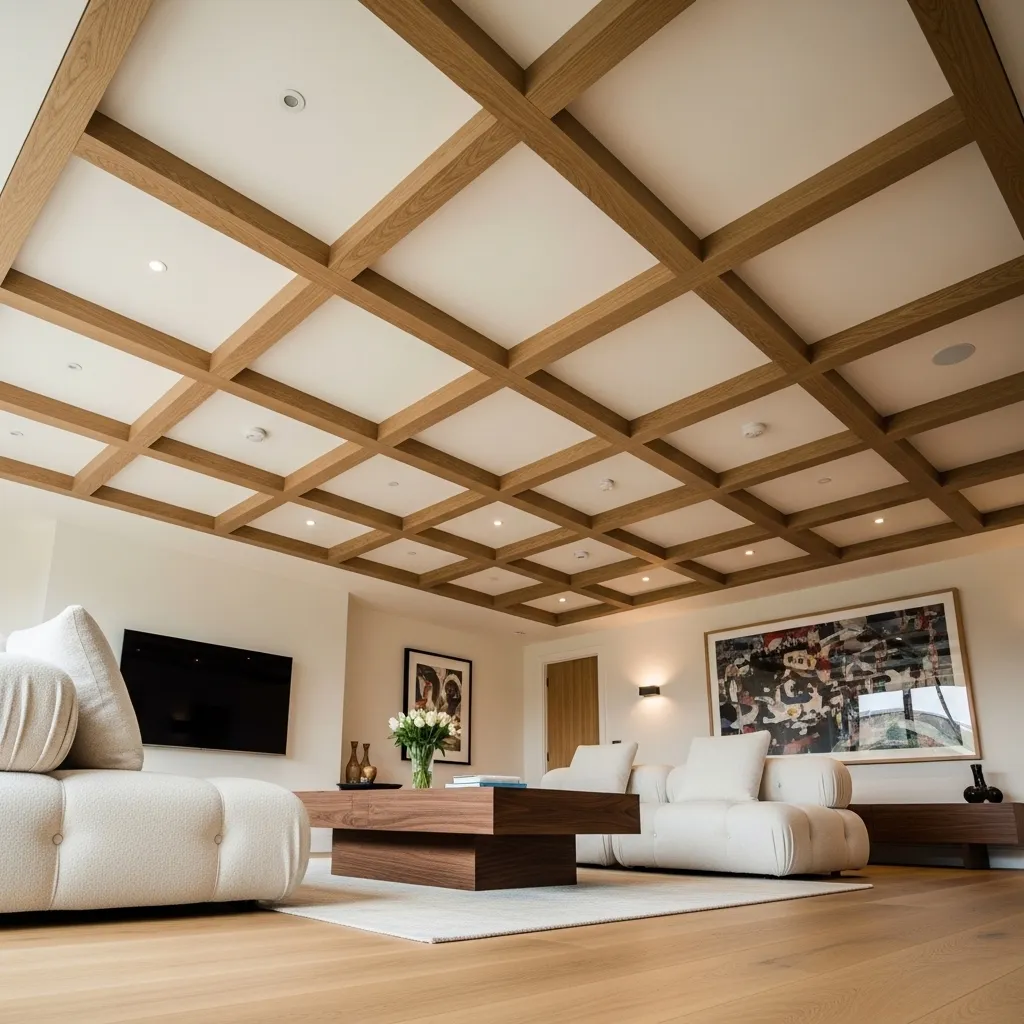
A statement ceiling treatment in a contemporary living room is the architectural intervention that creates the most significant perceived expansion of the room in the vertical dimension — by making the ceiling a designed surface rather than a blank structural plane, you draw the eye upward and create the sense that the vertical dimension of the room has been considered and celebrated rather than simply accepted. A room where the ceiling has been designed has a completeness — a sense of being fully enclosed by intentional surfaces on all planes — that a room with a plain white ceiling despite beautiful walls and floor never quite achieves.
Timber battens creating a geometric coffered pattern are the ceiling treatment that works best in a contemporary context because they add architectural detail and warmth simultaneously — the warmth of the natural wood battens against a white ceiling creates a ceiling surface that’s visually interesting and physically warm rather than architecturally severe. The geometric logic of the coffering references historical architectural tradition without recreating it literally, creating a ceiling treatment that reads as contemporary in its clean execution while being connected to the long tradition of architectural ceiling articulation.
4. The Living Wall as Room Architecture
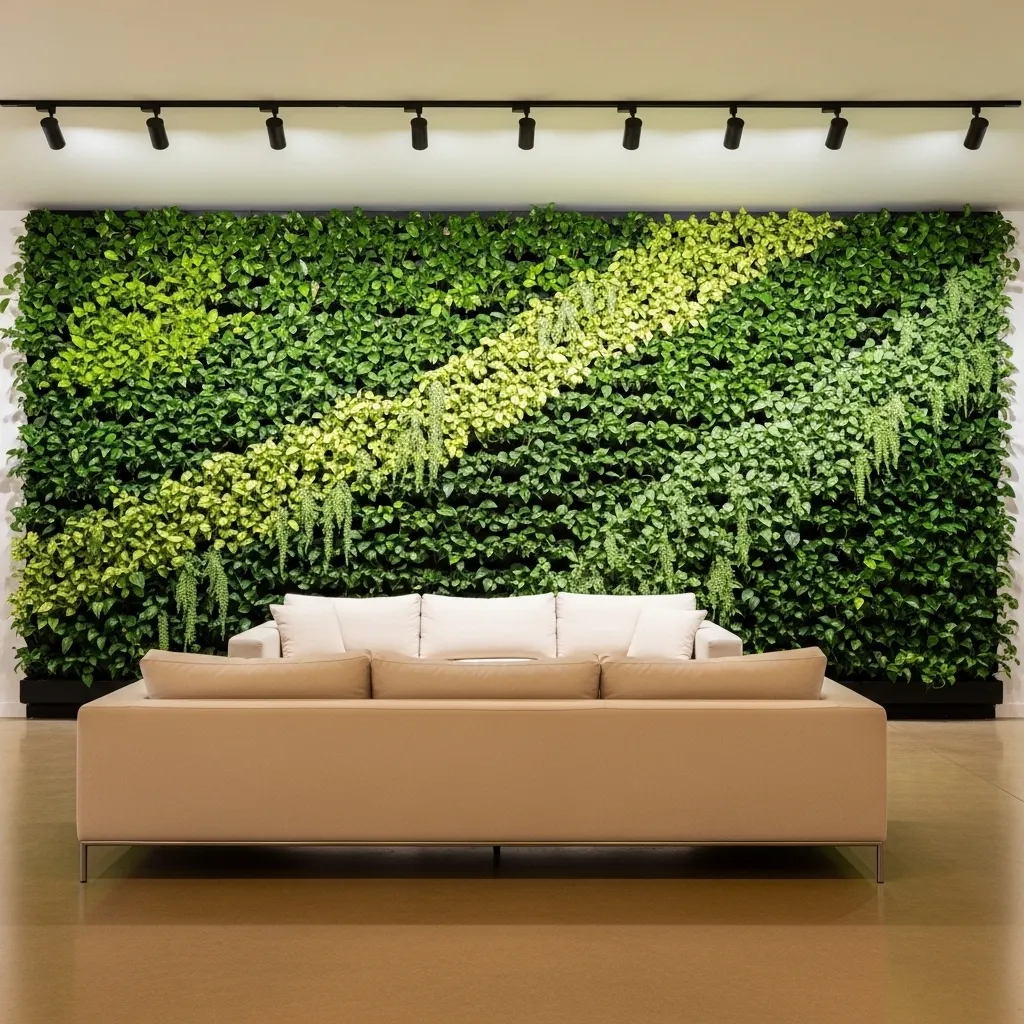
A living wall — a modular planting system installed across the full surface of one living room wall — is the most dramatic and most literally biophilic intervention available in contemporary interior design, transforming an architectural surface into a living, growing, changing ecosystem that participates in the room’s atmosphere rather than providing a static backdrop for it. A living wall of genuine scale creates a room that is genuinely different every day as plants grow and trail and change with the seasons, and the quality of air and ambient humidity in a room with a large living wall is measurably and perceptibly different from a room without one.
The living wall functions as architecture as much as decoration — it creates a surface with genuine depth (the planting extends outward from the structural wall by several inches), genuine texture (the varied leaf forms and sizes create a complex three-dimensional surface), and genuine color variation (the multiple shades of green in different plant species create a subtle color composition across the wall’s surface). As room architecture, the living wall is unmatched in creating the specific quality of a room that has been inhabited and transformed by nature rather than merely decorated with natural elements.
5. Curved Forms Throughout — The 2026 Silhouette
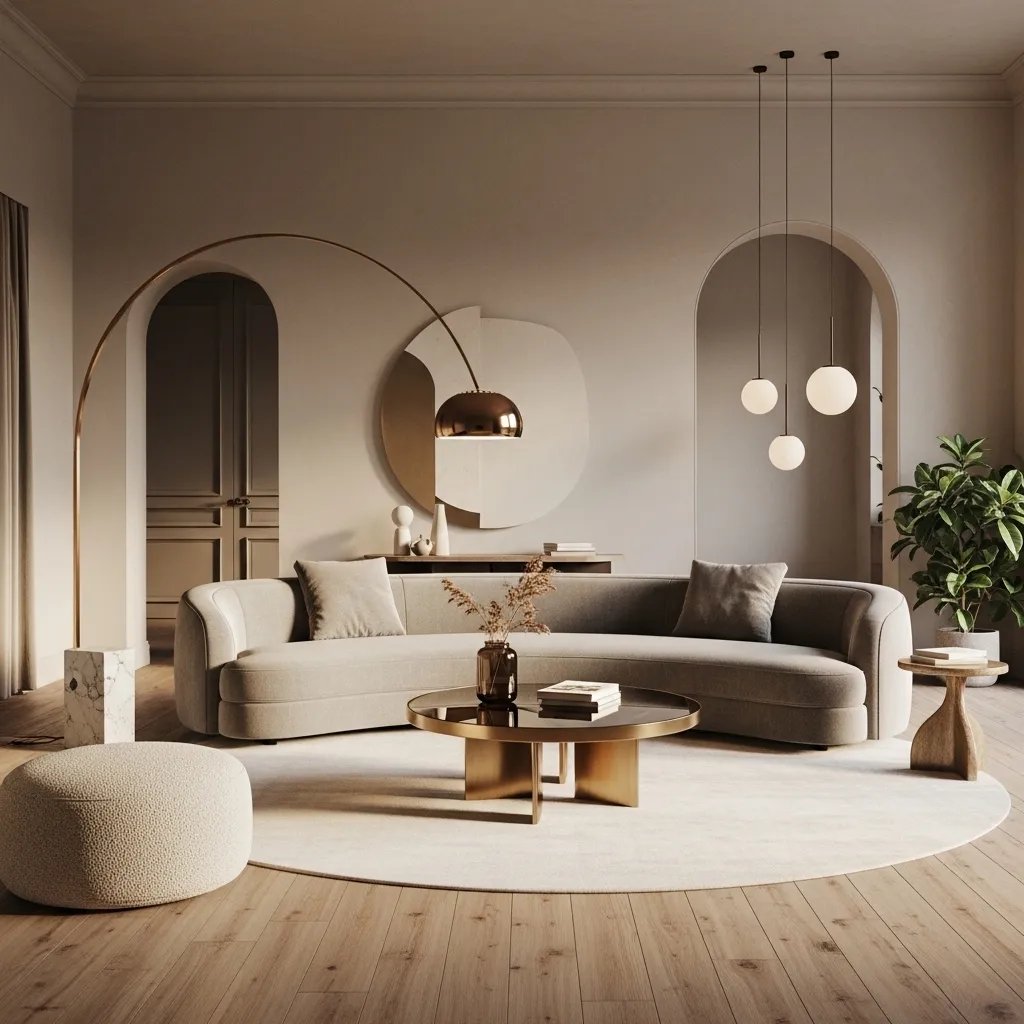
The commitment to curved furniture forms as a consistent design language throughout a contemporary living room is the 2026 design choice that most clearly distinguishes the current moment from previous contemporary design periods — where the 2010s celebrated the right angle and the clean edge as the primary vocabulary of contemporary furniture, 2026 has consolidated curved, organic, rounded forms as the primary contemporary silhouette in a way that no longer reads as a trend but as a genuine evolution in what contemporary furniture looks like.
The specific appeal of curved forms in a living room is both aesthetic and ergonomic — aesthetically, a room without hard edges has a visual gentleness and flow that angular furniture can’t create, and ergonomically, rounded furniture edges and organic furniture forms are more physically comfortable at the points where body contact occurs. A sofa with gently rounded arms is more comfortable to lean against than one with square edges; a round coffee table is easier to move around than one with corners that catch hips and shins; an arc floor lamp that curves over the seating area creates a more intimate quality of overhead light than a floor lamp that simply stands beside the sofa.
6. Warm Plaster and Concrete Material Combination
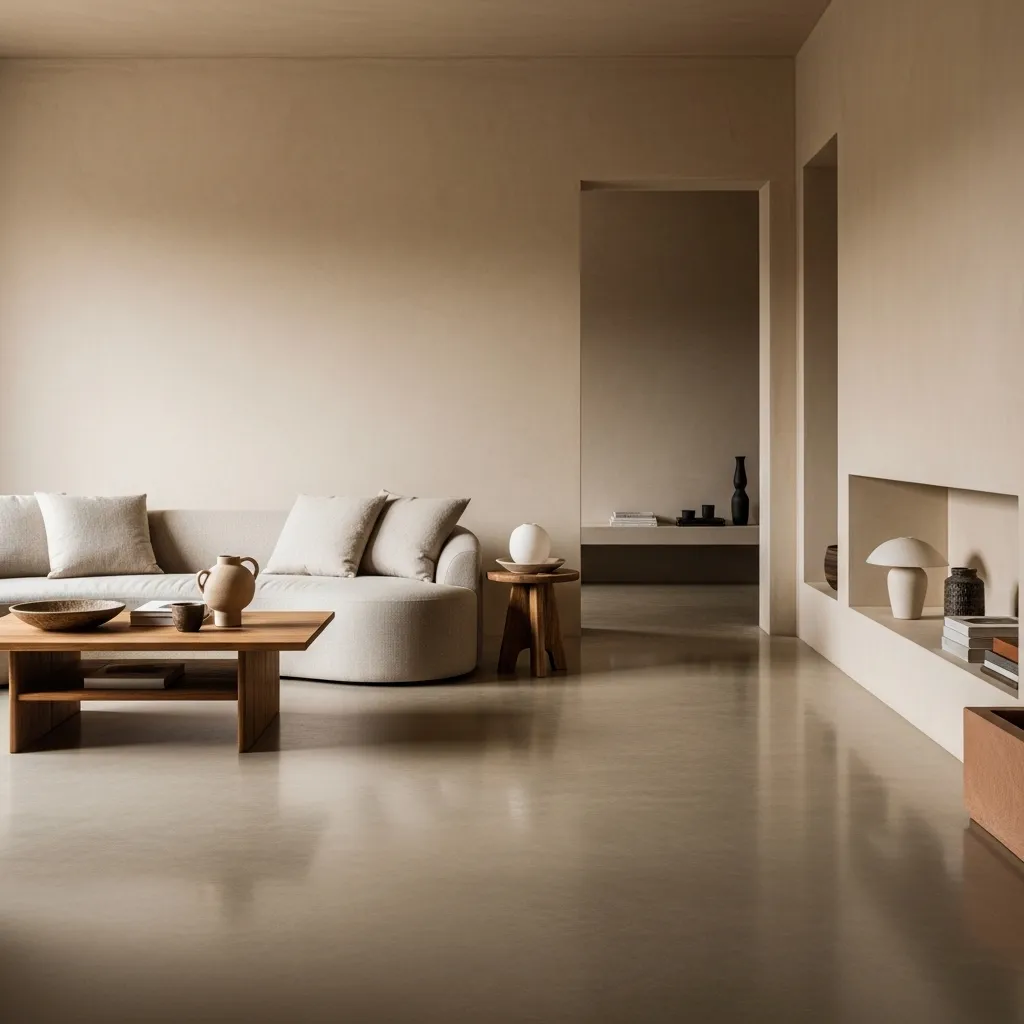
Warm Italian plaster walls combined with polished concrete floors is the material pairing that creates the most specifically architectural and most luxuriously tactile contemporary living room — both are applied surfaces that require skilled handwork to execute well, and both reward the close attention that skilled handwork invites, showing their specific quality and warmth most clearly to someone who moves through the space and notices what the surfaces actually are. They’re not decorative finishes applied to architectural surfaces; they are the architectural surfaces themselves, and that quality of material honesty is precisely what contemporary design at its best is trying to achieve.
The warm tones of both materials — the sand-cream of warm Italian plaster and the buff-grey of warm concrete — create a room that reads as warm and human despite being built on two surfaces that could easily read as cold and industrial in their cool-toned versions. The difference between warm plaster and cool plaster, between buff concrete and grey concrete, is the difference between a room that feels inhabited and a room that feels abandoned, and getting those material temperatures right is the specification decision that most determines how the room feels rather than how it looks in photographs.
7. The Modular Sectional as Social Architecture
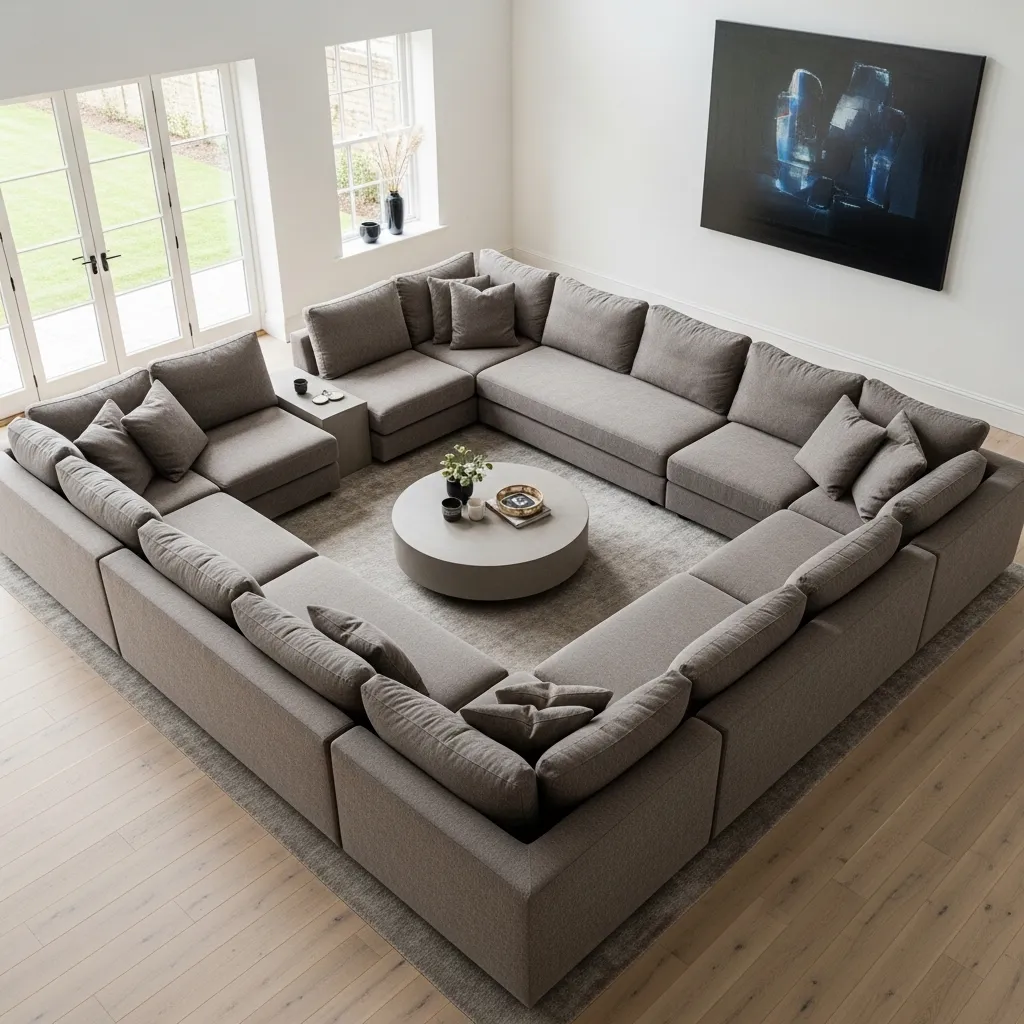
A modular sectional configured as social architecture — arranged in a U-shape or closed square rather than the conventional L-shape or parallel arrangement — creates a fundamentally different quality of social space from any other furniture arrangement, because the U-shape creates a room within a room where all occupants face the center and face each other rather than facing a television or a fireplace or the middle distance. This face-to-face quality is the specific spatial condition that creates the best conversations, and designing a living room around it rather than designing it around the television as the room’s primary orientation is the decision that makes a living room genuinely social rather than merely adjacently inhabited.
The depth of the sectional seat is the ergonomic specification that most determines whether the U-configuration encourages the quality of inhabitation it’s designed for — a deep seat (thirty inches or more from front to back) allows for genuine lounging, for sitting sideways with legs stretched out, for the variety of body positions that extended social time together requires. A shallow seat forces upright posture that’s appropriate for thirty minutes but uncomfortable for the long evenings that a well-configured living room is designed to accommodate.
8. The Bold Abstract Artwork as Room Anchor
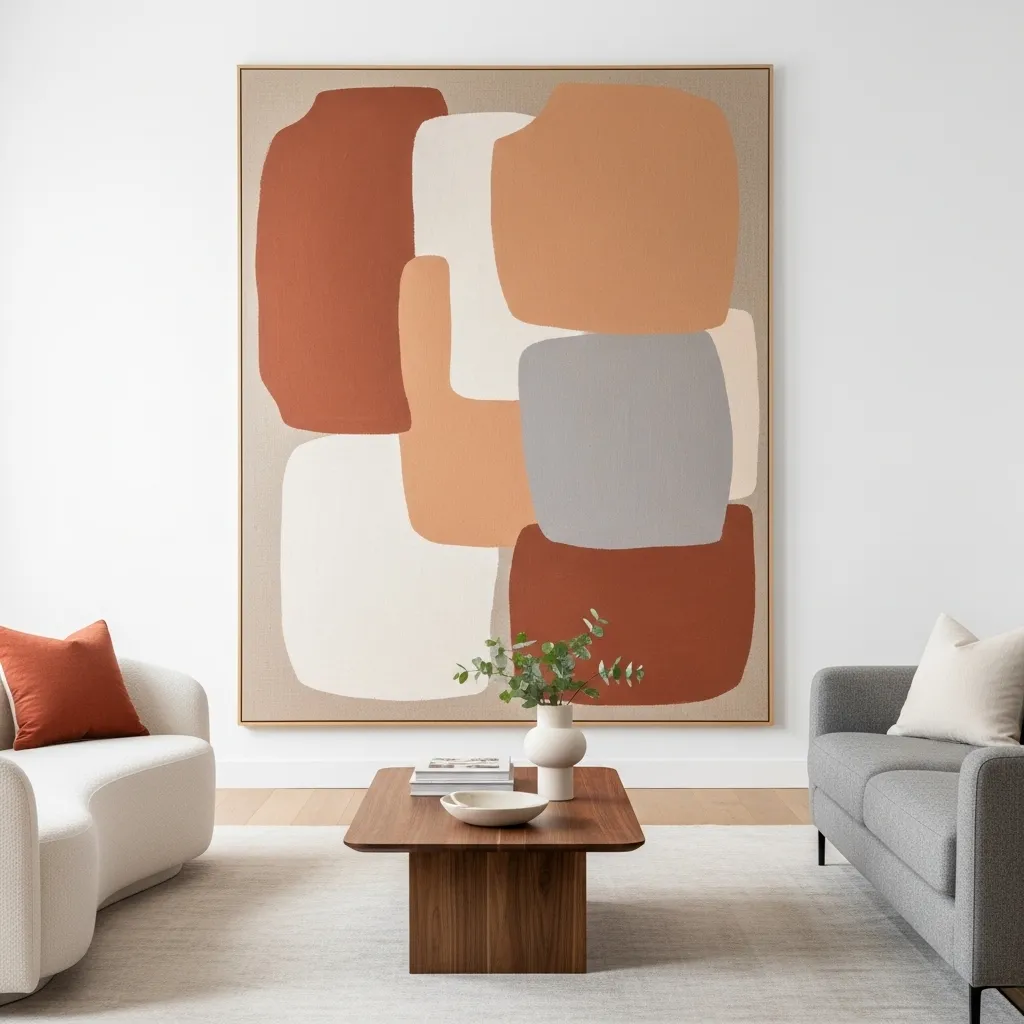
A single very large abstract artwork as the room’s primary design anchor — with the furniture selection and textile palette taking their color cues from the painting rather than the painting being chosen to match the existing room — is the approach to contemporary living room art that creates the most powerfully cohesive and most genuinely designed result. When the room is built around the artwork rather than the artwork being added to a completed room, the relationship between the art and the space has a quality of original integration rather than subsequent accommodation, and that quality of integration is what makes the room feel composed at the deepest level.
The specific quality required of an artwork that will serve as a room’s primary anchor is scale — it needs to be genuinely large enough to hold the visual weight of the entire wall without being supported by other pieces around it, and large enough to be the dominant visual element in the room from any position within it. A large abstract painting in a contemporary living room is seen from the sofa, from the dining area adjacent to it, from the kitchen beyond, and from the entrance — its scale needs to work at all those distances simultaneously, which requires genuine monumentality rather than the standard residential artwork scale.
9. The Warm Terrazzo Revival
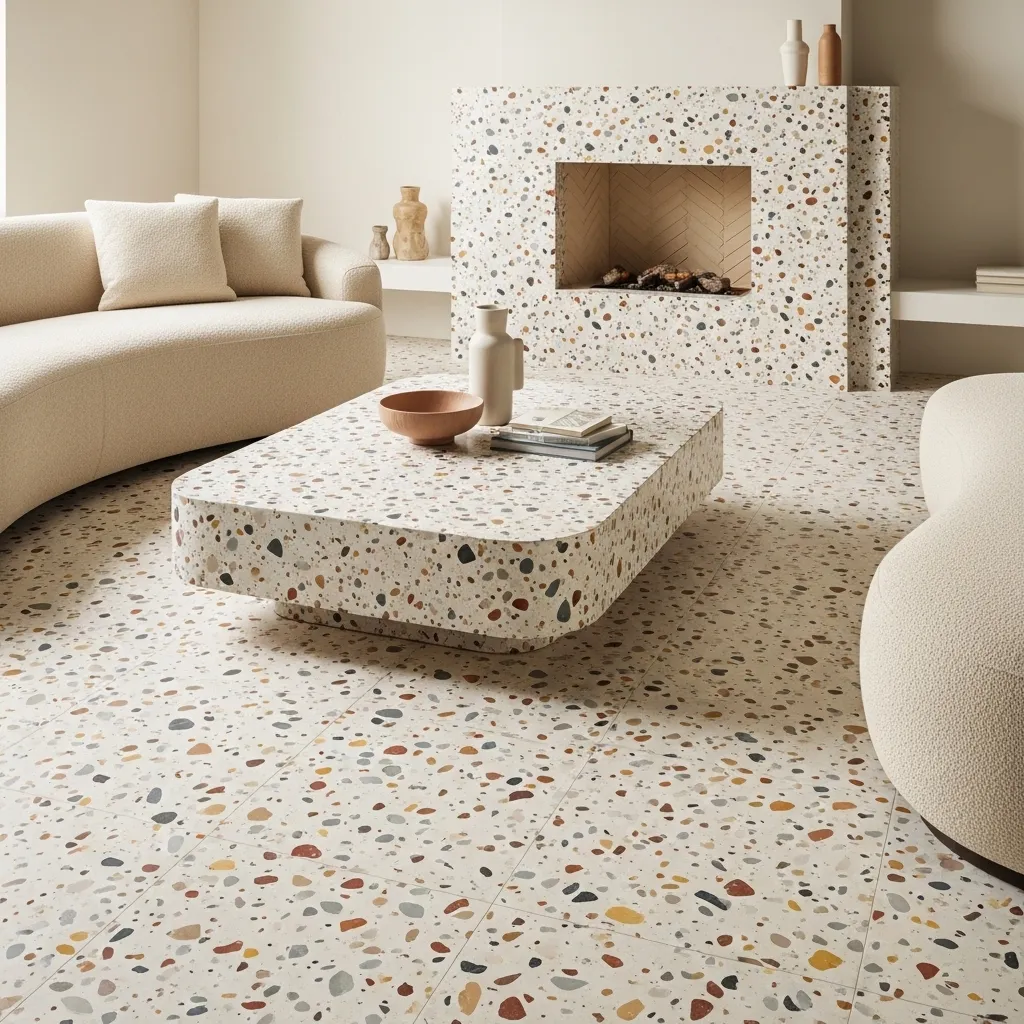
Terrazzo as a contemporary living room material — appearing at multiple scales from floor tile to coffee table to fireplace surround — is the 2026 material revival that most clearly demonstrates the contemporary design moment’s preference for warm, complex, handmade-quality surfaces over the cool uniform perfection of polished stone and engineered surfaces. Terrazzo’s inherent quality of being unique at every square inch — the aggregate distribution is random and unrepeatable — creates surfaces that reward the kind of close, slow attention that contemporary design has rediscovered as a genuine value after years of pursuing visual uniformity.
The warm aggregate palette is what distinguishes contemporary terrazzo from the cool grey and white terrazzo of mid-century institutional floors — by choosing terracotta, warm grey, brass, and cream aggregate rather than cool grey and black, the contemporary terrazzo floor creates a surface that reads as warm and organic rather than institutional and cool. The same material logic that makes warm-toned concrete different from cool-toned concrete applies with even more force to terrazzo, where the color of the aggregate is the primary color of the surface.
10. The Fireplace as Contemporary Focal Point
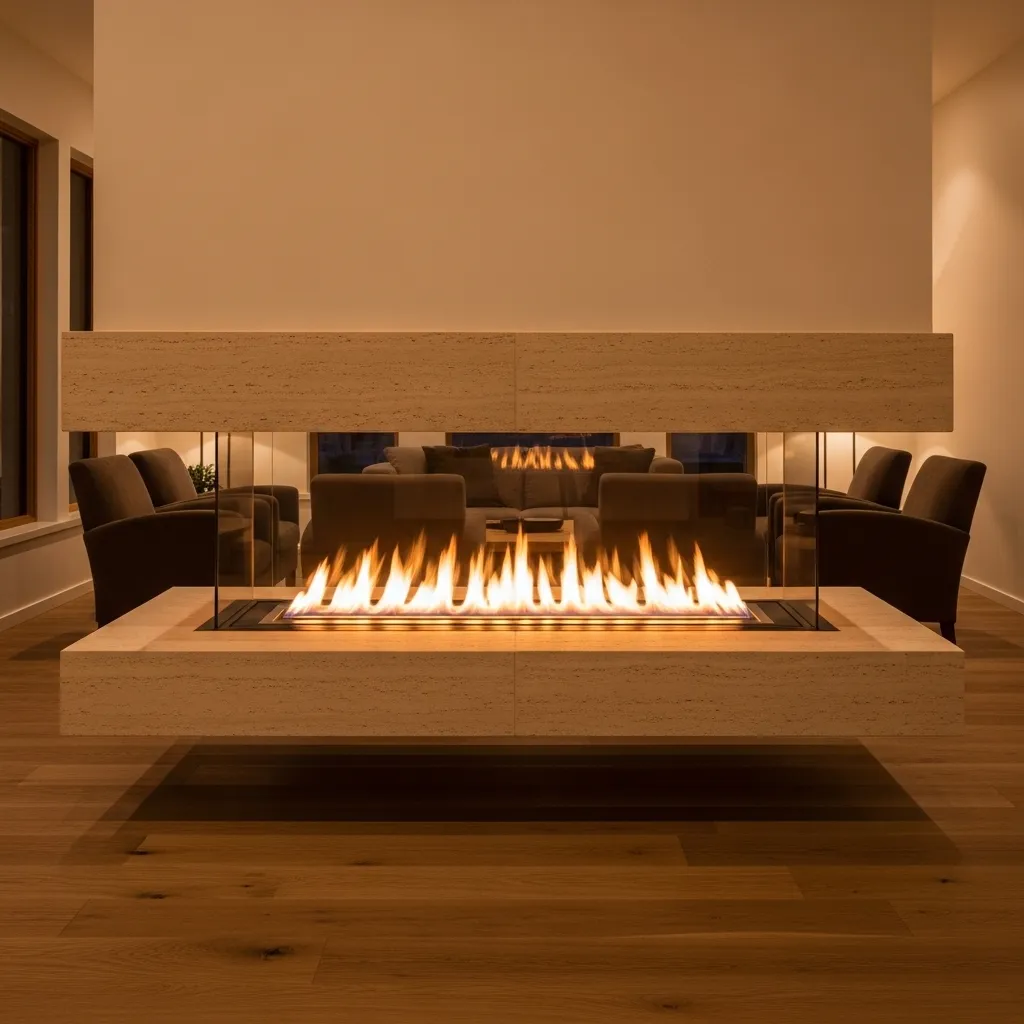
A double-sided or floating contemporary fireplace as the living room’s primary architectural and social focal point creates a spatial organization that’s genuinely different from any television-centered or single-wall fireplace arrangement — the floating fireplace divides the living room into zones while connecting them through the shared view of the fire, creating a spatial complexity and a quality of gathered-around-the-fire atmosphere that’s both architecturally sophisticated and socially generous.
The contemporary fireplace surround in warm honed limestone — minimal in thickness, warm in tone, precise in its simplicity — is the architectural detail that makes a contemporary gas fireplace feel genuinely beautiful rather than merely functional. The thinness of a well-executed contemporary fireplace surround creates a sense that the fire is suspended rather than contained, that the flame is a feature of the room rather than a mechanical appliance within a decorative housing, and that quality of apparent lightness and simplicity is the most sophisticated possible contemporary approach to the oldest domestic architectural element.
11. The Layered Rug Moment
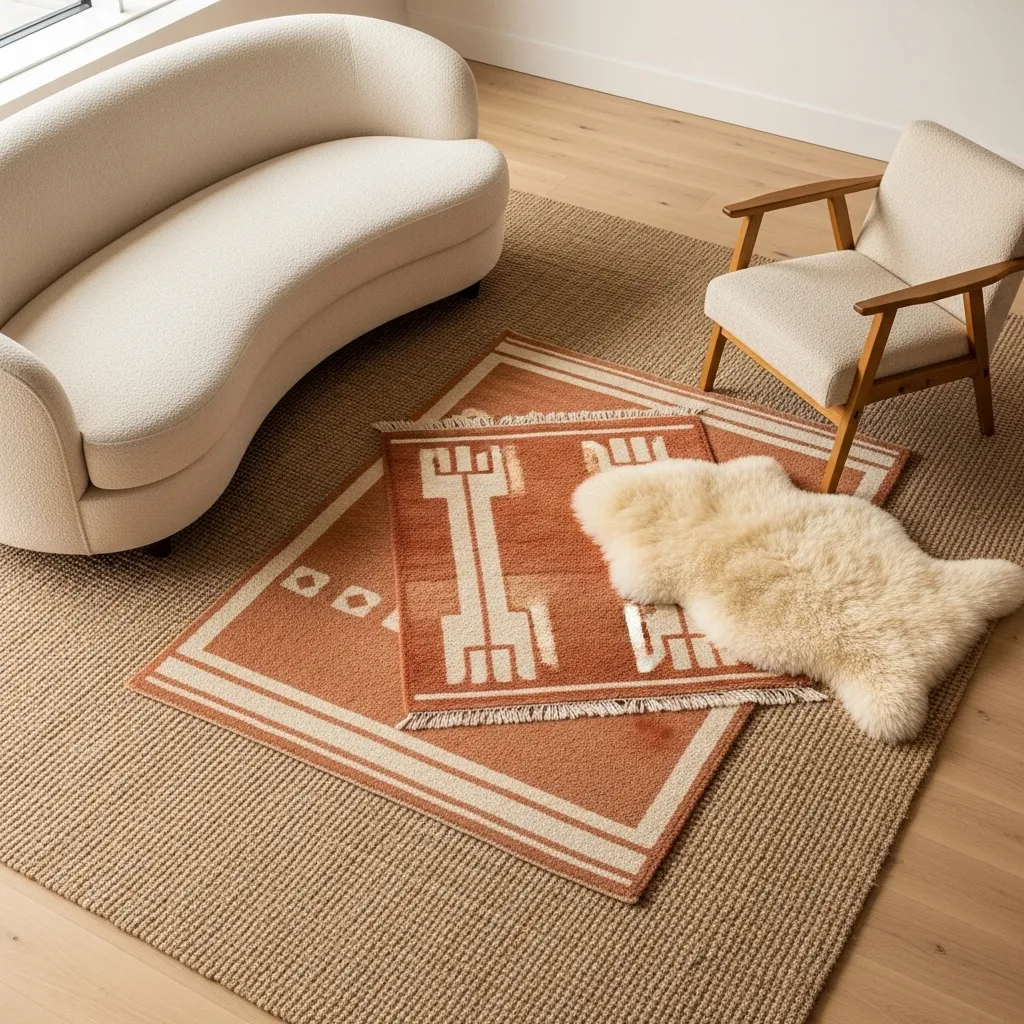
Layered rugs — a large natural fiber base rug with a smaller, more characterful rug on top — is the floor treatment that creates the most warmth and the most visual richness in a contemporary living room without introducing strong color or bold pattern that competes with other design elements. The jute base rug provides the large-scale warm neutral ground, and the smaller geometric wool rug on top introduces pattern and color at a scale that reads as accent rather than primary design statement, while the slight rotation of the top rug creates a dynamic quality that makes the arrangement look deliberately composed rather than simply placed.
The psychological effect of a layered rug arrangement in a living room is to make the seating area feel like a room within the room — a specifically designated zone of greater warmth and greater comfort than the surrounding floor, a destination rather than just a position. This zone-creating function is especially valuable in large, open-plan contemporary spaces where the furniture needs to create spatial organization that architectural walls would otherwise provide, and the layered rug is one of the most effective and most beautiful ways to achieve it.
12. Mixed Metal Finishes Done With Intention
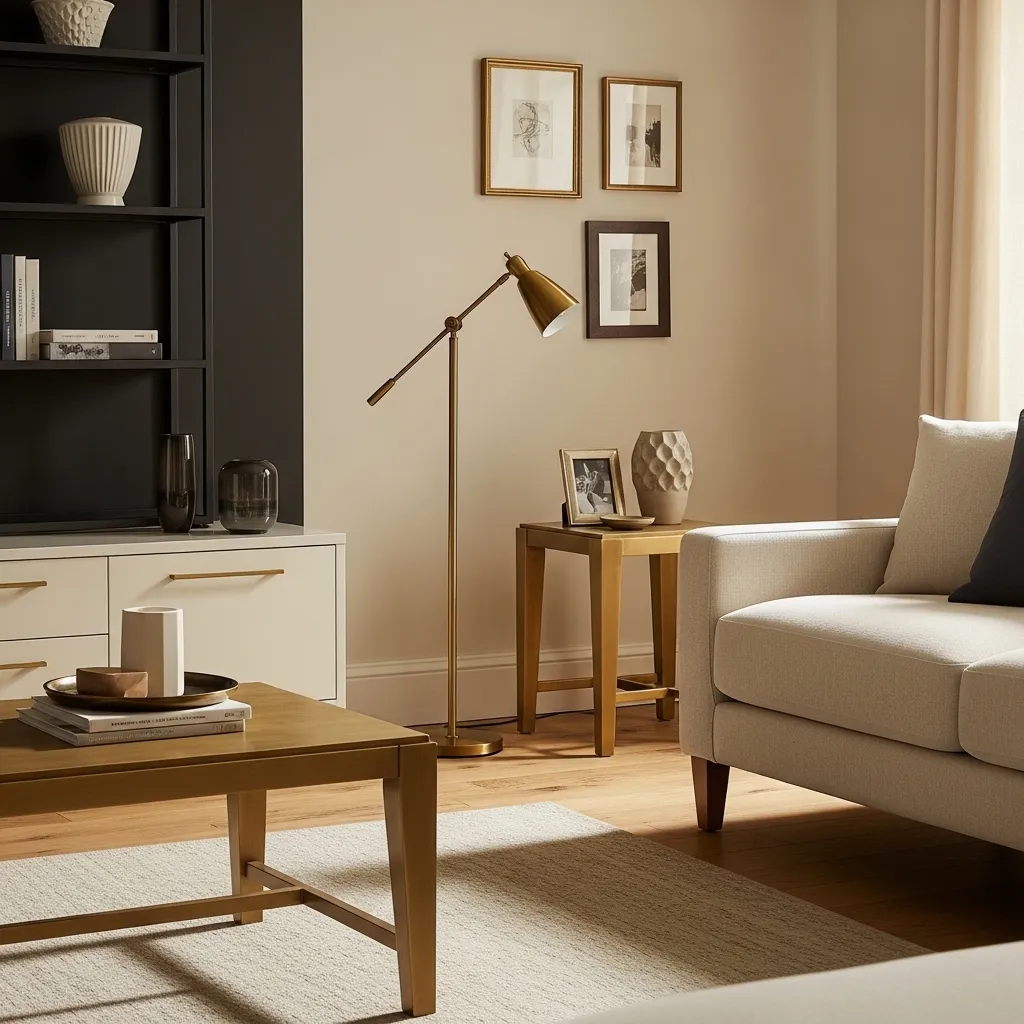
Mixed metal finishes in a contemporary living room — intentionally using two or three different metal tones rather than rigidly maintaining a single metal throughout — is the design convention that has replaced the old single-metal rule in contemporary interior design because it creates more visual interest and more material warmth than the monochromatic approach. The key to mixed metals working cohesively rather than looking like an accident is maintaining consistency within the variation — all matte rather than some matte and some polished, all warm-toned or all neutral rather than mixing warm and cool metals.
Brushed brass as the primary metal with brushed nickel and matte black as secondary metals is the specific combination that works most reliably in a warm contemporary living room — the brass provides warmth and richness, the brushed nickel provides cool, precise contrast, and the matte black provides depth and grounding. All three are matte-finish metals that share a quality of sophisticated restraint, and their combination creates a room where metal surfaces are varied and interesting without being distracting or unresolved.
13. The Oversized Floor Lamp as Sculptural Object
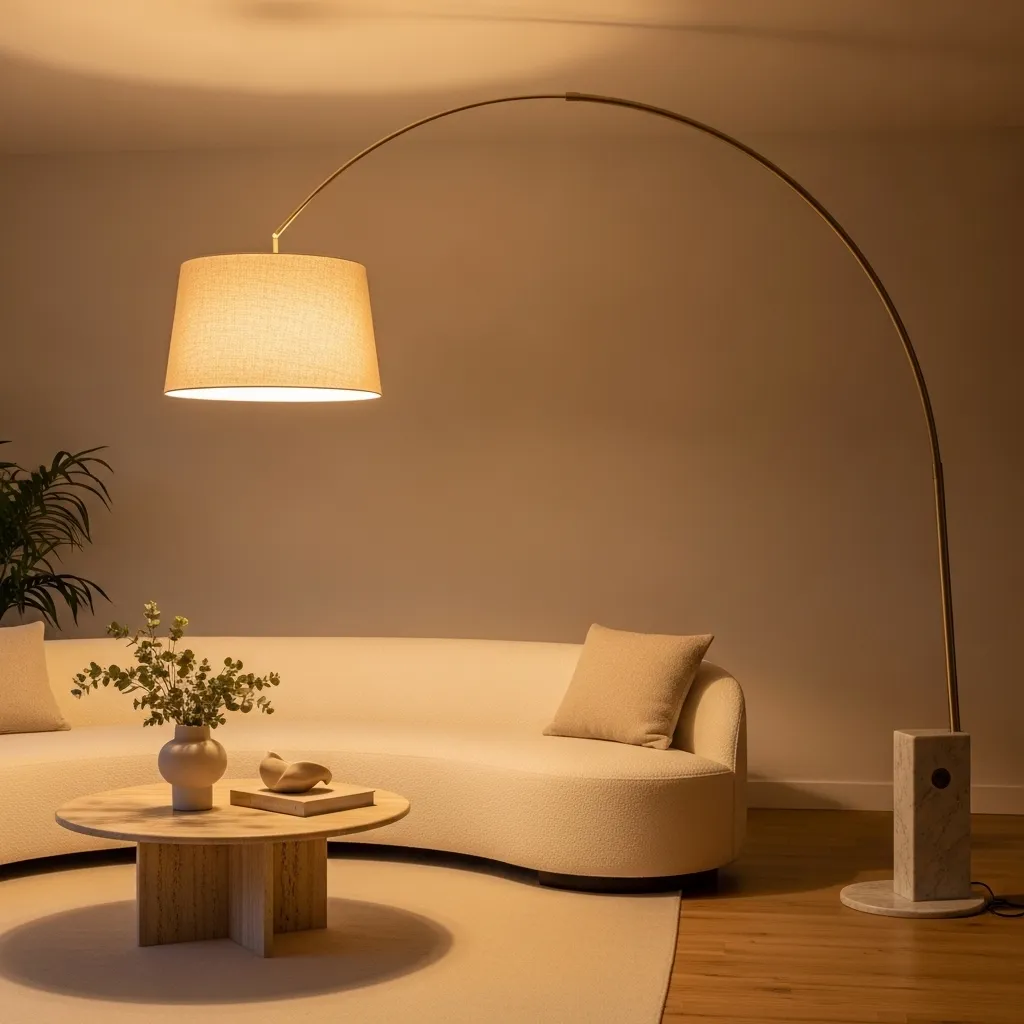
An oversized arc floor lamp treated as a sculptural object — chosen for its specific form and scale as much as for its functional illumination — is the contemporary living room element that most efficiently combines the functions of art, architecture, and light source in a single object. A well-chosen oversized floor lamp creates a visual moment in the room that’s present regardless of whether the lamp is on or off, because its scale and form are significant enough to read as a designed object even in daylight when its illumination function is secondary.
The arc lamp specifically creates the intimate overhead light quality that living rooms need for evening use — the light source is above the seating area rather than beside it, creating the quality of a ceiling fixture from a floor-standing object and providing the over-head warmth and directional quality that side-mounted floor lamps don’t create. The scale of the shade determines the quality of light — a large shade in a light-diffusing fabric like linen creates a wide, soft pool of warm light that illuminates the full seating area, while a smaller shade creates a focused pool that’s more dramatic but less useful for the full social function of a living room seating zone.
14. The Indoor Tree as Room Architecture
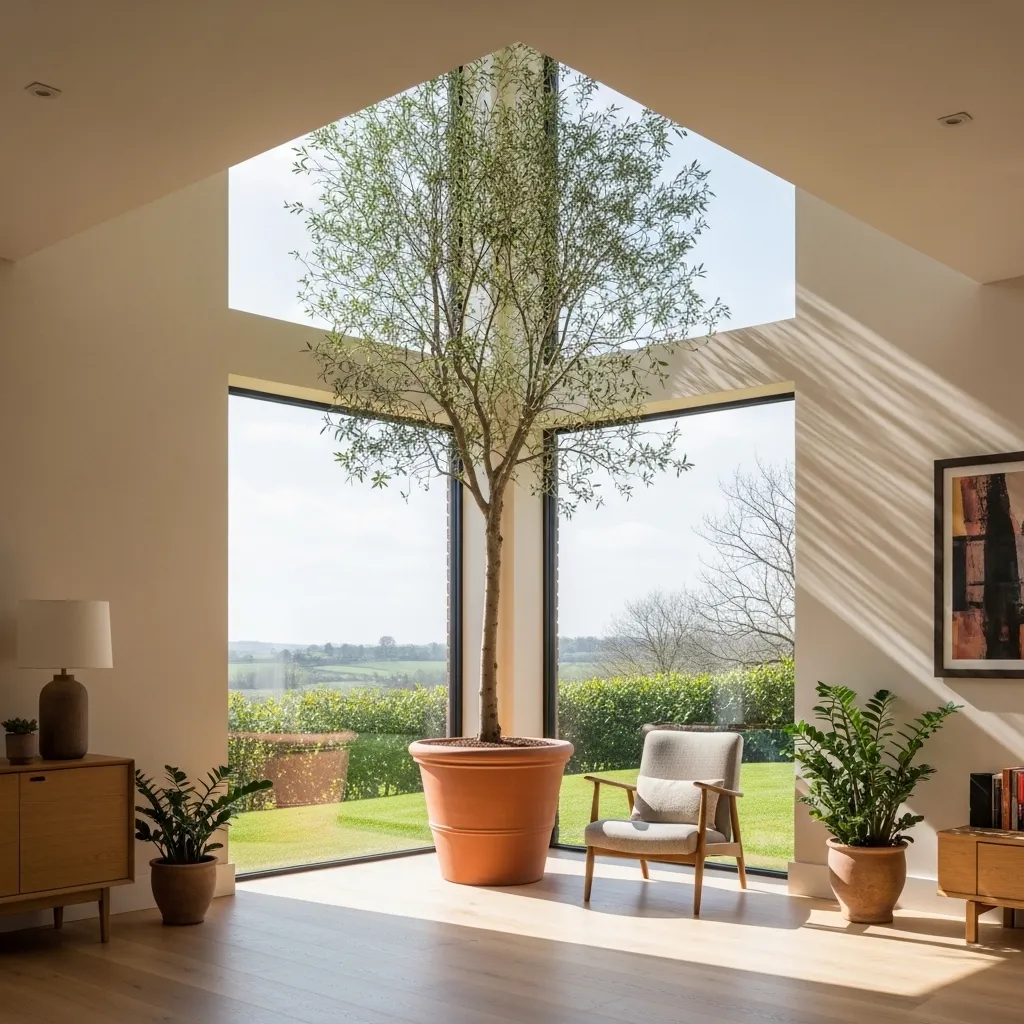
A mature indoor tree positioned as a room architecture element rather than merely a decorative plant object is the biophilic design move that creates the most profound transformation of a contemporary living room’s spatial quality — a tree with a visible trunk, genuine height, and a branching canopy creates spatial definition and enclosure in a way that no other plant form achieves. The corner defined by a tree’s canopy becomes a different quality of space from the rest of the room — slightly enclosed, slightly shaded, more intimate — and that difference creates a natural reading nook or thinking corner that architectural interventions would require significant construction to replicate.
The specific tree species that work best as living room architecture are those with enough structural presence to create genuine spatial definition — the fiddle leaf fig with its large dramatic leaves and architectural branching structure, the olive tree with its ancient, gnarled character and delicate silver-green foliage, the large ficus with its genuine canopy spread, the bamboo palm with its multi-stem structure that creates a grove-like quality when mature. Each creates a different quality of spatial definition and a different quality of light filtering through the canopy, and the choice between them should be made as much for their spatial qualities as for their aesthetic ones.
15. The Contemporary Living Room Designed for Actual Life
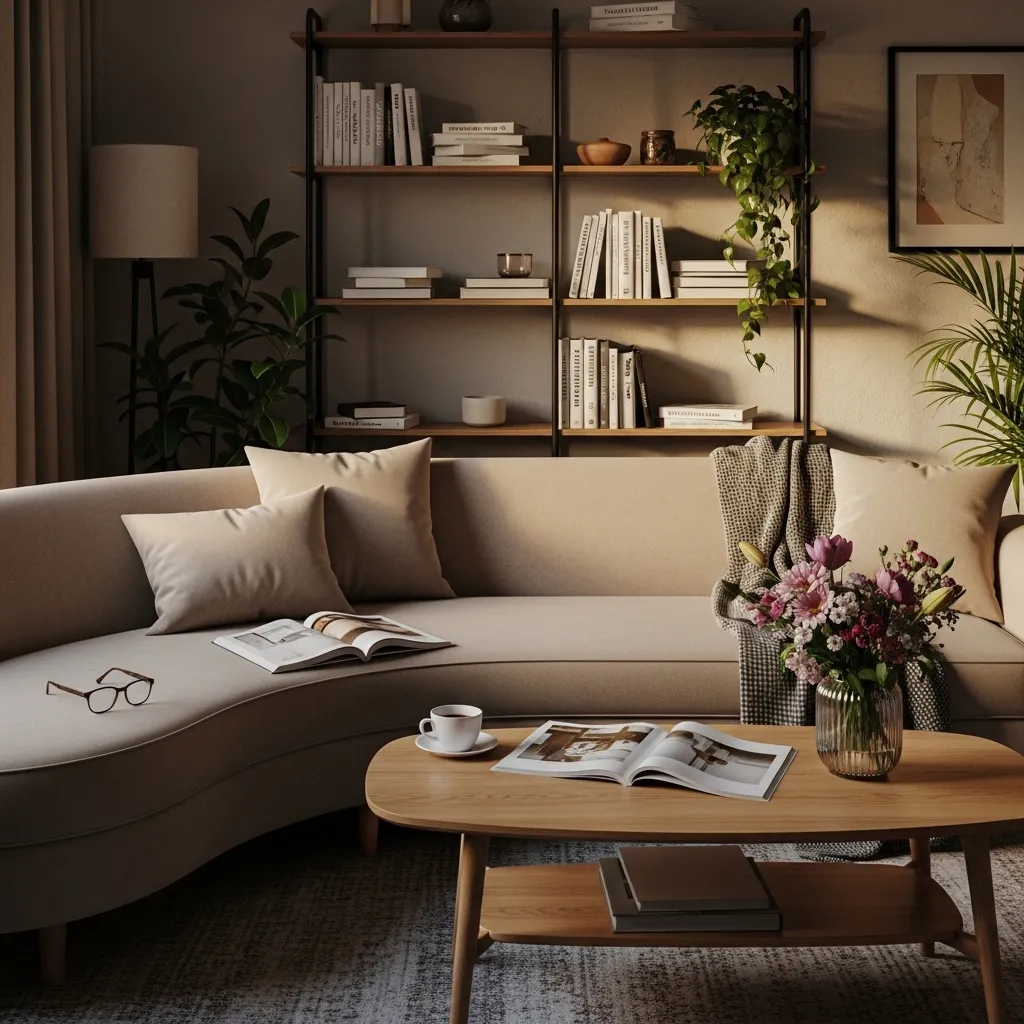
A contemporary living room designed for actual life — designed from the beginning with the intention that real people will use it fully and freely rather than managing it carefully to maintain its designed appearance — is the living room that achieves the highest possible standard of contemporary residential design because it resolves the fundamental tension between design and inhabitation rather than sacrificing one for the other. The book left open on the armrest, the coffee cup on the coffee table, the askew cushion that hasn’t been straightened — these are not failures of the design but evidence of its success, signs that the room is loved and used and comfortable enough that the people in it aren’t thinking about its design at all.
The design decisions that allow a contemporary living room to be genuinely lived in without losing its quality are specific and deliberate — materials that age and wear gracefully rather than showing every mark and use as damage, furniture scaled and configured for actual sitting and lounging rather than for visual effect, storage that makes the things of daily life easy to put away so that the room can return to its composed state without effort, and a color palette and material selection that incorporates natural variation and organic imperfection so that the lived-in quality of the room feels consistent with rather than contrary to its design intention. These are the design qualities that make the difference between a room you live in and a room you maintain, and the contemporary living room that achieves them is the most genuinely sophisticated version of contemporary design available.