15 Green Master Bedroom Decoration Ideas That Create the Most Restful, Most Personal, and Most Genuinely Beautiful Room in Your Home
If you’ve been circling green as a bedroom color for months — pulled toward it every time you see it in a beautifully photographed room, reassured by everything you know about green’s connection to nature and rest and the specific quality of calm it creates, and then backing away from the commitment because you’re not sure which green, not sure how much of it, not sure whether it will work with the furniture you already have or the light your bedroom actually gets — this guide is going to take you through every significant direction that green master bedroom design is moving in 2026 and give you enough specific, honest information about each approach that the decision becomes clear rather than overwhelming. The ideas here cover the full spectrum: from the darkest, most enveloping forest green that turns a bedroom into a cave of extraordinary atmospheric beauty, through the medium sage and eucalyptus tones that create the bedroom’s most restful and most universally successful green expressions, to the palest celadon and grey-green that add the merest wash of botanical color to an otherwise neutral bedroom. They cover full-room paint commitments and single accent wall approaches, wallpaper and textile-only approaches for those who aren’t ready to paint, the specific way green works with different wood tones and metal finishes, the botanical layering approach that extends the green palette from walls into textiles and objects, and the specific lighting considerations that make green bedrooms look beautiful rather than murky at every time of day.
Green is the color that human visual systems process with less effort than any other — evolutionary biology’s explanation being that our ancestors spent millions of years looking at green landscapes, so our eyes are quite literally designed to find green restful. The implication for bedroom design is specific and significant: a green bedroom creates a quality of visual rest that no other color can quite replicate, a room where the eyes settle rather than strain, where the perceptual load of the color itself contributes to the quality of relaxation rather than working against it. This is why green bedrooms consistently photograph as beautiful but also consistently feel more beautiful in person than in photographs — the photographs capture the color but not the specific quality of visual ease that green creates in the body of a person spending time in the room.
What makes green specifically interesting as a master bedroom color in 2026 is the extraordinary range of psychological and atmospheric experiences that different greens create — the deep forest green that creates a sense of being enclosed within ancient woodland is a completely different bedroom experience from the pale sage green that creates a sense of morning light filtering through leaves, and both are completely different from the warm olive green that creates the specific warmth of Mediterranean botanical landscapes. These are not variations on the same experience but genuinely different experiences expressed through the variations of a single color family, and choosing the right green for your specific bedroom requires understanding what experience you’re trying to create rather than simply what color you like in the abstract.
1. Deep Forest Green — The Enveloping Cave
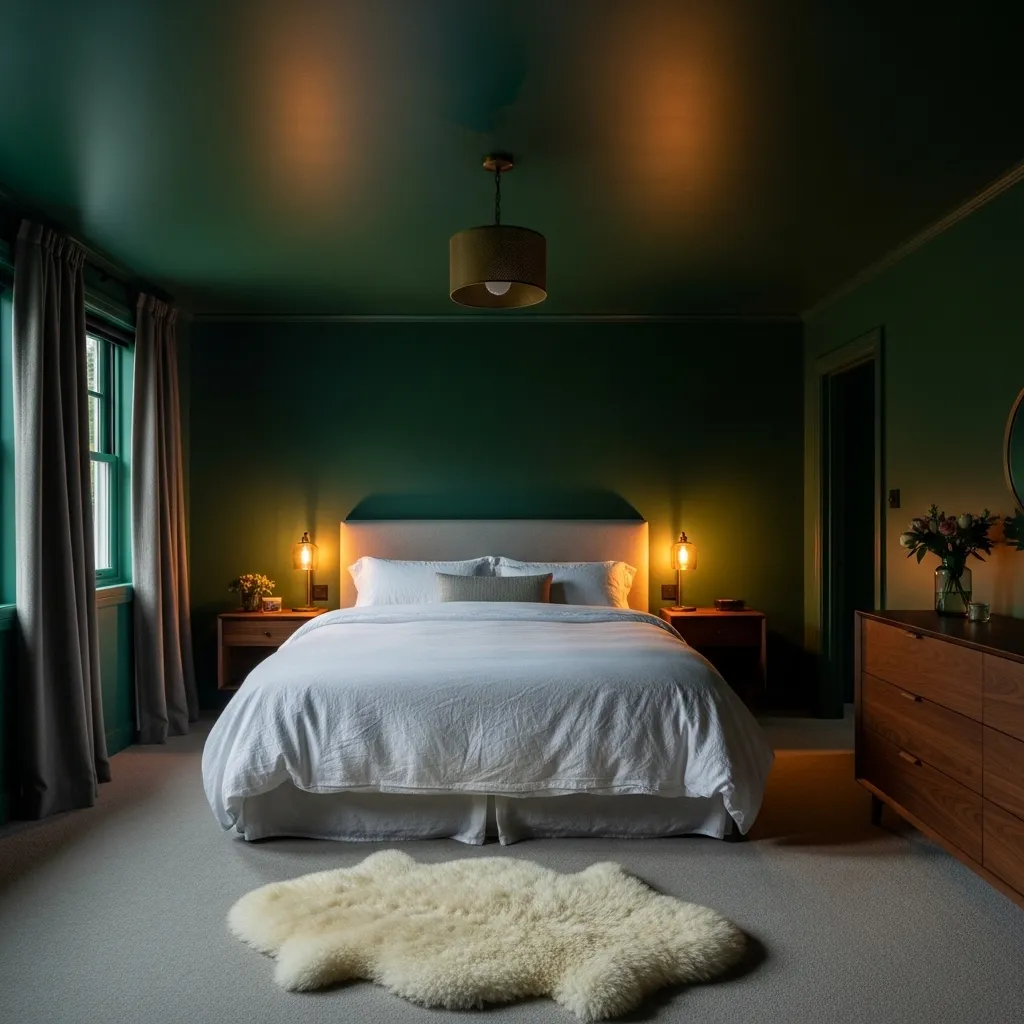
Deep forest green walls, ceiling, and trim — the complete color envelope approach where every surface in the room is the same deep green — creates the most dramatically immersive and most specifically beautiful bedroom experience available in green, because the completeness of the color envelope eliminates the boundary between surfaces and creates a room where you are genuinely inside the color rather than surrounded by walls painted that color. The psychological experience of a deep green bedroom where even the ceiling is green is the specific experience of enclosure and shelter that the forest creates — the sense of being surrounded and protected by living green on all sides — and it’s a psychological comfort that has genuine physiological effects on rest and relaxation.
The decision to paint the ceiling the same deep green as the walls is the commitment that most distinguishes an all-in deep green bedroom from a more tentative interpretation — a deep green bedroom with a white ceiling has one surface asserting the conventional spatial logic of rooms (white ceiling = sky = open above) that works against the enveloping quality that the deep green is trying to create. When the ceiling matches the walls, the room’s spatial logic changes fundamentally, the eye reads the green as a continuous surrounding rather than as a surface treatment on individual walls, and the quality of enclosure becomes genuinely cave-like in the most specifically comforting sense of that word.
2. Sage Green — The Universal Restful Tone
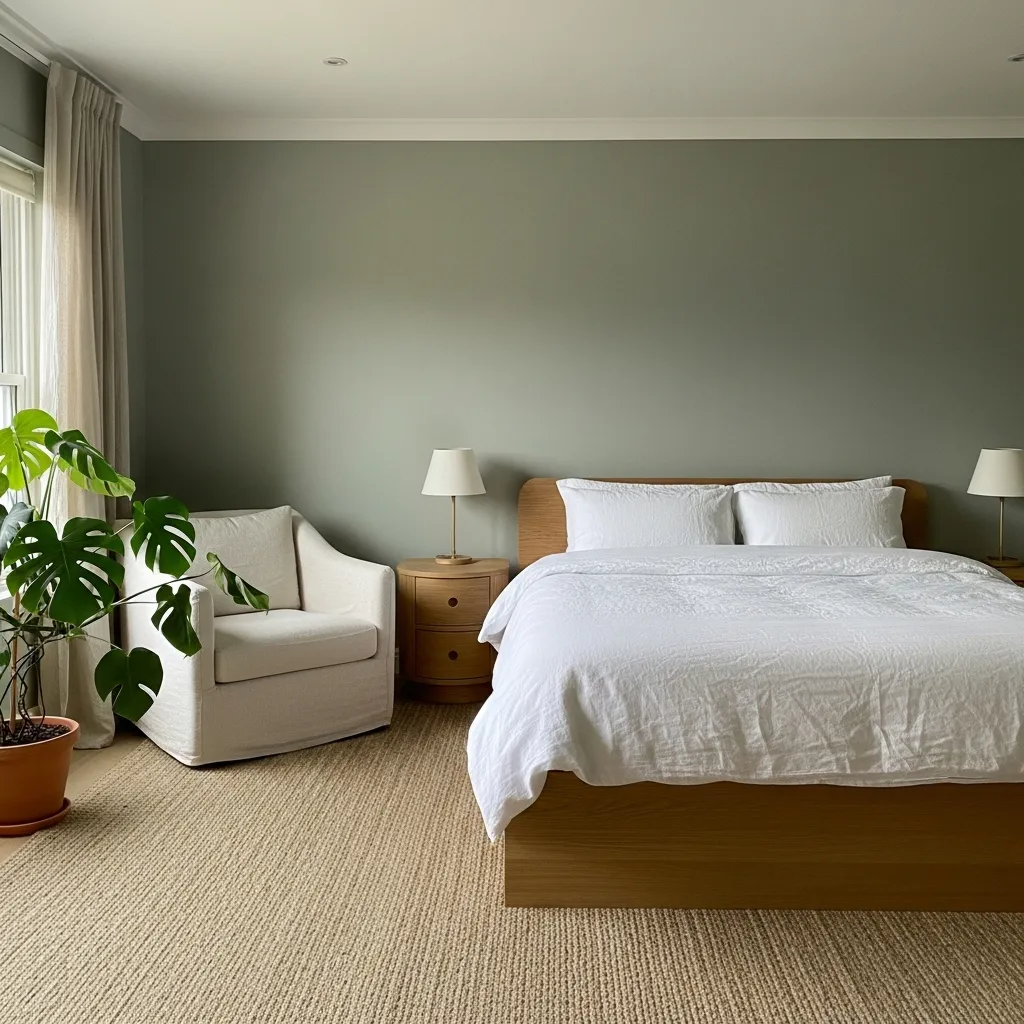
Sage green is the green bedroom shade that most consistently succeeds across the widest range of bedrooms, light conditions, furniture combinations, and personal preferences — not because it’s the most dramatic or the most specific in its atmospheric quality, but because its specific combination of grey and green and warmth creates a color that reads as genuinely restful under almost any lighting condition, pairs beautifully with almost any wood tone from pale oak to dark walnut, and creates a room that feels simultaneously neutral enough for extended inhabitation and specifically beautiful enough to feel genuinely designed. It’s the green that never looks wrong and consistently looks right.
The specific quality of sage green that makes it so universally successful in bedrooms is its grey component — the grey takes the edge off the green’s natural vibrancy and creates a color that reads as quiet rather than assertive, settled rather than demanding, botanical without being literal. A bedroom in pure middle-value green would be too insistent, too saturated, too specifically green to read as restful; the grey in sage green creates a color that reads as restful first and green second, which is exactly the quality a bedroom color needs to create genuine rest rather than interesting stimulation.
3. Dark Emerald Green Velvet Headboard as the Room’s Statement
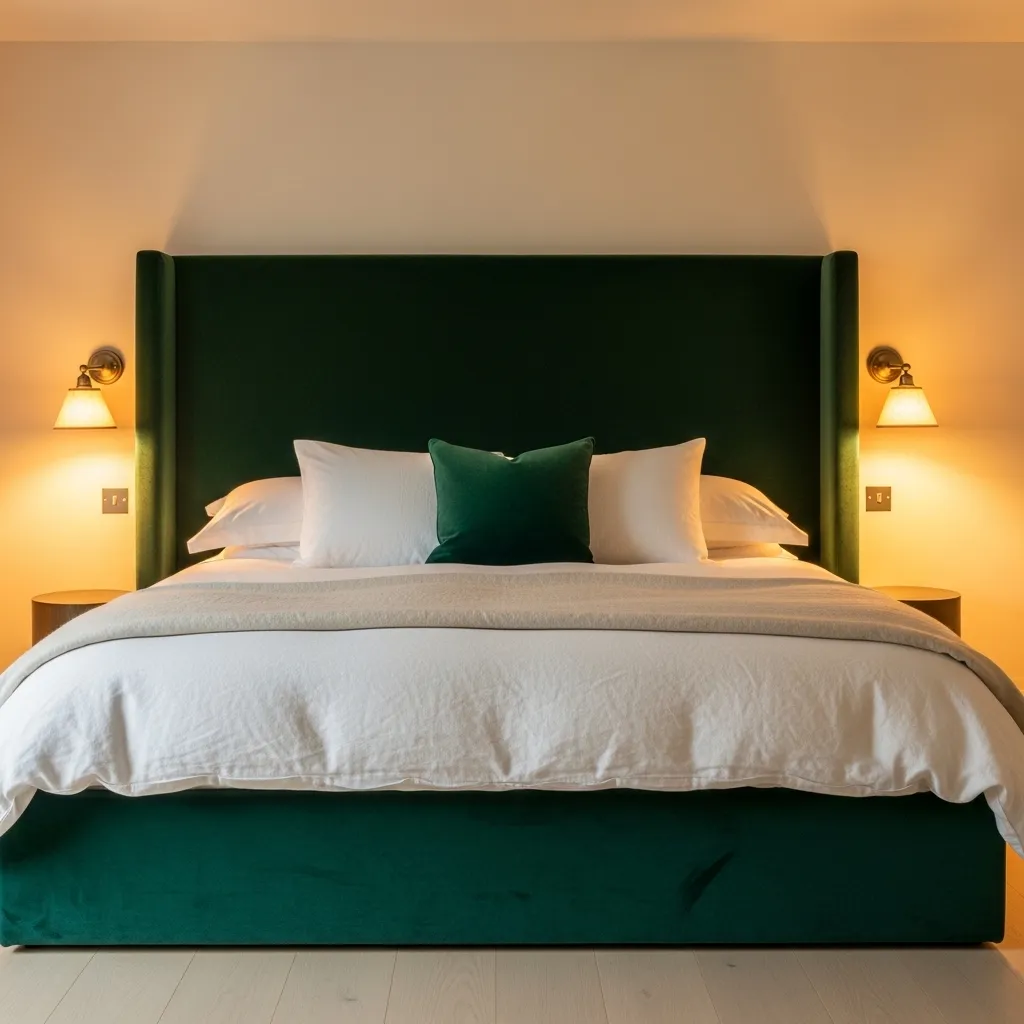
A large upholstered headboard in deep emerald green velvet is the bedroom approach that creates the most impactful green statement for the minimum commitment — because the headboard is the most visually significant element in any bedroom (it occupies the primary wall at the primary sightline from the bedroom entrance) and a headboard in a bold, beautiful color creates the impression of a deeply designed green bedroom while leaving the walls in a neutral that can be changed, lightened, or completely reimagined without affecting the primary design statement.
The velvet fabric is the specific material that makes this approach work at its highest level — velvet’s directional pile creates color variation that’s constantly responsive to the angle of the light and the direction of the viewer’s gaze, so the emerald green of a velvet headboard is never the same green from two different positions or in two different light qualities. In morning light, it appears one shade; in warm evening lamplight, it appears another; in the warm flat light of an overcast day, another still. This color responsiveness creates a headboard that’s genuinely alive in the room rather than simply a large piece of upholstered furniture in a fixed color, and the specific richness of velvet’s visual quality creates the impression of luxury and considered design that other fabric choices on the same headboard form don’t quite achieve.
4. Green Botanical Wallpaper — The Garden Bedroom
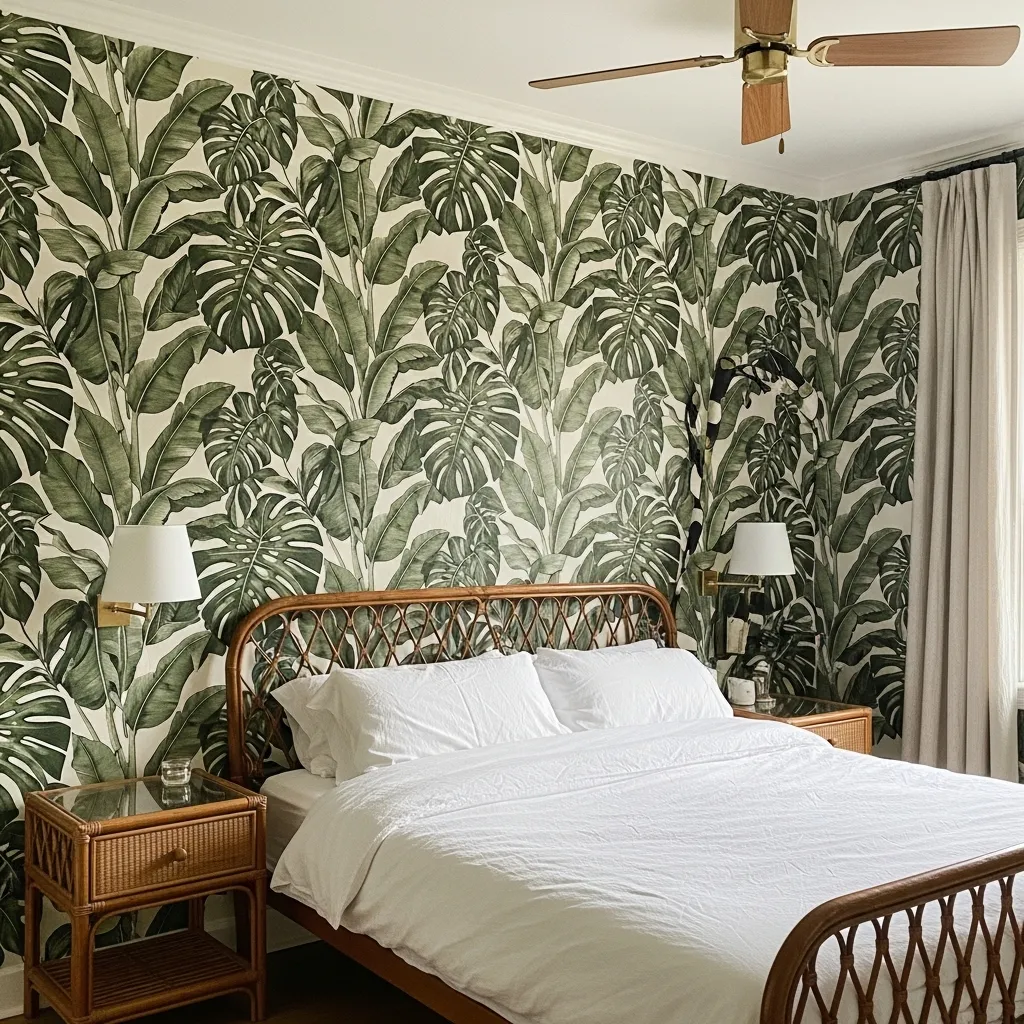
A large-scale botanical wallpaper covering all four bedroom walls creates the most immersive and most literally garden-like green bedroom experience — a room where the boundary between interior and garden is deliberately and beautifully dissolved, where the bedroom walls become a continuous botanical landscape that surrounds the bed with the density and variety of a lush tropical garden. The scale of the botanical print is the decision that most determines the room’s character — a small-scale repeat botanical wallpaper creates a textured, pattern-rich surface; a large-scale botanical with individual leaves approaching life-size creates a room where the botanical quality is genuinely immersive rather than decoratively present.
The natural rattan furniture is the material choice that most completely integrates with botanical wallpaper in a master bedroom because rattan is itself a botanical material — the woven stems of a tropical climbing palm — and its presence in a room of botanical wallpaper creates a material layering where the botanical quality extends from the walls into the furniture itself. This material coherence creates a bedroom where everything is speaking the same botanical language in different registers, and the result is a room that reads as genuinely conceived rather than decorated — a room where the wallpaper and the furniture were chosen in relationship to each other rather than independently.
5. Olive Green Walls With Warm Terracotta and Brass
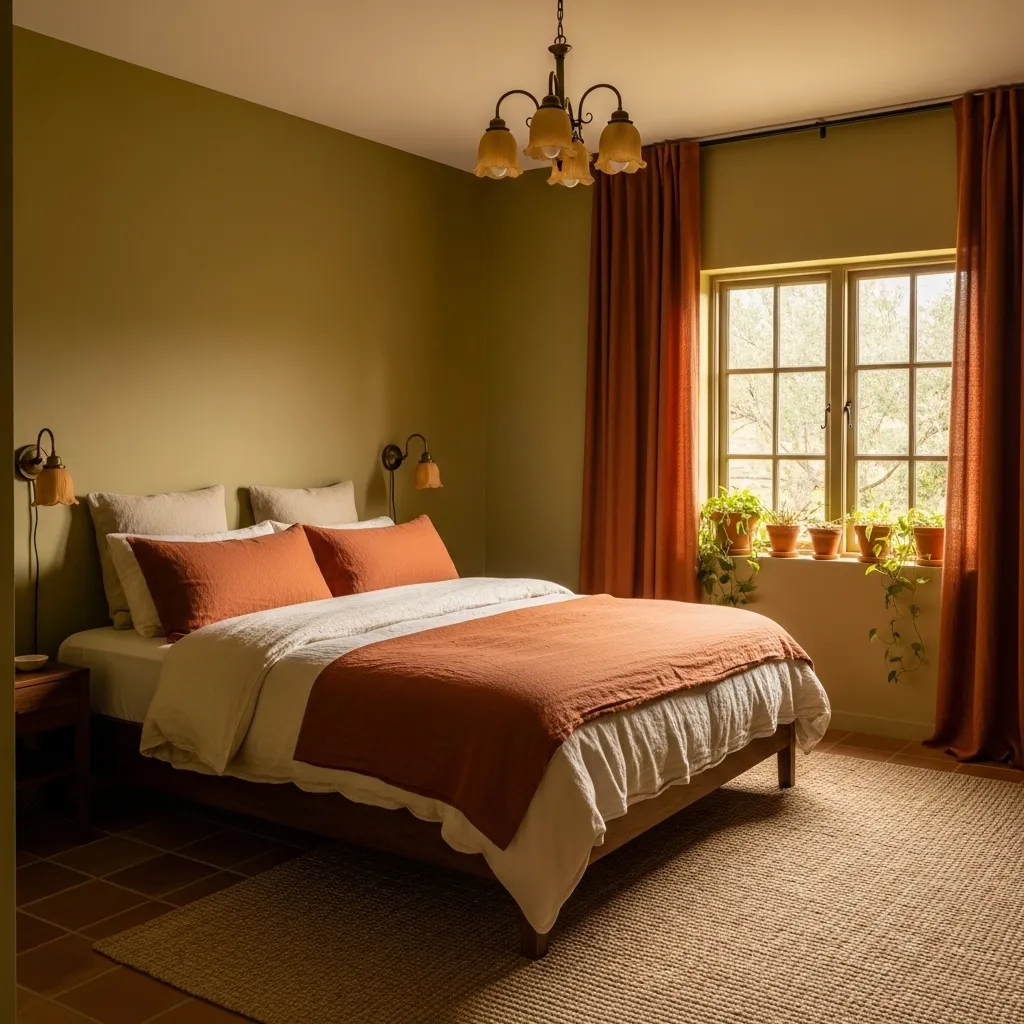
Warm olive green walls with terracotta accents and aged brass fixtures create the bedroom atmosphere that most specifically references the warmth and sensory richness of Mediterranean botanical landscapes — the warm yellow-green of olive trees, the terracotta of ancient ceramic vessels and tile, the warm amber of aged brass in afternoon light. This combination creates a bedroom of extraordinary warmth that transcends the conventional understanding of green as a cool or neutral color — olive green has more yellow in it than any other green used in interiors, and that yellow warmth connects it directly to the warmth of brass and terracotta in a color relationship of genuine harmony.
The terracotta and olive green combination is the color pairing that most confidently resolves the question of what goes with green walls — not white, not grey, not navy, but terracotta, which sits across the color wheel from green in the warm, earthy tones that create genuine complementary contrast without the aggression of pure complementary color opposition. The terracotta in the cushion, the curtain, the pot, and the floor tile reads as the warm earth beneath the olive tree, and the olive walls read as the canopy above — a complete Mediterranean landscape expressed through bedroom materials and palette.
6. Pale Celadon Green — The Most Serene Bedroom Possible
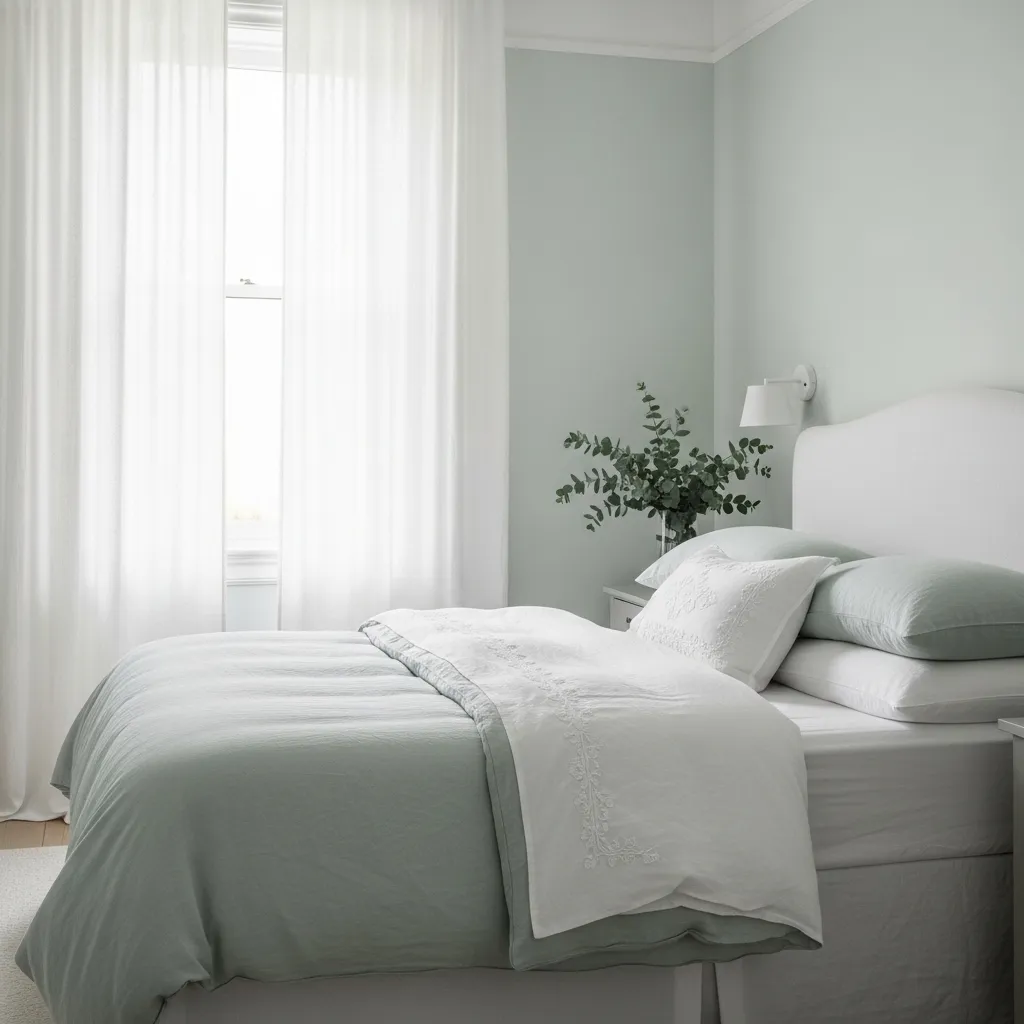
Pale celadon green — the barely-there green of antique jade or Chinese porcelain glaze — creates the most serene and most whisper-quiet green bedroom possible, a room where the green is present as a quality of atmosphere rather than as a declarative color statement, where the botanical calm of green is communicated at the most subtle possible frequency rather than the more assertive communication of deeper or more saturated greens. A celadon bedroom is the bedroom that guests describe as inexplicably calm — they can’t identify the specific color, can’t say definitely whether the walls are green or white or grey, but they experience the room as specifically, beautifully restful in a way they can’t entirely account for.
The specific atmospheric quality of celadon green is its connection to early morning light — the pale, grey-green quality of natural light in the first hour after dawn, when the world has a specific soft luminosity that the later, warmer qualities of morning light don’t replicate. A bedroom in celadon captures and extends this quality of early morning light throughout the day, creating a room that always appears to be bathed in the gentlest, most restful quality of natural light regardless of the actual time of day. This light-quality effect is the specific reason that celadon bedrooms consistently photograph more beautifully in soft, grey, overcast light than in direct sunlight — the overcast light brings out the green’s specific quiet quality most completely.
7. Hunter Green Paneling Below White Walls
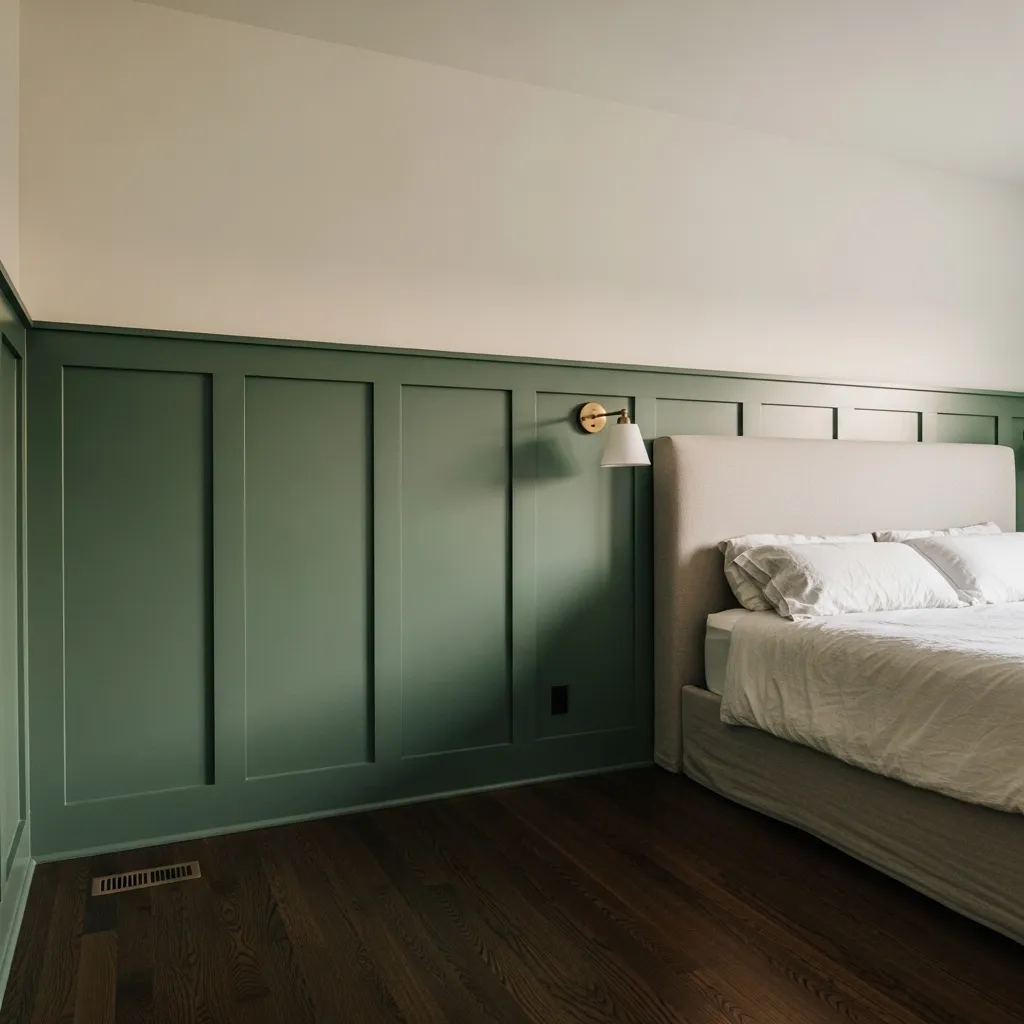
Hunter green paneling to wainscot height — with warm white walls above — creates the most architecturally resolved and most proportionally considered green bedroom approach, one that uses the established tradition of wainscot paneling in domestic architecture to create a green room with genuine visual hierarchy and genuine spatial logic. The paneling at the lower third of the wall creates a green zone at the visual weight of the room while leaving the upper walls and ceiling in the warm white that maintains the room’s brightness and openness — the hunter green anchors the room below and the white opens it above, creating a bedroom with both the grounded quality of a deeply colored room and the airiness of a light room simultaneously.
The board and batten or tongue and groove profile of the paneling is the specific detail that creates the architectural quality — the raised battens or the jointed boards add dimensional texture to the green surface that flat paint on drywall doesn’t provide, creating a lower wall zone with genuine architectural presence rather than simply a lower zone of a different color. This architectural quality distinguishes the wainscoted green bedroom from the simple two-tone painted bedroom and places it in the tradition of genuine interior architecture where the wall surface itself is designed rather than merely painted.
8. Green and Linen — The Natural Material Bedroom
The combination of green walls with natural undyed linen textiles throughout creates the most specifically natural and most materially honest green bedroom possible — a room where the palette comes entirely from the colors and textures of natural plant-based materials (green from the walls, warm cream from the undyed linen) rather than from designed or manufactured color. The relationship between green and natural linen is one of the most satisfying in bedroom design because they reference the same source — the botanical world — from different material perspectives: the green of leaves and the warm cream of dried grass and seed heads, the colors of a meadow in late summer.
Natural undyed linen specifically — linen that has not been bleached to white or dyed to another color but left in the warm cream-biscuit tone of the natural flax fiber — has a quality of warmth and material authenticity that bleached white linen lacks. In a green bedroom, the warm cream of natural linen prevents the green from reading as cool by providing a warm, botanical counterpart at every textile surface, and the organic texture of linen — its characteristic slubs and weave irregularity — adds tactile richness that smooth cotton doesn’t contribute. A bedroom of green walls and natural linen textiles has a quality of being made from nature rather than decorated to reference it, and that quality of genuine material naturalness is the specific luxury that this combination creates.
9. Eucalyptus Green — Cool Calm and Contemporary Sophistication
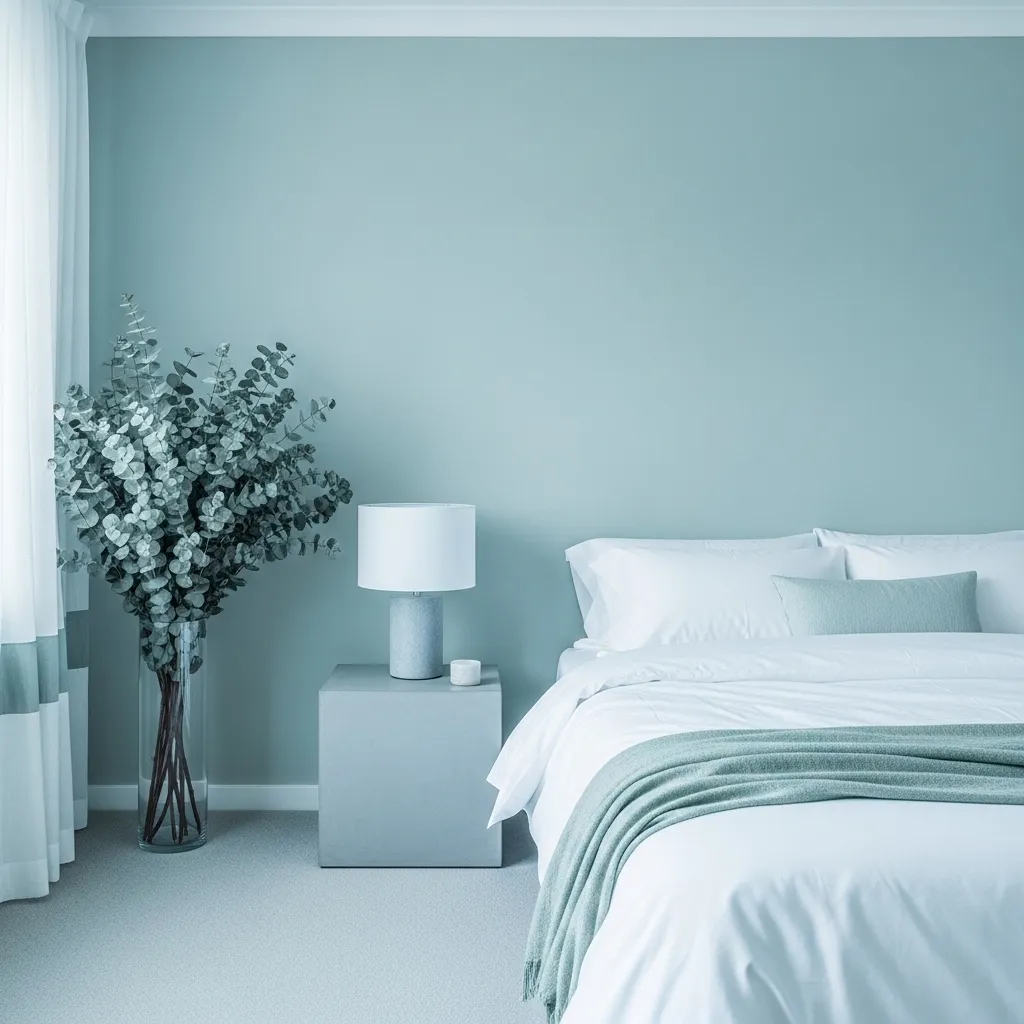
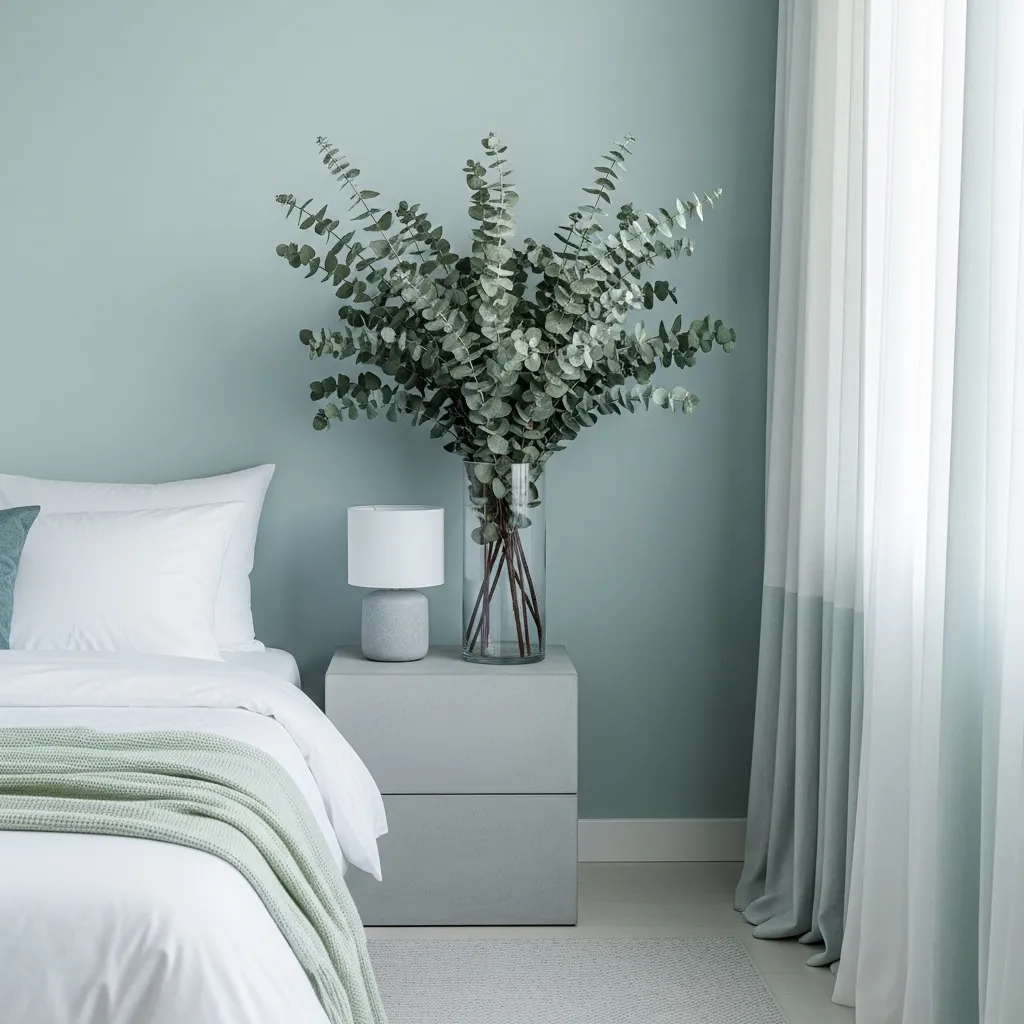
Eucalyptus green — the specific blue-grey-green of eucalyptus leaves — creates the most contemporary and most specifically sophisticated of all green bedroom atmospheres, one that reads as quietly designed and quietly distinctive rather than warmly botanical or dramatically dark. The cool blue undertone in eucalyptus green prevents it from having the approachable warmth of sage — it’s a more demanding color, one that requires specific material pairings (cool-toned stone, concrete, grey linen, white cotton) to read at its best — but in the right context it creates a bedroom of extraordinary cool beauty and contemporary restraint.
The specific visual quality of eucalyptus green that makes it so distinctly itself is its dustiness — the quality of a color that appears slightly powdered or muted, as though a fine silver-grey dust has settled on the surface of a purer green. This dusty quality creates a color that appears softer and more complex than a clear, saturated green, with a visual warmth that contradicts its cool undertone. Eucalyptus green walls read as sophisticated precisely because their specific color quality is unusual enough to be distinctive — most people can identify sage green, most people can identify forest green, but eucalyptus green is specific enough that it registers as a thoughtful, unusual, specifically beautiful choice rather than a generic green bedroom decision.
10. Green Gallery Wall — Botanical Art as the Room’s Green Element
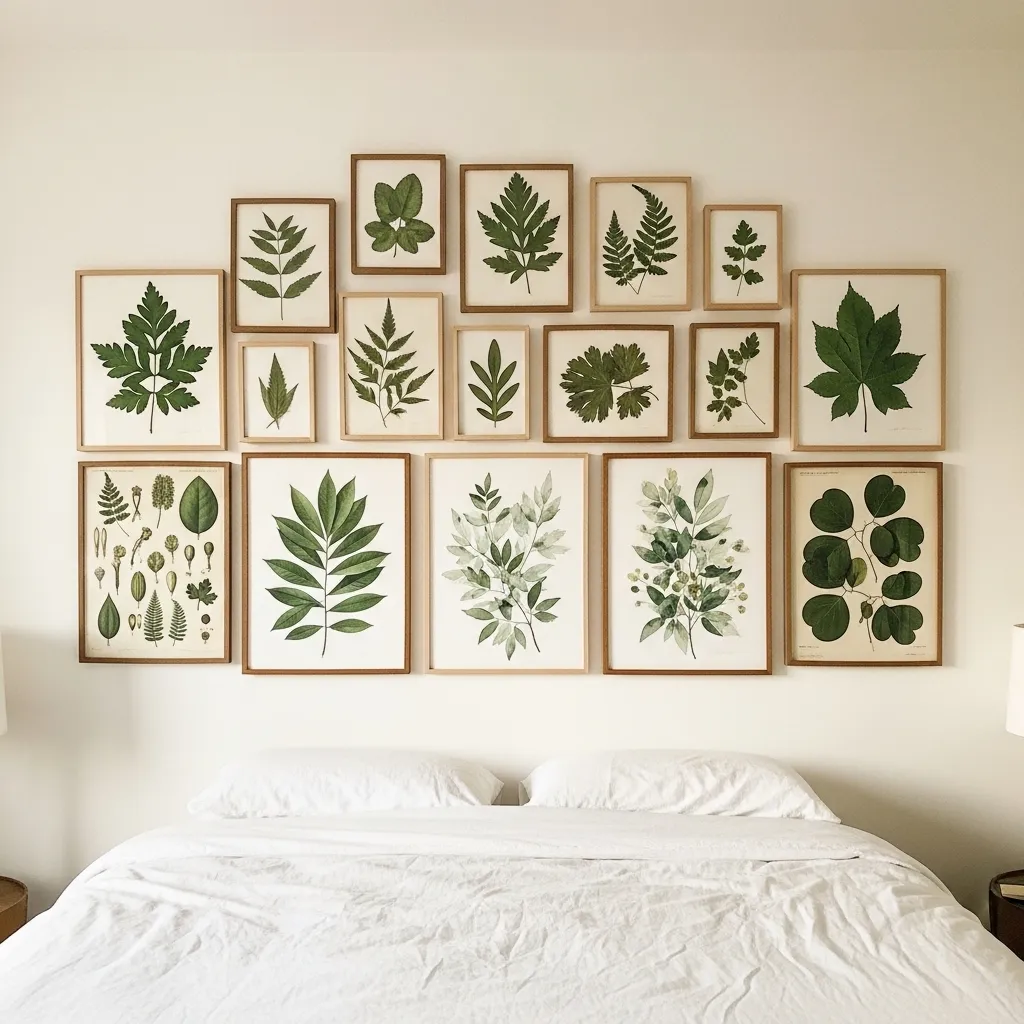
A botanical gallery wall — densely curated with green botanical content in vintage illustration, pressed specimens, and original artwork — creates the green bedroom for those who want the color and botanical atmosphere of a green room without the permanence and commitment of green paint or wallpaper. The green of the botanical gallery is distributed across multiple pieces rather than applied to the walls, creating a green presence that’s concentrated in one zone (the gallery wall) rather than ambient throughout the room, and that zone concentration can be extraordinarily effective — a large, dense botanical gallery wall above the bed creates a headboard moment of genuine botanical drama that rivals the impact of green paint.
The vintage botanical illustration specifically is the content that creates the most authentic and most historically grounded botanical gallery — the precision of nineteenth-century scientific botanical illustration, with its detailed rendering of leaf form and plant structure, has a quality of genuine knowledge and genuine beauty that contemporary botanical art often lacks. Finding genuine vintage botanical prints — from actual nineteenth-century publications, from estate sales and antique dealers, from out-of-print books — creates a gallery wall with genuine historical character that mass-produced botanical print reproductions can reference but not replicate.
11. Green and Gold — The Maximalist Bedroom
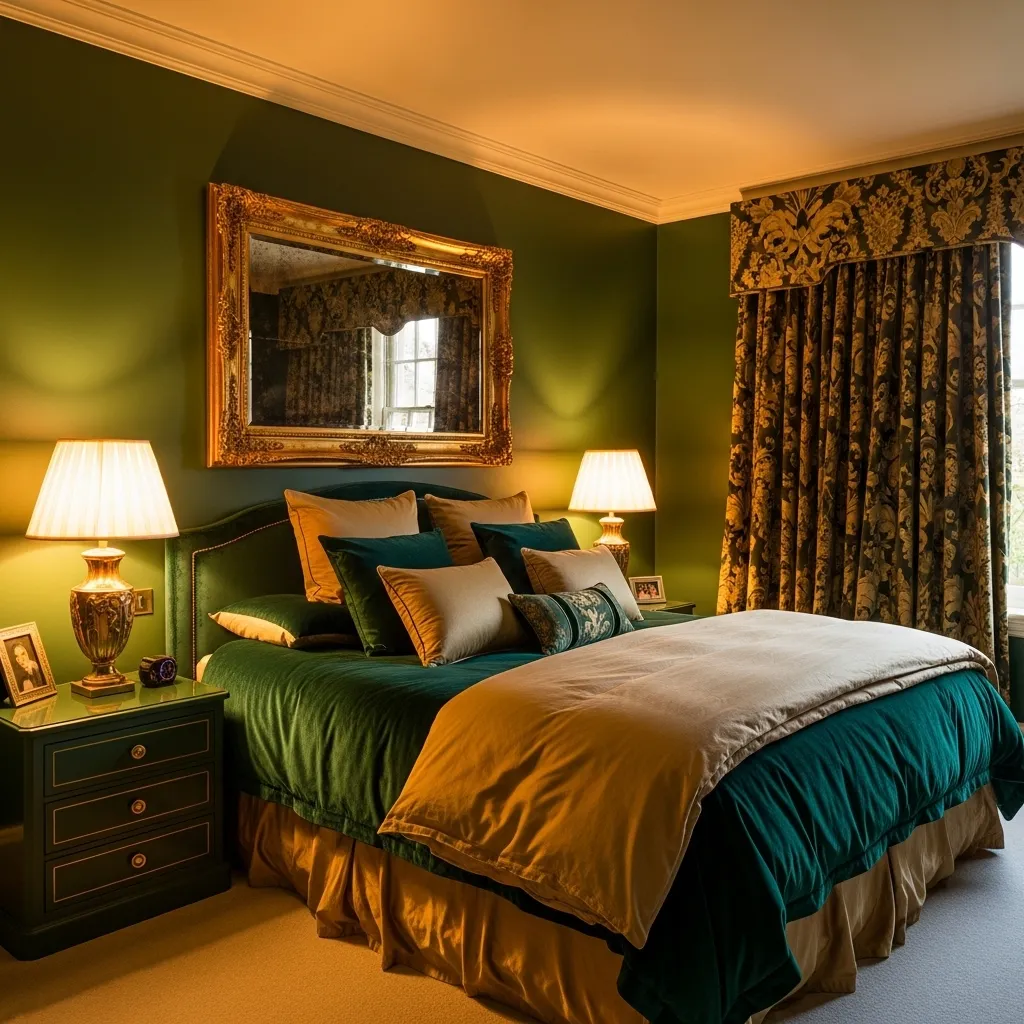
Deep emerald green with warm gold creates the most overtly luxurious and most maximalist green bedroom possible — a room that uses the combination of jewel-toned green and warm metal gold to create an atmosphere of genuine opulence that references the most luxurious historical interiors while remaining completely contemporary in its execution. The specific combination of emerald green and gold has been the pairing of luxury and royalty across cultures and centuries — from Baroque European palace interiors to Victorian-era gentleman’s studies to Art Nouveau botanical decorations — and its use in a contemporary master bedroom creates a room with historical resonance and genuine material richness.
The layering of materials within the green and gold palette is the technique that creates the maximalist effect — not simply painting the walls green and adding gold hardware, but layering green and gold across multiple materials at different scales and different textures. The deep green velvet bedding, the gold silk accent, the ornate gold mirror frame, the green lacquered bedside tables with gold hardware, the green and gold jacquard curtains — each piece adds another layer to the material richness, and the accumulation of these layers creates the abundant, enveloping quality that defines maximalism at its most genuinely beautiful.
12. Sage Green Bedroom With Rattan and Woven Textures
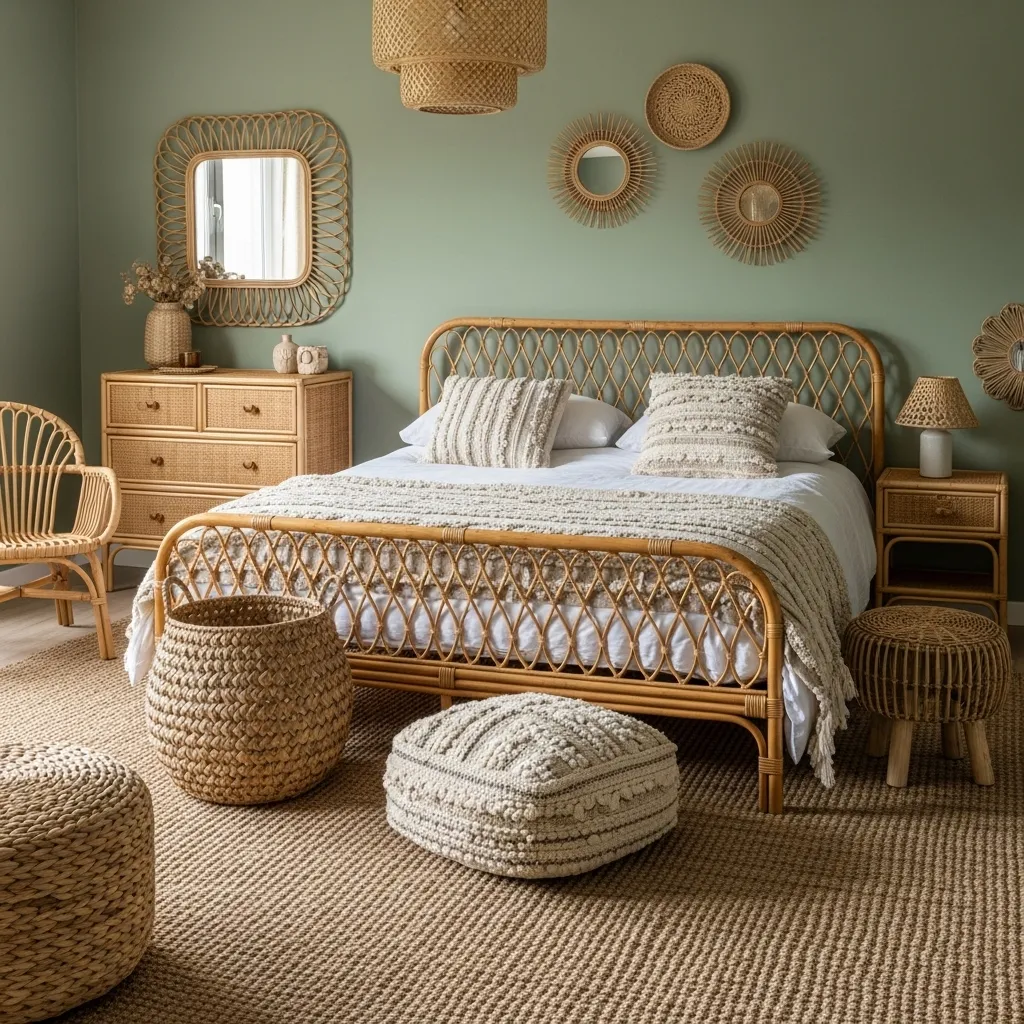
Sage green walls with abundant natural woven textures — rattan furniture, seagrass accessories, jute rugs, woven cotton textiles — create the bedroom that most completely embodies the biophilic design principle of surrounding oneself with natural materials in their most honest and most beautiful forms. The sage green walls provide the botanical color environment; the woven natural materials provide the botanical material environment; and together they create a bedroom that’s genuinely surrounded by nature rather than decorated to reference it — every surface, every furniture piece, every textile in the room made from a natural plant-based material in its most characteristic form.
The rattan bed frame is the specific piece that most anchors this approach and that most determines its character — a rattan bed frame is one of the most distinctly natural pieces of bedroom furniture available, its woven structure making the botanical origin of the material continuously visible rather than finished away beneath paint or upholstery. A sage green bedroom with a rattan bed frame has a quality of genuine botanical immersion that the same sage green bedroom with a painted wood or upholstered bed frame lacks, because the rattan brings a second botanical material reference into the room’s most prominent furniture piece and reinforces the wall color’s botanical message with the furniture’s botanical material.
13. Dark Green Bedroom With White Trim — The Refined Classic
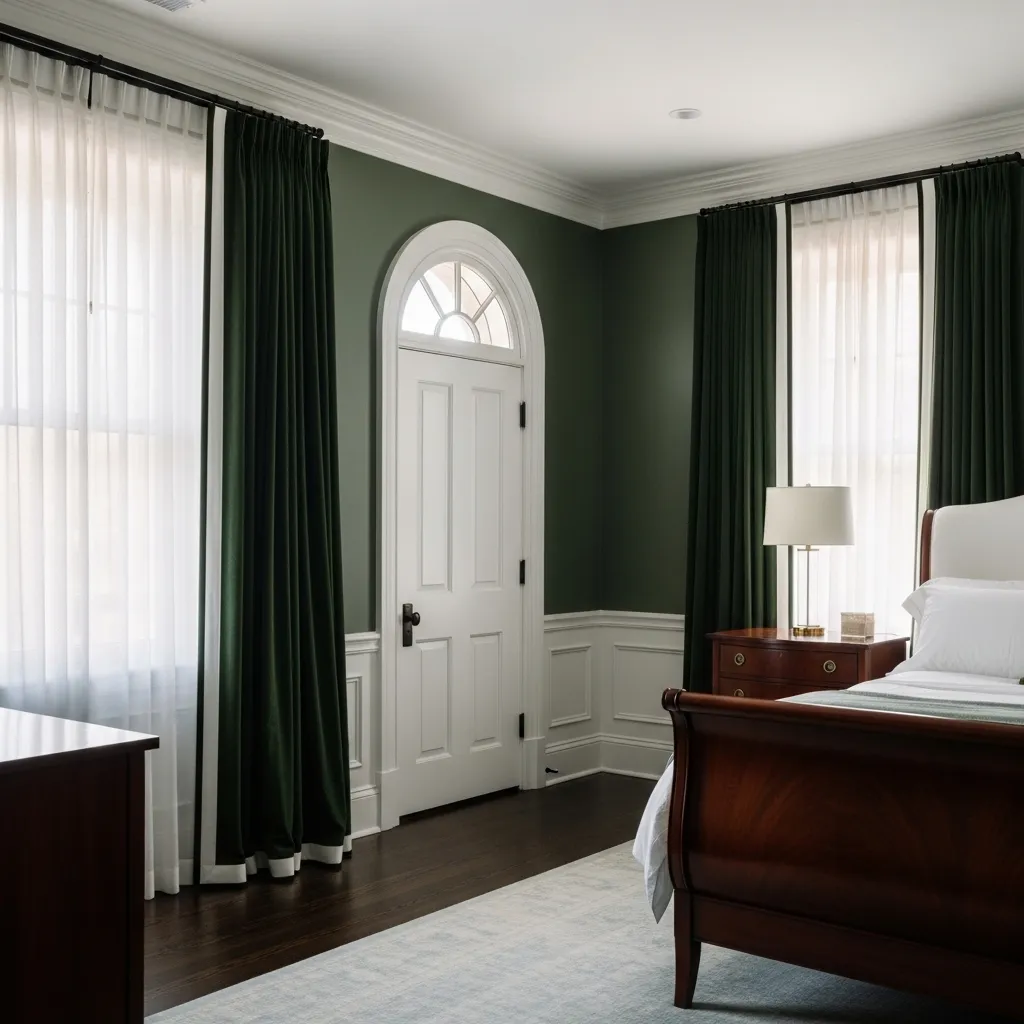
Deep green walls with brilliant white painted trim is the bedroom approach that most directly references the British and American decorating tradition of painted rooms with contrasting trim — a tradition with centuries of precedent in the finest domestic interiors of both countries, where the contrast between wall color and trim color creates the architectural clarity that makes a room read as genuinely designed rather than simply decorated. The white trim creates a frame within the room — around every window, every door, where the wall meets the ceiling — that gives the green walls a clarity of boundary and a quality of precise containment that makes the color appear more intentional and more resolved than the same color applied without contrasting trim.
The quality and depth of the trim profile is what most determines whether the white-trim-on-green-walls approach reads as genuinely architectural or simply as white paint on the baseboards — wide, deep, multi-stepped architrave moldings and a substantial cornice create trim of genuine architectural presence that makes the green walls appear more distinguished and more formally considered, while minimal trim reads as an afterthought. A bedroom with genuinely beautiful trim moldings in bright white against deep green walls has the specific quality of historical domestic architecture — of rooms that were designed and built with care for the quality of their proportions and their architectural detailing — that contemporary architecture rarely provides and that classical-tradition interior design most richly celebrates.
14. Green Bedroom With Maximalist Plant Life
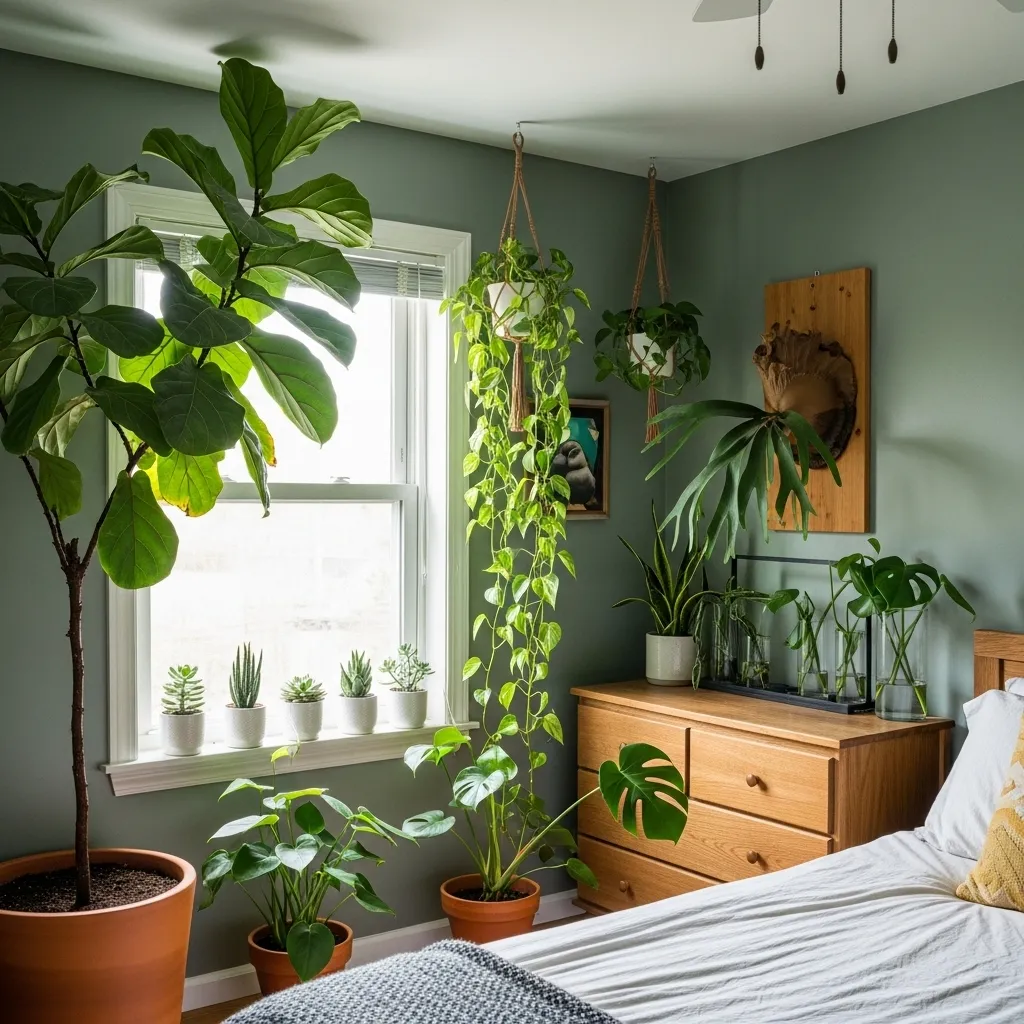
A sage green bedroom with maximalist plant life — plants distributed at every level throughout the room creating genuine ambient botanical presence — creates the most complete and most genuinely immersive botanical bedroom available, one where the botanical quality of the space comes from living plants rather than from color and pattern alone. The sage green walls create the botanical color environment; the living plants create the botanical material reality; and together they create a bedroom where the word botanical describes the actual condition of the room rather than its aesthetic references.
The specific power of this approach is the layering of botanical experience across multiple scales — the large fiddle leaf fig at ceiling height creates a canopy experience, the trailing pothos creates a hanging garden experience, the small windowsill succulents create an intimate close-range botanical experience, the mounted staghorn fern creates a wall-growing botanical experience, the propagation station creates a participating-in-growth botanical experience. Each of these is a different way of being in relationship with plants, and having all of them present simultaneously in a single bedroom creates a genuinely immersive botanical environment rather than a room with some plants in it.
15. Tonal Green — The Sophisticated Monochromatic Bedroom
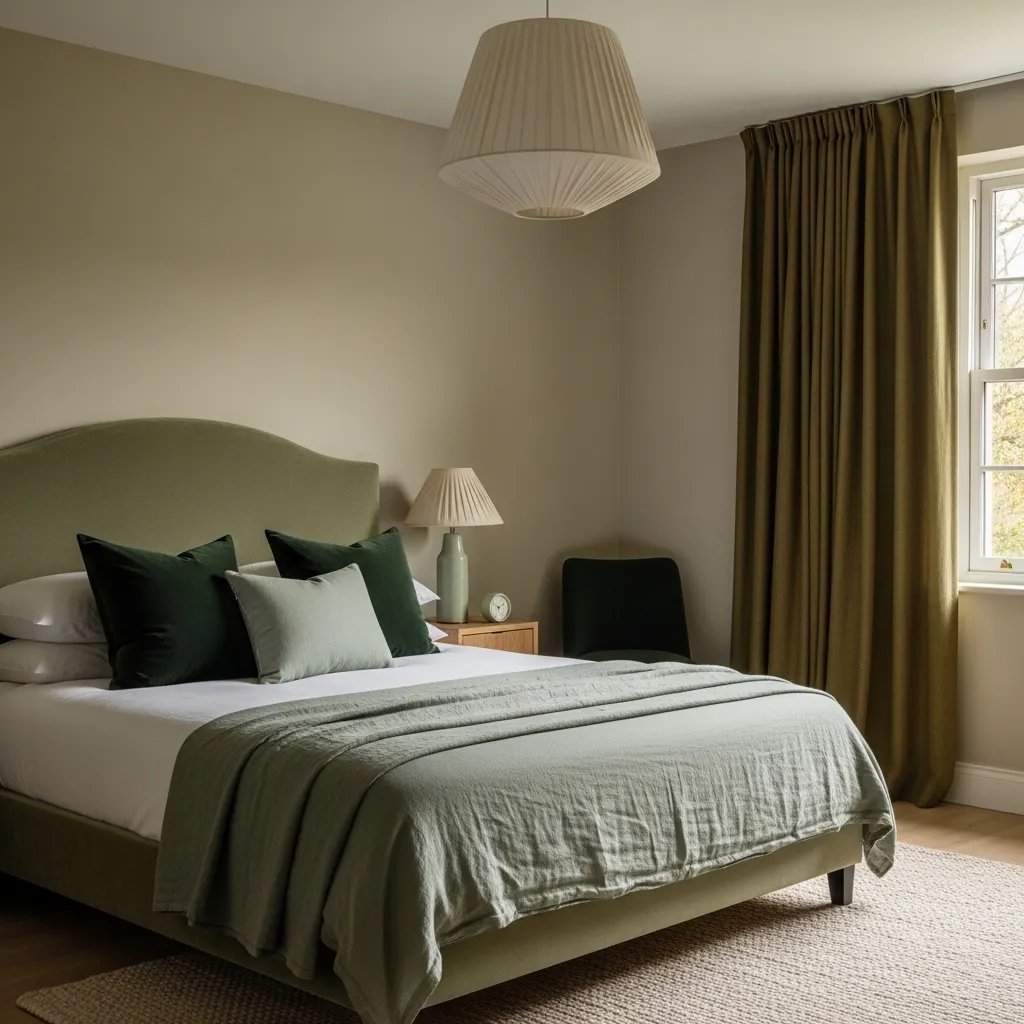
A tonal green bedroom — where every textile, every upholstered surface, and every colored element in the room is in a different shade of green, creating a fully monochromatic green room with tonal rather than hue variation — is the green bedroom approach that creates the greatest sense of design sophistication and the most complete immersion in the color. The tonal palette creates a room where green is not a choice made at the walls and echoed in a few accents but the complete and total color language of the room — the language that all materials are speaking, in different dialects and at different intensities, but always the same fundamental color.
The specific quality that makes a tonal green bedroom read as sophisticated rather than monotonous is the range of the tonal variation — if all the greens are within a few shades of each other, the room reads as a single green in different materials; if the greens range from the palest celadon through the deepest forest green, the room reads as a complete exploration of a color’s full tonal range, and that completeness creates a room of genuine design intentionality and genuine color richness. The natural materials — the warm oak furniture, the cream linen bedding base, the natural wool rug — are the elements that prevent the all-green room from feeling relentlessly monochromatic, providing the natural warmth and neutral ground that allows the various greens to be fully experienced as a rich palette rather than as a single overwhelming color.