15 Farmhouse Easter Decoration Ideas That Celebrate the Season With Warmth, Naturalness, and the Specific Beauty of Spring Coming Back to Life
If your approach to Easter decorating has either been the bright pastel plastic egg direction that feels more like a cartoon of spring than actual spring, or the opposite extreme of doing very little because you haven’t found an aesthetic that feels genuinely beautiful rather than merely seasonal and temporary — this roundup covers every significant farmhouse Easter decoration approach that creates genuine beauty rather than holiday performance. The ideas here span the full range of what farmhouse Easter decoration looks like at its best: the gathered spring branch arrangement that fills a room with the specific beauty of new growth, the naturally dyed egg collection displayed with the restraint and material honesty that makes it genuinely beautiful, the moss and nest tablescape that brings the garden’s spring awakening inside, the linen and spring textile refresh that updates the home’s fabric layer for the season, the kitchen and dining table arrangements that make Easter entertaining feel specifically special, the front porch welcome moment that greets arriving guests with genuine spring warmth, the spring wreath made from fresh or dried botanicals that have real material character, the children’s Easter basket approach done with natural materials rather than plastic, the windowsill botanical display that uses forced bulbs and early spring flowers, the rustic wooden Easter sign that adds typography to the farmhouse spring palette, the spring candle and candleholder arrangement, the garden-to-table Easter Sunday table setting, the repurposed farmhouse vessel approach where old crocks and pitchers become spring vases, the layered mantelpiece spring moment, and the outdoor spring garden display that extends farmhouse Easter decoration beyond the front door.
Easter decoration in a farmhouse context has a specific advantage over other holiday decoration approaches — the farmhouse aesthetic is already organized around the values that Easter most naturally expresses. The celebration of returning life after winter’s dormancy, the beauty of eggs and nests and new growth and the first flowers of spring, the gathering of family around a table set with care and natural materials, the bringing of the outside world’s seasonal change into the interior of the home — these are all values that the farmhouse tradition has always celebrated, and Easter simply intensifies them rather than requiring a new decorative vocabulary to be imported from outside the aesthetic. A farmhouse home decorated for Easter is not a farmhouse home temporarily in costume; it’s a farmhouse home expressing its deepest seasonal instincts at the moment when those instincts are most richly justified.
What separates farmhouse Easter decoration that’s genuinely beautiful from farmhouse Easter decoration that’s merely on trend is the authenticity of the materials and the restraint of the execution — genuine spring branches gathered from the yard rather than plastic flowering branches from a craft store, eggs with the specific warmth of natural dye rather than the flat brightness of commercial food coloring, linen and cotton textiles in the specific pale tones of early spring rather than the saturated pastels of commercial Easter products, ceramic and ironstone vessels that have genuine age and weight rather than reproduction farmhouse pieces without material history. These distinctions are subtle but consistently felt — the room decorated with authentic natural materials at a specific, restrained scale feels genuinely beautiful, and the room decorated with stylized commercial versions of those materials at maximum coverage feels like a temporary installation of seasonal merchandise.
1. Gathered Spring Branch Arrangement
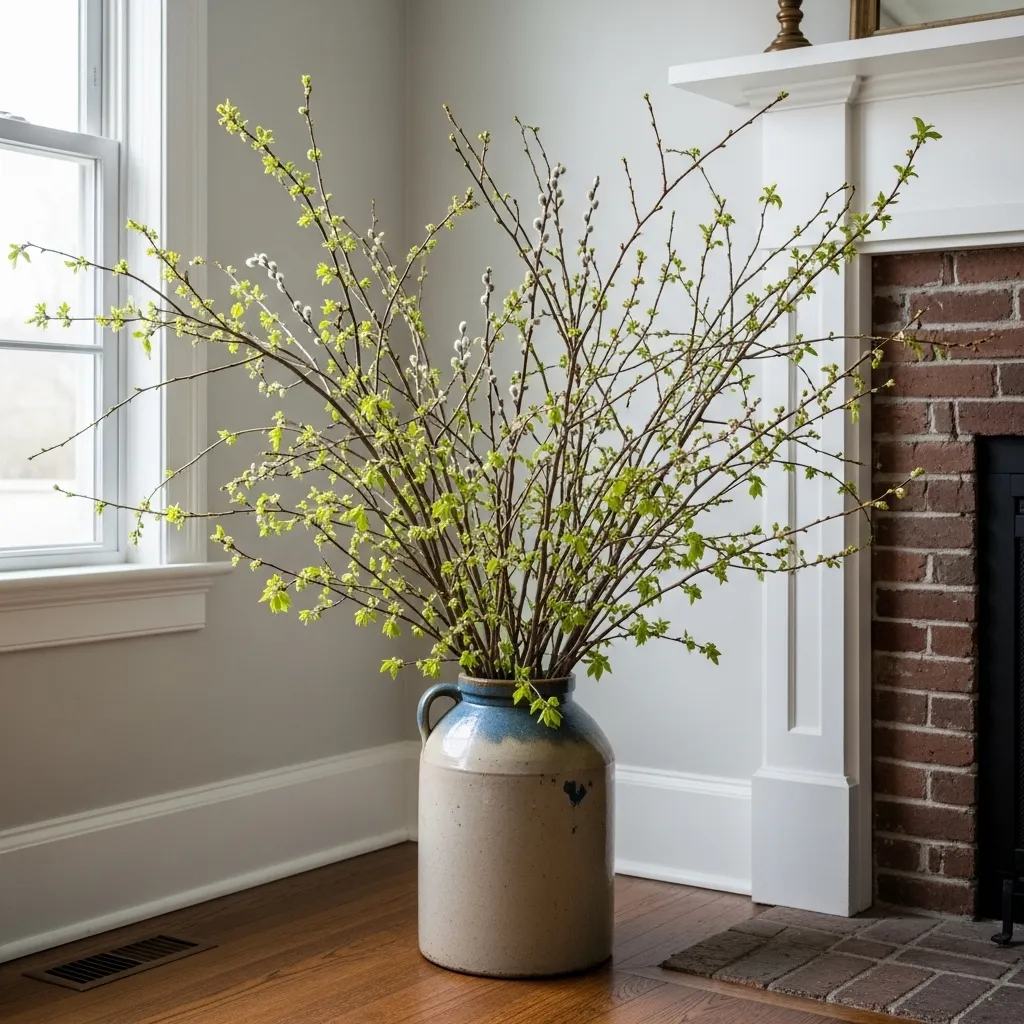
A large-scale gathered spring branch arrangement in an antique crock or stoneware jug is the farmhouse Easter decoration that creates the most dramatic and most seasonally authentic room transformation available — the branches bring the specific visual quality of spring’s return (buds, catkins, first leaves, earliest blossoms) into the interior at a scale that makes the season’s arrival genuinely felt rather than decoratively referenced. The specific beauty of spring branches in that precise moment when buds are breaking — when the tree is caught between winter’s bare structure and spring’s full leaf canopy — is a beauty that exists for a very brief window of time each year, and bringing it inside in a large vessel creates a room with the specific temporal quality of spring at its most fleeting and most beautiful.
The scale of the arrangement is the decision that most determines its impact — a small bundle of spring branches in a narrow vase reads as a spring accent, while a genuinely large arrangement of branches reaching toward the ceiling in a substantial floor vessel reads as a seasonal transformation, a moment when the outside has come inside in a way that changes the character of the whole room. The natural growth pattern of the gathered branches — the irregular angles, the varying lengths, the specific arc of each branch’s growth — creates an arrangement with genuine organic life that purchased and pre-styled floral products never achieve.
2. Naturally Dyed Egg Collection on Display
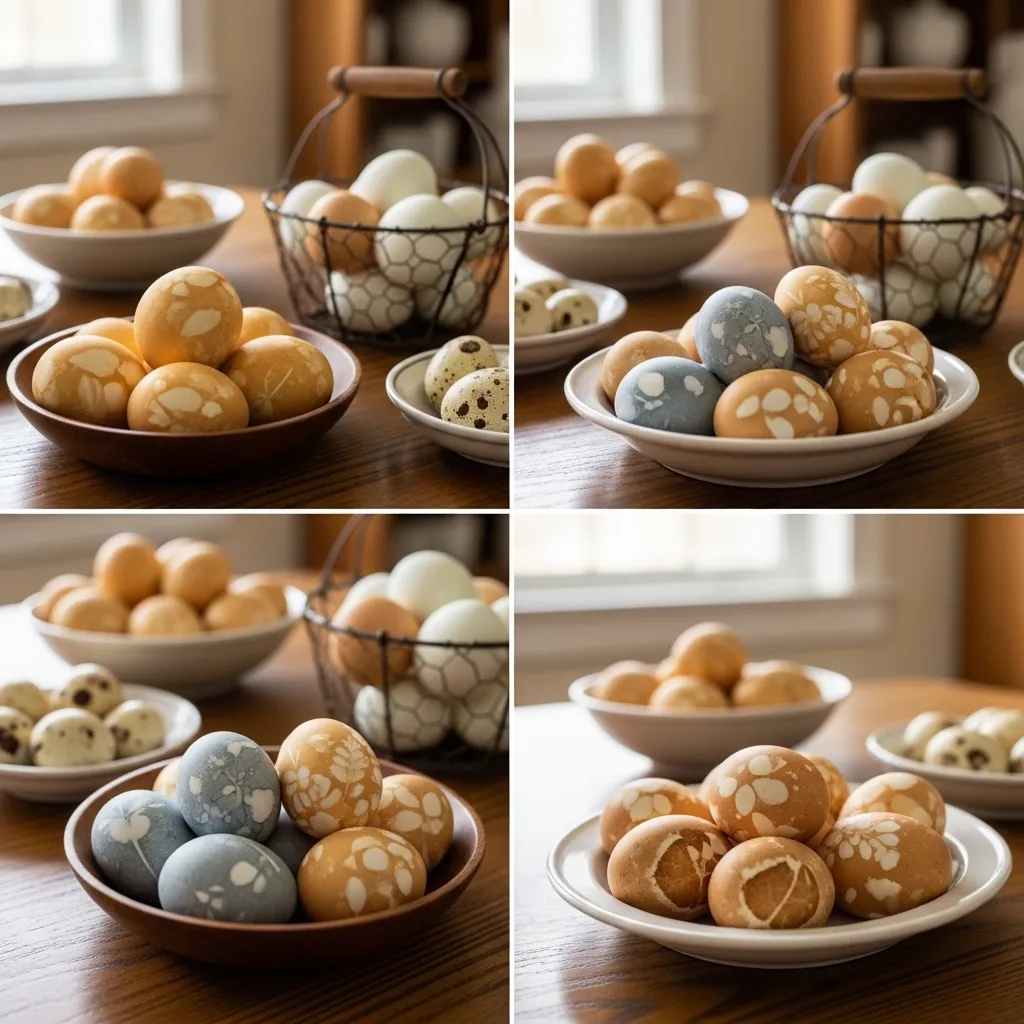
Naturally dyed eggs in their specific muted, warm, organically beautiful palette are the farmhouse Easter decoration element that most completely replaces the commercial Easter aesthetic with something genuinely beautiful and genuinely made — the process of natural egg dyeing, using onion skins and red cabbage and beet and chamomile and tea and turmeric, produces colors of extraordinary softness and organic warmth that commercial Easter egg dye simply doesn’t create. These are the colors of the earth and the kitchen garden rather than the colors of commercial manufacturing, and their specific muted warmth is what makes naturally dyed eggs so much more beautiful in a farmhouse context than their commercially dyed counterparts.
The display approach is as important as the dyeing quality — naturally dyed eggs displayed in antique wire baskets, wooden bowls, ceramic dishes, and old crocks at multiple locations throughout a room create a different experience from the same eggs collected in a single Easter basket. The distributed display creates an ambient Easter presence throughout the kitchen and dining room — the egg here, the small nest of eggs there, the bowl of eggs on the sideboard — that makes the seasonal decoration feel integrated into the room rather than installed in it.
3. Moss, Nest, and Botanical Tablescape
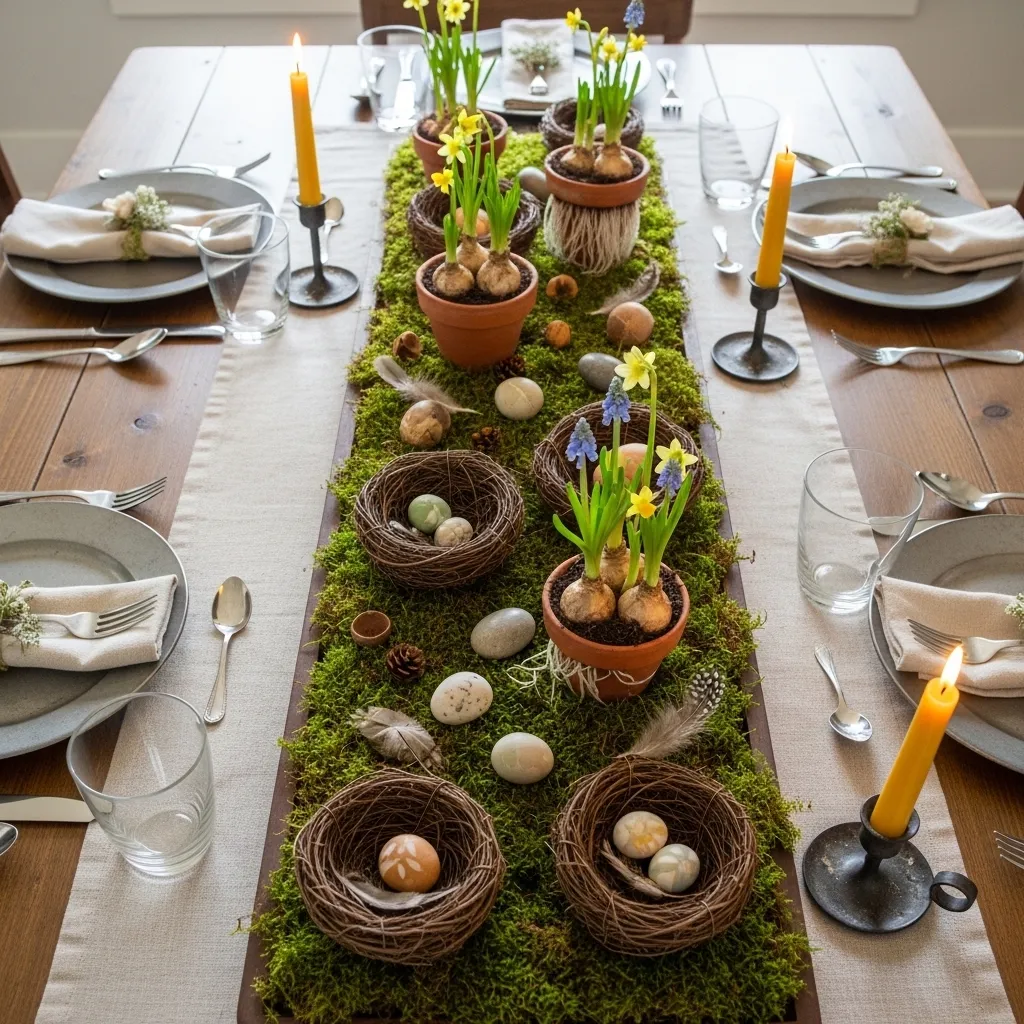
A moss and nest botanical tablescape is the farmhouse Easter table decoration that most completely brings the garden’s spring awakening onto the dining table — the fresh green moss creates a living garden base, the nests reference the season’s new life, the small bulb flowers in terracotta pots bring the actual spring garden inside, and the accumulated natural materials together create a centerpiece that smells of earth and green and growing things, not of manufactured decoration. This sensory quality — the smell of fresh moss, the soft earthy quality of real nests, the fragrance of hyacinth — is the specific element that makes a botanical tablescape more beautiful than any manufactured centerpiece, because it engages senses beyond sight in a way that artificial decoration never can.
The long tray or board as the foundation of the tablescape creates a clearly defined centerpiece zone that allows the natural materials to be abundant within their boundary without creating visual disorder across the full table surface — the tray contains the organic irregularity of the natural materials within a clean rectangular form that reads as composed and deliberate even when the individual elements within it are naturalistic and irregular. This is the design principle that most makes a botanical tablescape look genuinely composed rather than merely gathered — the clean container that holds the organic abundance.
4. Spring Linen and Textile Refresh
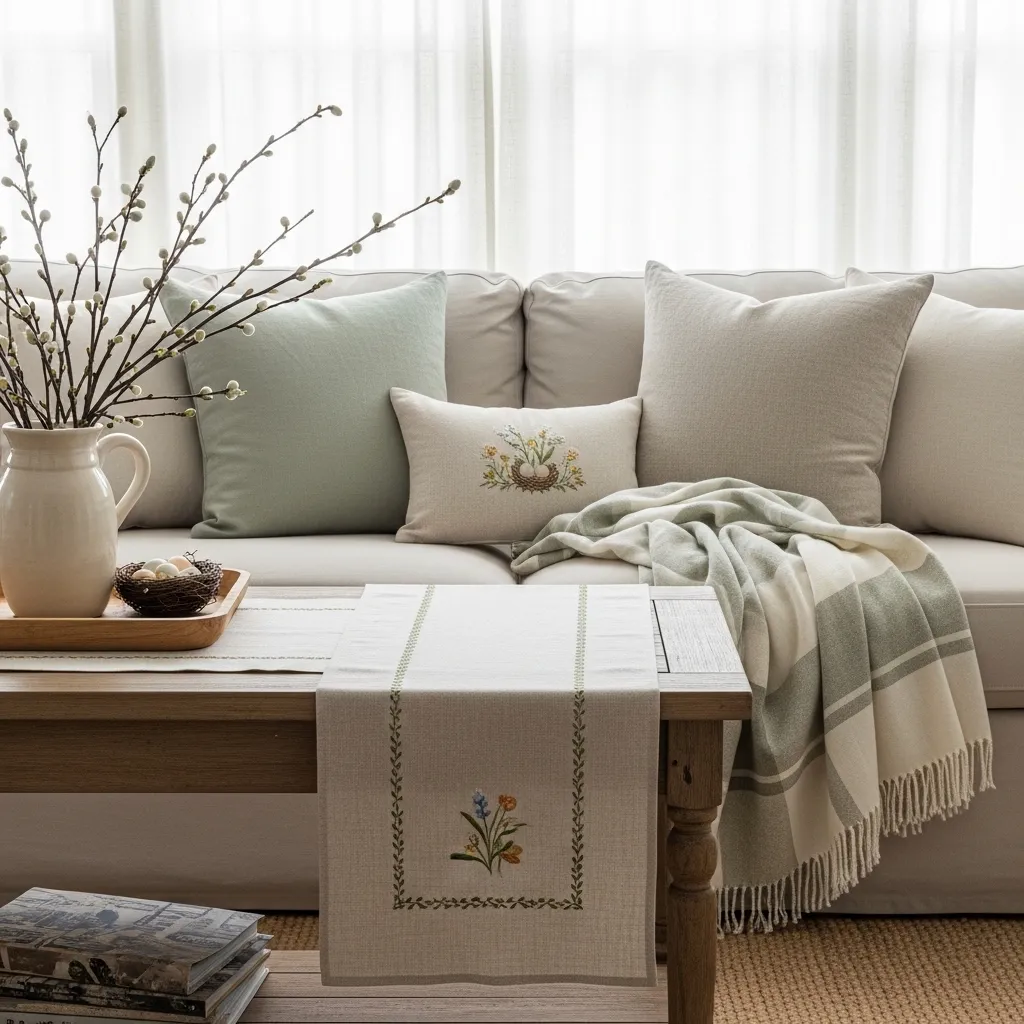
A seasonal linen and textile refresh — replacing heavier winter textiles with lighter spring-appropriate fabrics in the pale botanical tones of early spring — is the farmhouse Easter decoration approach that creates the most pervasive and most atmospherically significant seasonal change with the least amount of individual decorative objects. When the cushions change from warm winter tones to pale sage and natural linen, when the heavy wool throw is replaced by a lightweight linen stripe, when the thick winter curtains are replaced by sheer white linen that allows spring light to flood the room — the entire atmosphere of the room shifts toward spring in a way that is felt throughout the space rather than in individual decoration moments.
The specific textile palette for farmhouse spring — pale sage, natural undyed linen, soft celadon, warm cream, the faintest blush — is the palette that most authentically expresses the botanical quality of early spring rather than the commercial Easter pastel palette. These are the colors of the season’s first growth, of pussy willow catkins and new leaves and the pale spring sky, and they create a room that feels genuinely connected to the seasonal moment rather than dressed in its commercial representation.
5. Farmhouse Front Porch Spring Welcome
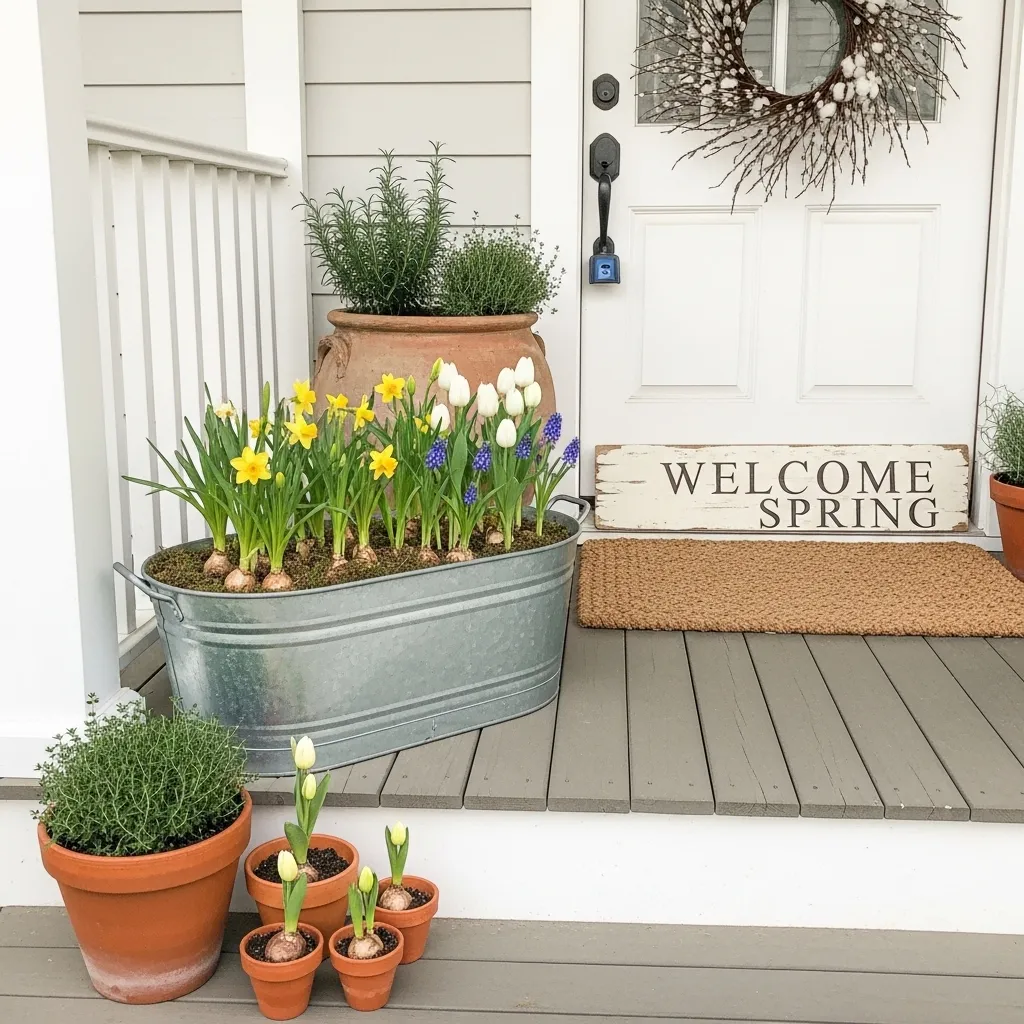
A farmhouse front porch dressed for spring — with bulbs in bloom in galvanized containers, terracotta pots of fresh herbs, a natural spring wreath, and a simple seasonal welcome sign — creates the most welcoming and most seasonally explicit exterior moment possible, transforming the transition between outdoors and indoors into a celebration of the specific beauty of spring that arriving guests experience before they enter the house. The front porch is the first impression of the home’s seasonal state, and a porch that clearly celebrates spring in genuinely beautiful natural materials creates an arrival experience of genuine warmth and genuine seasonal delight.
The galvanized metal tub planted with mixed spring bulbs is the specific element that most efficiently creates the farmhouse spring porch moment — the industrial material of the tub references the agricultural working tradition, the mixed spring bulbs in soil and moss create a genuine planted garden rather than a cut flower arrangement, and the combination of the utilitarian container with the delicate spring flowers creates the specific rustic-beauty tension that is the farmhouse aesthetic’s most characteristic expression. Galvanized metal is the farmhouse material that works most naturally in outdoor spring contexts because it weathers beautifully, it’s associated with farm and garden use, and its warm grey-silver tone complements the pale tones of spring flowers perfectly.
6. Fresh Spring Wreath From Gathered Botanicals
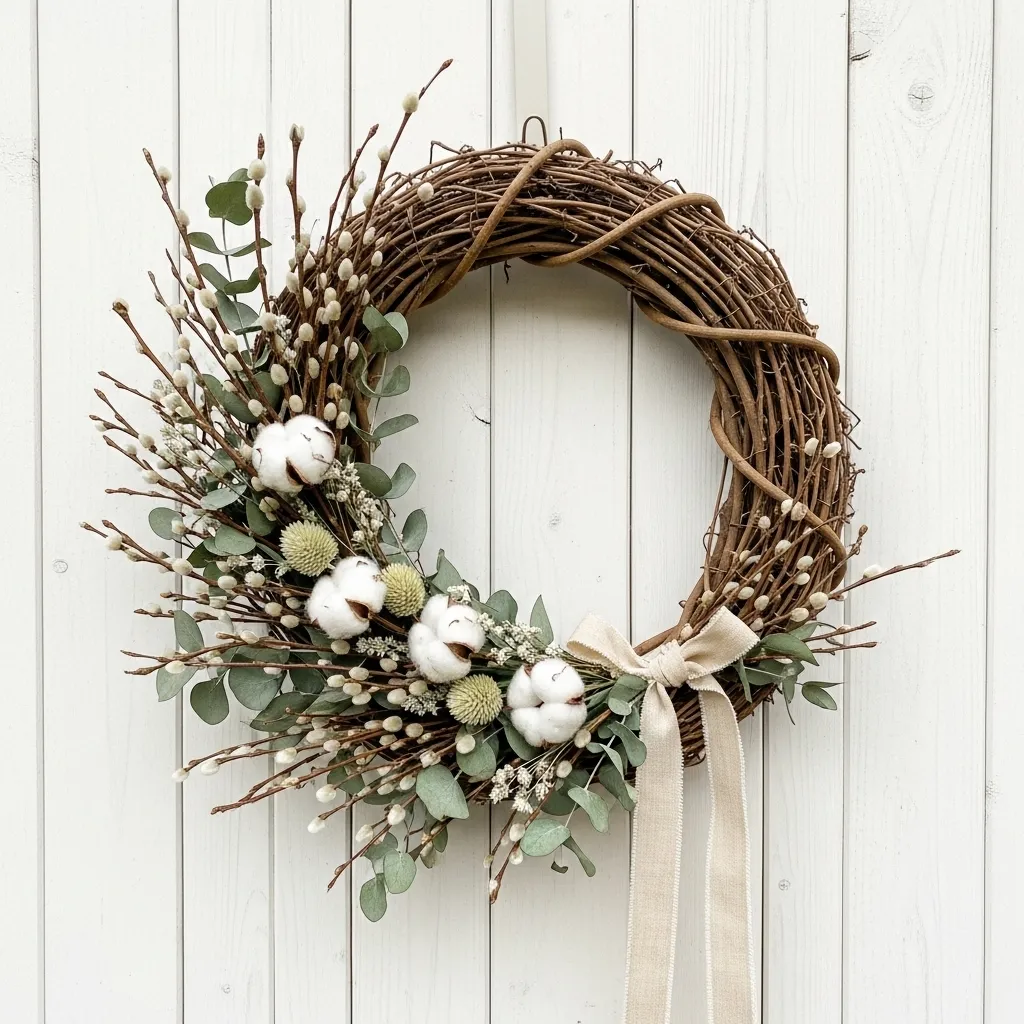
A handmade spring wreath from gathered and dried botanicals is the farmhouse Easter decoration element that most clearly communicates the values of the farmhouse tradition — the making of beautiful things from natural materials gathered from the immediate environment, the preference for the honest warmth of botanical materials over the manufactured perfection of commercial products, the specific beauty of a wreath that shows the character of its materials rather than concealing it beneath artificial enhancement. A wreath made from genuine pussy willow, genuine dried cotton stems, genuine eucalyptus, and genuine handspun linen ribbon has a material quality and a specific beauty that pre-made commercial wreaths, however skillfully assembled, simply don’t possess.
The asymmetric arrangement of botanicals on a farmhouse spring wreath — concentrated more densely on one side than the other, with some branches extending naturally beyond the formal wreath boundary — is the specific design quality that most distinguishes a handmade wreath from a manufactured one. Manufactured wreaths are typically uniformly distributed because uniformity is easier to achieve at industrial scale; genuinely handmade wreaths follow the natural growth patterns of their botanical materials, concentrating some elements and leaving others sparse, and that organic distribution is what creates the specific quality of natural, living beauty that characterizes a truly beautiful handmade wreath.
7. Ironstone and Vintage Pottery Easter Table Setting
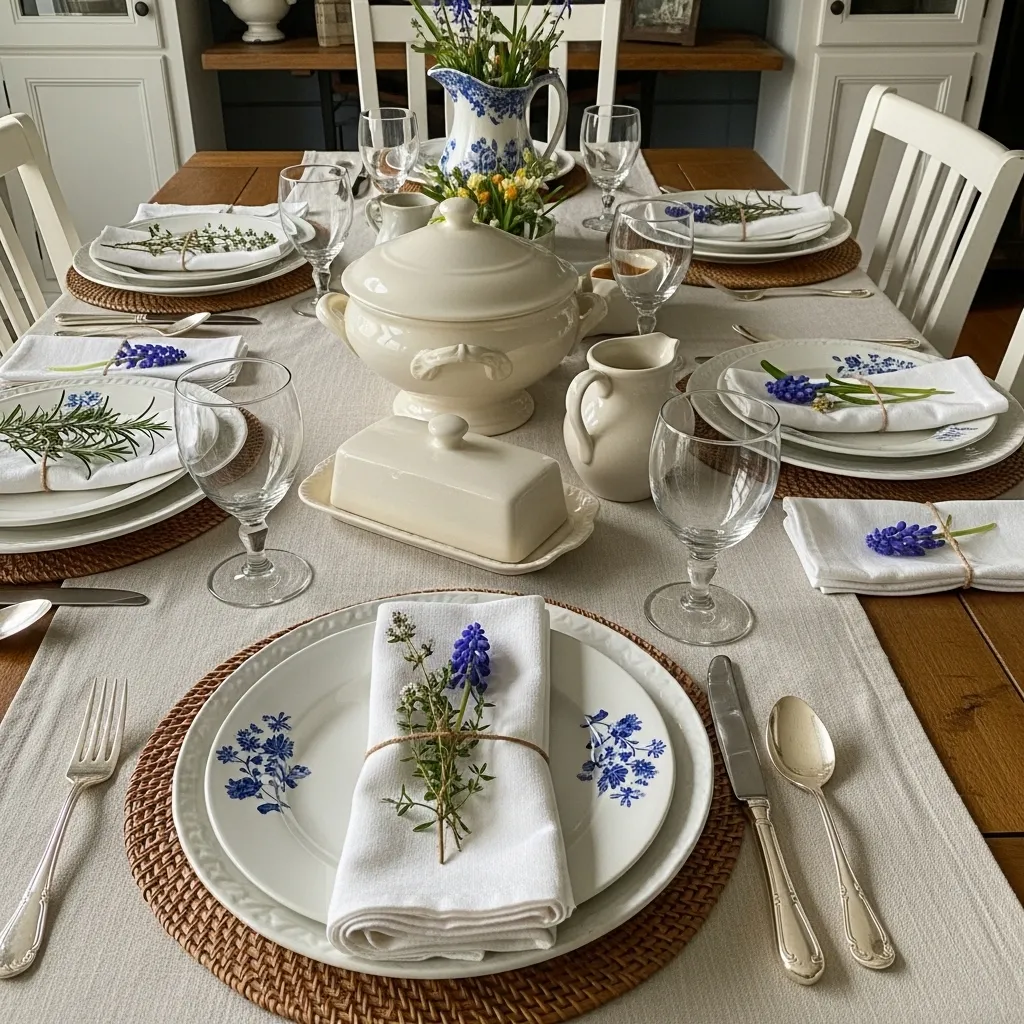
An Easter table set with genuine antique ironstone and vintage pottery creates the most specifically farmhouse and most historically resonant Easter table available — the slight variations in the ironstone whites, the transferware patterns that reference the botanical and pastoral traditions of eighteenth and nineteenth-century English pottery, the weight and warmth of genuinely old ceramic rather than reproduction farmhouse pottery all create a table that feels as though it has been set from the accumulated resources of a real farmhouse over many generations rather than purchased as a coordinated table setting.
The deliberately mismatched quality of an antique ironstone table — where the plates are all white ironstone but in slightly different patterns and slightly different whites — is specifically the quality that most beautifully distinguishes it from a precisely matched contemporary table setting. The slight variation in the whites, the different patterns across different plates, the accumulated history of pieces from different sources and different decades all create a table surface of genuine visual richness and genuine material history that no perfectly matched contemporary table setting can replicate regardless of its quality.
8. Forced Spring Bulbs on the Windowsill
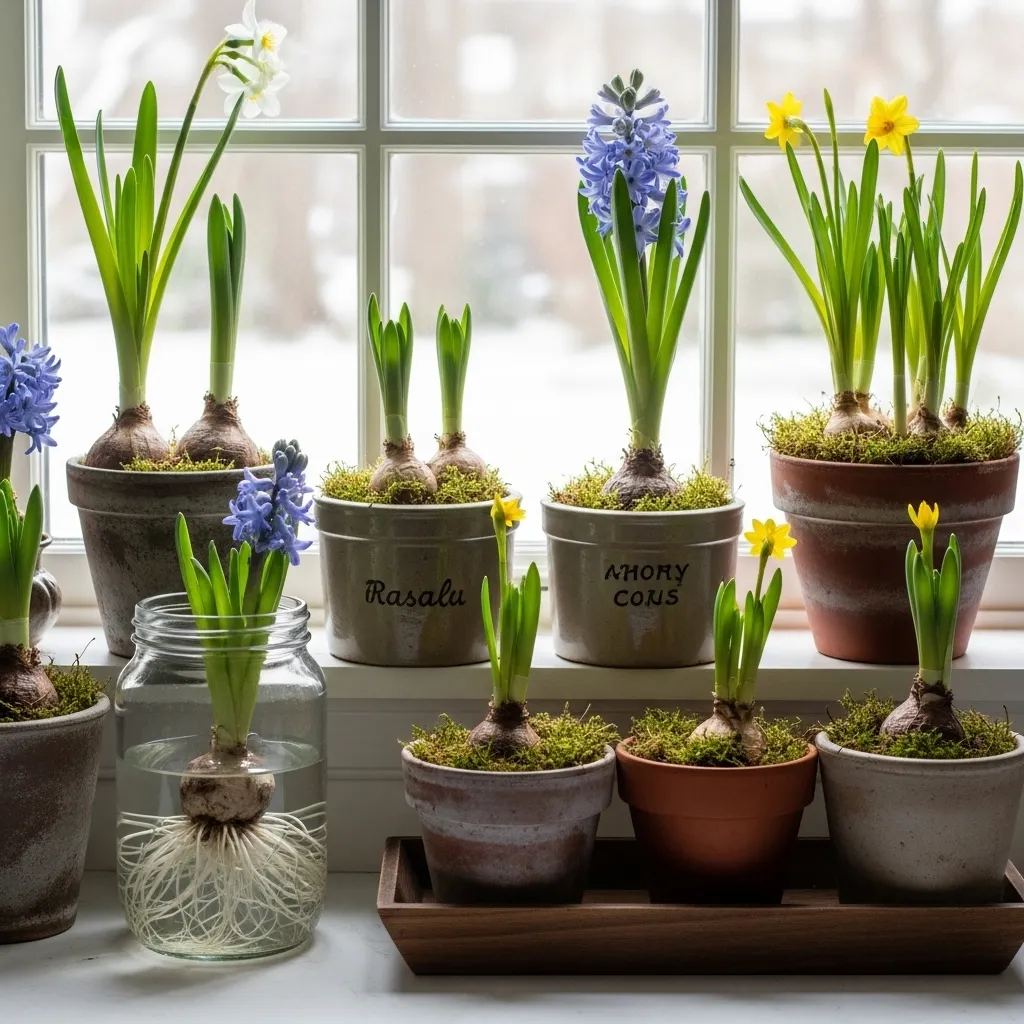
Forced spring bulbs on a farmhouse windowsill — planted in terracotta pots and antique crocks, at various stages of growth from tip to full flower — create the most intimate and most continuously changing Easter decoration available, one that develops and deepens over the weeks surrounding Easter rather than being installed at one moment and removed at another. The succession of growth — the first green tips appearing, the leaves developing, the buds forming, the flowers opening — creates a decoration that participates in the season’s actual unfolding rather than representing it as a static image.
The specific quality of spring bulbs forced indoors that makes them so particularly beautiful on a farmhouse windowsill is the backlighting — morning light streaming through a window and through the translucent green leaves and petals of paperwhite or hyacinth creates a luminous quality of light-through-living-plant that’s among the most beautiful optical experiences domestic life offers. The transparency of young spring leaves and petals to strong backlight reveals the internal structure of the plant in a way that neither reflected light nor artificial light achieves, and positioning forced bulbs on a south- or east-facing windowsill specifically to capture this backlighting effect transforms a collection of spring plants into an extraordinarily beautiful botanical light installation.
9. Spring Basket With Natural Materials for Children
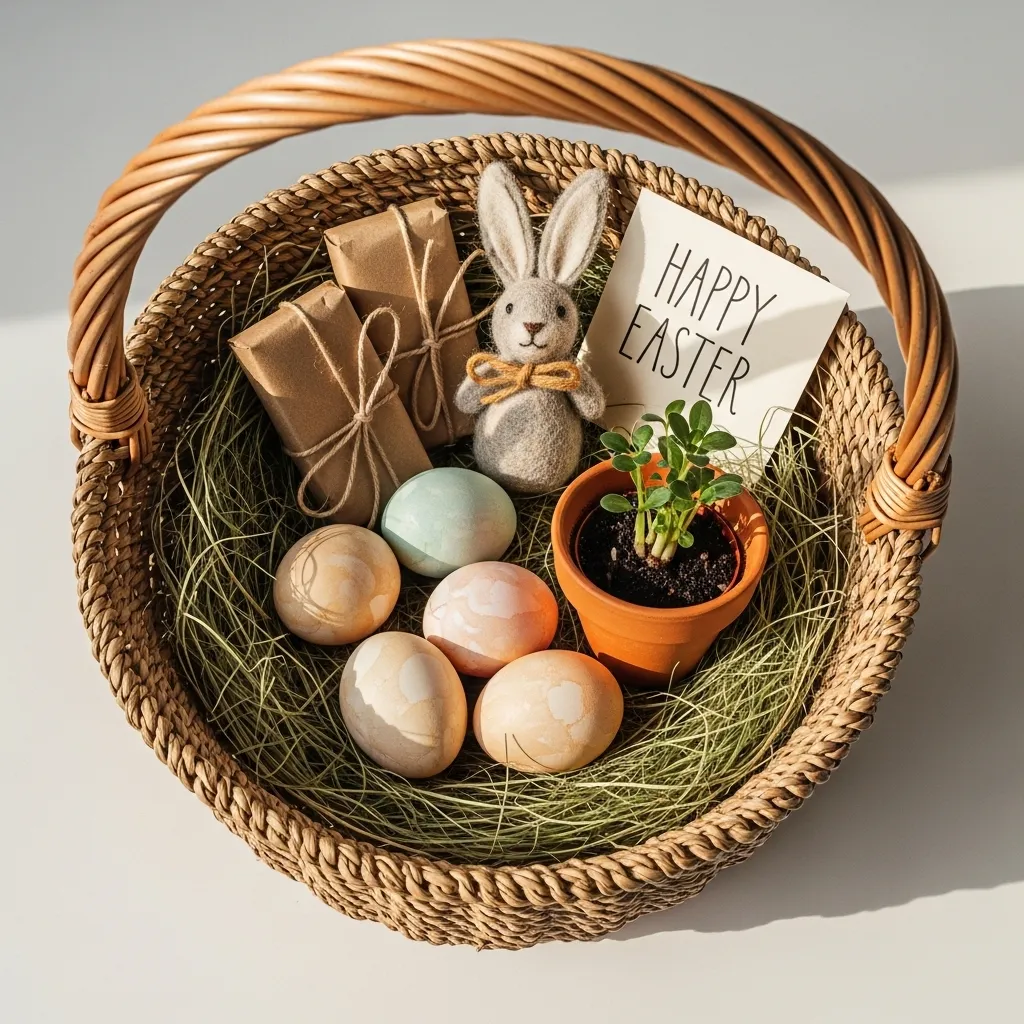
A farmhouse Easter basket built from natural materials — a genuine woven basket rather than a plastic one, natural grass rather than plastic shred, naturally dyed eggs, natural fiber stuffed animals, small growing plants — creates a children’s Easter tradition that introduces the specific values of the farmhouse aesthetic to the next generation rather than accepting the commercial Easter product aesthetic as the default. The natural basket has a quality of warmth and genuine craft that plastic Easter baskets lack entirely, and the child who receives a basket of genuine beauty and genuine materials experiences the holiday differently from the child whose basket is the standard commercial offering.
The small living plant in the Easter basket is the specific element that most transforms the standard Easter basket into something genuinely farmhouse and genuinely connected to the season’s meaning — a small growing thing that can be planted in the garden after Easter, that grows and develops beyond the holiday, that participates in the season’s actual renewal rather than representing it as a symbolic object. The tradition of including a small living plant in a child’s Easter basket creates a connection to gardening, to growth, and to the seasonal cycle that the standard candy-and-plastic-egg basket entirely lacks.
10. Spring Mantelpiece With Botanical Layers
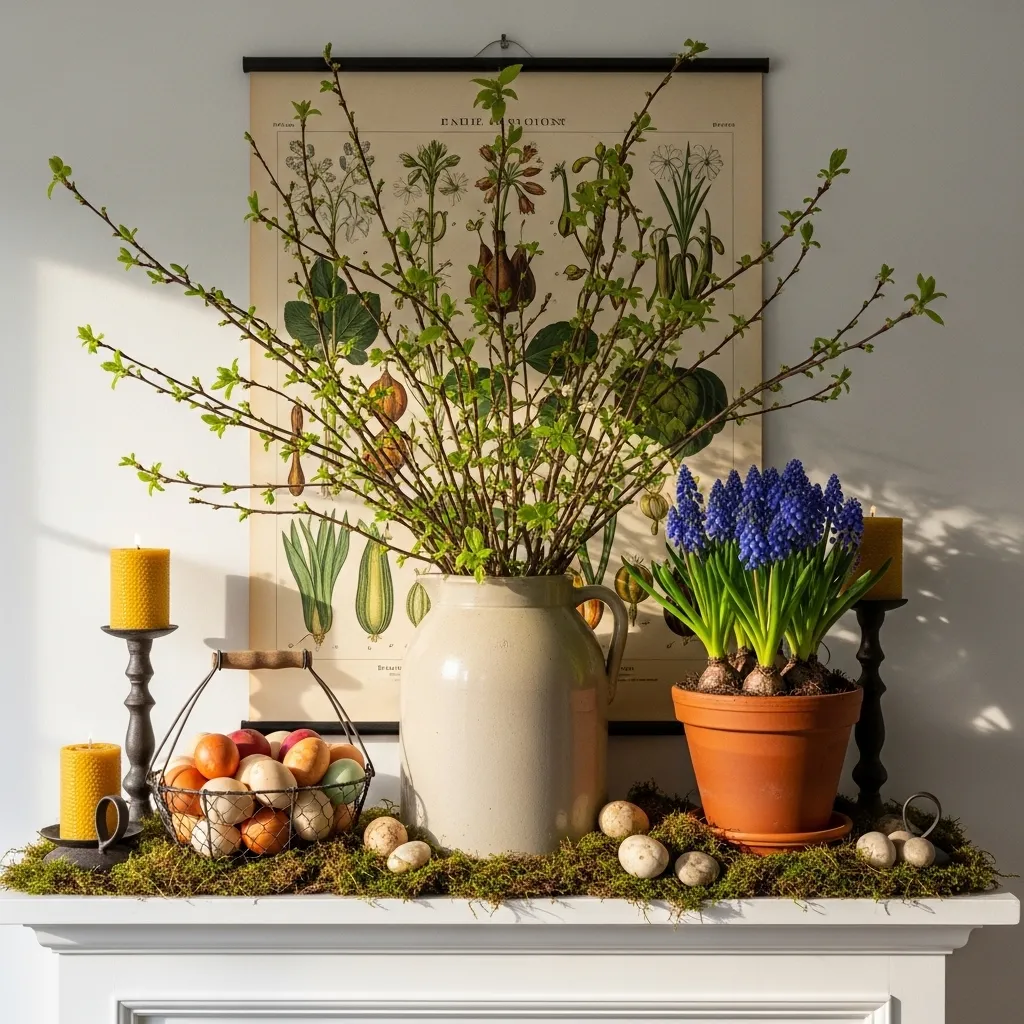
A spring farmhouse mantelpiece decorated in botanical layers — the large-scale spring branch arrangement at the back, the vintage botanical print providing artistic context, the smaller botanical elements creating foreground interest — creates the seasonal decoration moment with the greatest visual impact in the living room because the mantelpiece is the room’s primary architectural focal point and the most naturally prominent display surface. A mantelpiece decorated with genuine care and genuine botanical materials for spring creates a room moment of genuine seasonal beauty that guests and family members encounter as the room’s primary statement.
The layering principle — background artwork, middle branch arrangement, foreground small elements — is the composition technique that makes a mantelpiece arrangement read as designed rather than merely collected, because depth in a mantelpiece arrangement creates the visual complexity and three-dimensional quality that a single flat surface of objects doesn’t achieve. The vintage botanical print propped against the back of the mantelpiece creates the background layer; the spring branch arrangement in its crock creates the dominant middle layer; the eggs, bulb flowers, candles, and moss create the foreground details that reward close inspection — and together they create a mantelpiece of genuine depth and genuine seasonal abundance.
11. Farmhouse Kitchen Easter Garland
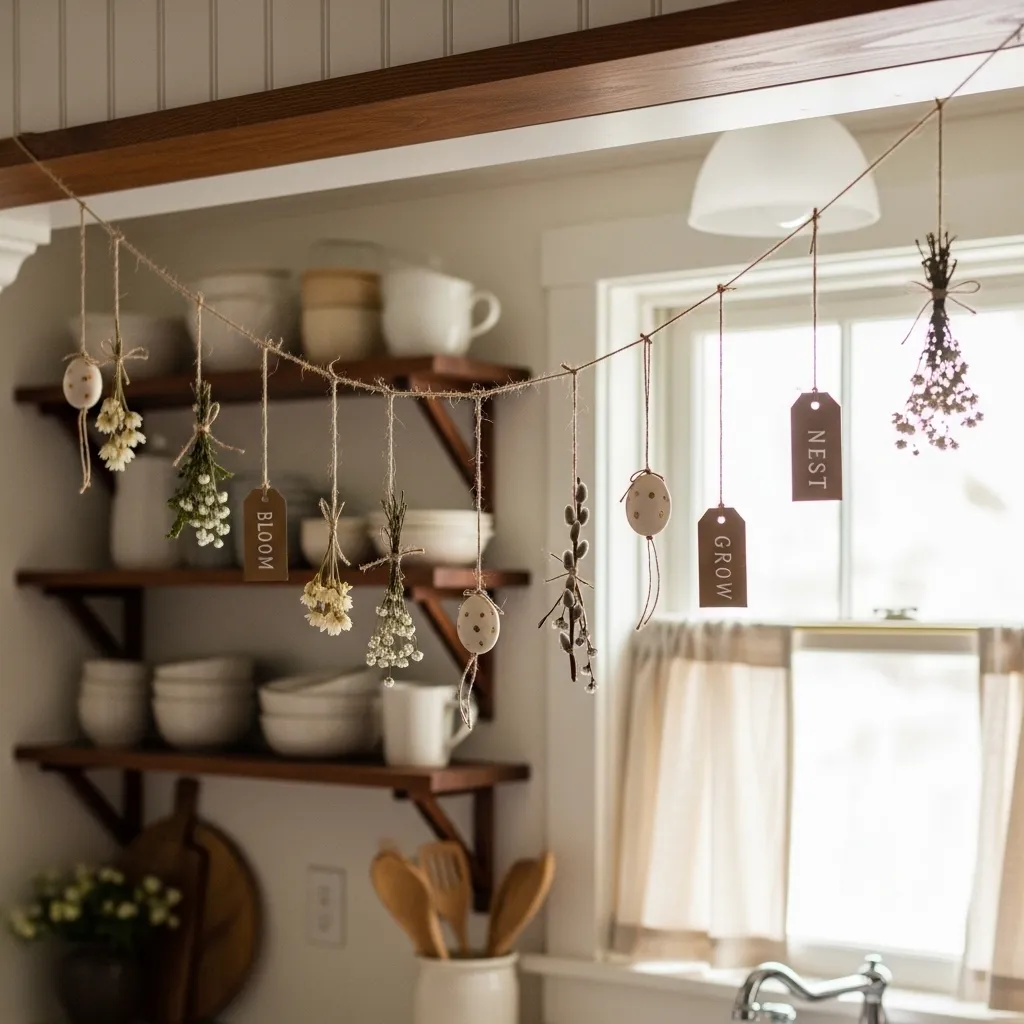
A farmhouse kitchen Easter garland made from jute twine with hanging natural elements — dyed eggs, dried botanicals, herb bundles, hand-lettered spring tags — creates the most handmade and most specifically domestic farmhouse Easter decoration available, one that clearly communicates the values of making and naturalness that are central to the farmhouse Easter tradition. A garland that you can see was made by hand, with all the slight variations in spacing and the organic character of real natural materials, has a warmth and personal quality that purchased garlands entirely lack, and in a kitchen context — the room most associated with domestic making and natural material abundance — that handmade quality is specifically appropriate and specifically beautiful.
The hanging egg elements are the garland’s primary visual moment — the naturally dyed eggs suspended at varying heights on individual twine lengths create a garland with dimensional depth rather than the flat quality of a standard garland, and the gentle movement of the hanging eggs in the kitchen’s air currents adds the quality of animation that makes the garland appear alive rather than static. The hand-lettered spring word tags tucked among the botanical and egg elements add a personal, typographic element that connects the farmhouse tradition of painted and hand-lettered signs to the garland format.
12. Vintage Farmhouse Vessels as Spring Vases
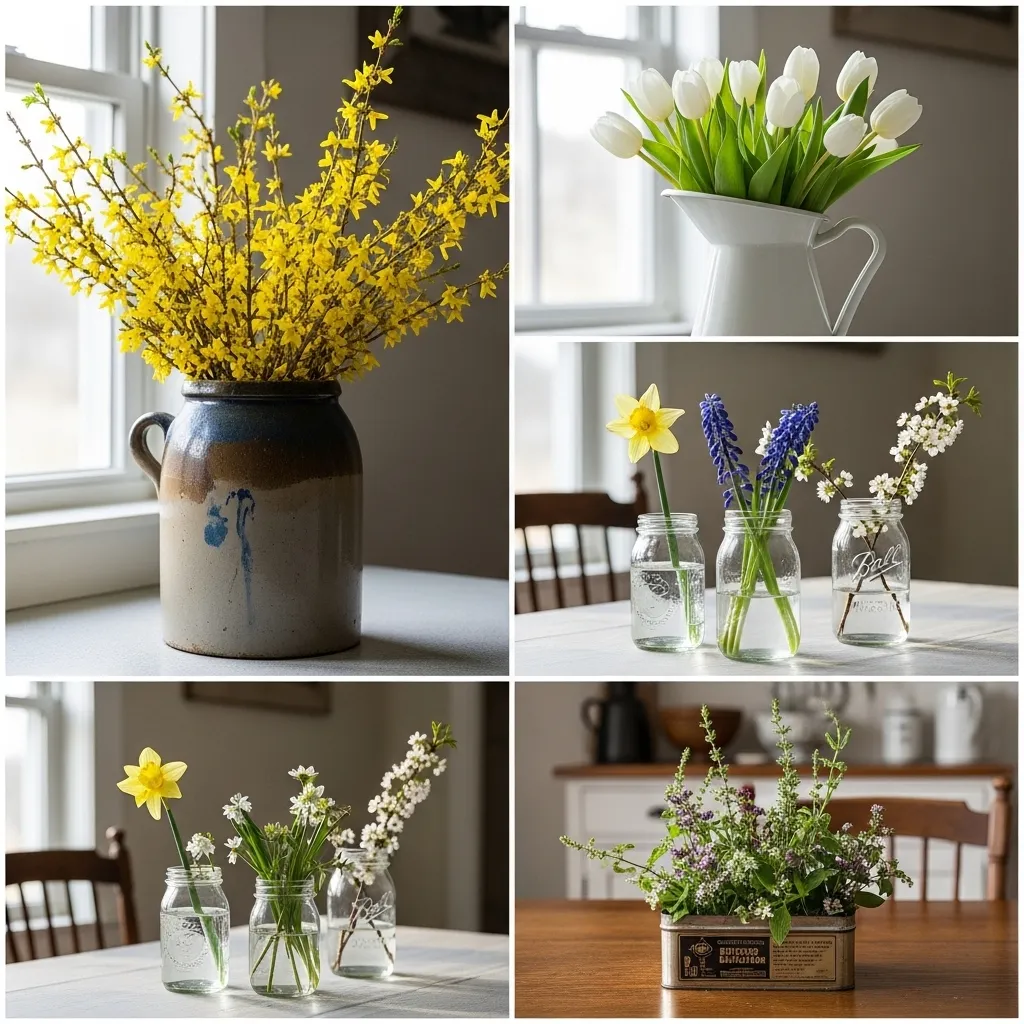
Repurposing the farmhouse’s existing collection of antique and vintage vessels — stoneware crocks, ironstone pitchers, glass mason jars, antique tins — as spring vases throughout the home creates the Easter decoration approach that most seamlessly integrates the seasonal celebration with the existing character of the home rather than importing a set of holiday-specific objects. The blue and grey stoneware crock that holds kitchen utensils on ordinary days becomes a spring vase for forsythia branches at Easter; the mason jars used for preserves become individual blossom vases for the windowsill; the ironstone pitcher that lives on the sideboard holds white tulips for the spring weeks. The seasonal shift happens through the addition of flowers and branches to existing beloved objects rather than through the replacement of those objects with holiday-specific decoration.
The distributed approach — many small spring arrangements throughout multiple rooms in different vessels — creates a quality of ambient spring abundance that a single large central arrangement doesn’t, because the spring flowers and branches are encountered in multiple locations throughout the home rather than in one concentrated moment. The experience of a home with spring in the kitchen window, on the dining table, on the sideboard, on the coffee table, and on the entry console is the experience of a home that has been transformed by the season rather than decorated for a holiday, and that distinction is the difference between farmhouse Easter decoration that’s genuinely beautiful and farmhouse Easter decoration that’s merely appropriately seasonal.
13. Natural Beeswax Candle Spring Arrangement
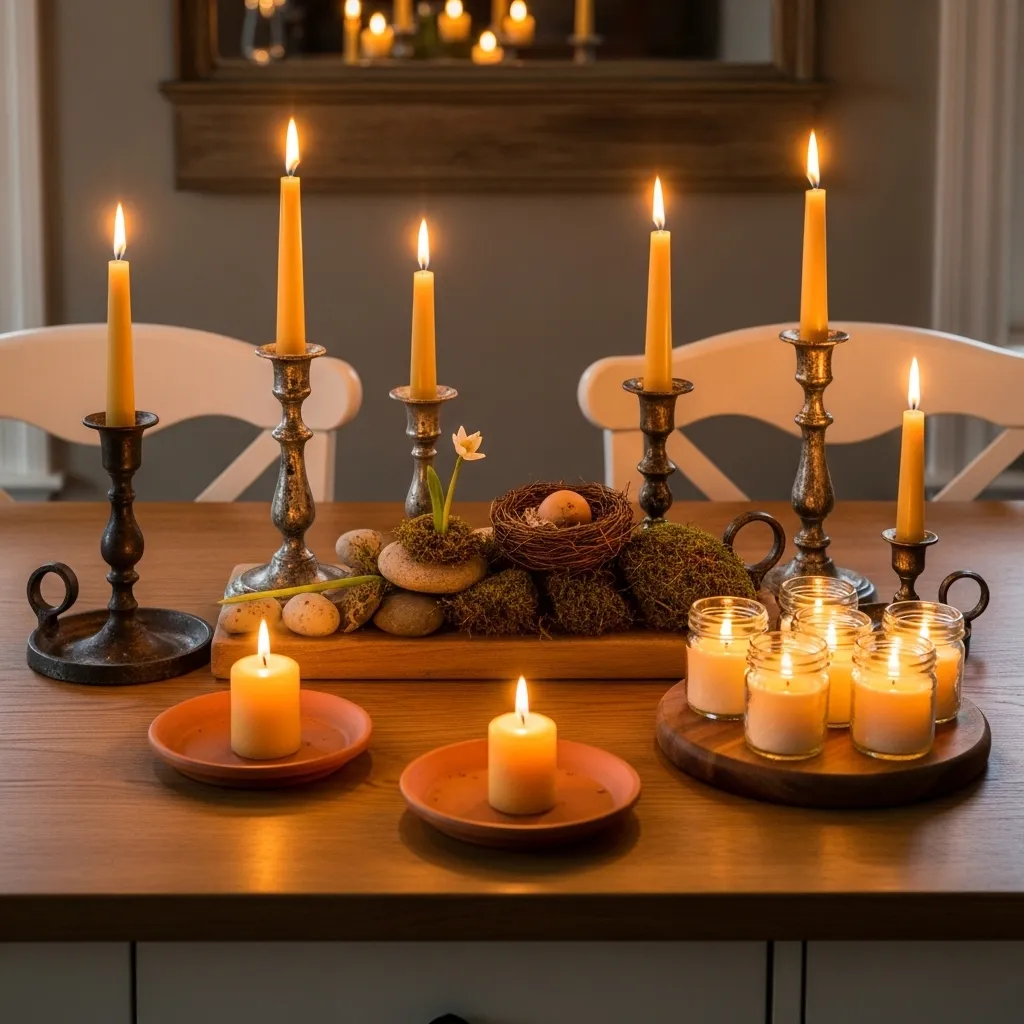
Natural beeswax candles are the farmhouse Easter decoration element that most directly connects the seasonal celebration to the agricultural tradition — beeswax is a farm product, the byproduct of the honeybee colonies that pollinate spring flowers and spring crops, and its presence in Easter decoration is not decorative convention but genuine connection to the cycle of spring agricultural life. The specific qualities of beeswax — its warm amber color, its faint natural honey fragrance, the quality of its light (warmer and more golden than paraffin, with a slight flicker that paraffin candles don’t quite replicate) — create a candlelight atmosphere of specific warmth and specific farmhouse authenticity.
The arrangement of beeswax candles in antique iron holders at different heights alongside small spring botanical elements creates the farmhouse spring table moment that’s most warm and most atmospherically complete — candlelight is the specific light quality that most transforms an ordinary table into a special occasion table, and beeswax candlelight specifically has a quality of ancient, natural warmth that contemporary paraffin candlelight doesn’t replicate. An Easter table lit with beeswax candles in antique iron holders is a table that creates the specific quality of warm, intimate celebration that the holiday deserves.
14. Spring Garden Cloche Display
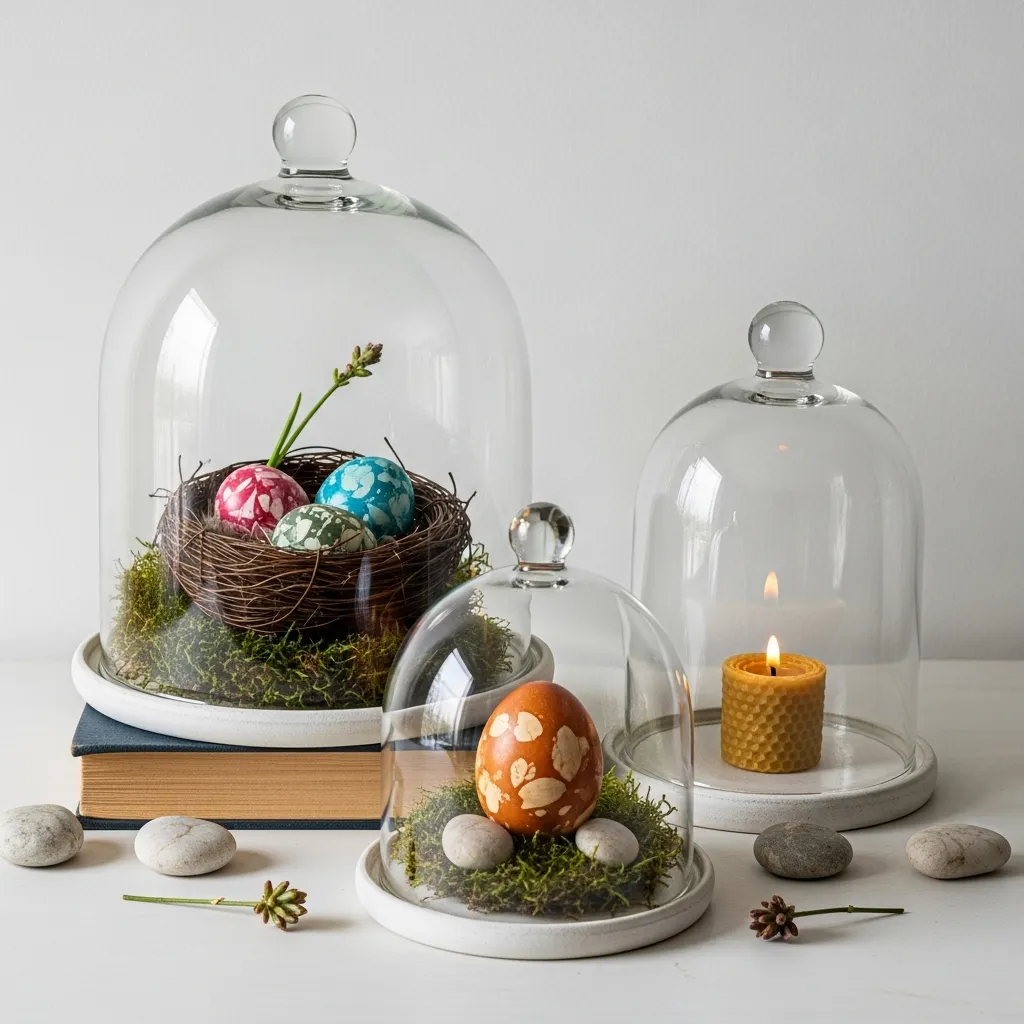
Antique glass cloches used as individual display cases for small spring tableaux — a nest with eggs, a single specimen botanical, a small candle — create the farmhouse Easter decoration approach with the most intimate and most precisely beautiful individual moments, because the glass cloche creates a specific visual relationship between the viewer and the displayed object that no open display achieves. The cloche’s glass creates a slight magnification and a specific quality of focused attention — looking into a glass cloche at a small nest with three naturally dyed eggs creates an experience of intimate, close viewing that the same nest displayed openly on the sideboard doesn’t create. The cloche isolates its contents from the surrounding environment and creates a frame of glass that makes every object within it appear more specifically beautiful and more deliberately chosen.
The varying heights of the cloche grouping — created by raising smaller cloches on books, wooden blocks, or small stands — creates the triangle composition principle at the scale of a small sideboard arrangement, with the tallest cloche at one end, the medium in the middle, and the smallest at the other. This height variation within the cloche grouping creates the visual movement and dynamic quality that a collection of equal-height cloches doesn’t achieve, and it creates a sideboard arrangement of genuine compositional quality from a small number of objects.
15. The Complete Farmhouse Easter Home — Every Room Connected
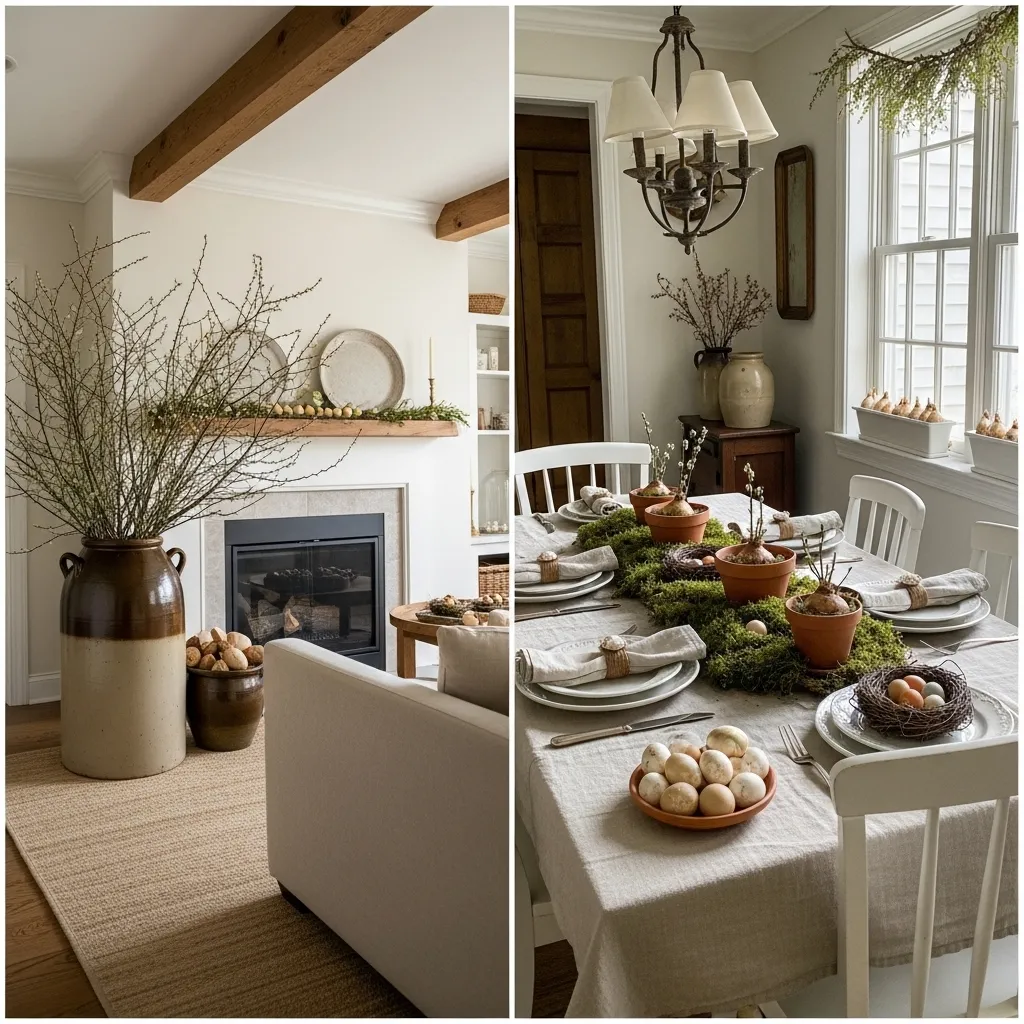
A complete farmhouse Easter home where the seasonal decoration flows continuously from room to room — the same natural materials, the same botanical palette, the same restrained and genuine approach throughout — creates a seasonal experience that’s genuinely immersive rather than locally concentrated. When the spring branch arrangement in the living room, the botanical tablescape in the dining room, and the distributed egg and bulb display in the kitchen all speak the same seasonal language in the same natural materials at the same restrained scale, the home feels genuinely transformed by the season rather than decorated for a holiday.
The consistency of materials across rooms is the specific quality that creates this immersive seasonal experience — when the natural linen, the terracotta, the stoneware, the beeswax, the genuinely gathered and naturally dyed botanical materials appear in every room rather than being concentrated in one, the whole home participates in the seasonal celebration and the experience of moving through the home during the Easter season becomes an experience of continuously encountering spring in its most natural and most genuinely beautiful farmhouse expression. This distributed, material-consistent approach is the complete expression of farmhouse Easter decoration at its highest level — not a holiday installation but a seasonal transformation of a home that always celebrates natural materials and natural beauty, expressing those values most fully at the moment when the natural world itself is most worth celebrating.