16 Beautiful Home Office Ideas That Make You Want to Sit Down and Do Your Best Work Every Single Day
If your current home office situation falls somewhere between adequate and genuinely uninspiring — a desk that functions but doesn’t delight, a room that accommodates work but doesn’t support it, a space you spend significant hours in every day that you’ve never quite gotten around to making genuinely beautiful because there’s always something more pressing — this guide is for every version of the home office, in every size of space, at every aesthetic and budget level, and it covers not just what to put in the space but why specific combinations of furniture, light, color, material, and personal expression create offices that genuinely support the quality and quantity of work that happens in them. The sixteen ideas here span the complete range: the library-style office with floor-to-ceiling built-ins that creates the most intellectually rich working environment possible, the minimal Japandi office where reduction is the point, the creative maximalist studio where abundance of beautiful objects is itself a form of inspiration, the moody dark office that creates the most focused and most atmospheric working cave, the converted alcove or closet office that solves the no-dedicated-room problem with genuine style, the feminine maximalist office in jewel tones and vintage finds, the bright Scandinavian workspace that makes the most of natural light, the industrial loft-style office with exposed materials and raw character, the gallery-style office where personal art collection is the working environment, the biophilic plant-saturated office that brings nature into the working day, the shared dual desk office for two people working in the same space, the standing desk setup done with genuine aesthetic intention, the cottage-style garden office in a separate structure, the academic traditional office with antique desk and leather upholstery, the productivity-optimized dual monitor setup that doesn’t sacrifice beauty for function, and the seasonal working space that changes with the year.
I’ve worked from home for long enough to have strong opinions about the relationship between workspace quality and work quality, and the opinion I hold most firmly is that the people who dismiss the aesthetics of a workspace as frivolous or secondary to its functional specifications are wrong in the most practical possible sense — not because beauty is important in the abstract, but because the quality of the environment you work in has a direct, measurable, daily effect on how much you want to be in it, how long you can sustain focused attention within it, how much of your cognitive and creative capacity is consumed by low-grade environmental dissatisfaction versus available for the actual work. A beautiful, personally meaningful, sensory-rich workspace creates the conditions for sustained, high-quality work in a way that a merely adequate workspace simply doesn’t, and the investment in making a home office genuinely beautiful pays back every day through the compounding interest of better work done more willingly in a space you genuinely want to inhabit.
What makes a home office genuinely beautiful rather than merely decorated or merely functional is the quality of the personal expression it contains — the books you’ve actually read arranged in a way that shows they’ve been lived with, the art that means something specific to you rather than generic motivational prints, the objects that carry genuine personal history rather than objects purchased to look like they do, the lighting chosen for its specific quality of warmth and atmosphere rather than for its technical adequacy, the plant that you’ve tended through several seasons rather than the plastic plant that requires no attention because it offers none of the living presence that makes plants valuable. These distinctions between genuine personal expression and the performance of personal expression are the distinctions that separate a home office that feels like your best working self from one that feels like someone else’s idea of what a home office should look like.
1. The Library-Style Office With Floor-to-Ceiling Built-Ins
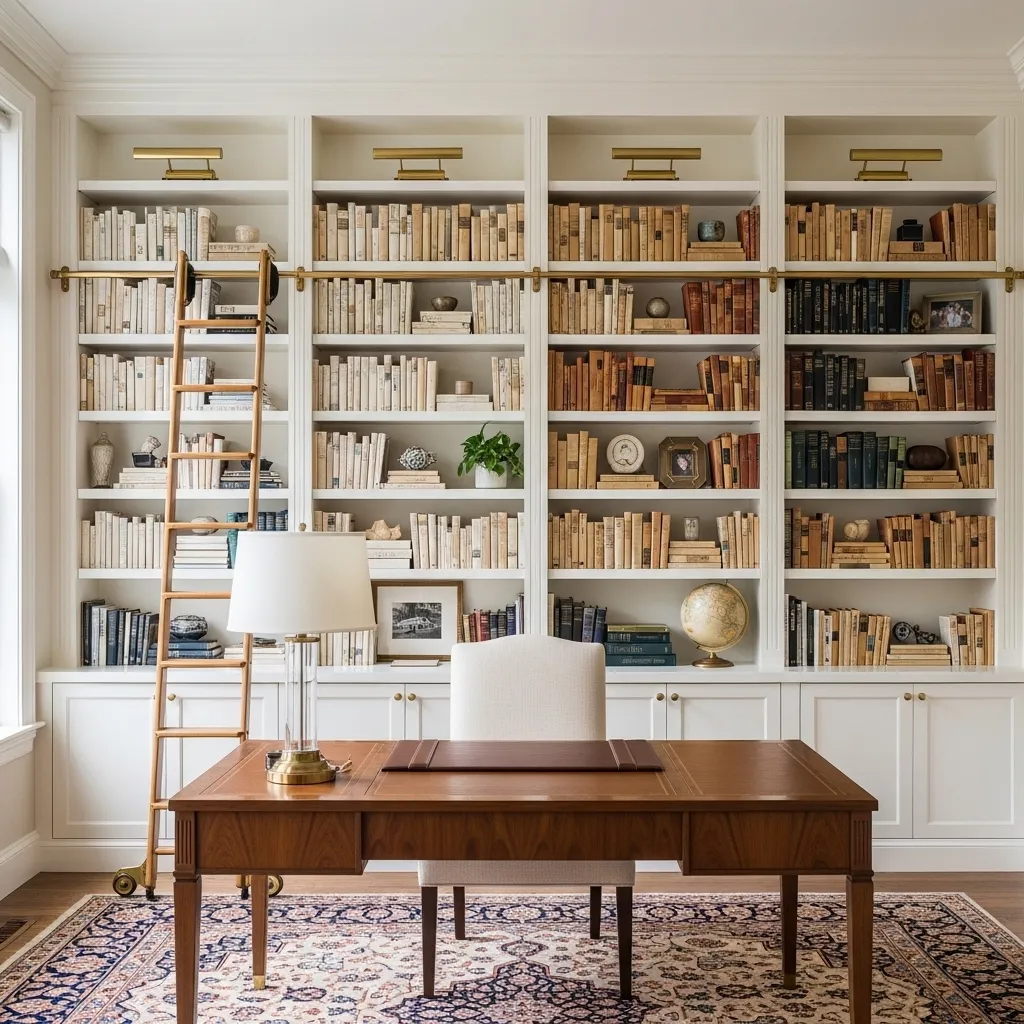
A library-style home office with floor-to-ceiling built-in bookshelves is the home office configuration with the highest intellectual gravitas and the richest working environment — the wall of books behind the desk creates a backdrop of accumulated knowledge and accumulated reading that makes working at the desk feel specifically significant, specifically connected to the long tradition of serious desk work in rooms defined by their libraries. The psychological effect of surrounded books on intellectual work is not merely aesthetic — the presence of many books in a working space creates a quality of intellectual richness and intellectual permission that an unadorned room doesn’t provide, a sense that this is a place where thinking happens and where thinking has happened before.
The rolling library ladder is the specific element that elevates a room with bookshelves from a study with books to a genuine library — it’s the object that declares the shelves to be genuinely full and genuinely used, that makes access to the upper shelves a practical matter rather than a theatrical gesture, and that introduces a quality of Victorian intellectual seriousness that no other single object in a home office quite replicates. A room with a rolling library ladder on brass rails is a room that takes books and the reading of books seriously, and that seriousness creates a working environment of specific intellectual quality.
2. The Minimal Japandi Office
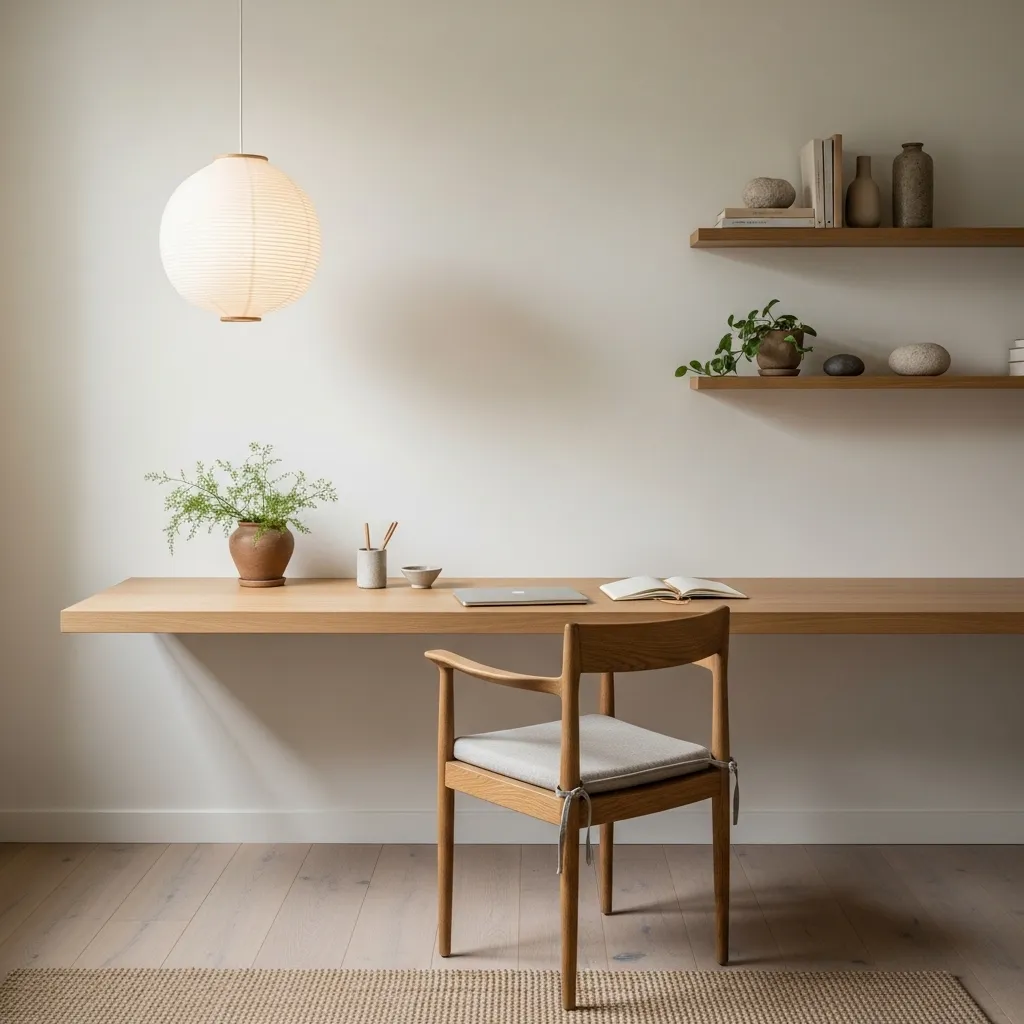
A Japandi home office — where the Japanese principle of considered reduction meets the Scandinavian principle of warm, natural material quality — creates the working environment with the most consistent access to a specific quality of focused calm that neither the maximalist nor the purely minimal office quite achieves. The Japandi office is not empty — it contains beautiful objects, natural materials, warm wood, living plants — but it contains precisely enough and no more, and the precision of its restraint creates a visual quiet that the over-filled office and the sterile minimal office both fail to provide.
The desk surface in a Japandi office should be treated with the same principle of careful selection that governs the rest of the space — not stripped of everything in the name of minimalism, but edited to contain only what’s genuinely needed and genuinely beautiful. The laptop, the ceramic pen holder, the small plant, the open notebook — these are not decorative objects placed to create a photographed desk moment but the actual tools of the working day, chosen with sufficient care that each one is also beautiful. This quality of functional objects being genuinely beautiful rather than merely functional is the Japandi principle applied at the smallest scale, and it’s the principle that most distinguishes a Japandi office from one that’s simply tidy.
3. The Moody Dark Office — Atmospheric Focus Cave
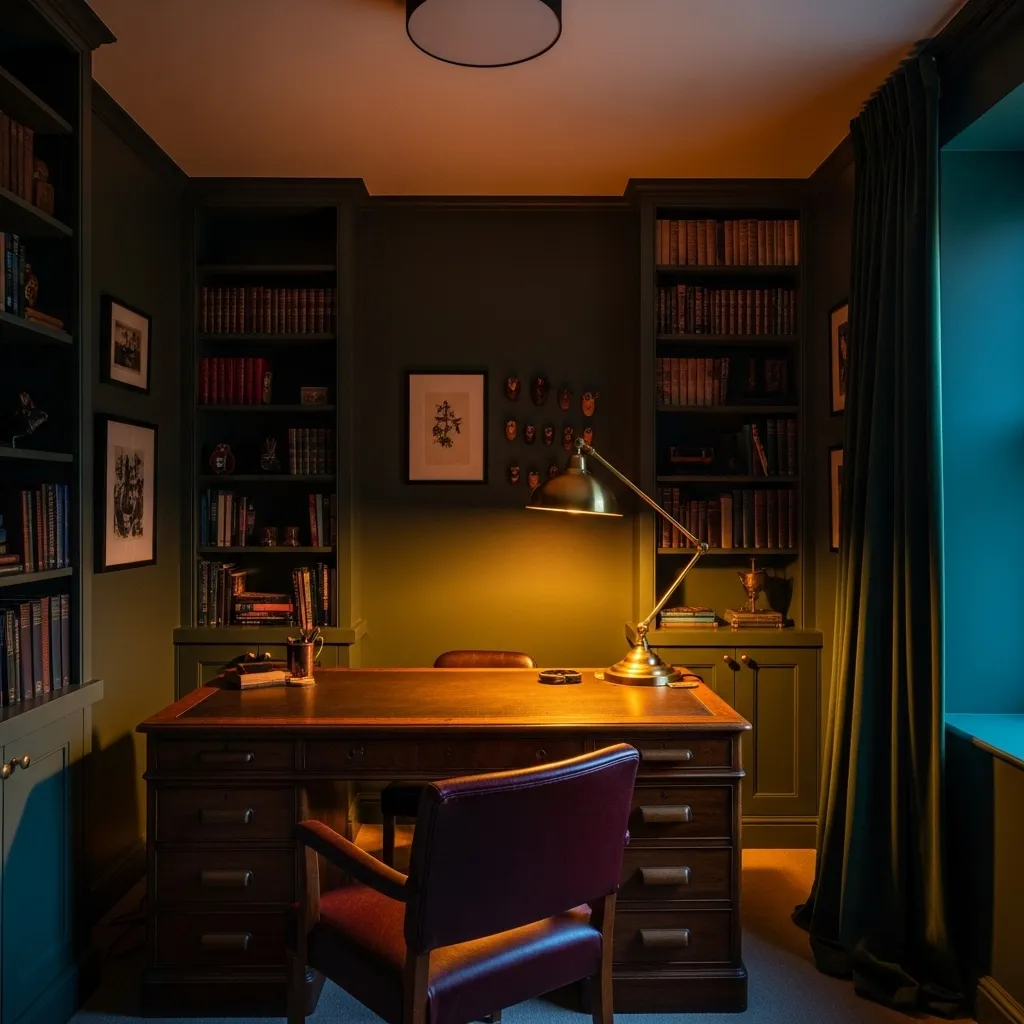
A dark, moody home office — deep forest green or charcoal walls, warm low lamplight, heavy curtains, antique dark wood furniture — creates the working environment with the most specifically atmospheric and most reliably focus-inducing qualities available in home office design, because the enclosing darkness creates a specific quality of visual containment that directs the attention inward rather than outward, making the working surface the most illuminated and most visually prominent element in the room. The pool of warm lamplight on a dark desk surface in a dark room is the specific visual condition that creates the deepest quality of focused attention — everything peripheral recedes into darkness, only the work is clearly lit, and the mind follows the light to the work.
The specific green of the moody home office matters enormously — the dark forest green that works best is a green with enough warmth to prevent it from reading as cold or clinical, enough depth to create genuine enclosure rather than merely a dark room, and enough botanical quality to make the darkness feel like shelter rather than confinement. Benjamin Moore’s Newburyport Green, Farrow and Ball’s Studio Green, or any deep warm-green in a flat, chalky finish creates the specific quality of darkness that the moody home office requires — a darkness that feels inhabited and warm rather than empty and cold.
4. The Bright Scandinavian Workspace
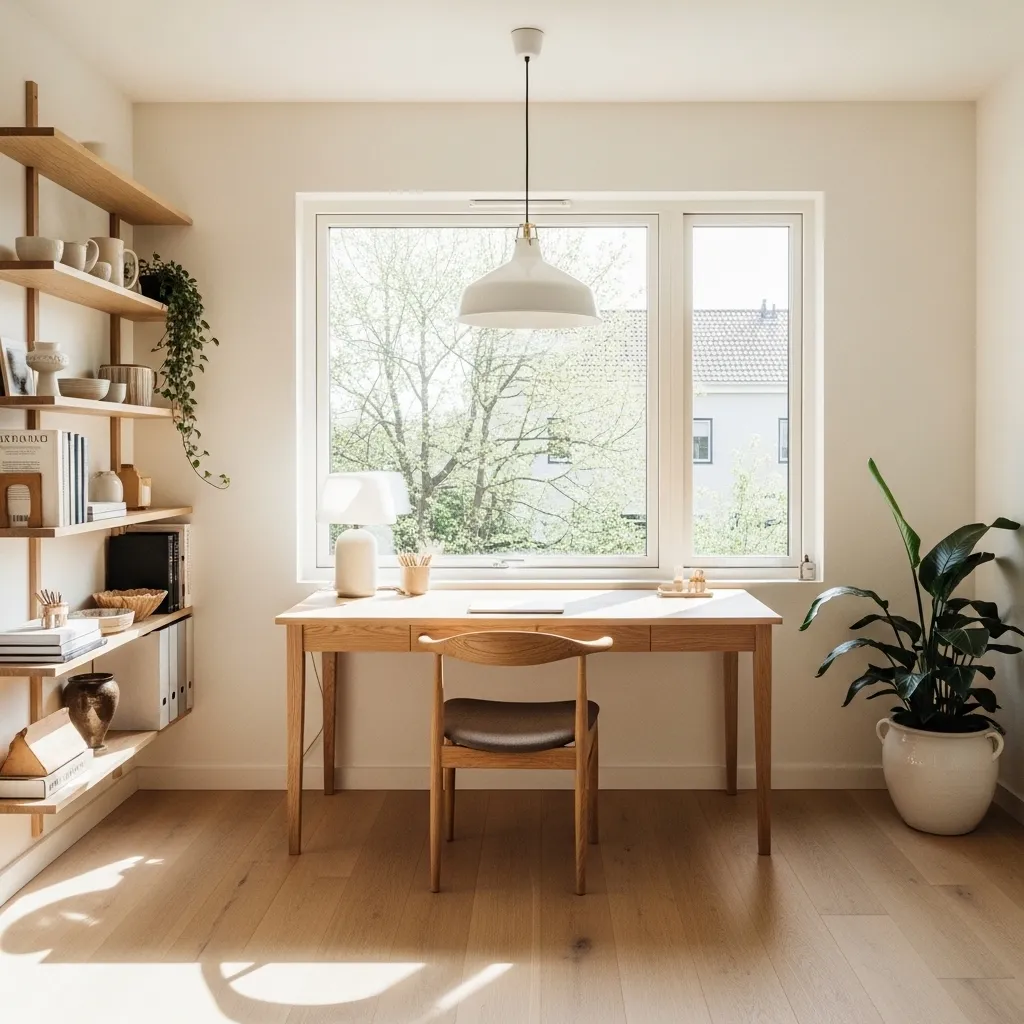
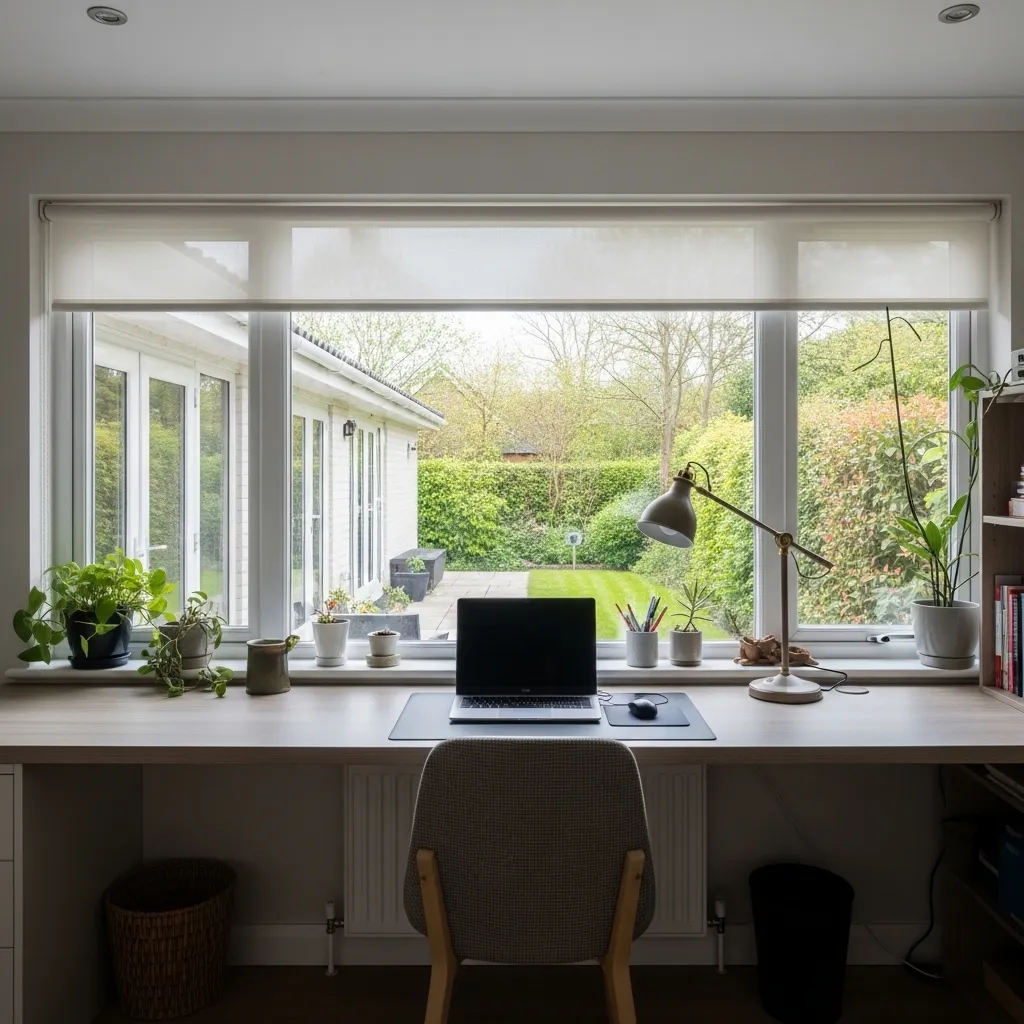
A bright Scandinavian home office maximizes the quality and quantity of natural light as the primary working resource — positioning the desk to face the window, choosing pale reflective surfaces that multiply available light, using warm whites and natural pale woods that contribute luminosity rather than absorbing it. The Scandinavian understanding that natural light is the most valuable resource in a working space and that the design of the workspace should be organized around capturing and reflecting it rather than supplementing it with artificial sources creates a working environment of extraordinary daily quality, one where the changing light through the working day creates an ambient temporal rhythm that sustains energy and attention more effectively than the flat, static artificial light of a windowless office.
The Scandinavian office’s specific warmth — the pale wood, the warm white, the simple ceramic objects, the living plant — prevents the brightness from reading as clinical or corporate despite its strong natural light and simple organization. This is the quality that distinguishes Scandinavian design from mere minimalism — the warmth of natural materials that maintains the humanity of the space within the discipline of the clean, light, organized aesthetic.
5. The Creative Maximalist Studio Office
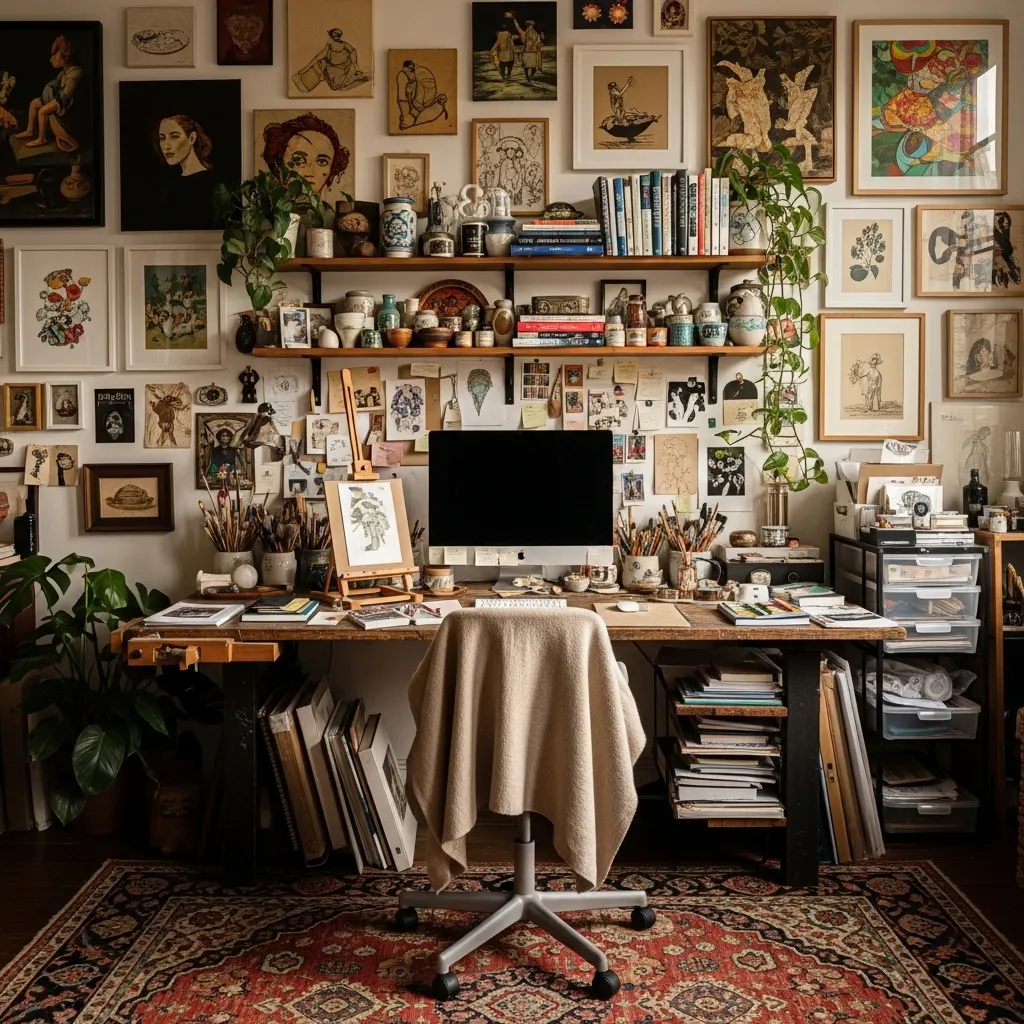
A creative maximalist studio office — where the walls are fully covered with personally meaningful art, where the shelves hold genuine collections accumulated over time, where the desk surface has organized creative abundance rather than careful emptiness — creates the working environment that most directly supports creative work by surrounding the working self with the visual richness, the associative stimulation, and the ambient inspiration that creativity requires. The maximalist creative office is not a disorganized space — organization is essential to its function — but its organization is the organization of a working studio rather than a corporate desk, one that keeps the tools and references of creative life immediately accessible and visible rather than stored in drawers and closed cabinets where they’re out of sight and therefore out of mind.
The personal gallery wall in a creative office is the element that most distinguishes it from a generically styled workspace — not a curated selection of appropriate prints but a genuine accumulation of personally meaningful artwork, postcards, photographs, sketches, and found images that represent the specific visual world of the specific person who works there. This personal visual world pinned and hung and framed around the desk is the ambient inspiration that the creative mind draws on continuously during working hours, and its specificity to one person’s particular visual sensibility is precisely what makes it genuinely useful as a creative resource rather than merely decorative as purchased art would be.
6. The Converted Alcove Office — Small Space, Full Beauty
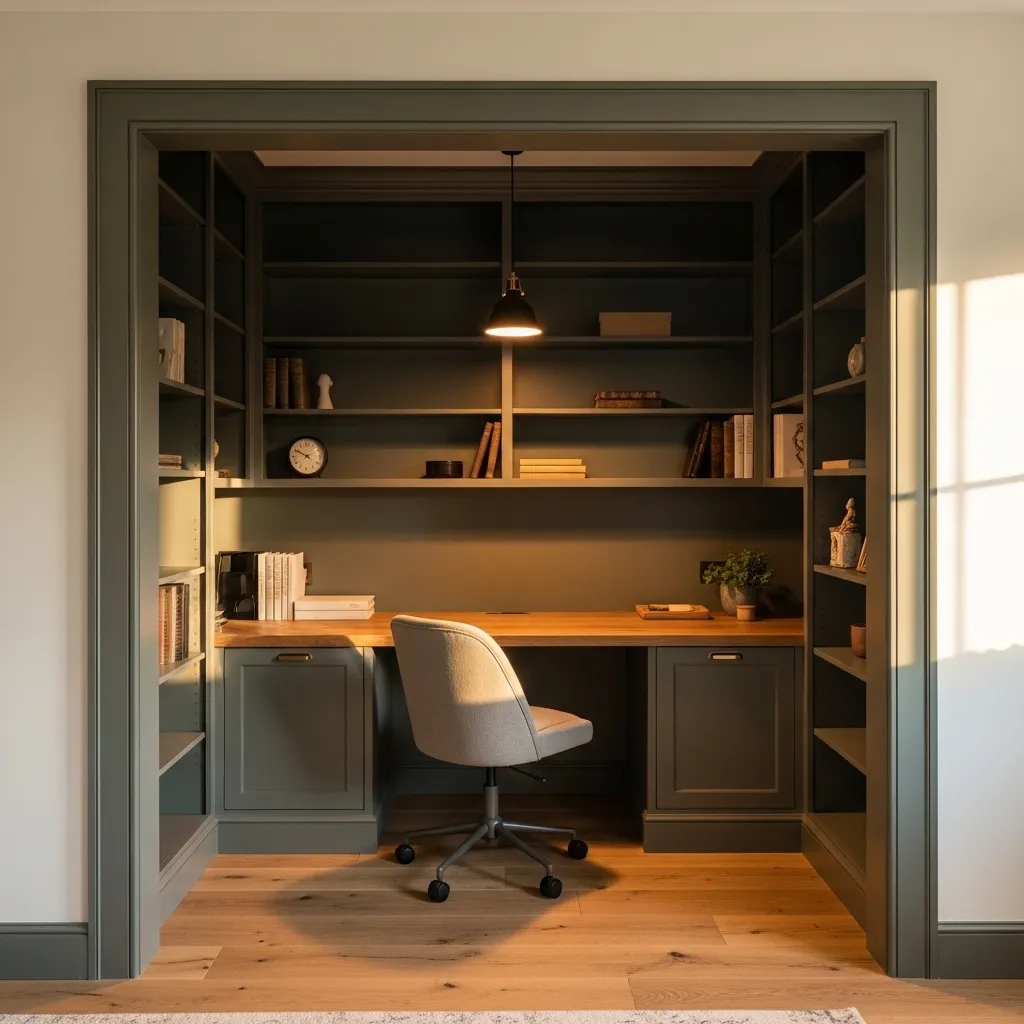
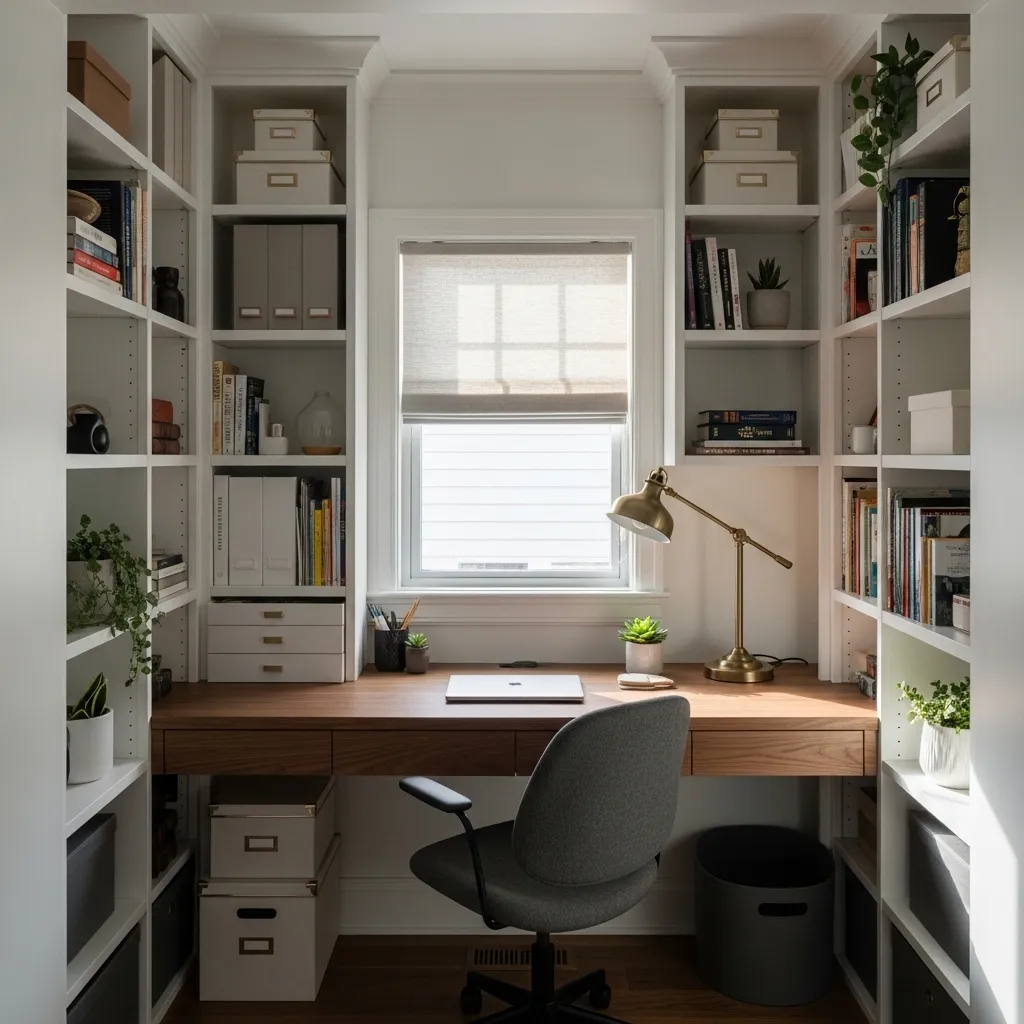
A converted alcove office — where a shallow wall recess or under-stair space or bedroom corner has been transformed into a complete home office through built-in shelving, a built-in desk surface, and a focused light — is the home office solution that creates the most complete and most atmospherically distinct working environment in the smallest possible footprint. The alcove creates a natural spatial boundary that the open-plan home office desk in the corner of the living room lacks — the alcove is clearly a different spatial zone from the room it sits within, and that spatial distinction creates the psychological separation between work mode and home mode that the lack of a dedicated office room otherwise eliminates.
The dark paint inside the alcove is the design decision that most dramatically enhances the alcove’s effectiveness as a working space — the dark walls create visual containment that makes the alcove feel like a specific, enclosed space rather than a recessed section of a larger room, and they create the focused, atmospheric quality of a dedicated working cave within whatever room the alcove occupies. The contrast between the dark alcove interior and the lighter room surrounding it creates a threshold effect — stepping into the alcove is entering a different spatial and psychological zone — that’s enormously valuable for maintaining focus in a home where the working and non-working zones occupy the same physical space.
7. The Feminine Vintage Office in Jewel Tones
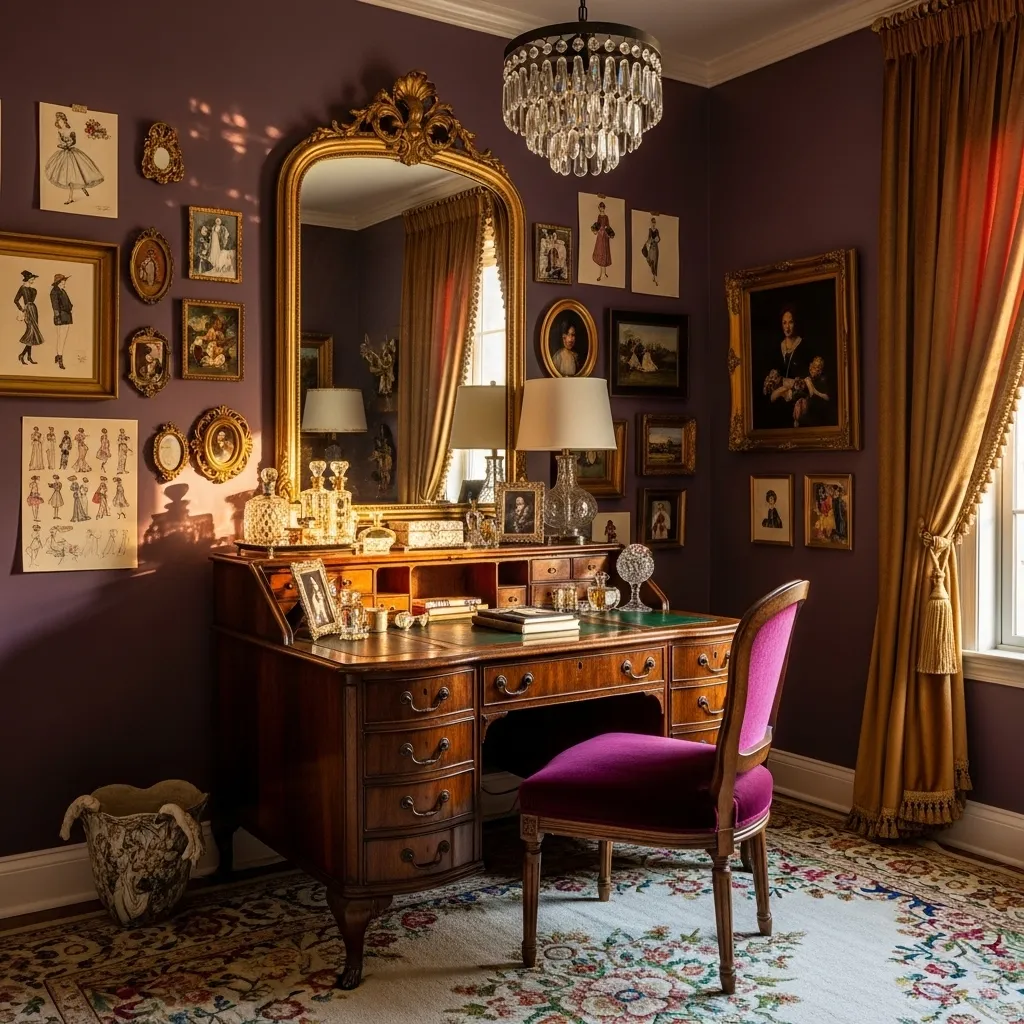
A jewel-toned feminine home office — built around a genuinely beautiful antique desk, with deep rich wall color, velvet and crystal and gold throughout — creates the working environment that most directly embodies the principle that a workspace should feel like the expression of your most beautiful working self rather than a compromise between personal taste and a vague sense of what a serious workspace is supposed to look like. The permission to design a home office in deep plum or jewel-toned emerald with velvet and crystal and gold — without apologizing for the femininity or the luxury or the non-corporate quality of the result — is the permission that creates working environments of genuine personal beauty and genuine personal meaning.
The antique writing desk is the piece that anchors this office’s character most completely — an actual antique desk with its specific history and patina and hardware has a quality of serious desk work embedded in it that a reproduction or a contemporary desk designed to look antique doesn’t carry. Writing at a desk that has been written at before, that carries the evidence of previous work in its surface and its hardware, creates a quality of connection to the long tradition of women’s intellectual work that’s specifically meaningful and specifically motivating in a way that a new desk, however beautiful, doesn’t provide.
8. The Industrial Loft Office
An industrial loft-style home office — with reclaimed timber desk surfaces, black steel shelving on pipe brackets, exposed brick walls, and industrial pendant lighting — creates the working environment with the most raw material honesty and the most specifically urban creative character available in home office design. The industrial aesthetic’s preference for honest, unfinished, working materials — the timber that shows its grain and its history, the steel that shows its fabrication, the brick that shows its construction — creates a workspace where the materials themselves communicate the values of real work done honestly with real tools, and that quality of material authenticity creates a working environment that feels specifically aligned with serious, substantial work.
The reclaimed timber desk surface is the specific element that most anchors the industrial office’s character — a thick slab of genuinely reclaimed timber on steel trestle legs has a quality of working surface authenticity that no new laminate or manufactured desk surface replicates. The worn, marked, used quality of the reclaimed timber — where previous industrial or domestic use has created the specific patina of a surface that has been genuinely worked on — creates a desk with its own history and its own character, and working on a surface with genuine history creates a different quality of relationship to the work than working on a new, unmarked surface.
9. The Gallery Office — Personal Art as Working Environment
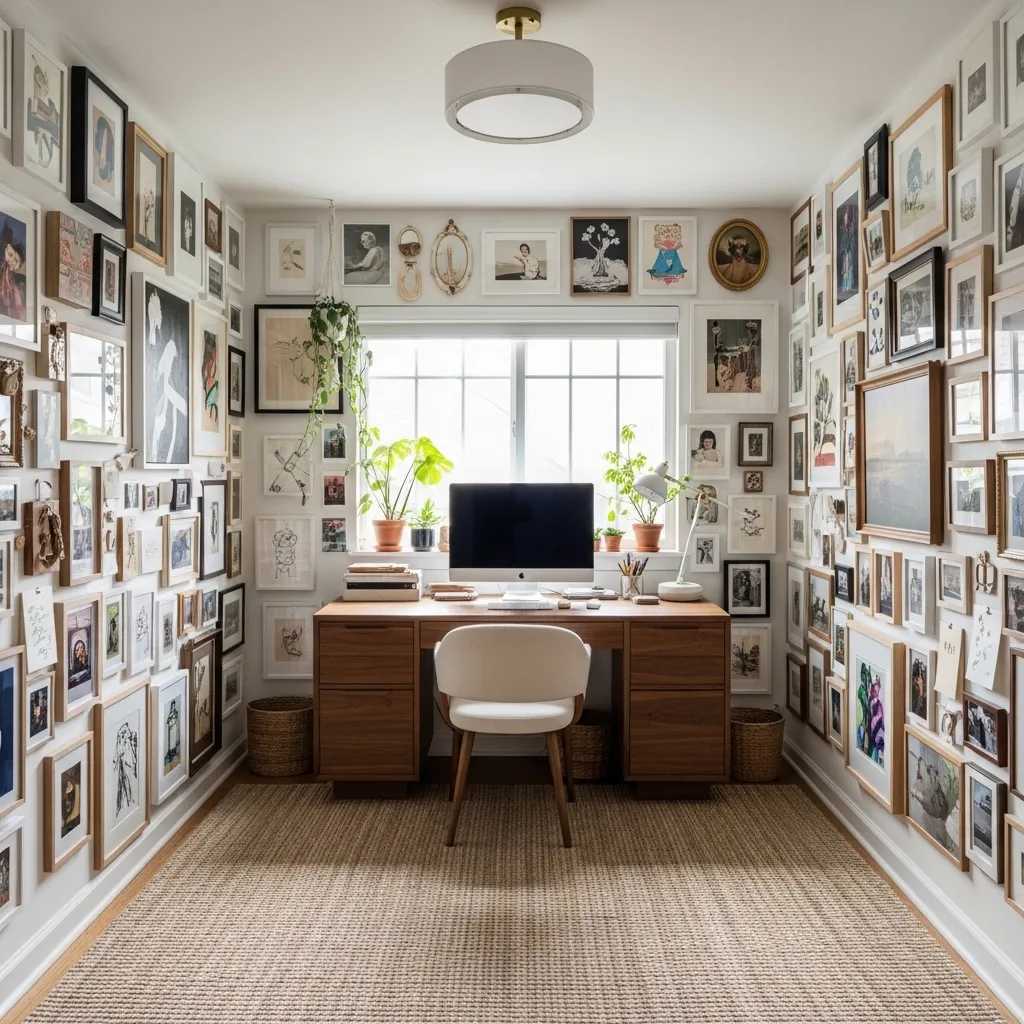
A home office where the walls are covered floor-to-ceiling in a genuinely personal art gallery — not a curated selection of appropriate prints but a complete personal visual world accumulated over years of looking and collecting and receiving and making — creates the most specifically personal and most genuinely inspiring working environment possible, because the gallery of genuinely personal art is a complete map of a specific person’s visual sensibility, aesthetic education, emotional history, and creative life. Working inside this map creates a quality of self-knowledge and creative permission that working in a room decorated with purchased art or left bare entirely doesn’t provide.
The density of the floor-to-ceiling gallery is the quality that creates the immersive effect — a few pieces of personal art on one wall creates an art accent; every wall covered from floor to ceiling in personal art creates an art environment, a room defined by its art rather than a room that contains art. This distinction matters for the quality of the working experience because an art environment surrounds the working person with their own visual world from every direction, creating a quality of complete personal expression that partial gallery installations don’t achieve.
10. The Biophilic Plant Office — Nature as the Working Environment
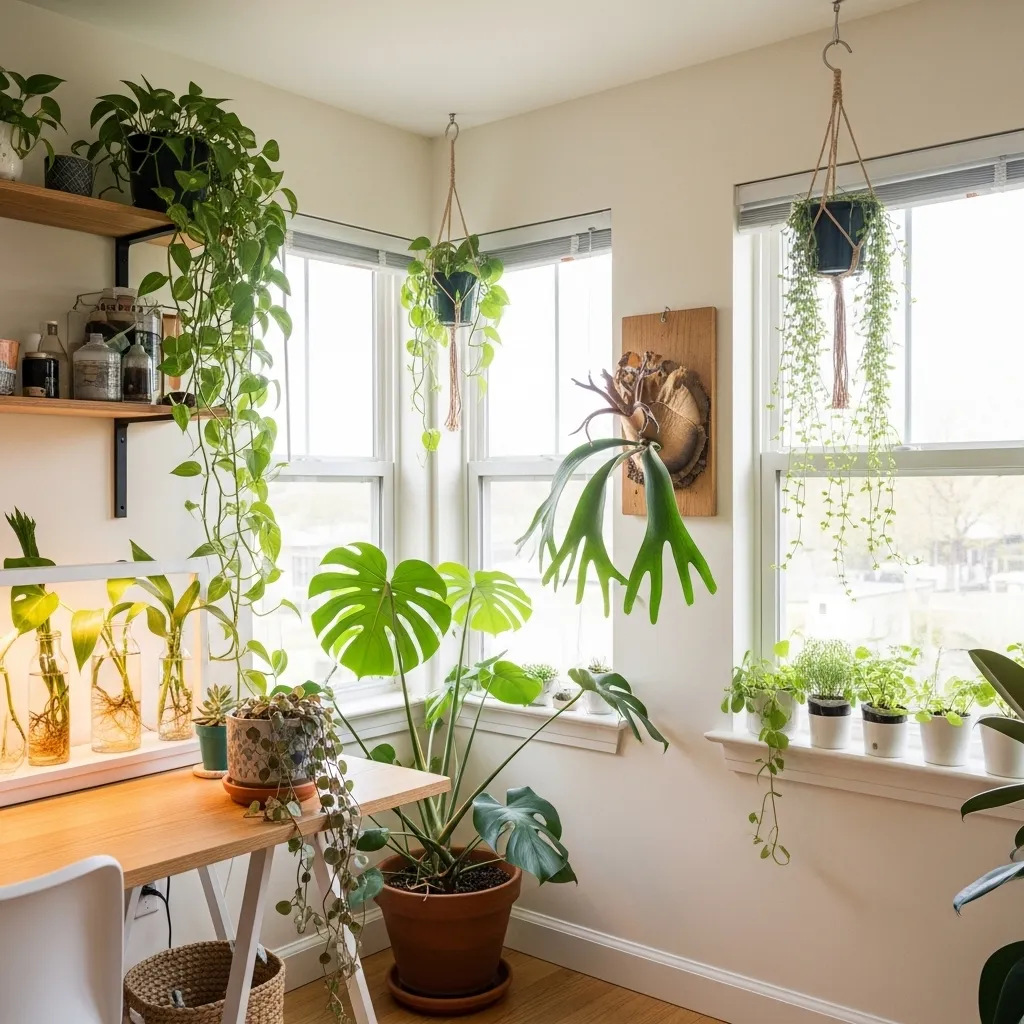
A biophilic home office — where plants are distributed at every level throughout the workspace, creating an ambient botanical presence that surrounds the working person with living nature — creates the working environment with the most consistently documented positive effects on mood, focus, air quality, and creative thinking of any home office configuration. The research supporting biophilic design in working spaces is robust and consistent: access to natural views and living plants in workspaces measurably reduces stress, improves concentration, increases creative problem-solving capacity, and creates the specific quality of restorative attention that prevents the cognitive fatigue that sustained work without natural stimulus creates.
The specific distribution of plants at multiple heights and positions — floor, desk, shelf, wall, ceiling — is the approach that creates genuine ambient botanical presence rather than a plant display. When a plant is visible in every direction the eye travels during the working day, the office creates the specific quality of being in nature that a few grouped plants in one corner don’t achieve. This ambient quality of nature surrounding the working space is the condition that creates the most complete biophilic working environment, and it requires thinking about plant placement as a spatial decision rather than a decorative one — where can a plant be positioned so that it’s part of the visual field in every direction the working person looks.
11. The Shared Dual Desk Office for Two
A shared home office for two people working simultaneously requires the most careful spatial planning of any home office configuration, because it needs to create two genuinely complete and genuinely distinct working environments within the same room without those environments interfering with each other acoustically, visually, or organizationally. The desk positioning — facing opposite walls rather than facing each other — is the foundational spatial decision that creates the most effective working separation, because each person’s primary sightline during focused work is toward their own wall rather than toward the other person, creating a psychological sense of individual working focus within the shared physical space.
The distinct personal character of each desk within the shared common material language is the design approach that most respects the individuality of the two people sharing the office while maintaining the visual cohesion that makes the room read as a single designed space. When both desks share a material language — the same wood tone, the same general aesthetic sensibility, the same quality of furniture — but each desk expresses the individual working personality of its occupant through its specific objects, its specific organization, its specific plant and personal items, the shared office creates the quality of two distinct selves working harmoniously in a shared space rather than one aesthetic compromised to accommodate two people.
12. The Standing Desk Office Done Beautifully
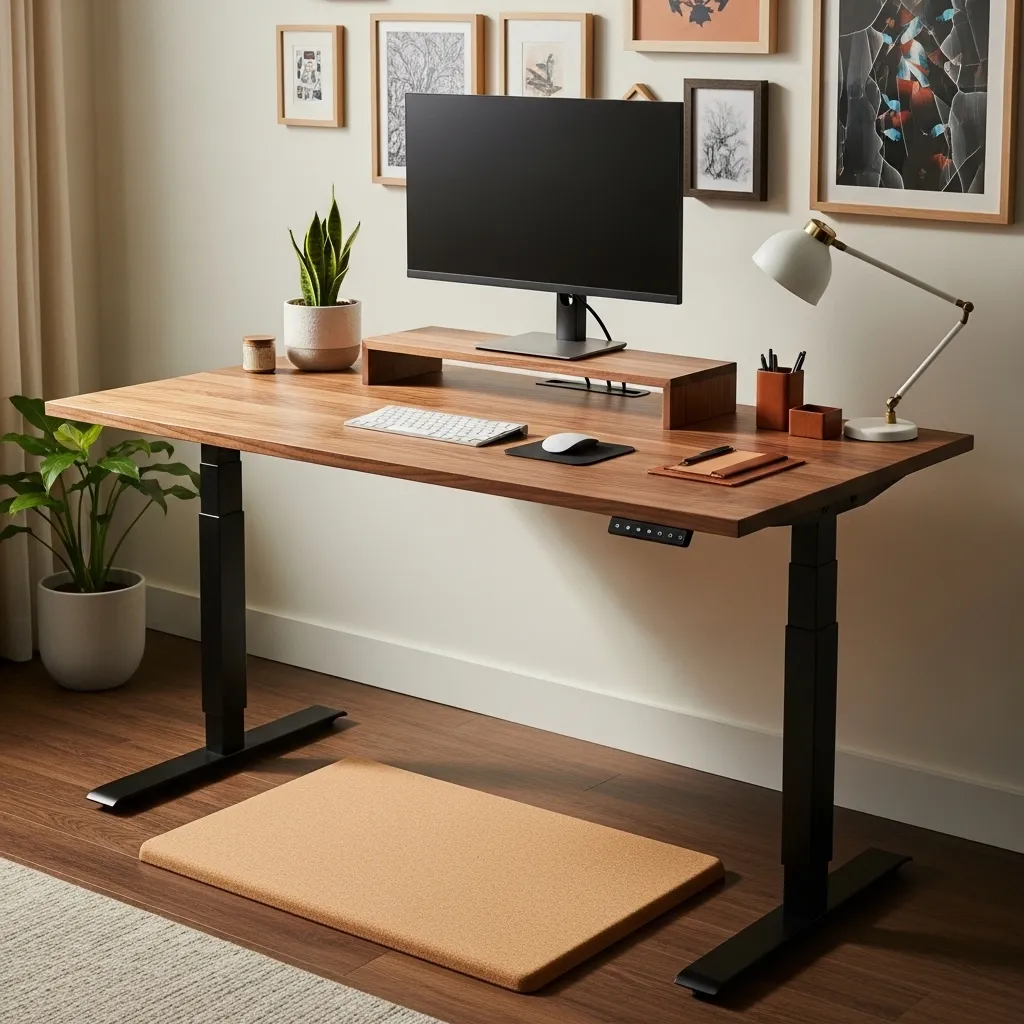
A standing desk in a home office that doesn’t sacrifice aesthetic quality for ergonomic function requires the same level of design attention for the desk surface material as for any other piece of furniture in the room — because the desk surface is the primary visual element at the new standing height, visible from across the room and experienced at close range throughout the standing working day, and its material quality creates the most immediate impression of the workspace. A solid walnut top on an adjustable frame is the combination that most successfully makes a standing desk read as a beautiful piece of furniture rather than a piece of ergonomic equipment — the walnut’s warmth, grain character, and genuine material presence transform the functional adjustable frame into a desk that’s visually worthy of the beautiful office around it.
The gallery wall that serves as the backdrop at standing-desk eye level is the element that most specifically improves the standing desk experience beyond its ergonomic benefits — instead of looking at a wall at seated eye level during standing work, the gallery wall at standing height creates a visual environment specifically calibrated for the working position, surrounding the standing working moment with personally meaningful art at exactly the height where it’s most seen during the standing working day.
13. The Academic Traditional Office
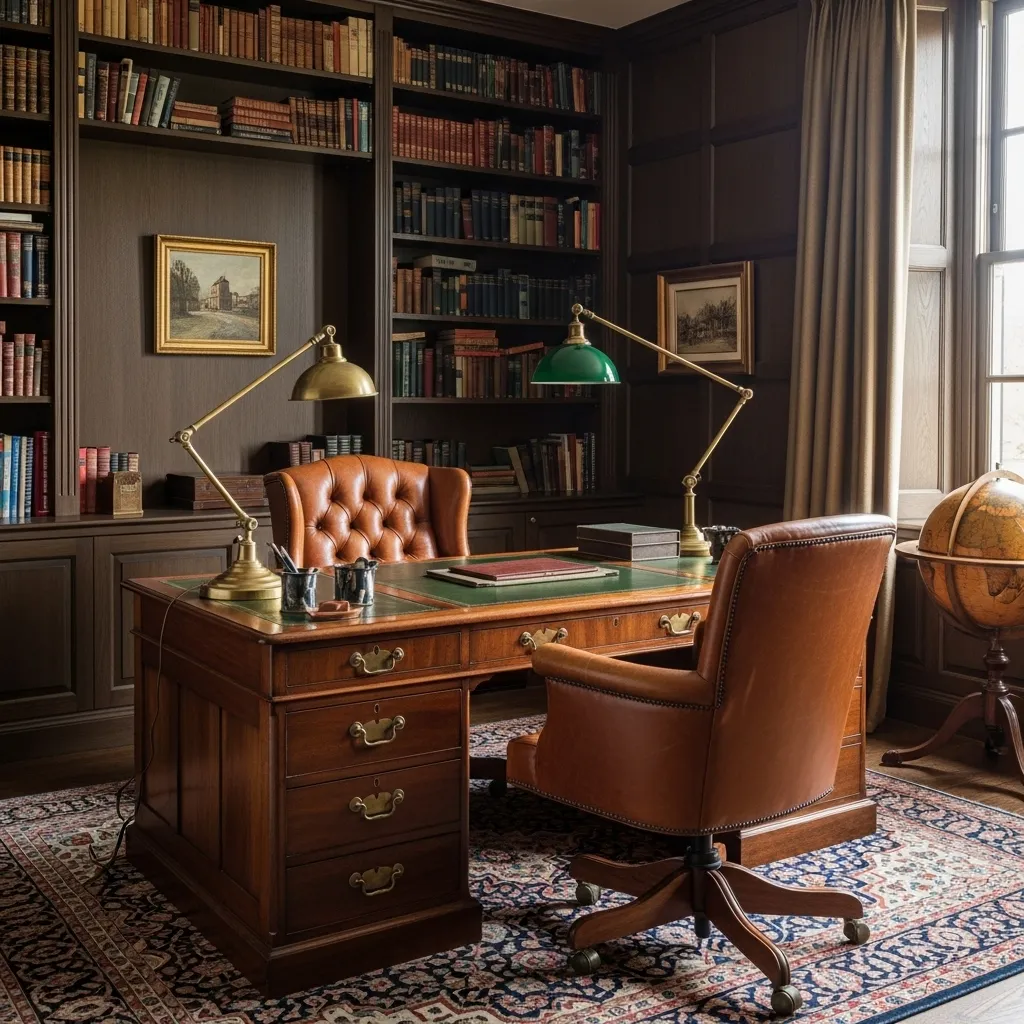
A traditional academic home office — with a genuine antique or high-quality reproduction partner’s desk, a leather Chesterfield desk chair, dark wood paneling or dark painted walls, and a serious library of actual books — creates the working environment with the greatest sense of institutional intellectual history and the most consistent quality of serious desk-work atmosphere available in home office design. The specific combination of these elements references the private studies of universities, the offices of serious professionals, and the working libraries of serious intellectuals across two centuries of Anglo-American intellectual culture, and that accumulated cultural reference creates a working environment of genuine gravitas and genuine intellectual permission.
The green glass shaded desk lamp is the specific object that most efficiently communicates the traditional academic office’s character — this specific lamp form, the banker’s lamp with its green glass shade and brass base, has been the defining desk lamp of academic and legal offices since the late nineteenth century, and its presence on a traditional desk immediately identifies the working environment as belonging to the intellectual tradition of serious desk work across disciplines and generations. It provides genuinely good task lighting (the green glass reduces glare while providing sufficient illumination) while providing the specific atmospheric warmth of a lamp that belongs to its context in a way that contemporary LED desk lamps don’t.
14. The Productivity-Optimized Dual Monitor Setup
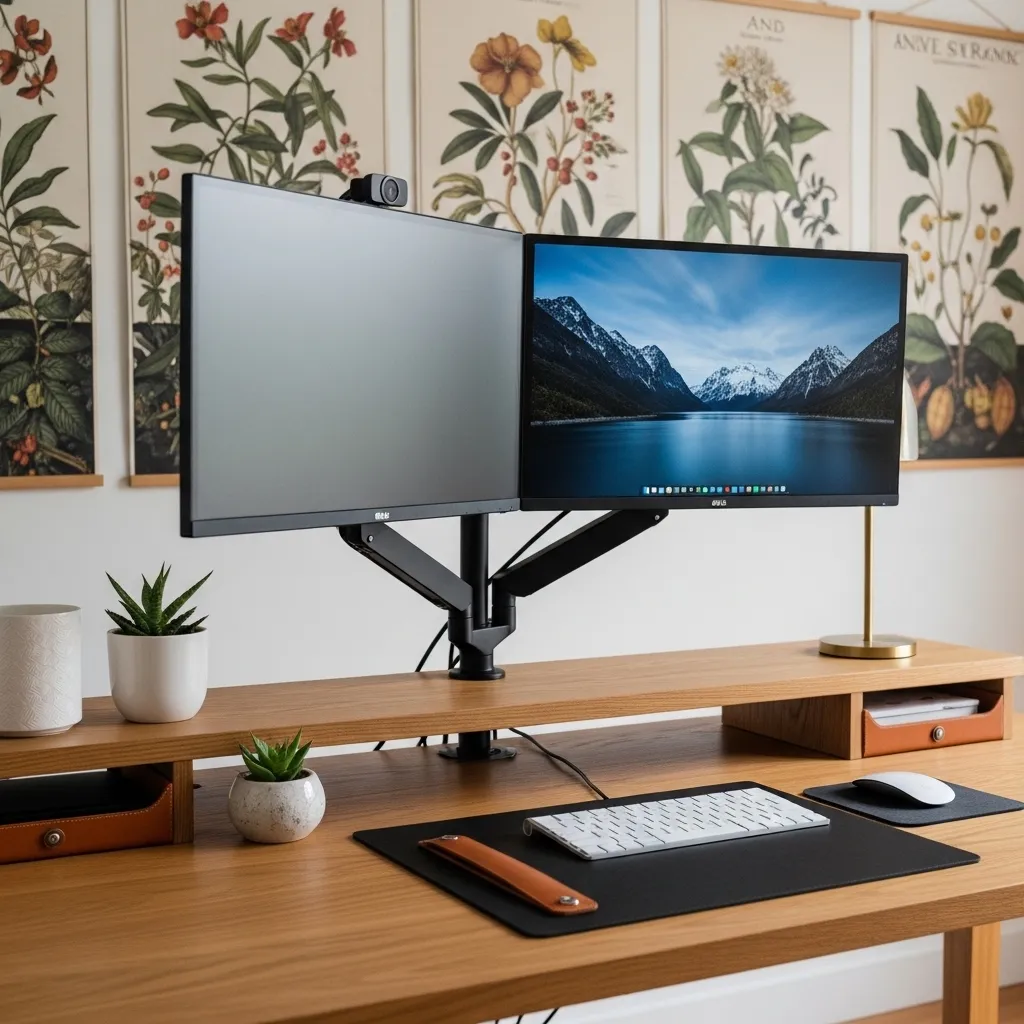
A dual monitor home office setup done with genuine aesthetic intention — with monitor arms that clear the desk surface of stand bulk, a beautiful desk surface clearly visible beneath the technology, impeccable cable management, and a thoughtfully designed backdrop visible in video calls — demonstrates that the functional requirements of contemporary knowledge work and the aesthetic requirements of a genuinely beautiful workspace are not in opposition. The dual monitor setup specifically benefits most from aesthetic intentionality because its default appearance (two monitors on their factory stands, surrounded by cable chaos, against an empty or accidental backdrop) is among the most visually unappealing of any common home office configuration.
The monitor arms are the single most impactful aesthetic upgrade available in a dual monitor setup — by removing the monitor bases from the desk surface and raising the screens on articulating arms, the desk surface is cleared and the monitors appear to float in front of their backdrop rather than sitting on the desk. This seemingly small change transforms the visual quality of the setup dramatically, making the workspace appear organized, considered, and specifically designed rather than assembled from whatever happened to come with the equipment.
15. The Garden Room Office — Nature and Work United
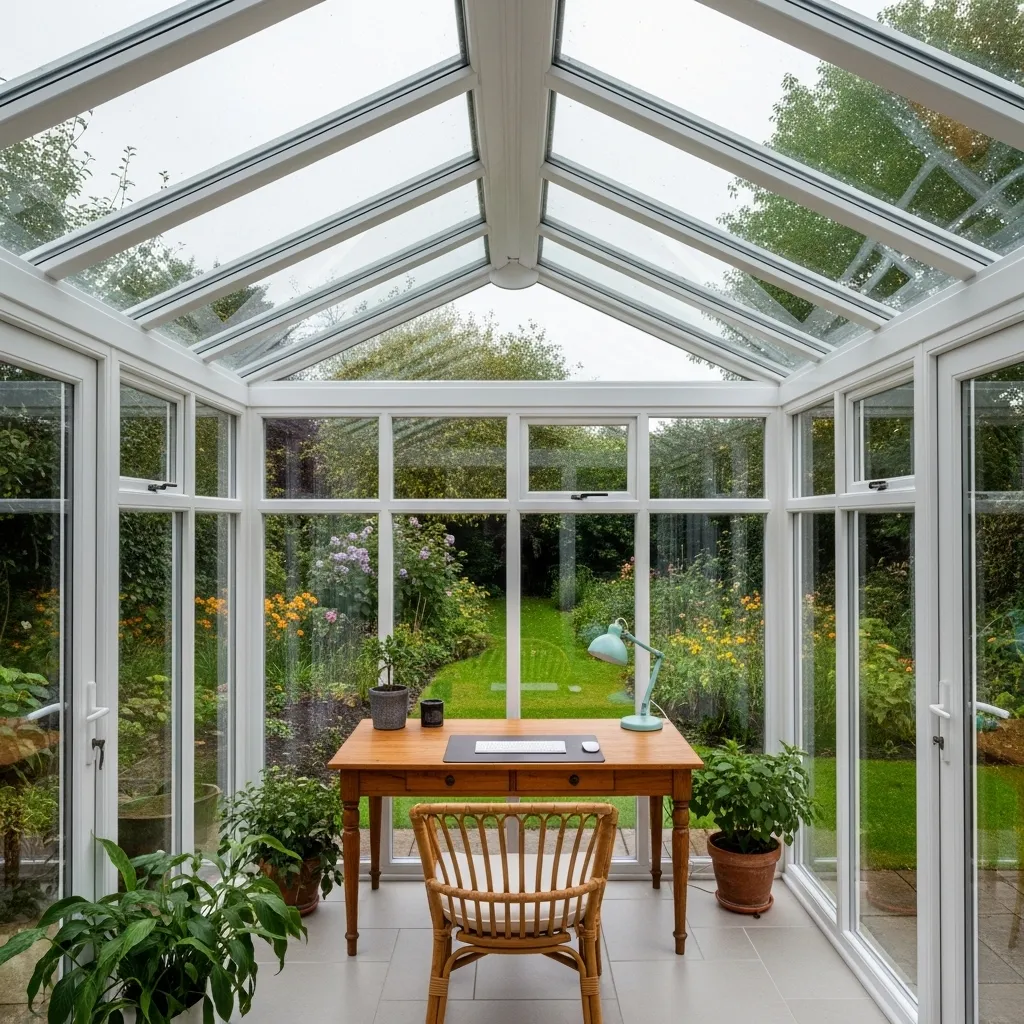
A garden room or conservatory home office — where the working space is a glass-roofed or glass-walled structure that creates a room genuinely surrounded by the garden — creates the most completely biophilic working environment possible, one where the outdoor garden is the actual working environment rather than a view glimpsed from an interior window. The quality of natural light in a glass garden room is categorically different from the natural light in any interior room — it comes from multiple directions including overhead, it changes rapidly with cloud cover and time of day, it includes the quality of light reflected from the garden’s green surfaces, and it creates a working environment where the sensory connection to the outdoor world is continuously present and continuously changing.
The garden room office is also the working environment most directly aligned with the season — working in a glass room surrounded by a garden makes the seasonal changes immediate and personally felt in a way that an interior office insulated from seasonal weather doesn’t. The spring garden visible from the desk, the summer garden in full growth, the autumn garden in its specific beauty of color and decay, the winter garden’s specific spare structure — each creates a different quality of working environment, and the seasonal variation of the working environment creates a temporal richness and a connection to the natural year that sustains the quality of work through the long cycles of a working life.
16. The Seasonal Working Space
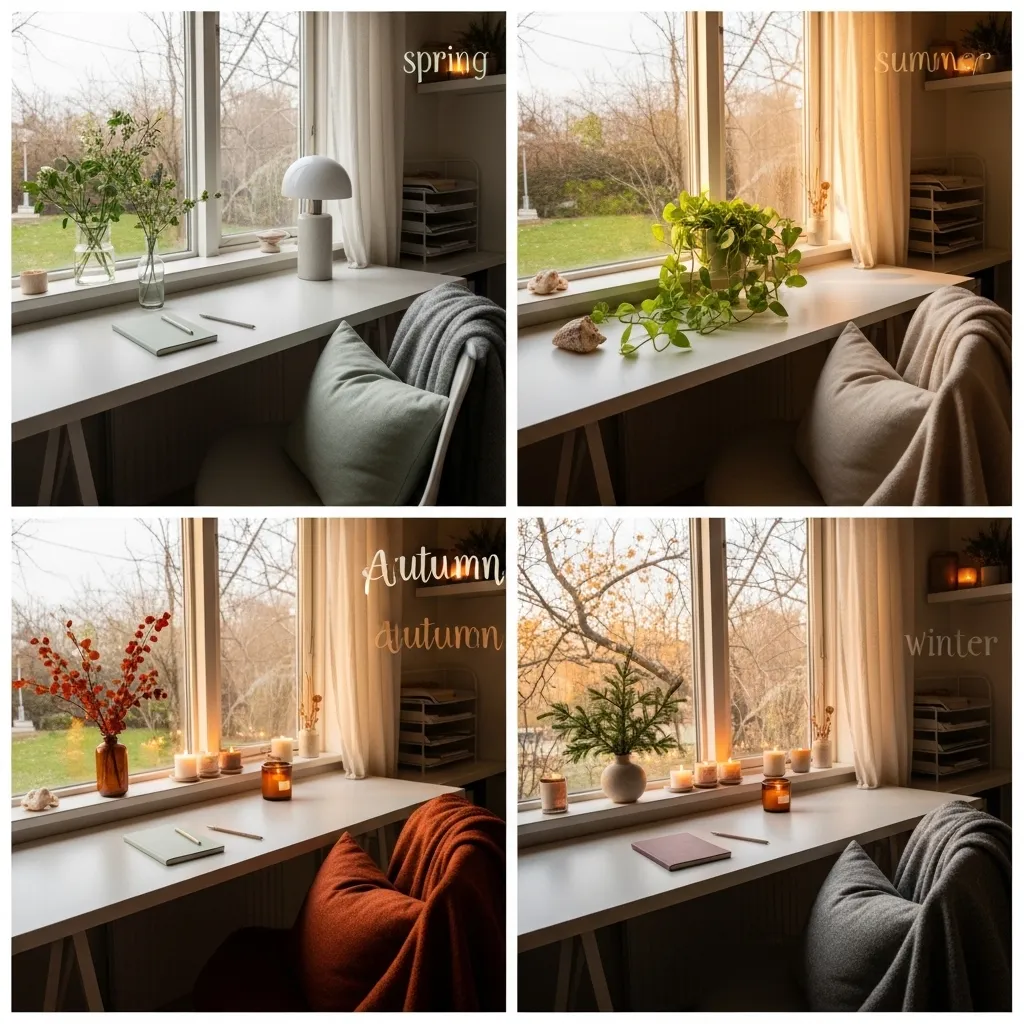
A seasonal working space — where the permanent fixtures of desk, chair, shelving, and technology remain constant throughout the year but where a deliberate seasonal layer of botanical, textile, lighting, and atmospheric elements is updated with each season — creates the home office with the most consistently alive and most temporally rich working experience over the long cycles of a working life from home. The office that never changes becomes gradually invisible — the brain stops registering its details as the habituation of familiarity sets in — while the office that changes seasonally maintains a quality of freshness and intentionality that keeps the working environment visible and appreciated throughout the year.
The seasonal update requires minimal effort and minimal cost because it works through addition and substitution rather than wholesale change — removing the spring stem and adding a summer shell, replacing the pale spring candle with a deep amber autumn one, introducing one small seasonal natural object that references what’s happening in the landscape outside, adding or removing a textile layer depending on the thermal character of the season. These small changes are gestures rather than redesigns, but their cumulative effect over a year is a working space that participates in the rhythm of the seasons and communicates that someone is paying attention to it and caring for it rather than having set it once and forgotten it — and that quality of ongoing care and attention is precisely what distinguishes a workspace that continues to inspire from one that simply continues to function.