15 Modern Walnut Kitchen Cabinet Ideas That Prove Dark Wood Is the Most Sophisticated Material in Contemporary Kitchen Design
If you’ve been considering walnut cabinetry for your kitchen and feeling simultaneously drawn to its extraordinary warmth and dark grain character and slightly uncertain about whether the darkness will make the kitchen feel too heavy, too enclosed, or too specific to work with everything else you want from the space — this guide addresses every version of the modern walnut kitchen and gives you enough specific information about each approach that the decision becomes clear rather than tentative. The fifteen ideas here span the complete range of what contemporary walnut kitchen design looks like in 2026: from the all-walnut kitchen that commits completely to the wood as the room’s total material experience, through the walnut and white combination that creates maximum contrast and maximum contemporary elegance, the walnut island against lighter perimeter cabinetry that creates the kitchen’s most socially warm center, the walnut and concrete pairing that creates the most specifically contemporary material conversation, the walnut and unlacquered brass hardware combination that defines the warm contemporary kitchen aesthetic, the walnut open shelving approach, the fumed or darker walnut for maximum drama, the walnut handleless kitchen for maximum architectural precision, the walnut with stone countertop combinations, the two-tone walnut configuration, the walnut with integrated appliances, the walnut slab door profile, the walnut ceiling and cabinet combination, the walnut kitchen with bold tile backsplash, and the walnut kitchen in a small space where the wood’s warmth creates intimacy rather than compression.
Walnut is the wood species that most consistently creates the impression of genuine luxury in kitchen cabinetry — not because it’s the most expensive or the most technically demanding to work with, though it is both, but because its specific combination of qualities creates a surface that reads as genuinely precious in the way that only naturally occurring materials of specific rarity and specific beauty can. The dark, rich tone of walnut — ranging from warm chocolate through deep amber-brown to the almost-purple richness of specific cuts — combined with the specific figure of walnut’s grain pattern, which includes the straight grain of flat-sawn boards, the ribbon figure of quarter-sawn cuts, and the extraordinary crotch figure and burl patterns that occur at the tree’s most complex growth points, creates a wood surface of inexhaustible visual interest at every scale of inspection.
What makes walnut specifically appropriate for kitchen cabinetry — as distinct from other dark wood species — is the warmth of its brown tone. Other dark woods (wenge, ebony, certain tropical species) achieve darkness through cool or near-black tones that can read as heavy or oppressive in kitchen quantities; walnut achieves its darkness through warm brown tones that remain inviting and humanly warm even in full-room applications. A kitchen entirely in walnut is a warm room; a kitchen entirely in wenge is a serious room. This distinction — warmth versus seriousness — is why walnut has become the dominant dark wood species in contemporary kitchen design rather than any of its darker competitors.
1. All-Walnut Kitchen — Complete Material Commitment
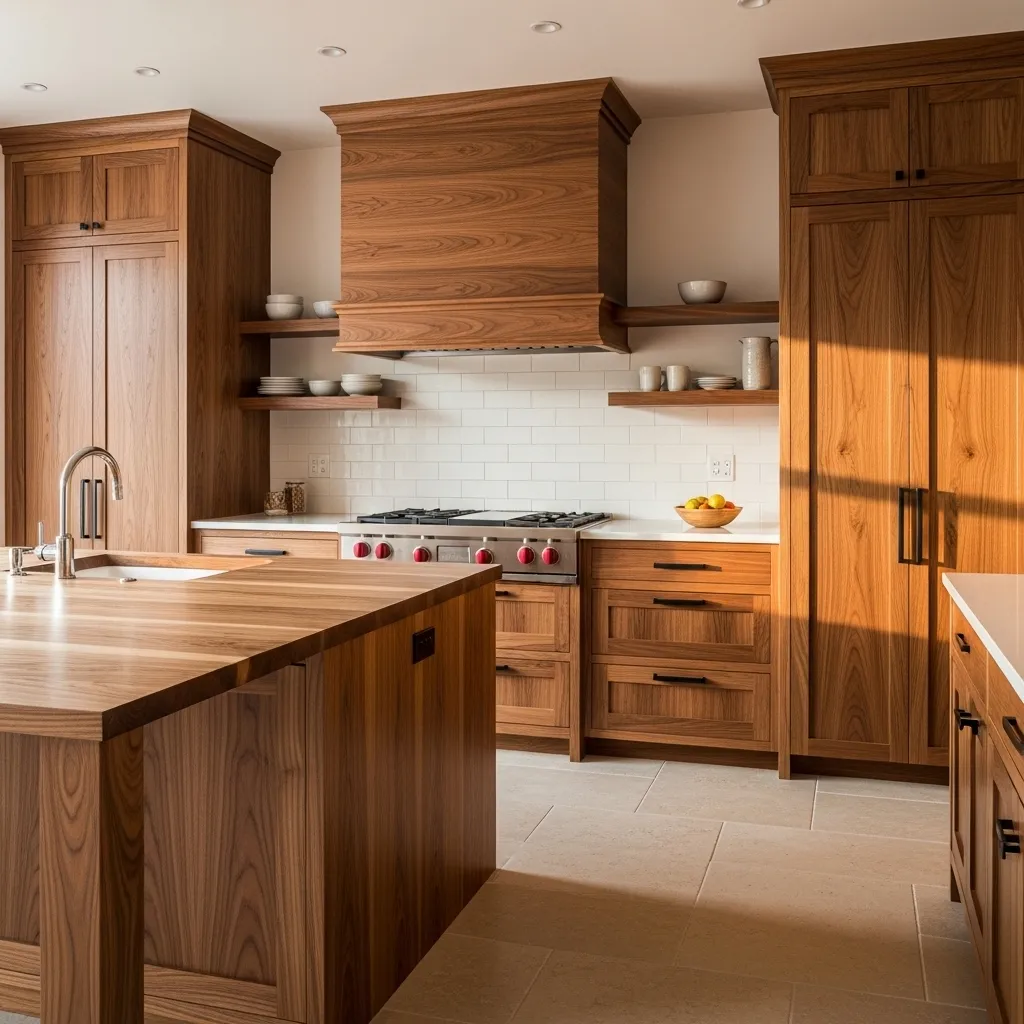
A complete all-walnut kitchen — cabinetry, island, countertops, range hood, and shelving all in the same warm walnut — creates the kitchen with the most extraordinary material immersion available in contemporary kitchen design, a room where the warmth and grain character of real walnut wood surrounds the cook and the gatherers from every direction. The all-walnut kitchen is not dark in the oppressive sense — it’s warm in the enveloping sense, the warmth of being inside a beautifully crafted wooden vessel where every surface is genuinely precious material rather than a surface approximating precious material.
The critical decision in an all-walnut kitchen is the grain matching across adjacent cabinet faces — whether the grain direction and tone are matched between adjacent doors to create a continuous flow of grain pattern across the cabinetry wall, or whether each cabinet face is treated as an individual piece with its own grain character. Matched grain creates a cabinetry wall that reads as a continuous surface of wood rather than a series of individual doors, which is the more architecturally sophisticated approach; unmatched grain creates a more informal and more naturalistic variation across the cabinet faces. Both are beautiful — the choice depends on whether you want the precision of architectural coherence or the organic warmth of natural variation.
2. Walnut and Bright White — Maximum Contrast, Maximum Elegance
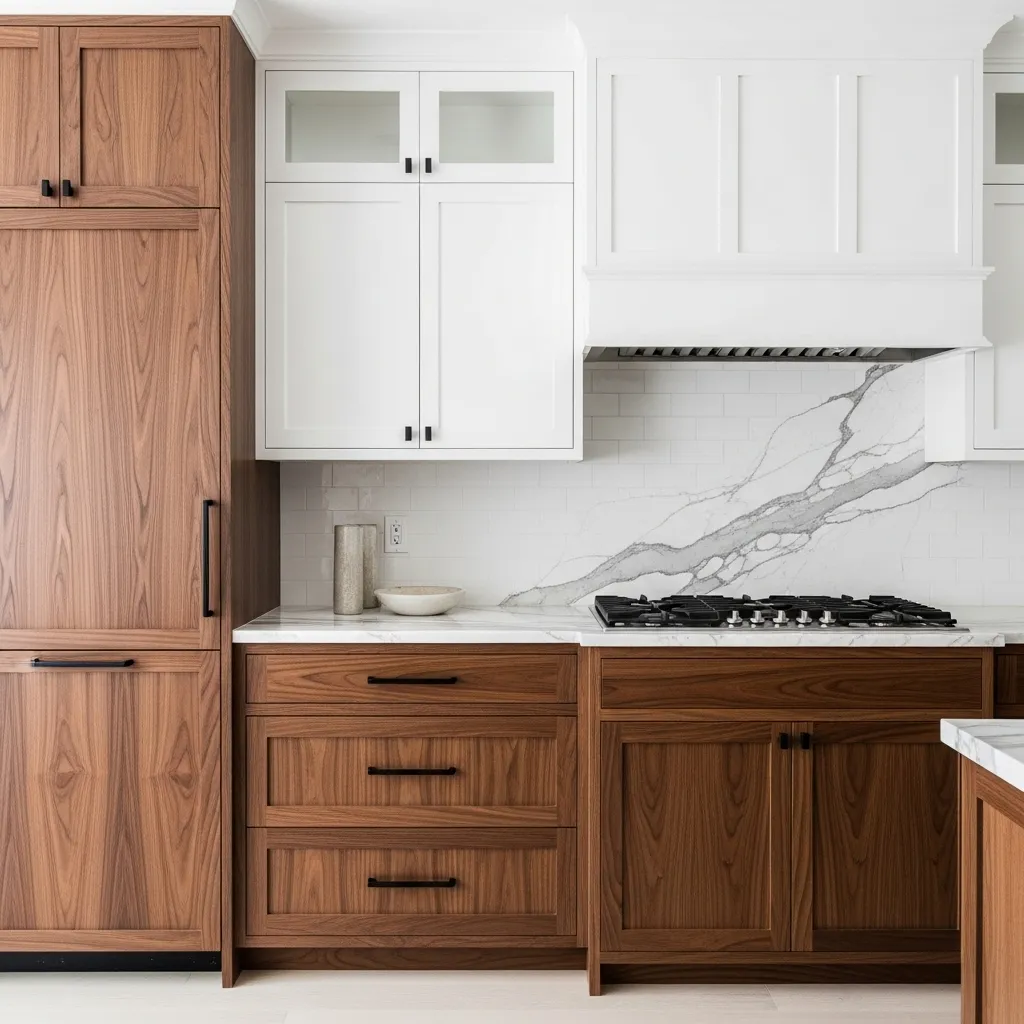
Walnut lower cabinetry against bright white upper cabinetry creates the most immediately dramatic and most graphically clean contemporary kitchen configuration — the horizontal line where walnut meets white at countertop height creates a strong design boundary that divides the kitchen into clearly defined zones, and the contrast between the warm dark wood below and the clean white above generates the maximum possible visual energy from the two materials without requiring any additional color or decoration.
The marble countertop is the specific material that bridges the walnut-and-white contrast most beautifully — its white base connects to the white upper cabinetry while its grey veining connects to the warmth of the walnut below, creating a countertop that reads as the material resolution of the contrast rather than simply a surface positioned between the two different cabinet colors. This bridging function of the marble countertop is what distinguishes a walnut and white kitchen of genuine material sophistication from one that simply has two different colors of cabinetry with a third material between them.
3. Walnut Island Against Light Perimeter Cabinetry
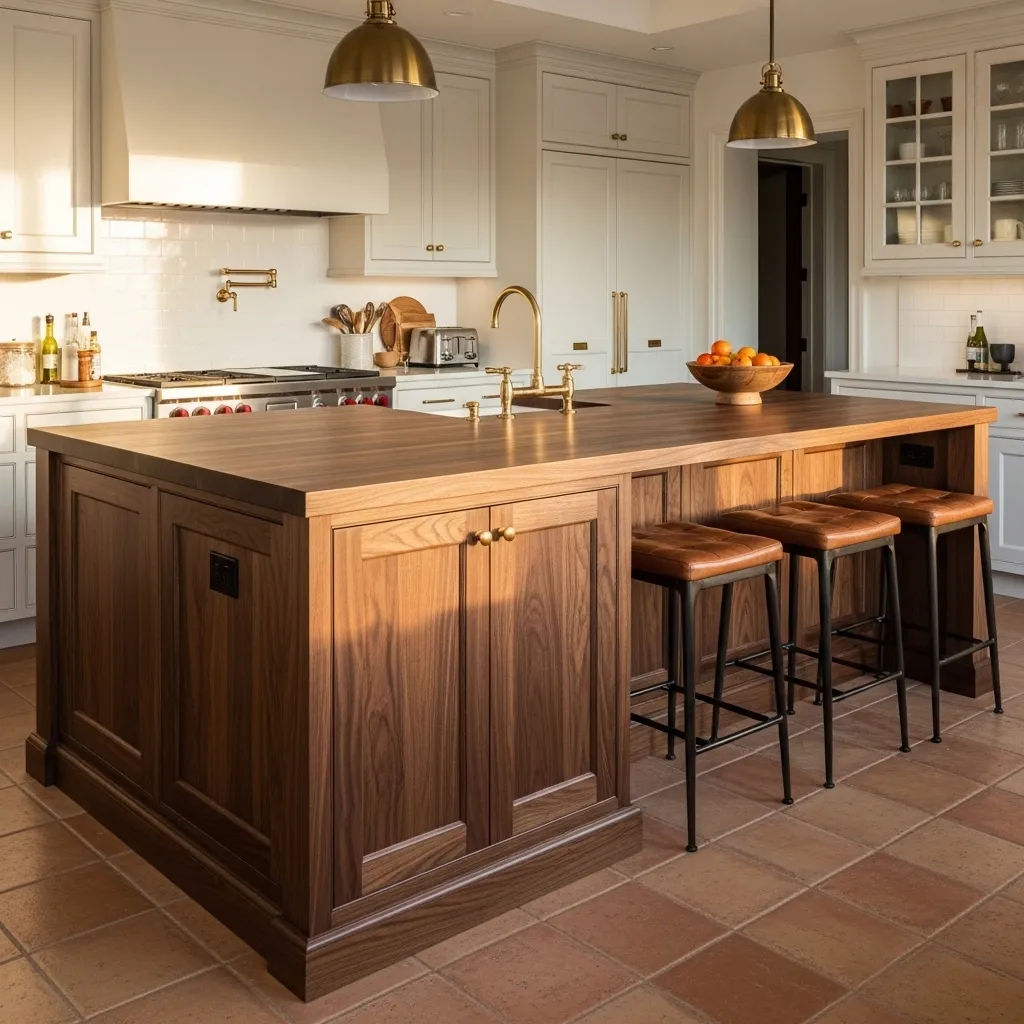
A walnut island in a kitchen of lighter perimeter cabinetry is the configuration that most efficiently creates the kitchen’s most important social and aesthetic destination — the island as the warm, dark, materially rich center of a kitchen whose surrounding cabinetry provides a lighter, receding backdrop that allows the walnut’s warmth and grain to be fully seen and fully appreciated. This configuration creates the impression that the island is a specifically chosen piece of furniture placed within the kitchen rather than a built-in element of it, an object of specific material quality that deserves to be the room’s primary design statement.
The walnut butcher block countertop on the island — continuing the wood grain from the cabinet doors up through the countertop surface — creates the most complete material expression of the walnut island by eliminating the conventional material break between the island base and the island countertop. The full walnut island, from floor level through the cabinet faces to the working surface above, reads as a single continuous material object of extraordinary warmth and genuine material presence, and that material completeness creates an island of greater visual impact than the same walnut cabinet base with a contrasting stone or concrete countertop.
4. Walnut and Concrete — The Contemporary Material Conversation
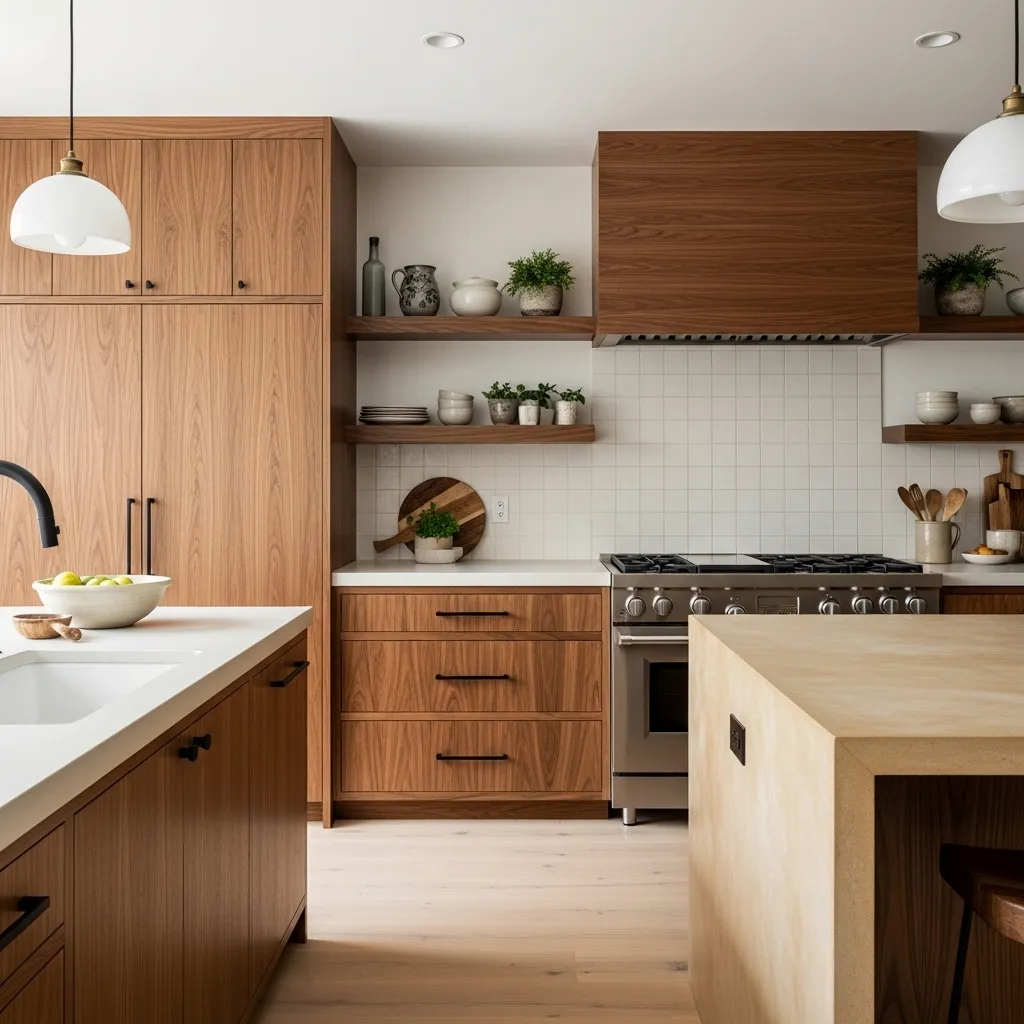
Warm walnut cabinetry with warm concrete countertops creates the most specifically contemporary and most materially honest kitchen combination — two materials that are both genuinely what they are rather than simulating other materials, both warm in their specific tones, both with the quality of visible making in their surfaces (the grain of the walnut, the aggregate of the concrete), and both improving with use and age rather than degrading. This material honesty — the kitchen that tells the truth about what it’s made of — is the specific quality that defines contemporary design at its most serious and most resolved.
The warmth of the concrete pigmentation is the specification detail that most determines whether the walnut-and-concrete combination creates the specific warmth of this pairing or the cool industrial feeling that concrete without warm pigmentation produces. Warm sand-toned or buff-toned concrete against walnut cabinetry creates a material conversation of warmth and honesty; cool grey concrete against the same walnut creates a temperature conflict where the concrete’s coolness fights against the walnut’s warmth rather than complementing it.
5. Walnut With Unlacquered Brass — The Defining Warm Contemporary Combination
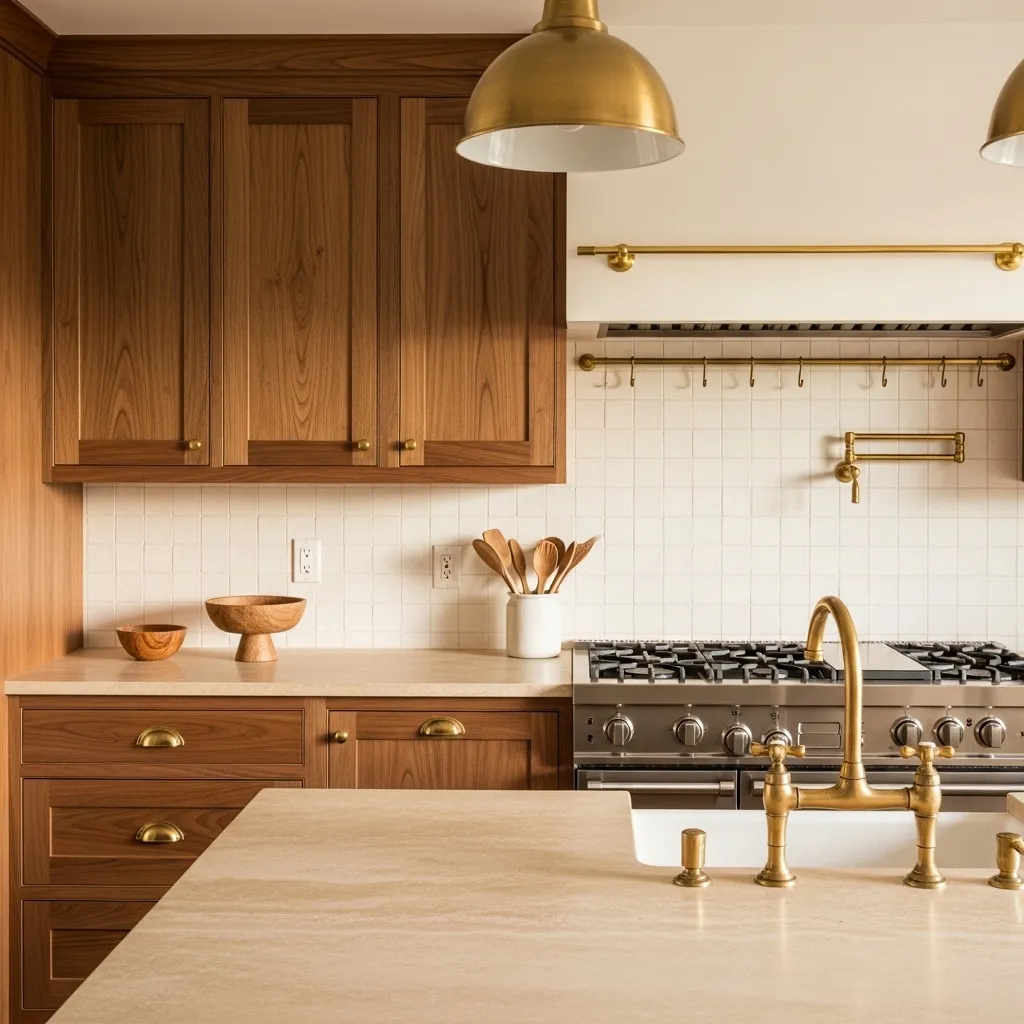
Walnut cabinetry with unlacquered brass hardware is the material combination that most completely defines the warm contemporary kitchen aesthetic of the current design moment — the warm chocolate-brown of walnut and the warm amber of brass are so naturally aligned in their color temperature and their quality of organic warmth that their combination creates not just a successful material pairing but a genuinely new material experience where each material appears more beautiful in the other’s presence than it does alone. The walnut makes the brass appear warmer and more golden; the brass makes the walnut appear richer and more vivid; and together they create a kitchen of material warmth that neither achieves independently.
The unlacquered quality of the brass is specifically important to this combination’s character over time — unlacquered brass develops a natural patina through exposure to air, moisture, and touch that creates a warmth and complexity unavailable in lacquered brass. As the walnut cabinetry deepens with oil application and use, and as the brass hardware develops its specific aged patina, the two materials age together in the same direction, both becoming warmer and more characterful over years of kitchen use. This quality of materials that improve together through time is the highest possible expression of material authenticity in kitchen design.
6. Walnut Open Shelving Kitchen
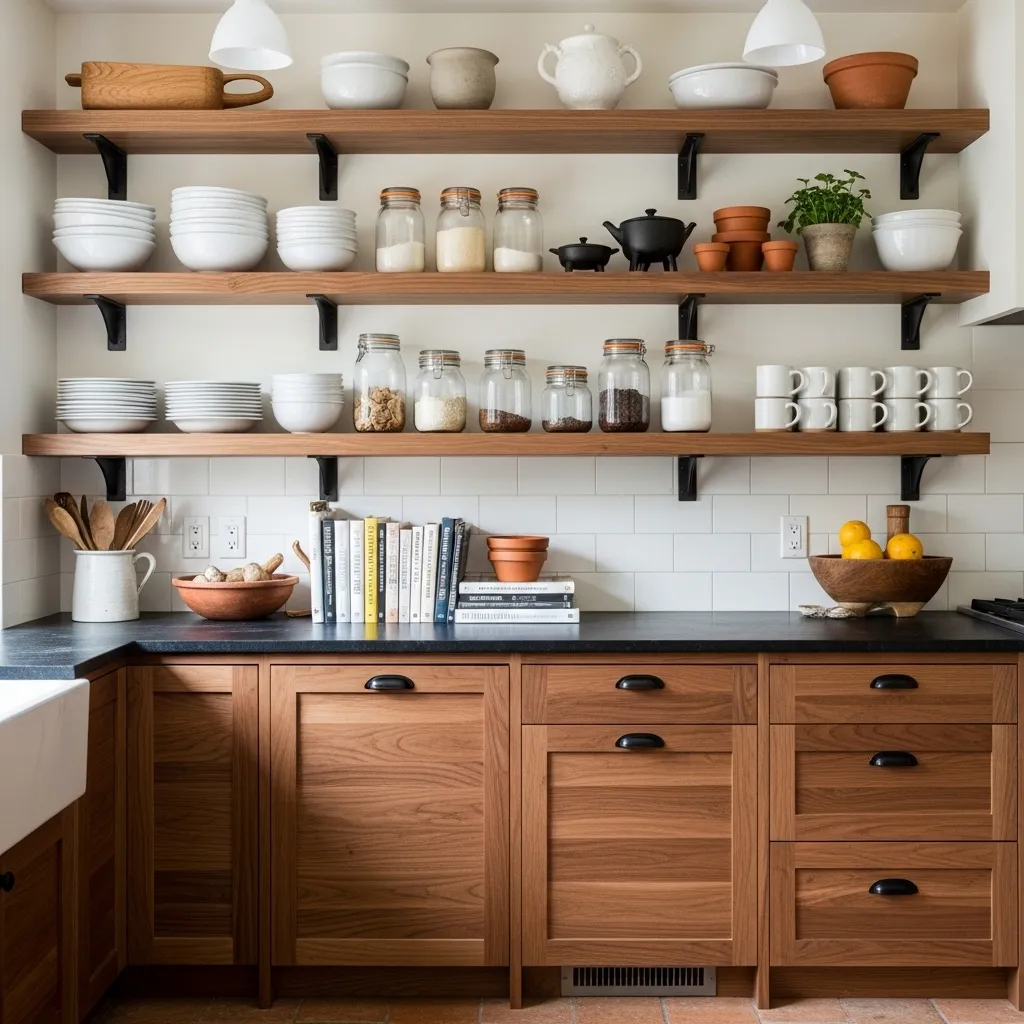
Walnut open shelving replacing upper wall cabinetry creates the kitchen’s most warmly displayed and most specifically personal upper zone — the warm grain of the walnut boards serves as the backdrop against which every displayed kitchen object appears warmer and more beautiful, and the natural warmth of the wood creates an upper kitchen zone of genuine material richness rather than the utilitarian storage quality of closed upper cabinetry. The objects displayed on walnut shelves — the white ceramics, the clear glass jars, the worn cookbooks — appear to belong to the kitchen in a way that they don’t when stored behind closed doors.
The thickness of the walnut shelf board is the quality that most determines whether the open shelving reads as genuinely beautiful or as utilitarian storage with exposed contents — a shelf of one and a half to two inch solid walnut board reads as substantial furniture, a considered material choice of genuine presence; a shelf of three-quarter inch melamine or thin plywood reads as a storage shelf regardless of the quality of what’s displayed on it. The thickness of the board is visible at the shelf front edge, and that visible edge thickness communicates the material quality and the design intention of the shelving decision.
7. Fumed Walnut — Darker Drama and Extraordinary Depth
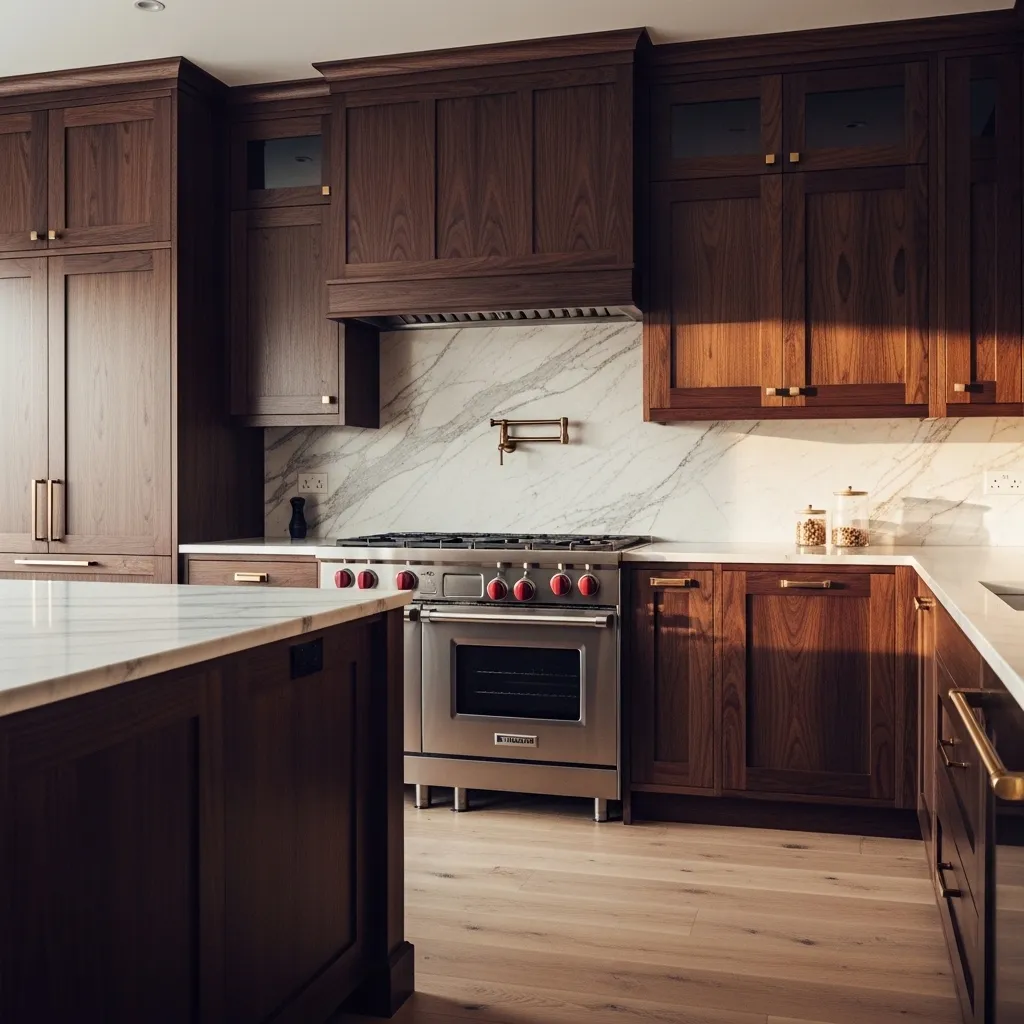
Fumed walnut cabinetry creates the kitchen with the most extraordinary depth and richness of any wood species treatment — the ammonia fuming process that reacts with walnut’s natural tannins to deepen and darken the wood creates a tone that’s genuinely richer and more complex than any stain or dye applied to the surface, because the chemical reaction follows the grain and creates depth within the wood structure rather than sitting on its surface. Fumed walnut appears to have been aging gracefully for decades from the moment it’s installed, with a warmth and complexity that new walnut, however beautiful, hasn’t yet developed.
The specific tone of fumed walnut — the warm dark chocolate with subtle purple undertones that the tannin reaction with ammonia creates — is a color that cannot be replicated by staining or painting and that is immediately recognizable to anyone who has seen it as specifically different from stained wood. This uniqueness and authenticity is part of what makes fumed walnut kitchens so specifically beautiful — the material tells the story of its own making, the specific chemistry of its darkening visible in every variation of the grain, and that story of making is what distinguishes genuine material beauty from the appearance of material beauty.
8. Handleless Walnut Kitchen — Architectural Precision
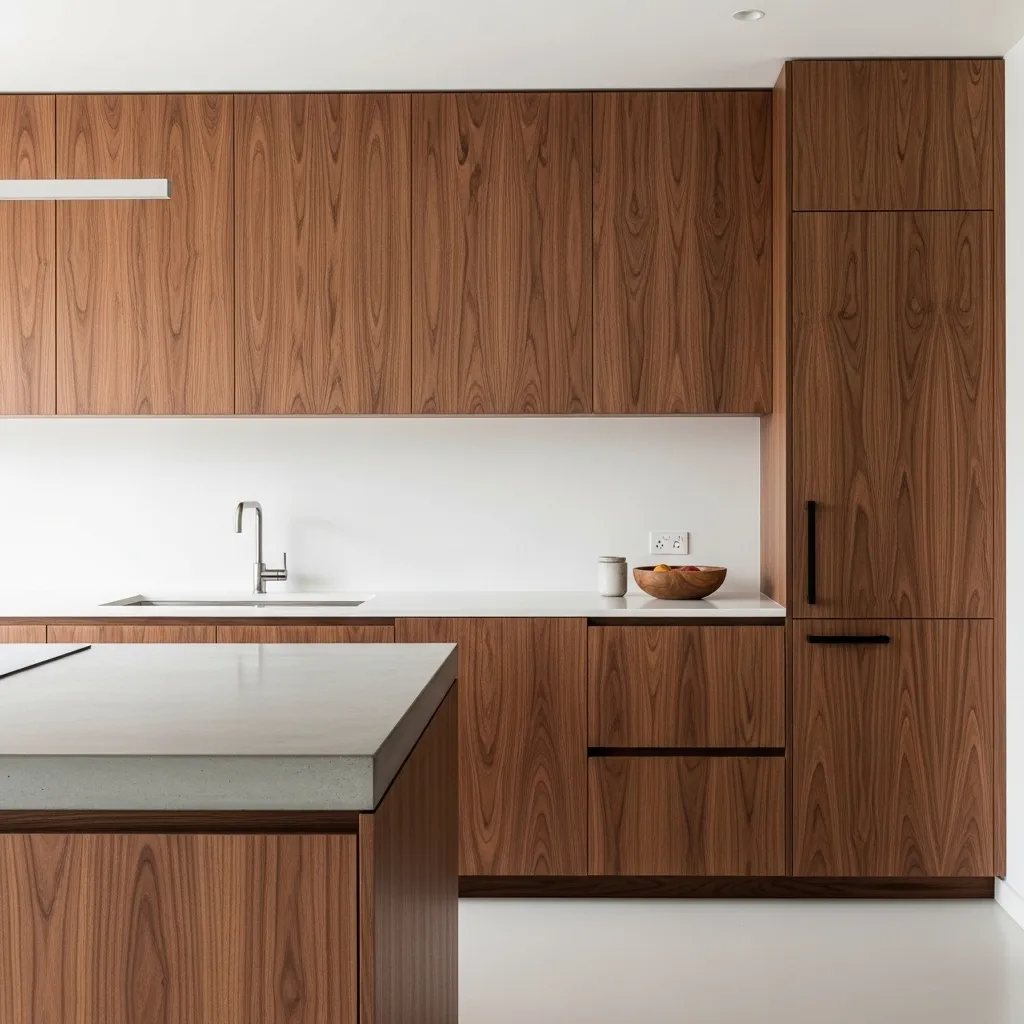
Handleless walnut cabinetry creates the most architecturally precise and most specifically contemporary expression of walnut kitchen design — by eliminating hardware from the cabinet faces, the continuous walnut grain becomes the undisturbed primary surface of the kitchen wall, and the kitchen reads as a designed architectural element rather than a collection of individual cabinet doors punctuated by hardware at regular intervals. The handleless walnut kitchen communicates through its precision that every design decision has been made with complete intentionality, and that level of design seriousness creates a kitchen of genuine architectural sophistication.
The routed J-pull profile along the bottom edge of each door — where a channel routed into the door face creates a grip without visible hardware — is the handleless solution that maintains the continuous walnut grain surface most completely while providing a physically intuitive opening mechanism. The slight shadow in the routed channel creates a subtle architectural line across the door face at consistent height across the cabinetry wall, and this consistent horizontal shadow line at the bottom of each door gives the handleless walnut kitchen its characteristic architectural rhythm — the warm continuous grain of the wood punctuated only by the fine horizontal lines of the pull profiles.
9. Walnut With Honed Black Granite — Maximum Material Drama
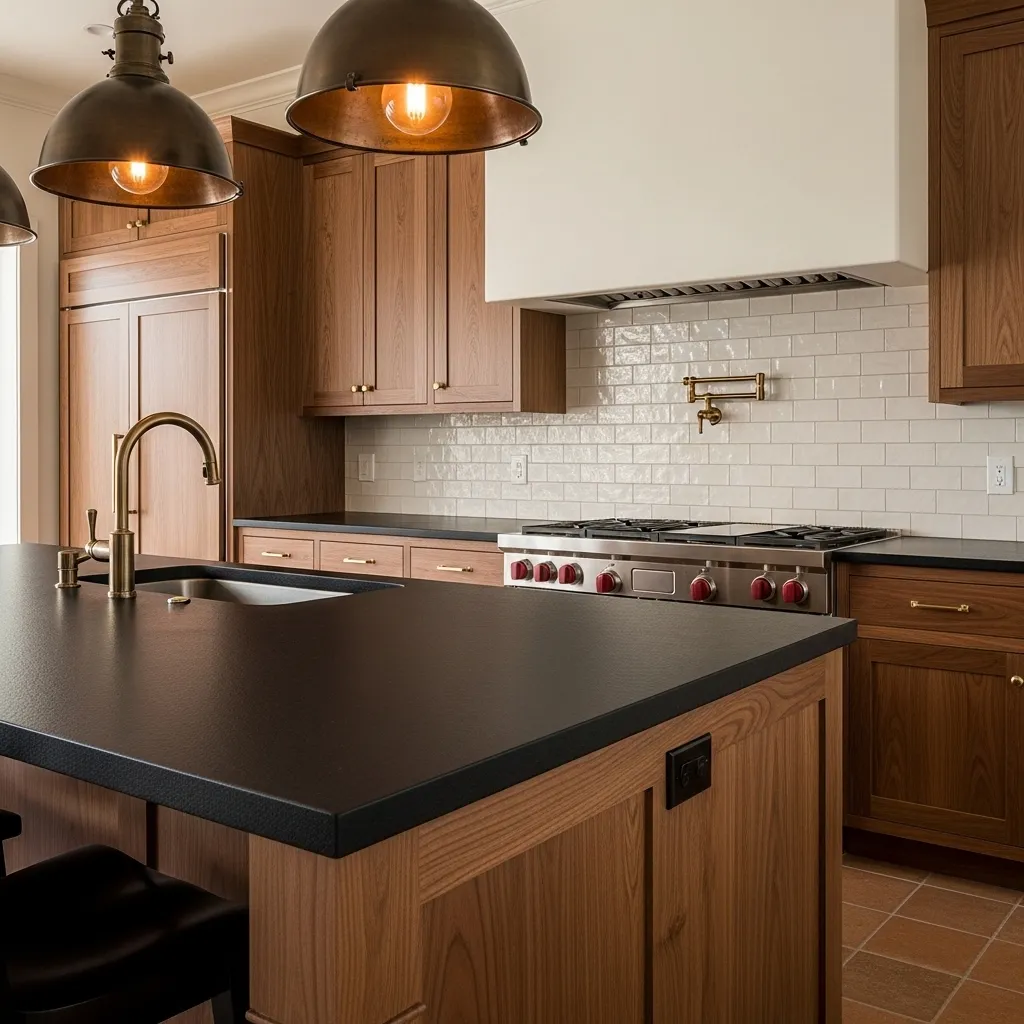
Warm walnut cabinetry with honed black granite countertops creates the kitchen with the most dramatically dark and most warm-dark material contrast available — both materials are dark, both are warm in their specific tones, and both have the quality of genuine natural material at the surface, yet their contrast (the warm brown of the walnut against the warm near-black of the granite) creates a material tension of genuine drama that the combination of warm walnut with lighter stone countertops doesn’t achieve. This is the material combination for kitchens where drama and sophistication are specifically desired rather than gently approached.
The honed finish on the black granite is specifically important to this pairing’s success — polished black granite creates a high-gloss reflective surface that competes with the walnut’s grain for visual attention, while honed black granite has the matte depth that absorbs rather than reflects light, creating a countertop surface of genuine material presence that complements rather than competes with the walnut’s warm grain. The matte quality of both the honed granite and the oiled walnut creates a material pairing where both surfaces share the same quality of light-absorption rather than creating a contrast between matte and glossy surfaces.
10. Two-Tone Walnut — Natural Upper and Darker Lower
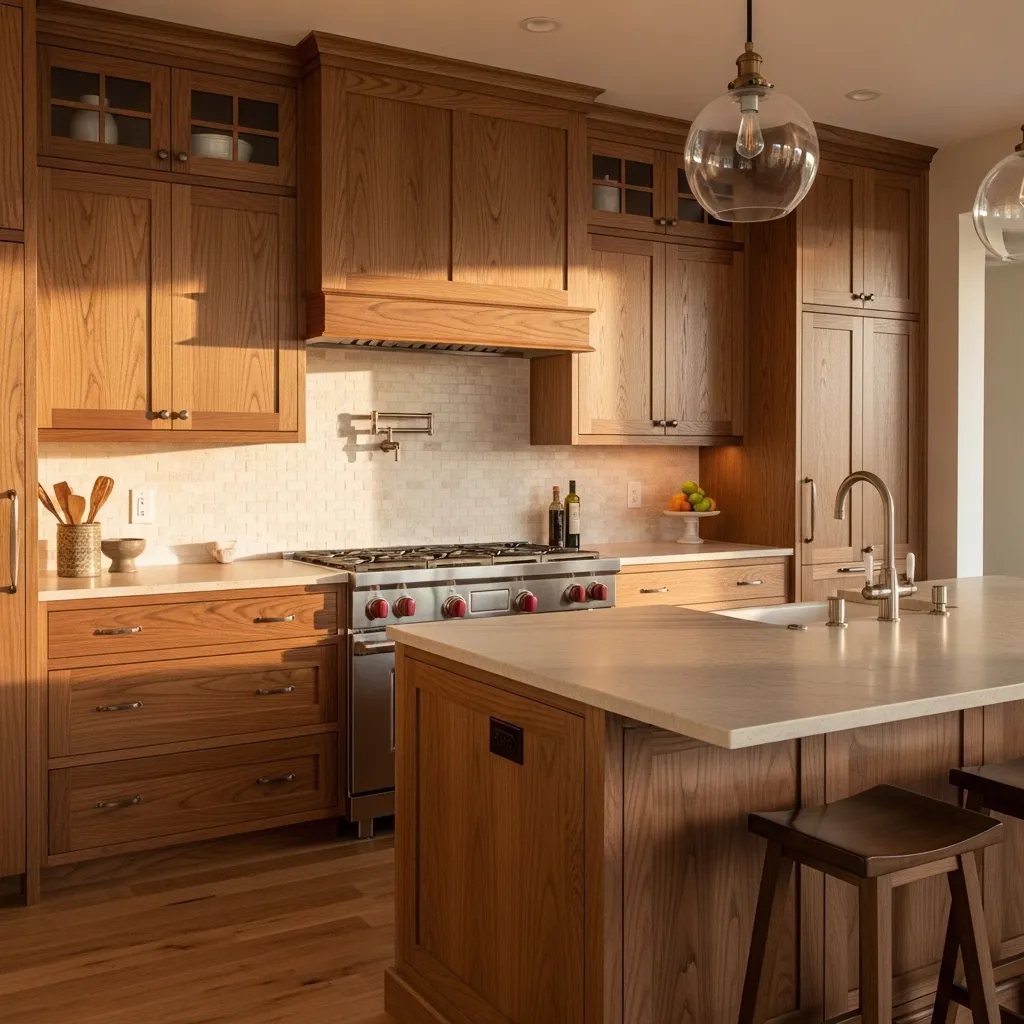
A two-tone walnut kitchen using natural upper cabinetry and darker lower cabinetry creates the most materially cohesive version of the two-tone kitchen because both cabinetry zones are the same species of wood with the same grain character — the tonal difference reads as a finish variation within the same material rather than as two different materials. This material coherence maintains the walnut kitchen’s quality of unified warmth while adding the visual hierarchy and spatial interest of two distinct tones within the same palette.
The tonal relationship between the natural upper and the darker lower walnut is the specific proportion decision that most determines the configuration’s character — the lower cabinets should be clearly deeper in tone than the upper without being so dark that the grain becomes obscured or the wood reads as painted rather than naturally finished. The goal is a tone gradient that reads as light walnut above and deep walnut below, with both tones clearly beautiful and clearly related rather than one being a compromised version of the other.
11. Walnut With Integrated Appliances — Seamless Material Story
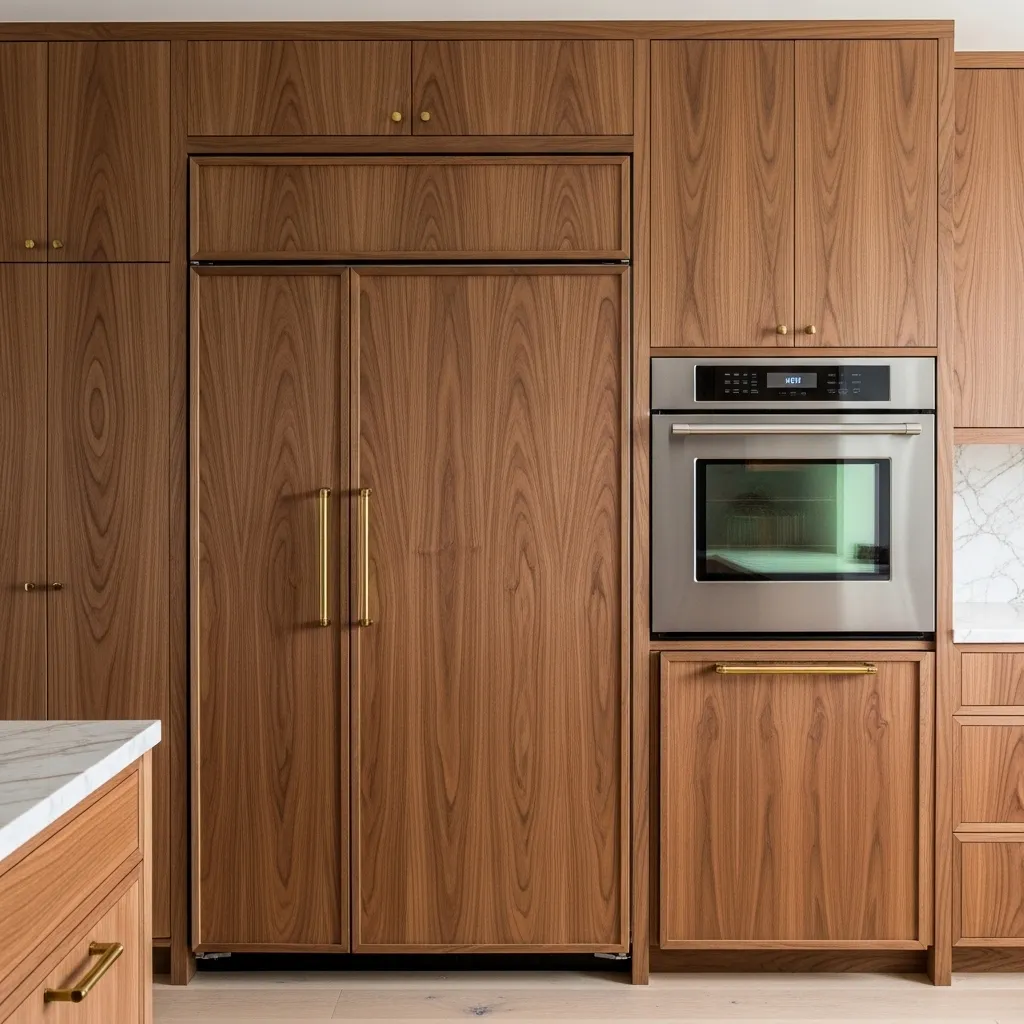
Walnut panel-fronted integrated appliances create the most completely unified walnut kitchen — by covering the refrigerator, dishwasher, and any other appliances with walnut panels that match the surrounding cabinetry grain direction and tone, the appliances become invisible elements of the walnut wall rather than visual interruptions of it. The kitchen becomes a continuous warm walnut surface punctuated only by the fine lines where cabinet doors and drawer fronts meet, rather than a walnut kitchen with white or stainless appliances interrupting the material story at regular intervals.
The grain matching between walnut appliance panels and adjacent cabinetry is the technical requirement that most determines whether the integration reads as seamless or as panels that happen to be the same wood species as the surrounding cabinetry. Walnut’s strong, directional grain pattern means that panels cut from different boards or at different orientations will read as clearly different pieces even at the same tone — the grain direction change between a vertical-grain cabinet door and a horizontal-grain appliance panel is immediately visible even to an untrained eye. Sourcing all panels and doors from the same batch of matched lumber is the specification that creates the seamless integration that panel-fronted appliances are designed to achieve.
12. Walnut Slab Door — No Profile, Pure Wood
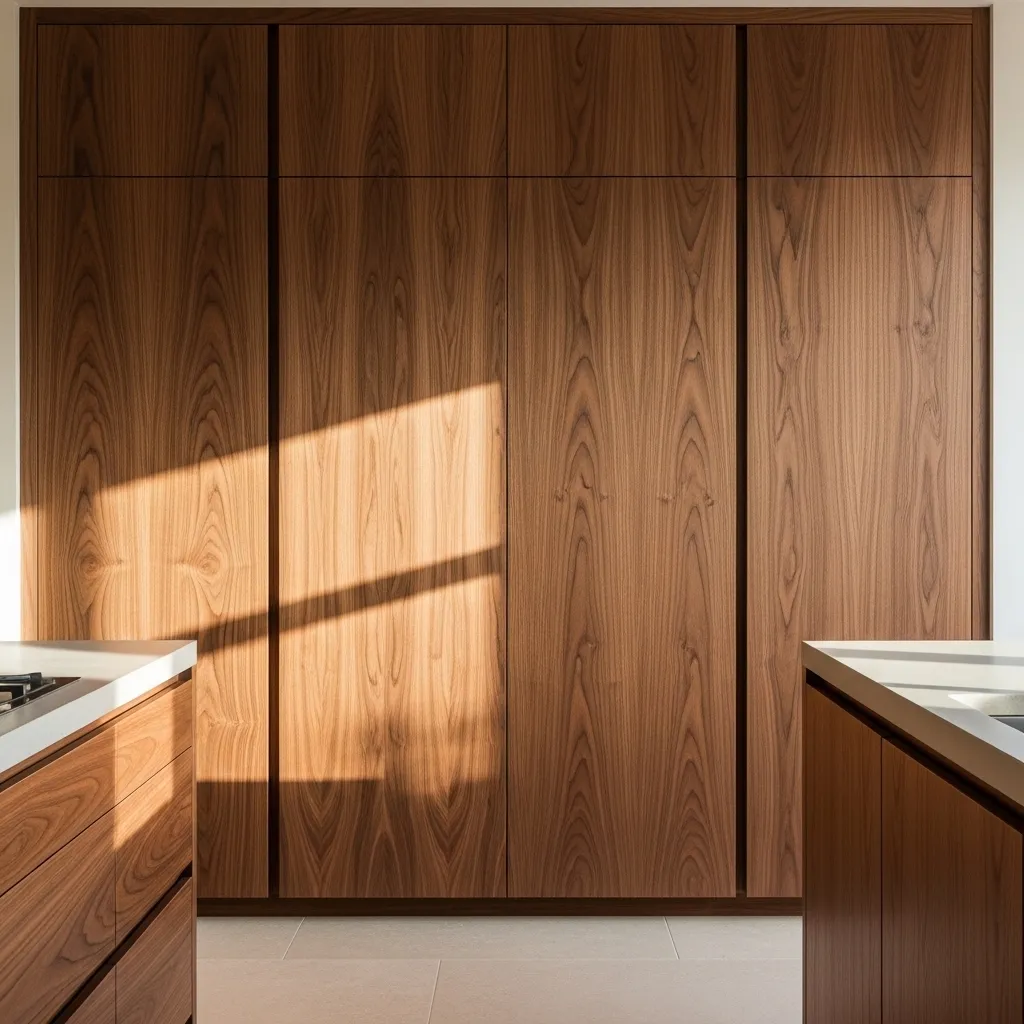
A walnut slab door kitchen — where the cabinet doors are flat, undecorated panels of walnut with no routed profile, no shaker frame, and no applied detail — creates the most minimal and most specifically contemporary walnut kitchen expression, one where the wood grain itself is the only surface interest and the material’s natural beauty is the entire design statement. The slab door eliminates every element that could distract from the walnut’s grain character, creating cabinet faces that are pure wood surface and nothing else.
The large format of the slab door is the quality that most amplifies the wood grain’s visual impact — larger panels contain more of the walnut’s characteristic grain figure, including the flowing cathedral grain that develops through the board’s center and the straighter grain at its edges, and this greater area of continuous grain creates a more complete experience of the wood’s specific beauty. A kitchen of large walnut slab doors has a quality of material confidence and material generosity that divided profiles and smaller panels don’t provide.
13. Walnut Ceiling and Cabinets — The Complete Wood Envelope
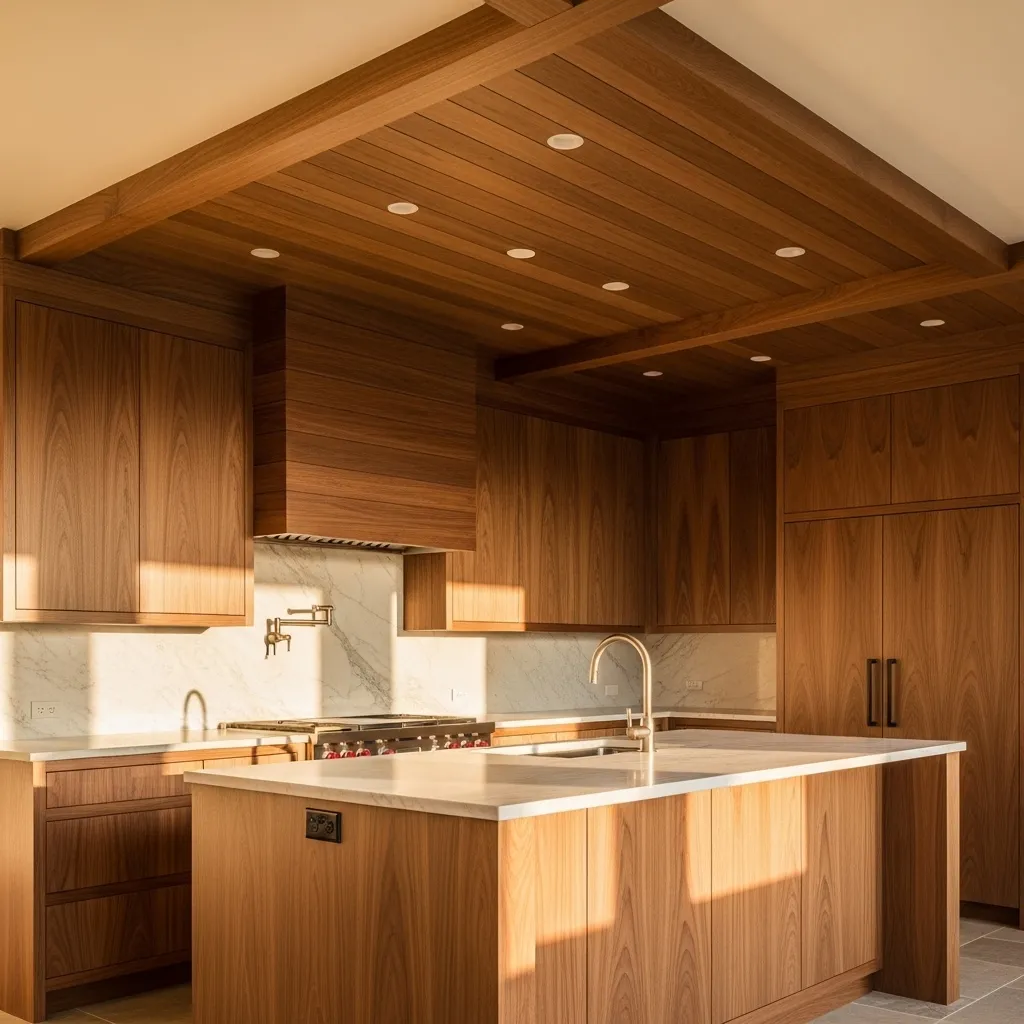
A kitchen where walnut appears on both the cabinetry and the ceiling creates the most complete and most extraordinary warm wood envelope available in kitchen design — the ceiling’s wood creates the full enclosure that walls-only walnut cabinetry can’t achieve, creating a kitchen where the warmth of the wood surrounds the space from every direction including above. The specific quality of looking up at a walnut ceiling while working in a walnut kitchen creates the most immersive material experience of any kitchen configuration, a sense of being inside a beautifully crafted wooden space rather than working in a kitchen with walnut cabinets.
The perpendicular orientation of the ceiling planks relative to the cabinet door grain creates a visual variety within the walnut palette that prevents the all-walnut environment from reading as monotonous — the ceiling’s horizontal grain running across the kitchen creates a directional element that the vertical grain of cabinet doors doesn’t provide, and the intersection of the two grain directions at the junction where wall cabinets meet the ceiling creates a material dialogue of specific visual interest.
14. Walnut With Bold Geometric Tile Backsplash
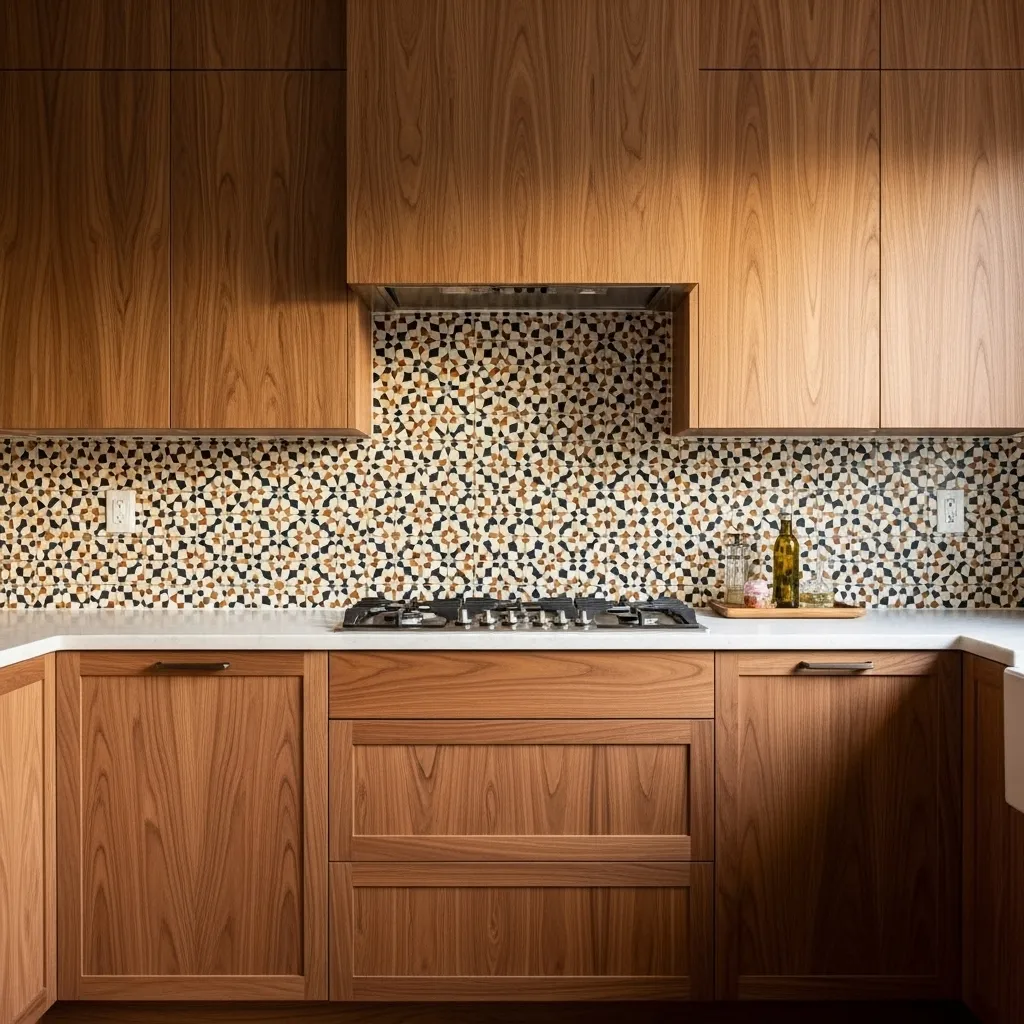
Walnut cabinetry with a bold geometric patterned tile backsplash creates the most visually complex and most specifically characterful modern walnut kitchen — one where the warmth and organic quality of the walnut provides the calm, grounded backdrop that allows a boldly patterned backsplash to be fully enjoyed rather than competing for attention with equally assertive cabinetry. The walnut’s specific quality of visual warmth and grain-based interest creates a surface that’s beautiful in a quiet, sustained way that enables rather than competes with the backsplash’s more assertive pattern energy.
The encaustic cement tile backsplash specifically — with its matte surface quality and its color depth created by natural pigments in the cement body rather than applied glaze — creates the most beautiful material pairing with walnut because both materials share the quality of natural, matte, warm surfaces that reward sustained attention. The cement tile’s warmth connects to the walnut’s warmth; the tile’s pattern provides the visual complexity and color that the warm wood grain, beautiful as it is, doesn’t provide; and together they create a kitchen where the warmth of the walnut and the vitality of the pattern create a complete and satisfying material world.
15. Walnut Kitchen in a Small Space — Warmth Creates Intimacy
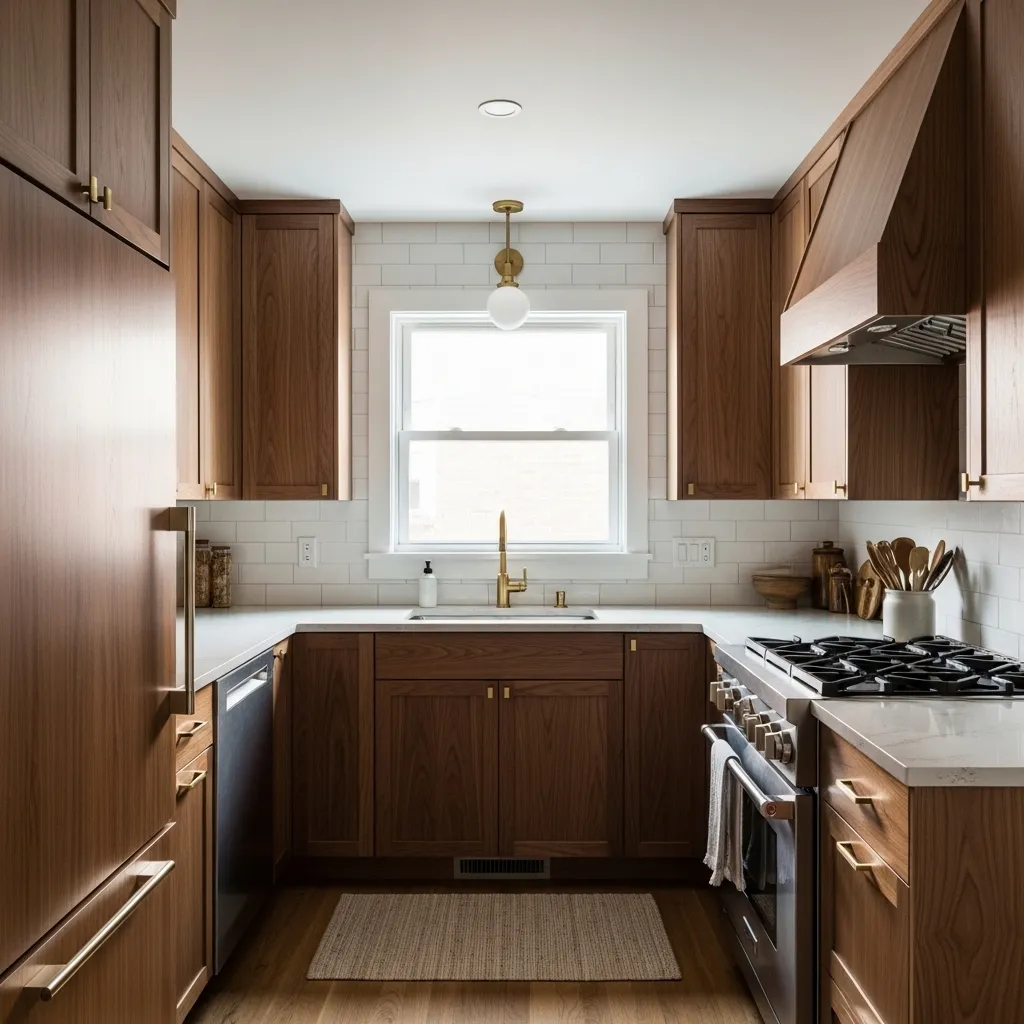
A small kitchen in walnut — properly specified and properly detailed — creates a genuinely intimate and genuinely warm cooking environment rather than the enclosed, dark box that the fear of dark cabinetry in small spaces imagines. The key to a small walnut kitchen that feels warm rather than heavy is a specific combination of material and design decisions: the walnut itself in a natural, warm tone rather than a darker stain, the countertop in a lighter material that reflects rather than absorbs light, the backsplash in white or pale tile that creates a bright zone between the upper and lower cabinets, the ceiling in white that maintains the room’s vertical openness, and one significant source of natural light that floods the warm wood with daylight.
The intimate quality that walnut creates in a small kitchen is not the same as the oppressive quality that dark cabinetry done carelessly produces — intimacy is a quality of warmth and enclosure that creates the specific pleasure of a small, beautiful, specifically personal space, while oppressiveness is a quality of heaviness and confinement that makes a small space feel smaller than it is. The difference between these two qualities in a small walnut kitchen is almost entirely determined by the lightness of the countertop, the brightness of the backsplash, and the whiteness of the ceiling — the walnut creates the intimacy and warmth, and these three lighter elements create the spaciousness and brightness that prevents the warmth from becoming heaviness.