20 Genius Small Apartment Bathroom Ideas That Turn the Tiniest Room Into Something You Actually Love Being In
If your apartment bathroom is the room you spend the least time thinking about designing and the most time wishing were different — a space that’s functional in the most grudging sense of the word, where the square footage is so constrained that improvement feels impossible and where the landlord’s fixtures and builder’s tile make genuine personalization seem out of reach — this guide covers every significant approach to transforming a small apartment bathroom into a space of genuine beauty and genuine personal expression, whether you own the apartment or rent it, whether you have a budget for renovation or only a budget for decoration, whether your bathroom is a narrow galley with barely room for one person to turn around or a slightly more generous but still fundamentally compact space that hasn’t reached its potential. The twenty ideas here span the complete range of what small apartment bathroom transformation looks like at every investment level: from the genuinely renter-friendly approaches that create dramatic improvement without a single permanent change, through the modest renovation investments that create disproportionate quality improvements, the lighting transformations that cost very little but change everything, the storage solutions that make small bathrooms function genuinely well, the tile and surface treatments that create the most visual impact, the mirror approaches that create space and light simultaneously, the plant and botanical strategies that bring life into windowless or low-light spaces, the textiles and accessories approaches that create maximum visual return for minimum investment, and the complete bathroom transformation approaches for those who own their apartments and can commit to genuine renovation.
The small apartment bathroom is the room where the gap between what is and what’s possible is most consistently wide — because the constraints of small scale and rented space make most people give up on the bathroom as a design challenge before they’ve genuinely explored what’s possible within those constraints. The bathroom of a small apartment deserves the same quality of design attention as any other room in the home, perhaps more so, because it’s the room used multiple times every day, the room where the quality of the fixtures and the quality of the light directly affect the quality of the most intimate daily rituals, and the room whose improvement creates daily quality-of-life improvement rather than the occasional improvement of a better-designed living room.
What makes small apartment bathrooms genuinely beautiful rather than merely adequate is not usually the elimination of their smallness — that’s rarely possible within rental constraints or modest renovation budgets — but the quality of the decisions made within the smallness. A small bathroom with genuinely beautiful tile, warm lighting, considered storage, and a coherent aesthetic is a better space to be in than a large bathroom with mediocre tile, harsh lighting, inadequate storage, and no aesthetic intention. The small bathroom done well is not a compromise version of a large bathroom; it’s a different category of space that has its own specific pleasures — the intimacy of enclosure, the efficiency of having everything immediately at hand, the specific focus that constraint creates.
1. Peel and Stick Tile — Renter-Friendly Floor Transformation
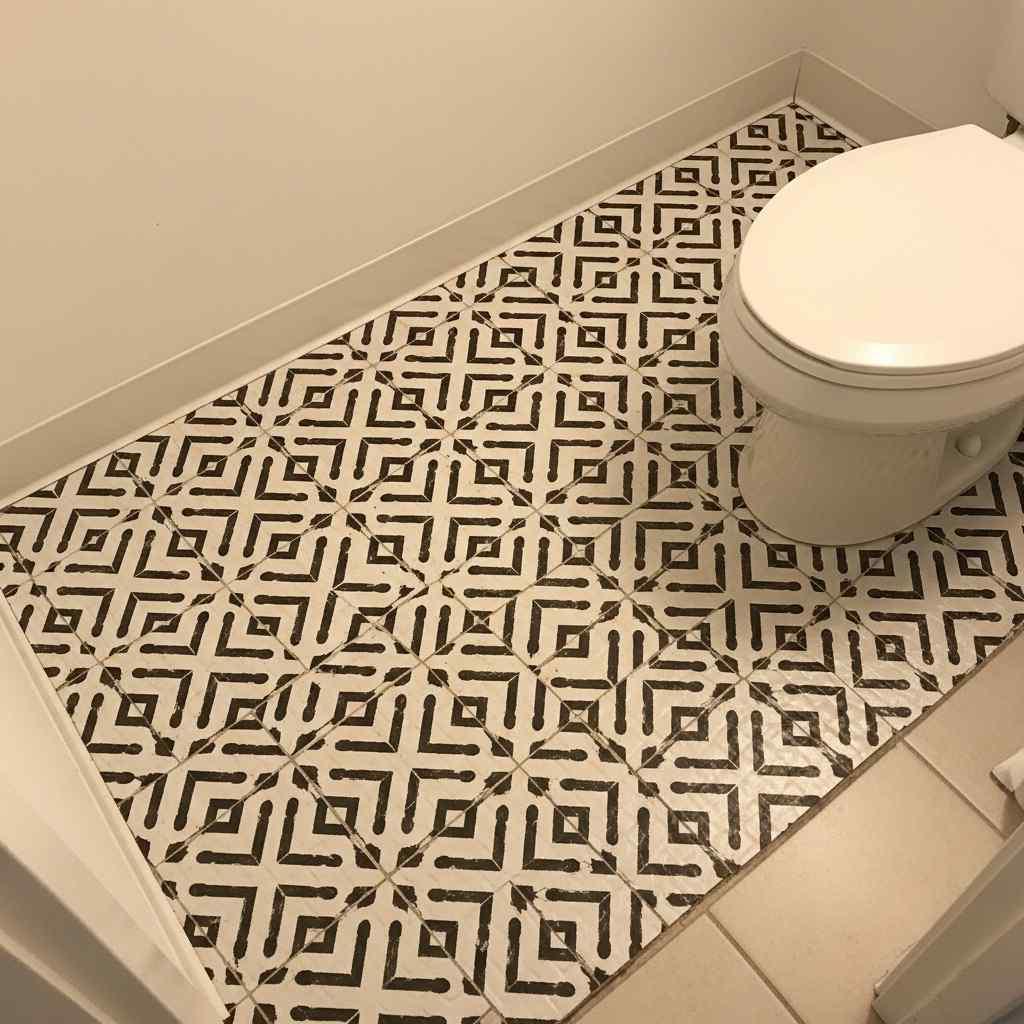
Peel and stick vinyl floor tiles are the renter-friendly bathroom renovation with the most dramatic visual impact per dollar — because the floor is the surface seen in full upon entering the small bathroom, the surface that establishes the room’s visual character most completely from the doorway, and transforming it from a generic builder’s beige or basic white to a genuinely beautiful patterned surface creates an immediate and complete change in the bathroom’s aesthetic quality without any permanent alteration. Quality peel and stick tiles applied carefully over a clean, smooth existing floor surface adhere effectively for years and remove cleanly when the lease ends.
The geometric black and white pattern is the specific design choice that creates the most timeless and most visually powerful floor transformation with peel and stick tile — it references the specific tradition of encaustic cement tile and Victorian floor tile that has been beautiful for over a century and will remain beautiful, it creates maximum contrast that reads clearly even in the small bathroom’s limited floor area, and it provides the visual complexity that makes the floor a designed element rather than a neutral surface.
2. Warm Lighting Replacement — The Most Transformative Low-Investment Change
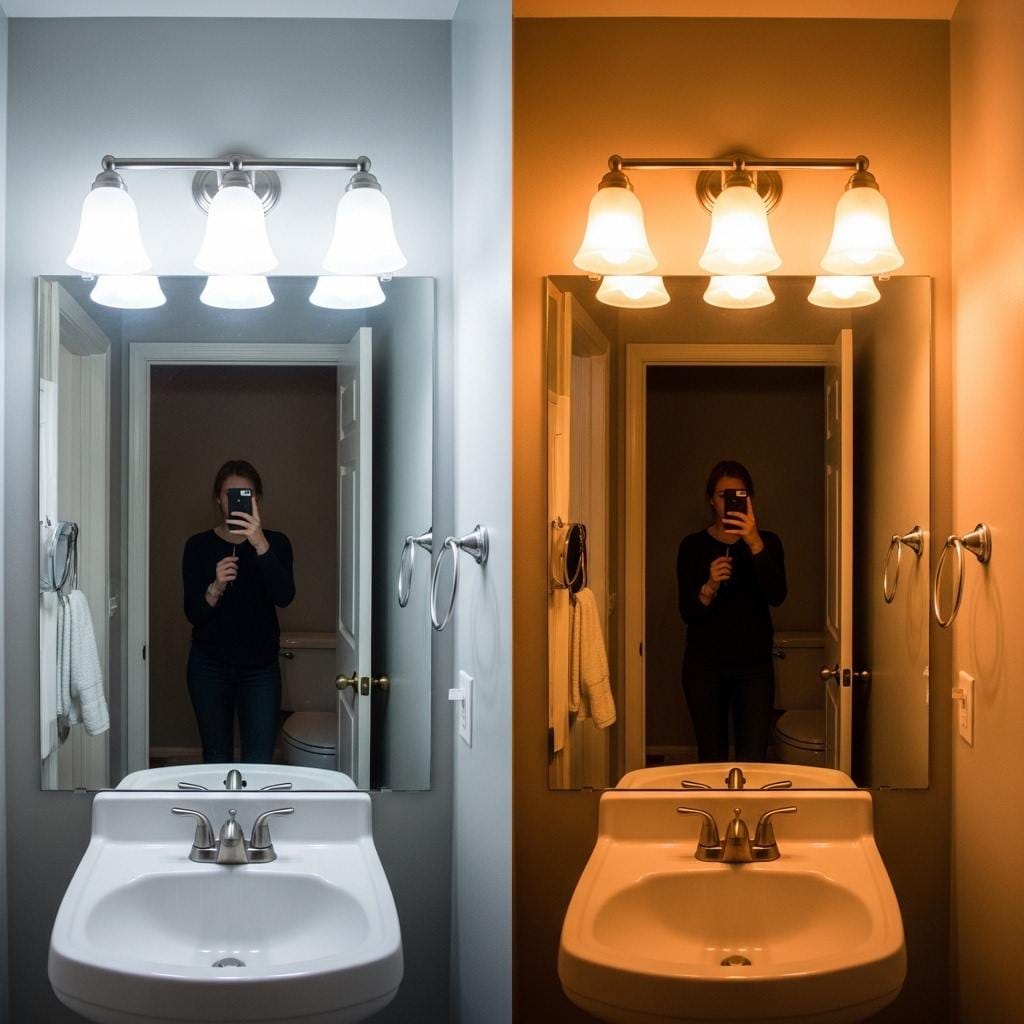
Replacing the bulbs in a bathroom light fixture with warm-toned bulbs — specifically in the 2700K to 3000K range rather than the cool 4000K to 5000K bulbs that most apartments are equipped with — is the single smallest investment with the largest daily quality-of-life improvement available in any bathroom. The difference between cool white bathroom lighting and warm amber bathroom lighting is the difference between a room that feels clinical and harsh and a room that feels warm and inviting, and this difference affects both the quality of the space as an environment and the quality of the experience of seeing yourself in the mirror.
The specific temperature range of 2700K creates the lighting quality closest to incandescent light — the warm, slightly amber quality that photographs beautifully, flatters skin tones most consistently, and creates the atmospheric warmth associated with candlelit spaces. Most bathrooms are equipped with cool or neutral light sources because cool light is associated with functionality and alertness, but the bathroom is the room where the quality of the light’s effect on how you look in the mirror matters most, and warm light creates the most consistently flattering and most pleasant experience in that specific function.
3. Floating Shelves for Storage and Display — Vertical Space Maximization
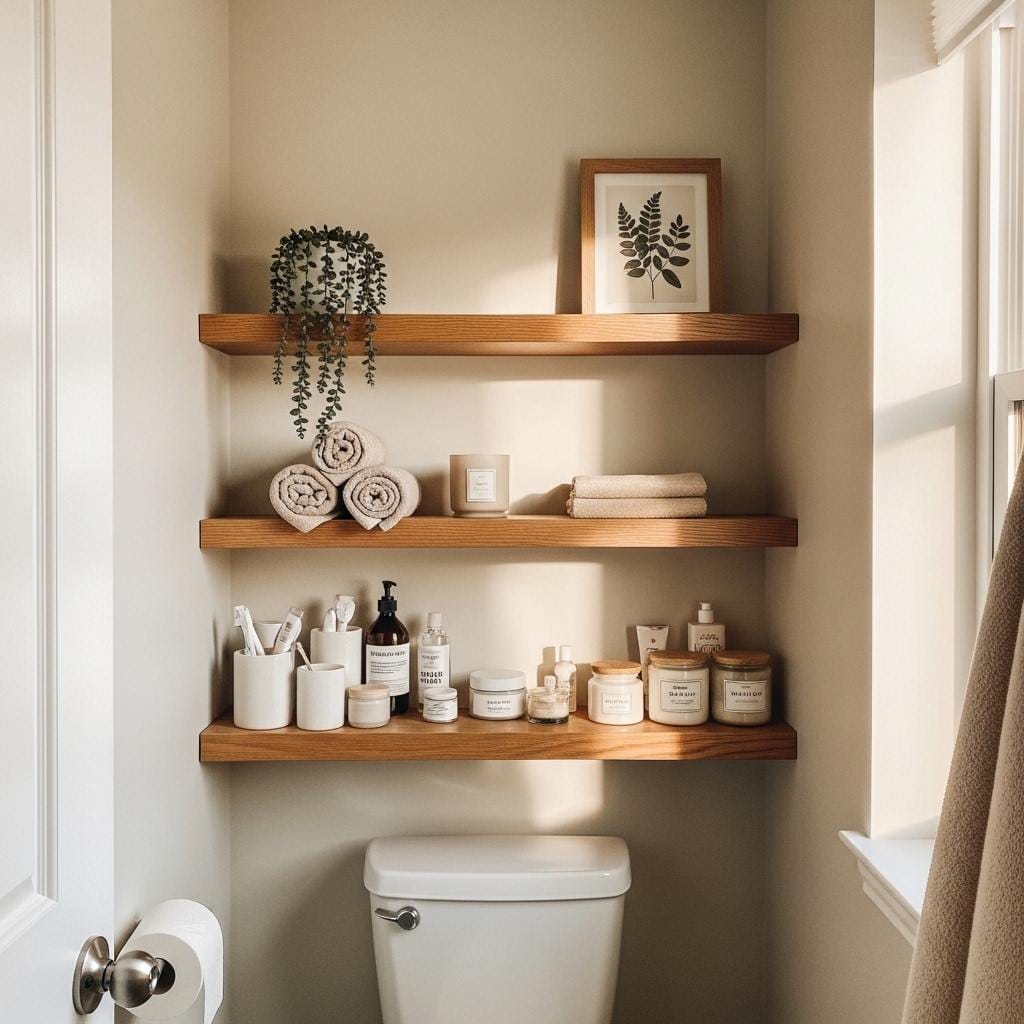
Floating shelves above the toilet are the bathroom storage solution that captures the most consistently wasted vertical space in any bathroom configuration — the wall above the toilet is typically bare in apartment bathrooms because no standard fixture or furniture occupies that position, and the four to five square feet of wall surface from toilet height to ceiling represents a significant storage and display opportunity that most bathroom designs leave completely unused.
The combination of practical storage on the lower shelves and genuine display on the upper shelves is the organizational approach that creates both the functional storage capacity the bathroom needs and the aesthetic quality that transforms the storage from utilitarian to beautiful. The matching containers for everyday products — decanting hand soap, cotton balls, and cotton swabs into consistent white ceramic or apothecary glass containers rather than leaving them in their commercial packaging — creates the visual order that makes the storage shelf appear designed rather than merely filled.
4. The Statement Mirror — Replacing the Builder’s Basic
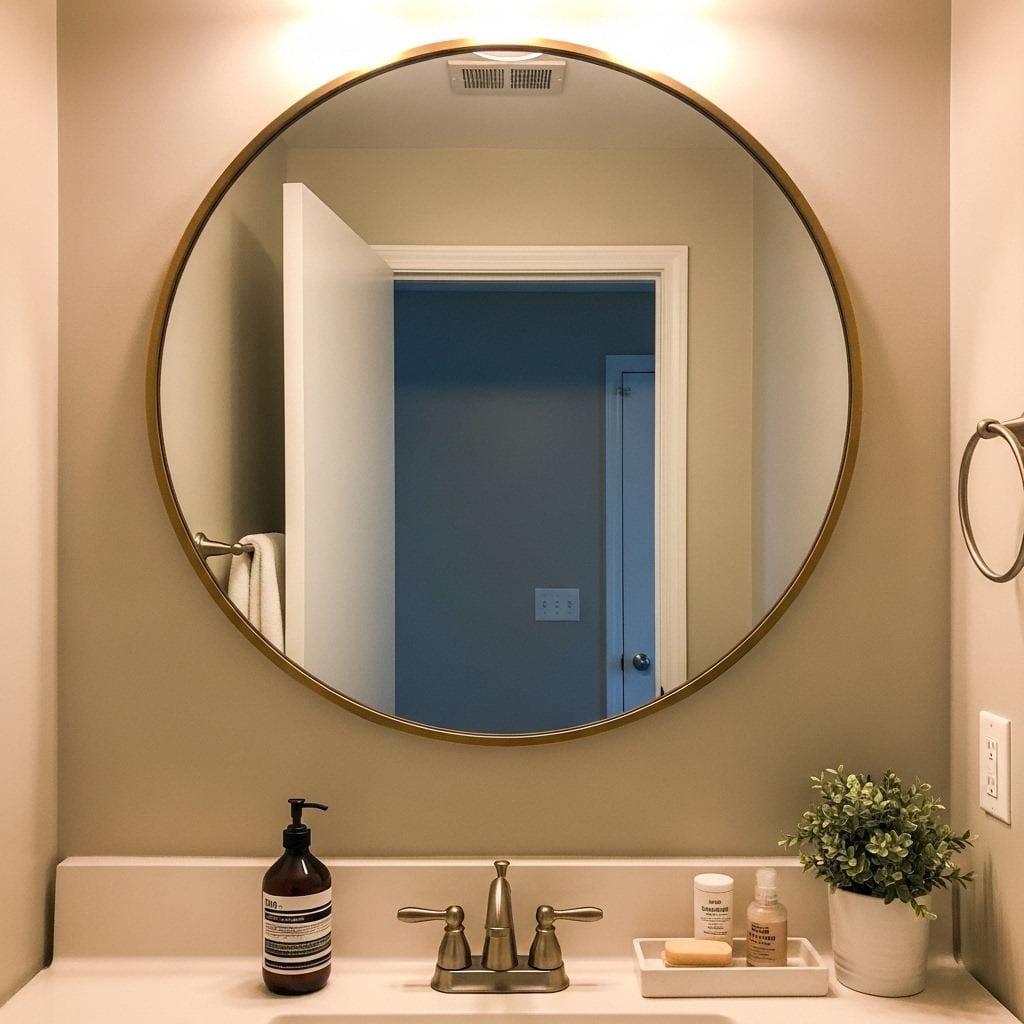
A statement mirror — replacing the standard rectangular builder’s mirror with a mirror of genuine design quality, in a beautiful frame or an interesting shape — is the bathroom improvement that creates the most significant aesthetic transformation for a small investment and without any permanent alteration. The mirror above the vanity is the bathroom’s primary visual focal point, the surface seen first and most consistently upon entering the room, and its quality directly determines the quality of the bathroom’s visual character. A beautiful mirror in a warm frame transforms a generic bathroom vanity into a specifically designed moment.
The round mirror is specifically effective in small bathrooms because its circular form provides the full reflective function of a rectangular mirror while occupying less visual space — the round form reads as a designed object rather than a standard fixture, and its lack of corners creates a softer visual quality that’s specifically flattering in the often hard-edged geometry of a small bathroom with flat walls, square tile, and rectangular fixtures.
5. Shower Curtain as Design Statement — The Textile Transformation
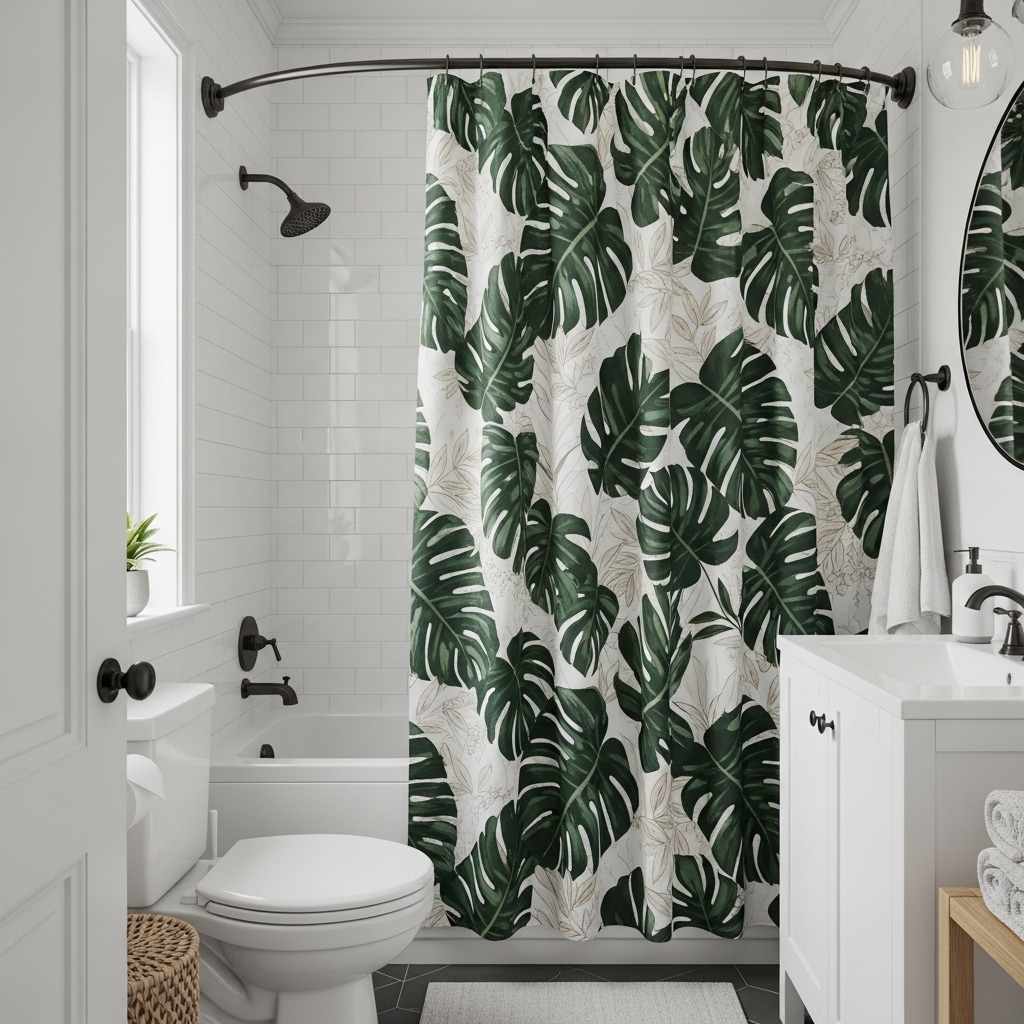
The shower curtain is the single largest textile surface in any bathroom with a tub-shower combination, and its design quality directly determines the visual quality of the room’s most prominent vertical surface. In a small bathroom where the shower curtain occupies a significant percentage of the total visual field, the choice of a genuinely beautiful curtain in a bold pattern or a rich texture creates more visual transformation per dollar than almost any other single element. The shower curtain is also the most renter-friendly of all bathroom design changes — it requires no installation beyond hanging on the existing rod and creates no permanent alteration.
The large-scale botanical print is specifically effective as a shower curtain design because the curtain’s full height and width provide the canvas that a large-scale pattern requires to read at its full impact — a large botanical print on a small decorative pillow is just a pattern; the same pattern on a seventy-two by seventy-two inch shower curtain becomes an immersive visual experience. The botanical quality of the print also creates a specific connection to natural life that makes the bathroom feel less enclosed and more garden-like, which is especially valuable in bathrooms without windows.
6. Plants in the Bathroom — Life in a Windowless Space
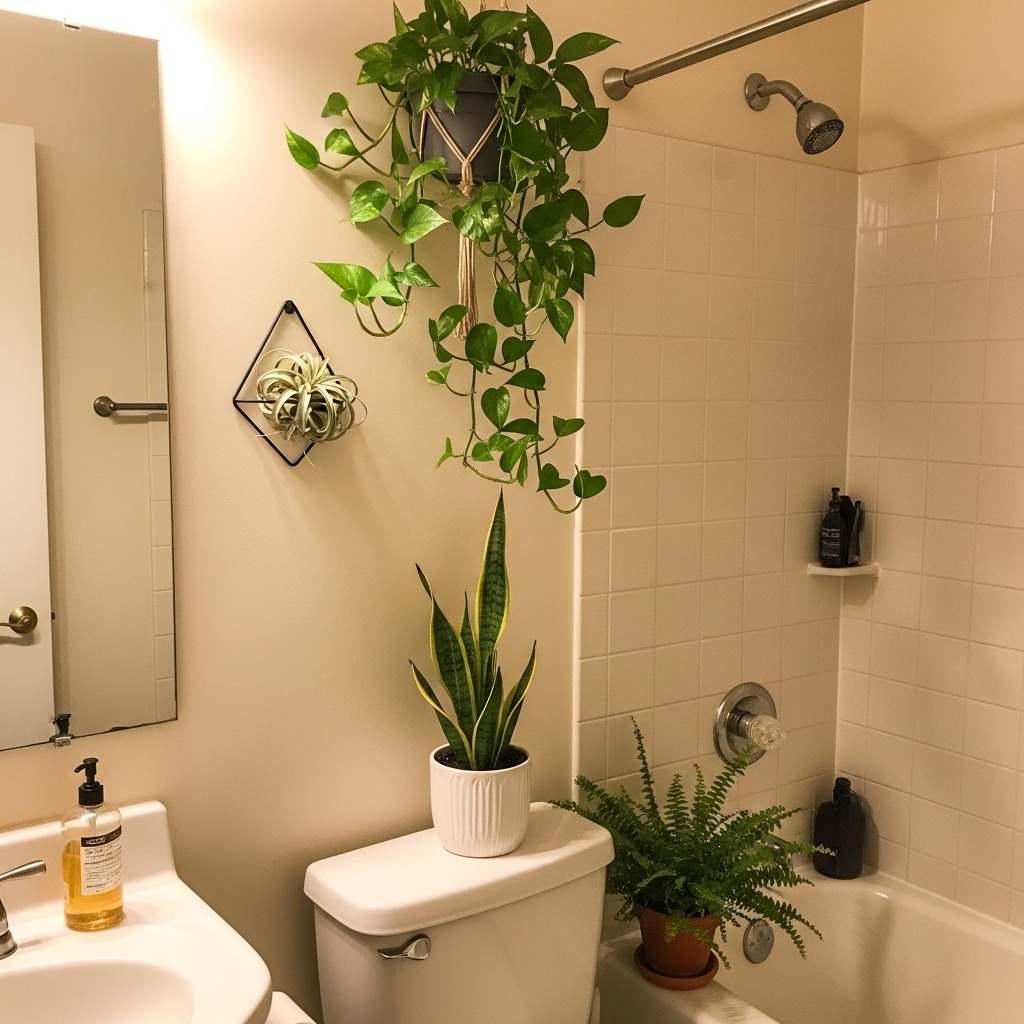
Plants in a bathroom — even a bathroom with limited or no natural light — create the most significant quality-of-life improvement available through decoration alone, because living plants transform the quality of the space from purely functional to genuinely alive in a way that no inanimate decoration can replicate. The bathroom is specifically well-suited to plants because its humidity creates ideal growing conditions for tropical species that prefer moist air, and those tropical species — pothos, snake plants, air plants, ferns — are among the most beautiful and most low-maintenance plants available for any indoor use.
The distribution of plants throughout the bathroom at multiple heights — the cascading pothos from the ceiling, the upright snake plant on the tank, the mounted air plant at eye level, the fern at tub edge — creates ambient botanical presence rather than a plant display. When a plant is visible in every direction the eye travels in a small bathroom, the space transforms from a room containing plants to a room defined by its plants, and that transformation creates the specific quality of a bathroom that feels like a personal garden rather than a utility space.
7. Contact Paper Cabinet Makeover — Transforming Builder Vanity
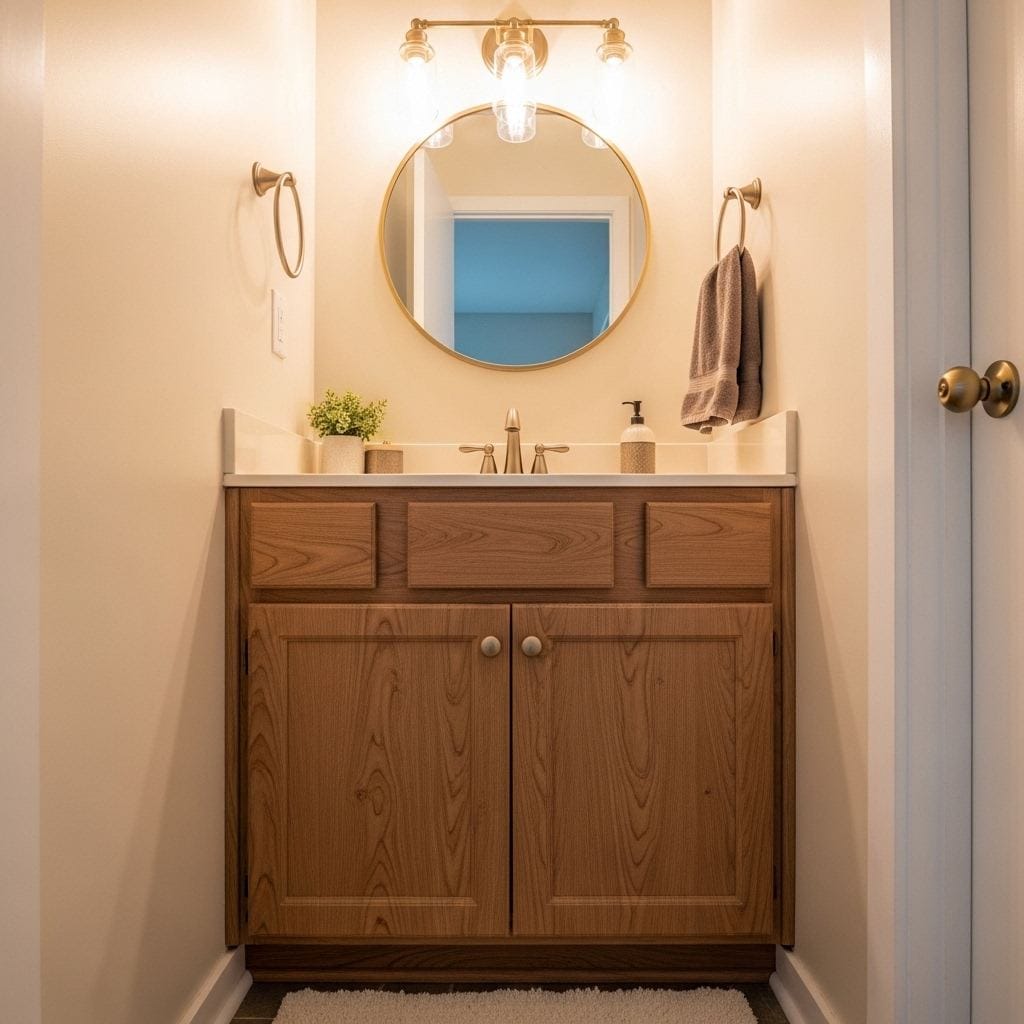
Cabinet contact paper is the most reversible and most renter-friendly vanity transformation available, creating the visual quality of a furniture-grade cabinet finish at a fraction of the cost of replacement or professional refinishing. Quality contact paper applied with care — stretching it slightly to eliminate wrinkles, using a squeegee to eliminate bubbles, cutting corners precisely — creates a surface that reads as genuinely beautiful at normal bathroom viewing distances and that removes cleanly without residue when the lease ends.
The hardware replacement that accompanies the contact paper application is the detail that completes the vanity transformation — because contact paper changes the cabinet’s body but the original hardware remains, and the combination of a new-looking surface with the original builder’s hardware creates an incongruous quality that the hardware replacement resolves. A set of aged brass or matte black cabinet knobs costs less than twenty dollars for a standard bathroom vanity and creates an immediate improvement in the cabinet’s finished quality that makes the contact paper transformation complete.
8. Wall Paint — The Biggest Permitted Change in Most Rentals
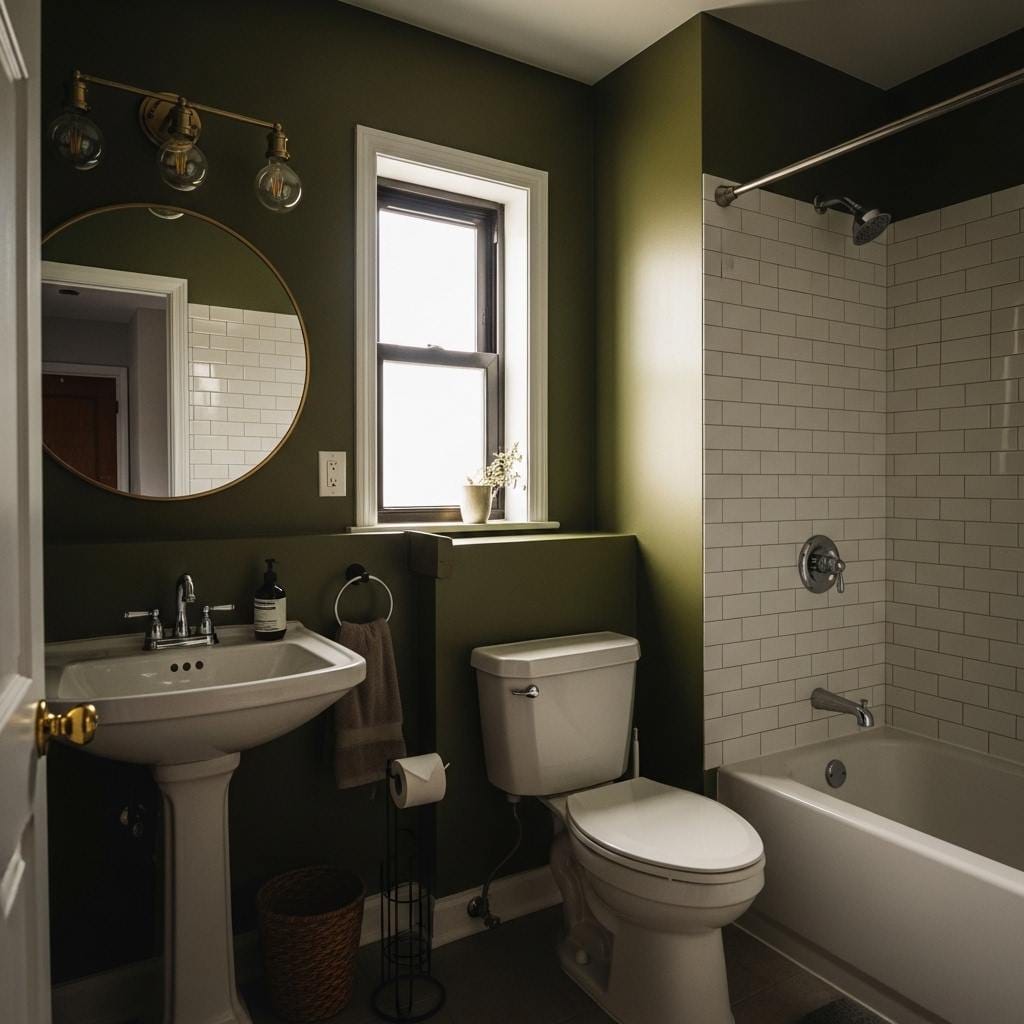
Wall paint is the apartment bathroom improvement that creates the most dramatic atmospheric transformation at the lowest cost while being permitted in most rental agreements — many landlords permit painting on the condition that the walls are returned to the original color at lease end, and the investment in painting a small bathroom (typically one quart of paint is sufficient for a small bathroom with tile wainscoting) plus the investment in returning it to white is minimal relative to the daily improvement it creates.
The deep, dark wall color is specifically effective in a small bathroom because it creates the quality of atmospheric enclosure that the conventional bright-white small bathroom advice entirely misses — the conventional advice to keep small spaces light to make them feel larger is wrong in the most interesting possible way, because the small bathroom is not trying to feel like a large bathroom. It’s trying to feel like a beautiful small space, and a deep forest green or rich navy or warm charcoal small bathroom feels like a beautiful, specific, intentional space in a way that a small white bathroom never quite achieves.
9. Organized Under-Sink Storage — The Cluttered Bathroom Solution
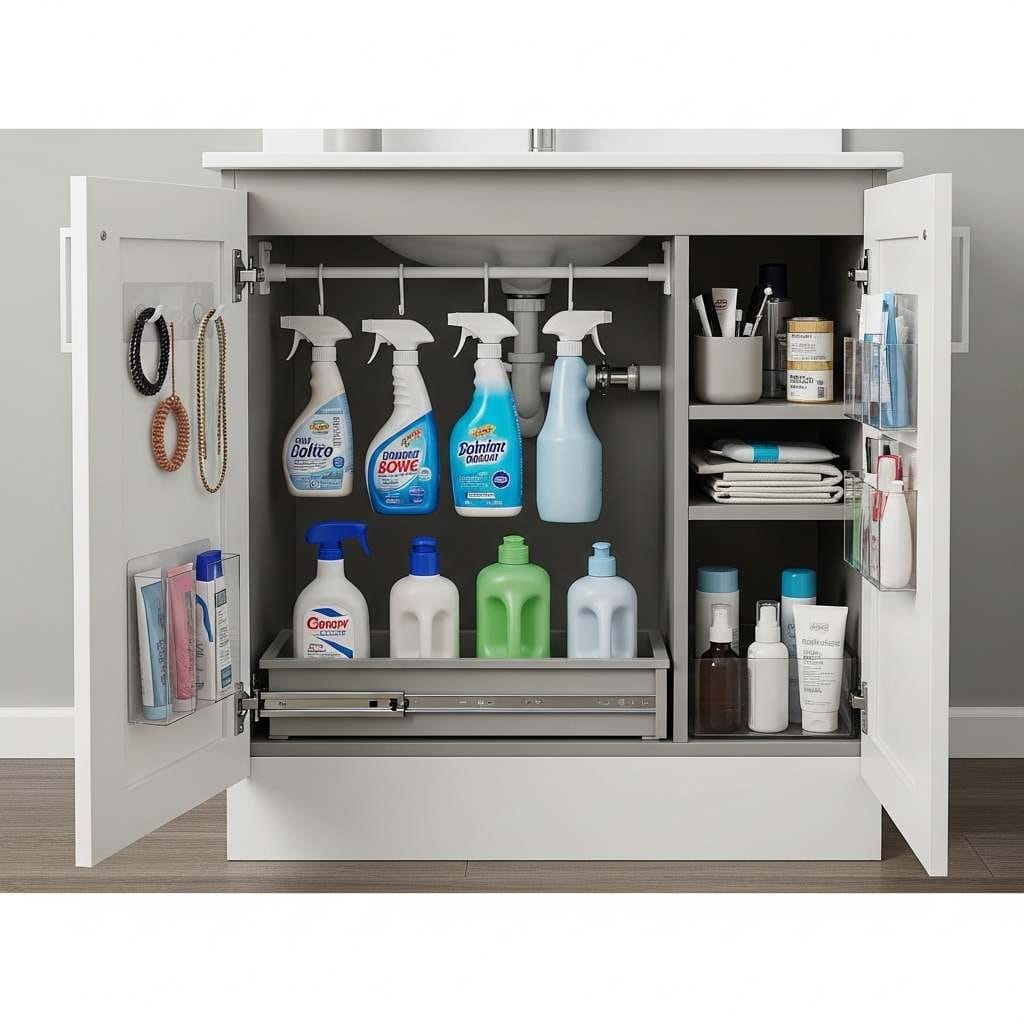
Under-sink bathroom storage is the most consistently cluttered and most consistently disorganized zone in apartment bathrooms — the combination of the cabinet’s awkward shape (accommodating the sink drain and supply lines), the variety of item sizes stored beneath the sink, and the tendency to accumulate products beyond what the space neatly contains creates a under-sink cabinet that’s perpetually chaotic. The investment of an afternoon and minimal organizational products transforms this zone from the bathroom’s primary source of daily friction to its most organized and most easily navigated storage area.
The tension rod for hanging spray bottles is the single organizational insight that creates the most usable space per dollar in an under-sink cabinet — by hanging spray bottles from a tension rod installed across the width of the cabinet rather than standing them on the cabinet floor, the full floor area of the cabinet is freed for other storage while the spray bottles are more accessible than they were standing upright in a crowded cabinet. This single organizational addition effectively increases the usable storage capacity of a standard under-sink cabinet by thirty to forty percent.
10. Towel Ladder — Storage, Display, and Design Element
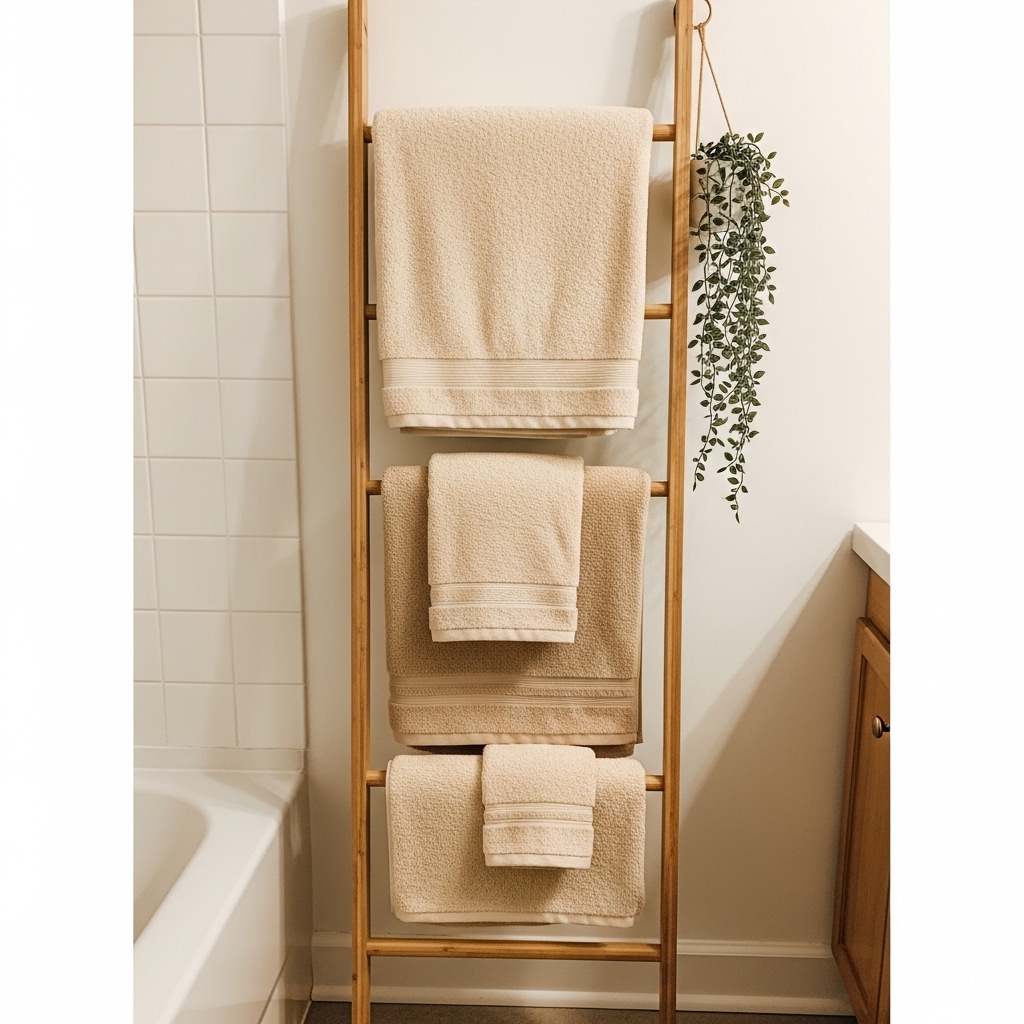
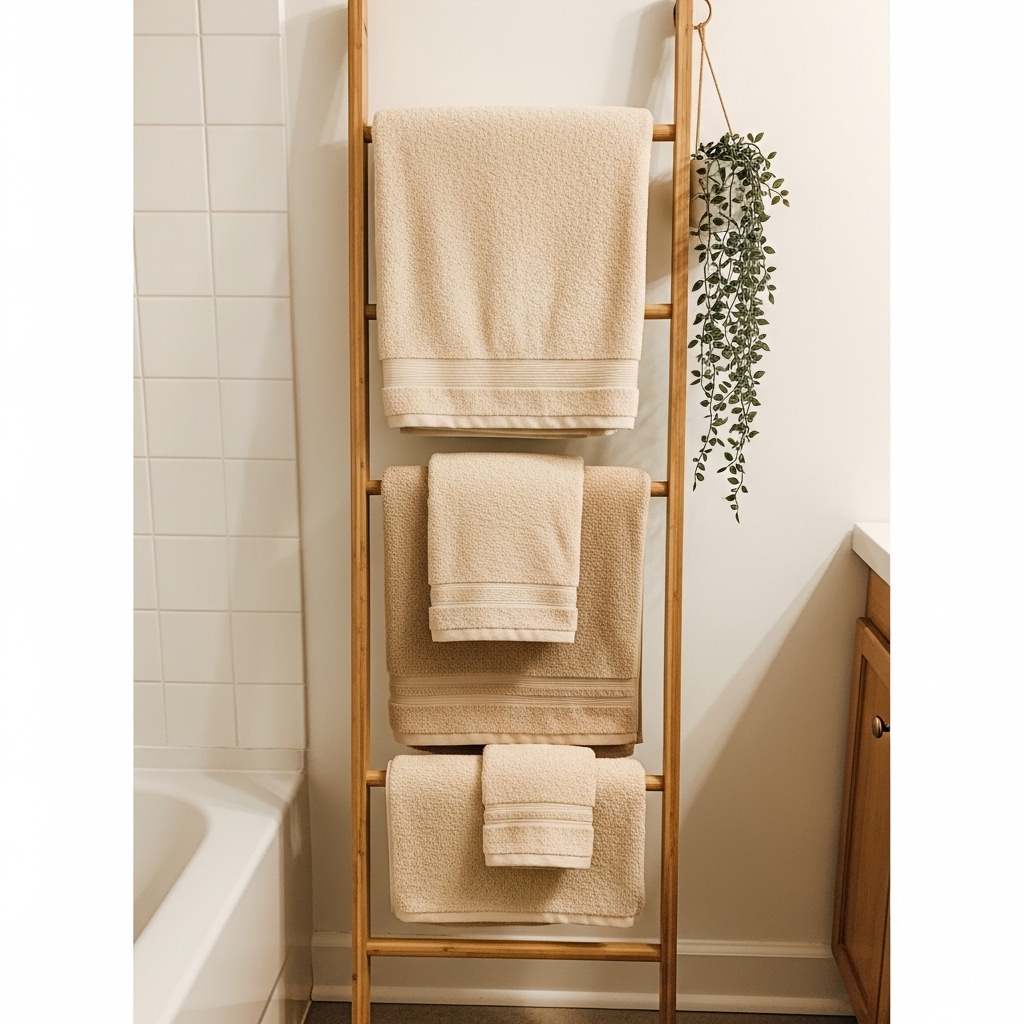
A towel ladder — a simple free-standing ladder that leans against the bathroom wall and holds towels on its rungs — is the bathroom storage addition that creates the most warmth and the most design character for the least investment, because it simultaneously solves the towel storage problem that most small bathrooms face and creates a design element of genuine warmth and organic character through the simple presence of wood in a room that’s otherwise dominated by tile, porcelain, and metal.
The towel quality and towel color cohesion displayed on the ladder is the detail that most determines whether the ladder creates a spa-like bathroom display or simply a place towels are hung — matching towels in a consistent color palette (warm cream, natural linen, or soft grey rather than a mix of whatever towels have accumulated) creates the visual cohesion that makes the ladder look like a designed element rather than a drying rack. The investment in a set of consistent, beautiful towels is the bathroom textile investment with the highest daily aesthetic return.
11. Adhesive Backsplash — Vanity Zone Transformation
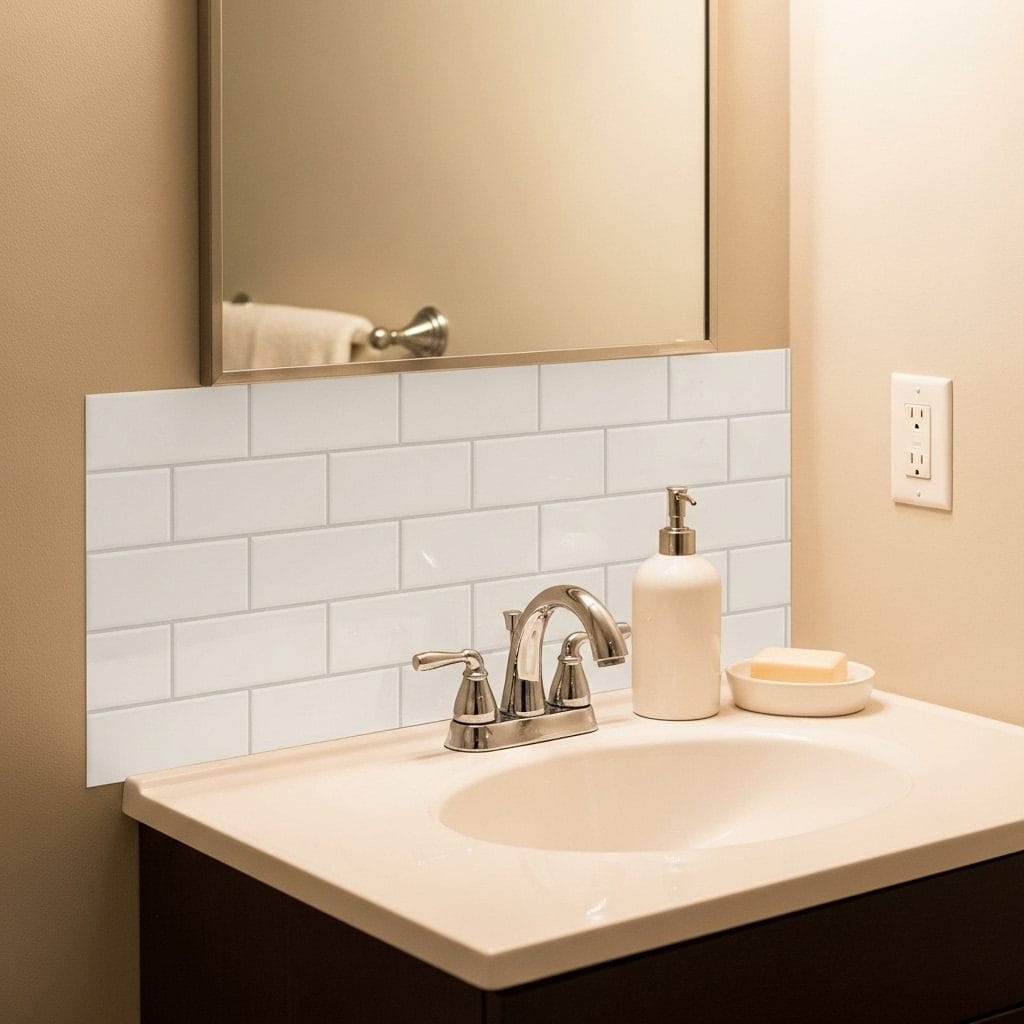
Adhesive backsplash tiles — peel and stick tiles designed specifically for backsplash applications — are the renter-friendly bathroom improvement that creates the most significant improvement in the bathroom’s most visually prominent detail: the wall surface behind the vanity and sink. The wall behind the vanity is the zone most associated with genuine tile craftsmanship and genuine renovation quality, and its appearance as a plain painted wall signals the absence of renovation investment more clearly than any other bathroom surface. A quality adhesive backsplash tile applied carefully creates the visual quality of genuine tile installation at a fraction of the cost and without permanent alteration.
The precision of the installation is the quality that most determines whether adhesive backsplash tiles read as genuine tile or as obviously adhesive — careful measurement to ensure the first row is perfectly level, consistent grout line width, careful cutting at the edges and around outlets, and the use of edge trim where the tile meets the adjacent wall surface all create the professional quality that makes the difference between an installation that reads as real tile and one that reads as an obvious alternative.
12. The Apothecary Organization System — Beautiful Counter Organization
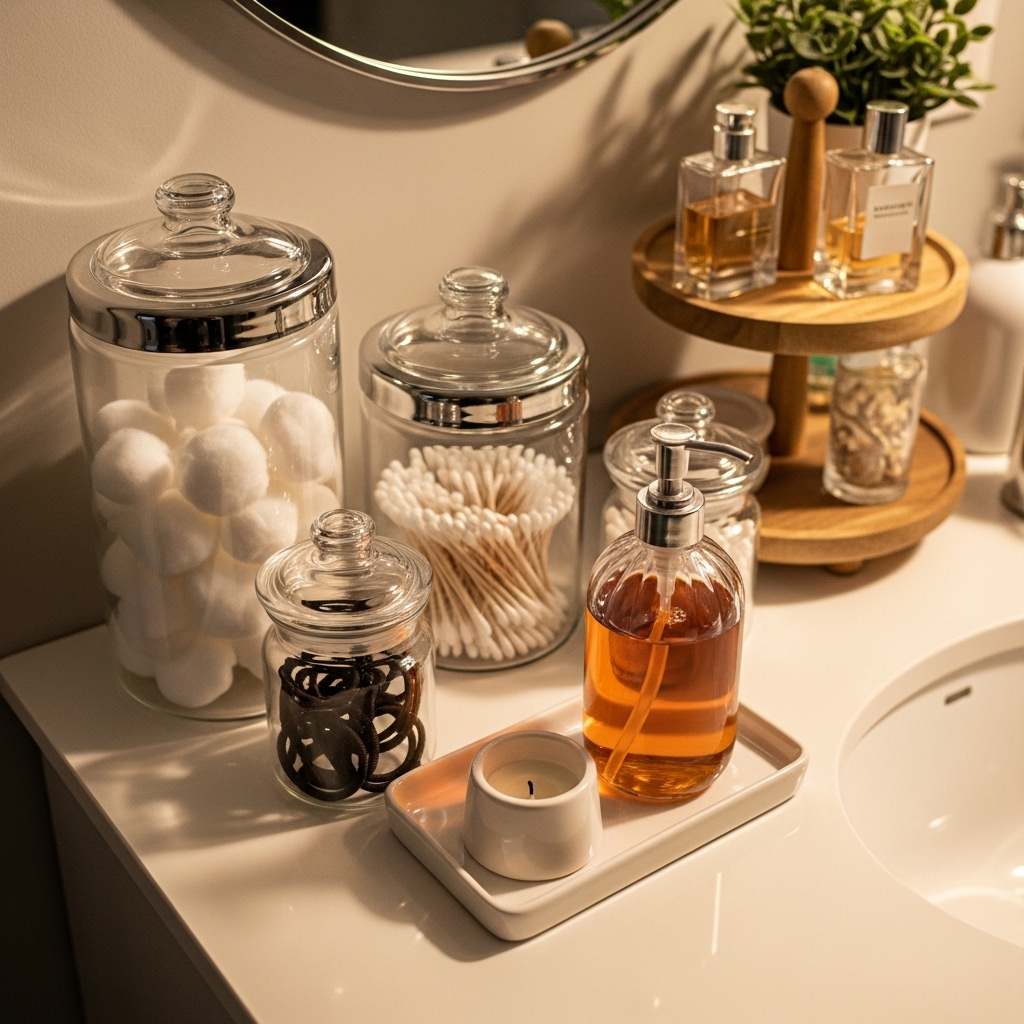
The apothecary organization system — transferring bathroom counter products from their commercial packaging into consistent, beautiful glass and ceramic containers — is the counter organization approach that creates the most dramatic improvement in counter appearance for the smallest financial investment. Commercial packaging is designed for retail shelf visibility rather than domestic aesthetic quality, and replacing it with consistent glass and ceramic vessels creates a counter that reads as intentionally designed rather than functionally accumulated.
The key to a coherent apothecary organization is the consistency of the vessel material and color — a counter of glass and white ceramic in varying sizes but consistent material quality reads as a designed collection; a counter of glass and ceramic mixed with plastic and metal of varying styles and colors reads as a collection of products. The investment in a set of consistent vessels — a set of matching glass jars, a quality ceramic soap dish, a matching pump dispenser — creates the visual cohesion that transforms the counter from utilitarian to beautiful.
13. Heated Towel Rail — Practical Luxury at Small Scale
A slim electric heated towel rail is the bathroom addition that creates the most significant daily luxury improvement from the smallest space footprint — the experience of a genuinely warm, completely dry towel after a shower or bath is a quality-of-life improvement that people who’ve had a heated towel rail consistently describe as impossible to return from, and the slim format of modern heated towel rails means this luxury is available even in the most compact bathroom with minimal wall space.
The electric heated towel rail specifically — rather than a hydronic rail connected to the home’s hot water system — is the appropriate option for most apartment bathrooms because it requires only an electrical connection rather than plumbing modification, can be installed without professional assistance in most cases, and can be removed without damage at the end of a tenancy. The running cost of a small electric heated towel rail is minimal — equivalent to a low-wattage appliance — and the daily comfort improvement it creates is genuinely significant.
14. Wainscoting Addition — Architectural Character at Low Cost
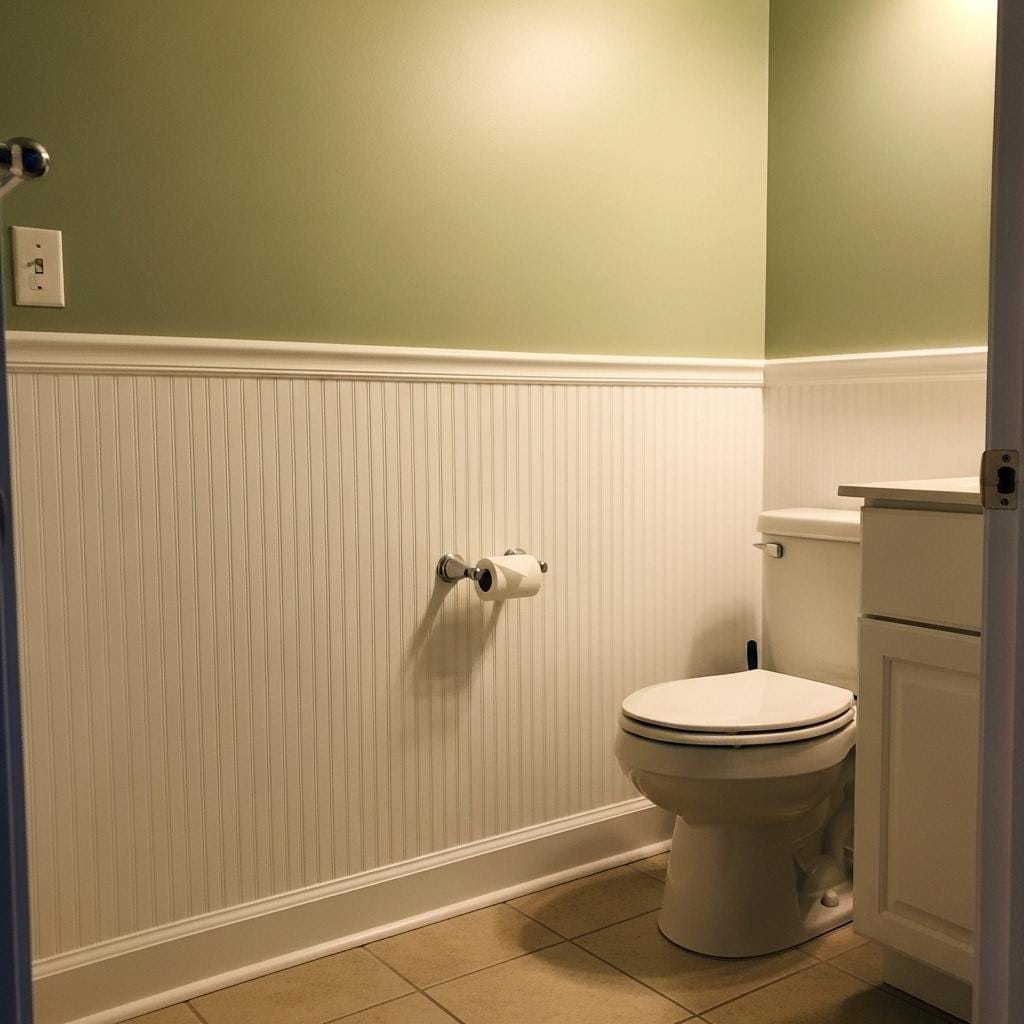
Wainscoting in a bathroom — whether genuine tongue-and-groove timber boards or the adhesive peel-and-stick panels available for renter applications — creates the most architectural and most historically grounded bathroom improvement available through surface treatment alone. The wainscot and paint combination divides the bathroom wall into two zones — a lower architectural zone and an upper color zone — creating the specific quality of a room that has been designed with architectural intention rather than simply painted.
The renter-friendly version of bathroom wainscoting uses adhesive beadboard panels that install without fasteners and remove without damage, creating the visual quality of genuine wainscoting while remaining fully reversible at lease end. The quality of the adhesive panels varies significantly between products — the best adhesive beadboard panels have genuine texture and appropriate shadow line depth that reads as convincingly three-dimensional, while low-quality panels appear flat and obviously adhesive at close range. Selecting the highest-quality adhesive beadboard panels available and installing them with precise alignment creates a bathroom improvement of genuine architectural quality.
15. Sconce Lighting Addition — The Flattering Light Solution
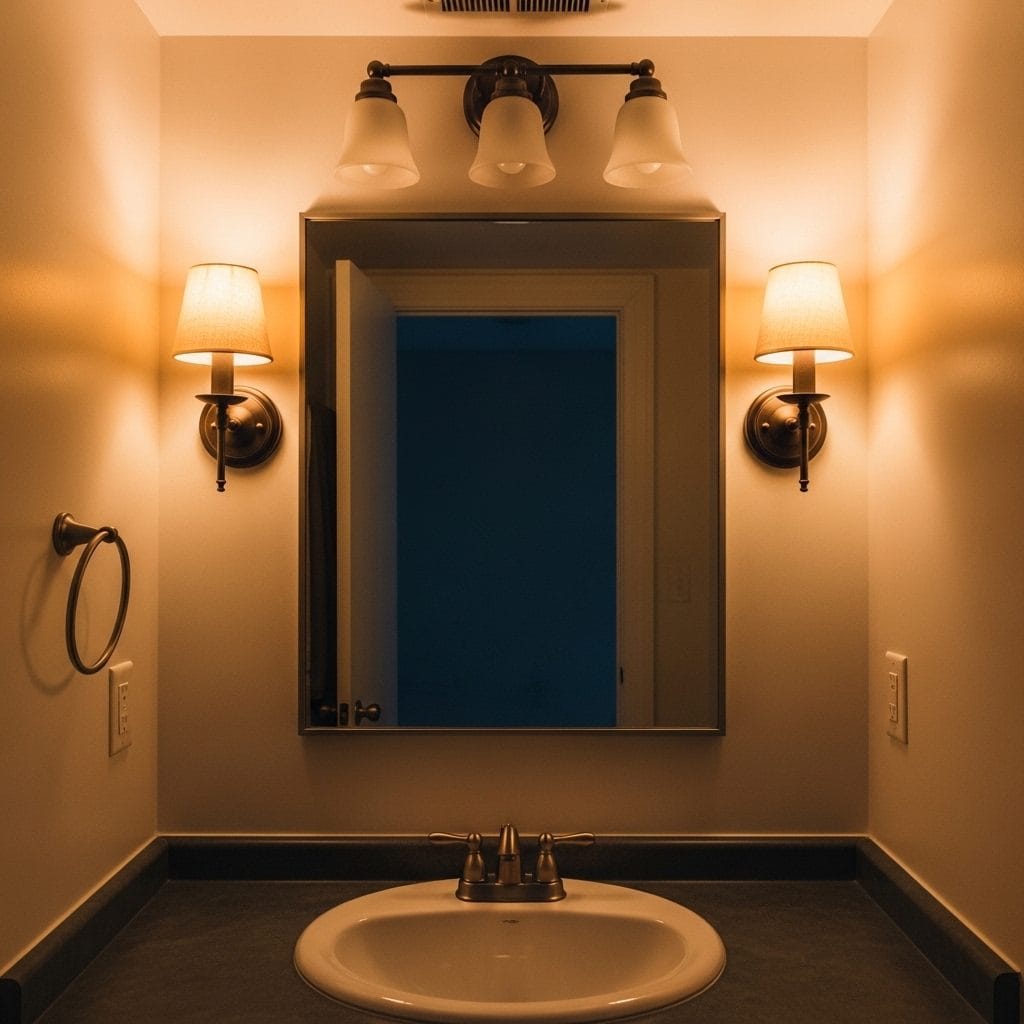
Side-mounted vanity sconces at face height are the lighting improvement that most dramatically improves the quality of the bathroom mirror experience — the theatrical lighting principle of illuminating a face from both sides equally eliminates the unflattering shadows that overhead vanity lighting creates under the eyes, nose, and chin, creating a quality of even illumination that makes the bathroom mirror a reliable and pleasant surface rather than a source of daily visual disappointment.
The installation of wall sconces in an apartment bathroom that has only an overhead fixture typically requires an electrician unless battery-operated or plug-in sconce models are used — and the availability of high-quality plug-in sconces that can be mounted on the wall and plugged into a nearby outlet with a concealed or decorative cord makes the sconce improvement available even where electrical work is not practical. Quality plug-in sconces in appropriate scales for a small bathroom vanity create the same flattering light quality as hard-wired alternatives at no electrical installation cost.
16. Maximizing Vertical Storage — Going Up the Walls
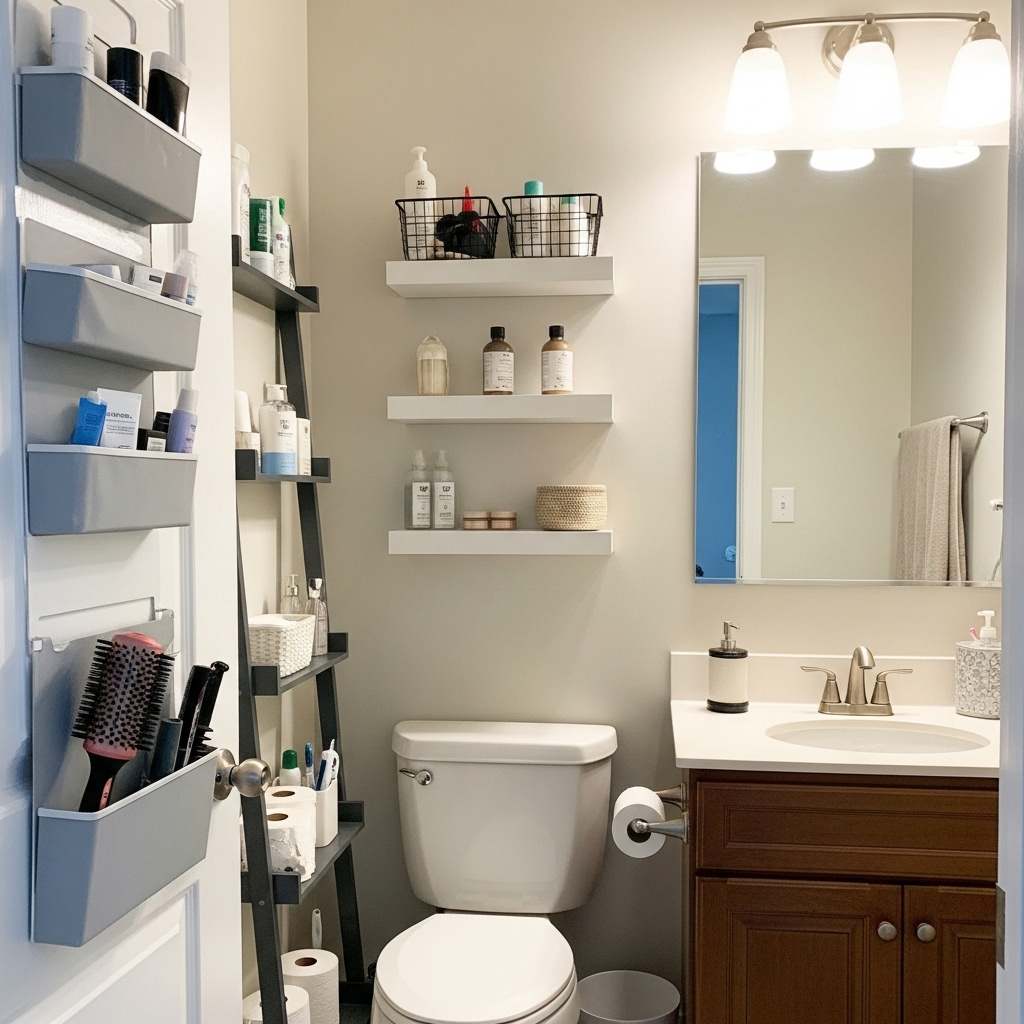
Vertical storage development — using the full height of the bathroom wall from floor to ceiling rather than only the zone from floor to approximately five feet — is the small bathroom organizational principle that creates the most additional storage capacity without occupying any additional floor space. In a small bathroom where floor space is critically limited, the decision to move storage upward creates storage capacity that feels like adding a new storage area rather than reorganizing an existing one.
The principle of using the full vertical dimension applies to every wall in the bathroom — the wall above the toilet, the wall beside the vanity, the wall above the door, even the door itself — and each of these surfaces represents storage capacity that most small bathrooms leave entirely unused. The accumulation of storage from all available vertical surfaces creates a bathroom where everything has a specific place and where the floor remains clear, which is the condition that makes a small bathroom feel organized and manageable rather than cluttered and cramped.
17. The Spa Atmosphere — Sensory Transformation
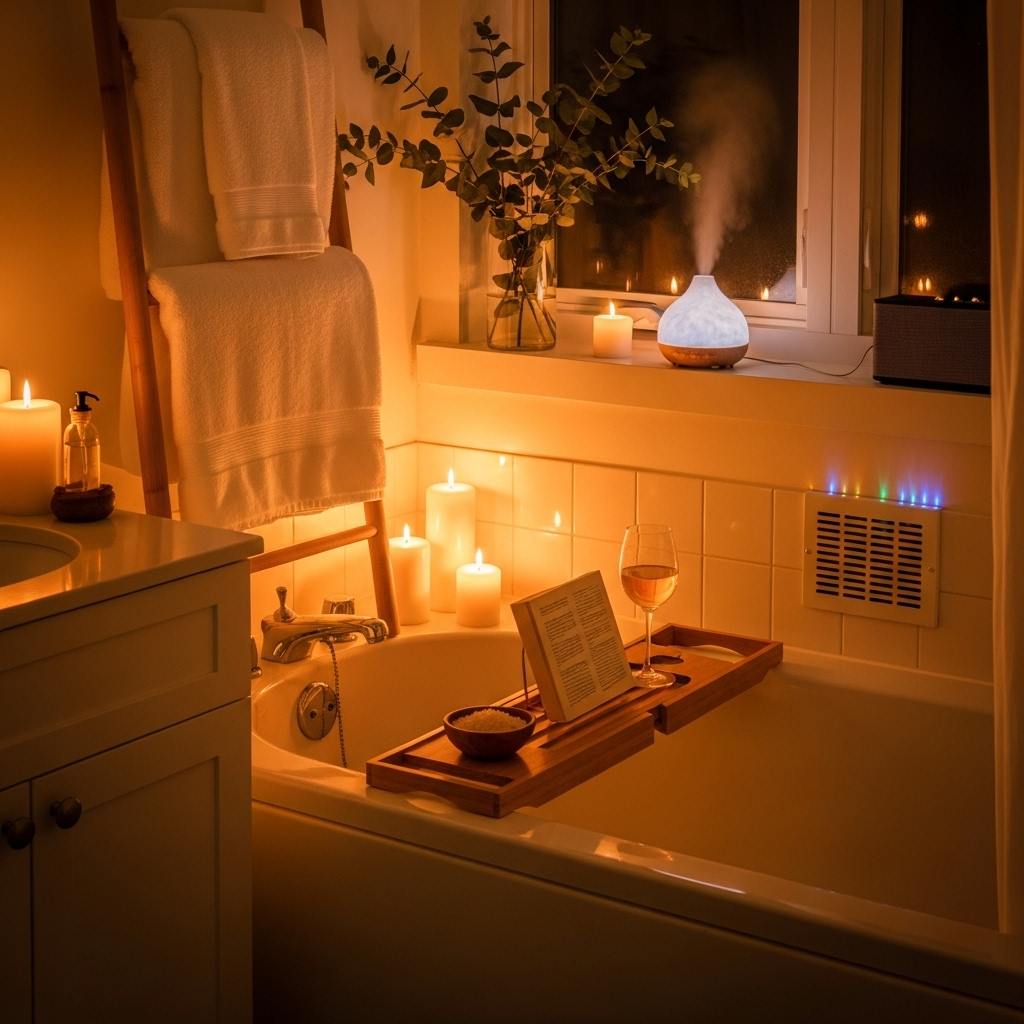
A spa atmosphere in a small bathroom is not created by the size of the room or the quality of the fixtures but by the specific combination of sensory elements — warmth, fragrance, flattering light, beautiful surfaces, and the quality of ease that these elements together create — that transforms the bathroom from a place where functions happen into a place where genuine restoration and pleasure happen. The investment in spa atmosphere elements (quality bath products, candles, a bamboo tub tray, eucalyptus) is small relative to the daily quality-of-life improvement it creates.
The bamboo tub tray is specifically the element that most transforms the bathing experience from functional to genuinely pleasurable — the ability to rest a book, a drink, and a small dish of bath products across the tub while bathing creates the specific quality of a complete, comfortable bathing experience rather than a quick functional shower alternative. The bamboo tray is one of the most inexpensive bathroom accessories available and one of the most consistently appreciated.
18. Grout Painting — Refreshing Tired Tile Without Replacement
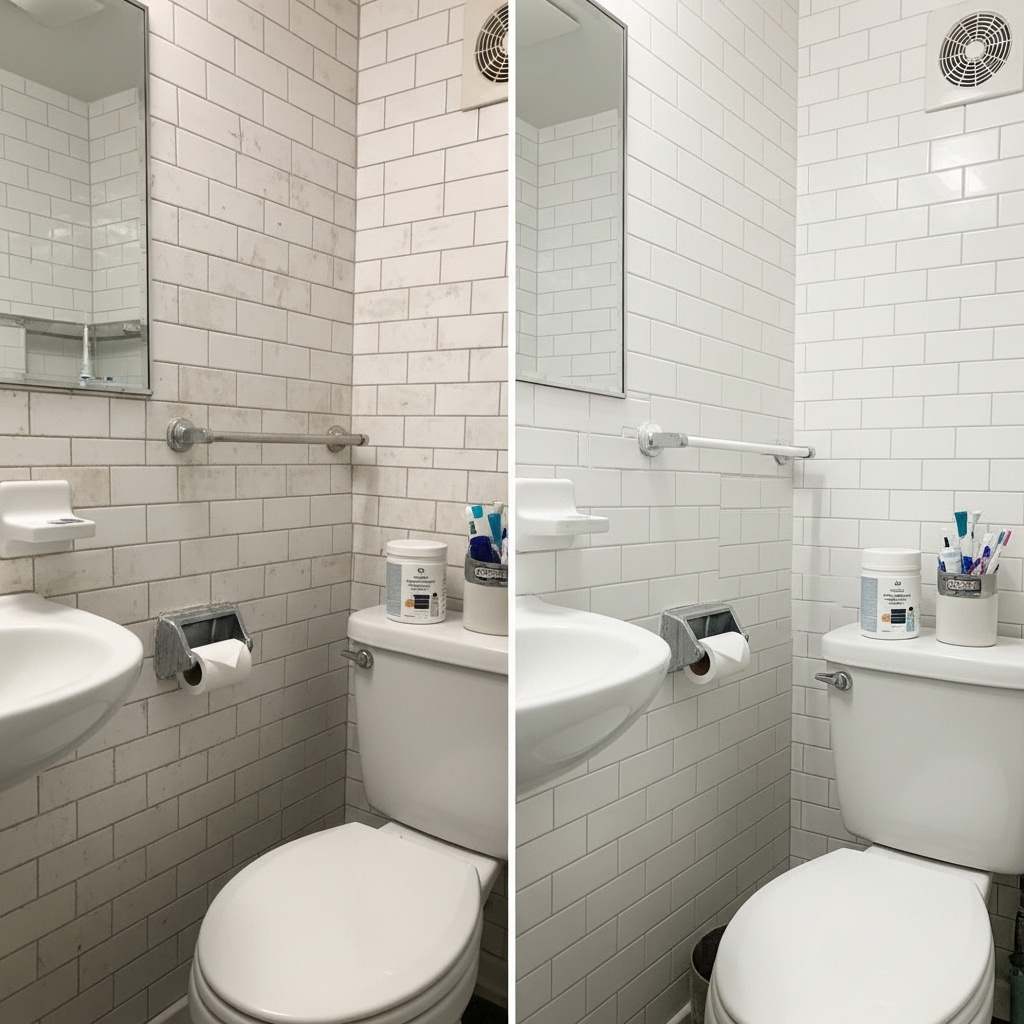
Grout painting — applying a grout-specific paint or colorant to existing discolored or stained grout lines — creates the most dramatic tile transformation available without tile replacement, because the condition of the grout lines determines more of the tile installation’s apparent quality than the tile condition itself. New tiles with perfect grout look obviously new; old tiles with refreshed, clean white grout look almost new; old tiles with stained, discolored grout look neglected regardless of the tile quality. The grout is the element that most communicates the tile installation’s age and maintenance quality.
The application requires patience — grout paint applied with a small brush to each grout line is slow work — but the result is permanent, durable in the bathroom environment, and creates an immediate and lasting improvement in the bathroom’s visual quality. The investment in grout paint and the afternoon of careful application creates a tile transformation that lasts several years and that makes a genuinely significant difference in how the bathroom appears to visitors and how it functions as an aesthetic environment for daily use.
19. Color-Coordinated Accessory Set — The Cohesive Bathroom Approach
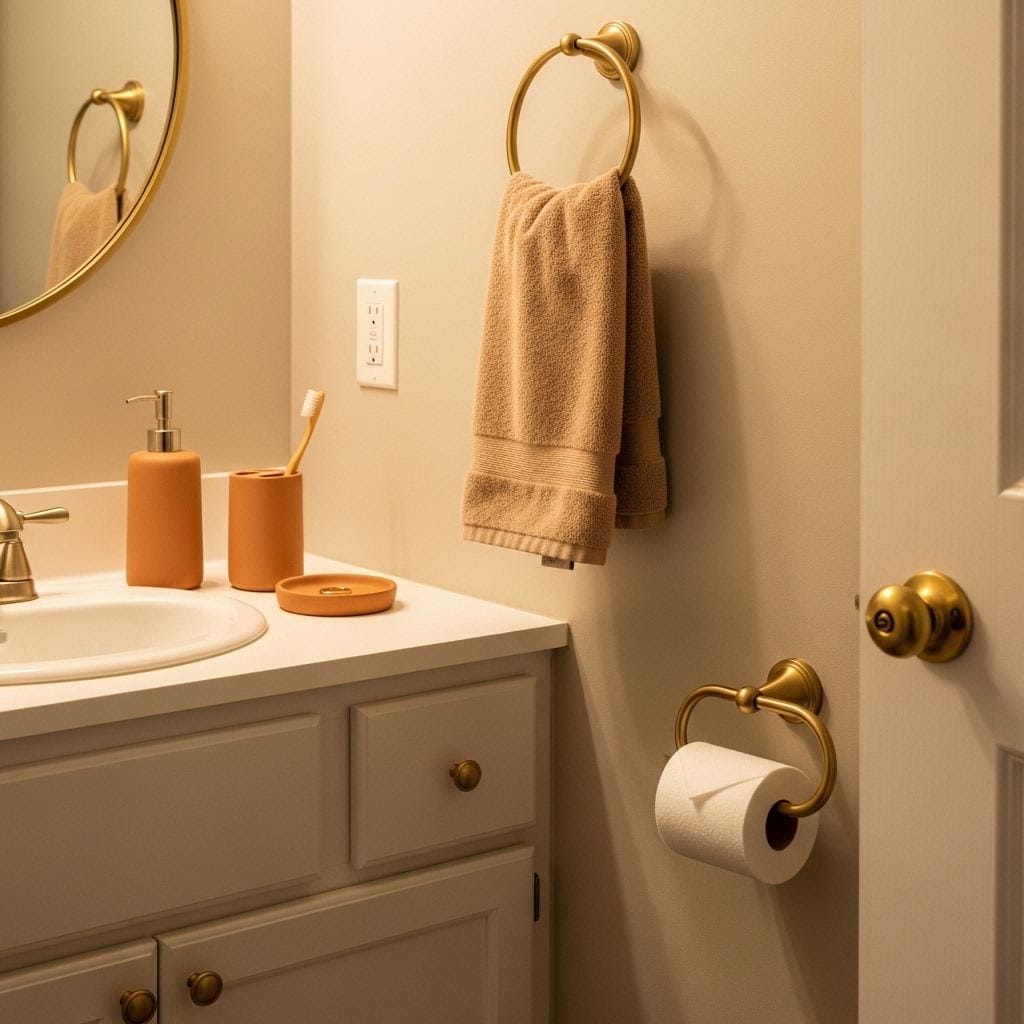
A complete color-coordinated accessory replacement — changing every bathroom accessory from the builder’s mismatched chrome collection to a consistent palette of two materials and one color family — is the bathroom improvement that creates the most complete aesthetic transformation for a modest total investment. The individual cost of replacing the toilet paper holder, the towel ring, the robe hook, the cabinet hardware, and the countertop accessories with consistent alternatives is minimal per item, and the accumulated effect of complete material cohesion throughout the bathroom creates an apparent quality improvement far beyond what any individual item replacement would suggest.
The selection of a warm accent material — terracotta ceramic, aged brass, matte black, warm rattan — rather than the default chrome creates a bathroom with specific aesthetic identity rather than generic adequacy. The specific personality of a bathroom with consistent terracotta and brass accessories is immediately felt as designed and considered in a way that a bathroom with consistent chrome accessories isn’t, because chrome reads as the default and terracotta reads as a choice.
20. The Complete Small Bathroom Transformation — Every Idea Combined
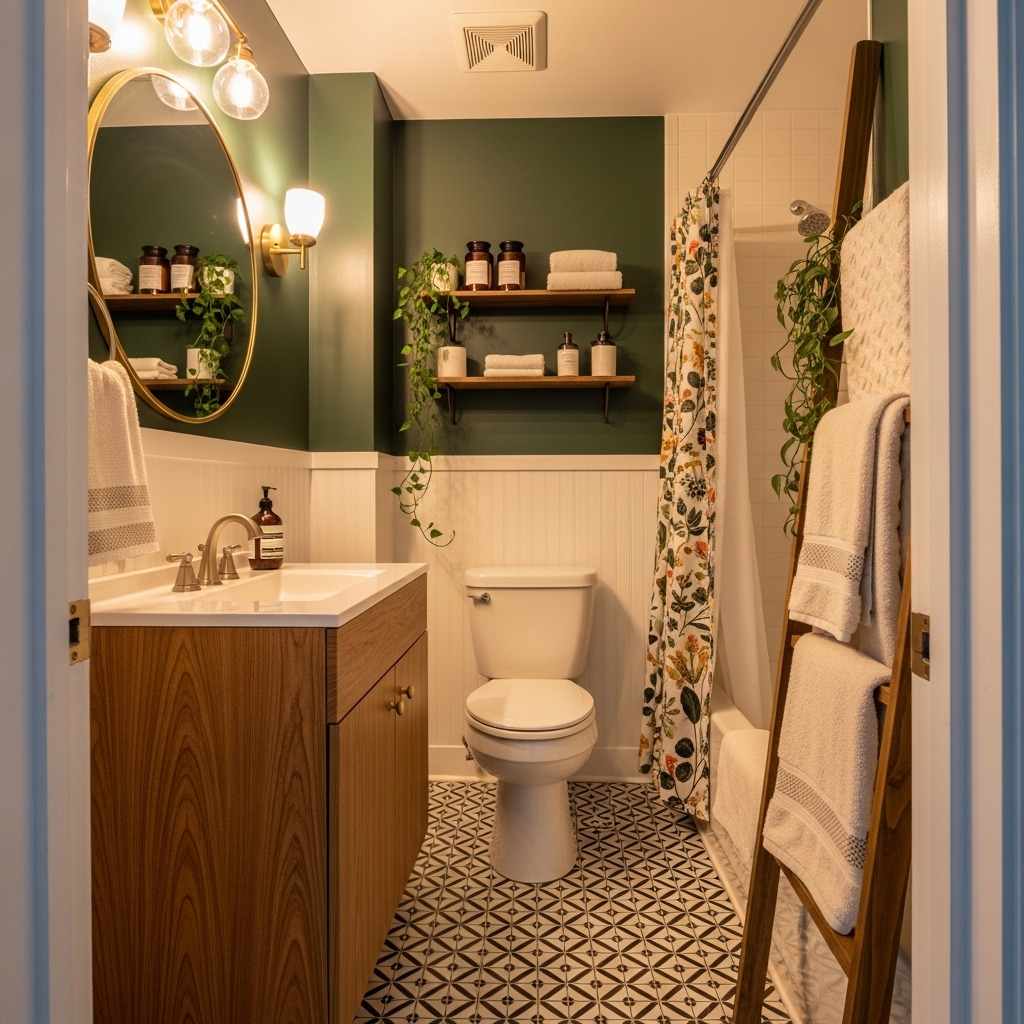
A complete small apartment bathroom transformation — where multiple individual budget improvements are applied simultaneously and in coordination with each other — creates a result that’s genuinely greater than the sum of its individual parts, because each improvement creates more value when surrounded by other improvements than it does in isolation. The round brass mirror looks more beautiful against deep green walls than against white walls; the deep green walls look more intentional above a geometric patterned floor than above a plain one; the botanical shower curtain reads as more designed within a bathroom of cohesive aesthetic character than in a bathroom of generic elements.
The specific power of the complete transformation is the quality of aesthetic coherence that it creates — a bathroom where every decision has been made in relationship to every other decision, where the floor color connects to the wall color, where the mirror frame connects to the hardware and the towel ladder, where the plant on the shelf connects to the botanical shower curtain — creates a room of genuine design intention that reads as considerably more expensive and considerably more designed than any individual element would suggest. The small bathroom transformed completely and coherently is not a budget bathroom that looks like a budget bathroom; it’s a genuinely beautiful small bathroom that happens to have been created on a budget.