An outdoor kitchen can turn an ordinary backyard into a comfortable space for cooking, dining, and entertaining. Whether you have a compact patio or a spacious garden, the right combination of appliances, surfaces, storage, lighting, and seating can make outdoor cooking feel as convenient as an indoor kitchen. These outdoor kitchen ideas range from simple grilling stations to polished entertaining zones, with practical details to help you create a setup that fits your space, lifestyle, and budget.
1. Create a Complete Outdoor Kitchen With a Built-In Grill
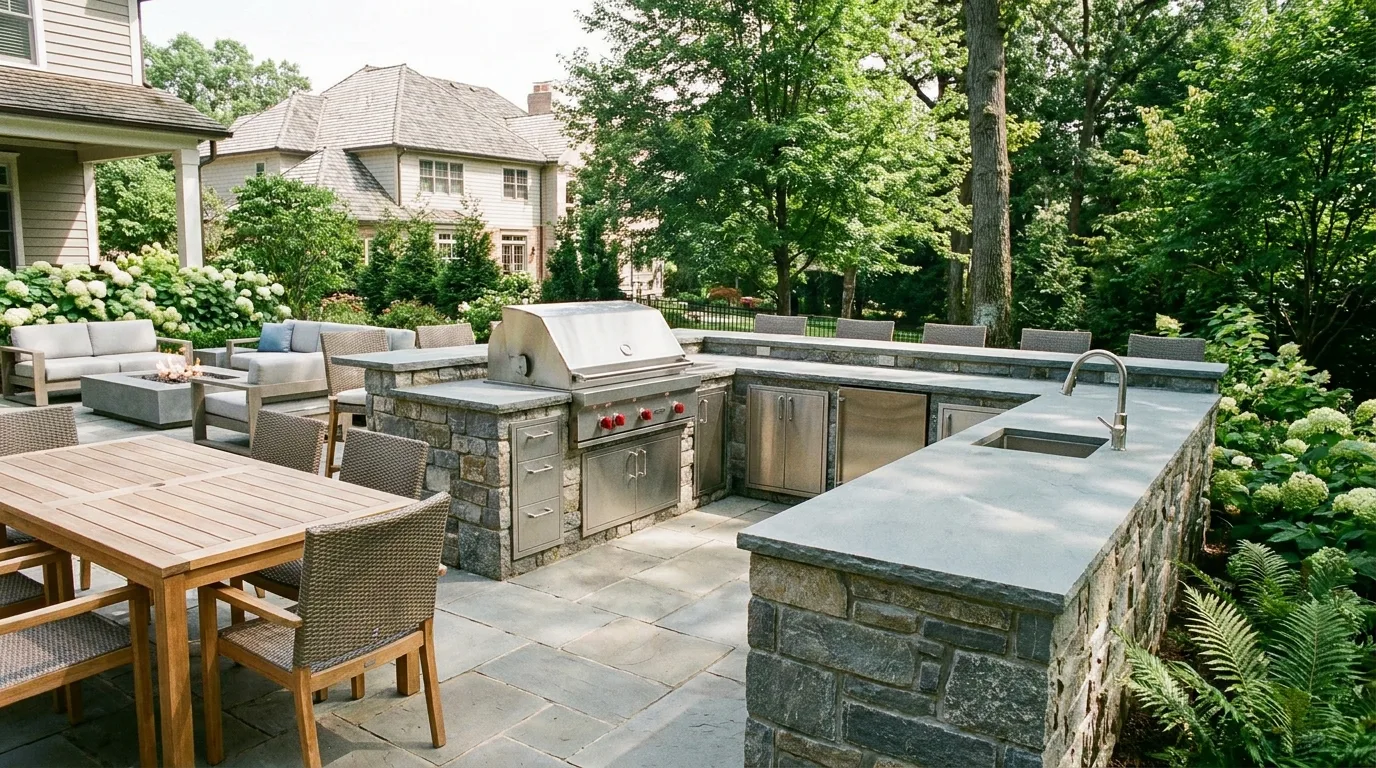
A built-in grill is an excellent foundation for an outdoor kitchen because it creates a dedicated cooking zone while giving the space a finished, custom look. Surround the grill with a durable countertop so you have room for food preparation, serving, and setting down hot cookware. Include cabinets underneath for utensils, pans, fuel, and grilling accessories. For a cohesive appearance, coordinate the countertop and cabinet finishes with your home’s exterior or patio materials. Stainless steel works especially well for appliances because it is durable and easy to clean. If you frequently entertain, consider leaving enough counter space on both sides of the grill for efficient movement. A built-in design can be adapted to a straight wall, island, or L-shaped layout depending on your backyard.
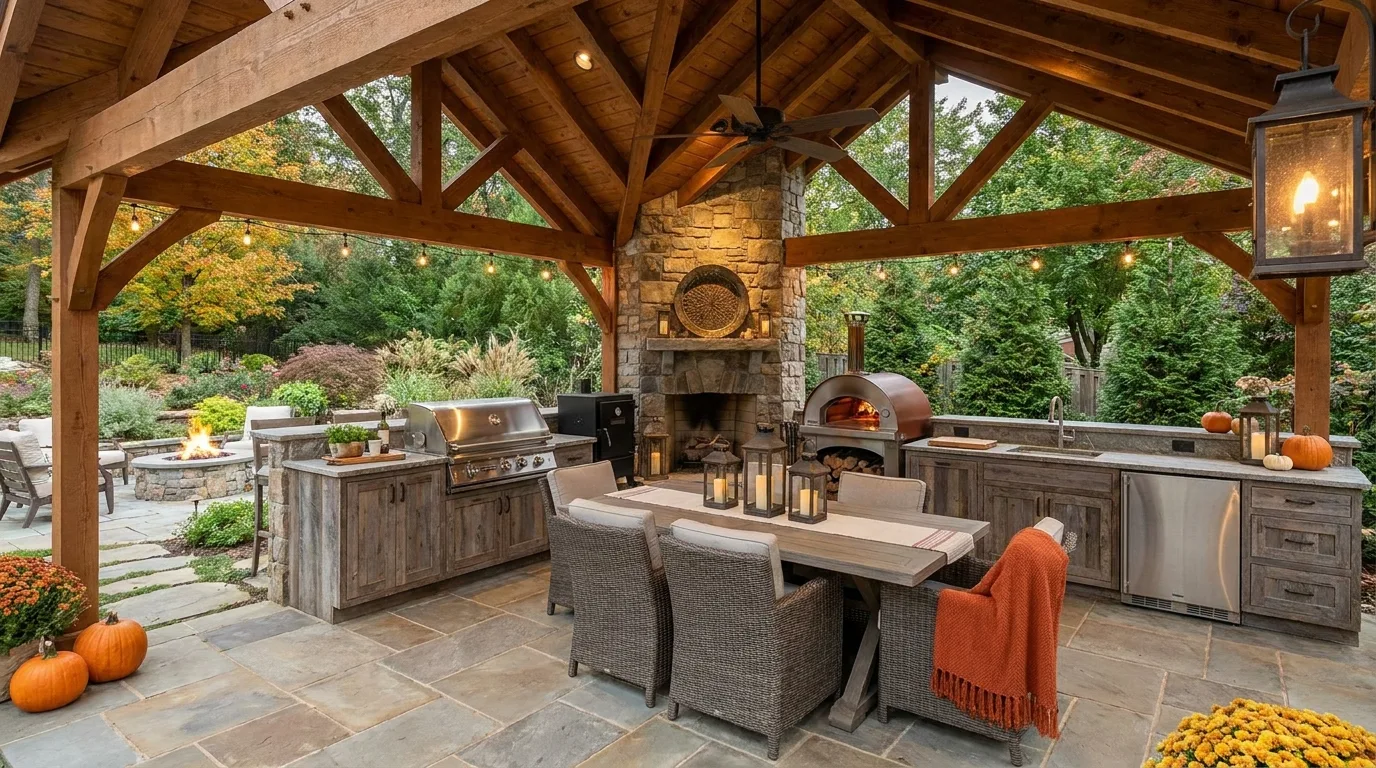
2. Add a Stylish Outdoor Kitchen Island
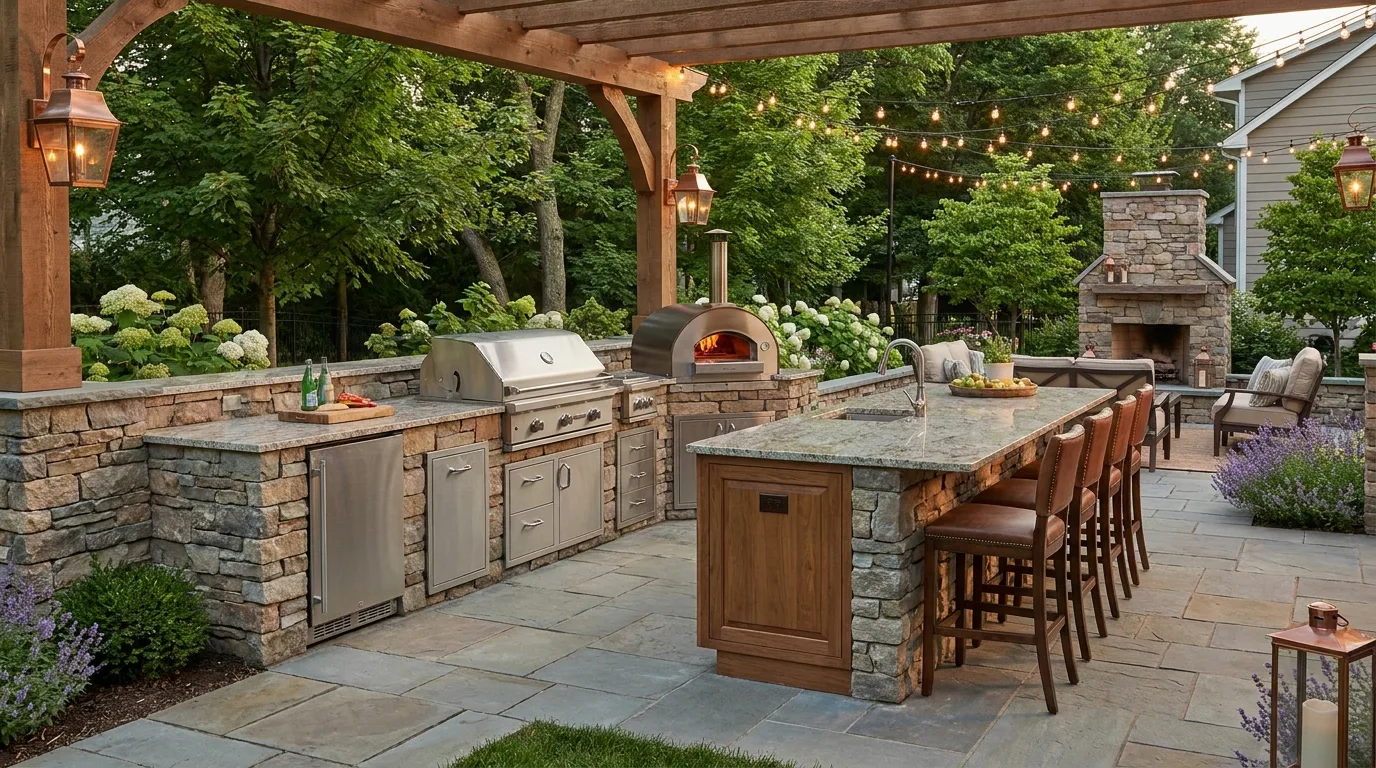
An outdoor kitchen island can become the visual and functional centerpiece of your backyard. It provides a convenient place for grilling, food preparation, storage, and casual dining without requiring a large enclosed structure. For smaller yards, a compact rectangular island with a grill and lower cabinets may be enough. Larger spaces can accommodate a wider island with a sink, refrigerator, extra burners, and an extended counter for stools. Choose weather-resistant construction and a countertop that can handle outdoor temperature changes, moisture, and frequent use. Stone, porcelain, and appropriately rated outdoor countertop materials are practical choices. Keep comfortable clearance around the island so people can walk between the cooking and seating areas without crowding the cook.
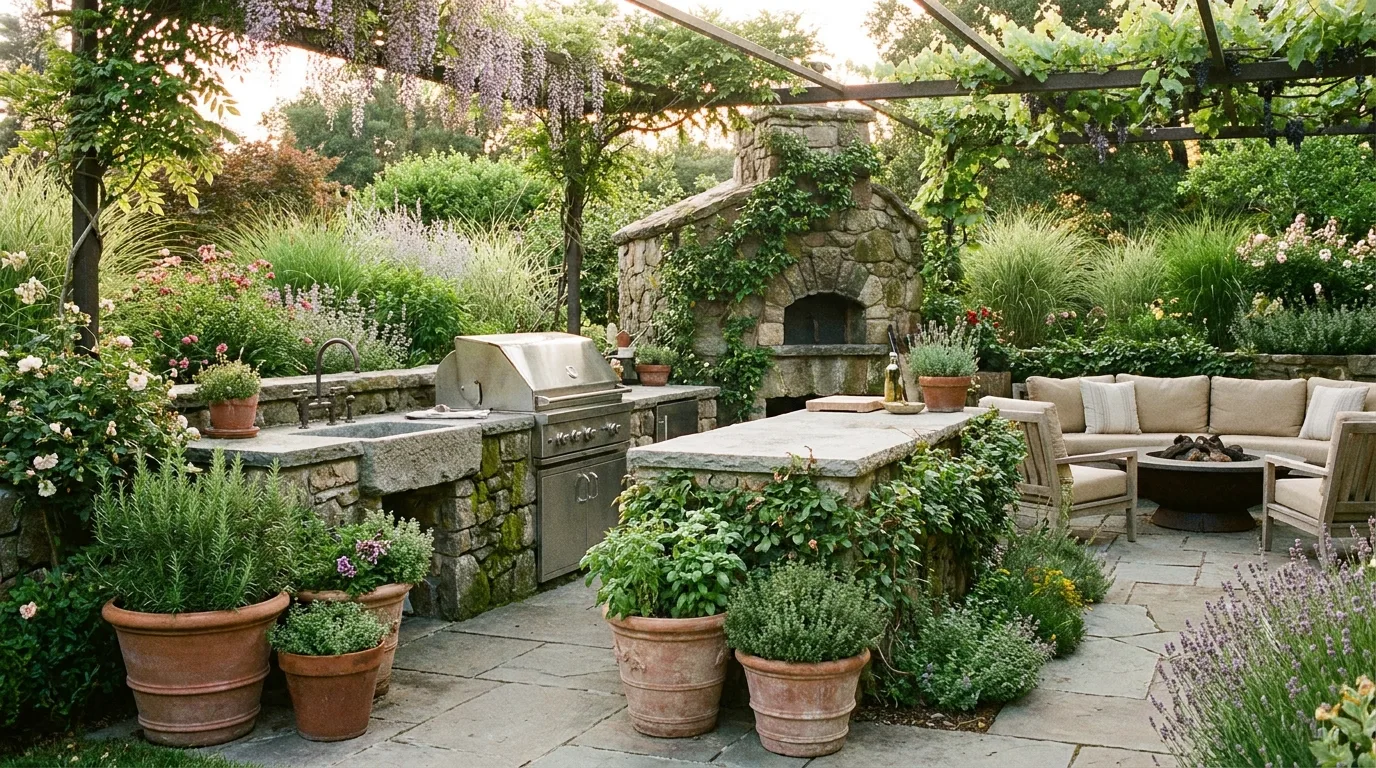
3. Design a Cozy L-Shaped Outdoor Cooking Area
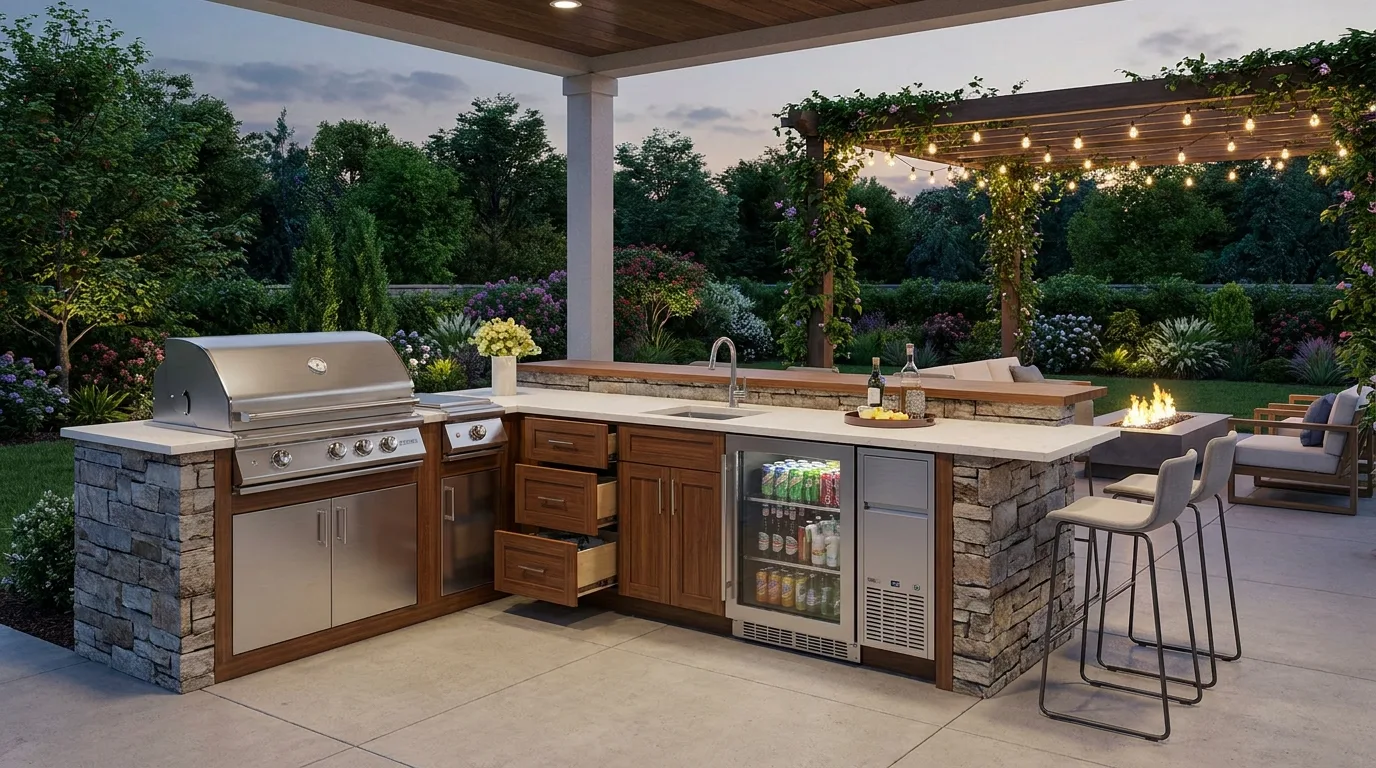
An L-shaped outdoor kitchen makes excellent use of corners and can create separate cooking and preparation zones. One side can hold the grill and burners, while the other provides countertop workspace, storage, or a sink. This arrangement keeps the main cooking area organized while opening the center of the patio for dining or conversation. It is particularly useful when the kitchen sits against an exterior wall, fence, or covered patio. Use matching cabinetry and countertops along both legs to make the layout feel intentional. If the kitchen is close to the house, consider how doors and windows open so appliances and counters do not obstruct everyday movement. Adding task lighting under cabinets can also make evening cooking safer and more convenient.
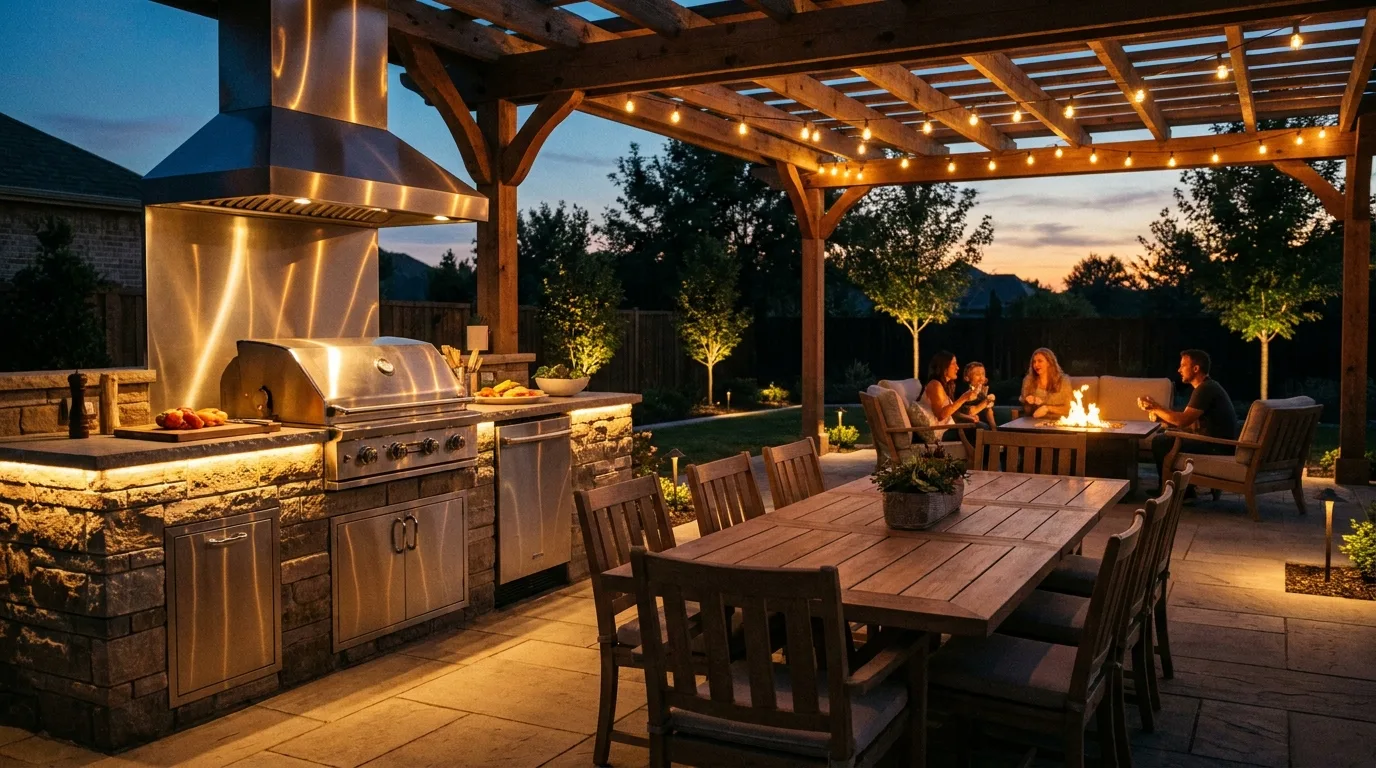
4. Build a Compact Outdoor Kitchen for a Small Backyard
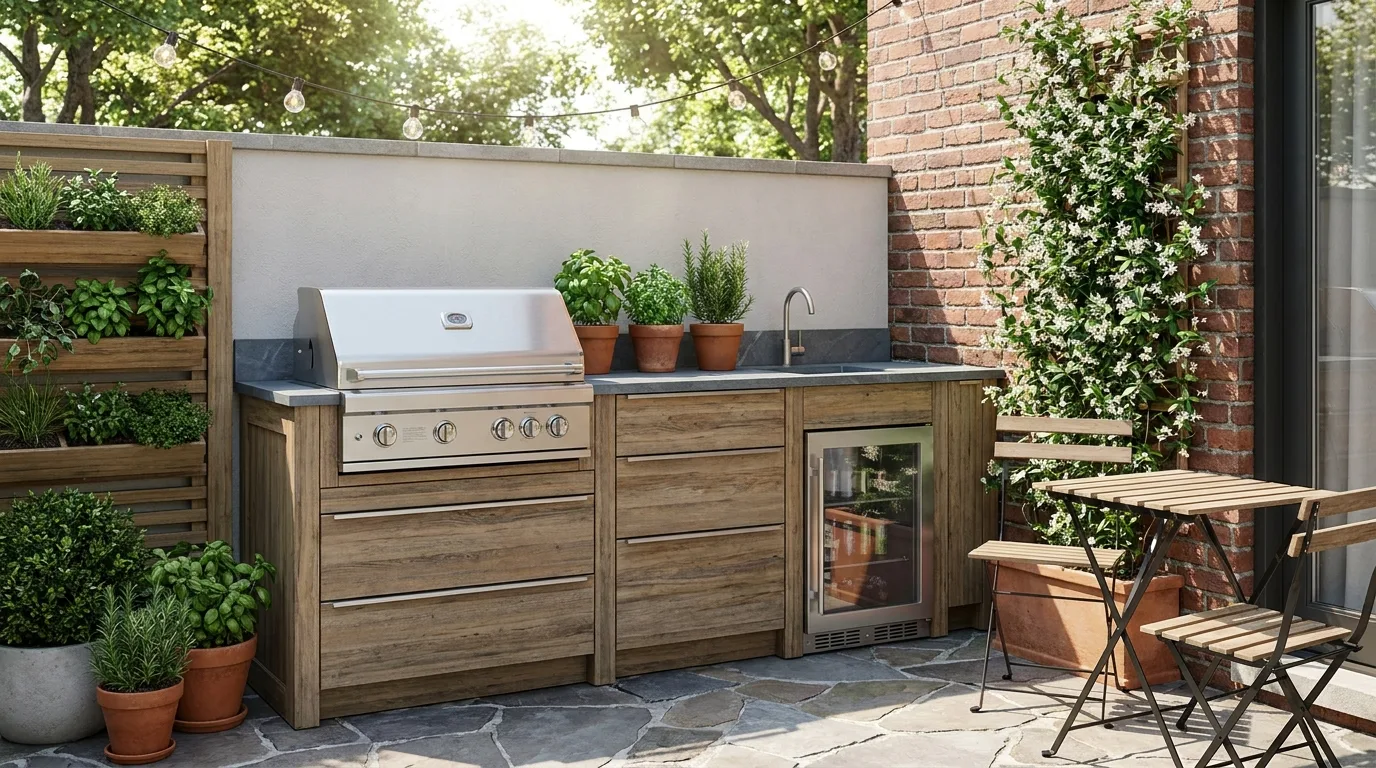
You do not need a huge yard to enjoy an outdoor kitchen. A compact setup can combine a grill, narrow counter, storage cabinet, and small refrigerator into a highly functional station. Look for appliances designed for smaller footprints and prioritize the features you actually use. If grilling is your main activity, devote most of the available counter space to preparation and serving rather than installing several large appliances. Vertical storage can help keep tools organized without expanding the kitchen’s footprint. A fold-down serving shelf is another useful option when space is limited. Keep the design visually light with simple cabinet fronts and a restrained material palette. Position the kitchen where smoke, heat, and cooking odors will not create problems near frequently used doors or windows.
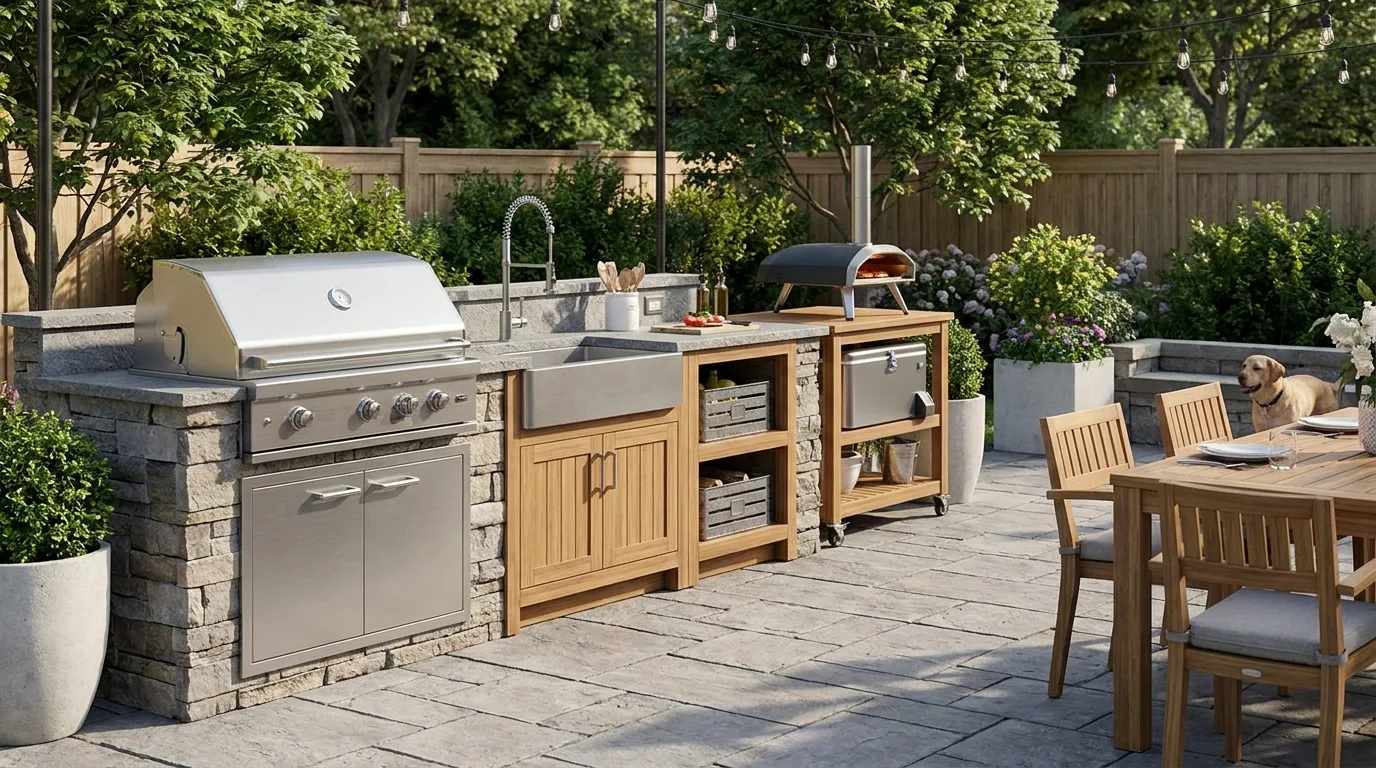
5. Add a Pergola Over the Outdoor Kitchen
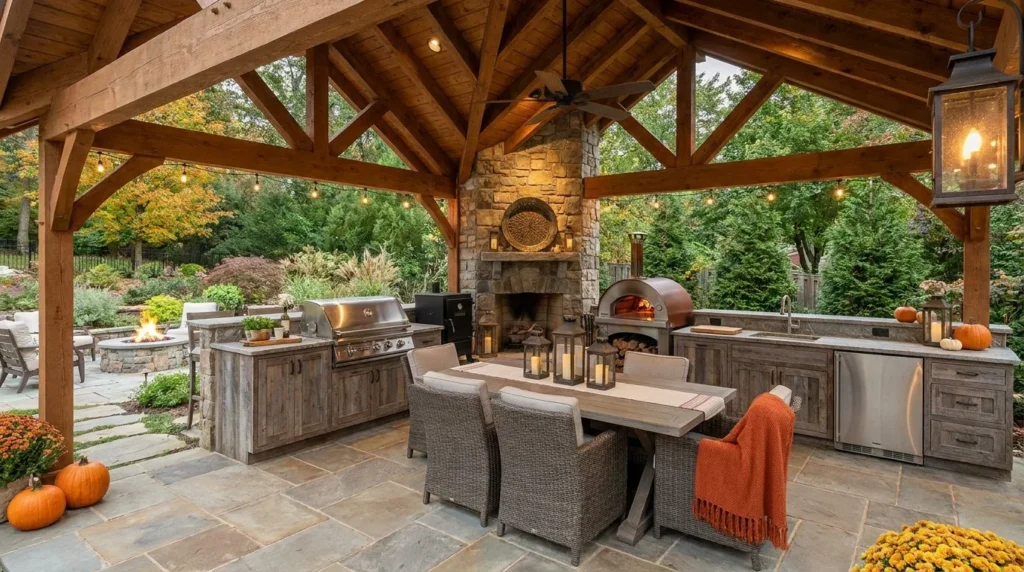
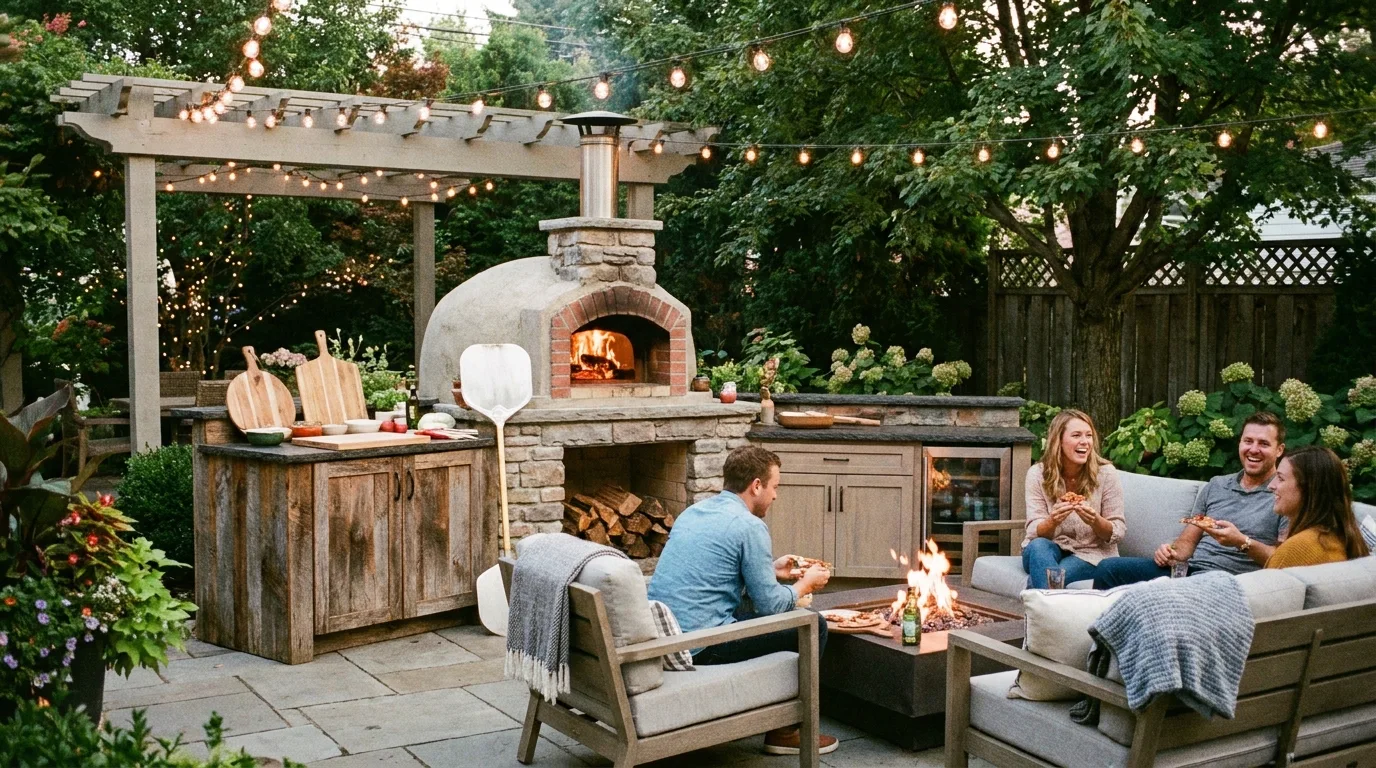
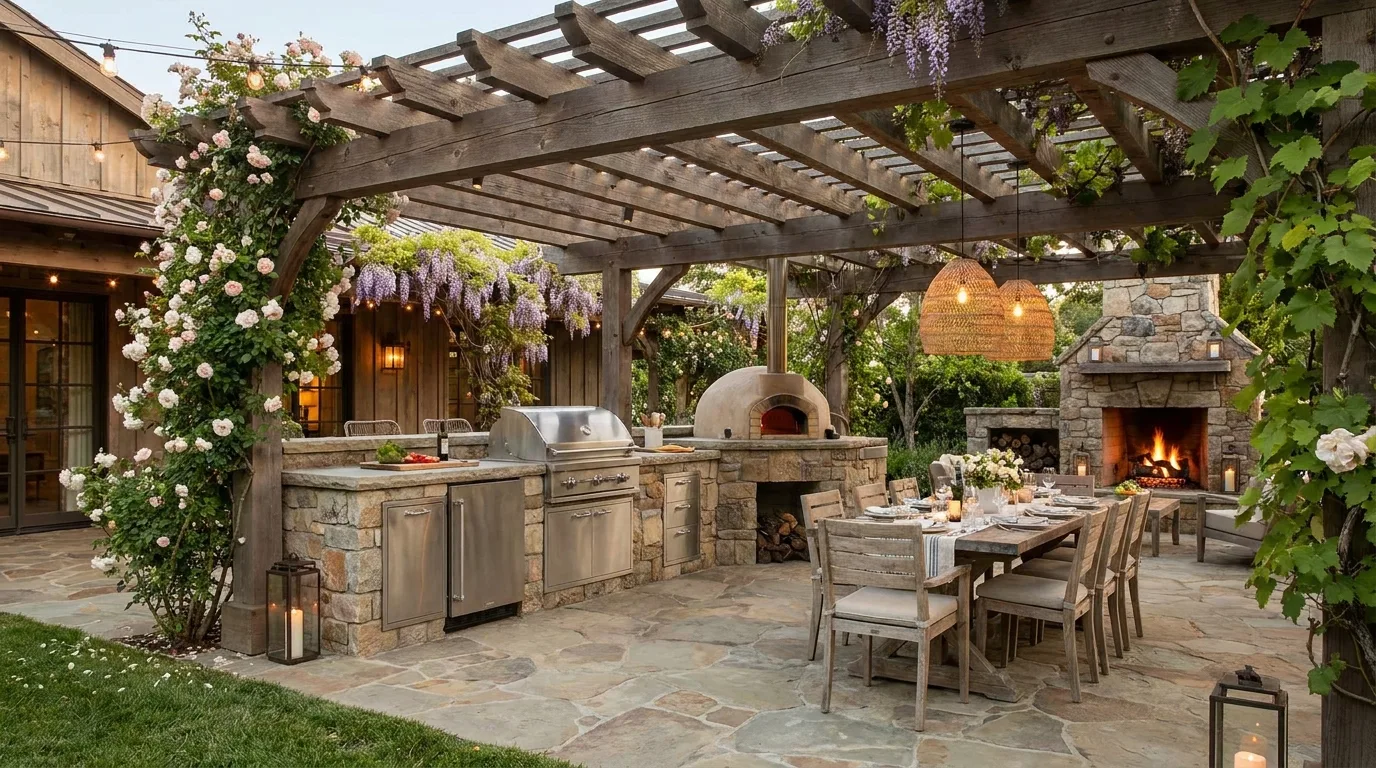
A pergola can make an outdoor kitchen feel more like a defined room while providing partial shade for cooks and guests. It also creates an opportunity to add pendant lights, ceiling fans, climbing plants, or weather-appropriate decorative elements. When planning the structure, make sure the cooking appliance has adequate ventilation and that the materials and clearances are appropriate for the grill or other heat-producing equipment. A pergola with a slatted roof provides filtered sunlight, while a covered roof offers more substantial protection from weather. Coordinate its finish with the outdoor kitchen cabinetry or patio furniture for a unified look. Keep the cooking zone positioned so rising heat and smoke can dissipate safely rather than collecting beneath the structure.
6. Include an Outdoor Refrigerator and Beverage Station
An outdoor-rated refrigerator can dramatically improve the convenience of a backyard kitchen. Instead of repeatedly walking inside for drinks, ingredients, sauces, or chilled food, you can keep frequently used items close to the cooking area. Pair the refrigerator with a dedicated beverage station featuring a small countertop, bottle storage, and an ice bucket or outdoor-rated ice maker if appropriate for your setup. A beverage station also helps separate guest traffic from the main cooking zone. Choose appliances specifically designed and approved for outdoor use rather than assuming an indoor refrigerator will perform safely outside. Place the refrigerator where it can be accessed without forcing guests to pass directly behind the cook. This small planning decision can make entertaining much smoother.
7. Combine the Kitchen With an Outdoor Dining Area
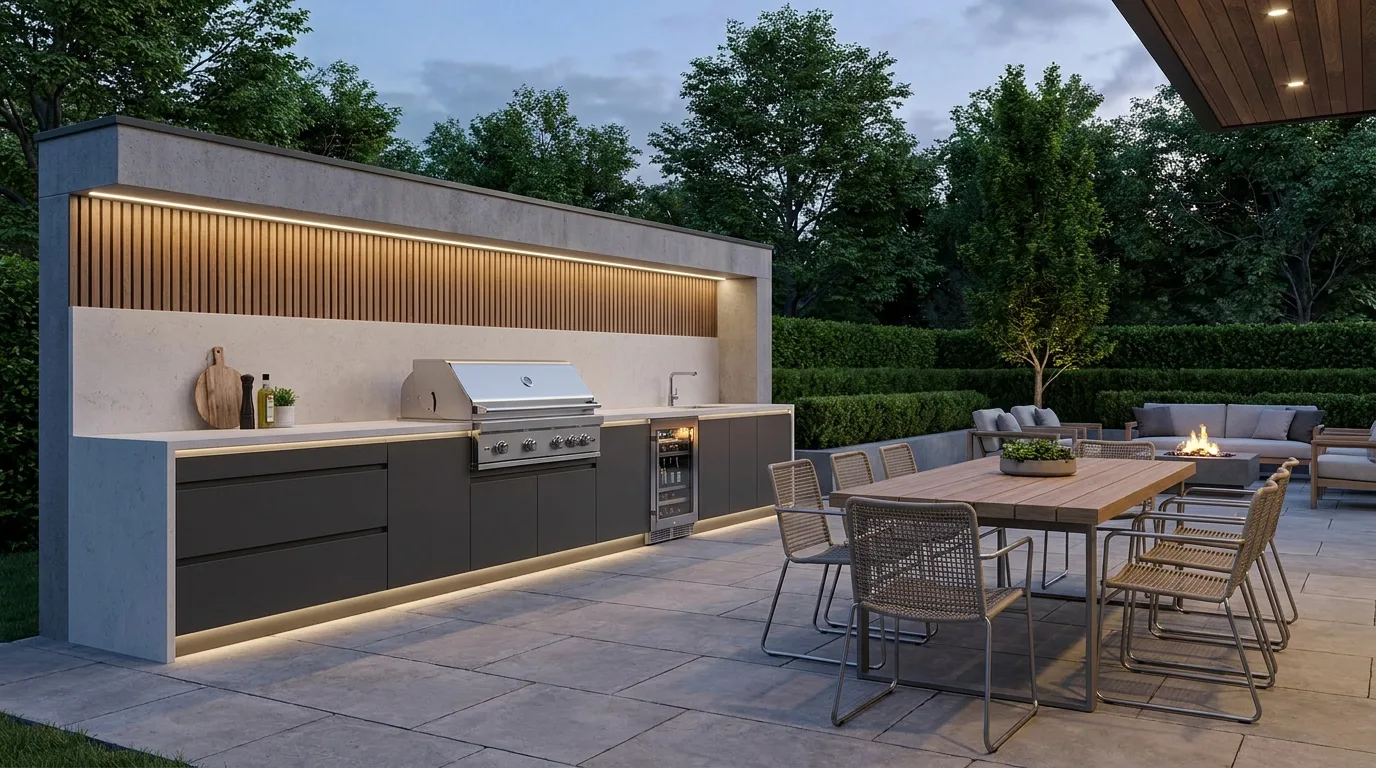
Connecting the outdoor kitchen directly to a dining area creates a natural backyard entertaining zone. A dining table positioned near the cooking station allows meals to move easily from grill to table while keeping conversation flowing. Leave enough room around chairs for people to sit and move comfortably without interfering with the cooking area. For a more flexible layout, use a counter-height peninsula with stools so guests can have casual meals while watching the cook. Choose outdoor furniture made for your climate and use cushions that can withstand regular exposure to moisture and sunlight. If the dining area is under a roof or pergola, consider a ceiling fan or suitable lighting to improve comfort. The goal is to make cooking feel social rather than isolated.
8. Use Natural Stone for a High-End Outdoor Kitchen
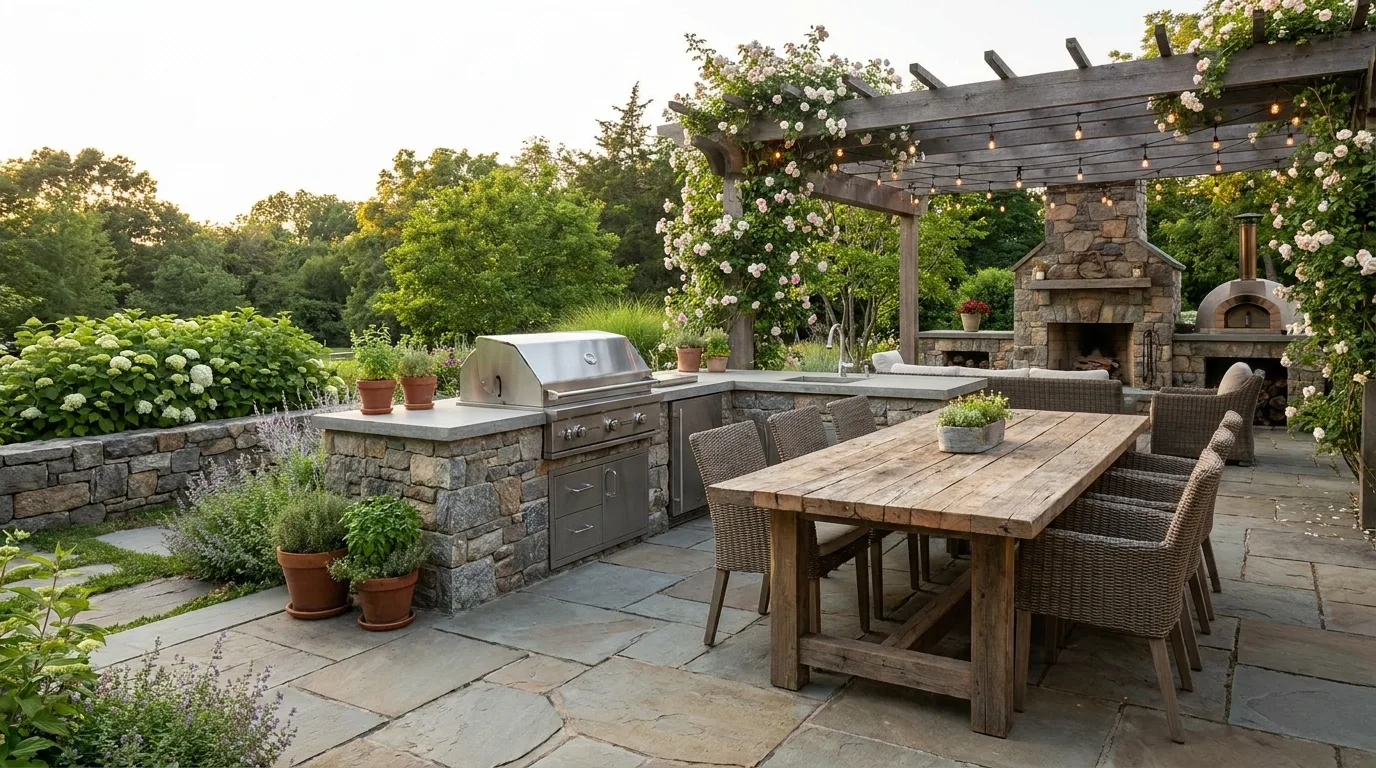
Natural stone can give an outdoor kitchen a substantial, timeless appearance that blends beautifully with gardens, patios, and landscaped backyards. Stone veneer can be used on the island base, while a compatible stone or another outdoor-rated material can create the countertop. Choose materials based on your local climate and expected maintenance requirements, since outdoor surfaces face moisture, temperature changes, food spills, and sunlight. A neutral stone palette works well with wood, metal, and greenery, making it easier to update furniture and accessories later. Avoid creating an overly heavy look by balancing masonry with open shelving, warm wood accents, or simple cabinetry. Good construction and appropriate sealing or maintenance, where required by the material, are just as important as appearance when building a long-lasting outdoor kitchen.
9. Create a Modern Outdoor Kitchen With Sleek Finishes
For a contemporary backyard, use clean lines, minimal hardware, and a limited combination of materials. Stainless steel appliances paired with smooth cabinetry and a simple countertop can create a polished modern appearance without unnecessary decoration. Black, charcoal, warm gray, and natural wood tones are particularly versatile for outdoor spaces. Keep visual clutter under control by incorporating drawers and closed storage for grilling tools, dishes, and cleaning supplies. Linear LED lighting beneath counters or cabinets can provide practical illumination while maintaining the streamlined aesthetic. Modern design also benefits from careful proportion: oversized appliances can overwhelm a small patio, while a tiny kitchen may look lost in a large yard. Select each component according to the scale of the surrounding architecture.
10. Add a Pizza Oven for Backyard Entertaining
An outdoor pizza oven can turn a basic cooking area into a destination for gatherings. It provides a dedicated feature for pizzas, flatbreads, roasted vegetables, and other dishes while creating an interactive experience for guests. Position the oven near a generous preparation counter so dough, toppings, trays, and serving boards are within easy reach. A nearby shelf or cabinet can hold pizza peels, pans, heat-resistant gloves, and other accessories. Because pizza ovens generate substantial heat, follow the manufacturer’s clearance and installation requirements and use suitable noncombustible surfaces around the appliance. If you entertain often, consider placing the oven where guests can watch the cooking without standing in the main work zone. A simple outdoor dining setup nearby completes the experience.
11. Incorporate a Sink for Easier Outdoor Cooking
An outdoor sink can be one of the most practical additions to a backyard kitchen, especially if you prepare large meals or entertain frequently. It provides a convenient place to rinse vegetables, wash hands, clean utensils, and deal with small spills without carrying everything indoors. Plan the sink as part of the kitchen’s overall workflow, ideally close to the main preparation counter. Plumbing requirements should be considered before construction because water supply, drainage, seasonal temperatures, and local building requirements can affect installation. A deep basin is useful for washing larger cookware, while a compact basin may be sufficient for a small kitchen. Pair the sink with a weather-appropriate faucet and nearby storage for towels and cleaning supplies. Keep sanitation and drainage practical rather than treating the sink as purely decorative.
12. Add Warm Lighting for Evening Ambiance
Good lighting allows an outdoor kitchen to remain useful after sunset while making the backyard feel inviting. Use task lighting directly over the grill, sink, and preparation surfaces so you can safely see what you are doing. Softer ambient lighting can define the dining and seating areas without making the entire backyard excessively bright. Wall lights, appropriately rated pendant fixtures, recessed lighting, and carefully positioned landscape lights can all contribute to a layered scheme. Choose fixtures rated for their intended outdoor location and protect electrical connections according to local requirements. Avoid placing bright lights directly in guests’ lines of sight. A combination of functional and atmospheric lighting lets the kitchen transition naturally from daytime cooking area to evening entertaining space.
13. Blend the Outdoor Kitchen Into the Landscaping
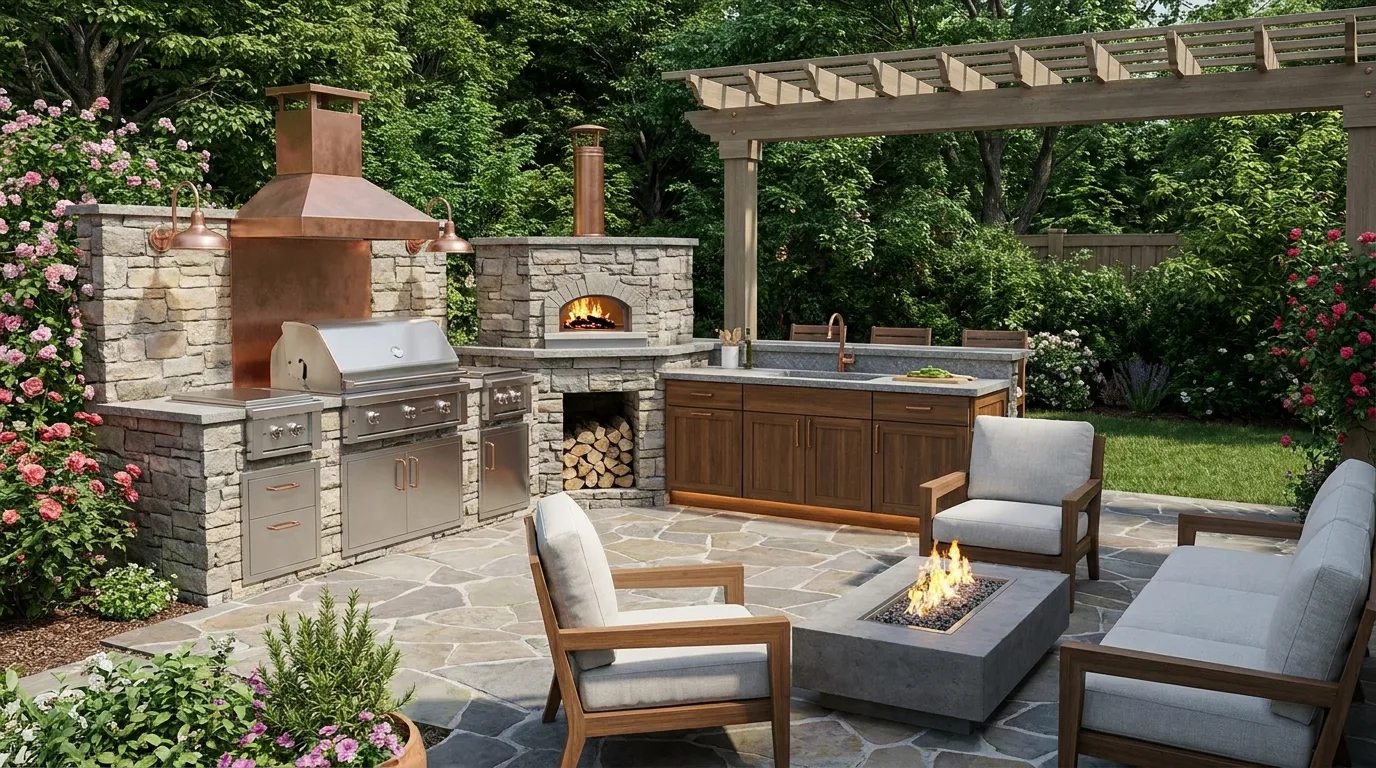
An outdoor kitchen feels more inviting when it looks like part of the landscape rather than an appliance collection placed on a patio. Use surrounding planting beds, ornamental grasses, potted herbs, trees, or low shrubs to soften hard surfaces and visually connect the kitchen with the garden. Natural materials such as stone, brick, wood, and textured tile can also help the structure blend into its surroundings. Keep plants far enough from grills, burners, and other heat sources to avoid creating safety problems. Consider planting culinary herbs close to the preparation area so fresh rosemary, basil, mint, or thyme is easy to access. Pathways should remain clear and slip-resistant, particularly around areas where food, water, or grease may be present. Thoughtful landscaping adds privacy and atmosphere without sacrificing function.
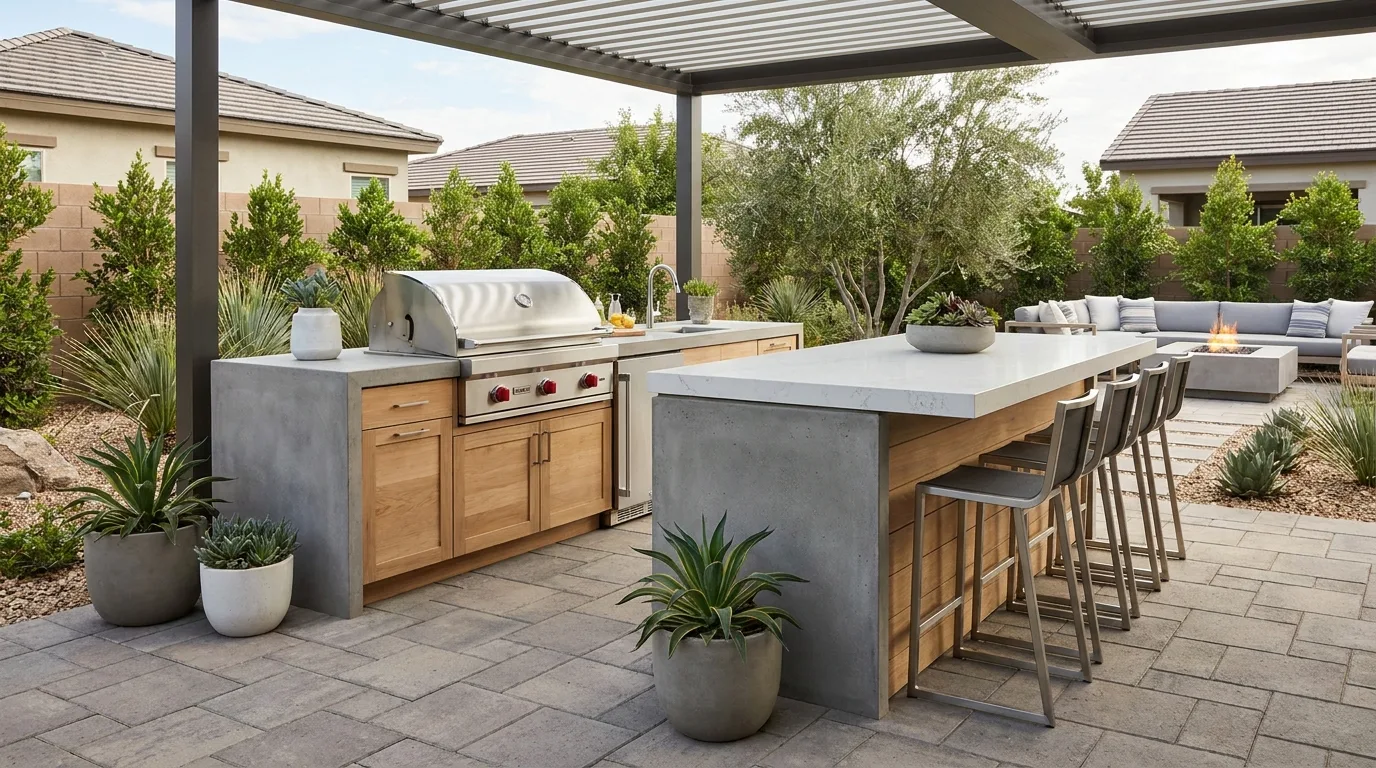
14. Build a Covered Outdoor Kitchen for Year-Round Use
A covered outdoor kitchen can provide greater protection from sun and light weather, making the space more comfortable across more of the year. A roof or substantial covered structure can protect countertops, cabinets, and seating while allowing you to cook outdoors in a wider range of conditions. Design the space with ventilation in mind, especially when using grills, burners, or other combustion-based appliances. Include durable storage so cooking equipment can remain organized and protected between uses. If your climate experiences seasonal temperature changes, select materials and plumbing components suited to those conditions and plan for appropriate winterization where necessary. Add comfortable seating, practical lighting, and a weather-resistant dining surface so the area functions as an outdoor room rather than simply a cooking station. Good planning can make the kitchen both beautiful and genuinely useful.