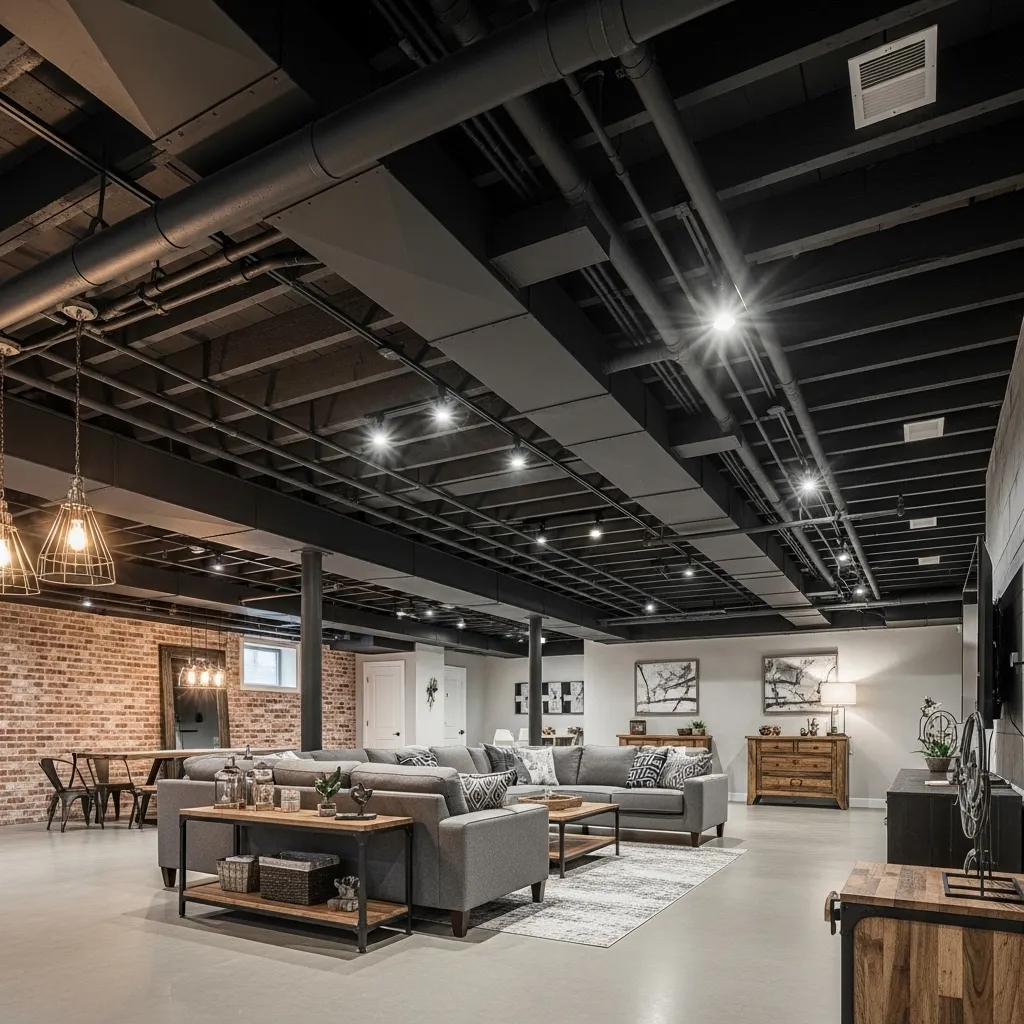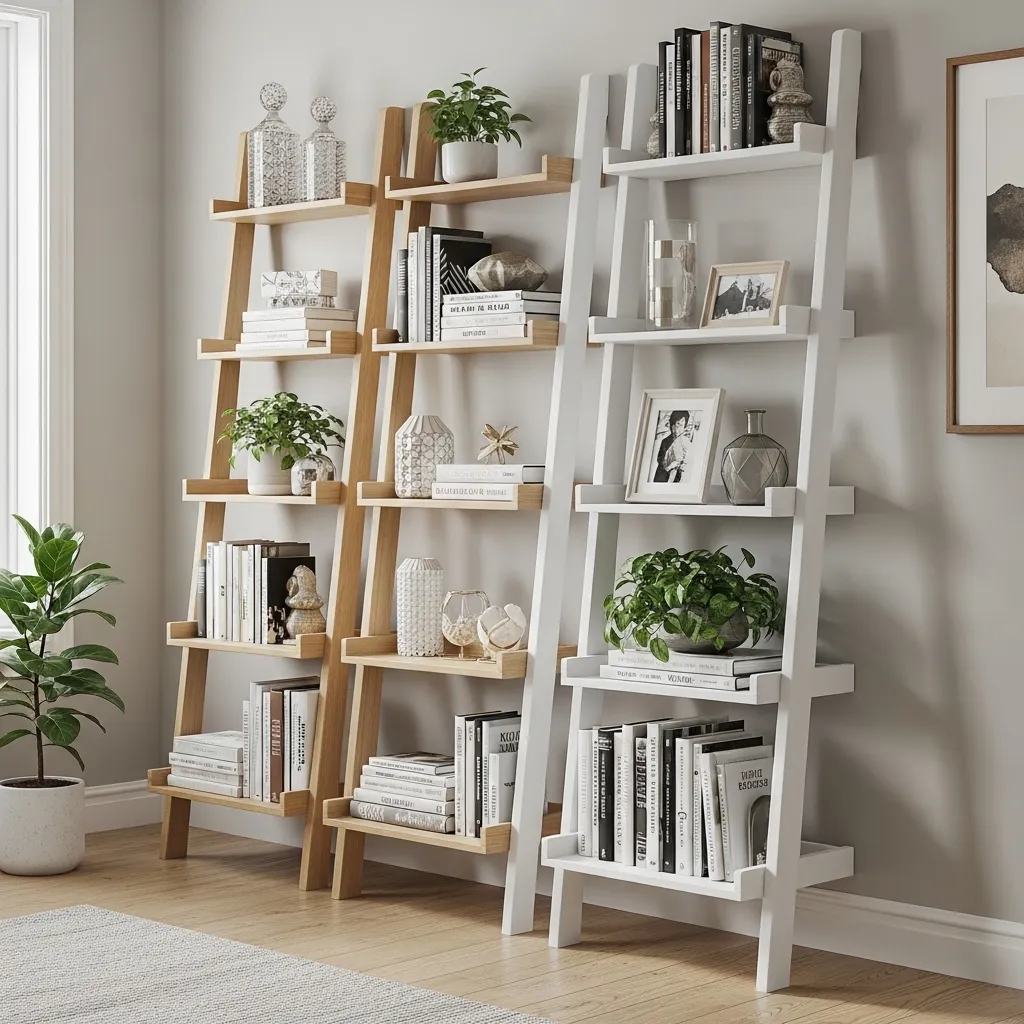
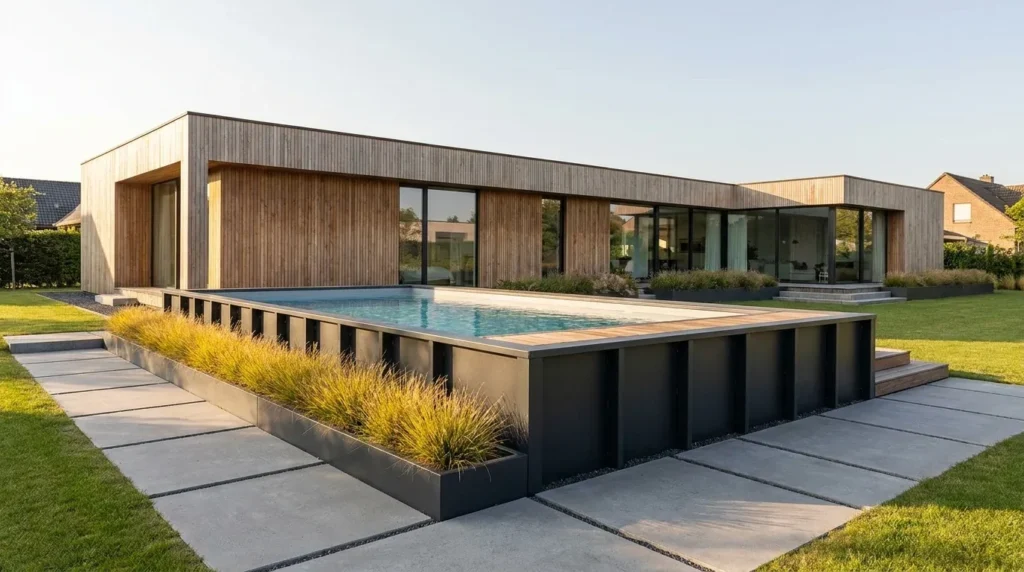
An above-ground pool can turn an ordinary backyard into a refreshing summer retreat, a family-friendly gathering place, or a relaxing outdoor escape. With today’s variety of pool shapes, frame materials, surrounding decks, and landscaping options, these pools can look stylish while accommodating different budgets and yard sizes. The secret is choosing a design that balances appearance, practicality, and long-term maintenance.
Whether you’re planning your first backyard swimming pool or upgrading an existing setup, thinking beyond the summer season can make your investment more worthwhile. Consider where the pool will sit, how you will access it, what equipment it requires, and how you will protect it during colder months. The following above-ground pool ideas combine attractive backyard inspiration with practical buying tips, helping you create a setup that suits your property, household, and local climate. From compact plunge pools to spacious entertaining areas, these designs offer plenty of ways to make your backyard work harder throughout the year.
1. Classic Round Above-Ground Pool
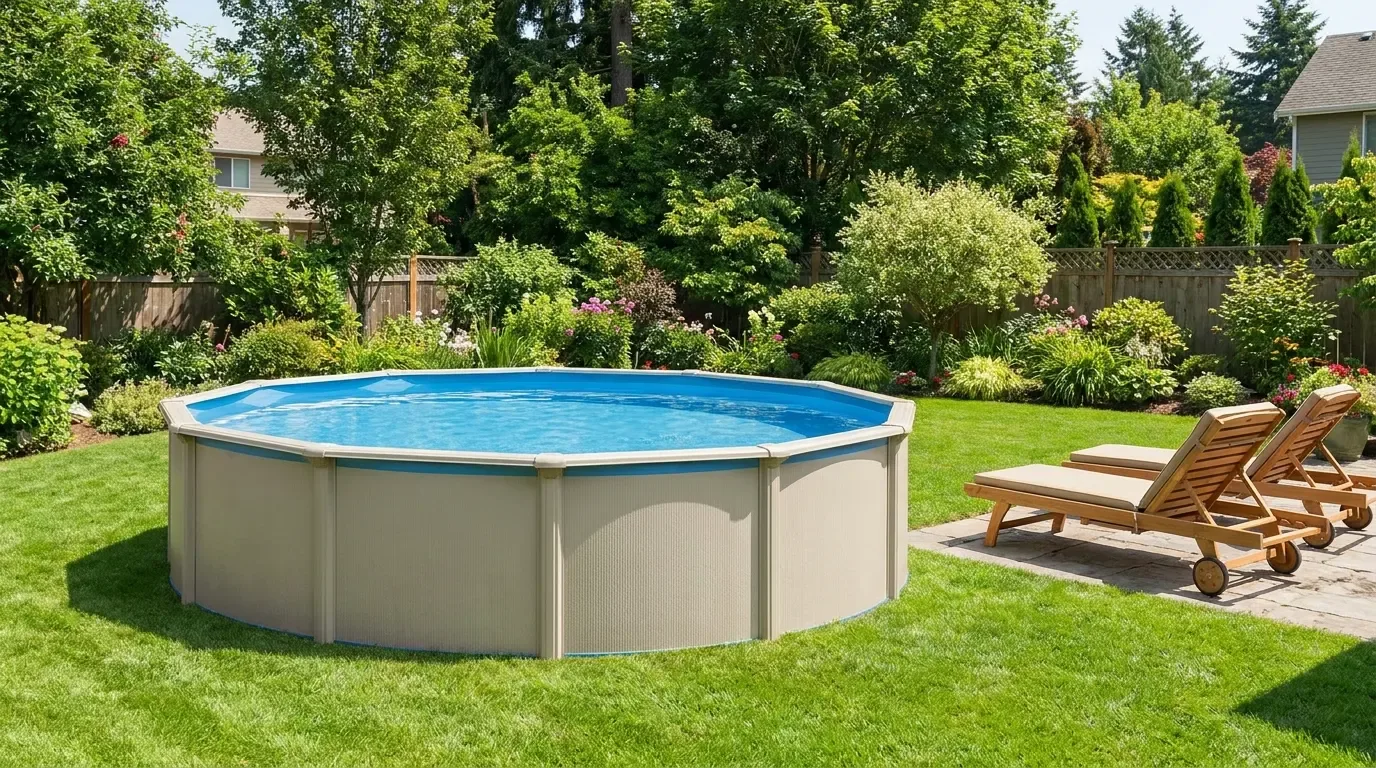
A classic round above-ground pool is an excellent starting point for homeowners who want a straightforward, versatile swimming area. Its symmetrical shape makes it easy to position in an open section of the yard, while many models offer relatively simple installation compared with elaborate custom designs. Round pools also work well for casual family swimming, cooling off after gardening, and supervised play.
Before buying, measure the available space carefully, including the area needed for the pool’s support structure, ladder, pump, and maintenance access. Avoid placing it beneath overhanging branches, which can introduce leaves and debris. A properly prepared, level base is essential for stability. Choose a diameter that leaves room for safe circulation around the pool rather than filling every available inch of the yard.
2. Rectangular Pool for Modern Backyards
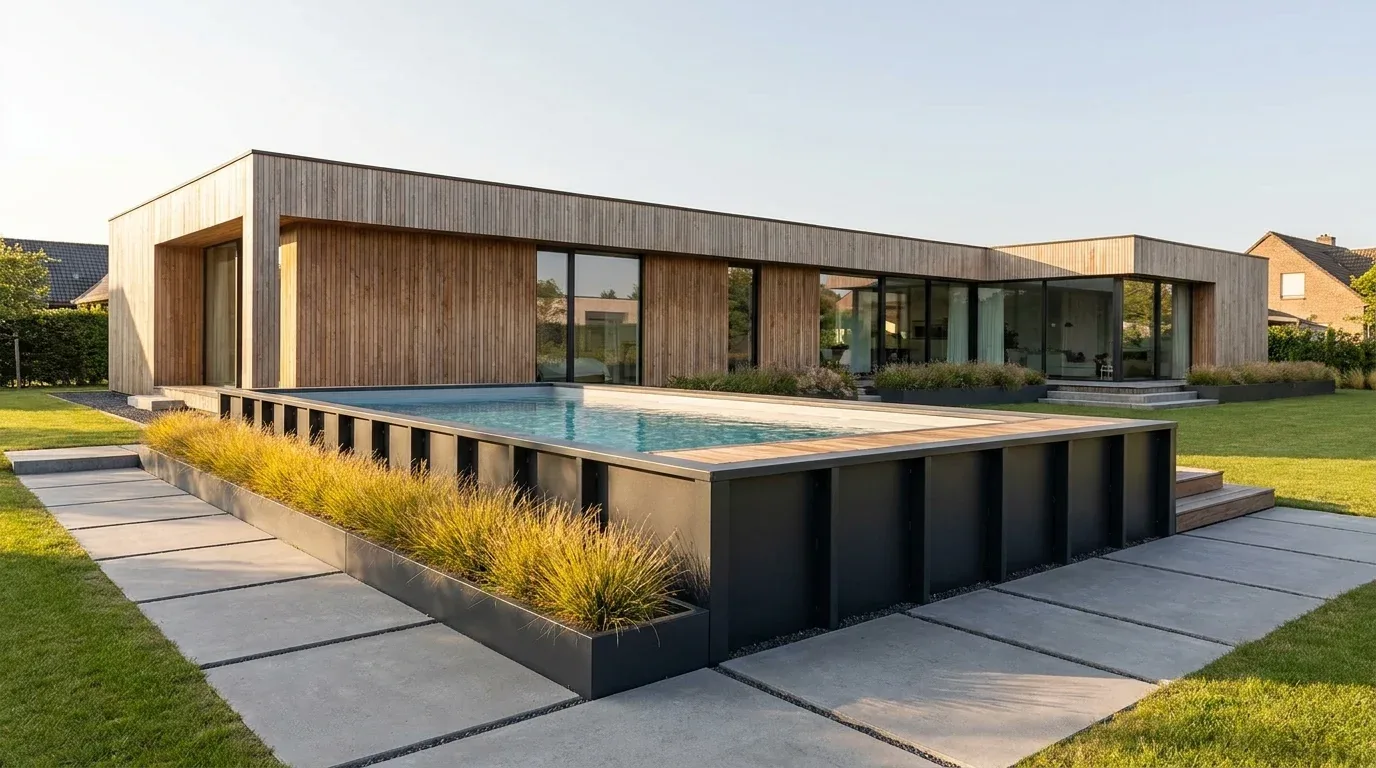
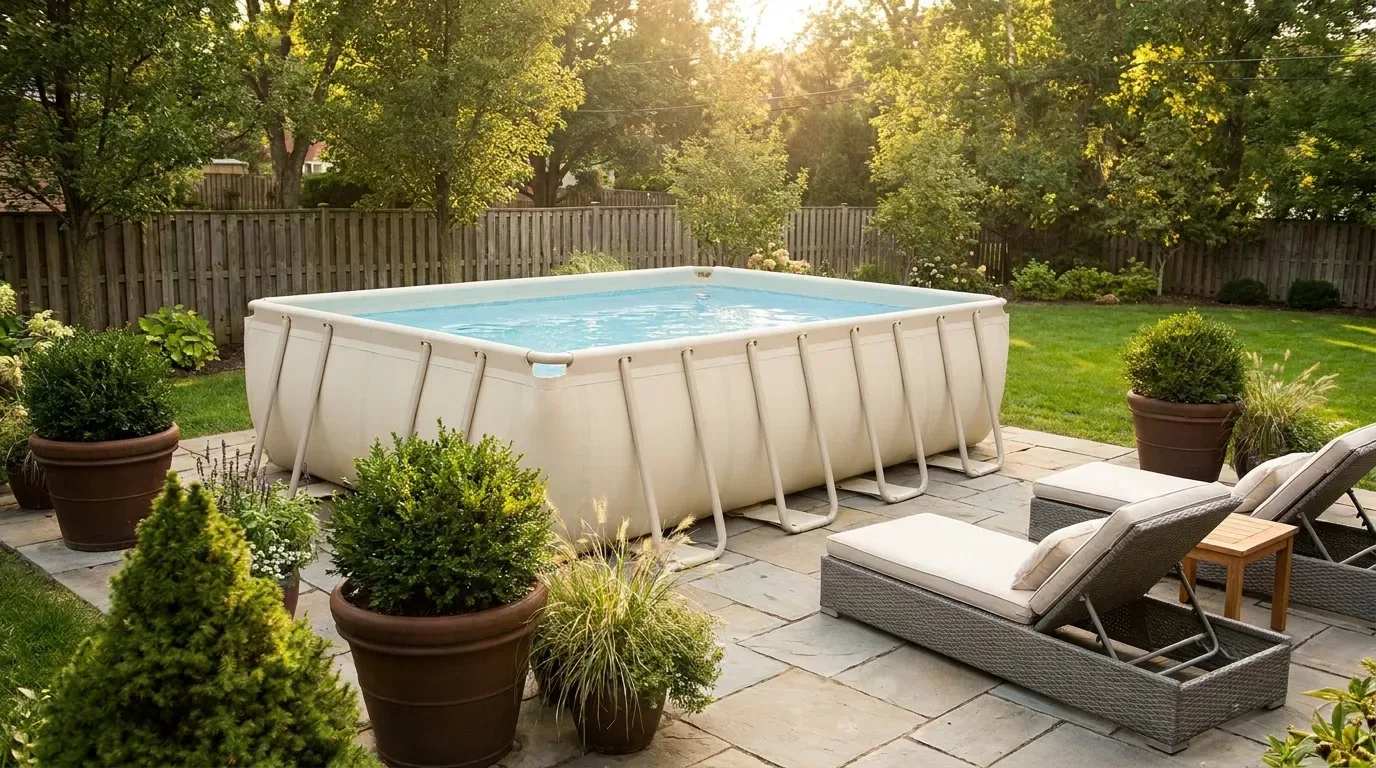
A rectangular above-ground pool creates a clean, contemporary look that complements modern landscaping, geometric patios, and minimalist outdoor furniture. Its elongated shape provides useful space for gentle swimming practice, water games, and cooling off with several family members. It can also fit neatly along a suitable boundary, provided required setbacks and access clearances are maintained.
Compare the pool’s internal dimensions rather than relying only on the advertised exterior measurements. Check water depth, frame construction, liner availability, and the manufacturer’s installation requirements. Rectangular pools can experience different structural loads from round models, so their support systems must be installed exactly as specified. Pair the pool with simple paving, ornamental grasses, and coordinated outdoor seating to create a polished backyard feature without making the space feel crowded.
3. Above-Ground Pool with a Wooden Deck
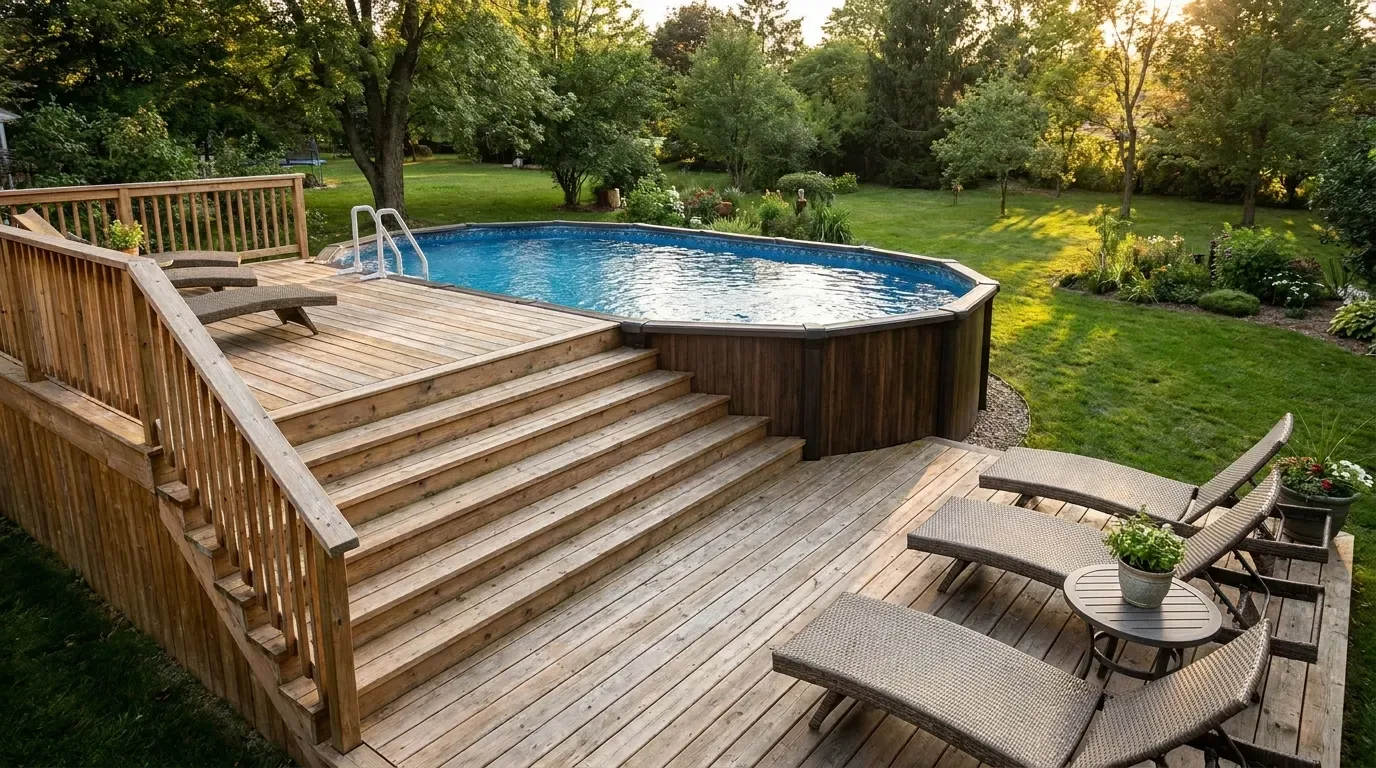
A wooden deck can make an above-ground pool feel like an integrated part of your outdoor living space. A thoughtfully designed platform provides room for lounge chairs, towels, drinks, and convenient entry into the water. Depending on the layout, a deck may wrap around one side of the pool or extend along several sides to create a larger entertaining area.
Use exterior-rated materials and suitable fasteners, and choose a slip-resistant walking surface. The deck must have independent, properly engineered support unless the pool manufacturer explicitly approves another arrangement. Never rest a deck on the pool wall or allow it to transfer weight onto the structure. Plan access to the pump, filter, liner, and drainage areas before construction. Include code-compliant stairs, barriers, and gates wherever required.
4. Budget-Friendly Steel-Frame Pool
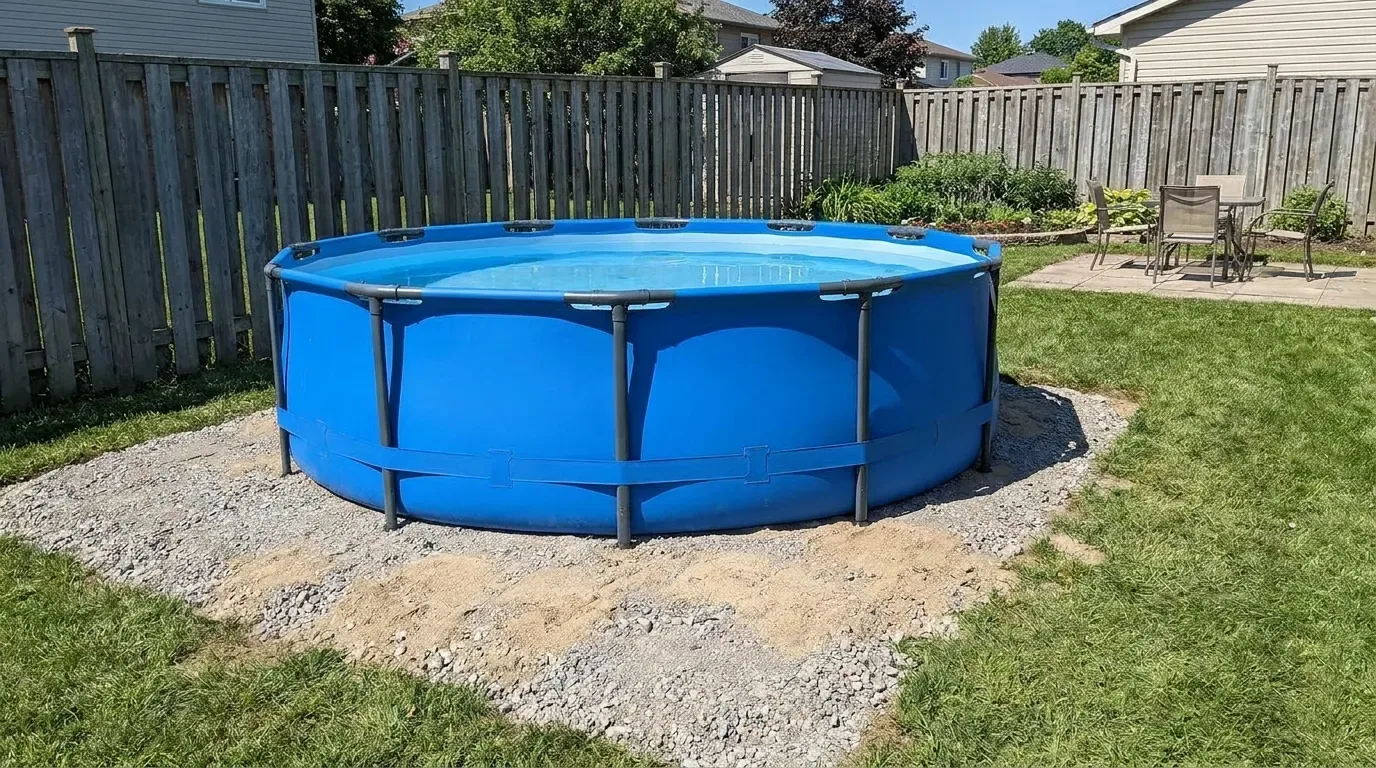
A steel-frame above-ground pool can be a practical choice for homeowners seeking a balance between affordability and sturdiness. These pools typically combine a supported liner with a metal frame designed to hold the water’s weight. They are available in several shapes and sizes, making it possible to find an option for a compact garden or a larger family backyard.
Compare the frame’s corrosion protection, liner thickness, warranty terms, and replacement-part availability before purchasing. Steel components can be vulnerable to corrosion when protective coatings are damaged or water accumulates around the structure. Follow the manufacturer’s recommendations for assembly and winter storage, if applicable. Also budget for the pump, filter, test kits, cleaning equipment, ground preparation, and a suitable safety barrier rather than judging affordability by the pool price alone.
5. Stylish Resin-Frame Pool
Resin-frame pools offer another option for homeowners who want a neat appearance and components designed to resist many forms of rust and corrosion. Depending on the model, resin may be used for the uprights, connectors, top rails, or a combination of structural parts. Neutral colors and streamlined profiles can blend well with contemporary outdoor furniture and carefully planned landscaping.
Do not assume every resin pool is equally durable. Material quality, UV resistance, connector design, and the manufacturer’s climate recommendations all matter. Ask whether replacement parts remain available and whether the pool can withstand the temperature range in your region. Resin components can become brittle or suffer damage if used outside their intended conditions. Review the complete installation manual and verify the required foundation before committing to a model.
6. Semi-Inground Above-Ground Pool
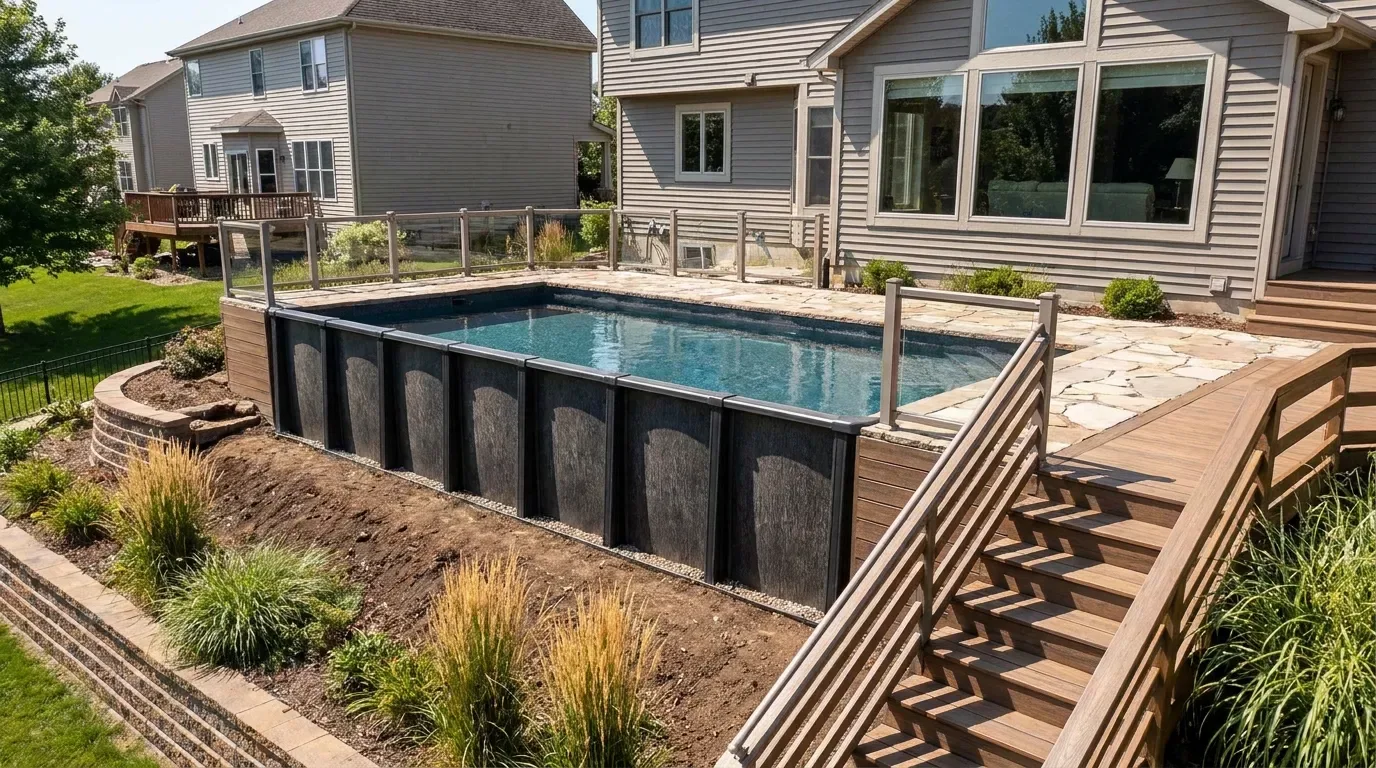
A semi-inground pool is partially set into the ground, creating a lower profile that can look more integrated with the surrounding landscape. This approach may suit sloping properties or backyards where a fully elevated pool would feel visually imposing. The exposed portion can be finished with suitable cladding, stone-look panels, or carefully planned planting to complement the home’s exterior.
This design requires more planning than simply digging a hole around a standard above-ground pool. Only use a pool specifically approved for partial burial, and follow its engineering and drainage requirements. Soil pressure, groundwater, hydrostatic forces, and inadequate backfill can damage an unsuitable structure. Consult qualified pool and excavation professionals before construction. Confirm local permits, utility locations, retaining-wall requirements, and access for future liner or equipment replacement.
7. Compact Plunge Pool for Small Yards
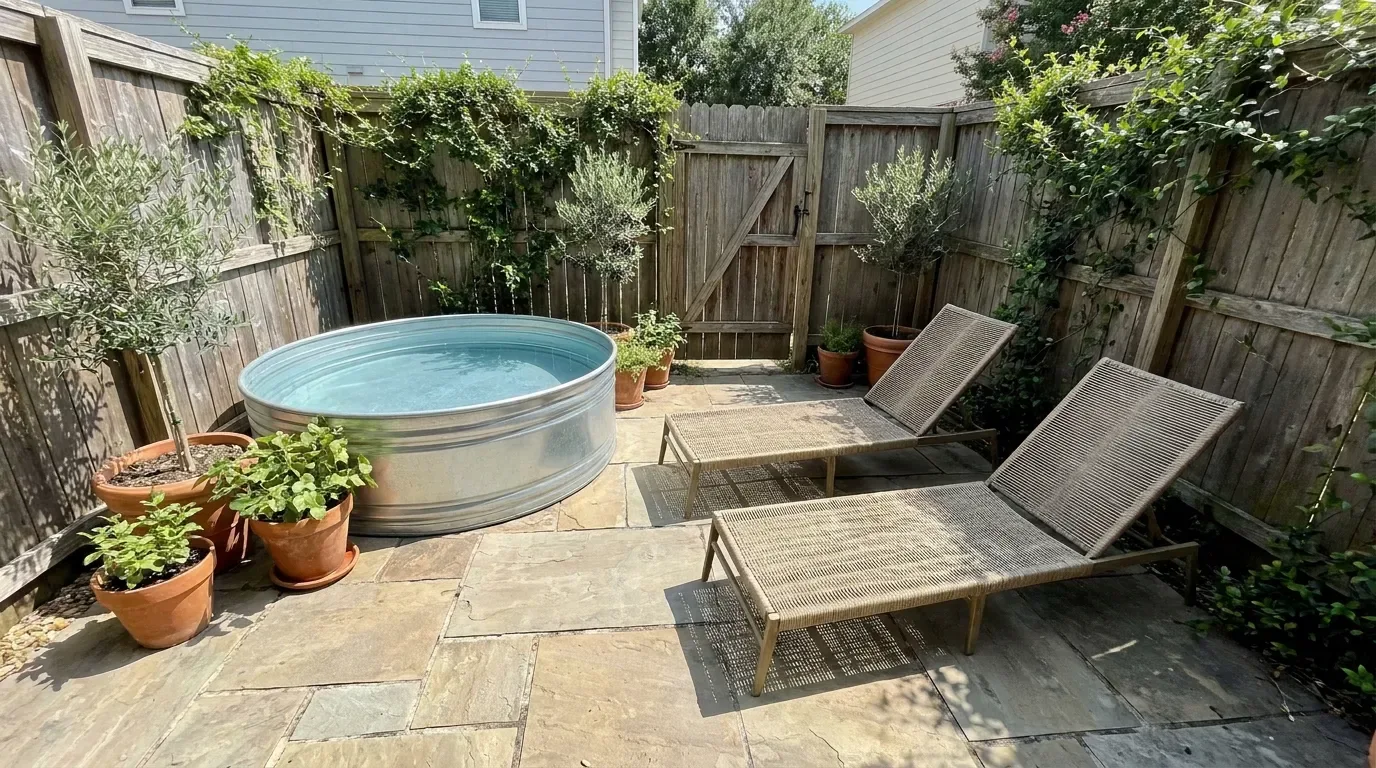
A compact above-ground plunge pool can deliver a refreshing place to cool down without dominating a small backyard. Smaller round or rectangular models may fit beside a patio, within a courtyard, or in a carefully measured garden corner. They are especially appealing to homeowners who prefer relaxation and casual soaking over swimming laps or hosting large pool parties.
Measure the entire installation footprint, not just the water area, and reserve room for safe entry, circulation, filtration equipment, and maintenance. A smaller pool still requires reliable water treatment and a safe foundation. Check the manufacturer’s recommended water level and capacity, then consider whether the electrical and plumbing arrangements suit the proposed location. Simple paving, a privacy screen, and two comfortable loungers can make a compact setup feel intentional rather than cramped.
8. Above-Ground Pool with a Privacy Screen
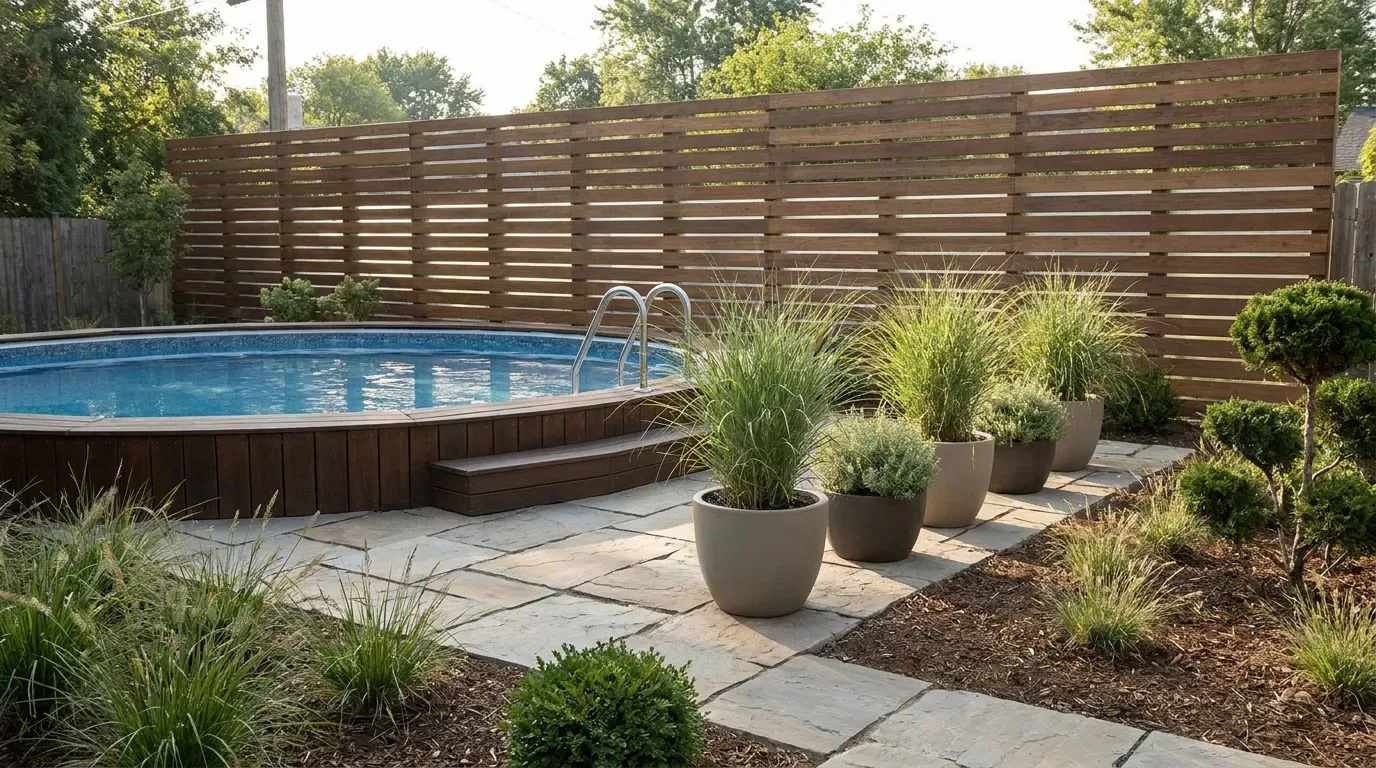
A privacy screen can transform an exposed swimming area into a more comfortable backyard retreat. Slatted timber panels, outdoor-rated composite screens, decorative metal partitions, and suitable freestanding structures can block selected sightlines without enclosing the pool completely. Choose a style that complements the house, deck, and existing fence to create a coordinated outdoor setting.
Position the screen to reduce unwanted views while preserving visibility for supervising swimmers. Avoid blocking equipment access, restricting emergency entry, or creating a structure that interferes with required barriers. In windy locations, solid screens can act like sails, so secure foundations and appropriate engineering are important. Before installing tall panels, check local rules about fence height, boundary setbacks, and wind exposure. Climbing plants may soften the look, but keep foliage away from the pool and filtration system.
9. Natural-Looking Pool with Garden Landscaping
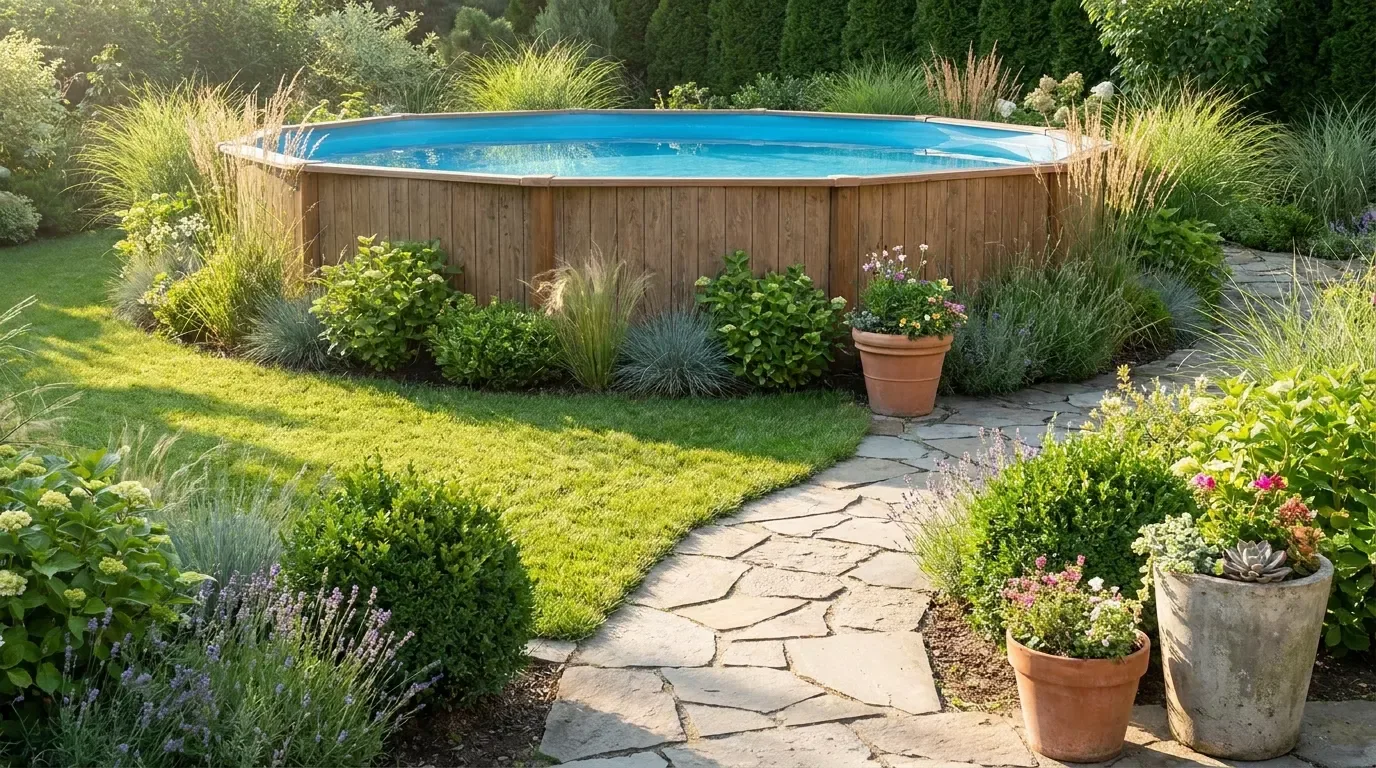
Landscaping helps an above-ground pool blend into the backyard rather than appear as an isolated feature. Ornamental grasses, attractive containers, low-growing shrubs, and carefully positioned planters can soften the pool’s outline. A restrained palette of green foliage, natural textures, and neutral paving creates a relaxed setting that feels appropriate for everyday use as well as summer gatherings.
Choose plants according to your local climate and the amount of sunlight available. Avoid thorny varieties, messy fruiting plants, and trees that shed large amounts of leaves near the water. Keep roots, soil, and irrigation away from the pool’s structural base, and ensure landscaping does not trap moisture against metal components. Leave adequate clearance around the liner, pump, filter, and ladder. Good landscaping should make maintenance easier, not create additional cleaning work.
10. Pool with a Stone-Look Surround
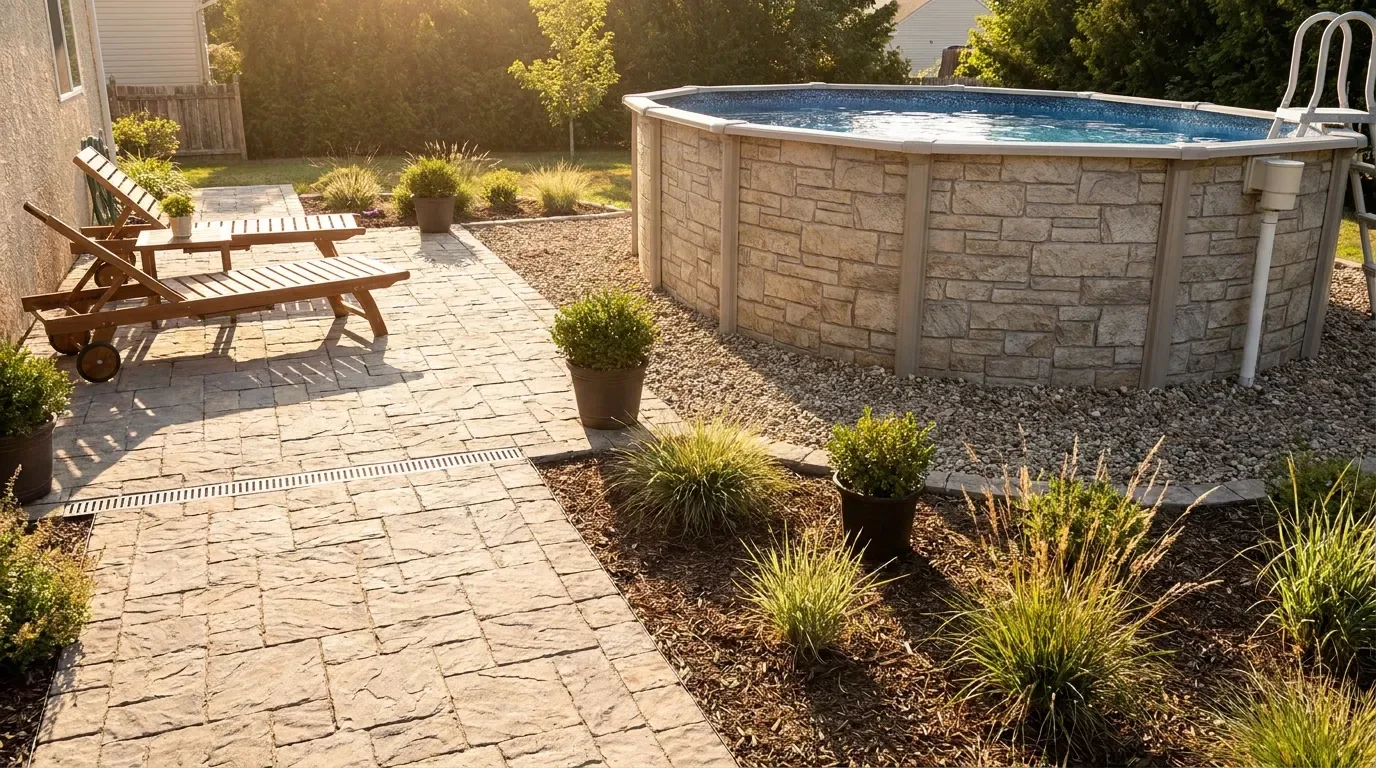
A stone-look surround can give an above-ground pool a more luxurious appearance without requiring a fully custom in-ground installation. Depending on the pool design, you might use outdoor porcelain pavers, natural stone in a separate patio area, or manufacturer-approved decorative panels around the exterior. Coordinating the finish with garden paths and seating areas helps the entire backyard feel connected.
Choose materials rated for outdoor exposure and wet conditions. Surfaces should offer reliable traction and remain comfortable underfoot in direct sunlight. Plan drainage carefully so rainwater and splash-out flow away from the pool’s foundation. Never pile stone, soil, or heavy masonry against a pool wall unless the manufacturer specifically permits that construction. Decorative surrounds should not obstruct inspection points, valves, or access to the filtration system.
11. Family-Friendly Pool with a Safe Entry Area
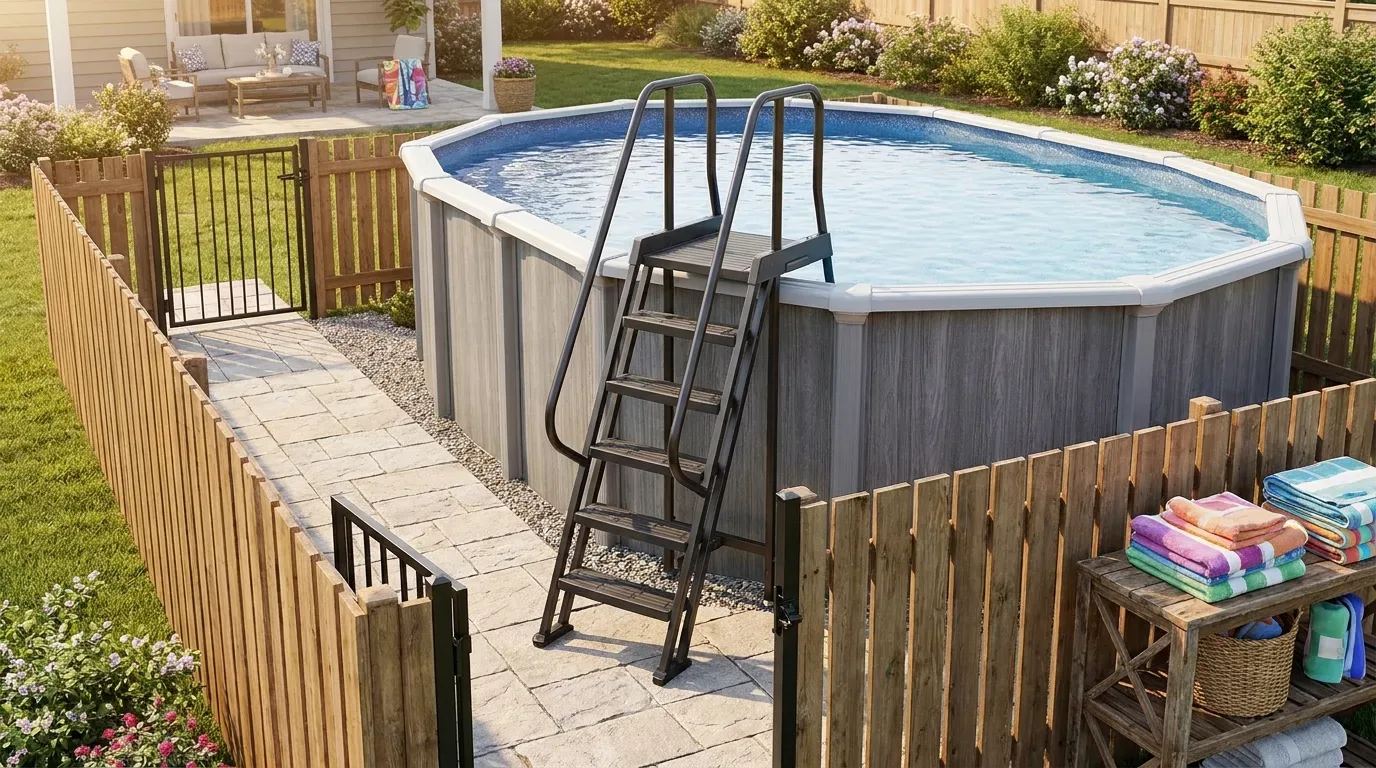
For households with children or several generations using the backyard, a safe entry area deserves as much attention as the pool itself. A stable ladder or manufacturer-approved staircase, a clear walking surface, and enough room to enter and exit without crowding can improve everyday convenience. Keeping towels and pool accessories nearby also reduces unnecessary trips across wet surfaces.
Choose an entry system rated for your specific pool model and water depth. Install required barriers and self-closing, self-latching gates in accordance with local regulations, and prevent unsupervised access when the pool is not in use. A cover should never be treated as a substitute for appropriate fencing or active supervision. Children need constant, attentive adult supervision around water, even when they can swim. Store chemicals securely and keep electrical equipment protected according to its instructions.
12. Poolside Lounge and Entertaining Zone
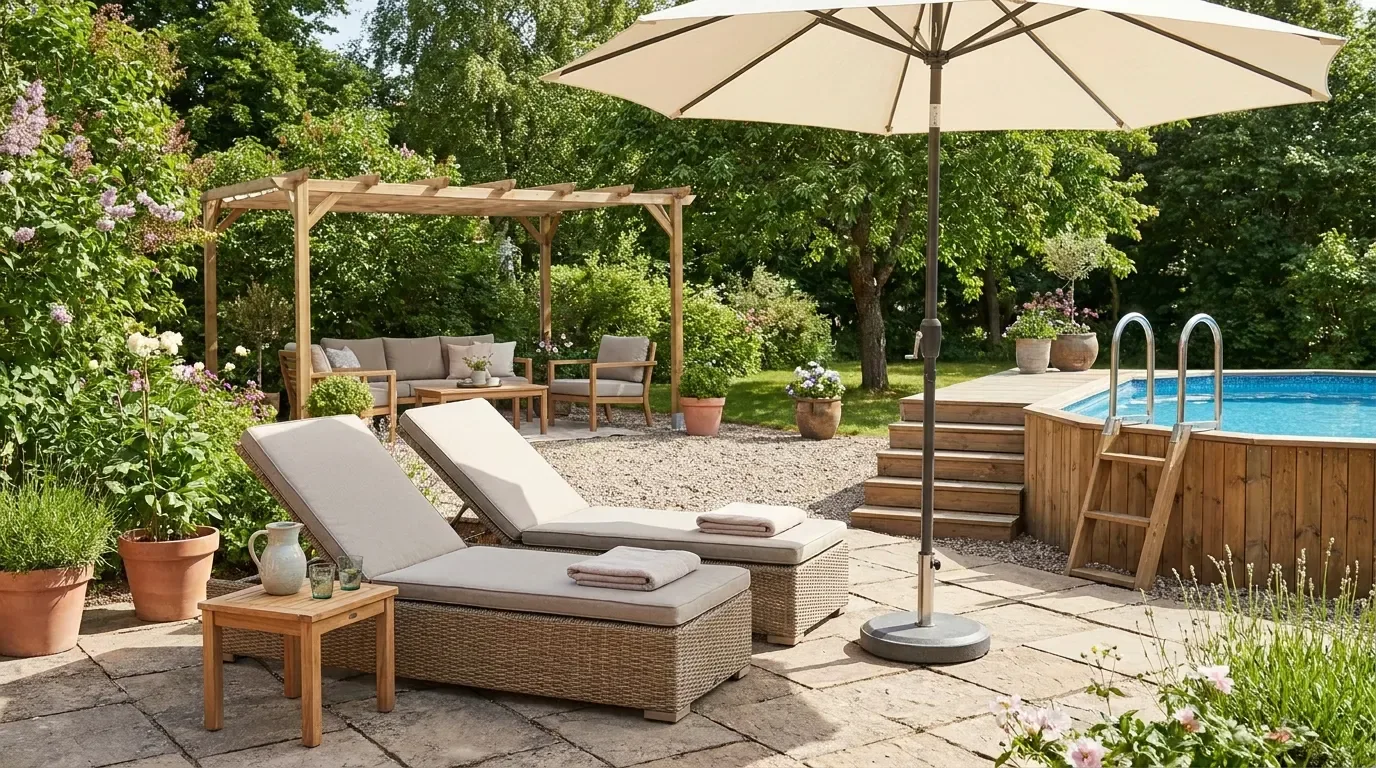
Turn your pool into an outdoor destination by creating a dedicated lounge and entertaining zone. Weather-resistant loungers, a small side table, an outdoor umbrella, and washable cushions can make the space comfortable without requiring an expensive deck. If room permits, arrange the furniture in a separate dry area where guests can relax without obstructing the ladder or walking route.
Select furniture that tolerates moisture, sunlight, and seasonal temperature changes. Keep electrical appliances and ordinary extension cords away from splash zones, and use outdoor electrical installations that meet applicable safety requirements. Position umbrellas and lightweight furniture so they cannot fall into the water during strong winds. For year-round usefulness, choose movable pieces that can be stored during storms or winter. A small, organized lounge area often provides more practical value than filling the yard with decorative accessories.
13. Above-Ground Pool with Energy-Efficient Equipment
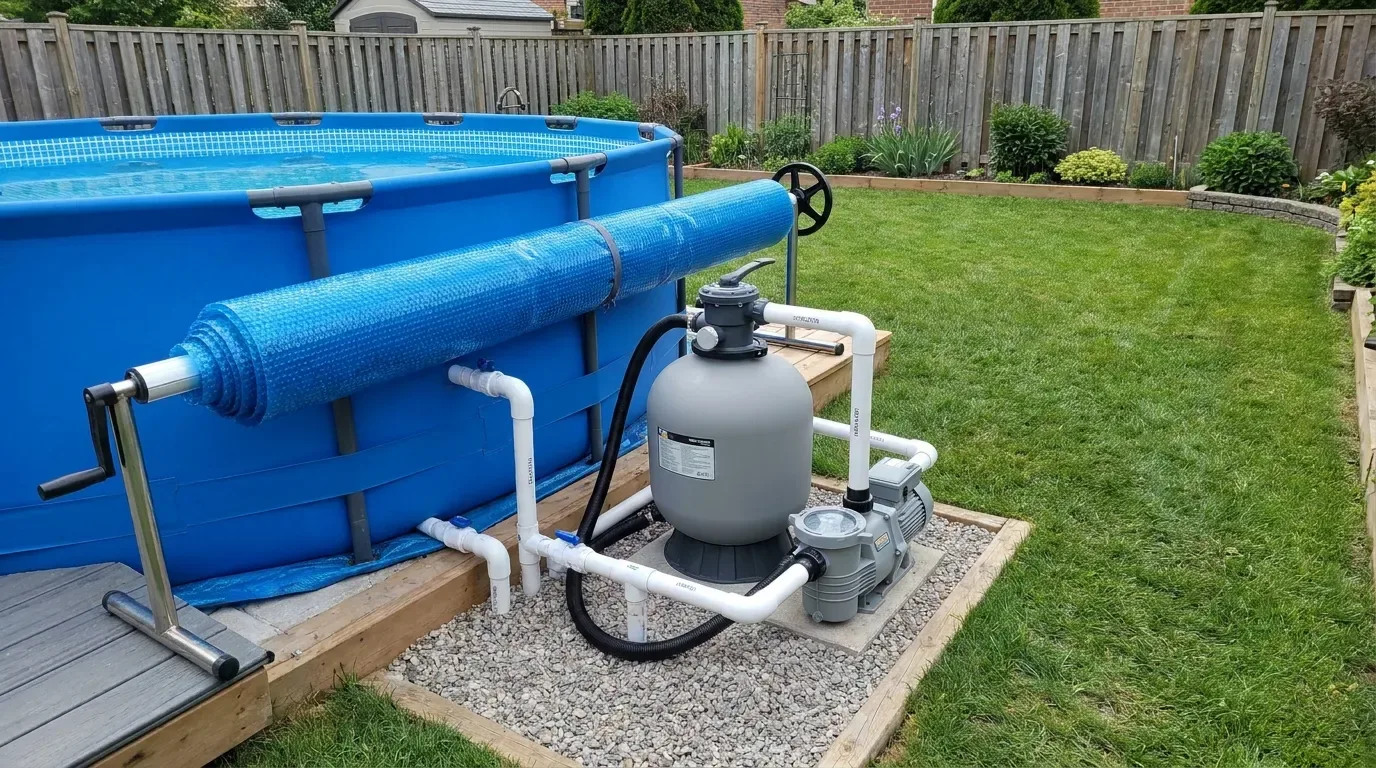
Efficient pool equipment can reduce running costs and make routine care more manageable. Start with a properly sized pump and filter that match the pool’s water volume and the manufacturer’s circulation recommendations. Depending on the setup, a variable-speed pump, an appropriately sized solar cover, and well-maintained plumbing may help reduce energy use or heat loss.
Compare the equipment’s operating requirements, energy consumption, noise level, and replacement-part costs before buying. A low-priced pool may become expensive if its included pump is poorly matched to your needs or replacement cartridges are difficult to find. Maintain the water chemistry within the recommended range and clean filters as directed to support efficient operation. If adding a heater, confirm compatibility, safe installation requirements, and local energy costs before estimating the seasonal savings.
14. Seasonal Pool Setup for Cold Climates
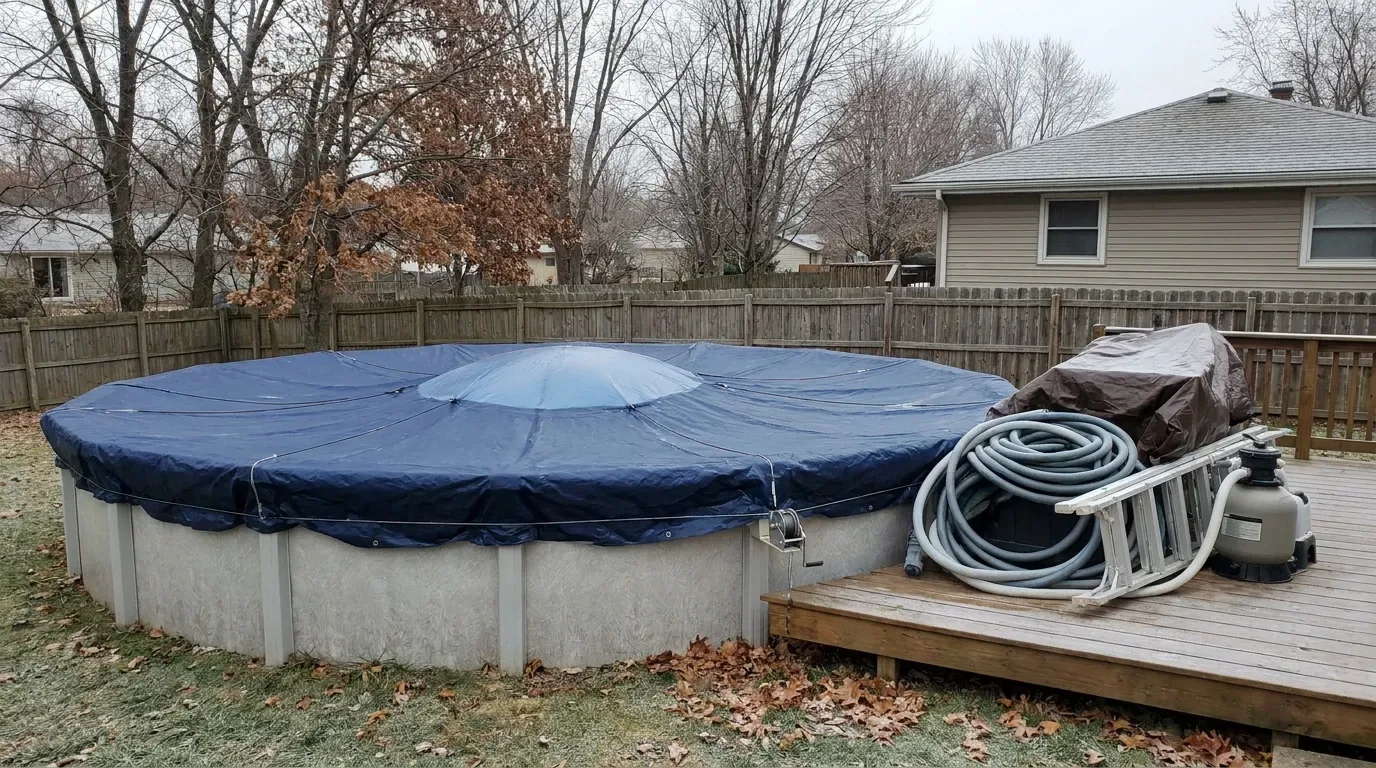
Homeowners in colder regions should plan for winter before purchasing an above-ground pool. Some seasonal models are intended to be dismantled and stored, while other structures may be designed to remain outdoors under specific winterization procedures. Choosing the right type depends on the manufacturer’s instructions, the severity of local weather, and how much maintenance you are prepared to handle.
Never assume a pool can safely remain full outdoors through freezing temperatures. Follow the exact winterization instructions for the model, including guidance for water levels, plumbing, filters, pumps, and covers. Freezing water can damage components, while excessive snow or ice may place dangerous loads on unsupported structures. Store removable equipment in an appropriate location and inspect the pool before reopening it. A seasonal maintenance plan helps protect your investment and reduces unpleasant surprises when warm weather returns.
15. Year-Round Backyard Pool Planning
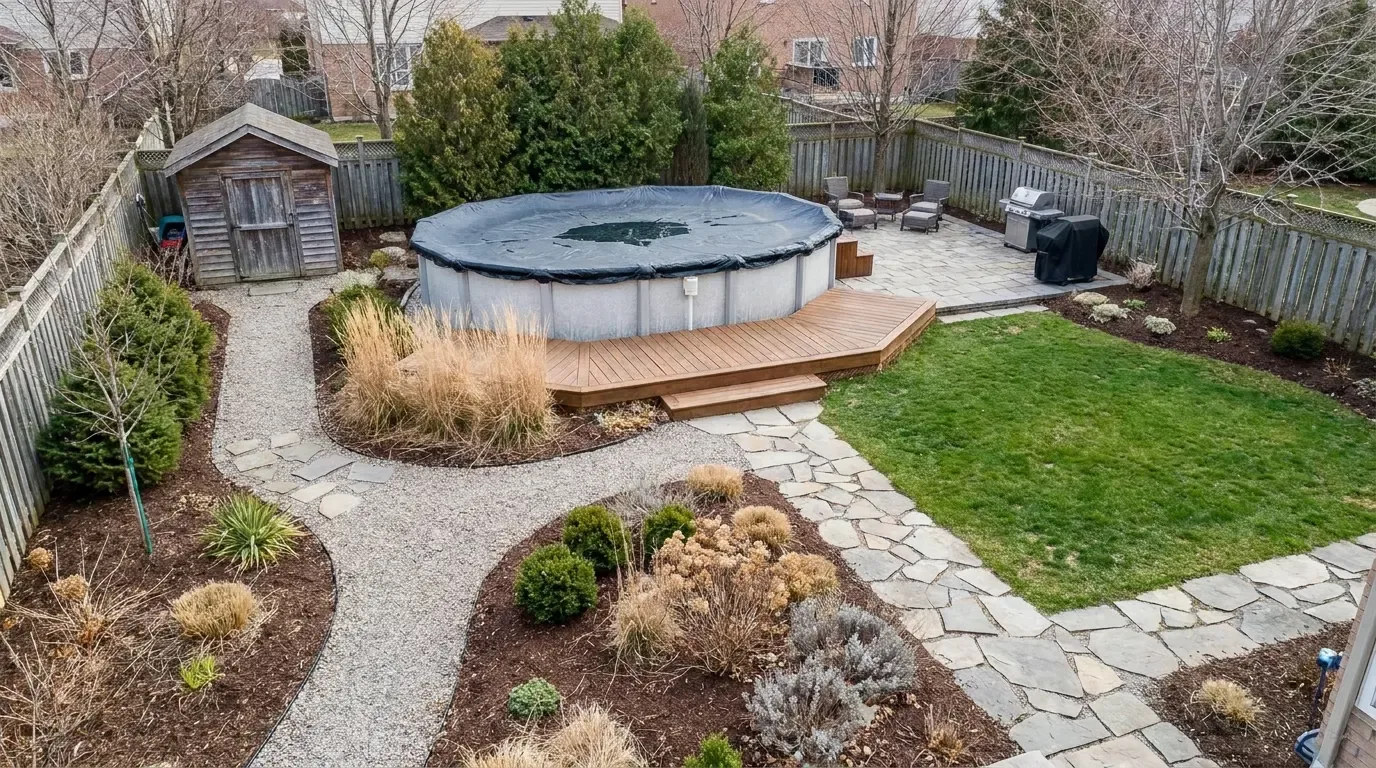
The best above-ground pool design is one that works with your household’s routine throughout the year, even when swimming is seasonal. Plan the pool alongside patios, garden beds, outdoor storage, play areas, and pathways so the yard remains useful when the water is too cold. A permanent seating area or well-designed deck can continue serving as an outdoor living space after the pool has been closed.
Before purchasing, establish a complete budget that includes delivery, site preparation, installation, electrical work, barriers, filtration, water treatment, repairs, and winter storage or servicing. Check local permits, property setbacks, utility lines, drainage, and any neighborhood restrictions. Consider who will maintain the pool and how often it will be used. A realistic plan that balances initial cost with ongoing responsibilities will generally deliver more satisfaction than choosing the largest or most elaborate model available.
Essential Buying Tips Before You Choose an Above-Ground Pool
After exploring different designs, narrow your options by checking the features that influence safety, durability, and long-term value. A little preparation can prevent costly installation mistakes.
- Measure the site: Account for the pool, supports, equipment, access routes, required setbacks, and safety barriers.
- Inspect the foundation: Confirm that the ground can be prepared level and stable according to the manufacturer’s specifications.
- Compare materials: Evaluate frame construction, liner quality, corrosion resistance, warranties, and replacement-part availability.
- Calculate running costs: Include water, electricity, filtration, testing supplies, cleaning tools, repairs, and seasonal maintenance.
- Plan for safety: Check local barrier regulations, secure access, electrical protection, and suitable supervision arrangements.
- Consider the climate: Verify whether the model is suitable for year-round outdoor installation or must be dismantled or winterized.
These checks help you compare pools based on the complete ownership experience rather than the advertised purchase price alone.
Final Thoughts
Above-ground pools offer flexible ways to add recreation, relaxation, and visual appeal to a backyard. Whether you prefer a simple round pool, a modern rectangular design, a decked entertaining area, or a compact plunge pool, the most successful setup begins with careful planning. Choose a structure suited to your site and climate, allow enough room for maintenance, and prioritize safe access and proper installation. By considering both summer enjoyment and off-season care, you can create an attractive outdoor space that remains practical and rewarding for years to come.