15 Beautiful and Soothing Coastal Bathroom Ideas You’ll Love
Coastal bathrooms have this unique ability to transform your daily routine into something that genuinely feels like a retreat, capturing that sense of calm and renewal you get from being near water without requiring an actual ocean view outside your window. Whether you’re drawn to crisp white and navy combinations reminiscent of classic nautical style, soft sandy neutrals that evoke quiet beach mornings, or more textured approaches incorporating natural rope, driftwood, and woven elements, coastal bathroom design succeeds by capturing water’s inherent calming quality through color, material, and light rather than relying on literal seashell and anchor imagery. From flowing sheer curtains that mimic gentle waves to natural stone tile that references beach pebbles underfoot, these ideas prove that coastal bathroom styling has evolved into something genuinely sophisticated, offering serenity and beauty regardless of your actual proximity to the shore.
I used to associate coastal bathroom design exclusively with the kind of literal beach house decor my grandparents favored, actual seashells glued to picture frames, a rope-wrapped mirror, maybe a small anchor sculpture perched on the counter, décor that felt charming in a beach rental but somehow dated and overly thematic in an everyday home. It wasn’t until I started really studying more sophisticated interpretations of this style that I understood coastal design could work through color palette, material choice, and lighting quality rather than requiring any literal beach imagery whatsoever. That shift completely changed how I approached renovating my own bathroom, moving away from anything overtly nautical toward something that simply felt calm, bright, and water-inspired through more subtle means.
What I’ve learned about successful coastal bathroom design is that the style relies heavily on natural light, textural variety, and a genuinely restrained color palette drawing from actual beach environments, sandy neutrals, soft blues, driftwood greys, rather than saturated, cartoonish ocean colors. The best coastal bathrooms I’ve encountered understand that this aesthetic is fundamentally about creating a sensory experience similar to being near water, that particular quality of light, that feeling of openness and calm, rather than decorating literally around beach vacation souvenirs. This distinction between referencing coastal feeling versus coastal imagery has become the most important principle guiding how I approach this style throughout my own home.
1. White Subway Tile with Navy Accents
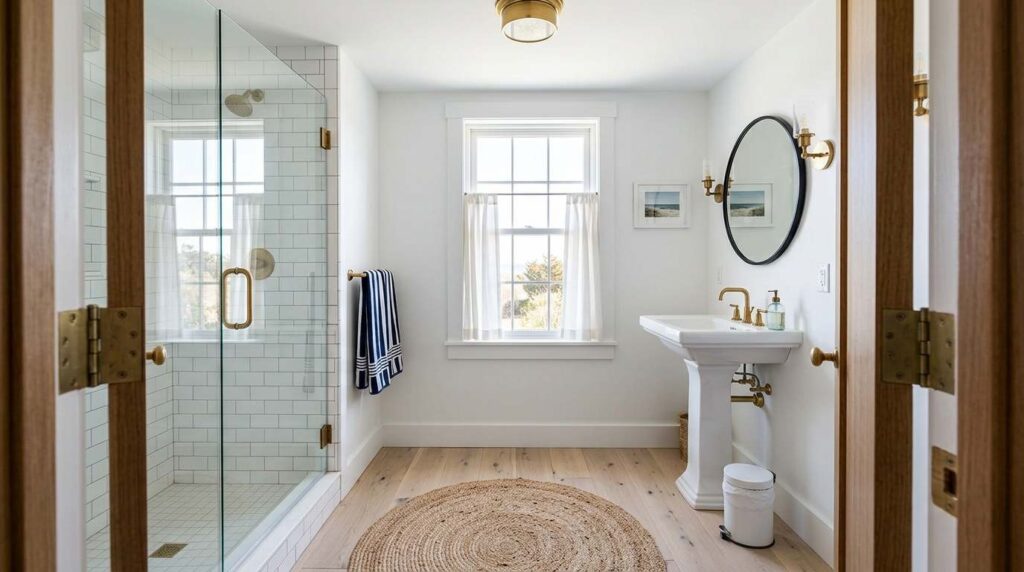
A crisp, classic coastal bathroom featuring white subway tile covering the shower walls in a running bond pattern. Navy blue accent details appear throughout: a navy vanity, navy and white striped towels, and simple navy hardware. A white pedestal sink sits below a round mirror with a thin black frame. Natural light streams through a window dressed with simple white curtains. Wide-plank white oak flooring grounds the space. Brass fixtures add warm metallic contrast against the navy and white palette. A woven jute bath mat adds natural texture. Shot from the doorway showing the full classic coastal color scheme, with bright, natural lighting emphasizing the crisp, nautical-inspired quality achieved through this timeless white and navy combination.
Choosing white subway tile paired with navy accents throughout gave my bathroom this classic, timeless coastal quality that references traditional nautical style without needing any literal beach imagery or seashell decoration. The navy vanity became the room’s clear focal point, and pairing it with crisp white subway tile creates that high-contrast, crisp feeling that immediately reads as fresh and clean, evoking that particular quality of light you find near actual coastlines.
I added brass fixtures specifically to warm up what could otherwise feel like a somewhat cool navy and white combination, and their golden tone catches natural light beautifully throughout the day. The striped towels continue this classic nautical reference subtly, without relying on anything more literal like actual anchor or rope imagery. This combination has taught me that navy and white together create one of the most reliably successful coastal color palettes precisely because it references sailing tradition and ocean depth without requiring any additional decorative elements to establish that connection, proving sometimes the most effective coastal design comes from color choice alone rather than added thematic decor.
2. Sandy Neutral Palette with Natural Textures
A serene, sand-inspired bathroom featuring walls painted the softest warm beige, evoking sun-bleached sand. Natural woven baskets hold rolled towels in cream and tan tones. A teak wood vanity brings organic warmth. White subway tile in a herringbone pattern adds subtle texture to the shower area. A round mirror with a rattan frame hangs above the vanity. Linen curtains in natural cream filter soft light through a window. Wide-plank whitewashed oak flooring grounds the space. A jute bath mat adds textural warmth underfoot. Natural light illuminates the varied neutral textures throughout. Shot from an angle showing the full sandy, textural palette, with warm, natural lighting emphasizing the calm, beach-inspired quality achieved through this neutral color and material approach.
Painting my bathroom walls this warm, sandy beige immediately evoked that particular quality of sun-bleached sand you find along actual beaches, without needing any literal beach imagery to establish this coastal connection. Pairing this warm neutral with genuine natural materials, teak wood, woven rattan, jute textiles, created this cohesive, textural story that feels authentically connected to beach environments through material choice rather than decorative theme.
The herringbone subway tile pattern added subtle textural interest within the shower area, referencing water’s gentle movement through this simple pattern variation rather than anything more literal like wave imagery. I chose the rattan-framed mirror specifically because its natural woven texture continues this organic material story throughout every element of the room. This neutral, texture-focused approach has taught me that coastal design succeeds beautifully through genuine natural materials and warm, sandy color choices, creating that essential calm, beachy feeling without relying on any of the more obvious or literal coastal decorating clichés that can sometimes feel dated or overly thematic in a permanent living space.
3. Pale Blue Beadboard with White Trim
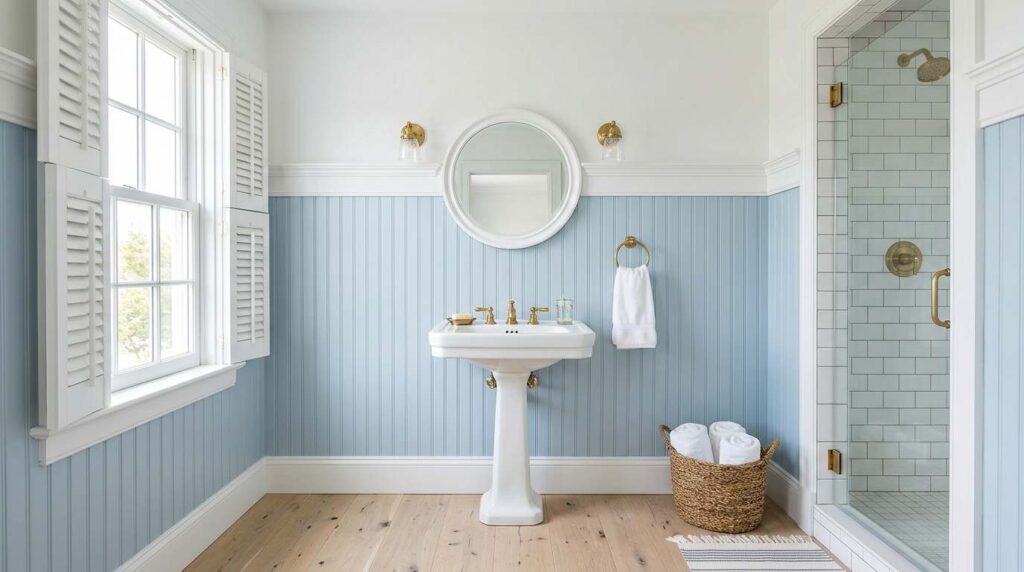
A charming coastal bathroom featuring pale blue beadboard paneling installed to chair-rail height, with crisp white trim and molding above. A white pedestal sink sits against the paneled wall. Simple brass fixtures add warm metallic detail. A round mirror with a white frame hangs above the sink. White subway tile covers the shower area. Wide-plank white oak flooring grounds the classic coastal space. Natural light from a window with white shutters illuminates the soft blue and white palette. A woven basket holds rolled white towels. Shot straight-on to show the beadboard detail and its interaction with the white trim above, with bright, natural lighting emphasizing the classic, cheerful quality achieved through this pale blue and white coastal color combination.
Installing pale blue beadboard paneling gave my bathroom genuine architectural texture while establishing that classic, cheerful coastal color palette immediately upon entering the room. The vertical groove pattern in the beadboard adds subtle dimension and shadow play throughout the day, and against the crisp white trim above, this two-tone approach creates that quintessential beach cottage quality without requiring any additional decorative elements to establish the coastal connection.
The soft blue color reads as gentle and calming rather than bold or saturated, evoking sky and water without demanding too much visual attention within the relatively small bathroom space. I chose brass fixtures specifically to add warmth against this cooler blue and white combination, ensuring the room felt inviting rather than sterile or overly cool. This classic beadboard treatment has taught me that architectural detail combined with a genuinely soft, appropriate color choice can establish coastal character more effectively than layering in numerous smaller decorative accessories, proving that sometimes the wall treatment itself provides sufficient seasonal and stylistic reference without needing much additional support.
4. Woven Textures with Driftwood Accents
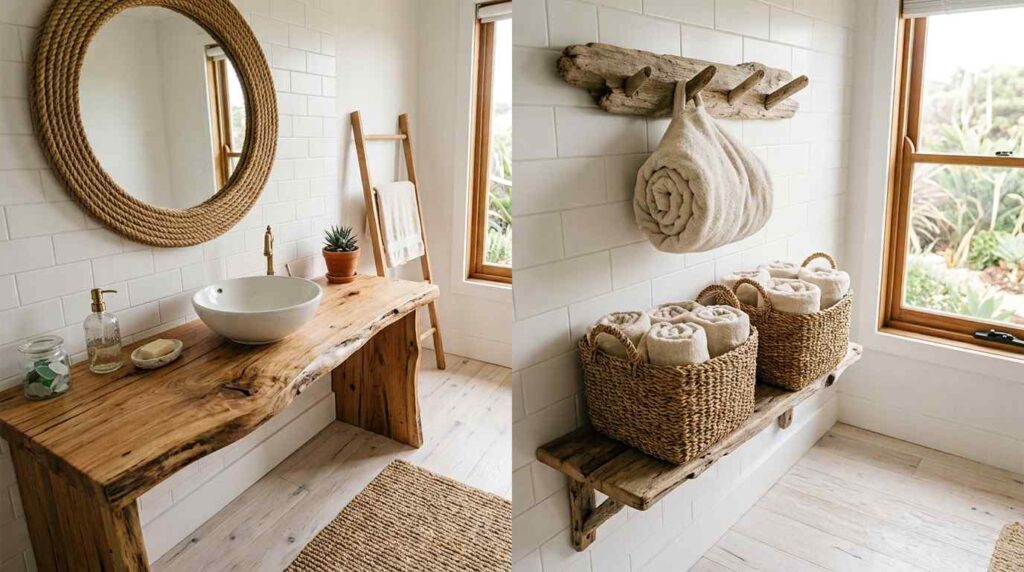
A serene, organic coastal bathroom featuring genuine driftwood pieces mounted as towel hooks and shelf brackets. Woven seagrass baskets hold rolled linen towels in cream tones. A live-edge wood vanity counter shows natural grain and character. White subway tile provides a clean backdrop. A round mirror with a woven rope frame hangs above the vanity. Natural light illuminates the varied organic textures throughout. Wide-plank whitewashed oak flooring grounds the space. A jute bath mat adds natural texture underfoot. Shot from an angle showing the driftwood and woven elements throughout the space, with warm, natural lighting emphasizing the authentic, beach-foraged quality achieved through this combination of genuine driftwood and woven natural materials.
Incorporating genuine driftwood pieces as functional towel hooks and shelf brackets brought authentic beach-foraged character to my bathroom that manufactured, “driftwood-style” decor simply couldn’t replicate convincingly. Each piece shows unique weathering and natural form from actual ocean exposure, and using them for practical functions rather than purely decorative display felt like the most genuine way to incorporate this material without it feeling like an obvious thematic prop.
The live-edge wood vanity counter continues this appreciation for natural, organic material throughout the room, its irregular edge and visible grain providing genuine textural interest that manufactured, uniform countertops couldn’t achieve. I chose the rope-framed mirror specifically to continue this natural fiber theme, its woven texture complementing both the driftwood and the seagrass baskets holding our towels. This organic, texture-focused approach has taught me that authentic natural materials, genuinely weathered wood, real woven fiber, create considerably more compelling coastal character than anything manufactured specifically to represent that same aesthetic, proving that sourcing genuine materials matters enormously in executing this style with real sophistication.
5. Crisp White with Aqua Glass Tile Accent
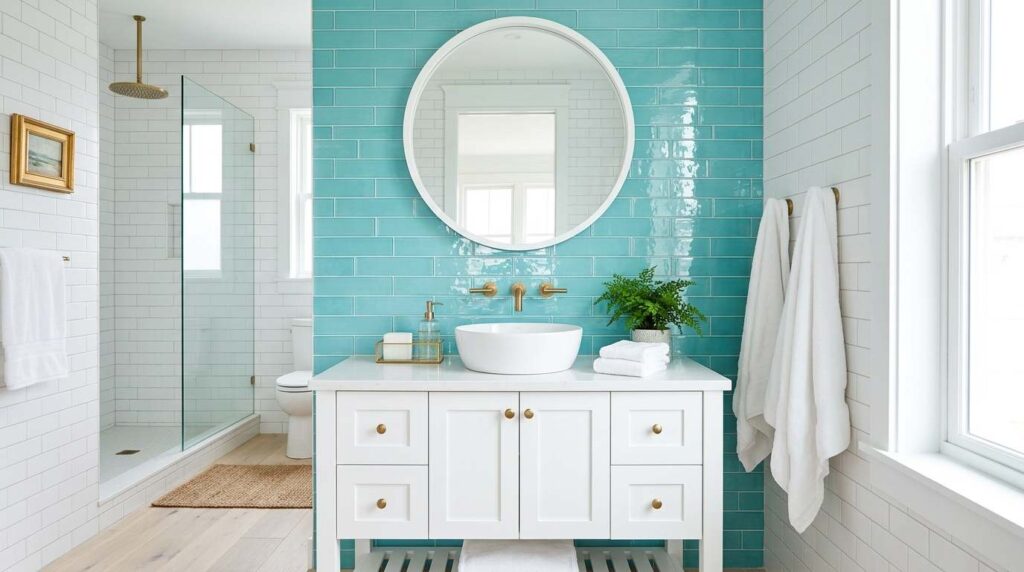
A bright, fresh coastal bathroom featuring predominantly white surfaces accented by a dramatic aqua glass tile backsplash behind the vanity. The glass tile’s glossy surface reflects light beautifully, creating a water-like shimmer. A white vessel sink sits atop a white vanity. Brass fixtures add warm metallic contrast. A round mirror with a simple white frame hangs above. White subway tile covers the shower area. Wide-plank white oak flooring grounds the bright space. Natural light illuminates the aqua tile’s glossy shimmer. Fresh white towels complete the crisp palette. Shot straight-on to show the aqua accent wall against the white surroundings, with bright, natural lighting emphasizing the fresh, water-inspired quality achieved through this glass tile’s reflective, aqua-colored surface.
Installing this aqua glass tile as a dramatic backsplash accent brought genuine water-inspired shimmer into my otherwise predominantly white bathroom, the glossy surface catches and reflects light in this way that actually evokes water’s movement and quality far more effectively than matte tile in the same color could achieve. Keeping everything else crisp white allowed this single accent wall to provide all the color impact the room needed, preventing the space from feeling overly colorful or busy despite this one bold, saturated choice.
The glass tile’s reflective quality means the aqua color shifts subtly depending on the light and viewing angle throughout the day, creating this dynamic, ever-changing element that flat paint in the same color simply couldn’t replicate. I chose brass fixtures to add warmth against this cooler aqua and white combination, ensuring the room felt balanced rather than too clinical or cold. This dramatic accent tile approach has taught me that sometimes the most effective way to introduce genuine color into a coastal bathroom comes from one concentrated, high-impact material choice rather than distributing color throughout numerous smaller elements, letting this reflective, water-like surface do most of the stylistic work.
6. Natural Stone Pebble Tile Flooring
A spa-like coastal bathroom featuring natural stone pebble tile covering the entire shower floor, its varied grey and tan tones mimicking beach stones underfoot. White subway tile covers the shower walls above. A teak wood shower bench provides natural material contrast. White vanity and fixtures keep the space feeling bright and clean. Natural light illuminates the pebble tile’s varied texture and organic shape. Wide-plank white oak flooring continues throughout the main bathroom area. A woven basket holds rolled white towels. Shot from an angle showing the pebble tile’s texture in detail, with soft, natural lighting emphasizing the spa-like, beach-inspired quality achieved through this natural stone flooring choice that references actual coastal pebbles.
Choosing natural stone pebble tile for my shower floor was about creating this genuine sensory connection to actual beach environments, the varied, organic shapes and subtle color variation between individual stones mimics walking on real beach pebbles far more authentically than any uniform, manufactured tile could achieve. Standing in the shower genuinely feels different with this textured surface underfoot compared to flat, smooth tile, adding this tactile element that most bathroom flooring doesn’t typically provide.
Pairing this textured stone floor with simpler white subway tile on the surrounding walls kept the overall shower area from feeling overly busy or competing for attention, letting the pebble floor be this distinct textural moment within an otherwise clean, straightforward tile scheme. The teak shower bench continues this natural material appreciation, its warm wood tone complementing the stone’s grey and tan coloring beautifully. This flooring choice has taught me that coastal bathroom design can incorporate genuine sensory, tactile elements beyond just visual color and pattern, creating an experience that actually engages touch in ways that reference real beach environments rather than simply representing them through imagery or color alone.
7. Soft Grey and White Serene Palette
A calm, sophisticated coastal bathroom featuring soft dove grey walls paired with crisp white fixtures and trim. A white vanity with simple lines sits centered. Grey and white striped towels add subtle pattern. Natural light streams through a window with white shutters. White subway tile covers the shower area. Wide-plank white oak flooring grounds the serene space. A round mirror with a thin black frame hangs above the vanity. Brass fixtures add warm metallic accents against the cool grey and white palette. Shot from the doorway showing the full serene color scheme, with soft, natural lighting emphasizing the calm, sophisticated quality achieved through this grey and white coastal-inspired combination reminiscent of overcast beach mornings.
Choosing soft dove grey instead of the more expected bright white or blue gave my coastal bathroom this quieter, more sophisticated quality that references those particular overcast beach mornings, when the sky and water blend into this soft, muted grey rather than the more commonly depicted bright, sunny coastal imagery. This more subdued palette feels genuinely calming rather than energizing, perfectly suited for a bathroom meant primarily for quiet morning and evening routines.
The crisp white fixtures and trim provide essential brightness and contrast against this grey backdrop, ensuring the room never feels too dark or moody despite the cooler wall color. I chose brass fixtures specifically to add warmth that keeps this grey and white combination from feeling too clinical or cold, their golden tone providing necessary visual interest against the more muted surrounding palette. This soft, sophisticated approach has taught me that coastal design can successfully reference more subtle, atmospheric qualities of beach environments, not just bright sunny days, but also those quieter, overcast mornings that carry their own particular beauty and calm.
8. Rope Detail Mirror and Nautical Rope Accents
A classic coastal bathroom featuring a round mirror wrapped in natural rope, creating an authentic nautical detail. White subway tile covers the shower walls. A white pedestal sink sits below the rope-framed mirror. Natural jute bath mat adds textural warmth underfoot. Simple brass fixtures provide warm metallic contrast. Wide-plank white oak flooring grounds the classic space. A woven basket holds rolled white and cream towels. Natural light illuminates the rope’s natural fiber texture. Shot straight-on to show the rope-framed mirror detail, with bright, natural lighting emphasizing the authentic nautical quality achieved through this genuine rope material rather than anchor or ship imagery typically associated with coastal decor.
Choosing a rope-wrapped mirror instead of more literal nautical decor like anchors or ship wheels gave my bathroom genuine sailing reference through actual functional material rather than decorative symbolism. The natural fiber rope brings texture and warmth while referencing maritime tradition authentically, since rope serves genuine practical purpose on actual boats rather than existing purely as decorative coastal shorthand the way many nautical-themed accessories do.
This single detail became the room’s clear focal point, and I kept everything else quite simple and restrained specifically so this rope element could be properly appreciated without competing against other busy decorative choices. The jute bath mat continues this natural fiber theme more subtly throughout the room, creating cohesion between these different rope and woven elements. This approach has taught me that nautical reference can feel considerably more sophisticated when executed through genuine material choice, actual rope, actual wood, rather than relying on more literal representational decor like ship imagery or anchor symbols that can quickly feel costume-like or overly thematic in an everyday living space.
9. Whitewashed Wood Vanity with Brass Fixtures
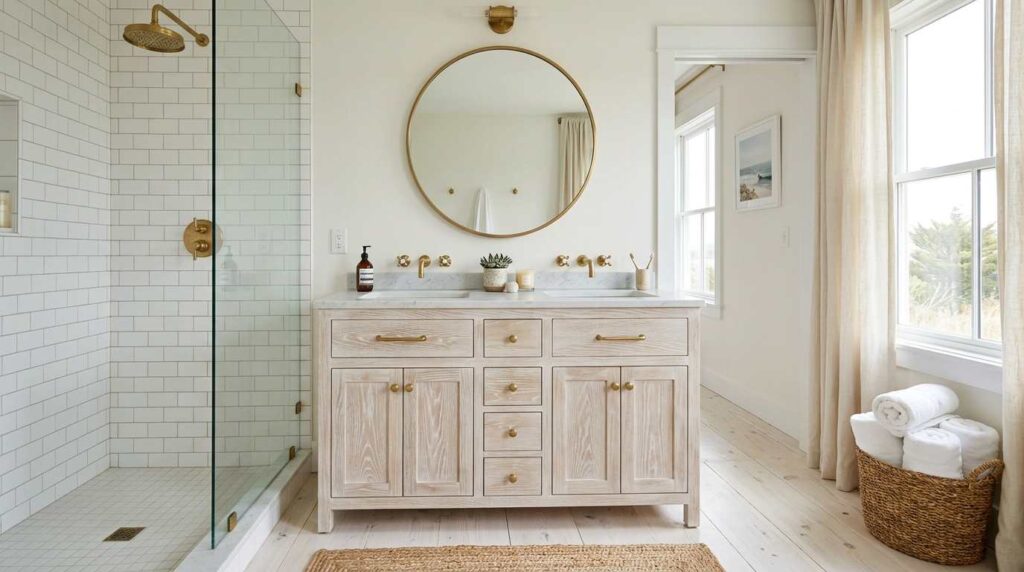
An airy, coastal bathroom featuring a whitewashed wood vanity showing visible grain through its pale, translucent finish. Brass fixtures and hardware add warm metallic contrast against the pale wood. White subway tile covers the shower area. A round mirror with a simple brass frame hangs above the vanity. Wide-plank whitewashed oak flooring continues the pale wood theme throughout. Natural light illuminates the vanity’s grain and texture. Linen curtains in cream filter soft light through a window. A woven basket holds rolled white towels. Shot from an angle showing the vanity’s whitewashed texture and brass details, with bright, natural lighting emphasizing the airy, beach-house quality achieved through this pale wood and warm brass combination.
Choosing a whitewashed finish for my vanity instead of painted or naturally stained wood let genuine grain show through this pale, translucent coating, creating that authentic beach house quality where wood has been naturally weathered and bleached by sun and salt air over time. This technique maintains wood’s organic texture and character while achieving that light, airy quality essential to coastal design, avoiding the heaviness that a solid paint finish or dark wood stain might introduce instead.
Pairing this pale wood with warm brass fixtures throughout created beautiful contrast, the golden metal catching light against the whitewashed surface in ways that feel genuinely sophisticated rather than simply matching a predetermined coastal color scheme. I extended this same whitewashed treatment to the flooring, creating cohesion between the vanity and the floor that ties the whole room together through consistent material treatment. This approach has taught me that whitewashing offers this perfect middle ground for coastal design, maintaining wood’s genuine warmth and texture while achieving that essential lightness and brightness that heavier, more saturated wood tones might compromise within a bathroom meant to feel airy and beach-inspired.
10. Layered Blues from Navy to Aqua
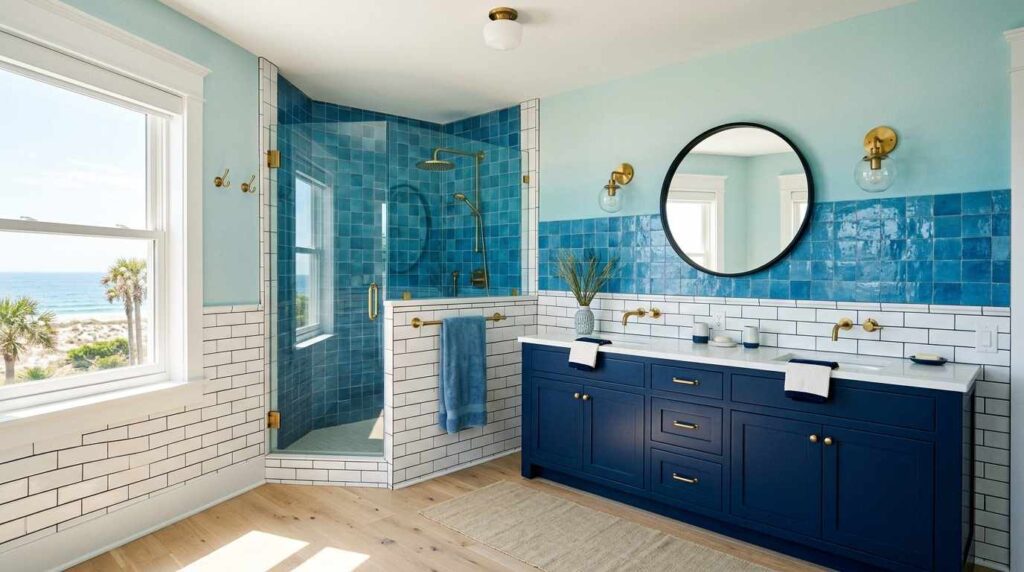
A dynamic coastal bathroom featuring a gradient of blue tones throughout: navy vanity, medium blue accent tile, and pale aqua walls, creating a layered ombre effect reminiscent of ocean depth. White subway tile provides breaks between the blue elements. Brass fixtures add warm metallic accents throughout. A round mirror with a simple black frame hangs above the vanity. Wide-plank white oak flooring grounds the colorful space. Natural light illuminates the varied blue tones, creating a sense of movement and depth. Shot from an angle showing the full gradient of blue tones throughout the space, with bright, natural lighting emphasizing the dynamic, ocean-inspired quality achieved through this layered blue color approach mimicking actual water depth.
Layering multiple blue tones throughout my bathroom, deep navy at the vanity, medium blue in accent tile, pale aqua on the walls, created this genuine sense of ocean depth and movement that a single blue shade alone couldn’t achieve. This gradient effect mimics how actual ocean water transitions from deep, dark blue in its depths to lighter, more turquoise tones near the surface, bringing authentic water-inspired color variation into the space rather than flat, uniform blue application.
Breaking up these blue elements with white subway tile prevented the room from feeling overwhelmed by color, providing necessary visual rest between each blue tone while still maintaining this cohesive gradient theme throughout. I chose brass fixtures specifically to add warmth that ties together these various blue shades, their golden tone providing consistency across the different areas of blue application. This layered approach has taught me that coastal bathroom color schemes can move beyond simple two-tone combinations into more sophisticated, gradient-based color stories that genuinely reference water’s natural depth and variation, creating something considerably more dynamic and visually interesting than flat, single-shade blue application throughout.
11. Linen and Cotton Textile Layering
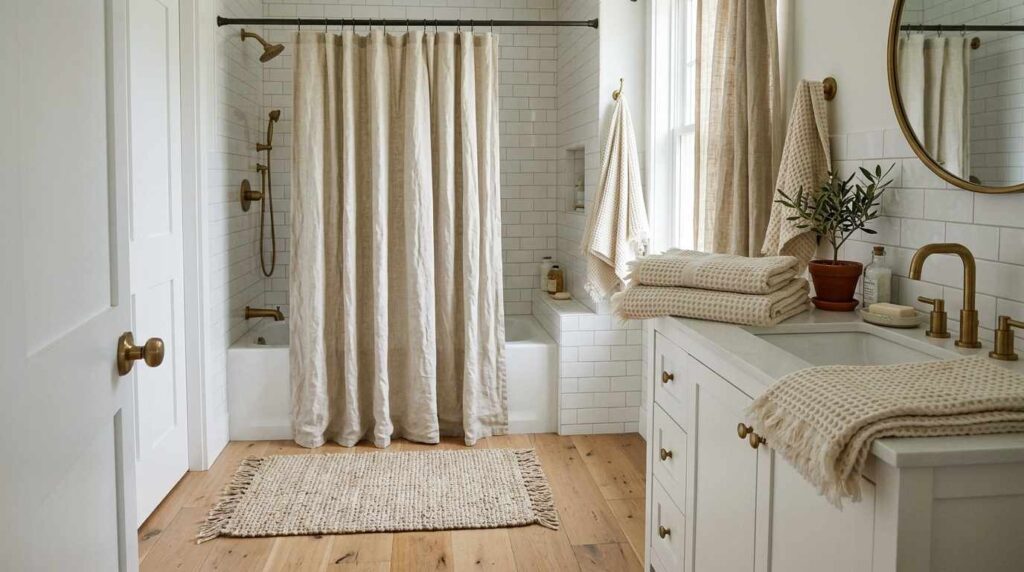
A soft, textural coastal bathroom featuring layered linen and cotton textiles throughout: waffle-weave bath towels in cream, a linen shower curtain, and a woven cotton bath mat. White subway tile provides a clean backdrop. A white vanity keeps the space feeling bright. Natural light filters through linen curtains at the window. Wide-plank white oak flooring grounds the soft, textural space. Brass fixtures add warm metallic accents. Shot from an angle showing the varied fabric textures throughout the space, with soft, natural lighting emphasizing the tactile, relaxed quality achieved through this combination of natural fiber textiles rather than relying on color or pattern alone for coastal styling.
Focusing on genuinely varied natural fiber textiles, waffle-weave towels, linen curtains, woven cotton bath mat, rather than relying primarily on color or pattern created this soft, tactile quality throughout my bathroom that feels distinctly relaxed and coastal-appropriate. Each textile brings slightly different texture and weight, and this variation adds genuine sensory interest that a room relying solely on wall color or tile pattern might lack, engaging touch alongside visual appreciation.
The linen shower curtain specifically brings this relaxed, slightly wrinkled quality that feels appropriately casual and beach-house appropriate, avoiding anything too crisp or formal that might undermine the relaxed coastal atmosphere I was pursuing. I chose all these textiles in coordinating cream and white tones, allowing the varied textures themselves to provide visual interest rather than introducing additional color that might complicate this more subtle approach. This textile-focused strategy has taught me that coastal bathroom design can succeed through genuine material choice and textural variation alone, without necessarily requiring bold color statements or literal beach imagery, proving that sometimes the most sophisticated seaside-inspired spaces come from this kind of quiet, tactile attention to natural fiber quality throughout.
12. Seafoam Green with Brass and Marble
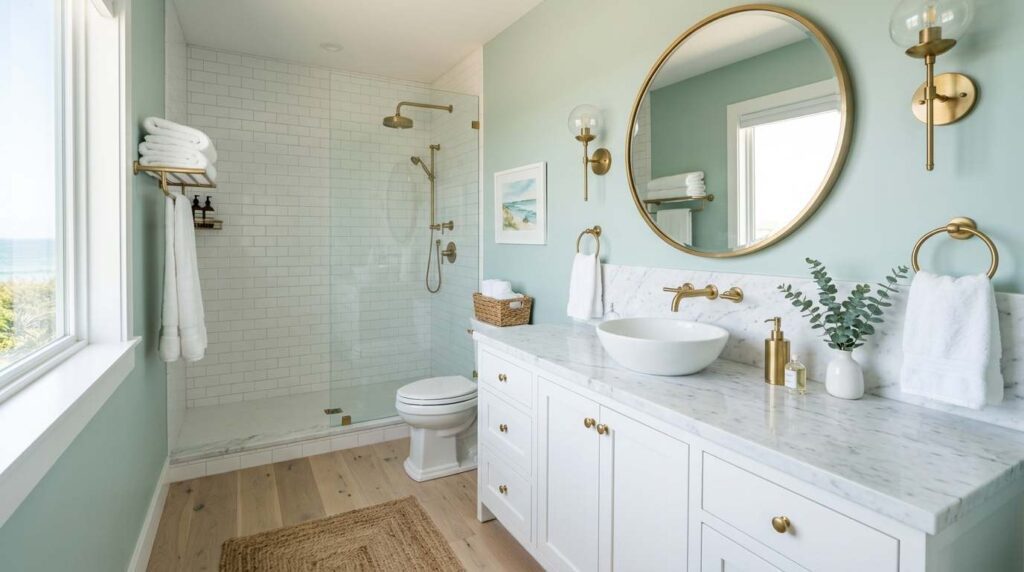
An elegant coastal bathroom featuring soft seafoam green walls paired with white marble countertops showing subtle grey veining. Brass fixtures and hardware add warm metallic sophistication throughout. A round brass-framed mirror hangs above a white vessel sink. White subway tile covers the shower area. Wide-plank white oak flooring grounds the elegant space. Natural light illuminates the sophisticated seafoam and marble combination. Fresh white towels complete the palette. Shot from an angle showing the full elegant color and material combination, with bright, natural lighting emphasizing the sophisticated, spa-like quality achieved through this seafoam green, marble, and brass pairing that elevates typical coastal color choices.
Choosing seafoam green instead of more common navy or bright blue gave my bathroom this softer, more sophisticated coastal reference that evokes shallow ocean water and sea glass rather than the deeper, more saturated blues typically associated with nautical style. This gentler green-blue hybrid feels genuinely spa-like and calming, pairing beautifully with the white marble countertop’s subtle grey veining to create an elevated, almost luxurious take on typical coastal bathroom color choices.
The brass fixtures throughout add warmth and sophistication that keeps this cooler seafoam tone from feeling too clinical or sterile, their golden warmth providing necessary visual balance against the room’s predominantly cool color palette. I selected marble specifically for its natural, organic veining pattern, which references water’s movement in this more subtle, sophisticated way compared to more literal wave-patterned tile or decor might achieve. This elegant combination has taught me that coastal design can absolutely support genuine luxury and sophistication, moving beyond casual beach house styling into something that feels appropriate for an elevated, spa-like bathroom experience while still maintaining authentic connection to water-inspired color and material choices.
13. Woven Basket Storage Wall Display
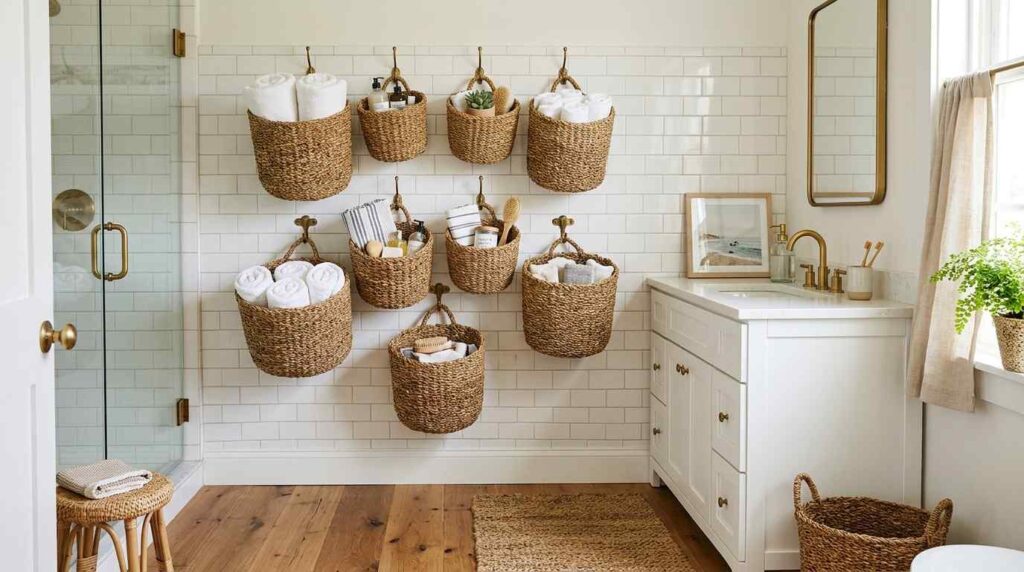
A charming, organized coastal bathroom featuring multiple woven seagrass baskets mounted to one wall, holding rolled towels and bathroom essentials. White subway tile provides a clean backdrop. A white vanity sits below the basket display. Natural light illuminates the woven texture of the various baskets. Wide-plank white oak flooring grounds the organized space. Brass hooks and fixtures add warm metallic accents. A jute bath mat continues the natural fiber theme underfoot. Shot at an angle showing the full basket arrangement and its organic texture against the white tile, with warm, natural lighting emphasizing the organized, natural quality achieved through this woven storage display technique for coastal-appropriate bathroom organization.
Mounting woven seagrass baskets directly to my bathroom wall solved genuine storage needs while simultaneously adding authentic natural texture that photographs beautifully against the white subway tile backdrop. Each basket’s slightly different size and weave pattern creates visual rhythm across the wall, and this practical storage solution feels genuinely coastal-appropriate through material choice rather than relying on any decorative beach imagery to establish that connection.
I organized the baskets by what I access most frequently, keeping everyday towels in easy-reach positions while less frequently used items live in higher baskets, which has genuinely improved how functional this small bathroom feels despite limited built-in storage. The natural fiber texture throughout softens all the hard surfaces typical of bathrooms, tile, porcelain, glass, bringing organic warmth that pairs beautifully with the crisp white elements surrounding it. This storage solution has taught me that coastal bathroom styling can achieve genuine authenticity through practical, functional choices like storage baskets rather than purely decorative elements, proving that sometimes the most successful coastal design comes from thoughtfully selecting everyday necessities in materials that naturally reference beach environments.
14. Pale Blue Ceiling with White Walls
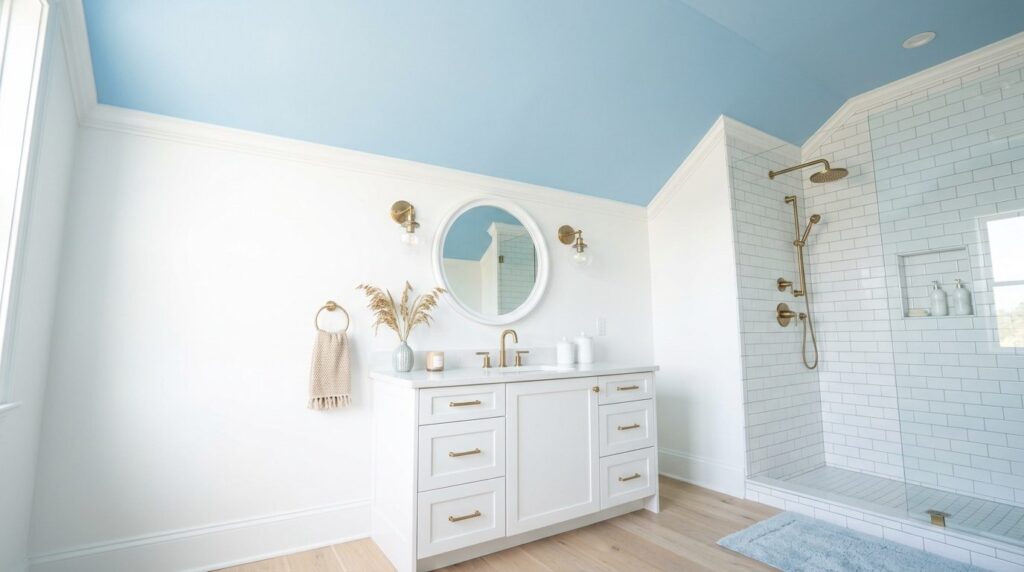
An unexpected, sophisticated coastal bathroom featuring a pale sky blue painted ceiling paired with crisp white walls below. A white vanity with simple lines sits centered. White subway tile covers the shower area. Natural light illuminates the white walls while the blue ceiling creates a subtle sky-like effect overhead. Wide-plank white oak flooring grounds the bright space. Brass fixtures add warm metallic accents. A round mirror with a simple white frame hangs above the vanity. Shot from a low angle looking upward to emphasize the pale blue ceiling against the white walls, with bright, natural lighting highlighting the subtle, sky-inspired quality achieved through this ceiling-focused coastal color approach.
Painting my bathroom ceiling this pale sky blue while keeping the walls crisp white created this subtle, sky-like effect overhead that references coastal atmosphere without requiring any wall-level color commitment. Looking up reveals this soft blue expanse reminiscent of clear beach skies, while the white walls maintain the room’s overall brightness and spaciousness at eye level where it matters most for daily functionality.
This approach offers a more subtle coastal reference than saturated wall color throughout, appealing to anyone wanting gentle seaside connection without fully committing to blue as the room’s dominant color statement. The brass fixtures add warmth that complements this cool blue ceiling beautifully, and against the white walls and subway tile, everything feels bright and airy despite this one colored surface overhead. This technique has taught me that sometimes the most sophisticated coastal styling comes from applying color in unexpected locations, like ceilings, rather than following the conventional approach of painting walls the room’s primary color, proving that subtlety can create just as much impact as bolder, more expected coastal color choices throughout an entire room.
15. Sea Glass Colored Glass Tile Mosaic
A serene coastal bathroom featuring a mosaic accent wall made from sea glass-colored glass tile in varying shades of soft green, blue, and aqua. The tiles’ varied colors and slight texture create a shimmering, water-like effect reminiscent of actual sea glass. White subway tile surrounds this mosaic feature. A white vanity keeps the space feeling bright. Natural light illuminates the mosaic’s varied colors and glass texture, creating gentle light refraction. Wide-plank white oak flooring grounds the serene space. Brass fixtures add warm metallic accents. Shot straight-on to show the full sea glass mosaic against the surrounding white tile, with bright, natural lighting emphasizing the shimmering, authentic sea glass quality achieved through this genuine mixed-color glass tile approach to coastal bathroom design.
Creating this sea glass-colored mosaic accent wall used actual glass tile in varying shades of green, blue, and aqua to genuinely replicate that beautiful, varied coloring you find in authentic sea glass collected from actual beaches. Rather than choosing one uniform blue or green tile, this mixed-color mosaic approach captures sea glass’s natural color variation, since real sea glass pieces never match perfectly but rather show this beautiful range within a related color family.
The glass material itself catches and refracts natural light throughout the day, creating subtle shimmer and movement that ceramic tile in similar colors couldn’t replicate as effectively. I kept the surrounding tile simple white specifically to let this colorful, textured mosaic feature wall provide the room’s primary visual interest without competing decorative elements diluting its impact. This mosaic approach has taught me that referencing specific coastal materials, in this case genuine sea glass’s distinctive coloring and light-catching quality, can create considerably more authentic and sophisticated coastal design than more generic blue or aqua color choices alone, proving that paying attention to these specific natural details makes the difference between generic coastal styling and something that feels genuinely inspired by actual beach environments.