15 Best TV Wall Decor Ideas to Transform Your Space
The television wall has this reputation for being the most awkward design challenge in modern living rooms, that necessary black rectangle that can either disappear seamlessly into a thoughtfully designed space or dominate the room like an unwelcome guest depending entirely on how you handle everything surrounding it. Whether you’re drawn to disguising the TV entirely within custom cabinetry, embracing it honestly with a bold gallery wall built around it, or using textural materials like wood paneling and stone to give the whole wall genuine architectural presence, this space offers real opportunity to solve a practical problem while creating something that actually elevates your living room’s overall design. From floating media consoles that keep the wall feeling light to dramatic accent walls that make the television feel intentional rather than apologetic, these ideas prove that TV walls don’t have to be the design compromise everyone assumes they must be.
I spent years treating my TV wall as this unfortunate necessity, mounting the television at whatever height seemed practical and surrounding it with mismatched cords and a cheap console that never quite fit the space properly, essentially giving up on that wall entirely as a lost design opportunity. It wasn’t until I started really studying how design-forward living rooms handled this same challenge that I realized the television didn’t have to be this awkward focal point everyone just tolerated, it could actually become part of a genuinely considered design scheme rather than something you decorated around apologetically. That shift in thinking led me to completely reimagine what this wall could accomplish beyond its purely functional purpose.
What I’ve learned about successful TV wall design is that the most elegant solutions either fully commit to disguising the television as part of a larger architectural or decorative statement, or they embrace its presence honestly while surrounding it with enough visual interest that your eye doesn’t fixate on the black screen when it’s off. The worst outcomes happen in that uncomfortable middle ground, a television mounted alone on an otherwise bare wall with no supporting design context, reading as an afterthought rather than an intentional choice. Understanding this principle has completely changed how I approach this space, treating it as a genuine design opportunity rather than a problem to minimize.
1. Full Wall Wood Paneling with Integrated TV
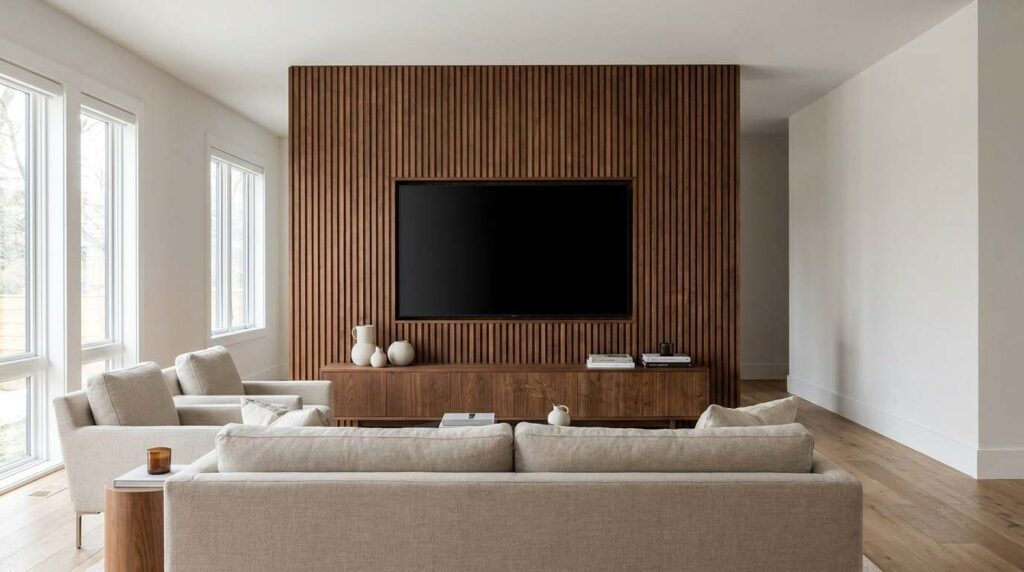
A sophisticated living room featuring floor-to-ceiling wood paneling in warm walnut tone, with the television seamlessly integrated flush into the paneled surface. Vertical wood slats create rhythm and texture, broken only by the dark screen which nearly disappears against the rich wood color when off. A media console in matching walnut sits below, holding minimal styled objects. Soft white walls surround the paneled feature wall. A neutral linen sofa faces the television at appropriate viewing distance. Wide-plank oak floors ground the space. Natural light from nearby windows illuminates the wood grain and texture. Shot straight-on to show the seamless integration of the television within the wood paneling, with warm, natural lighting emphasizing how the rich wood tone camouflages the screen while creating genuine architectural interest.
Installing this floor-to-ceiling wood paneling specifically to integrate my television flush into the surface was a significant investment, but it solved the black rectangle problem more completely than any other solution I’d considered. When the screen is off, the dark glass nearly disappears against the rich walnut tone, and the vertical slat pattern continues almost uninterrupted across where the TV sits, creating this illusion that the wall exists as pure architecture rather than around a functional appliance.
Working with a custom carpenter was essential for getting the recessed mounting depth correct and ensuring proper ventilation behind the screen despite the flush installation. The wood grain and texture provide genuine visual interest throughout the entire wall, meaning even when guests aren’t watching television, this feature reads as intentional design rather than accommodation for electronics. This project has taught me that sometimes the most successful television integration comes from this kind of complete architectural commitment, treating the screen as one small element within a much larger, more considered design statement rather than trying to work around it as a separate, awkward object.
2. Gallery Wall Built Around the Television
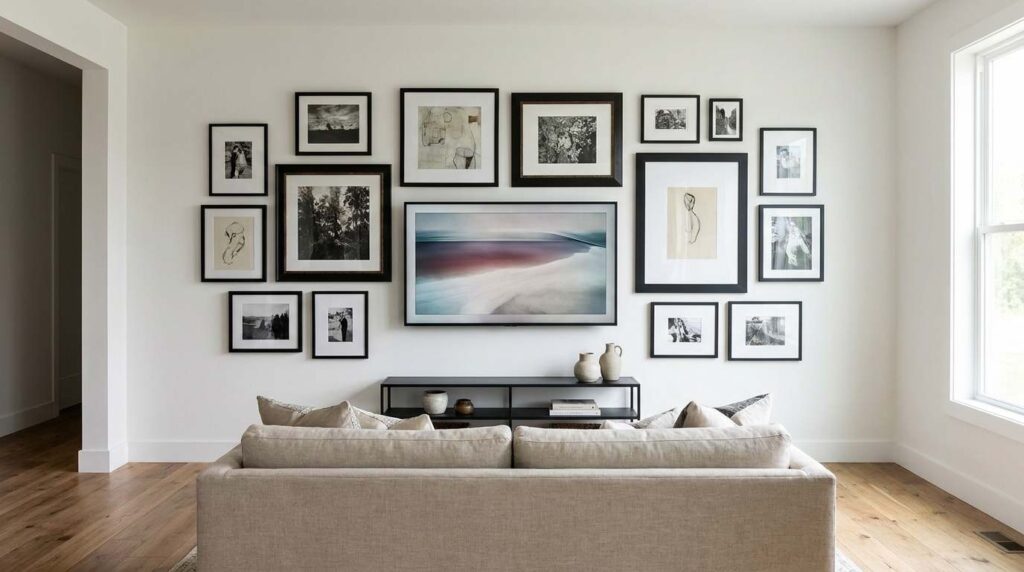
A curated living room wall featuring an eclectic gallery arrangement of framed art and photography surrounding a mounted television, positioned as though it’s simply another frame within the collection. The frames vary in size and style but share consistent black or dark wood finishes for cohesion. Soft white walls provide the backdrop. A neutral sofa faces the arrangement. Wide-plank oak floors ground the space. Natural light illuminates the varied artwork and photography surrounding the screen. A media console in black metal sits below, holding minimal decor. Shot straight-on to show the full gallery arrangement with the television integrated as one element among many, with bright, even lighting emphasizing how this technique makes the screen feel like an intentional part of the curated display rather than an isolated focal point.
Building an entire gallery wall around my television, rather than mounting it alone on an empty wall, transformed how the screen reads within the room entirely. By surrounding it with a genuine collection of framed art and photography in coordinating black frames, the television essentially becomes just one more rectangle within a larger curated arrangement rather than standing out as an isolated, obviously functional object competing with nothing else for attention.
This approach required careful planning to ensure the television’s proportions worked within the overall gallery composition, treating its dimensions the same way I would any other frame when calculating spacing and arrangement. I mixed genuine artwork, family photography, and even a few decorative objects throughout this arrangement, creating enough visual complexity that your eye moves across the whole wall rather than fixating specifically on the screen. This technique has taught me that sometimes the most effective solution isn’t hiding or disguising the television at all, but rather providing enough surrounding visual context that it simply becomes absorbed into a larger, more interesting design statement.
3. Floating Media Console with Minimal Styling
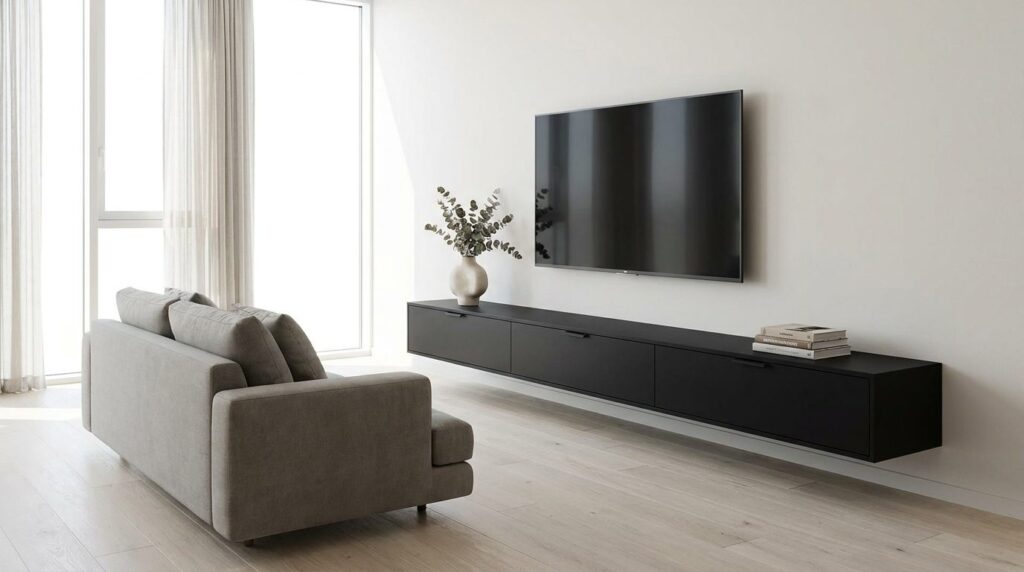
A sleek, contemporary living room featuring a floating media console in matte black mounted beneath a wall-mounted television, creating a light, uncluttered look. The console appears to hover without visible legs or support. Soft white walls provide a clean backdrop. Minimal styled objects, a single ceramic vase and small stack of books, sit atop the console. Wide-plank white oak floors ground the space. A neutral grey sofa faces the television. Natural light from large windows illuminates the clean, minimal composition. Shot from an angle showing the floating console’s light, airy quality beneath the mounted screen, with bright, even lighting emphasizing the sleek, uncluttered aesthetic achieved through this minimal styling approach.
Choosing a floating media console instead of a traditional floor-standing unit immediately made my television wall feel lighter and less visually heavy, since there’s no bulky furniture piece anchoring the space to the floor. The console appears to hover beneath the mounted screen, and this visual lightness helps prevent the whole wall from feeling like an overwhelming, furniture-dominated focal point the way a substantial traditional media cabinet might.
I kept the styling on top deliberately minimal, just a single ceramic vase and small stack of books, resisting the urge to fill the surface with remote controls, gaming consoles, or decorative clutter that would undermine this clean, uncluttered effect I was after. This approach required finding creative storage solutions elsewhere in the room for the inevitable electronics and cables that come with a home entertainment setup, but keeping them hidden away preserved this minimal aesthetic. This floating console has taught me that sometimes the most effective television wall styling comes from what you deliberately leave out rather than what you add, letting negative space and restraint create sophistication rather than elaborate decorative solutions.
4. Board and Batten with Television as Focal Point
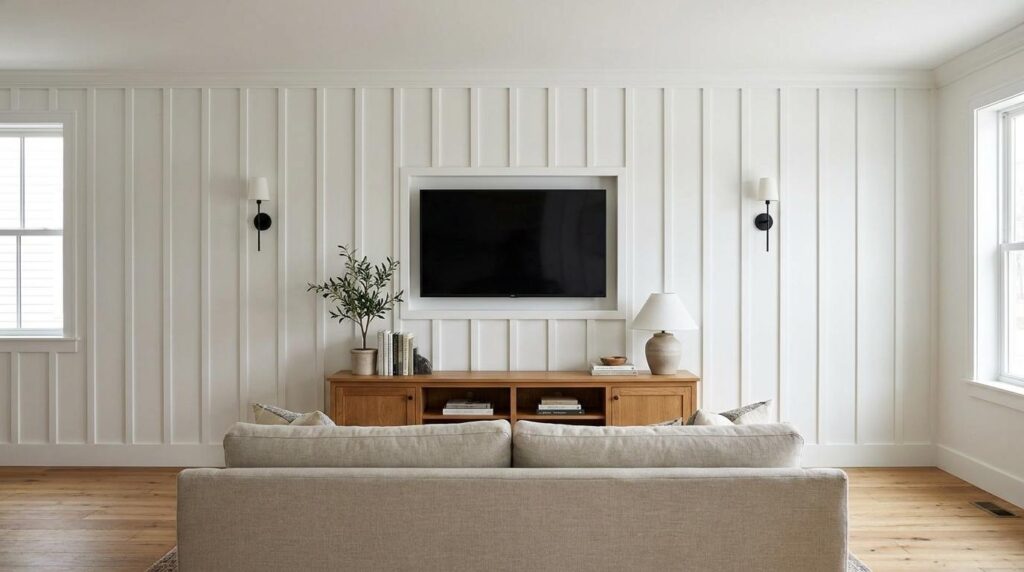
A classic living room wall featuring white board and batten paneling installed to full height, with the television mounted centered within one of the paneled sections. The vertical battens create architectural rhythm around the screen. A media console in warm oak wood sits below, holding styled books and a small plant. Wide-plank oak floors complement the console. Natural light from nearby windows illuminates the paneling’s dimensional texture. A neutral linen sofa faces the television. Simple black sconces flank the screen, providing ambient lighting. Shot straight-on to show the full board and batten wall with the integrated television, with bright, even lighting emphasizing the classic architectural texture that gives the screen genuine context and intentionality.
Installing board and batten paneling across this entire wall gave my television genuine architectural context, positioning it within one of the naturally created panel sections rather than mounting it on an otherwise plain, undecorated surface. The vertical batten lines continue around the screen, creating this sense that the television was always meant to be there, integrated into the room’s actual architecture rather than added as an afterthought once construction was complete.
This treatment required precise carpentry to ensure the panel section housing the television was appropriately sized and centered within the overall design, since any asymmetry would have been immediately noticeable given how structured this paneling style inherently is. The black sconces flanking the screen add both practical ambient lighting and visual bookends that further integrate the television within this architectural framework. This approach has taught me that sometimes giving the television proper architectural framing, rather than trying to hide or disguise it entirely, creates the most successful and intentional-feeling result, treating the screen as a legitimate design element deserving thoughtful placement within the room’s actual construction.
5. Stone Accent Wall Surrounding the Screen
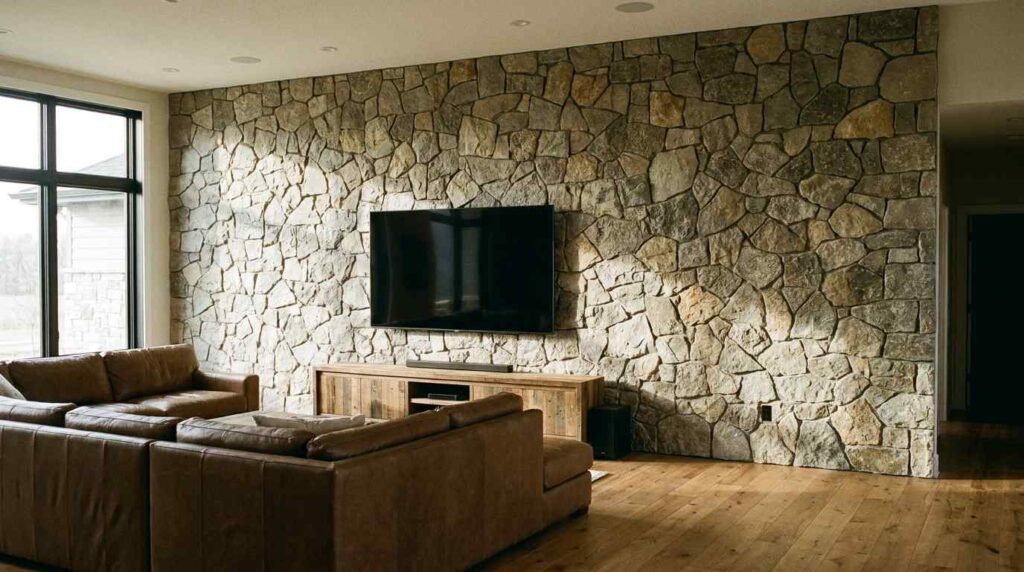
A dramatic living room wall featuring natural stone veneer in warm grey and tan tones covering the entire surface, with the television mounted centrally against this textured backdrop. The stone’s irregular, natural texture creates visual interest that draws attention away from the screen itself. A reclaimed wood media console sits below. Wide-plank oak floors ground the space. Natural light illuminates the stone’s varied texture and color. A leather sectional sofa faces the television at appropriate distance. Shot from an angle showing the full stone wall with the integrated screen, with warm, natural lighting emphasizing the dramatic textural quality that gives the television wall genuine architectural presence and interest.
Covering this entire wall in natural stone veneer created such dramatic textural interest that the television, despite being mounted right in the center, doesn’t read as the wall’s primary focal point at all, the stone itself commands that attention instead. This approach essentially uses genuine architectural drama to diminish the screen’s visual importance, letting the room’s overall design statement come from the stone’s natural, varied texture rather than centering everything around the necessary but aesthetically unremarkable television.
Installing stone veneer required significant structural consideration given the material’s weight, and I worked with contractors experienced specifically in this kind of installation to ensure proper support. The stone’s irregular pattern and color variation means every viewing angle reveals slightly different texture and visual interest, keeping the wall feeling dynamic rather than static even when the television itself is simply displaying a black screen. This dramatic material choice has taught me that sometimes the most effective way to minimize a television’s visual dominance isn’t through disguise or integration, but through creating such compelling surrounding texture and drama that the screen genuinely becomes secondary to the wall’s overall material impact.
6. Symmetrical Built-In Shelving Flanking the TV
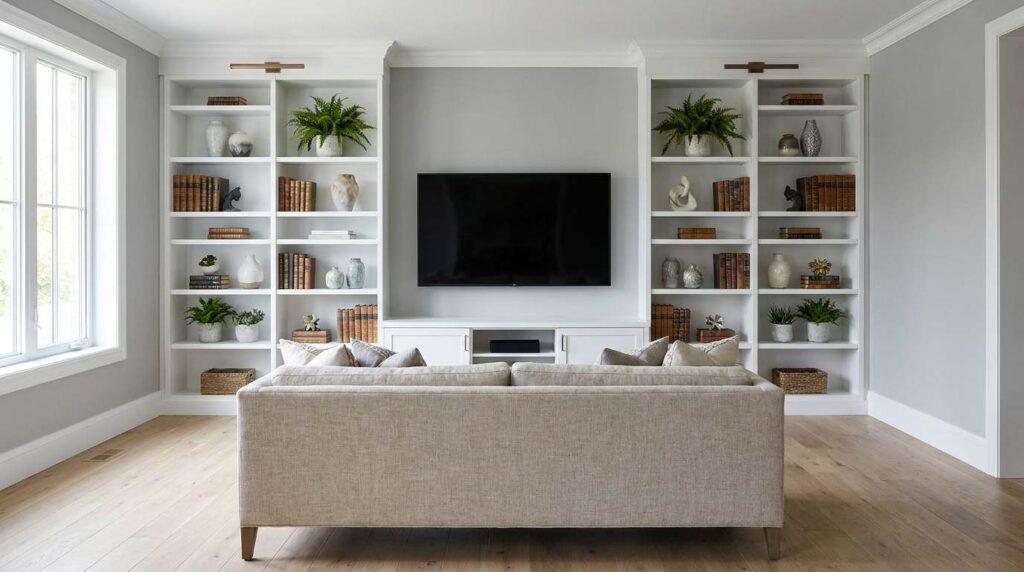
A sophisticated living room featuring the television centered on a wall between two symmetrical built-in bookshelf units painted white. Each shelf displays curated books, ceramic objects, and small plants in an organized, intentional arrangement. Soft grey walls provide the backdrop above and below the built-ins. A media console in matching white sits beneath the television. Wide-plank oak floors ground the space. Natural light from a nearby window illuminates the symmetrical composition. A neutral sofa faces the entertainment wall. Shot straight-on to show the full symmetrical built-in arrangement with the television as the central anchor, with bright, even lighting emphasizing the balanced, architectural sophistication achieved through this classic flanking shelf technique.
Building matching bookshelves on either side of my television created this classic, symmetrical composition that gives the whole entertainment wall genuine architectural balance and intentionality. The television sits centered between these two built-in units, and rather than feeling like an isolated black rectangle, it becomes the natural focal point of a carefully considered, proportional design that clearly took the screen’s presence into account from the very beginning of planning.
Curating what fills these flanking shelves required real attention to color coordination and object scale, ensuring both sides felt balanced without being identically matched, which would have looked too rigid and artificial. This symmetrical approach provides substantial storage and display opportunity while giving the television proper visual context and support, essentially surrounding it with enough intentional design that it never reads as an afterthought. This technique has become one of my most reliable recommendations for anyone struggling with television wall design, since this classic flanking shelf approach works across nearly any design style, from traditional to contemporary, while consistently solving that awkward isolated screen problem.
7. Sliding Barn Door TV Concealment
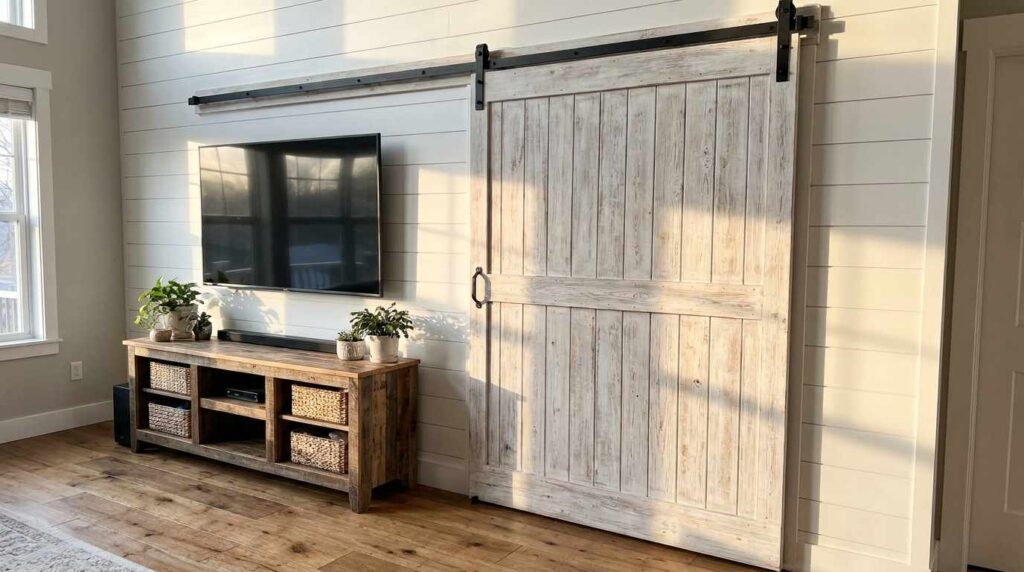
A charming living room wall featuring a sliding barn door mounted on black metal hardware, positioned to completely conceal the television when not in use. The door shows a whitewashed wood finish with visible grain. When open, it reveals the mounted screen behind. White shiplap paneling surrounds the sliding mechanism. A reclaimed wood media console sits below. Wide-plank oak floors ground the farmhouse-inspired space. Natural light illuminates the door’s textured wood surface. Shot showing the barn door partially open, revealing the television behind while demonstrating the concealment mechanism, with warm, natural lighting emphasizing the clever, farmhouse-appropriate solution for hiding the screen entirely when not in use.
Installing a sliding barn door specifically to conceal my television when not in use solved the “black rectangle staring at you” problem more completely than any styling technique alone could achieve, since the screen simply disappears entirely behind this functional, decorative door whenever we’re not actually watching something. The whitewashed wood finish and visible grain bring genuine farmhouse character that works beautifully with our home’s overall aesthetic, functioning as attractive wall decor in its own right even beyond its concealment purpose.
This installation required proper structural mounting to support the door’s weight while ensuring smooth, quiet sliding operation, and working with an experienced installer made this technical aspect straightforward despite the specialized hardware involved. The satisfaction of sliding this door closed after watching television, transforming the wall instantly from entertainment center back to simple, charming architectural feature, has become a small daily ritual I genuinely enjoy. This solution has taught me that sometimes the most effective television wall design isn’t about integration or artistic surrounding context at all, but rather complete, functional concealment that lets you choose exactly when that screen exists within your visual environment.
8. Oversized Art Print with TV as Secondary Element
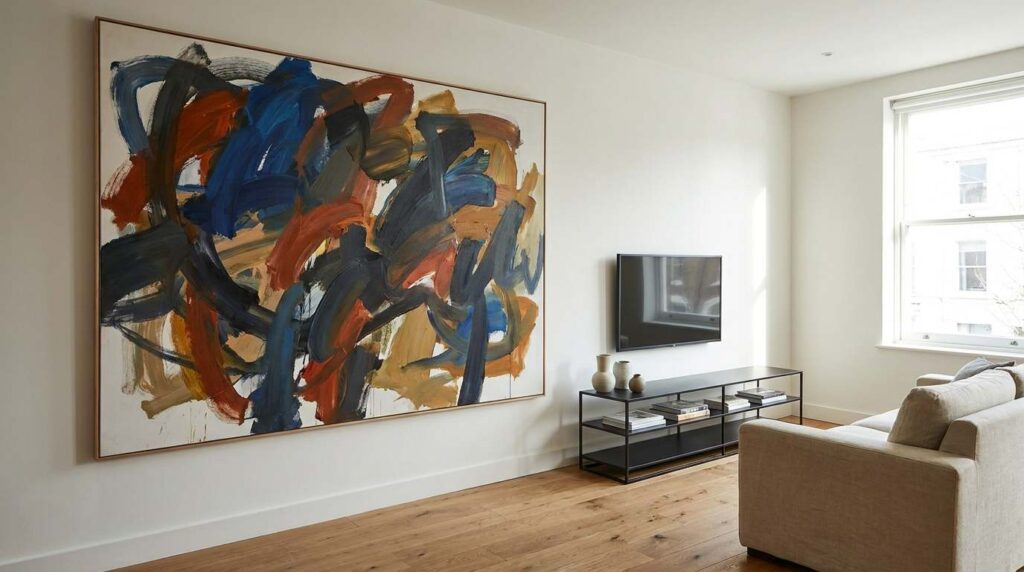
A gallery-inspired living room wall featuring one large-scale abstract painting positioned prominently above and beside a smaller, less centrally placed television. The artwork’s bold colors and scale command primary visual attention, while the screen sits somewhat apart, styled almost as an afterthought accessory. Soft white walls provide the backdrop. A media console in black metal holds minimal styled objects. Wide-plank oak floors ground the space. Natural light illuminates both the vibrant artwork and the screen. A neutral sofa faces the arrangement. Shot from an angle showing the artwork’s dominant presence relative to the television’s more understated placement, with bright, gallery-style lighting emphasizing how genuine art can outweigh the screen’s visual importance within the same wall composition.
Positioning one significant, large-scale abstract painting as the clear dominant element on this wall, with the television placed somewhat secondarily nearby rather than perfectly centered, shifted the entire hierarchy of what actually commands attention when you walk into the room. The artwork’s bold color and substantial scale genuinely outweighs the screen’s visual presence, creating this hierarchy where the television feels like a practical accommodation rather than the wall’s primary design statement.
This approach required finding wall placement that made practical sense for actual television viewing while still allowing the artwork genuine prominence, which took some experimentation with furniture positioning and screen angle to achieve comfortably. I chose an intensely colorful, energetic painting specifically because its visual weight needed to genuinely compete with and exceed the television’s presence rather than reading as a smaller, supporting decorative element. This technique has taught me that sometimes the most effective way to minimize a television’s visual dominance is simply introducing something more visually compelling nearby, shifting the room’s actual focal point through genuine artistic impact rather than trying to disguise or integrate the screen directly.
9. Vertical Wood Slat Wall with Hidden TV
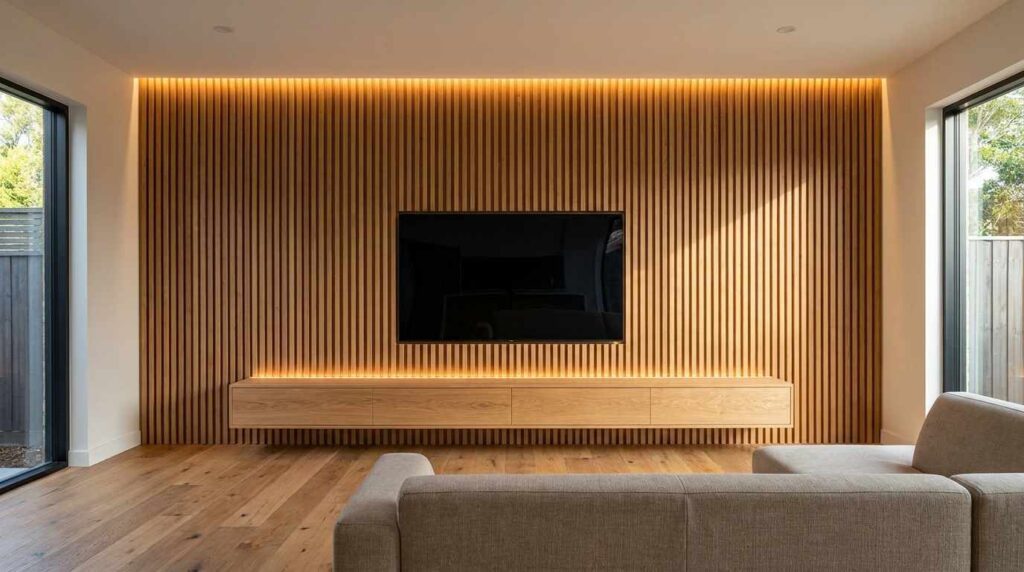
A modern living room featuring a full-height vertical wood slat wall in warm oak tone, with the television mounted flush within the slatted surface, nearly camouflaged when off. Integrated LED backlighting glows warmly behind select slats, adding ambient illumination. A floating media console in matching wood sits below. Wide-plank oak floors ground the space. Natural light from nearby windows interacts with the slat’s rhythm and texture. A neutral sofa faces the television. Shot straight-on to show the seamless integration of the screen within the slatted wood pattern, with warm, atmospheric lighting emphasizing the sophisticated, architectural quality achieved through this camouflaged wood slat technique.
Installing this vertical wood slat wall with my television mounted flush within the pattern created one of the most successful camouflage techniques I’ve encountered for minimizing the screen’s presence when not actively in use. The slats’ rhythmic, repeating pattern continues almost seamlessly across where the television sits, and against the warm oak tone, the dark screen genuinely recedes rather than standing out as an obvious black rectangle interrupting the wall’s texture.
Adding integrated LED backlighting behind select slats introduced this beautiful warm glow that transforms the wall’s evening ambiance entirely, creating atmosphere that has nothing to do with the television itself but that makes the whole space feel considerably more sophisticated after dark. This installation required careful electrical planning to properly conceal wiring for both the screen and the lighting system while maintaining the clean, seamless appearance. This project has taught me that combining architectural camouflage techniques with ambient lighting design creates a television wall that functions as genuine evening atmosphere enhancement, not just a practical solution for hiding an entertainment device during daytime hours.
10. Textured Wallpaper with Television Integration
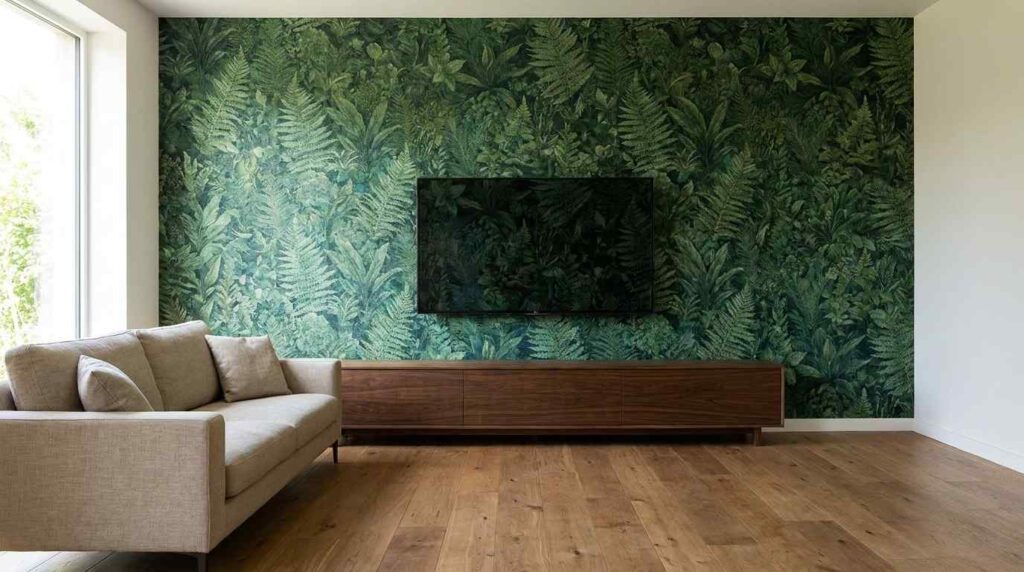
A sophisticated living room wall featuring bold botanical wallpaper in deep green tones, with the television mounted directly against the patterned surface rather than on a separate clean space. The wallpaper’s busy, textured pattern creates visual complexity that competes with and somewhat disguises the screen’s rectangular shape. A media console in dark wood sits below. Wide-plank oak floors ground the space. Natural light illuminates the wallpaper’s rich pattern and color. A neutral linen sofa faces the television. Shot straight-on to show the television integrated against the patterned wallpaper backdrop, with bright, natural lighting emphasizing how busy pattern can actually help disguise the screen’s presence through visual complexity.
Mounting my television directly against this bold, busy botanical wallpaper rather than on a separate, clean wall section was a counterintuitive choice that actually worked beautifully for minimizing how much the screen’s rectangular shape draws attention. The wallpaper’s intricate pattern and rich color create so much visual complexity and interest on their own that your eye doesn’t immediately fixate on the geometric screen interrupting that pattern, essentially using busyness itself as a disguise technique rather than the more common minimalist camouflage approach.
This method required accepting that the wallpaper pattern would technically be interrupted by the screen’s presence, but I found that busier, more organic patterns like this botanical print actually handled that interruption more gracefully than simpler geometric wallpapers might have. The dark wood console below continues this rich, layered aesthetic, creating a cohesive wall that feels intentionally decorated rather than apologetically accommodating a necessary appliance. This approach has taught me that sometimes the conventional wisdom about needing clean, simple backgrounds for television placement doesn’t hold true, busy pattern can provide its own effective form of visual camouflage when executed with enough confidence and commitment.
11. Floating Shelves Styled Above and Below TV
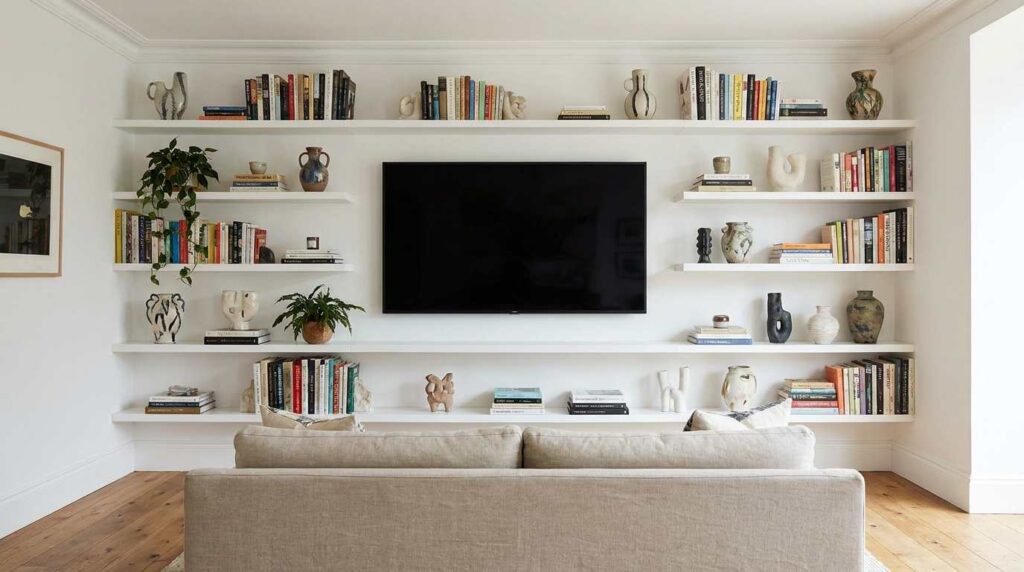
A curated living room wall featuring the television mounted centrally, flanked and framed by floating shelves both above and below the screen, displaying books, ceramic objects, and small plants. White walls provide a clean backdrop. The shelves show consistent white finish, creating cohesion with the wall. Wide-plank oak floors ground the space. Natural light illuminates the styled objects throughout the shelving. A neutral sofa faces the television. Shot straight-on to show the full shelf arrangement surrounding the screen, with bright, even lighting emphasizing the curated, gallery-like quality achieved through this shelving technique that provides genuine visual context for the television.
Adding floating shelves both above and below my television, rather than just to the sides, created this sandwiched effect where the screen sits genuinely nestled within a curated display rather than existing as an isolated element on an otherwise bare wall. Styling these shelves with books, ceramic objects, and small plants gave the whole wall genuine personality and visual interest that extends well beyond the television’s basic function, transforming this from purely functional entertainment space into something that feels like intentional home decor.
This approach required careful attention to how the shelf brackets and mounting hardware related to the television’s actual placement, ensuring proper spacing that allowed comfortable viewing while still achieving this cohesive, integrated look. I varied the height and density of objects across different shelves, creating visual rhythm rather than uniform, predictable styling throughout. This technique has taught me that sometimes the simplest solution for giving a television proper context is literally surrounding it with genuine home decor and personal objects, providing this visual framework that makes the screen feel like one component within a larger, thoughtfully curated wall rather than the room’s sole and somewhat awkward focal point.
12. Black Accent Wall for Screen Camouflage
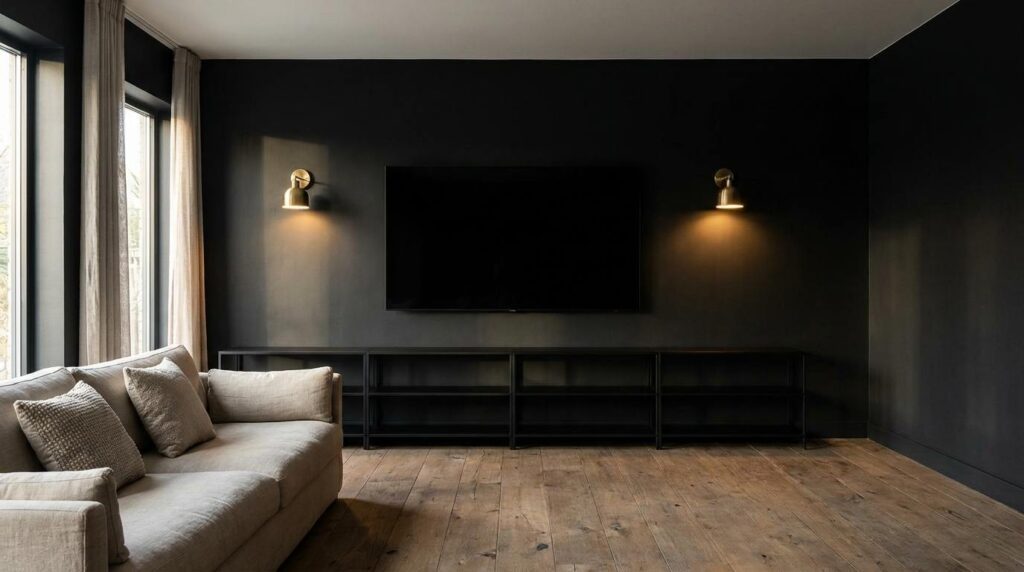
A dramatic, sophisticated living room wall painted entirely in matte black, with the television mounted centrally against this dark backdrop, nearly disappearing when off. Brass sconces flank the screen, providing warm ambient lighting and visual interest against the black surface. A media console in black metal continues the dark theme below. Wide-plank oak floors ground the dramatic space. Natural light from nearby windows creates interesting contrast against the black wall. A neutral linen sofa faces the television. Shot straight-on to show the television nearly camouflaged against the black wall, with warm, dramatic lighting emphasizing how this dark backdrop minimizes the screen’s visual presence while creating genuine sophisticated drama.
Painting this entire wall matte black was the most direct solution I found for making my television’s dark screen essentially disappear when not in use, since there’s minimal contrast between the black wall and the black glass, unlike the stark difference you get with lighter wall colors. This approach requires genuine confidence to execute, since committing to an entirely black wall feels dramatic and permanent in ways that lighter alternatives don’t, but the payoff in terms of screen camouflage has been remarkably effective.
Adding brass sconces on either side introduced warm, glowing light sources that provide genuine visual interest and drama against the black backdrop, ensuring the wall doesn’t feel like an empty void even with the television’s dark presence blending into the color. This dramatic backdrop also makes the room feel wonderfully cinematic during actual movie watching, since the darkness surrounding the screen creates this theater-like atmosphere that enhances the viewing experience itself. This technique has taught me that sometimes the most literal solution, matching your wall color directly to your screen’s natural dark state, provides the most effective camouflage, even though it requires more design commitment than subtler integration techniques.
13. Woven Textile Tapestry Surrounding the Screen
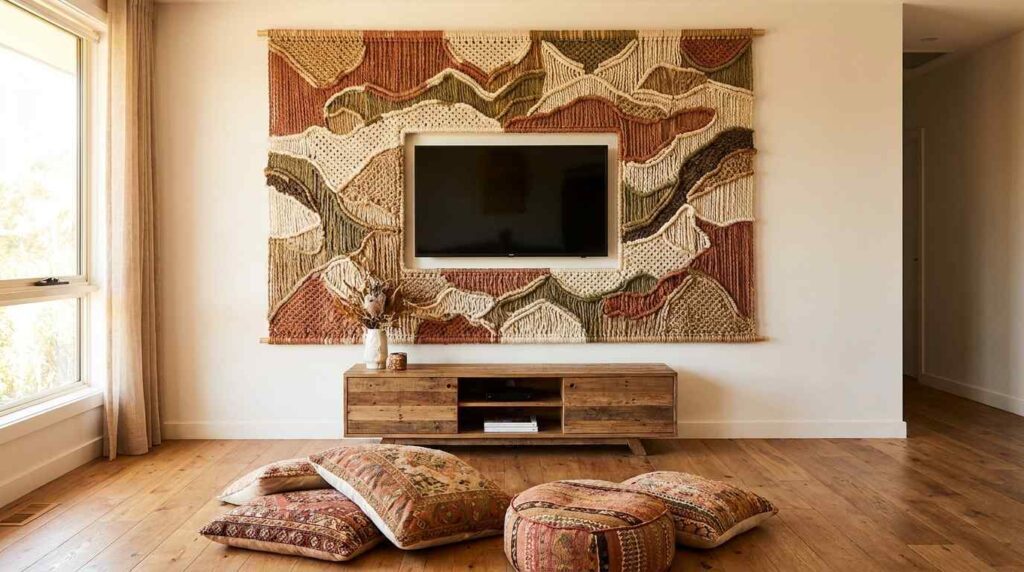
A bohemian-inspired living room wall featuring a large woven textile tapestry in natural fibers and earth tones, with the television mounted within a deliberately cut opening in the fabric display. The tapestry’s organic pattern and texture surrounds the screen on all sides. A low wooden media console sits below. Wide-plank oak floors ground the eclectic space. Natural light illuminates the tapestry’s woven texture and warm color palette. A floor cushion seating area faces the television. Shot straight-on to show the tapestry surrounding the integrated screen, with warm, natural lighting emphasizing the organic, textural quality achieved through this unconventional fiber art framing technique.
Commissioning this custom woven tapestry with a deliberate opening for my television was an unconventional solution that required working closely with a fiber artist to achieve this specific functional requirement while maintaining the piece’s organic, artistic integrity. The natural fiber texture surrounding the screen on all sides creates this beautiful, tactile frame that feels worlds away from typical television wall treatments, bringing genuine handmade warmth and bohemian character to what’s usually a purely technological focal point.
This approach required precise measurement to ensure the tapestry’s opening properly accommodated my specific television’s dimensions while still allowing the overall woven pattern to feel balanced and intentional rather than awkwardly interrupted. The organic, earth-toned palette and varied texture throughout the piece provides genuine visual complexity that draws attention to the artistic craftsmanship rather than the technological necessity nestled within it. This unconventional solution has taught me that sometimes the most memorable television wall treatments come from genuinely custom, artistic collaborations rather than conventional design solutions, creating something entirely unique that wouldn’t be possible through standard shelving, paneling, or paint techniques alone.
14. Vintage Frame Repurposed as TV Border
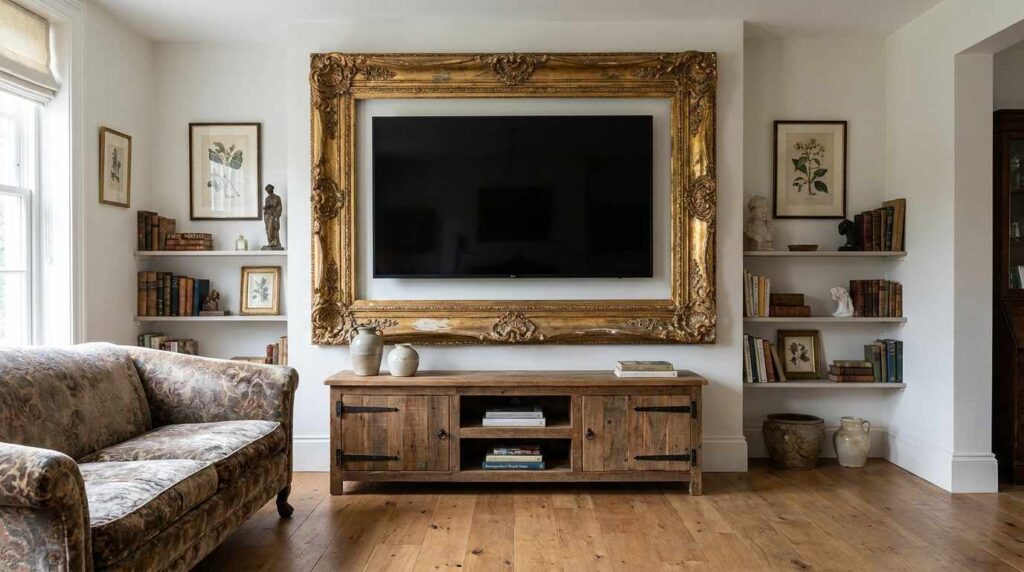
An eclectic living room wall featuring a substantial vintage ornate gold frame mounted around the television, transforming the screen into what appears to be a large framed piece when viewed from a distance. The frame shows authentic aged gilding and detailed carving. Soft cream walls provide the backdrop. A reclaimed wood console sits below. Wide-plank oak floors ground the eclectic, collected space. Natural light illuminates the frame’s ornate detail and gilded finish. A vintage-inspired sofa faces the television. Shot straight-on to show the television framed within the vintage gold border, with warm, atmospheric lighting emphasizing the clever, artistic transformation achieved through this repurposed antique frame technique.
Finding this substantial vintage gold frame at an antique shop and mounting it directly around my television transformed the screen into what genuinely reads as a large framed artwork from any distance, especially when displaying artwork or photography through the TV’s screensaver function rather than standard programming. The frame’s authentic aged gilding and detailed carving bring genuine historical character that makes this technological necessity feel like intentional, sophisticated decor rather than an obvious modern appliance mounted on the wall.
This installation required careful measurement to ensure the frame’s interior dimensions properly accommodated the television while still showing enough of the ornate border to read clearly as a picture frame rather than simply decorative trim. I’ve started using art-display modes on the television specifically to lean into this framed artwork illusion during hours when we’re not actively watching programming, further enhancing the clever transformation this vintage frame provides. This technique has taught me that sometimes repurposing genuine antique or vintage objects for unexpected modern functions creates more interesting, personality-filled solutions than anything purpose-built or manufactured specifically for television concealment could achieve.
15. Layered Textural Wall with Multiple Materials
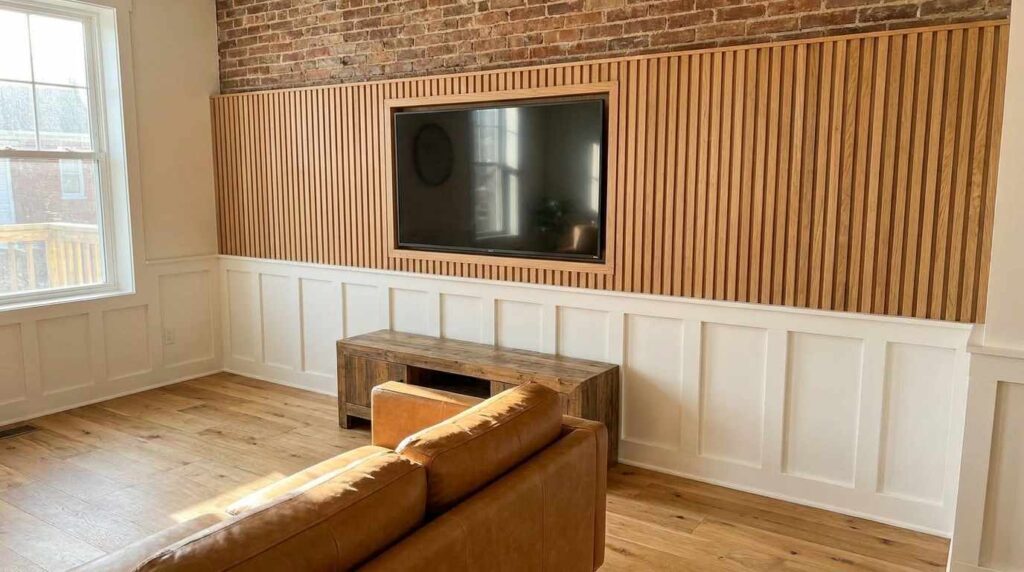
A sophisticated living room wall combining multiple textural materials: a lower section of white board and batten paneling, a middle section of natural wood slats where the television is mounted, and exposed brick visible at the upper portion. This layered material approach creates genuine architectural complexity around the screen. A reclaimed wood media console sits below. Wide-plank oak floors ground the space. Natural light illuminates the varied textures and materials throughout the wall. A neutral leather sofa faces the television. Shot from an angle showing the full layered material composition with the television integrated into the wood slat section, with warm, natural lighting emphasizing the sophisticated complexity achieved through this multi-material approach to television wall design.
Combining three distinct materials, painted board and batten below, wood slats in the middle housing my television, and exposed brick above, created this genuinely complex, layered wall that gives the screen substantial architectural context without relying on any single camouflage or integration technique alone. Each material transition adds visual interest and texture, and the television sits specifically within the wood slat section, which provides just enough pattern disruption to help minimize the screen’s rectangular prominence.
This ambitious project required coordinating multiple different installation techniques and materials, essentially treating the wall as several distinct but connected design elements rather than one uniform treatment. The resulting complexity means this wall rewards closer inspection, revealing new textural details and material transitions the longer you look at it, which helps ensure the television genuinely becomes secondary to the wall’s overall sophisticated design rather than remaining the primary focal point. This multi-material approach has taught me that sometimes the most successful television wall solutions come from this kind of layered complexity, combining several different architectural and textural elements together rather than relying on any single technique to fully solve this common design challenge.