A laundry room can be more than a place to wash, dry, and fold clothes. With thoughtful design, it can become one of the most welcoming and hardworking spaces in your home. Inspired by the warm, practical farmhouse aesthetic associated with Joanna Gaines, these laundry room ideas combine natural materials, timeless finishes, comfortable details, and clever storage solutions. Think white cabinetry, rustic wood shelves, vintage-inspired hardware, patterned tile, and soft neutral colors that make everyday chores feel a little more enjoyable.
The best farmhouse-inspired laundry rooms balance beauty with functionality. Whether you have a spacious utility room or a small laundry closet, you can borrow these design principles to create a space that works for your household. From installing butcher-block countertops to incorporating woven baskets and charming lighting, each idea offers practical ways to make your laundry area feel organized and inviting. These concepts are inspired by a recognizable modern farmhouse design aesthetic rather than being presented as verified designs from Joanna Gaines’s personal projects.
1. Choose Classic White Shaker Cabinets
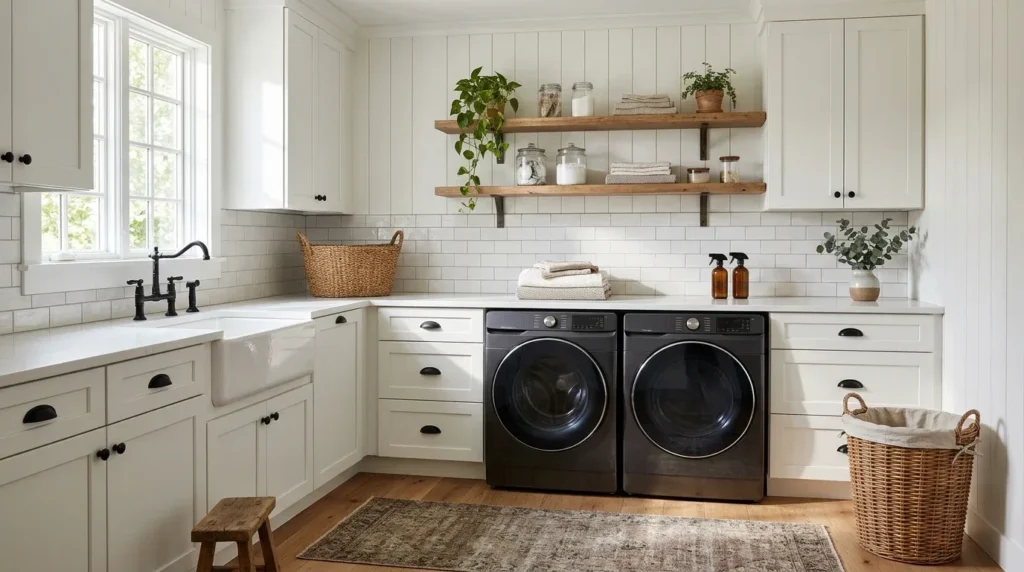
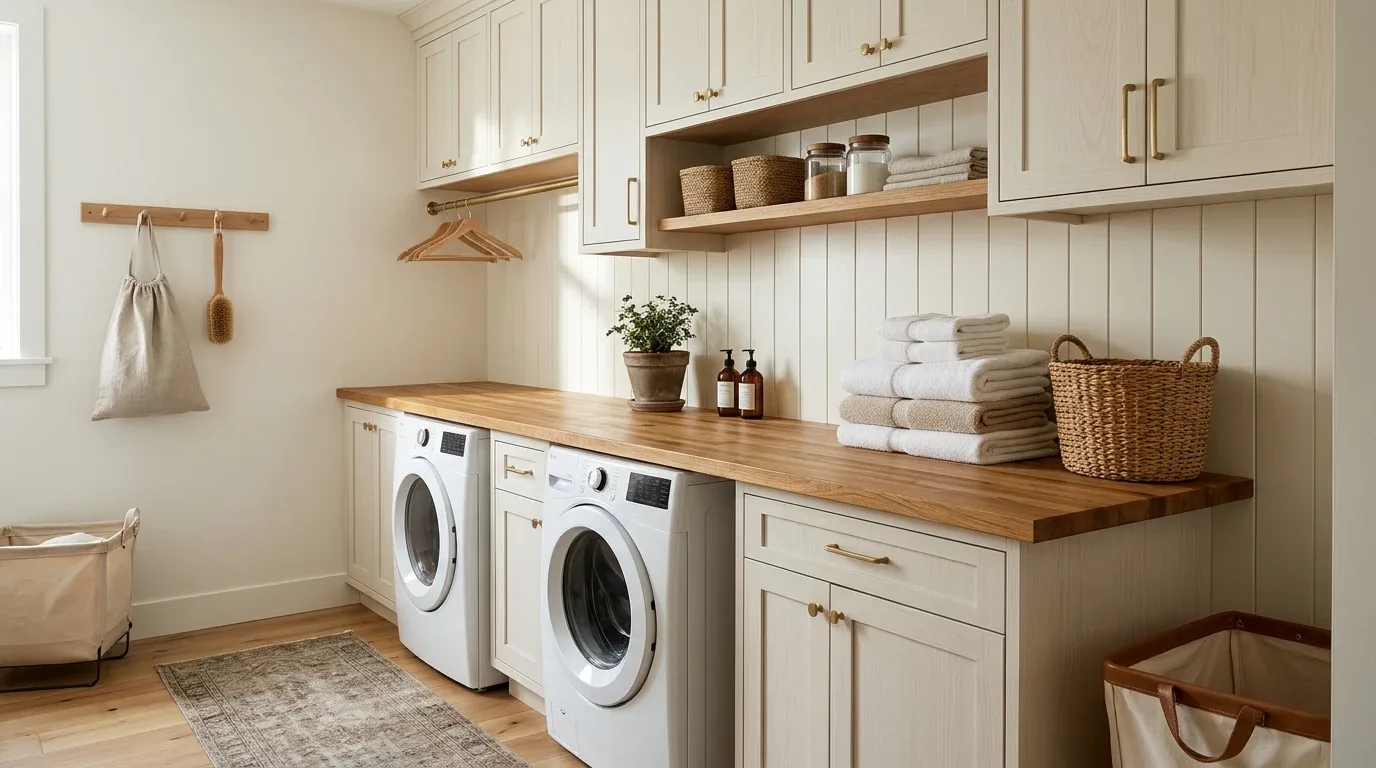
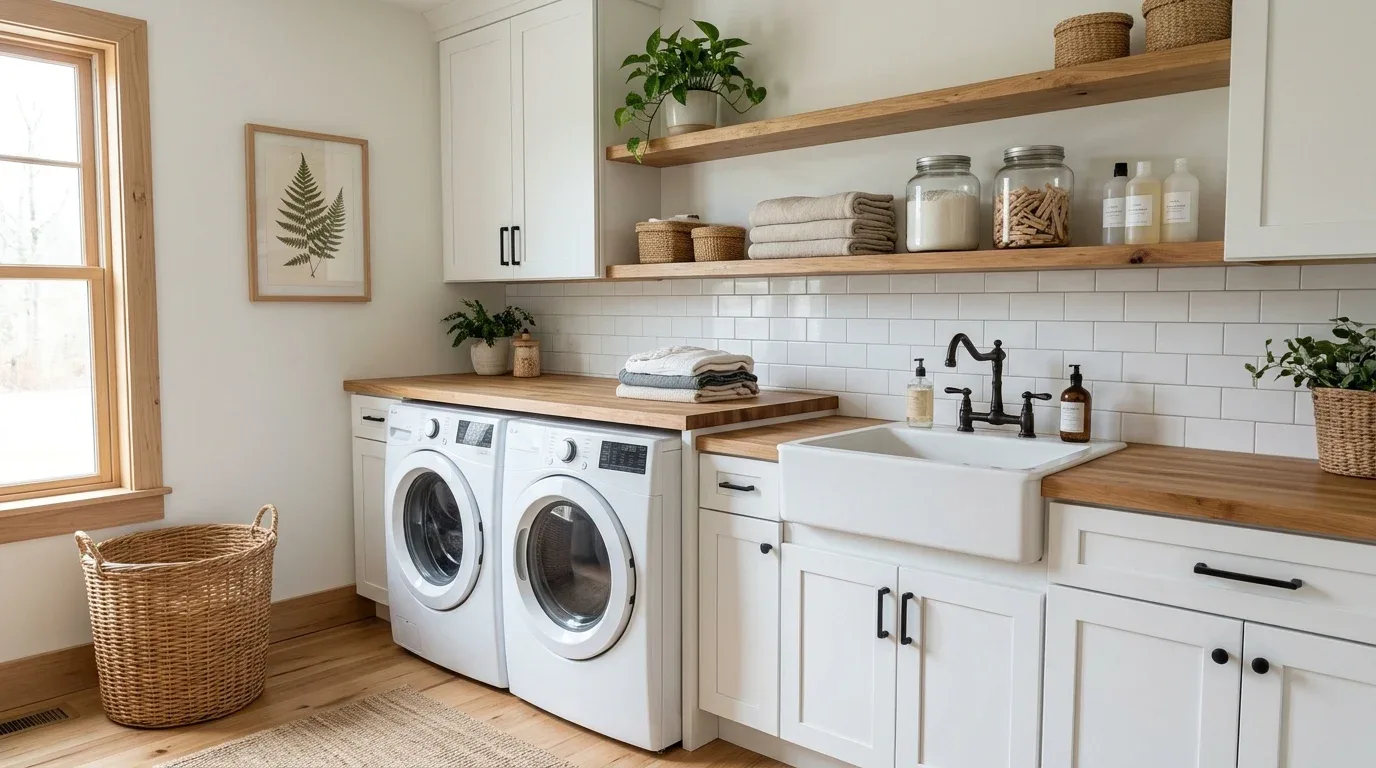
White shaker cabinets are a timeless foundation for a farmhouse-inspired laundry room. Their simple recessed panels introduce subtle character without overwhelming the space, while the light finish helps a small or windowless room feel brighter. Pair the cabinets with matte black pulls for contrast, brushed brass hardware for warmth, or aged bronze knobs for a more vintage appearance.
Use upper cabinets to hide detergents, cleaning products, and spare linens, keeping everyday essentials within easy reach. Lower cabinets can accommodate bulkier supplies, while adjustable shelves make it easier to organize items of different sizes. For a cohesive look, extend the cabinetry across one wall and finish it with a simple countertop. This combination creates a polished, practical backdrop that feels classic rather than overly trendy.
2. Add Warm Butcher-Block Countertops
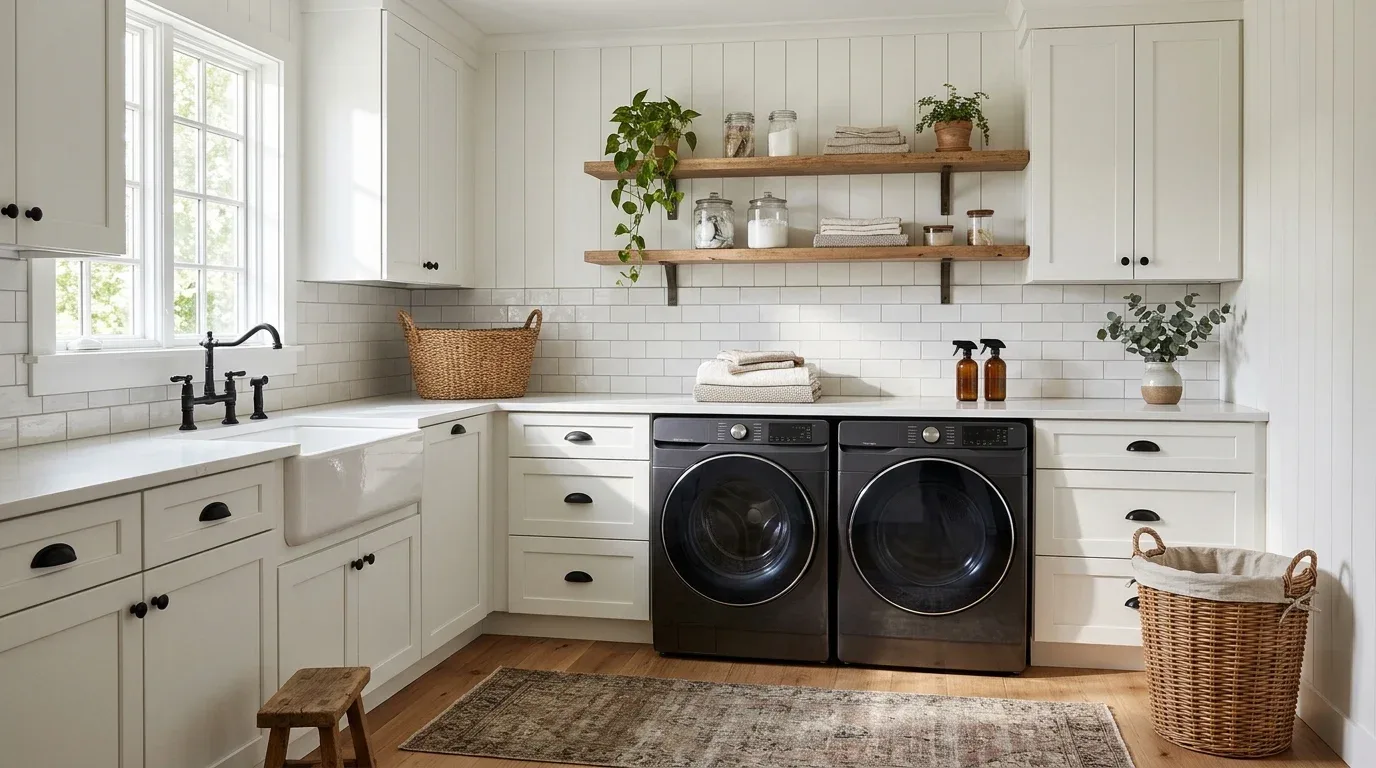
Natural wood countertops bring the warmth that makes farmhouse interiors feel welcoming. A butcher-block surface above front-loading appliances creates a convenient folding station while introducing texture against white cabinets, painted walls, or light-colored tile. Oak, maple, and other durable hardwoods can all work well, depending on your budget and preferred finish.
Choose a clear or lightly tinted finish that highlights the grain without making the wood appear too dark. Because laundry rooms can experience humidity, protect the countertop appropriately and wipe up spills promptly. Avoid leaving standing water around appliance edges, and follow the finish manufacturer’s care instructions. If solid wood is beyond your budget, consider a quality wood-look laminate. The goal is to achieve the natural, grounded appearance of farmhouse design while maintaining a surface that suits your household’s laundry routine.
3. Install Open Wooden Shelving
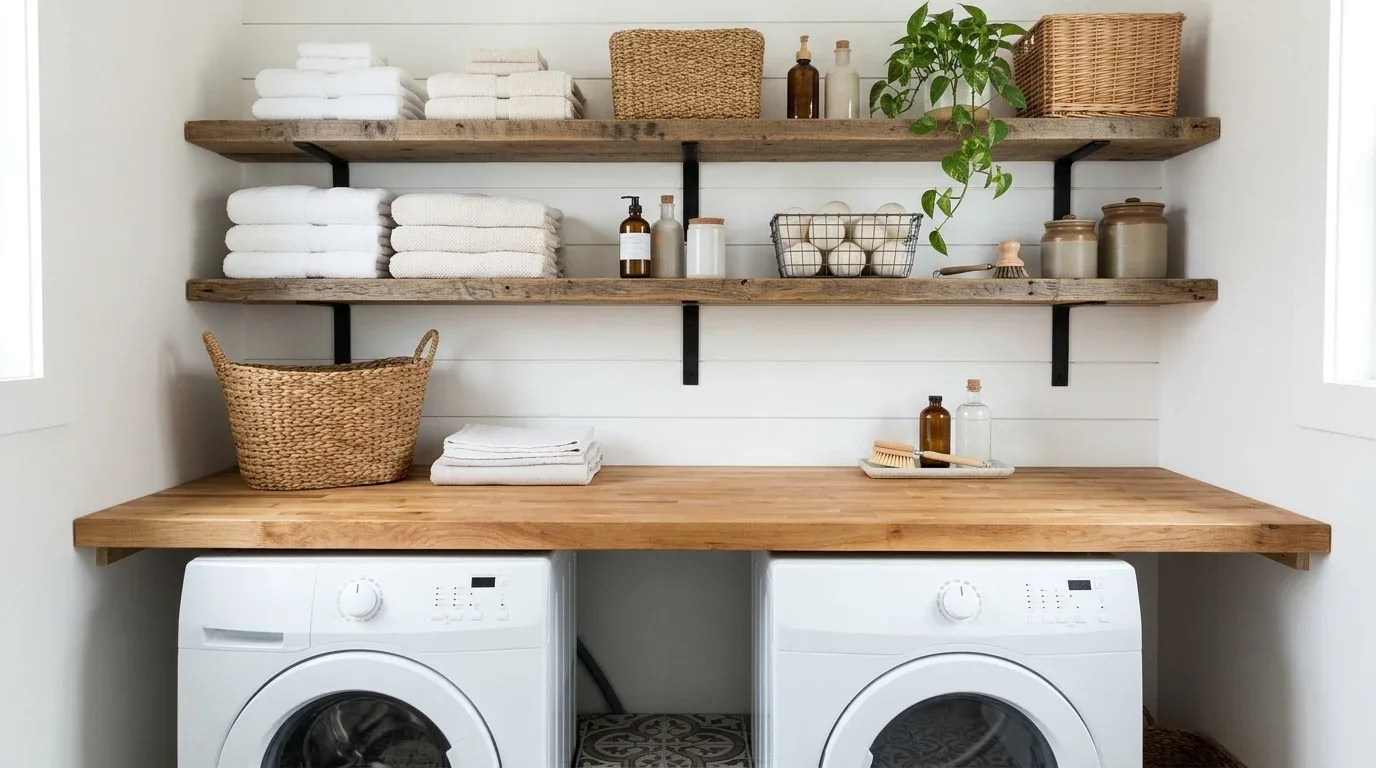
Open wooden shelves make a laundry room feel relaxed and accessible while providing space for everyday essentials. Reclaimed wood or lightly stained boards can introduce rustic character, especially when paired with white walls and simple metal brackets. Place shelves above a folding counter or beside the washer and dryer to keep frequently used supplies close at hand.
Organization is essential to making open storage look intentional. Arrange detergent containers, neatly folded towels, and matching baskets in small groups rather than filling every inch with miscellaneous products. Use lidded containers for items with colorful packaging, and leave some empty space to prevent the shelves from looking cluttered. If you have children or pets, store detergents and other hazardous products in secure, inaccessible cabinets rather than on open shelves. This approach combines farmhouse charm with sensible everyday organization.
4. Use a Soft Neutral Color Palette
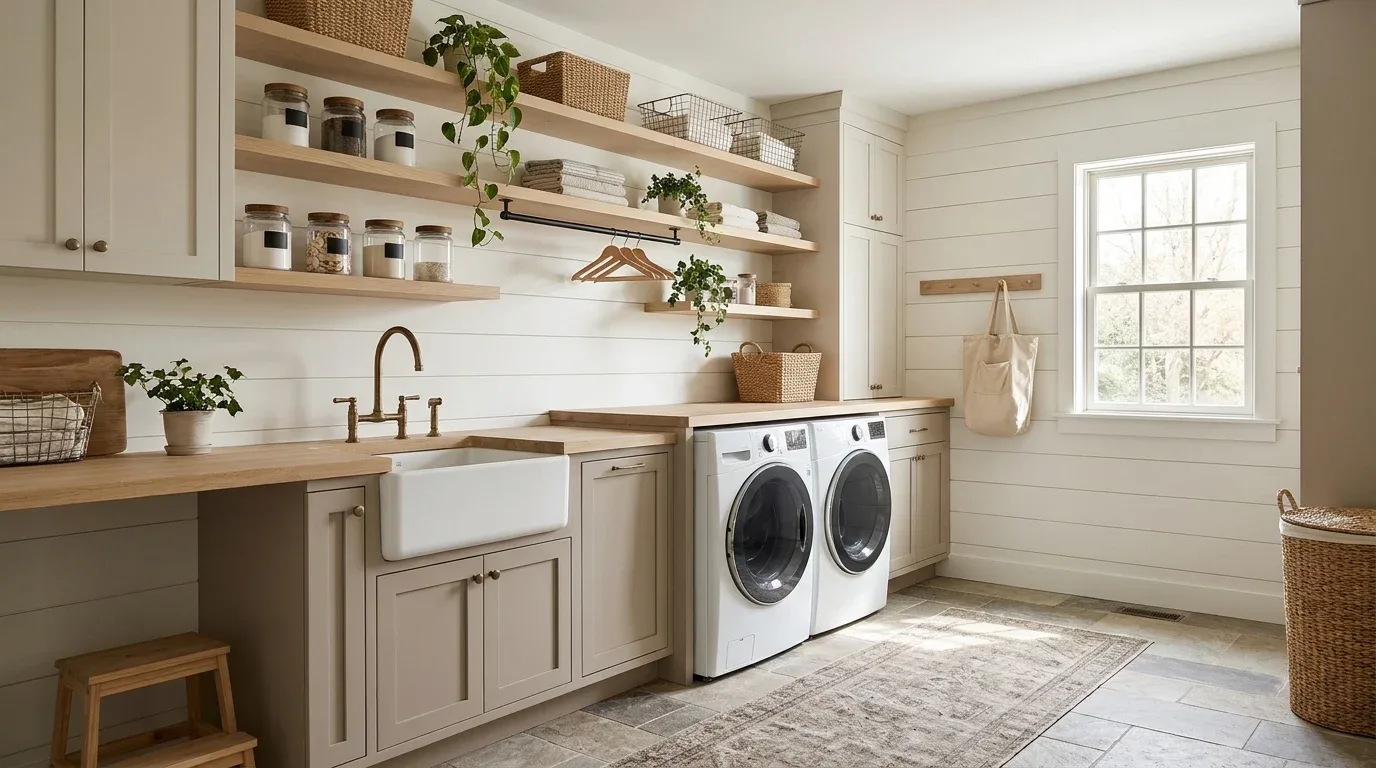
A neutral palette creates a calm atmosphere in a room that often handles a steady stream of household chores. Warm white, creamy beige, soft gray, muted taupe, and gentle greige all complement the natural materials commonly associated with modern farmhouse interiors. These shades also make it easier to introduce decorative details without creating visual clutter.
For a balanced result, select one main wall or cabinet color, then add two complementary tones through flooring, countertops, and accessories. Warm whites work particularly well with oak shelving, while muted gray-green cabinets can introduce color without overpowering the room. Test paint samples under the lighting conditions in your laundry area before committing, since artificial light can dramatically change how neutrals appear. The finished room should feel cohesive with nearby spaces, especially if the laundry room opens onto a kitchen, hallway, or mudroom.
5. Incorporate a Deep Farmhouse Utility Sink
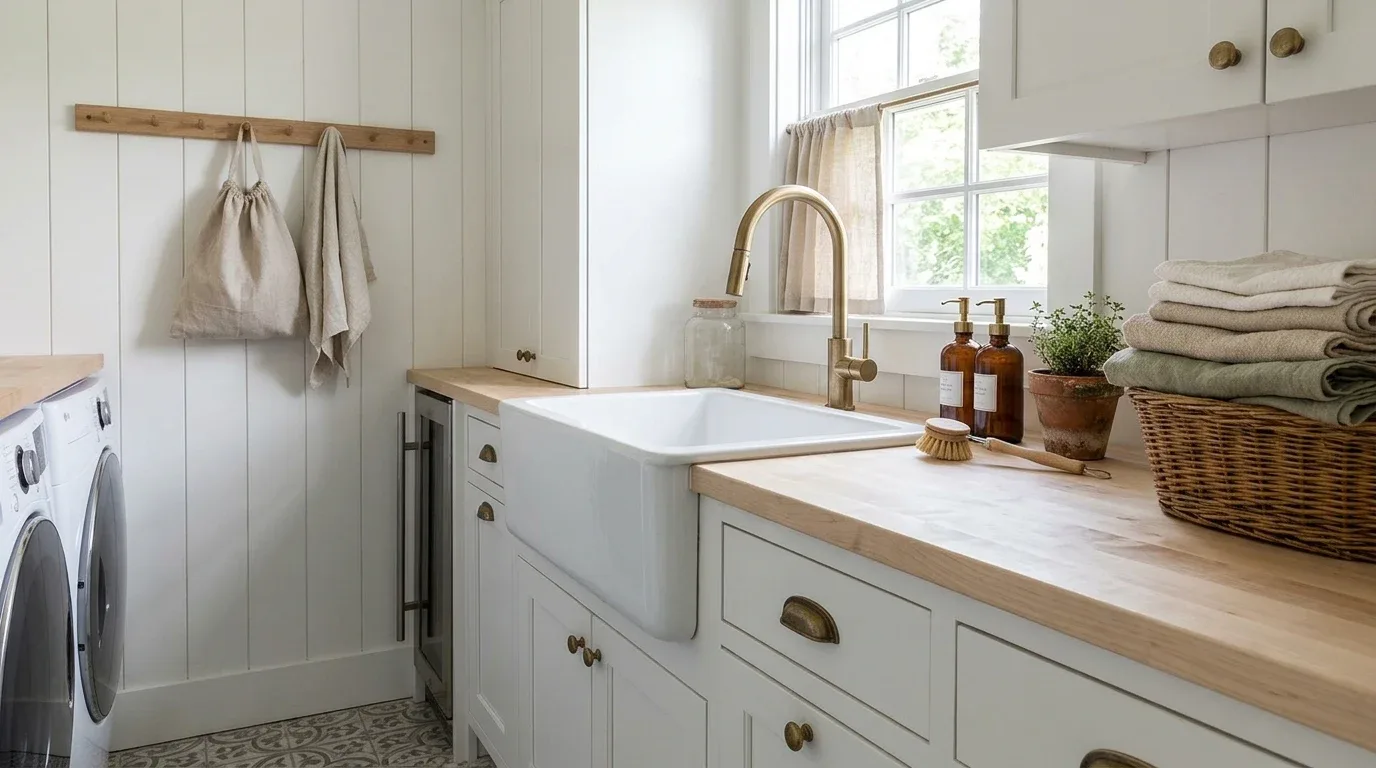
A deep utility sink adds substantial functionality while contributing to the traditional farmhouse look. It provides a convenient place to rinse muddy clothing, soak stained fabrics, hand-wash delicate items, and clean small household tools. A white apron-front sink makes a strong visual statement, while a stainless-steel or durable composite model may suit a more understated design.
Pair the sink with a practical faucet that offers enough clearance for filling buckets and washing larger items. A pull-down sprayer can make cleanup easier, particularly in a busy family home. Surround the sink with a moisture-resistant countertop and ensure the cabinetry is designed to handle occasional splashes. If space is limited, a compact undermount utility sink can provide many of the same benefits. By choosing fixtures based on real household needs, you can create a room that looks charming and performs reliably.
6. Bring in Patterned Farmhouse Floor Tile
Patterned floor tile introduces personality without requiring elaborate decoration. Black-and-white geometric designs, muted encaustic-inspired patterns, and understated checkerboard layouts can all complement farmhouse cabinetry and natural wood accents. The floor becomes a focal point, allowing the rest of the room to remain relatively simple.
When selecting tile, prioritize slip resistance, water tolerance, and easy maintenance. Laundry rooms may encounter detergent spills, wet shoes, and occasional leaks, so a beautiful surface should also be practical. Smaller rooms often benefit from restrained patterns that do not overwhelm the available space. If your cabinets already feature strong colors or decorative details, choose a quieter tile to preserve balance. Conversely, simple white cabinetry can handle a more expressive floor. Coordinating grout with the tile can create a softer look, while contrasting grout emphasizes the pattern.
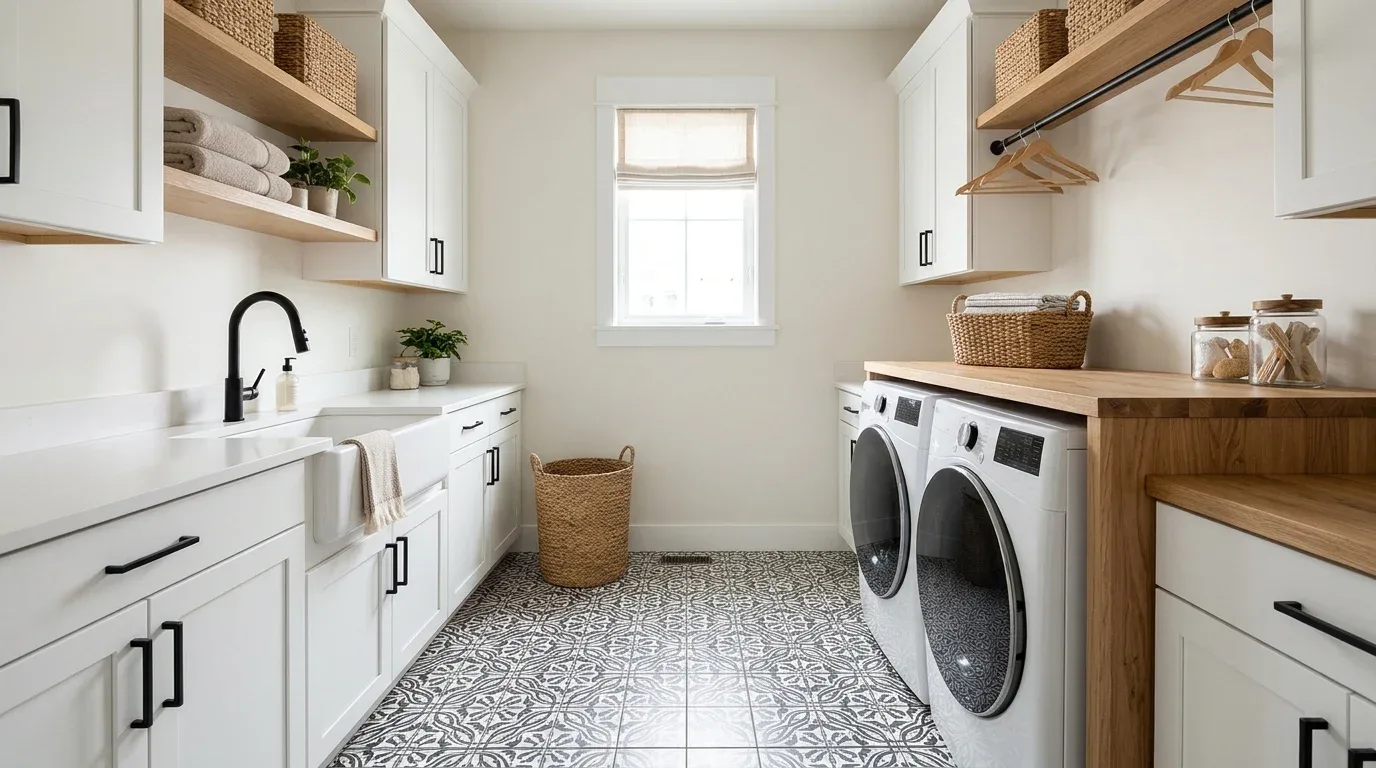
7. Create a Dedicated Folding Station
A dedicated folding station can make laundry day significantly more efficient. Install a sturdy countertop above front-loading machines or place a separate worktable along an available wall. The surface should provide enough room to sort garments, fold towels, and temporarily organize clean clothes before they are put away.
Measure your appliances carefully before installing a countertop, allowing for ventilation, maintenance access, and manufacturer-recommended clearances. A wall-mounted counter can be especially useful in a narrow room because it avoids adding bulky furniture. Keep the surface relatively clear, using nearby drawers or baskets for items waiting to be sorted. If several family members share laundry responsibilities, designate separate baskets for different people or clothing categories. A well-planned folding station turns an awkward utility area into an organized workspace that supports a smoother household routine.
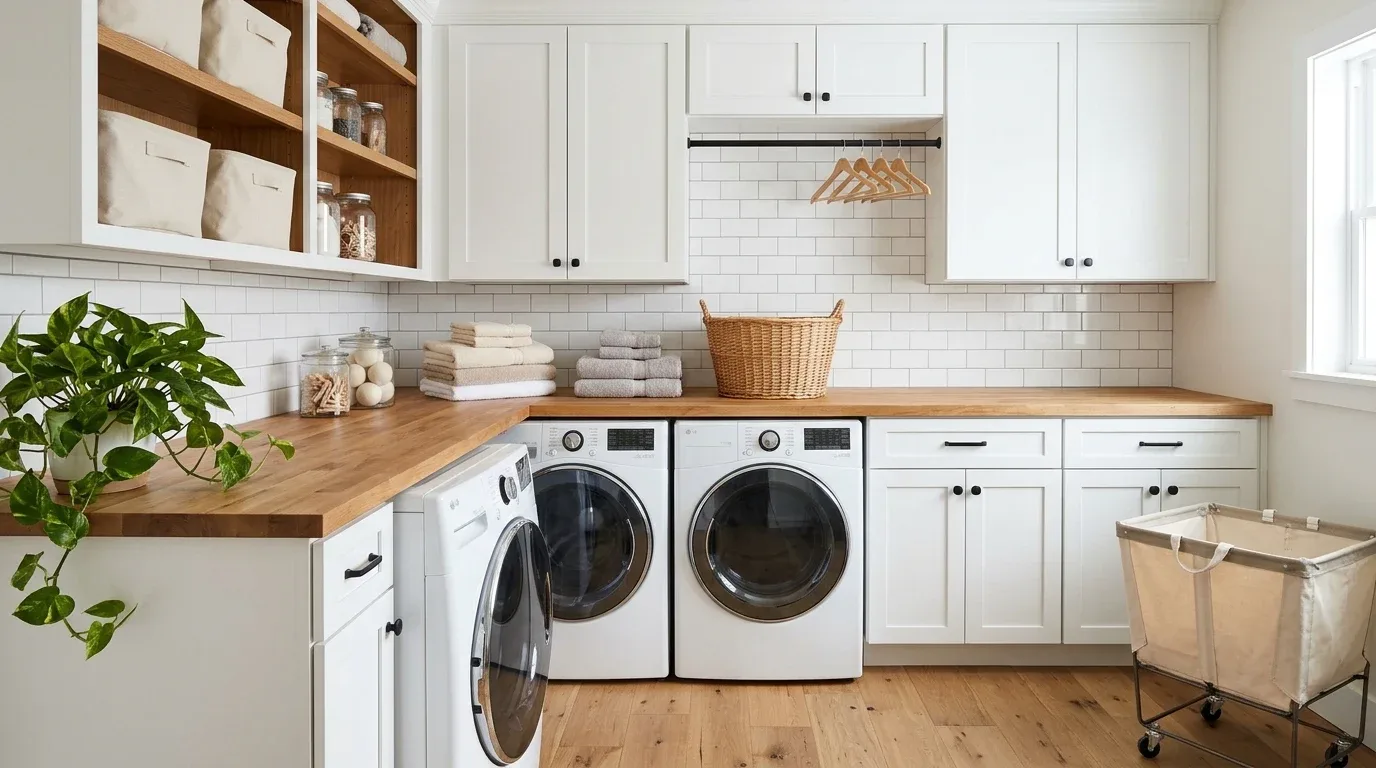
8. Use Woven Baskets for Attractive Storage
Woven baskets are an easy way to soften the hard surfaces commonly found in laundry rooms. Natural wicker, seagrass, and other woven textures complement wood shelves, white cabinets, and neutral walls. They can hold dryer balls, clothespins, cleaning cloths, spare hand towels, or small laundry accessories while keeping everyday clutter out of sight.
Choose basket sizes that fit your shelves or cabinetry, and consider labels when multiple containers serve different purposes. Fabric-lined baskets can protect delicate items from rough edges, while washable bins may be better for frequently handled laundry supplies. Natural woven materials should be kept reasonably dry, so avoid placing them directly beside a sink where they may experience repeated splashes. For dirty clothing, select a ventilated hamper designed for laundry rather than using decorative baskets that trap moisture. The result is storage that feels warm, coordinated, and genuinely useful.
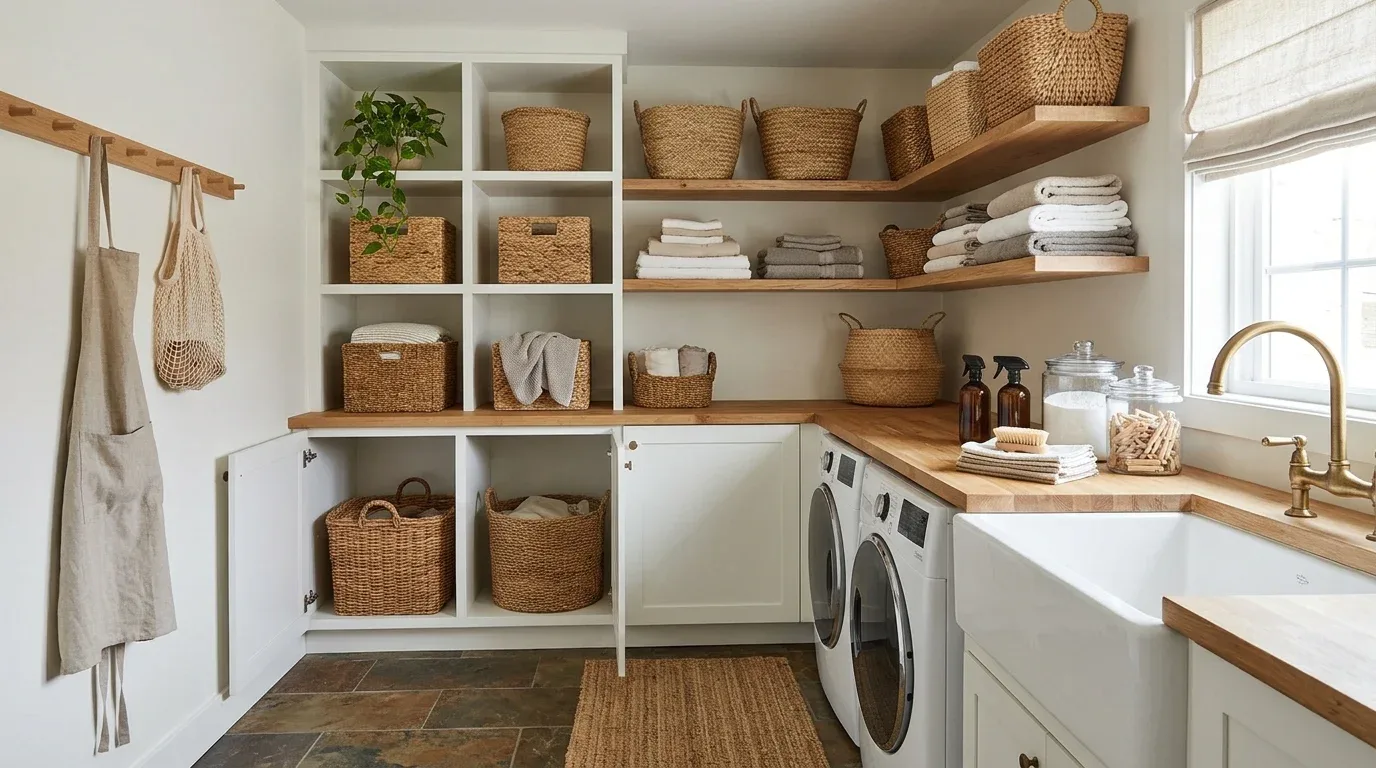
9. Add a Built-In Hanging Rod
A hanging rod provides a practical place to air-dry delicate clothing, hang freshly ironed shirts, and prevent wrinkles before garments reach the closet. Install one beneath upper cabinets or between two sturdy supports above a counter. A black metal rod creates a farmhouse-inspired industrial accent, while a brass finish adds a softer, more traditional touch.
Position the rod where clothing can hang freely without obstructing appliance doors or walkways. Check that the supports are anchored securely, particularly if you expect to hang several heavy garments at once. For a compact laundry room, a retractable wall-mounted rod offers useful hanging space without remaining permanently extended. Keep delicate fabrics away from hot appliance surfaces and follow garment care labels when air-drying. This small addition can reduce the need for a separate drying rack and makes the room more versatile without requiring extensive remodeling.
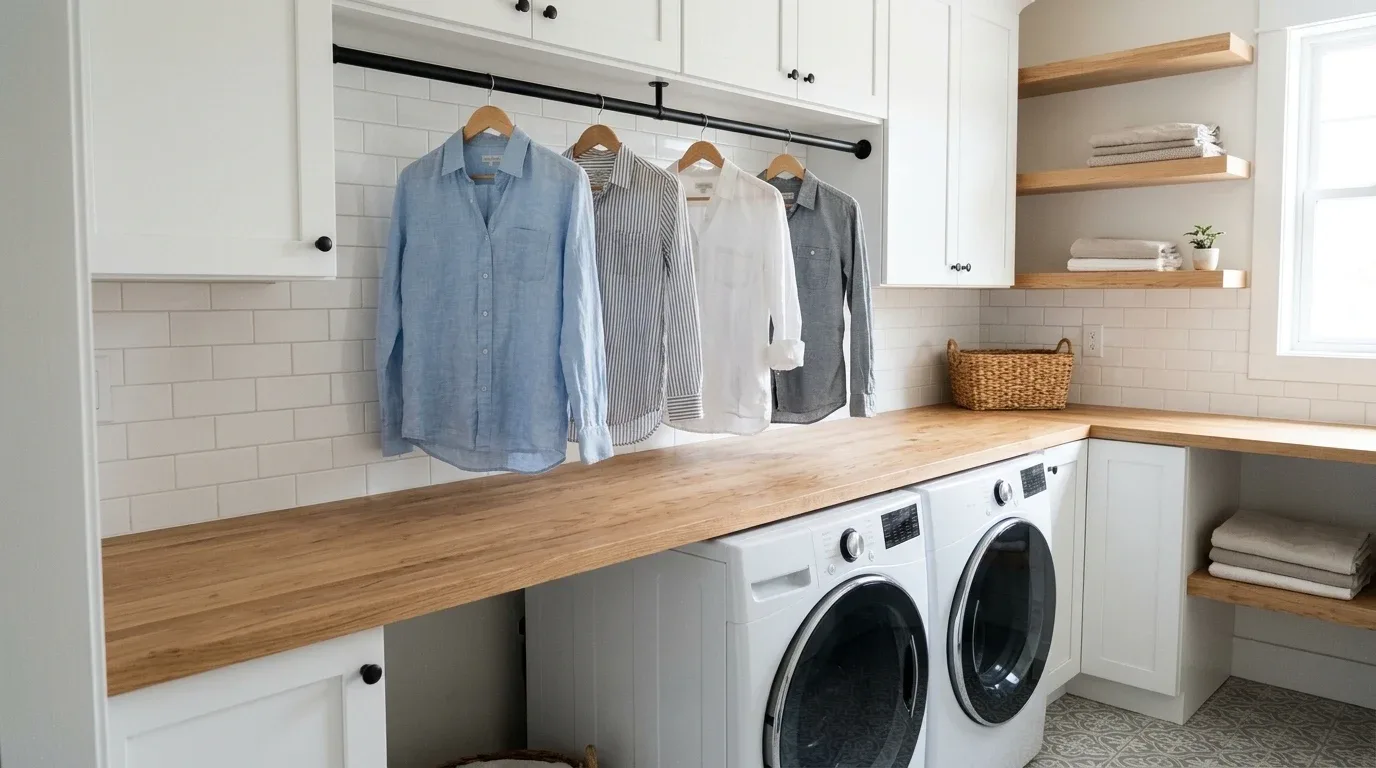
10. Introduce Vintage-Inspired Lighting
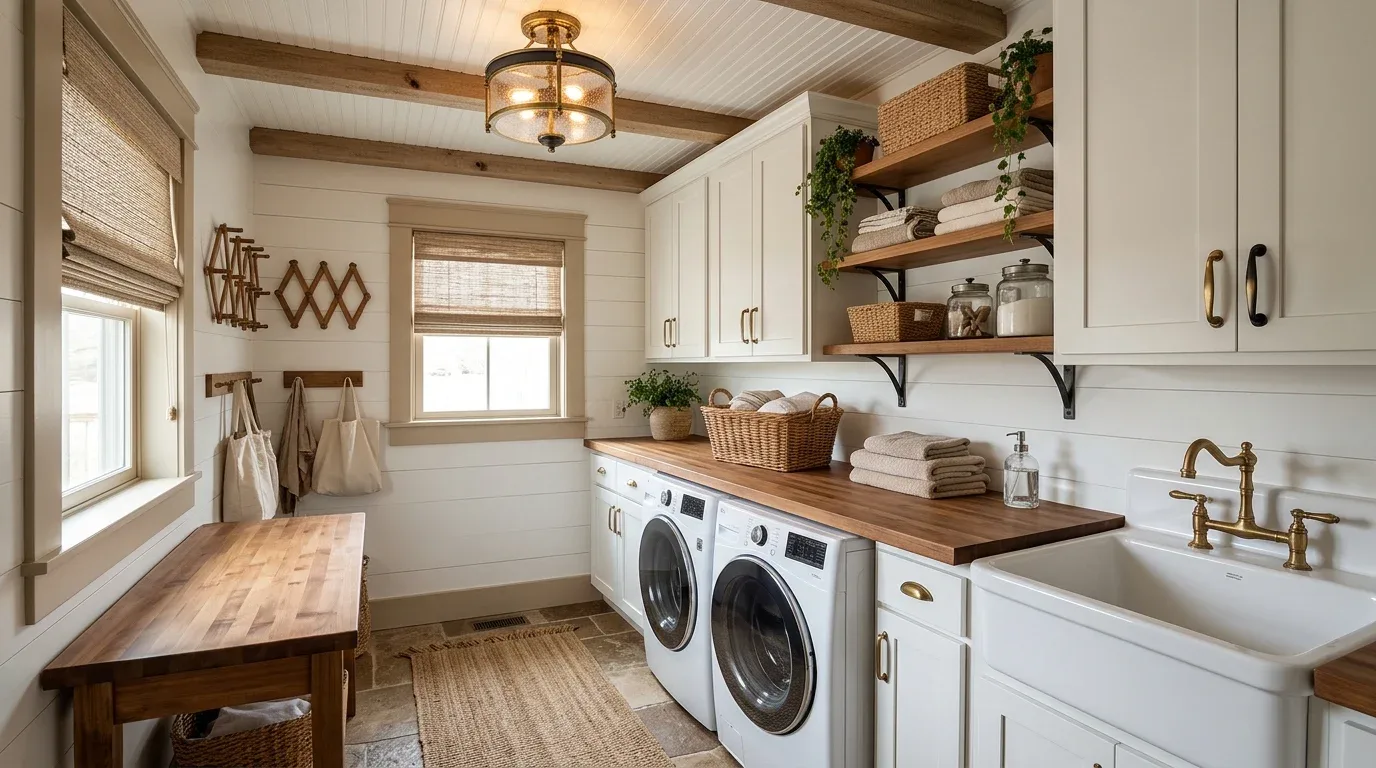
Lighting can transform a basic laundry room into a space that feels thoughtfully designed. Vintage-inspired flush mounts, simple black metal fixtures, and aged brass pendants complement farmhouse finishes while providing useful illumination. A decorative fixture can also give the room the same attention you might give a kitchen or entryway.
Start with bright, even ambient lighting so you can sort colors, inspect stains, and read garment labels comfortably. Add task lighting beneath cabinets if your folding counter or sink is shadowed. Choose fixtures rated for the conditions in the room and have electrical work completed safely, particularly near plumbing. In a small laundry closet, a low-profile ceiling fixture may be more practical than a pendant. Warm-white bulbs can create a welcoming atmosphere, but ensure the light is bright enough for detailed chores. A combination of practical illumination and attractive design delivers the best results.
11. Install a Charming Beadboard Backsplash
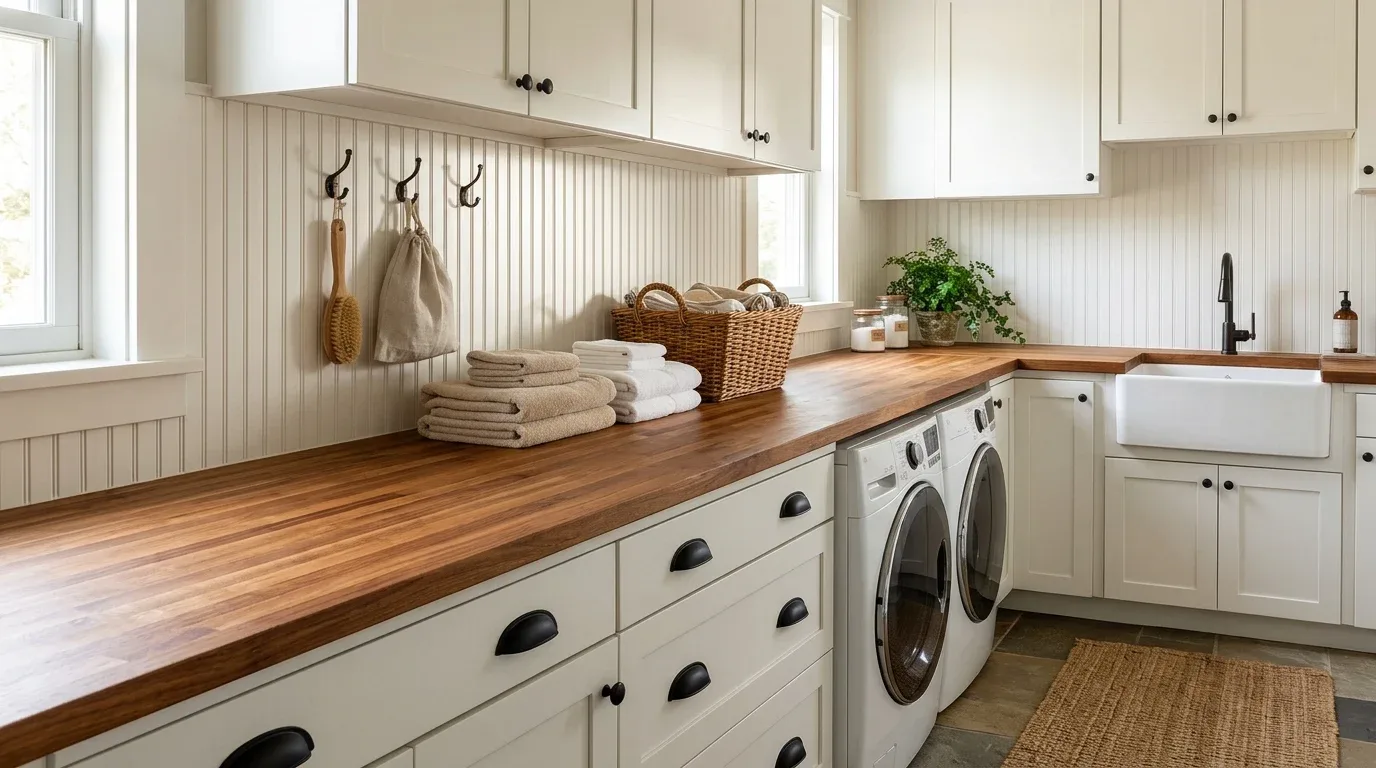
Beadboard adds subtle architectural interest to a laundry room without demanding a dramatic color scheme. Its narrow vertical grooves introduce texture that works beautifully with shaker cabinets, wood countertops, and traditional hardware. Painted white, it creates a clean farmhouse appearance; painted sage or dusty blue, it can provide a gentle hint of color.
Use beadboard on a wall behind the folding counter or in a section above the sink to create a defined feature. Because laundry rooms can be humid, choose a moisture-resistant product and a durable finish suitable for the intended location. Keep seams and edges properly sealed, and avoid using materials that are not rated for areas exposed to repeated splashes. If you prefer less maintenance, a beadboard-look panel designed for utility spaces may be a practical alternative. The finished wall brings depth and character while allowing other design elements to remain understated.
12. Choose Muted Sage Green Cabinetry
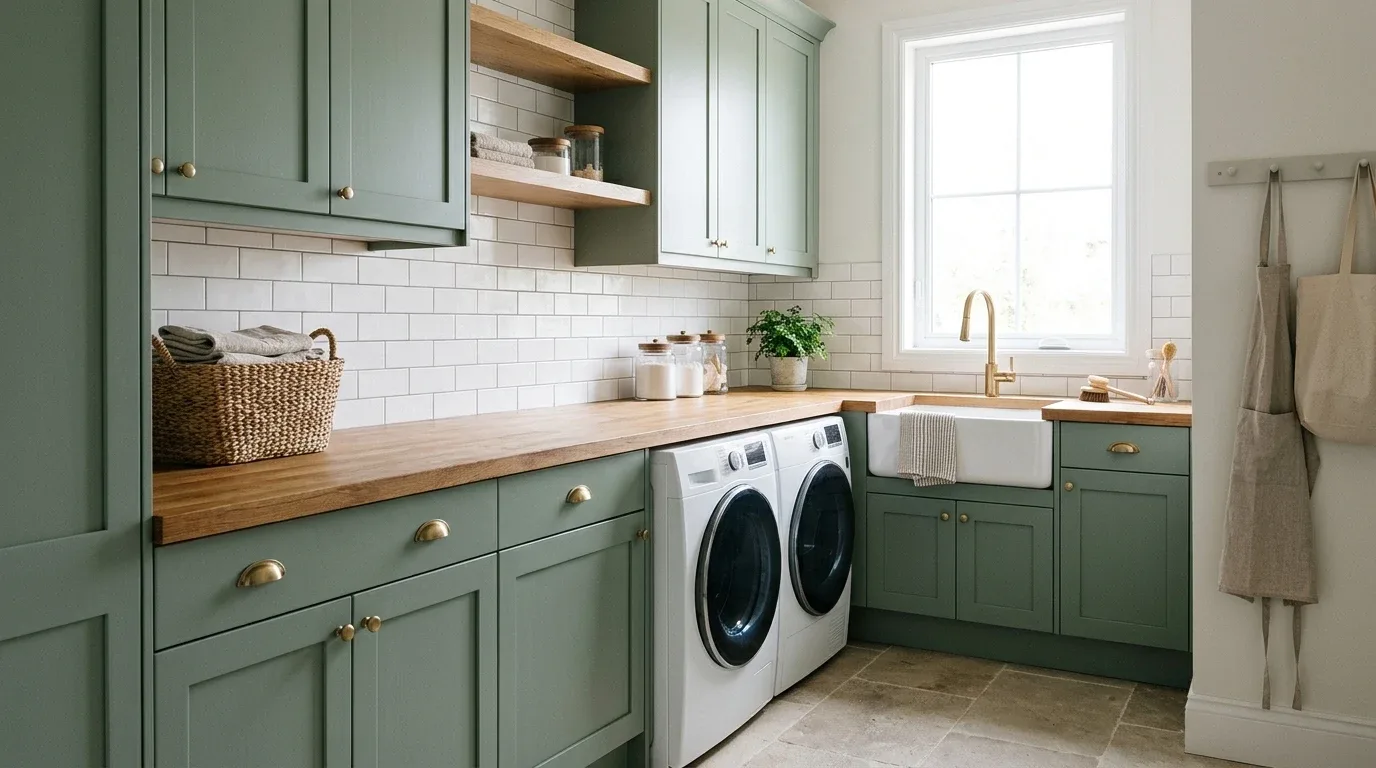
Muted sage green offers a refreshing alternative to all-white laundry rooms while retaining the relaxed feeling of modern farmhouse design. Its earthy undertones work naturally with butcher-block counters, woven baskets, white tile, and brushed metal hardware. Depending on the light, sage can appear soft and airy or more grounded and botanical.
Use sage on the lower cabinets while keeping the upper cabinets or walls creamy white for a balanced two-tone effect. In a larger room, painting all the cabinetry in a muted green can create a cohesive and distinctive look. Sample several shades before making a final choice because green paint can shift considerably under cool or warm lighting. Pair the cabinets with simple hardware and restrained accessories so the color remains the main feature. This approach adds personality without relying on short-lived trends or overwhelming a practical space with decoration.
13. Make Room for a Practical Laundry Sorter
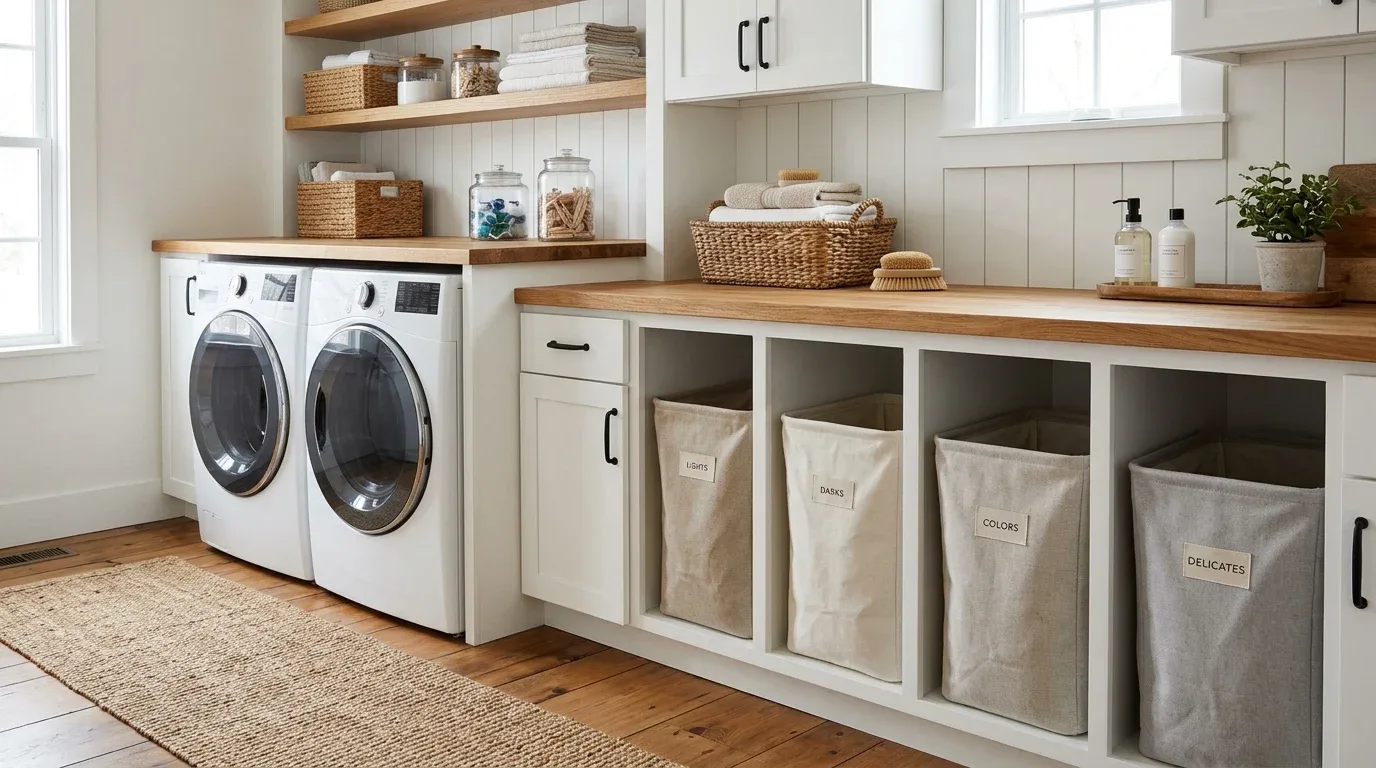
A built-in or freestanding laundry sorter helps keep clothing organized before washing begins. Choose a unit with separate compartments for whites, darks, colors, and delicate fabrics, adapting the categories to your household’s actual washing habits. If several people share the laundry room, labeled bins can reduce confusion and make it easier for everyone to participate.
For a streamlined farmhouse look, place fabric-lined pullout hampers inside a cabinet or use matching baskets beneath a counter. Ensure the compartments are removable or easy to clean, and avoid keeping damp clothing in enclosed spaces for long periods. A narrow rolling sorter works well in smaller rooms because it can be moved when necessary. Leave enough space to open the bins comfortably without blocking appliances. By incorporating sorting into the room’s layout, you can reduce piles on the floor and make the transition from dirty laundry to washing much more efficient.
14. Decorate with Simple Botanical Accents
Botanical accents introduce a little life into a room dominated by appliances, cabinets, and hard surfaces. A small potted plant on a safe shelf, a framed botanical print, or a simple vase of seasonal greenery can make the laundry area feel more connected to the rest of the home. These details complement farmhouse interiors without adding unnecessary clutter.
Choose decorations according to the available light and the room’s moisture conditions. A low-maintenance plant can work near a bright window, while a framed print is more appropriate for a darker laundry closet. Keep decor away from hot appliance vents, electrical outlets, and areas where it could fall into a sink. Avoid placing fragile objects on vibrating machines. Rather than filling every surface, select one or two intentional accents and leave the work areas clear. This restrained approach creates warmth while ensuring that the room remains easy to clean and comfortable to use.
15. Combine Laundry and Mudroom Functions
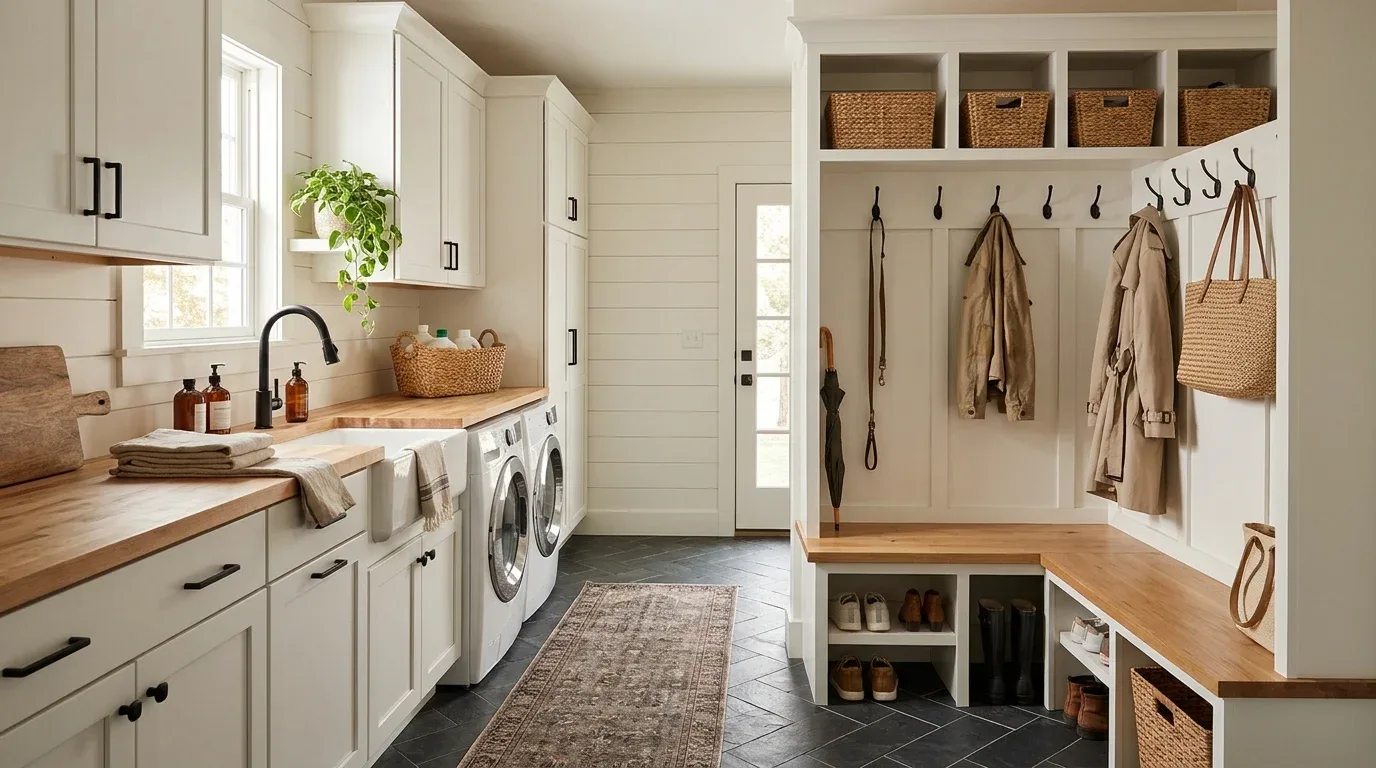
If your laundry room sits near an exterior entrance, consider combining it with a compact mudroom. A wooden bench, sturdy hooks, shoe storage, and a designated hamper can create a practical drop zone for coats, backpacks, muddy clothing, and outdoor footwear. White cabinetry and natural wood finishes help connect the two functions visually.
Plan separate zones for wet or dirty items and clean laundry to prevent cross-contamination and clutter. Use washable mats near the entrance, durable flooring throughout, and closed storage for supplies that should remain out of reach. A bench with lift-up storage can conceal shoes, while wall hooks make frequently used items easy to grab. If space permits, add a small counter for setting down bags or sorting incoming laundry. This multifunctional arrangement is particularly useful for busy households because it combines several everyday tasks in one organized, attractive space.
How to Bring Joanna Gaines-Inspired Style into Your Laundry Room
The key to creating a warm farmhouse laundry room is balancing timeless materials with practical organization. You do not need to use every idea at once. Start with the features that will make the biggest difference to your daily routine, such as better cabinetry, a folding counter, or a dedicated sorting system. Then introduce natural textures, soft colors, and a few carefully selected decorative details.
For a smaller budget, paint existing cabinets, replace outdated hardware, add matching storage baskets, and improve the lighting before considering a full renovation. If you are remodeling from scratch, prioritize durable flooring, appropriate ventilation, safe appliance clearances, and storage that suits your household. With a thoughtful mix of functionality and farmhouse character, your laundry room can become an organized, welcoming part of your home rather than a space you simply pass through.