Winter is the perfect season to make your home feel warmer, softer, and more inviting. You do not need a complete makeover or an expensive shopping list to create that cozy atmosphere. The best winter decor ideas combine practical comfort with seasonal details such as layered textiles, warm lighting, natural greenery, rustic accents, and calming colors. Whether you live in a small apartment, a modern house, or a traditional home, a few thoughtful changes can make every room feel ready for chilly days and long evenings indoors. This winter decor guide brings together 15 approachable ideas that work across different decorating styles and budgets. Use them individually for subtle seasonal updates or combine several for a cohesive winter-inspired home that feels comfortable without becoming overly themed.
1. Layer Your Living Room With Cozy Throws
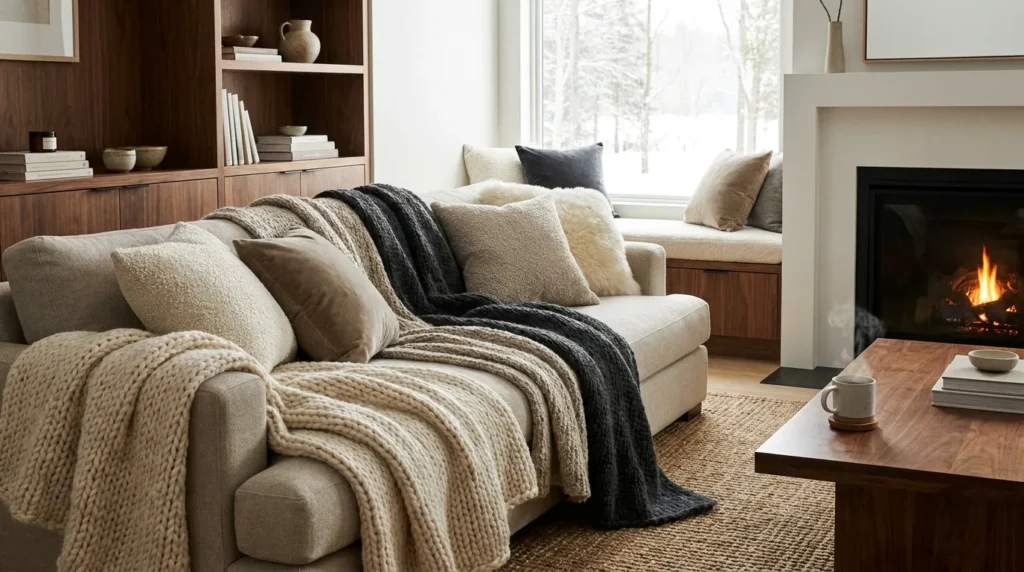
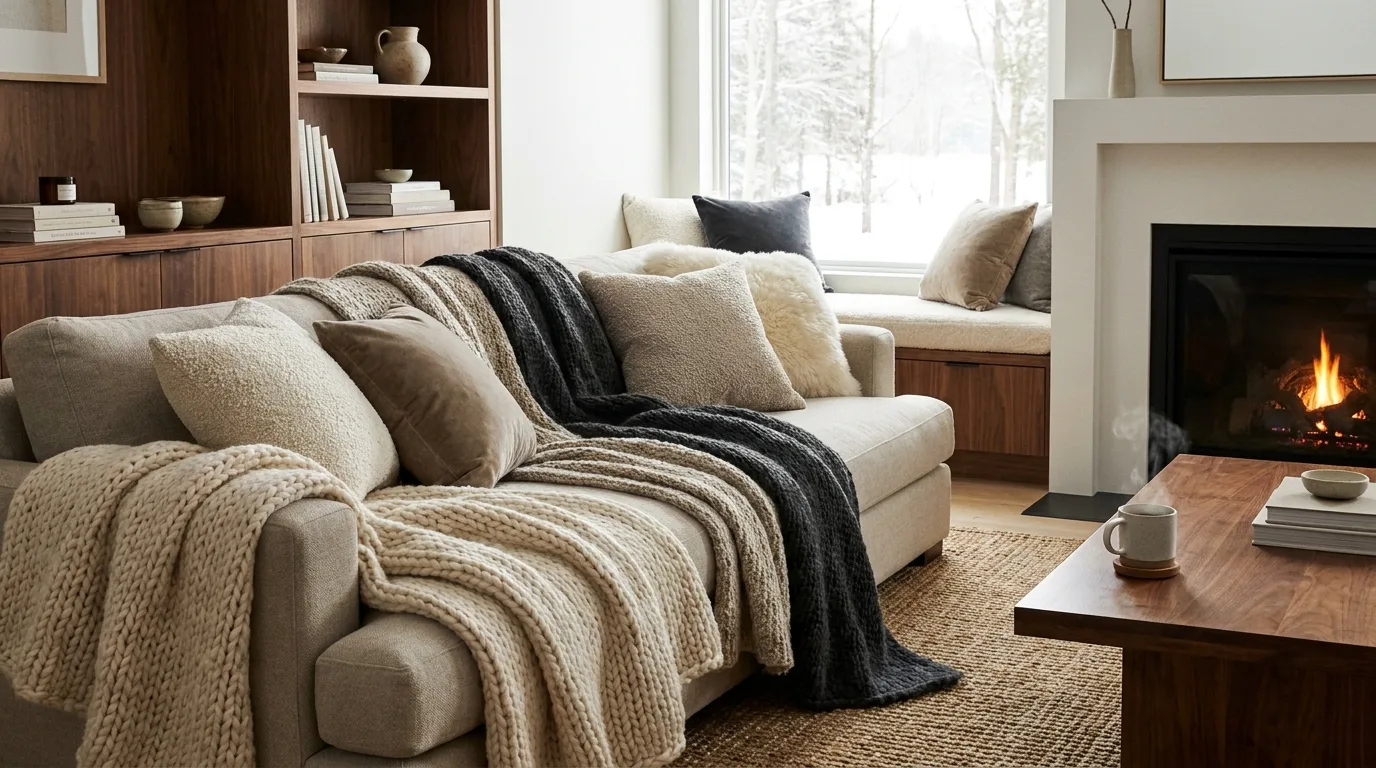
One of the easiest ways to introduce winter decor is by adding layers of soft throws throughout the living room. Choose materials such as chunky knits, fleece, wool blends, or brushed cotton to create visible warmth and texture. Drape a blanket casually over the arm of a sofa, fold one into a basket, or place a larger throw across an accent chair. For a sophisticated look, coordinate your throws with existing upholstery rather than buying everything in the same color. Cream, taupe, charcoal, warm beige, muted green, and deep brown all work beautifully for winter. The goal is to make blankets look accessible and useful rather than perfectly arranged. A layered seating area instantly feels more comfortable and encourages relaxed winter evenings.
2. Create a Warm Winter Lighting Scheme
Lighting can dramatically change how a room feels during the darker months. Instead of relying entirely on one overhead fixture, build a layered lighting scheme using table lamps, floor lamps, candles, and small decorative lights. Warm-white bulbs generally create a softer atmosphere than cool daylight bulbs, especially when paired with natural wood and textured fabrics. Place a lamp beside a reading chair, add a small light to a console, or use subtle string lights around a shelf or window. Candles can provide another layer of glow when positioned safely on stable surfaces. Focus on several small sources of light rather than one bright centerpiece. This approach makes a winter room feel intimate and relaxing while remaining practical for everyday activities.
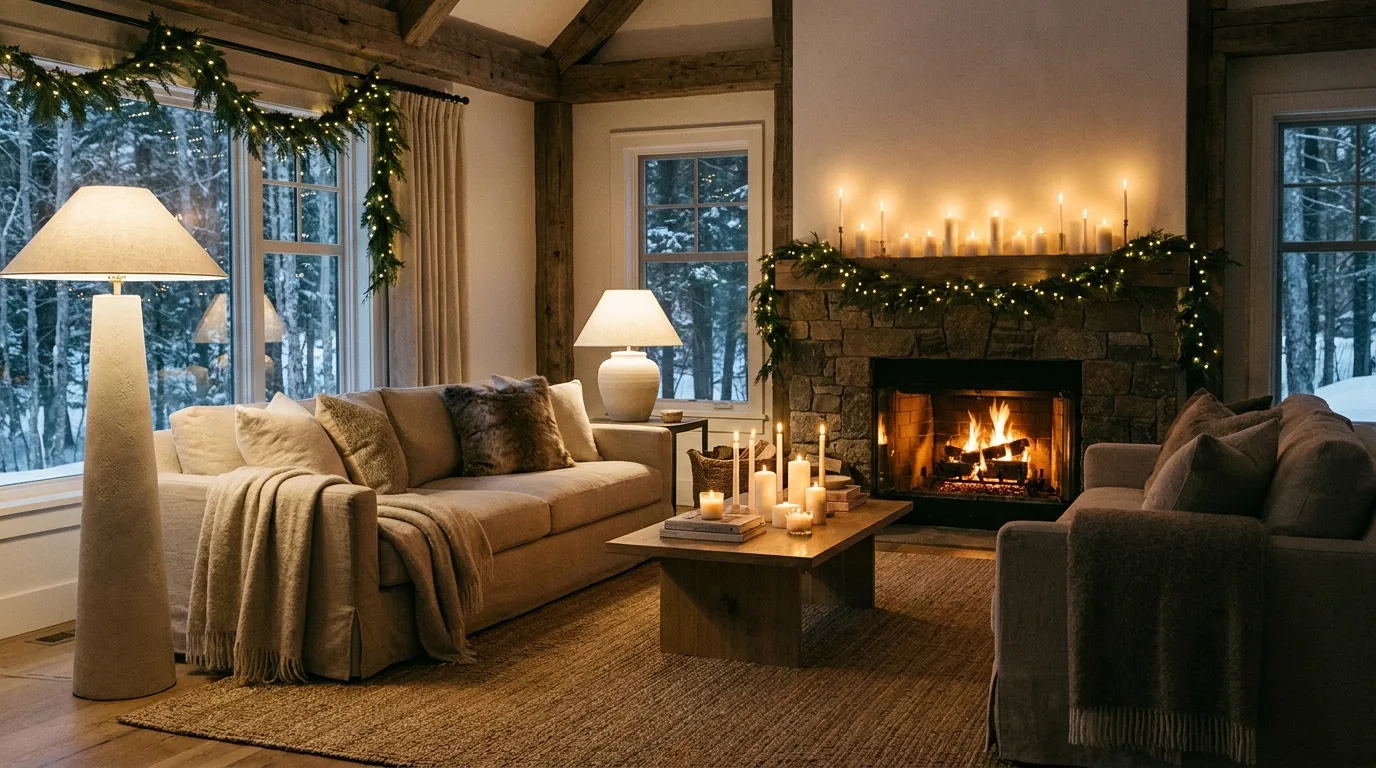
3. Decorate With Winter Greenery
Fresh or preserved greenery brings natural color and texture into a winter interior. Evergreen branches, eucalyptus, pine, cedar, and other seasonal foliage can be arranged in vases, baskets, pitchers, or simple glass containers. You can also place a few loose branches along a mantel or dining table for an understated botanical display. If maintaining fresh greenery is inconvenient, realistic faux stems provide a reusable alternative. Keep arrangements relatively simple so the greenery feels like part of the room rather than a holiday display that must be removed immediately after the festivities. Combining different shapes of leaves and branches adds depth, while natural wood containers or neutral ceramics help the arrangement blend with contemporary, rustic, Scandinavian, and farmhouse interiors.
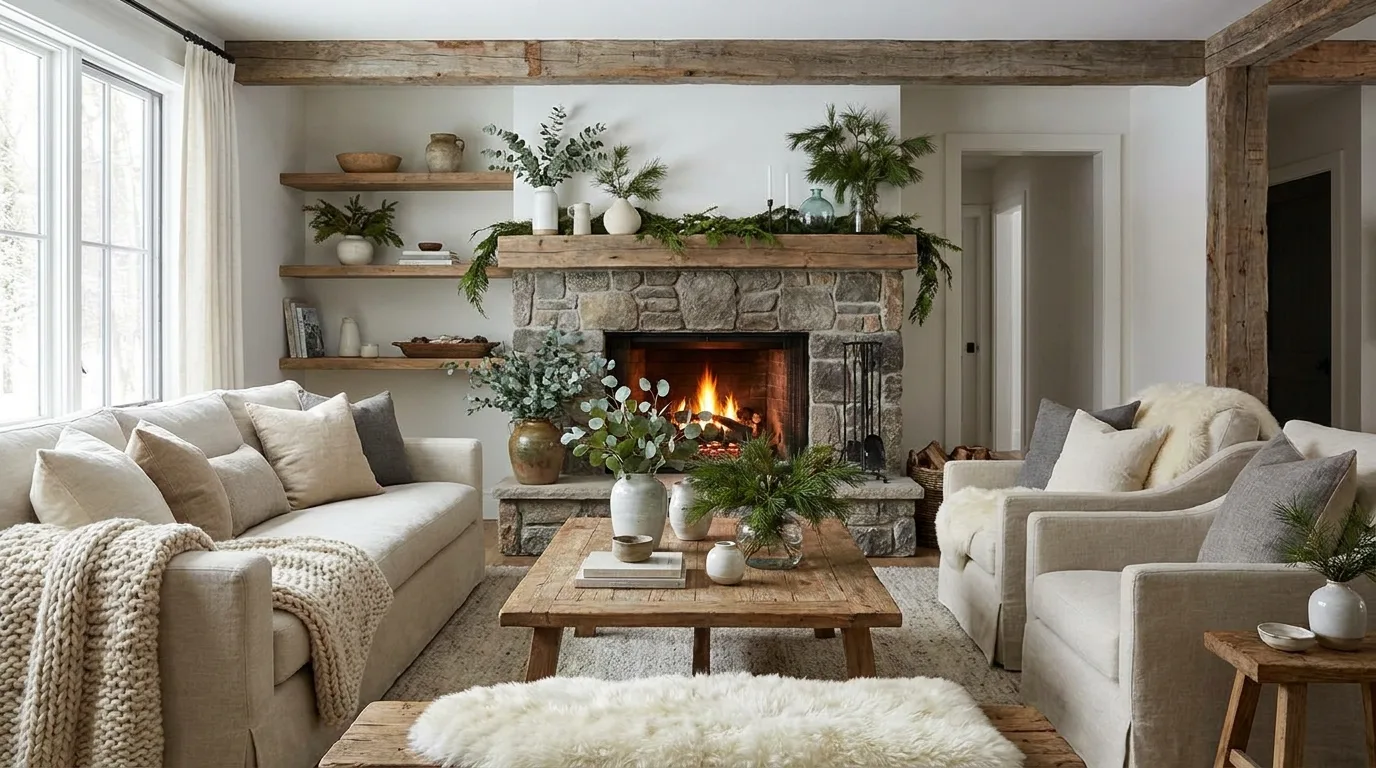
4. Add Texture With a Winter Area Rug
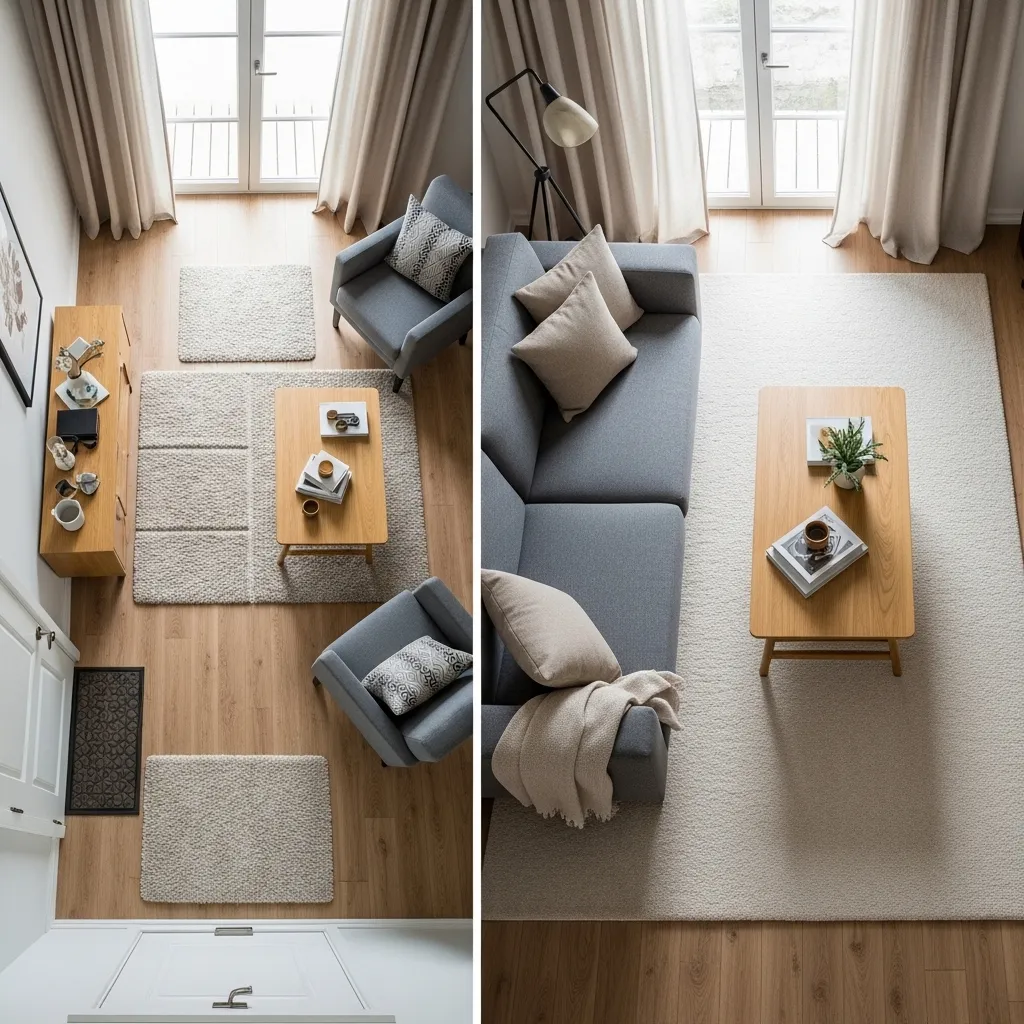
A rug can make a room look warmer while also improving physical comfort on cold floors. For winter, consider a thicker pile, woven wool design, textured flatweave, or plush neutral rug depending on the room and amount of traffic. A cream or oatmeal rug creates a soft foundation, while charcoal, muted brown, or subtle patterned options can provide more visual depth. In a living room, make sure the rug is large enough to connect the major furniture pieces rather than appearing isolated beneath a coffee table. In bedrooms, placing a rug beside or partially beneath the bed creates a welcoming landing spot in the morning. Choose a practical material that suits your household, especially if the room receives frequent foot traffic.
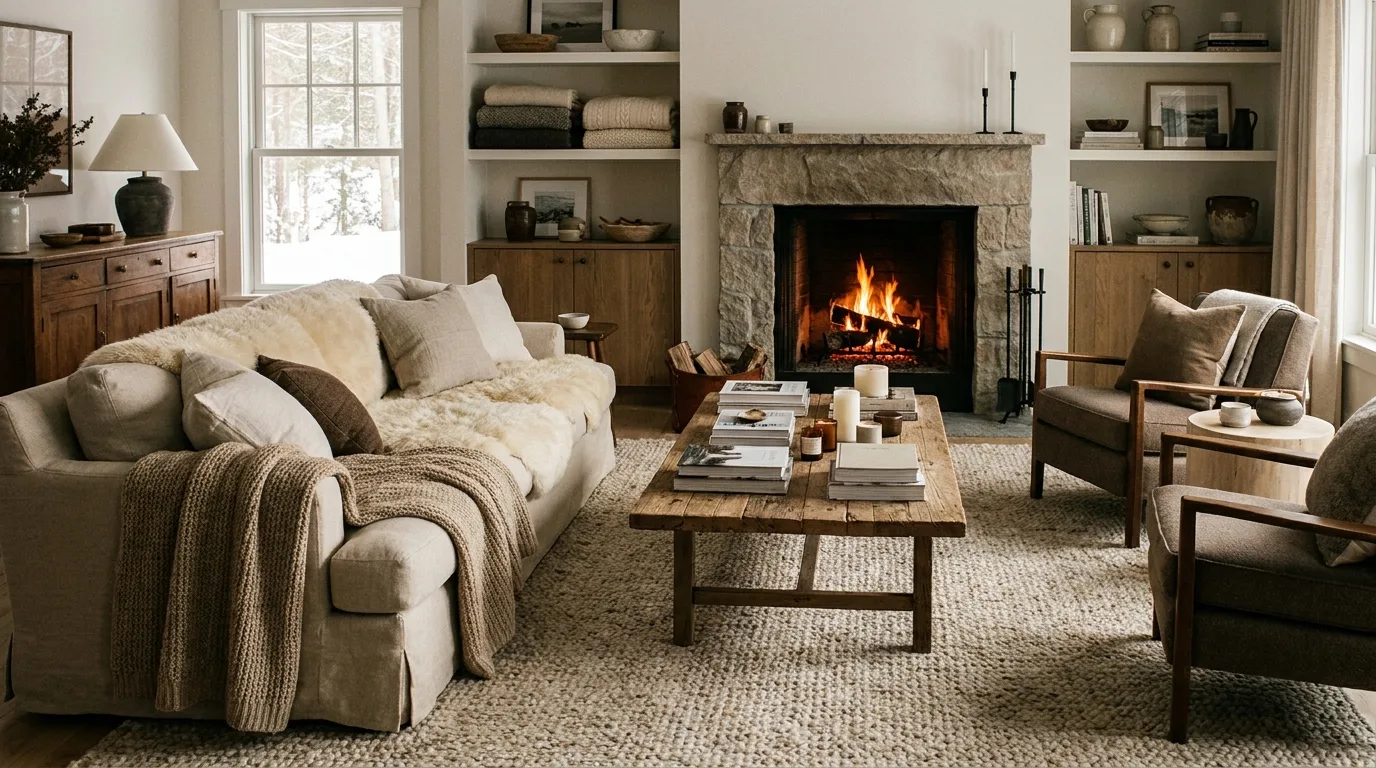
5. Style a Cozy Winter Fireplace Mantel
A fireplace naturally becomes a focal point during winter, so the mantel is an ideal place for seasonal styling. Rather than filling it with many decorations, create a balanced arrangement using greenery, candles, ceramic vessels, framed artwork, or a simple mirror. Layer objects at different heights to prevent the display from looking flat. If your fireplace is nonfunctional or purely decorative, a collection of pillar candles, lanterns, or stacked logs can reinforce the sense of warmth. Keep combustible materials at a safe distance from an active fire and follow the fireplace manufacturer’s safety guidance. For a timeless look, combine natural textures with neutral colors. This allows the mantel to transition smoothly from early winter through the rest of the cold season without feeling overly tied to one holiday.
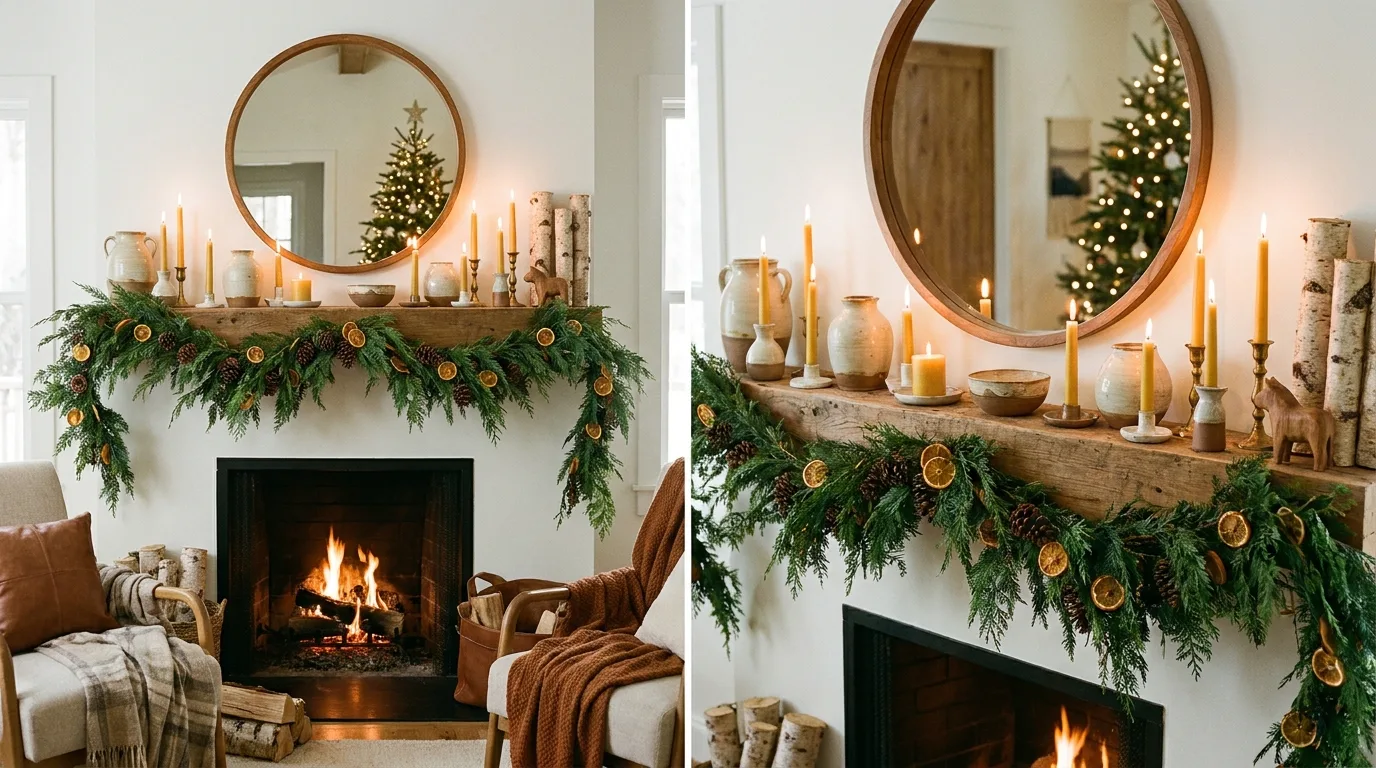
6. Use Neutral Winter Color Combinations
A winter palette does not have to be limited to stark white and icy blue. Softer combinations can make a home feel much more inviting. Try warm white with beige, greige with brown, cream with muted sage, or charcoal with natural wood. Deep colors such as forest green, burgundy, navy, and chocolate brown can also be introduced through smaller accessories. The key is to repeat two or three tones throughout a room so the decor feels intentional. If your existing furniture is colorful, simply add neutral winter textiles and natural materials rather than replacing major pieces. A restrained palette also photographs beautifully for Pinterest because textures, silhouettes, and styling details remain visible instead of competing with too many strong colors.
7. Make the Bedroom Feel Like a Winter Retreat
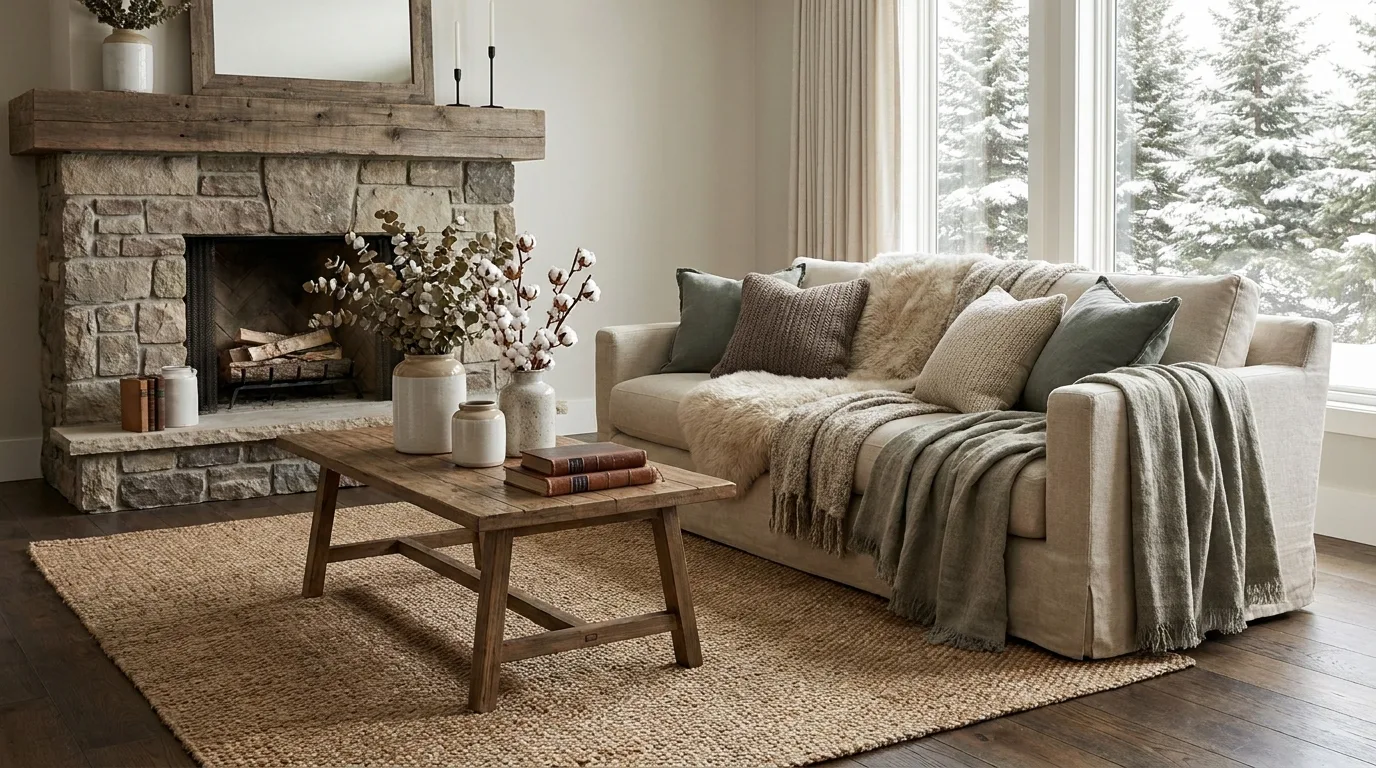
The bedroom is one of the best places to emphasize comfort during winter. Start with layered bedding, combining sheets, a duvet, a quilt, and a textured throw at the foot of the bed. Add a pair of soft accent pillows in complementary colors rather than covering the entire bed with cushions. A bedside lamp with warm lighting can create a relaxing evening atmosphere, while a small rug provides softness underfoot. Natural materials such as linen, cotton, wool, and wood keep the room visually calm. Avoid adding too many seasonal decorations, because the bedroom should remain restful. Instead, concentrate on tactile details and gentle colors. The result is a cozy winter bedroom that feels comfortable enough for everyday use while still looking thoughtfully decorated.
8. Bring Warmth to the Entryway
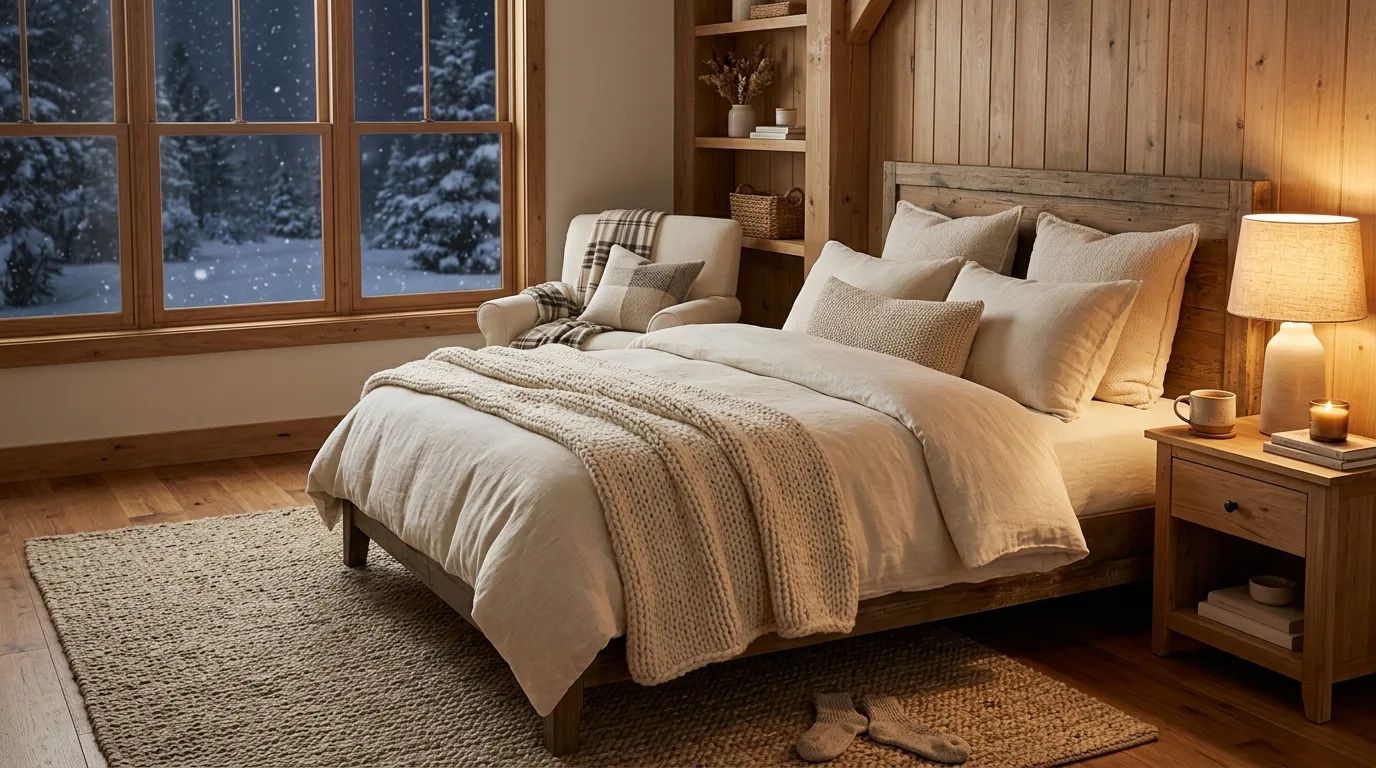
The entryway deserves winter attention because it is the first part of the home you experience when returning from cold weather. Add a sturdy basket for scarves, gloves, or hats, and provide a practical place for winter footwear. A runner can soften hard flooring while helping define the entrance. For decoration, use a small evergreen arrangement, a simple wreath, or a framed seasonal print. Wood hooks and woven baskets add useful texture without taking up much floor space. If your entryway is narrow, use vertical storage and keep decorative pieces compact. The best winter entryway combines function with atmosphere: everything has a place, the floor remains easy to clean, and the space still feels warm and welcoming when guests arrive.
9. Style a Winter-Inspired Coffee Table
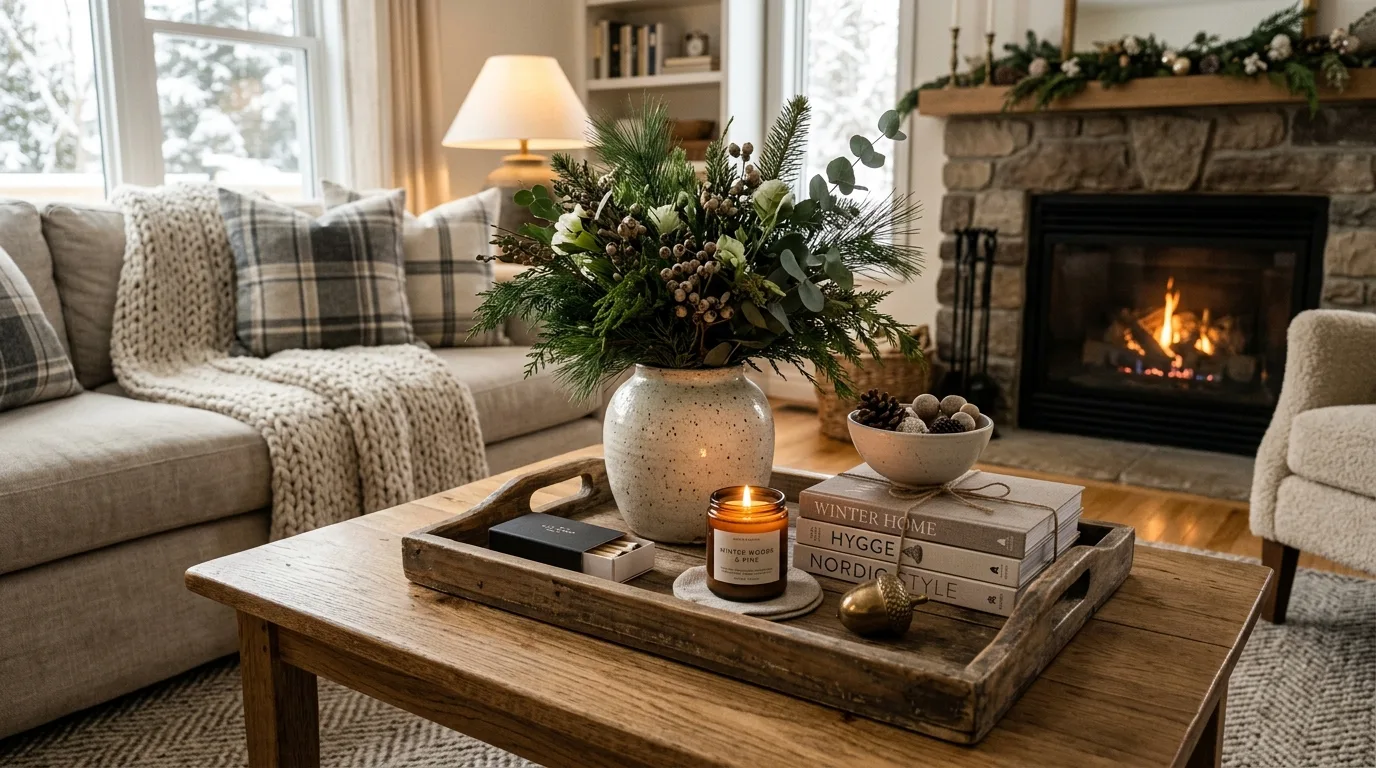
A coffee table can become a small seasonal focal point without requiring a major decorating project. Start with a tray to visually organize a few items, then add a ceramic vase, a candle, a small bowl, and one or two attractive books. A short arrangement of winter greenery can provide a natural element without blocking conversation across the table. Vary the heights and shapes of objects so the composition feels collected rather than symmetrical. Leave enough empty surface for everyday use, especially if the table is used for drinks, snacks, or family activities. Neutral ceramics, wood, stone, and woven materials work particularly well for winter because they add visual warmth without relying on overt seasonal symbols.
10. Add Woven Baskets for Practical Decor
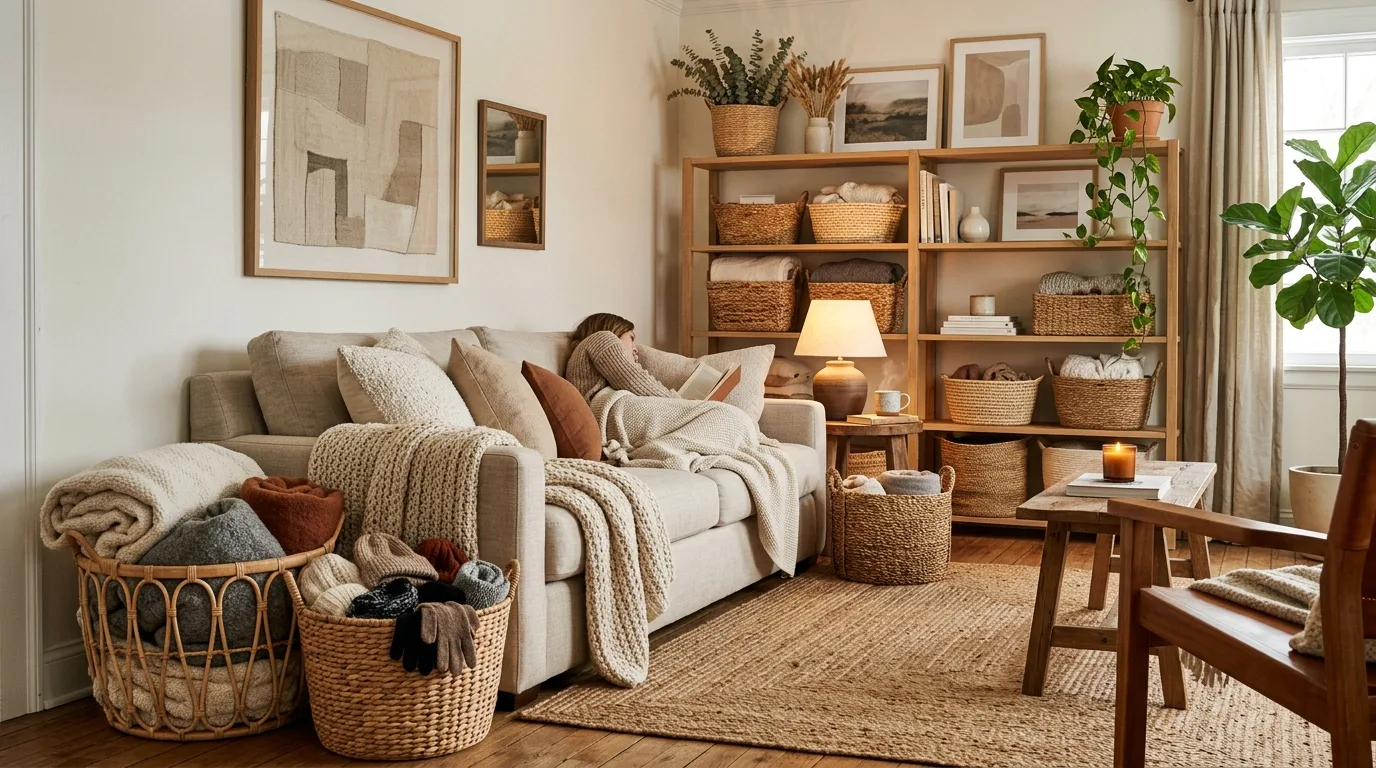
Woven baskets are especially useful winter decor because they combine storage with texture. Place a large basket beside the sofa to hold extra blankets, a medium basket near the entryway for accessories, or smaller baskets on shelves for everyday clutter. Natural rattan, seagrass, jute, and similar materials complement wool, cotton, wood, and other winter-friendly textures. Choose basket sizes according to what you actually need to store so they do not become decorative containers for unnecessary clutter. A coordinated group of baskets can also make open shelving look more organized. Because they are useful beyond the winter season, baskets are a smart decorating investment. Swap their contents as the weather changes while keeping the same warm, natural visual foundation.
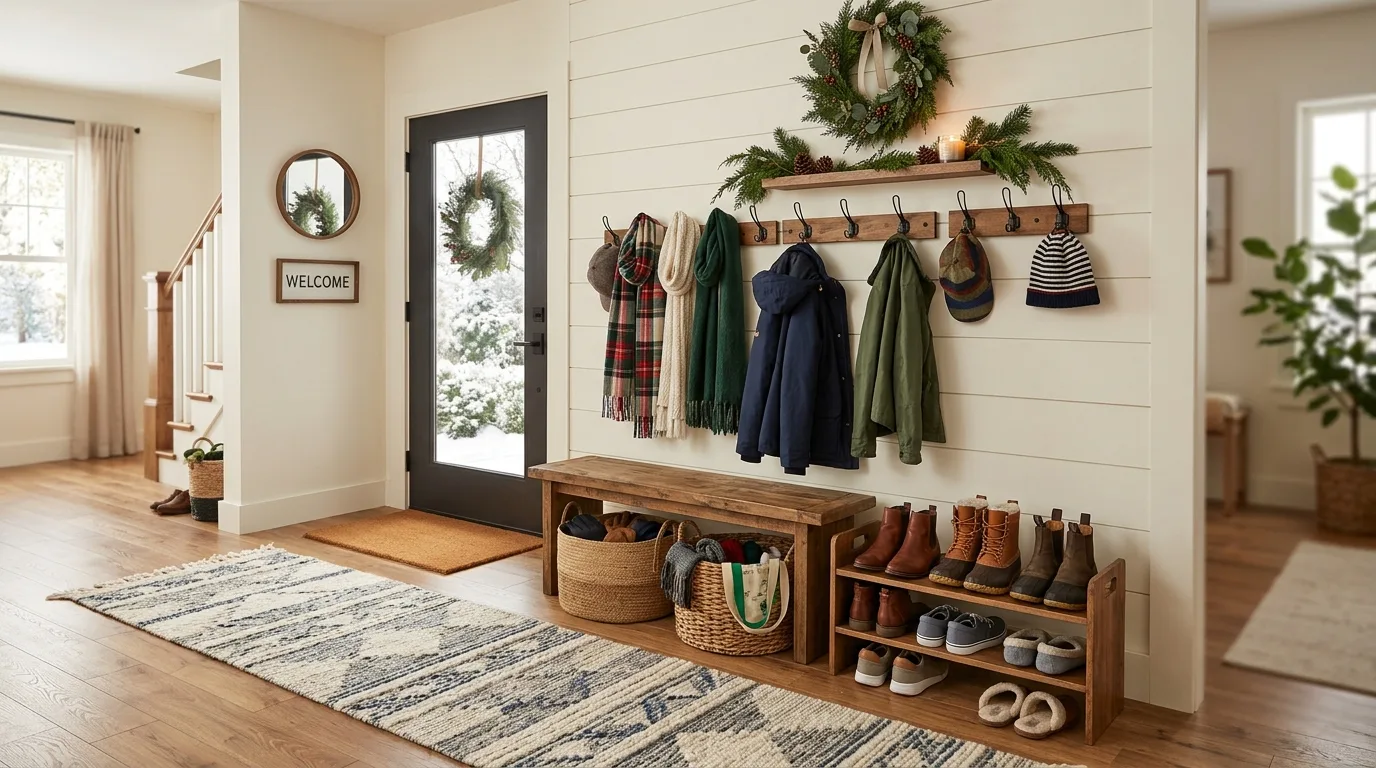
11. Create a Cozy Reading Corner
A dedicated reading corner can make winter evenings feel especially inviting. Choose a comfortable armchair and position it near a window, floor lamp, or other convenient light source. Add a soft throw and a small cushion for extra comfort, then place a compact side table nearby for books, tea, or a reading lamp. If space allows, a small rug can visually define the area and make it feel like a separate zone within a larger room. Keep the styling simple and avoid overcrowding the chair with accessories. A few carefully chosen books, a ceramic mug, and a small plant or winter branch can provide personality. The finished corner should look comfortable enough to use rather than staged only for photographs.
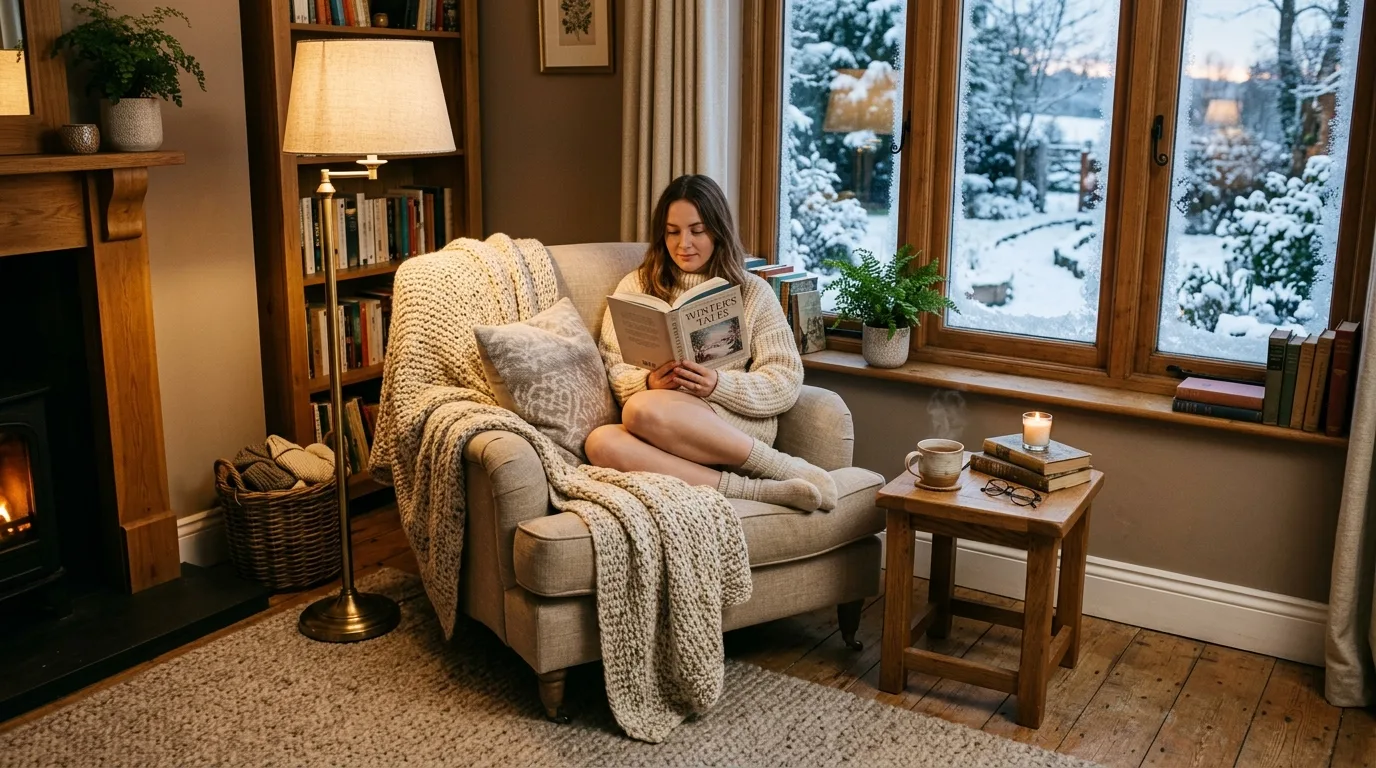
12. Decorate the Dining Table With Natural Elements
Winter dining decor can be elegant without becoming elaborate. For a simple centerpiece, combine evergreen branches with candles, wooden accents, or neutral ceramic vessels. A long low arrangement works well on rectangular tables because it keeps sightlines open during meals. On a round table, use one compact vessel or a shallow tray to create a balanced focal point. Layering natural textures through woven placemats, linen napkins, wooden serving pieces, or stoneware dishes can make everyday meals feel more seasonal. Stick to a restrained palette so the table remains useful for ordinary dinners as well as special occasions. If you use candles, choose stable holders and keep flames away from greenery, napkins, and other flammable materials.
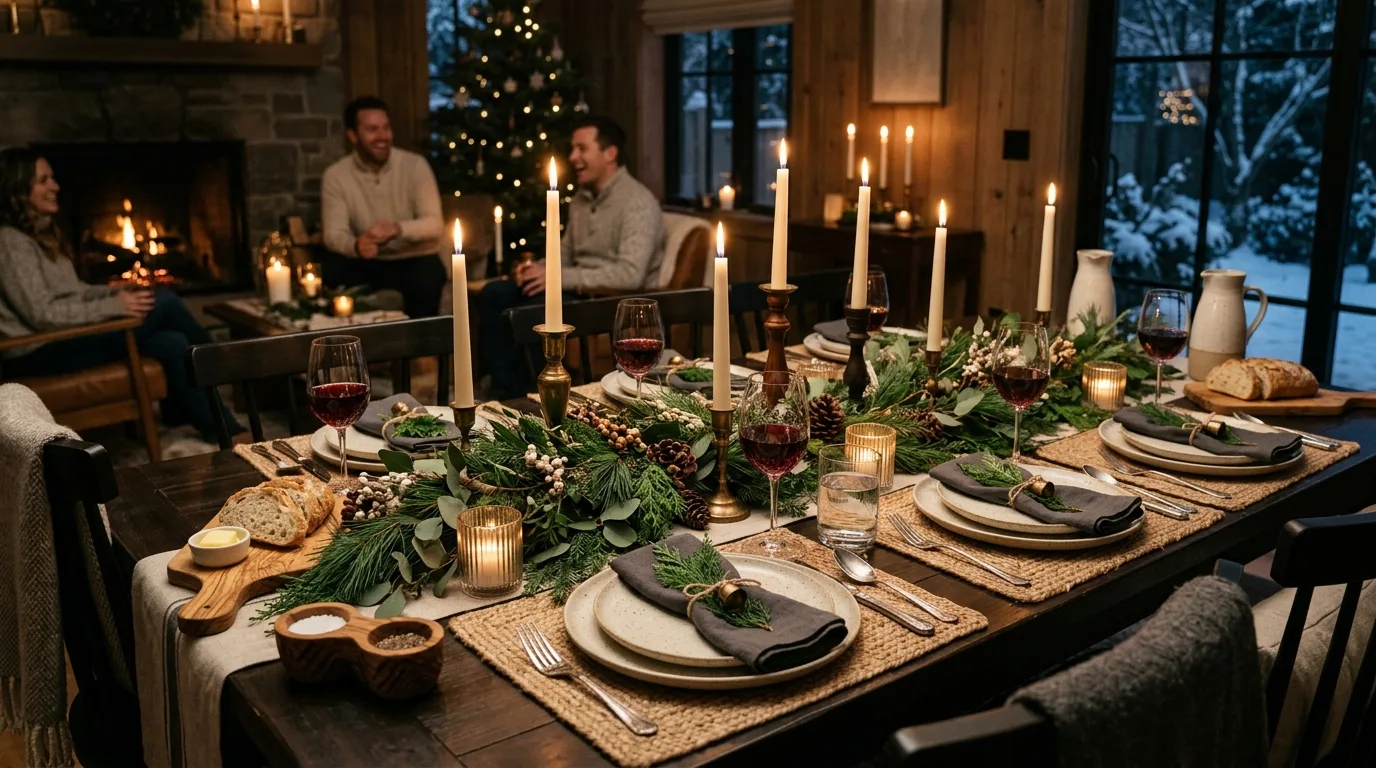
13. Use Candles and Lanterns for Seasonal Ambience
Candles and lanterns are classic winter decorating elements because their warm glow instantly makes interiors feel more intimate. Group a few lanterns of different heights near a fireplace, on a covered porch, or beside an entryway console. Indoors, use candleholders on a dining table, mantel, or shelf, leaving adequate space between flames and surrounding objects. Battery-operated candles are a practical alternative when you want the appearance of candlelight without an open flame. To avoid a cluttered display, select a consistent material such as glass, metal, ceramic, or wood. The most attractive arrangements often include only a handful of pieces. Think of lighting as atmosphere rather than decoration alone, and choose placements that make frequently used spaces feel especially welcoming after sunset.

14. Give Small Corners a Winter Refresh
You do not need to redecorate an entire room to create a noticeable seasonal change. Small corners such as a console table, bookshelf, windowsill, or bedside surface can carry the winter theme through carefully selected details. Try a small vase of evergreen stems, a textured candle, a ceramic bowl, or a framed landscape print. Grouping three related objects often creates enough visual interest without overwhelming a compact surface. Look around your home for areas that currently feel empty or unfinished and refresh those first. This approach is particularly useful for renters or anyone working with a limited budget because it relies on accessories rather than permanent changes. Reusing pieces you already own in new combinations can make the room feel different without creating unnecessary expense.
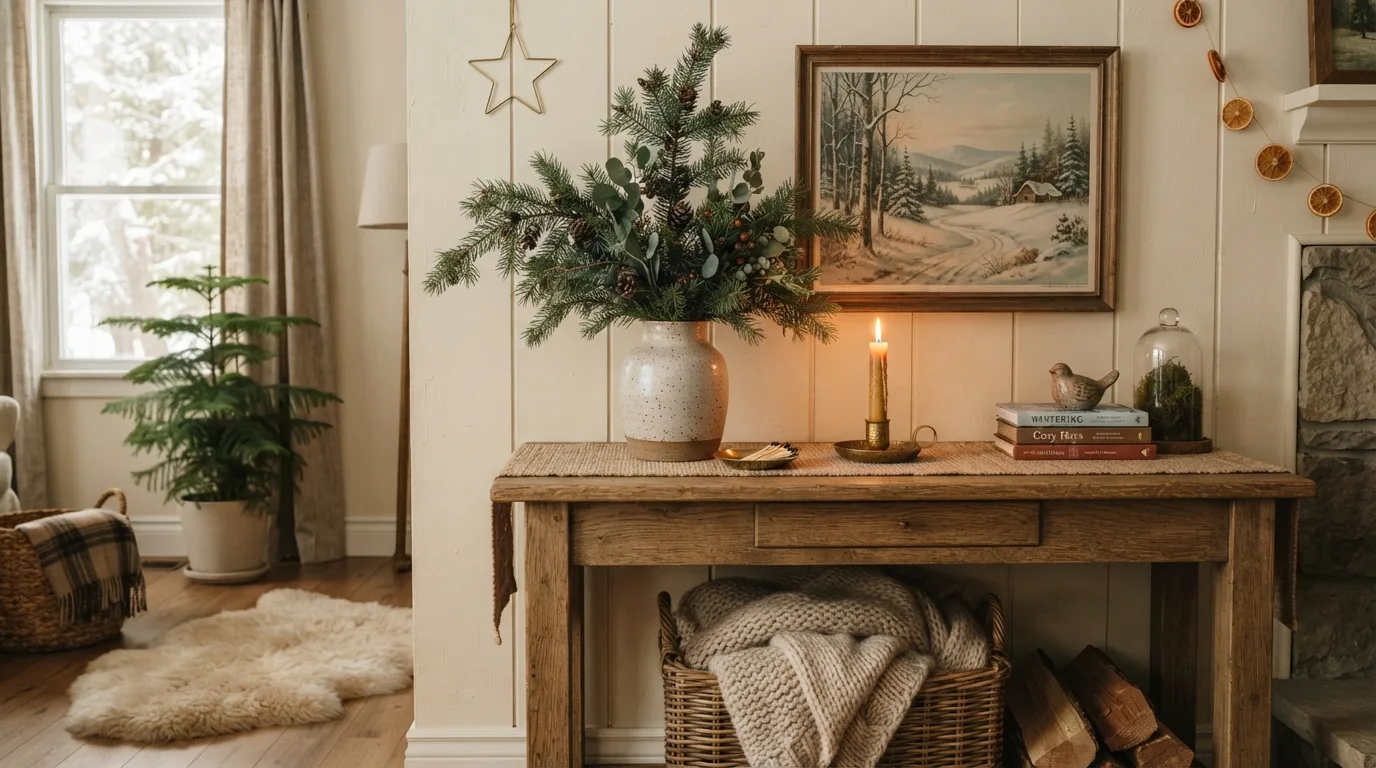
15. Layer Winter Decor Without Overcrowding
The final step in a successful winter decor scheme is knowing when to stop. Seasonal decorating works best when different elements support one another rather than competing for attention. Begin with the room’s existing furniture and architecture, then add comfort through textiles, warmth through lighting, and natural character through greenery or wood. Choose a few decorative accents that reinforce the same palette and style. Keep pathways, tables, and frequently used surfaces functional so the room remains pleasant throughout the season. Before buying anything new, remove a few items that no longer contribute to the space. This creates visual breathing room for the winter additions. A well-layered room should feel warm and lived-in, not crowded. The goal is a comfortable atmosphere that still reflects your personal decorating style.
Conclusion
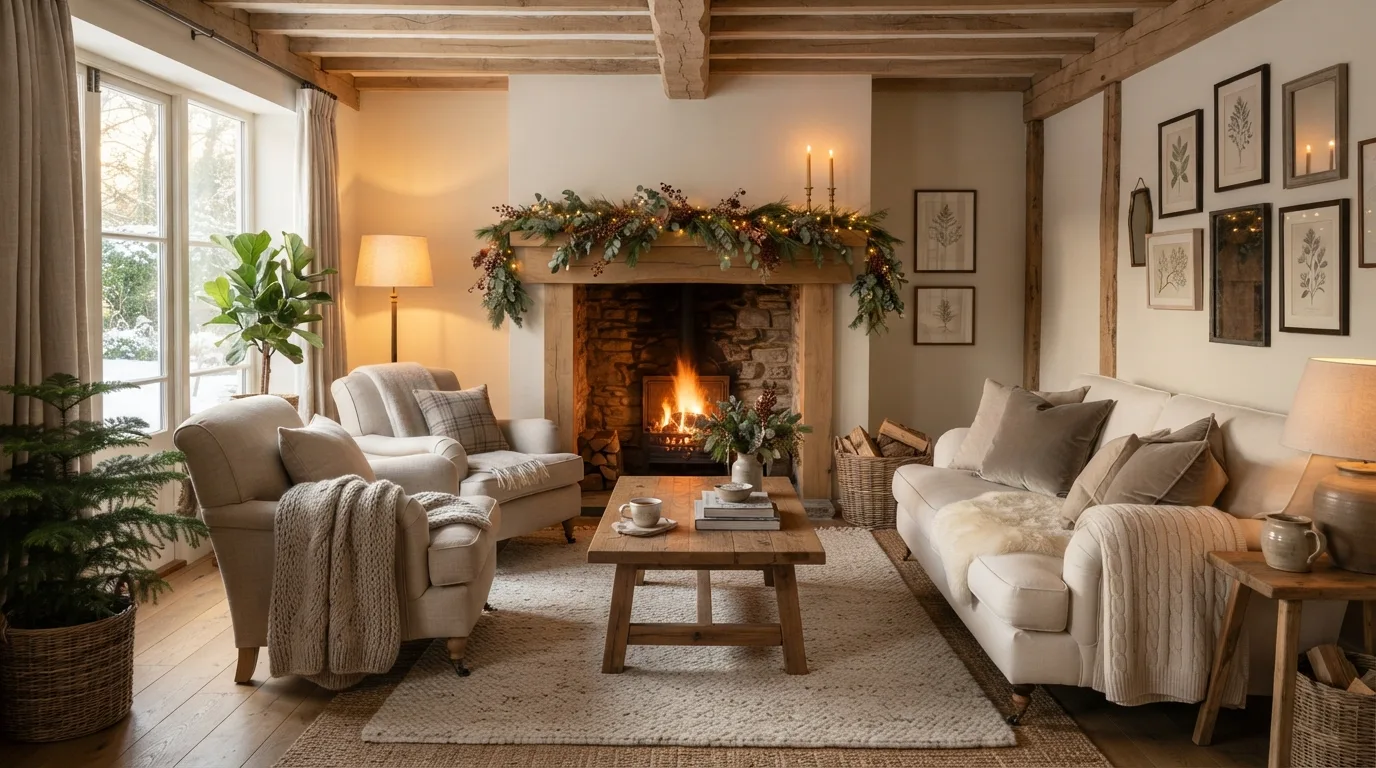
Winter decor is ultimately about creating a home that feels comfortable, warm, and welcoming during the colder months. Simple changes such as layered blankets, soft lighting, natural greenery, textured rugs, and practical storage can have a bigger impact than a room full of seasonal decorations. Choose the ideas that fit your space, budget, and personal style, then build gradually rather than trying to change everything at once. By combining comfort with thoughtful styling, you can create a winter-ready home that feels beautiful for everyday life and inviting for guests.