A minimalist bedroom can feel calm, stylish, and surprisingly inviting without being bare or boring. The key is to focus on thoughtful furniture, soothing colors, useful storage, and a few details that make the room feel personal. Whether you are decorating a compact bedroom or refreshing a spacious master suite, these minimalist bedroom design ideas can help you create a space that looks polished while remaining practical and comfortable.
1. Create a Soft Neutral Bedroom
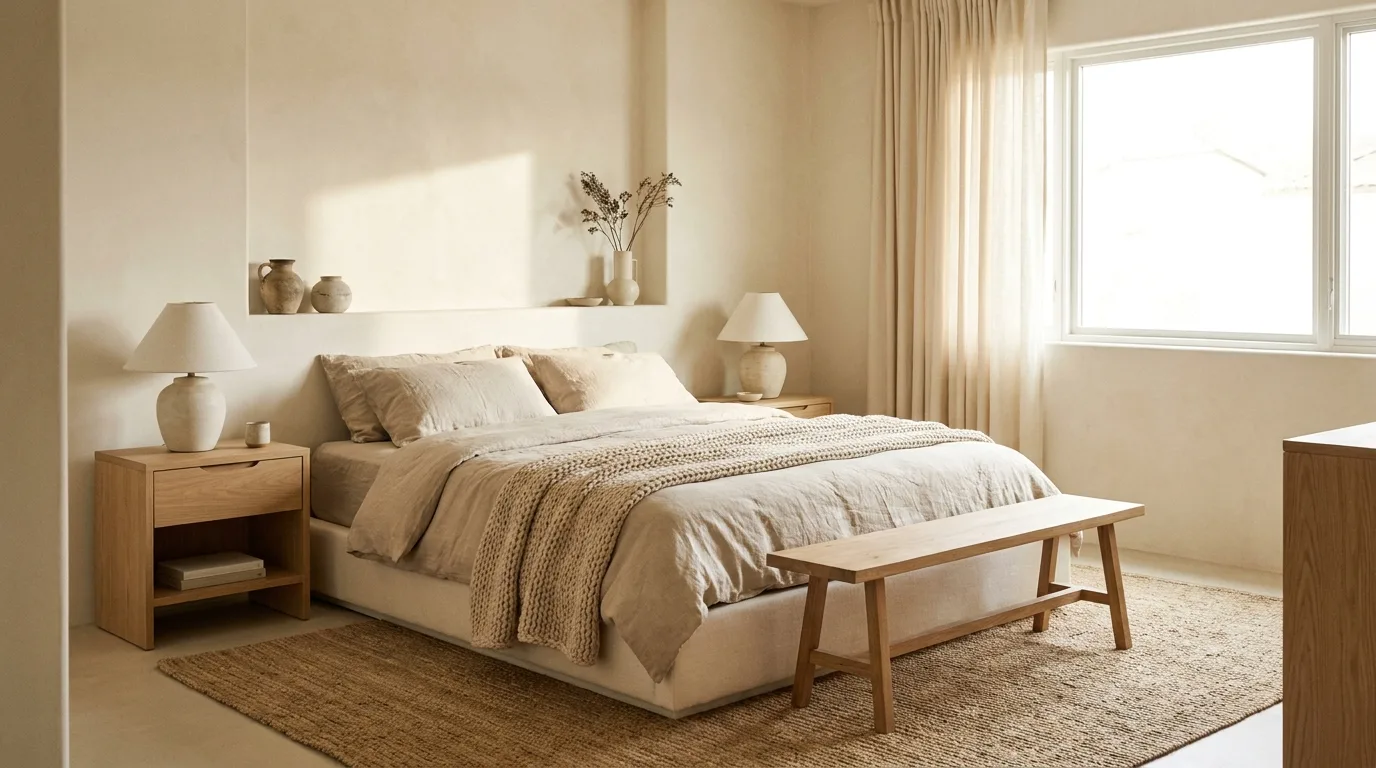
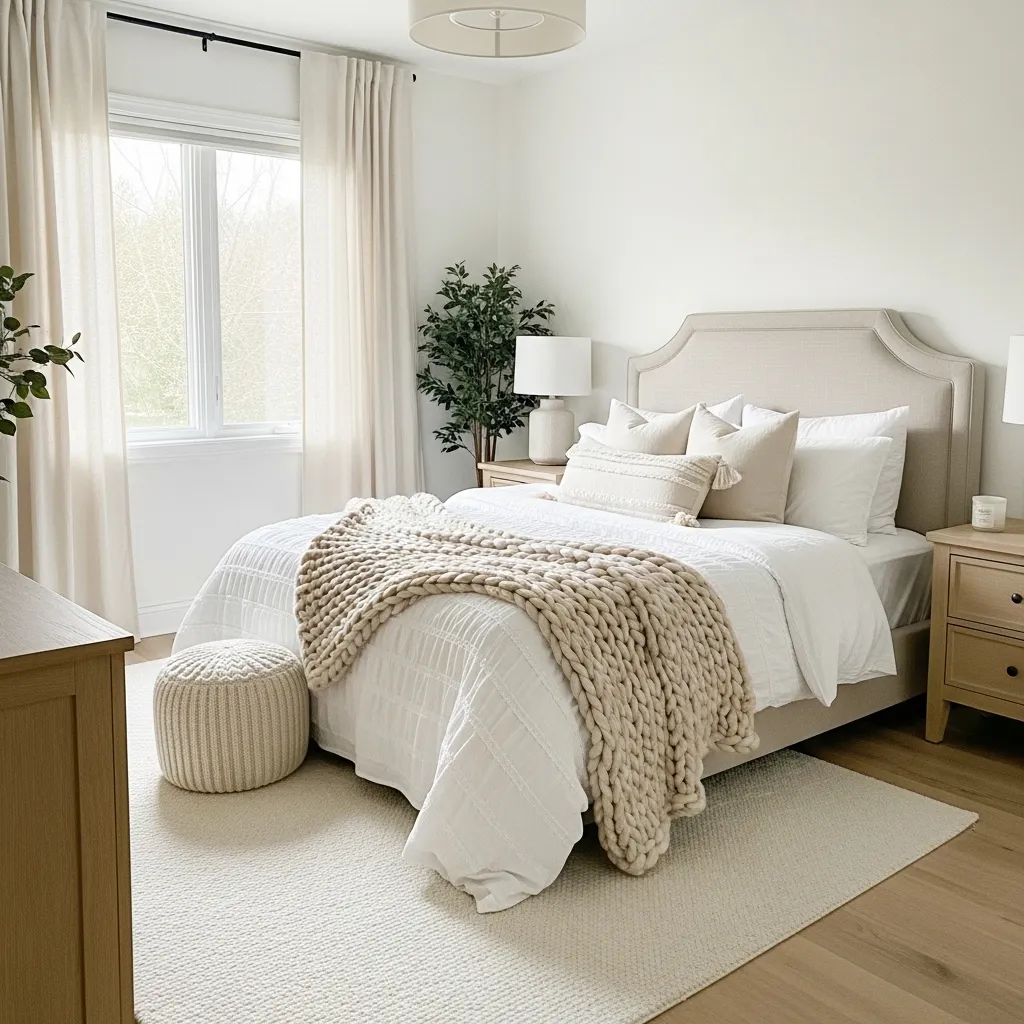
Start with a restrained palette of warm white, beige, cream, taupe, or soft gray to establish a peaceful minimalist foundation. Layering slightly different neutral shades keeps the room from looking flat while preserving a clean appearance. Choose one dominant wall color, then introduce complementary tones through bedding, curtains, a rug, and upholstery. Natural textures such as linen, cotton, wool, and light wood add warmth without requiring lots of decoration. This approach works particularly well if you want a bedroom that feels bright during the day and cozy at night. Keep patterns subtle or skip them entirely, allowing texture and tonal variation to provide visual interest instead.
For a Pinterest-worthy finish, repeat one warm neutral in at least two or three areas of the room so the design feels intentionally coordinated.
2. Choose a Low-Profile Bed
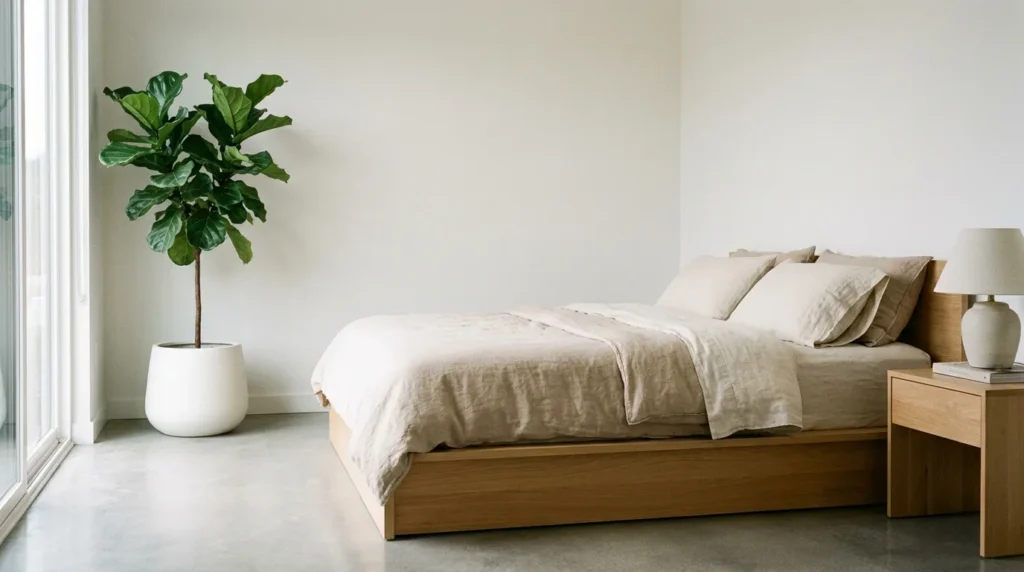
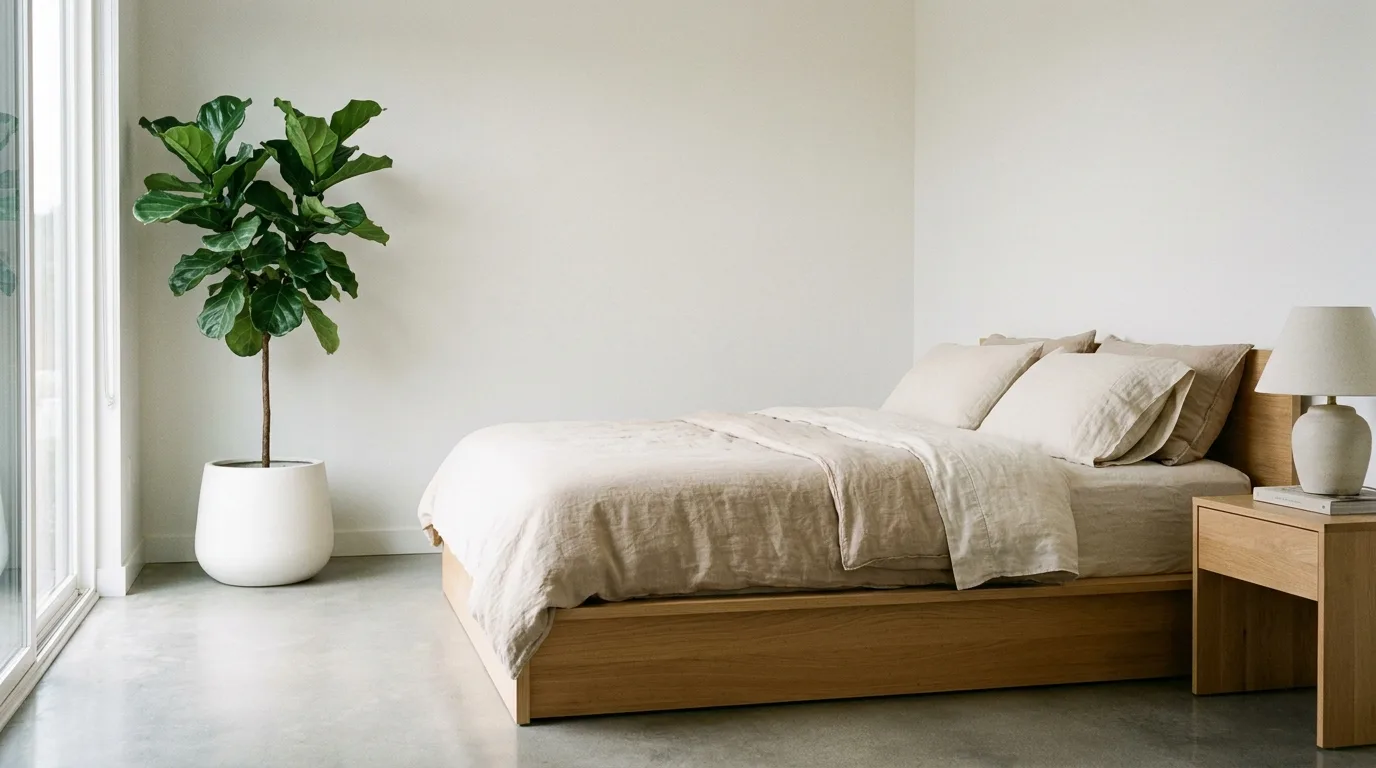
A low-profile bed instantly gives a bedroom a streamlined, modern character. Look for a simple platform frame with clean lines and minimal ornamentation. A wood frame can add natural warmth, while an upholstered version creates a softer and more luxurious feeling. Because the bed is usually the largest piece of furniture in the room, simplifying its silhouette can make the entire space feel less visually crowded. Keep the bedding equally understated with solid-colored sheets, a simple duvet, and perhaps one or two textured pillows. Avoid excessive layers that make the bed look bulky. This design works especially well in small bedrooms because a lower visual profile can make the ceiling and surrounding space appear more open.
Position the bed where it receives balanced light and leaves comfortable walking space on both sides whenever the room allows.
3. Add Warm Wood Accents
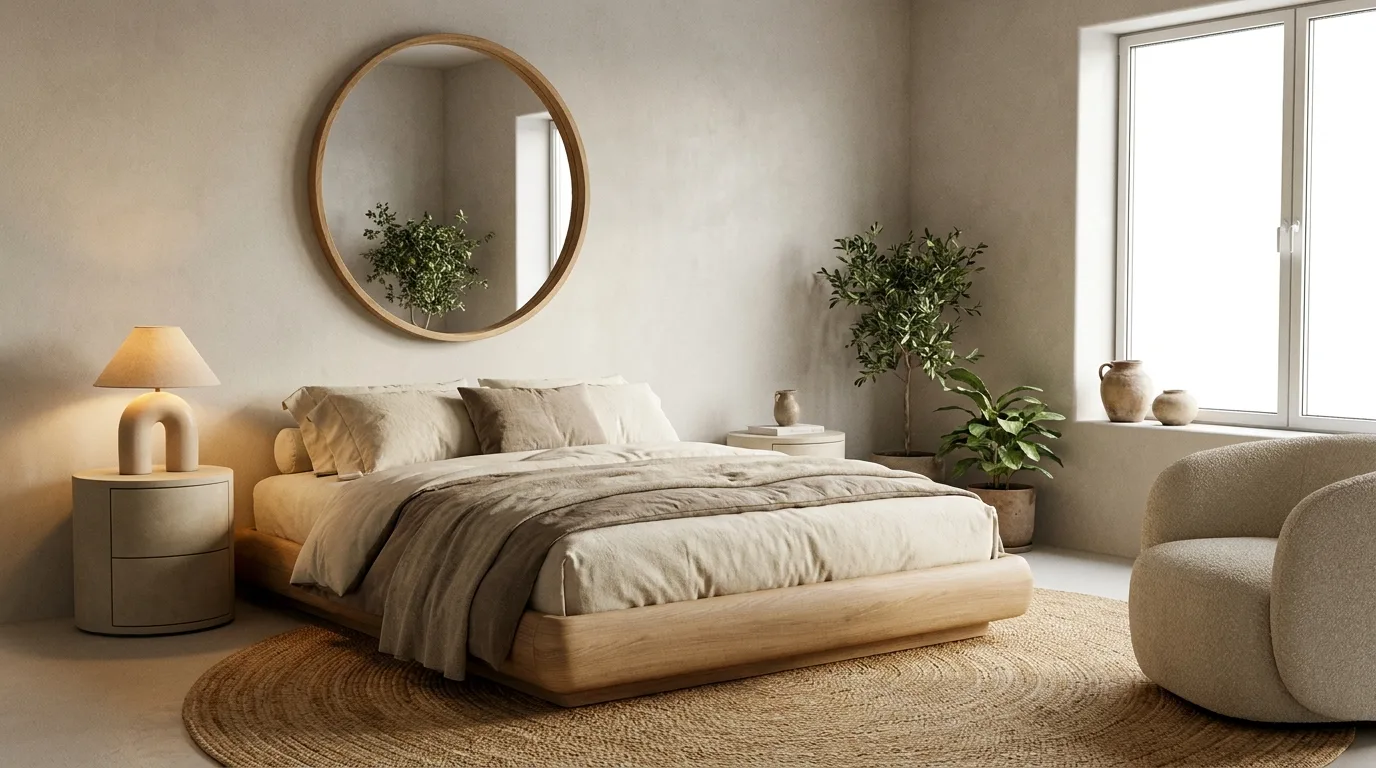
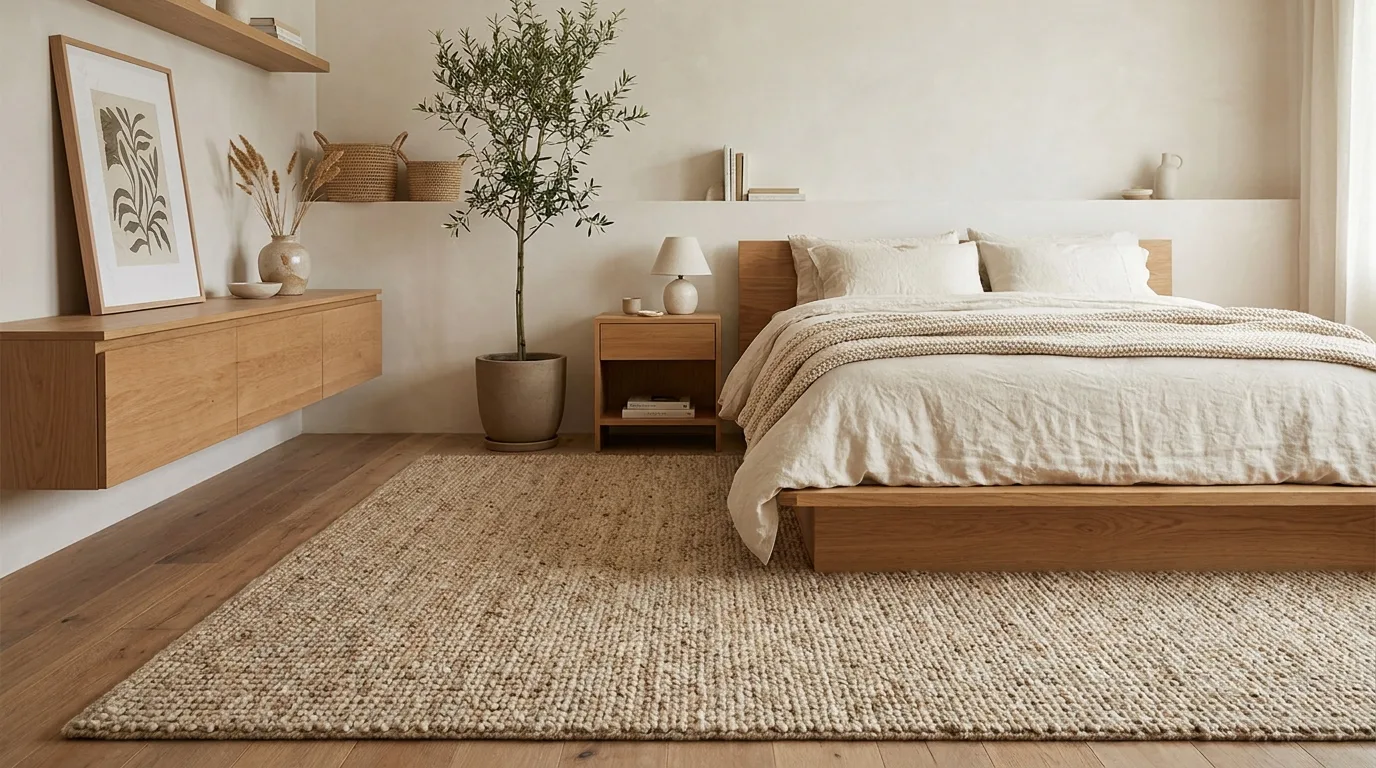
Minimalist interiors benefit enormously from natural wood because it introduces warmth without visual clutter. Consider a pale oak nightstand, wooden bed frame, floating shelf, or slim dresser. Light and medium wood tones pair beautifully with white walls and neutral textiles, while darker walnut can create a more sophisticated contrast. The goal is not to fill the bedroom with wooden furniture but to use a few carefully chosen pieces as visual anchors. Mixing several wood tones can work, but keeping them within a similar warmth level usually creates a more cohesive result. Combine wood with cotton bedding, woven baskets, or a textured rug to soften the clean lines.
For a particularly calm look, choose furniture with visible natural grain and simple rectangular or gently rounded silhouettes.
4. Use Floating Nightstands
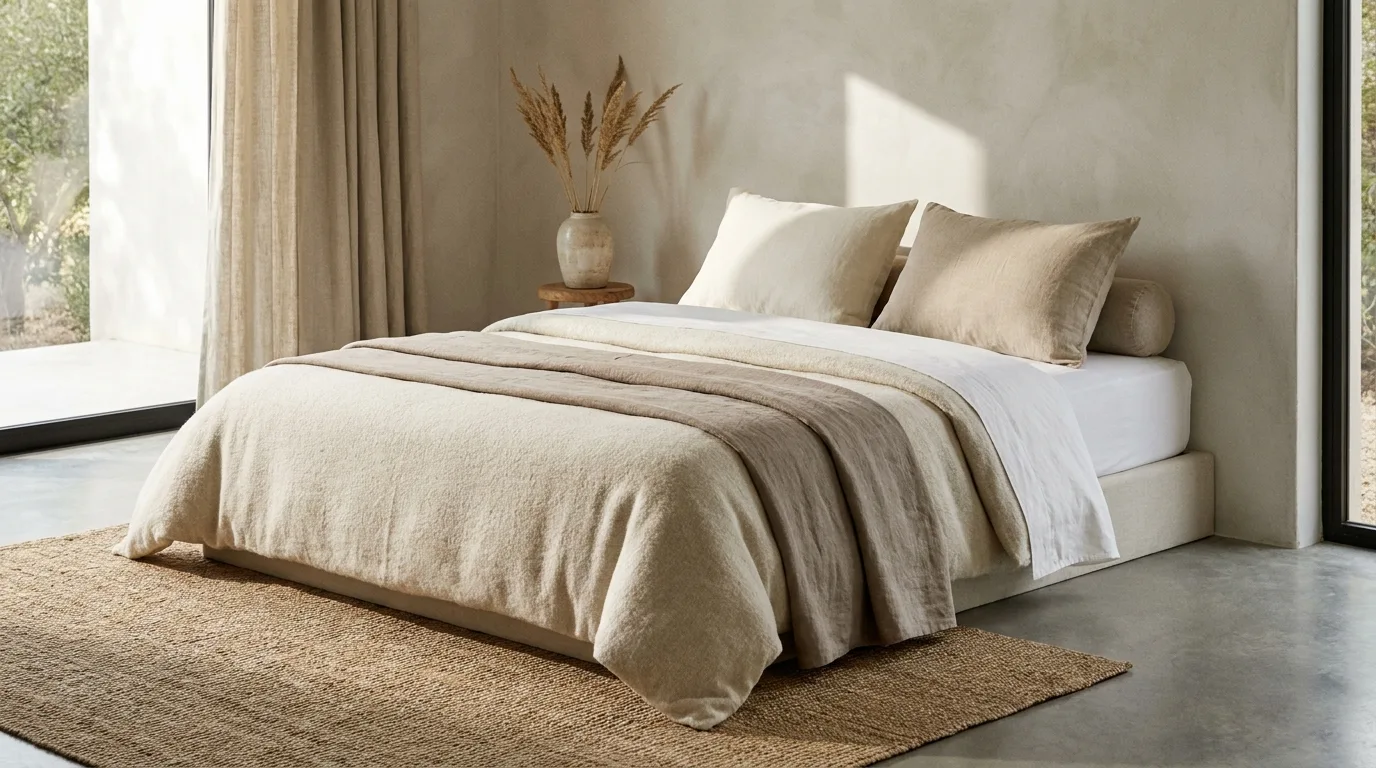
Floating nightstands are an excellent minimalist bedroom solution because they provide useful surface space without making the floor plan feel heavy. A wall-mounted shelf or compact drawer unit can hold a lamp, book, phone, and a few nighttime essentials while keeping the area underneath visually open. This is especially useful in small bedrooms where every inch matters. Match the finish to the bed or another major furniture piece for a coordinated look, or use a contrasting wood tone as a subtle accent. Keep the top surface intentionally edited rather than treating it as extra storage. One lamp, a small object, and perhaps a book are often enough.
Installing the nightstand at a comfortable height relative to the mattress also improves everyday usability while preserving the clean appearance that makes floating furniture so appealing.
5. Make White Walls Feel Cozy
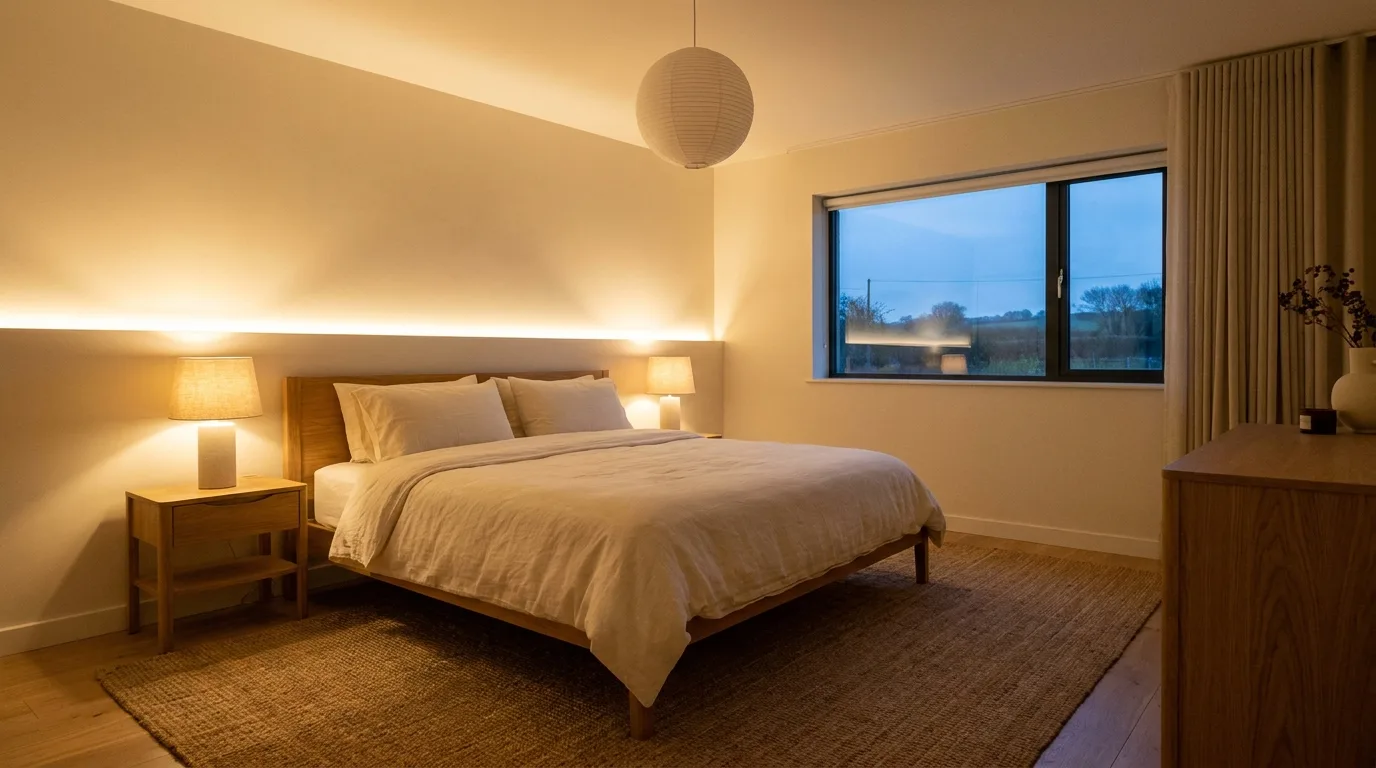
White walls are a classic choice for minimalist bedrooms, but the right styling keeps them from feeling sterile. Instead of adding lots of wall decor, introduce warmth through natural materials and soft textiles. A linen duvet, woven rug, wooden furniture, and warm bedside lighting can make a white room feel relaxed and comfortable. If pure white feels too stark, consider warm white, ivory, or creamy off-white paint. These shades reflect light while creating a softer backdrop for minimalist furnishings. Keep artwork limited to one large framed print or a small pair of coordinated pieces rather than covering every wall.
The result should feel intentionally spacious rather than unfinished. Use the white backdrop as breathing room, then let texture, lighting, and a few meaningful objects supply personality.
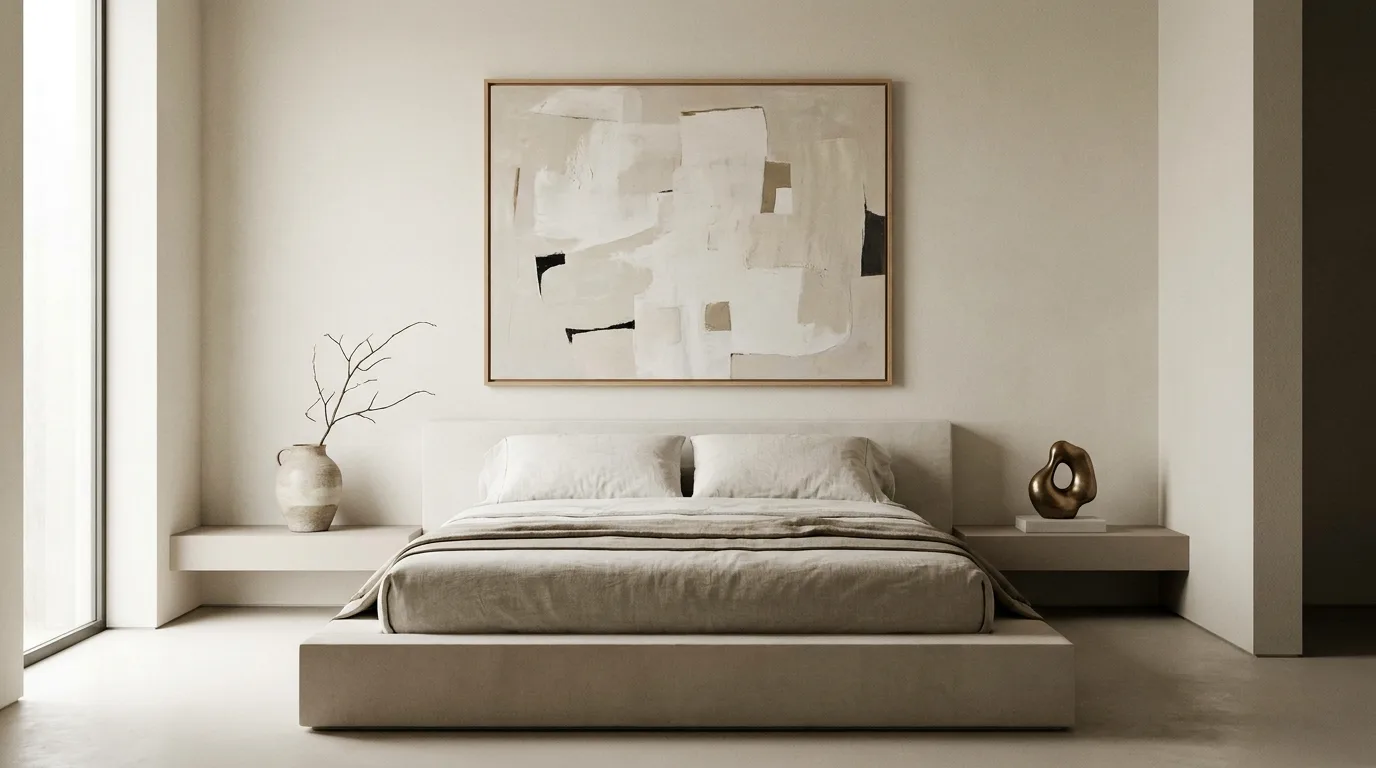
6. Try a Japandi-Inspired Bedroom
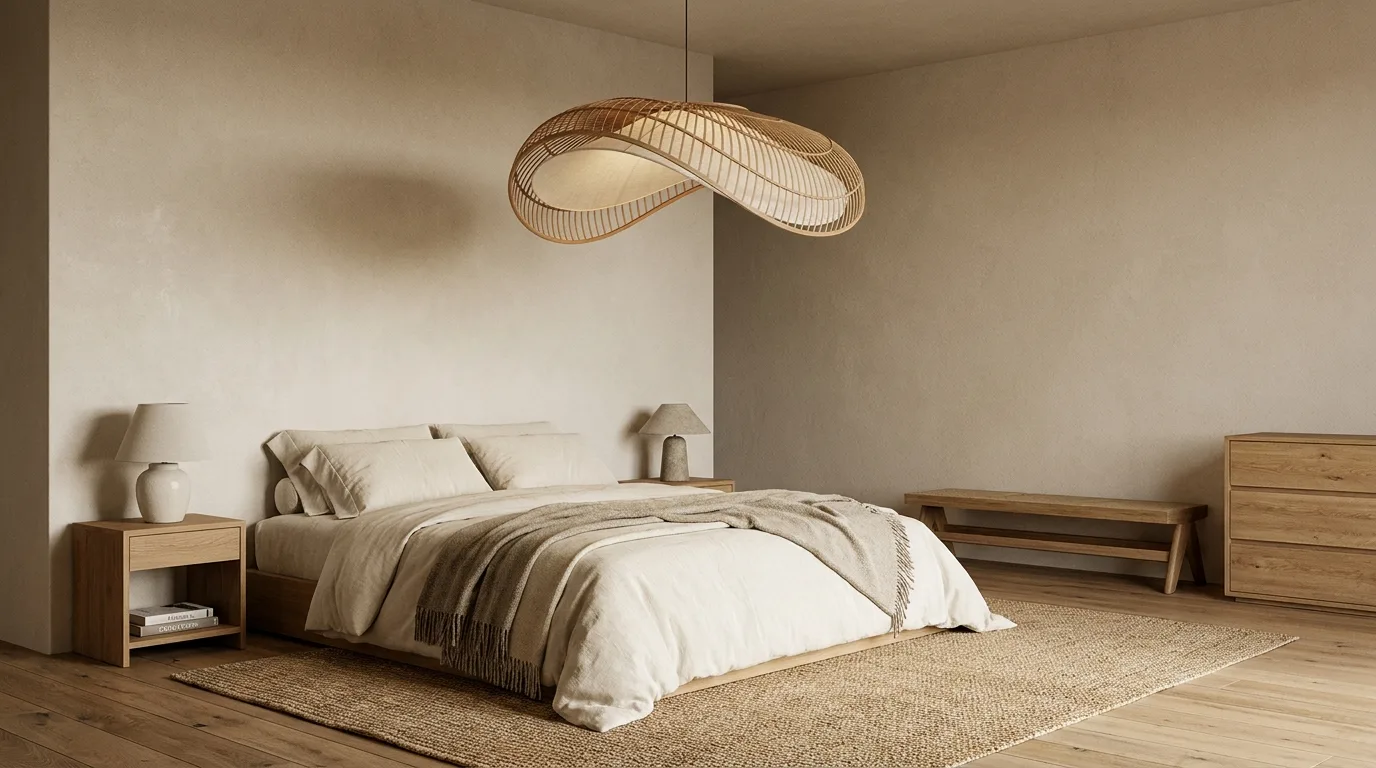
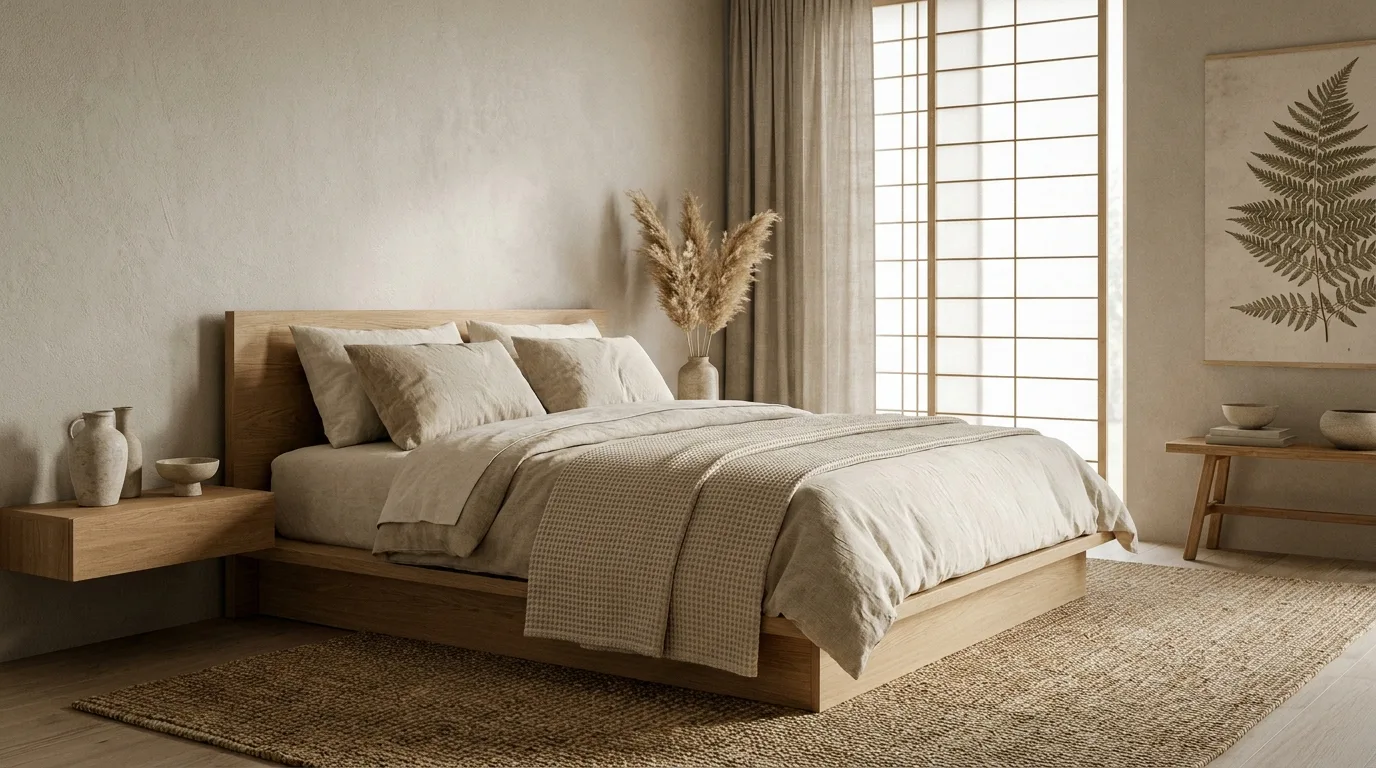
Japandi design combines Japanese simplicity with Scandinavian warmth, making it a natural fit for minimalist bedrooms. Focus on low furniture, uncluttered surfaces, natural wood, neutral colors, and tactile fabrics. A platform bed, woven rug, paper-style pendant, and simple ceramic accessories can establish the look without turning the room into a themed space. Organic shapes are useful because they soften the straight lines commonly found in minimalist furniture. Keep the palette restrained with shades such as sand, oatmeal, warm white, muted brown, and charcoal.
The most important principle is intentionality: every item should either serve a practical purpose or contribute meaningful beauty. This keeps the bedroom peaceful while still giving it enough texture and character to feel lived-in.
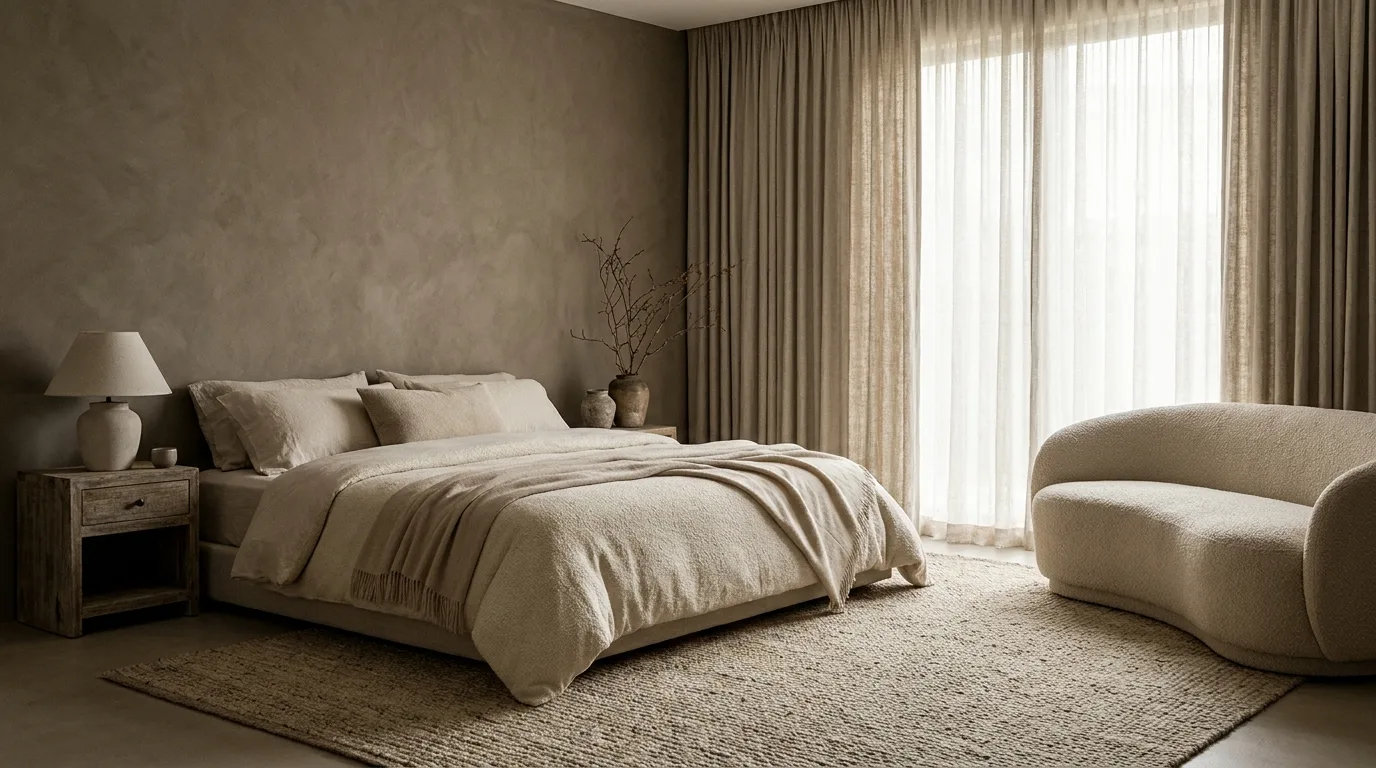
7. Design Around One Statement Light
Instead of filling the bedroom with decorative accessories, let one beautiful light fixture become the focal point. A sculptural pendant, simple oversized globe, or elegant wall sconce can add personality while remaining functional. Choose a fixture with a shape that complements the room’s furniture rather than competing with it. Warm, diffused lighting is particularly effective in minimalist bedrooms because it creates an inviting atmosphere after sunset. If you use a ceiling fixture as the main statement, keep bedside lighting simple and coordinated.
Lighting should also be layered for practicality. Combine ambient illumination with task lighting near the bed so the room works for relaxing, reading, and getting ready without relying on harsh overhead light.
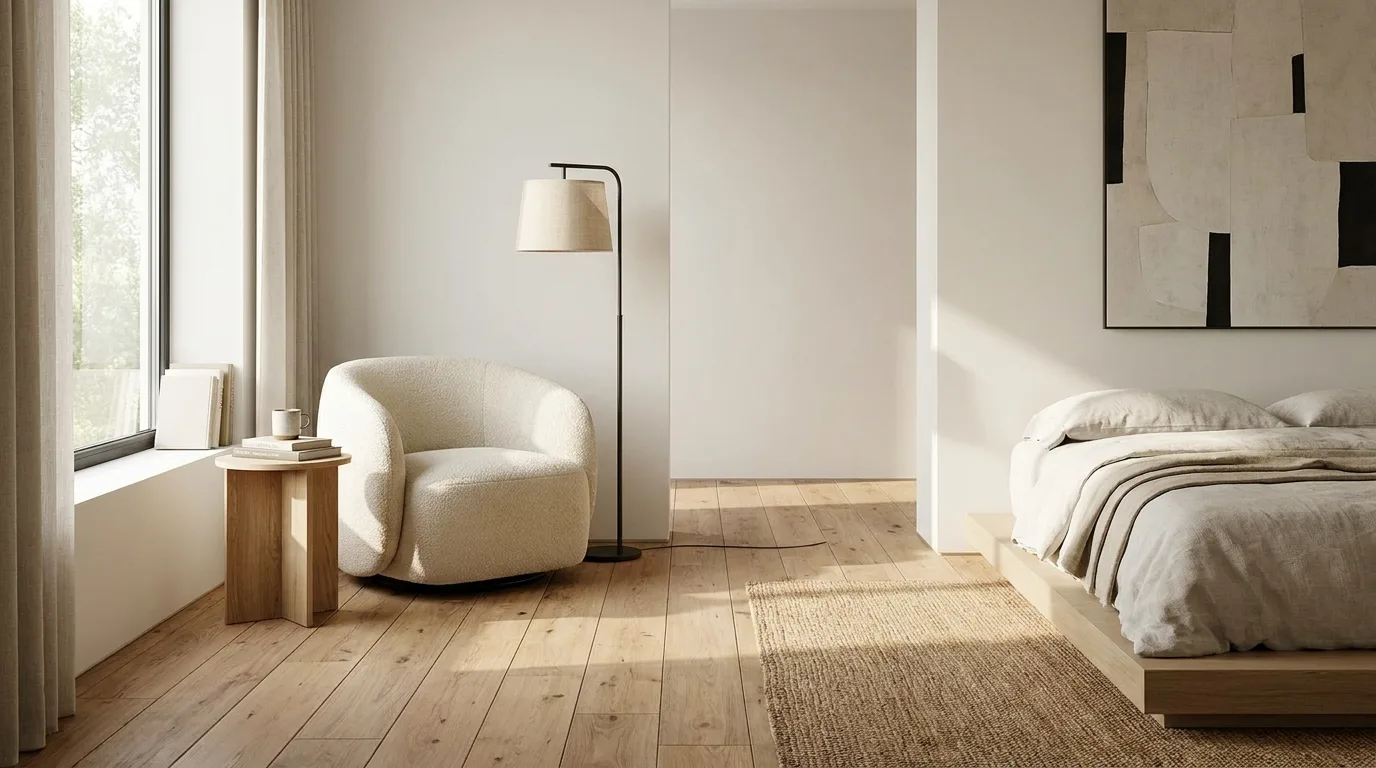
8. Keep Bedding Simple and Layered
Minimalist bedding does not have to mean a completely flat, undecorated bed. The secret is to layer simple pieces in related colors and textures. Start with crisp sheets, add a duvet or quilt, and finish with a lightweight throw folded neatly at the foot. Two or three pillows can provide enough comfort and visual depth without creating a cluttered look. Linen and cotton are excellent choices because their natural texture adds interest even when the colors are solid. Stick with a limited palette such as cream and beige or white and soft gray.
For an effortlessly styled bedroom, avoid excessive decorative pillows and choose bedding that looks attractive even when it is not perfectly arranged. Minimalism should make the room easier to live in, not create another chore.
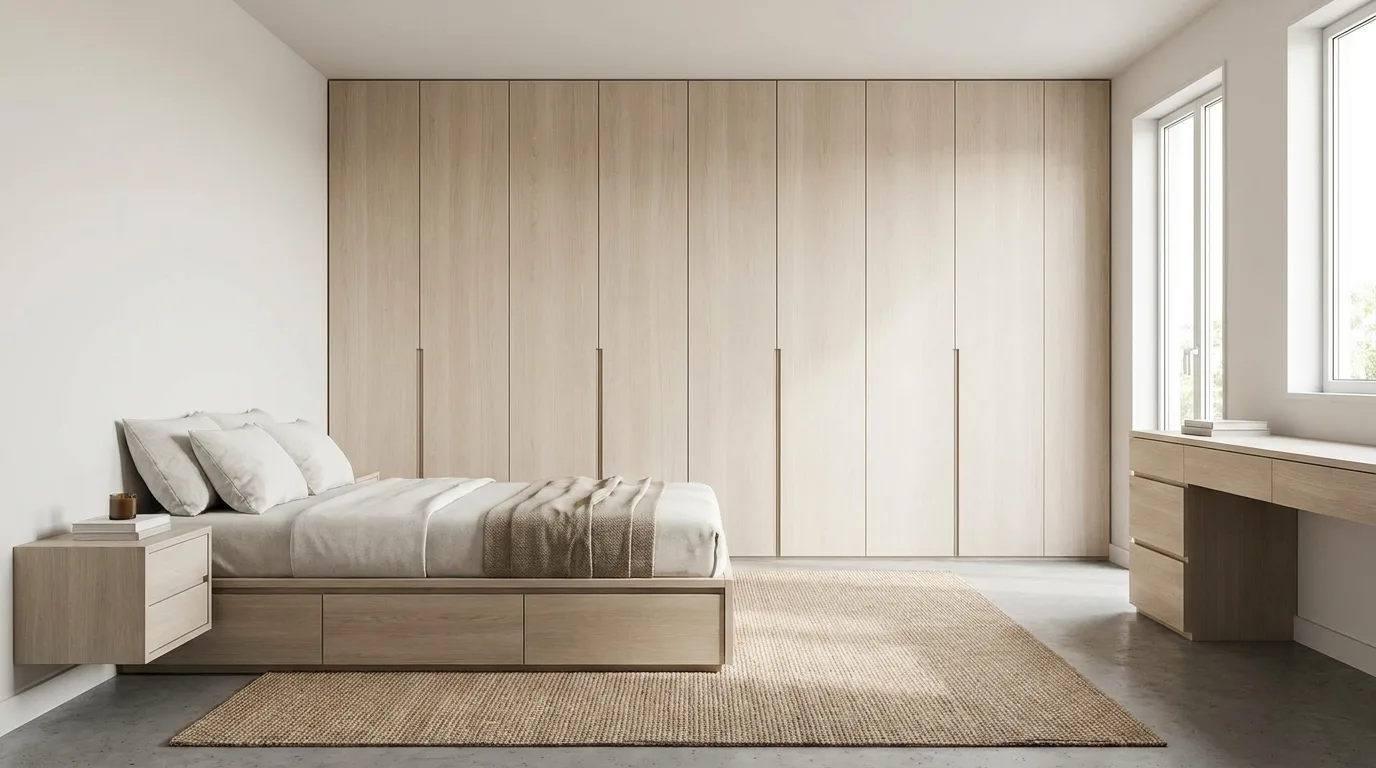
9. Add a Large Minimalist Rug
A generously sized rug can make a minimalist bedroom feel warmer and more finished while visually connecting the bed and surrounding furniture. Choose a simple solid or lightly textured design in a neutral shade. Placing the rug so that it extends beyond the sides and foot of the bed creates a grounded, balanced arrangement. In a small room, even a compact rug positioned beside or partly beneath the bed can add softness. Wool, cotton, jute, and other natural materials work particularly well with minimalist interiors.
Avoid overly busy patterns unless the rest of the room is extremely restrained. The rug should support the overall design rather than become another competing focal point. Texture is often more effective than pattern when you want subtle visual interest.
10. Use Built-In or Hidden Storage
Clutter is one of the quickest ways to undermine a minimalist bedroom, so thoughtful storage is essential. Built-in wardrobes, under-bed drawers, closed nightstands, and streamlined dressers can keep everyday belongings out of sight. Whenever possible, choose furniture with clean fronts and minimal hardware. Storage baskets can organize smaller items, but closed cabinets are preferable for anything that tends to accumulate visual noise. Before buying new storage, consider reducing unused belongings so the system does not simply become a place to hide excess possessions.
For a cohesive look, coordinate wardrobe doors with the wall color or choose a finish that complements the bed. A simple storage strategy makes the bedroom easier to maintain and allows the architectural qualities of the space to remain visible.
11. Create a Minimalist Reading Corner
If your bedroom has an unused corner, turn it into a calm reading area rather than filling it with decorative furniture. A compact upholstered chair, small side table, and slim floor lamp are usually enough. Select pieces that repeat colors or materials already used elsewhere in the room so the corner feels integrated. A simple chair in cream, beige, gray, or muted brown can add softness without overwhelming the space. Keep the side table free of unnecessary accessories and reserve it for a book, reading glasses, or a small lamp.
This idea works particularly well in larger bedrooms where empty corners can otherwise feel disconnected. In a smaller room, choose a lightweight chair that can be moved easily or use a narrow bench at the foot of the bed instead.
12. Introduce Organic Shapes
Clean-lined furniture is central to minimalist design, but too many sharp angles can make a bedroom feel rigid. Introduce a few organic shapes through a rounded mirror, curved headboard, circular pendant, oval rug, or softly shaped accent chair. These forms add visual movement without requiring additional color or decoration. The key is moderation: one or two curved elements can be enough to soften an otherwise linear room. Pair rounded details with natural materials such as wood, linen, stone, or ceramic for an especially relaxed appearance.
Consider using a large round mirror above a simple dresser or a curved bedside lamp as a subtle focal point. These small changes can make a minimalist bedroom feel more sophisticated and welcoming while preserving its uncluttered character.
13. Embrace a Monochromatic Color Scheme
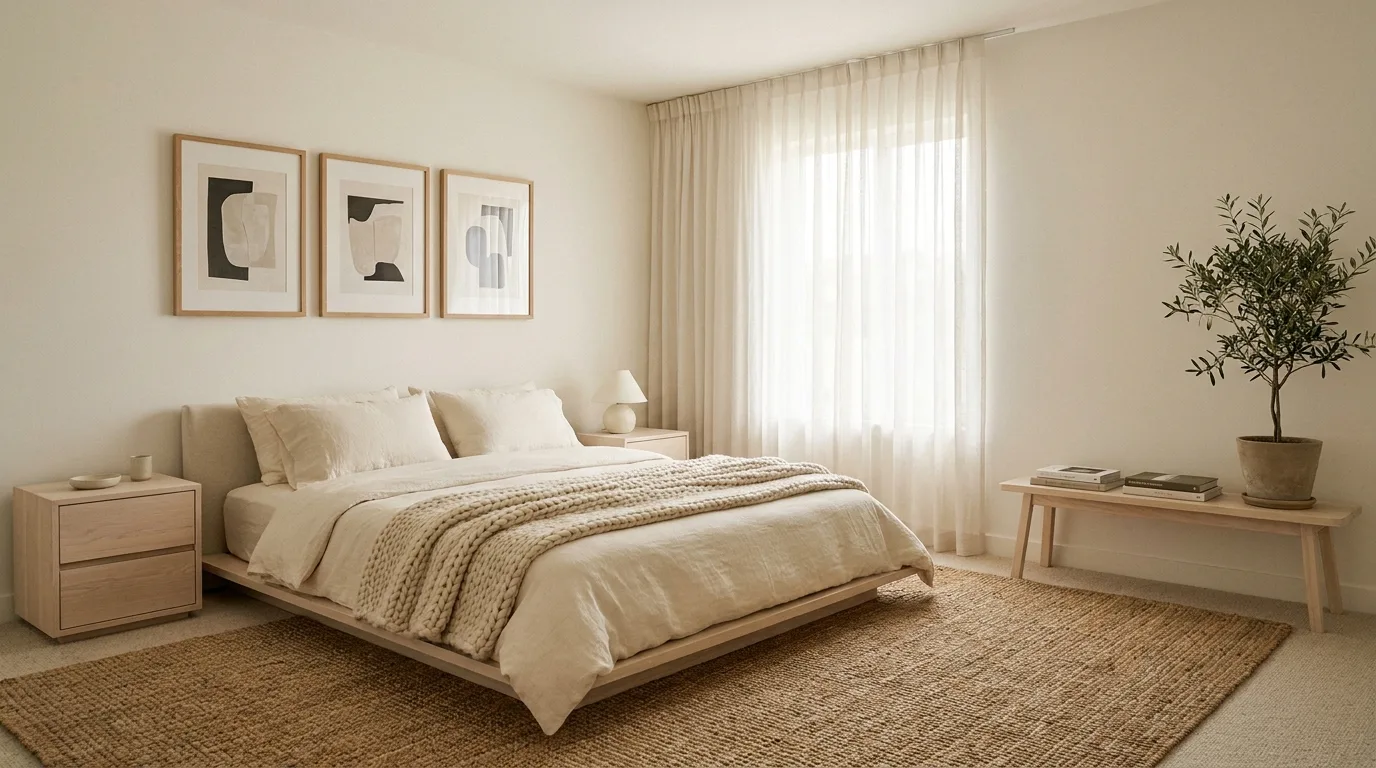
A monochromatic bedroom uses variations of one color family to create a calm, cohesive appearance. Soft gray, warm beige, creamy white, dusty blue, or muted sage can all work beautifully. Instead of matching every item exactly, combine several tones from the same palette. For example, a warm beige wall can pair with cream bedding, taupe curtains, and a slightly darker rug. Texture becomes particularly important because the limited color range means fabrics and finishes provide much of the visual interest.
This approach is useful when you want a minimalist bedroom that still feels layered and luxurious. Keep wood and metal accents restrained, and use contrast sparingly. A single darker element, such as a bedside lamp or picture frame, can provide enough definition.
14. Keep Bedroom Decor Intentional
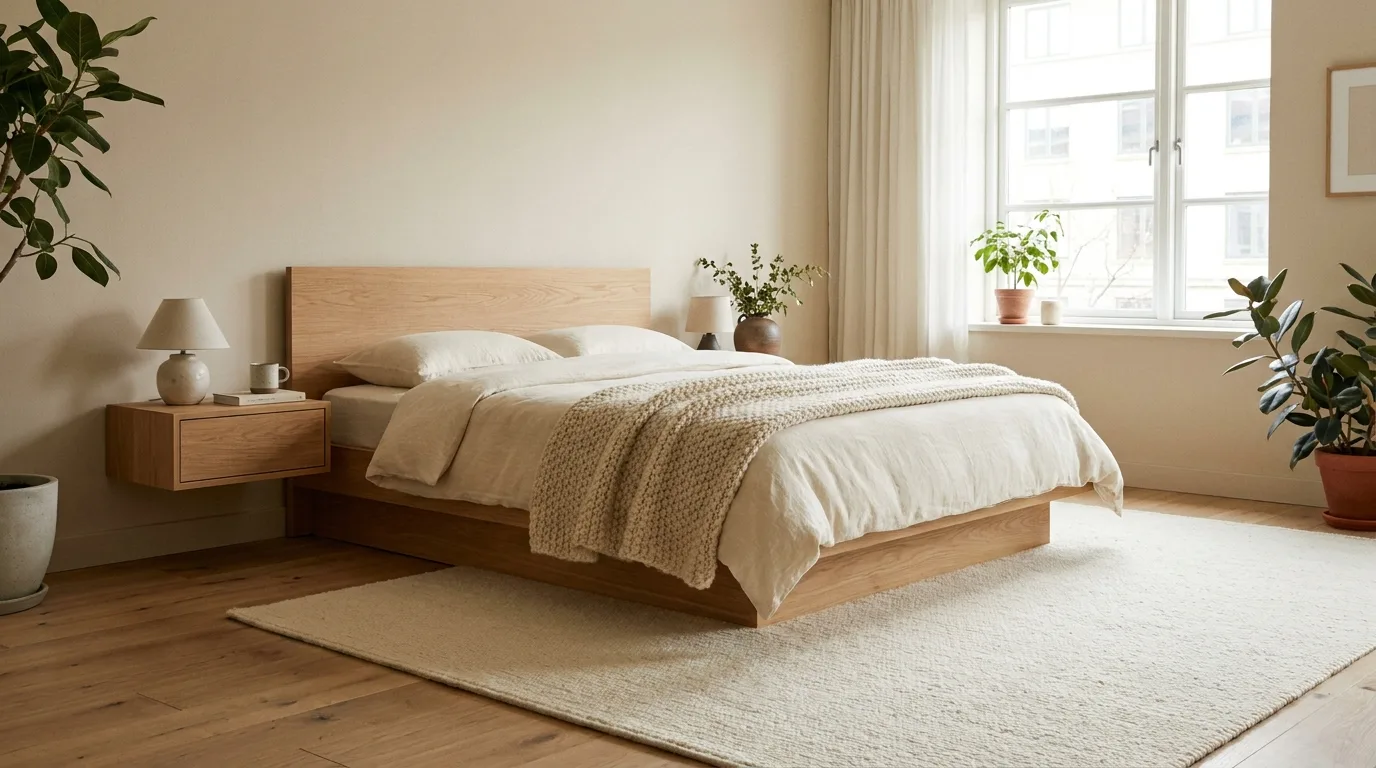
Minimalist decorating is less about having nothing and more about choosing carefully. Instead of filling shelves and dressers with small objects, select a few pieces that genuinely contribute to the room. A framed photograph, sculptural vase, small plant, ceramic bowl, or favorite artwork can provide personality without creating visual clutter. Give each decorative object enough surrounding space to stand out. This negative space is an important part of minimalist composition.
Before adding another accessory, ask whether it serves a purpose, adds meaningful character, or improves the room’s atmosphere. If not, leave the surface clear. This editing process can make even inexpensive furniture look more elevated because the eye has fewer competing details to process.
15. Add Greenery Sparingly
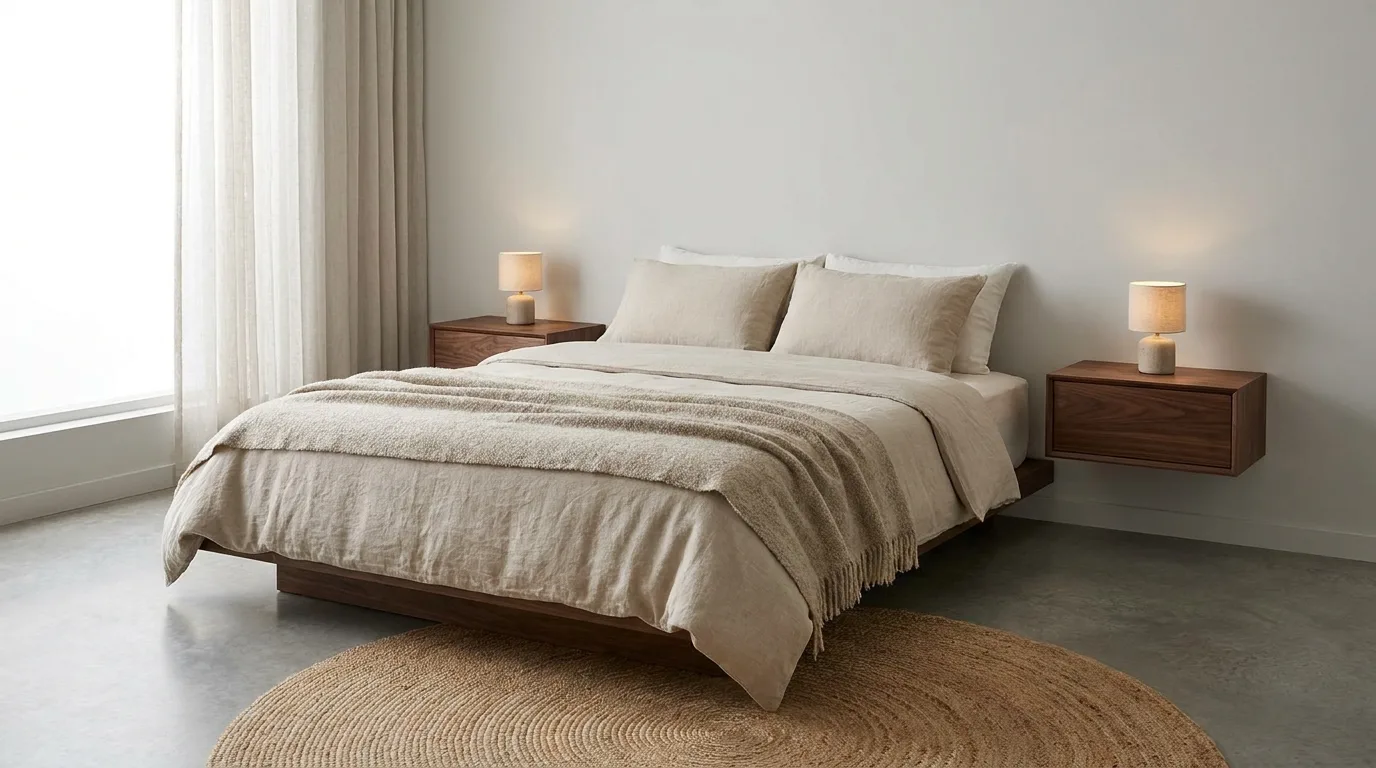
A small amount of greenery can bring life and freshness into a minimalist bedroom without compromising its simplicity. Choose one substantial plant or a couple of small plants rather than creating a dense indoor garden. A simple ceramic planter or natural woven basket keeps the presentation consistent with the room’s understated style. Plants with sculptural foliage can be particularly effective because they add shape and texture without introducing lots of visual colors.
Place greenery where it supports the composition, such as beside a dresser, near a window, or in an empty corner. If natural plants are difficult to maintain, choose a very realistic alternative or focus on dried botanical stems in a simple vase. The goal is a fresh accent, not another collection that requires constant arranging.
16. Finish With Warm, Layered Lighting
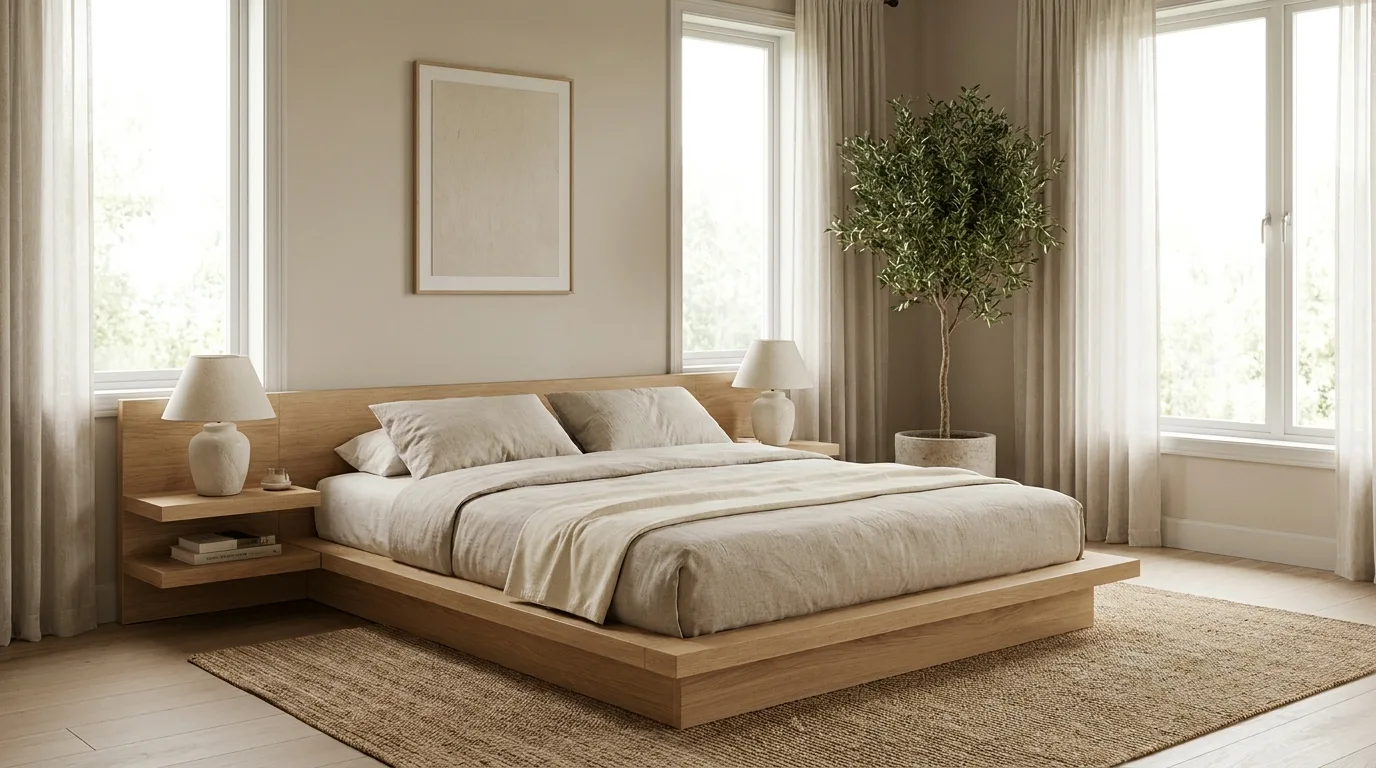
The final ingredient in a successful minimalist bedroom is lighting that makes the space feel comfortable at every hour. Combine a soft ceiling fixture with bedside lamps, wall sconces, or a subtle floor lamp to create layers. Warm-toned bulbs generally make neutral interiors feel more inviting, while dimmable fixtures give you better control over the mood. Keep the shapes of your lamps simple so they complement rather than distract from the bedroom’s main features.
Pay attention to natural light as well. Lightweight curtains can soften bright daylight while maintaining an airy atmosphere. When artificial and natural lighting work together, a minimalist bedroom feels serene, functional, and thoughtfully designed rather than simply sparse.