A small backyard does not have to mean giving up on a beautiful outdoor retreat. With the right layout, furniture, lighting, and landscaping, even a compact patio can become a comfortable escape for morning coffee, evening conversations, weekend meals, or quiet time alone. The key is to make every square foot work while keeping the space visually open and welcoming. Think multifunctional furniture, vertical greenery, layered lighting, and materials that complement your home’s style. Whether you are working with a narrow yard, a tiny concrete slab, or an awkward corner, there are plenty of creative ways to make it feel intentional. These small backyard patio ideas combine practical design with stylish details to help you create an outdoor space that feels bigger, cozier, and far more inviting.
1. Create a Cozy Bistro Patio
A tiny bistro setup can turn even the smallest backyard corner into a charming outdoor destination. Choose a compact round or square table with two lightweight chairs instead of bulky dining furniture. Metal, wood, or weather-resistant woven pieces can all work depending on your home’s style. Position the table near a garden bed, fence, or exterior wall to make the area feel tucked away without wasting valuable floor space. Add a small outdoor rug beneath the set to visually define the patio. A lantern or string lights overhead can make the space especially inviting after sunset. This setup is perfect for morning coffee, casual breakfasts, or an evening glass of something refreshing. When space is limited, keeping the furniture simple helps the patio feel open rather than crowded.
2. Use Built-In Patio Seating
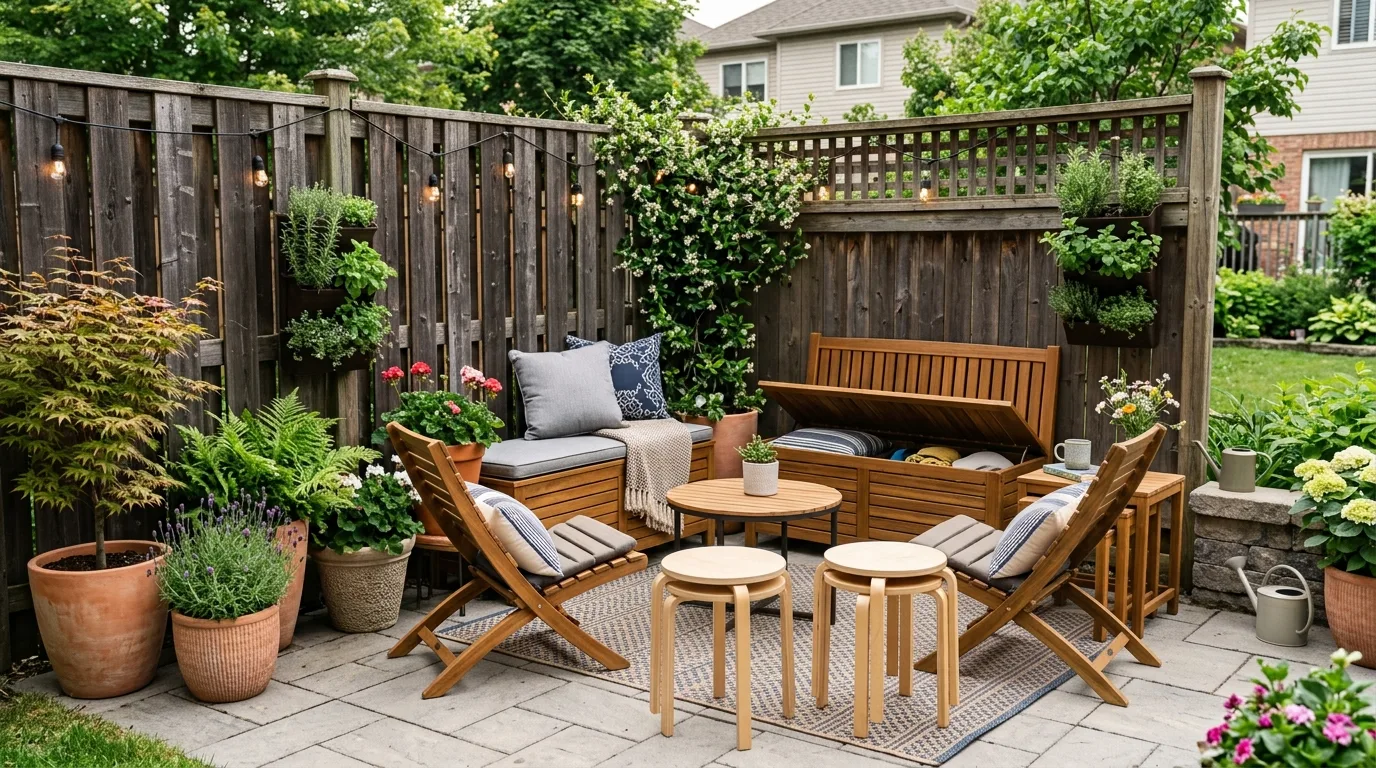
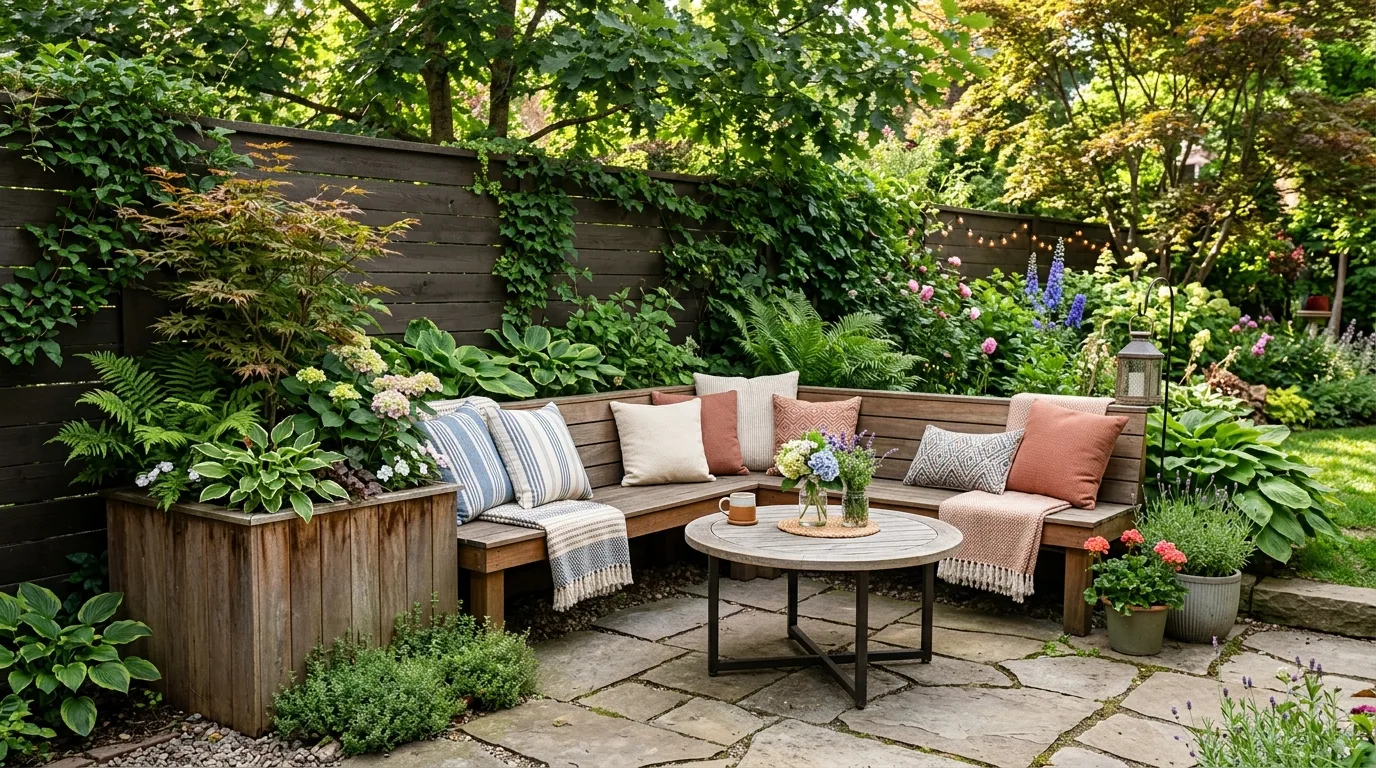
Built-in seating is one of the smartest solutions for a small backyard patio because it uses the perimeter instead of occupying the center. A simple bench can run along a fence or exterior wall, providing plenty of seating without the footprint of several individual chairs. If possible, design the bench with a lift-up seat or drawers underneath for storing cushions, gardening tools, or outdoor accessories. Add weather-resistant cushions and a few compact pillows to make it comfortable. Keep the surrounding furniture minimal so the seating remains the visual anchor. Built-in benches also create a custom appearance that can make a modest patio feel more thoughtfully designed. Whether constructed from wood, masonry, or composite materials, this approach is particularly useful for narrow yards where every inch matters.
3. Add a Vertical Garden Wall
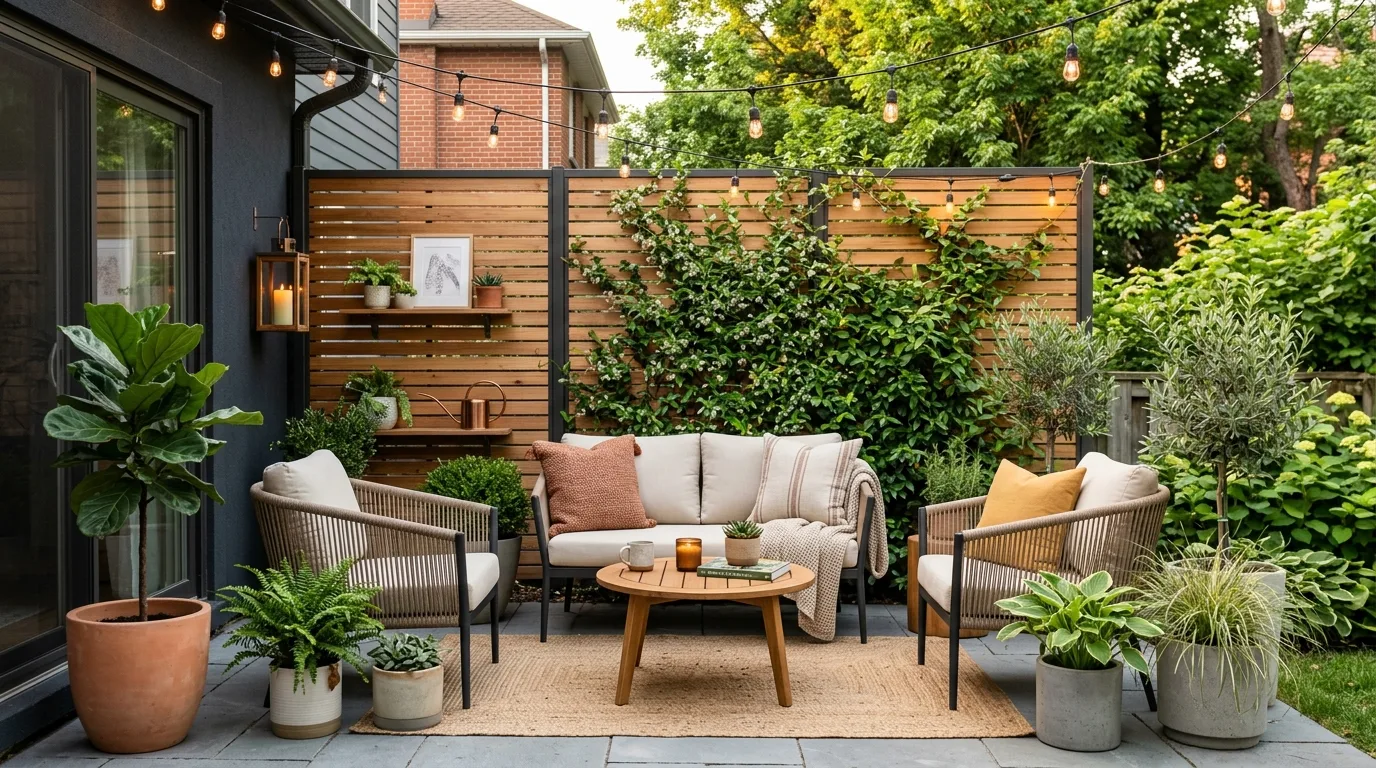
When your backyard patio lacks room for traditional garden beds, look upward. A vertical garden can bring lush greenery into a small space without taking much floor area. Use a trellis, wall-mounted planters, hanging pots, or a narrow tiered plant stand to create a living backdrop. Choose plants according to the amount of sunlight the patio receives, and combine different heights and textures for a fuller appearance. Herbs can make the garden useful as well as decorative, while flowering plants add seasonal color. A vertical planting wall can also soften a plain fence or concrete surface and create a stronger sense of privacy. Keep the arrangement organized rather than filling every available inch. A carefully edited collection of plants will make the patio feel fresh and intentional without becoming visually overwhelming.
4. Design a Narrow Patio Lounge
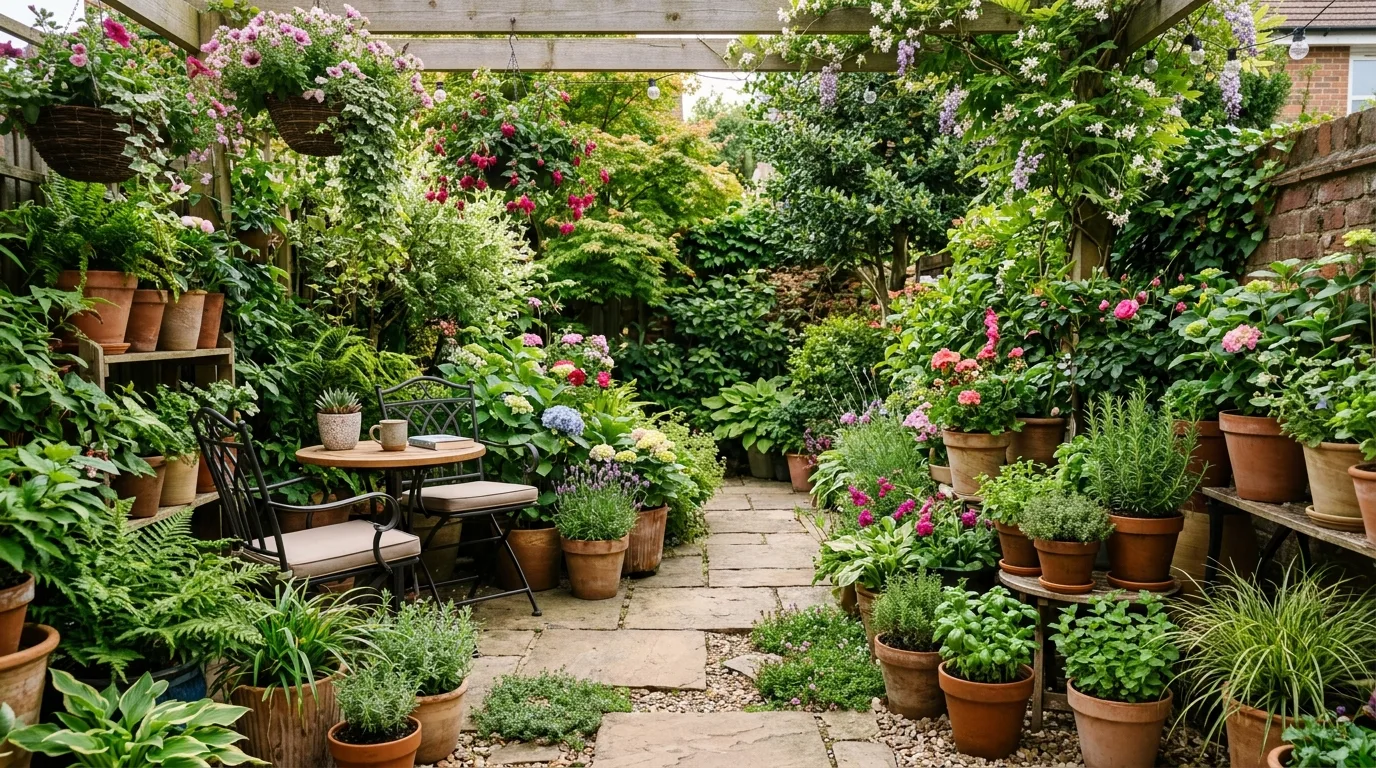
A narrow backyard can still accommodate a comfortable lounge area if you choose furniture with the proportions of the space in mind. Instead of deep outdoor sofas, look for a slim loveseat, armless chairs, or a built-in bench. Place the seating along the longest wall and keep the center walkway clear. A small round coffee table can provide a useful surface without creating sharp corners that interrupt movement. Use cushions in light, coordinated tones to make the area feel airy. Outdoor curtains or a trellis can provide privacy while adding vertical interest. This arrangement works particularly well for long, narrow yards where traditional patio furniture can feel oversized. The goal is not to fill the space but to establish one comfortable zone where people can sit, talk, and relax.
5. Make a Small Fire Pit Patio
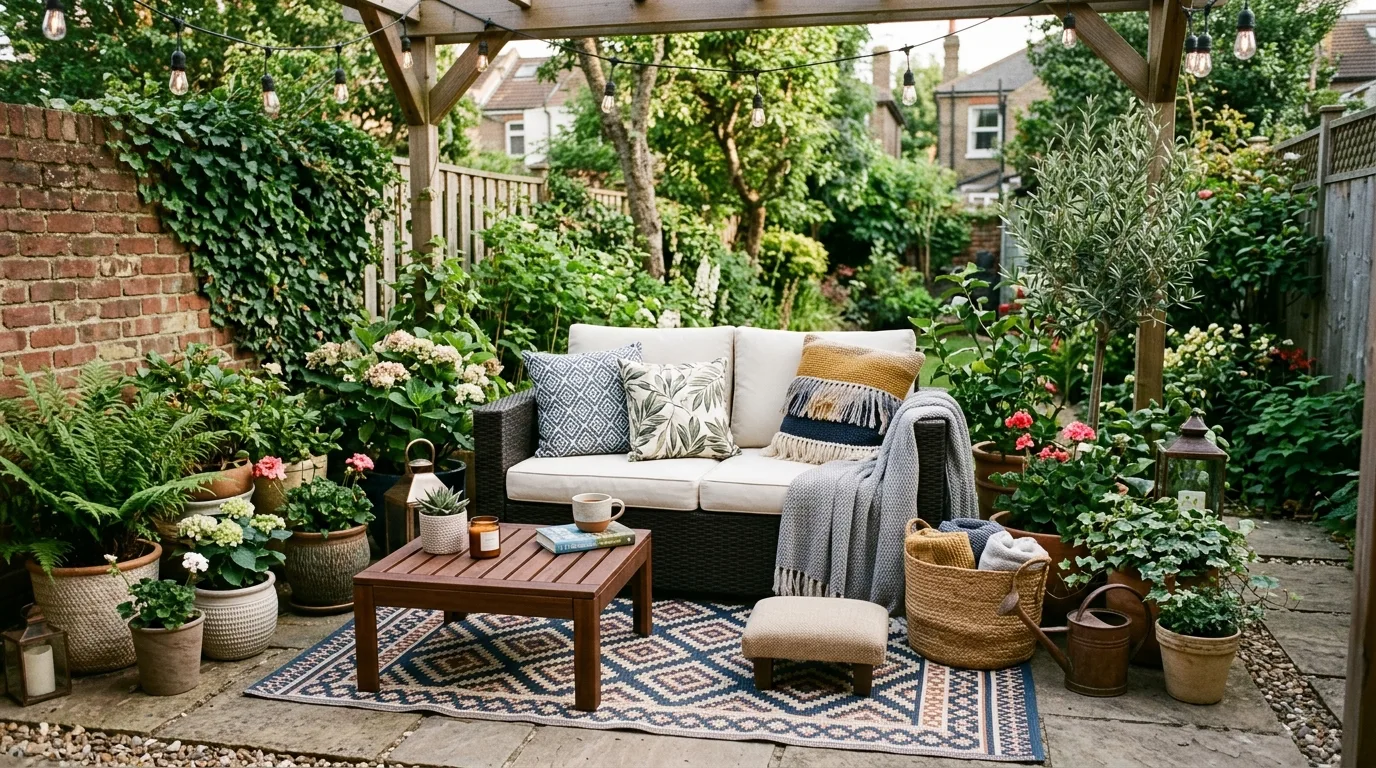
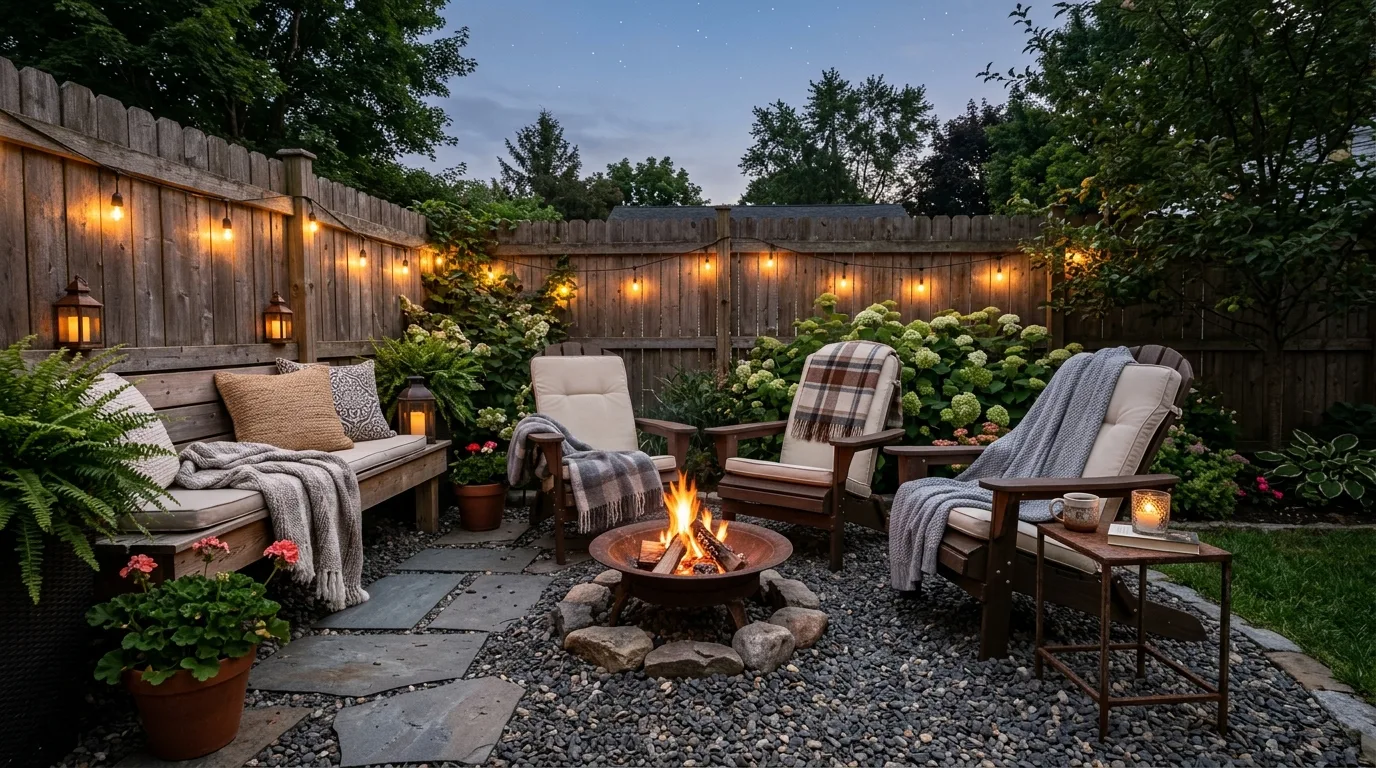
A compact fire pit can become the centerpiece of a small backyard patio and extend the time you can comfortably spend outdoors. Choose a fire pit designed for the available space and position it with appropriate clearance from walls, structures, furniture, and combustible materials. Surround it with two or three compact chairs or a built-in bench rather than a full seating set. Keep the rest of the patio simple so the fire feature remains the focal point. Gravel, pavers, or heat-resistant outdoor flooring can help define the area. Add a small side table for drinks and blankets for cooler evenings. Always follow local regulations and the manufacturer’s safety requirements when installing or using a fire feature. With thoughtful placement, a small fire pit can create a warm, intimate gathering spot.
6. Try a Minimalist Concrete Patio
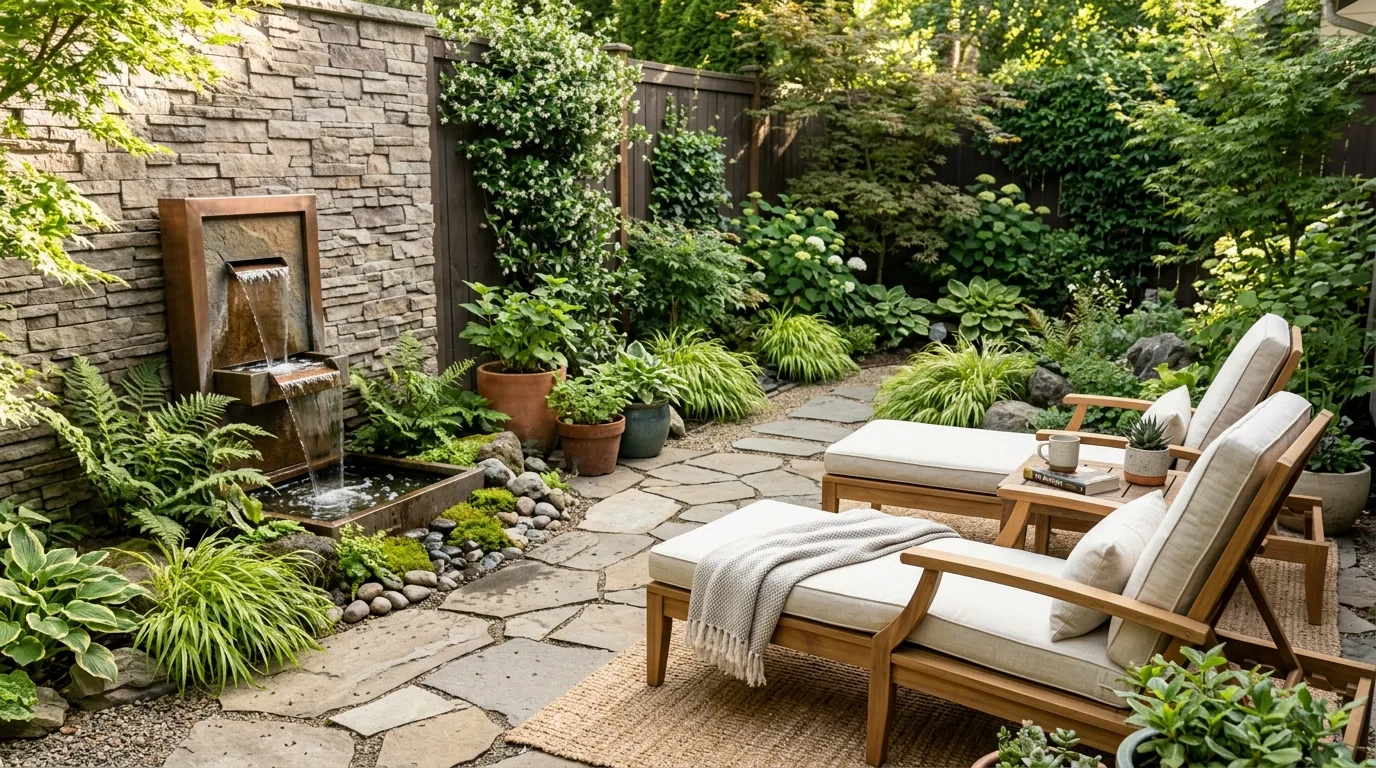
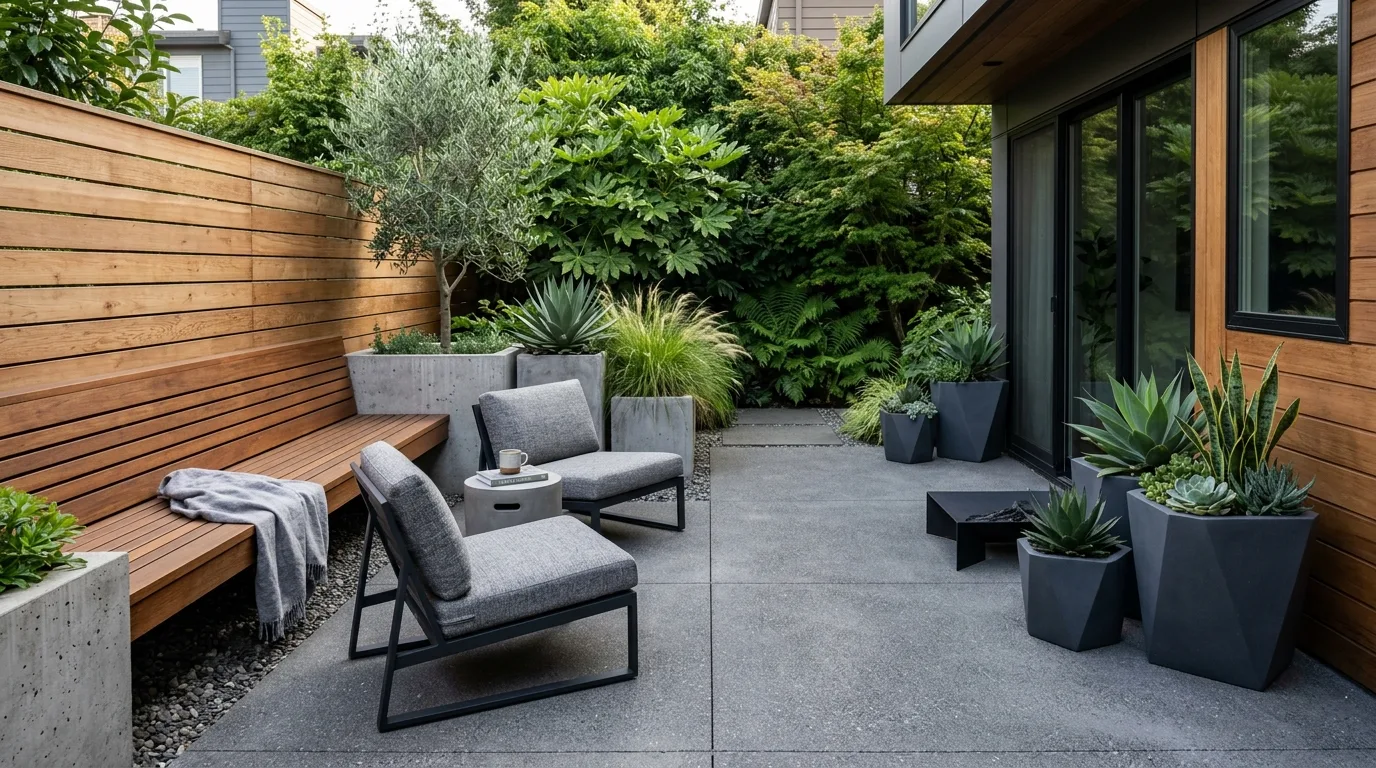
For a modern backyard, a simple concrete patio can provide a clean foundation without visually overwhelming a small yard. Large-format concrete pavers or a smooth slab can make the floor pattern feel less busy, which helps a compact space appear more spacious. Pair the neutral surface with streamlined furniture, such as a slim bench, simple lounge chairs, and a small outdoor table. Introduce warmth through timber accents, woven textures, potted greenery, or soft cushions. Keep decorative accessories limited so the clean geometry remains visible. A few large planters usually work better than many tiny pots in a minimalist setting. This style is especially effective when the patio connects directly to the house because the simple materials create a seamless transition between indoor and outdoor spaces.
7. Add String Lights for Evening Ambiance
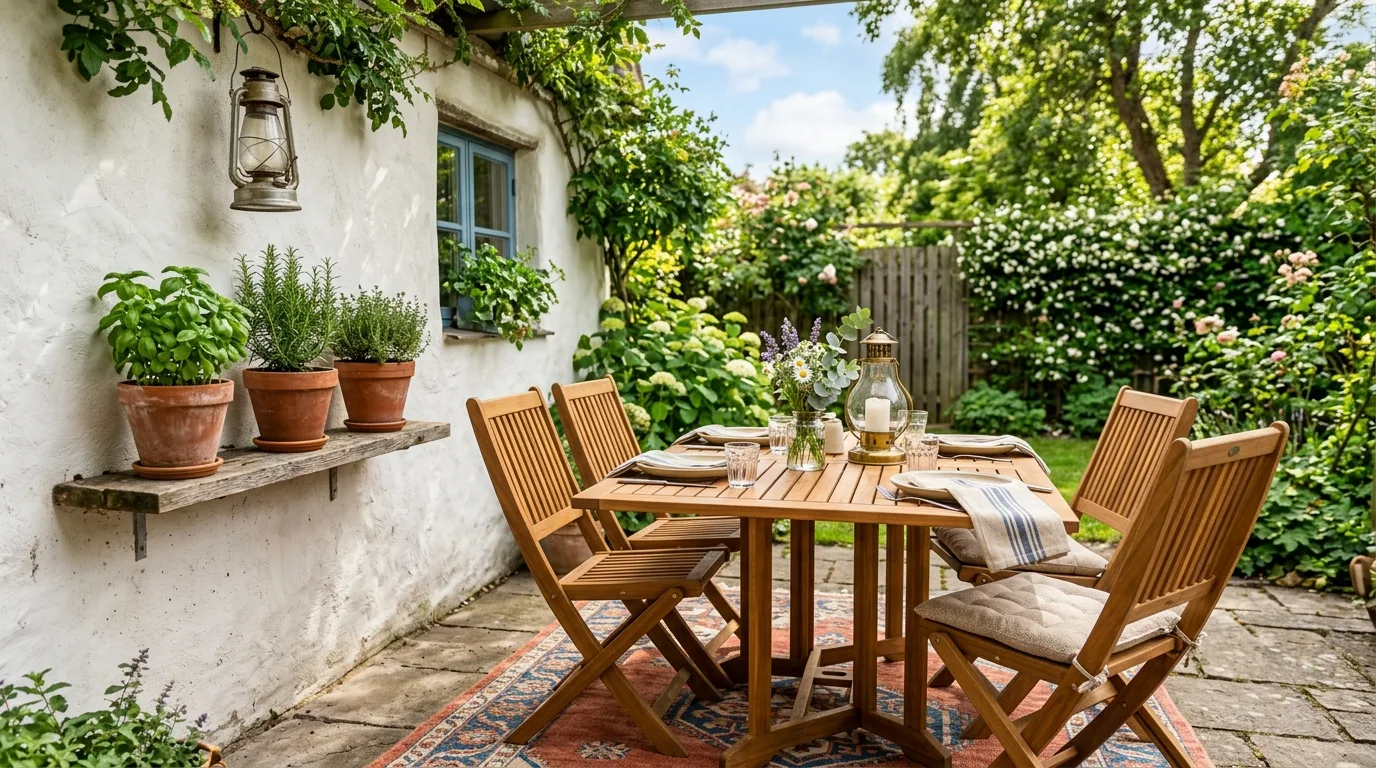
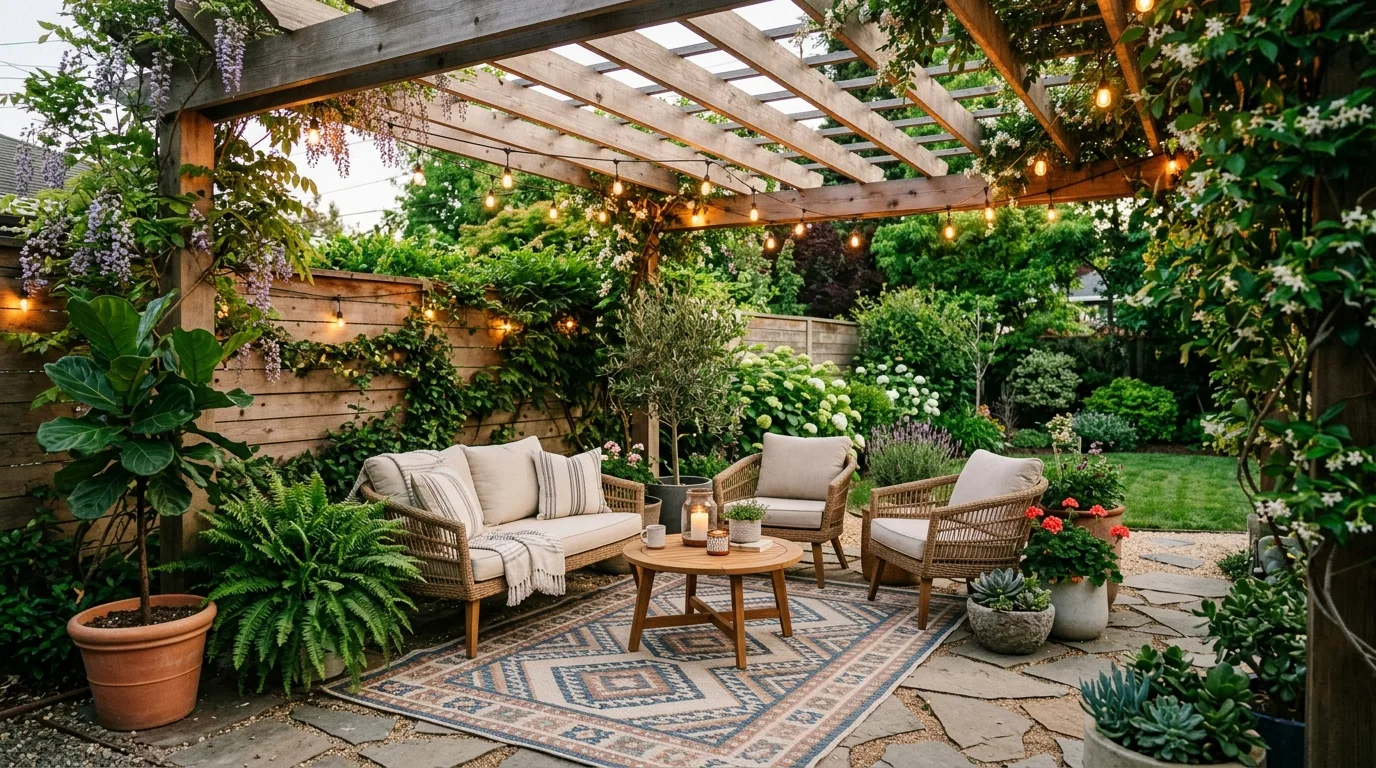
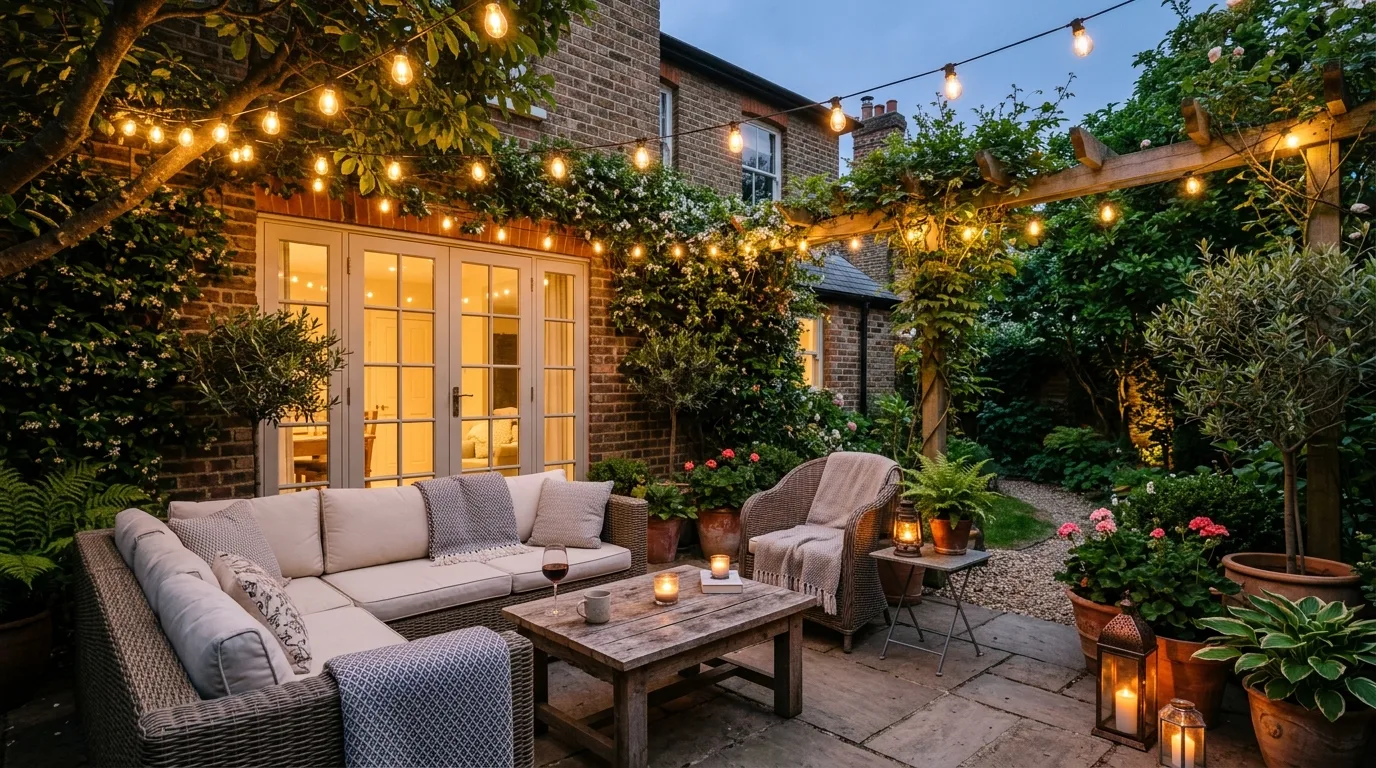
Good lighting can make a small backyard patio feel like a completely different space after dark. String lights are an affordable option that adds warmth without requiring bulky fixtures. Attach them between the house, fence posts, a pergola, or sturdy outdoor poles to create a soft overhead canopy. Keep the lines neat and choose a simple arrangement rather than covering every surface. You can supplement them with lanterns, wall lights, or small solar path lights for layered illumination. Warm-toned lighting generally creates a relaxed atmosphere that works well for outdoor dining and lounging. Because lighting draws the eye upward, overhead strands can also make the patio feel more dimensional. Use outdoor-rated products and install them according to their safety instructions for reliable long-term use.
8. Build a Pergola Over the Patio
A small pergola can give a compact patio architectural definition while providing a framework for shade, lighting, and climbing plants. Choose a scaled-down design with simple posts and open rafters so it does not make the yard feel enclosed. You can train flowering vines across the top, hang string lights from the beams, or add lightweight outdoor curtains for privacy. If the patio receives strong afternoon sun, consider an appropriate shade canopy designed for outdoor use. Keep furniture proportional to the structure, using a loveseat, two chairs, or a small dining set rather than trying to create a full outdoor room. A pergola works especially well in small backyards because it visually establishes a destination, making the patio feel intentional rather than like an isolated patch of paving.
9. Use a Corner Patio Layout
An unused backyard corner can become one of the most efficient locations for a small patio. Place an L-shaped bench or two compact chairs along the boundaries, leaving the center open for a small table or fire-safe feature where appropriate. This arrangement takes advantage of space that might otherwise remain unused while naturally creating a cozy enclosure. Add a tall planter in one corner to soften hard edges and introduce greenery without consuming much floor area. A corner layout also makes privacy easier because existing fences or walls can serve as a backdrop. Choose a simple paving pattern that follows the shape of the seating area rather than extending across the entire yard. This makes the patio feel like a deliberate outdoor room while preserving valuable garden space around it.
10. Create a Small Outdoor Dining Nook
You do not need a large backyard to enjoy outdoor meals. A compact dining nook can fit a two-person or four-person table against a wall, fence, or patio edge. Look for drop-leaf, folding, or extendable furniture that can be adjusted when you need more room. Stackable chairs are another useful choice because they can be moved or stored when the patio is being used for another purpose. Add a small outdoor runner or rug beneath the table to define the dining zone. Simple tableware, potted herbs, and a lantern can make the area feel inviting without adding clutter. If your patio connects directly to the kitchen, position the dining area nearby to make serving easier. This practical arrangement makes small outdoor dining feel effortless and stylish.
11. Incorporate a Water Feature
A small water feature can introduce sound and movement without requiring a large backyard pond. Consider a compact wall fountain, tabletop fountain, or narrow recirculating feature placed beside the seating area. The gentle sound of moving water can help mask neighborhood noise and make the patio feel more secluded. Choose a design that complements your home’s architecture, whether that means smooth stone, ceramic, metal, or simple concrete. Surround the feature with a few carefully selected plants rather than creating a crowded display. A water feature is most effective when it becomes a subtle focal point rather than dominating the patio. Before installing one, consider access to power, water, drainage, and maintenance. A small, well-positioned feature can add a surprisingly relaxing dimension to even the tiniest outdoor retreat.
12. Layer Potted Plants Around the Patio
Potted plants are an easy way to bring landscaping into a small patio without committing to permanent garden beds. Use a combination of floor planters, railing pots, hanging containers, and one taller statement plant to create layers. Group containers in odd-numbered clusters and vary their heights for a more natural appearance. Choose pots that complement the patio furniture and house exterior rather than introducing too many competing colors. Fragrant herbs or flowering plants can make the space more enjoyable, while evergreen options provide structure throughout the year where the climate allows. Keep pathways clear and avoid placing too many containers around seating areas. The best small patio landscaping feels lush but organized, allowing plants to frame the space while preserving enough room for comfortable movement.
13. Install a Privacy Screen
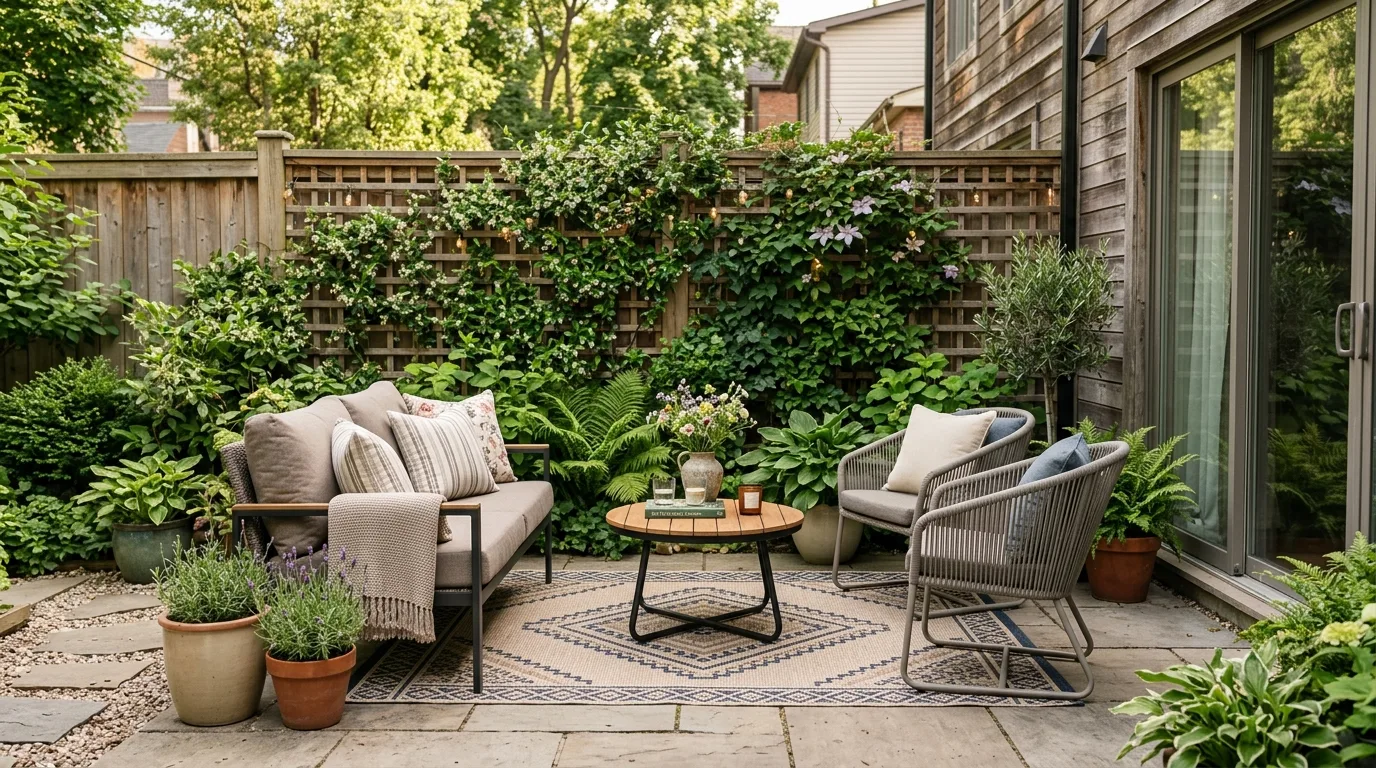
A privacy screen can make a small backyard patio feel more like a private escape, especially when neighboring homes are close by. Use vertical wood slats, a decorative metal panel, outdoor curtains, bamboo-style screening, or a trellis covered with climbing plants. Choose a design that filters views without making the patio feel boxed in. A partially open screen can provide privacy while still allowing sunlight and airflow through the space. You can also combine the screen with tall planters to create a softer, more natural boundary. Keep the screen proportional to the patio and avoid overly dark or solid surfaces in very small spaces. When carefully designed, privacy elements can do double duty as attractive architectural features, giving the backyard a finished and comfortable appearance.
14. Choose Multifunctional Furniture
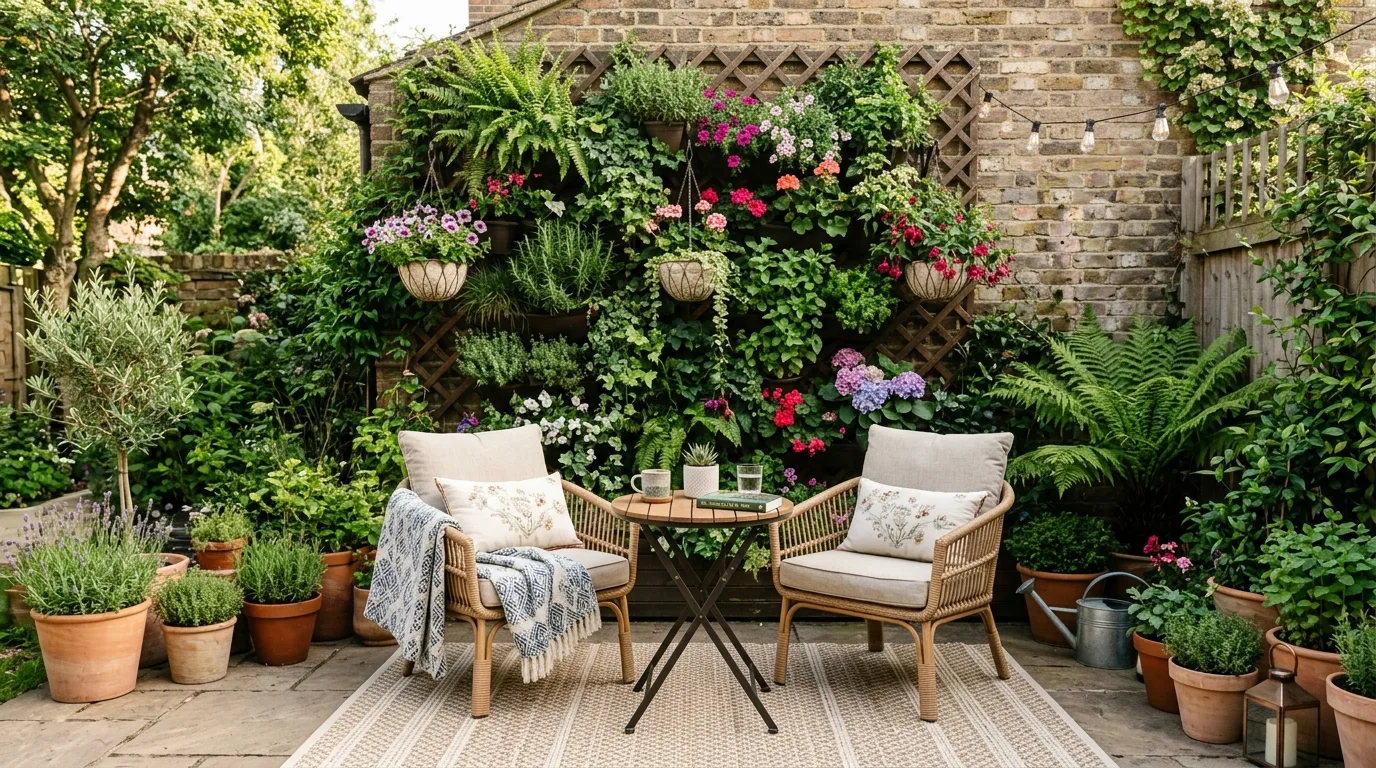
Multifunctional furniture is one of the most valuable tools for maximizing a small backyard patio. Look for benches with hidden storage, stools that double as side tables, folding dining sets, nesting tables, or ottomans that can serve as extra seating. A compact coffee table with a lift-top surface can provide storage and workspace while keeping the floor clear. Choose pieces that can be moved easily when the patio needs to serve a different purpose. For example, two stools can function as seating during a gathering and become plant stands when you want more room. Avoid buying furniture simply because it is attractive; consider how many jobs each piece can perform. A carefully chosen collection of versatile furniture can make a tiny patio feel significantly more functional.
15. Add an Outdoor Rug and Soft Textiles
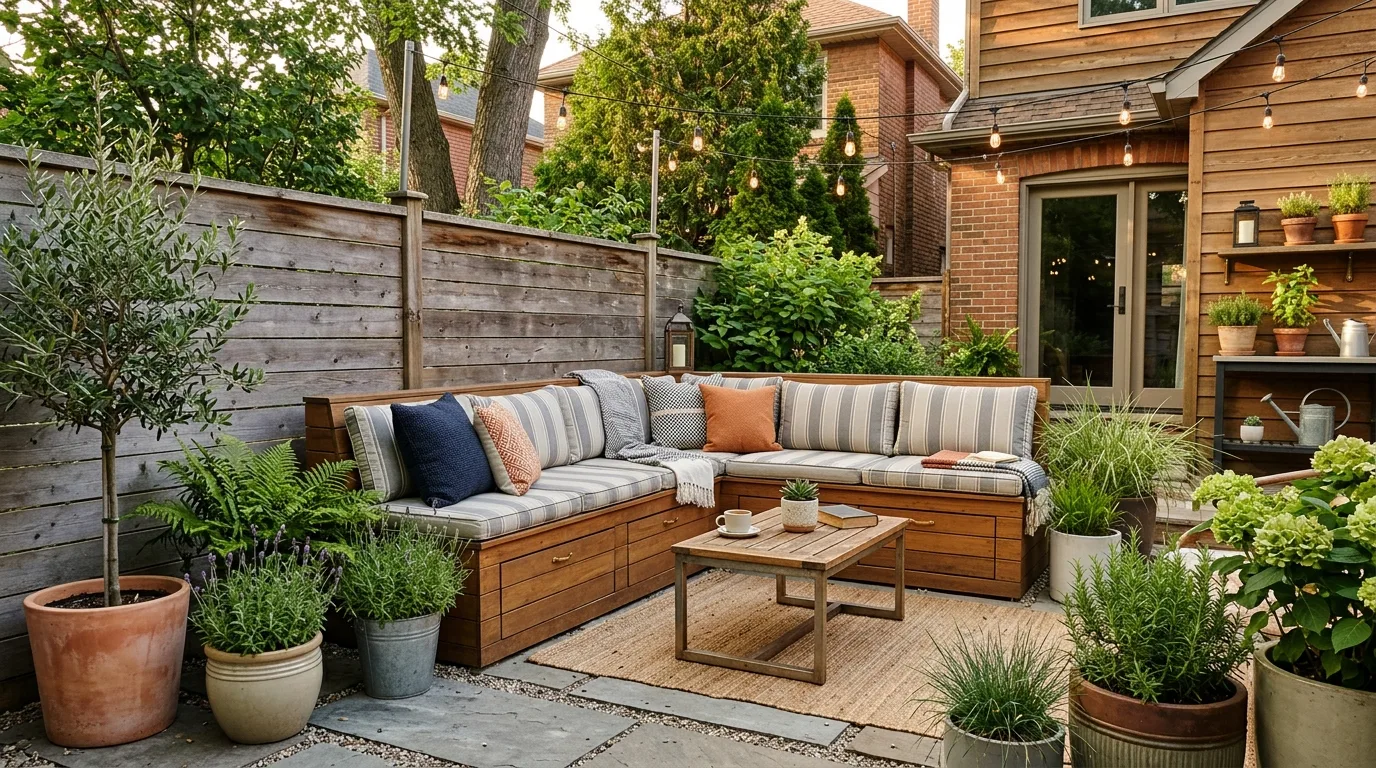
An outdoor rug can instantly make a small patio feel like a finished room. Choose a weather-resistant rug that is appropriately sized for the seating or dining zone, then layer it with cushions and a few washable outdoor pillows. Keeping the textile palette coordinated helps visually connect separate furniture pieces and creates a stronger sense of design. Light patterns can add personality, while subtle neutral textures can make a modern patio feel calm and sophisticated. Avoid choosing a rug that is so large it covers every inch of paving; leaving a visible border helps the patio retain an open appearance. Soft textiles also make hard surfaces more comfortable and inviting. When the weather changes, store removable cushions and textiles somewhere dry to extend their lifespan.
16. Create a Cozy Backyard Reading Retreat
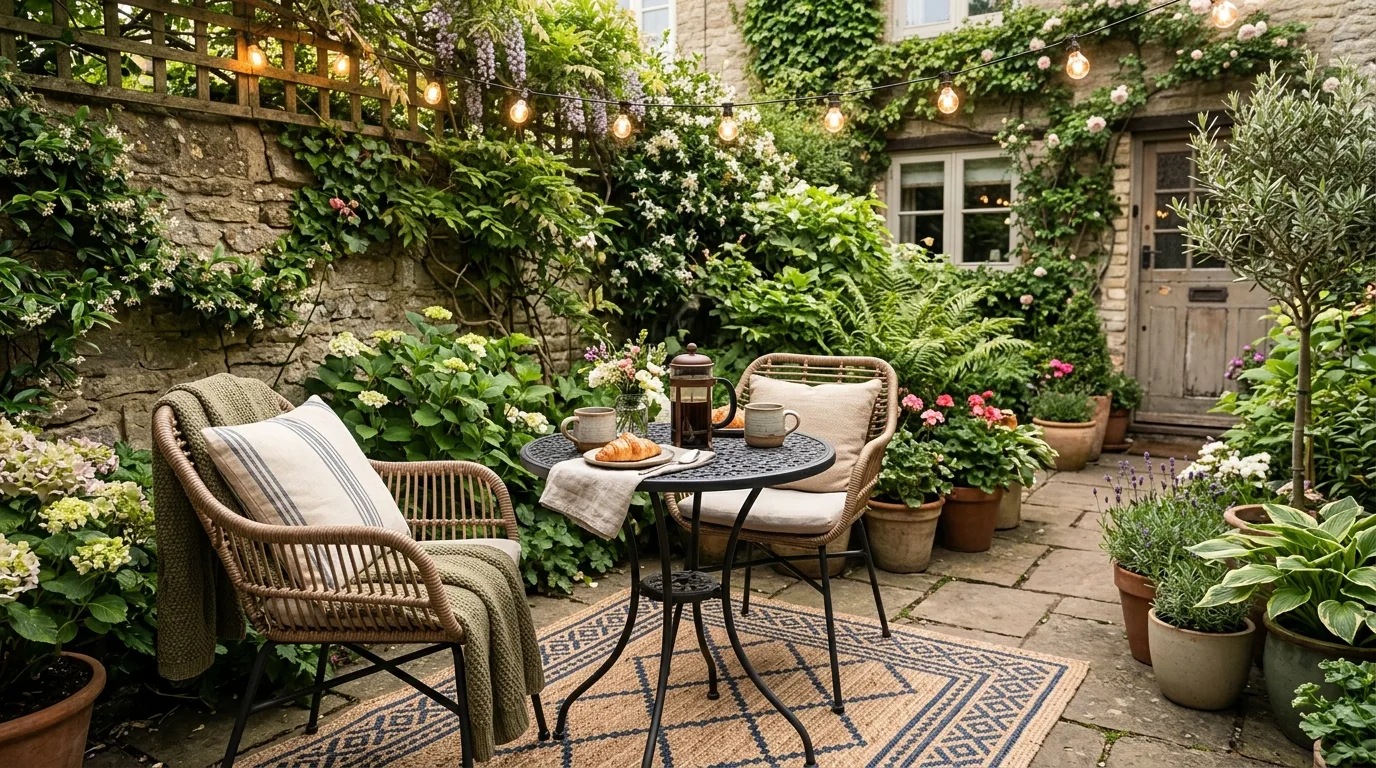
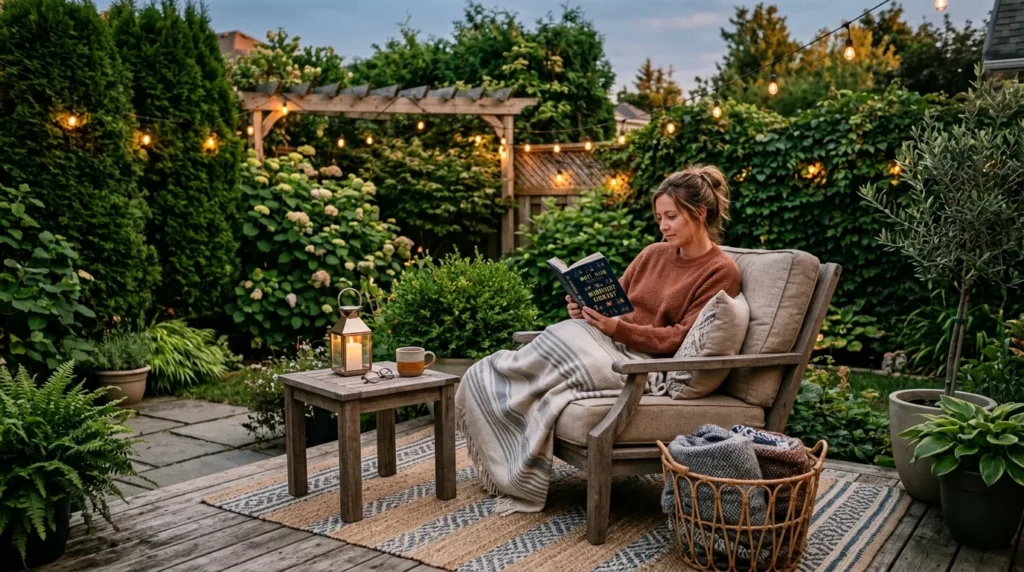
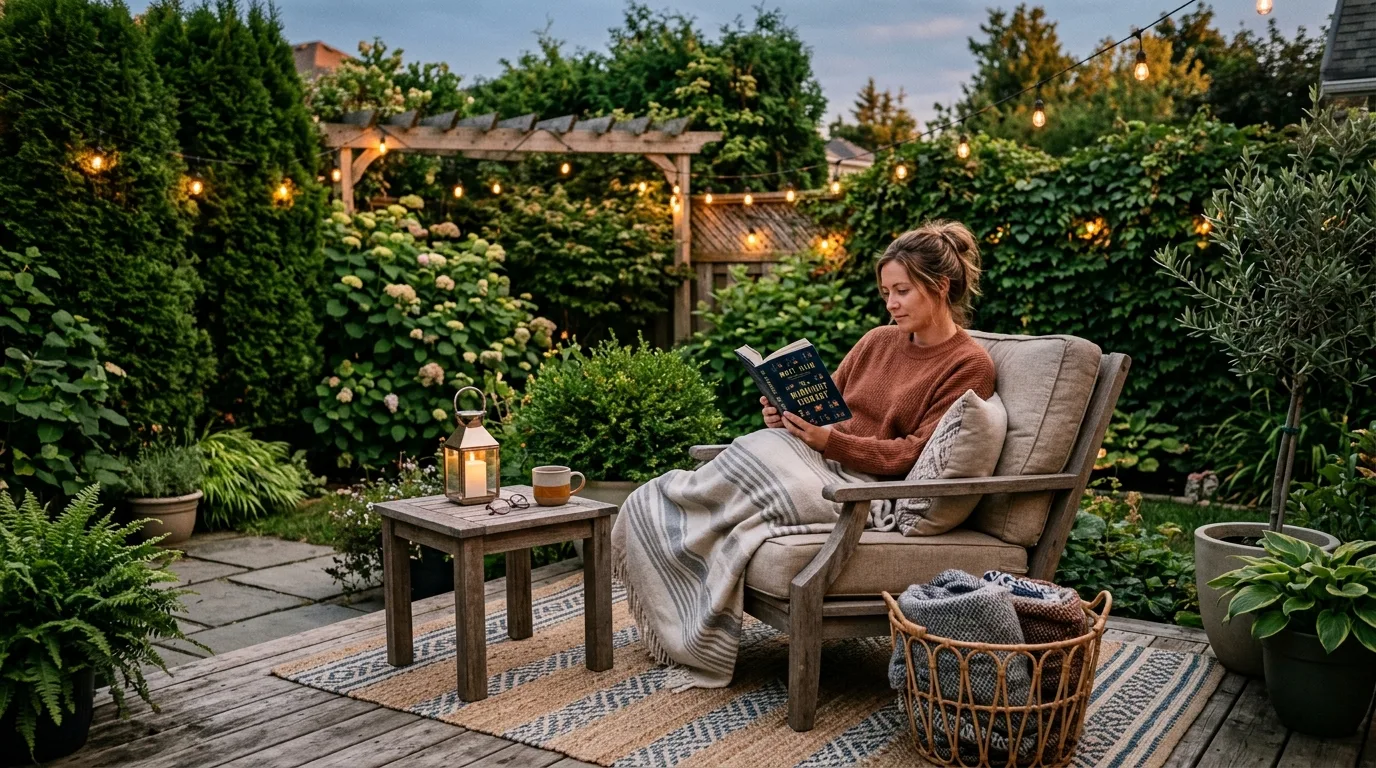
Transform a small patio into a personal reading retreat with just a comfortable chair, compact side table, and a few carefully selected plants. Choose a supportive outdoor lounge chair or cushioned bench where you can settle in for an hour with a book. Add a small table for coffee, tea, or a reading lamp, and keep a weather-resistant basket nearby for blankets. Place the seating near greenery or a privacy screen to create a sense of separation from the rest of the yard. Soft outdoor lighting makes the space useful in the evening, while a small rug can visually anchor the arrangement. Because this patio has a single purpose, you can keep the design simple. A comfortable seat and peaceful surroundings are often all you need for a genuinely restorative outdoor escape.
Final Thoughts
The best small backyard patio is not the one with the most furniture or decorations; it is the one designed around how you actually want to use the space. Start with one clear purpose, choose appropriately scaled pieces, and use vertical space whenever possible. Built-in seating, layered plants, smart lighting, privacy screens, and multifunctional furniture can all help a compact patio feel more useful without making it crowded. Whether you prefer a modern concrete lounge, a leafy garden nook, or a cozy evening retreat, thoughtful planning can turn even a tiny backyard into a place you look forward to using every day.