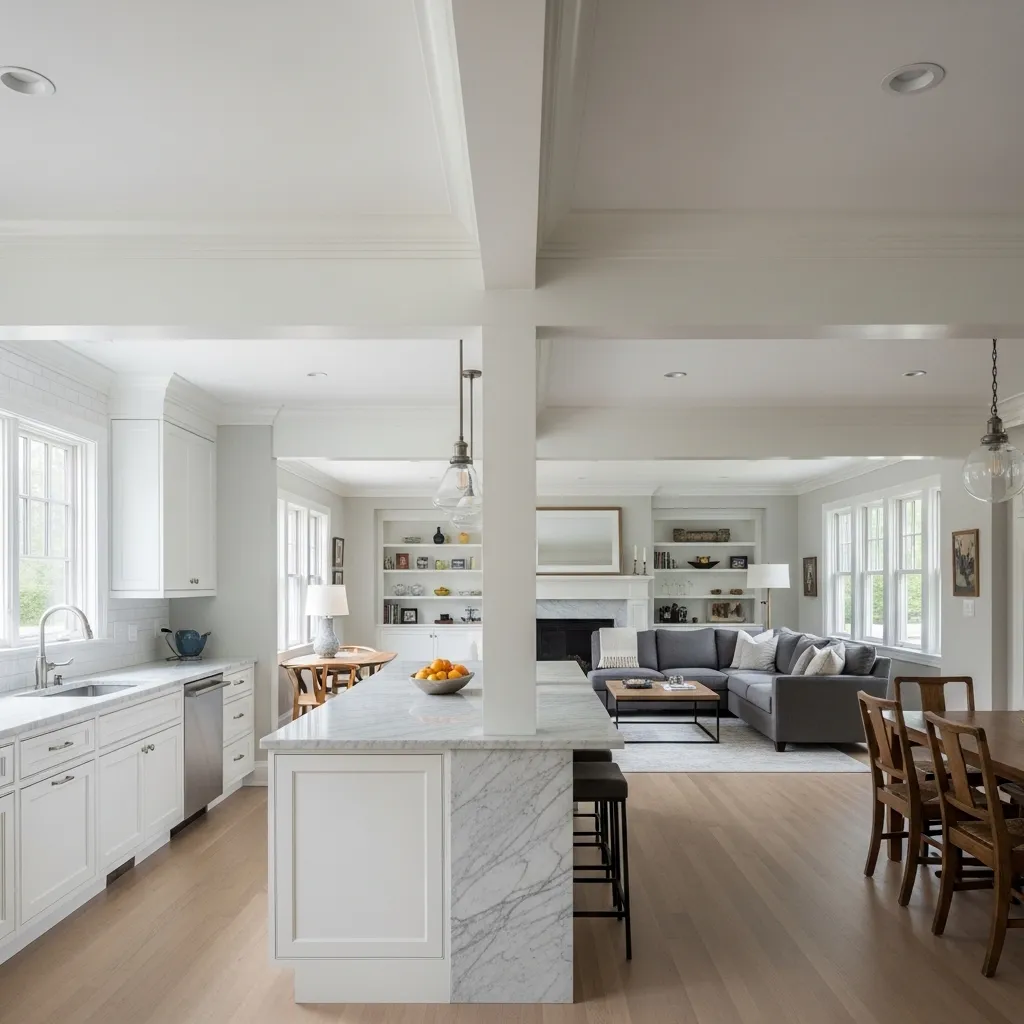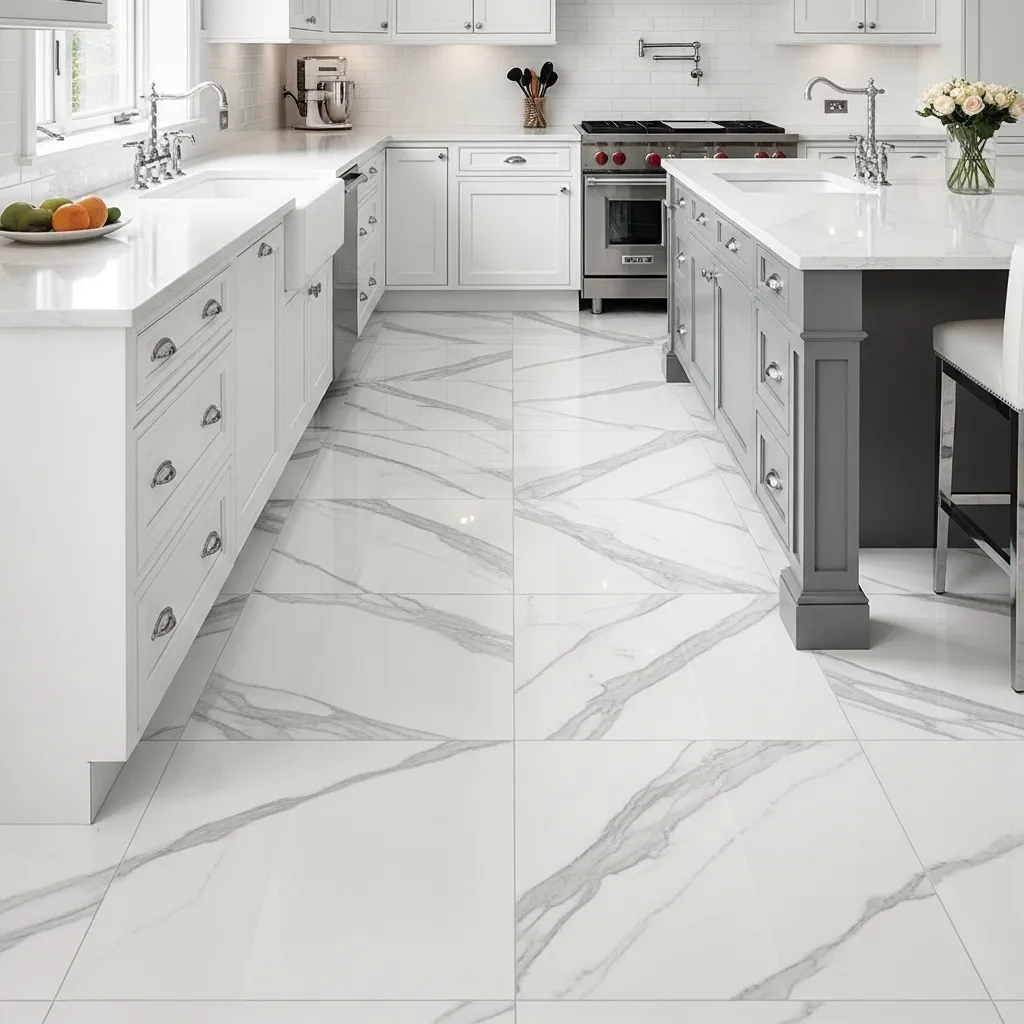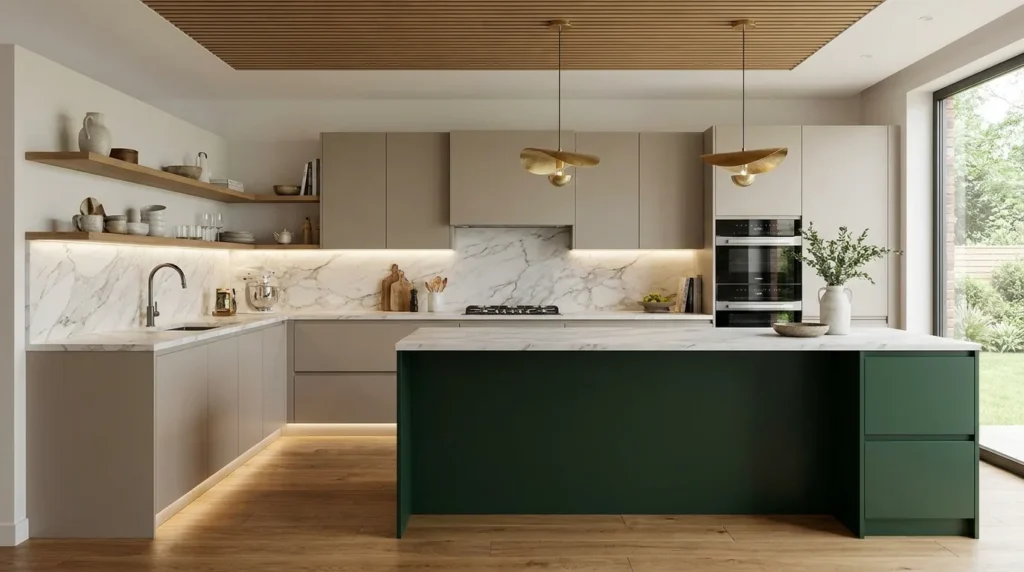
Two-tone kitchen cabinets are an easy way to give a modern kitchen more personality, depth, and visual balance without making the room feel overly complicated. By combining two cabinet colors or finishes, you can highlight an island, define the lower cabinets, brighten upper storage, or create a subtle contrast between different areas of the kitchen. The best combinations can work with everything from warm farmhouse interiors to sleek contemporary spaces, and they can be adapted to both large and small kitchens. Whether you love classic white with natural wood, dramatic black with light cabinetry, or soft neutral shades, there is a two-tone cabinet idea to suit your style. These kitchen cabinet combinations also make it easier to introduce color while keeping the overall design cohesive. Explore these ideas for inspiration before choosing the perfect palette for your own stylish modern kitchen.
1. White Upper Cabinets with Natural Wood Lower Cabinets
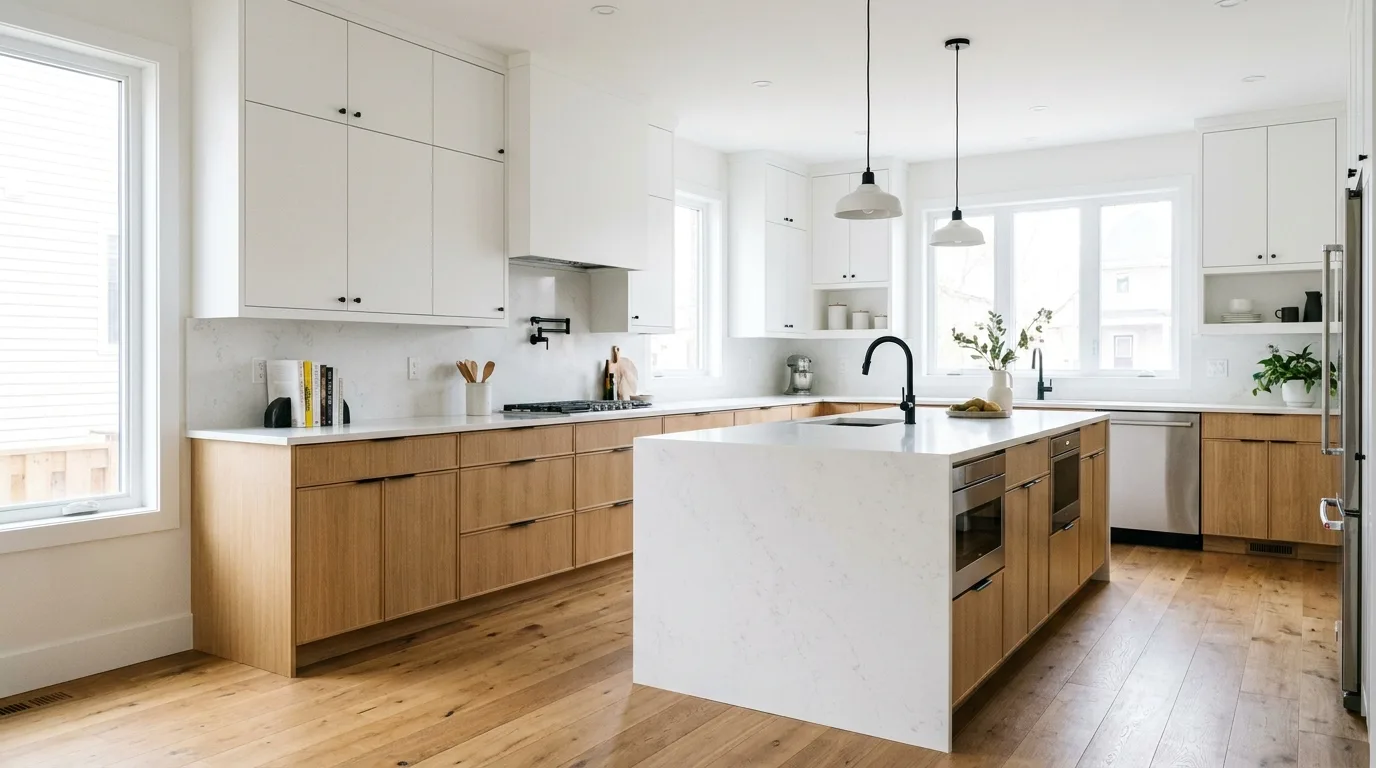
White upper cabinets paired with natural wood lower cabinets create a warm, bright, and timeless kitchen combination. The white cabinetry keeps the upper half of the room visually light, while wood adds texture and warmth around the work areas. This approach works particularly well in kitchens with limited natural light because the white surfaces help reflect available daylight. Choose oak, walnut, maple, or another wood finish depending on whether you prefer a light Scandinavian appearance or a richer contemporary look. A simple white backsplash can connect both cabinet colors, while black or brushed metal hardware adds definition. This two-tone kitchen design is especially useful when you want a modern space that still feels welcoming and connected to natural materials.
2. Navy Blue Island with White Cabinets
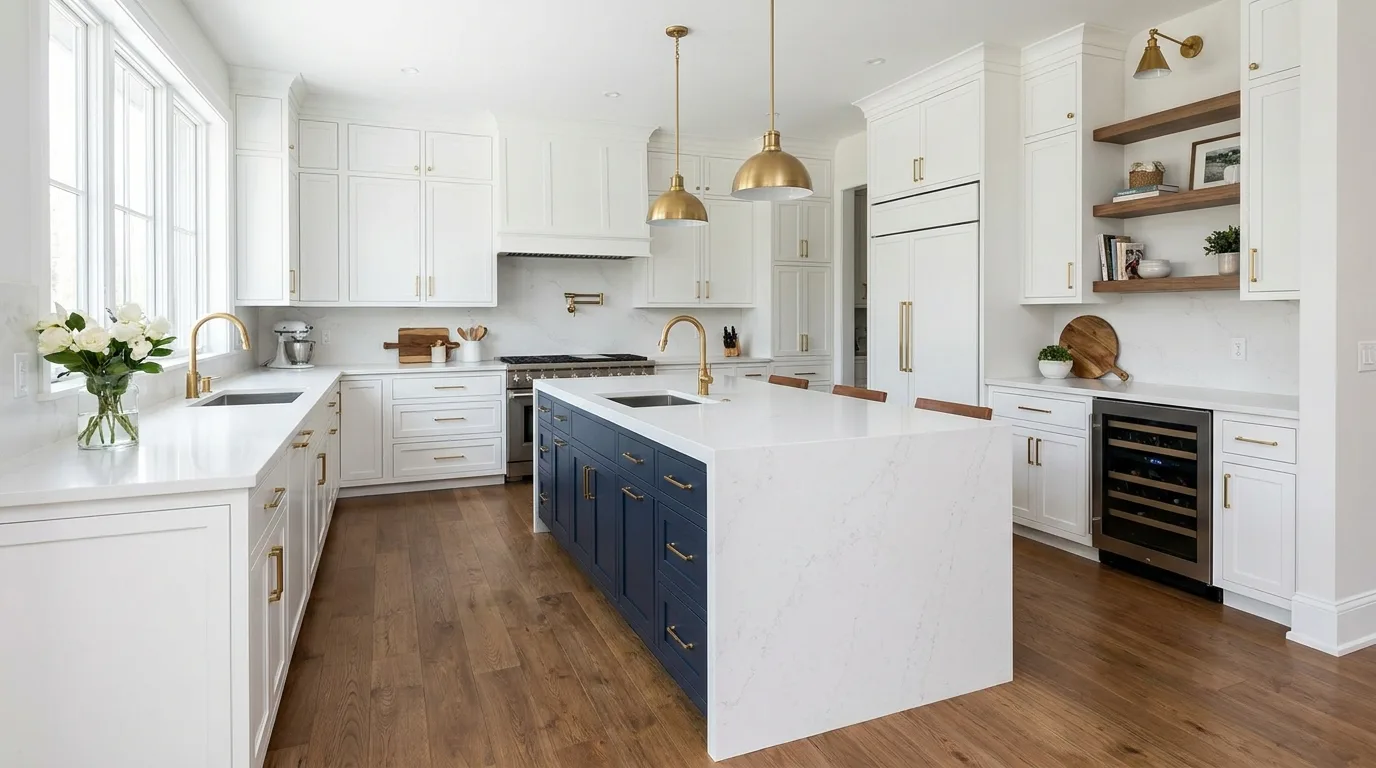
A navy blue kitchen island can become the focal point of a room filled with crisp white cabinets. Rather than changing the color of every cabinet, using navy only on the island creates contrast while maintaining a clean overall appearance. Navy works beautifully with white quartz countertops, marble-inspired surfaces, brass hardware, and warm wood flooring. For a more contemporary kitchen, consider a simple slab-door island in deep navy with minimal hardware. If the kitchen has an open-plan layout, the darker island can also visually anchor the cooking and dining zones. This combination is versatile because navy feels colorful without being overly bright, making it a practical choice for homeowners who want personality while keeping their kitchen sophisticated.
3. Black Lower Cabinets with Warm White Uppers
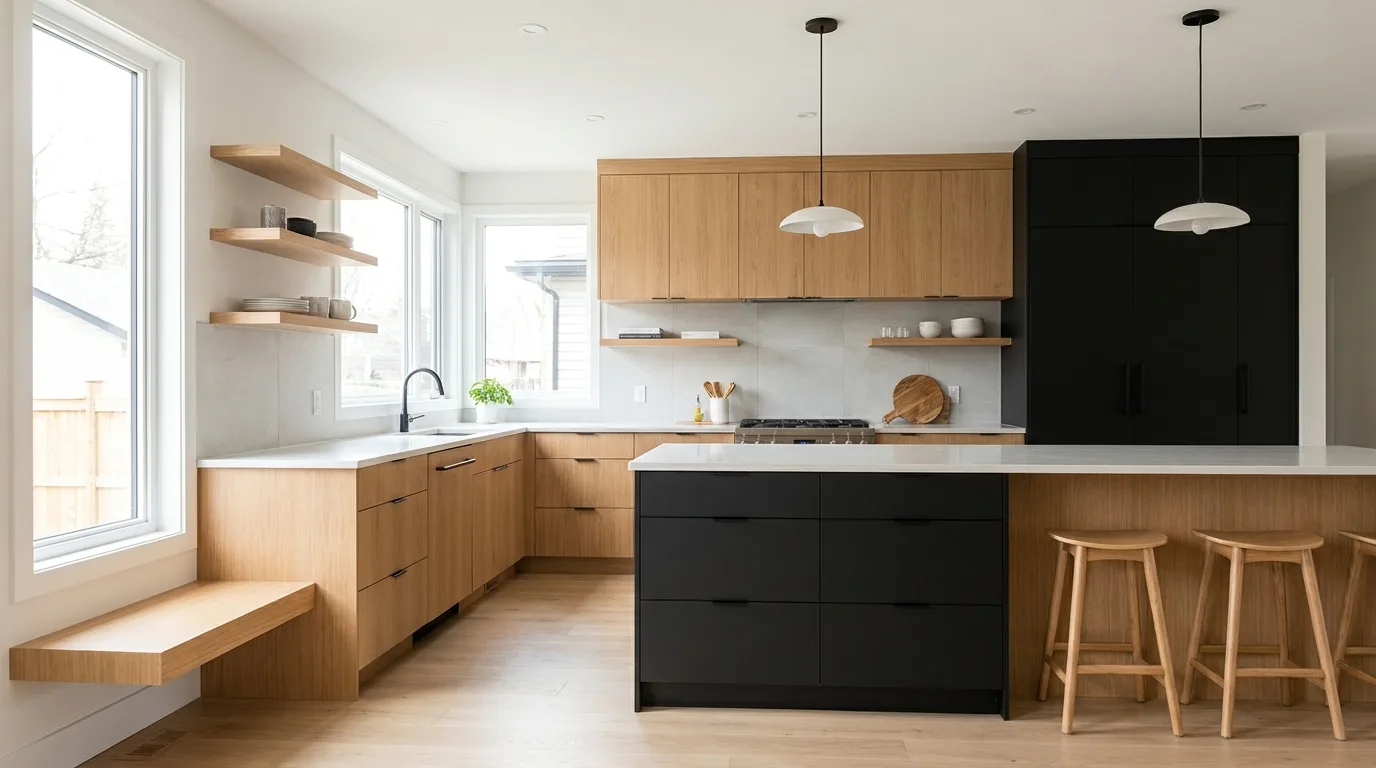
Black lower cabinets and warm white upper cabinets create a sophisticated contrast that feels modern without becoming too stark. Instead of using a cool, brilliant white, choose an off-white, ivory, or creamy shade to soften the transition between the two tones. Matte black lower cabinets can provide a strong foundation, while the lighter uppers keep the room from feeling visually heavy. This palette pairs especially well with natural wood accents, light stone countertops, and warm metallic hardware. Consider carrying the black finish into a range hood, pendant lights, or window frames for a coordinated look. The result is a kitchen with clear visual structure, where the darker lower section grounds the room and the lighter upper section maintains an airy atmosphere.
4. Sage Green Cabinets with Cream Cabinets
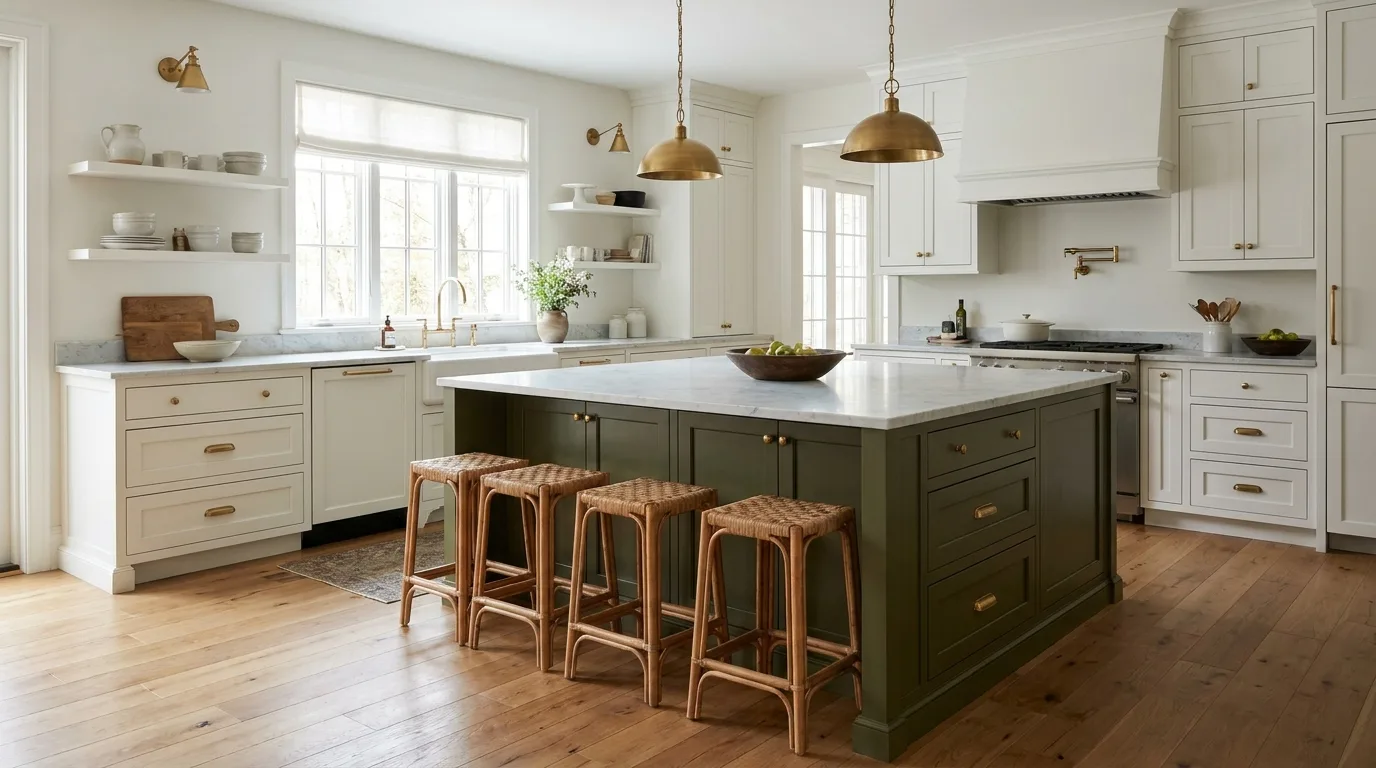
Sage green and cream make a calming two-tone combination for a kitchen inspired by nature. Sage green can be used on the base cabinets or island, while cream cabinetry on the upper section keeps the room bright and relaxed. The muted quality of sage makes it easier to introduce color without overwhelming the rest of the design. Natural oak shelves, woven accessories, aged brass handles, and stone countertops can reinforce the organic character of the palette. This combination is particularly attractive in kitchens with traditional or transitional details because it blends color with classic materials. For a modern interpretation, choose flat or lightly framed cabinet doors and keep the backsplash simple so the subtle contrast between sage and cream remains the main feature.
5. Charcoal Cabinets with Light Oak
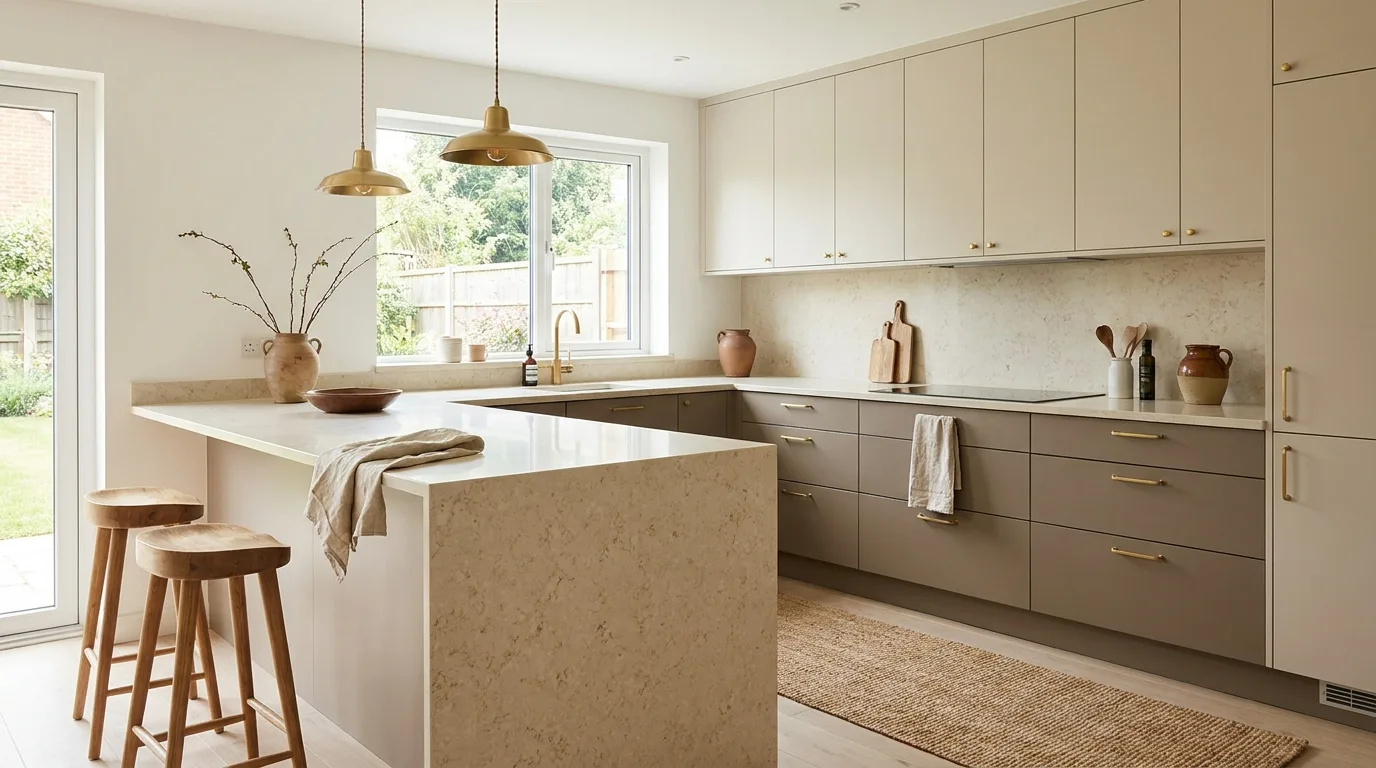
Pairing charcoal cabinetry with light oak brings together dramatic color and natural warmth. Charcoal provides the depth of a dark kitchen without the intensity of pure black, while pale oak prevents the overall palette from becoming too heavy. You can use charcoal on the lower cabinets and oak for an island, tall pantry units, or selected upper cabinets. This approach works especially well with large-format porcelain countertops and simple hardware. If the kitchen receives plenty of daylight, the darker charcoal can create a sophisticated backdrop; in a smaller room, use more oak and reserve charcoal for a defined section. The contrast between smooth painted surfaces and visible wood grain gives the kitchen a layered appearance that feels contemporary and inviting.
6. Soft Gray Cabinets with White Cabinets
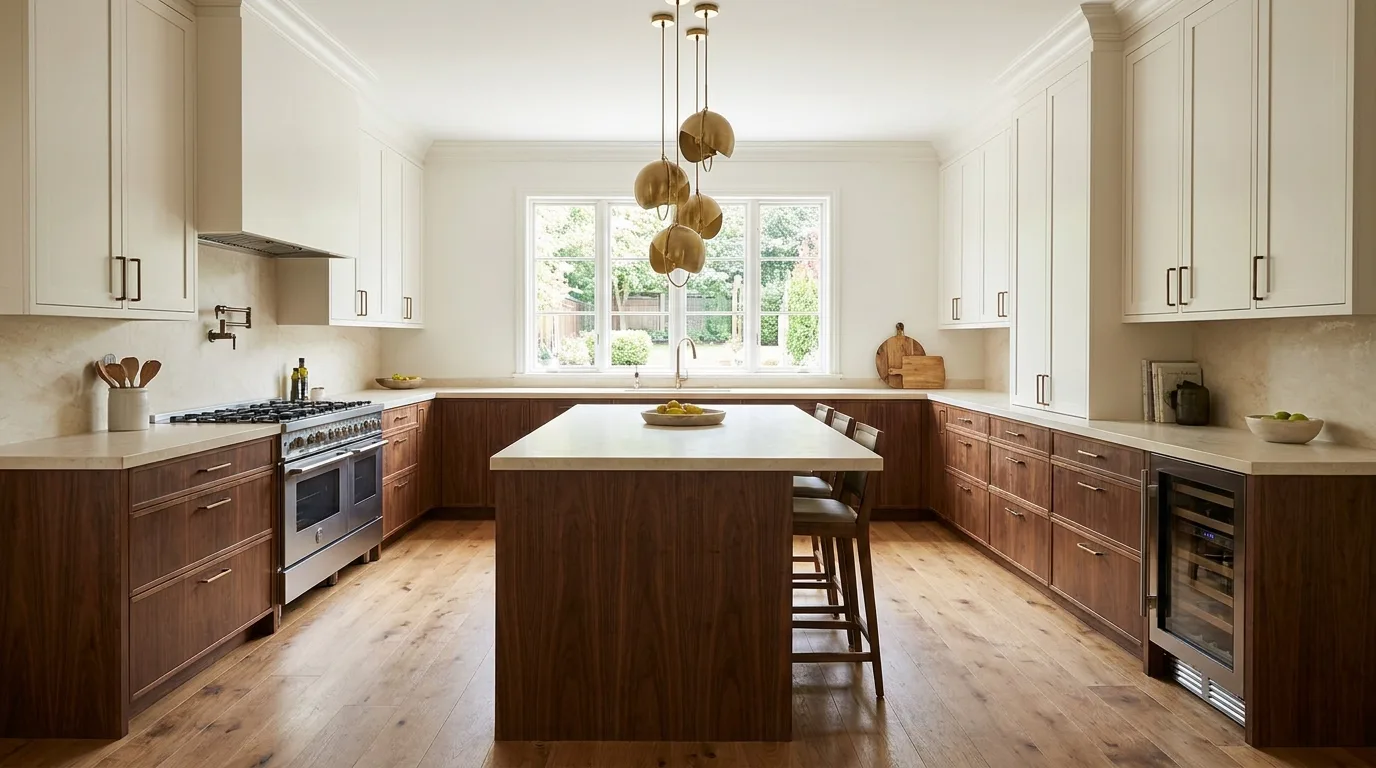
Soft gray and white offer a subtle two-tone kitchen combination for homeowners who prefer a neutral color palette. Gray lower cabinets can provide enough contrast to distinguish the base of the kitchen, while white uppers maintain a clean and open feeling. The key is choosing gray with the right undertone for the room. Warm gray works well with beige flooring and brass hardware, while cooler gray can complement stainless steel and crisp white countertops. This combination is also easy to update because it works with many backsplash materials and decorative styles. Add texture through a stone countertop, wood cutting boards, woven stools, or open shelving. The result is understated but visually interesting, making it suitable for both contemporary and transitional kitchens.
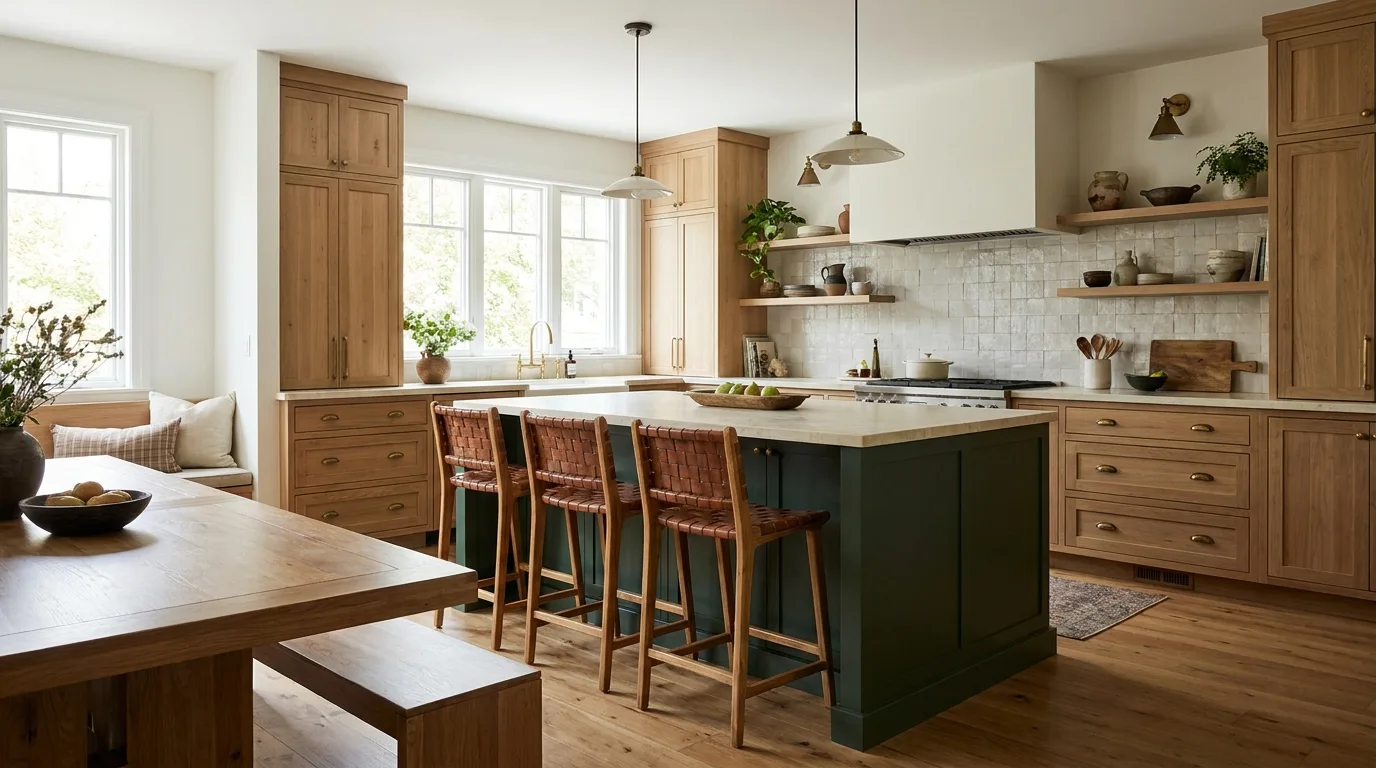
7. Forest Green Island with Natural Wood Cabinets
A forest green island paired with natural wood cabinets creates a rich, earthy kitchen with plenty of character. Deep green can make a large island feel substantial and intentional, while natural wood cabinetry surrounding it introduces warmth and texture. This palette looks particularly attractive with creamy countertops, handmade-style backsplash tile, and aged brass or bronze hardware. If the kitchen is open to a dining or living area, the green island can act as a visual bridge between the cooking zone and surrounding furnishings. Keep the wood finish relatively simple so the green remains distinct rather than competing with excessive patterns. This is a strong choice for anyone who wants a colorful kitchen that still feels connected to natural materials and a modern organic aesthetic.
8. Greige Cabinets with Dark Brown Wood
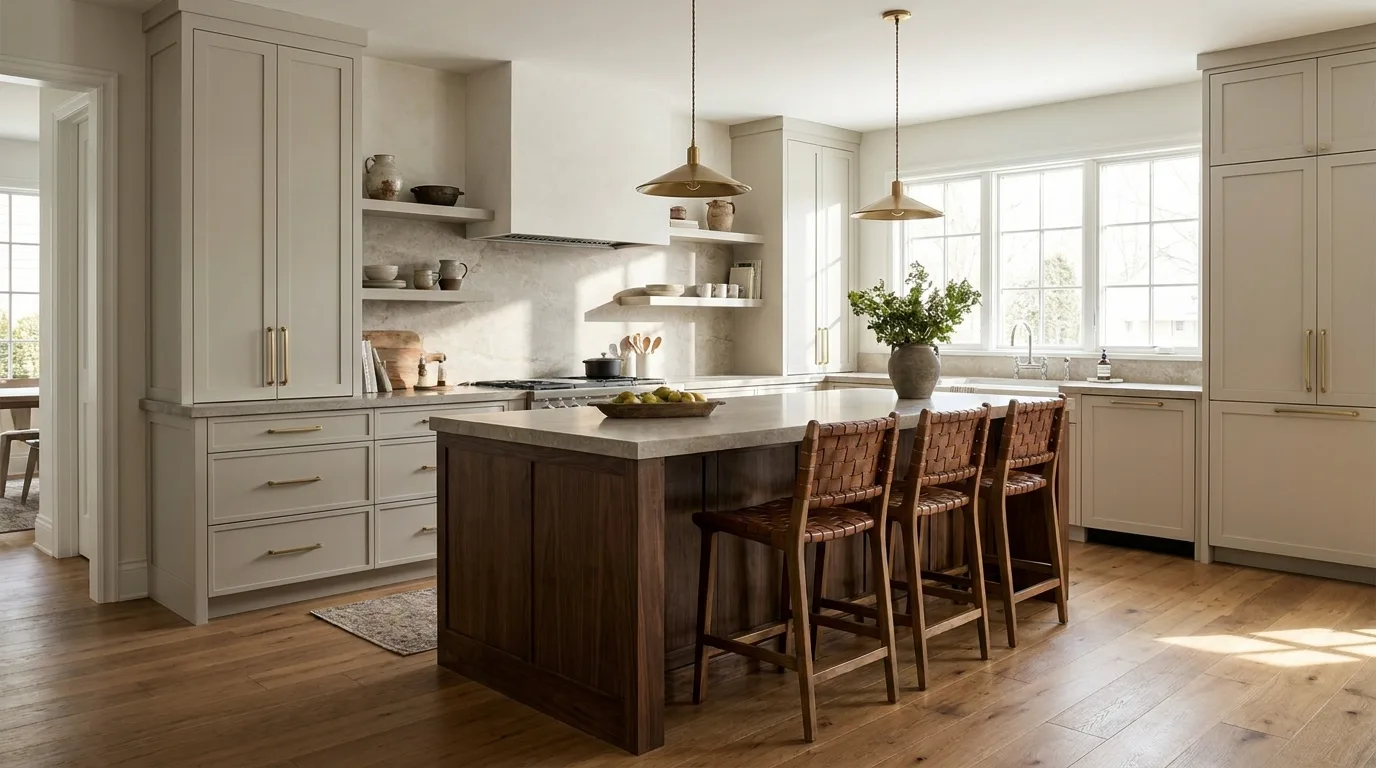
Greige cabinetry combines gray and beige undertones, making it a flexible neutral for modern kitchens. When paired with dark brown wood, it creates a balanced contrast between a soft painted finish and a richer natural tone. Use greige for the main cabinetry and introduce dark wood on an island, pantry wall, or selected tall units. This arrangement works particularly well in kitchens with warm flooring because the colors feel connected rather than overly contrasted. Brushed brass, aged bronze, or matte black hardware can all work depending on the desired mood. For a polished result, keep countertops relatively quiet and let the cabinet finishes provide most of the visual interest. The combination feels sophisticated while remaining comfortable and practical for everyday living.
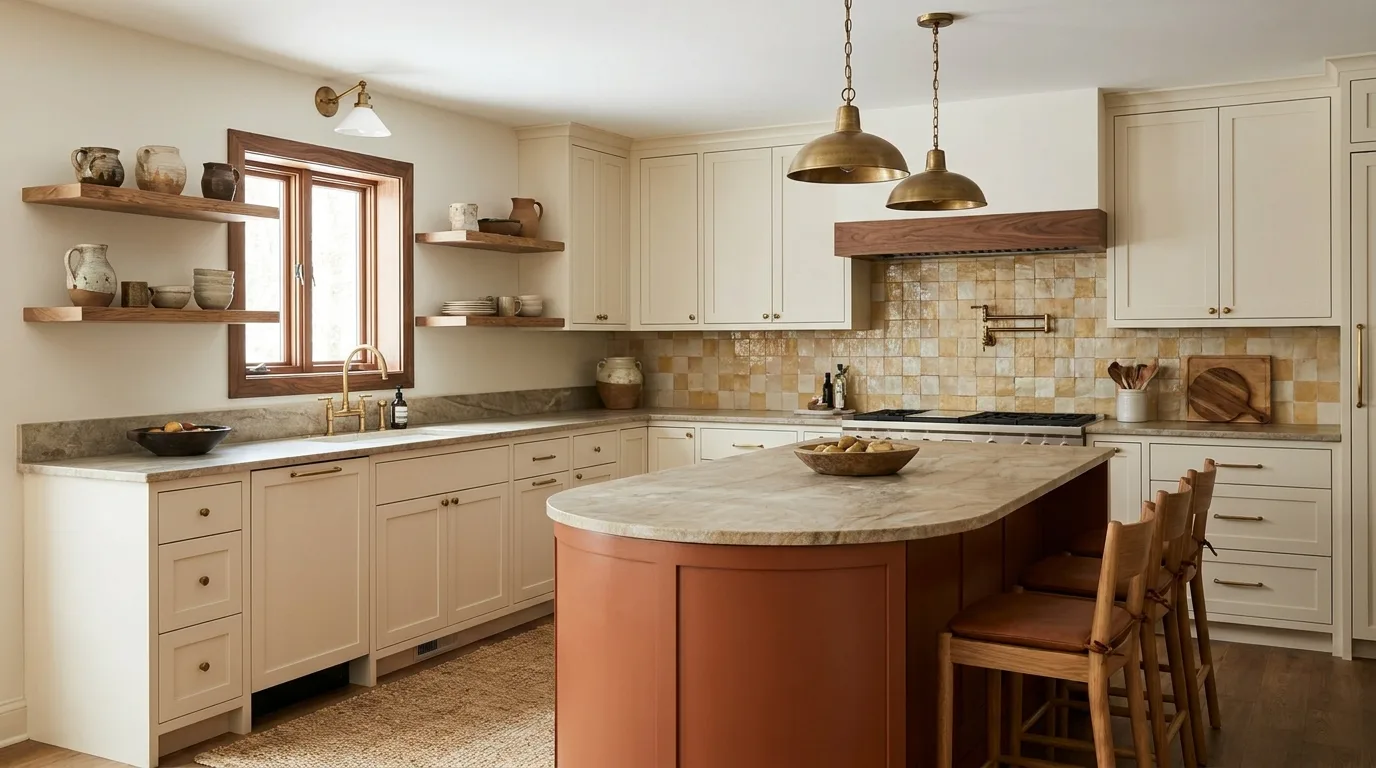
9. Cream Cabinets with Terracotta Accents
Cream cabinets can be paired with terracotta-colored cabinetry or a terracotta-toned island for a warm Mediterranean-inspired kitchen. The creamy base prevents the stronger earthy shade from dominating the room, while terracotta introduces warmth and personality. This combination works especially well with natural stone, handmade ceramic tile, wood accents, and aged metal hardware. If a full terracotta island feels too bold, use the color on a smaller cabinet section or a built-in beverage station. Soft cream walls can help the palette feel cohesive, while natural textiles and pottery reinforce the relaxed character. For a modern kitchen, choose clean cabinet profiles and limit decorative details. The result is colorful, warm, and distinctive without losing the streamlined appearance associated with contemporary kitchen design.
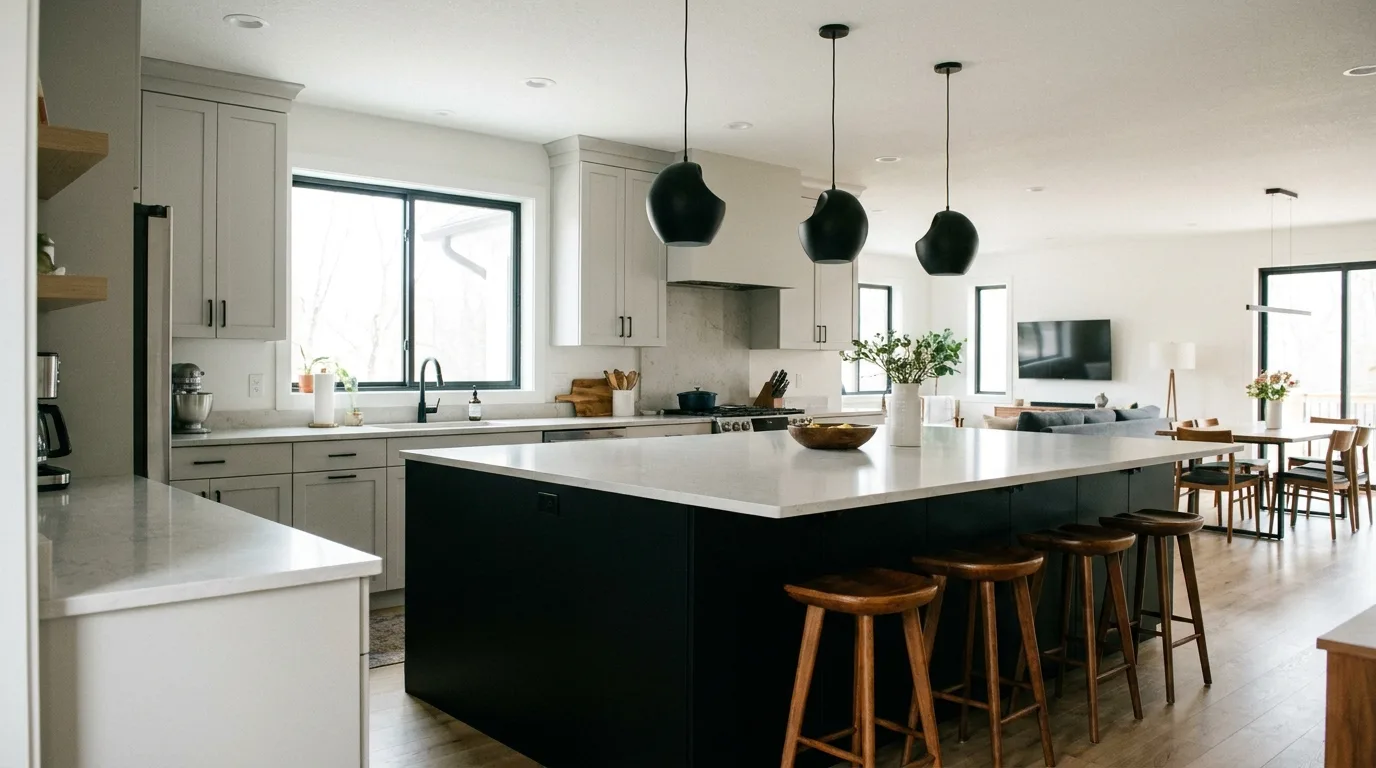
10. Matte Black Island with Light Gray Cabinets
A matte black island provides a dramatic centerpiece when surrounded by light gray cabinets. Because the island is often the visual and functional heart of the kitchen, giving it a darker finish can define the space without requiring an entirely dark cabinet scheme. Light gray perimeter cabinets soften the contrast and provide a neutral background for appliances, countertops, and decorative details. Pair the palette with a pale quartz surface and simple black pendant lights for a coordinated modern look. Wood bar stools or shelving can add warmth if the room begins to feel too monochromatic. This two-tone arrangement is particularly effective in open-plan homes because the black island creates a strong visual anchor while the lighter cabinetry blends more easily with adjacent living spaces.
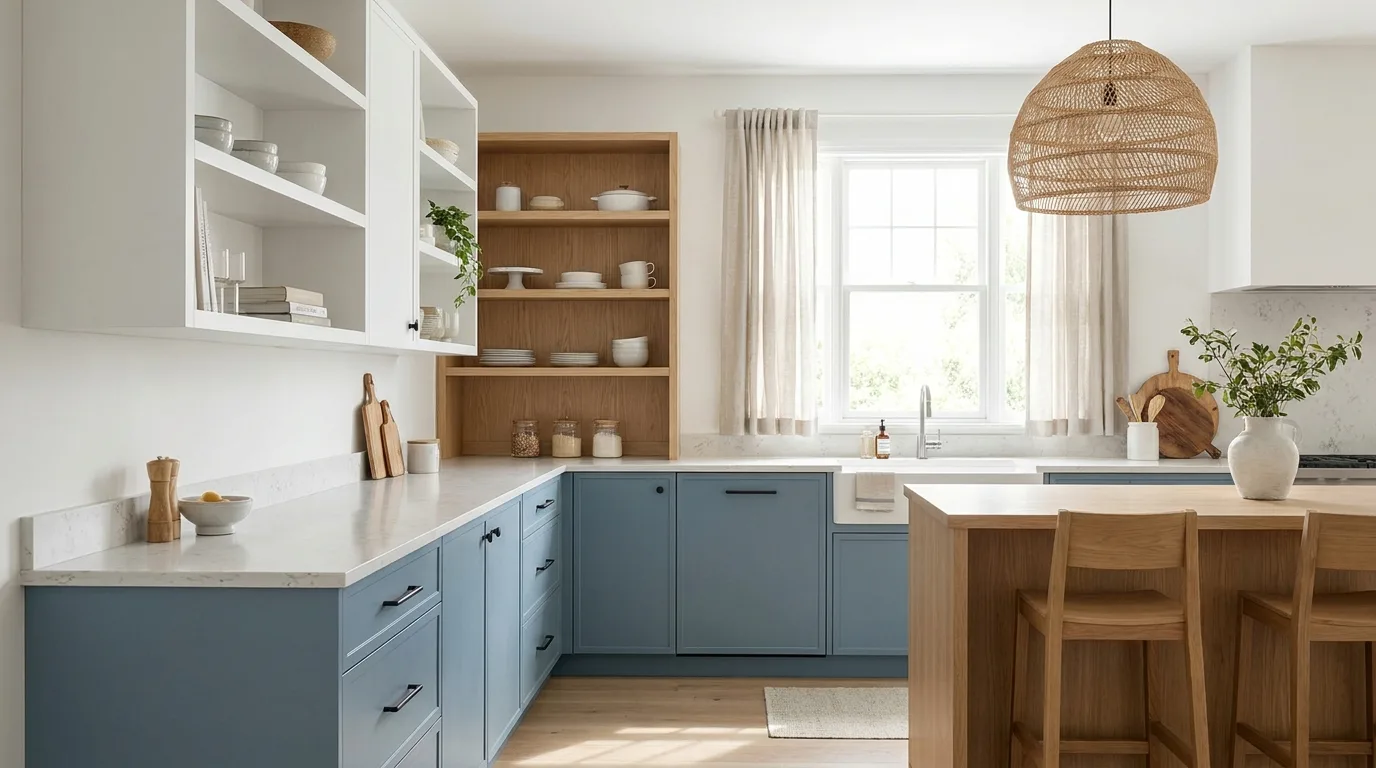
11. Dusty Blue Cabinets with White Uppers
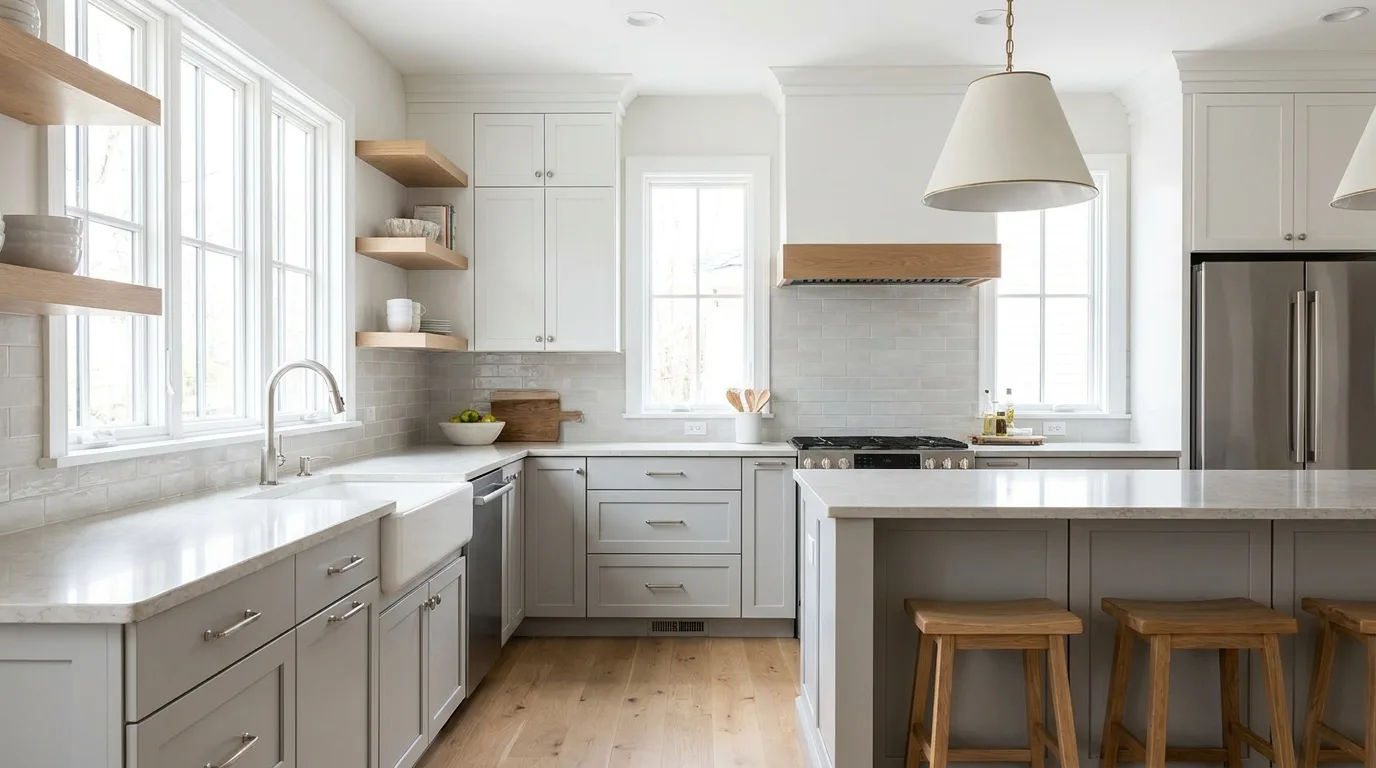
Dusty blue offers a softer alternative to navy while still creating noticeable contrast with white cabinetry. Use the blue on lower cabinets or an island and reserve white for the upper section to maintain a light visual line around the room. This color combination works well with brushed nickel, chrome, brass, or even natural wood hardware and accents. A white or pale gray countertop can help connect the two cabinet tones without introducing another strong color. Dusty blue is particularly useful when you want a kitchen to feel relaxed and welcoming rather than formal. In a modern kitchen, pair the colors with simple door profiles, understated lighting, and minimal countertop clutter. The finished space can feel fresh, calm, and stylish throughout the year.
12. Walnut Cabinets with Warm White Cabinets
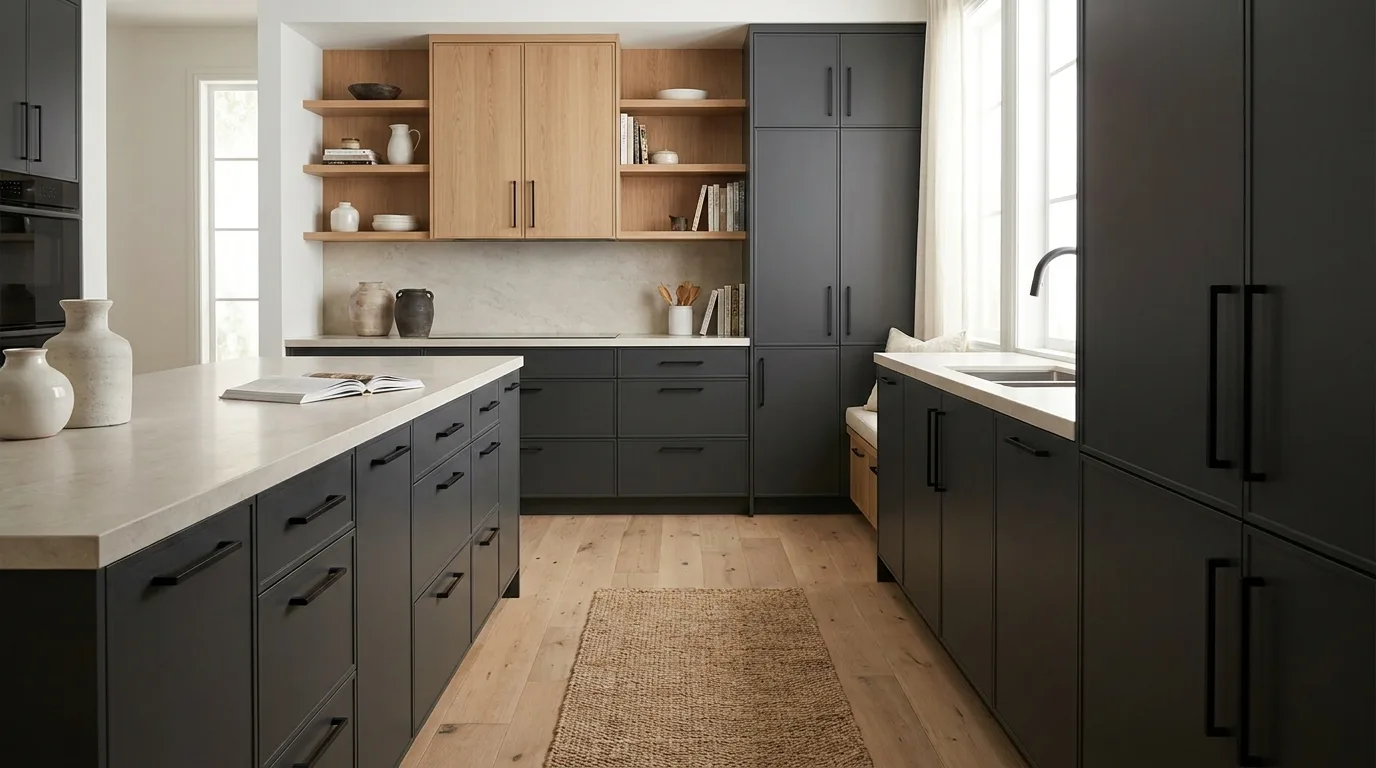
Walnut and warm white make an elegant combination for a modern kitchen that needs both contrast and warmth. Walnut cabinetry can be used on the island or lower section, where its darker grain creates visual weight, while warm white cabinets keep the rest of the room bright. Because walnut already has a distinctive grain pattern, it is best to avoid too many competing textures elsewhere. A simple stone countertop, understated backsplash, and streamlined hardware allow the wood to remain the star. This combination works beautifully in contemporary and mid-century-inspired interiors, especially when paired with warm flooring and sculptural pendant lighting. It also provides a timeless foundation that can adapt to changing decorative accents, from minimalist accessories to more layered kitchen styling.
13. Two-Tone Cabinets in Beige and Taupe
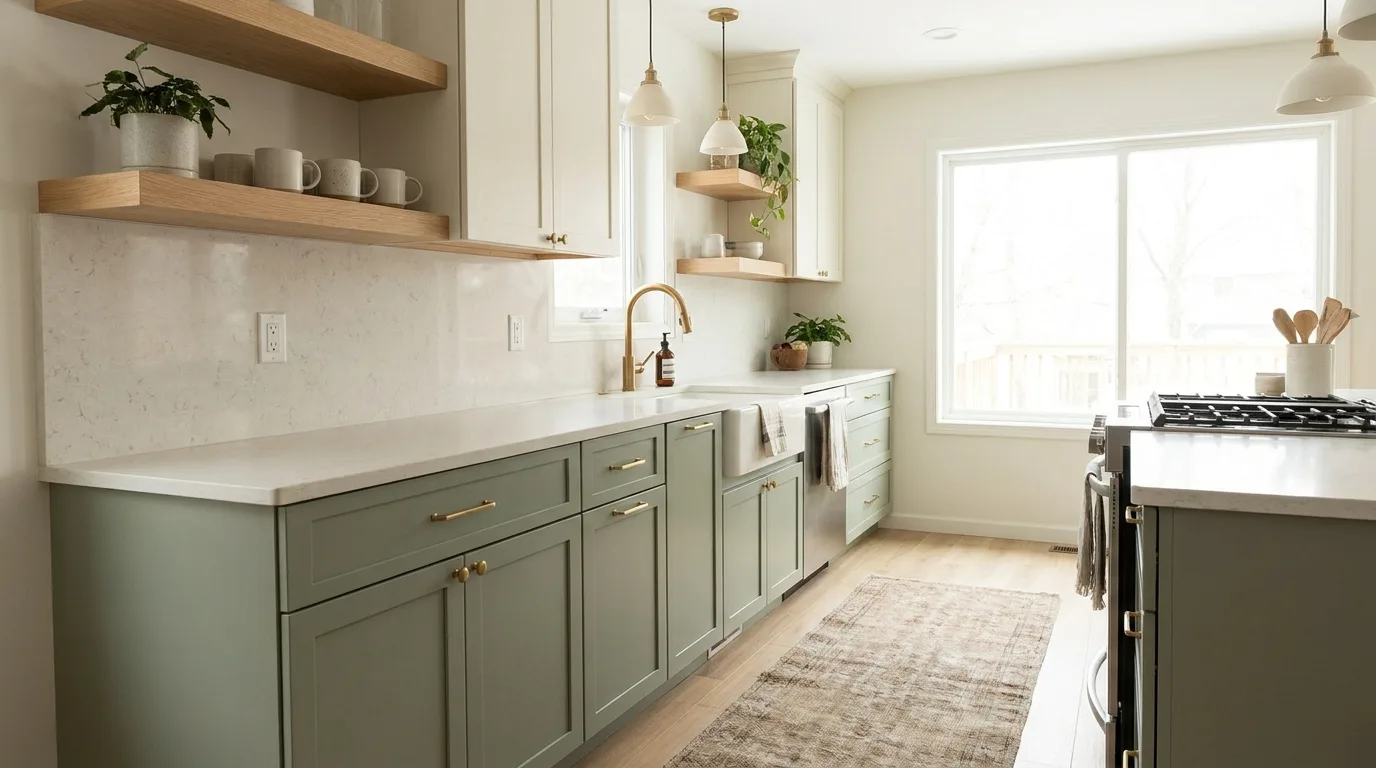
Beige and taupe cabinets create a layered neutral palette for homeowners who want variation without strong color contrast. Choose a lighter beige for upper cabinets and a deeper taupe for the base, island, or pantry units. The small difference between the shades gives the kitchen dimension while preserving a calm, cohesive appearance. This combination works especially well with creamy quartz, limestone-inspired surfaces, light oak flooring, and warm brass hardware. To prevent a neutral kitchen from looking flat, incorporate differences in texture through cabinet finishes, backsplash tile, wood accessories, and lighting. The result is particularly suitable for modern kitchens where the goal is understated sophistication rather than bold color. It is also an adaptable palette that can work across many decorating styles.
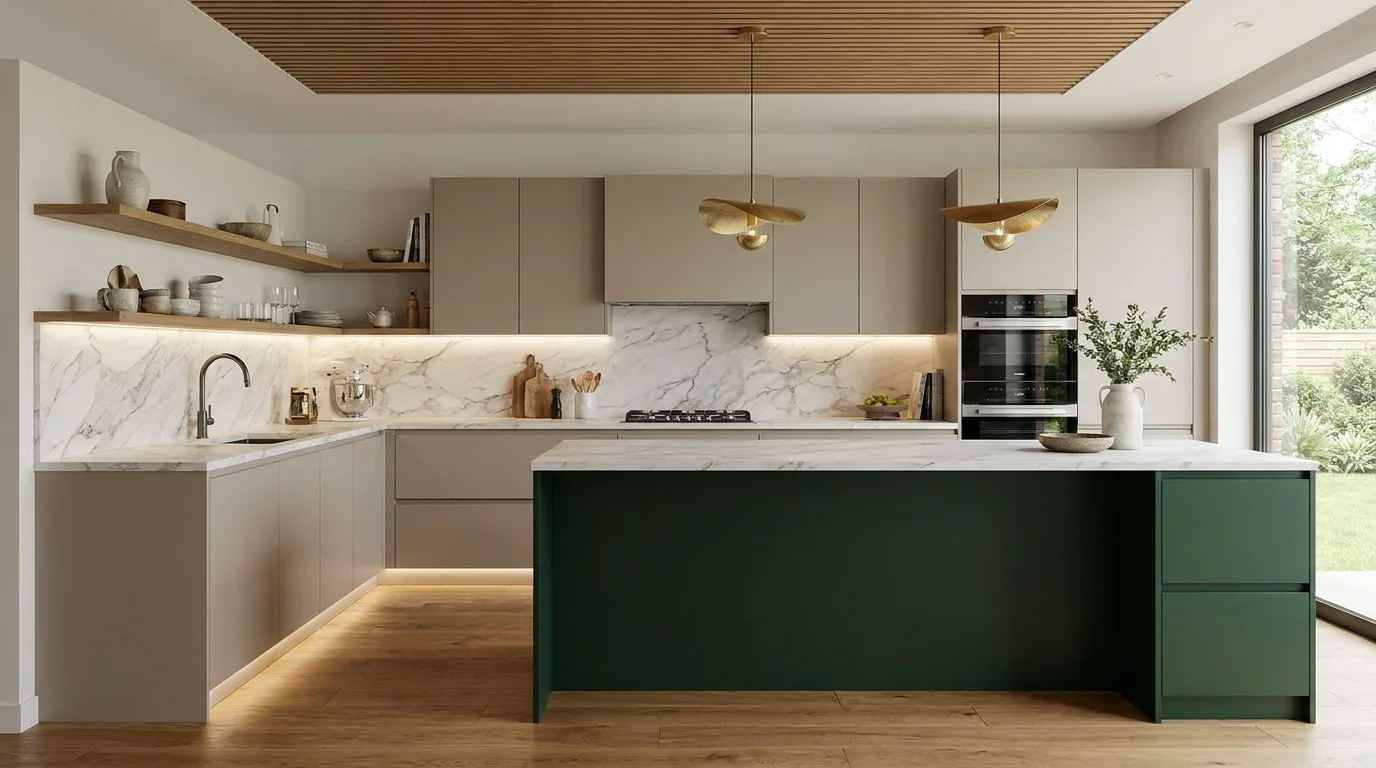
14. White Cabinets with a Deep Green Island
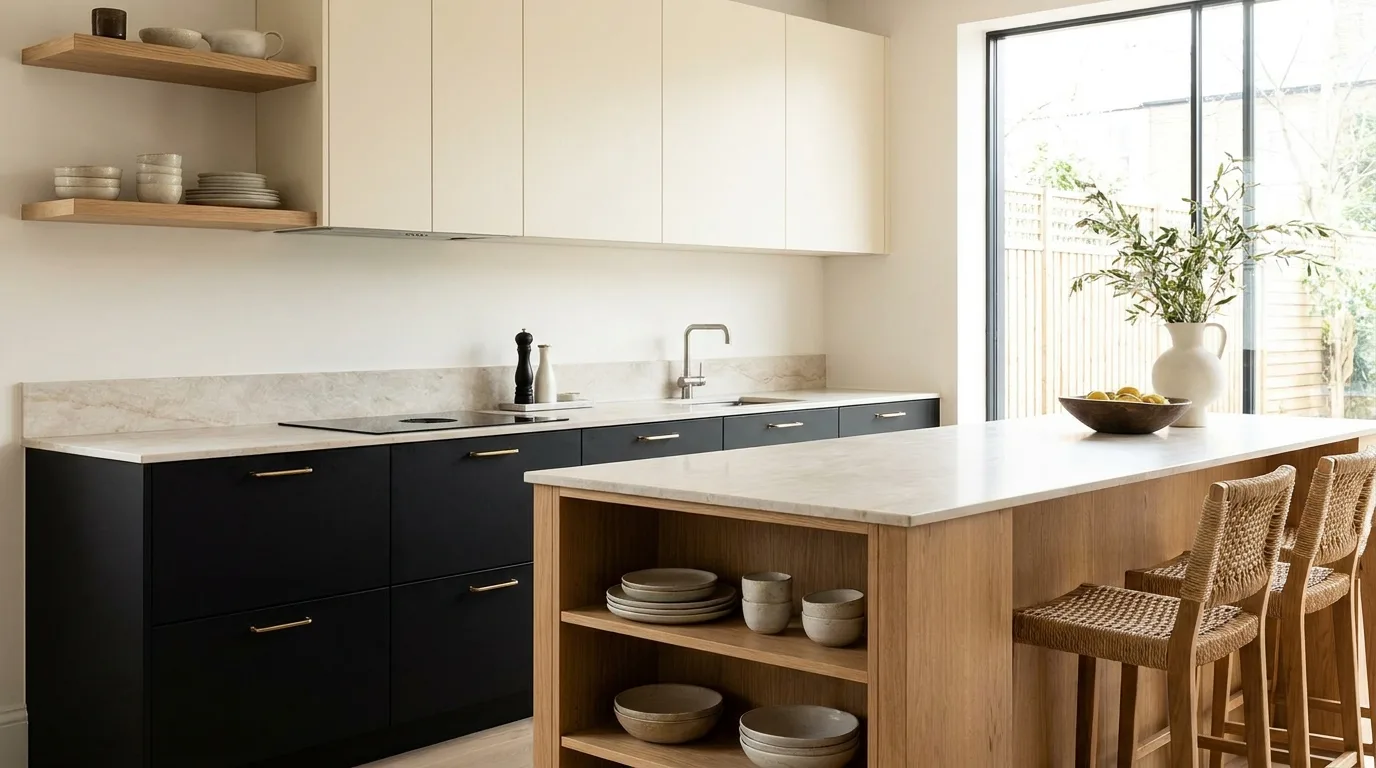
A deep green island against white cabinetry creates a refined focal point with a connection to nature. Shades such as pine, eucalyptus, or deep olive can introduce color while remaining sophisticated enough for a modern kitchen. Keep the perimeter cabinets white or softly warm-toned so the island stands apart without making the entire room feel dark. A natural stone countertop can bridge the two finishes, while wood stools and greenery reinforce the organic color story. For hardware, brass adds warmth and traditional character, while black creates a sharper contemporary effect. This design works particularly well when the island is large enough to function as both a preparation surface and a casual dining area, giving the darker color a clear architectural purpose.
15. Light Wood with Soft Black Cabinets
Light wood and soft black create a high-contrast palette that feels contemporary but not severe. Instead of using glossy black, choose a matte or satin finish to give the darker cabinets a softer appearance. Light oak or ash can then be used on the island, upper cabinets, or selected storage units to introduce natural warmth. This combination is especially effective with pale countertops and minimalist backsplash tile because the cabinet colors become the primary design feature. Keep the hardware simple and consider repeating the wood tone in stools, shelving, or flooring to create continuity. The contrast can make a large kitchen feel more structured, while the natural wood prevents the black cabinetry from dominating. It is a practical palette for modern homes that favor clean lines and organic details.
16. Two-Tone Cabinets with a Statement Island
For a truly personalized kitchen, combine a neutral cabinet color with a statement island in a contrasting shade or material. The perimeter can remain in white, cream, gray, or natural wood while the island introduces deep blue, green, charcoal, or another carefully selected color. This approach gives you the flexibility to experiment with a stronger shade without committing the entire kitchen to it. Consider choosing the island color from an existing element, such as a nearby rug, dining chair, artwork, or architectural detail, to create a deliberate connection. Keep the countertop and backsplash relatively cohesive so the island remains the focal point. A statement island is especially useful in open-plan kitchens because it can visually define the cooking area while adding personality to the overall room.
How to Choose the Right Two-Tone Cabinet Combination
Before selecting your cabinet colors, consider the size of the kitchen, amount of natural light, flooring, countertops, backsplash, and adjacent rooms. In a small kitchen, placing the lighter color on upper cabinets can help the room feel more open, while a darker lower section adds definition. Larger kitchens can handle stronger contrasts or multiple wood tones more easily. It is also important to compare cabinet samples in the actual room because colors can change noticeably under different lighting conditions. Try to limit the palette to two primary cabinet finishes and let hardware, countertops, and accessories provide supporting detail. If you are unsure about committing to a bold color, an island is often a practical place to experiment because it creates impact while keeping the surrounding cabinetry versatile.
Conclusion
Two-tone kitchen cabinets can transform an ordinary kitchen into a more layered, personalized, and stylish space. From timeless white and wood combinations to dramatic black, navy, and green accents, the right pairing can improve visual balance while reflecting your decorating style. When choosing your colors, focus on how the cabinets interact with natural light, countertops, flooring, hardware, and the rest of your home. A thoughtful two-tone palette does not need to be complicated; even a simple contrast between upper and lower cabinets or a distinctive island can create a polished modern effect. Choose finishes you will enjoy seeing every day, and keep the supporting materials cohesive so your cabinet colors remain the centerpiece of the design.